Pagan Paean

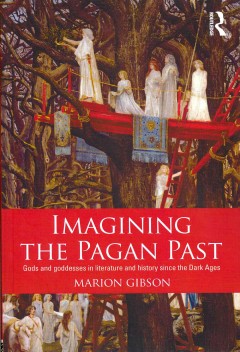
ImaginingPaganPastThe old gods still live. In literature. The modern world with its open spirituality has continued the process of rediscovering ancient deities. Marion Gibson’s Imagining the Pagan Past: Gods and goddesses in literature and history since the Dark Ages offers a glimpse into how British writers since the earliest days have wondered about the gods. Of course, many of those early writers were already Christianized, and treated the old gods as curios that might be placed on an intellectual shelf of bygone days. Some, however, came up with an idea that can still be found, on occasion, among dwellers in the British Isles—the idea that the original British religion was monotheistic. Indeed, some believed that the religion of Noah made its way to Britain, establishing a debased, but yet roughly correct worldview that was only contaminated by Roman polytheism. There are books suggesting, a la Latter-Day Saints, that the lost tribes of Israel found their way to Britain. Joseph of Arimathea planted his staff at Glastonbury, after all. Nothing satisfies like being the chosen people.

Gibson explores both the Celtic gods and the Norse gods. British literature has drawn upon both deity pools to populate a literature with colorful, if sometimes dark, deities. Beyond the literary, many of these gods survived in popular culture throughout the ages. Some of my fondest memories of the UK are driving to prehistoric sites with friends and finding the gods alive and well. As the sun, feeble at best in a British December, sank one afternoon we pulled into Wayland’s Smithy, a neolithic long barrow. I’d never heard of Wayland before. Gibson reveals the story of Wayland, as well as Woden and Thor, as the gods jumble in a Gaimanesque celebration of cultural diversity. Even on hikes to obscure sites the locals often knew the stories of the gods that had once passed this way.

There’s a virtual Sutton Hoo’s trove of information in Gibson’s brief study. At many points I found myself pausing to think, “that’s where that idea came from” as I followed the trajectory of her explorations. Even some of the deities she does not explore found their place in my three short years in the enchanted countryside where pagan Celt met pagan Saxon met pagan Roman, leading to a heady brew from the well-known Diana to Julian the obscure (there is some witchery afoot here). Even that Anglicanism that once circled the globe did not rid itself of this great cloud of witnesses. We keep our deities alive by preserving them in scripture, whether sacred or secular, and we have done so for hundreds of years. And the old gods, in this monochromatic world of science and industry, remind us where the rainbow really originates. Imagining the pagan past is sometimes the most human thing to do.


Hydrofracking

HydrofrackingGenies can’t be put back into bottles, I’m told. They are one of the many things that once done cannot be undone. I had that sense throughout my reading of Alex Prud’homme’s Hydrofracking: What Everyone Needs to Know. Prud’homme does an admirable job in attempting a dispassionate, fair treatment of a subject that is divisive by nature. And destructive. Fracking, once done, cannot be undone. Those who are already against fracking will probably come away from this little book with a sense that ex cathedra statements are slightly more difficult to sustain. The further you read, however, the darker the palette becomes. Yes, fracking provides domestic, fairly clean fossil fuels, reducing dependency on foreign oil. It also has long-term results that remain unknown, with indicators pointing to the worrisome side of the dial. Enough negative correlations exist to give us pause for rumination. Is fracturing the shale a mile underground really a good idea? What about when we run out of shale? And the tremendous waste of water.

Environmental concerns are, by definition, ethical issues. What we do to the environment effects others, and when we effect others ethics is involved. Or should be. One of the startling facts about fracking is that it has been around for a long time. Since the 1940s. Growing up in fracking-friendly Pennsylvania I had no idea that oil companies could move in, break up the ground under my feet, and siphon out the gas and oil they found. It is an industry without strong federal regulation. In fact, due to Dick Cheney’s influence, oil companies are not required to declare what chemicals they are releasing into the environment. Trade secrets can be deadly. It feels like awaking to find Deepwater Horizon in your back yard, not having been aware that the technology to do such massive operations even existed. Who granted permission? The mighty rex lucre.

Prud’homme points out that fracking is not about to go away. Too much money is at stake. Once we’ve learned how to build atomic bombs, incendiaries will ever after seem quaint. We can’t unlearn how to frack, even as we can’t undo the process once it’s done. We have, however, abundant sources of renewable, sustainable energy, but not the will to harvest them. Our economic thinking embraces the myth of excelsior—ever upward! Fracking may not be as dirty as coal or as scary as nuclear waste, but it does leave scars forever beneath the surface. Its genie has escaped its bottle and it is far too capitalist an idea to be suppressed once it has tasted opportunity. Prud’homme’s book is rightly subtitled What Everyone Needs to Know. That which you don’t know can indeed cause harm on a scale we can’t even calculate.


The Good, Bad, and Human

VixensVampsVipwesMike Madrid may know more about women in comics than anyone else alive. I’ve commented about his Supergirls and Divas, Dames and Daredevils, and he’s now followed up his previous successes with Vixens, Vamps and Vipers: Lost Villainesses of Golden Age Comics, due out in October. Despite the lament of many a parent that comic books are a waste of time, Madrid demonstrates through a close reading, that some of the most basic issues of society are featured in graphic format. Psychologists have long known that people are visually oriented. We have to learn to read, but we’re born with the knowledge of how to look. Comics, therefore, appeal to the young reader, illustrating the action with exaggerated pictures to underscore the tale. Although the early heroes were generally male, Madrid showed in his previous two books that girls and women were also superheroes, but, as in real life, competing in a world constructed by men for men.

Vixens, Vamps and Vipers flips the coin to see the role played by villains less known than Catwoman (whom he discusses), and torn between the human impulses to succeed and to be good. In fact, the first few pages of the book offer a profound consideration of the terms “good” and “evil” as they apply to the comic book (i.e., the real) world. As Madrid points out: if there were no villains, we would have no need of such colorful heroes. At the same time, evolution has embedded a desire to protect females in the minds of most males—Poe knew that the death of a beautiful woman was the among the most moving of literary images. Still, as Vixens, Vamps and Vipers points out, some of the villains here considered are beautiful and the allure demonstrates that something much more complex is going on beneath the surface. Despite the image of the hero, all people, male and female, constantly struggle with the impulses to do good and evil.

One of the complexities that religions attempt to codify is human nature: are we born good or evil? Are we totally depraved or inclined to strive for divinity? Any honest assessment of humanity, it seems to me, must take into account that we constantly struggle. Total depravity is totally disproved by the many good impulses shown by those of religions outside Calvinism and Christianity, let alone the tendency of humanists and atheists to help others. In fact, in many circumstances good and evil are intricately intertwined. Madrid explores this conundrum with women put in difficult, if fictional, scenarios who must decide which impulse to follow. He’s honest about this. Some will become superheroes despite the hurdles the male champions put in their way, while others will follow the trail that leads to his latest exploration of humanity through illustrated story. Look for Vixens, Vamps and Vipers and enjoy, if secretly, learning something profound about human nature.


Candle, Book, and Bell

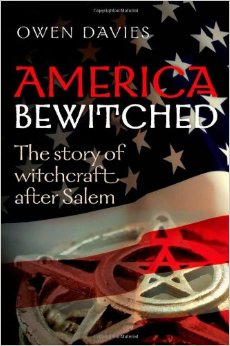
AmericaBewitchedHaving married into a family descended from the surviving relatives of women executed as witches at Salem, I have long been saddened and fascinated by the story. Not just the story, but also by the cultural milieu. We all know about the witch trials and the tragic massacre of innocents (mostly women) that took place in late Medieval and early modern Europe; the Salem miscarriage of justice came at the very end of that, after the start of the Enlightenment. Owen Davies is also fascinated by witchcraft, and his America Bewitched: The story of witchcraft after Salem is an exploration—mostly via newspapers and court trial records—of witchcraft accusations in America that continued up until about the 1950s. The coincidence of the 1950s with the “witch hunts” of McCarthyism will not escape some readers, and indeed, from the time of Arthur Miller’s nemesis on, those who vociferate against witches have kept rather quiet. Unless, of course, you count those who subsequently feared “terrorists” or any other group that might be profiled. We could learn from history, if we’d let ourselves.

Davies’s book brings together largely overlooked, nearly forgotten instances of how many cultures, including that cultural mix of Europeans who were to become “whites,” feared and sometimes killed witches. The difference from Salem was that almost all of these cases took place at the hands of self-appointed accusers (vigilantes) who hounded, punished, or killed someone suspected of being a witch. Surveys still show that a large percentage of people in the United States, although not a majority, believe in witches. It is an idea that has a primal hold on human psyches, and, as Davies points out, it is often used to explain misfortune. As I read this book I reflected how Americans come across as pretty gullible and not exactly sensible in this matter. The germanic strains of immigrants, it seems, were particularly susceptible to such beliefs. We also find witches, however, among Native Americans and African Americans as well. Misfortunate plays no favorites.

There are those who claim technology will save our culture. The other day a friend reminded me of the third of Arthur C. Clarke’s laws: “Any sufficiently advanced technology is indistinguishable from magic.” Even the most scientific of us knows, whether or not s/he will admit it, that “spooky action at a distance” does occur. It is perhaps only a matter of time before we find the hidden laws that operate the mechanism, but I can’t help but feel a little bit uncanny when I see more and more lifelike robots operating with what seem like human intentions. Of course, those intentions are programmed by humans. And it is often otherwise rational adults who with gun in hand, up until fairly recent times, accused flesh-and-blood neighbors as witches. America Bewitched can be a scary book, especially since unlike vampires, witches do cast their reflections in a mirror.


Unity in Diversity

UnitariansUniversalistsIn the Simpsons episode “Bart’s Girlfriend,” Jessica Lovejoy steals all the church’s money from the collection plate, leading Mrs. Lovejoy to call out, “Everyone turn around and look at this!” Grampa Simpson whips around saying, “What is it? A Unitarian?” And so the jokes go, back even to my seminary years. The Unitarians, however, are among the most intellectually honest of religions. I recently read David Robinson’s The Unitarians and the Universalists. Although the traditions approached their 1961 union from different angles, they had a common origin: concern over the Calvinism of colonial and early post-colonial New England. The majority religion of the northeast, various forms of Calvinism taught of utter depravity, human helplessness, and, that absolute affront to human intellect now being posited by some materialists: predestination (determinism, in secular terms). The Universalists couldn’t accept that a loving God would make anyone suffer forever. The Unitarians had trouble with several aspects of the theology, not the least of which was the Trinity (as a non-biblical concept). Early Unitarians based their beliefs on the Bible, which, as it turns out, does not support several Calvinistic concepts.

Like all religions, Unitarianism evolved over time. Eventually the unity of God became only one among many possibilities of what one might believe. In fact, doctrine was less important than ethics. It was a true Enlightenment religion. It allowed for the Transcendentalist movement that we all learned about in school, with Emerson wandering in the woods, and Thoreau never wanting to move out of them. They also had room for those who studied the Bible but expressed concerned that Jesus doesn’t really say that he’s God, although obviously some people interpreted it as if he had. Regardless of belief, meeting together was necessary, and eventually the Unitarian Universalist Association came to represent a widely liberal form of religion with Christian roots but rational sensibilities.

Among the marks of distinction of these groups is that, among Protestant denominations, they were among the first, if not the first, to ordain women. When you are less beholden to wooden tradition, all kinds of possibilities emerge. This book was kind of an epiphany for me. I’d been channeled into thinking that “orthodox” necessarily equalled “the good guys,” despite the treatment that I’ve repeatedly received at their hands. It sometimes takes a Gestalt phenomenon to see orthodoxy as not necessarily good. Perhaps the effort to preserve a tradition outdated by a couple of millennia costs far more than it saves. Perhaps we need to become more human, not less. I may not walk the forest with Emerson—he preferred to be alone anyway, from what I understand—but I’ll not be so quick to assume that tunnel vision is true vision either. Not in a world where the Simpsons can teach us as much as The Institutes.


Working Dead

AmericanZombieGothicPerhaps being born into and reared in a working class environment naturally predisposes me to the populist variety of entertainments. Although this may be true, serious scholars have begun to pay attention to the subjects traditionally classified as “lowbrow,” and particularly zombies. I mention zombies not infrequently because they are monsters with religious origins (although not the only ones). Reading Kyle William Bishop’s American Zombie Gothic (and who could resist such a title?) resurrected all of these interests for a few happy days on the bus. Subtitled The Rise and Fall (and Rise) of the Walking Dead in Popular Culture, Bishop’s study goes back to the beginning with zombies and their religious origins. Since the concept of zombie required the blending of Catholicism with its root African indigenous religions, it seems natural that the concept would emerge in Voudon (voodoo) religions of the Caribbean. What Bishop makes clear, however, is that the zombie is a way of coping with slavery, since, as originally conceived, zombies represent the horrors of enslavement. In other words, they represent a social justice issue.

Dismissed as puerile and unsophisticated, zombies had a difficult time catching on in American culture. Once they caught on, however, they didn’t let go. (They are zombies, after all.) As Bishop shows, this appeal has many bases. George Romero’s zombies were always social critique. Exploiting their shock value made a point, but other filmmakers soon followed, enamored of the potential violence, gore, and exploitation the zombies offered. Then, following 9/11, zombie movies proliferated, demonstrating that even the undead might perform some kind of catharsis. As Bishop notes, zombies were primarily a movie phenomenon, slow to catch on in literature.

Having read a few zombie novels in the last few months, I have pondered this last point deeply. What is believable, momentarily, on the big screen is rendered laughable with the ponderation of reading. When your brain has time to process what slick visual editing denies, it is clear that decaying corpses would have a pretty tough time getting around—even living bodies have trouble with it from time to time. Zombies, after all, are not really ever literal. They are signs, or even prophets. They point to a reality beyond themselves. Zombies, in reality, represent enslavement—whether literal or figurative—that holds us back from our true potential. No wonder they’ve become such fixtures in a world where opportunity has become effaced and terror can breach even secure borders. They may be lowbrow, but having lived the working class life, I have always had profound respect for the walking dead.


Order of Melchizedek

WhyPriests?A considered reflection from a long-time believer is a force never to be taken lightly. Garry Wills is a lifelong Catholic and an intellectual. His book, Why Priests? A Failed Tradition, was recommended to me by a friend and it is indeed a book that raises most profound questions. To someone born Protestant, such as the current writer, many of the arguments Wills marshals are strangely familiar. Many were lobbed in Fundamentalist harangues where clergy that believe in a literal six-day creation proved surprisingly adroit at finding the chinks in Catholic armor. The New Testament says nothing about the Christian movement having its own priests. And even the explicit command that seems to have come from Jesus—call no man father—is immediately reversed once priests become a fixture in a priestless faith. Wills explores the origins of these practices not to tear apart the religion of which he remains a loyal part, but to suggest that religious tolerance is the only proper solution. It is amazing how much of Catholic thought goes back to the disputed book of Hebrews with its mysterious Melchizedek.

While I have never been a Catholic, I have always been haunted by the idea that my religion was some kind of innovation. After all, the stakes were beyond stratospheric. If you pick the wrong one, at least according to what I was taught, Hell awaits at the end of the day. Then I discovered that my own Fundamentalism also had a history. We were called Protestants because we protested Catholicism. As I moved into the Methodist tradition, at least there seemed to be a continuity—John Wesley was an Anglican and Anglicans were really kind of English Catholics. Or so it seemed. Naturally, I became an Episcopalian since going Roman seemed like it came with exceptional amounts of accretions that were clearly not biblical. Such accretions are much of what Wills explores. Traditions that become doctrine. And exclusive. Those on the outside can hope for Purgatory at best, and the very Hell I was trying to avoid remained a distinct possibility. Who was right?

Religions suffer with time. The faith that Jesus seems to have proclaimed had already altered by the time Paul put pen to parchment. Ask any Gnostic. Already, within just three decades, the question became “now what did he say again?” And what exactly did he mean? The core of that message seemed to be love above all else, but that doesn’t make for sexy doctrine. Exclusivity achieves what love could never accomplish. Wills explores how sacraments evolved, and how Scripture became a sword dividing believer from believer. His most sensible solution? Its time to get beyond priests. He doesn’t actually suggest doing away with them, but asks Catholics why they don’t consider closely the implications of their roots. Melchizedek takes on a stature greater than anyone seems to have imagined for an imaginary figure. And a lifelong believer here asks the most basic of questions: what is Christianity truly about?


Call it Civilization

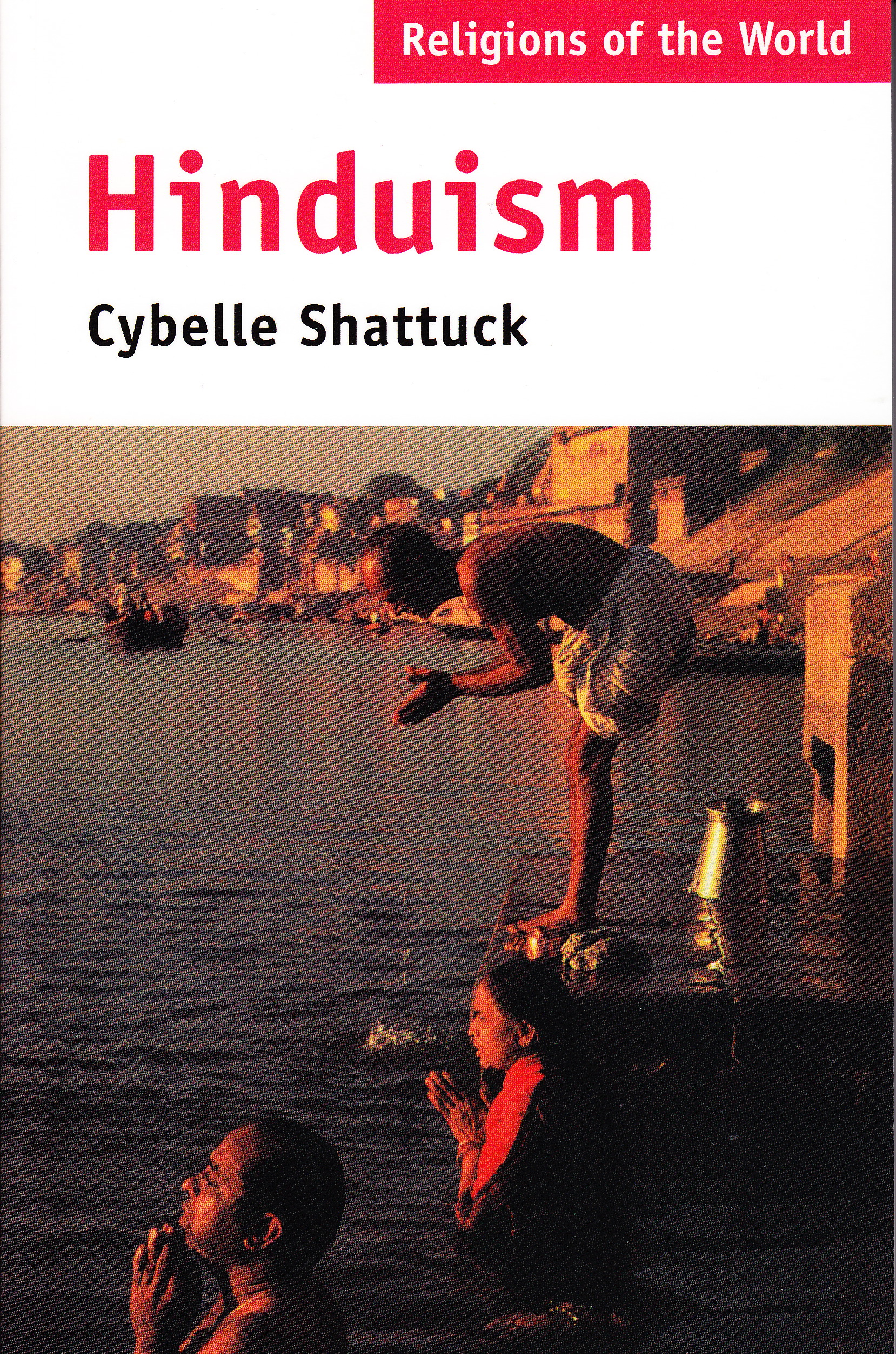
HinduismWhile brushing up on Hinduism by reading the book of that title by Cybelle Shattuck, it once again occurred to me how the concept of religion distorts itself. Prior to the Roman Period, the concept of religion really had no name. In fact, religions were sets of folk beliefs held in common by people of a single culture. These beliefs had many functions: keeping social order, establishing common practice, undergirding a kind of optimism in the face of inevitable death. Since long-distance communication was rare and unreliable, communities separated by more than a few miles soon developed details that fit their own situation and would hardly apply universally. Until they were written down, anyway. In Hinduism—which is in no sense a unified religion—even the “sacred writings” were not held to be authoritative for all people across all places and times. That concept would emerge with Christianity, a religion that would define the term and try to make it stable.

Hinduism is the oldest continually practiced “religion” in the world, as far as we can tell. The religions of the Mesopotamians and Egyptians eventually died out (although they have been revived by some in recent times) but the folk belief—or better, folk practice, of ancient India has continued relatively uninterrupted while new religions from Israel and Arabia changed the rules of the game. Monotheisms quickly demand heresies. A single God would not tell people different truths. Something upon which Shiite and Sunni, Catholic and Protestant, Pharisee and Sadducee all agree. One Lord, one faith, one baptism. By fire.

Meanwhile, even with Muslim and Christian missionaries afoot, Hinduism continued its accustomed continuity. To be a Hindu doesn’t mean worshipping the same god with the same ritual as everybody else. It is a way of living intended to keep dharma and avoid bad karma. And even as trendy westerners stretch themselves into impossible yoga postures, they are participating, at some level, in ancient practices that we call the religion of Hinduism. Shattuck’s brief introduction is a nice little primer that explains this time-honored folk tradition in a way even a believer in religion can understand. There are, it turns out, more things in this philosophy than our universe has ever dreamt of. Or perhaps the one dreaming is really Vishnu after all.


Kingdom Come

Bible in HistoryPopular media tells us the Bible is irrelevant. As someone who has struggled for years to find a non-sacerdotal job in that area of specialization, it’s not difficult to believe popular media is right. Despite all the rationales on all the religion department websites out there, there is little that you can do with your degree. It was refreshing, therefore, to read The Bible in History: How the Texts Have Shaped the Times, by David W. Kling. While not exactly what I expected it to be, Kling’s book did explore several specific pericopes (pericopae sounds too pretentious) with an eye toward showing how a single verse from the Bible could change western history. The examples go from the early monastic movement up to debates about women’s ordination that are, unbelievably, still on-going. The social movements he traces demonstrate that the Bible has been, and continues to be, more than just a book.

At several points through this volume I stopped to consider the implications. From an outsider’s point of view many of these debates must seem almost infantile. They would have no teeth at all if not for the belief that the salvation of humanity rode on their correct interpretation. Often—too often—the results were the torture and oppression of others, for the sake of the Gospel. If we’ve got this right, then we need to prove it through might. A mighty fortress is our God. So the Psalms seem to say.

Few people stop to consider just how deeply engrained in our culture the Bible is. The idea, on the surface, is almost like a fairy tale: once upon a time, God said… And yet, some of the most intelligent people the world has known have staked their very reputations on this claim. As a postscript to Kling, we can still see the Bible’s influence on politics—and therefore society—over a decade later. We still debate whether homosexuals can legally love one another. The biblical basis of this debate is thin, but it is a bulwark even today. We argue about stem cells, and although from the biblical worldview such things are mythical; yet that same Bible gives people the material with which to argue, eh, Jeremiah? And where is that female president we should’ve elected long ago? Any ideas, Paul? No matter how we may discount it, the Bible is, and will continue to be, a most influential book. Too bad we as a society don’t care to learn about it from specialists. Not when it’s so irrelevant.


Elmer Gantry

ElmerGantryIn recent years a renewed interest has arisen concerning how powerful entities are perceived by others. Academics are asking how the United States is seen by other nations. Corporations are trying to improve their public images because, well, let’s face it, it effects the bottom line. The same thing applies, but with a difficult kind of finessing, to churches. Part of the difficulty is that churches declare that they have the truth. Backing down from this in the face of public opinion more or less scuttles any claims being made. Thus I’d been curious about Elmer Gantry for some time. Sinclair Lewis’s novel of the self-absorbed, arrogant clergyman who believes in no god other than his own desires, is considered a modern classic. Written during the height of the follies of the Scopes Monkey Trial and Prohibition, as the Fundamentalist movement was just getting started, Lewis used dark satire to try to put the self-righteous in their place. I’d known the name Elmer Gantry from many other media references, so I figured it was time to see who he was.

Going into the novel I had few preconceived notions. Gantry, I knew, would be a hypocrite from the start, but beyond that, cultural references don’t give many hints. Although Lewis’s well-known wit shines through from time to time, on a whole the novel is a distressing read. I suppose it’s the mark of a great writer that you can despise a character so, but really, Elmer is led on his path, indeed, encouraged, by those who know him and whose only zeal is conversion for conversion’s sake. A womanizing, athletic, hard-drinking student, Gantry is where many young men want to be. The campus ministries, however, keep after him until he realizes what all clergy know at some level—there is power in being able to manipulate people by religion. As portrayed by Lewis, Gantry does try, once or twice, really to believe. His cynical and selfish nature, however, are too difficult for him to overcome and he therefore employs them in all his relationships as he climbs the corporate, ecclesiastical ladder.

There is really no triumphalism here, with the society discovering and ousting the charlatan. Indeed, as the book ends, the Reverend Doctor Elmer Gantry dodges a serious threat to his career only to be appointed to one of the most influential churches in New York, poised to go on to even greater things. Trying to find the blame in the novel, however, is not a simple task. Gantry is all too easily led. He follows his base desires deftly and confidently. He knows a mark when he sees one. Throughout his ministerial life, however, he is encouraged and prodded onward to success. Most ministers, in my experience, are burdened with conscience. I’m sure a few slip through with their own agendas, but the working clergy are nothing like the protagonist to this tale. Lewis focuses on the worst offenders. Those who are in it for the power, should they read Elmer Gantry, would find a model who is, like many in the era of early psychology and sociology, too easily excused because of circumstance. More than that, however, they might learn how they look to a larger society for which the church has become a mere historical curiosity. Elmer Gantry is by no means the worst type of figure we can imagine in a secular society.


The Call of Madness

mountainsofmadnessPicture this: the wind is howling outside your tent, violently snapping the fabric. The temperature outside is well below freezing, and you are camping at the base of a mountain nobody has ever explored. You are hundreds of miles from any possible help, in the midst of Antarctica. What do you do? Read H. P. Lovecraft’s “At the Mountains of Madness.” At least that was the decision John Long made on his journey to collect fossil fish in the most inhospitable continent on the planet. Mountains of Madness: A Scientist’s Odyssey in Antarctica is one of those rare books where a rational, educated man of empirical approaches allows the creative, emotional aspect of life speak. I picked the book up at a library sale, based solely on the title. I recognized the Lovecraft in it, and wondered whether it was accidental or not. Besides, reading about polar regions has always fascinated me. Indeed, according to the records of those who’ve trespassed into those regions, madness is not a rare consequence.

Long’s book is not religious, but it is filled with wonder. The mechanistic science that’s often fed to the public is frequently technical and lacks those mysteries we’ve evolved to love. Nowhere in this book is the compelling aspect more relevant than in Long’s accounts of Christmas. The population of Antarctica—a select group by anyone’s standards—is mostly scientists and technicians. Deep field expeditions, it stands to reason, take place in December, which is the summer of Antarctica. In the case of those in the field, they are far removed from their home base, and even the earliest explorers noted in their diaries that Christmas was celebrated, in however minuscule a manner rations and perilous conditions allow. Nobody bulking here that it’s all just a myth.

Lovecraft’s story places explorers far from help in the mountains of Antarctica where they discover they’re not alone. The story inspired such movies as The Thing from Another World, and therefore John Carpenter’s The Thing. Lovecraft, like Long, was a disciple of science and yet, even in his atheistic world deities break in. It’s like Lewis’s Narnia where endless winter with no Christmas is unbearable. Long makes it clear in his account that Antarctica changes a person. Transcendence, those of us who linger over religions know, can express itself in many different ways. For some it is the grandeur of barrenness and inhospitable weather of an unfeeling environment where both macro and micro-predators have trouble surviving and penguins gather to struggle through weather humans can barely tolerate. For others it is camping below the very mountains of madness. Without some wonder, we just don’t survive.


Medjugorje Matrix

Miracle Detective“Expect a miracle,” Oral Roberts used to sign off, “and a miracle is yours today.” Physicists tend to be a bit more hard-nosed about the issue. In a mechanistic universe miracles are disallowed. How can you predict the outcome of any experiment or scenario when the whim of the divine could change the results? Nevertheless, most churches at least hold out the possibility of the rare miracle either set in centuries far past, or even occurring today. Randall Sullivan’s The Miracle Detective is, therefore, an almost unbelievable book. A reporter for Rolling Stone, Sullivan began investigating Marian apparitions. Although in the popular mindset, even among skeptics, such things are seen as promotions by the church to shore up the faithful, as Sullivan points out, the Catholic church is extremely cagey regarding miracles. It might be easier to convince a physicist than it is the Vatican, that a miracle is occurring.

Spending part of the tragic war in Bosnia-Herzegovina, Sullivan interviewed most of the six children who claimed to have visions of Mary at Medjugorje. While he remained skeptical of what he found, it is at times a decided head-rush to read his book. We tend to dismiss non-academic reporting of events by hoi polloi as unsophisticated, or superstitious. The events at Medjugorje, however, have been thoroughly tested by physicians and communist-appointed scientists and have left them scratching their heads. In some cases, getting them to convert to Catholicism. Rome, however, did not give its seal of approval to what was happening there. Sullivan, not religious himself, but open-minded, found the investigation compelling, if not life-changing. In this lengthy account, the reader is drawn into a rational world where something mysterious is clearly happening. A world that both the church and the academy deny might exist. And yet, something incredible stands on record nevertheless.

Lourdes, Fatima, and numerous lesser-known locations boast erstwhile visions of Mary that include miracles in their wake. Although the events in Medjugorje were unfolding the year I started college, majoring in religion, I had never heard of them until I read The Miracle Detective. As Sullivan notes, at times it seems better not to know about such events because they disturb a comfortable worldview where intrusions from the outside just don’t happen. Life, however, includes many incidents which we simply take off the table because they don’t fit into our scientific paradigm. The implications are just too discomfiting. Climbing off the bus after having read several chapters of the book was like stepping back into a world somehow so effaced that I felt there must be something on the other side. Many of those experiencing these miracles were barely Catholic, or were not religious at all. And yet something happened to them, causing them to wonder. And that wonder is catching for those who read the strangely compelling account of an open-minded, if accidental, miracle detective.


St. Ghost

HauntedSouthernTierSince they combine two of my soft spots—local history and ghost stories—books telling the tales of home-town specters are compelling in a homespun way. On a visit to Binghamton, New York, I picked up Haunted Southern Tier by Elizabeth Tucker at the local bookstore (I have a hard time passing up an independent bookstore anywhere). Those of us at least a little familiar with upstate New York know that the southern tier is not strictly defined, but it is a recognizable section of the Empire State that runs just north of the Keystone. I was drawn to the book by Elizabeth Tucker’s name; she is the author of Haunted Halls, a book I reviewed earlier on this blog, about college campus ghosts. These local travel guides tend to focus on the weird and whimsical, and aren’t meant to be taken too seriously. Nevertheless, the connection between ghosts and religion is tangible in just about any part of the world, no matter what one believes.

This fun read brings a number of explicit religious points to the surface. One involves the strange phenomenon of haunted churches. Given that many varieties of Christianity offer Heaven as a reward immediately following death, having a ghost hanging around a church seems strangely disingenuous. Perhaps that’s why few churches admit to such things. Another interesting tie-in to religion comes in Tucker’s section on roadside ghosts. Stories of spectral hitchhikers are quite ancient, but I had never considered them biblical. Tucker mentions one such instance in the Book of Acts, and upon reflection I realized that she may be onto something. The account of Philip converting the Ethiopian eunuch is one of the odder tales of the early Christian movement. Philip explains Isaiah’s prophecies to the chariot-riding dignitary who gives him a lift, and baptizes the visiting Ethiopian before mysteriously disappearing. Could this be the prototype for the vanishing hitchhiker folklore theme?

Perhaps the most serious of the religious connections in the book, however, has to do with St. Bonaventure University. For those familiar with Thomas Merton’s life story, St. Bonaventure will not be unexpected. Merton taught at the school as he was struggling with his identity that led him to become one of the most renowned Trappist monks in the world—one who spoke approvingly of Buddhism, to boot. Merton is not said to haunt the university, but his presence there at one time has endowed this Catholic school with a sense of spiritual gravitas. The ghosts come from elsewhere.

Books on ghosts are a guilty pleasure with a serious undertone. End of life issues, once we move beyond the medical, are the unquestioned provenance of religion. Whether or not there are any ghosts out there, religion will claim the final word on afterlife. And only those who experience it will ever really know.


Real Reading Rainbow

Libraries rule. According to recent studies libraries rate higher than religious institutions, according to public surveys, in their usefulness to society. From the lost library of Alexandria of yore to the local Carnegie, libraries have been the repositories of information almost from the beginning of civilization itself. Last week the American Library Association, according to an article forwarded to me by my wife, and the Banned Books Week planning committee, announced a theme for this year’s recognition of the books various groups (many of them religious) tell us we shouldn’t read. Banned Book Week, of course, falls in September. It might seem strange that planning has to go into this, but the banning of books has never ceased and the list grows year by year. I recently mentioned John Green, one of the authors who frequently appears on banned lists for children. In an age when encouragement to read should be running high, we hide behind platitudes to keep our eyes toward a predetermined prize. Among the reasons frequently given for banning a book: its religious outlook. I.e., the “wrong” one.

IMG_0324

I often wonder why we think sheltering children who are old enough to read from the collective knowledge of the human race does them any favors. Our culture so successfully removes us from nature that we don’t experience the “facts of life” that our ancestors no doubt noticed early and often. Violence, sex, drugs, and death, however, haven’t become any less common. They are only hidden until their knowledge hits with often catastrophic force, leading to neuroses about how unsafe our world really is. A function of story, if neurologists are to be believed, is to help us navigate the many trials we’ll encounter by seeing how others have done it before. I don’t doubt that there is age-appropriate material for children, but they understand a lot more than adults like to think they do. In my teaching days I was always amazed at how much undergraduates knew that I was only beginning to discover as a professor. Books seem a good way to introduce knowledge appropriately.

The internet, of course, gives access to unvetted knowledge to anyone with access to a computer or phone. Published books, it used to be, had the added value of passing through editorial hands on their way to public presentation. A funny thing happened on the way to the library. We’ve democratized the writing of books through self-publishing, but we’ve not yet ceased to ban them. Perhaps the real way to protect our children is to listen to them. We seem to think telling is better than hearing, although the flow of knowledge can go both ways. Instead of banning books for our young we might all benefit from opening of our own minds.


Clockwork Universe

longitudeIn a clockwork universe, time is an essential interpretive factor. Those of us constantly crushed for time hardly realize just how recent of an invention it is. Time has, of course, been around forever. Human interaction with it, in the daily sense of what defines work and what defines leisure, dates only to modernity. Train schedules, in the Victorian Era, led to the need for standardized time across large land masses such as North America. Prior to that, with an uncanny precision to those of us who infrequently take the time even to look at the sky, clocks across the nation were set at noon by observing the sun at its zenith. Even though the concept of longitude existed, its measurement at sea was maddeningly difficult. The Phoenicians, the ancient mariners who circumnavigated Africa, did so by staying in sight of land as much as possible. The open ocean gives few clues as to those imaginary lines we assign to keep our location certain.

Dava Sobel’s Longitude: The True Story of a Lone Genius Who Solved the Greatest Scientific Problem of His Time, is, despite the lengthy title, a brief book laying out the story of John Harrison. Harrison, a clock-maker whose precision clocks made the calculation of longitude a much more precise science, was in a race for a royal grant to reward the discoverer of a method for giving precision to ships at sea. Harrison represented those who believed accurate clocks could solve the problem, while others argued that mapping the heavens would give sailors the best chance. Often we forget that loss of life greater than that on the Titanic could occur when ships ran aground, due to lack of knowledge concerning their longitude. Navigating the seas before GPS and before accurate watches, was often a matter of informed guessing with very high stakes. Harrison never did get to claim fully what he’d earned and we’ve all but forgotten how difficult finding the correct time was when our computers remind us, to the second, of precisely when we are.

Prior to science, the keeping of time was a religious function. Sacred calendars marked holidays—often with the ulterior motive of keeping farmers on track for when planting time for various crops, and their harvests, should commence. Telling the change of seasons by when to add or discard a layer of clothing seems eminently practical, but it doesn’t help an agricultural society to plan ahead adequately. The gods would give the time, and all they would require was a cut of the profits. It was, all things considered, a reasonable trade-off. And now holidays have mostly slipped their religious moorings to become times when we simply don’t have to go to work. Speaking of which—look at the time…