Fighting with Monsters

GothicThe Lady and Her Monsters reminded me of Gothic. A friend of mine in seminary showed me this “shocking” movie by Ken Russell just after it was released on VHS (I always was fond of ancient history). To my young eyes this was a challenging film, but it rated higher in moodiness than scariness. Roseanne Montillo’s book brought the movie to mind because, it turns out, several of the incidents in the movie were based on fact. Perhaps I need to take a step back because Gothic never made it big, and many may not realize that the movie is about the legendary night Mary Godwin (soon to be Shelley) came up with the idea for Frankenstein. In an early nineteenth-century walk of fame, Percy Shelley, Mary Godwin, Lord Byron, and John Polidori decided to write scary stories, as a kind of contest. Only two ever made it to print, Polidori’s The Vampyre, which inspired Bram Stoker’s Dracula many decades later, and Mary Shelley’s Frankenstein. The movie, with Ken Russell’s famous flamboyance, traced an unlikely story of the friends conjuring a ghost and then banishing it once again before the stormy night is over.

Ken Russell had the reputation for being obsessed with the church and sexuality. These interests are certainly well represented in Gothic, where Percy Shelley, famously an atheist and believer in the supernatural, struggles to make sense of it all. Polidori, Byron’s personal physician, is presented as a Catholic who admits, when each has to confess his or her deepest fears, that God terrifies him. The friends (perhaps in an unwitting prelude to a television series by that name) explore sexuality and the supernatural through the long night. Waking nightmares meet them at every turn. They even have a skull of “the black monk,” a character attested in all sincerity, at one time, at the most gothic seminary in the Wisconsin woods.

“He who fights with monsters,” Friedrich Nietzsche opined, “might take care lest he thereby become a monster. And if you gaze long enough into an abyss, the abyss gazes also into you.” That which we worship is that which we fear. Certainly the Christianity of the Middle Ages had as much of Hell as of Heaven in it. Bursting out into the light of rationalism, it seems, did not banish the darkness after all. We still have many questions left unanswered, and many intelligent people have begun to question whether any one paradigm fits all of the evidence. I suspect not. Human experience goes in multiple directions at once. We have ladies, we have monsters, we have scientists, we have God. And on rainy nights we have movies that make us see that we have combined them all into a tale often repeated but never fully understood.


Dark and Stormy Night

LadyAndHerMonstersI miss my monsters, especially when I stay away too long. I had eyeballed Roseanne Montillo’s The Lady and Her Monsters: A Tale of Dissections, Real-Life Dr. Frankensteins, and the Creation of Mary Shelley’s Masterpiece nearly a year ago in a busy Port Authority bookshop, and wanted to curl up with it right away. Well, work and the world intervened, but finally I found time for the beast. Although a member of the monster kid generation, as a child I never felt much kinship with Frankenstein’s creation. I think it is because there was so much human intention involved in his origins. Almost ungodly. Too godly. Vampires and werewolves, and even mummies, seemed to have come up on the wrong side of a curse and couldn’t be blamed for being what they were. Frankenstein’s monster had a willful, if neglectful, creator. A human being, and fully so. There was, it seemed, some kind of blasphemy at work here.

Montillo’s book, however, gives me pause to rethink this. I had never realized, foe example, that Shelley’s book unfolds over nine months, and that Mary Godwin Shelley had suffered as her own fate unfolded—or unraveled—after Percy Shelley’s death. Nor had I stopped to consider that in the lifetime of these young lovers scientists and poets were overlapping careers with philosophy holding them together. I also hadn’t realized that Percy Shelley also shared his beau’s enchantment with the fantastic. But Montillo gives us so much more, wandering through the seedy world of body-snatchers and scientists who experimented on the dead, often with an eye toward a secular resurrection.

Frankenstein’s monster has, of course, become an instantly recognizable fixture in our society. Indeed, it is almost the definition of monstrosity: the ultimate mischwesen while being technically only one species. A creature that crosses boundaries and is both dead and alive, a miracle and a curse, innocent and evil. Morillo places this creature in the context of a world where galvanism was thought to bring life and medical schools scrambled to find corpses to dissect and on which to experiment. A world where the Shelleys would visit Lord Byron and Polidori, literally on a stormy night, and give the world both Frankenstein and the prototype of Dracula. Where the three men of that night all died prematurely and tragically, survived by a struggling Mary who lived only to fifty-three and who gave the world one of its most memorable nightmares. Horror fiction was, and is, considered lowbrow entertainment, but there is something profound here. And we are richer, if more unsettled, for having it.


Sustain This

Sustainability“Grant me chastity and continence,” Augustine famously prayed, “but not yet.” That tragicomic scene kept coming to me as I read Jeremy L. Caradonna’s Sustainability: A History. Few ideas can bear the sheer weight of irony than that of a human population destroying their own and only planet. We know we’re doing it, and yet for a few more greenbacks to flash before our fabulously wealthy peers, we don’t mind warming the place up by a few degrees. There’ll be time to throw on the brakes right before the crash. I once took a ride, perhaps unwisely, with a friend who believed nothing could go wrong. Although the car didn’t actually roll, it came awfully close, and I am haunted by what might have happened. The difference between that incident and destruction of the environment is that the latter has already happened.

I’m cynical enough not to believe in simple solutions to complex problems, and reading Caradonna was a sobering finish to a day that had started out optimistically. Such books are not easy to read. Science does not come charging over the hill like the cavalry to save us at the end of the picture. You can’t take your marbles and go home when the marble is home. Sustainability does not set out to be a bleak book. There is a guarded optimism to it, and I was particularly pleased to see that sustainists readily recognize that without some kind of just distribution of goods, no system will ever be sustainable. I had no idea, until I read this book, that some economists advocate for a steady state economic existence instead of the ridiculously illogical constant growth. Constant growth in a world of limited resources is the worst kind of delusion.

We’ve gone pretty far down the road to destroying our planet. Already it will take many decades to repair the damage done. If we can muster the will to address corporate greed with a good old dose of primate ethics. Society, in all honesty, may have to collapse before that happens. If it does, of course, the strong will survive. I have a prediction to make, and it’s one that rationalists won’t like. If we can’t avoid the wall that is right before us, and if society as we know it buckles under its own greed, the survivors will, as sure as gray matter, devise a religion to explain it. As a species we are all about myths. Like fabled saints we believe we can have our fossil fuels and consume them too. Before rising sea levels wash us all away, do yourself a favor and read Sustainability. And when you’re awake for nights afterward, tell everyone else you know to read it too.


Disco Duck

From the Roman Empire, Holy or otherwise, to the British Empire upon which the sun once never set, human endeavors are inevitably temporary. We like to think we’re making lasting contributions. Not so long ago Phil Robertson could make claims on vast amounts of media attention for his homiletical, gun-toting brand of family values. Despite not being a television watcher, even I was drawn into the drama as Happy! Happy! Happy! became a bestseller. Perhaps because my pursuit of religion has never earned me three such exclamation points, I read the book to find the secret of success. It is a combination of unquestioning belief and a willingness to blow the heads off of ducks in flight. Not that I would know about such things. The Dynasty made its way into Time magazine and other media outlets as the most interesting thing reality television, which is anything but, could throw at us.

Then Phil made a statement that set many viewers off. Mistaking intolerance for true religion—rather a constant in the algebra of faith—Robertson expressed his views on homosexuality and the ratings began to slip. Last year as I walked into a department store, I found Duck Dynasty bobble-head dolls and even fake Dynasty beards for those with no gumption to grow their own. Golf balls and beer glasses and all sorts of merchandise. Yes, you could partake of the good life without even cocking or pumping your shotgun. Other members of the family wrote books. (I have friends who produce quality literature who can’t find publishers.) We love the self-made genius of a simple guy and his make-believe world. Happy. Happy. Happy.

IMG_1503

It has been some time since I’ve seen Duck Dynasty mentioned in the media. I wandered into the same department store this year to find stacks of Dynasty merchandise drastically reduced. You could buy Phil Robertson’s memoirs for even less than Amazon prices. In bulk, if you desired. My historically inclined mind turned to the great empires of antiquity. Did Alexander, I wonder, really know what he wanted? What about when you finally reach the ocean? What is off on the other side? Once you’re out of sight of land, you’ve lost your control back home. Next thing you know, Diadochi have fractured everything. The gods of empire, it seems, don’t have it all together after all. Happy? Happy? Happy?


Exceptionalism

UnderTheBannerOfHeavenSome years ago I was invited to a famous person’s house along with some intellectuals—we’re all mature here, so names aren’t necessary. It’s no surprise that I ended up at the children’s table, being soft-spoken as I tend to be. The discussion had turned to international affairs, and since I can barely manage my own affairs I didn’t have much to say. Eventually it was suggested that if rule of law could take hold in the Middle East, strife would end. I finally spoke up, loudly injecting a “no” into the conversation. The problem with religious-based conflict is that the rule of law has been subordinated to the divine will. That is very well illustrated in Jon Krakauer’s Under the Banner of Heaven: A Story of Violent Faith. As Krakauer explains in his conclusions, he had set out to write a book that explored the history and background of his polite, abstemious, and law-abiding Mormon neighbors and friends. The story, however, takes a darker turn.

What Krakauer delivers is not a slam on Mormonism, but rather something far more difficult—an attempted even-handed history. As even Mormons at the various trials depose in the book, the faith has some strange beliefs. All religions do. For a religion less than 200 years old, the Latter-Day Saints also have an impressive violence in their history; parts of this book are like a fantasy novel, they seem so unlikely. Again, nothing unusual here. All religions have violent episodes. In general, religions aren’t violent—people are. The problems arise when the true believer (and there always will be) insists that religion trumps the rule of law every time. As Krakauer shows, those who violate society’s laws are not insane. They are, however, not judging the world by the same standards of the wider society. It’s just that, occurring as it does in the light of an historical period, the strangeness of how a religion starts is clearly illuminated in Mormonism. No number of apocalyptic horsemen will be able to stop the religious imagination once it is fired up. The problem with lines in the sand is that they easily move.

Perhaps the most disturbing tenet of Joseph Smith’s latter-day revelations is that of polygamy. Like a young Augustine, Smith had an eye for the ladies. Personal indulgence at the hand of a religious founder is not at all unusual. The problem is, the women in this book have been abused and traumatized in a religion, not unlike Judaism, Christianity, or Islam, that asserts (or has asserted) male superiority. Girls as young as thirteen or fourteen being married off to men three times their age to join what is essentially a harem doesn’t offer these young ladies a chance to become their own person. The majority of Krakauer’s study focuses on Fundamentalist Mormon sects, and not the mainstream Mormons who have great political power and occasionally run for president. Still, this is a very important book. It is not primarily about the Mormons. It is about those who can’t see beyond a blind faith in what would otherwise be a perfectly good piece of fantasy literature.


Waking Up in Galilee

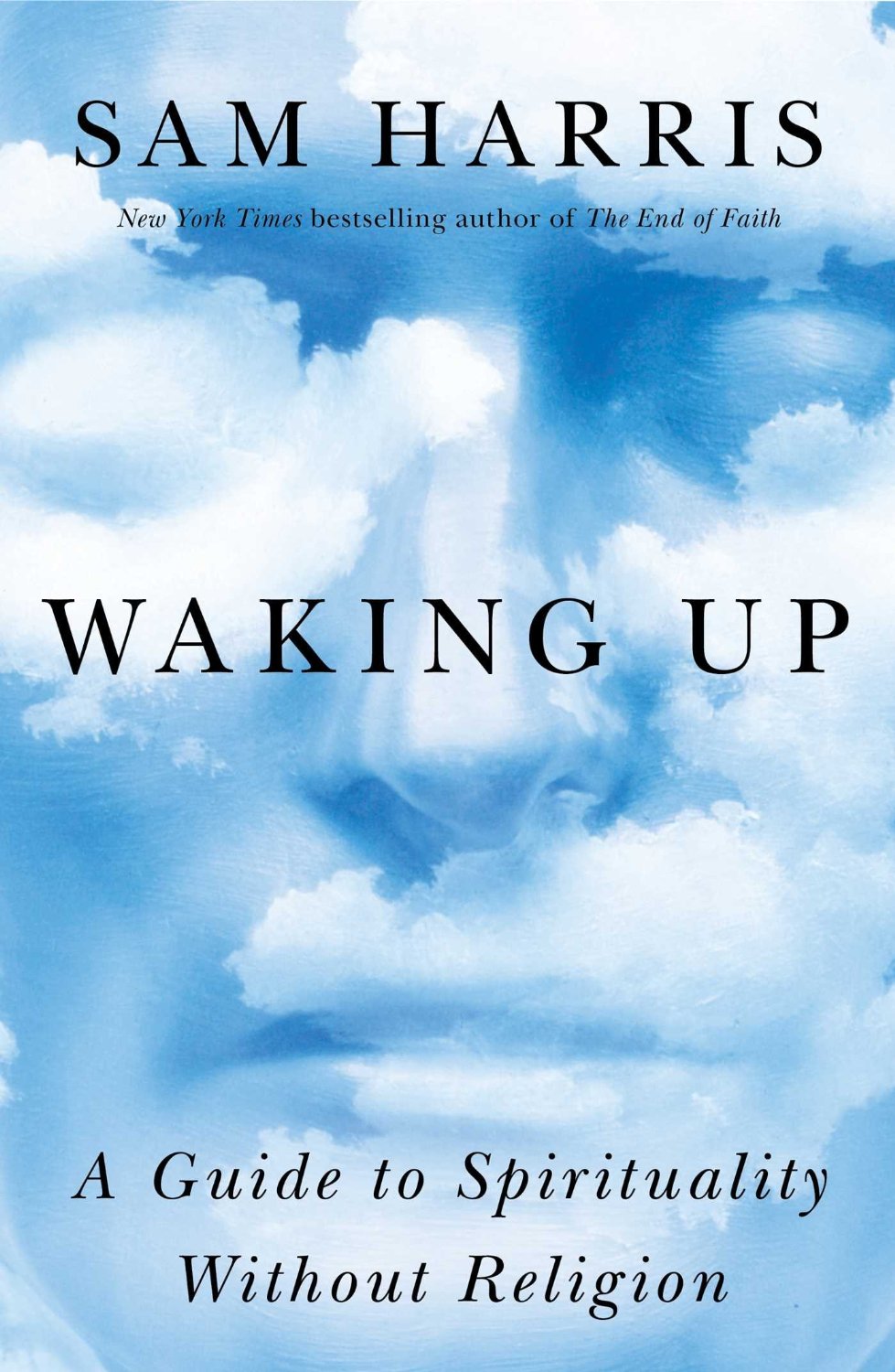
One voice can’t be heard. Unless, of course, it has a publicist. For years, it seems, I have been suggesting in my obscure corner of the internet that we’re not quite ready for the death of religion yet. I’ve never really doubted science, but I have noticed that science frequently draws the same conclusions as religion. Evolutionary biologists and neuroscientists exclaim, with some surprise, that religion has a survival advantage. Of course, big men with white beards sitting on thrones in the sky just won’t do, but the underlying concept has utility. So we’re told. Now Sam Harris, author of The End of Faith, one of the four horsemen of the new atheists, tells us that it’s okay to experience what has been known as, conventionally, a religious experience. Call it transcendent (I always do), but no matter what the chemical mix you concoct in the brain, it will feel good. Perhaps better than anything merely biological ever will. You’ll sell a million books. If you’ve got a publicist.

To me it seems that the religion question is a no-brainer. It wouldn’t persist if we had no need of it. Unlike the appendix, which seems not to have taken the hint that it is entirely vestigial, religion helps people (and perhaps some animals) survive. It doesn’t have to be sitting on an uncomfortable pew on a Sunday morning. It might be in the giddy heights of the Rocky Mountains where you can see to eternity and beyond and the rarity of the oxygen makes you lightheaded with a hologram of immortality. It might be the piercing peace that comes with light refracted through a glass so blue that superlatives fail you. It might be in imaginary vistas of an ice-bound Arctic where, you’re just certain, Nordic gods linger just out of sight. Transcendence can even come from traditional religious experiences, or so the stories of the saints proclaim. Anyone can participate. Those who have never forget.

The New York Times, in the Sunday Review piece by Frank Brunl (Between Godliness and Godlessness) introduces Sam Harris’s new book, Waking Up. I know I’ll read it. According to the article, Harris discusses his own experience of transcendence. When Harris has such a revelation, it is a best seller. Or it will be. For those of us who quietly suggest moderation between bombastic religion and bombastic science, it is merely another day in the life of the quiet ones who observe without being heard. True, it takes courage in this culture to dole religion a knock on the head. It is not, however, going to send faith to a premature grave. We still need our religion. We might not call it that any more. Name it spirituality, or transcendence, or mystic mumbo-jumbo, but when it hits you it’s like an atheist in Galilee. Some call it a electrochemical reaction in the brain. Others call it walking on water.

Dore Walk on Water


Religion, Technically

Technology World HistoryOne of the truths of history is that technology has always been with us. Reading Steampunk stories always boosts my historical sense of the interaction of technology and civilization. Civilization, to the best of our knowledge, coalesced around the idea of religion. Kings rule at the behest of gods because, if it came down to just a matter of swords and games of thrones, there’s always somebody who’s willing to die for the sake of challenging authority, or taking it over. Unless the gods give it to someone. With this in mind I read Daniel R. Headrick’s Technology: A World History, a brief exploration into how we progressed to a hive mind (not his word) through smartphones from an initial band of scared apes two-footing it across the savanna with pointy rocks. The whole trip may have taken millennia, but once we reached a couple of flash points (the “Big Bang” of about 70,000 years ago when abstract artifacts began to appear, and then the birth of civilization about the time Sumer was organized) things sped up at a dizzying pace. Despite the anti-science rhetoric of the Religious Right, there’s no denying that we’re not in Eden any more.

We are accustomed to think of technological development as being cold and rational. Trial and error, based on brute mental power willing to bully through the dark forest of superstition, leading us to new heights. But from the early technology that led to Stonehenge and the pyramids to the coded message “What hath God wrought?” religious wonder has stood behind technological development. Indeed, in reading Technology it became clear that up until very recent times scientists got along with god, and sometimes even shared the credit for the devices they created. Reading about the Antikythera mechanism had me thinking along these lines: if someone had invented a kind of computer millennia ago, why didn’t it transform society in the first century before the Common Era? The answer can’t be that it sank beneath the Mediterranean, because other such devices likely existed. Why no Roman Empire Industrial Revolution?

Headrick makes it clear that early societies sometimes did not promote technologies. Technology was not just a matter of what we could do, but it was a means of social control. Those who charted the flow of wealth and power would have interest only in technologies that enabled the continued growth of that system. All the rest was just icing. People knew the basics of electricity long before a practical use was found for it. Petroleum products were known even to the Sumerians. The wheels of industry, however, are greased by more than just oil. We construct worlds, and gods used to direct our efforts. Now we let our technocrats call the shots. We write blogs wondering how religion fits into a nano-tech world. There may be some logic in it, but once we’ve left our footprints on the moon—who used to be a god—we’ve replaced the deities in the celestial sphere with those in our own heads. And there’s no going back.


Watchers and (Un)holy Ones

HiddenOnes Angels, demons, djinn, watchers, giants, and a healthy dose of fantasy pervade Nancy Madore’s novel, The Hidden Ones. In this present world where, I’m told, the supernatural is irrelevant, it is pleasant to come across a work of fiction that delves so deeply into the pagan roots of Judaism, Christianity, and Islam. Monotheism does have its own skeletons in its capacious closets. Madore is a novelist who insists on prying open those doors long shut, and spinning a tale that involves first responders, shady military officers, and a band of rather hapless archaeologists. And Lilith. Throughout the story Madore comes up with clever etiologies for stories that will appear in canonical form much later, and at one point I couldn’t help wondering if the screen writers of Noah had read her book. Well, actually, The Hidden Ones is the first of a trilogy, Legacy of the Watchers. I’m sure the next two books will contain many surprises as well.

The Hidden Ones put me in mind of Michael Heiser’s novel, The Facade. Both take on the mythology of the Nephilim, the fallen ones about which the Bible tells us enough only to leave us hungry. The early chapters of Genesis are like that. There’s so much going on that those of us reading it many centuries after it was written are left wondering what the full story was. The writers of the Bible had no compunction to disbelieve in monsters and beings beyond the human ken. Nor does the Bible attempt to systematize them in any sustained way. These creatures just are. As the old saying goes, however, fiction has to make sense—those who write with gods and angels have to make them fit into a system.

No doubt, the uncanny occasionally intrudes upon our rational world. The Hidden Ones presents one such intrusion that, ironically, takes some of the fact of the Bible while leaving the theology suspect. We know that even before the Hebrew Bible was complete ancient scribes were attempting similar things. The book Jubilees, for example, tries to fill in some of the unanswered questions of Genesis, including the watchers and details of the flood. Jubilees, however, never made it into the Bible thus depriving canonical status to the backstory that demonstrates how religion often chooses for ambiguity, leaving it to theologians to bring it all into a system. And novelists. And among those novels that tread where even J, E, P, and D quail, is The Hidden Ones.


Whether the Psalms

How about that weather? Changeable, isn’t it? I have spent a large part of the last few days going over the proofs for Weathering the Psalms, the book I wrote over a decade ago. While I’m excited with having the validation that comes with publication, I worry a bit about the changes that the last decade has brought. Although I live near some impressive libraries, my time is devoted to commuting and working and anyone who has tried to be a serious scholar as a weekend warrior only knows that it is unsustainable. One element that good research absolutely and uncompromisingly demands is time. When I began commuting into New York City three years ago, I taught myself to read on the bus. As someone who easily gets car-sick, this took an enormous effort, but it paid off in the number of books I’ve been able to finish. There are limits, however. Seriously research-oriented academic books do not fare well on a noisy commute or at early hours. As much as we scholars like to think our books are riveting, try reading them at 6 a.m. Perspective makes all the difference. In short, I had to leave the main body of the text of my book as it was a dozen years ago.

There is a lot of good information there. You notice things by laying out all the Psalms that refer to weather side by side. I can’t tell you those things here, since that’s the point of the book, but suffice it to say, I still agree that the material should be published. One of the main reasons is the change in worldview over the last several millennia. Although we like to complain about the weather, for most of us it is merely the inconvenience of being outdoors that brings it to focus. We spend our days behind computer screens, living a virtual reality. But when we have to trespass outdoors—weather awaits us. For those in the world of the Bible the opposite was true. Indoors was shelter, but not insulated like today’s homes. Most of the day would be spent outdoors, weather permitting. They knew a lot more about the practical aspects than we tend to. We, on the other hand, know the science but have tended to forget the experience.

IMG_1520

My book surveys a cross-section of the biblical worldview (the Psalms) for what it tells us about the weather in ancient thought. I suspect others have begun to explore this since I wrote my humble contribution to the discussion. Today I would have done it very differently, but Weathering the Psalms was written by a scholar isolated in a seminary, literally and figuratively in the woods. The fact that other scholars had noticed the weather now and again showed me that the task, though halting, was necessary. Rereading it is like a time-capsule. These were the thoughts of a younger man, employed full-time in a kind of academic setting. Hopeful that the next job would be worthy of tenure. Believing that there was a next job. But the weather is changeable. Indeed, we know it is unpredictable. Despite its archaic cast, I look forward to Weathering the Psalms and hope that it inspires others who are isolated to keep up the effort. Even if it’s raining.


Beyond Redemption?

NonbelieverNation The Roman emperor Gaius, it is said, was insane. He perpetrated such antics as declaring war on the North Sea, making his horse a senator, and appearing in public dressed as various gods. Better known as Caligula, Gaius is often presented as evidence of the decadence that would eventually lead to the fall of the Roman Empire. Civilization, we’re told, has progressed enormously since then. We put people on the moon, and we carry in our pockets technology that appears, to mere mortals, as if it’s magic. We have elected an African-American to the White House and men have magnanimously granted females the right to vote. Oh how far we’ve come! And yet, in the midst of our self-congratulation, we have not one, but a plethora of high-ranking politicians in all three branches of the government who believe the world is only 6000 years old. They firmly believe Jesus will return on a white horse (presumably to be made a senator) any day now. And there will be a massive battle of good (us, or at least some of us) versus evil (those not evangelical in orientation) that will lead to the end of the world. And they are easily elected. Is that a knowing smile I see on Gaius’ face?

David Niose, president of the Secular Coalition for America, has written an important book entitled Nonbeliever Nation: The Rise of Secular Americans. Before you run for your shotguns, be assured that Niose is—like most secularists—not trying to do away with religion. Secularity is all about the founding principles of this country: freedom of conscience, the right to believe what we will. Or won’t. Up until the 1950’s the secular aspect of this country was taken more or less for granted. Tellingly, Niose opens his book by looking at the presidential elections of 1912 in which not one of the four candidates had a problem with evolution and even the most religious of them was very much a moderate. A century later and we have rampant Fundamentalists well funded and ready to push other nations toward initiating Armageddon. “Well, they started it!” And still, secular Americans are consistently portrayed as insidious snakes in the garden, trying to destroy everything.

It is difficult to read Nonbeliever Nation and not feel embarrassed as we see the promise of an advanced nation winding back its clock to the point that the educated are presented as ignorant at best—or more likely, evil. Where churches and corporations are increasingly difficult to tell apart, and where basic civil liberties for women and gays are still considered somewhat suspect, as if they hadn’t cleared the desk of the Big Man upstairs. Yes, he does have a beard and a son. And yet, despite the message of that putative son—known as a pacifist with radical ideas about social equality—the faithful bar the way for the oppressed while building the most massive arsenal in the world’s history. Rome, they say, was not built in a day. It didn’t even fall until 476, but already in the first century, large cracks had begun to appear. The difference is that America is far more religious. Does that give us any better chances, or worse? Read David Niose and decide. And, since global warming is real, the North Sea will eventually win in the end.


Clockwork Heavens

DecodingTheHeavensIn a museum in Athens sits a device chock-full of gears and cogs and dials. Indeed, it looks quite a bit like the movement of a pre-digital clock. This particular object, known as the Antikythera Device, is what would sometimes be labeled an “out of place artifact” were its provenance not so well attested. History doesn’t always play fair. Jo Marchant’s Decoding the Heavens: A 2,000 Year Old Computer—And the Century-Long Search to Discover Its Secrets tells the fascinating story. Discovered by sponge-divers blown off course by a storm in 1900, a sunken ship at Antikythera became the first ever site of a ship-wreck excavation attempt. Even today underwater archaeology presents numerous challenges, but in the turn of the previous century, even land-based archaeology was a kind of glorified treasure hunt rather than an attempt to reconstruct ancient history. As the divers visited and revisited the site into 1901, they discovered ancient Greek statues that are among the best preserved from the ancient world. They also found the corroded box of gears that nobody really noticed for several months.

Marchant carefully unravels the slow process of discovery, acclaim, and forgetfulness that accompanied learning about this highly advanced computer. As with many other important finds, World Wars I and II led to distractions that made history somewhat less appealing than killing millions and then trying to recover from the damage. (The Ugaritic tablets, as I’ve often suggested, suffered a similar forgetfulness for being found at the wrong time.) As scholars, usually only one or two in a decade, began to notice the Antikythera mechanism, it became very much an object out of time. A sophisticated computer for calculating the movement of the sun, moon, and planets, the device could also show the phases of the moon, predict eclipses, and keep track of the Saros, Metonic, Exeligmos, and Callippic Cycles (18, 19, 54, and 76 years in duration, respectively). These cycles accounted for the adjustments needed by leap years and other fixes in the modern calendar. I can’t even keep track of Daylight Savings Time.

Adding to the mystery and drama, the Antikythera Device dates from the first century BCE, a time confirmed by radiocarbon dating and the presence of coins found on the ship. It is unknown who made it, but the influence of Archimedes is implicated. A similar device would not be known for another 1500 years with the beginnings of the Early Modern Period. The Roman Empire, which held power in the Mediterranean world at the time, was on its way toward the legendary decadence that would lead to its inevitable fall. It seems that a culture based on military might had little use for academic devices that were literally centuries ahead of their time. History does not repeat itself precisely, but broad strokes may often reveal more than passing similarities. And for those who want to discover a computer than shouldn’t have been, Marchant’s book is an excellent introduction to how the wisdom of the ancients still keeps us guessing.


Daydream Believer

ReligionForAtheistsI have finally found a book that will sit next to my copy of Marcus Aurelius’s Meditations. In this disjointed age of angry Fundamentalists and even angrier atheists, where people bowl alone and don’t sleep well, Alain de Botton has shined a ray of hope. Well, pessimistic hope, but still, I felt more invigorated by Religion for Atheists than I have by a book for a long time (search my category “books” and you’ll see what I mean). Raised as an atheist, de Botton doesn’t share the rabid fury that converted atheists often exhibit. More importantly, he recognizes that, despite its supernatural teachings, religion got a lot of things right. Basic issues such as kindness and compassion have little place in a society that is built around acquiring as much for yourself as you can. Even his chapter on pessimism rang true.

Subtitled A Non-Believer’s Guide to the Uses of Religion, some might consider the book opportunistic, but de Botton approaches religion from a purely practical and openminded angle: it often works. Religion supports (or supported) education. Numerically most of our colleges and universities in the United States have (or had) religious beginnings or affiliations. Religions also supported beauty in art, architecture, and liturgy. The religious culture provided places to meet others who thought like you, and where you felt safe. It was not afraid to be blunt about values. Many would dispute these positives, tending instead to focus on suicide bombers and child abusers. No doubt these evils also exist, and probably draw their inspiration from skewed religious views. Still, as a sincere outsider can see, religion offers much that society has no backups in mind to replace in this secular age.

In a pointed discussion of influence, de Botton mentions the power of institutions. Secular society has demonstrated repeatedly that it lacks the will to finance higher education. Secularists are terrible at organizing themselves. Reading de Botton’s suggestions for secular institutions, I almost rose from my bus seat and applauded. If Bill Gates or Jeff Bezos would put up the money for an institution on de Botton’s model, I’d be first in line to apply for a place in the Non-Religion Department. (A disclaimer here—although I met Jeff Bazos once, I can’t pretend to know his or Bill Gates’s religious outlooks; I only recognize success when I see it.) In any case, until we learn that one voice alone—no matter how many books s/he sells—cannot change anything substantial, we will be mired in impotence. To influence social change you need the combined resources of an institution. And, choose to like it or not, history tells us that in the long run the most successful institutions have been formed by religions. Alain de Botton has, I believe, given us something to believe.


Just Passing Through

SpaceTimeTransientsMichael Persinger is a curious and rare scientist. Apart from occasionally making it onto Through the Wormhole episodes, he is also known for his somewhat unorthodox willingness to ask unfashionable questions. I just read his book, co-authored with Gyslanine Lafrenière, Space-Time Transients and Unusual Events. What makes Persinger (the lead author here) so unusual is that he is willing to admit that unusual events happen. Most scientific studies begin with the assumption that the uncanny is unreal, and that people who witness the unusual are unbalanced. Most of us, I would venture to say, have noticed that strange things do happen from time to time. Those who read all the way through Space-Time Transients may be surprised to discover that Persinger and Lafrenière offer an empirically-based hypothesis that places many unusual events squarely in the realm of scientific explanation. The acceptance of woo this is not.

For an old religious studies student, such as me, it is refreshing to see scientists at least asking the question rather than sweeping all the unorthodox evidence off the table. Not everyone who has experienced a fall of fish from the sky or a poltergeist in the bedroom is a deluded liar. Strange things do happen. Space-Time Transients, however, asks what seems to me the perfectly logical question: what’s going on here? Yes, some accounts are exaggerated. Others are fabricated. Still others clearly remain. Should we call names or should we try to figure out what is behind all this? One of my favorite unusual events is the coincidence. There may be nothing supernatural at work, but the oddity of the situation leaves us wondering. Shortly after being hired by Routledge, on my way home through a very crowded Times Square, I saw someone crossing Seventh Avenue drop a five-dollar bill. This person was hurrying in the opposite direction from me in the midst of a crowd, and was far enough away that calling out “you’ve dropped some money” would have only caused a feeding frenzy. It was only a fin. The next morning, coming to work over on Third Avenue, I found a five-dollar bill on the pavement. With the exception of pennies, just about all the dropped money in Manhattan is quickly scooped up by the needy. Could this have been the same dropped bill from over twelve hours before, on the other side of the island? Perhaps not. But why a fiver in both cases? Money does not grow on skyscrapers. The story gets even weirder, but you’re not here to read about that.

Scientists who are willing to admit that strange things happen (the names of Rupert Sheldrake and Dean Radin come immediately to mind) often face difficult times being taken seriously. They are, however, asking the big questions. Ironically, it is often the notice of strangeness that leads to advances in science. As one quip has it, science grows not because an observer says “Eureka!” but rather, “that’s strange.” In a world where strangeness is associated with religion, and religion is for the deluded, we have perhaps cut off an obvious avenue for learning about our strange universe. As Persinger and Lafrenière point out, we live in a very small habitation, viewed as a cross section of a planet that is itself not terribly massive, in an infinite yet expanding universe. To think that we’ve figured it all out by now is perhaps the strangest idea of all.


Evolution’s Snapshots

DarwinsCameraIn America’s political climate any book about Darwin takes on a religious cast. As strange as it may seem, an odd equation exists between Darwin, evolution, creation, and the Bible. We forget that Darwin was a retiring man with many interests and a very keen intellect. Erstwhile groomed for the clergy, he lived at a time when much of the world was known really only to the local inhabitants, and observations were still mostly made by the human eye in person. So it was that as photography developed, a new avenue into science opened up. Darwin’s Camera, by Phillip Prodger, is a rare look into, as the subtitle says, Art and Photography in the Theory of Evolution. Darwin wrote several books. Among them was The Expression of the Emotions in Man and Animals. This book was among the first scientific tomes published with photographic evidence to illustrate, if not prove, the points being made. Prodger takes us through the process by which Darwin procured and commissioned his photographs for the book and reveals some deeper truths about his life.

Interestingly, one of the sources of early photos was asylums. There was a belief, apparently, that photographs might be used diagnostically. One of the emotions that was presented to Darwin for his consideration was religious rapture. (Not that I can make any great claims here, but having experienced at least mild versions of such states—whatever their physiological cause—I know that they are powerful.) The observation comes through that religious rapture is difficult to distinguish from insanity, on the face of it. This may sound like an anti-religious slur, but it’s not. Ask around the mystics and you’ll see what I mean. Sanity has its uses, to be sure, but mysticism is all about letting go.

The only real religion in this book comes in the confrontations to Darwin’s evolutionary theory. Prodger does, however, briefly delve into Darwin’s late (and brief) concern about spirit photography. Shortly after cameras were developed, photographic tricks evolved. The Victorians, as we all know, had a very palpable sense of death’s nearness. It is no accident that Spiritualism developed during this time period when a reasonable lifespan was anything but assured. Spirit photographers claimed to capture ghosts of the dead revisiting the living. Darwin, who’d lost a beloved daughter prematurely, knew what grief was. He did not, however, allow it to interfere with his critical thinking. Photographs could be used to prove a point, but they could also be used to make a false claim. Darwin’s success in his book on emotions falls somewhere in the middle. He did have to have some staged shots to illustrate his point. Ever the gentleman, however, Darwin’s decisions were made to enlighten, not to deceive. One wonders whether creationism can even remotely make that same claim.


Infernal Religions

infernalDevicesThe first steampunk novel I read, although some would dispute the classification, was Neal Stephenson’s The Diamond Age. To be sure, I’d noticed other Victorian-style science fiction, but the idea of prescient technology settled into my head to nest for a while. I read a few other exemplars of the genre, finding each interesting in its own right. Having just finished K. W. Jeter’s Infernal Devices, however, I get a sense that I’ve neared the fount. Jeter is generally credited with coming up with the neologism “steampunk,” and this novel, while not his first, is fascinating for the heavy religious symbolism that is used throughout. In our secular, post-Christian age, we tend to forget that in the nineteenth century (actual, if not alternate reality) religion still played a tremendous role in people’s lives and outlooks. Infernal Devices uses that outlook quite effectively. The remnants of Cromwell’s puritan cause appear as the Godly Army, set against science and technology in a society still imbued with religious belief. When a flying machine appears overhead, the Scots suppose it is the beast of Revelation harbinger of the world’s end.

Like most steampunk offerings, Jeter offers us plenty of mechanical wonders. The hapless Mr. Dower, our protagonist and narrator, is the son of a mechanical genius, now deceased. The story involves Dower trying to unravel the many strands his father wove in a lifetime of invention and innovation. The one device that stood out to me, however, was the automaton priest and choir of Saint Mary Alderhythe, Bankside. Dower’s father had invented a robotic priest to go through the mechanical motions of an Anglican mass. Having sat through hundreds of such masses, I could see the point he was making. There are variables, but the overall draw of ritual is, well, its ritualism. The sameness that assures an assuaged deity and a safe congregation. The Godly Army, however, is more revisionist in intention.

Jeter, I’m sure, did not intend for the novel to be read for religious truths. It is rollicking and fun, with characters that you can’t believe but you want to. The driving force, however, behind much of the story is the religious bias of elements of London society. Dower, blamed for vices he doesn’t really have, is chased from his home by the Lady’s Union for the Suppression of Carnal Vice. The Godly Army, however, steals the show. Perhaps the most profound observation comes from Scape, who quips “That’s what you get.. when you give people Bibles and guns,” about the Godly Army. “It just messes up their brains.” At this point I began to wonder whether the story were really fiction after all. In this case the truth indeed perhaps lies in steampunk’s alternate history.