Literate Monsters

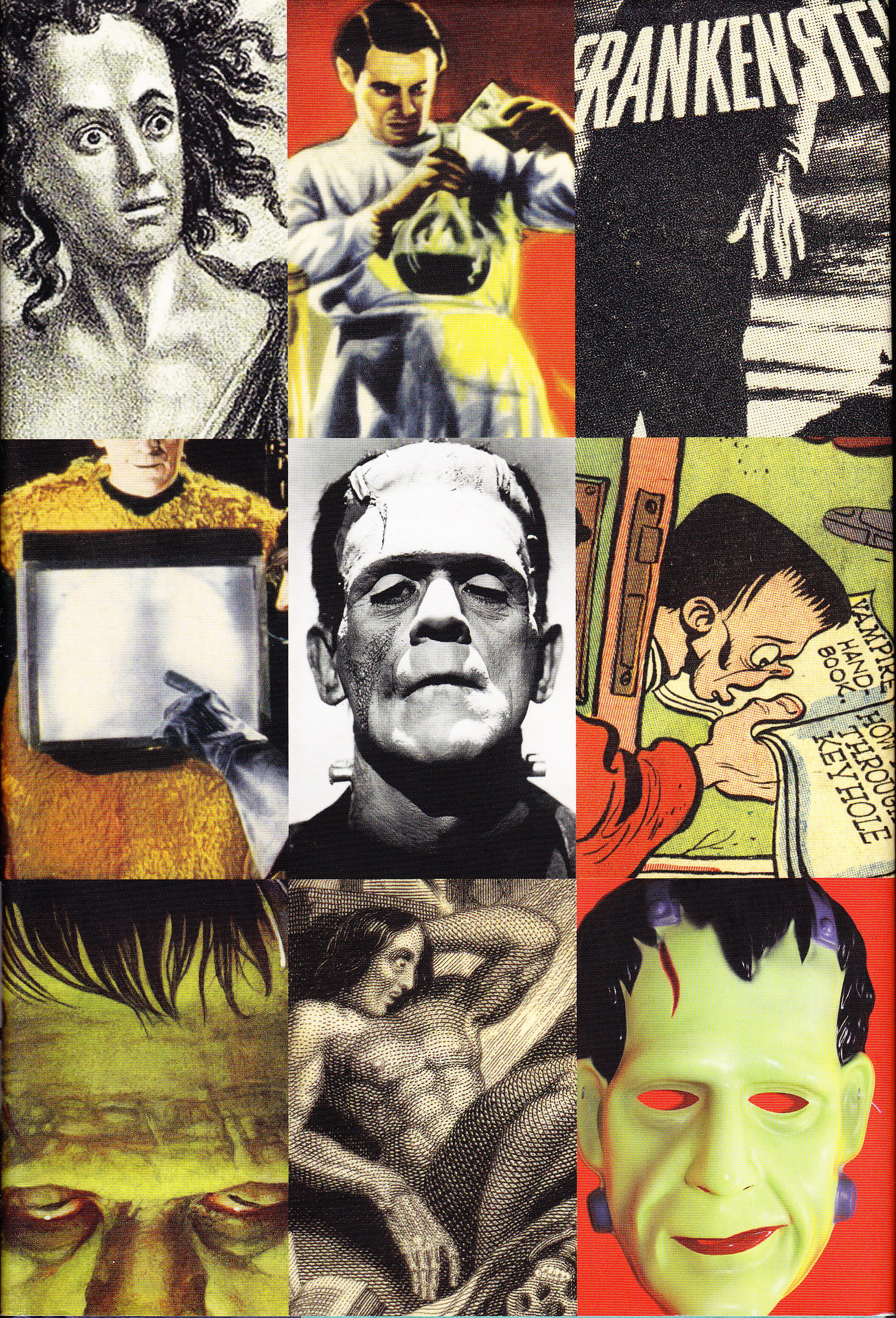
Skin-ShowsLiterary criticism is not for the faint of heart. Biblical scholars long ago adopted the methodologies of literary criticism since it had become clear that an absolute meaning for any biblical text will always end up being a chimera. Many of us are versed in the techniques of structuralism, post-structuralism, deconstructionism, reader-response, post-colonialism, and any number of other means of parsing hidden truths from texts. Since it is October and monsters have a way of creeping into the psyche about now, I read Judith Halberstam’s Skin Shows: Gothic Horror and the Technology of Monsters. Halberstam is using the word “technology” technically here, so this isn’t the easiest of texts to digest. Still, for those of us haunted by monsters this text does tap into one of the main connective tissue between monsters and religion: meaning. As Halberstam notes, the Gothic suffers from a surfeit of meaning. There is just too much meaning bursting out that we have no choice other than to analyze.

Beginning with Mary Wollstonecraft’s Frankenstein, and up through Bram Stoker’s Dracula into the modern horror film, Halberstam probes deeply into the layered meanings offered by the Gothic discourse. The monster is a transgressive creature, one with indistinct boundaries. I couldn’t help but to think how odd it is to suppose that we end at the limits of our bodies. The things that we do influence our environment, and we are capable (often through science) of a kind of spooky action at a distance (think of drones, HAARP, or fracking—I’m talking literally spooky here). As Halberstam points out more than once we don’t make monsters, monsters make us human.

Skin Shows is all about boundaries. Biological, psychological, sexual—we define ourselves by our boundaries. The monster is no respecter of such boundaries, forcing us to face our own definitions with a certain ambivalence. What do our monsters say about us? Do we really want to know? Monsters can be brutally honest. More honest, at times, than religions are willing to be. As views change over time, so do conceptions of the monster. Religions frequently attempt to hold out against inevitable change. Perhaps such stalwart bravado is admirable, at least until we experience a dark and stormy night of the soul. Here be monsters.


Quack, Quack, Honk

HappyHappyHappy Although I’ve never hunted, there is an undeniable sense of power involved with shooting a shotgun. Maybe it’s the harsh kick against your shoulder as a clay pigeon many yards away explodes in mid-air and a trickle of gunpowder scent tickles your nostrils. It is a temptation, however, I think most people—present writer included—should avoid. I don’t own a gun and I don’t watch television. I suppose that makes me a kind of pariah in my own country, but when I heard about Phil Robertson’s book Happy, Happy, Happy: My Life and Legacy as the Duck Commander, I knew I would eventually read it. I’ve never seen Duck Dynasty, but like Phil Robertson, I grew up in a family that middle-class folks would consider poor. Even now, many decades and degrees later, I’m still playing catch-up, unable to afford a house. Worried excessively about college payments. So how did Robertson do it? How did he become a millionaire and find a publisher? According to his book the answer is simple: Jesus Christ.

Happy, Happy, Happy is an engaging memoir. While I disagree with most of what Robertson says, it’s hard not to like him. A simple, self-made man from humble circumstances. He hides his master’s degree well. Like Augustine, however, it was only after a misspent youth that he insists others don’t do the same. “God grant me chastity,” Augustine once quipped, “but not yet.” Robertson found Jesus, or the other way around, in his mid-twenties. He, not unlike many victims in recovery, gives the credit to God. His answers are simple: read the Bible, live by it, kill ducks, and everything will be fine. Interestingly enough, two of his four sons, raised on the Gospel, also went astray before seeing the light. This is not schadenfreude on my part: I have personal experience with family “on the wild side” and I would never wish it on anyone. It’s just that the law of averages isn’t so great here. For half the boys the Gospel wasn’t enough, at least at first. The darkness pushed them toward the light. Simple fixes almost never lead to viable long-term solutions.

Phil Robertson is another of those reality TV phenomena of the “plain folk” that so fascinate media types. They can’t seem to get enough. Some of us authentically paid that price below the selective eye of the media. For some of us, the answers are much more complex, if not distressing. Hard to put that up on the screen and guarantee your advertisers that people will watch. We only want complexity knocked down. Even the fun Big Bang Theory wouldn’t be nearly so popular if the smart guys didn’t get their comeuppance week after week. I am moved by Robertson’s story. His devotion to the Gospel is admirable and it is clear that it makes him happy (happy, happy). If I ever met him I would probably nod politely in agreement, although my experience has diverged from his. We would probably have to eat at separate tables, despite my good will. The fact is, he has lots of guns and I have none.


Dying for Religion

devotedtodeathReligions never lose their ability to surprise. This entire concept of belief is one with which I am intimately familiar but about which I’m completely puzzled. If we’re honest, we don’t know from whence belief comes or why it is so effective in keeping people balanced. (There are fanatics for rationalism just as surely as there are for religious faith.) When I saw R. Andrew Chestnut’s Devoted to Death: Santa Muerte, The Skeleton Saint, I figured it would be a good read for October, when Halloween comes so readily to mind. Although I’ve studied religions all my life, I’d never heard of Santa Muerte, “Saint Death.” Probably this is because, as a representative of folk religion, Santa Muerte is not an “official” religious figure. Folk religions are what the faithful actually believe, rather than what the religious officials declare that they will believe. Many a deluded bishop would learn to his chagrin, if he deigned to speak with mere laity, that his platitudes count only in the high court of theological heaven. Saint Death is more like the experience of the rest of us.

Chestnut, a scholar of Mexican religions, discovered Santa Meurte while living in Houston. His book is a narrative introduction to the background and history of the religion, its beliefs and practices, and a consideration of what the skeleton saint offers so many Latinos. Although the news in the northern reaches of America often does not bear it, Santa Meurte has regularly made the headlines in southern climes. As a symbol of death, and therefore potential protection from death, Santa Meurte has gained notoriety by her worship being taken up by drug runners and convicts. Mexico’s regrettably long struggle with poverty and sometimes corrupt governments has led to a society in which death is very familiar. As Chestnut demonstrates, Santa Meurte likely has her roots in the Grim Reaperess of plague-ridden medieval Spain, and she has been a somewhat hidden figure in Mexican Catholicism for at least a century or two. Her first public exposure came in 2001, and since then her association with the criminal element has been repeatedly highlighted in the media.

Santa Meurte, however, is a source of consolation for those who have little in life to anticipate but death. Often, in societies driven by the acquisition of wealth, plutocrats forget that justice comes in the guise of the Reaper. To the believer, Santa Meurte is not evil. She is a natural offshoot of the Catholic veneration of saints in a culture where human aspiration is quickly and unfeelingly snuffed out. Those in positions of power claim the Santa is Satan, but they may be looking in the wrong place for evil. Pointing to the Gospel statements that death will be overcome, they overlook the passages that insist on giving away all that you have will make you ready for the kingdom of heaven. Death, even if trumped at the final trump, will greet us all by and by. Santa Meurte is a very practical saint. Chestnut’s book is a good choice to read when the chilly wind shakes the trees for their particular October rattle of dry, lifeless leaves.


When (Nearly) Everything Changed

WhenEverythingChangedMy wife and I just finished reading When Everything Changed: The Amazing Journey of American Women from 1960 to the Present, by Gail Collins. (In the spirit of the book, I wash the dishes while my wife reads to me.) Although Collins does not dwell on the religious motivations in “traditional” women’s roles, I couldn’t help pondering how religions, rather than encouraging equal rights, have often acquiesced to the unfair treatment of women as a matter of principle. That principle is often abstract and theological. More often than not it is also mythical. As society changed to allow a greater measure of equality in social roles for the sexes, religious leaders held back, concerned more about doctrine than people. This is perhaps the most disheartening aspect of religious belief—as a human phenomenon it too easily loses sight of humanity.

Historically, of course, the roles of the sexes were tied to reproductive necessities. Women with nursing children (and startling low mortality rates) could not do the heavy work required in the agricultural societies of antiquity. I am aware that this is over-simplifying—it seems clear, however, from the materials left to us from the earliest literate cultures that a basic biological divide determined appropriate roles. Not only were women victims of high mortality rates due to difficult childbirth, but infant mortality was also high. In such circumstances it was important to guard those who survived from the potentially dangerous work of protecting flocks and tilling fields. And this was the time when the ancestors of our religions emerged. Technology improved survival rates and quality of life, but religious dogma is very slow to evolve. Some dogmas still don’t even accept the idea of evolution.

Back to When Everything Changed. Yes, bottles and birth control gave a new freedom to women. Day-care and daddy involvement also helped. And yet, not everything changed. Seeing the progress, religions tended to cry “foul!” and insist that, for women anyway, nothing had really changed. No doubt Collins is correct about a large swath of life in the secular sector. Most jobs are open to both sexes, and issues of fairness, although still lagging, are starting to be addressed. Many major religious bodies, however, still hold women in a subordinate role. Basing their reasoning on theologies long outdated, they insist than nothing has really changed at all. If only the wisdom of women and their experience were taken seriously many religions would have changed for the better as well. Only when that happens will we be able to consider that, in Collins’ hopeful words, everything will have changed.


Do You Mind?

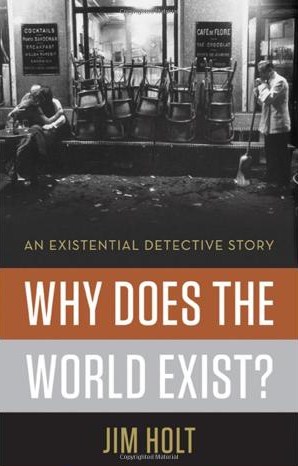
TheScienceDelusionSeems a lot of people are deluded these days. I know I am. Still, every great once in a while I read a book that helps me cope with the morass of everyday life in a way so profound that I feel elated. At least until I get to work. One of those books I cannot commend highly enough. Curtis White’s The Science Delusion: Asking the Big Questions in a Culture of Easy Answers is epiphanic. Not your typical (generally faith-based) objection to the New Atheist phenomenon, White asks more fundamental, and indeed, logical, questions. And he’s incredibly fun to read. Starting with the conundrum that often goes unspoken, White demonstrates that even the scientists among the New Atheists ascribe to immaterial value judgments without thinking through the implications. Having jettisoned religion, philosophy—the whole of the humanities, in general, as pointless, non-empirical window-dressing, even the greatest lights still claim their tenets. As White illustrates, stars cannot be beautiful without a concept of beauty. Beauty cannot be quantified, and is therefore beyond the empirical method. One could say it’s in the eye of the beholder, but science is uncomfortable with metaphors as well.

Materialism, often in league with politics and power-mongers, fails to account for much of human experience. The real danger, as White demonstrates, is when society simply accepts it because it comes from a white lab-coat. White, along with most of non-materialists, is not anti-science. Science clearly describes, in a pretty close approximation, the physical world we know. At least in the New Atheist camp, however, it doesn’t stop there. The take-no-survivors attitude causes problems because it is hoisted on its own petard of logic. The mind that is attempting to puzzle out science is immaterial. Mind does not equal brain. The cause and the result are easily confused. Flush with neuroscience’s success of describing the brain, we assume that science can also explain things as inexplicable as the nature of light, quantum mechanics, black holes, or the Tea Party.

White is not shy of talking about the elephant in the room. Consciousness is not a material phenomenon. If you are reading this, you know what I’m talking about. We are self-aware creatures. So seem to be some other primates, cetaceans, and corvids. If our minds could be quantified a lot of psychologist’s couches would be empty. Chemicals may affect the working of our brains and influence the performance of our minds, but when they wear off, it is still yourself staring back from the mirror the morning after. Those of us who spend our lives pursuing the humanities generally don’t try to take over science. It is very good at what it does. The world as we experience it—even the use of the word “experience” itself—is, however, more than physical. Even the New Atheists dream, and hope, and love. No matter what they may say, there is an inherent beauty in that.


Grendel’s Gods

GrendelGardnerSometimes I think that if I had to do it all over again, I might’ve chosen Beowulf instead of the Bible. Let me define “it” here: if I had to pick a vocation that would lead to personal fulfillment and personal penury, that is. Beowulf is the earliest written story in English and, it’s a monster story. What’s not to like? In honor of Banned Book Week, I decided retroactively to read a banned title, John Gardner’s Grendel. An early parallel novel narrated from Grendel’s point of view, we are introduced to the introspective, existentialist monster who is really just wondering, like the rest of us, what the point of it all is. Not surprisingly, the protagonist often addresses the question of religion—indeed, it might even be at the heart of the story.

In chapter nine, Grendel sits in the darkness in the ring of wooden gods of the Danes when Ork, the great, blind priest stumbles in and believes the monster is the Destroyer god. As Grendel toys with his theology, the old priest understands this all as a revelation, and although Grendel gives him no answers, the words are taken as divine utterances. The other priests, finding their leader out on a winter’s night, insist that he has gone senile, that gods do not reveal themselves like that. The old man, however, is unshakeable in his faith. As in much of the novel, there is more going on here than meets the eye. The deluded priest believes a monster is his god.

The question of theodicy (literally, the judging, or justification of God) is never-ending for theists. The world is a problematic place (made so, I must note, by human consciousness) for the creation of an omnipotent deity who is good. Too much suffering, Grendel, too many failed expectations. Clergy and theologians have, for centuries, tried to frame a convincing answer to the dilemma. The tack they all studiously avoid is that God is a monster, although some posit that as a straw hypothesis quickly to be knocked down. Gardner, although not a theologian, was the son of a lay preacher and farmer. One suspects that elements of that childhood crawled out through the pond with Grendel. One of the truly tragic characters, a “son of Cain,” Grendel still has an immense power on the imagination. And that power, at times, might even appear godlike.


Crowing Up

GiftsOfTheCrow Whether we climb up or down the evolutionary scale, one factor remains constant—our human sense of superiority. Despite the castigation of biblical-era thinking in the eyes of many scientists, few are willing to relinquish that Genesis-bestowed sense of being the pinnacle of nature. We know the universe is vast, but we assume we’re the best and brightest in it. Climbing down the ladder a bit, we like to distance ourselves from our fellow creatures because of our superior mental capacity. That is why I am so engrossed by scientists who explore animal intelligence. We find we are not so different after all. Gifts of the Crow: How Perception, Emotion, and Thought Allow Smart Birds to Behave Like Humans, by John Marzluff and Tony Angell is such a book.

If you’re like most people in this electronic age, you probably haven’t given much thought to corvids. Corvids are the members of the crow family: ravens, jays, magpies, and, of course, crows. Scientists have long known that these birds are exceptionally intelligent, and Marzluff and Angell have written a spell-binding little book that shows a remarkable level of intellect among the birds. Documented cases of tool making and use, conscientious interaction, and perhaps even language, have occurred among the corvids. We try to shoo them from our crops with “scarecrows” and we poison them en masse when they become “pests,” but when we take the time to understand them, we find that we may be far darker than the crows.

Not that Gifts of the Crow is all that easy-going. There is plenty of brain physiognomy and quite a bit about brain chemistry here as well. Knowing that not all of us are scientists, though, Marzluff and Angell include a generous portion of narrative description of what corvids have been observed to accomplish. For three days in a row I climbed off the bus stunned, scanning the skies for crows, just to see for myself. In this suburban jungle outside the New York City metropolitan area, crows aren’t so abundant as they were when I lived in the Midwest. They will, however, serve to remind me, when I see one, that our privileged place in nature has more to do with our thumbs than with our intelligence. When I saw a solitary crow atop a tree during a neighborhood stroll after finishing the book, I stopped, smiled, and bowed. Nature belongs to each and every creature, and there sat one intelligent enough to appreciate it.


All Booked Up

I remember places by books. Perhaps it is a sickness, but it is a wonderful illness—I love being surrounded by books. When I travel to a new place, a book often serves as a souvenir, as I recall where I discovered a certain title and decided that I want to own it. Of course, independent bookstores are rare and becoming rarer. Who can remember which Barnes and Noble was which? The loss of independent bookstores is a sign of culture collapsing, at least ideologically. Being surrounded by LED screens is just not the same. The viewing goes both ways. Some towns I associate primarily with their bookstores. Over a recent weekend I visited Cranbury, New Jersey for the first time in many months. Apart from its utterly charming, historic downtown, Cranbury is the home of The Cranbury Bookworm, one of my favorite used book stores. My optimism fell under a cloud when I saw the storefront empty. Suddenly, the compelling draw of this quaint town was somehow diminished. My wife and I walked down another block, and I was somewhat revived to see that the Bookworm had merely moved.

Of course, the new location was much smaller. I heard the cashier telling another customer that they had been forced to move and had kept only twenty percent of their stock. So much was clear from my own browsing. My past visits had been perhaps a little too imprudent, but I often walked out with an armload of happiness. This time I purchased a couple of inexpensive paperbacks out of a sense of duty. I support used bookstores in principle. I have had people tell me that we have too many books for the amount of space we can afford to rent. Some people regularly recommend a purge. In a world where finding a comfortable place to be encased by books is increasingly difficult, I have come to regret some of the treasures I’ve given away, or sold, over the years. If I can’t find a sanctuary for books, I shall have to make one. For those who never learned the rapture of reading, it is difficult to explain. I have a phobia of booklessness.

Photo credit: CillanXC. I miss Borders.

Photo credit: CillanXC. I miss Borders.

Even this thing we call religion began, fairly early, as an expression in writing. After people invented writing as a way of keeping receipts, they began recording religious texts. Eventually a Bible. Religious books proliferated. It may seem counter-intuitive, but even today Christian books make up a huge market, no matter how much head-shaking goes on by those who seek only secular lucre. Religion and books often go together, but even when our published parcels take a profane track, they remain lovable. They are more than texts—they are memories. One of my advisors along my academic path inscribed each book with his name, the place he bought it, and the date. Perhaps he infected me with the books-as-souvenirs idea. If he did, I thank him. And I will continue the elusive quest for the bookstore where I might pass a happy hour or two on an autumn weekend.


Ban Ban Go Away

I always seem to discover banned book week in retrospect. With the insane amount of time put into getting to and from work, and actually working, my daily bus ride is my main vehicle (literally) for reading. For eating forbidden fruit. Historically speaking, the first literature was religious literature. Much of it, if anybody bothered to read it, would end up on banned book lists, I’m sure. The Bible is granted a special amnesty, given its reputation as a divinely penned parchment, but it too has its share of unseemly topics. Sex is there almost from the beginning. Violence too. We could go further, but sex and violence are usually sufficient to land a book on the list. And the choices are always so period specific. Catcher in the Rye seems downright tame in the new millennium (or, indeed, Kate Chopin’s The Awakening), and yet we still find new books to condemn. I wonder if such books aren’t forming a new kind of scripture.

There was a time when religion challenged social convention rather than championed it. Religions have been co-opted and domesticated by political interests. Can you imagine the man who overturned money-changers’ tables in the temple on the floor of the stock exchange? We have quantified everything, even—especially—human beings. That which can be quantified can be measured and that which can be measured can be sold. Religions, but only those upholding the status quo, grease those wheels nicely. If we had a chance to know religious founders personally, I suspect we would have found banned books in their libraries. Ideas can be dangerous things.

Despite my generally kind words on this blog, I do read books that I don’t like from time to time. I would never challenge the right of the author to express his or her ideas, nor the publishers (no matter how misguided I think them) for promoting them. I am not the one to quantify. Looking over the American Library Association’s list of banned and frequently challenged books, however, I realize that my fiction-reading hours would be slim indeed. We tend not to ban non-fiction, challenging though it may be. It is the imagination that offends. Such is the power of fiction. Last week was banned book week. Time to look over the list of latest condemned editions to find what to read this week. I am always looking for future scriptures.

The usual suspects...

The usual suspects…


Monsters are Due on Main Street

MedievalMonstrosityNow that the slow descent into darkness has begun, my mind naturally turns to monsters. In the early days of this blog I felt as though I had to justify writing about monsters when I was limiting myself (mostly) to religion, but it is now clear that many scholars have recognized the connection. Monsters cross over boundaries, and, given religions’ focus on proper borders, declaring monstrosity is often a sacred task. That comes through clearly in Sarah Alison Miller’s Medieval Monstrosity and the Female Body. Utilizing mainly three medieval texts, Miller draws out how they present various aspects of the female body as monstrous. Predictably, the source of their conviction is frequently the viewpoint of the church, the dominant institution of the Middle Ages. Biology was a touch more advanced than it had been in the biblical period, but despite the figures, many writers assumed the male to be the default model of humanity and the female somewhat suspect. Given the multiple pluralities of the natural world around them, this idea is passing strange.

This book is not for the squeamish. Miller plumbs the depths of bodily fluids and the beliefs surrounding them in a pre-scientific era. Male writers wondering at the changes the female body undergoes, however, may have been a necessary stage in the growth of knowledge. It is easy for us today to suppose that equality should have been always on their minds, but Scripture, a large source of authority for medieval mentality, had cast the sexes into an uneasy opposition. The only figure in the Bible who seems sensitive to the unfairness of it all is Jesus. And even his viewpoint couldn’t change the conservative conviction that somehow God was truly the über-male and that all the females of nature were somehow subordinate. Dare we say it? Monstrous.

Miller closes her brief consideration by delving into the writings of Julian of Norwich. Julian was a most remarkable mystic who wrote of God in strikingly feminine terms. Turning those boundary-violating bodies into the sacred, here was one medieval writer who saw the female as normative, salvific, even. Julian never commanded the kind of authority that a male cleric could, but as Miller shows, even men in this period were considering the feminine aspects of a wounded deity. Reformation, however, snapped a masculine, Protestant lid on any such speculation. Today, ironically, many Protestant traditions have, at first reluctantly, admitted female clergy. The religious body of the Middle Ages, the Roman Catholic church, still keeps women in a separate, somehow subordinate role. Monsters come in many forms and they break down boundaries. Some borders, however, may be meant to be breached.


No Singing Matter

Canticle for LeibowitzA Canticle for Leibowitz, by Walter M. Miller, Jr., is one of those books that I read years ago, and when I picked it up again found that I remembered very little of it. I suppose this is one of the hazards of extensive reading—some important things get lost in the noise. I recall having read A Canticle for Leibowitz when I was a grad student at Boston University, and I remembered the detail of a grocery list being taken for holy writ in a post-apocalyptic world where, in a strange reincarnation, monks have once again become the guardians of knowledge. Little else remained. Perhaps part of the reason is that the book requires more experience with the church than I had in those days. One might suppose a seminarian would have about as much ecclesiastical experience as one might need. Not so. It did teach me, however, to read provocative books.

Like most dystopias, there is a deep bleakness to A Canticle for Leibowitz. In the light of recent developments in the papacy, the book is remarkably prescient. In the final pages of the final section, a radiation-sick woman and her young child, in constant pain, seek the government sponsored euthanasia camp. Abbot Zerchi, however, condemns this as a sin against God. Doctrine takes the place of compassion, and only moments later the final atomic strikes wipe the abbot and his monks off the earth forever. Yet there are monks on a spaceship, ensuring that any future planets will have the same uncompromising doctrine planted there as well. For a book published in 1959, it sounded incredibly contemporary. Miller’s anger still echoes throughout. The church builds societies that destroy themselves. A cycle of futility.

I wonder what the result would be if more people read such stories. It is, of course, easy enough to shut out any implications we don’t like and claim it is all a silly piece of fiction. The problem is that Miller is not too far off base. Our civilization does own much to its religious institutions. Those institutions sometimes have considerable trouble relinquishing control when society finds its grounding in science and technology. It is difficult to believe divine proclamations from above in the age of the space telescope. Yet, even so, we still elect to power politicians who look back millennia for the instructions on how to treat those of other genders or races. To do so, as Miller recognized, is to begin building bombs all over again. And even old Ecclesiastes declared that there is, in a Leibowitzian twist, nothing new under the sun.


A Certain Man Went Down

Among the progeny claimed by Wabash College is Dan Simmons. I’ve read a couple of Simmons’ ghost novels, although in reverse order. I read A Winter Haunting, which I quite liked, and followed it up with Summer of Night. Having lived in the Midwest many years, it was easy to visualize the scenes. Then came the time for my trip to Crawfordsville, Indiana. I started the day in South Bend, finishing up my meetings at Notre Dame. I’d noted on the map that, as is often the case, the places I need to get to just aren’t connected by anything resembling a direct route. Although the forecast said “30 percent chance of rain,” I’d awoken at 4 a.m. to a thunderstorm and it had been pouring all morning long. I could swear they were making plans to convert the great Notre Dame stadium into an ark. Perhaps I’d forgotten just how persistent Midwestern storms can be. Soaked, I crawled into my rental car to tool down to Crawfordsville. At least the rain had finally stopped.

On one of those highways in the middle of corn fields as far as the driver’s eye dares look, the low tire pressure light came on. I dutifully pulled over and called Hertz. The suggestion was to find a gas station and put some air in the offending tire. Someone could be there in three hours. Looking about me at the amber waves, I thought of the spirits of Dan Simmons’ stories. A car breaking down in the heartland. No one around to offer assistance. The illusion allusion was shattered when a stranger pulled over and asked me if I needed help. I recall a priest friend once tearfully confessing to me that he had, on a rainy night, refused to stop to help someone with a flat because of fear for his safety. I understood completely—it can be a scary world out there. “And likewise a Levite, when he was at the place, came and looked on him, and passed by on the other side.”

With multiple stops to put air into my slowly leaking tire, I limped my way from town to town, reaching my destination after dark. Along the way a fierce rainbow appeared to the east as the sun began to set. Once you’ve abandoned the interstate in Indiana, there’s no going back. I began to notice just how many churches dotted each little village through which I drove. Samaritans, I thought. As I write this in Crawfordsville, I think of the corn, sorghum, and soybean fields that inspired Dan Simmon’s ghosts. I think of a stranger, a woman of minority demographics, stopping to see if I needed help along a lonely highway. She was among those our society would deem vulnerable, and yet she was the only one who stopped. And I think of parables. “But he, willing to justify himself, said unto Jesus, And who is my neighbour?”

IMG_0988


Just Binghamton

I seem to find myself in Binghamton again. The town, while clearly economically depressed, still retains a bit of its 19th-Century charm with some beautifully restored downtown buildings and a sense of history. While too many store-fronts are still vacant and too little money exists to improve the area sufficiently, I happened upon a warm and cheerful independent bookstore—River Read—and that always gives me hope in such circumstances. Bookstores such as this are like seeing the first crocuses after a long, harsh winter. There is some life in this seemingly dead planet yet. Outside the bookstore stands a statue of Martin Luther King, Jr., backed by a sluggish river and yet more vacant windows. I think of justice and all that it means.

IMG_0969

My own hometown (not Binghamton) is virtually a ghost town. It is a feeling difficult to describe, visiting a place that served as your first secure setting in the world only to find it crumbling under an economy with so much wealth with so little reach. Where is the justice in that? Binghamton, near the founding location of IBM, ironically began suffering at the decline of the Cold War. Manufacturing has gone for pastures of a different kind of green, leaving a sometimes sad and forlorn city in its wake. Binghamton sheltered a young Rod Serling, a man who would give the world the Twilight Zone and its endless spinoffs. It is home to a first-rate university. And a wonderful bookstore.

While in River Read we heard some locals talking, in almost Springsteenian fashion, of local civic traditions that had disappeared. Times have changed. Cities like Binghamton don’t draw in the curious or those with liberal purse-strings. Endicott Johnson, the shoe manufacturer, developed a strong sense of welfare capitalism in the city last century—capitalism with a heart seems to have gone extinct these days. The idea that those with the means to create jobs and livelihoods should care for their employees would seem to be a matter of common sense. Instead, common cents have come to rule. Binghamton University is investing in the town, and a sense of cautious optimism dares to suggest itself. Justice is a matter of distribution rather than entitlement. And that’s why I’m standing out here under gray September skies, staring at the statue of Martin Luther King, Jr.


Dystopian Dreams

Hunger_gamesOne of the most terrible stories in the Bible is the slaying of the firstborn of Egypt. Of course, depending on your point of view, this was either a necessary evil or an act of wanton cruelty by a deity with anger issues. Still, it ends with a bunch of dead children. Then, as if that weren’t enough, a horrible reprisal comes at the birth of the child of the main character, with Herod slaughtering the innocents in Israel. And let’s not forget the very source of Kierkegaardian angst, the knife poised above a bound Isaac by his completely believing father. More recent, less literary examples could add poignancy and reduce the distance: Columbine, Newtown, Virginia Tech—the murder of children is beyond the farthest reaches of perversion into a realm that no longer classifies as human. I think the Bible might agree with me there. So it was with some trepidation that I read Suzanne Collins’ The Hunger Games, at the urging of my daughter.

Although written for a young adult readership, The Hunger Games is a classic dystopia with a dark future and repressive government mandating the killing of twenty-three children every year, just to make a point. Deftly combining teenage angst with the bleakness that just about any future-based novel seems to hold, Collins spins a sad but engrossing tail. Dystopias have grown in popularity since some of the earlier, Cold War exemplars such as 1984 and Fahrenheit 451. The number of dystopian novels grows every year. I suppose if I were an elected official I might cast a worried eye towards the increasing number of exposés of a society where consumers read so many books of the future gone awry. I know many intelligent, sober people who seriously wonder if we’ve already shifted onto that track. Tomorrow is only an extension of today.

Dystopias are among the most biblical of literary genres. The Bible itself is a bit of a dystopia. Consider the framing of a perfect world ending up with the original apocalyptic tale, the Apocalypse, or Revelation. It only ends well for 144,000. In-between there are pages and pages, chapters and chapters of oppression, violence, and suffering. Paradise gone bad. That’s the essence of the dystopia. Although Collins doesn’t make any overt biblical or religious references in The Hunger Games, the very genre she chose can’t escape the biblical bounds laid out for it. And besides, long before the year both Collins and I were born, the Bible had already set its vision for our society. And that vision, to our everlasting trembling, includes the massacre of innocents.


No Cult

MakingAmericanReligiousFringeThe image of hundreds of lifeless bodies in the jungles of Guyana foregrounded by a metal tub of poisoned Flavor Aid is a difficult one to forget. If it were not for the media, however, most of us never would have heard of Jonestown. The term “cult” was applied to Jim Jones and the People’s Temple, just as the word was increasingly becoming a pejorative term for those with “other” beliefs. Sean McCloud’s Making the American Religious Fringe: Exotics, Subversives, and Journalists, 1955—1993, is a probing study into what makes a religion “mainstream,” versus a “cult.” (I know, too many “scare quotes.”) McCloud considers the role that journalists, as reporting in major news magazines, have had on determining American views of what is normative religion. If, that is, normative religion can be posited at all. It is quite clear, upon reflection, that any religion has some odd beliefs: you can’t wear this or eat that, you have to be at this place on this day, you must shave your head, etc., etc. The question McCloud explores is why some end up being called cults and others do not.

Scholars of religion have abandoned the term cult, for the most part, because of its arbitrariness. The defining markers of “cults” are unclear, and one religion influences another so that a continuum forms from Moses to Moonies. That’s not to say religions are all the same, but it is to say they are not so different either. The declaration of a religion as a cult, if based on belief systems, is tenuous. All religions make claims impossible to verify. Some, very traditional, are also very small in membership. Religions have been fabricated from antiquity to present, and even as I write this new religions are likely being conceived somewhere. McCloud points out that the popular media gave us the distinction between “mainstream” and “cult.” That distinction itself may be more telling than the differences between various groups of believers. It is the language of exclusion—true religions versus false religions. And any more than one religion, if considered seriously, is problematic.

Religions, old and new, large and small, make truth claims. These claims cannot be tested this side of eternity, so they must be taken by faith. The minds of many will be turned toward extreme actions motivated by idiosyncratic understandings of religion today. McCloud shows us that fringe is an integral part of the fabric—religion is woven from the experience of people through the millennia of our existence. And yet we still have no consensus. We have enough experience, however, to know that when one religion unravels another will be woven from the dangling threads. Some will be misguided, although all will claim to have the truth. Until that ultimate truth is definitively known, the best policy seems to be avoiding the temptation to call those of a different faith a “cult,” when “religion” does just as nicely.