One to Tree

Asherah’s in the news again. My book on the old girl safely moldering on obscure library shelves, I figure it is my academic duty to be a staid voice of reason on the subject. The jury’s still out on her status as Yahweh’s wife – no wedding pictures have yet surfaced – and her associations with lions and snakes have always been suspect. It is clear, from the Bible’s perspective anyway, that the physical object called by the goddess’s name was made of wood. Although such a slight association does not a tree-goddess make, it nevertheless runs counter to scholarly orthodoxy to suggest otherwise.

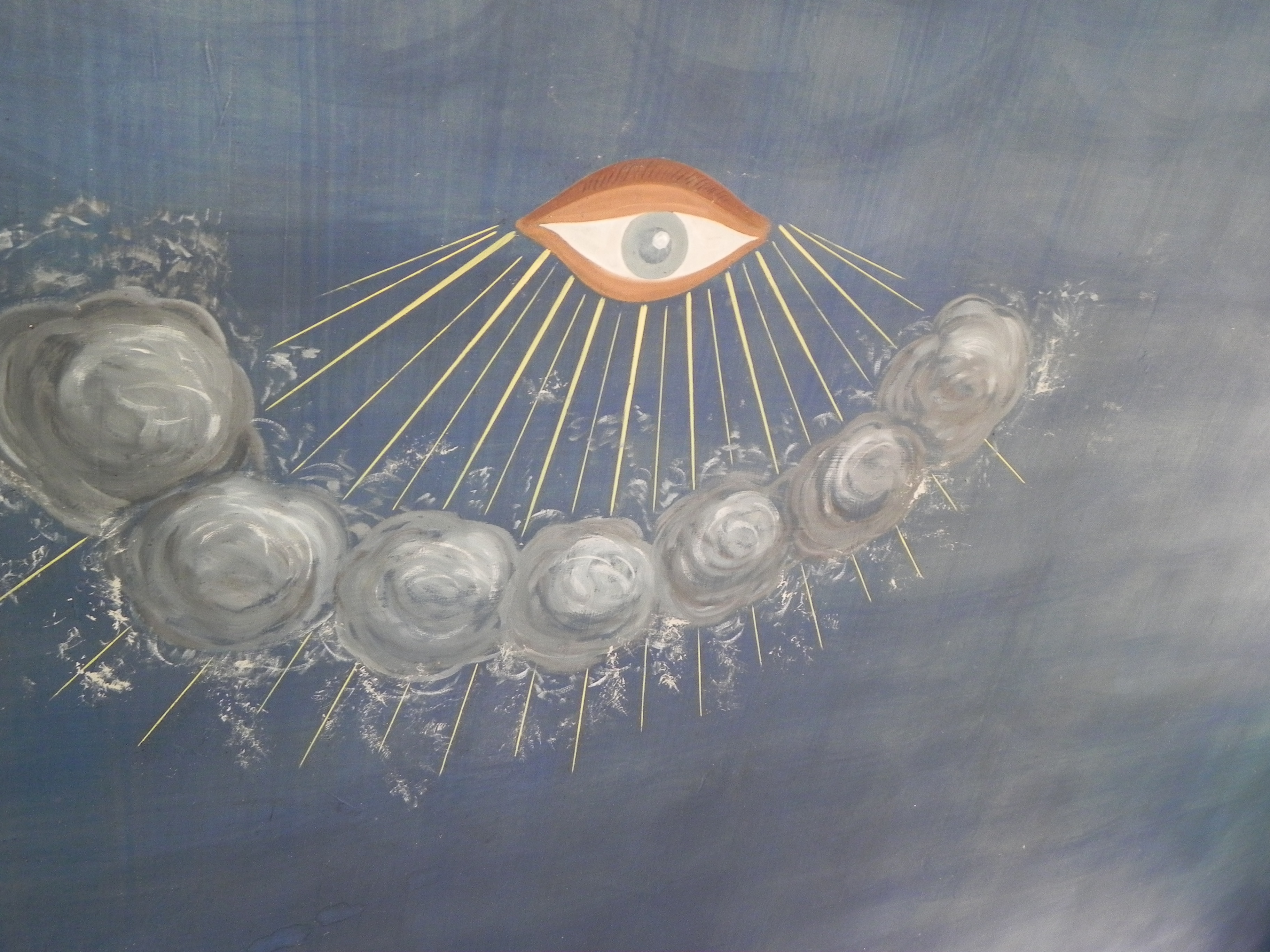
In the Rabbinic period it had become clear that just about any tree in the right location could serve as an asherah. So it was with a double-take that I looked at the cover of my Green Bible. I began using the Green Bible a couple of years ago because of the environmental impact of the millions of Bibles printed annually. Best estimates are that about six billion Bibles have been printed (about half of which have been sent to me by various vendors as textbook options) and I was hoping to at least use a recycled book to ease the burden. Then yesterday it clicked for the first time: the Green Bible has a tree on its recycled cover.

Asherah seems to have had the last laugh. If she was a tree-goddess. The fact remains that Asherah is a difficult goddess to qualify. She may have been associated with trees, or lions, or snakes, or wisdom, but none of these things has been proven beyond reasonable doubt. She was, however, the spouse of the high god El among the people of ancient Ugarit. And the Israelites accepted without qualm that El was essentially the same as Yahweh. Did he bring his former spouse along? We don’t know. Asherah, as her own person nevertheless, is a wonderful example of the feminine divine. Too bad she doesn’t have her own book.

God's wife on the cover of his book?


Ice Father in Heaven

The Internet can be a window into the collective consciousness of a nation. In a world where even the Weather Channel invites comments on its forecast page, the outlook of many Americans is laid bare. This latest shot of winter weather on the northeastern quarter of the country is an excellent example. It is still March, the tempestuous month of the war god, so a little snow in the northern latitudes should come as no surprise. An unnamed dean at a state school here in New Jersey had just sent out an email blast the week before stating, with decanal authority, that there would be no more weather delays this year. Yesterday there was still snow on the ground after the storm. Frustrated citizens cursed – actually cursed – the winter on weather.com.

For years I have maintained that the weather is key to understanding the human perception of the divine. From ancient Sumer’s An and Enlil through classical Greece’s Uranus and Zeus, the gods unquestionably in charge are the sky gods. The guys who control the weather. In Israel Yahweh took that job description from a reluctant Hadad – aka Baal – and many people considered this a serious mistake. Don’t mess with the weather god! As the snow begins to melt once more, even those of us in the enlightened twenty-first century should be reminded that our sense of what the world should be is an illusion. Nature evolved our brains, and now our brains think they have the right to take over.

Once, back in Wisconsin, I stepped outside on a chilly June morning and saw flecks of snow in the air. It wasn’t “snowing” – it doesn’t snow in June – but there was definitely a frozen sort of precipitation hanging tentatively in the air. I was teaching at the most self-righteous of seminaries at the time, and it became clear to me, once again, that we are not in control. Among the scariest books I read in Wisconsin was Brian Fagan’s The Little Ice Age. I was at work on my book on weather language in the Psalms (still unpublished) and the unsettling truth drifted around me like this winter’s snows: if a new ice age settles in, there is nothing we can do to stop it. Geologists still can’t state what triggers these periodic events, or even what their timetable might be. If earth’s ice caps again begin to grow, however, I am certain that we will also see a dramatic increase in religiosity. For the gods, we all know deep down, are in the skies.


Joseph Smith in the Spotlight

Mormons on Broadway? Well, not actual LDSers, but their famous founding document, The Book of Mormon, is now a Broadway show. While I wouldn’t hold my breath waiting for The Quran to be produced, holy books have often been utilized by the media as rich venues for timeless tales. Joseph and the Amazing Technicolor Dreamcoat and Jesus Christ Superstar come to mind as Lloyd Webber adaptations. Godspell, while not as directly scriptural, drew its inspiration from the Gospels (particularly Matthew). Those who lose are those who resist the free press of popular culture.

At the risk of sounding Niebuhrian, the religion that refuses the blessing of society is the one that will fade away. Religions are human institutions, and as such, require human adherents. Critics often claim that popular adaptations of their sacred writ are making fun of the texts, but is not cultural adaptation all about celebrating a story that has won its way into the media and outside the confines of rigid orthodoxy? Which version can be said to be truly alive? This is not theology, it’s theater.

Working with students who have very little background in the Bible, I clearly see the wisdom of taking what are admittedly dry texts and bringing them to life. Religions often founder in the process of mistaking form for substance. Literalism has done more to damage religions that it has to keep them pure. Reviews from the Book of Mormon attest to its appeal, and in a country where the Latter Day Saints are generally considered the second-fastest growing church, the musical is a boon. Trey Parker and Matt Stone can hardly be accused of attempting to convert the heathen, but their show cannot but help to bring this particular denomination into the public eye nearly as much as Mitt Romney’s attempted candidacy will. That’s what I call rose-colored glasses!

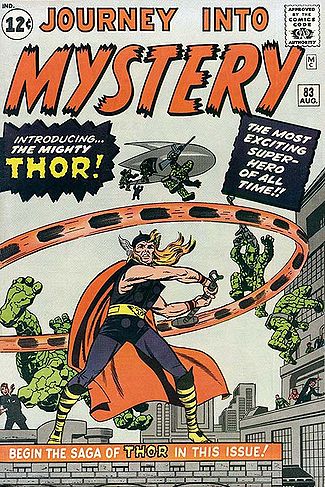
You've seen the show, now why not read the book?


Garden of Nede

Dystopias fit the Zeitgeist of the twenty-first century a little too well. The level of disillusionment has soared since the administration of Bush the Less when an unprecedented degree of ridiculousness tempered every political decision filtering out of a Washington that has become a little too religious. So it is that the genre of the dystopia is strangely therapeutic. I first became aware of Margaret Atwood because of an introduction to the Bible that pointed out the misuse of Holy Writ in her classic The Handmaid’s Tale. An allegory that demonstrates the power of religion to reduce women to mere reproductive objects is frightening enough in itself, let alone the post-optimistic view of a future of endless possibilities gone bad. Now that I’ve finished her more recent Oryx and Crake, I see that her outlook has grown more bleak, if more believable.

Like most dystopias, Oryx and Crake is filled with religious and biblical allusions. A society that does not know its Bible is easily manipulated by it. The book has been out long enough that I won’t worry about spoilers – does any dystopia end well? The basic idea is that the eponymous Crake of the title has tried to replicate Eden with genetically improved human beings. To prevent them from entering a world filled with human-inflicted suffering, he devises a way to wipe out the world’s population, leaving these innocents to carry on a genetically modified human gene pool. One survivor of the old days, Snowman (Jimmy), has to explain to these innocents what their world is about. He concocts a myth where Crake becomes a new god. Although Crake tried to modify the brains so that the “bundle of neurons” that make up God are gone, the new generation stubbornly develops a rudimentary religion.

Is it possible for humans to build a better future? I have never been swayed by the perverted notion of total depravity; people are quite capable of doing good. Our great ape cousins demonstrate that it is within our genes to produce a harmonious society. Although religions have motivated some extremely noble behavior in the past, they have also introduced heinous distortions of anything of which it might be said “behold, it was very good.” Atwood has offered us a world to ponder seriously. It is a world where humans play God and end up rotting under an unforgiving sun. Perhaps if politicians were more literate and less religious we might be able to counteract our partial, self-inflicted depravity.


Dream Quest

H. P. Lovecraft was a writer who remained unappreciated during his life but who has become a very influential literary figure after his death. So it is with artists. Known mostly for his short stories, one of the novellas he wrote, “The Dream-Quest of Unknown Kadath,” carries immense religious implications. Those familiar with Lovecraft’s fictional world know of the god Cthulhu and the “Other Gods” that he places in outer space. In “Dream-Quest” Lovecraft states that these Other Gods, “are good gods to shun.” While mere fiction, the concept of divinity has become pliable in the hands of its human author. Mortals are those who describe gods, those who decide what their deities will be like. The dream of the titular quest involves the earth gods having been removed from their shining city to leave the dark and dangerous other gods in charge.

While some would dismiss Lovecraft as overly inventive, his view of the earth being clouded by the crawling chaos Nyarlathotep strangely matches what we see playing out in the headlines. Those who are supposed to protect the masses, their leaders – elected or otherwise – have shown themselves to be interested in personal gain above all sense of duty. Throughout the world, and increasingly clearly in the United States, the working poor are seen as simple commodities easily manipulated and programmed to support those who would exploit them. Crawling chaos has landed.

Lovecraft’s “Dream-Quest” has a host of unlikely heroes, among them the cats of Ulthar. These cats maintain a true divinity appropriate for the descendents of Bastet. Feline divinity represents hope to Randolph Carter, Lovecraft’s protagonist. They also represent the tendency of the earth gods only to appear when most sorely needed, otherwise simply to set their own agenda. Where are the cats of Ulthar now? The problem with gods is they don’t always show up when you need them. Many dismiss Lovecraft as just another overly imaginative writer of cheap fiction, but to those will to listen carefully he was an author that could hear a very faint pulse. Even if that pulse was coming from under the floorboards to haunt a reality where the earth gods had gone away.

A little writer shall lead them


Third Mile Island

Sitting in the shadow of the cooling towers of Three Mile Island along the banks of the Susquehanna River the night before a friend’s wedding is one of the college memories that remains vividly in my mind. The accident had occurred some six years earlier, but seeing those ominous blinking red lights, no doubt to warn low-flying aircraft of the massive towers, left me with an irrational sense of danger. It will be a sad day when we have nothing left to fear. The next year, the Chernobyl disaster took place. This tragedy has results that are still playing out among the millions exposed to the radiation. Perhaps these events explain why Alan Parson Project’s Ammonia Avenue remains among my favorite albums.

While having my oil changed yesterday, the waiting room television was fixated on the story of the Fukushima Daiichi meltdown, settling it comfortably between Three Mile Island and Chernobyl. With anxiety about the year 2012 running amok, many people are looking for signs. Perhaps the most unfortunate meme the Bible has introduced to the world is the Apocalypse. In origin apocalyptic concepts emerged from the Zoroastrian idea that a dualistic change in ages was coming. Believing this world to be under the baleful influence of Angra Mainyu, a day was eventually going to arrive where all this would be turned around and Ahura Mazda would set things right. Christianity borrowed the idea, shrouded it in secrecy, and began an unhealthy interest in the end of all things.

Fukushima Daiichi may feel like the end of the world, but it is not. In fact, all that we know of our planet shows its great resilience. The late Stephen Jay Gould, in his popular book Bully for Brontosaurus, opined that the earth is not as fragile as is often supposed. He notes in the prologue, “Our planet is not fragile at its own time scale, and we, pitiful latecomers in the last microsecond of our planetary year, are stewards of nothing in the long run.” Not that we should not attempt to protect our environment – we do that to preserve ourselves and other species – but if we should fail, earth will carry on. Our globe is expected to support life for another 500 million years. Instead of following false positives, we might be better off reminding ourselves that Gaia still has a few tricks up her metaphorical sleeves.

One way or another


Jane Who?

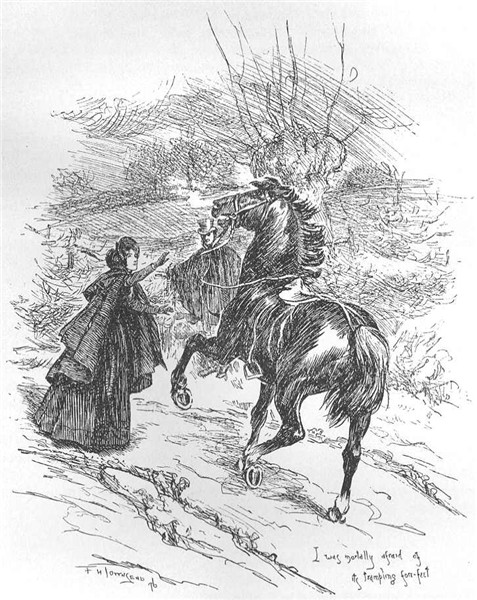
“Conventionality is not morality. Self-righteousness is not religion. To attack the first is not to assail the last.” So states Charlotte Brontë in the preface to the second edition of Jane Eyre. I am inclined to believe that the lines were widely ignored by clergy and politicians, for public leaders in nineteenth century Britain were not likely to take the advice of a young lady who only had one real credit to her name. Politicians and clergy of twenty-first century America can hardly be expected to have read Jane Eyre, for how would this woman know the harsh realities of how to assert one’s own will on the masses? In the stewing tea pot of the Religious Right, conventionality is morality. Self-righteousness is religion. George Santayana might well have saved his cramped fingers from writing, “Those who cannot remember the past are condemned to repeat it.”

As politicians oil their moving parts in preparation for next year’s great race, they know that many constituents will gladly accept conventionality as morality without asking about the origins of such practices. Schoolyard bullies who seek their own aspirations praise the great darkness that has settled over New Jersey where education is simply a commodity with which to bargain. Jane Eyre? Who’s she? If she’s a constituent, I’d better spin this slashing of education funds to her liking. Without an educated public, it is much easier to bolster one’s personal authority.

For years educators have been watching in dismay as other developed nations soar past American expertise in science, math, and even geography. Our response: let’s cut education funding. Conventionality is morality. Education teaches children to think for themselves. Is it not better to show them that self-righteousness is religion? We can put other religions on trial (thank you, Mr. King), while conveniently forgetting our founders were largely religious dissenters. To know that, however, you have to read a little history. We are far too busy plotting how to shortchange our future in order to feather further already overly plush nests.


Anubis Rising

As if reality weren’t haunting enough, I’ve been continuing my quest to find the scariest fiction book written. I’ve borrowed suggestions from others, but it seems that the fear factor is a decidedly personal thing. Nevertheless, the suggestions are often enlightening as well as provocative. I recently finished Dan Simmons’s A Winter Haunting. Simmons’s work had previously been unexplored by me, so this was a foray into the unknown. Of course, I read horror with an eye toward the sacred and I’m seldom disappointed. In A Winter Haunting the sacred appears in the form of Egyptian religion. Simmons makes very effective use of hellhounds, tracing them back to Anubis.

Now Anubis lays me down to sleep

The religion of ancient Egypt had a morbid preoccupation with death – or maybe it was just a healthy recognition that it is inevitably coming. Many of their gods eventually ended up patronizing the dead in some way. Andjety, Ptah, Min, Osiris, Isis, Nephthys, Maat, and Thoth, as well as Anubis, regularly appear in the cult of the dead. And, of course, pyramids represented the stairway to heaven long before Page and Plant. Death and its psychological angst have been crucial to the development of religion from the beginning. The Egyptians honed it to a fine art.

Anubis was likely associated with the dead because of the scavenging of wild canines at shallow graves. Magic, a phenomenon anthropologists have difficulty distinguishing from religion, dictates that the source of the problem should be appropriated as its cure. To protect the dead, the scavenger of the dead transformed into Anubis. Simmons did his homework, for this transformation is well represented in A Winter Haunting. Without knowing this particular plot device, I had been reading about Egyptian funerary cult independently of the novel and this coincidence proved entertaining as well as informative. I won’t be sleeping with the lights on, though. The search continues.


Myth of Jerusalem

As I stood atop the Mount of Olives watching the sun set over Jerusalem several years ago, I had difficulty believing I was actually there. For a working class kid who’d only ever been to Canada before (and only because we lived not too far from Niagara Falls), this was a moment like a scene from the Bible itself. Jerusalem is a city of myth and dream, and it represents just how seriously mythology may be taken. A new book, Jerusalem, Jerusalem: How the Ancient City Ignited Our Modern World, by James Carroll, was reviewed in Sunday’s newspaper. I have not yet read the book myself, but a couple of lines from Tom Mackin’s review leapt out at me: “Jerusalem is as much a symbol as a reality. Because most Orthodox males spend their time studying the Torah, they are unemployed. Piety brings poverty.” This is editorializing with parsimony.

Those of us raised to believe that pursuit of the highest calling of humankind is that of seeking the divine often end up forced to live the consequences. This pursuit does not pay, unless one is willing to sell one’s soul to become a televangelist. Unemployment has a way of sharpening one’s focus. The message repeatedly heaped upon you by society is that you have nothing of value to contribute. True, religious founders often declare the ineffectual satisfaction of lucre, but then, most of them didn’t have a child to put through college. Having spent nine years after high school studying the Torah (and Prophets and Writings and documents written long before any of this), I see now what could not be seen then.

When I watched the sun set over Jerusalem with some friends, a stray cat wandered over, looking for affection. Or, more likely, food. I had some scraps that I shared with the hungry kitten when it unexpectedly bit my finger and scampered away. My friends, concerned for rabies or some other infection, rushed me down the Mount of Olives and into the Holy City seeking a holy pharmacy. Little did I know at the time that a myth was being enacted at the expense of my aching finger. Acts of kindness are rewarded with the hand that feeds being bitten. I had to come down from the mountain, earn a doctorate, and be dismissed by well-groomed evangelicals before I could finally see that the symbol was the same as reality. I need to read this book to restore my faith in mythology.

More and less than it seems


Devil’s Ethics

It’s that time of year when state employees (even part-timers) are subjected to ethics training. Each year the irony of the situation becomes thicker and more viscous. You see, those of us who have part-time engagements are often on the receiving end of ethical violations, and we know better than to make ripples since we are disposable. I’ll say nothing of the well-known (almost infamous) ethical history of New Jersey, but today’s headlines suggest an even higher power when it comes to unethical actions. An Associated Press story bears the headline “U.S. biological horror stories brought before commission.” The report concerns official United States studies conducted on its own citizens by exposing people to and deliberately infecting them with various diseases. This may come as a shock to many, but already in the 1980s it was documented that America’s guinea pigs were its own citizens.

Leonard Cole’s Clouds of Secrecy: The Army’s Germ Warfare Tests over Populated Areas, published in 1988, exposed many documented incidents of biological agent testing on non-consenting, and unsuspecting citizens. The testing was done in the name of national security (for which you may now be groped by any TSA official whose hands are not otherwise engaged). As this report demonstrates, our own government has viewed those of us not in positions of power as manipulable, expendable, and somehow less valuable than those elected by schemes they devise themselves. Democracy, it seems, is not free.

We are expected to heave a sigh of relief (come on now, everybody, it’s okay) since the history exposed is between 40 and 80 years old. That’s ancient history, right? An industrial-military complex today would never violate the rights of citizens. At least not officially. At least not as long as the Freedom of Information Act ensures that citizens have access to records (several years after the fact), and as long as it is not deemed a matter of national security. The color of your underwear and the shape of what is beneath are government assets. Also, so is your immune system. Otherwise you are free to live your life uninhibited. Unless, that is, you are a state employee with an extensive ethics background. Excuse me, but I’ve got to get back to my ethics training.


Skullduggery

Perhaps it’s just what I deserve for reading Stephen King’s Pet Sematary, or maybe it is just one of the perks of living in New Jersey. On the front page of today’s New Jersey Star-Ledger is a story of grave robbery. Two recent graves, one eerily reminiscent of King’s novel, have been plundered for what officials are calling a “non-traditional religious practice.” If the locally popular magazine Weird NJ is to be believed, the state hosts many religious groups that fall into the non-traditional category. This is a predictable by-product of religious freedom; some people find religious fulfillment in idiosyncratic rituals. And all religions are concerned about death.

“Some religious sects use human remains in ceremonies,” the journalists state matter-of-factly. The concept has an ancient pedigree, even in orthodox varieties of religion. The macabre practice of keeping a bone, or occasionally a whole body, of a saint for veneration is cut from the same cloth. In King’s novel, the darker side of resurrection is explored. We miss our dead, but do we really want them back here with us? The use of human bones is disturbing because it suggests the rest and sanctity of the dead has been violated. Perhaps a Halloweenish horde of restless deceased will be unbound among us. We prefer our dead to be left in peace.

Perhaps it is that lives filled with the turmoil of our frenetic scramble to stay ahead of tragedy look forward to death’s eternal slumber. Anything that suggests the dead have been disturbed sends ripples through the psyche of the living. While visiting an ancestral plot some years ago, I discovered that vandals had tipped over the tombstone where my great-grandfather and several great uncles rested. No caretaker was on duty at the remote cemetery, so I found the address and mailed a request to have the stone set back in place. The image of that fallen stone distressed me for several days. Those who rob graves likely do not take the distress of family into account – their religion requires human remains and we attach great significance to the inert matter that used to be one of us. It is an impasse. Religions make demands and those who get in the way, either living or dead, often end up violated.

Even the dead mourn


Fruits of the Dearth

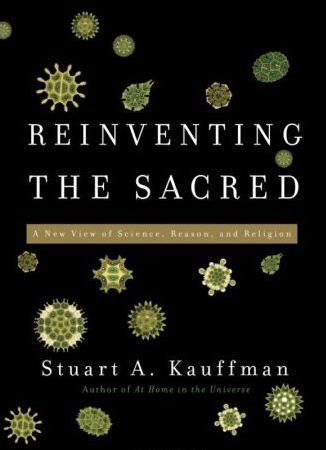
Religions developed out of universal concerns. While I can’t hope to compete with the masterful insight of Pascal Boyer, I do have a gut feeling that as soon as humans evolved the ability of foresight we began to worry. Where is that next meal coming from? Will we survive another day? Is there any way to hedge our bets? In ancient times mortality’s unblinking stare would have been much closer to our faces. Even as recently as the Middle Ages death was much more on the mind, much more frequently seen.

One way to ensure survival is to propitiate those gods who control the productivity of the soil. Long before Demeter lost Persephone ancient people mourned the death of gods who ensured fertile soil, hoping against hope that they might come back each spring. I recall the seriousness with which Rogation Days were taken in the Midwest. At Nashotah House the earth itself was blessed. I recall a priest from Central Illinois who gleefully recounted that the University of Illinois crop experiments were always a little skewed because each year he blessed them on Rogation Days, giving Ceres a boost. CPR for mother earth; give us our daily bread.

The picture of a South Korean boy spinning a can filled with glowing embers over a field on the first full moon of the Korean New Year reaffirms that concerns are the same everywhere. In our sterilized, indoor, urbanized lives where food is grown, harvested, processed and packaged by others for simple consumption of the vast majority, we have lost one of the most poignant aspects of religion. People pray for survival against the devious plans of terrorists, or the insidious diseases that threaten those who make a living simply moving electrons from place to place. Meanwhile somewhere in a country teetering on the brink of nuclear winter, a young boy swings a bucket full of hope.


Neverwhere Angel

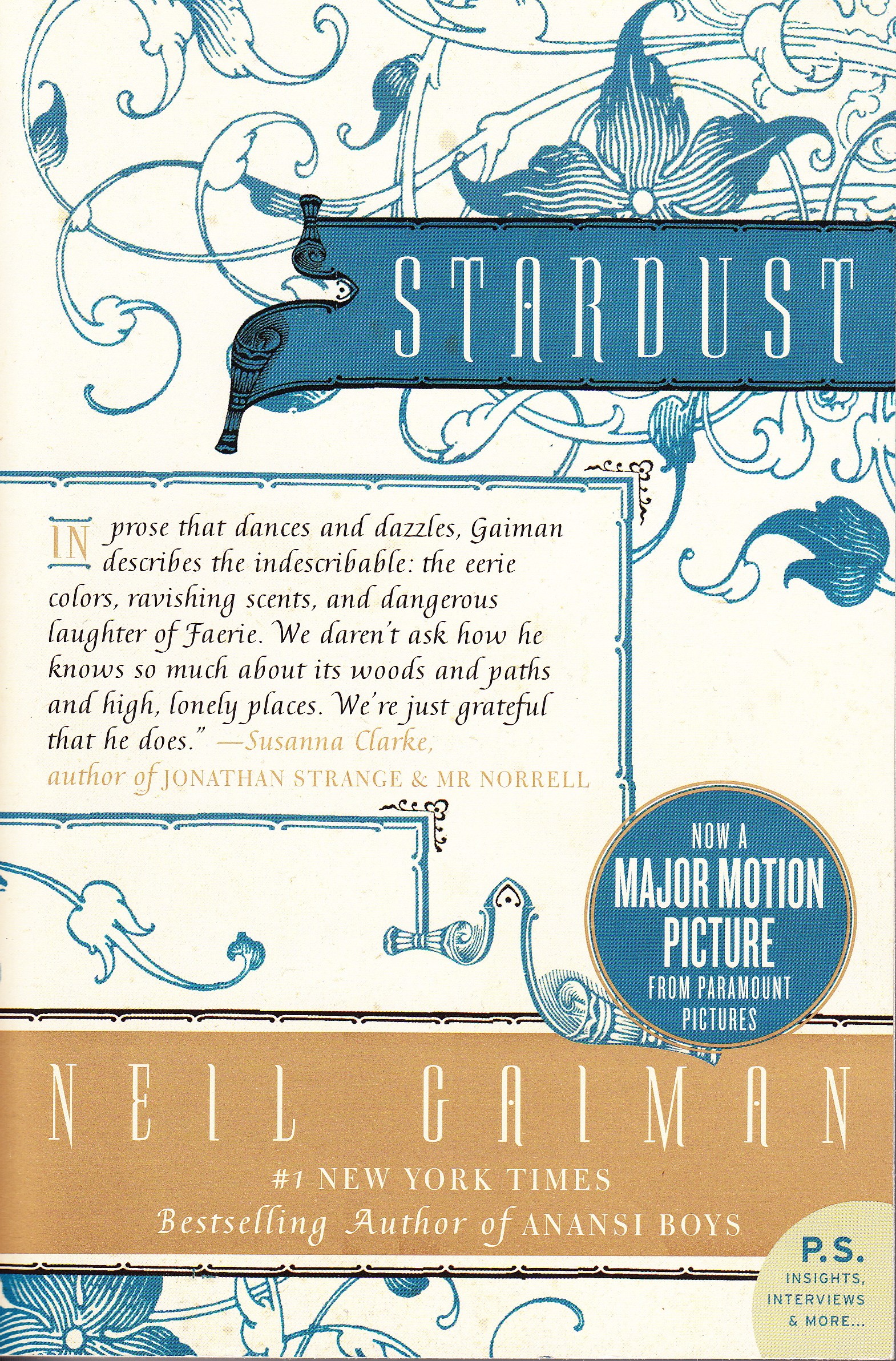
Neil Gaiman is popular among my students. At least among those that still read for fun. A couple of years back one of them lent me a copy of American Gods, and the story stayed with me. Having lived for many years in Wisconsin, and having visited the House on the Rock, the novel was like a kaleidoscope of some of my more pleasant memories of the state. Neverwhere is quite different and yet equally compelling. Gaiman peoples his worlds with characters just on the edge of believability thrown in with protagonists who tend to be completely confused by what they’re experiencing. Instead of gods, in Neverwhere there is an angel with the unlikely name of Islington and we have the myth of Lucifer’s fall retold in fantasy format, rolled together with Alice in Wonderland and the myth of Theseus. For starters.

A person is a composite of what s/he reads and learns and accepts. The books we digest, each in a unique recipe fitting our individual tastes, create new compounds and concepts that explore our personal realities. Neverwhere takes the reader down a rat-hole instead of a rabbit-hole, but nevertheless follows a young girl on a journey of maturity. The hero’s quest is undertaken to actualize both protagonist and idol, and along the way the beast in the labyrinth must be encountered and slain. Theseus, the flawed hero, dominates a world where even saviors have peccadilloes.

The protagonist of Neverwhere does not believe in angels, despite his encounter with one. As Gaiman puts it: “it was much easier not to believe in something when it was not actually looking directly at you and saying your name.” Belief generally involves not seeing. Once the object of belief is empirically confirmed, belief becomes knowledge. Today the belief in angels remains unabated. No empirical proof, nothing tangible confirms this belief beyond the anecdotal accounts of those who claim to have experienced them. Even the fanciful image of their androgynous good looks and unlikely wings remain untainted for all the centuries. Neverwhere raises an intelligent question about angels, but to discover what it is you’ll need to go down the rat-hole as well.


Witches or Prophets?

Some things never change. My daughter’s English class has finished its Shakespeare unit and this year’s selection was MacBeth. I recall the play from my own high school days, perhaps one of the hidden attractors that eventually drew me to Scotland. Shakespeare’s use of Holinshed’s Chronicles, however, was news to me. Raphael Holinshed was a 16th century chronicler of world history and his work gave Shakespeare the outline of MacBeth. The passage from Holinshed that stood out, concerning the witches, reads: “But afterwards the common opinion was, that these women were either the weird sisters, that is (as ye would say) the goddesses of destinie, or else some nymphs or feiries, indued with knowledge of prophesie by their necromanticall science, bicause euerie thing came to passe as they had spoken” (page 269 of volume 5, Scotland).

Being in the midst of courses on both prophecy and mythology, this passage ties a number of popular concepts together. Clearly the clairvoyance of magical females is simply accepted, and the easy association with classical characters such as the Fates or nymphs is evident. This is a world of mythical literalism. The weird sisters are able to predict the future with their necromancy. In a more nuanced view of prophecy, the concept actually incorporates effective speaking rather than future predicting. If a prophet speaks the words of Yahweh, in the Bible, then those words must of necessity transpire. When the stated events take place, it looks like prediction. Here Holinshed suggests the source of such knowledge for the women was more suspect.

Few of the biblical prophets are female. It is almost as if clandestine knowledge possessed by a woman marked her as a necromancer while a man might legitimately wield esoteric knowledge. This double standard no doubt applied in biblical times, and has lasted in various forms to the present day. The male establishment fears the knowledgeable female. Privilege takes many forms, all of them greedy. In my case I must gladly acknowledge that I would not have learned of Holinshed’s Chronicles if it weren’t for my daughter, and I am pleased for the opportunity to expand my esoteric knowledge.


Anvil Chorus

Last night I watched Les Choristes, the 2004 film that received two Academy Award nominations. The story, set in a school for troubled boys in France, felt eerily familiar. Not only did it resurrect the ghosts of Dead Poets Society, it felt like a page – or a substantial chapter – from my own life. The movie was recommended to my wife by one of my colleagues at Nashotah House, an institution that the film strangely resembles. The more I pondered the implications of a small school run by an authoritarian headmaster full of students with malevolent tendencies, the more I realized how much my Nashotah House experience has set the tone for much of my life. While I was at Nashotah, P. D. James’ murder-mystery novel, Death in Holy Orders came out. Immediately students and faculty began to speculate that James must have known of or have visited the seminary. Similarly, the Harry Potter novels led many to compare Nashotah to a decidedly less magical Hogwarts. Some of the students even honored me as the putative master of Ravenclaw.

My personal experience with religious institutions has led me to conclude that they indulge themselves in doling out the abuse that only religious sanction permits. I had attended the Presbyterian-affiliated Grove City College where chapel attendance was mandatory. My experience at Boston University School of Theology convinced me that seminaries were not a good fit for most people, particularly those like myself. I left declaring I would teach anywhere but a seminary. There is no balm in Gilead.

Forever after, any small, religious school with dark secrets would be my Nashotah House. But the problem is much wider than that. Religions seek to control. Some manage to do so benevolently, but too often the human element eclipses the divine. It is a temptation, when in positions of religious leadership, to insist that one’s personal outlook is correct. We all believe that our views are right. Those who receive the holy unction of an institution have the means to make it so. It is not Nashotah House, but human nature. When religious leaders confuse divinity and authority, that is when trouble inevitably begins.