Metamorphoses

“When Gregor Samsa woke up one morning from unsettling dreams, he found himself changed in his bed into a monstrous vermin.” I borrow the opening words from Franz Kafka’s The Metamorphosis since upon rereading it yesterday I found it consonant with much of mythology. Even the title chosen by Kafka resonates with Publius Ovidius Naso’s (Ovid’s) Metamorphoses. Transformation at the hands of the gods. The idea lives on in the concept of conversion, the religious experience of profound change at the behest of God; some claim a willful hand in their conversion while others simply give God the whole credit. Kafka, one of the great existentialist writers of the twentieth century, considers the transformation without the gods and the terrifying results.

Having discovered the existentialists in high school, I was immediately taken by their writings. Characters find themselves cast into a world devoid of meaning, a world that they can’t understand and in which they often suffer unusual consequences. Little did I know that I was in training for my own experience in the academic world. Academia involves a major metamorphosis, one from which the victim cannot return, and after which she or he will find him or herself ineligible for employment. Reading The Metamorphosis as an often displaced instructor who’s only ever received positive evaluations, I saw much in the novel this time that I could not appreciate last time I read it. In short, I had metamorphosized.

Gregor Samsa, discovering he is now a bug, immediately worries about how to get to work. The painful description of his financial worries and ultimate rejection resonated a little too clearly. Is conversion a positive phenomenon? It is difficult to evaluate. In my experience, those who’ve converted tended to have been pretty decent people in the first place. As Ovid notes over and over again in his lengthy epic poem, when the gods make you into something else a sadness will pervade this new existence. If you survive. As Gregor slowly starves to death (in a fate hauntingly similar to Kafka himself) he finds no divine consolation. The situation is absurd—best just come to terms with that. Kafka could have been a struggling academic in the century after his death and he would have found the same situation applies.

First Byte

The scientific study of religion poses dangers to the native environment. It doesn’t take a specialist to realize that different people respond to different religious stimuli; some like smells and bells and others prefer the stripped-down Puritanical style. Even beyond that some people get their religious thrills from nature, others from meditation, and some from controlled substances. In a story on CNN late last week, it was revealed that some Apple users find worshipping their favored brand a religious experience. A study by British neurologists discovered that the same areas of the brain are stimulated by both thoughts of the deity and Apple gadgets. MRIs have been utilized for many years now to study where the brain “lights up” during intense spiritual states. It seems we now have proof that God is a Mac user.

While some would cite this story as an example of idolatry, others would interpret the results in a more technological way. Our brains resemble motherboards, in some sense. Even Stephen Hawking’s famous interview of last week had the genius saying that human brains are just like computers. (I must confess to siding with Stuart Kauffman (Reinventing the Sacred) on this one—the brain does seem to be more than the sum of its parts.) If our brains are computers, then the Mac question is a literal no-brainer. Having worked in offices where every PC tries to be a Mac knock-off (wake up, folks! Windows is a Mac emulation environment) I too can sense a superior being behind that Apple with Eve’s first byte removed.

Should we attempt to explore where religious impulses originate? As intimated by Newberg, D’Aquili, and Rause (Why God Won’t Go Away), if we are able to find the God centers in our gray-matter and stimulate them electronically, we may trigger religious rapture on demand. How does this artificial stimulation differ from the religious experience brought on by years of meditating, praying, or fasting? Or Apple products? Our brains are complex and only imperfectly understood. Religions have been around long enough for us to get a grip on their origins. Billions of believers worldwide, however, would prefer that other people keep their hands off their Apples.

Original thin?


Eyre the Apocalypse

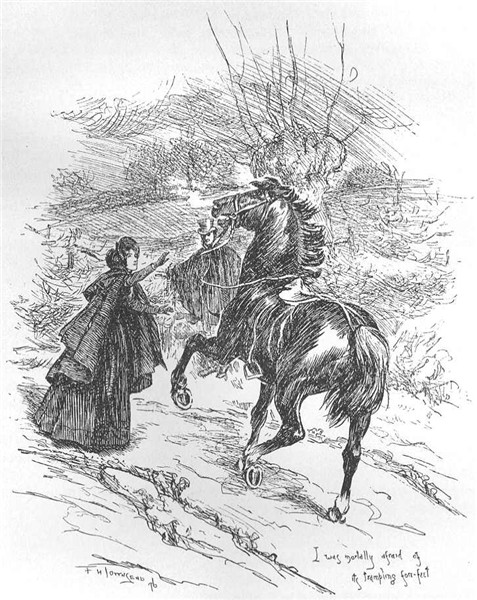
Finishing Charlotte Bronte’s Jane Eyre last night proved timely from the point of view of today’s much anticipated apocalypse. (I hate to leave a book unfinished as the final trump begins to sound.) As I stress to my students at Rutgers (when I actually have a class), the Bible surrounds them whether they are aware of it or not. Quite aside from the present rapture-envy—that one’s just too easy—reading literature of the nineteenth century is an excellent way to show the Bible’s influence on western culture. Jane Eyre is suffused with biblical allusions and direct references, even with the faulty theological notions that the Scriptures had hatched in that century. Of course, the Bronte sisters, all successful novelists, were the children of a clergyman, but other writers of the period demonstrate an equally biblical worldview. In fact, much of the dramatic tension in the present novel revolves around distinctly biblical issues.

Interspersed with my reading of classical novels, I read many more recent literary explorations as well. A couple of weeks ago I completed Stephen King’s It, not a particularly favorite novel, but one that at times demonstrated that even masters of the macabre frequently draw on the Bible. For modern literature the Bible is the ultimate foundation. It would be interesting to live long enough to see if it still has any relevancy at the end of the present century. Jane Eyre, perceptive as most nineteenth century novels are, also pressed directly the wound that currently afflicts much of our nation. Cast upon misfortune, Miss Eyre is mistaken for a beggar. Miss Bronte observes, “Prejudices, it is well known, are most difficult to eradicate from the heart whose soil has never been loosened or fertilized by education,” a line that should be emblazoned upon the door of public officials who feel it is their right to withdraw funding from public education. You want an apocalypse? That’s the recipe right there.

Nevertheless, Miss Eyre presses on until she reclaims the man who had once “stood between me and every thought of religion,” dodging an impassioned missionary along the way. In revealing the manipulations of the cousin who dies on the mission fields, enriched by Miss Eyre’s beneficence, once again Charlotte Bronte displays her perception of how the church may ultimately rob a soul of its true potential. Upon learning of his death, the now Mrs. Rochester ends this penetrating novel with his words, strangely appropriate for this day of fictional endings: “’My Master,’ he says, ‘has forewarned me. Daily he announces more distinctly—“Surely I come quickly!” and hourly I more eagerly respond, —“Amen; even so come, Lord Jesus!”’” Of course, St. John is here quoting Revelation 22.20. Since I am scheduled to run a 5-K in a couple of hours, if the second coming is about to happen, it would be convenient should it transpire before I end up exhausted in my own personal apocalypse.

Jane Eyre stopping one of the horsemen of the apocalypse?


Inventing God

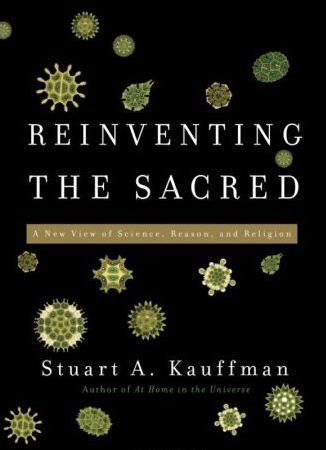
Reductionism has been a hallmark of science for many years with the most extreme forms suggesting a kind of cold determinism in the universe. Having known since my undergraduate days that science is the key to knowing, yet having the experience of believing as well, I wondered how they fit together. If they fit. I have just finished reading a very important book on the topic – Stuart A. Kauffman’s Reinventing the Sacred. A theoretical biologist, Kauffman has come to the conclusion that reductionism cannot account for many aspects of the world we actually experience. Evolution, biologically as well as culturally, demonstrates again and again a creativity that cannot be predicted, no matter how much data is acquired. Kauffman suggests that this non-reducible creativity is what might properly be called “God.” Not a believer in a transcendent creator God, Kauffman does not wish to remove the God meme from our psychological vocabulary, but to reinvent it.

In many ways, I found Kauffman’s work to be some of the most affirming science writing I’ve ever read. He believes there is a place for creativity in the overall human experience of knowing and being. Values are not simply arbitrary points selected by people, nor are they imposed on us from a personified God. Values and beauty are emergent phenomena. As Kauffman argues, they are clearly and blatantly real, but not reducible to physics. He also demonstrates that economics falls into the same category of real but non-reducible. As a researcher in complex systems, Kauffman quickly left me in the dust when he reached the more theoretical material. I am not equipped to assess his scientific conclusions. Overall, however, his book possesses a rare sort of urgency for a scientific exploration, and it values the whole of the human experience.

Demonstrating that ethics emerge not from “on high” but from a human sense of value and “right,” Kauffman suggests that we desperately need a global ethic to realize our full potential. In the ongoing debate between science and religion, Kauffman is a voice of both reason and compassion. Science is the way we know – there is no point in debating that. If you are reading this on a computer, Q.E.D. If you are a human being, then you have also experienced the phenomenon of believing, whether or not it is religious. Kauffman has addressed the question directly and has given both specialists in science and in religion a trenchant analysis of an intractable issue. His irenic approach is to be applauded, and hopefully, widely read.


Thor’s Day

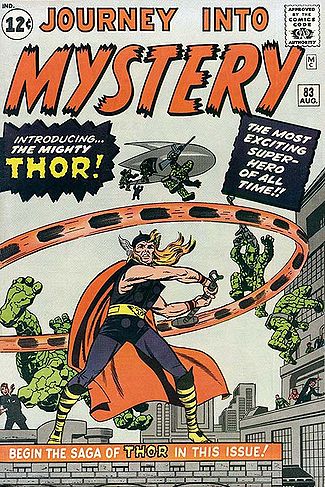
Mythology has visited the big screen in many guises, but among the current spate of superhero films a god may rival mere mortals and mutants. Thor opens in theaters today, bringing a Norse god back into the public eye. Like many young boys I owe my early reading predilection to comic books. One of my favorite heroes was Thor (our birthdays were very close) but I couldn’t quite make out how he was a superhero with the unfair advantage of being a god. Why weren’t other gods down here with us? At some level I sensed Thor’s rage, and perhaps even his estrangement from his father. Was there a sadness to this mighty wielder of thunder? When I was a little older Lester del Rey’s Day of the Giants became one of my favorite books. Norse mythology is plaintive compared to the world of the jovial Greek gods. Even the beloved Balder dies.

Thor is the embodiment of one of the most ancient principles of divinity: control of the storm. A generation after Odin, Thor also experiences that generational divide that all ancient people felt marked the lives of the gods. Zeus likely developed as a more civilized form of Hadad (Baal). In Ugaritic mythology Baal is the lord of the storm; he bears a mace where Thor will grasp a hammer. Baal, however, is often described as the son of Dagan, likely an early Mesopotamian storm god. Back to the earliest levels of civilization miniscule humans have quaked in wonder at the power of storm gods. Making Thor into a superhero humanized him a bit, and with classic comic-book biceps he was sure to be a hit among scrawny boys with dreams of grandeur. We would never have been allowed to read comic books featuring Baal.

The salient point, I suppose, is what makes a god a god? In the mythological mindset, deities are quite human except for their immortality and their strength. The might of gods clashes with the might of other gods. Omnipotence takes the fun out of the equation, for a truly all-powerful deity has orchestrated this whole cosmos and we are just pathetic players on the stage. Thor rages against the machine. If a god cannot be defeated, there is no story to tell. It may be difficult to predict how well Thor will perform on the big screen, but if I am not alone in my fascination of watching gods struggle against even greater gods, this may be like the Day of the Giants for grownups and kids alike.


Happy Birthday King James

Four centuries ago a literary landmark was published. Today marks the birthday of the King James Version of the Bible, arguably the most influential book ever published in the English language. Those active in scholarly circles at bibliocentric institutions are popping the cork on their sparkling grape juice today, since for many the King James Bible represents the real liberation of God’s message. In some sense, the KJV also represents the origins of Protestant movement. Liberating the Bible from the clutches of scholarly Latin, Greek, and Hebrew, the King James Bible made the book accessible to the English-speaking world. As direct access to the Bible grew, the pontifical power of Rome (with apologies to besainted John Paul II) came increasingly under question. Inquiring minds wanted to know what God himself said. Of course, the Bible soon enough would evolve into a lash in the able hands of power-hungry theocrats.

Today the New International Version outsells the venerated King James. Some very conservative groups still hold to the King James Version as an “inspired translation” that no others can touch. The New International Version was hailed by evangelicals as a more up-to-date, safe translation of the Bible when it first appeared. The fact remains, however, that translations can never fully replicate the original. This is a major problem of bibliolatry. Languages are systems of thought and direct translation never fully captures the “meaning” of the original. Few who adore the Bible have the time to truly learn Hebrew and Greek, so guardianship of the truth must be passed to a reliable translation. The King James, in turn, also became the basis for some shaky theological ideas that are challenged by more accurate translations.

As the Internet rings with stories of the death of Osama bin Laden, the dangers of absolute religious adherence to any book of faith should become clear. Bibles, Qurans, Talmuds – these may be guideposts along the way, but they are often mistaken for the end of the journey. Written texts are subject to interpretation and even the KJV is read different ways by different believers. Instead of worshipping books, we would be better advised to read them. And if from that reading we learn to think then the time of the original composers of sacred writ will not have been wasted. That would be cause for celebration indeed.


Dukes and Serfs

Once upon a time in a land far away, a man and woman worked a fertile garden, blessed by God. That garden was in the incredibly rich, black soil of Savoy, Illinois. The zucchinis harvested were of biblical proportions. Some of them miraculously grew to the size of my calves seemingly overnight. The broccoli and carrots my wife and I grew had so much flavor that we couldn’t believe just how much leeched out while vegetables sat in the back of a truck or on a grocery-store refrigerated shelf. Even with their periodic mistings. It was as if Bunnicula had visited them at night. So long ago, the garden. It seemed obvious in those days why the writers of Genesis compared paradise to a garden. Ours was no Eden – it was hard work – but my wife and I had a lot of fun with it.

James Buchanan Duke, namesake of Duke University, owned a considerable estate outside Hillsborough, New Jersey. Having established both a tobacco monopoly and an electric company, Duke was enormously wealthy. He left his Hillsborough farm (not the tobacco farms which were in his native North Carolina) to his daughter Doris, making her one of the wealthiest women in the world. Her estate now consists of a socially conscious Duke Farms Foundation that has offered gardening plots to the plebeians of the region. So yesterday I found myself once again back in the garden. Sharing a plot with a friend, we arrived for opening day and were greeted by one of the organizers of the garden. Her name, of course, is Eve.

New Jersey planting requires more manure than the black earth of the Midwest. Yesterday I found myself shoveling horse manure, not for the first time in my professional life, while Eve supervised the garden. It seemed strangely biblical. Dodging between my summer classes this year, I will be emulating the first profession of our mythic father Adam. In the afternoon, after cleaning up, we headed to Rutgers Day, the university public-relations festival that shows off the tremendous wealth that cannot afford to hire full-time faculty any more. As I kept a weather eye on the clouds, worried about the seeds I’d just planted, the future continued to look stormy to me, even on the campus that has at times been my only source of barely sustainable income. Perhaps I should have changed my shoes, because it seemed to me that the smell of horse manure still hung heavily in the air.

I wonder if this is how Adam got started


Playing Doctor

Science, religion, humanity. People are a conundrum. Medical professionals have the unenviable task of sorting out what is wrong with this jumble of organic biological systems and also attempting to address the uniquely human aspect of their subjects. As far as life forms go, although we may not be on top of the evolutionary ladder, we are suitably, impressively complex. We haven’t yet sorted out how mental states figure into physical processes: a number of cases of “faith healing” seem to have been verified, but the mechanism remains unknown. Praying has been demonstrated to improve some physical conditions with the believer saying God is doing the work and the skeptic suggesting it is the healing aspect of our own minds. How do you treat a creature that may not even agree with you on the ground-rules?

A story in yesterday’s New Jersey Star-Ledger revealed that New Jersey hospitals are experimenting with human subjects. The subjects, however, are doctors, not patients. In an effort to bring science and the humanities together, several hospitals are sponsoring reading groups for doctors. Like a garden-variety Oprah reading club, the physicians read a novel and discuss the human elements with each other. The theory is that it may help them understand the softer side of the science – how to touch the human reality of a field of study that has become very scientific. Specialists in the sciences and humanities have grown apart.

The humanities have long been assigned to the “less necessary” side of both university programs and the job market. Ironically, among those who are most famous in our pragmatic, make-a-buck world are musicians, actors, film-makers, best-selling novelists – in short, masters of one of the humanities. A darker side exists here as well; even celebrated humanities specialists can turn on one another. Contradictions and conflicts are part of human nature. Religion, one of the humanities, is a stellar example of the heights and depths of human behavior. As physicians attempt to discover what really makes us tick, reading novels is a good place to start. Attending religious services may be a bit more chancy, but like any human endeavor, one might get lucky and make a truly groundbreaking discovery. Did Rasputin write any novels?

Playing doctor, once upon a time.


Pilgrims’ Regress

In March alone I had to build expanders for three of our bookshelves. I claim the problem began when, as a faculty member at Nashotah House, I had use of a house with a built-in, floor-to-ceiling library. My wife claims the problem began long before that. We own a lot of books. The only silver lining to Borders’ recent bankruptcy was that we hovered like buzzards at one of the closing stores and walked out with books we might not have otherwise bought, but whose prices demanded their owners find a new home. Orphaned books are a sad sight. So I purchased my first Christian satire book in many a year. I just finished reading Becky Garrison’s Jesus Died for This? A Satirist’s Search for the Risen Christ. Having spent many years among the Episcopalians, Garrison’s point of view set me at ease: had this been an evangelical attempt at humor I would have orphaned the book myself. Nevertheless, as I read through this travelogue/memoir, I rarely found myself laughing.

Nothing robs one’s sense of humor quite like being in higher education for a couple of decades. I still find plenty to laugh about, but I realize the reprieve is only temporary before more serious issues once again cloud the skies. Garrison’s attempt to find genuine “Christ-like” behavior among Christians was, predictably, peppered with the failures to find it. As she repeatedly notes, the odd marriage of religion and politics in the United States has tainted both institutions (and both had already tainted themselves without the other’s help many times previously). It doesn’t take a satirist to see that many religious figures have made a joke of their belief systems by touting them as the only way to heaven.

What became increasingly clear to me as I read this personal and revealing book was that Christianity has splintered into countless subcultures that attempt to reclaim the original Christian experience. The problem is that time doesn’t stand still. Religions are, by definition, conservative. Progress, by definition, is not. Ever since the first hominid hefted a wedge-shaped rock and used it as the first Paleolithic weapon, our course was set. We would continue to try to improve our lot. Institutionalized religions began appearing a mere six-to-seven thousand years ago, very late in the game, and they’ve been driving with feet firmly on the brakes ever since. Once we figure out what the gods want we need to – wait, don’t change that! We’ve just figured it out! So we find ourselves in a highly technological twenty-first century with pre-medieval religions trying to tell us how to survive the Black Death. Each time religions change, some get left behind. When we finally implode, some future archaeologist may find an apartment crammed full of books and she’ll declare that my wife was right: the problem began long ago.


Bell’s Hell

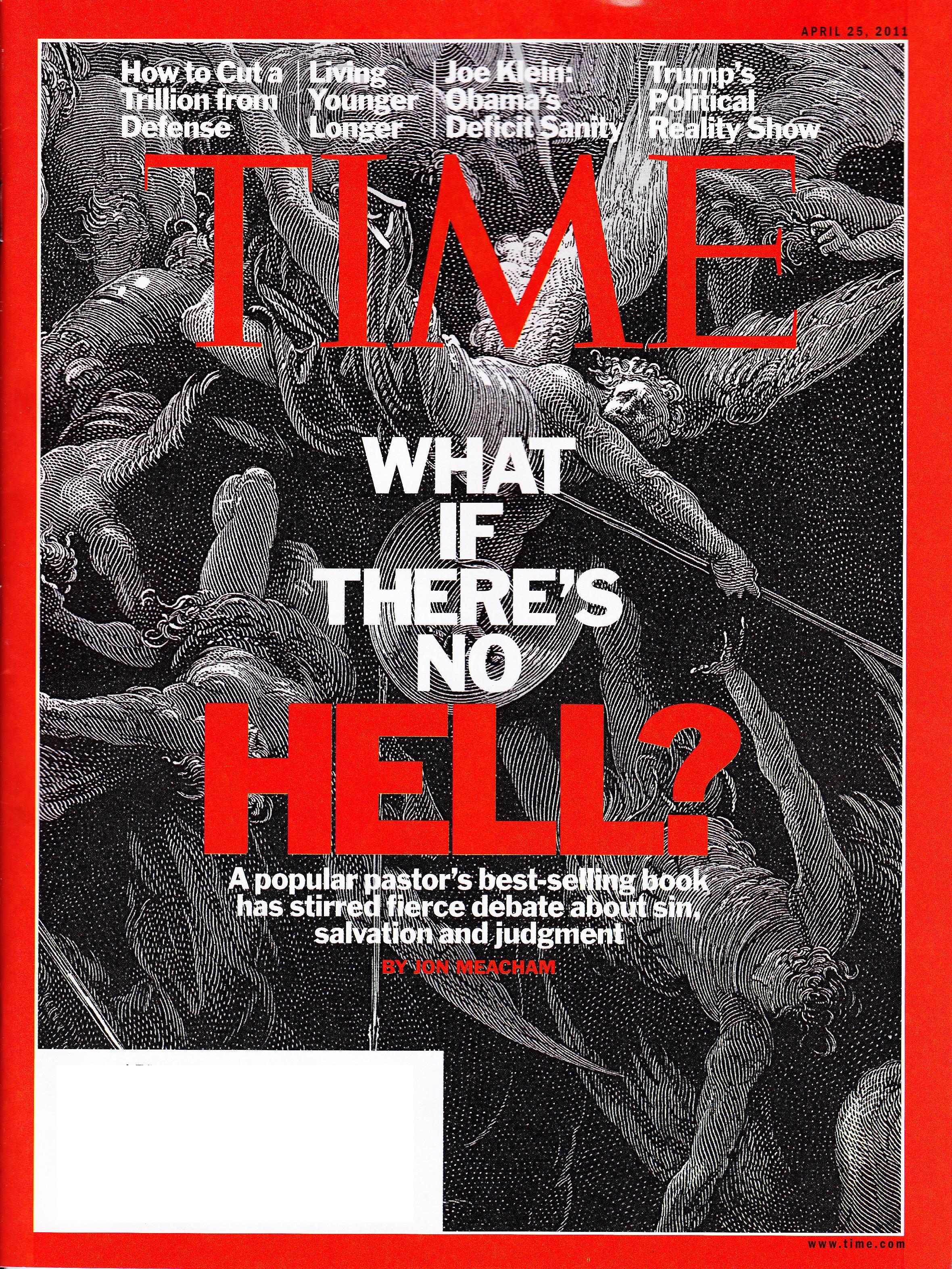
Hell makes the cover of Time. Or at least its absence does. For those of us who’ve delved deeply into the Bible for many years, it is no surprise. In fact, the uproar, as Time confesses, is among Evangelicals. So why Hell? Why now? The Evangelical pastor of Mars Hill Bible Church, Rob Bell, has just published a book questioning the existence of Hell and his fellow Evangelicals are in a conflagration about the loss of the sacred icon of God’s omnipotent stick that threatens them all into Heaven. It is a sad day when love cannot encourage enough that hatred becomes religion’s motivating factor.

The loss of Hell, however, represents so much more than just the loss of the scariest place under the earth. It represents the loss of control. Without Hell to wield and Hell to pay, many of the faithful may wonder what they might get away with. Neo-cons have been eager to court the Hell-mongers because the issue is making others lock-step in their own pattern. Diversity is not encouraged or appreciated. Lawns must be cut to the same height, trees carefully trimmed, shirts must be conservative and cookie-cutter, and one must wear that blessed smile that proclaims “Hell-dodger.” Cast any doubt into this fabled world and the results might be, well, realistic.

The Hebrew Bible knows no Hell but the one we make for ourselves. We hardly need a Devil to tutor us in the ways of evil. Human history reveals that we’ve had it in us all along. Instead of celebrating the death of Hell, several Evangelical pastors are simply adding Bell to its numbers. Time’s news is not news for many of us, but for those who haven’t considered seriously the implications of their faith as Holy Week rolls around, this may be a good time to take stock of options for eternity. What do we gain by fabricating an eternal torment devised by the most loving deity ever conceived? Hell can now claim its rightful place as a metaphor for the wickedness Homo sapiens devise for each other and for their planet.


Scooped!

A book by a disgruntled adjunct instructor revealing the seedy underside of academia. This was a book project I had planned to write for some time; in fact I have over a chapter already written. My wife brought home a New York Times on Wednesday and I saw that I’d been scooped. Professor X’s book In the Basement of the Ivory Tower is reviewed in the Times. Curiously, his subtitle – Confessions of an Accidental Academic – was suspiciously close to my own proposed title. I guess I was just a little too busy teaching 11 courses this year to get around to writing the tome. In any case, I wish Professor X well. He has managed, however, to capture the attention of Viking so my insignificant wishes likely matter little.

Misery loves company, as the saying goes, and it is a strange and profound comfort to know I am not the only one consistently suffering at the hands of academe. University life has become a caste system of privileged professors and administrators and their minions while those of us who’ve had to try to earn our own respectability end up wallowing in it. Well-meaning professors suggested a doctorate from Edinburgh would make my resume stand out. I’m sure it is one of the more exotic ones in the waste-can. Meanwhile I have students coming to me asking questions about the department because none of the full-timers are ever in their offices.

I raise a glass to Professor X. Somebody needs to tell it like it is. Those who are heavily invested in the system cannot be expected to speak out against it. Courage is not the hallmark of the average academic. Those of us who dare challenge the abuses we see above us will most definitely live to pay for it; I know others who’ve shared my fate in this regard. It is the paradigm of education in the United States: we promote it until somebody has to pay. At that point those who’ve spent years after high school becoming specialists are asked not to crowd the others in the bread-line. Professor X, I salute you.


Cat Tales

Several years ago a cat named Rusty, aka, Firestar, came into our lives. Since my wife is allergic to cats Firestar is, of course, a fictional character. I’ve written about the Warrior series of tween books by Erin Hunter before, and last night I was reminded of the centrality of religion to the story. My daughter has been a fan of Warriors since fourth grade. One of the few luxuries we allow ourselves is the (now mandatory) purchase of the newest installment on the very day of its release. Waiting even one day cannot be tolerated. Although my daughter is among the more wizened readers of the series, her devotion is undying. She’s the kind of fan publishers (and some deities) covet. Last night I took a break from grading student papers to take her to see Erin Hunter at the kick-off book signing for the latest release in the series.

What a publisher loves to see

I have to admit feeling a bit out of my league waiting in a massive line where the average age is, on the whole, several decades below mine. There was even some question as to whether we would even be admitted since we had the dreaded B tickets rather than the highly prized A stubs. Having read the first twelve books as bedtime stories quite a few years back, I hadn’t expected the founder of the quaternity of Erin Hunters to be quite so witty. As she explained (mostly to the adults present, I believe) her interest in devising the series, she cited “religion” as the second of her interests. In the series, tribes of feral cats each have a shamanistic “medicine cat,” and the spirits of the departed cats play an influential role. Ms. Hunter also explained that the clans could be taken to represent different religions, all struggling to coexist.

Now I could understand that I was clearly in the world of fantasy. Religions, like all human institutions, are prone to corruption. Lofty ideals, inspiringly presented by insightful founders, soon come to be used as weapons and tools to win control over other people. Since religion is understood to be sacred, few suspect the insidious uses to which the various tenets of belief-systems may be put. Those of us who have toiled long among the religiosphere must become more circumspect about our surroundings or be consumed by them. Many of us know firsthand what darkness religions are capable of generating. In fact, it is something that even cats recognize, if Warriors be a reasonably reliable guide through this tangled forest. And like cats, many religious warriors can barely keep their claws sheathed.


Make Mine Myth

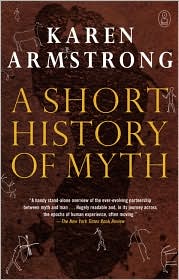
As a best-selling non-fiction author, Karen Armstrong needs no introduction. A recognized authority (some of us are mostly unrecognized) on religion in its broad sweep, she is an insightful writer and is worth paying attention to. I just finished reading her A Short History of Myth. The book does bear the marks of a religionist who hasn’t specialized in many of the materials she discusses, but when she reaches the time periods she knows, she comes alive. The book is a little unusual in that Armstrong believes myth began in the Paleolithic Period. I don’t doubt that early hominids who’d developed vocal skills probably told stories, but to be able to guess which ones in this first pre-literate period becomes rather speculative. The same applies to her treatment of the Neolithic. Still pre-literate, the people undoubtedly told religious stories but we will never know which ones.

Her discussion of the Axial Age considers mostly east Asian innovations, after acknowledging that distinct changes had also appeared in the Levant and Greece. It is, however, in her chapters on the Post-Axial Age and the Great Western Transformation that she demonstrates her craft fully. The western world, she argues, has lost something vital with the increasingly complete dismissal of myth. Those who see human history on an upward climb (mostly those who do not read or watch the news) are pleased to watch the demise of the non-rational. As Armstrong makes clear, however, pure reason comes with a very high price. The neurosis of the western world may be labeled “Exhibit 1.” Religions, institutions that evolved to improve the human lot in life, have turned destructive. Roping themselves in with a logic that doesn’t match their myth, they strike out at any who dare point out the inconsistency. Many of us have been on the receiving end of their lash personally.

Myth is where we seek meaning. Human beings are meaning-seeking creatures. While science and technology may see us safely to Mars and back, once the colonists start to arrive chapels will appear. We find ourselves lost in a meaningless world. Religions have tended to cast their uneasy lot with rationalism. What is left? Mythology. Mythology was never intended to be a literal account of “what actually happened,” but instead it was to explain what it all means. In these days when religious leaders are as likely to lob a high explosive in your direction – or engage in the Schadenfreude of watching you squirm before an overfed lawyer while being deprived of a livelihood – as they are to offer you a “hale and god-be-with-ye,” maybe what we all need is a stiff shot of mythology.


Dreams of Equality

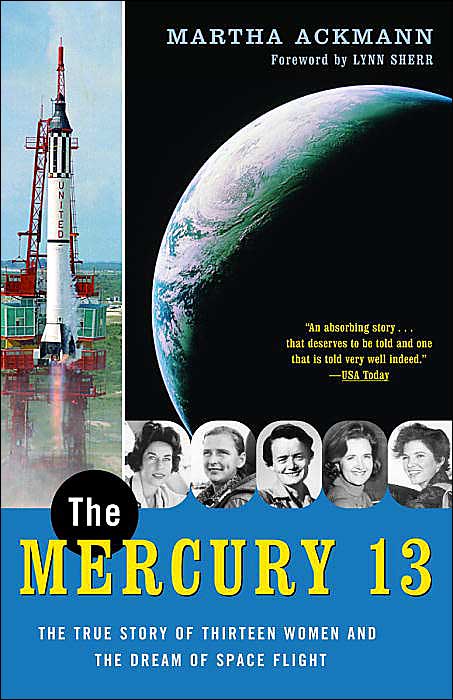
Shortly after my wife and I married, over twenty years ago, while living in Scotland we needed cheap entertainment. Growing up one of my chores had been washing the dishes. I continued this calling all through college, working in the dishroom to pay my way through. My wife was pleased with this trait and offered to read to me while I scrubbed away. This was our cheap entertainment, but now, after more than twenty years of the practice, we have read over 100 books together. Last night the book we finished was Martha Ackmann’s The Mercury 13. Most Americans do not realize that during the space race, thirteen women received non-official tests to qualify as astronauts, many of the tests more extreme than those undertaken by the Mercury 7 crew. Because of social prejudices of the 1950s and ‘60s, the women were never given the opportunity to actually achieve space flight.

Apart from the moving account of how these women strove for the stars, this account also chronicles a social prejudice that remains today. Ackmann reveals that during the ‘50s and ‘60s, scientists and physicians had never really taken an interest in women’s physiology. They were, in this McCarthyian era, considered to be an inferior version of males, the dominant social gender. Although the Mercury 13 were accomplished pilots – some with more flight hours than the chosen astronauts – many political and military decision-makers feared that social fabric would fray should women prove as adept as men. It wasn’t until 1983 that an American woman was allowed to enter space.

Here in the 21st century, many religions throughout the world still staunchly hold to the myth of female inferiority. In a monotheistic worldview where non-gendered deities need not apply, one sex will always be somehow less god-like than the other. In a world where men still pay women less, they are reminded daily that God is a white man and that the mythology declares man was created first. Religion is as often used to repress as it is to liberate. The women who sacrificed careers without personal reward to demonstrate that space belongs not only to men deserve our gratitude. And even that old white man, sitting up there beyond the dome that surrounds our flat earth, must be smiling.


Fire and Blood

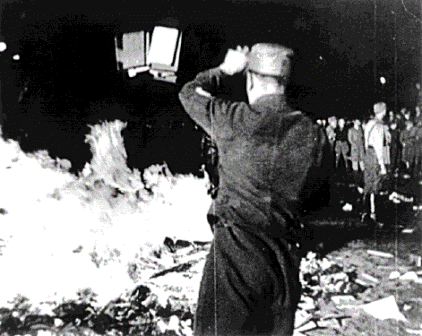
Religious intolerance again claims lives, and yet the self-righteous never flinch from their smug smiles. What insane pressure drives extremists like Terry Jones to desecrate the symbol of another religion? What did burning a Quran accomplish other than a feeling of personal satisfaction at a religious one-upmanship? Did he even stop to think that his own religion was once persecuted and that this nation that allows him the freedom to spit in the face of other faiths also welcomes his imaginary enemies? Now innocent people are dead in Afghanistan because of his intolerance. It may be that Terry Jones’ personal act of impropriety may soon blow over, but the damage has already been done. These dead will have died in vain.

Putting match to paper proves no superiority of intellect, spirituality, or especially, righteousness. The problem Terry Jones’ brand of Christianity faces is that Mohammed was born before the metaphorical return of Jones’ Christ. It is clear from the (unburned) Christian scriptures that early believers were convinced Jesus’ return was imminent, within their own lifetimes. For those who did not successfully transition to the meaning of the metaphor, it has been a weary two-millennium wait. The emergence of new religions in the meanwhile has become a threat to the superiority of their own. Apocalypticism claims many victims. Now people are dying because Terry Jones can’t cool his heels to see how this one comes out.

Religions that prove their point by trying to brutalize other religions have already shown their true character. Muslims do not burn the Christian scriptures because they accept the validity of Jesus’ teachings as well as those of Mohammed. Has Terry Jones damaged Islam by burning a book? No. Has he damaged the already languishing opinion on western supersessionism? Certainly he has. It is now incumbent on the rest of us to declare that we excoriate the acts of Terry Jones and his contemptuous version of Christianity. Islam need not try to give Christians a bad image; we are quite capable of helping ourselves.

Terry Jones' ideological companions