Old Deuteronomy

Last night my family attended a performance of CATS. We can seldom afford shows, or even movies for that matter, but when CATS comes to town it is non-negotiable with my daughter. It is a must-see musical. Anyone who has seen the show knows it is all just for fun with only the thinnest of plots and the most colorful of non-religious characters (they are, after all, cats). T. S. Eliot and Andrew Lloyd Webber, however, were/are solidly C of E, and that orientation comes through in both some of the characters from Old Possum’s Book of Practical Cats and the arrangement of the poems into the lyric of CATS. The basic message of the show is redemption, but the angle that I particularly noticed last night was the mosaic aspect of Old Deuteronomy.

Old Deuteronomy, the patriarch of jellicle cats and father of many of the cats in the junkyard, is a hobbled, old character who assumes the aspect of a law-giver to the younger generation. He has been to the Heavyside Lair and knows the path there. He leads Grizabella to her rebirth with the Everlasting Cat. Even his name suggests his association with the Torah, famously summarized in the book of Deuteronomy. When he is kidnapped (cat-knapped?) his return leads directly to the culmination of the show, the return to Mount Sinai.

No one would claim that CATS contains a profound religious impact, and yet the show conveys an unexpected emotional power. T. S. Eliot was not particularly known for his religious poetry, yet his personal beliefs permeate the children’s poems that form the basis for the show. His Moses is non-judgmental, a cat who was quite frisky in his younger years and who knows the value of a life well lived. A cat that believes in second chances. That simple message kept audiences returning to Broadway to see CATS on its incredibly long run. For those of us whose careers have run aground in mid-course, a Moses more like Old Deuteronomy would be a hopeful religious leader indeed.

Redemption through work


Works and Fridays

In rereading Hesiod’s classic Works and Days in preparation for my mythology class, I found the similarities with the Bible to be intriguing. One of the most noteworthy features of biblical wisdom literature is its universality. In a way that many believers find difficult to swallow even today, the wisdom authors accept – perhaps extol – the wisdom of sagacious “heathens.” We live in a world where religions are frequently engaged in building walls the envy of Jericho itself, while parts of the Hebrew Bible invite outsiders to join the party without even converting. Hesiod might have been a grumpy guest, but many of his words would have struck a familiar note with old Ecclesiastes.

Be not deceived – life is hard – so Hesiod tells us. The Greek gods made humanity to fend for itself. Men first and then Pandora to cause endless trouble, like the figure of Lady Foolishness in Proverbs. The misogynistic authors wave their flag in surrender to their passions; life is hard indeed. Instead of complaining (excessively anyway), the writers of wisdom interpret this difficulty as the crowning achievement of the human spirit. The gods made us to struggle, and when we’re up against it, we’re at our best.

Both Hesiod and the Hebrew Bible remind us that gods make the rules and we must obey. The human lot in life acquires an attenuated glory through living by divine standards. We will never shine like them, but we may sometimes outshine them. In the meantime, we must live by their apparently arbitrary rules. Reading the Torah, some of the Bible’s rules seem less-than-necessary to live a decent, honest, and moral life. We are not, however, to question the will of the divine. So it is that Hesiod warns, “don’t piss standing up while facing the sun” (Stanley Lombardo’s translation). Common sense might have added “while facing into a head-wind.” Such is the difference between gods and men.


Beside Metallic Waters


My brother recently pointed out the story of Rev. John Van Sloten, a Canadian pastor who has written a book about how he’s come to see the gospel in the songs of Metallica. Yes, Metallica. Even the members of the 1980’s hard rock band found the association a little surprising. It all came about, it seems, through an open mind. The story is narrated in basic form on the Gibson guitar website. Young parishioners at Van Sloten’s church suggested he should listen to Metallica. Perhaps aware of the principally negative conservative Christian reaction to rock in general and hard rock in particular, the pastor says he ignored the advice. Then the minister was presented with Metallica tickets. A divine mix was in the works.

At the concert the pastor had a revelation: the issues wailed against by the band resonate well with the concerns of Christianity. In fact, some of the band’s concerns sound downright prophetic. The concept of prophecy today often revolves around a prediction of future events (à la Harry Potter). Prophecy in the Hebrew Bible far more often concerns social justice, speaking out against the oppressor. Metal bands, from their inception, were vehicles for protest. Disillusionment against a system that perpetuates unfairness either at a governmental or a cosmic level. When I sat down to listen to the lyrics of Black Sabbath for the first time, I was surprised how biblical many of them were (don’t tell Ozzy).

Many religious folks prejudge heavy metal as “satanic” and evil without even listening to it. I have always been struck by how much these groups frequently draw on bleak biblical images. Today we treat biblical characters as paragons of emulation. The Bible does many of its characters no such disservice. Prophets are to be heard, not emulated. We think of Isaiahs or Jeremiahs as pleasant supper guests who happen to have a divine word inside. In the Bible their actions often lead to recriminations, but their uncomfortable message is sound. I grew up in a tradition that discouraged heavy metal, as if something in the music were inherently evil. I applaud Rev. Van Sloten for approaching one of the formative bands of the genre with an open mind. Truth may be found in some very unlikely places.


New Age Present

Okay, so I admit I’m curious. As my “six month” subscription to TAPS Paramagazine continues into its second year, itself somewhat paranormal, I get the feeling that I’m witnessing the birth of a new religion. I’ve been in this business long enough to know that new religions are hardly rare, but this one seems an accidental entry into the field. Now ghosts and religion are natural enough as corollaries. Both involve afterlife concerns and the unknown. Having watched TAPS Paramagazine feature fairies, tarot cards, and zombies, however, I wonder if the distinctions are becoming blurred. In this latest issue (January/February) many of the articles make explicit mention of God. God and ghost in the same breath, with the exception of a particularly holy spirit, is an odd combination, given the biblical injunction against mediums.

Spiritualism in the late nineteenth and early twentieth centuries was descried by famous debunkers such as Harry Houdini and accepted by famous intellectuals like Sir Arthur Conan Doyle. It is that liminal area that stays out of the reach of traditional Christianity and Judaism, but strays into the afterlife-prepared psyche. If the dead are out there, they should be able to communicate. Right? And with God’s full approval, so it seems. This latest issue alone suggests that UFOs may be demonic, that clergy may be legitimately interested in ghosts, God may speak through dead children, and that one may become addicted to paranormal investigation. Sounds like a recipe for a New Age mythology. Throwing in light-hearted contributions about the Walking Dead, and suddenly zombies become real as well. Oh, and skunks have a special wisdom.

Traditional Christianity cautions against all of these things (except skunks). When it comes to the supernatural, it claims, there is only one super, supernatural being. The rest are charlatans and wannabes. The Bible certainly does not encourage consorting with ghosts, and yet, in this New Age milieu it is possible to find any remotely spiritual entity touted as proof of reality beyond reality. As Bader, Mencken, and Bader observe in Paranormal America, citizens of this country are inclined to believe. Where does belief lead when there is no pole-star to guide the ship? I sense that we may be steering into uncharted waters. Anyone want to volunteer to be captain? Religions always get to make up their own rules, so feel free to devise your own compass.


Ghost in the Ark

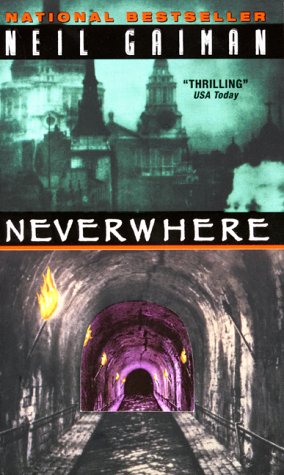
Jonathan Carroll’s The Ghost in Love demonstrates what might happen if all the rules were broken. Slipstream writing is new to me, being a conventional nineteenth-century American writer fan. Nevertheless, I regularly try to stretch my imagination wider than it has previously gone to see how others view the world. The Ghost in Love was quite an adventure into multiple realities. As with all fiction I mention on this blog, however, there is a profound religious dimension to the work. Besides the eponymous ghost of the title, the Angel of Death also makes an appearance in the narrative. Among his early lines is the statement that black-and-white movies are like prayer because it is necessary to work harder to overcome disbelief. This is just before the Angel of Death is stabbed to death.

In an ongoing theme of my own, however, the truly striking element was the use of Noah’s flood yet again. In the fiction I’ve been somewhat randomly reading, the flood story continues to appear at unexpected junctures, underscoring its depth in the human psyche. In this case, a talking dog has to solicit support from other animals to assist the protagonist in fighting off death. Invoking what Carroll terms UPTOC, “universal peace to overcome chaos,” Pilot the dog engages the hidden communication skills of animals that had been first instituted at the flood to get everyone aboard the same ark. In this sly rhetorical use of the theme, Carroll throws light on an aspect of the flood story that might otherwise remain unilluminated: it is a metaphor for universal peace.

Reading the news headlines can be a trying exercise. I fully realize that bad news sells better than good and that what we read in the papers is, like most human activity, a business enterprise. Nevertheless, the truth remains that humanity’s greatest enemy is itself. Peace has never been universal, not at least since Sargon of Akkad began toying with the idea of empire. Great catastrophes cost countless lives, but in those dark moments are glimpses of light: humanity at its most human, caring for others regardless of outlook or creed. Maybe that’s why the flood story recurs so frequently in literature. We’re not all in the same boat, but we are all trapped outside the one vessel that might save us. As we fight against the overwhelming waves, gasping our last breaths, we realize that we all have a lot more in common than we might have ever supposed.


Noah Trumps Geology

Back in the days when I was still young enough to dream, but old enough not to change anything, I wanted to become a geologist. I was near the end of my teaching stint at Nashotah House at the time, and my life-long interest in fossils fired up like a liquid oxygen barbeque. My interest began in paleontology, since I’ve always loved dinosaurs, and grew to encompass all kinds of rocks and minerals. Geology promotes a literal groundedness that few other areas of study can rival – it embraces the stuff of the earth itself. Moving halfway across the continent with boxes full of rocks, however, dampens the rock-hounding ardor a bit. I still read about geology: it is the discipline that pounded the final, resounding nail into the coffin of the six-day creation myth. While still living in Wisconsin my family used to drive out to the mountainous north of Idaho across, among others, the vast state of Montana. It was geology in motion.

My in-laws soon learned of my geology bug, and I was pleasantly surprised with a book on the great flood two Christmases ago. Not the great flood of Noah, but that of J Harden Bretz. David Alt’s Glacial Lake Missoula and Its Humongous Floods provides an introduction to a series of great catastrophic floods in the western United States. Not that anyone remembers them; the last of the deluges drained into the Pacific about 13,000 years ago. What connects these floods to this blog is the reception history of this idea. When geologist J Harden Bretz discovered the unmistakable evidence for the floods in the landscape of Montana, Idaho, and Washington, geologists refused to accept it. The reason? Catastrophism was unacceptable to geologists of the turn of the twentieth century. Although Alt does not come right out and say it, clearly one reason that uniformitarianism prevailed was because of Noah’s flood.

Ironically, geologists had been forced into a conceptual stalemate because of a biblical myth. The story of Noah’s flood had been (still is, by some) used to explain everything from the Grand Canyon to the extinction of our beloved dinosaurs. In response, geologists posited a long, slow, gradual process behind the sculpting of the earth’s surface. By the day of Bretz, nothing moved fast in geology, not even floods. It required many decades for the science to recover from the stigma of biblical catastrophism. Today geologists largely acknowledge that at several points during the Ice Ages (yes, they did happen!), an ice dam flooded what would now be recognized as Missoula, Montana, under a gigantic lake. That lake burst its ice dam repeatedly and gushed down toward the Columbia River and out into the ocean long, long ago. Long before the putative Noahic flood of some 4000 years ago. The landscape it left behind is impressive to both geologists and biblical scholars. And the story of this flood’s rediscovery demonstrates once again the continuing influence of Noah on otherwise rational minds.


Ender’s God

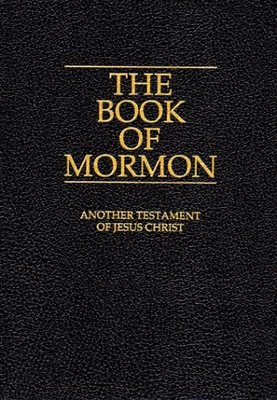
Some time ago a colleague recommended Ender’s Game by Orson Scott Card, ostensibly because the protagonist is named Ender Wiggin, a surname suspiciously close to my own. I have generally been a reader of literary fiction rather than science fiction, but I enjoy a jaunt into the genre now and then. Set in a distant future, Ender’s Game occasionally references how religion is permitted but frowned upon, in that day. Those naïve enough to accept such old beliefs are relegated a less honorable social status. So far, so good; this is common enough in futuristic stories. Then Orson Scott Card came onto my personal radar screen again. I gave my wife a novelty quote book with feminist sayings as a stocking stuffer. One of the sound bites was from Orson Scott Card, a rare male figure in this tiny book. Then my wife pointed me to religious predictions for 2011 on CNN’s Belief Blog. Once again, Orson Scott Card was present, here classified as a Mormon.

Such convergences are somewhat unexpected in a short space of time. The revelation of Card’s religious orientation was a kind of epiphany to me as well. Considering the contempt for religion in his fictional future, I was surprised to find a faithful author. Then I began to see Mormon theology throughout Ender’s Game. While not an expert in the Latter Day Saints, their belief system was included in several courses I took as a religion major in college. As I read of Ender’s progress through the novel, to the point where he achieves a limited apotheosis, I could see elements of Card’s belief system playing out. The protagonist becomes the deity-figure of his own planet. It was suddenly all very familiar.

I suppose that an entire literary discipline exists where the religious outlooks of authors are extrapolated from their writings. Deeply held values are difficult to mask, even in fiction. When I read for relaxation, however, I don’t look for such information. I must admit that my view of Ayn Rand and L. Ron Hubbard’s fiction nevertheless forever changed when I learned of their belief systems. This is, I suppose, a danger of compartmentalized religion. As a youth I believed everyone should wear their religion on their sleeve. As an adult I know how divisive and dangerous this would be. Whether in the far distant future or in the right now, we take care to hide our religion. Not only does it keep us safe from those of other religions, but often also from those of our own flocks as well.


Back to Paranormalcy

Belief is a paranormal phenomenon. Or so it would seem. Having just finished the fascinating sociological study of Christopher Bader, F. Carson Mencken, and Joseph Baker, Paranormal America: Ghost Encounters, UFO Sightings, Bigfoot Hunts, and Other Curiosities in Religion and Culture, the implications are thought-provoking. I’ve known the work of Christopher Bader, the lead researcher, for some time. Instead of trying to prove or disprove the phenomena under study, he performs a rare feat in actually addressing something most scholars avoid: what people really believe. As becomes clear throughout the book, a substantial majority of Americans believe in some paranormal phenomena at some level. The official story is that nobody believes this stuff, but the numbers beg to differ.

It is appropriate that such a topic should be undertaken by sociologists of religion. One of the difficulties the authors have is differentiating between religion and paranormal. Both religion and paranormal subjects involve going beyond empirical evidence. There is no “proof” that their objects of interest/devotion exist. The authors ultimately decide that what separates belief from God from belief in aliens is a matter of numbers: is it a generally accepted belief or one that is outside the norm (i.e., paranormal)? Since a vast majority of Americans believe in God, that is religion. Since far fewer believe in ghosts, they are paranormal. As I have suggested before, the main problem is one of definition. Religion stands on a continuum with “paranormal” beliefs. One society validates, the other it castigates.

I sensed a hesitation as I read this study. Grouping psychics alongside ghost hunters may seem reasonable, but how do Bigfoot and UFOs fit in? Those who research these latter topics often claim they are physical phenomena, as real as the keyboard I’m using, only undiscovered. Does an unsubstantiated phenomenon qualify as paranormal? Who decides what is really real? Academic institutions often distance themselves from subjects that might be suspect. (They also distance themselves from fair hiring practices as well, but that is perfectly normal.) It seems to me that the problem with “paranormal” comes in the grouping. Some of the individual subjects may indeed have merit: ghosts are perceived, reported, and some would say even photographed and recorded. They make up one of the earliest facets of religious belief. The psychic down the street has a less sure pedigree.

These fringe subjects, regardless of veracity, have a wide following. Even highly educated people generally believe in some form of “paranormal” phenomenon. Religion, widely accepted and practiced, ventures beyond the empirical as well. The difference is only, it seems, a matter of degree. Where is Fox Mulder when we really need him?


Ipse Dixit Dragon

Confession time: I have little patience for scholars who have already made up their minds before examining the evidence. Anyone who has put themselves through the ordeal of reading my academic publications will know that I do not advocate sloppy research or slipshod thinking. Nevertheless, if we are to be honest about our world, we must follow the evidence. It is for this reason that I sometimes read unconventional material. I am well aware that untrained amateurs sometimes misinterpret what they see (so do trained professionals), but when evidence exists, why deny it? I just finished reading Archie Eschborn’s The Dragon in the Lake. Chalk this up to my having lived for many years in southern Wisconsin, and maybe a touch of nostalgia. I first learned of Eschborn’s book while teaching for a year in the Anthropology and Religion Department at the University of Wisconsin, Oshkosh. The chair of the Anthropology Department had me in his office one day and showed me this book by a “crackpot” amateur underwater explorer who really believed the claims that Rock Lake – between Madison and Milwaukee – actually housed underwater Native American structures.

I visited Rock Lake during my years in Wisconsin, along with the nearby prehistoric site of Aztalan State Park. There is no doubt that Aztalan was a major settlement of Native American mound builders. The structures there, while not quite rivaling Cahokia in southern Illinois, are quite impressive. Aztalan is three miles east of Rock Lake. Rumors of “pyramids” in Rock Lake have circulated for many, many years. The lake, however, is clouded with marine growth and sediment, and although there are undoubtedly underwater features the official line is that they are glacial artifacts rather than human constructions. Eschborn’s book is an attempt to demonstrate the artificial nature of these features. At his own expense and effort, the author built up a small research society, purchased a boat, and spent several early springs and late falls (when the water is clearest) sending divers and sonar scanners into the water to document what is there. While the book was self-published (and could have used some professional editorial attention) it nevertheless lays out solid evidence that Rock Lake does house a mystery worthy of exploration.

While I can’t accept all of Eschborn’s conclusions, I would insist that his evidence demands the attention of those who deny it is even worth investigation. This is less a struggle of evidence versus absence of evidence than it is a struggle against academic arrogance: professionals know better and need not be bothered with evidence. I have personally witnessed this in my own field many, many times. It is what Eschborn calls “ipsi dicit” [sic]; ipse dixit, “he himself said it,” is the assumption that a well-respected authority may be accepted as uttering the truth in principle, based on reputation. Many professionals in this country make their living based on this faulty premise. Eschborn died prematurely shortly after his book was published, before he could launch the next phase of his investigations. While his interpretation of the data may reach too far, the world suffers for the loss of a truly open mind, and the establishment ruling, as usual, still stands.


Multiverse of Angles

Alternate realities. The concept fits well with astrophysical views of the multiverse that posit undiscovered dimensions and all their implications. Last night my family finished its group reading of Philip Pullman’s The Subtle Knife, as alternate a reality as might be imagined. Plucking Lyra from the uncertain ending of The Golden Compass, Pullman draws his readers into alternate worlds where everything is tied together by the consequences of “the fall” in Eden and where a new battle against the divine is about to take place. In an ambitious attempt to shift perspectives, we are told that the forces against God are, in fact, good. The magisterium, as its uncompromising strength in Lyra’s world demonstrates, will always seek to rule the world. It is an unsettling picture that Pullman paints, a reality where what we thought was Ormazd turns out to be Ahriman.

At the same time, I have caved in and begun reading The Watchmen. Not a great fan of graphic novels, I have been faced with a mounting curiosity after watching the movie a few times. In this alternate reality, God is simply irrelevant. Doctor Manhattan elaborates on the nature of a universe without a deity more fully in the novel than audience forbearance would allow on the big screen. This is a world perpetually on the brink of self-destruction, where God is absent and human ambition becomes the driving force behind a petty, short-sighted reality. Despite the comic-book feel, the story is profound and the concepts disturbing. Alan Moore’s dark vision of other worlds allows unrestrained human desire free reign with no divine restraints.

Such alternate realities underscore just how much of our reality is structured by religious beliefs. They resemble our world in significant ways, but their lack of divinity forces a nascent nobility from human characters who are only too aware of their own weaknesses. Flawed people try to create a better world. Some theoretical physicists suggest that all imaginable realities likely exist in the infinitude of universes that crowd in on our limited view of the way the world actually is. The ideas are mind-bending since even the worlds imagined on our own limited universe have both created and destroyed concepts of God. What might God’s role be, should the multiverse (or even a Stephensonian metaverse) turn out to be the true reality?


Didymus Haunting

Now that winter is nearly here, the season of reading the autumn books is nearing its end. Each year, in my scant free-time, I seek the perfect book to capture the essence of the dying of the trees, the chill in the air, and the growing length of night. Autumn generates an emotion that is difficult to replicate or even describe. Many people respond by watching spooky movies and those of us old enough to appreciate printed literature turn toward moody books. One of my choices this year was Audrey Niffenegger’s Her Fearful Symmetry. At the constant urging of one of my former Gorgias Press colleagues, I’d read Niffenegger’s The Time Traveler’s Wife this summer. It was well crafted and left me with enough sadness to want to see if this New York Times bestseller might capture the feeling of the season. I was drawn into the book by reviews that mentioned it centered on Highgate Cemetery in London, the scene of a real-life vampire fracas back in the 1970s.

No vampires graced this novel, but ghosts abound. Often Niffenegger’s characters are either wealthy or have managed to obtain fulfilling jobs, features that make them inaccessible to me. Nevertheless, she is able to draw in the supernatural in a way that makes it seem normal and believable. By tingeing her novels with romance she is able to tap into an inexplicably huge readership, but her story development is intriguing even to those who read books with a paranormal slant. It took me a couple hundred pages to really feel much sympathy for many of the characters, but the ghosts eventually take over the story and it becomes very creepy indeed.

For those who’ve ever wondered about the secret lives of twins, Her Fearful Symmetry will provide hours of fascination. The title may be drawn from Blake, but the story is older than Esau and Jacob. The struggle of twins ranges far back in literature and raises questions of what a soul might actually be. Is it possible to share one? What happens when one twin predeceases another? What is the nature of individual identity? Even the Gospels take pains to inform us that Thomas is a twin. I finished the story last night feeling a twinge of autumn, but still hungry. Perhaps it is good that I completed this bedtime reading just in time to get ready for the more Dickensian ghosts of Christmas.


Explaining Religion

Religion Explained, by Pascal Boyer, is one of those books that I wish had been written earlier and I had read earlier. Like several of my recent reading projects, this book was suggested to me by my cyber-friend Sabio Lantz’s blog. In the course of a very busy semester, it took several months to read, but Religion Explained is an astounding book that raises the ultimate issue: whence religion? Among the many revelations in this monograph – based on solid anthropological and sociological data, as well as neuroscience – is that religion has multiple origins. As Boyer demonstrates repeatedly throughout his book, religion arises from several mental processes symbiotically supporting assumptions that, taken alone, would often fail to survive in the meme pool.

Summarizing Boyer’s work would require a book in itself, but a few of his points struck me as particularly apt to today’s struggle between religion and society. At one point (140) Boyer demonstrates that doctrine is not nearly as important to religions as most specialists assert. In fact, most regular adherents to a religion misunderstand the doctrine to which they give lip service. After having spent too many years in a doctrinally ossified seminary, reading Boyer’s analysis was like liberation at this juncture. As Boyer points out later (282) Christian doctrine emerged in the conflicted environment of revolutionary movements with differing ideas as to what a messiah was. Only after the situation became too complex did one group decide that councils were necessary to decide what they in fact believed. Not really an inspiring story for those who wish to claim absolute certitude about their belief structure! Boyer also draws from other religions around the world to support his case.

Having stated that, Boyer does not attempt to destroy religion, but to explain it. The very premise itself will obviously strike many as blasphemous, but religion, like all human practices, can be studied with a scientific outlook. Accessing anthropological studies and neurological analyses, and the battery of tools provided by decades of psychological and sociological research, Boyer’s portrait is lifelike and believable. Religion developed as an amalgamation of human survival strategies that synchronized into a relatively consistent system that helped to explain a confusing world. If I had read Religion Explained when I was in college, my lifelong religionist enterprise might have turned out rather differently.


Where Are the Wolves?

Spend a leisurely hour at your local commercial bookstore and you won’t be able to avoid seeing vampires. Just yesterday I noticed that a neighborhood bookstore had an entire section entitled “Teen Paranormal.” Zombies also continue to grow in popularity, now having their own line of undead Christmas products. And where is the humble werewolf? Not gone, just lurking in the shadows.

This weekend I finished the third werewolf book by my one-time co-Wisconsinist, Linda S. Godfrey. (She’s still there, but I’m not.) Lest any of my readers think I am casually lumping her work together with the fictional fantasy monsters, I must declare up front that The Michigan Dogman is not a work of fiction. Linda is a careful researcher, a former journalist, and a woman who possesses something many researchers lose over the years: an open mind. The problem with occasional phenomena is that they are almost impossible to test in any empirical kind of way. Since even before the Beast of Bray Road story broke in 1992 occasional reports of bipedal canines had stumbled into the news once in a while, causing headline-happy journalists to push the werewolf button. Underneath the current monster hype, however, is an intriguing question of origins.

Where do all these similar stories originate? While not even close to the number of reported Bigfoot sightings, the dogman/manwolf sightings that Linda has pulled together are impressive for their overall uniformity. Witnesses who’d never heard of the creature repeatedly report fine details that mesh with accounts of individuals otherwise unconnected. The standard answers of hoaxes and misidentifications just don’t cover the three volumes worth of material she had compiled. Few would stand by the assertion that these are shapeshifting humans, but for those with an open mind the werewolf trilogy gives pause (paws?).

The universe is large beyond human comprehension. Simply because we’ve evolved very complex brains doesn’t mean we’ve found all the answers. I’ve never seen a werewolf or any other popular cryptid. But having studied the strange world of religion all my life, I know better than to declare, ex cathedra, that very strange things cannot exist.


Erector Set Religion

When you think of robots, the first personality type to come to mind isn’t generally the religious sort. Engineers and mechanical wizards, those who understand electronics and pneumatics, computer programmers – they are the masters of the robotic world. Yes, I’ve been to meetings of robotics parents where mention of my ill-fated career is a conversation stopper. I can nearly hear the gears inside the heads of engineers when I tell them I am a former religion professor. They are trying to formulate a logical response, I always suppose, but I know that one does not exist. What more humanistic enterprise might there be than robotics? Humans making creatures in their own image, or in the image of entities stranger than anything found on Noah’s ark, intended for functions too difficult or too unpleasant for their human masters? The triumph of rational thought!

Yesterday I attended a regional middle school FIRST Robotics competition. These events always generate an enthusiasm that belies our national attitude toward the intelligent. (Americans have always distrusted those who think too much.) I feel a little out of my league. Actually, I feel like a T-ball second-stringer up to bat in the World Series. These kids (and adults) are smart. I may be president of a club, but I can’t even find a job, so I know the score before I go in. But the cars tell the true story. In a parking lot full of competitors I always notice how present God seems to be. The license plate right across from us read “HEISLRD” – registration-speak for “He is Lord,” and we all know who He is. A couple cars down a bumper sticker shouted “God rules.” Under these strictures, even a robot that I construct might have a chance. Inside, well-wishers often conclude with “God bless.” And yet they create godless, mechanical beings.

I sometimes wonder what the god of the robots must be like. A cross between Alan Turing and Eli Whitney, I suppose, only a bit more angular. A Transformer-like super being who can run even without a rechargeable battery and can wander far from the electronic grid. One who can be born without the messy organic compounds that make up biological life. The miracles this god creates would be perpetual motion, pristine lubrication, and the ability to heal computer viruses without the assistance of a programmer. Pure artificial intelligence. As I kneel, in my mind, before this non-organic, unfeeling deity of absolute rationality, I take comfort in knowing that we have become the old gods who breathed the first life into these creations and have stepped back to let them rule.

They look innocent enough

By the way, if you are purchasing anything online from Barnes and Noble between December 12 and 17, use Bookfair ID 10378297 and my robotics team will get a teeny-tiny cut of the profits. I plan to purchase a new edition of I, Robot.


Aye, Aye, Robot

As students gave their final presentations, the very last group discussed the End of the World. This is a topic upon which the Hebrew Bible is generally silent, despite the rants of many who misunderstand the Zoroastrian influence upon the apocalyptic book of Daniel. No, the Hebrew Bible’s apocalyptic material looks forward to a change of ages, a radical new beginning, but not an end of the world. Well, maybe the end of the world as R.E.M. knows it, but not the cessation of everything. In an interesting twist, this group moved from the Hebrew Bible to scientific scenarios of the end of it all. What became obvious is that undergrads these days are faced with multiple doomsday scenarios, most of which are of human origin.

Last month I was inexplicably elected as the president of the adult chapter of my daughter’s high school robotics team. An unemployed religion professor hardly seems the logical choice for leading the way into a technological future. I even declined the nomination but was persuaded to give it a try. Robots have improved the quality of our lives to a degree that most people do not even recognize. So I listened in amazement as the students last night presented the doomsday scenario entitled “iRobot.” Clearly this is a Transformer-like blend of iMac/iPod/iPhone and Isaac Asimov’s sci-fi classic I, Robot. (Is it mere coincidence that his name can be written iAsimov?) Their description was terse and scary: nanobots and more boxy industrial models will commandeer the Internet and take over. We will be Matrix-like slaves. And I am the president of a robotic club booster association. I felt like Judas, with a MacBook.

Robots, we are told, lack empathy. Experience teaches me the same about Republicans. This weird hybrid of religio-politics is not unlike our hypothesized robotic nemeses. Religion has given us a rope to hang Judas that can double as whip against the backs of the underprivileged. Where are Asimov’s Laws of Robotics when you need them? “A robot may not injure a human being or, through inaction, allow a human being to come to harm.” Yes, the old ways are breaking down indeed. I think I’ll take my chances with the robots. At least when a robot is cutting off your life support systems it is not doing so in the name of Jesus.