Holy Horror

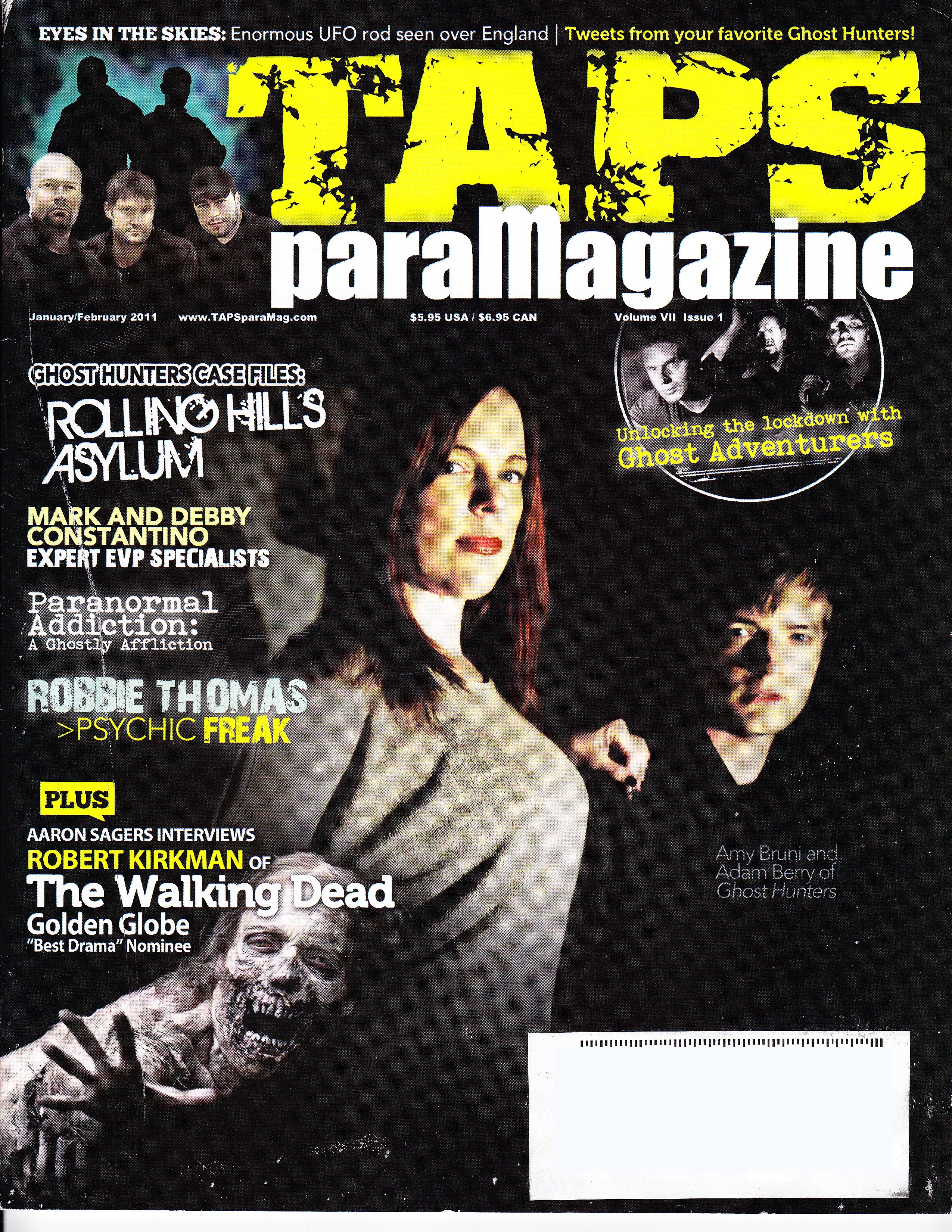
Back in October, in the spirit of the season, I attended a local lecture by a ghost hunter at a nearby public library. This sincere young man struck me as perfectly normal, but haunted by his ghostly encounters. During the question session someone asked about TAPS (The Atlantic Paranormal Society, of “Ghost Hunters” fame). The lecturer indicated that TAPS is not above fabricating evidence for ratings, a disappointing but not unexpected factor when it comes to television. He even gave some evidence to back his assertions. Nevertheless, my wife’s whimsical six-month subscription to the TAPS Paramagazine has continued on well past its expiration date, and when the November/December issue arrived, I was interested to see a piece entitled “Sacramental Horror: What scary stories can tell us about what is real.” Well, this was too good to pass up.

The article, written by Presbyterian minister Jonathan Weyer, discusses the value of horror films. The juxtaposition of a clergyman and horror films is a little unexpected, but believable. After all, many horror films feature religious ideals clothed in monstrous form. Dividing horror films into Uncanny/Unsettling horror, gross-out horror, and torture porn, Weyer goes on to explain how uncanny or unsettling horror underscores the moral order of the universe and is therefore appropriate for Christian contemplation. He even draws the Nicene Creed into it. Gross-out horror serves the function of making the viewer contemplate death and perhaps even helps to make fun of it. This is a less noble, but still acceptable Christian enterprise. Torture porn, on the other hand, simply has no redeeming value. Sacramental horror really didn’t enter the discussion. Douglas Cowan’s Sacred Terror takes this issue on more directly.

I really don’t expect much insight from a fanzine that treats the reality of fairies and the prognostications of tarot cards next to the genuinely mysterious, such as ghosts. Finding morality in horror films is often a matter of eisegesis. The fear in such films often emerges from the sacred, either in pure or distorted form. Even if “the pure of heart or, often the virgin” survives while “Wrongdoers get put to the axe,” as Weyer states, seldom is that the intended point of the movie. John Carpenter denies that there was a moralizing message in his Halloween, often cited as the movie that established the “good girl survives” motif. The fact is that horror relates to the sacred in the element of fear. If people were not afraid, there would be little for religion or horror movies to accomplish.


Brave New Whirled

Today marks the triumph of capitalism. Having just finished reading Aldous Huxley’s Brave New World for the first time since my undergraduate days, I found it strangely appropriate and prescient. Huxley foresaw a bleak future where comfort and convenience outweighed concerns for truth and meaning. As the World Controller of Western Europe reveals to Mr. Savage, it was the Nine Year’s War that made people so docile that they would accept complete government control over their private lives. Read “9-11” for the Nine Year’s War, and he pretty much nailed it. Americans today put up with severely restricted freedoms because only the rich and powerful are truly free. We even have Huxley’s “feelies” – we just call it the TSA checkpoint at the airport.

“But I don’t want comfort. I want God, I want poetry, I want real danger, I want freedom, I want goodness. I want sin.” So says Mr. Savage shortly before his tragic end. The remainder of society – those willing to play along with the game, those willing to be anesthetized with the little perks the government throws their way – are already dead. “Let them eat cake.” We have our hedonistic day of shopping frenzy, looking forward to the soma of Christmas. We will comply despite the dehumanization the unemployed, the unwary traveler, the racially profiled, face every other day. As long as we have our electronic toys and the network into which they may be plugged, guide us o thou great Patriot Act. Freedom is not free. Orwell called it doublethink. Today it is doubleclick.

Novels have the capacity to say what libraries full of dusty dissertations cannot. Perhaps the future has not turned out quite the way Orwell or Huxley or Burgess predicted, but they were not far off. November has become the month of the novel. The Office of Letters and Light hosts National Novel Writing Month (NaNoWriMo for those in the know) each year to encourage others to find their creative voice. The challenge: write a 50,000-word novel fully in the month of November. I finished mine in just over two weeks. Perhaps someone who has the good fortune to break into the publishing world will once again sound that warning shot before society takes its next Huxleyian turn. But until then, anyone who says they don’t need a gramme or two of soma, well, they’re just plain lying.


Towing Jehovah

Back before my blogging days began, one of my relatives was reading a book entitled Towing Jehovah by James Morrow. Given my field of study, I was intrigued by the title, made a note of it, and got on with my life. I was reminded of the story when reading a book on religion in popular culture, so it seemed the time was right to pick it up and see what it was about. First of all, it is a work of fiction, so nobody should get too upset. The premise is that God has died and his corporeal body has to be given a proper burial. Since the corpse is huge and since it has fallen into the ocean, a washed-up oil tanker captain is selected by the angels, who are dying out of empathy, to tow the body to its final resting place. Herein lies the tale.

The book won a World Fantasy Award, and is generally an engaging story. Any lifelong student of religion will naturally find bits to quibble with, but the fantasy author’s heart wants what the fantasy author’s heart wants. The question the book raised in my mind was whether it really said much about religion at all. Sure, there are several great one-liners and quirky observations about how the established religions might react to the death of God, but the book itself intimates that humanity does fine without a God, but it required a God to get it started. It is the story of humankind growing up. When I finished the book, however, I was left with the impression that religion is developed here in spite of God.

God, being dead, is a strangely silent character in the book. Western religions have taught us to suppose God is active, and very vocal. Just tune in any televangelist. In Towing Jehovah, God has become an idol, a prime mover that became the main event. It is a provocative yet somehow respectful treatment of God as an idea. James Morrow is often categorized as a secular humanist, yet his book tows God into the consciousness of a world that already largely ignores the divine. In this sense it remains a paradox. No matter what people say, God just doesn’t go away. The reader, cast adrift, like the corpus dei in the novel, keeps bumping back into God. The concept, once born, will live as long as human consciousness survives.


The Good (Face)Book

One of the funnier books I’ve enjoyed has been Sarah Schmelling’s Ophelia Joined the Group Maidens Who Don’t Float: Classic Lit Signs on to Facebook. Its unwieldy title as well as the temporary nature of the subject ensure that this book isn’t destined to be a literary classic, but it is a nuanced and subtle treatment of the Facebook phenomenon. (My daughter found it on the bargain table at Borders, and it cost us less than two dollars.) Schmelling presents the Facebook pages of famous, departed authors, often with hilarious results. For some time I regarded YouTube, Twitter, and Facebook as passing fads, but now I’m beginning to wonder if we’ve become so connected that shutting down the networks would be tantamount to pulling the plug on the respirator. We live to be connected. Humans are social animals, and yet many of us find ourselves isolated and alienated, living apart from family and those who were significant to us in times past. It’s the Internet to the rescue.

My wife pointed out an article on CNN entitled “The theology of Facebook, an online ‘altar’” by Omar L. Gallaga. Gallaga explores the concept that Facebook is now being taken as a spiritual venue by many. Quotes from the Bible or self-righteous, self-congratulatory religious sentiments are very commonly posted. So much so, Gallaga suggests, that some clergy worry about their jobs. Facebook has developed its own “spirituality” quite apart from anything its creator may have imagined. Facebook is evolving. I joined Facebook last year, but I limit my involvement to mostly watching others. Rather like I did as a kid on the school playground.

Is there balm in Gilead? In rereading Brave New World I am reminded of the insidious nature of soma, the feel-good drug. I’ve been to churches like that. Like Bernard Marx I left feeling empty. In Facebook-world it feels the same to me. We are communal creatures by evolution, but we want to talk about our troubles more than we want to listen. We are seeking that mythical, homeopathic cure to the ills our society creates: lack of prosperity (except for the Prosperity Gospel crowd, of course), joblessness, despair. Misery loves company and Facebook loves company. It is like the confessional without the absolution. Gallaga may be right; maybe Facebook has become a religious institution for some. If Facebook had come along a little earlier there would be no lost years of Jesus for us to ponder. We would know through his posts and tweets, exactly what it was like to be the son of God.


Tax Dollar Peep Shows

Yesterday’s New Jersey Star-Ledger ran a column by Paul Mulshine entitled “It may be 2010, but it sure feels like 1984.” The topic, of course, is the increasingly invasive procedures that TSA officers have been granted. For a guy who “held it in” every day for the six years of middle and high school because of bashful bladder syndrome, the airport has begun to feel like the shower room after gym class. Having been raised with the idea that certain body parts were to be viewed by God alone (and the occasional physician), being undressed in front of others was a nightmare scenario. I still avoid public restrooms when at all feasible. Now TSA officials have tickets to a free “scope and grope” fest whenever you want to fly. I say the terrorists have already won.

Perhaps by coincidence, in trying to keep up with my daughter’s reading assignments, I have started to reread Aldous Huxley’s Brave New World. The grandson of Thomas Huxley, Darwin’s bulldog, Aldous had written a foreword in 1946 that was affixed to the front of my college edition of his novel. In it he states his bleak vision of a future where governments have all become totalitarian and control vast numbers of slaves made willing by apathy (read “world-wide web” or “Internet”). Showing your private parts to a total stranger who then gets to grope you later? This is freedom? Abandon hope all ye who enter here.

Have these TSA officials been trained, seriously trained, to deal with the fact that they see what many people would pay good money to glimpse? (Well, not in my case, but you get the picture.) Where are their credentials? No, wait, don’t show me that! If I decide to display myself in public, I could easily be arrested for indecent exposure, but if a pervert wants a free look, all s/he has to do is apply to TSA. What will it take for Americans to shake off their electronically induced haze and say “No more!”? Perhaps I am alone in feeling vulnerable naked before strangers. Perhaps others enjoy giving it all away. Is it not better to survive that flight so that another stranger gets a gander at the jewels when you fly back home? You can kiss my arse goodbye and call it government work. 1984? Brave New World? I think Silence of the Lambs might be a better paradigm.


Physics of Religion

As an observer on life’s sidelines, I rarely participate in the action. The subject matter is more important than the critic, so I tend to respond in this blog rather than create. Once in a great while, however, someone I know shows up in the media. A number of years back Neal Stephenson introduced me to George Dyson. I instantly felt an affinity for him, and found his book Darwin Among the Machines a great triumph of intelligible science writing. It was no great surprise, then, when George was mentioned in an article in December’s Atlantic magazine, comparing his outlook to that of his father, physicist Freeman Dyson. I was intrigued by physics in high school, but my overwhelming supposition that religion explained life overruled this predilection and so I’ve ended up an unemployed religion professor than a scientist. In the article, however, author Kenneth Brower brings these things together.

Brower asks a pointed question: how can a physicist as brilliant as Freeman Dyson hold factually inaccurate and apparently misguided ideas about global warming? The story contrasts Freeman with his son George as exemplars of two different religions. George represents the environmentalist religion while Freeman represents the belief in humanity’s ability to solve any problem. The use of religion as a means of distinguishing these views again raises a question of definition. I don’t dispute the use of the word – it is entirely apt in this context – but the functional definition here is that religion equates to something deeply believed. I am a little troubled by this. Not because no gods or deities or supernatural forces enter into it, but because for years many evangelicals have boldly declared that science itself is a religion. That idea has been used as leverage to get Creationist ideas equal time with those of science because it comes down to purely a matter of one religion against another.

Belief is a phenomenon that is not well understood. Most people have no difficulty accepting the truthfulness of factual data. Seldom do even religious zealots doubt two plus two equals four. At a more theoretical level, however, facts become formulas incomprehensible to most of us and critics are quick to call this “religion.” Faith in human ability to solve the riddles of the universe. Where is the line with religion crossed? In the year 2000 Freeman Dyson received the Templeton Prize, an honor reserved for those who make significant contribution to the spiritual dimension of life, often with a scientific component. It is the dream of every religionist to be considered for this great honor. Once again, however, the further out we peer into our universe, the more the lines become blurred. That does not worry me. What concerns me is how such ambiguity will no doubt be used by Creationists and their Neo-Con supporters who are only too glad to have a scientist of Freeman Dyson on their side. When religion trumps science not even 2 + 2 = 4 is secure.

Hubble's ultra deep field has yet to detect any deities


Theory of Everything

Over the weekend my wife pointed out an interesting story on MSNBC pointing out that superstitious beliefs are becoming more common. While reason may dictate that as it becomes more obvious that reason explains everything the supernatural will fade from the human explanatory repertoire. Instead, scientists are using reason to explain why this does not appear to be happening. Many neuroscientists suggest that something in the brain predisposes us to believe, while other scientists suggest it may be in the DNA. For whatever reason, we are inclined to believe in outside agency.

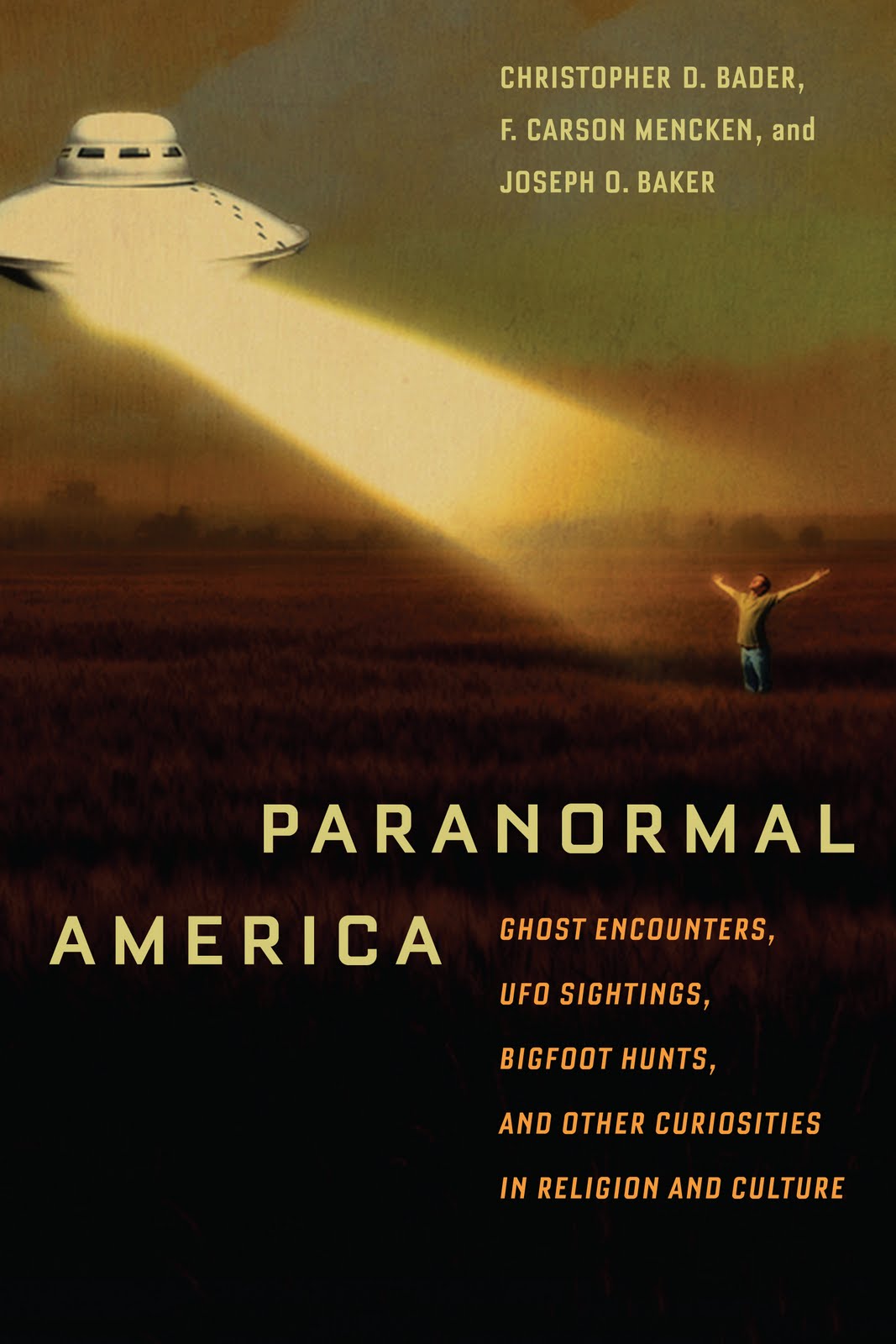
The article is an introduction to the book Paranormal America by Christopher Bader and Carson Mencken. I’ve read some of Bader’s work before and it is admirable for its balance. He tends not to judge the phenomena but raises the question why people believe what is, frankly, often unbelievable. What stands out in such discussions is that religion is often classed separately from the “paranormal.” Paranormal is generally anything outside the accepted bounds of science. Supernatural, apparently, is anything that makes blatant claims to be outside the reach of science. With recriminations frequently flying both directions, I suggest maybe a reworking of definitions might be in order. Science, by definition, can explain all phenomena that exist. Supernatural, by definition, cannot be quantified. Too many mutually exclusive truths.

For many decades many scientists have been seeking a grand unified theory, something that explains everything. This they hope to do without recourse to the supernatural. When they arrive at this theory or formula, predictably, those who believe God is bigger than all this will claim that God is simply outside the system. Perhaps the net needs to be widened. We know that we humans do not possess the keenness of senses that our animal friends have. Various creatures see, heard, smell, taste and touch with such exquisite sensitivity that we can only be jealous. Some can sense magnetic fields, while some flowers follow the sun without the benefit of any eyes. We, in our presumption, think we see and measure all that is to be seen and measured. Hamlet would disagree. I can’t wait to read Bader and Mencken’s book, but I’m inclined to think that even when a grand unified theory arises there will still be room for philosophers, and maybe even theologians.


Om, Are You Through with That?

High school curricula constantly change, and one of the tasks I have set myself is to read what my daughter is assigned in English class so that we can discuss it. Sometimes by happy coincidence I’ve already read the book, and teaching four classes of my own this semester, I appreciate the break. This practice has led me to several books I would otherwise have never found on my own. Siddhartha by Hermann Hesse is one such novel. Based, as it is, in the imaginary world of the Buddha’s India as seen by a Swiss writer, Siddhartha is an odd blend of Eastern and Western religious ideas. Having spent four years studying German in high school, I am embarrassed to admit that this is the first Hesse I’ve read.

Naturally, given the strong Buddhist orientation of the work, Siddhartha deals with religion. More than just religion, however, it is the story of self-realization, of becoming. At times it is difficult to sympathize with the protagonist since his religious arrogance and self-assurance make him unapproachable. Nevertheless, as the brief story unfolds he discovers that he is merely human, and a needy human at that. As he reveals his final thoughts to his lifelong friend Govinda, Siddhartha states, “in every truth the opposite is equally true.” Here is a gem worth keeping. When statements of faith are uttered, are not those speaking their creeds also affirming the antitheses? The world is just so, and therefore it is also entirely opposite.

Many students approaching the Hebrew Bible fail to realize just how Eastern the outlook often is. Since the Bible is foundational for Western culture, we easily assume it shares the viewpoint of our culture. Those who read it seriously find out that the ideas and concepts often fit much better into an “Eastern” outlook. The Bible is comfortable with opposites and contradictions. The Bible values the journey as much as the goal. There are parts of the Bible that read very much like Siddhartha. While I doubt that Siddhartha will ever be my favorite novel, it has become for me a commentary on the religious life. The protagonist can, after having rejected the teachings of the Buddha, only seek. And the search is the point of the entire journey.


Wasps

I just finished reading Iain Banks’ The Wasp Factory. It is a disturbing novel on many levels; even the back-cover comments warn against reading it. The reason for mentioning it on this blog, however, is that it is so full of religious ideas that it would be a shame not to address them here. I won’t put in any spoilers for those who might, even with adequate warning, want to read the book.

The wasp factory of the title is a divination device. The narrator, Frank, does not believe in God because of the unfairness and cruelty in the world, although he is also a frequent perpetrator of cruelty. As he seeks revenge on animals other children, Frank views their suffering as a form of punishment from the God he disbelieves. At one point, after his brother Paul dies, Frank compares him to his old dog Saul, also unfortunately deceased. At this point he reveals, “Paul, of course, was Saul.” Death is the Damascus Road experience in this world devoid of a deity, but one where death is considered far more certain than life. At one point Frank declares the sea to be a mythological enemy, a point of view shared by the Bible and many ancient societies.

Frank is a neurotically ritual-bound individual. No matter how gruesome, his tasks are part of an elaborate system that must be repeated in order to maintain its efficacy. At one stage Frank declares, “this is like intellectuals in a country sneering at religion while not being able to deny the effect it has on the mass of people.” This statement is more insightful than it first appears – it is the dilemma of many who attempt to understand religion who are considered a luxury not to be afforded by society. Frank is a paradigm: people are religious, even in heterodox belief systems. The Religious Right has understood this for decades: talk religious talk and they’ll vote for you. Most people have no way of checking out what form this religion might take. It makes me almost as nervous as The Wasp Factory itself.


Jersey Devils

My trips to the DMV always seem to involve the paranormal. Admittedly, this is sometimes partially my own fault. Against my wife’s advice, I took The Lure of the Dark Side – a book I was reviewing – with its Satanic cover, when I went to renew my driver’s license a few weeks ago. Back when we first moved to New Jersey, and I had to sit for an excessive part of the day in that waiting room, I was reading a book on the Jersey Devil. I first heard of this exotic New World beastie when I was a ghost-story fixated teenager reading some Scholastic October special. Since I lived a state over, in the western end of Pennsylvania, I figured I didn’t have too much to worry about.

The Jersey Devil is an anomaly that involves two distinct aspects. One side of the story is pure folklore; Mrs. Leeds gave birth to a devil in south Jersey and the monstrous thing has been haunting the state ever since. The other side involves the sightings of an allegedly physical cryptid by reputable individuals, especially since the early twentieth century. An unlikely combination of horse-head, wings (often bat-like), and hooves make this one odd-looking creature, based on eyewitness accounts. I have to thank my friend Susan for pointing out the suggestion that this could be a hammerhead fruit bat, although how even a small population of the African rain-forest dwellers could survive in New Jersey without producing a single road-kill specimen would itself be beyond belief. The shape and size of the bats accounts for quite a bit, but the hooves just don’t fit. That, and the Jersey Devil seems to prefer chickens, ducks, and small dogs to the eponymous fruit of the hammerhead bat.

Whatever, if-ever, the real Jersey Devil might be, the story has all the makings of a Halloweenish blend of religion and monsters. There are several versions of the story, but the one most commonly told is that Mrs. Leeds, in labor with her thirteenth child, declared that this one had better be a devil. She got her wish. The child emerged, sprouted wings and flew up the chimney to terrorize south Jersey and Philadelphia over the next several decades. The beast gives the state’s hockey league an instant identity and even led to the breakdown of a priest in the sixth season of Seinfeld. The first season of the X-Files featured a Jersey Devil episode (although it turned out to be a very humanish kind of Bigfoot), and Bruce Springsteen recorded “A Night with the Jersey Devil” for his home-state fans back in October of 2008. Only the gullible take stories of cross-species (cross-metaphysical beings?) seriously, but the story, like the Jersey Devil itself, seems to be immortal.


Where Wolves Dare

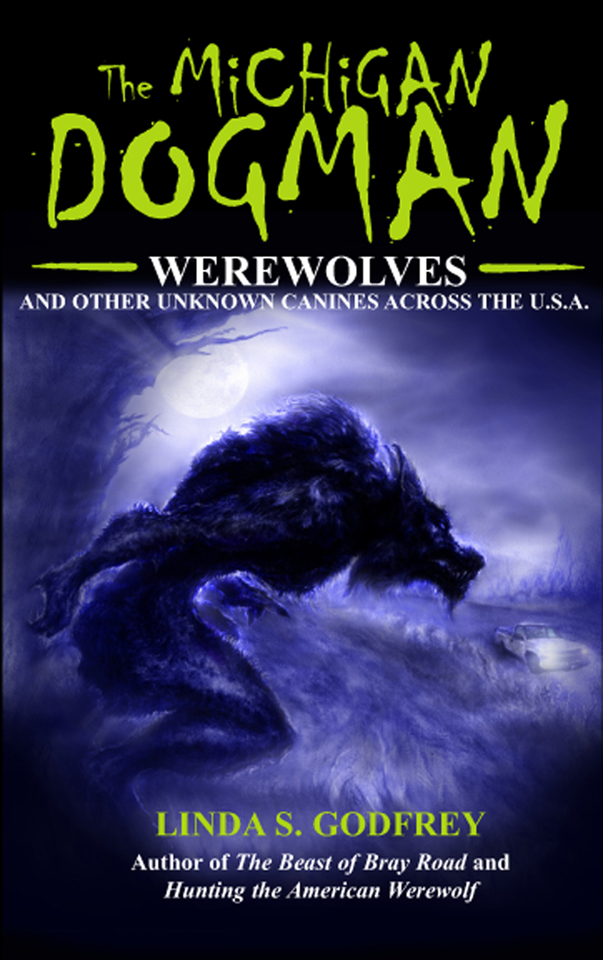
It’s the fall of the year when an old man’s thoughts turn to werewolves. Not that I’ve ever believed there were such creatures, but they do have a pedigree in ancient religious ideas, and even today skin-walkers play a role in some Native American traditions. While I lived in Wisconsin I found out about the Beast of Bray Road, a cryptid that is seen on occasion south of Nashotah, where I lived. Unfortunately I learned about the beastie too late to make any attempts to see it, but the documentation of the creature is in good hands with local author Linda Godfrey.

When I moved to New Jersey, scrabbling for a living tended to outweigh concerns about werewolves. Nevertheless, I did hear of an odd account in a south Jersey newspaper from 1925. According to the Woodbury Daily Times (now defunct), a farmer in Greenwich, south of Camden, shot an up-right hopping, dog-like creature that had twice raided his chicken coop early on a December morning in 1925. According to the paper, hundred of people went to view the unidentified animal and some even photographed it. Now, 85 years later, the story is barely remembered. Was this just another gun-toting Philadelphia suburbanite shooting an annoying dog, or had a “werewolf” passed through New Jersey all those many years ago? Periodically accounts of dogs running on hind legs are posted by late-night drivers in the Garden State, but no photographs or other evidence ever seems to be forthcoming.

Werewolves are less about monsters than they are about struggling with inner conflict, according to many psychologists. Our animal nature, deeply sublimated, sometimes makes a ferocious bid for freedom and otherwise sane individuals believe themselves to have turned into wolves. When I look at my crazy employment history, somehow I can relate. Some day I hope to transform into a fully employed academic or editor who has a steady income and an appreciative employer. My chances of seeing a werewolf, however, may be slightly better. I think I’ll head to Greenwich to poke around a bit, but I’m going to wait for a full moon, Friday the 13th, or a full-time job – whichever comes first.

Read Linda Godfrey's new book


Demo C. Rats

I just finished China Miéville’s novel King Rat. I’ve been thinking a lot about rats lately. This retelling of the tale of the Pied Piper of Hamelin has a strong Marxist flavor that intrigues the reader into greater possibilities. Each week as I drive the many miles required as a professional adjunct, I think about the bourgeoisie of academia. Many university programs are simply not possible without the many adjuncts willing to be exploited in order to keep them going. While the adjunct is kept below a certain number of courses so that costly benefits do not need to be paid, full-time faculty are kept below a certain number of courses so that they are free to build the university superstructure. Some teach no courses, do no research, and conduct no administration. It is a fair guess whether they even bother to breathe or not. Yet they are paid full salaries and benefits. Academic fossils paid simply to exist.

Saul, the rat-man who would be king, has a conscience. He was raised by his human father to appreciate the sense of what Karl Marx wrote. As the novel progresses, the rats congregate around him, wanting him to be their king. I have been an adjunct instructor for five years now. As I have watched my prospects grow slimmer, my work load has increased for less and less payback. I frequently chat with full-time colleagues who appreciate everything I’m doing. This academic year I am scheduled to teach eleven courses, strictly part-time, of course. Otherwise someone might have to pay benefits. This week one of the schools I teach at actually expanded parking privileges for adjuncts. Not to be nice, but because they had to.

Saul, the would-be king. So biblical. So human. At the end of the story he lives up to his idealism, granting rats autonomy without being sure how it will play out in the real world. There was a time when academics were idealists. Universities are now, like all other aspects of “modern life,” businesses. I’m sure that full-time instructors devote very little thought to those who work for table-scraps to support the system that underwrites their comfortable lifestyles. Certainly a university president or dean would loose nary a wink of sleep over those who’ve given themselves over to the task of Atlas, holding up their sky. It is business as usual. And as the bourgeoisie know, every aspect of life is business. What happens when the rats go free? The end of the story has not yet been written.


The Chosen Peoples

My thanks go to Simon & Schuster for sending me a review copy of Todd Gitlin and Liel Leibovitz’s new book, The Chosen Peoples: America, Israel, and the Ordeals of Divine Election (2010). Briefly, the book traces the origins of the concept of being a chosen people in both Israel and the United States. This concept is then shown in relief with those who are “unchosen.” The authors conclude by highlighting the national sense of mutual goodwill between Israel and the United States. The full text of this review is on the Full Essays page of this blog.

I read this book wearing multiple hats. Since the first chapter traces Israel’s sense of chosenness from Biblical times to the present, I began by wearing my Biblical Scholar hat. Many of the questions asked and raised about the Bible reveal a naivety about traditional claims of biblical authorship. Although certainty cannot be achieved, biblical scholars have applied textual and literary techniques to the text for well over a century now, and many of the claims simply accepted by Gitlin and Leibovitz simply do not stand up. This may seem a minor flaw, but since Abraham is foundational to this outlook, it is essential to at least consider his lack of historical attestation. Gitlin and Leibovitz assume that Genesis, with its stories of Abraham, predates the books that follow. This is not a safe assumption to make, and using this background as a foundation for further analysis might well lead to structural problems with the argument later on.

Wearing the hat of an historian, I noticed how much of the force of the argument of the book is interwoven with the idea that God has actually chosen Israel. I have told my students for many years now that historians do not make claims on God or God’s alleged activities. Texts that narrate God’s actions tend to be classified as myths rather than history. The concept of chosenness, which Gitlin and Leibovitz are reluctant to relinquish, is based on the premise that God has indeed done the choosing. An historian would be extremely reticent to make such a claim. Having noted this concern, the authors do a fine job of providing a brief, readable history of the founding of modern Israel without recourse to what God was doing in the twentieth century. When the authority of the Bible is needed, it is quoted here in King James English, hardly the most accurate translation available.

Gitlin and Leibovitz suggest that chosenness is more a curse, at times, than a blessing. The reasoning seems to be that the concept of chosenness leads inexorably to Zionism. The ideas interact on a much more subtle level than that, although certainly the Zionist movement has owed and continues to owe quite a heavy debt to the concept. The generalizations here are a bit broad – political motivations may not receive their full due. Toward the end of the chapter the ideology of messianism is engaged and brought into the discussion. It is not clear that messianism is the same as chosenness; the two ideas both emerge in Judaism, but do not always overlap. When the authors state that Zionism has always been messianic at heart (p. 57), that may be correct, but it does not necessarily reflect chosenness. Gitlin and Leibovitz are very good at pointing out the inconsistent application of the idea of messianism in the formative stages of the modern state of Israel.

Please see the Full Essays page for the remainder of this review.


Dark Side of Religion

Back in August I received a book to review for Relegere, the new online journal for Studies in Religion and Reception. The volume I received was The Lure of the Dark Side: Satan and Western Demonology in Popular Culture, edited by Christopher Partridge and Eric Christianson. I found this assignment to be a felicitous one for many reasons: the book was very interesting, the topic is intriguing, the authors are scholars who take popular culture to be worth serious study, and it exposes the roots of many perceptions of Satan and the demonic in western society today. While I cannot present the whole review here – I would encourage interested readers to explore the appropriate issue of Relegere when it is published – I would feel remiss if I didn’t at least mention a few of the highlights here.

Scary cover

First of all, the book is a collection of essays that cover the media of music, film, and literature. Many of my students like to point out the propensity of death metal bands for choosing ancient Near Eastern gods and themes for their band names and songs. The first two essays in this book explore black metal and its self-proclaimed Satanic intent. What is interesting here is that what many black metal bands declare as their “religion” does not, in fact, fit with mainline Satanism at all. This aspect of the book is worth reading just to see how religious ideas, both unholy and holy, easily become distorted when transformed into an artistic medium. By far my favorite essays, however, were those that analyzed horror films according to religious themes and concepts. It was refreshing to see serious scholars discussing vampires without flinching, noting how they are part of the same fabric from which religion is cut.

One of the recurrent criticisms of academic writing is that it generally reaches only academic audiences. Certainly at the prices common at academic presses the average layperson would need to be exceptionally motivated to pay out the cost to read what are admittedly generally dry and technical books. Equinox has fortunately released an affordable paperback version of this volume, making the price less of an issue. The content is, for the most part, readily accessible to the general reader. The cover is a tad lurid; when I took it along to the DMV to renew my driver’s license I felt a bit self-conscious in the waiting room. Beyond that, this was a rare academic book that should find a wide readership. For me, the bibliographies and filmographies demonstrated my own deficiencies in keeping up with popular culture. I would recommend it for those with a sturdy constitution who want to know the correct way to dispatch a vampire in the twenty-first century.


Noah in Time

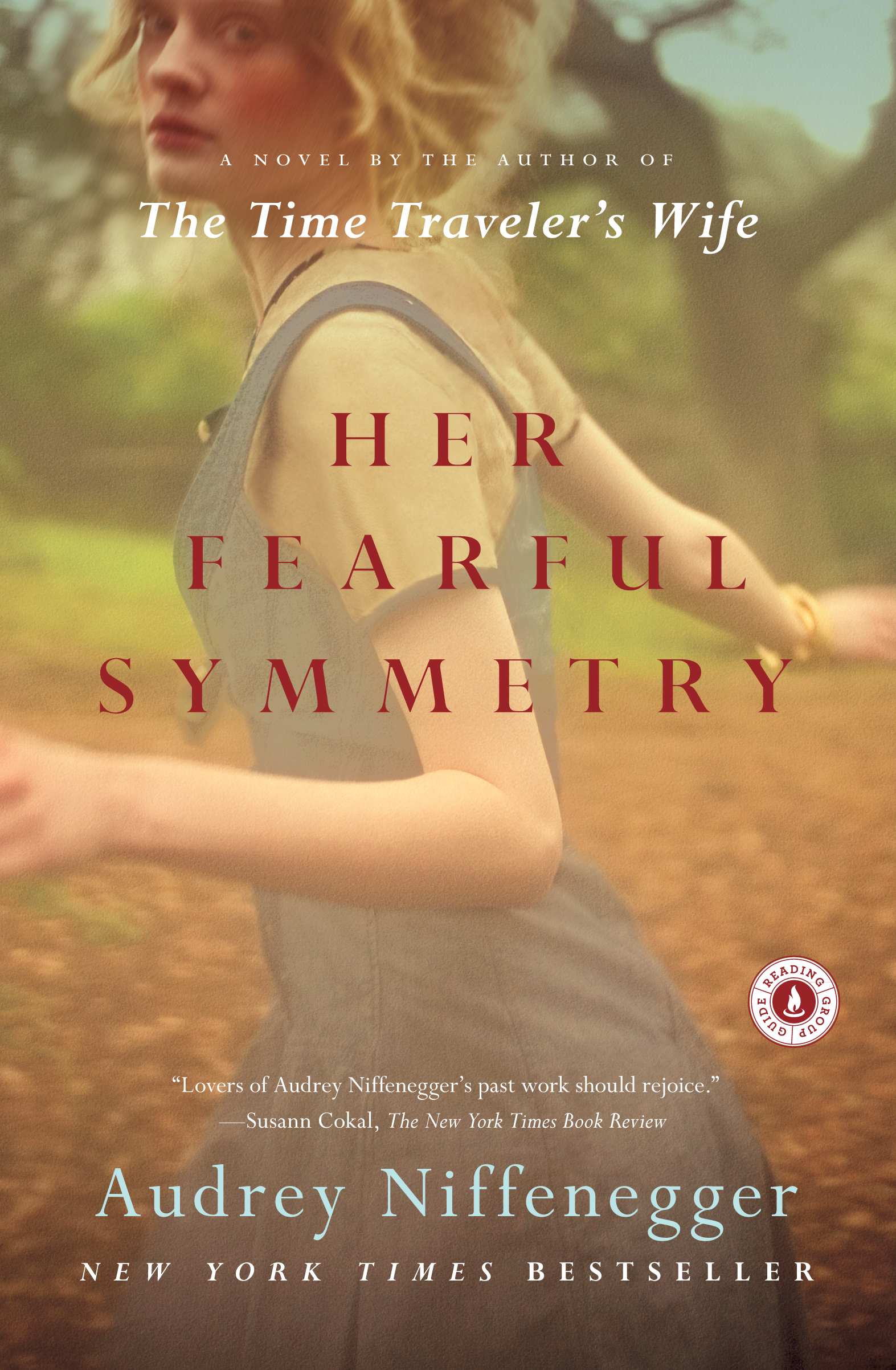
When the silence was first broken at Gorgias Press, one of my colleagues suggested that I read The Time Traveler’s Wife by Audrey Niffenegger. The title suggested to me some kind of point-of-view rewriting of H. G. Wells’ classic The Time Machine, a novel that had a large influence on my young, science-fiction inclined mind. For some reason I wanted to keep this place sacred to the memory of Wells and I dismissed the suggestion with polite demurral. Since that time Niffenegger has been constructing quite a reputation as a novelist, and because I enjoy the implications of time-travel and I like to keep current – fashionably late, of course – I finally took the time to read the book.

I wasn’t sure what to expect; it is a sensitive love story, wrenching in parts, but the mysteries of time travel are left to a genetic defect and not some technological invention. In the course of wending in and out of past and present lives, the main characters, Clare and Henry, carry on a dialogue that includes the dynamic of a protagonist raised Catholic. Once, while discussing the bizarre nature of time traveling, Henry suggests that Noah is a fairy tale to which Clare replies, “Noah is in the Bible. He’s not a fairy tale.” This statement reaffirms that, for many people, Noah is the obvious touchstone of the Bible and modern society. A versatile figure, enigmatic and only sketchily drawn in the Bible, Noah reappears regularly in the popular media. Just this summer I noted how Justin Cronin’s The Passage also cites Noah as a schematic for much of the plot that bears the story. A few weeks ago I mentioned how the remake of The Day the Earth Stood Still viewed Klaatu’s ship as an ark. Noah from outer space.

Noah is a foundational figure for our society. This should not be surprising since the flood myth is among the most ancient of stories that humanity has relegated to religious literature. The Sumerians and Babylonians told the story long before Genesis was composed. In its own way, the Noah story is an example of time-travel. A tale whose origins are lost in the pre-literate stages of humanity, it becomes history with the uncritical acceptance of the Bible, only to become a defining myth of twenty-first century literature. The world of the twenty-first century often feels like a fragile environment ripe for a catastrophic flood. Consciously or not, we are still looking for our Noah.

Another kind of Noah