Giving Lilith Her Due

Lilith Fair has announced its 2010 tour dates and excited fans are already purchasing tickets. Lilith Fair is a collection of women artists who share a stage to showcase the female contribution to contemporary music and donate a considerable share to charity. The event name, of course, is taken from the mythological character of Lilith. Popularized as a rare example of “Hebrew myth,” Lilith is a character who likely derives from ancient Mesopotamia, although her origins are obscure. Best known as “Adam’s first wife,” her somewhat sexy story in Judaic tradition evolved into Lilith being the original woman. Unlike Eve she was created simultaneously with Adam. Things were fine until she wanted to be on top during intercourse – males were not made to be dominated, according to patriarchal old Adam, and Lilith ships out to shack up with Satan. She is demonized (literally and figuratively) and becomes the “night hag” that snatches babies and claims the first right of intercourse with every male (an etiology for nocturnal emissions). She becomes the mother of demons.

This story shows all the traits of a late development, but the idea of a strong female figure in Eden is an appealing one. Lilith has come to represent the empowered female, and the modern trend towards accepting her as an icon of feminine independence is apt. Long ago I was intrigued by the female side of the story. Perhaps because I was raised primarily in a single-parent family for my formative years, I have always wondered about the disparity in our “advanced” culture that still considers the male as the “default” model with the female as kind of an adjunct after-thought. This fascination led me to the study of goddesses in the first place, culminating in a doctorate on Asherah. In the Bible men have Adam, Noah, Moses, David, and countless other role-models – even God himself according to standard interpretation. Why not admit the goddess?

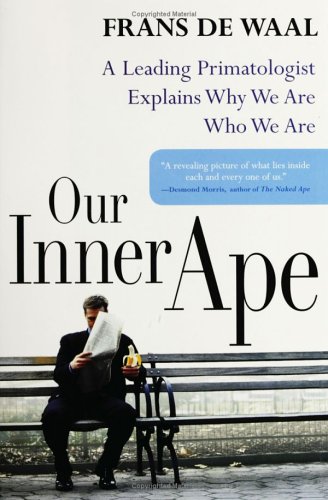
It is telling that when Lilith becomes too powerful she is presented as evil. Anthropological explanations have little to offer by way of adequate explanations for such a development. Not to blame biology (or to lay claim to an excuse), but Frans de Waal’s Inner Ape demonstrates that males are hopelessly paranoid about showing weakness. Female primates tend to express their power by group cohesiveness while males try to blunder their way to the top with brute individualism. Adam had nothing to fear from Lilith. To those who perform in Lilith Fair, I only have to say, “Rock on!”


The Death of an Art

In most ways, I enjoy progress. Having electronic communication has spared the lives of many innocent trees, information may be had quicker, and ideas can be freed from the sometimes narrow constraints of staid publishers. (On the other hand, it has given internet users way TMI, some of it not worth the double-click.) There is, however, no comparison to holding a book in your hands. I grew up with cheap paperbacks with their brittle, brown-edged pages and their cadre of book-mites, but many happy memories have accrued to those hours of reading. I never much cared if the books were pristine, as long as they were legible. As intensive reading became a major part of my career aspirations, I started to notice the quality and longevity issues of books. Hardbacks were more durable, but less portable. Some were artworks in themselves.

I was disappointed, therefore, when I recently ordered an Oxford University Press book and I discovered that it had been done Print on Demand. Having worked nearly three years for Gorgias Press, pretty much a strictly Print on Demand publisher, I immediately recognized the hallmarks of this quick and easy way of keeping books in print – inferior print quality and image replication were dead giveaways. The truly disappointing part of the scenario was that this particular book has an intensive discussion of artifacts shown in their grainy, low resolution PoD reproductions. I realize that even large publishers save immense warehousing costs by supplying on-demand titles after an initial print run sells out, but when it compromises the quality, in part the raison d’être of a book with illustrations, some troubling issues are raised.

It seemed when I was young that no matter which copy of a book – barring obviously defective tomes – I picked up, the contents were virtually identical. The industry standard, offset printing provided many identical copies of good quality relatively cheaply. With Print on Demand, books can be outsourced to different vendors and interiors can vary considerably. I saw this all the time while checking proofs at Gorgias Press. PoD also means that little changes can be made between “print runs” resulting in different copies of the same book having variable text. The compulsive footnoter in my veins starts clutching his little chest. When books move from a print run that can only be altered by a new edition to a PDF that can be adjusted between each individual copy, I begin to wonder about the stability of the written word. I’m still enjoying my OUP book, despite the uneven printing and the grainy pictures. But deep inside I fear that rewriting history has become much, much easier.


Thus Spake Zarathustra

Preparing for another round of my annual course on Ancient Near Eastern Religions, I have been brushing up on Zoroastrianism. For this I generally first turn to Mary Boyce’s standard introduction, Zoroastrians: Their Religious Beliefs and Practices. The book was written in the 1980s and is showing its age a bit, but it remains a seminal introduction to a religion whose humble position among world belief systems belies its overwhelming impact. A strange fact about the religion is that many of its main tenets have been summarily dismissed by the more politically influential religions of antiquity while its secondary features have been dramatically embraced. The classic example is dualism.

Zoroastrianism was founded on a dualistic principle: Ahura Mazda was the entirely beneficent, good creator, while Angra Mainyu was the powerful principle of evil. This cosmic struggle tapped deeply into all aspects of life, leading to the beliefs in two afterlife realms (which evolve into Heaven and Hell), two very powerful entities (that become the God versus Satan paradigm), and two dispensations (present age as opposed to future age, the ultimate source of the apocalypse). Indeed, it would be difficult to recognize Christianity without Heaven and Hell, the Devil, or the final judgment. Boyce carefully traces the earliest evidence for Zoroastrianism back to its formative period and offers detailed explanations for each aspect. Beyond this, however, Zoroastrianism became a forgotten faith, an abandoned parent.

It is a fact that religions evolve. Many believers like to trust that they have the straight information directly from the founder’s mouth and that their brand is the authentic brand of faith. All religions, however, if they survive long enough, change to meet the needs of present-day adherents. Again, Zoroastrianism is instructive. Believing in the sacred nature of fire, during the industrial revolution the use of fire for profane work, such as running a steam engine, was considered inappropriate. How were Zoroastrians then to keep up with society without softening their stance on the secular use of fire? The struggle was real and has never been fully resolved. The same exercise could easily be applied to other religions as well. Until the Zoroastrian-inspired apocalypse arrives, religions will have to adjust to continual societal change and accept that quantity of belief does not affect quality.


LOL Cat Bible Commentary, Part 1

It was bound to happen. Here is the first installment of the LOL Cat Bible Commentary.

Genesis 1.1 Oh hai! In teh beginning Ceiling Cat maded teh skys an teh Urfs, but he no eated them.

In teh beginnin
In teh beginnin ub teh dai — Ceiling Cat nawt wurk at nite, cuz datz wen
Basement Cat come owt to do ebil stuffz.
Ceiling Cat
Ceiling Cat writed da Bible. He’z the mos smartess an strongess kitteh ever. An him reely good — he no eat other kittehs fud, an he nebber jumpz on another kitteh in da middul ub teh nite (but for hoomuns dis ok).
maded teh skys
But first him taked a nap. Den Ceiling Cat maded teh skiez so him had place to liv. An den him putted a hole in da ceilin so him kood peep down on teh Urfs. Wait, him nawt maek teh Urfs yet! Ai sowwy, plz to furgive? Kthx.
an teh Urfs
K, nao Ceiling Cat maek teh Urfs. Urfs is where the hoomuns howse iz.
Ceiling Cat no maek teh udder Urfs, jus da wun wif da howse.
but he no eated them
Ceiling Cat can has a hunger after awl taht wurk, Aifinkso! But him no eated teh skiez, cuz den him fall owt, an den dere no moar kittehz to wurk on da Urfs. An him no eated teh Urfs howse, either. Him wanted to maek teh birdiez an teh moal an teh fishiez. An him also want to maek teh hoomuns for to maek his fud.

1.2 Teh Urfs has no shayps an has darwk fase, an Ceiling Cat roed invisible bike ovah teh wawters

Teh Urfs has no shayps
Cuz Ceiling Cat nawt evur maded a Urfs befoar. Him not no wut Urfs shayp iz!
an has darwk fase
Ceiling Cat can to seez in teh darwk, but dere nawt eny shayps to seez. The Urfs has dawrk fase liek teh howse wif no elec…elek…elekt…wif no lytes.
roed invisible bike
Liek him wuz dreemin. Invisible bike is hawrd to be finded in teh dawrk, but Ceiling Cat maded it an him finded it.
ovah teh wawters
Ceiling Cat nawt liek to get him feetz wet, so him no rided teh bike thru taht wawter. Wawters has see monsturs an stuffs.

1.3 At furst, has no lyte. An Ceiling Cat sez, “I can has lite?” An lite was.

At furst, has no lyte
Ceiling Cat nawt need lyte, but him noes taht hoomuns will to need lyte for to maek noms.
An Ceiling Cat sez
Ceiling Cat has to tawk to himself cuz of monokittehism. No udder kittehs arownd yet, not ebben Basement Cat.
I can has lite?
Ceiling Cat reely wanted a cheezburger. But him needed a hoomun for to maek cheezburger. So him has to maek teh lyte for to get noms.
An lite was.
Nao him can to see howse an da Urfs he maded. Den him maded lolz an udder stuffz, but first him taek moar napz.

(Translated into LOL Speek by the world’s greatest CATS! Fan Kthx)


Thoughts Off de Waal

Although Frans de Waal’s Our Inner Ape was published half a decade ago, the monograph remains terribly relevant. I gave some primary impressions of the book last week, but one section has remained firmly in my head and has mingled with all the harsh rhetoric in the news about health care reform in the United States. Asking the question of whether Homo sapiens are still evolving biologically, de Waal withholds his final opinion on the matter, but he points out that statistics indicate Americans are falling behind much of the rest of the developed world in terms of general health. This he ascribes to the competition inherent in a free market economy that favors the best health care only to the wealthy while the average citizen is offered substandard options. The numbers bear him out on this – he notes that on the standards utilized to measure general health, the United States is not even in the top 25 industrial nations.

With the conviction of a true prophet, de Waal notes that privatization of health care has led to a precarious imbalance in medical care in the United States, where the top 1 percent of citizens has more income to spend than the bottom 40 percent combined. This, he believes, is because we have lost sight of the altruism inherent in apedom. Although the great apes are endangered (ironically, by their overly greedy genetic cousins) their societies show no such disparity. An ape family will assist a weakened or feeble member and give it extra care to ensure that it is offered a life as comfortable as possible. They do not discard the fragile and “expendable” members. Republicans, however, wave placards trying to shout down basic health coverage for the poor.

Does biological evolution continue among the human species? Have we stopped natural selection’s eternally ticking clock? Only time will tell. It does seem, however, that the very Bible pounded by the Religious Right (health care reform’s greatest opponent) would argue that the apes got it right. We should care for the poor, disadvantaged, and underrepresented. While the Tea Party belles are busy trying to rewrite history with America founded as a Christian nation they daintily wipe their mouths on the pages of the very book they treasure so deeply and claim as their authentic heritage.


Ape Versus Primate


I have just finished reading one of the most important books I’ve found in quite some time: Frans de Waal’s Our Inner Ape. My attention was first drawn to the author when Rutgers University sponsored a talk he gave in the fall that I was unfortunately unable to attend. Simultaneously I saw his book footnoted in a text I was reading and decided to follow up on it. In addition to containing fascinating, documented anecdotes concerning ape behavior (he tells of a bonobo that attempted to help an injured bird fly!) de Waal holds a mirror up to the great apes and sees humanity reflected back. His discussion of the origins of morality makes far more sense to me than any theory I’ve seen a professional ethicist concoct. Our sense of empathy, de Waal notes with considerable evidence, derives from our common ancestor with the apes.

After discussing the understudied trait of kindness in the apes, de Waal writes: “With morality firmly rooted in sentiment it’s easy to agree with Darwin and Westermarck on its evolution and to disagree with those who think culture and religion contain the answer. Modern religions are only a few thousand years old. It’s hard to imagine that human psychology was radically different before religions arose. It’s not that religion and culture don’t have a role to play, but the building blocks of morality clearly predate humanity. We recognize them in our primate relatives, with empathy being most conspicuous in the bonobo and reciprocity in the chimpanzee. Moral rules tell us when and how to apply these tendencies, but the tendencies themselves have been in the works since time immemorial” (225).

These might just be platitudes if ample evidence did not demonstrate their veracity. Apes plan ahead, recognize fairness, and can even see issues from the point of view of others (something Gorgias Press might benefit from learning). They are clearly inheritors of the moral sense that evolution has crafted among all cooperative animals over the eons. Religions like to lay claim to the origins of morality: we behave this way because our god told us to. In a sense that may be true, but only if the “god” is nature itself and the instruction it gives is the way for a species to thrive. Caring for one another, all religions aside, is the formula that evolution presents as the most successful choice of natural selection.


The Danger of Books

Yesterday the Hunterdon County Library booksale began. I did not grow up as a reader. As a child, television was my primary source of information. For reasons unclear to me, I took to books when I started junior high school. Suddenly I couldn’t get enough of them. I lived in a town with no bookstores, so I usually depended on what I could find on our periodic trips to Goodwill to look for clothes. While my mother was looking for apparel for my brothers and me, I hovered over the quarter-a-piece book bin, buying up to a dollar’s worth of used books at a time. I kept my books in a ratty old suitcase under the bed. There were no bookshelves at home, nor any room for them. Besides, I liked to keep my books separate from other aspects of my life. Perhaps it is an illness, but from that day on, I have not been able to resist the draw of books. It is perhaps natural that I would go into higher education (although my field might have been chosen a bit more wisely). In any case, yesterday I drove to Flemington, New Jersey, with, at least to judge by the traffic, three-quarters of the population of the county.

One of the books I purchased had a slip of paper tucked between the leaves. When I got home I read on it, “The naked witches have been regarded either as a jokey press gimmick or as a complete non-event. The truth of the matter is that the witches played a very important role in a whole series of monster invocations.” Intrigued, I wondered what the source of this unusual quote might be. Then I was struck by the religious imagery implicit in the piece: witches, no matter how defined, are a religious subject. Monsters, as I have frequently noted, share intense neural territory with religion. And invocation? It is a liturgical term! I can only wonder what the original context of this quote might have been, but the book in which it was stuck was in no sense religious. I am a very eclectic reader (so it is perhaps unusual that I would go into higher education) and no books I purchased had anything to do with religion. It seems that religion never fails to find me.

My devotion to books often reminds me of the day when Amazon used to include bookmarks when you purchased from them. My favorite bore a quote from Erasmus: “When I get a little money I buy books; and if any is left I buy food and clothes.” It sometimes drives my wife to frustration that I still wear clothes I purchased before we were married some twenty-two years ago. My informal student evaluations on Rate My Professor sometimes comment on my out-of-date fashion sense. The reason is, however, that I buy books before clothes, and yes, even food. And when you buy used books at a library book sale, you may learn that naked witches invoke monsters, and that may be valuable information. And my clothes are never in a condition Goodwill would consider accepting when I’m finally forced to relinquish them for lack of functionality.


Soulless Robots?

Robots have taken over my life. At least in the short term. As my friend Burke commented on Easter: “Alleluia! The robots have risen… up against us?!” Actually, the robots I encounter are benign and all follow Asimov’s rules. I have mentioned before the phenomenal First Robotics program, a venue to encourage high school students to consider careers in engineering. Team 102, Somerville High School’s robotics team, recently won a regional competition in Hartford, Connecticut. My role has mostly been to watch other people design and construct the robot while occasionally correcting the grammar on written documents. The joke my friend made, however, has at its roots a deep-seated human concern: how do people deal with soulless machines?

Stephen Asma, in his book On Monsters, has a chapter concerning the human fear of a robotic future. Electronic gadgets with uncompromising metal bodies and no consciousness that we recognize present a frightening combination. The question that concerns me more, however, is the concept of the soul itself. The Hebrew Bible has no concept of the soul as it would later be adopted by the Judeo-Christian tradition. In the Hebrew Bible a body is a soul; when the soul dies the body dies – people are a monistic unit, not a dualistic entity with a part that hangs around the spirosphere after the biological part rots away. Of course, in Christianity the soul has become an essential aspect of church doctrine and we fear other creatures that lack them. Souls have never been observed in a laboratory and we have yet to prove their existence.

Reading the news and seeing how biological, soul-fueled humans treat each other is a sobering task. Each day I lay the newspaper down with a new kind of dread. Perhaps souls are only mythical beings concocted to shore up a theology that can’t survive without them. Or maybe all living beings have souls. Perhaps even mechanical ones. As Team 102 heads to the national competition in Atlanta in the days ahead, I know that I’ll be rooting for a soulless machine that may be a bold step towards humanity’s continuing evolution.

Sorry for the blur, the robot just wouldn't stop shaking me!


Smile, You’re Condemned

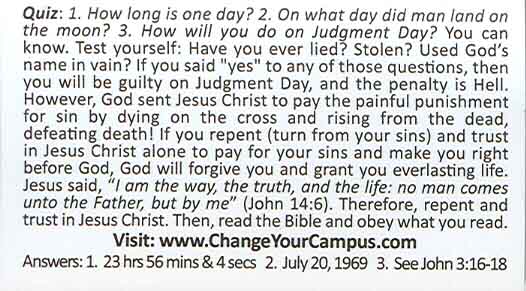
Yesterday at Montclair State University, I was sitting in the hallway (my office) prior to class. (Office hours are required, but space is limited for adjuncts such as myself.) While I was reading my book a student walked up and handed me a business card. “For you, sir,” she said politely. The card had a smiley face on it, and was designed to bring cheer.

Then I flipped the card over and found out I was going to Hell. A bit of a downer when you’re about to start class!

It isn’t the first time people have attempted to convert me without bothering to find out what I believe. It seems that if you already hold the zealot’s view you’ll appreciate the gesture of being condemned just to make sure your soul is saved. It is the thought that counts, after all.

The book I was reading was Joseph Campbell’s The Hero with a Thousand Faces – a book I’ve known since college but from which I have only taken a tipple until this year. Many scholars of mythology fault Campbell on being too much of a generalist and looking too much for connections where they are not obvious. His language can be florid and mystical, verging on “believer,” for those uncomfortable with any kind of faith. I find Campbell to be a welcome guide, although, as for any guide, I do not believe all he says! One nugget in particular stuck out at me: “Wherever the poetry of myth is interpreted as biography, history, or science, it is killed.” As we find ourselves on Good Friday, only those with eyes firmly shut will disregard Campbell’s wisdom.

I still remember my shock when I first learned that gods, centuries before Jesus, had been dying and rising. What had always been presented to me as a unique historical event actually had a long and venerable prehistory. It suddenly seemed as if the ministers I’d known hadn’t done their homework. Or perhaps they lacked the cognitive finesse to understand Orpheus, Adonis, Baal, Osiris, and even Ishtar, as types of either blatant or obscure resurrection. It is the Campbellian, or nearly universal hope: life prevails over death. As the young lady walked away, I sincerely wished her happiness in the quest she’s only beginning.


Eternal Dampnation

Does anybody have Noah’s telephone number? New Jersey has just experienced the wettest winter on record. Since the day records began, we’ve never had this much rain. That fact came home to me yesterday while driving the fifty miles to Montclair in a tremendous downpour. I had just purchased new windshield wipers, but the cap had fallen off the driver’s side blade. Driving on a truck-infested interstate where traffic continued to fly by at above posted speed limits, I realized with horror that at each passing swipe the rubber insert that actually swipes away the moisture was creeping out of the top of the wiper fixture. There it was, just at the top of my field of view, thrashing about like a demon-possessed snake, while my field of view grew smaller and smaller. I was in lane three of an eight-lane highway and couldn’t get over to make adjustments. In a nightmare I envisioned the slippery snake making a terminal bit for freedom and flying over my head as metal scraped glass and I drove blind into whatever lay ahead.

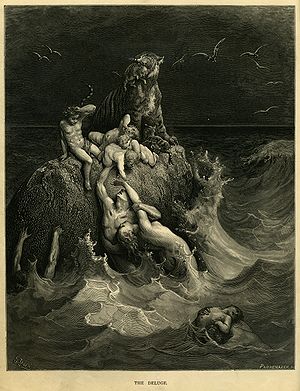
Well, the wiper stayed intact long enough to get me to the university. The rain did not abate, however. Even with battered umbrella and longsuffering raincoat, I was soaked below the knees by the time I squished into class. Unfortunately we studied the flood myth a few weeks ago. A few years back William Ryan and Walter Pitman, a couple of geologists, uncovered the fact that the Black Sea had been flooded by the Mediterranean some 7500 years ago. They posited that this sudden increase in sea-level around the Euxine Sea led to the dispersion of a world-wide flood myth. Their book became a best-seller and even Robert Ballard got in on the search for Noah’s homeland.

Hearing people talk about New Jersey’s incessant rain, I have no doubt that a major sea change was not necessary for flood stories to begin. As water levels rise, perhaps to the delight of whales and other blubber-laden beasts, the rest of us fear being perpetually covered by overwhelming waves. That is enough to start the story of a flood. Especially when your windshield wipers aren’t working on the Garden State Parkway.

Is it damnation or just New Jersey?


Jesus Lets Himself Go

Leonardo da Vinci's Last Supper


Carpentry is hard work, as Jesus must have known. The occasions when I head to the basement and chew through wood with an electric saw and nail boards together through pre-drilled pilot holes always leave me feeling like I’ve burned a few calories. Not to mention walking everywhere. No Hondas, Volkswagens, or Smart Cars in those days. A guy could sure build up an appetite. My wife pointed me to Newsweek’s blog this week, where a story about the portion sizes portrayed in paintings of the last supper over the past millennium is posted. The conclusion drawn: the food servings have continued to escalate in size as food production and acquisition have become easier.

This is not so surprising, given that what people value is what they portray in art. As I’ve mentioned before, Stephen Prothero, in his book American Jesus, demonstrates that portraits of Jesus reflect the self-perception of the society in which they are produced. Few attempt to make a life-like representation, largely because no one knows what Jesus might have looked like.

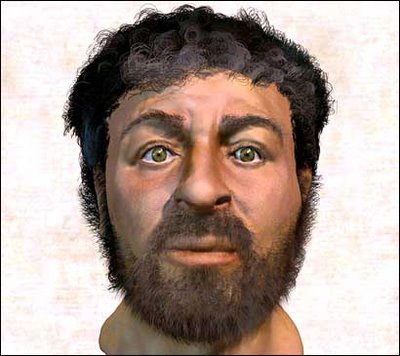
Jesus as an ordinary guy

A few years back, Richard Neave, a retired medical artist from the University of Manchester reconstructed, based on forensic research, what he believes Jesus likely looked like. The portrait is not handsome, and to be fair, not based on the actual skull of Jesus which has been missing for a couple of millennia. I used to ask my students in Intro to Christianity what difference it would make if Jesus was not good-looking. They tended to react strongly – particularly those of Christian disposition – there was an inherent blasphemy in suggesting that Jesus might not have been drop-dead handsome.

Now, if we gently push his chair back into that fateful table one more time, we might wonder how an overweight Jesus might appeal to those who struggle with weight issues. More of him to go around, as the saying goes. I’ve viewed much religious art in my time, but I’ve never seen a love-handled Jesus, let alone a chunky savior. And perhaps that is the biggest miracle of all, given that he eats more each passing year.


Mournful Metaphor

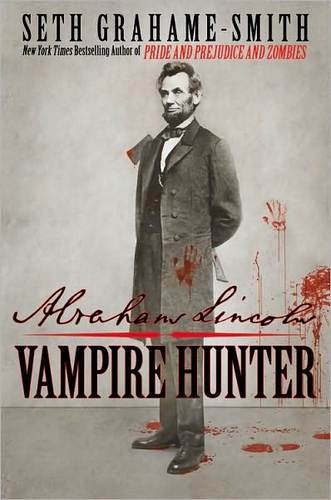
Sometimes the concept is great but the results disappoint. Those who have followed this blog know that a unifying concept over the past half-year has been the often hidden relationship between religion and monsters. Certainly this fascination has its roots in my refusal to admit that I’ve grown up, but with the popular media pushing the undead into our collective consciousness on a daily basis I feel a happy vindication. I posted last week about Seth Grahame-Smith’s new book, Abraham Lincoln: Vampire Hunter. Well, now that I’ve finished the book I would say that the jarring concept of our most honored president leading a secret life was fun to wrestle with, but the book failed to win me.

Lincoln’s great contribution to our nation is still echoing through a society slow to admit the equality of all. Perhaps that fact alone would render any book trying to throw some comic relief on a deadly serious issue mute before it even begins to spin its yarn. That, and I didn’t like the portrayal of the vampires. I’m no undead purist, and I’m aware that vampires have changed form and character over the centuries, but having masses of them in one place felt like being the proverbial cat-shepherd. Giving them political ambitions, with a nod to Francis Ford Coppola’s Bram Stoker’s Dracula, was too much. The issue of slavery, clearly the metaphor being utilized by Grahame-Smith, is hard to smile about. Lincoln’s personal suffering is difficult to lighten with his career as a vampire hunter. The story just didn’t work.

I’ve had enough bumps in my own life to eschew easy categorization. Even my current career must be listed in the TBD category. Nevertheless, I wasn’t sure if what I was reading was a serious attempt at a novel or a humorous exploration of a funny idea. I found the book catalogued in humor, but its narrative seems to have the earnestness of a determined novelist. When the story ended I felt as if I’d read a dime-store novel I’d purchased at Comedy Central. And with the headlines the way they are these days, I’d been hoping for a good laugh. Instead it seems that I have been bitten by a vampire wearing shades.

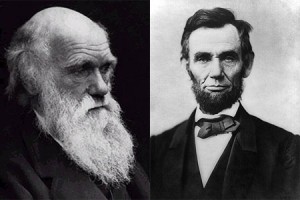
Two heroes, no smiles


Politicians and Blood-Suckers

The old icons and heroes are gone. It is best just to deal with it. No one is above reproach since we are all in this human morass together. Nevertheless, I’ve always held a soft spot in my cynical heart for Abraham Lincoln. I know he wasn’t perfect, but he stood for an issue that has been a driving force for my life: fairness. Now I see that he was a vampire hunter. After having read Seth Grahame-Smith’s Pride and Prejudice and Zombies last year, I’ve decided to give a try to his Abraham Lincoln: Vampire Hunter. My fascination with monsters and religion has not been disappointed in this fanciful story.

Our quasi-fictional honest Abe begins his vampire-slaying ways when he learns that, yes, a vampire killed his mother. As a boy of only twelve, he finds the knowledge stressful to the point of burning the family Bible that he used to read to his departed mother. Why? In Abraham’s own (fictitious) words: “How could I worship a God who would permit [vampires] to exist? A God that had allowed my mother to fall prey to their evil?” I admit that I was secretly pleased to see the classic issue of theodicy being raised in a story concerned with the undead. It is the dilemma of all who want to see a good God behind all the suffering in the world. It is a dilemma that stems from the same deep wells as our inhuman monsters. We can imagine a better world, but we can’t have it.

Politicians with axes

As I see New Jersey’s governor Christie (for whom I decidedly did not vote!) slashing away again and again like Freddie Kruger at the state’s educational system, I see the twin peaks of vampirism and theodicy peering distantly over the horizon. I am deeply disturbed by the facile disregard this “visionary” Republican has for the future of his own state, for the future of our children. And I am forcefully reminded once again that vampires are symbolic of all those who prey upon the unwary. When staring into the fireplace on a cold night, I imagine myself standing beside Grahame-Smith’s fictional Abraham Lincoln, wondering what god it is that vampires worship.


War and Peace

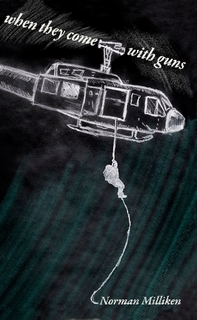
A few weeks back a friend pointed me to a Facebook-style website someone in my high school graduating class had put together. In high school I was awkward, shy, and a little too obvious about my religious beliefs, so I was a bit timid to join. Nostalgia eventually got me in a headlock, just like in gym class, so I signed up. One of my classmates helped me to find one of the people who had a profound impact on my life. Although I never had him for a class, Mr. Milliken was my Creative Writing Club advisor, and a person I utterly respect and admire. I’m not normally a hero worshiper, but Mr. Milliken had been through more suffering than many men his age and had come out of it a sincere, caring, and thoughtful individual. When I found out that he had published a brief collection of his poetry about his time in Vietnam, I immediately ordered it.

Available from Lulu.com

War has always haunted me. Perhaps it was partially because of the tales Mr. Milliken sometimes told, or because of my macabre reading about the terrors of twentieth-century conflicts, but whatever the cause for my fear, it was real. War has been with humanity for as long as its more docile cousin, civilization. Being rational creatures, there seems to be no reason that we should not be able to reason ourselves out of armed conflict, but we don’t. Knowing that one of my most respected high school influences had nearly died in Vietnam chilled me. Reading his poetry, I shiver once again.

While justifying it on theological grounds, the Hebrew Bible takes a fatalistic view of war. Killing of enemies who stand in the way of god’s plan is sanctioned, commanded even. The victims, however, are humans just like the victors.

When I get caught up in the complex web of difficulties my own life has woven into, I find it easy to complain. Reading when they come with guns, however, reminds me that many have had it much worse and have come out as superior human beings. For those who are victims of war, we can only hope that forgiveness will somehow descend on those of us who have not yet put an end to it.


Religion Embraces Science

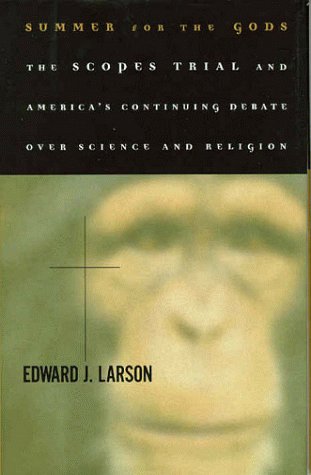
My colleague and one-time dean, Michael Zimmerman of Butler University, has brought his Clergy Letter Project to the Huffington Post. Well, he has written an online piece for the Huffington Post entitled “Redefining the Creation/Evolution Controversy.” His article is clear and to-the-point: the Creation/Evolution debate is not about religion versus science. That has been shown repeatedly for those who care to examine the history of this controversy. Evolution barely caused a ripple among clergy when it was first becoming popular among scientists. Ministers assumed it was just one of God’s mysteries and went about their clerical duties. The issue became a public relations boondoggle with the Scopes Trial of 1925. One of the best books written on that subject is Edward Larson’s Pulitzer Prize-winning Summer for the Gods.

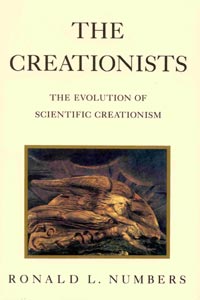
As I have stated in my podcast on this issue, Creationism is a splinter movement within Evangelical Christianity. Over the years it has drawn in members of a wide variety of Christian groups, including Roman Catholics and mainstream Protestant denominations. It has publicized its concerns so well that many people assume that this is the “Christian” viewpoint and that all other views are, by definition, non-Christian. This is the perspective that has driven a wedge between religion and science, creating a false front that has led to many confrontations between Evangelicals and scientists. My favorite history of the Creationist movement is Ronald Numbers’ The Creationists.

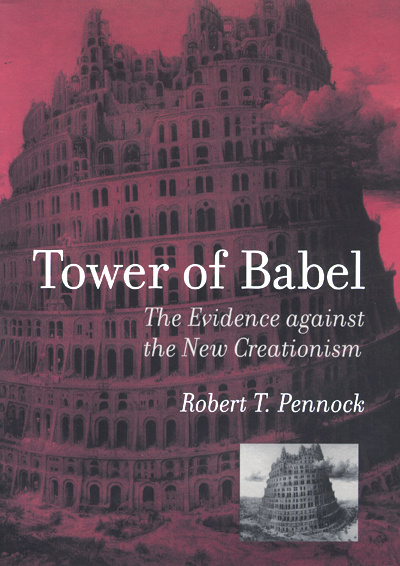
The true motivation of the movement is, without doubt, political. While many sophisticated people scoff at the apparently simplistic machinations of the Creationist movement, what they do not realize is that it is a highly organized and politically savvy alliance of special-interest groups. Robert Pennock’s Tower of Babel was an academic exposé of the inner workings of the Creationist movement. It is perhaps the most important book written on the subject. Published by an academic press, however, it has not found the wide public readership it deserves.

Do yourself a favor: read Dr. Zimmerman’s post. I believe he has framed the dilemma in the correct way: the struggle is one within a specific religion, Christianity, not one between religion and science. The more the public knows about this issue the better off we all will be in the long run.