Neo-Cons and Mockingbirds

Among my high school catch-up reading is one of my favorite novels, required in my own youth, Harper Lee’s To Kill a Mockingbird. While a certain distress accompanies the fact that I read this book over thirty years ago, as I reintroduce myself to the welcoming characters of Scout, Jem, and Dill, I lament that there is so much to read that we can’t simply linger on the great works of literature we’ve loved before. Reading the novel as an adult there is much, I am certain, that I missed the first time around, not knowing what to expect as I approached the story with no preconceived notions.

One of the constant stresses I lay on my students is how the Bible utterly suffuses American society. We are bombarded by Bible, whether we know it or not. It was with appreciation, therefore, that I saw the exchange between Scout Finch and Miss Maudie in chapter five. Miss Maudie, complaining that “foot-washing Baptists” take the Bible a little too literally, declares, “but sometimes the Bible in the hand of one man is worse than a whiskey bottle in the hand of – oh, of your father.” (The incongruous image of Atticus Finch drinking whiskey is not lost on his young daughter.) This statement summarizes much that is true in today’s society as is evident in Max Blumenthal’s Republican Gomorrah. Many Americans create an idolized image of the Bible that is used to gain control over others. When such individuals gain political power everyone else is at risk.

In the backlash to having a moderate man elected to the presidency, the news is full of biblically constricted complainers who fear the impotence of the Bible. Their fears are unfounded. Our society has been constructed on foundation blocks of biblical literalism and although the superstructure is unaware of it, the Bible continues to root many Americans firmly to their planet. The “founding fathers” were not Christians, but many of their country-folk, Puritans and others fleeing the formalized religions of Europe, were. The aggregate of their descendants has been tapped successfully by neo-con politicians to win elections and referenda around the nation. There is no end in sight. If only the wisdom of Miss Maudie were taken a little more seriously, we might have a chance to move beyond the illusion of a pristine yesteryear that never was.

Killing me biblically
Trojan Gods

Every great once in a while Hollywood produces a major motion picture that demands the attention of scholars. Well, at least those of us who like to stay current about the way our subject is being displayed to the wider public. When Troy was released in 2004, I was still firmly engaged in teaching biblical studies and the Trojan War, although located somewhere at the fringes of the Ancient Near East, was not a particular concern. Now that I’m also teaching a mythology course that covers the Iliad, I figured I’d better watch the movie. For research purposes only, of course. Although I hadn’t seen the film before, I knew of the critics’ complaints that the gods, conspicuous in Homer, had been left out. I was expecting to be disappointed, but I found the movie to be more intelligent and subtle than I supposed it might be. The absence of the gods, distressing as it may be to purists, gave the movie an angst that is generally reserved for more cerebral subjects.

The question of where the gods might be in all the slaughter and destruction of war reminded me of a book that had profound influence on me several years ago. Richard Elliott Friedman’s The Disappearance of God: A Divine Mystery (Little, Brown, 1995) traces the gradual withdrawal of God from the scene in the course of the writing of the Hebrew Bible. The god who appears so active in the early chapters of Genesis distances himself further and further until the latest writings, according to Friedman’s dating, show few traces of the divine at all. God subtly, quietly, goes away.

Portrayed as defying the power of the gods in the film, Achilles desecrates the temple of Apollo and seals his fate. Nevertheless, although he is shot by an archer, the death of the hero seems more like an arbitrary act than the design of divine majesty. The Greeks, after all, did win the war. Atheism, however, did not exist in any real terms in the twelfth century before the Common Era. Then again, Achilles probably did not exist in any real terms either. Although Troy will never be among my list of most profound films, its commentary on the quiet skies of ancient Ilium serves as a useful metaphor, even for today.


Abuse of Power

In many ways the naiveté of youth still clings to me. I was reared to respect authority and to trust those whom society placed in power over me. As skeptical experience wears away at this ancient veneer, I have become more retrospective of the whole enterprise of the social experiment. Perhaps I shouldn’t have read The Call of the Wild after all.

A few months back I wrote a post supporting a student at Butler University, Jess Zimmerman, who was being sued by the university for perceived slights against the administration on his anonymous blog. That post has forged a connection between Jess and myself, although I’ve never met him. That connection is one of justice and fairness, traits that should, above all, be upheld by institutions of higher learning. In an email last night, Jess updated me on his situation. The lawsuit has been dropped (my thanks to all of you who signed the electronic petition through this blog), but the recriminations continue. The details are available on Jess’ blog, but the short version is that in order to have a fair trial the university had placed him under a $100,000 bond. I am saddened, but not surprised, by this abuse of power.

Over the past several months I have wearily retrod this familiar path. I too have been the victim of institutional power in an episode that haunts me to this day. In slow motion I watch and rewatch men “in authority” dismantling the hopes and aspirations of a neophyte academic who was left wondering, like a dog, why he was being beaten so. There is no action to take. There is no club to wield. The only thing required is to be aware of the situation. Although I shouldn’t have done it, I did read Jack London’s Call of the Wild. And it is my hope that young students unfairly targeted, like Jess, have the resilience of Buck and will remember their pasts when they come to lead their companions in forging a better world.


The Gospel According to Caulfield

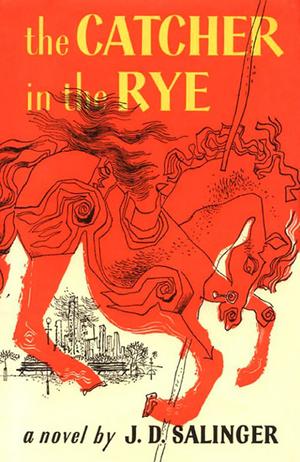
When one is asked to cite her or his favorite theologian, J. D. Salinger isn’t likely to be in the running. He might not even make the top ten. My personal introduction to Salinger, however, took place in a theological context. While in a Cambridge (Massachusetts) bookshop with a grad school buddy, I pointed out Mircea Eliade’s classic The Sacred and the Profane, insisting that my friend read it. Never to be outdone, Dave pointed at Salinger’s Franny and Zooey and said if I bought and read it he would do the same with Eliade. The Catcher in the Rye had not been part of my high school curriculum, so I was curious what all the fuss was about. I took him up on his dare. I’m not sure Dave ever read Eliade, but I read Salinger. My first impression was, “I don’t get it.”

Now my daughter’s school does require The Catcher in the Rye, and I’ve always tried (not always successfully) to keep up with her required reading. It gives us something to talk about – I’ve read several great books I’d otherwise have missed by this exercise. So I picked up the Catcher and plowed through. Salinger, I’m sure, requires no introduction. What is noteworthy, however, is that Holden Caulfield, while avowing himself an atheist, does make subtle but pointed comments about religion. (One of the occupational hazards of being a religionist is a constantly humming radar looking for any god-talk that might otherwise blend into the haze.) Holden, in chapter 14, points out the idiotic behavior of the disciples while Jesus was alive. He admits to thinking Jesus is okay, but his favorite character is the demon-possessed man who lives among the tombs. “I like him ten times as much as the Disciples, that poor bastard,” he says.

Who is as honest as Holden?

There is true religion in this statement. The “lunatic” running about in the tombs, rejected by society and even as far from God as you can get (demon possessed), is an image of humanity. Living a life of desperate alienation, the man in the tombs appeals to angst-ridden teenagers and displaced adults alike. He is likeable because he is like us. Holden scores bonus points on that observation!

With Salinger’s recent death, a renewed interest has sprung up about his novels – books that have changed the literary landscape. I read Catcher with more inherent appreciation than I did Franny and Zooey, but I’ve grown up a little since then. As an adult I can better appreciate the honest appraisals of Holden Caulfield.


Eine Kleine Neanderthal-Musik

I suffer a limited form of amusia. No, it’s not a fear of amusement, but rather lack of musical ability. I appreciate music very deeply, but I simply can’t make it. I’ve tried lessons and teachers end up turning away in exasperation. The embarrassing part about all this is that music is an integral part of religion – almost all forms of religion have their musical repertoire, and musicologists have demonstrated that the early human impulse to make music has a religious basis. I can only sit in the audience.

That's me on the left

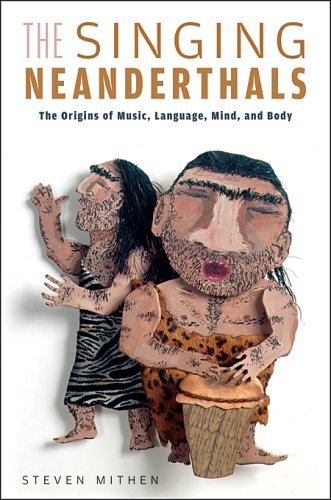
I’m finally getting around to reading Steven Mithen’s The Singing Neanderthals: The Origins of Music, Language, Mind, and Body. A few years back I gave an academic paper suggesting that musical development could be an analog to religious development on a neurological level in the Bronze Age. Since I’m not a neuroscientist I have to rely on others to do the experimental side of the equation. Mithen serves this function nicely. When I read about music and the brain, which I do frequently, I am surprised that more scholars of religion haven’t picked up on this connection. Since music is frequently “background noise” today, many people casually assume that it is insubstantial, a whim. I look at it (listen to it) from a different angle. I seldom listen to background music – if music is playing, I pay attention to it, and something in my unprofessional brain says Mithen is often right on target.

Of course, religion and music is not the main thrust of The Singing Neanderthals, but rather the idea that music was formative for human cognition. Perhaps music even developed before speech. For me this is an important piece of a much larger puzzle: whence did religion arise? Like all inquiries that delve too deeply into the past, the answer is lost among ambiguous artifacts and ancient dust. And yet, those who know more about this than I do seem to be pointing in the direction that both religion and music have their origins in the pre-Homo sapiens stage of our evolution. I’m not surprised. I only wish I could play along.


Saint John, Elton, That Is

“I think Jesus was a compassionate, super-intelligent gay man who understood human problems. On the cross, he forgave the people who crucified him. Jesus wanted us to be loving and forgiving. I don’t know what makes people so cruel. Try being a gay woman in the Middle East — you’re as good as dead.” According to Parade.com, this was Elton John’s take on Christianity. I find the comments endearing in a naïve sort of way. They further demonstrate how people construct their gods in their own images. Compassionate? No question. Super-intelligent? Well, maybe. He certainly was creative, witty, and above average in intellectual celerity. Gay? Not likely. Not for doctrinal reasons, but simply for cultural ones. “Gay” as a lifestyle simply did not exist in the first century. The Bible maintains a steely silence on any aspect of Jesus’ sexual life, so we can never know. Perhaps it’s a case of “don’t ask, don’t tell”? Understood human problems? Bingo! Yahtzee! That is, I believe, what Jesus was all about. In my humble opinion, Elton hit that one dead on.

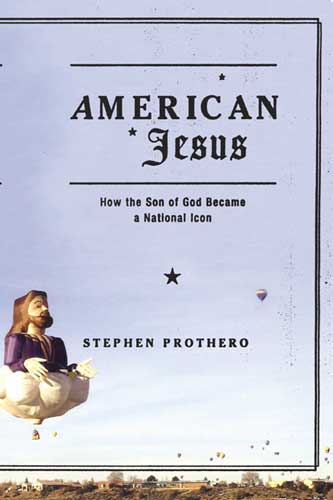
The crafting of Jesus into our own form is a major aspect of Stephen Prothero’s American Jesus. A fascinating romp through a bizarre collection of made-over Jesuses, Prothero’s book should be required reading for anyone interested in civil religion or Thucydides. Even a religion prof from my alma mater, however, didn’t fully convince me that anybody really understands who Jesus was. Such is the way with all truly great individuals.

Unlike some commentators who are clearly upset by Elton John’s summation of Christianity’s founder, I am a bit more circumspect about it. No one has cornered the market on Jesus. As hard as various Christianities have tried, Jesus still emerges in divergent forms to diverse individuals and populations. From Superstar to “super-intelligent gay man,” there is no doubt that Jesus left an eternal imprint on the human population of this planet and that those who believe in him will always portray him in their own image.


Klaatu Barada Nikto

I grew up with robots. Of course they were on the television screen and I was far away in rural-ish western Pennsylvania. They were exotic creatures built by guys much more intelligent than I could ever hope to be, and they were powerful, completely rational, and scary. Now I find myself involved with the FIRST Robotics team in my daughter’s high school where kids a third my age are building a robot. It is a humbling experience.

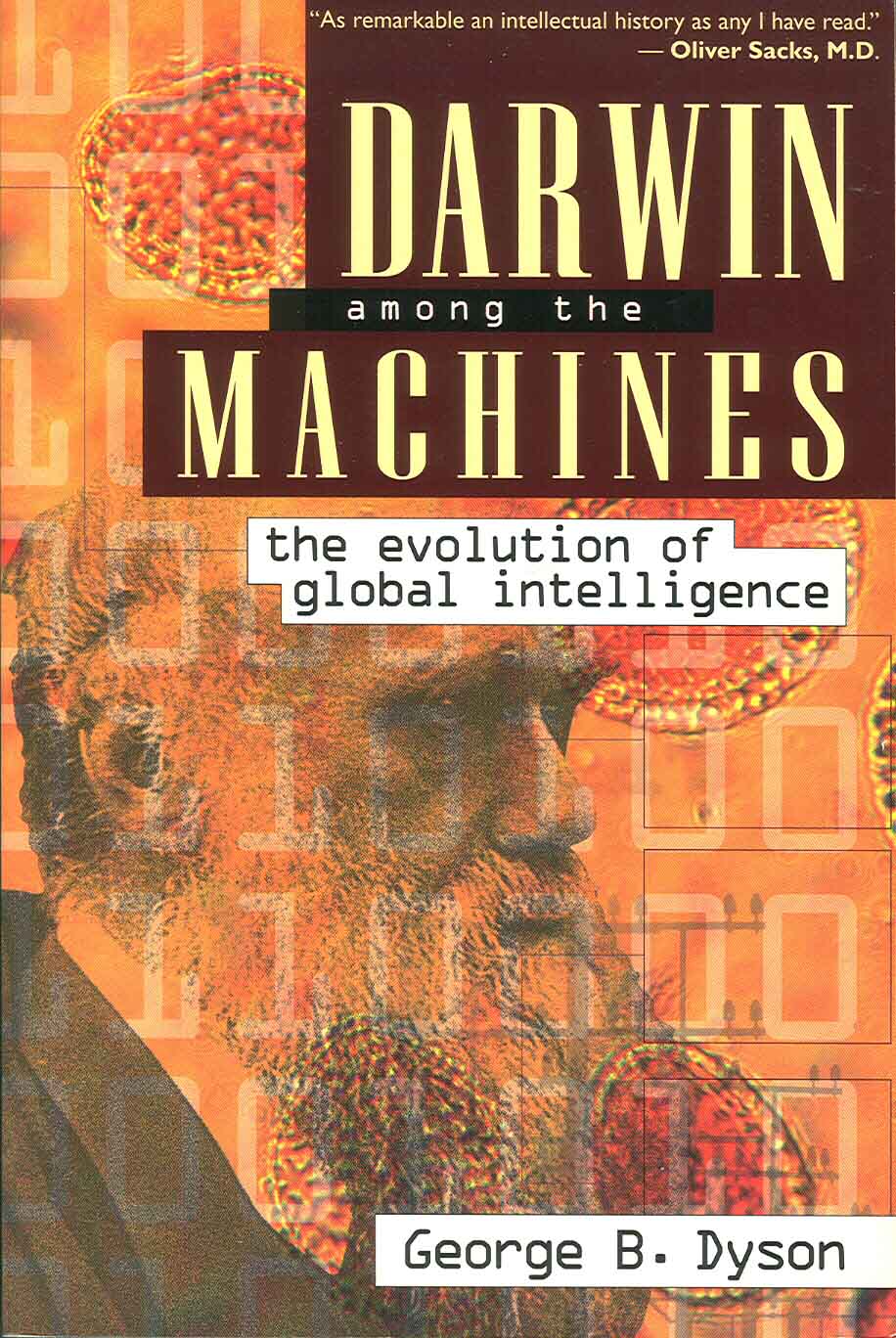
The more I ponder my small support role in the construction of a robotic creature, the more my thoughts turn to George Dyson’s masterful science writing in one of my favorite books — Darwin Among the Machines: the Evolution of Global Intelligence. I would not have known of this brilliant book had I not met George and a group of his friends several years back while they were discussing some of the ideas raised in his work. The main one that captured my attention was the premise that when we build machines we may be constructing an unrecognized form of consciousness. The greatest minds in neuroscience today cannot agree on what consciousness really is or how far it extends beyond this “three-pound universe” in our heads. Although most would decline to comment on the overtly religious term “soul,” we still know that any difference between consciousness, mind, psyche, and soul is very slim indeed.

Read this book!

Our lifestyle is made possible by robots. We drive cars largely constructed by them, use their chips to communicate over vast distances, and even take a stroll on the surface of Mars with them. My question from Monday’s post may have been whimsical, but it was serious. Where is it that the essence of a creature resides? Does it require carbon-based biology, or do we, unwittingly, create a race of slaves just like the gods of old?


Gray New World

A few months back I purchased a book entitled One Thousand Languages by Peter Austin. Not a “reading book,” this is more of a reference manual to the often bewildering profusion of languages in the world. Having dabbled in the study of about a dozen languages over the course of my academic career, I was interested in seeing what tongues are being spoken in places I’ve only dreamed about. After introducing a plethora of different communication systems, the book dedicates a significant section to endangered and extinct languages. There is a sadness about a language dying; it marks the end of an important aspect of a culture and a move towards a bland universality.

O say what did you say?

Then a Rutgers student sent me this link. It is a video of Wade Davis lecturing on the topic of the rapid disappearance of minority cultures around the world. Initially Davis begins by telling the students that when they were born (this lecture was delivered in 2003), there were 6000 spoken languages in the world. As of 2003, there were only 3000. The rate of language extinction is (was) about one tongue dying out every two weeks. What makes this degeneration so unfortunate, as Davis explains, is that many are dying unnatural deaths. Cultures are obliterated because of exploitation. More powerful members of nations (artificial constructs, all!) ensure compliance by encouraging uniform languages and monochromatic cultures. It is culturocide.

I would encourage my readers to view this video; it is 20 minutes well spent. A major component of these dying cultures is religion, naturally. Davis makes very important observations about this aspect of cultural non-diversity as well. And I can’t help adding that one of the phenomena he addresses is how zombies are made! Quite apart from my fascination with the monstrous aspect of religions, Davis’ cautions are essential to recognizing the plight of the once diverse human cultural domain. You won’t regret seeing this – it is nutritious food for thought.


Constantine’s Dilemma

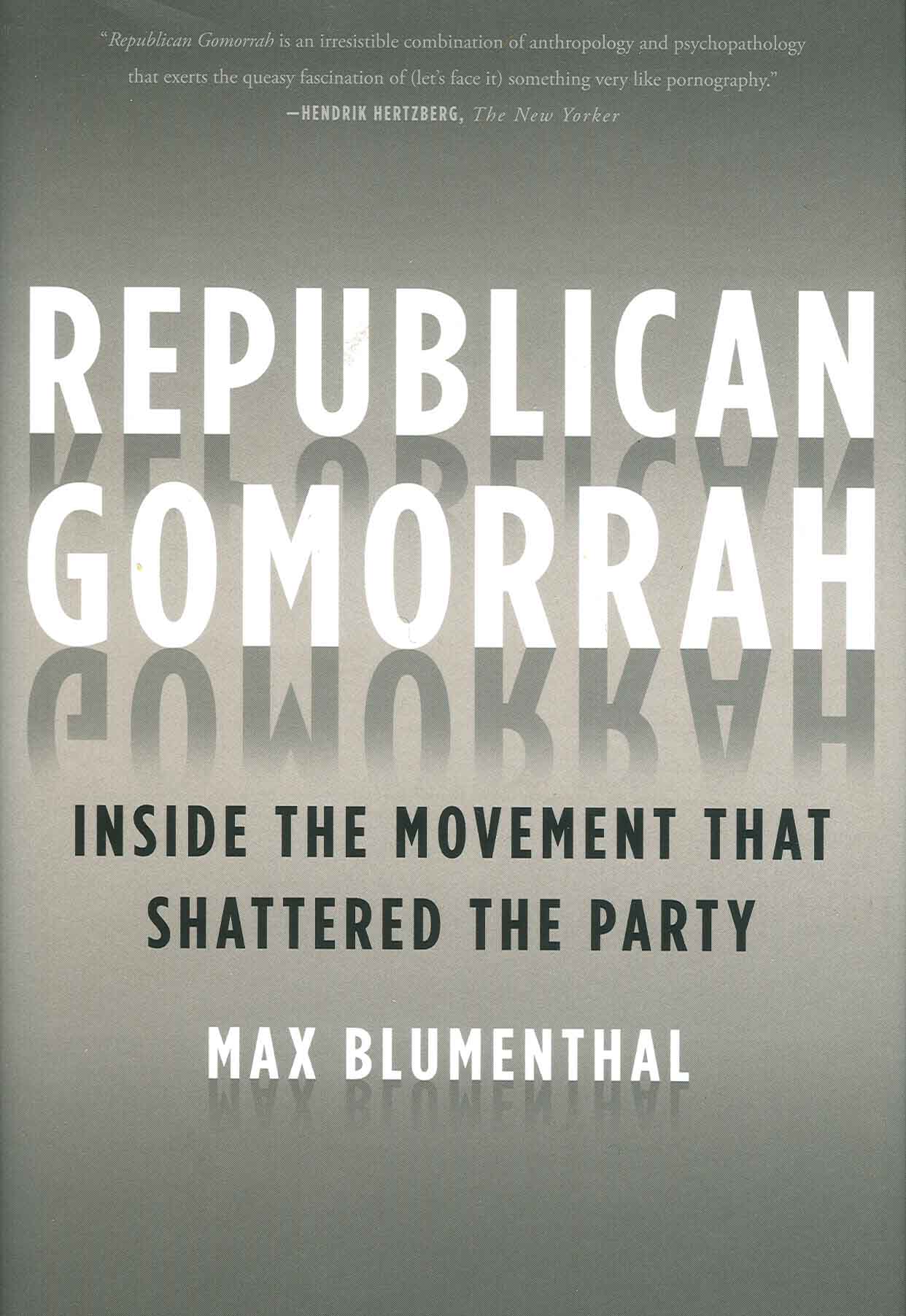
A time-honored adage educates each generation not to discuss religion or politics in polite company. The reasons for this are transparent; both religion and politics tend to be fiercely held belief systems and clashes between differing parties seldom end without scars and regrets. I recently read Max Blumenthal’s Republican Gomorrah: Inside the Movement that Shattered the Party. Initially my impression is that this book ought to be required reading for members of any political party so that they might find documented evidence of whence the real power struggles lie. It is known by anyone with a modicum of political savvy that the past several presidential elections have been decided on the success of courting voters of the evangelical variety of Christianity. What Blumenthal reveals and other sources confirm is just how intermixed religion and politics have become.

One of the most important books of last year

This is a very thorny issue. America was founded as a nation advocating religious freedom and also as a nation that would open its leadership to any qualified (more-or-less) candidate. Clergy have historically served in politics, but presidential candidates who are actively ordained and practicing their office have been rare. Not so rare in recent years, however, are those who forsake the adage and boldly proclaim their faith as a key to garnering votes. This has led to a public interest and scrutiny of what used to be the extremely private life of an individual. Religious beliefs, quietly held, motivate many people – presidents and politicians included. The difficulty Blumenthal highlights erupts when the genuinely religion-driven charge for political office with the hopes of implementing policy based on their personal faith. Americans have taken a new interest in discovering what the Church of Jesus Christ of Latter Day Saints is all about with the recent candidacy of Mitt Romney. We covered that religious landscape in Religion 101. Reading Blumenthal, however, I learned something new about Sarah Palin’s religious convictions.

Deemed “the Third Wave” movement (see also Bruce Wilson’s article in the Huffington Post), Palin’s religion is a variety of Christianity I’d never heard of even with a lifetime in the field of religious studies. What seems clear from the sketchy information available is that the putative wave began in the 1980s (when I was too busy studying religion to notice) with the work of Rev. C. Peter Wagner. Its goal, according to its theologians, is the takeover of first the church and then the world. Not just metaphorically. Since Palin told reporters, according to today’s paper, that she is seriously considering a run for the presidency in 2012, I wonder if it is time for all of us to go back to school and learn a little more about this variety of religious belief. I’m old enough to remember a time when politics was politics and religion was religion, and ne’er the twain did meet. That day is gone, and Americans will find it necessary to learn about religions again to discover the sometimes hidden motives behind politicians’ decisions. Max Blumenthal’s book is an excellent primer, but frankly, I long for the days I still recall when politics and religion had separate, securely locked bedrooms.


On Monsters

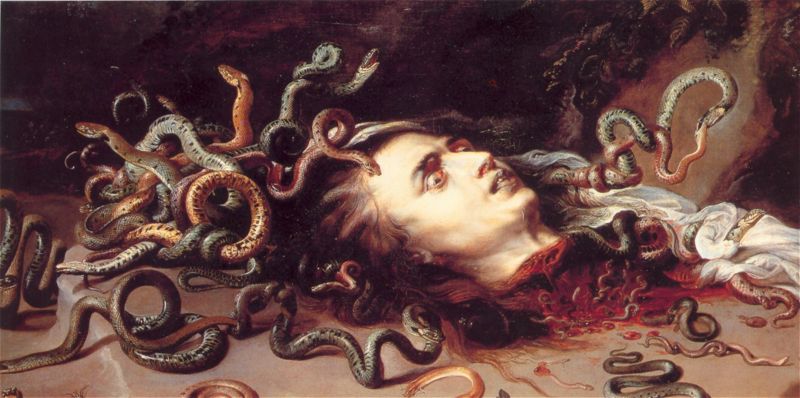
Long-term readers of this blog (both of you – you know who you are!) are aware of my interest in monsters. Constant companions of my childhood, I spent lazy days and sleepless nights both curious and fearful of these imaginary creatures. Like the concept of the holy, they both repel and attract simultaneously. Back in October, when I first heard of Stephen Asma’s book, On Monsters, I knew I would have to read it. I have commented occasionally during the progress of my time spent on the book, but having finished it I stand in a better position to consider the whole.

Not a monsterologist, I have nevertheless been fascinated by the juncture of monsters and religion, a point that Asma repeatedly emphasizes. His book is a masterful treatment of the subject from many angles, working through a roughly chronological treatment of the changing faces of the monstrous. Although monsters first appear with the earliest civilizations, they have persisted even in the strong light of scientific thinking and rationalism. As we comprehend our world, the monsters appear in deeper and darker corners, in the very folds of our throbbing gray matter, in the microbial world that floats invisibly around us, and in the smiling beneficence of technology. At many points in his historical presentation Asma is difficult to read; human brutality and emotional distancing have made for the most horrific of real-life monsters he cites.

Particularly useful in Asma’s treatment of the subject is his contention that monsters still have a place in our society. The word itself retains its usefulness in describing human, all-too-inhuman treatment of others. Unfortunately, the motivation for such treatment can often be traced to bad religious education. We may not be so fearful of the werewolf or the (supernatural) vampire, but we still fear those who treat others without empathy or human concern. Anyone with the parallel interests in religion and its aberrations owe it to her/himself to take a careful look at On Monsters and consider its implications.

A classic monster


Portrait of an Artist as a Young Woman

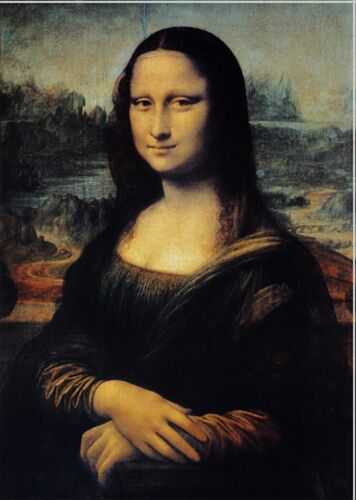
The world is a topsy-turvy place. In times of turmoil people turn to the old, the familiar, the classic, for assurance of continuity and stability. Ah, those halcyon days! Perhaps the newspaper is not a place to seek solace, but as I was flipping through the Friday edition, usually a little lighter after the dread of another week, I noticed a story about Leonardo da Vinci (before the code made him famous).

Self portrait or mirror?

For many centuries people have pondered the understated smile on the Mona Lisa’s placid yet knowing face. Recent forensic-type investigations are now strengthening the old suggestion that the Mona Lisa was actually a self-portrait of the artist as a woman. Some will, no doubt, find such news distressing – a masculine artist portraying himself as feminine? (Surely such a thing has never been done before!) Most concerned of all would be the Religious Right, a group that seeks a god excelling in sharp distinctions. Either male or female, no intersexuals need apply!

Over the past several months I have been reading Stephen Asma’s On Monsters, a book that can’t really be called “enjoyable,” although it has been eye-opening and informative. One of the recurrent themes throughout the book has been the fear of the liminal being conjoined with our growing understanding that sharp distinctions are rare. Ever since Freud it has been known (at least subconsciously) that people participate in aspects of both genders with social constructs determining which role is to be filled, feminine or masculine. Those who look honestly at the aggregate of the human race realize that we are all points on a continuum rather than simply members of one or the other gender. As Asma points out, however, we prefer distinctions.

In painting himself as a woman perhaps Leonardo once again proved himself ahead of his time. Perhaps the Mona Lisa is a mirror we should long gaze into before judging others on the basis of artificial distinctions.


Paul Does the Classics

I first became aware of Greek mythology in fifth grade. My teacher in an industrial, rough and yet rural school, believed in the benefits of teaching aspiring drug addicts and laborers the stories of gods and heroes. I immediately adored the stories we heard and read. Raised in a religious household, however, I feared enjoying the tales of what were admittedly pagan gods after all, too much. In the educational topography of my youth, we were on the brink of this brave new electronic world we’ve entered, and mythology was not considered a terribly useful part of the curriculum after that. I left the gods behind. In a class on the Christian Scriptures in college, however, my instructor suggested we all go see Clash of the Titans (the 1981 version) for its appreciative (if a little hokey) presentation of the Greek world. I enjoyed the movie and even took a class in the literature department on mythology.

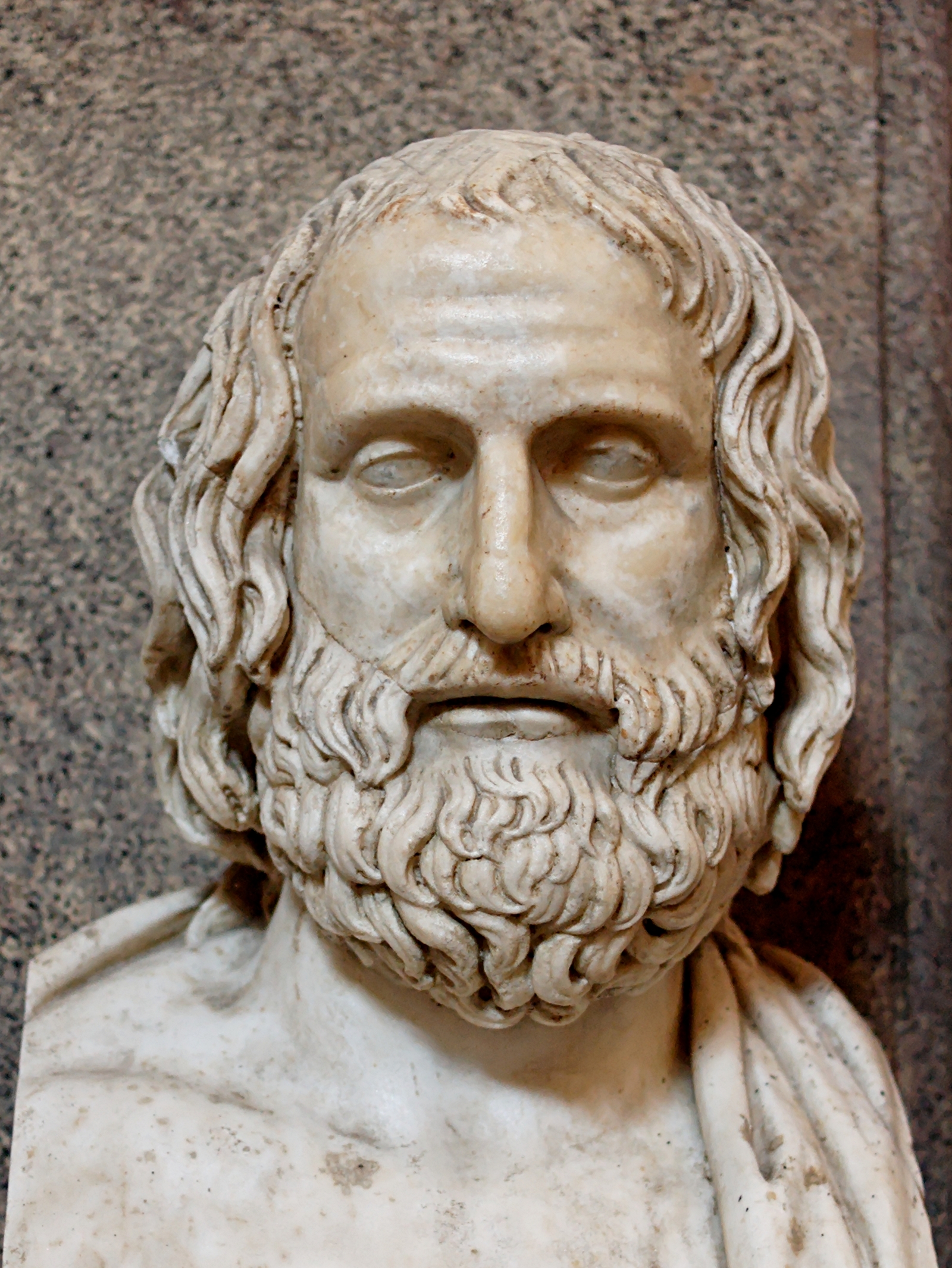
Over the years I have touched and gone on Greco-Roman mythology while specializing in the mythology of Ugarit. Now that I’m teaching a course on mythology, I’m going back to my classical roots and rereading the stories of times not quite so ancient as the fertile crescent civilizations’, but older than what is considered practical nowadays. While rereading Euripides’ play The Bacchae, the concentration of images, concepts, and actions that recur in the Bible stood out in chiaroscuro. Especially noticeable were references to Paul in the book of Acts.

Like Paul, Dionysus comes to be imprisoned. Not recognized as a divine figure, King Pentheus of Thebes locked him in chains until he could demonstrate that Dionysus is just the wild imaginary figure of repressed women. An earthquake, however, soon rattles the city and Dionysus emerges, chains shed, to the astonishment of Pentheus. The scene reads like Paul and Silas’ escape from jail in Philippi (Acts 16). Admittedly this could be coincidence. A few lines later, however, Dionysus, free from prison, tells Pentheus, “Don’t kick against the goad – a man against a god,” (Act 3, Paul Roche’s translation). Even so, Paul on his way to Damascus sees a vision of a god and is asked, “Why are you persecuting me? It is hard for you to kick against the goads” (Acts 26.14). Perhaps Luke had read his Euripides?

Now I’m no scholar of the Christian Scriptures (although I have taught courses on them a time or two), but when obvious parallels exist it is incumbent upon modern readers to pay attention. The parallels of Dionysus and Jesus were evident to early Christians, so what I noticed was nothing new. When the followers of Dionysus, however, strike a rock with their sticks and water flows out, I wondered if Euripides had read his Torah!

Paul's bedtime reading


Tale of Two Anarchies

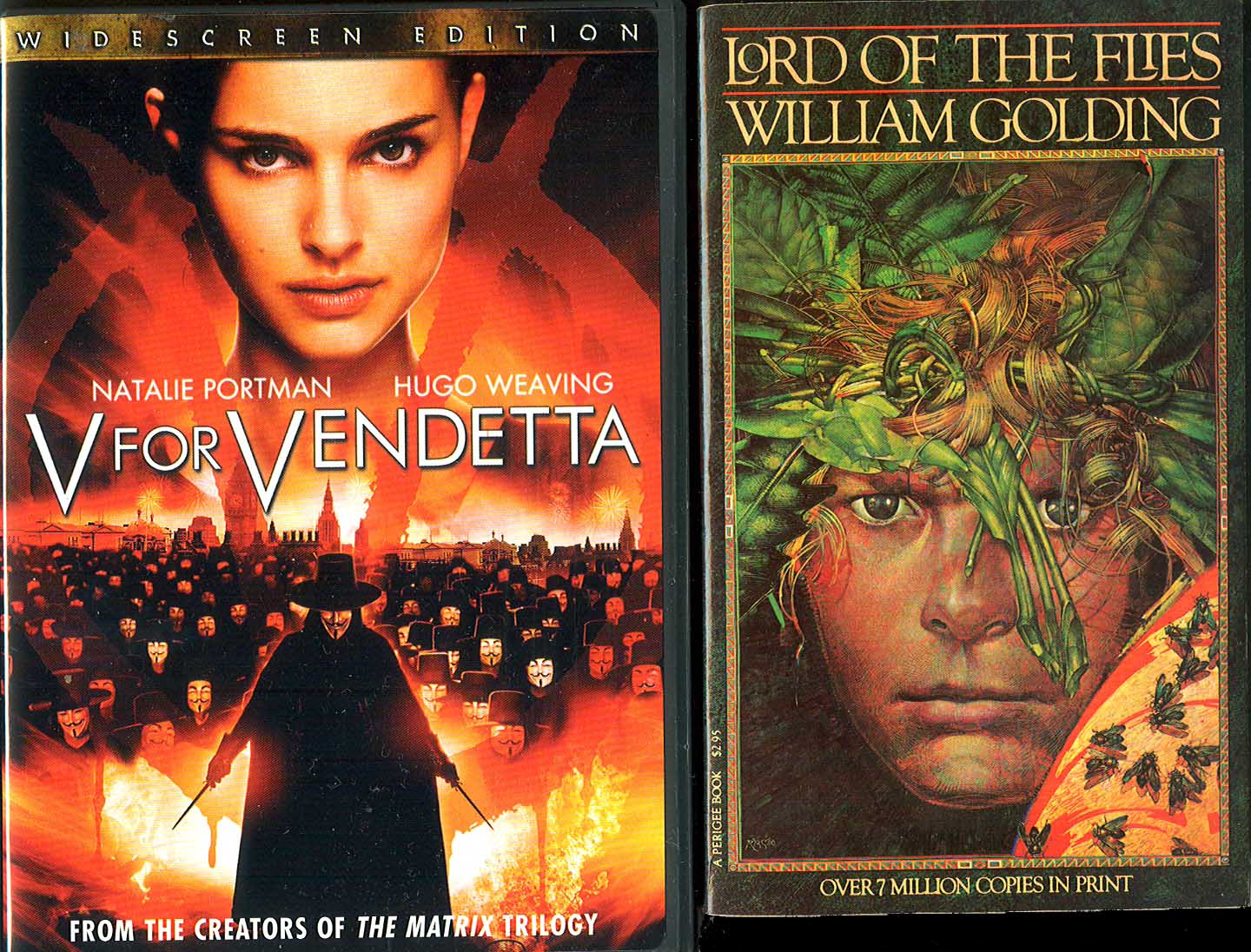
While snowbound over the weekend, I reread William Golding’s Lord of the Flies. I recalled a profound sense of awe from when I read it the first time in college, when students are invincible and optimistic. The second reading was still rewarding, but the message seemed darker, more true-to-life. Children on an isolated island devising their own schemes of democracy cannot repress the deep urge for self-advancement. When it comes to working together for the common good or promoting one’s own will, the latter wins out and seeks to destroy all dissenters. Anarchy becomes their natural state.

A few weekends ago I finally got around to watching V for Vendetta, the Wachowski Brothers’ dim and hopeful dystopia where individual conviction wears away at a conformity that benefits the privileged class. Recasting Guy Fawkes as a hero, albeit a tragic one, is a bold move in the post 9/11 world. The anarchy here leads to a rule by consent, the oppressed rising up as one to say “no more.” Even V is dead so there is no one to lead.

Better together?

Anarchy is a frightening prospect. Most people feel more comfort in the rule of law. One time I joined a discussion my brother-in-law was having with some friends on the rule of law. They were suggesting that if rule of law could be brought to bear on the Middle East then the seemingly continual crisis there might terminate. I disagreed from the far end of the table, not close enough to hear the whole conversation. My rationale is that the utter conviction of religion trumps the rule of law. Rule of law assumes all are equal, but religion in a monotheistic theater always assumes only one is right, and therefore superior. All others must submit. Problem is, many monotheistic religions feel the same way. We see it in the extreme power structure of the Religious Right in this country. Who is willing to say maybe the rule of law is superior to the rule of God? Watching the graceful anarchy of V, and reading the disturbing anarchy of Lord of the Flies, sometimes even the most stalwart free-thinker wishes everyone would bow to the rule of law.


Im in ur blogz

Translation. The Bible as we know it would not exist without translation. Ours is a culture of convenience — Americans want divine revelation dished out in easy-to-swallow portions in their own tongue. Going through the rigors of learning new alphabets and grammatical systems, not to mention the eerie specter of textual apparatus, are enough to frighten off all but the most stalwart of truth-seekers. This is a good thing. We would never advance as a culture if we all had to spend our time learning actually to read our religious texts as they were written, only to find out that we have no original texts at all. So we trust our translators.

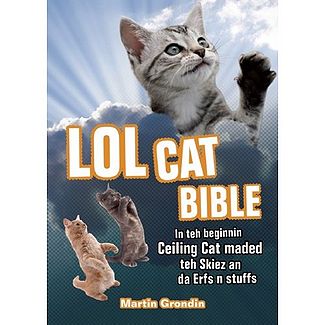
A few weeks back I posted an entry on Andrew Schlafly’s misguided (imho) Conservative Bible, devoid of liberal bias. Since then Stephen Colbert’s interview with Schlafly has been making its rounds on the internet and thousands of people are now aware of the project and its biases. I stand by my original objection that biased translations are unfair representations of the actual ancient texts. But it looks now like I’ll have to be eating crow. A new translation is scheduled to arrive in stores next month, and it looks like it may have a bias. Still, it is a translation that no internet-savvy reader can afford to ignore. Yes, the Lolcat Bible is nearly ready to pounce from the press.

The culmination of the Lolcat Bible Translation Project, over two years in the making, a Bible in Lolspeak will soon be available. Comparing what I’ve seen of the two projects, I think there is more truth in the Lolcat Bible than in the Conservative Bible. I’ve studied more ancient languages than any sane person rightfully should, but I do rely on my able research assistant (aka daughter) to help read Lolspeak. She suggested the title for this post, but the full text reads, “Im in ur blogz, postin mah wurdz of wizdum.” That’s straight from the mouth of Ceiling Cat!


Anomalies in Paradise

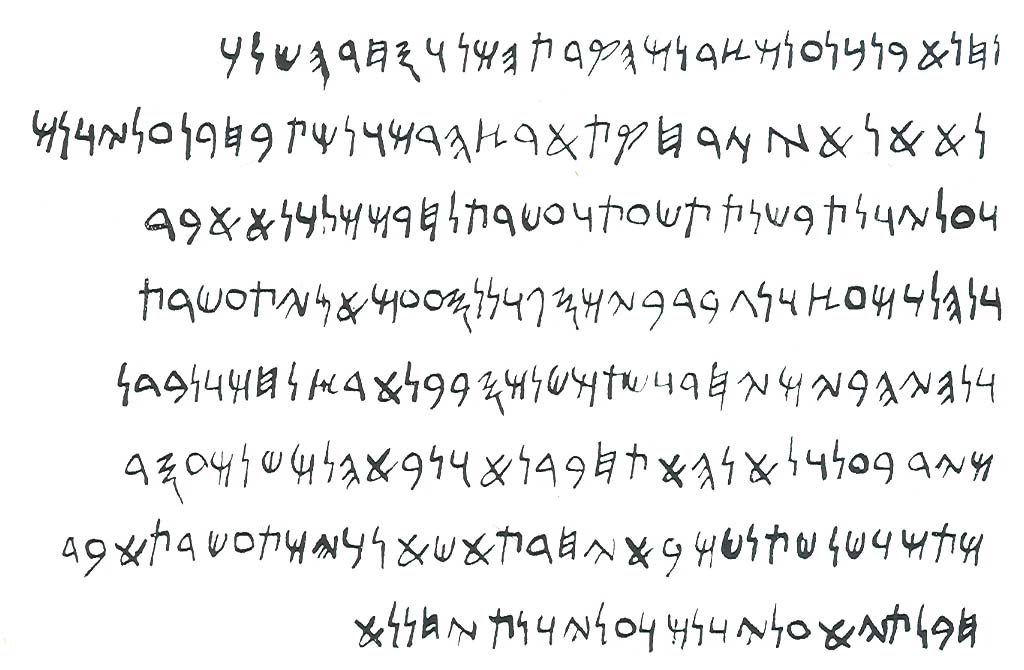
In 1874 (C.E.) a mysterious ghost of an artifact from Brazil was announced. In a story full of twists and turns and multiple Spanish surnames, a director of the National Museum of Rio de Janeiro had received a copy of a Phoenician inscription allegedly found in Brazil. Efforts to trace the letter to its source and to find the actual artifact both ended unsuccessfully, leading the director, Ladislau de Souza Mello Neto, to conclude the letter was a hoax and the artifact non-extant. The story might have ended there had not Cyrus Gordon, one of the premier Semiticists of the last century, allowed his open mind to reexamine the evidence. Gordon, in an article in 1968, argued that the inscription had to be authentic because of advances made in the understanding of Phoenician that would have been unavailable in the 1870’s. Gordon’s interpretation was in turn challenged by Frank Moore Cross, noted Harvard epigraphist, and scholarship heaved a collective sigh of relief and returned to the status quo. No Phoenicians ever crossed the Atlantic.

Neto's un-copy of the un-inscription

This little incident highlights one of the persistent conundrums of academic life. Anomalous objects are found/reported every once in a while and mainstream academia immediately debunks them to come back to center. A student of Hinduism asked me recently about the correlation of ancient calendars; before British colonialism hit India artifacts were dated to much earlier periods. Under the influence of Britain Dravidian culture grew younger and the background to European culture was considered more ancient, more time-honored. Those with investment in the system do not like to have privileged positions challenged.

While a post-graduate student at Edinburgh, my advisor had me read Peter James’ Centuries of Darkness, a study that challenged the accepted chronology of the ancient world. Intrigued, we set up a seminar with representatives from the Archaeology Department to discuss whether this was a feasible approach to the many problem areas of ancient chronology. The archaeologists duly trooped in, set up their weapons and took pot-shots at the book, blowing multiple ugly holes in its arguments. After about an hour, when the archaeologists were unable to answer a very specific question by my advisor, he asked, “How many of you have read the book?” Sheepishly, not a hand was raised. The premise of the book was sufficient for its well-deserved snubbing. I learned a valuable lesson about academia that day — open minds lead to trouble. It is a lesson that demonstrates a very basic insecurity of those who do not wish to have their assumptions challenged.