Aroma of the Divine

Religion is all about emotion. Those who approach religions rationally soon have to face the fact that believers approach the subject with a less-than-rational motivation. Religion fulfills basic psychological needs – we can explain our world without divine forces, but for many this cold and clinical approach lacks vitality and meaning. Belief in the divine is emotionally satisfying, and as long as humans experience emotion, God’s job is safe.

Aware of this emotional component, I was intrigued when I heard about Rachel Herz’s book, The Scent of Desire: Discovering Our Enigmatic Sense of Smell. It is schoolyard wisdom that smells are closely associated with memory; everyone I’ve asked about this has had the experience of a firm memory being mediated by an unexpected aroma. What Herz has discovered, however, is that our sense of smell evokes memory just about as well as other sensory cues. The vital difference is that our sense of smell is vital for emotional development. The fragrance-induced memory is more fraught with emotion, therefore it may seem more intense that memories brought on by old photos or songs. In fact, those who lose their sense of smell often report living with emotional flatness. Laboratory animals with their olfactory organs removed show no motivation in their pathetic lives.

Considering the emotional component of religion and the fact that our olfactory perceptions are closely linked with our limbic systems, I wonder how religious satisfaction smells. Surely emotion is more complex than what our noses detect, but if emotional systems are shut down without a sense of smell, it stands to reason that religion must be related, at least in some form, to smell. The presence of the divine is often described as “inspiration” or inhaling. In Hebrew and other Semitic languages the world for “spirit” is also “breath.” Although Herz doesn’t discuss this aspect of scentology in her book, it would be an avenue to investigate for those with an interest in the origin of religion and the aroma of the divine.


Green Bible


One of the most heinous theologies to emerge from Christendom is the idea that exploitation of our planet is good for the soul. The idea, apart from having been foundational to Bush II’s administration, is based on the idea that if we mess up our world badly enough we will force the divine hand into sending Jesus back to clear up our detritus. The Second Coming apparently will be in a garbage heap rather than a garden. Christian businessmen rest secure knowing that their exploitation of our natural resources is all part of God’s master-plan. This “theology” is alive and well among many Neo-Cons and it insists that the fact of global warming is a myth and the myth of creationism is a fact.

One of the unexpected perpetrators in the war on our planet has been the Bible. Accurate records of the number of Bibles actually printed were not kept in the early days of Gutenberg’s dream machine, but current estimates place the number of Bibles printed at over 8 billion. That’s more than enough for one per person. Some of us would have to confess to owning multiple copies, making us perhaps guiltier than the rest. It was in an effort to stem the dendrite slaughter of this industry that I shifted to the Green Bible for my classes last year.

Some people treat the Bible as an object of veneration, never laying it on the floor or putting other objects atop it. Some people object to making Bibles out of “inferior” products – the Green Bible is printed on recycled paper and is biodegradable – but to me this seems to be the most responsible way to produce a book with the enormous environmental impact that the Bible has. I could live without the “green letter” sections intended to prooftext the Bible’s environmental concerns, but care for our planet trumps good taste at times. If anyone from Oxford University Press is reading this, the eco-friendly aspects of this Bible are what reluctantly switched me from 15 years of requiring students to purchase the New Oxford Annotated Bible! It is time that the Bible owned up to its part in our planetary plight.


Robots and Divine Engineers

Pennsylvania seldom comes to mind when one thinks of a “big state” unless, that is, you have to drive across it. On the way to a family wedding in Ohio, I had to drive interstate 80 from the Delaware Water Gap to Sharon, Pennsylvania, and beyond. Having made this trip more times than I care to recount, I knew some diversion would be necessary. So it was that my family settled in to hear the audio version of Daniel H. Wilson’s How To Survive a Robot Uprising. Given my current status as a “Robot Dad” and my lifelong interest in both monsters and doomsday scenarios, this particular book was an apt choice.

Although the book is classified as humor, there was much that was thought-provoking in it (as there frequently is in quality humor). As Wilson systematically describes what makes robots tick, back five years ago, it became clear what it means to make a creature in one’s own image. Roboticists analyze how humans go about doing things and how we think in order to replicate these processes in mechanical formats. The results are machines that easily outperform humans, but which also have severe limitations – what Wilson frequently refers to as the benefits of evolution. Not only is the book funny, but it is also informative concerning what amazing robots are already in development. For those with the capital, there is little that robots can not be made to do.

All the while, I was also thinking of the human dilemma. Judeo-Christian tradition claims that we are made “in the image of God” without ever really explaining what that means. Perhaps it is the height of hubris to suggest that we are pale reflections of what we might have been, given a divine designer. When humans make robots, they are designed to surpass what we can do. Is there a reason people can’t see in the infrared or ultraviolet light ranges, like robots can? Why are we not able to hear all available sounds waves or smell all possible odors, such as our machines and dogs can? Could a team of human engineers have designed a better prototype than the God of Genesis?

While I do not really fear a robot uprising, I often ponder why things are the way they are and why human limitations often lead to such intense suffering. It is an idea that can be explored thoroughly when, after hours of driving, you realize that you still have 200 miles to go to the border.


Faith Healing

Having dissociative reading habits sometimes leads to fortuitous coincidences. My interests have always been widely dispersed, and although I have a few perennial favorites that I keep coming back around to, reading about new interests predominates. One of my favorite reading topics is science. Apart from the requisite intro courses in college, I have unfortunately had little formal training in the sciences, so I read extensively in the field. A number of my recent reading projects, books on widely divergent areas of science, have coincidentally mentioned faith healing. Being books written by scientists, there is little by way of physical explanation except that people who believe they are improving generally do. The mechanism remains undiscovered, but the phenomenon is well documented.

Faith healing has long lain among the taboo subjects of snake handling and snake oil hawkers. Those who approach the phenomenon from a religious angle claim that it is no less than divine power that causes a person to heal. Physicians and scientists who rely on empirical evidence, however, declare that a physical cause must exist, albeit a yet undiscovered one. With no way to test results, the objective approach simply must accept that it happens, we know not why.

A number of years ago I read a book about Rasputin (Rasputin: The Saint Who Sinned by Brian Moynahan). At the time I was teaching at Nashotah House, a monastery-like seminary heavily influenced by Orthodox pretensions. “Rasputin” was a common slur on campus, particularly for a slovenly prelate-in-training. I had no idea who Rasputin was until I read this book. Apart from the distinctly creepy vibes his photographs give off, there are many documented cases of Rasputin’s ability as a faith healer. Few today would consider the “mad monk” as any kind of saint, but he apparently had a salubrious effect on those who believed in his power. This would shift the cause from supernatural to the suspect, unwashed hands of a notorious sinner.

Who wouldn’t want the ability to heal and make the world a place with a little less suffering? While faith healing has become a kind of holy grail for scientists, there are some not-so-holy religious folk who’ve unlocked a door that many never even suspected was there in the first place.


House of Myth

Mythology is everywhere. Although I am prevented by personal experience from declaring with the professionals that it is highly valued by our culture, I nevertheless find it lurking all around. Just yesterday my daughter asked me if anyone still believed in the Greek gods any more. I am sure that with the revival of ancient cults that is all the rage today one wouldn’t have to travel too far to find an ardent devotee of Zeus or Hera. Even on a more pragmatic level, however, mythology maintains its allure. While reading a bit of Apollonius or Euripides recently I was struck at how biblical it sounded. Mythology pervaded ancient life and became woven into the fabric from which our own culture is cut. There is no escaping it.

I just finished reading Mark Z. Danielewski’s House of Leaves. While I’m not a real fan of ergodic literature, the story has a way of luring the reader into the labyrinth of the Minotaur, an association that the book itself disavows. As a student of mythology, however, I approached the book as a decidedly non-demigodic Theseus, wondering where the twists and turns might lead. My conclusion at the end was that no one truly escapes mythology. Classed in the horror genre, the book has few frights and more than a few rest stops to ponder. If we would admit it we would see that mythology still has a tremendous gravity.

The use of mythology as the basis for literary work is nothing new. Clever authors for centuries have recast the classics into newer forms, sometimes transforming them beyond recognition. As the world grows more pluralistic, keeping in touch with our mythology will only grow in importance. It is our shared heritage, and even if far distant cultures have their own cadre of myths, it doesn’t take too long to realize that their stories, like ours, spring from a very deep pool indeed.


Oil’s Well that Ends

Greed has been on my mind quite a bit lately. I like to think it isn’t petty personal greed, but the insatiable corporate variety of greed. Friends send me links to sad commentaries on the Gulf Oil Spill, an event that severely amplifies the cruelty already inherent in nature, but an event that would have been preventable were it not for greed. My friend James from Idle Musings sent me a compelling story from the UK Guardian that poignantly demonstrates how a shift of worldviews has bestowed divine approval on the rape of our planet. The very religion that began as animism, the belief in the ubiquitous divine in nature, has evolved into a Neo-con Christianity that supports free markets as surely as it believes in resurrection. If a few million animals have to die, well, their invisible, loving God sees far more than our limited sight.

Nowhere is this more evident than in the video link my wife pointed out to me last night. Here an advocate for biblical “prophecy” points out that it can not be coincidence that the day after the United States withdrew unilateral support for Israel in the United Nations Security Council was the very day that Deepwater Horizon exploded. No, the pundit declares, do not be fooled. God is punishing the United States for withdrawing support from Israel. This idea, unfortunately, draws on a morass of sloppy theology that can be historically traced to an evangelical death-wish for the planet. Barbara Tuchman, one of the most respected historians of the last century, objectively traces the story in her classic Bible and Sword. Political support for Israel was perceived as a means of forcing God’s hand into releasing the second coming. So much for human sympathy.

Coincidences continually occur. April 19 is the day that Cardinal Ratzinger was elected Pope just five years ago. It is the day Grace Kelly married Prince Rainier of Monaco. It is the Feast of Saint Aelfheah of Canterbury. It is Patriot’s Day in New England. It is the day The Simpsons premiered. Whether to see God’s hand in any or all of this is a matter of perspective. As is the motivation behind supporting Israel, big oil, or the second coming. If there is any name other than greed for offering political support for a nation of sacrificial lambs and spilling oil in order to hasten the apocalypse, I simply do not know what it might be.

And this was only April


The New Tetragrammaton

It all started with Genesis. I’ve been reading Genesis since before I was even a teenager. When I began teaching it in a seminary setting, the age-old question of how science and religion fit together had become an insistent preoccupation. I began reading books by scientists who hypothesized that belief itself has a biological basis. Of course, there will never be any convincing those who believe since it is a chicken-and-egg style argument whether the body has “faith structures” because God put them there, or if we believe in God because our bodies grew them. One thing seems fairly certain, humans are “programmed to receive” what has been labeled “divine input” through the very bodies we’ve evolved.


Last night I finished reading Dean Hamer’s The God Gene, the latest in a long series of such books I’ve picked up over the years. While much of the technical and statistical information was beyond the comprehension of a simple humanities scholar such as myself, it became clear that a genetic basis likely does exist for a sense of spirituality among people. Quantifying spirituality, obviously, is a task open to long and serious debate, but the general traits of spirituality are nevertheless instantly recognizable. If those recognized as spiritual share characteristics uncommon among the non-spiritual, that itch should be telling us something. Hamer tracks the culprit to the gene VMAT2, responsible in some way for the monoamines that trigger spiritual experiences. He displays the evidence for how he drew this conclusion in a scientific way, being careful to note that genetic predisposition to spirituality neither proves nor disproves God.

Since the traditional Judeo-Christian name for God consists of four letters known as the “tetragrammaton” and since the “God gene” also has four letters, VMAT, I wonder if we’re onto something here. God can’t be measured in the lab (yet), but the “receptors” for God can. Others scientists have analyzed “God nodules” in human brains that seem to react to spiritual influences. As long as religion does not object to the laboratory probing of its sacred cows, we may eventually find God in a test-tube or petri dish. Chances are he won’t be a bearded white man sitting on a golden throne, and the smart money says most people won’t worship him once he is found.


Jesus at the Prom

This week I read Susan Campbell’s Dating Jesus: A Story of Fundamentalism, Feminism, and the American Girl. Parts of her autobiographical narrative seemed so familiar that it was almost like we could have been siblings. Other parts demonstrated just how widely a religious upbringing in America may vary. Fundamentalism is a powerful force, and one that often feels impossible to outgrow. The added dimension of a constant, insistent criticism of gender made Campbell’s account truly wrenching at times. Having been raised in a similar environment, I had been taught that ministry is a male prerogative, an activity women were separated from just as surely as begetting babies. Having been raised mainly by my mother, however, I was more sympathetic to a woman’s plight than most of the outspoken advocates for male privilege. Campbell’s story hit close to home.

One of the most tenacious aspects of Fundamentalism is the brain patterning it impresses on young minds. Who doesn’t know that baby birds impress parenthood on the first creature they see after hatching? Young children, trusting well-meaning parents, are impressed with a religious branding iron before they can sort things out for themselves. We make our children in our own image. Few ever undertake the intense reflection later in life to challenge these impressions. Like Campbell, I attended seminary because I was curious. Many of my classmates had no questions in their heads – they knew already that they were to be ministers. Seminary was a hoop to be leapt through rather than a rung to be climbed for a different perspective. And their children will be taught their perspective. Denominations will continue to increase in numbers as acorns roll not far from the tree, but just far enough.

Campbell’s memoir is a gentle indictment of the male establishment. What once began as a biological division of labor has been given a religious imperative; male dominance is ordained by God, and women have no option but to comply. Even as the divine gets pushed into an unlit corner of everyday life, the deity may always be drawn back out for a session of gender oppression before being tucked safely away again. In these days of advanced technology and wide perspectives, women are still held down as some kind of inferior sub-species by men who believe that they are the default version of the image of God. It is time to be honest and admit that the only reason women are kept from the male preserve in any field is because of a jealous green-eyed god called privilege.


Zombies, Golems, and Robots – Oh My!

A truly great metaphor is hard to kill. Despite detractors and naysayers, the zombie has clawed its way into the modern psyche as a denizen of the living death of a world we’ve created for ourselves. Joblessness, environmental disasters, tea parties – just when you thought it couldn’t get any worse, the dead refuse to stay dead. Elsewhere on this blog I’ve written about the origin of zombies in Voodoo, and I mentioned in passing the connection with the golem. The golem is a mythical Jewish creature that serves the role of protector of the oppressed (one can’t help but think of the Democratic Party). It is strong, dedicated to its task, brainless and soulless (one can’t help but think of the Religious Right). Like the zombie, the golem has no inherent ability to think for itself, and it must be animated by a magical word written on its forehead.

Golem around the corner

One of the most famous golem stories involves the Golem of Prague, defender of the oppressed Jews in that city in the Middle Ages. The Prague connection also forever ties the golem together with robots in Karel Capek’s 1921 play, R.U.R. (Rossum’s Universal Robots), the very origin of the word “robot.” Like the golem the robot putatively has no soul. It too is controlled by a code written precisely for it. Unfortunately on my one trip to Prague back in 1991, I didn’t know to look for the golem – I did find the statue of Jan Hus, however. Right around the corner the golem lurked, standing guard over the oppressed. It is a powerful image when the world is in such a state.

We need a hero

With the recent release of George Romero’s Survival of the Dead, the zombie has been given renewed life. Watching the Republican Party gearing up for a major thrust at the very soul of America, lining up the local BP station to support big oil, spouting false rhetoric about what the Bible says, I think I’d rather take my chances with the zombies. Does anyone out there happen to have a golem for sale, just in case?


Cryptid Be Thy Name

While poking around the internet last night to take my mind off the heat and humidity surrounding me, I stumbled across an article entitled “The Religious Struggle over Cryptozoology” on a site called Science and Religion Today. The piece was written by Joe Laycock, a doctoral candidate at one of my alma maters, Boston University. Having just finished Bruce Hood’s Supersense, there was a pleasing euphony in the coincidence. Cryptozoology is the study of unknown animals, and is not necessarily based on the supernatural (although it may fall within Hood’s definition of it). Laycock notes that two religious elements in society have latched onto this study: New Agers and Creationists. Creationists, it seems, see in certain cryptids, such as the Loch Ness Monster, hold-overs from the Mesolithic Era that prove the Mesolithic Era never existed. God can still make dinosaurs today, therefore the Bible (which doesn’t mention dinosaurs at all) must be true.

The draw of the unknown

One of the most welcome parts of Hood’s thesis was its consonance with Stephen Asma’s On Monsters, a book I’ve posted on before. Both authors explore how the human psyche reacts against what it perceives to be “strange mixes,” beings that cross-over between readily defined categories. Hood addresses this by tackling the concept of “essence” while Asma notes a dread accompanied by a sense of wonder. Hood demonstrates that from a scientific point of view, there is no such thing as the “essence” of a person, object, or living thing. Such ideas are the cling-ons from the era of souls and radically distinct species and genders. Closer observation has taught us that many such things are more of a continuum than a series of sharply defined types. Religions prefer to have fixed categories. Religious ethics often depend on them.

Laycock suggests that both New Ageism and Creationism “can be read as a religious response to the cultural authority of science.” Religions fear that which can be empirically demonstrated since it throws the god-of-the-gaps into the dryer and he comes out smaller each time. This is so, despite the fact that Creationists crave scientific respectability. While teaching my course on Myth and Mystery at the University of Wisconsin Oshkosh, I dwelt on cryptids for a few sessions. They are indeed often surrounded with a religious mystique. I wouldn’t necessarily dismiss the possibility of undiscovered species, many new ones are described by science every year. Nor would I say that they are supernatural. Nature has ways of surprising us still, and as Asma clearly demonstrates, we still have a need for monsters.


Super Sensitive?

As not infrequently happens, I take my reading cues from others. In general I am reading half a dozen books at any one time, so when I finish one I cast around for something of a similar genre. One book that I just finished I learned about from my cyber-friend Sabio Lantz’ Triangulations blog – Bruce M. Hood’s Supersense: Why We Believe in the Unbelievable. Hood is a respected psychology professor, and his writing style is engaging. The book itself, while fascinating in its ability to offer an overarching theory to explain why people believe in the supernatural, is deeply disturbing. I grew up in a family where the supernatural was taken for granted. Many of Hood’s explanations are cogent and logical, but that was not what I found to be distressing.

The overall premise of the book is that if science cannot measure a phenomenon, it is “super”-natural. If it exists in nature, science can define it. To me this seems far too limiting. It assumes that science has already probed the infinite aspects of an infinite universe. Yes, we understand (to a degree) matter. We have discovered the sub-atomic world with its quarks and other tiny bits. We understand a great deal about energy as well. Could there not be, however, an entirely natural aspect of either matter or (more likely) energy that science has not yet learned to measure? And could not this aspect be a piece of the larger universe that we inhabit? In other words, when all that is not defined by science is “supernatural” then we have already decided on the limits of our world.

From a psychological viewpoint, I find Hood’s analysis quite agreeable. The human psyche does have a need to find the supersense in the world. We do look for irrational causes. Not all unexplained phenomena are supernatural, however. It is a semantic trap. If we define “supernatural” as anything outside of current understanding, then his thesis stands. If, however, we define “supernatural” as that which violates physical laws not as they are currently understood but as they actually are, then who is to say whether there is anything supernatural at all? “Unexplained” and “supernatural” are not the same thing. Such a distinction would not be troubling were it not for the fact that Hood defines “reality” (another problematic concept) only in terms of “scientifically known.” If it has not been measured by science, a phenomenon is not real since our physical brains (measured by science) are the filters through which we experience the world. There is no room for what has not yet been found.

Far more distressing than that is his assertion that freedom is an illusion. One of the most distasteful theological travesties ever is the concept of predestination. The idea that a loving God would create most people to suffer eternal torment simply to fulfill his own arbitrary assignment of justice is something for which Presbyterianism can never be forgiven. It is about the most immoral God that can be imagined. The same goes for the psychological premise that we must react according to our biology. I found myself wondering why Hood wrote the book at all, if life is all predetermined. What if he had chosen not to write it, or to write it differently? You could argue that this too was predetermined, but does this not simply justify the income and fame of those who are “important people”? It runs a true danger of being terribly bourgeois, if not downright supportive of eugenics. Not that Hood would advocate such an action, but any time predetermination is raised, it presents the grandest of excuses for the most heinous of behaviors. Even the psychological observations that support it may have been misunderstood. Of course, if you disagree with me, don’t blame me; it was predestined that I should write this.

That having been said, I found Supersense overall to be a wonderfully fascinating book. At points Hood’s argument seems to consist of the post hoc, ergo propter hoc fallacy he rejects as unscientific, but if this can be irrationally forgiven, there is much useful material to be gleaned from this book.


Pulp Bible

Everyone is an expert on the Bible. This is one of the factors that provides professional biblical scholars with generous ulcers. Everyone is an expert because they know what they believe about the Bible. The difficulty is very few people actually know much about the Bible. Belief and knowledge are very different features of the human psyche. In my introductory course on the Hebrew Bible last night, I showed the clip from Pulp Fiction where Jules exegetes Ezekiel 25.17 (which is a fictional verse concocted for the movie). This offers a springboard to discuss how the Bible is perceived in society at large. Many people believe that Ezekiel 25.17 actually reads as Jules quotes it. The writer/director of any movie may freely manipulate the Bible since they are as expert as anyone else on the subject. (Of course, Ezekiel is a safe bet for a false citation since few people have actually read the book.)

As an officially trained “expert” on the Bible who has learned the original languages and who has read far more books on the Bible than health or common sense would dictate, I often wonder about this. When the Jehovah’s Witnesses stop by, knowing that I have these credentials, they plow straight ahead and tell me what the Bible really means. They are experts as well. When my wife was pregnant and we visited the obstetrician for an initial interview, as soon as he discovered my vocation, the physician quoted Scripture for this nervous young couple before him. Would you not rather have a Bible expert deliver your first child? Where is there room for the bone fide Bible specialist?

Having read Hector Avalos’ The End of Biblical Studies some months ago, I found myself largely in agreement. In many quarters the Bible receives a privileged treatment that only creates problems. Politicians, rap artists, physicians, movie directors, and janitors are all experts on the Bible; why do we need those of us who’ve made it a life’s work? The answer, I believe, is that knowledge of the Bible is at an all-time low. Many venerate the Bible without understanding what it is. Until society gets a grasp on what it means to have so many experts on the Bible, everyone should ponder the meaning of the passage that reads, “The path of the righteous man is beset on all sides by the iniquities of the selfish and the tyranny of evil men. Blessed is he, who in the name of charity and good will, shepherds the weak through the valley of darkness, for he is truly his brother’s keeper and the finder of lost children. And I will strike down upon thee with great vengeance and furious anger those who would attempt to poison and destroy my brothers. And you will know my name is the Lord when I lay my vengeance upon thee.”


Converting Triffids

“Stupendous as this disaster is, there is, however, still a margin of survival. It may be worth remembering just now that we are not unique in looking upon vast calamity. Whatever the myths that have grown up about it, there can be no doubt that somewhere far back in our history there was a Great Flood. Those who survived that must have looked upon a disaster comparable in scale with this and, in some ways, more formidable. But they cannot have despaired; they must have begun again – as we can begin again.” This quote from John Wyndham’s Day of the Triffids brings into focus a number of themes from this blog. Initially, it is another example of the intersection of science fiction and religion, specifically the Bible. In his apocalyptic 1951 novel, Wyndham can find no better example of disaster than the Flood Myth. The Bible and science fiction have kissed each other once again.

Another recurring theme reflects on disaster and how religions deal with it. As the Gulf of Mexico oil spill begins taking on apocalyptic dimensions religion is brought into the discussion in a variety of ways: God will take care of it; it is a sign of the end times; God is punishing us for something; corporate greed must stop. Take your choice. When people feel threatened, religion is quickly brought off the shelf, dusted off, and thrust out as the harbinger of deep solutions. Those of us who deal with religion every day must be forgiven for being a bit more circumspect.

The Flood Myth is a regular theme as well. It crops up in unlikely as well as predictable locations. As mentioned yesterday, it was evident in the Mystic Aquarium (unexpected), and it constantly resurfaces in Fundamentalist rhetoric (predictable). On a previous travelogue entry I mentioned Noah’s Ark being rebuilt in Maryland (unexpected). Seeing the Flood as the benchmark of worldwide disasters in a science fiction novel may be predictable, but the troubling ethical concomitants drawn out by Wyndham are profoundly disturbing. The Flood is not longer the worst disaster imaginable, but the Bible will continue as the measure of catastrophe long after the triffids have vanished.


Indiana Wants Me

The conservative evangelical Christian camp sometimes makes blogging on religion just too easy. The paper this morning reveals yet another evangelical, abstinence-only soap-boxer being caught with his boxers down. Indiana Representative Mark Souder is stepping down because of an extra-marital affair. To fill in the gaps on other such evangelical infidelities, I recommend Max Blumenthal’s Republican Gomorrah.

No, I do not rejoice in such revelations. The suffering of families brought on by such blatant hypocrisy cuts me deeply. The lesson we should all be learning from this is that self-righteousness is a sham. For all their faults, the more liberal factions of society are ready to admit that people are people and not cookie-cutter angels. They are inclined to admit that temptations exist, yet statistics demonstrate their marriages tend to be more secure and less plagued with infidelity. I tend to think it is because evangelical teaching has lost sight of what is truly important: people have always been, and still are, people. The belief that God has made one class of people better than others, and that saying sex doesn’t exist gives you the right to live in a pre-Edenic fantasy world, the Neo-Con is in very deep denial. No wonder many evangelicals distrust psychology!

I often ponder why this disconnect should exist at all. It seems that evangelicalism has been singularly poor at providing the tools to cope with reality. If temptation doesn’t exist for the blessed, then why bother developing strategies to deal with it? When the newspapers come out, it is easier to cast the first stone at the liberal media for airing dirty laundry than it is to examine your own hamper. Yet even the Bible itself has one important character criticizing the religious establishment as whitewashed tombs. No, I do not respond with glee to the sad outing of Mark Souder. I simply wish evangelicalism would truly advocate the honesty upon which it claims to be based.


Medusa’s Legacy

Having just finished my Mythology course at Montclair, I’ve picked up a few books to delve once again into a sublimated childhood interest. I was first introduced to Greek mythology back in Mrs. MacAlevy’s fifth-grade class in Rouseville Elementary. The story of Perseus, in particular, has stayed with me ever since. Of course, being taught in serious religion classes that this was all silly nonsense, what with the multiplicity of overly amorous deities whimsically whipping thunderbolts at humanity (everyone knew there was really only a single celibate deity whimsically spreading pestilence among humanity), I drifted away. Mythology continued to be an interest, but the Greek variety went the way of the dodo. The occasional Pauline reference to Artemis fanned the old flames, but just a little. I had more serious religion to comprehend.

So now, decades later, I find myself needing to catch up on the classics. To rejuvenate my interests, I once again turned to Perseus. My brother and I forked out the extra cash for 3-D to see the remade Clash of the Titans this spring, and I found myself even watching the 1981 version in a Harryhausen-induced haze to refresh my memory. The original movie realized the deficiencies of the classic story on the big screen and embellished shamelessly to wow the critics. One of the most memorable scenes was Perseus in the lair of Medusa. So I found myself reading Stephen Wilk’s Medusa: Solving the Mystery of the Gorgon.

Wilk is a physicist and a member of a prominent optical society. He brings the fresh insights of a non-classics specialist to the story of Medusa (I should know, since I too am a non-classics specialist). This study raised my limited level of awareness in several respects, particularly in the repeated emphasis on eyes in the book. What really struck me the most, however, was how it became clear that Medusa was yet again an embodiment of female power ruthlessly struck down by a virile young man with nothing better to do than slay her. Medusa is the victim in the story, cut down for simply being what she is – a strong female figure. I could not agree with all of Wilk’s assessments, but this provocative book brought many interesting concepts to light.

Medusa, like Lilith, is the symbol of fear for a threatened manhood; women who are true femmes fatale – preying on male pretensions for sport. Until society willingly accords true equality, such figures will remain necessary to remind us that gender should never be the factor by which an individual’s contribution is to be judged. I suspect Mrs. MacAlevy knew something that the Greeks had also realized: repression only increases the ferocity of the repressed.

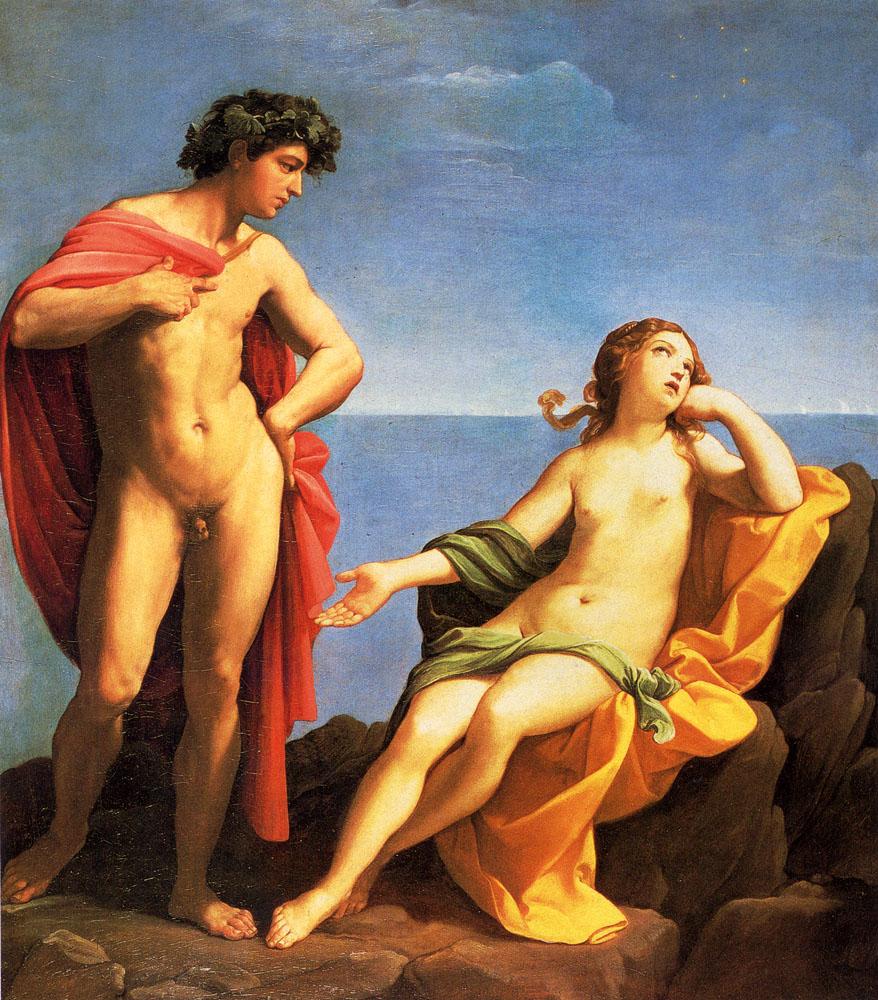
Perseus asserting the male prerogative