Ahab’s Garden

One of my motivations, I have to admit, for re-reading Moby Dick this year was my wife’s gift of Ahab’s Rolling Sea: A Natural History of Moby-Dick, by Richard J. King.  I wanted to read the latter, and I’d been toying with the idea of reading the former.  So I did both.  King’s book explores the oceanic world introduced by Herman Melville’s classic.  The various creatures and natural phenomena mentioned by Melville are examined in the light of what we now know today and a few key finding emerge.  We continue to know little about our oceans, even as we deplete them.  The book is about whales, but not only about whales.  Anyone who’s read Moby Dick knows the novel encompasses about a year at sea and describes the many sights experienced by a crew that sets out with few port calls and many long hours on the open ocean.

King does a fine job here.  It’s particularly refreshing that he doesn’t hide from what he calls Melville’s natural theology.  Many science writers fear to go to such places.  Clearly Melville looked at the world through such lenses, however.  The novel is one of the American philosophical masterpieces.  Not only philosophical, but also theological.  We can only guess what Melville’s true beliefs were, but he described the book to Nathaniel Hawthorne as wicked, and he knew that he was butting heads with orthodoxy throughout.  Natural theology was, of course, an early form of science.  Today scientists tend to be embarrassed by their heritage, but King shows that in the hands of a genius like Melville the results can be extraordinary.

This is also a disturbing book.  Any volume dealing with the natural world these days likely is.  The over-exploitation of the ocean, our use of it as a dumping ground, and global warming have combined to make the recovery of whales, as well as many other species, slow if not impossible.  While commercial hunting of whales has largely ceased, the leviathans haven’t made much of a comeback, and several species are well on their way toward extinction.  Sea birds are less common than they were when Melville was writing.  We’ve influenced our world in such a bad way that we’ve likely set the clock ticking on the extinction of our own species.  In a sense then, natural theology is facing its own apocalypse.  Ahab’s Rolling Sea is not a dour book—it is a celebration of the world as it was once known, even if that world was less than just two hundred years ago.


Wandering

Sarah Perry seems to be a writer who refuses to be pinned down.  Some of us are careful in our fiction to make sure things progress logically, almost factually.  With Perry you’re never quite sure.  Was there a sea monster in The Essex Serpent?  I’m not sure how this played into my decision to read Melmoth.  I knew the title had to have drawn its inspiration from the gothic classic Melmoth the Wanderer, a book I’ve never read.  (The internet has, in some ways, taken the sport out of wandering used book stores, where the possibility of finding such things was once a part of their charm.)  In any case, I saw Melmoth on the front table of Buffalo Street Books in Ithaca, and you learn which bookstore front tables to trust.  It was back when bookstores were open and autumn was in the air.

The concept of the wandering Jew (which I address in Holy Horror) is one that has the power to offend.  By emphasizing the atrocity of the Holocaust, Perry parries that here while maintaining the concept.  The wandering Jew committed some ancient crime and is sentenced to roam the earth until, well, usually the end times.  Perry makes Melmoth one of the women at the empty tomb of Jesus who, when asked to confirm the truth of the event, denies what she saw.  Condemned to walk the world on bleeding feet, she finds sinners and invites them to join her.  Not only finds, but watches—she is the one who sees all your transgressions—and insists that you come to her.

Melmoth is, like the original story, a set of nesting dolls.  The frame story contains other documents that shed more and more light on this dark wanderer.  Characters must own up to their shortcomings.  Indeed, confession is a large part of the story.  Although set in modern times, the book is quite biblical, both in sensibility and in some of the plot elements.  It even has several quoted snippets from the Good Book.  This caught my attention partially because a recent article I wrote (there will be notice here when it appears) suggests that the horror genre goes back to the Bible itself.  Those uncomfortable with the darkness may not realize just how much the two have in common.  Not all the strings are tied up neatly by the end, but this novel will perhaps inspire the reader to do a bit of wandering their own. 


Eternal Returns

Nightmares with the Bible has been submitted.  Those of you who read this blog regularly know that it is my fourth book and that it is a kind of sequel to Holy Horror.  Nightmares looks specifically at demons.  I was inspired—if that’s the right word to use for it—to write the book because the chapter on possession movies in Holy Horror was clearly overflowing.  Not only that, but at the time I started writing the book not many resources were out there on demons.  Almost nothing, certainly, that asked the big question of what they are.  To answer that we need to go to the movies.  People get their information from popular culture, especially when it comes to trying to understand the arcane and even esoteric field of theology.

Movies, studies have shown, often participate in the reality our brains conjure.  Back when Reagan was president—is it even possible to believe those seem like halcyon days compared to these?—he was caught occasionally citing events from movies as historical realities.  We all do it from time to time, but then, most of us, if pressed, can tease movies apart from facts.  Church attendance has been going down for some time (and on Zoom you can tune in and tune out without having to “stay in the room”), and so people have to get their information on demons somewhere else.  Reality television and the internet also play into this as well, of course, but Nightmares sticks with movies because I’ve only got so much time.  The message is pretty straightforward though, we must consider where people get their information.

After you submit a large project, if you’re anything like me, you’re mentally exhausted for a while.  I’ve been working on this book for nearly five years—I started it before Holy Horror was submitted to McFarland.  I had already begun work on my next book, but I yet have to decide which one it will be.  I have several going at any one time.  Hopefully this next one won’t be coming out with an academic publisher.  I’d like it to be priced in the realm where individual buyers might consider it worth the investment.  I know from experience that even books just over twenty dollars are a stretch for most people, especially if they’re on academic topics.  Nightmares will come back, I know.  There will be proofs and indexing and all kinds of further work to be done.  I’m hoping that by that point I will have the next book nearly done.  If only I could decide which one it will be.


Nothing To Eat

Some stories are unsettling to the point of spirituality.  That’s my impression of Han Kang’s The Vegetarian.  My wife wanted my opinion of it and when she used the adjective “Kafkaesque” I knew I had to comply.  The comparison is eerie in that Franz Kafka essentially starved to death because no way could be found to feed him with his underlying medical condition.  The Vegetarian shifts focus in its three parts, but the protagonist, Yeong-hye, is a young woman who finds her life run by other people in her family after she decides to become a vegetarian (in actual fact, a vegan).  Basing her decision on disturbing dreams she has, those in her Korean culture cannot accept vegetarianism and attempt, by various forms of coercion, to change her decision.  Throughout the account, Yeong-hye becomes silent—we’re never given her point of view—but those around her can’t accept her decision.

This is a challenging book to read, given my own personal history, but after scratching my head a bit when I finished it I came to reflect on this spiritual side of it.  My own vegetarianism was an ethical decision.  I realize that I can’t and shouldn’t impose my ethics on others, but I’ve not had much resistance from others (apart from colleagues who occasionally make reservations at eateries with no hint of the concept).  Likewise, I became a vegan a few years back based on further reflection of an ethical kind.  This is actually a spiritual practice.  I don’t often express it in those terms, but clearly it is.  In the novel when Yeong-hye’s brother-in-law tries to direct her life, he takes her to a Buddhist restaurant because he knows nowhere else to find vegetarian offerings.

Yeong-hye believes herself to be becoming a plant, and that leads to the next logical step in this progression of thinking.  Eating is, or at least can be, a spiritual exercise.  Many religions advocate fasts of various durations to derive the benefits to the soul.  Daily life is a matter of routine for many, often based around our culturally driven mandate of three meals a day.  I’m not alone at working through lunch while trying to get more done at my job.  By the final meal of the day I find myself exhausted.  It’s about more than food.  This strange little book has put me into a reverie about the ethics of eating.  I don’t know if Han Kang is a vegetarian or not, but she does understand the soul of one.


Straining Andromeda

As corona-life settles into just the way things are, I pulled out my copy of Michael Crichton’s The Andromeda Strain.  I read this in high school, and, judging from the state of my copy I originally found it in the book bin at Goodwill.  I actually didn’t remember how the book ended, but some of the scenes—particularly the bizarre suicides that the virus first initiates—stayed with me.  I really felt no compunction to read it again until our daily reality was one of infection, protection, and fear.  In other words, the time was right.  I can say that I found Crichton’s confident prose a bit overblown at times, especially given the resolution of the crisis, which I will not give away here.  Some of the rest of you may want pandemic-themed reading, after all.

Something I had forgotten, and since this is near the beginning I don’t mind giving it away, is that the Andromeda Strain was brought to earth by military intentions to develop new biological weapons.  Although the death toll is nowhere near what that of COVID-19 has been, the potential lethality of the strain is what keeps the compressed five-day story tense.  That tension makes for quick reading, and it seems pretty clear that some of the ideas here have been used for other pandemic story-lines.  I’ll write about one of them later this week.  The extraterrestrial life form of Andromeda is cause for discussion in the novel, but the explanation is never clarified.  Crichton’s later novels improve on this score.

A clear point in the novel is that the government, although aware of and complicit in the experiment, lacked the foresight to successfully see it through.  Governments are only human, after all, and can function effectively only when those with superior abilities are in charge.  Looking out for oneself and exploiting others are not superior abilities.  We can see the result of this with our own, nonfictional pandemic.  Still, the novel does raise the specter of dabbling in things we don’t fully understand and can’t, in any real sense, control.  The thread of the plan being military in origin isn’t fully seen through, but it does raise the larger question of morals.  Some of us go through ethical training for our jobs.  Some of us have it often.  It’s obvious, however, that the real deficiency of governments tends to be their lack of ethics.  In this current day and age that qualifies you for the sobriquet of evangelical Christian.  And now we have our own strain to deal with.


White Whales

Every once in a while I return to Moby Dick.  I’m not sure why exactly Melville’s classic has such a hold on me.  Perhaps because I first read it while living in Boston.  For a land lubber like myself being so near the ocean was a kind of epiphany.  I read the novel as part of a course on wisdom literature in the Bible.  Harrell Beck, who was an influential person in my life, insisted that if wisdom themes were truly wisdom they would be found outside the Good Book.  We were assigned a list of modern novels from which to choose and I selected Moby Dick.  The thing that immediately struck me about the novel was just how biblical it is.  Ahab and Ishmael aside, the many references to Jonah and Job and incidental asides referencing scripture made this an intense reading experience.

I started reading it for the fifth or sixth time just before the pandemic became a crisis.  It is a large book and I didn’t want to rush through it.  I tried to pause and appreciate it this time around and I noticed just how remarkable it was that a man who made much of his life as a laborer, without any higher education, was so incredibly literate.  Classical references that I had to look up, and citation of sources blend together in a story that is compelling as it is unsettling.  Long explanations and descriptions are part of the tale, and the soliloquies are so philosophical that you have to sit back in a reverie after reading them.  I’ve read many novels in my life, but no others like Moby Dick.

As metaphorical stories go, the book is remarkably natural.  The descriptions of whales are as scientific in their own way as they are literary.  For an author with no scientific training this too is remarkable.  Indeed, a good part of the draw of Moby Dick is Herman Melville himself.  Although I have gathered a few degrees over the years, in my mind I am, like Melville, unlettered.  I’m sure he would’ve understood.  The fiction I write, although in a very different style, is a tip of the hat to him.  Friends used to tell me that nobody writes like that any more and that no publishers would show an interest.  The latter has proven to be true, and so much more’s the pity.  We could use more novels like Moby Dick.  And were my days not even fuller during the pandemic, I might even have a few moment to pursue my own white whales.


Tent Pegs

Among the many things that have happened during the pandemic to fill my time, I was invited to join a virtual book discussion group.  While the idea of reading groups has always appealed to me, there’s always the matter of who gets to choose the book.  I’m well aware from both what I post here on this blog and from my Goodreads account, that my reading tastes are eccentric.  I’m also very aware of how little time life really encompasses and I try to make it count.  Work takes up much of it, and beyond that biological necessities such as sleep, and household chores also weigh in.  All of which is to say I didn’t choose The Tent of Abraham to read.  It chose me.

The subtitle—Stories of Hope and Peace for Jews, Christians, and Muslims—pretty much describes what the book is.  Authored and edited by Joan Chittister, Murshid Saadi Shakur Chishti, and Arthur Waskow, the book focuses on the story of Abraham that ties the three monotheistic traditions together.  It is an exercise in creative exegesis, and sometimes eisegesis.  Given the point of the book, eisegesis is okay here, perhaps even necessary.  The reason for much war and hatred is the credulous, literal belief in our founding myths.  Abraham isn’t an historically attested character.  The stories told about him in ancient religious texts differ.  And although he doesn’t always come across sympathetically, he is always seen as a friend of God.  We’re not ever given a satisfying reason for that friendship, it just is.  Abraham is kind of a scary guy, as some of these stories make clear.  He’s not above abandoning his lover and child in the wilderness.  Nor attempting to murder his only remaining son.  Or passing his wife off as his sister to save his own skin.

Interspersed with these tales of imagination and horror, are scriptural versions (and by scriptural I mean biblical and those from the Quran and Hadiths), as well as real life stories of death in the Middle East conflict.  These are difficult stories to read.  Much of the violence between faiths comes down to conflicting claims of ownership.  As the book makes clear, if people resolve to celebrate difference rather than to distrust the other we can all live together in peace.  The only thing lacking to make this happen is the will.  Unfortunately, the conflict draws its energy from religious beliefs, or, more precisely, politics using religion to get its ends.  And for that one doesn’t have to travel all the way to the Middle East.


Honey and Wine

Academic writing tends to be limiting.  Don’t get me wrong, I still enjoy reading a well-crafted academic work, but when facing a new one I always experience that sinking feeling that this will be difficult work.  That doesn’t stop me from getting a little thrill when something academic I’ve written appears.  Pickwick, an imprint of Wipf & Stock, recently released the cover of Some Wine and Honey for Simon, the Festschrift for Simon Parker to which I’ve contributed.  As I’ve written elsewhere, this was an orphaned article that required some polishing up to be able to submit.  Thinking back on it, I reflect on how much has changed since then.  How I’ve left the land of Festschriften.  How my own research has changed.

Research, traditionally wrought, requires an academic library and lots of time.  You need to be able to spend your hours requesting books and articles that you can’t afford—really publishers?  $40 to purchase twenty pages that I won’t even enjoy reading?  Access to JSTOR will cost you if you don’t have a university post.  Now I trawl Academia.edu hoping to catch what I need in my net.  Sometimes it works.  Other times you bring up a coelacanth.  That’s the way of research outside the academy.  Also, I find myself reading books that appeal to me rather than strictly books on topic.  Many of them aren’t academic, but they are informative.  Part of research, it seems to me, is learning to access sources you wouldn’t normally find.  There’s the element of discovery.

Monsters appealed to me as a research area since there hadn’t been much written on them academically and I’d read most of what had.  The field is starting to take off now, which means  high-priced monographs and inaccessible research.  Working in publishing I think I understand the mindset—employees are expensive, especially in the United States.  They require salaries so they can live, and medical coverage so they can continue to live.  And most books sell so few copies that they really aren’t profitable.  But I like to think people would read about monsters, if they were priced down around the level of the demographic that appreciates them.  So one of my academic articles is about to be released to the world along with some wine and honey.  I’m still trying to sort out how to contribute from the margins.  And I hope Simon, who was always kind to me, appreciates the effort to honor a scholar and a gentleman.


Is It Real?

I’ve been reading an ebook and I feel lost.  I resorted to the ebook because I was invited to join an informal virtual bookclub.  Book discussion group may be a more accurate description.  Since I don’t see many people this seemed like a good idea.  Although I often take recommendations, reading a book someone else chose is kind of an infringement on my already crowded “to read” list, but connection is connection.  The problem was I couldn’t get a physical copy of the book delivered before the first meeting.  I struggled with whether or not to buy the ebook for hours.  I just can’t get over the feeling that I’m paying for something that can disappear at the next upgrade and all my effort in reading it will have been lost.  I’m a book keeper.  (Not a bookkeeper.)

After a morning of angst, I finally clicked on “buy.”  I’ve been reading the book but I’m finding it disorienting.  When I read an actual book, I quite often take a look at the physical object and assess it as I’m reading.  Appraise it.  Who is the author again?  Who published it?  When?  In the ebook world that information is obviously available, but it’s not where I expect to find it.  And there’s the matter of pages.  I measure my progress of book reading by the location of my physical bookmarks.  I can tell at a glance to the top of the book how my progress is.  A slider bar just doesn’t do it.  I click out of it and check on Amazon.  How many pages does this book actually have?  Why does my e-version have a different number?  Won’t that confuse the discussion?

I don’t feel so guilty about marking up an ebook, I’m finding.  Highlighting in a print book always annoys me—I don’t want some previous owner telling me what I should remember.  This ebook won’t get passed on to anyone else (that’s the genius of the business model—the ebook isn’t available for resale, which more durable, actual books are).  As I’m doing this I recollect that I’ve only ever read two ebooks before, both fiction.  They didn’t make much of an impact because it was only in writing this post that I remembered them at all.  The world of the coronavirus has taken its toll, I guess.  I’m reading an ebook and I can’t wait to finish so I can get my hands on the real thing again.


More than Sand

My sci-fi roots may be showing, but when John W. Morehouse posted a story on TheoFantastique’s Facebook page about Dune, I had to follow up.  The story was from Wired magazine, and the title asks “Should There Be a Religion Based on ‘Dune’?  Although I grew up on Poe, science fiction was my favorite genre as a kid.  Frank Herbert’s classic was published when I was only three, but it was experiencing a resurgence before the movie came out.  Dune was  complex world building.  It was immersive, and compelling.  The movie, I felt, didn’t do it justice.  I’m not surprised that people are now wondering if it shouldn’t become a religion.  Other sci-fi-based religions do exist.  Star Wars and Avatar have both developed fan bases that consider the films their religion.

Movies have a way of becoming part of our reality.  The other day I was reflecting on how much my frame of reference for life is based on movies.  I quote from them frequently.  I draw wisdom, and sometimes just plain inanity from them.  But I remember them.  I spend a lot more time reading than I do watching movies.  If a book is engaging I’ll remember it well, but it isn’t unusual to forget—although I hope it’s still there somewhere in deep storage—a book that failed to make much of an impact.  I suppose that’s true of movies too, but I recall my first viewing of The Jungle Book in theaters.  How those hypnotic snake eyes scared me!  And there was a film whose title I can’t recall, but I remember it was vignettes of Hans Christian Andersen stories, I believe.  One was called “The Tinderbox.”  I still remember it well although I was probably about five when I saw it and I never watched it again.

This staying power of movies suggests their religious potential.  People today, I suspect, are less concerned with the antiquity or bona fides of a religion than they are with the practical issue of whether or not it works for them.  Does it bring them near some sense of transcendence?  While the Wired article doesn’t seriously suggest a religion based on Dune, I sometimes ponder how the wisdom of ancient religions is often entombed in forms and structures that “true believers” mistake for the actual essence of the religion itself.  Sci-fi based religions reach for the newly created realms of transcendence.  They are filled with wonder.  But it will only be a matter of time before that awe fades into arguments about which canonical version is literally true.  It’s happened before.


Open a Book

With all the talk of premature “reopening” one development does seem to bring cheery news.  Germany and Italy, it is reported, are considering experimenting with opening bookstores.  Bookstores, at least in the United States, tend not to be crowded except around the winter holidays.  More importantly, they are places to go to find printed knowledge—not the internet knowledge that shifts by the second.  This cheers me because it shows that people still trust books.  With all the talk of going digital, which is okay, we sometimes forget that the human experience of reading has, for the last several centuries, been book based.  I’m as guilty as the next guy for looking trivial stuff up on the internet.  I always feel uncertain, however, if I don’t check it against a book.

Nielsen, the people who used to bring you television ratings, also track books at point of sales.  One of their findings is that books have remained solid sellers throughout the pandemic.  Granted, a lot of them are children’s books—it’s one way to entertain the stay-at-home kids—but several categories have fared well.  Books on staying in shape, and survival, and how to do things we used to know how to do (planting a garden, or making bread) have boomed.  I suspect people have felt some comfort in reading.  Books are reassuring.  They’re a sign of normalcy.  Having said all that, I’m not sure I’m ready to go back into a physical bookstore just yet.  Infection rates have slowed down around here, but they’re still high.  And other people who miss bookstores as much as I do might form a crowd.

Bookshop.org has arisen to give back to independent bookstores.  Yes, the prices aren’t what you’ll find on Amazon, and yes, you’ll pay for shipping, but they support your local indies.  This doesn’t seem to be a bad idea during a crisis.  One of the more charming aspects of the Lehigh Valley is the number of bookstores in the area.  I am looking forward to an “all clear” when we can emerge like post-apocalyptic survivors and stand blinking in the sun.  In my vision of that day, there will be birds singing and trees leafed out.  The air will be clean.  We’ll stare at our neighbors, assured that if we accidentally brush against them, or stand too close in line, we won’t do so at the risk of exposure.  I’ll stand there for some time acclimating to the new reality.  And then I’ll head for a bookstore.


Leg Up

It’s amazing how often J. D. Vance’s Hillbilly Elegy comes up in conversation.  The book struck a nerve.  Reading it wasn’t easy because there were so many shades of my own childhood that I felt uncomfortable at several points.  Not from the same circumstances as Vance (his family seems to have been better off than mine, from the descriptions), I was more a hillwilliam (shoutout to the author of Verbomania for the portmanteau) than a hillbilly.  We weren’t educated people, but my mother’s family wasn’t as poor as the one she married into.  We were socially mobile alright, but in the wrong direction.  Anyone who hasn’t come home from school to find carp swimming in the bathtub simply can’t understand.  The way of the poor is inscrutable, but something Vance gets spot on—it is almost impossible to improve yourself without a leg up.

The chapter where this really hit me was as he was describing how easy his life was after being admitted to Yale Law School.  He made connections and learned to work them.  That part never came in my case.  Like Vance I grew up without a father.  Unlike him, I didn’t have grandparents to come to the rescue.  It’s a long story, but when I left home my life became a search for a father figure only to discover than nobody really wants to help somebody else’s kid.  Although I was accepted into the high profile schools, I had no one to coach me to go there.  Even now people barely recognize Edinburgh for the wonder that it is.  It didn’t connect me the way Yale Law apparently does.  My career has been in freefall a time or two because of this lack.  As Vance explicitly notes, when you grow up poor you don’t have the training or family experience to know what to do.

Many people, I realize, are much worse off than I was growing up.  What Hillbilly Elegy, written by a Republican, shows is that the government simply does not care for the poor.  In what used to be the wealthiest nation on earth there is a tremendous amount of poverty.  Vance has a keen analysis of what the abnormal psychology of want does to people.  I grew up more of a Pennsylvania redneck than a full-blooded hillbilly, but many of the same lessons apply.  While some of us can muster the willpower to escape, we know we are in the minority.  We learn as adults that others don’t share our concern for those who struggle daily to get by.  This is an important elegy, and if only it were read seriously by those able to make policy there might be some glimmer of light in these dark hills.  The right leg up can do wonders.


Religion’s Trickster

I’m not sure I’ve read any fiction by Native American writers before.  Owl Goingback has established a reputation among horror writers for his blending of Indian concepts and the horror genre.  Coyote Rage is a novel that blends worlds.  Coyote is, of course, a trickster figure.  Upset with human abuse of the world and our indiscriminate killing of animals, he decides to wipe out the human race.  Since all animals, including humans, plead their causes in the council in Galun’lati, the original world, he decides to take humans out by killing their last representative on the council, an elderly Native American in a nursing home.  The fact that his victim has a daughter unaware of her heritage, means that Coyote has two people to hunt.  As a shapeshifter able to travel between worlds, Coyote is a formidable enemy.

I don’t want to put any spoilers here, but it is worth considering the spiritual aspects of the story and how they blend so well into horror.  I’ve commented before on how religion plays into the genre.  Here is yet another example.  Galun’lati is presented as reality.  Not only do the animals talk there, it is a place that has its own dangers.  It’s a forest world, appropriate to Native American experience and context.  It’s very much a natural, supernatural world.  The novel splits its time between Galun’lati and the New World—this world—as humans try to prevent their own extinction while most people have no idea there’s even any threat.  Oblivious, we carry on.   Religion can play into horror that way.  While there are plenty of examples of purely secular horror, in my experience tales that have supernatural sources of threat are the scariest.

It may come back to the issue of ultimate concern.  When our spiritual wellbeing is taken into account, we often approach it with some trepidation.  The physical world feels so real and occupies much of our time.  If, however, we need to add spiritual concerns on top of everything else, it can become overwhelming.  What if physical threats, such as the coronavirus, and any other of a myriad of dangers, are only part of the picture?  What if there is another entire world in which we also have a stake?  If that world is beyond normal perception, we must rely on those who understand it.  Much effective horror knows to tap into this area of natural uncertainty.  Owl Goingback uses it remarkably well in crafting a horror tale that makes you think.


Misreading Melville

I make it a practice not to discuss books I’m still reading on this blog.  There’s no reason I shouldn’t, I suppose, but it just feels like cheating getting more than one post for a book.  Besides, there’s so much other stuff to blog about!  I’ll make an exception this time, because it involves an unusual typo.  Well, it’s not so much unusual as it is apt.  In chapter 82 of Melville’s classic, Moby Dick, “The Honor and glory of Whaling,” he discusses the mythical history of whaling.  In typical Melvillian style, he takes mythical stories to support his contention of how honorable whaling is.  After Perseus and St. George and the dragon, he mentions the curious biblical episode of Dagon and the ark of the covenant, found in 1 Samuel 5.  It’s here that my edition has a typo.  Melville writes “this whole story will fare like that fish, flesh, and fowl idol of the Philistines, Dagon by name” but my edition reads “Dragon by name.”

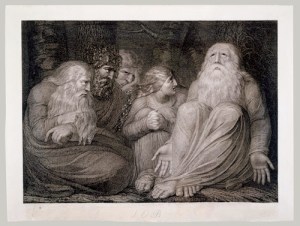
Image credit: Vignette by Loutherbourg for the Macklin Bible 12 of 134, via Wikimedia Commons

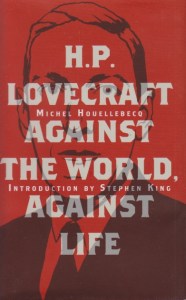
My very first academic publication was on this story about Dagon (I had intended to write my dissertation on that deity).  I had no idea of H. P. Lovecraft’s appropriation of Dagon at that point.  The interest was purely based on the fact that you couldn’t find much information on this curious god.  It was clear that he was well known among ancient cultures of West Asia.  He was attested at Ugarit, specifically as the father of Baal.  (Both would later be assumed to be demons.)  Further east, he was apparently a fairly major deity in Mesopotamian religions, although we are still awaiting a readable synthesis of that massive corpus of texts and the religions toward which it points.  In other words, Dagon is mysterious.  Lovecraft likely picked him up from the biblical story.

The tale in 1 Samuel is provocative.  After defeating Israel, the Philistines (who would eventually give Palestine its name) took the ark to the temple of Dagon as spoils.  The image of their god fell face-down before the ark overnight.  Disturbing as this was, the next morning after they’d replaced him, Dagon was again tumbled but also decapitated and with his hands broken off.  That meant his body was all that was left.  Somewhere along the line the name Dagon (close to the Hebrew word for “fish”) was interpreted as a maritime entity.  This seems unlikely, given what we know of his origins, but the idea stuck, leading to some compelling horror fiction.  Dagon does indeed become a kind of dragon in that realm.  My edition of Moby Dick has a typo that we today would blame on autocorrect, but in reality was likely the result of a copyeditor not knowing his or her Bible as well as Melville did.


White Rabbit

There are books that make you feel as if everything you know is uncertain.  D. W. Pasulka’s American Cosmic is such a book.  Its subtitle, UFOs, Religion, Technology, only pauses at the brink of the rabbit hole down which this study will take you.  Over the years I admit to having been jealous of colleagues who’ve been able to make an academic career stick.  The credentials of a university post open doors for you, even if you’re a professor of religion.  Pasulka has opened some doors here that I suspect many would prefer to have kept closed.  This is a compelling book, threading together many themes tied to religious studies.  There are things we might see, if only we’ll open our eyes.

Although immediately and automatically subjected to the ridicule response, UFOs are a fascinating subject.  This book isn’t about UFO religions—of which there are many—but rather it connects this phenomenon to the study of religion itself.  In Pasulka’s related field of Catholic studies, there are those anomalous accounts of saints who did the impossible.  Like UFOs, they are subjected to the ridicule response, making serious discussion of them difficult.  Might the two be related?  As you feel yourself spinning deeper and deeper down that hole, technology comes into the picture and complicates it even further.  Pasulka was a consultant on The Conjuring.  I’ve written about the movie myself, but what I hadn’t realized is how media connects with perceptions of reality.  Yes, it has a religious freight too.

Every once in a while I reflect that my decision—if it was a decision; sometimes I feel certain my field chose me—to study religion might not have been misplaced.  Perhaps all of this does tie together in some way.  American Cosmic is a mind-expanding book that assures me all those years and dollars learning about religion weren’t wasted after all.  I had a discussion recently with another doctoral holder who’s been relegated to the role of editor.  We both lamented that our training was in some sense being wasted on a job that hardly requires this level of training.  Still, if it weren’t for my day job I probably wouldn’t have known about this book, and that is perhaps a synchronicity as well.  Life is a puzzle with many thousands—millions—of pieces.  Some books are like finding a match, but others are like informing you that you’ve got the wrong box top in hand as you try to construct the puzzle with the pieces you have.  If you read this book be prepared to come close to finding the white rabbit.