Straining Credulity

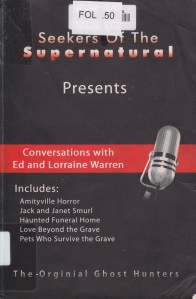
Ed and Lorraine Warren aren’t easy to figure out.  I realize that for someone who holds an actual doctorate from a bona fide, internationally recognized research university this might be something strange to say.  That’s because the standard academic response is simple dismissal.  Ed, at least, was known to have stretched the truth from time to time, but that’s not the same as never having reported weird things that actually happened.  This is why I’ve long advocated academics at least looking at the evidence—rare though it may be—before the simple hand-waving dismissal.  Part of the problem is that the Warrens’ books were written by credulous followers who don’t question things nearly enough.  Ghost Tracks, by Cheryl A. Wicks, may be the last of this strange genre of hortatory, biographical accounts “by” the Warrens written while Ed was still alive.

Skepticism is very important.  But so is listening to people.  What I find compelling is that similar weirdness—frequently dismissed out of hand—has been recorded throughout the length and breadth of history and across the entire globe.  The problem is that many of these things fall outside current scientific means of testing.  While perhaps not widely known, very reputable universities quietly explore these possibilities with actual science.  Part of the problem of the Warrens, as well as various other “ghost hunters” is that they use scientific equipment and think that makes them scientists.  It doesn’t.  Science requires deep engagement and many years of strenuous study.  And yes, skepticism has to be part of it.  The thing the Warrens have to offer is that they realize(d) that when science does engage the supernatural interesting things emerge.

Sensationalism, however, is the slave of capitalism.  Books sell better when they make extraordinary claims and declare they’re based on true events.  Trying to make a living investigating the paranormal led the Warrens, it seems, to tip the balance a little too far in the way of credulity.  Some of the stories in Ghost Tracks are more believable than others.  Some are just plain frustrating.  Ed’s interview with George Lutz (of Amityville fame), for example, is full of dropped balls.  A good question receives an intriguing answer only to have the subject immediately switched by the interviewer.  Even just a little skepticism and a follow-up question would have done scads to improve the believability of the story.  This is something a scientist would have known.  Someone as smart as Sir Arthur Conan Doyle, although his Sherlock Holmes generally found  ratiocination led to physical explanations, believed in the supernatural.  If only his Holmes might’ve been brought to this discussion we might possibly have learned something.


Book Birds

I just read an interesting article about how social media, and the internet in general, hijacks our time.  If you’re reading this, no doubt you’ll agree.  Those of us who write books on our “free time” know that the way books are both found and sold is on the web.  Publishers  encourage authors to build a social media platform, usually involving Twitter.  Academics are often hopeless at social media—they’re lousy at following back on Twitter, as I know from experience.  There is a kind of self-importance that comes with higher education which makes many of the professorate assume the work of others is less important than their own.  It’s more blessed to be tweeted than to tweet others.  After all, such-and-such university has hired you, and that proves the value of what you have to say.

Head-banging tweeter

Book publishers, however, will be looking at how many followers you have.  Not that all of them will buy your book, but at least a number of them will know about it.  Curiosity, indeed, drives some sales.  Just like many academics, I’m jealous of my time.  I’m also conscious of that of others.  These blog posts seldom reach over 500 words.  I tweet only a couple times a day, although I understand that’s not the way to get more followers.  You need to tweet like a bird, often with images or memes, but try explaining that to your boss when each tweet is time-stamped.  The academic is uniquely privileged to be given control of their time outside of class and committee meeting.  Tweet away.  That doesn’t mean they’ll follow you back.

The reason for tweeting is, of course, self-promotion.  45 may understand little, but he understands that.  You can commit treason and people will overlook it if you tweet persistently enough.  My own Twitter activity is like the eponymous birds after which the site is named; it is active before most people are awake.  And it, like this blog, is not designed to take up your time.  Since my tweeting during the work day is limited, my tweets are seldom picked up.  I try following other academics, but often they don’t follow back.  After all, what does a mere editor have to say that could possibly be of interest to the high minded?  Alas, I fear my advanced studies of the Bible have become bird-feed.  And my forthcoming book won’t get noticed.  I only wish more colleagues would consider the adage, tweet others as you would like to be tweeted.


I’ll Be Googled

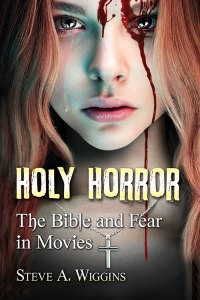
It’s a strange sensation to do an innocent web search only to find yourself cited.  (And no, I was not googling myself.  At least not this time.)  I was searching an obscure publisher and my own pre-publication book, Holy Horror, came up on Google books.  Now, the computer engineers I know tell me that Google remembers your searches, and this has a way of being unintentionally flattering; when I search for my book it pops up on the first page because I have searched for it before.  Still, it was a bit of a surprise to find myself where I had no idea I’d been cited.  All of this drew my mind back to my “post-graduate” days at Edinburgh University.  To how much the world has changed.

One of the first things you learn as a grad student is you can’t believe everything you read.  Granted, most of us learned that as children, but nevertheless, with academic publishing a new bar is raised.  That which is published by a university press is authoritative.  So we’re led to believe.  But even university presses can be fooled.  This prompts the fundamental question of who you can really believe.  Our current political climate has elevated that uncertainty to crisis levels, of course, and the vast majority of people aren’t equipped to deconstruct arguments shouted loudly.  Where you read something matters.   Even publishers, however, are fallible.  So what am I to make of being cited by the web?  And is my book already available before I have seen a copy?

Even credibility can be bought and sold.  Colleagues make a much better living than me with the same level of training, but with more influential connections.  It was just this reason that I decided to try to shift my writing to these who don’t need credentials to impress each other.  Some of the smartest people I ever knew were the janitors with whom I started my working life.  As a fellow post-grad in Edinburgh once said, professors are always ready to fail you for your lack of knowledge but most can’t tell you what an immersion heater is.  (That’s one of those Britishisms that no amount of graduate courses at Harvard will teach you.)  I suppose when it’s all said and done nobody else will ever search for the obscure publisher that brought my book to Google’s attention.  No matter, at least Google will always flatter me.


Long Nights

Before I really knew who Ed and Lorraine Warren were, I watched a made-for-television movie called, I think, A Haunting in Connecticut.  Unlike many television movies, it was actually quite scary.  Fast forward several years and I find myself writing a book that involves the Warrens.  I felt obligated to read all the books they “wrote”—all of them ghostwritten—and I’d been holding off on the one titled In a Dark Place, which is the story behind this television movie which was subsequently made into a theatrical movie.  The book is by Ray Garton and the parents of the family involved (Carmen Reed and Al Snedeker) are also credited.  The story is indeed a dreary one, not something I expected would bring any holiday cheer.  About that I was correct.

Why do I do it, then?  A concern with veracity drives me.  Throughout history enough people have told stories like this that either we have to lump our species together as a bunch of lying attention-grubbers, or there might be something to what they say.  The academic and official responses have long been to state that such things can’t happen, so they don’t.  When compared with how we come to know other things about life, we quickly realize that it involves experience.  In cases where experience is anomalous we tend to dismiss it.  We are great conformers.  What if there really was a demon in the Snedeker house?  Others have told similar tales.  If there’s any reality to it, shouldn’t we know?

As a former academic, I always thought that if we really wish to learn the truth, no subject should be off-limits.  That’s not the same thing as credulousness.  We don’t have to believe everything overwrought people say, but the subject should be worth consideration.  Of course, those who ghostwrote for the Warrens claim that they were given liberty to stretch the truth to make a better story.  They also tend to claim that the basic elements of the story are true.  When someone’s writing a book, there’s likely some hope of remuneration involved.  And sometimes the truth isn’t quite flashy enough for major presses with the bottom line in sight.  Still, the question of what really happened is left open.  The internet is a place where credulity reigns.  We can seek truth there only with great caution.  Maybe that is the lesson to apply to books like this as well.  Although In a Dark Place is scary, there was money at stake, and as the wise say, money changes everything.


Editing the Week

Every great once in a while I have to pull my head from the clouds and remind myself I’m an editor.  Actually, that happens just about every Monday morning.  Surprisingly, academics who have trouble getting published don’t bother to consult editors for advice.  Having sat on both sides of that particular desk, I certainly don’t mind sharing what I’ve learned since publishing isn’t as straightforward as it seems.  It has its own mythology and authors—I speak from experience here—feel extremely protective of their books.  Nevertheless, editors are under-utilized resources when it comes to figuring out how to approach a topic.  They often possess valuable advice.

It’s easy to think publishing exists to preserve and disseminate ideas and insights, tout court.  The idea that if you get past your dissertation committee you’ve done service that requires wide readership is natural enough.  Publishers, however, have other angles to consider.  Books incur costs, and not just paper, glue, and ink.  There are many people involved in bringing a book from idea to object, and each of them has to be paid to do their part.  (Many academics in the humanities may not understand the concept of “overhead,” but it’s an everyday reality in the publishing world.)  Not only that, but even the book itself is a matter of negotiation.  My latest book (and I suspect well over 90 percent of the authors with whom I work have no idea that I write books as well) had a chapter expunged and a new one written at the behest of my McFarland editor.

One of the pervasive myths in this business is that authors write whatever book they want and then find a publisher.  Sometimes that works.  Often when it does the authors are disappointed in the results.  There are presses that specialize in cranking out such works, slapping an enormous price tag on them, selling them to libraries, and then letting them go out of print.  I’ve been there.  I know.  Academics want prestige presses to take their books to a higher profile, but without having to change things according to the advice of an editor.  There are hidden lives of editors.  I can’t share much of that here, but I can expound its corollary—taking advantage of free editorial advice makes good sense.  I wouldn’t be bothering you with such mundane thoughts on this blog, but when I rolled out of bed today I learned it was Monday morning.


Taking It Seriously

It would be incorrect to say that I choose to watch and read horror.  What would be more correct would be “Horror compels me to read and watch it.”  Those of us mesmerized by the genre tend to be a reflective lot.  We ask ourselves the question others frequently ask us—why watch it?  And yet, horror films tend to do very well at the box office.  Some even become cultural icons.  Of the many books analyzing horror, it would be difficult to suggest one more influential than Noël Carroll’s The Philosophy of Horror: or Paradoxes of the Heart.  It has been in just about every bibliography I have read in the subject.  It’s easy to see why.  There are lots of gems in this book, and it does indeed address the paradox at the heart of it all.

Philosophy, due to the very fact that there are competing schools, doesn’t attempt to provide the answer.  It offers an answer, one that hopefully makes sense of the overall question.  What question?  The one with which I began: why do people get into horror?  Carroll comes down to a deceptively simple answer, but I would make bold to suggest it does so at the cost of having undercut the religious element.  As in nearly every book on horror, Carroll does address the connection with religion.  He finds it lacking, but the reason seems to be his definition of religion.  He follows, perhaps a little too closely, Rudolf Otto’s Idea of the Holy.  No doubt, it’s a classic.  Still, it doesn’t encompass the broad scope of religion and its genetic connection to horror.

At many points of The Philosophy of Horror I felt compelled to stand up and cheer.  I didn’t, of course, since much of the reading was done on the bus.  My ebullience was based on the fact that here was an intellectual who gets it, one who understands that horror is pervasive because it is meaningful.  Sure, it’s not to everyone’s taste.  It’s not, however, simply debased imagination, or arrested development gone to seed.  There is something deeply compelling about horror because it helps us to survive in a world that is, all paranoia aside, out to get us.  Yes, it engages our curiosity, as Carroll asserts.  It satisfies more than it disgusts.  It also defies explanation.  Perhaps that’s the deep connection with religion.  It can never be fully explained.  That doesn’t mean we shouldn’t try.  And this book is a valiant effort indeed.


Russian into Things

It’s the holiday season.  The people I overheard at the bus stop the other day were discussing shopping on the bus.  It can be a long trip from here, and evening traffic out of New York (ironically) is quite heavy this time of year.  Bored commuters, sitting on the bus with their phones, shop.  I couldn’t help but notice that I was the only one with the overhead light on during the fully dark ride home this week.  At one point the driver seemed to think it was a mistake on my part and snapped it off.  I carry a book light with me for just such eventualities, but I had that odd feeling one gets when everyone else got the memo but you didn’t.  In any case, I was reading a physical book, not shopping.

Then I read about a book I need for my research.  Problem is, I don’t have an institution, or a wealthy sponsor, so I often buy books used.  Back in my teaching days Amazon was new, and the idea of buying books online foreign and unfamiliar.  Now you can’t find a bookstore when you want one.  In any case, this particular book was on offer on eBay.  Now, I haven’t used eBay for quite a while.  I never think of it as a place to find reading material, but there it was.  Who would’ve thought research would ever lead in this direction?  The price was reasonable, so I signed in as a guest and placed my order.  With out of print books like this you run the risk of price-gouging or sudden unavailability—the independent researcher’s nightmare.

When the confirmation page came up, I couldn’t help but notice that the header was in Russian.  I wondered if Trump’s dream had really finally come true, or if the eBay on which I ordered an out-of-print book was really a trap.  How do you find out?  Who do you tell when your current government is completely at the beck and call of the Russian government?  I was in a brown study for a while.  The book, used, on Amazon was listed at over a thousand dollars, and this for a paperback published in 2009.  People will pay quite a lot for certain books, even if they don’t retain their resale value.  Ideas, it seems, are worth more than money.  But we no longer have a government to protect our interests.  Not even research, it seems, is safe any more.

If you squint, he could be St. Nick


Carrie On

Stephen King was still a fairly new writer when I first read “Lawnmower Man” for an English class in high school.  Carrie had been published by then, but I didn’t read any more Stephen King until after my academic job ended.  (There is, for those who are curious, a correlation between that traumatic change and my interest in horror.)  Like many, I suspect, I saw some of the movies before reading the King books behind them.  With a writer as prolific as King there’s always the issue of where to start, and I’m often subject to the selections independent bookstore owners make.  I seldom buy fiction through Amazon—I have to see the book for it to grab me (a kind of King thing to happen).

A used copy of Carrie recently came my way.  Now, I’ve seen the movie (both versions) many times; it is discussed at some length in Holy Horror.  I’d not read the novel until now.  Obviously there are differences between book and movie, but as this was Stephen King’s debut novel it struck me just how central religion was to the fearful scenario he paints.  That’s pretty clear in the film, I know, but it’s even more so in the novel.  Carrie is made into a monster by religion.  One could argue that she was born that way—telekinesis as a genetic marker is also a theme in the book, although absent from the films.  Still, it is Carrie’s rejection by others, largely because of her religion, that leads her to use her powers to destroy Chamberlain, Maine.

In a strange way, Carrie is a coming-of-age story from a girl’s perspective.  Strange because King is a man and some literary magazines won’t even accept stories written from the point-of-view of someone of the opposite gender.  Men can’t know what women go through.  Indeed, most of the male characters in the story are less than admirable, while some are downright wicked.  The real question is whether religion saves from wickedness or causes it.  There’s not much ambiguity here on the part of Mr. King.  Holy Horror, although it deals with movies and not novels,  makes the point that films based King don’t infrequently use religion as a source of horror.  Long-time readers of this blog know that I frequently make the point that this genre, more so than most, relies on religion as an engine to drive it.  And religion also has a role in repressing women.  Coincidence?  Ask Carrie.


Personal Gothic

As I continue work on Nightmares with the Bible, I am reminded just how influential Edgar Allan Poe has been in my life.  It’s not that I read Poe every day, but it’s more that his stories have stayed with me since childhood.  For an English term paper in high school, the last one I recall writing, I selected Poe as the subject.  Something of the sadness of his life made me feel as though we were kindred spirits, although I could never meet him, and never let him know that he would have had a friend if he had been born a maybe a century and a half later, and if possible, in Franklin, Pennsylvania.  If his fondness for drink came with him, he would likely have met my father in such circumstances.

Even today I feel a kind of fiercely protective interest in Poe, as if his poems and stories had been written exclusively for me.  Seeing a handwritten fine copy of “The Raven” on display in the Morgan Library and Museum brought tears to my eyes.  Like Poe, I strive to make a living as a writer, but unlike Poe, I cop out.  I’m too afraid of losing everything.  Jobs necessarily interfere with writing, and some jobs actively discourage it.  Nevertheless, I still feel the shudder when I think about the first time I read many of his stories.  This was, I suspect, what fed my young interest in horror.  It wasn’t the blood and gore of the slasher film, it was the quiet, sad, disturbing atmosphere of Poe.  It has been recaptured by few, in my experience maybe only by Shirley Jackson.

Those who write are connection seekers.  Writing is a way of testing to see if we alone see the world in our own way.  Will others respond?  Poe somehow, mainly after his own lifetime, touched a responsive chord with many.  His work is now very widely known.  His visage appears on everything from bandages to socks.  His stories and poems are endlessly retold, adapted, and parodied.  When I read Poe I hear someone speaking from a life of hard knocks.  His response was to strike back, through his writing.  The life story written by one of his relatives suggests that he wasn’t as gloomy and tortured as he is generally portrayed.  Perhaps not.  Nevertheless, those of us who find gothic literature somehow redemptive know, once we close the cover, who it is we should thank.


Where Was I?

Finally!  I have sent my proofs and the index for Holy Horror back to McFarland and I find myself in that state following intensive concentration on one thing.  Well, as much as work will allow such concentration.  Those who write books know how difficult it is to switch gears from fifth back to first while driving at highway speeds.  As soon as the email arrived stating that the proofs were ready, I dropped everything to get them read, outside work hours, of course.  With mind focused on a single goal—get the job done—I’ve managed to forget where I was before being interrupted by my own work.  I recall it had something to do with demons, though.

Perhaps the most taxing part of trying to write while employed full time is keeping track of where you are.  The luxury of spending hours outside of class doing the index, for example, is compressed into the little free time I have between writing for this blog and work—between a blog and a hard place, as it were.  Indexing, which can be quite pricey when a professional does it, is  much easier with a searchable PDF than it ever was going through a printout page-by-page to find obscure references you forgot you ever wrote.  It reminded me of the time I had Owen Chadwick over for dinner at Nashotah House.  I recalled someone asking him about something he’d once written and he looked puzzled for a moment and then replied, “One writes so many things.”  Indeed.  Millions and million of words in electrons, if not on paper, mark the status of a life.  And indexing will prove it to you somehow.

This morning I awoke with the proofs and index safely emailed back to the publisher.  What was I doing before that?  I know that work is looming just a short hour or two ahead, and I need to accomplish part of my life’s work before going to work.  I can’t afford to waste this time.  Nightmares with the Bible is coming along nicely.  A very drafty draft of the book exists.  I have some more research to do, however, and the annotated bibliography—ah, that’s where I left off!—is still a shambles.  Not only that, but I’ve got a stack of reading on the topic next to my chair.  Time to put on a pot of coffee and warm up those typing fingers.  I’ve got real work to do.


Time Taking

Publishing is a slow business.  In a world of instant information, such plodding may appear to be old-fashioned.  Outdated.  Each step of the process takes time and anyone can sit down and type thoughts directly into the internet, so why bother with traditional publishing?  These thoughts come to me as I read through the proofs of Holy Horror, and work on the index.  This is time-consuming, and time is hard to come by.  That, I suppose, is a major reason for doing things this way.  Ironically, people don’t have a problem seeing that handmade items—which tend to take time and be less efficient than machine-made articles—are more valuable.  They represent care and quality, things that a machine can’t assess well.  This is the world beyond math.  It is the human world.

Those of us born before computers took over sometimes have difficulty adjusting.  The world of the instant goes well with inflation—the myth that constant growth in a limited world is possible.  The fact is that value is a human judgment and we value things that take time.  It’s true that most non-fiction books are instantly dated these days.  Often it’s because information flies more quickly than pre-press operations.  It takes a couple years to write a book and a publisher takes a year or two getting it into print.  Back when the process was invented news traveled slowly and, I venture to say as a historian of sorts, didn’t often carry the dramatic shifts we witness today.  A book could take a long time to appear and still be fresh and new when it did.  For the internet generation it may be hard to see that this is an issue of quality.

Most of us are content with the satisfactory.  We’re willing to sacrifice quality for convenience.  We do it all the time.  Then, in the recording industry, vinyl starts to come back.  Corporate bigwigs—for whom fast and cheap is best—express surprise.  Why would anyone buy a record?  The question can only be answered by those who’ve listened to one.  There is a difference, a difference that we’ve mostly been willing to jettison for the convenience of the instant download.  Our lives are being cluttered with disposable-quality material.  Even now I’m writing this daily update for my blog rather than continuing the drudgery of working on an index.  We all have expectations of alacrity, I guess.  The slower world of publishing is more my speed.


Proof in the Pudding

Writers anticipate and dread proofs.  After several months of delay, I have received the proofs for Holy Horror—it should be out in the next couple of months for both of you who’ve asked about it.  Anticipation is pretty straightforward, but why the dread?  Those of us who write books have to deal with the fact that publishing is, by nature, a slow business.  What I’m proofreading now is material that I wrote a couple of years ago; the final manuscript was submitted back in January.  The internet has accelerated the pace of everything, and now that I have a daily record of my public thoughts on this blog, I can see how my own outlook has changed in that time.  Reading proofs reminds you of whence you came, not where you are.

I suspect that has something to do with the internet and instant access to information.  I also suspect that’s why many of us trust books more than the “open web.”  The oak that has taken centuries to grow is a hardy tree.  The handcrafted piece of furniture lasts longer than the mass produced.  Books, hopefully, stand the test of time.  Writing is an exercise in building eternity.  These thoughts, the author hopes, will be around for some time to come.  As long as libraries endure.   Looking at the proofs, there’s pressure to get things right.  Was I correct in what I wrote down so long ago?  Since then I’ve read dozens of books more.  I’ve even written the draft of another book myself.  I face the proofs and shudder.

Part of my angst, I suppose, is that Holy Horror will likely sell better than my previous two books.  It may actually get read.  No, it won’t be any kind of best-seller, but perhaps a few hundred people will read it.  That’s a lot of pressure for those of us who’ve primarily written for other academics.  Perhaps this fear is the reason I’ve moved to writing about horror films.  Those of us blocked from the academy have to build our own credibility, one book at a time.  Reading the proofs, although already dated, I find myself liking this book.  It was fun to write, and it has a good message, I think.  Even prestige presses know that books about horror films are of popular interest.  As I read through where my mind was in days stretching back before the nightmare of Trump, I see that I had only just started on this path.  Before me are the proofs of that.


Dark Houses

A book can be whatever an author wants it to be.  When it goes through the publication process, however, it becomes a group effort.  Granted, the other parties are motivated by money rather than by the message of the book, but they are professionals.  Editors can point out what’s irrelevant, or beside the point.  What you’ve already said, if you happen to repeat yourself.  What you’ve already said, if you happen to repeat yourself.  They change things, often, authors admit upon reflection, for the better.  The self-published book shows itself as just what an author wants it to be.  House of Darkness, House of Light: The True Story, by Andrea Perron is a case in point.  In three volumes of about 500 pages each, it is (they are) the insider story of the family portrayed in The Conjuring.  After having finished volume one, it’s clear the book needed an editor.

Don’t get me wrong; there’s some good stuff here.  The first couple hundred pages are fascinating, although there’s a slow build-up into moving into the Harrisville house.  One thing academics have always been too quick to do is dismiss the experience of non-trained observers.  We have to be skeptical, of course, to spot those who are intentionally deceitful, but a person doesn’t write 1,500 pages without cause.  People do experience strange things, and this book is a family’s recollection of events that inspired a horror movie.  There were a few points in the course of reading through that I found myself pondering new perspectives on the realm of ghosts—shifts of point of view.  There were many points, though, that I found myself muttering that an editor would’ve helped.

As a fully trained academic in the field of studies that handles issues of the soul, I am hungry for primary sources.  Sociologists and psychologists get their information from observers—ordinary people.  It’s only when the claims become extraordinary that such observations are called into doubt.  We have all heard of haunted houses.  We all know that sometimes strange things happen in them.  We can explain such happenings in different ways.  The skeptical explain them away as misperceptions, normal occurrences masquerading as paranormal.  The credulous accept everything at face value.  Truth, it seems to me, is a middle of the road phenomenon.  I’ve always sat on the fence regarding ghosts.  Too many people over too many centuries have reported them with great detail—witnesses include some very reputable and rational individuals—to dismiss them in toto.  After volume one, it seems that something worth exploring took place in the eponymous house.  For full impact, however, who you gonna call?  This time you’d better make it an editor.


Flight Home

Although I was not looking forward to the long, late flight home scheduled for tonight, I can’t help but think there was something almost prophetic in the weather that prevented my trip.  I awoke in Newark only to confirm with many other stranded passengers that this was not a lot of snow.  I’ve had to commute into New York when much higher amounts were in the forecast.  Many of us, meteorologists included, were asking why this storm was so devastating to travel.  Part of the answer comes down to belief.  Nobody believed we could have this kind of nor’easter in November.  Even now nobody seems to want to discuss the elephant in the igloo.  Global warming, we’ve known for decades, will make erratic weather patterns.  We need to think about weather differently than we have before.

One of the motivations behind writing Weathering the Psalms was that for all of our technology, we still don’t understand, or appreciate, the weather.  Driven by dollars in great collectives, businesses are reluctant to allow employees a “day off,” even when many of them have work laptops at home.  We believe in money, supposing the weather to be only a minor nuisance.  Having bought a house, though, has revealed something to me.  Home and hearth are all about staying safe from the weather.  (Well, and in keeping out wild animals too, but we’ll just drive them extinct.)  A house is a place to keep the water and wind out.  We want to keep dry and to prevent the wind from chasing away our body heat.  Homes are our places to keep the weather outside because we instinctively fear it.  Reverence it.  Weather may well be the origins of at least some religious thought.

Ancient peoples and modern religious fundamentalists believe(d) in gods literally in the sky.  They looked up when wanting to understand matters beyond their control.  Yes, predators attacked, but you could fight back.  Against the sky there’s no recourse.   Weather can kill, and can do so in many ways.  Building shelter helps, but we’ve all seen enough hurricane footage to know that even our structures are subject to the wind.  Computer models were suggesting that this storm might have been pulling back for a real roundhouse punch but our conservative views on the weather (such things don’t happen in November, right, Edmund Fitzgerald?) prevail.  The official stance of our current government is this is all a myth anyway.  It’s only when myths interfere with money that we start to pay attention.


Saturdays Past

Feeling somewhat between a state of self-pity and that of a salmon who couldn’t find his way upstream, I turned to horror.  The weekend before Thanksgiving has traditionally been AAR/SBL weekend for me.  I missed the Annual Meeting a few times due to unemployment, but for the most part I have been there every year since 1991.  As the representative of a publisher it is an endurance-testing event.  I had half-hour meetings scheduled all day on Saturday, Sunday, and today, and even a couple for the much neglected Tuesday morning.  Then I found myself home, awaiting a suitcase delivery.  United Airlines couldn’t say where the bag would be, and it only arrived Saturday night.  My wife had to work all that day, and so I turned to my boyhood.  Saturday afternoon was monster movie time.

For my current book project I’m discussing the components of The Conjuring diegesis.  I’m also trying to do some traditional research on the films.  Airport-lagged (I hadn’t been on a jet, but at my age being awake so late and sleeping so poorly has its own consequences), I pulled out Annabelle and Annabelle: Creation.  I wondered what it would be like to see them in the order of their plots rather than their actual chronological order.  Would the story hold together?  Would I find anything new?  The films discussed in my books are those I’ve watched many times—what I like to call “guilty pleasure research.”  Or just a boyhood Saturday afternoon revisited.  I couldn’t leave the house since I was told my bag couldn’t just be dropped on the porch.

From the beginning the story of Annabelle, the “possessed doll,” takes many twists and turns.  The demon is invited into the spooky toy by distraught parents after the tragic death of their child.  It then takes over an orphan who is adopted by a couple that she murders, as their natural daughter, in the earlier installment.  The doll is possessed in that telling because the girl Annabelle had joined a Satanic cult, like Charles Manson’s, and her blood dripped into the doll as she lay dying.  After claiming another female victim, the doll is sent to a couple of nurses as a present, where she appears at the opening of The Conjuring.  The story shifts with each sequential telling, leaving the binge viewer dissatisfied.  I haven’t had time for a double-feature since moving this summer.  Thick snow still covered the ground and the sky held that solemn haze of late November.  My colleagues were discussing erudite topics in Denver, and I was home using horror as therapy.  If you’re curious for further results, the book will be out in a couple of years.  Be sure to look for it at AAR/SBL.