Residual Thoughts

I feel compelled to say that this book was not among the overwritten tomes I mentioned in yesterday’s post.  Indeed, although the title reflects the outlook of the author, you need to get to the subtitle to find out what the book’s about.  Although I work at an academic press, I disagree with academic book pricing models.  Graham Twelftree’s previous book, Jesus the Exorcist, had to be picked up in a paperback reprint edition before it could be affordable to the likes of mere mortals.  After reading it I learned that Twelftree had written a more popular book on the topic—Christ Triumphant: Exorcism Then and Now.  Putting much of the material from the previous book in less technical terms, this version goes on to ask questions that can’t be put into a standard dissertation, such as “should exorcisms still be done?”

The academic is necessarily a skeptic.  One of the biggest problems our society faces is the open credulity of those who haven’t been taught to think critically.  Twelftree is a rare academic who keeps an open mind while approaching the material with a healthy skepticism.  Often it’s too easy to suggest that disregarding that which doesn’t fit a theory is the only way forward for an academic.  Sweeping off the table that which we don’t like.  The word Twelftree uses is “residue”—that which remains after the majority of possession cases have been explained medically.  The usual response is to disregard this small fraction of anomalous material and claim “case closed.”  In this book Twelftree dares to go further.

The supernatural has become an embarrassment for many, even in believing communities.  An interventionist god, or demons, would set off chain reactions that would distort the known laws of physics, so such things simply can’t exist.  Things which we can’t explain only exist because we haven’t got all the variables yet.  I recall how cold that made me feel when I first encountered the idea in physics class.  “Scientific determinism” it is sometimes called.  This little book rehearses the New Testament material covered in Twelftree’s dissertation, but goes on to raise the implications from that study and apply them to modern times.  It’s a brave thing to do in an academic world where brushes and brooms are very common.  Where residue is wiped up and tossed away without a second thought.  Those who stop to think through the implications are rare, which makes them so much the more interesting reading.  And not being from an academic press, such books are often  affordable.


Universal Books

I’m reading an overwritten book right now.  In fact, I just finished an overwritten book.  Such works, I suppose, are the results of being taught how to write.  It’s not that people can’t be taught to compose, but for various reasons some authors, either through the privilege of having high-powered publishers, or their own conviction that they don’t require correction, overwrite.  I suppose overwriting is, like beauty, in the eye of the beholder.  Several years back I recall a critic stating Lemony Snicket’s A Series of Unfortunate Events was overwritten.  I thought it was fun.  Yes, deliberately exaggerated, but nevertheless well-composed.  Those books were enjoyable to read because, I think, they refused to take themselves seriously.  Writers can be temperamental people.

As an editor something I need to repeat—for academics are consummate overwriters—is to keep your intended readership in mind.  No book is written for everyone.  In fact, many people can’t make it through books like the Bible because they’re hard to read.  Religious books often are.  There’s no such thing as a universal book, but some believers in some religions make the claim for their sacred texts.  Like many curious people I find it rewarding to read the scriptures of other traditions.  It’s not always easy—in fact, it seldom is.  It’s frequently disorienting and I look for an edition with an introduction.  The reason is when it comes to books, even sacred ones, it’s not one size fits all.  Many religious conflicts in the world could be resolved if we’d just realize this.

Someone who reads a lot is bound to be disappointed from time to time.  We turn to books either looking for a certain mood or specific pieces of information.  Authors often take things in their own directions.  Our minds don’t all work in the same way.  That’s why, in my opinion, reading is so important.  I prefer “long form” writing—I always have.  Sometimes an idea can be well expressed in an article, but taking the time to develop ideas requires a nuance not all publishers appreciate.  (Yes, I realize that by expressing this sentiment in a brief essay like this I leave myself open to deconstruction—one of the overwritten books I just read was written by a deconstructionist.)  Still, I have trouble abandoning books that take ideas in a way I wouldn’t go.  Usually when I start reading, I’m committed to finish.  Some would say that’s foolish.  I take it as a learning opportunity.


Giving a Hand

A friend sent me a news story that really spoke to me.  A bookstore in England, forced to move because of rent, asked for volunteers to help move their stock to a new storefront.  The response?  They had to start turning people away after 250.  A human chain was formed to pass books down by hand to their new home.  Book people, it seems to me, are like that.  I spent a recent weekend looking at downtown Easton—one of the triplet cities that make up “the Valley” (Allentown and Bethlehem being the other two).  Surprisingly, I found two used book stores within blocks of each other.  The proprietors (especially of the first) were friendly and helpful.  They were book people.

I mentioned to said first proprietor that two of the books I was buying were to replace copies ruined during our move.  The look of alarm and sympathy on her face was genuine.  Book people know that look.  They can feel each other’s pain.  They will freely give of their time to hold knowledge in their hands, if only briefly, to pass it along to others.  Now, like most bookish people, I’m aware that I’m considered odd by the average guy who enjoys sports, mechanical stuff, and money.  I’m content with a book, either reading or writing, and the occasional foray out among the more active and boisterous.  I like to think that if I lived in Southampton I’d have given up a vacation day to help out.  Saving books is saving civilization.

Book people know there’s more to life than themselves.  Ironically, such readers are often quiet and sometimes thought to be stuck up.  If you go to help move books by hand, I suspect that gives the lie to feeling above other people.  Reading is thought of as a passive activity, but it makes the mind more active.  There’s a reason our species have large brains.  It’s not that all books are for everyone—I’ve had plenty of disappointments in my reading life—but the unread book is full of potential energy.  And often that already read rewards us when we turn back to it.  Books, you see, are the ultimate givers.  Those who sell them may make a profit, but the return on investment tends to be quite high for the buyer.  If you have to move and you hire a moving company chances are they’ll complain about your books.  You’re better off asking book people for an unstinting hand.


Last Call

The alarm that wakes you in the middle of the night.  There’s something primal, something visceral about that.  We humans, at least since our ancestors climbed down from the trees, have felt vulnerable at night.  If our sleep is constantly interrupted we don’t think clearly.  We build secure houses. Lock our windows and doors at night.  Say our prayers before we go to sleep.  Last night I discovered that the homeowner has even greater concerns than the humble renter.  While 11:30 may not be the middle of the night for some, for early risers it is.  And there’s nothing to strike terror into the heart of a homeowner like a tornado warning.  Especially here—our realtor laconically told us that they never have tornadoes in eastern Pennsylvania.  The weather warning system disagreed with him last night.

Getting up as early as I do, first light is hours away.  Hours before I might check for damage with the light of old Sol.  My wife had to work, no less, at a venue some distance away and we both had to rise early and wonder what the damage might be.  We knew, of course, that the pointless ritual of changing our clocks would occur tonight, but that does alleviate concerns about whether the roof was still on the house or not.  You can’t take anything for granted, not even the continuity of time.  Thus my thoughts returned to Weathering the Psalms.

Severe weather led to that book.  If I were to rewrite it now it would come out quite differently, of course.  No one would write the same book the same way after a decade and a half.  Still, there may have been some things I got right in it.  The weather is a cause of awe and fear.  The sound of the wind roaring last night was impressively terrifying, even in a technological world.  Especially in a technological world that relies on an unwavering power grid and constant connectivity.  In the midst of a wakeful night, alone with thoughts too haunting for the day, the weather has a power with which we’re foolish to trifle.  Global warming is a myth if it gets in the way of profits.  Then darkness falls and we realize just how very small we are.  In the light of dawn, the damage was not too bad.  A frightened car meeping its mewling alert.  And a strange justification that perhaps my book contained some truth after all.


Organic Experience

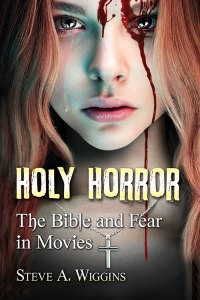
Holy Horror, it looks like, has been delayed until January.  That doesn’t mean that I have to wait to find some relief in the escape to film.  Over the weekend my wife surprised me by being willing to watch The Exorcist with me.  As we settled in to see it, a few things occurred to me—watching horror with someone else isn’t nearly as frightening as watching it alone.  I know this from experience, and it seems that it has something to do with the willing suspension of disbelief.  It’s harder to do when someone is with you.  Left to one’s own devices, it’s possible to believe what you’re watching, even if intellectually you know that it is merely a movie.  That tells us something about the way brains are wired.

I object to the word “wired,” really.  As organic beings, we are not computers.  What invented consciousness would watch a scary movie for pleasure?  What is the rationale for it?  It was a gray and rainy Saturday evening in late October.  In human experience that may be all that it takes.  Seeing orange and black in the stores sets a mood that computers, I strongly suspect, simply can’t feel.  They lack the human experience of childhood trick-or-treating, or throwing on another layer as the days grow chillier, or watching the leaves turn and slowly drift down from weary trees.  No, these aren’t wired experiences—they’re very organic ones, and often those that mean something even to adults as the seasons wend their way through the calendar.

The author waiting for proofs is rather like an expectant parent.  Well, that analogy’s not quite right either, but you get the point.  I know the book is coming.  It was accepted and submitted long ago.  The publication process, however, is more complex than most people might assume.  In fact, in the publishing industry it is often the main role of the editorial assistant to assure that manuscripts make it through all of the necessary hoops to move from finished manuscript to printed book.  Johannes Gutenberg likely had a simpler process worked out, although, in the early days of book-buying you could purchase the pages and have them bound by your choice of bindery.  Now cover and content are glued or stitched together in what one hopes is a seamless way.  Still, that stitching can’t help but to recall Frankenstein’s monster.  It is, however, another gray, rainy day in October.  It’s just a shame my computer can’t share the experience with me.


Masses and Markets

The other day I had to go somewhere that I knew would involve a wait.  I’ve always thought of waiting as a theological problem—time is very limited and I don’t have it to squander while dallying about for my turn.  That’s why I take a book.  The problem is that many books I read, I feel, require explanation.  That’s because many of them are the 6-by-9 format preferred by publishers these days.  The idea behind the paperback that fit into your pocket—the “mass market paperback”—was that it was essentially disposable.  Cheap, easily printed in large quantities, it was handy for taking along while on a bus, plane, or submarine.  It didn’t take up too much space.  It was easy to keep private.  I miss the mass market paperback.

The majority of my books—fiction as well as non—are larger than the mass market.  That’s the price you pay for reading books that don’t sell in those quantities.  If your interests aren’t the lowest common denominator, you have to buy a copy that won’t easily slip into a pocket.  And everybody can see what you’re reading.  I work in publishing, so I get it.  The idea is that the book cover is a form of advertisement.  The thing is, reading is generally a private activity.  I post on this blog most of the books I read (but not all!).  I want to support those who write and actually manage to find publishers to advocate their work.  But I’d really like to be able to put the book into my pocket between appointments.  

The waiting room is a kind of torture chamber of daytime television and insipid magazines.  Most of the people in here are looking at their phones anyway.  I have a book with me, and I’m vulnerable with everyone freely able to read my preferences.  I want to explain—“I’m writing a book about demons, you see.  It’s not that I believe all this stuff…” and so on.  It would be so much easier if the book were small enough to be concealed by my hands.  If others want to know what I’ve been reading, they can consult this blog.  Well, the stats show they haven’t been doing that.  They might, however, if my own books had been published in mass market format.  Available in the wire-rack at the drug store or vape-shop.  Then the readers could easily hide their interest by putting it into their pocket.  None would be the wiser.


Changing Times

Demons are an embarrassment.  The typical scholar of the historical Jesus can’t avoid the fact that one of Jesus’ main activities is exorcism.  You can go the whole way through seminary not hearing about that aspect even as you become very well acquainted with the two-source hypothesis.  That’s why I found Graham H. Twelftree’s Jesus the Exorcist: A Contribution to the Study of the Historical Jesus so refreshing.  Here is someone willing to address the topic generally swept off the table.  If the gospels are to be believed, then Jesus was an exorcist.  And if he was an exorcist, that must imply a thing or two about demons, no matter how embarrassing.  There’s a lot to this question, of course, and things are never as simple as they seem.

Many of those who look for the Jesus of history suggest that the Galilean sage simply accepted the framework of his era in which various diseases such as epilepsy were considered demonic.  As he healed such people—also somewhat of an embarrassment since it implies the supernatural—he understood their maladies in the same way his contemporaries did.  That tidy package, however, doesn’t sit well with narratives that assume a world full of demons.  Things have changed since the first century, of course.  After the Middle Ages demons fell out of favor.  And yet, the gospels remain pretty much unchanged, trying to fit into a new worldview.  This is the uncomfortable place in which those who seek the historical Jesus find themselves.

Twelftree approaches and analyses the text at its word.  The casting out of demons was an eschatological (end-times) act.  It was the beginning of the end for the evil spirits that torment this world.  Of course, two thousand years have come and gone and, according to some, demons are still with us.  The number of requested exorcisms has been on the rise.  The end times have lasted a lot longer than anyone anticipated.  It’s beginning to look like politicians can do what God seems reluctant to affect.  Bringing about the end of the world is no matter of clearing the house of demons, but rather letting evil take the helm.  If that’s a mixed metaphor, let’s just say demons are masters of confusion.  Since medical science has given us a great deal of comfort and relief from suffering, we’re glad to let demons go as the explanation of diseases.  But that doesn’t make things any easier for those looking at the first century when, as Twelfree demonstrates, Jesus was an exorcist.


Read, Mark and

One of the persistent questions of Christianity, given that there are four Gospels, is how to account for the differences between them.  The issue isn’t unique to Jesus-followers, however, as the composition history of the “books of Moses” shows.  Discrepancies in Genesis got the whole ball rolling, after all.  In fact, once I learned about historical criticism I decided that I’d better stick to the Hebrew Bible—there are some things you just don’t want to know about your own faith.  The way doctoral programs are set up these days, you can’t specialize in both testaments anyway, although that’s becoming a lot more common among scholars in these latter days.  In any case, I was reading about the Gospel of Mark lately and the question kept coming up of whether certain phrases went back to Jesus, were coined by Mark, or had their origin in the early church.

The picture that emerges from this kind of jigsaw gospel is of Mark sitting down, pulling his sources together like a graduate student in the days before computers.  Only Mark won’t get a doctorate when he’s done.  More recent scholarship asks the question of what if Mark wasn’t really a completed book after all—we read the gospels through lenses that were ground in the eighteenth century, at the earliest.  Nobody thought to question that Moses or Mark would sit down to write a book just like anyone did then.  (People writing books on their phones in electronic form only, as they do these days, will play havoc with future historical critics and their theories.)  Maybe these weren’t meant to be finished books.  Check out Gospels before the Book by Matthew Larsen and you’ll see what I mean.

The Bible, in other words, is a very complex book.  We know little of its authors beyond Paul of Tarsus.  We don’t even know that they were setting out to write Holy Writ.  Bible is a matter of interpretation.  As I thought about Mark—whoever he was—shuffling his papers about, mulling over what it would mean to become the first evangelist, I thought how like us we’ve made not only God, but also the writers of sacred texts.  True, they weren’t worried about tenure committees, or bad reviews, or being accepted by prestige presses.  It seems, however, that they were also not thinking of what readers down the millennia would do with their words.  When it’s all done we still don’t know who said what, but at least we have persistent questions that can’t be answered.  And job security ensures that Bible reading will continue as long as there are discrepancies to debate.


October’s Monsters

Blood and vampires go together like October and, well, vampires.  Although I don’t understand manga, I do know it’s extremely popular, and a friend has been lending me the volumes of Hellsing by Kouta Hirano.  In the past couple of weeks I’ve read numbers 4 and 5.  Hellsing sets up a world where the Catholic church destroys vampires, as does the English, Protestant organization Hellsing Organization.  The latter, however, has as its secret weapon the vampire Alucard who, in nearly every number, gets dismembered in some bloody way before pulling himself back together to overcome the enemy.  In the latest issues I’ve read the Catholics and Protestants have to cooperate against the threat of neo-Nazis (and this was before Trump was elected), who also employ werewolves.  (It’s October, remember.)

Having been pondering the vampires of Maine, I decided to read the next in my own generation’s vampire hero, Barnabas Collins.  I’ve been reading the Dark Shadows series by Marilyn Ross to try to find a lost piece of my childhood.  There was a scene in one of these poorly written Gothic novels that made a strong impression on me that I finally re-encountered in Barnabas, Quentin and the Nightmare Assassin.  Interestingly, in this installment Barnabas, the gentleman vampire, is cured of his curse while traveling back in time with Carolyn Stoddard.  The story doesn’t explain how some of the characters from the twentieth century appear a hundred years earlier, but it does bring an early encounter of the vampire against the werewolf—an idea monster fans know from its many iterations such as Hellsing or, famously, Underworld.

You might think vampires and werewolves would get along.  In both the Dark Shadows and Hellsing universes the personalities of both come through clearly.  Both monsters have deep origins in folklore and people have believed in them since ancient times.  Just because they’re not human, however, is no reason to suppose they’ll get along with each other.  As soon as Universal discovered that monsters translated well to film the idea began to develop that monster versus monster would be a great spectacle.  We had vampires and werewolves clashing on cheap budgets with fog machines.  A new orthodoxy was created that the undead just don’t get along.  It’s a idea that continued into the relatively bloodless Dark Shadows series, and on into the violent and gleefully bespattered Hellsing.  And since it’s October nobody should be surprised.


Writers Reading

A lot of misconceptions about books abound out there.  One of those misconceptions that has become clear to me is that authors write books to teach.  (Or to make money.  Ha!)  That may well be part of the motivation, but for me, the larger part has been writing books to learn.  You see, the frontiers of human knowledge cannot be reached without stretching.  Writing a book is a way of learning.  Long gone are the days when a person could read every known published work.  Indeed, there aren’t enough hours on the clock for anyone even to read all published books on the Bible, let alone the far bigger topics these days.  And so writing a book that deals with a biblical topic—let’s say demons—is the ultimate learning exercise.  It’s a very humbling one.

I recently read an article where book pirates (yes, there is such a thing!  I should explain: there are those who believe authors are ripping off society by getting royalties for their books.  These pirates, like those of galleys of yore, take ebooks and make them available for free on the internet.) call authors “elitists” for wanting to earn something from their labors.  These folks, I’d humbly suggest, have never written a book.  Most books (and I’m mainly familiar with non-fiction publishing here, but the same applies to the other kind) take years to write.  Authors read incessantly, and if they have day jobs (which many do) it is their “free time” that goes into reading and writing.  They do it for many reasons, but in my case, I do it to learn.

The doctoral dissertation is accomplished by reading as much as possible beforehand and writing up the results quick, before someone else takes your thesis.  It is the practice I also used for my second book as well, Weathering the Psalms.  The third book, Holy Horror, was a little bit different.  Yes, I read beforehand, but much of the research went on after the body of the book had largely taken form.  I had to test my assumptions, which are on ground most academics, needing and fearing tenure, tremble to tread.  I read books academic and popular, and having been classically trained, often went back and read the books that led to the first books I read.  It is a never-ending journey.  I could easily spend a lifetime writing because I’d be learning.  But like other misconceptions, those who write books don’t lead lives of luxury.  They work for a living, but they live for the chance to learn.  And that’s worth more than royalties.  Besides, the nine-to-five demands constant attention.


Classic Education

A few months ago now, just after moving, our garage flooded.  Our books, unpacked, were stored there at the time, resulting in many casualties.  As I sorted through what was destroyed—a process still ongoing—I decided that if I replaced books I would re-read them as I did so.  Emily Brontë’s Wuthering Heights was the first replaced, and therefore re-read, volume.  For those who never had the opportunity to attend seminary, I would note that it is the ideal time for reading.  One of my professors, Harrell Beck, although he taught Old Testament, encouraged wide reading.  The Bible, he suggested, didn’t stop at the last verse of Revelation.  It was in seminary that I discovered the Brontë sisters and their remarkable literary achievements.

Wuthering Heights is fine autumnal literature and Heathcliff one of the greatest protagonist villains of literature.  An interloper among the privileged classes, Heathcliff finds delight in making others share in his suffering.  One of the more memorable characters is Joseph, the Bible-toting, Bible-quoting caretaker who sees nothing good in the younger generation.  Even Emily Brontë, the daughter of a clergyman herself, spies the hypocrisy so clear in the lives of literalists.  Joseph enjoys scolding as much as reading Scripture, and even the other servants find him tiresome.  Born in the year Frankenstein was published, Emily had Gothic sensibilities.  With the protracted death scenes and atmosphere  of loss and mourning, this classic can be a restorative in an era such as ours.  In more than one way.

Since Wuthering Heights is a classic, there’s no need to recount the story of lost love and damaged human beings.  What is important is to realize that we continue to support a social structure that repeats the sins of nineteenth-century England.  And like that setting, we do it firmly believing we are a “Christian” nation.  Joseph would surely nod in agreement.  Stripping the safety nets from the vulnerable so that the privileged classes might enjoy more of their ill-gotten gain, we live the hypocrisy of the self-righteous.  It the era of the Brontë sisters, women were not encouraged to write.  They, like the servants of the wealthy, were believed to exist for the comfort and pleasure of the master.  Not paying attention to the classics, we’ve come back to that era, claiming that wealthy white men are the true victims in all of this.  The denizens of the swamp will find their place in history next to Josef Stalin, Mao Zedong, and Benito Mussolini.  Wuthering Heights, like 1984, will, however, remain a classic that sees through hypocrisy.


Graymalkin October

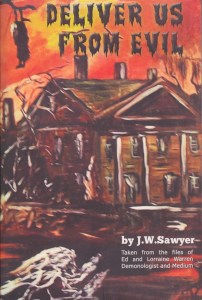
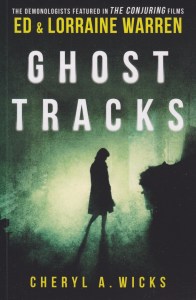
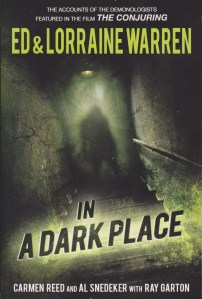
It’s not like you need an excuse to read ghost stories in October.  At least that’s what I hoped other passengers on the bus would think.  Yesterday on my way into and out of New York City I read the next in the series of Ed and Lorraine Warren books, this one titled Graveyard, and written by Robert David Chase.  Now, you need to realize that I’d heard of the Warrens long before The Conjuring came out.  Those of us curious about ghosts to the point of reading at least semi-serious books on them know the brand.  What I don’t know is how to find out much about what “the Warrens” actually wrote.  These books are being (have been) republished by Graymalkin Media, after having originally been published by mainstream publishers.  This one was originally released by St. Martin’s Press.  Those of us in publishing believe that stands for something.

Loosely tied together around graveyard stories, featuring for half the book Union Cemetery near the Warrens’ Monroe, Connecticut home, the book ranges far and wide concerning ghosts.  Here we meet a man or two who turned into demons—I wonder how that works?—and a good demon punishing an evil person.  Some of these stories seem straight out of the high school scare-your-date playbook, while others are actually pretty scary.  A mix of accounts by either Ed or Lorraine, and stories embellished, it seems, by Chase, this book is like a trick-or-treater’s Halloween bag—you never know what you’re going to get.  It’s a little too bad because I’ve read some sober, and serious treatments of ghosts over the past several autumns, and with the Warrens’ vast experience, it’s a unfortunate that the accounts had been so dolled up.

It’s a shame that scholars of religion can’t be more forthright about their interest in the spiritual world.  I know many that I won’t call out here that are secretly—some openly—exploring these kinds of questions.  That won’t get you tenure anywhere (something the Ghostbusters reboot got right).  Even in the world of science there are forbidden topics.  That’s because, as this little book points out, spirits creak open the doors to all kinds of uncertainties.  I suspect that’s a similar reason that scholars of religion are treated with a certain mistrust by other guilds within the academy.  We need to play it straight and prove that we aren’t given to flights of fancy that might suggest something as unsophisticated as belief.  Still, as Graveyard shows, ghost stories are extremely common.  In fact, no October would be complete without them.  So I hope the other passengers think.


Look It Up

So my current book project involves addressing The Conjuring universe.  A few weeks back I posted on The Nun, the newest member of that diegesis and one with no claim to be based on real events.  Nevertheless, the film circles back at the end to “Frenchy” and his exorcism shown in the original movie.  One of the frustrating aspects of Ed and Lorraine Warren ’s oeuvre is that documented sources are difficult to locate.  When I found out Satan’s Harvest (by Michael Lasalandra and Mark Merenda, with Maurice and Nancy Theriault) was the “true story” behind Frenchy Theriault’s possession, well, let’s just say working on a book is a good excuse.  Overly dramatized, and somewhat padded, this account may be the closest we can come to this particular demonic encounter.

I don’t pretend to be certain about many things, so I reserve judgment about what actually might’ve happened to Maurice Theriault.  Unlike portrayed in The Nun’s storyline, he never lived in Romania.  He was physically abused by his father and was made to participate in unwanted sexual acts.  His was not an easy life.  Still, when Lasalandra and Merenda try to explain the origin of possession they go back to the same source as the original movie—Salem.  Credulously claiming that the Devil was behind what happened in 1692, they believe that demonic possession accounted for that unfortunate miscarriage of justice.  It’s difficult to say if they considered that such speculation implies that the innocents killed there were actually witches.  (They state that the Devil asks people to sign his book.)

Herein lies part of the problem with academics and the supernatural.  Sensationalized claims don’t help since academics are all about being taken seriously.  At the same time it’s clear that conventional explanations don’t always fit.  Neither credulousness nor extreme skepticism will lead to solving such mysteries.  This is why we need the monstrous.  That which falls outside the parameters of what quotidian experience leads us to expect.  Science can make everything fit only by leveling off the exceptional.  Academics won’t risk exploration of the anomalous.  This leaves the curious few means of finding out what happened beyond simple dismissal or overly gullible popularizing accounts.  Satan’s Harvest contains information that calls out for explanation.  Perhaps a hoax was involved, but that doesn’t add up when all the evidence is in.  Beyond that, we’re left to guess.  And some things it feels better to be sure about.


Come Salem Away

It’s the season.  Here in the fast waning days of September we can already taste October and thoughts turn toward ghosties and ghoulies and their kin.  Susan Fair’s American Witches: A Broomstick Tour through Four Centuries is, as any book in the nation of Salem, a mere skeleton crew of a long and feared tradition.  As is true of most things in the last two years, this book takes on a poignancy that was perhaps unintentional since it was written for fun.  It is a somewhat uncanny combination as it is—witch accusations often led to (and perhaps lead to, far from official eyes) someone dying.  We fear witches.  Fair reaches back pretty far, going even to the point of discussing those (generally women) hanged on ships on their way to America because their shipmates thought them witches.

Salem so dominates our witch consciousness that we sometimes forget these other episodes.  Fair explores, along with snarky asides, many early cases outside Salem.  In fact, the sad chapter in our history where hearsay became fact—one can’t help but think of “fake news”—the mass, “legal” murders carried out in Salem, is part of a larger pattern.  Not surprisingly women feature as the victims in this unholy web of fear and piety.  The combination is a dangerous one and otherwise rational people sanction evil rather than confront what is a mere perception of evil.  Fair moves on, however, to discuss other witchcraft scenarios—the witches (fortune tellers) of New York, the murder of a “witch” in Booger Hole, West Virginia (did I mention there was snark?), and the hex murder of York, Pennsylvania.  All of these represent an underlying fear that won’t go away.

This breezy tour ends near the author’s hometown outside Burkittsville, Maryland.  Although it is widely known that The Blair Witch Project was fiction from start to finish, this tiny town has been beset by those who refuse to accept that reality.  Such credulousness should stand as a warning to a country even capable of electing someone like Trump.  We are a suggestible nation with many people incapable of independent thought.  We are natural believers.  At the same time we’re a people that sees no value in studying religion even as it destroys us.  It’s like that embarrassing relative we never talk about.  But people still come to Burkittsville nevertheless.  Fair’s book was written before the election that showed who we really are.  Although the writing is charming, it’s hard to laugh about the subject these days.  We have forgotten Salem and all it taught us.


Banned Wagon

In celebration of Banned Book Week (go ahead, let your hair down!), I thought I might muse about some good news.  Since I already posted on my banned book (Slaughterhouse Five) I need another angle of approach.  One of the less envious aspects of being an editor at an academic press is being yoked to facts.  Many authors have a basic misconception about numbers in their heads.  They think their book will sell on the scale that Barnes and Noble, such as it is, will stock them on the shelves.  I have to admit that I dream of walking into a bookstore and finding one of my titles on the shelf—and I know it’s not likely to happen.  Those of us who work in publishing see the hard figures, how many copies have actually sold.  And the results can be quite sobering.

The news isn’t all bad, though.  I ran across an article by Andrew Perrin titled “Who doesn’t read books in America?” and the way the question was phrased made me think.  I’m used to thinking of it the other way around: how many people read, or buy, books?  I once read that about 5% of the US population constitutes the book-buying market.  Now, that is a large number of people, even if it’s on the smaller end of the overall spectrum, but Perrin’s article from the Pew Research Center states that only 24% of Americans state they haven’t read a book, whole or in-part, over the past year.  This, I think, is cause for celebration.  It means more of us are reading than are not, even if we don’t always finish the books we’ve started.

Think of it like this: whether print or electronic, people know to turn to books for information.  Oh, there are all kinds of details I’m leaving out here—the safeguards of a reputable publisher over the self-published manifesto, as well as the self-published brilliant book over what managed to squeak through the review process at a university press because an editor felt the pressure of a quota—but the numbers are encouraging nevertheless.  Looked at this way, more people are reading than are not.  And the best way to promote books is to suggest they should be banned.  That’s why I don’t despair of the shallow books praising Trump—if they’re banned they become prophetic.  Academic books, my colleagues, don’t sell as many copies as you might think, even if they’re not banned.  The good news is, however, that we haven’t forgotten whence to turn for knowledge.