
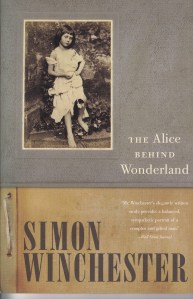
 I believe it was C. S. Lewis who wrote that in reading autobiographies he always found the earliest years the most interesting.. In my experience the same applies to biographies; what made the person famous enough to merit a biography—auto or not—started in the innocent years. I try not to extrapolate from my own case because I never read Alice in Wonderland and Through the Looking-Glass until I was in college. (It was only in college that I first saw Mary Poppins as well.) Beloved childhood classics weren’t really part of my childhood. Like many adults, then, I wonder who was Alice, really? Everyone knows there was an Alice but what do we know of her inner life? What’s the story with Lewis Carroll?
In my mind Simon Winchester is an historian associated with large pictures. Maps of the entire world, huge volcanoes, big oceans—the meaning of everything. I only discovered his The Alice behind Wonderland by accident. As soon as I spied it I knew I’d have to read it. As I expected, the younger years are most intriguing. Those of us who cut our classical teeth under the tutelage Liddell and Scott may not realize said Liddell was the father of Alice. But it’s not the father that impresses so much as the daughter. And Charles Dodgson himself—the cast of characters is compelling even with little action beyond photography and story telling. Yet we’re riveted. What was the dynamic that led a bachelor cleric to write a world classic for children?
Who doesn’t, even in less-than-ideal circumstances, long for the carefree days of childhood? Looking at photos of our younger selves evokes a world accessible only in our heads. The world that made us who we’ve become. Winchester bases this brief study on perhaps the most controversial photograph of Alice Liddell that Charles Dodgson ever took. Even the story of wet-plate collodion photography allures the reader with its promise of stories untold. We know little of why the Liddell family grew apart from Dodgson, so much so that the adult Alice didn’t even attend the funeral of the man who’d made her an immortal. What happened here? When we find out we’ll perhaps be a step closer to finding out why becoming an adult means sacrificing a child. We may be a step closer to finding a girl known to most of the world simply as “Alice.”
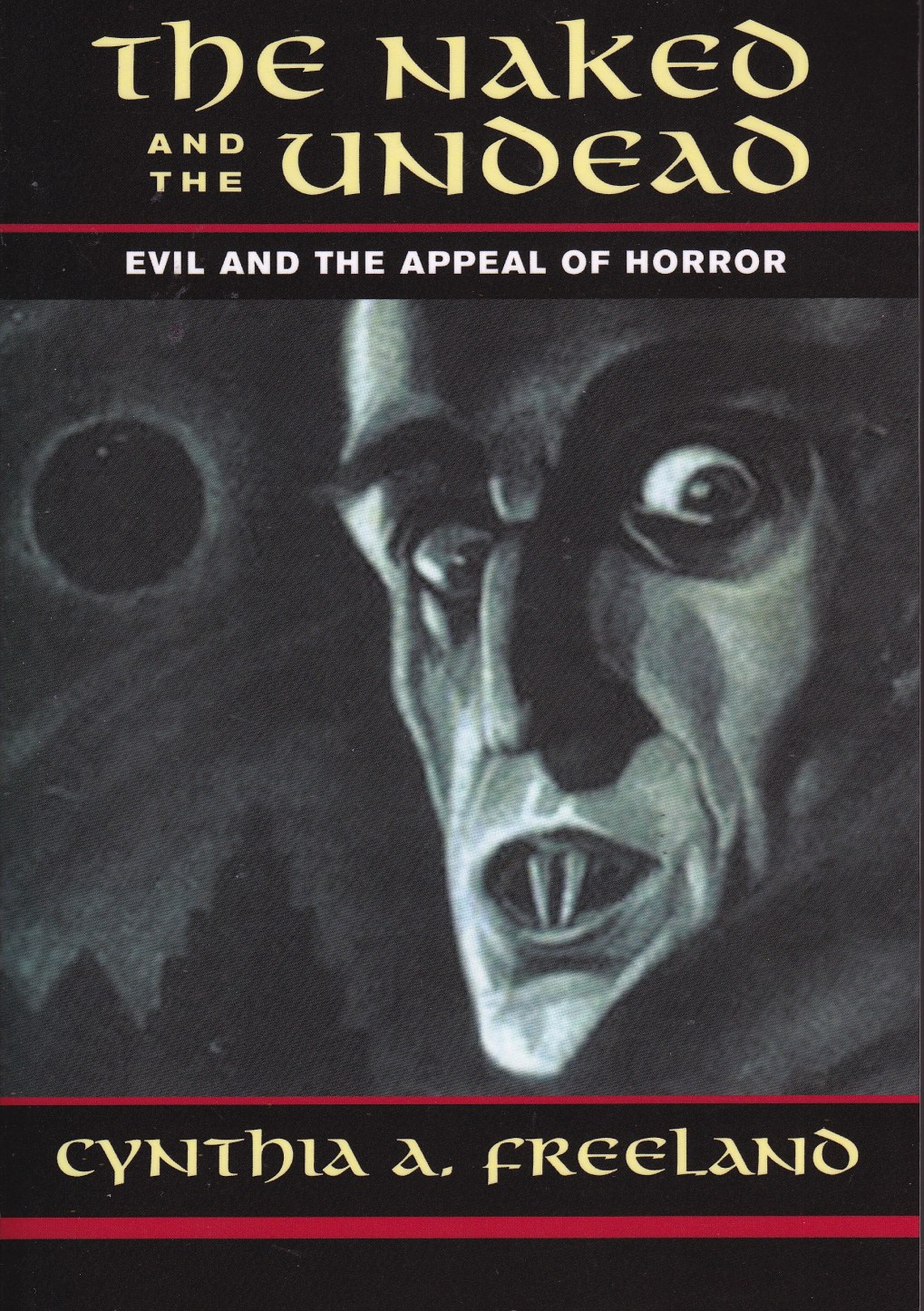 Good and evil. Well, mostly evil, actually. No, I’m not talking about Washington, DC, but about horror movies. Cynthia A. Freeland’s The Naked and the Undead: Evil and the Appeal of Horror is a study that brings a cognitivist approach to the dual themes of feminism and how horror presents evil. It’s not as simple as it sounds. Like many philosophers Freeland is aware that topics are seldom as straightforward as they appear. Feminists have approached horror films before, and other analysts have addressed the aspects of evil that the genre presents, but bringing them together into one place casts light on the subject from different angles. Freeland begins this process by dividing her material into three main sections: mad scientists and monstrous mothers (which allows for the Frankenstein angle), from vampires to slashers, and sublime spectacles of disaster. Already the reader can tell she’s a real fan.
 Steve A. Wiggins