Shipmates

MaryCelesteGhosts have a way of persisting. I’ve had Valerie Martin’s The Ghost of the Mary Celeste on my reading list since I first saw it in hardcover on a bookstore shelf. The Mary Celeste was an actual ship, found with not a soul aboard, lifeboat intact, and no sign of violence, back in the 1870s. To this day no one knows what happened to the crew. Valerie Martin takes this frame and fills it in with a family drawn into Spiritualism, a religion that was just beginning at the time. Spiritualism, which developed in the aftermath of the Fox sisters and the eerie rapping at their upstate New York home, is one of the few religions to be completely at home with ghosts. The faith still exists today, and although Margaret Fox “confessed” to having hoaxed the effects she also retracted her confession, leaving ghost hunters perplexed to this day. These two mysteries, brought together in the moody month of November, make for a compelling novel that urges the reader forward.

Martin also adds the presence of Sir Arthur Conan Doyle to the story. Doyle, an avowed believer in the spiritual realm, also created Sherlock Holmes. As the various characters try to piece together what happened to the Mary Celeste, the ghosts of those lost at sea ambiguously communicate with the living. The world between realms, in this story, is permeable but indistinct. Those lost at sea are, in the narrative, restless. The mood of the novel is unrelentingly moving and thoughtful. Ghosts haunt, but don’t appear. Readers are left to draw their own conclusions.

As today is the fortieth anniversary of the sinking of the Edmund Fitzgerald, it seems appropriate to think about the Mary Celeste. Since Percy Shelley drowned in his own personal boating accident, loss at sea has become one of the hallmarks of Romanticism. Conceived as an answer to the cold, callus industrialism that trailed the scientific revolution, Romanticism suggested that there was an enchantment to nature and that things were not always as they seemed. Prosaically, there’s nothing poetic about dying in a violent shipwreck. That’s what makes the Mary Celeste so compelling. There is no violence here. The sea calls and claims captain and crew as her own. The lack of resolution has led to a very open-ended mystery—the perfect foil to a harsh materialism. Today the Mary Celeste and Edmund Fitzgerald will be sailing my internal seas as the season of spirits and shipwrecks come together in the lengthening nights of November.

Revisionist History

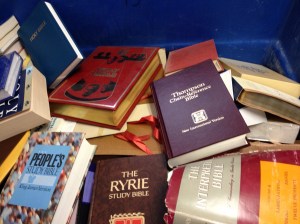
I recently came across a website with academic papers available on it.  Although the internet has yet to achieve its promise as a locus of solid academic material, such sites are becoming more common.  I’ve been uploading my own papers onto Academia.edu since they seem to be old enough not to impact anyone’s sales aspirations.  In any case, this particular website I found noted that a paper had been updated at such-and-such a time, and that anyone who had downloaded the previous version should delete it and use the new one instead.  This is a dilemma.  I know of publishers who make corrections without issuing new editions.  When I buy a book, what it actually says will depend on the printing rather than on the edition.  I wonder if such retractions are really fair.  How does one know when she’s reading something outdated?
 
Picture this: a young kid, perhaps an unknowing fundamentalist, reading his Bible.  Then he gets a newer copy of the same translation.  But soon he notices that there are differences.  Although the example may sound overly Talmudic, it is factual.  Bibles, being printed in large quantities, are especially susceptible to error.  When did the printed word become something that’s negotiable?  I’ve been pondering clay tablets and their apparent immutability.  Contrary to popular belief, most clay tablets weren’t fired—it was a lot of effort for something that had limited value.  Some tablets show signs of erasure or additional words being added.  In the case of clay, this is often very clear.  Besides, the readers were few and specialists.  They knew what they had.  But for a modern person staking the salvation of her soul on a document, is it not problematic to change a jot or tittle (of which not the least shall pass away)?  Has technology made us immune to fixed texts?
 
Back to the website I found.  What if I downloaded the faulty paper and wrote my own paper based on it?  How would I know to go back and check to see if a new version had been uploaded?  Am I to spend all my time revisiting web pages to see what has changed?  Knowledge itself seems now to have become whimsical.  What is true depends on the date and time you accessed it.  Perhaps I’m just a dreamer, but there was a time, it seems to me, before post-modernism, when you might purchase a book and be fairly certain of what you had.  Errata sheets (or the more fancy addenda et corrigenda) didn’t intrude into the typeset page.  You could still read correctly, assured that someone had spotted and acknowledged the mistake.  We have, I fear, outlived the need for sic.  And it is only a small step from siclessness to truth that changes second by second. Is this the siclessness unto death?

IMG_1363


Think Bigger

PlanetRagesI’ve spent a lot of time with academics. Having been one myself, I know something of their habits. Getting through a doctoral program involves, at least in some fields, becoming the specialist on a very tiny piece of information. Since people have been thinking about things for millennia, finding something new to say can be a challenge. Often, by the time they’re done, newly minted doctors know an incredible amount about a very specialized topic. This is, in many ways, simply an intensification of the human experience. We think small. Part of the problem is that our brains haven’t evolved to think big. Having learned an awful lot about the weather in the book on Psalms, I have instinctively taken an interest in natural disasters. Charles Officer and Jake Page share this interest, as is evident in When the Planet Rages: Natural Disasters, Global Warming, and the Future of the Earth. This, however, is a big idea book. Globally big.

Throughout the first two sections of the book, which deal with humans in the face of nature, God often comes up. As scientist and science writer (respectively) Officer and Page simply reflect common beliefs. Nowhere do they advocate invoking God, but they note that throughout history, in the face of just about any species of natural disaster, people have. Many people still do. Disasters and God. What a team! We worship what we fear. Once Officer and Page reach the third section of human impacts on nature, however, God drops out of the picture and the fingers are pointing solely at us.

When I read about what we’ve already done to this planet, I, as a colleague once said, start seeking another species to join. We have destablized the atmosphere so throughly that it will take at least ten-thousand years to return to it’s pre-Industrial Revolution state. Ten-thousand years. At the same time, the largest industrial pollutor (the United States) has jury-rigged politics so that only the wealthy can attain high office. Votes can be bought and we simply won’t sign the Kyoto Protocol. Those who knowingly doom their children are the smallest thinkers of all. We have changed the course of the biosphere well beyond our share of time, and even those scientist who deny global warming know that it is true. You don’t bite the hand that signs the pay check. After all, specialists have a tendency to be very small thinkers.


Supernatural Quest

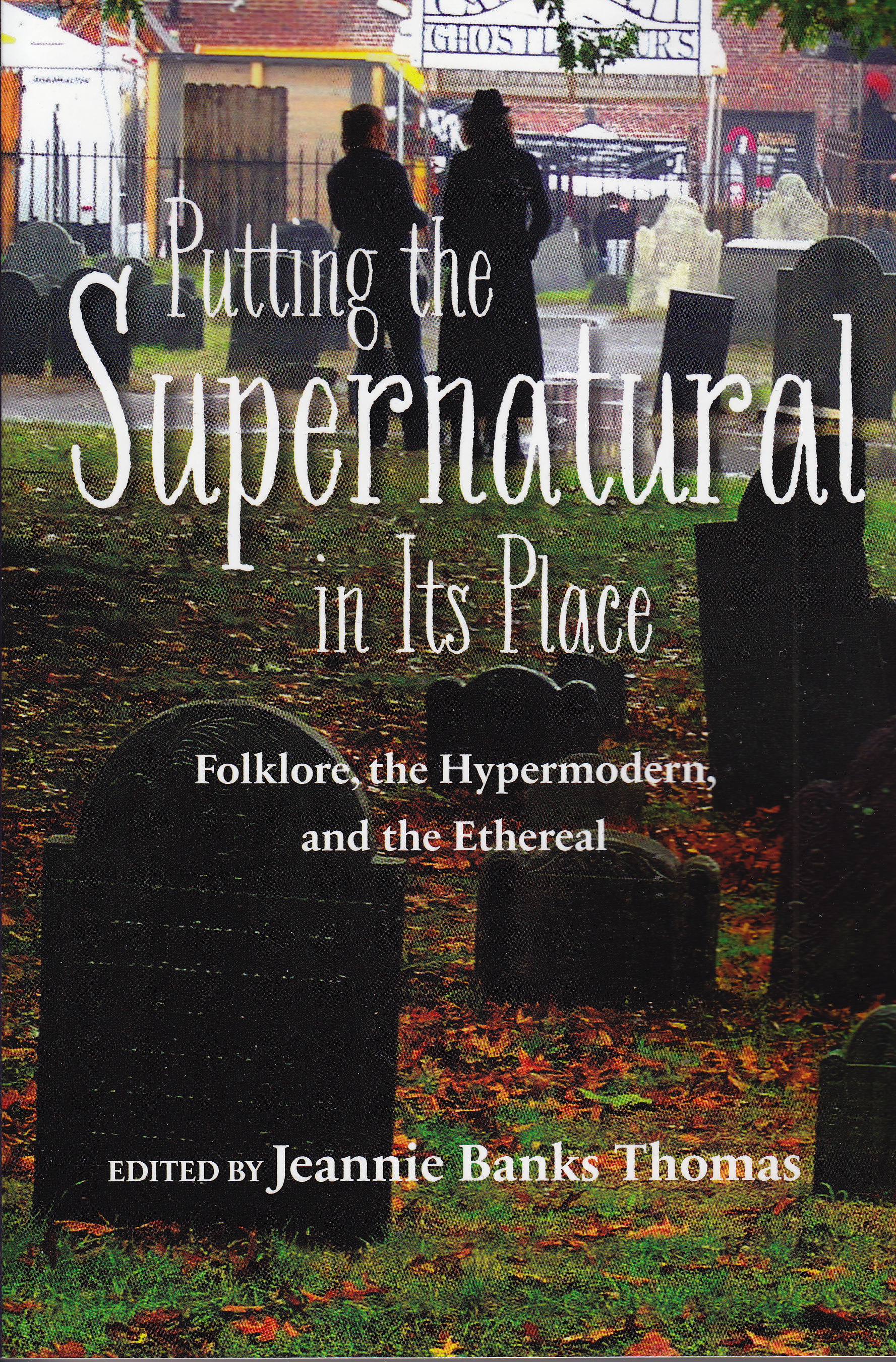
SupernaturalTwo things we’re told about the supernatural: one, it doesn’t exist and two, it can’t be studied. Of course the vast majority of people in the world don’t buy into number one and hardly care about number two. Both, it seems to me, could be wrong. As Jeannie Banks Thomas says in her introduction to Putting the Supernatural in Its Place: Folklore, the Hypermodern, and the Ethereal, belief in the supernatural is not declining. In fact, the more we’re told by cocksure scientists that all of reality is quantifiable and material, the more we become aware of the many exceptions to the rules. Of course, “supernatural” may be a misnomer. It could be that anything sloughed off into that category is simply not understood well enough to be empirically studied. Thinking back over the history of science I find it ironic that the very system that had to convince people that something couldn’t be seen (many gases) could be deadly. Now if it can’t be seen it can’t exist. We certainly don’t want any deities hanging out around here.

But back to the book. Putting the Supernatural in Its Place is a folkloric study of place. The contributors to the volume look at popular beliefs, some serious, some not, that accrue around certain places. As I’ve often stated on this blog, we are aware as humans that some places are fraught with meaning. Scientifically we know this shouldn’t be true, but we feel it when we approach any space of significance. The contributors to Thomas’ book look to some very interesting places: New Orleans, Salem, St. Ann’s Retreat, Lily Dale, Japan, and even movies and the internet. If any of these places aren’t familiar to you, it’s worth picking up a copy of this accessible book to learn more. Supporting folklore is a very good thing. Folklore, after all, is the wisdom of the people.

The places in this book are rumored to be haunted by ghosts, witches, zombies, vampires, and even fairies. Folklorists, of course, don’t try to prove that beliefs are true. Like any academic they study and analyze. The main form of exploration for the non-academic is the legend quest. Many of us have gone legend questing from time to time. A place where something happened is said to have a certain feel or manifestation, so we go to see what it’s all about. If such trips are given religious sanction we call them pilgrimages. We want to see. But more than that, we want to experience something that the past has left behind. In the part of the year when each night grows longer than the last, my thoughts turn to what is usually termed “the supernatural.” And I, for one, am glad to have able guides along the way to make the simple voyage into a quest.


Ordinary Magic

ConjuringSpirits copyThe concept of grimoires, as well as being seasonal, has been on my mind as I finish up my paper for the Society of Biblical Literature annual meeting next month. Grimoires, books of magic, have eluded, for the most part, the interests of scholars. Who takes magic seriously, anyway? Slowly our gaze is working its way away from our noses and out to the magical world beyond. Conjuring Spirits: Texts and Traditions of Medieval Magic is a textbook example of what happens when you bring the two together (scholars and magic, that is). Like most collected works, the pieces range from fascinating to somewhat magical in their ability to cause the eyes to close. Nevertheless I learned quite a bit from this book edited by Claire Fanger. Magic is not nearly so rare as we like to claim it is.

Perhaps the biggest takeaway from these essays is that grimoires were not only written by witches. Indeed, in the Middle Ages many of them were written by clerics and monks. They were avidly used by doctors, as science likely has its roots in magic rather than in some sudden enlightenment that matter is all there is. Medicine was still beholden to Aristotle, Hippocrates, and Galen. Humors and stars could make you unwell, and the wise physician would do well to pay attention to magic as well. Today we’re too sophisticated for that, but we still call the unexplained the placebo effect.

Although the church became the great enemy of magic, it was also one of its main sources. The Mass, with transubstantiation, seemed alchemical. Miracles of healing, known throughout the Bible, suggested that the improbable was indeed possible. A number of grimoires contained instructions to work such wonders. One of the most vehemently condemned was a book informing how to attain the beatific vision—a worthy enough goal—but it did so in a way that circumvented the power of the church. Garden variety magic was also available, of course, as were recipes calling for brain of black cat and blood of bat. Witches, after all, were mainly sought out by the church. Those with power are not easily compelled to relinquish it. It should surprise no one then that magic continues to thrive.


Pagan Religion

TriumphMoonFraming. Much of what we call “religion” has to do with framing. At one time it was standard practice to assume “pagan” was distasteful, if not downright evil. “Witch” was a pejorative term intended to humiliate and excoriate. Ronald Hutton is one of the few scholars who has taken the time to consider Wicca and related religions seriously. The Triumph of the Moon: a History of Modern Pagan Witchcraft has been on my reading list for quite some time. It is a big book, but this is a complex subject that can’t be dealt with briefly. Taking the time to get to know witches, with a historian’s patience, Hutton has given the world a valuable, balanced resource. Without prejudice, he traces how paganism, Wicca, and witchcraft are religions difficult to define or even categorize. There is little to frame them.

Rumor and hearsay make poor substitutes for understanding a religion. Most of what I grew up learning about witches was, in short, completely wrong. I wonder how much more pleasant the world might be if people assumed religions all to be similar in many ways. They are varied attempts to find ways of being moral in a world that gives little clear instruction on the matter. Witches and pagans are only evil in the uninformed opinions of more powerfully established religions. Religions of empire, whether real or only imagined. Those that had political backing and brute force to anathematize those who were different. Theirs is still a stigma that persists.

The Triumph of the Moon recounts the development, since the early part of the last century, of a somewhat organized experiment of religion as it grows organically. Without a leading figure or spokesperson, radically egalitarian, these groups, while sometimes in conflict, coalesce around the practice of finding something magical in the world. Theirs is an educated, literate world that does not judge other religions. It isn’t perfect, but then what religion is? The belief structure isn’t so different than many established religions except in the matter of degree. It is private and secretive in a way that we could only wish in many religions, if they could be counted on to behave themselves. I’m not likely to do a sky-clad spiral dance any time soon, but I would say that if we took religions at their word for being what they say they are, we might have a lot more resembling that of the noble pagan.


Heaven Unawares

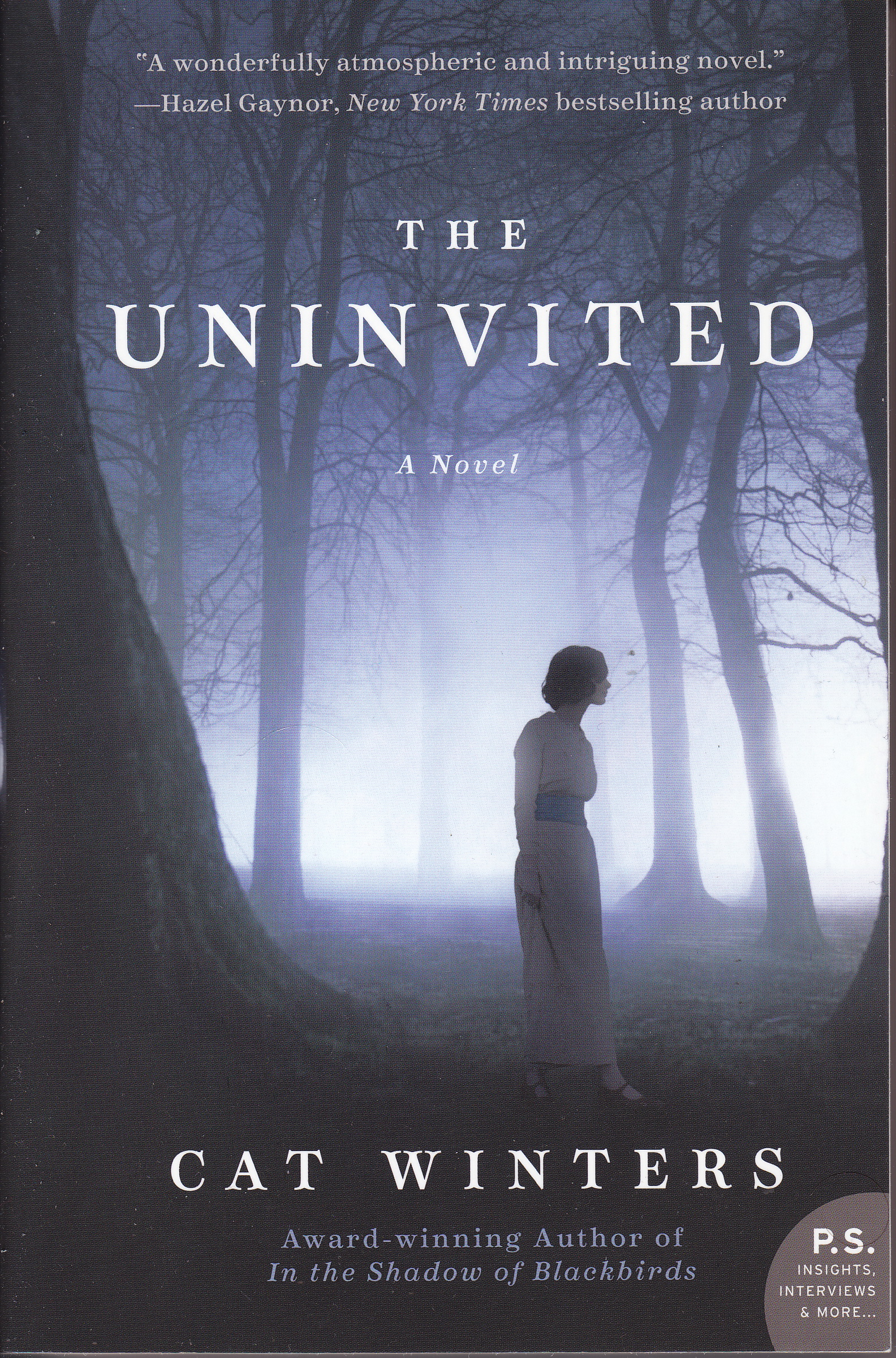
UninvitedIn order to have this book fit my blog, I’ll begin with a spoiler alert. If you plan to read Cat Winters’ The Uninvited, I will be giving away information below. Please believe me when I say it’s not intended to be persnickety by this preface, but I know what it’s like to enter a book knowing too much.

When autumn comes around I like to find a ghost story or two to read, to settle into what seems to be a primal urge connecting harvest with death. Sometimes the books I find are advertised in places like the Library Journal, or Publishers Weekly (which I see more like biannually). More often than not, however, they are books that I spy at a store. The Uninvited stared at me from a table. I picked it up, read the blurbs, and put it back. A week later I stopped in again and picked it up. It is a moody tale set during the First World War and the influenza epidemic. That was a time, I suspect, of great fear. And many ghosts. It’s easy to see why Winters chose such a time to set a tale. Still, the narrative is gentle and despite the places where the language sounds too modern, it is artfully told. Like most ghost stories it is a love story. Seriously folks, here come some spoilers!

The protagonist, Ivy, falls in love with Daniel, a German immigrant living in Buchanan, Illinois during the war. Germans have been under suspicion and lynchings have occurred. We come to learn, as in many ghost stories, that the protagonist and her lover were both victims—he of a lynching, she of the flu. He’s aware they’re dead, she’s not. The novel is one of Ivy’s growing self-realization that she’s deceased. While avoiding those who spy on Germans, she discovers the joys of an interracial, prohibition-free (being prior to prohibition, of course, but the idea was in the air) club where jazz is played all night long. She wants to bring her lover to the club, which is just across the street from his apartment, but he is German and feels he would not be welcome. The reader at this point doesn’t realize the two are dead. Once Ivy discovers the truth, she realizes that the club is actually Heaven. The reluctant ghosts, lost, stay away. She tries to convince them to come.

Heaven has been portrayed in many ways in literature. Although I find jazz very difficult to bear (it is like being inside a beehive without a bee suit, to me) the idea that Heaven is complete and utter acceptance of who we are is a compelling one. Religions are often all about change—how we must alter who we are to merit Heaven or Nirvana or whatever might await us at the end. Winters suggests that it is a place where people can be who they are and nobody will try to make you be any different than you were created. It is a comforting idea. It is my personal hope, however, that there might be a few different clubs in town and that some of them might be playing music other than jazz.


Fundamental Fear

Something truly scary landed on my desk. Working for an organization that has many different departments, there’s no way to know everyone. So when something bible-ish arrives in the mail, it gets directed to me. Now, I don’t follow the afterlife of creepy religious people through prison, so it took a few minutes to remember who Warren Jeffs is. I knew I’d read about him but I couldn’t remember where. Then I remembered the Fundamentalist Church of Jesus Christ of Latter-Day Saints. Jeffs was once the head of this church before being put into prison for child sexual assault crimes. So why had he sent a copy of Jesus Christ Message to All Nations to my publishing house? It is already published, and it is rather modeled on the Bible, at least at a surface level. No letter, no instructions. Just a book that I felt I needed to wash my hands after touching.

IMG_2571

I’d not heard of this book before. The author is boldly listed as Jesus Christ. “President Warren S. Jeffs, Mouthpiece of God” it says, given credit for, I suppose, putting pen to paper. What’s to prevent me, I wondered, from claiming God wrote what I framed into words? It is far too easy a claim to make and the credulous follow where the bold lead. That’s the way human authority, unfortunately, often works. Someone with a surfeit of testosterone declares that he speaks with absolute authority—I think of angry atheists as well as televangelists here. Such sense of irrational conviction must feel god-like. I can only guess from the sidelines. And I wonder about those who wrote what are recognized as scriptures in other religions.

Did those who wrote the books of the Bible, for instance, ever feel that they were writing unquestioned truth? Might they not have been a bit more circumspect? Maybe they were writing in the heat of inspiration, but not with the confidence of claiming divinity. Somehow I doubt even that. Writing is a human activity. The creator of an entire universe shouldn’t need to use it. Still, religions are often built around written texts. Parts of the New Testament claim to come from Jesus of Nazareth, although he’s not the actual writer. I guess he must have been working on later works of which I’ve never heard. And I do wonder how the doctrine of the faulty vessel applies in cases like this. I know better than to ask a Fundamentalist of any stripe, because I already know the answer they would give.


True Natives

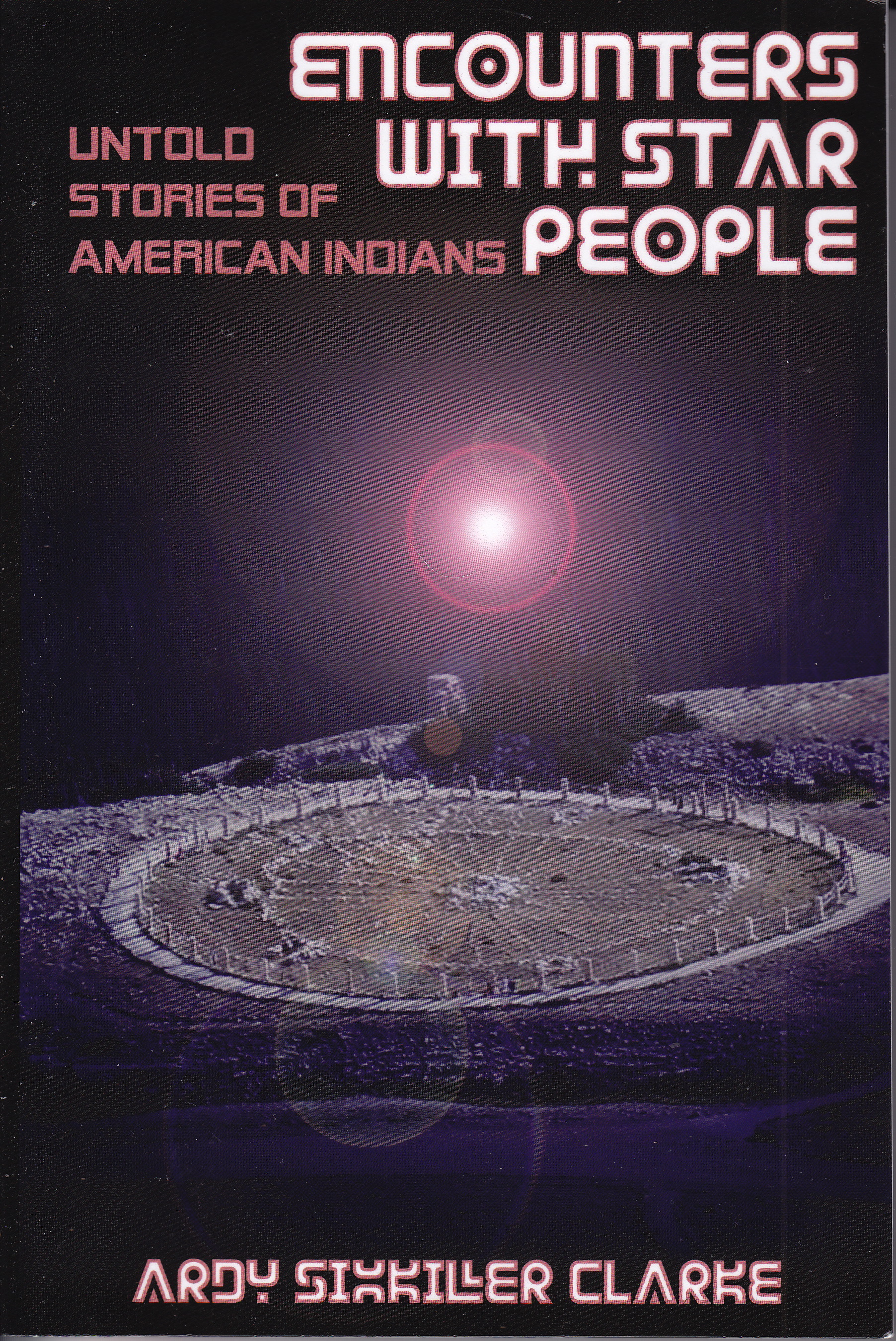
StarPeopleI have long been fascinated by American Indian folklore. In fact, the first book I read this year was a set of Indian tales. Just this week I finished a most unusual book by Ardy Sixkiller Clarke entitled Encounters with Star People: Untold Stories of American Indians. Clarke, who is herself Indian, taught at Montana State University and collected stories from various tribes concerning Star People. Mainstream western science has already made up its mind that Homo sapiens are the most advanced species ever to grace this universe, and so any discussion of visiting non-terrestrials is off the table. What Clarke shows us, however, is that just because there’s no such thing doesn’t mean that all worldviews agree on that point. In many interviews with indigenous peoples of the Americas, belief in Star People emerges as perfectly normal. As does not talking about it because white people will ridicule and belittle anything that doesn’t fit into their limited cosmos of technology and money.

Reading these stories felt like absorbing wisdom from those who observe nature more carefully than those of us of European stock are inclined to do. With eyes pressed to microscopes and telescopes, it is sometimes possible to miss the big picture. We crowd into cities and have no idea how to live under the stars. We can’t even see the stars most of the time. Have we lost our ability to wonder?

Purely from an academic point of view, I wonder why aliens can’t be taken seriously. I try to think of other topics that are simply laughed out of discussion before examining the evidence. To me it seems that human pride is at stake in this case. We are a very proud species, enamored of our own accomplishments. If we can’t reach the stars, nobody else can. This to me is troubling. Aliens, after all, don’t fall into the category of “supernatural” unless we mythologize them into yesteryear’s angels. If they are real, they are as natural as we are. They would have a technology that we haven’t replicated yet, and anyone who doubts interstellar flight should consider the impossibility of carrying a computer around in your pocket or on your wrist only thirty years ago. No, if there are Star People, they are natural. Whether or not they might exist is simply a matter of belief.


Nature of Religion

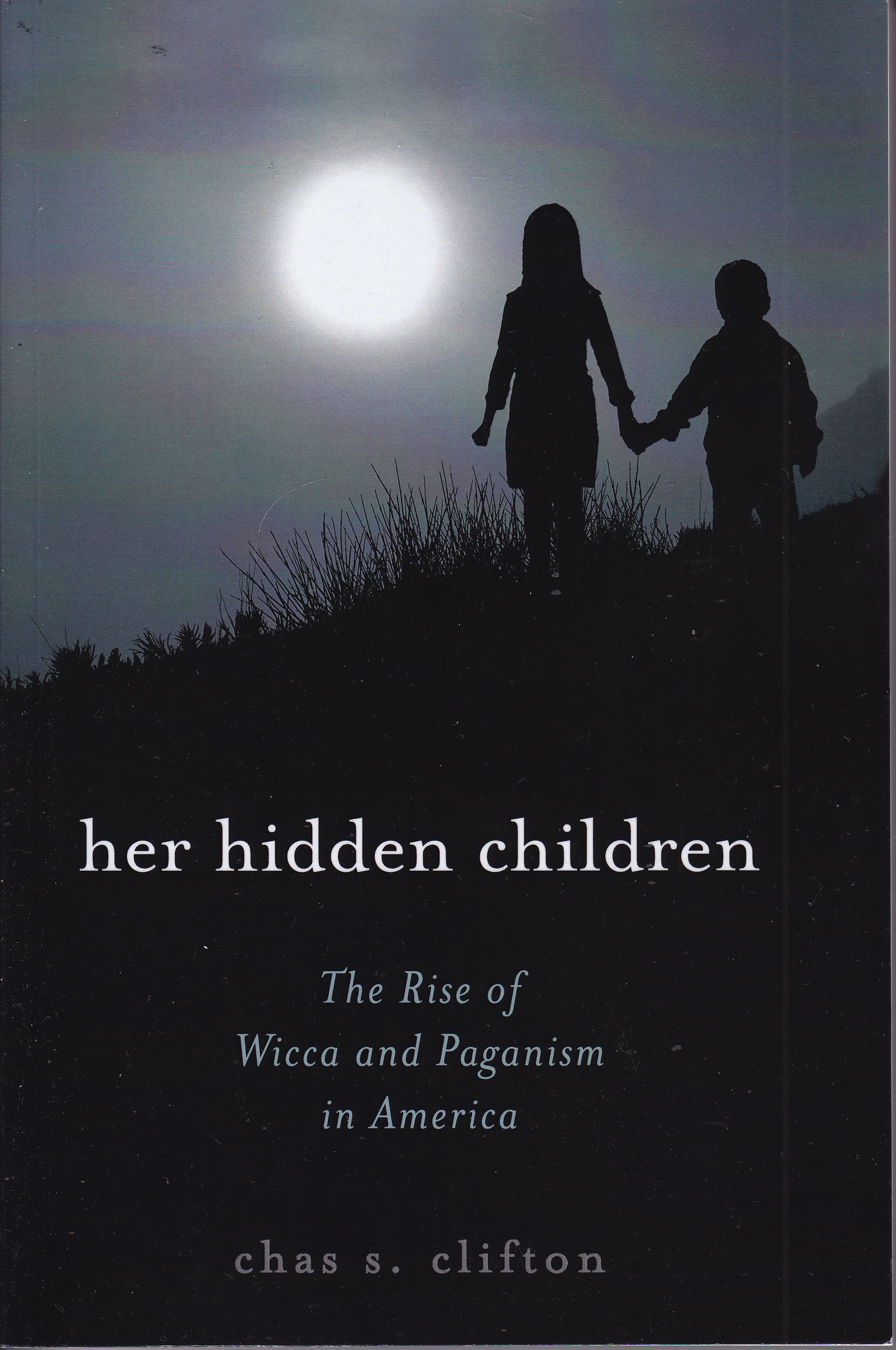
HerHiddenChAutumn is a moody time of year. Dolorous gray skies hang low one day, and the next a sky of such incredible blue stretches unbroken out into space itself. Nights are definitely longer now; I climb onto the bus in the dark in the morning and get off in the dark in the evening. And thinking about nature’s cycles leads me to thinking about nature religions. Wicca has often been presented as a nature religion, but it is somewhat more complex than that. Her Hidden Children: The Rise of Wicca and Paganism in America, by Chas S. Clifton provides a rare academic look at various pagan religions from the inside. Analysts of New Religious Movements have long classified religious witchcraft as a modern religion. Although Gerald Gardener made claims of being initiated into an ancient British coven when he began what was to become Wicca, it is recognized that this claim was unsubstantiated and that Gardener, in true prophetic form, was inventing a new religion.

I’ve read quite a bit about witches over the years, but I’ve always found contemporary paganism somewhat confusing. As Clifton points out, there are many branches of this relatively small religion, and there is no single leader or head of the movement. In fact, various groups, just like Christian groups, seem to splinter fairly easily. Many revival religions exist, also claiming the name pagan. You can join those who worship Egyptian gods or Norse deities. Or those who find nature itself divine. Pantheism, panetheism, or just plain paganism. Religions come in endless varieties. In a world committed to allowing individuals to follow their own religious conscience, there are bound to be varieties of religious experiences.

Clifton offers a brief history of these fairly recent groups. Paganism began to reassert itself only last century. There had been a social stigma with lying outside the territory claimed by church, synagogue or mosque. Many Americans only learned that religions such as Hinduism and Buddhism existed at the very end of the nineteenth century. What most people don’t realize even today is that a large, and increasingly expanding, variety of religious options exist for the seeker. Not all Wiccans see themselves as believers in a nature religion. Not all pagans call themselves Wiccans. Although Clifton makes no claims to an exhaustive tome, which would have to be far larger, he is a helpful guide through many of the groups that have existed over the past decades and some of which continue to this day. By learning about them we learn some basic truths about the very human urge to connect with something larger than ourselves.


Scholarly Synchronicity

Simon Parker STH Professor April 2, 1999 PORTRAIT

Simon Parker
STH Professor
April 2, 1999
PORTRAIT

One of the great ironies in my life is having been basically ignored while I was employed in higher education only to have people make overtures to me once I no longer had the resources to undertake the task. I’ve been asked to peer review articles, and write articles and contribute to books. I even had a series editor try to get me to write a monograph. Thing is, I don’t have regular access to a library, and I spend eleven hours a day either at work or getting to and from work. When am I going to find time to write a well-researched book or article? Well, I’ve been working on my Society of Biblical Literature article since May and it should be ready by November. If it weren’t based on pop culture, I could never have managed it under present circumstances. Still, when a colleague asked me to contribute to Simon Parker’s Festschrift I couldn’t say no. Although I didn’t take classes with Simon, he was Academic Dean when I was at Boston University School of Theology. Although I didn’t know it at the time, we shared an interest in Ugaritic studies, and we exchanged articles and ideas via letter when I was in Edinburgh. We became friends. Simon died suddenly the year I lost my job at Nashotah House.

Since that time I’ve written over a couple thousand blog posts, and read a few hundred books, but that’s not the same as academic research. I’ve been worried about what I might contribute to do honor to a scholar and a gentleman. Then I tried looking at some old files from two laptops ago. Of course the new laptop can’t open them (that’s why Scrivener is a lifesaver). I pulled out a paper that I wrote the year I lost my job. I never did finish it, but it was well underway when my confidence began to crumble. After translating it to the new decade, I opened it only to find the first footnote dedicating it to Simon Parker. I stopped, stunned. That can’t be right. When I wrote this I knew nothing of a Festschrift. Then it hit me. I had originally written the article just after I learned of Simon’s untimely death. Do I still believe in signs?

So now I have a base from which to start. I have only a couple months to bang it into shape, and I also have to finish my SBL article. While at Nashotah House I produced an article a year and a second book (published only last year), i.e., the “academic standard.” Nobody invited me to contribute. Now that I have no time, people are finally interested in what I might have to say. Not interested enough, of course, to offer me an academic position, but it does look like the publication record might continue after all. It won’t be what it could have been had I had a library, but I am nevertheless honored. One of the accolades that academics covet is having colleagues care enough to write something for you. I guess that’s been on my mind for a decade in the case of Simon Parker. I only hope that I can do him proud from where I am.


What’s a Bible?

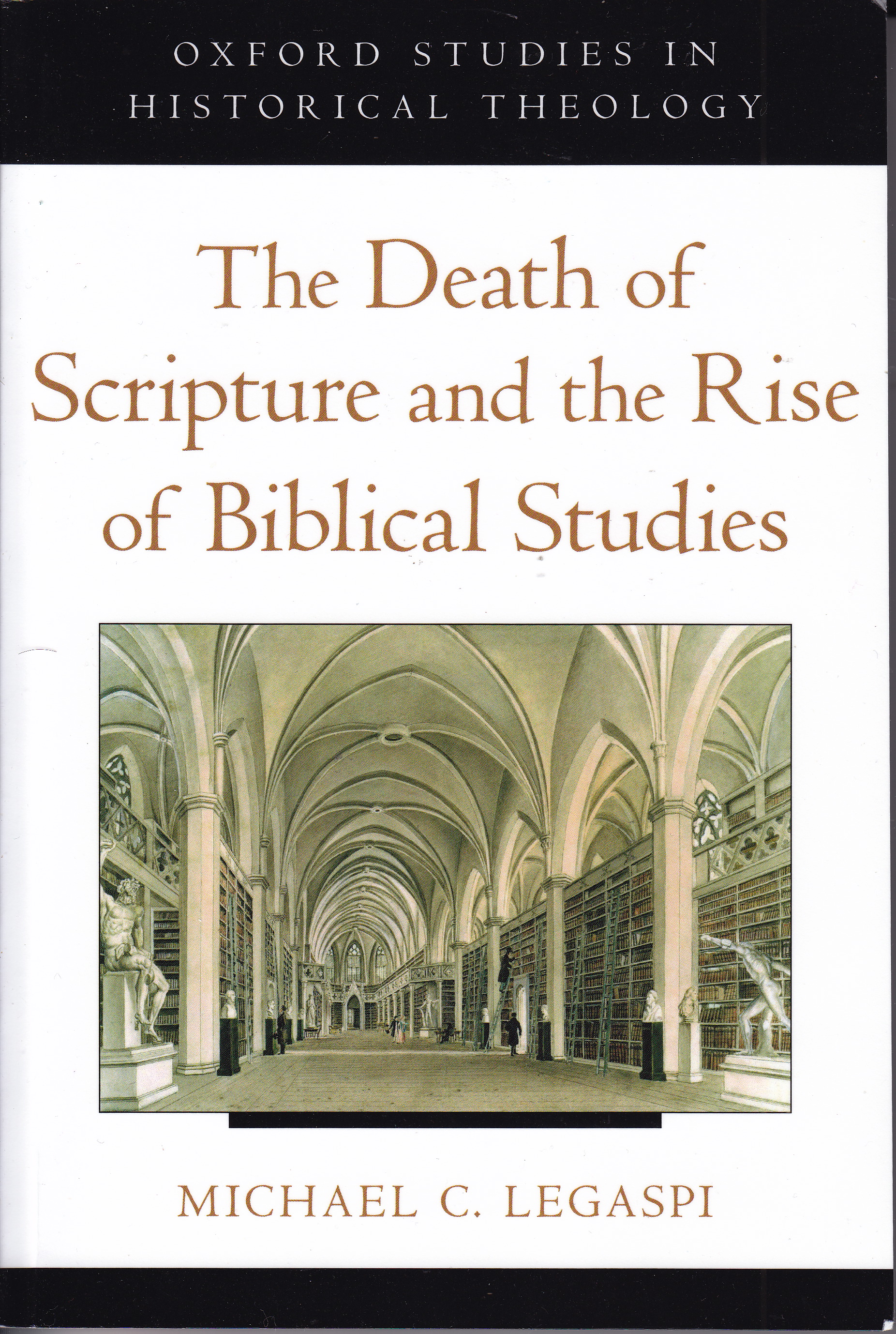
LegaspiWhat is the Bible? This might seem a strange question coming from someone who holds a doctorate in what has sometimes been characterized as biblical studies. Still, it is a valid question. The fact is, very different things are referenced by the word “Bible.” This is made abundantly clear in Michael C. Legaspi’s The Death of Scripture and the Rise of Biblical Studies. Legaspi points out that the Bible hasn’t always been the central force of Christian identification that it seems to have become. Martin Luther was largely (but not solely) responsible for the view that the Bible alone is sufficient for eternal well-being. Historically it had been much more complicated than that. The church had traditions and sacraments, Judaism had Talmud and rabbinic interpretation. The idea that the Bible alone was necessary was more radical than it might seem in today’s secular world. The problem was, the Bible isn’t an easy book to understand.

It has long been recognized that the Enlightenment and the Reformation went more or less together. The mysticism and mystery of “superstition” were bound to fade in the brilliance of pure reason. The Bible, however, still held a revered place, and it had to be studied. The sea change of the scriptural Bible to the academic Bible took place largely in Germany. No surprises there. What Legaspi demonstrates is that this study was closely bound with the university as an organ of the state. Germany didn’t boast the oldest universities in the eighteenth century, but it could claim the most intellectually rigorous. Among its biblical scholars, indeed, perhaps the one who led to the creation of the academic Bible, was Johann David Michaelis. The book is mostly about Michaelis and his influence and background in biblical studies. Clearly, applying university treatment to an ancient text was not going to be Sunday School.

By the time people like me began advanced study of the Bible, the “academic Bible” was about all there was. Many of us with serious training in the field watch in wonder as some (many) theologians take the Bible literally. They use ideas and concepts that biblical scholars have long recognized as artifacts of antique understanding. The problem is once you’ve gone down this path, there’s no going back. You can’t unlearn the academic Bible. So, what is the Bible? Obviously, it’s going to depend on who you ask, but it is clear that no one answer will satisfy all takers, even if they all claim to share a single faith. And should you venture to those hallowed halls of higher education, you’ll find the Bible is studied here, as are dinosaurs and an earth that is a few billion years old.


Ghost Rider

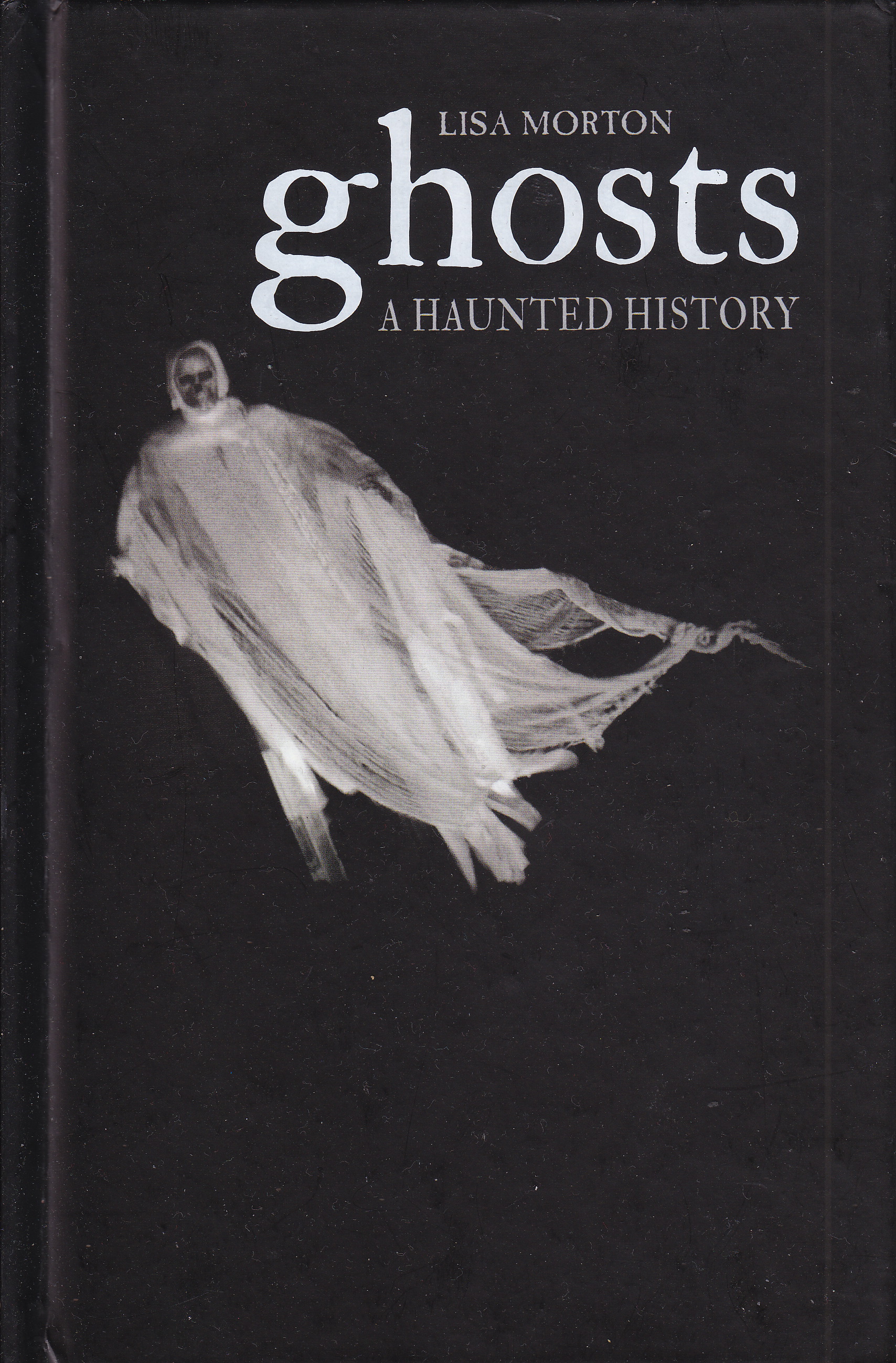
GhostsOf all frightening creatures, ghosts are by far the most ubiquitous. Believed in by every civilization ever recorded and throughout the world, not even science has been able to displace them. Lisa Morton’s Ghosts: A Haunted History offers a brief tour through the realm of the dead. With a sense of how ancient the phenomenon is, she also notes time and again how religions have an uneasy but steady relationship with disembodied spirits. After all, religions give us souls that science strives to take away. What makes Morton’s study so interesting is its restlessness. Not focusing on one culture or time period, the reader learns about Asian ghosts as well as the familiar translucent variety favored in the western world. Ghosts are everywhere.

Now that October has invited thoughts of long nights and falling leaves, I often ponder a world without ghosts. If rationalism of the materialistic variety had its way, this would be simply a natural season like any other. No need to be frightened as the sun takes on that quality that suggests some things should not be seen, and the air feels as if anything might happen. Spooky houses are merely wanting maintenance and every creak and rustle can be explained. There are no ghosts in the night and Halloween is only for children. It seems to me, rather, to be the season of belief. It’s more tangible now, the world where unanswered questions dwell. Ghosts, whether in our mind or in this physical world, are part of the ambiance without which autumn isn’t worth having.

Are ghosts real? I can’t say that I have any evidence one way or the other. We all die, and we all wish we didn’t have to. In this world some are lucky enough to make their wishes come true. Might it be that some have found a way to stay when the physical party is over? Religions are uncomfortable with ghosts since they refuse to be contained in any Heaven, Hell, or Purgatory. They simply are. People of every education level and social standing see them and some believe while others explain them away. Without going over to the other side we likely will never be able to prove whether they are really real or not. As Morton amply demonstrates in her thoughtful little book, they will never go away as long as consciousness and death coexist.


Monster Smash

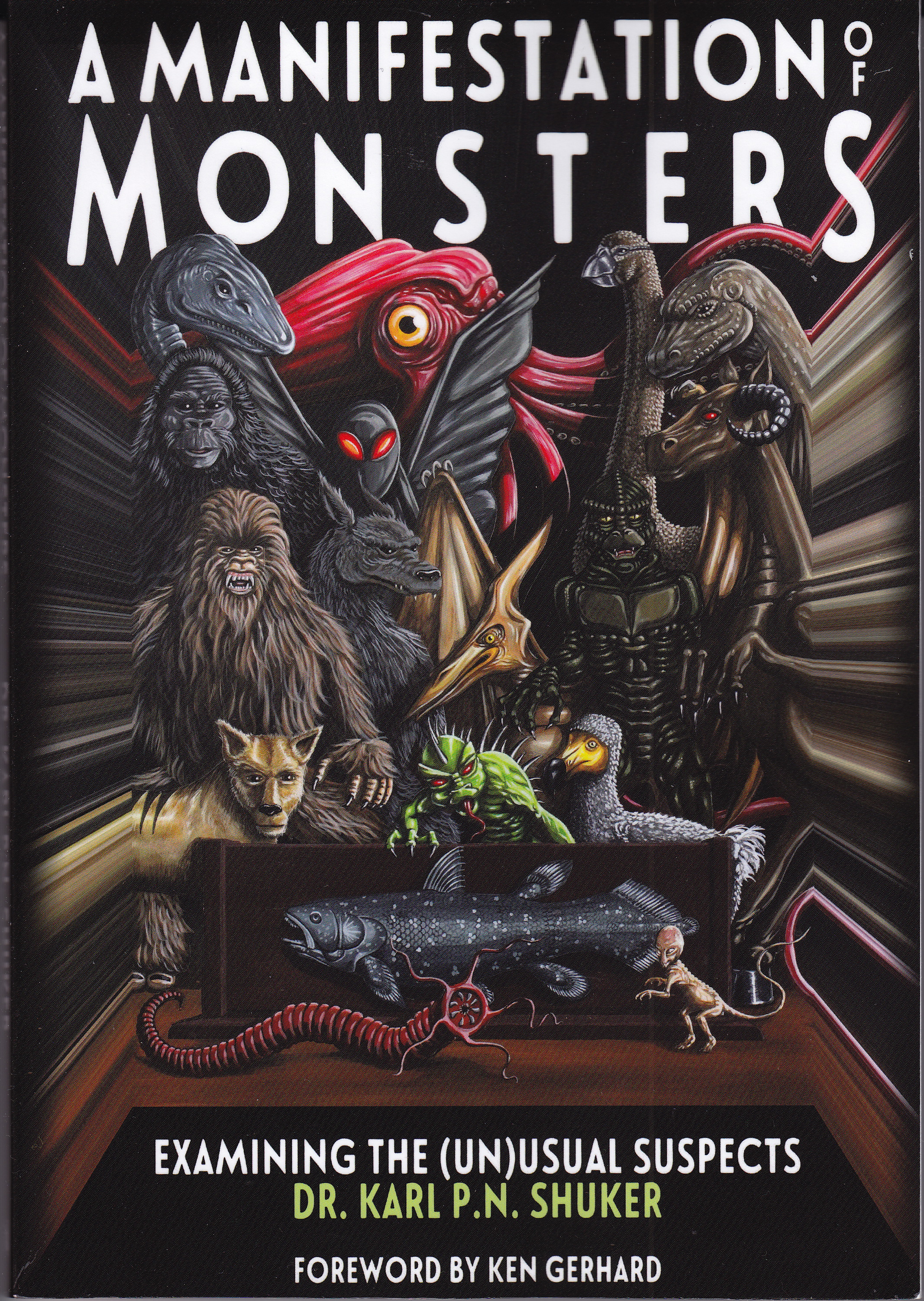
MnfsttnMnstrsIt’s the time of year when young men’s minds turn to monsters. Well, at least this middle-aged man’s does. Seeing a book by Karl P. N. Shuker entitled A Manifestation of Monsters, I was intrigued. I had some Amazon points burning a hole in my internet, so I took a chance on it. The fact is good books on monsters are hard to find and Shuker is listed as “Doctor” and that sometimes stands for something. Subtitled Examining the (Un)usual Suspects, the book is a curious Mischwesen of folklore, actual animals, and cryptozoology. The latter should be no surprise as Shuker is a noted cryptozoologist. Compiled from many of his previously published articles, the book contains some fascinating accounts of extinct creatures and some improbable accounts of modern monsters.

Since Banned Book Week is a time to explore challenged ideas, why not read about some cryptids? They are anti-establishment monsters. Banned creatures. As is usual with monsters, there’s little rhyme or reason to the arrangement. Unlike many in the field of cryptozoology, Shuker is skeptical of outlandish claims, and has actual training as a zoologist. What stood out to me as I read accounts of unusual creatures is that some people report seeing the oddest things, and that other people are driven to hoax all kinds of monsters. It is clear that the human mind is programmed to believe in the possibility of the improbable. Critical thinking, as anyone with advanced training knows, is hard work. Belief can be a far simpler matter. We crave a world with the exotic, and potentially dangerous. Shuker’s piece on the mythical chupacabra demonstrates that nicely.

While I’m pondering things that are banned, I consider how some who use critical faculties well like to disparage others. This, of course, is not in the best interest of science. We haven’t discovered everything yet. We think that because of the internet we’ve gone about as far as we can go in hive-mind mentality. Never mind that bees and ants beat us to it. People, many of them very intelligent, continue to see things they can’t explain. Others say that any living creature larger than a breadbox has already been discovered. I tend to think the world is a pretty big place and that people prefer to huddle together in cities for a reason. The mountain gorilla, for example, was discovered just in 1902. Now that the season for monsters is upon us, I like to imagine what else might be wandering around unseen by human eyes. And I hope banned ideas may continue to thrive in the forests of our minds.


Forbidden Love

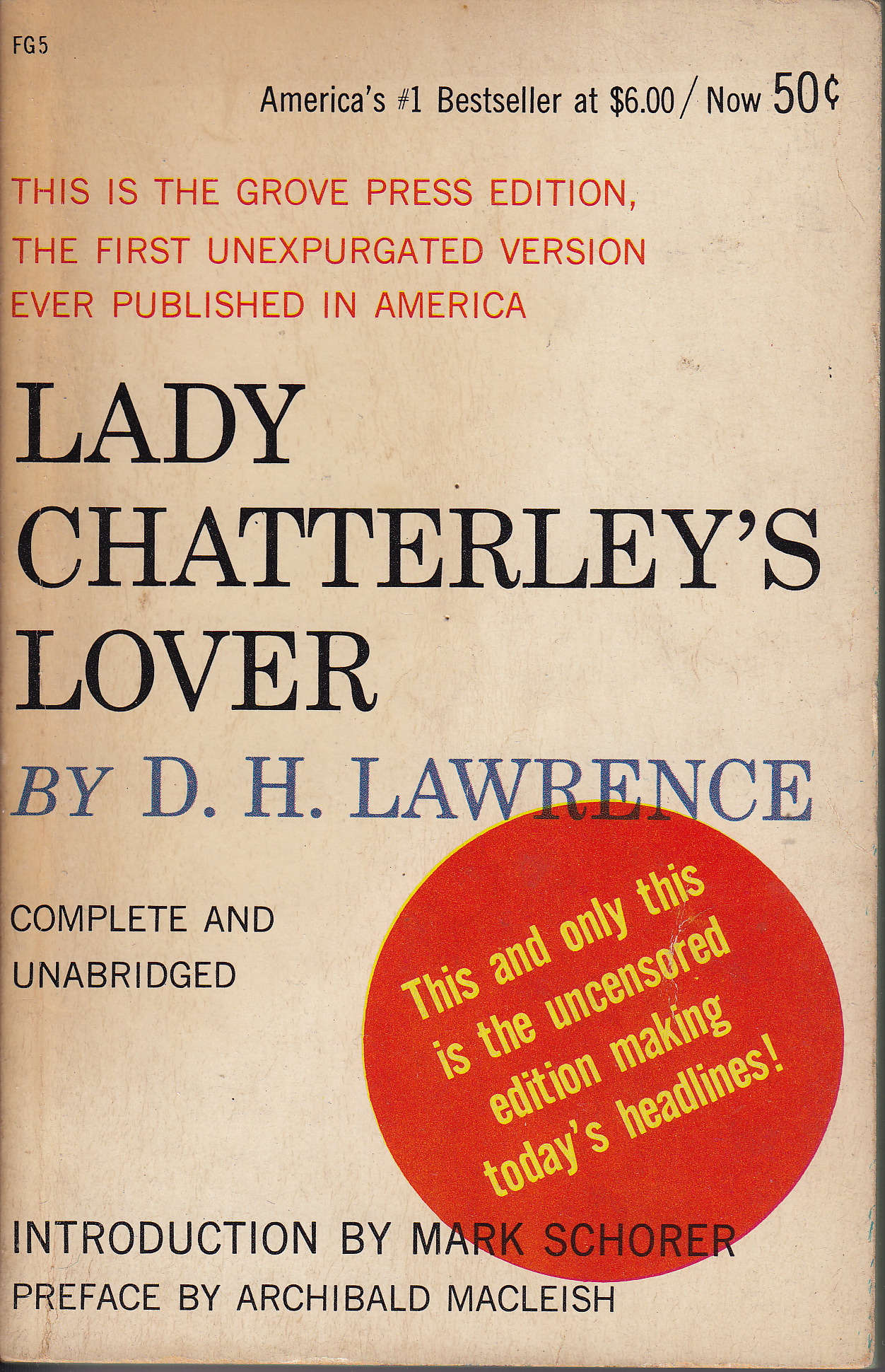
LadyChatterleyBanned Book Week is upon us. In that time of year when we begin to think of spooky, scary things, the prohibition of literature naturally comes to mind. Every year I try to read a banned or challenged book for the occasion. This year I went to perhaps the jugular vein of banned books, Lady Chatterley’s Lover, by D. H. Lawrence. Now, I’m not a romance reader, but I was curious about this sexually explicit novel that had been banned to the point of being outlawed and was now considered a classic. Lawrence’s last novel, it tells the tale of a woman escaping a loveless marriage with the help of lover below her social class. The steamy bits are tame by today’s standards, but Lawrence does use several words that are still rarely heard in the media due to their offensiveness. From my perspective the story was a bit too drawn out, and the fawning wasfs a bit over the top. What struck me even more, however, was the fact that this novel was largely about social justice. Not that Lawrence was an activist, but his concern for the poor and discarded of the industrial revolution is quite clear throughout the novel. The privileged having affairs within their class is acceptable. The scandal is that a titled lady falls for a common gamekeeper.

I haven’t read Fifty Shades of Grey, a franchise that has made even romance writers jealous. From the criticisms I hear, however, the concern is less the sex than it is the lack of literary value. I’m sure Fifty Shades of Grey is a banned book in some location. Still, the deeper concern for humanity that runs through Lady Chatterley’s Lover is part of its appeal. Several times I put the book down thinking, “this isn’t just surface stuff.” It is, baldly put, the search for redemption. Sir Clifford is an invalid who wants to control others. In an era when men laid claim to control of women’s sexuality this was no small demand. He also sees his coal miners as pieces in a larger game that is, it turns out, only to his own benefit.

Although the book ends with the lovers parted, and hoping for reunion, Lawrence’s final words turn toward economic oppression. Mellors (the gamekeeper) writes, “If you could only tell them that living and spending isn’t the same thing!… If only they were educated to live instead of earn and spend…” He defines Mammon as “wanting money and hating life.” No doubt, the book was a vehicle for Lawrence’s desire to see writing about sex to be part of literature and not pornography. Still, there is something deeper here. The story is more than carnality, although carnality is what brought it to fame. It is a banned book that proclaims liberty that, despite the license of contemporary society, is not really as free as it might seem. As banned book week unfolds, it is a moral obligation, I believe, to read those books that have threatened settled mindsets and raised the ire of censors. In so doing, we learn what it is to be human.