Feasting

In addition to music, Christmas has also been associated with seasonal foods. Unlike today, when we think of foods primarily in terms of either fast food or culinary sophistication, Christmas dishes of yesteryear often had religious symbolism. While singing an English carol, for instance, you might hear of figgy pudding. I tried my first when living in the United Kingdom and it was nothing like the images its name conjures. It is more like a dense cake made of raisins and dried fruit, set aflame to burn off the brandy. Sometimes it is topped with holly. According to an interview on NPR, the Christmas dessert, in addition to taking weeks to make, contains thirteen ingredients, to symbolize Christ and the apostles. The holly is to represent the crown of thorns, and the flames the passion. That’s a lot of theology to stomach. (In seminary I had friends who used food analogies for theological purposes, but I suspect they didn’t know it was such an ancient tradition.)

Christmas cheer, I would’ve been shocked to learn as a child, generally involved spirits. For example in A Christmas Carol, Charles Dickens reverses his entrepreneurial relationship with Bob Crachit over a bowl of smoking bishop. I had always supposed this was a kind of soup or stew, but, again NPR comes to the rescue with a piece about Christmas drinks. Smoking bishop was made of port, and, according to the NPR story by Anne Bramley, is of the class of Protestant drinks called “ecclesiastics.” These were various alcoholic drinks named after Catholic church offices that Protestants used to poke fun at the ecclesiastical hierarchy of the Catholic tradition.
Christmas

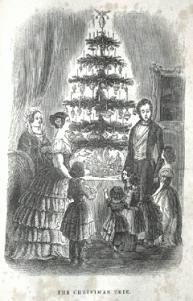
A Christmas Tree primer

It is difficult to conceive of anything more basic than food and drink. All living things require nourishment. It stands to reason that when religious sensibilities began to appear that they would certainly be associated with the necessities of life. Holidays, as necessary breaks from the mundane, offer opportunities for bringing theology to the table. The most basic of ingredients, as any observer of biblical holidays knows, can contain more than just nutrients and roughage. There is a symbolism in what we eat. In these days when it is fashionable to declare religion nothing but stuff and nonsense, it can’t hurt to stop and look at what might be on our plate or in our cup before declaring it to be mere animal nourishment.
Imagine the World

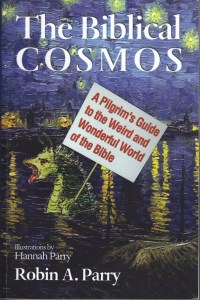
Biblical CosmosRobin A. Parry’s, The Biblical Cosmos: A Pilgrim’s Guide to the Weird and Wonderful World of the Bible is a fun trip through territory already familiar. Familiar, that is, to anyone who has studied the biblical world on its own terms. Fundamentalists, I think, would benefit from taking this guided tour seriously. The fact is, most people have no real sense of how mythology might inform a scientifically inclined world. Not that Parry will convince everyone, but the dangers of literalism are best disarmed by a believer. This little book endeavors to demonstrate just how odd a world produced the Bible we still use today.

Although the point of the book may not be what I took away from it, I would suggest that the most important aspect is that times change.  A biblical worldview, unless one is mentally able to hold two realities simultaneously in mind, is simply not possible today.  I told generations of students that the world described by the Bible does not exist.  It is a flat world, held up by pillars and with a solid bowl inverted over it for a sky.  At the same time, those who lived in the biblical world were not simpletons.  The basics of science were well understood and their engineering capacity easily bypassed that of the current writer.  It was a world based on different assumptions than ours.  The problem occurs when people who know better (i.e., anyone born since about the time of Copernicus) try to pretend that the Bible can be taken literally.  It is disingenuous to say so.  The Bible, regardless of divine status, is a document of its time.  No dinosaurs had been discovered.  The processes of geology were understood only in the most rudimentary of ways.  Stars were not millions of light years away.
 
So what are we supposed to do with this information?  Parry concludes his book by describing ways in which the biblical view of the cosmos might fit, conceptually, into a modern theology.  For many of those starting out in the academic study of the Bible such a demonstration can be quite valuable.  Those who’ve been at it a while will surely have come up with their own systems.  When books become sacred, in the minds of the believing community, the “truth” attributed to the book is the truth of that era.  As any scientist or historian will attest, truth is contingent.  We haven’t learned everything yet.  Given the limitations of the human mind, we likely never will.  We should accept our universe with a little mystery.  Humility can be a good thing, and it is more effective not having to make excuses for what will surely become outdated information sooner than we think.


Seeing Things

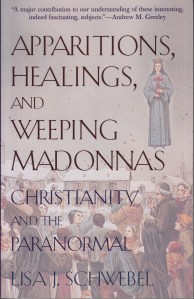
SchwebelWe have to learn to see the world. Traditionally religion and science both had roles to play, but as science grew better at explaining physical causes, many consigned religion to mere superstition. In such a paradigmatic world, Lisa J. Schwebel’s Apparitions, Healings, and Weeping Madonnas is something of an anomaly. Schwebel begins by noting that the Catholic Church has long accepted the reality of psi. As the branch of Christianity with the strongest commitment to furthering science, this itself might seem unusual. We are taught to see the world in a binary way: either this or that, not both. Books such as this challenge that convention, asking us to look at a world that doesn’t always conform to expectations. Parapsychology has made inroads from superstition to science because of testable hypotheses and statistically significant results. What it might mean is up for grabs.

Some claim that Catholicism is credulous. Actually, as Schwebel adequately demonstrates, criteria for declaring even spectacular events as miracles are amazingly high. Merely paranormal events seem common in comparison. In many ways, this is a disorienting book: the supernatural is assumed to exist, but miracles are treated as less common than the everyday supernatural. Those of us raised in a rationalist scholarly world might find the acceptance of that which we’ve learned is impossible just a bit unexpected. No doubt, visions of Mary are reported. Crowds often visit trees or highway underpasses where pareidolia impresses an image on the faithful. Schwebel, however, is discussing visions of another sort, and finds that they may involve the power of suggestion rather than the miraculous.

Faith healing, on the other hand, is something for which empirical evidence exists. Doctors still disagree about whether prayer speeds healing, but there have been many instances of unexpected healings that have occurred, apparently in relation to a person noted for bringing wellness about. Causality, of course, can’t be proven, but many people find themselves believing in a spiritual world after such an encounter. Perhaps that is what is so intriguing about books like this; they make readers uncomfortable in a world that is purely material. Finding a credentialed author who actually believes and has evidence to back her up is a rarity. Challenging conventions is part of the territory in most religions. Schwebel is simply straightforward about it.


Who the Devil?

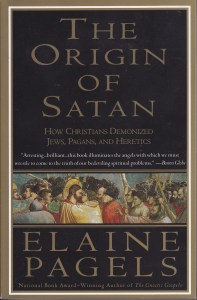
OriginSatanThose who’ve studied the history of ancient West Asian religions know that the concept of a devil, as a character, derives from Zoroastrian origins. In Zarathustra’s dualistic worldview, the forces of evil were concentrated in an “anti-God,” who, upon contact with the emerging monotheism of ancient Israel, became the satan. While scholars still argue about exactly what the role of the satan was, it is clear that it was a role, and not a name. The job of the satan was in some way to bring to accounting wicked deeds. By the time of the New Testament, “the Devil” had developed into an embodiment of evil more along classic Zoroastrian lines. What Elaine Pagels explores in The Origin of Satan is encapsulated in her subtitle: How Christians Demonized Jews, Pagans, and Heretics.

This is not a book about the historical development of the figure of Satan, but rather a study of how early Christians (and to an extent, Jews) viewed “the other.” Naturally she does discuss Satan, who developed along the lines suggested above, but more specifically she addresses how the accusation of being “of Satan” was used. Interestingly, it was generally utilized by those of ancient times to describe those of their own religion, but who held different viewpoints. Sects of Christianity and Judaism generally accused other sects in their own religious tradition of being “satanic.” Foreigners and pagans, well, what would you expect of them anyway? Those closest, ironically, are those most despised. Even early converts to Christianity from Roman polytheism tended to view their former religion as satanic. Satan, in other words, is “the other.” But not the far other. The near other.

While the book is full of Pagels’ usual erudition, it is also disappointing. Not as a book, but as a fact. Religions that claim God only wants us to love one another and treat each other well rely too readily on the figure of personified evil to castigate their enemies. As Pagels demonstrates, even as early as Augustine of Hippo there were those who realized Satan was not a “physical” being, but a symbol for evil. Yet on through the Middle Ages Satan would continue to be evoked to murder women and men thought to be witches or heretics. Satan, it seems, is simply a word for our darkest urges to harm those different from ourselves. We know that religions often have noble intentions. Perhaps the most noble could be to rid the world of Satan, and I don’t mean the mythological figure we all recognize without a hint.


Looking Ahead

HistoryFutureA History of the Future is a great title for a book. Classified, I suppose, as a dystopia, James Howard Kunstler’s novel is set in upstate New York, not too far from now. A war in Israel has led to the destruction of major US cities and our electronic, consumptive way of life suddenly comes to an end. Small pockets of people, such as those in Union Grove, try to reconstruct a way of life where executives now have to become farmers and those who were used to having plenty still can’t manage without thinking of others as servants. It is a quiet and disquieting world. Perhaps the most striking thing about Kunstler’s vision is how prevalent religion is within it. An entire swath of the middle of the country has followed a former televangelist back to pre-Civil War ideals and seeks to make white supremacy national policy. Other pockets of governments resist the growing strength of this backlash, but most people are just trying to get by, uninvolved in large-scale politics.

The most sympathetic group in the novel, at least in my reading of it, is the New Faith Covenant Brotherhood Church of Jesus, run by Brother Jobe, himself a former southerner. This church moves, lock, stock, and barrel, into Union Grove and begins to build a commune that, unlike those of the local Presbyterians and secular rulers, manages to thrive. Brother Jobe has mystical abilities and his heart is in the right place. As things continue their decline amidst the everyone for him/herself attempts to restore order, this fellowship manages to pull itself together through common belief and perhaps a bit of divine intervention. In the future these aren’t so easily teased apart.

Not a typical action-packed dystopia with raging violence, Kunstler sketches a more gentle apocalypse. It’s not a final disaster and big government has not yet reemerged to stamp its will on a malleable people. Women and men relearn what it means to work by hand and to live with less. In some ways the vision is comforting. Still, those who will have been patrician in the past manage to become feudal lords, of a sort, in this new world. Not everyone can fit into that pattern. The overall picture in what seems to be a parable is that pre-industrial society did, in fact, work. It wasn’t perfect, of course. Monasteries and lords embodied different values where no one could truly claim to know what this was all about. The future, it turns out, is mostly the past.


Holiday Fervor

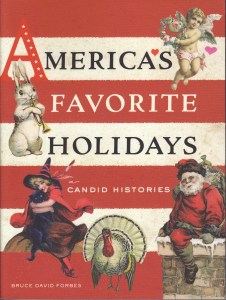
AmericaFavHoliTime comes in different varieties. In temperate regions where the changing seasons keep the time of year for us, we tend to have seasonal holidays. Christmas and other December holidays mark the shortest days of the year with the hope that light will soon become more abundant. Spring rituals, near the time of the vernal equinox, encourage the return of fertility to the earth. Autumnal holidays mark the approach of darkness once again as the world twirls endlessly on. Summer, bright and warm, doesn’t really lend itself to so many holidays. These thoughts came back to me as I read Bruce David Forbes’s America’s Favorite Holidays: Candid Histories. Forbes doesn’t cover all the special days, but focuses on Christmas, Valentine’s Day, Easter, Halloween, and Thanksgiving. These are five holidays marked, in some sense, by spending. They are often, although Forbes doesn’t really spend too much time on it, the focal point of cultural wars where various Christian groups wish to reclaim a certain day for its “rightful heritage.”

One of the real values of books like America’s Favorite Holidays is that it is clear that these claims of “keeping Christ in Christmas” and its kin are samples of collective amnesia. Many “Christmas” traditions predated Christianity. Others developed concurrent with it, but in “pagan” contexts. Christmas trees, for example, didn’t originate in the latitudes of Bethlehem. The same may be said for just about any holiday. Valentine’s Day and Thanksgiving, of the five explored, are the lone exceptions. These are fairly recent holidays and neither one marks a solstice or equinox. They celebrate aspects of life we value, making them sacred time. Don’t expect to get Valentine’s Day off of work, however. Capitalism never makes room for love.

Christmas, of course, is the holiday most under dispute. All holidays may be commercialized, but for Christmas spending is central. Forbes insightfully shows that Christmas is, and may always have been, both a cultural holiday and a religious holiday. The cultural aspect of the season is the one that most people celebrate. The birth of Jesus—which we are fairly certain was not in December—was a latter add-on. A baptism, if you will, of a pre-existing holiday. The winter solstice holiday is a staple of cultures in climes where the difference in available light and warmth is appreciable. It marks the point of the year when things start getting better. Yes, the real cold of winter has not yet set in, and there will be months of snow and ice. Still, once the solstice is passed, there is more light to help us cope. Celebrating sacred time, whether secular or not, is the natural reaction of people who crave light over darkness.


Factor Fiction

An article on CBS that my wife sent me tells how Costco mistakenly labelled a shipment of Bibles as fiction, setting off a tweet-storm. Some offended, some applauding, a 140-character barrage ensued as Costco apologized. What was the fuss about? As a person who has experience with both fact and fiction, it has become clear to me over the years that these categories are not nearly as sharply defined as they might appear. We make labels to help us categorize a confusing reality. Our brains, nevertheless, easily accept fiction as fact, at least for purposes of getting along in the world. The earth is spinning, right now, at over 1,000 miles per hour. We don’t perceive it, and in fact, it took not a few deaths and apologetic clerics before it was admitted that evidence we don’t feel proved the case. Each day we choose to believe the fiction that we are holding still and the sun goes overhead. Is anybody tweeting about that?

One of the angry bird calls pointed out that Costco (which apparently now has an imprimatur) doesn’t label their Qurans as fiction. How many Christians have read the Rig Veda and not wondered whether its proper label fell on that side of the pricing gun? The matter of fact or fiction is one of opinion. Even those books bearing the label of non-fiction are interpretations of evidence. When it comes down to ultimate truth, where it lies is always a matter of faith. Who buys a Bible at Costco anyway?

IMG_2634

When I was a child and Amazon did not exist, buying a Bible was itself a kind of sacred act. You wouldn’t think of going to Wal-Mart to do such a thing. You went to the Christian bookstore (or, I suppose, if you grew up in a city, a secular bookstore might do). You talked to clerks who knew the differences between versions. The place smelled of leather and velvet. It was a place dedicated to the truth. Costco is a big box store. Buying in bulk implies something. Ironically, those who angrily tweet about the Bible’s label don’t seem to realize that Bible selling is big business. You won’t find much in the way of small publishers’ literature in such a store. Next to your giant cartons of cereal and immense packages of diapers, why not tuck in a Bible as well? When you get home you can tweet about how much money you saved buying eternal salvation in bulk.


Musical Mind

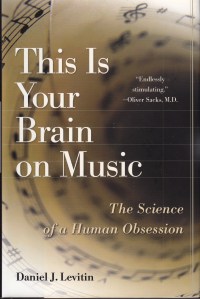
BrainOnMusicMusic is perhaps the most natural of human arts.  We are all, as Daniel J. Levitin says, expert listeners from an early age.  This Is Your Brain on Music: The Science of a Human Obsession is a fascinating study of neuroscience and music.  I began exploring this connection about a decade ago when studies on religion and neuroscience were only just beginning to appear.  Music, although closely related to religion in many ways, does not bear the stigma of “belief” and although music programs are often tragically cut from school budgets, we all value music because not to do so makes us less-than-human.  Levitin shows clearly how music accompanies the most important parts of our lives and how it forms and develops the brain.
 
Music is somewhat easier to define than religion.  Those who decry the humanities, I suggest, should be locked away with no access to music for a few years to see if they change their tune.  I suspect they would.  We need music, and music’s impact on the brain is an analog to that of religion.  More studies of religion and the brain have begun to appear, and one gets the sense that materialists are a little bit angry and disappointed that religion hasn’t disappeared the way that it was predicted to have done by now.  That’s because being human is more than being molecules and chemical reactions. It involves what we call the humanities.
 
Our brains are our gateways to all of human experience.  They are complex in ways that computer designers emulate, but there’s a messy something about biology that straightforward mechanics seems to have trouble replicating.  Our brains are part of one large, organic whole that encompasses life on this little planet.  While studying the brain to understand it is indeed a good idea, calling it a meat computer is not.  While software may be coded to compose music, of one thing we can be sure. Computers can’t enjoy music.  It takes a brain to appreciate music, and the brain that appreciates music is mere synaptic connections away from seeing why religion is still important.


Naming Evil

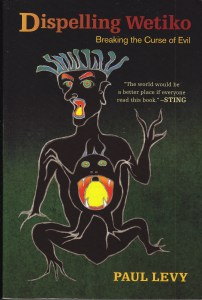
WetikoBooks don’t tell us what is true; books tell us what could be true. When I was growing up, under the influence of the Bible, I thought that non-fiction books were the truth. I came to understand that people disagreed about the truth, but it took a long time before I realized that books were merely the attempts of their writers to argue their version of the truth. If someone knew the actual truth that person would be a god. These thoughts came to me as I read the fascinating and mystical Dispelling Wetiko: Breaking the Curse of Evil, by Paul Levy. In many ways this is a mind-altering book. For one thing, Levy has made me reconsider how real evil is. Looking at what’s going on in the world it is increasingly difficult to deny the reality of objective evil. Levy’s book gives it a name and even attempts to analyze whence it comes. He calls it “wetiko.”

For several years now I have tried to find information on the monster known as the wendigo. Wetiko is a version of the same word, and it was this that drew me to Levy’s book. The wendigo is a shape-shifting creature that preys on humans. It is mentioned or featured in a few fictional books, and most recently featured in an episode of Sleepy Hollow. Since most academics don’t treat monsters seriously, it is difficult to find accounts of the beast. It is often discussed as a fictionalized version of cannibalism. It is a monster always hungry. The more it eats, the hungrier it becomes. It is this aspect that leads Levy to use it as his main metaphor for evil.

The evil that Dispelling Wetiko focuses on is the extreme selfishness our society has come to embrace. For example, our entire economic system is a fiction propagated by the ultra-wealthy. By defining a fiction as valuable and making it available to everyone else by a system of debt, the one-percenters keep everyone else, literally, in thrall to them. There is no gold to back up the fictional value they claim they have, and yet they consume others constantly in their evil greed. In a nuanced argument Levy suggests that this evil is real. Becoming conscious is the only way to combat it. There’s so much going on in this book that it has to be read several times, I’m sure, to get it all figured out. As I finished this one, however, I thought I had read a book that may actually be true.


Forward Planning

Smallmindedness bothers me.  Now don’t get me wrong, I don’t claim any great intelligence for myself.  I’m just an average guy who thinks too much.  No, the smallmindedness that I despise comes in capitalist colors.  More specifically, it comes in the form of business-speak.  This is a language in which I make no claims of fluency, but in which I am forced to converse from time to time.  I believe there is a secret coven of businessmen hidden in a dark board room determined to make themselves sound intellectual by cobbling together polysyllables.  Business is, at the heart of it, really simple.  I want your money; how little can I give you for it?  They call economics the dismal science for a reason.  In any case, the other day I was confronted with the phrase “forward planning.”  It was like one of those moments when you walk into the wrong room and you’re disoriented for just a second or two because what you see is not what you expected through that door.  Forward planning.  What other kind of planning is there?  Backward planning?  Victims of time have no choice in the matter.
 
I’m bemused by the ubiquity of “best practices.”  No, thank you.  I prefer to use worst practices.  Of course we all want to do things the best way possible.  Putting insipid neologisms in the way is not how one achieves it.  What’s wrong with just saying what you mean?  Oh, I forgot—the guys in the shadowy boardroom.  There’s nothing like lingo to substitute for depth.
 
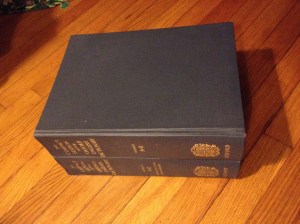
At a campus book sale a few weeks ago, I found a copy of the Compact Oxford Dictionary.  Fully aware that any word can be instantly searched online, I hefted the two, heavy volumes and for six dollars walked out with over a million words.  People on campus looked at me funny.  Someone even asked why in the world would I buy a dictionary?  There are plenty of answers I could give.  I could say that I like the feel of something solid in my hands when I practice scholarship.  I could say that it impresses people when you show them how small the type is.  I could say that I have some leaves I’d like to flatten effectively.  The truth, I suspect, you’ve already divined.  I bought these books because no matter how much you look, you won’t find “forward planning” listed anywhere as a legitimate concept.

IMG_2618


Reptile Fantasy

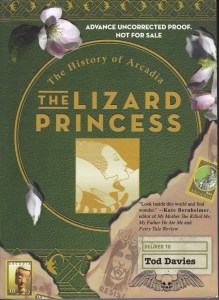
LizardPrincessThe generous folks at Exterminating Angel Press graciously sent me a copy of Tod Davies’ The Lizard Princess to review. A fantasy novel that includes a conflict between a world that admits of the supernatural and skeptics who deny anything beyond the material, it is a tale for our time. Indeed, the antagonism is real enough. We live in a world where fantasy can bring in untold wealth while we are taught that not an atom of it is true. Clearly material explanations fit the physical world we inhabit. It’s the world inside our heads that often rejects such materialism being taken to its “logical” conclusion. Davies clearly feels the angst of this discord. The Lizard Princess is a fantasy in the face of harsh reality. And we still need fantasy—perhaps we need it more than ever.

Throughout The Lizard Princess, whether intentional or not, biblical imagery pervades. The Bible offers classical stories that, no matter how we might receive them, continue to influence our ideas and ideals. Here, in a world created especially for the reader, the battle between good and evil is an everyday reality. The turns taken along this path are unconventional, and at times even uncomfortable. The awareness that there is a larger story in the background, however, offers some consolation. Angels, the Devil, and even a subtly veiled God are all players in this fantasy world of Arcadia. Mythical creatures abound, and transformations lead to new perspectives along the way.

In my conversations with other scholars I’m reminded that academics don’t often turn to novels for escape. Some do, of course, but the academy recommends a steady diet of technical non-fiction for those who wish to make an impact upon the world of knowledge. I have always been grateful for literature, however. During my years in graduate school and early in my teaching career I neglected the kinds of books that were my constant companions growing up. In a rural setting far removed from any institutions of higher learning, novels were often the only reading readily available. I never considered the time between their covers wasted. I found in The Lizard Princess a vivid world strangely like our own, but different enough to be more a parable than a simple piece of fiction.


Book Deaf?

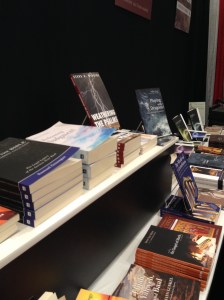
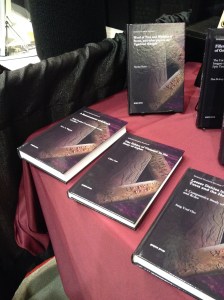
It’s Tuesday morning and I have been listening to authors pitching their books for three solid days now. Truth be told, I am a bit jealous. I’ve got a few more books in me yet, but research time simply does not exist in the world of capitalism and its discontents. Not that I envy being on the author’s side of the table—I remember how it felt to pitch Weathering the Psalms to several editors and to receive an icy “no” in response. I think now I begin to understand. Yesterday one of my appointments asked if I was “book deaf” yet. It was a term I’d never heard, but I immediately knew what he meant. Editors hear pitch after pitch. I pull out my phone and look at my calendar and see a new project every half-hour throughout the day, but no, I’m not book deaf. In fact, I have to constrain myself to keep my credit card firmly inside my wallet. Being surrounded by books is like being in a jungle teeming with deadly animals.

IMG_2614

From the exhibitor’s booth, Tuesday is a day of relief and worry. Most of the papers are over at AAR/SBL, and most of the participants have already left. As at any conference, fair, or exhibit, we are strictly forbidden from taking down the booth before closing time. We stand about, straining our ears to hear that first transgressive ripping of strapping tape from its roll, indicating that someone in another booth is being naughty. We’re tired, weary even, but not book deaf. Never book deaf.

IMG_2615

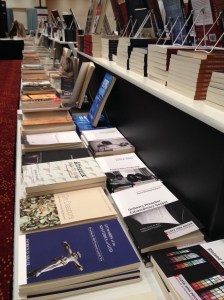
In my unguarded moments I sometimes think that maybe some day I’ll have a book here that others will clamber to find. Maybe someone like me will prowl to a pre-selected booth with a specific title firmly in mind, and that title will bear my name. I suppose it could happen, although it isn’t likely at this point. I hear each pitch and more. I hear the dreams and deep desires of every author. We want to be heard. We want others to think us respectable, honorable even. There are publishers out there who will publish anything. They will accept books to fill catalogues and websites and you’ll never hear from them again. Still, you’ll find some interesting things if you wander by their table. And if someone sees that you’re an editor while you’re browsing you’ll never turn a deaf ear. This is what religion scholars live for. Books are our reality.

IMG_2617


All for Naught

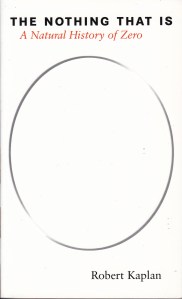
ZeroPhilosophy, it used to be said, was the handmaid to theology. According to some among the scientific establishment the whole lot should be thrown out, baby, bath water, and tub. It has always distressed me to read scientists dissing philosophy (theology I can understand). Empirical outlooks are definitively based on a philosophy, and no matter what we may think of post-modern theorists, we are indebted to philosophers far more than we probably realize. I just finished reading Robert Kaplan’s The Nothing That Is: A Natural History of Zero. I noticed the book when it was first published, but found it recently at a book sale for almost nothing. I’m glad I did.

I can’t pretend to understand all the equations in the book. There aren’t that many, thank goodness, but Kaplan uses them to make his point. He shows, through a combination of history and logic, how zero has made our modern world possible. One of the features that immediately stood out is how often religion entered the discussion. Kaplan isn’t hostile to it, he merely notes that some theologians resisted it along the way while others declared that nothingness was necessary and inevitable. Likewise philosophers. And mathematical proofs lead into some strange neighborhoods when zero’s your traveling companion. Indeed, some chapters of this little book so resembled philosophy that it was easy to forget a mathematician was our actual guide. I took some advanced math in high school that I survived only with the aid of my brother, but this book helped to make some sense of a past largely forgotten.

Science is all about numbers. Quantification. In fact, many scientific theories would simply fall apart without the math to back them up. A scientist learning math, as Kaplan demonstrates, is learning a philosophy. Even in the strange world of quantum mechanics, we’re told, the math holds up. We wouldn’t even know about some worlds if it weren’t for the equations. If math is near kin to philosophy, how can any right-minded scientist reject philosophy as nonsense? Isn’t this, logically, rejecting the basis for your own quantified discipline? And, if I may be so bold, philosophers generally acknowledge that their discipline has a, perhaps estranged, relationship to religion. If we look at it holistically instead of calling each other names, we might come to see that knowledge comes in many forms. Perhaps the most unexpected among them is that of the lowly zero.


Monsters, in Theory

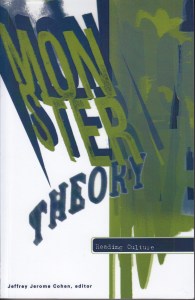
MonsterTheoryI want to understand monsters. I suppose that’s pretty common among Monster Boomers, but the thing is academics have been slow to give credence to our creatures. Yes, monsters are a throw back to the Medieval Period or worse, and reflect superstition, the supernatural, and things that go bump in the night. Our scientific worldview has no place for them, but they continually come back to peek in our windows and stomp on our cities. Horror movies, for example, consistently rate high in box-office grosses. And even adults, if caught in unguarded moments, might confess to enjoying the uncanny. So it was that I read Jeffrey Jerome Cohen’s Monster Theory: Reading Culture. Yes, it’s dated, but by humanities’ standards, it’s not too bad. Jurassic Park, one gets the feeling, was the rage when the book was being written.

As with most collections of essays, this is a Forest Gump of papers. Some of them were quite good and others were that kind filled with po-mo nougat. The one thing that was missing, sadly, is, well, monster theory. I’ve read just about every academic book available on monsters. I have yet to find a serviceable theory to help make sense of them. Yes, there are plenty of theories of origins—where monsters come from—but how to we handle them? Everyone knows that a stake is useful for vampires and a headshot is necessary for a zombie, but what are these revenants telling us really? Why do we still, when we can carry the internet in our pockets and call for help in the middle of nowhere, fear monsters? How do we construct, rather than deconstruct them?

Psychologists, of course, have a couch day with monsters. They represent parents, or phobias, or penises, or any number of things that make us uncomfortable. But how do we know a monster when we see it? Monster Theory, for example, has two chapters on conjoined twins. Now, at the time “monster” was a term used occasionally, but it is highly insensitive, let alone politically incorrect, to refer to humans that way. Then there were chapters on vampires and ghosts. Well, I suppose the dead can’t help their state either, but if they come back they could at least behave. Monstrosity is a concept, like religion, that we just can’t live without. We need our monsters in the dark just as we need dreams and desires. The question is what to do about them, and even after reading this weighty tome, I still don’t know.


Make Believer

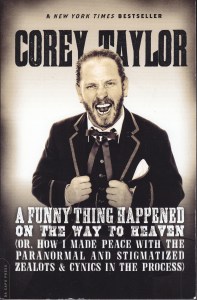
SmthgFunnyMy brother is way cooler than I ever hope to be. While I was busy learning all a tween and teen could about the Bible, he was listening to Lou Reed and David Bowie and Black Sabbath. Since the “door” between our rooms was only a curtain, I heard the forbidden sounds and, despite myself, had to admit that I liked what I heard. In fact, I once gave a lecture on Christian influence in secular rock music, and found many students staring at me in surprise for knowing so much about such debased music. In any case, when my brother recommends a book I know it will always be an adventure. Thus I came to read Corey Taylor’s A Funny Thing Happened on the Way to Heaven: (Or, How I Made Peace with the Paranormal and Stigmatized Zealots & Cynics in the Process). I didn’t want to admit to my brother that I’d never heard of Corey Taylor and that I couldn’t identify a Slipknot song even on Spotify, but the book sounded interesting, blending as it does bad-boy attitude with ghost hunting. November seemed a perfect time to read it. It could lead to some street cred on the bus.

It is difficult to distrust people like Taylor who write with absolutely no pretension (I’m a working-class kid, too). You know that what you’re getting is the real deal. It is also clear that like my brother and many rockers, Taylor is of above-average intelligence. Being smart can sometimes feel like a curse, and Taylor lashes out in several ways during the course of his narrative. He finds it odd to be an atheist who believes in, and has personally experienced, ghosts. I’m not sure that he would find it comforting to know that such a position is not at all as rare as he seems to think it is. Science deals with neither gods nor ghosts, and the average person is left to their own devices to decide who might speak with authority on such issues. Where are we supposed to look when scientists refuse to address such things? Personal experience is a powerful influence.

As with most books by opinionated, brash extroverts, it is difficult not to find yourself liking the writer. Trust may be too strong a word, but I do believe that Taylor writes without guile. After all, people have experienced ghosts for as long back as we’re aware. Why should it be any different for a celebrity? Is Taylor’s house haunted? (Or, more accurately are his houses haunted.) That’s a question no one can answer with certainty. Ghosts are beyond our realm of knowledge. Although plumbers can use scientific instruments, until actual scientists try to explain the immaterial we will be left to choose whom to believe. A metal singer can know just as much as a priest. Or even more, depending on the context.