Theological Fiends

SuchADarkThingVampires are among the most theological of monsters. Not that I’m a theologian, but I sometimes read those who are. Although zombies and vampires rival one another for the ascendent monster of the moment, I’ve always had a soft spot for the vampire, conceptually. The actual idea of drinking blood has always distressed my vegetarian sensibilities, but there is a deep intrigue about the character who constantly takes and never gives. And sees in the dark. And is practically immortal, unless violently killed. All of these aspects, and more, have theological undertones. M. Jess Peacock’s Such A Dark Thing: Theology of the Vampire Narrative in Popular Culture deals with such ideas and more. A self-admitted fan of all things vampiric, Peacock finds unexpected angles to the undead metaphor that make for connections between Christianity and the cultural vampire. He explores Otto’s understanding of the holy and how vampires fit aspects of it, the importance of blood, theodicy, and sin, as well as religious iconography and why crosses work against vampires (when they do). Most fascinating, however, is how vampires effect social change.

Since I often write about monsters, and specifically vampires, on this blog, it should be no surprise that I should read such a book. The question of why vampires have such staying power in our society is one that many have pondered. Peacock, by tying the vampire into deep theological needs (and we’ve been taught for many decades that theological needs are unrealistic fantasies themselves) has perhaps found a reason why. Just because we deny a need doesn’t mean it isn’t real. Think of all those Medieval monks denying sexuality. Biology, no matter how transcendent our focus, has a way of reminding us that we have needs. Vampires are, if anything, very forthright about their requirements. You have blood, they need blood. They will take it any way they can. And this leads to its own kind of ethic where, in some movies and stories, we, the victims, end up rooting for the vampire.

The social justice aspect of Peacock’s study is the one I found most compelling. We live in an era in which financial vampires openly and selfishly drain the blood of any victims they may find. What they do is done in daylight and no crucifix is large enough, no stake is strong enough, to stop them. We sit in our theater seats and watch as the economy rises and falls with the wealthy and their willingness to invest (or not) in the very economy that made them rich. Elections are won now by money supplied by corporations. Yes, the presidency can be, and is, purchased. Most politicians don’t know the price of a loaf of bread. Christianity, in any case, understands bread and blood to be analogues. The two are complementary, and represent the totality of human need. The vampire, as Peacock notes, can symbolize the difficulties of social justice. They may have their fangs deeply embedded in our necks, but at some level we have come to love our vampires. Even when they give us nothing in return.
National Reading Month

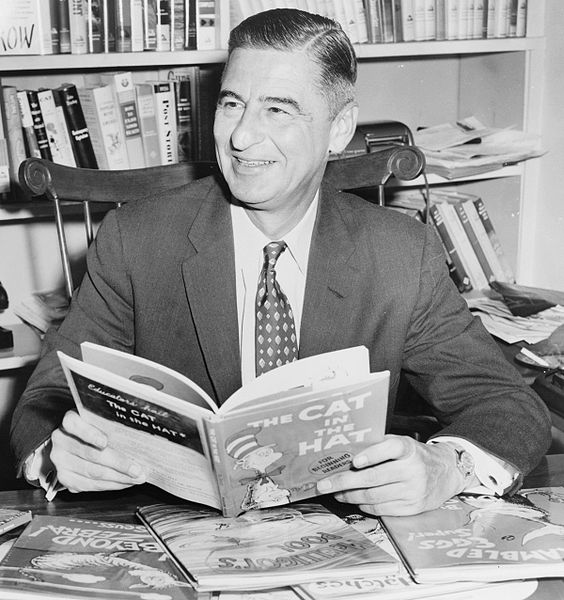
Welcome to National Reading Month. Today is the birthday of Dr. Seuss (Theordor Geisel). Since so many children begin reading with Dr. Seuss, March has been designated National Reading Month in his honor. Nothing could be more deserving of a holiday than reading. In an era when active, visual displays and lifelike animation readily draw eyes away from books, it is more important than ever to think about what reading has done for us. As a society, no significant advancements were made beyond agriculture and shepherding until writing was developed. We needed a way to convey knowledge not only over distance, but also over time. To participate in writing is to taste immortality. To read is to communicate with those long gone or far distant. How trivial we’ve made it all seem. Writing was a truly remarkable achievement. The entire purpose of schooling was originally to teach our young to read and do math. So we should all celebrate National Reading Month and put down the devices for a while and curl up with a book.

Okay, well, reading on devices does count. Still, some of us can’t help ourselves from acquiring books. I once visited a house of a friend’s relative on a trip. It turned out that we would be spending the night. As I glanced around my new surroundings I noticed something odd. There were no books in the house. None. It felt so hollowing that I knew I could not long remain there. Every room of our apartment (except the bathroom) has books. I travel with books. Even if it’s going to be a fairly brief car ride, I wonder what happens if I break down and don’t have anything to read while awaiting rescue? On the bus everyday I have at least one book with me, and sometimes two or three. I’m lost without them. Libraries and book stores are my favorite places to be. Surrounded by words, comforted by communication.

564px-Ted_Geisel_NYWTS_2_crop

Dr. Seuss was part of my childhood reading, but not so much as Bible stories and Easy Readers. We didn’t buy any Dr. Seuss, but I did check his books out from the library. When my daughter was born we corrected that misdemeanor. We purchased nearly every readily available book by Theodor Geisel, and this was in the days before Amazon. Some were difficult to locate, being in rural Wisconsin, but we persisted and instilled the love of reading into another generation. We have holidays to celebrate wars and victories in wars. Great deaths and momentous births. Love, fear, and the Irish. And yes, reading. The cracks in winter are beginning to show. Light is beginning, ever so slowly to increase. Why not celebrate the coming of the light with enlightenment for the mind? It’s time to read a book.


A Night at Culture

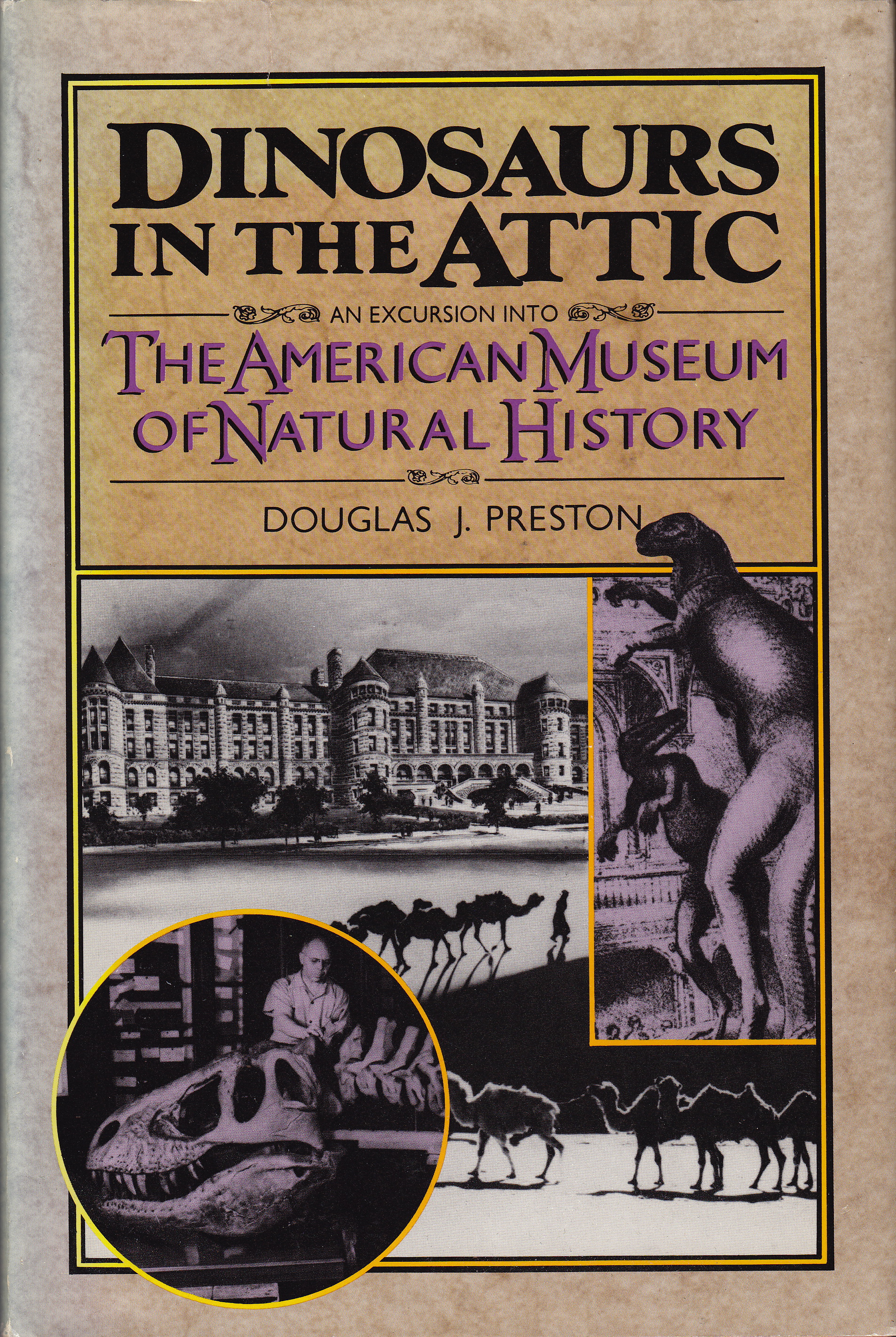
AmericanMuseumOne of the undisputed benefits of living in the greater New York City metropolitan area is the potential for culture. I know that culture exists everywhere, and that is precisely one of the points behind Douglas J. Preston’s Dinosaurs in the Attic. I picked this up at a used book sale because of my love of dinosaurs, but the subtitle provides more of a description: An Excursion into the American Museum of Natural History. Just when the first Night at the Museum movie came out, the American Museum of Natural History offered a program of nights to sleep in the museum, geared toward children. A generous family member bought us tickets and we got to sleep in the oceanarium under the giant whale dangling from the ceiling. We were allowed to explore galleries by flashlight, including the most famous collection of dinosaurs in the world. Who wouldn’t want to read about the backstory of such a museum after such an event?

As might be expected, with roots in the late nineteenth century, it was a different world in which this museum was conceived and built. Rare animals were shot to be part of exhibits, artifacts were acquired and shipped across national borders, and even world-class bird collections were bought to help an indiscrete baron avoid the humiliation of having an affair revealed by a blackmailer. Still, the religious element was clear. One of the founders for the museum, Albert Bickmore, went off in search of artifacts with his Bible tucked under his arm. Exotic places and peoples were still allowed to be called exotic, and the museum eventually became famous enough to star in a movie.

What struck me the most about this fascinating story, however, is when Preston points out that the most fragile, and valuable possession of the museum are the myths. Early ethnographers visited peoples that, even then it was already too clear would become extinct (culturally), and recorded their religious stories. This, and not the thundering Tyrannosaurus Rex, was the true purpose of the museum. Museums are about people. What we discover, what we make, and how we impact our planet. Myths, religious stories, are some of the most unique and delicate pieces of information that we can leave behind. Even materialists have beliefs. We all believe in something. Although nobody goes to a Night at the Museum to read dusty old stories, it is a source of comfort that they are there. Many of the cultures have indeed died out. Were it not for the foresight of those who could see where globalization would eventually lead, they would have been forever lost. And a world without myth is not a world worth living in.


Four Gods’ Sake

AmericasFourGodsStatistically speaking, most people don’t like statistics. I’m one of those. Numbers can do funny things to a person’s perception of things, nevertheless, I appreciate those who can work with them and make sense of them. When I saw the title America’s Four Gods, my disappointment engine kicked in. Is this book going to be about numbers? It was written by a couple of sociologists after all (and even a couple is a number). I’ve read enough of Christopher Bader’s work, however, to trust him. Paul Froese should be the same. Subtitled What We Say about God & What That Says about Us is an appropriate introduction to the book. Based on the Baylor Religion Survey, this study looks at what one of the most religions nations on earth believes about God. Since God is a key political player these days, that’s not a bad idea. Their conclusions are well worth noting.

Froese and Bader find that belief in God is highly idiosyncratic. It is likely the case that, similar to sacerdotal snowflakes, no two ideas about God are precisely the same. Categories, however, help to analyze things, and America’s Four Gods does just that, suggesting four main images of God that have very different characteristics. The Authoritative God we all know well. This is Jonathan Edwards’s deity that dangles spiders above the fire—active and angry in the world. The Benevolent God is also active, but more avuncular and kind. The Critical God is not very active, but is still annoyed with us. The Distant God tends to be kindly, but is rather remote. Using these four kinds of God, Froese and Bader examine what people believe about all kinds of issues, from war to social reform to adultery. When Americans say “God bless America” they mean very different things.

When it comes time to troop to the poles, we listen to what our candidates say about the Almighty. It is a virtual certainty that an atheist is unelectable in these religious states, so we want to hear what the candidates have to say about God. What they say and what their listeners hear, however, are clearly different things. Still, religious conviction is one of the most important variables when it comes to selection a President, Governor (at least in some states), or congress-person. Some candidates, with God off the plate, have nothing left to commend them at all. So it is in one of the wealthiest, most powerful nations in the world. A basic truth that we choose to ignore decides our fate for us. Mired in a Gulf War? Who you gonna call? Chances are we all know the answer to that. Chances are equally as high that we all mean something different by it.


Material to Ponder

EndOfMaterialismFrom my youngest days I remember wanting to be a scientist. This desire was tempered with a real fear of Hell and wish to please. In my career, it seems, the latter won out. Well, mostly. I never planned on being an editor, but it was clear that I missed the hard-core science courses and would always lack scientific credibility. You see, I believed what scientists said, and that included science teachers in high school. To this day I still believe in the back of my mind that you can’t really see atoms with a microscope. One of my teachers had said it was impossible, and although electron microscopes were still a long way off, it was clear that atoms were just too small. The force of materialism first hit me in ninth grade physics. If what I was hearing was true, then if you had enough information, you could figure out the whole universe. But what of Hell?

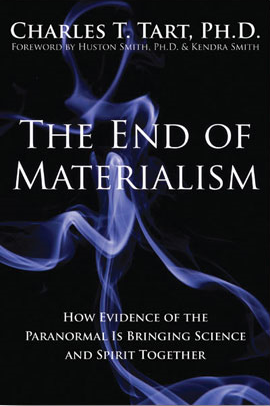
I read Charles T. Tart’s The End of Materialism because of my need for reassurance. Materialism leaves me cold. To find a scientist who feels the same way is a bonus. Not all authorities agree that we’re just excited atoms that can be seen. Tart is willing to consider the spiritual as part of what the evidence reveals. He explores it in the context of psi rather than in the doomed attempt to test religions empirically, but he does make a case for more to this universe than Horatio’s philosophy ever dared dream. And some of that more is decidedly not physical. It’s what we know from our experience of the world. We don’t only reason, we also feel. I have to wonder if reason is really the friend of materialism after all.

You can’t walk across Manhattan without seeing an ambulance most days. Often they’re called out to collect some unfortunate homeless person who collapses from our collective neglect. If we are only matter, then why do we bother to assist those in distress? It’s just a little electricity and some chemicals in a biological organ, right? Consciousness is only an illusion, after all. Unless, of course, the person suffering is a prominent scientist. Then we should all make way for the ambulance lest we lose an asset of great value. Materialism is insidious in its take-no-captives mentality. Feel what you will, there’s nothing more to life than physical stuff. You can make a good living believing that. Why is it that I’m suddenly thinking of Hell again?


Public Knowledge

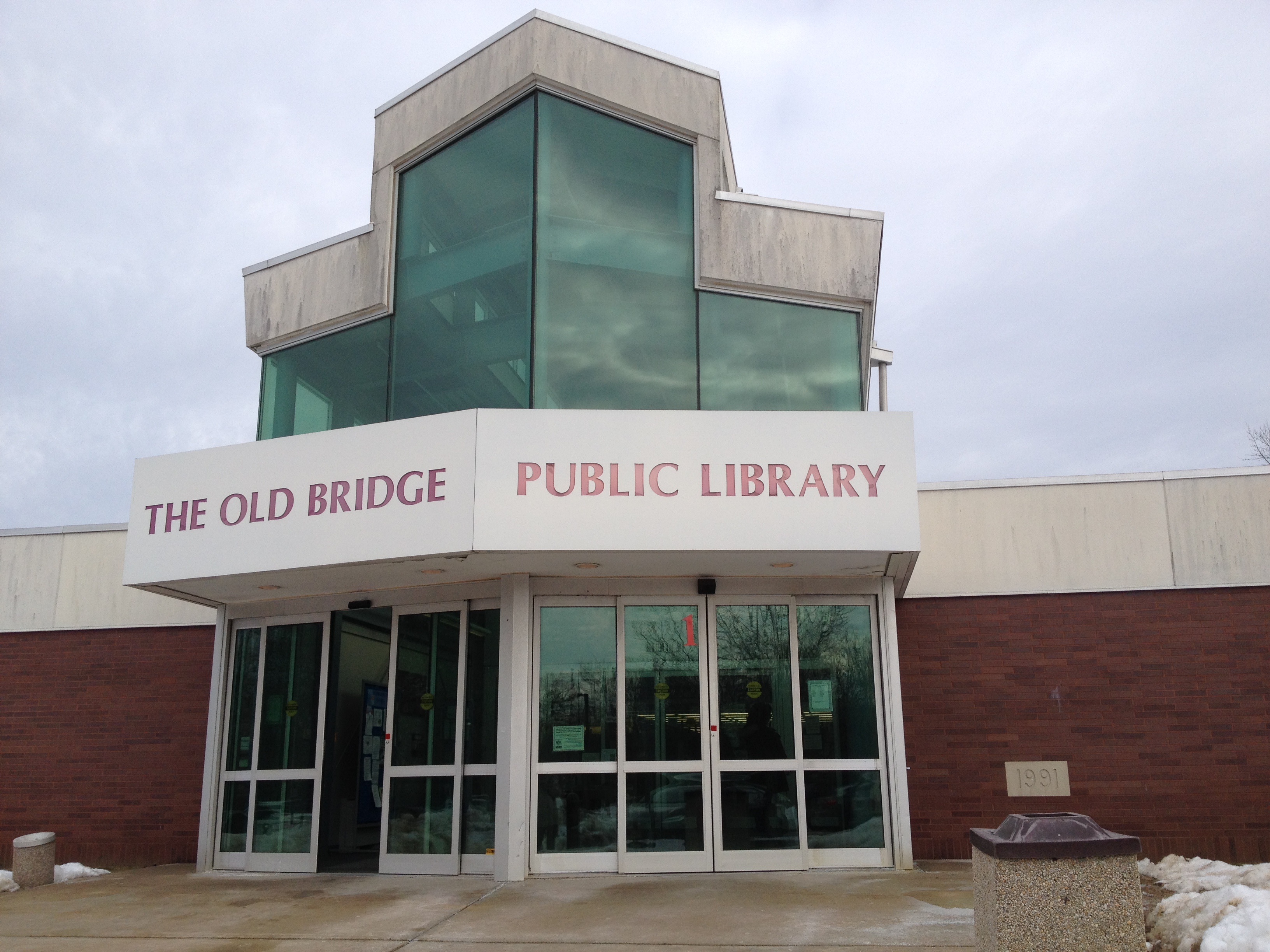
Sometimes the media gets it wrong. If one were to believe in the tales of industry prognosticators, our libraries would be closing, we’d all own Kindles, MOOCs would have replaced expensive college courses, and New York City should still be shoveling out from the worst blizzard since the Ice Age. We thrive on extremism. Although I don’t regularly read the newspaper (who has time?), the internet makes news memes available just as they happen and I feel somehow cheated if I have to wait more than an hour for trenchant analysis of an event I’ve just witnessed. Still, the publishers haven’t all shut their doors yet, colleges are managing to stay afloat, and libraries can be happening places. This became clear to me when I recently attended an event in the quaintly named Old Bridge Public Library. It was a Saturday, the time of the week when the gripping fingers of employers feel their weakest. Although I saw no evidence of an old bridge anywhere, I made my way through the traffic to the library where I met with a surprise—the place was crowded!

IMG_1901

For those of you not fortunate enough to live in New Jersey, Old Bridge is probably best considered a satellite of New Brunswick, home of Rutger’s University stadium. (I think there may be a university associated with it too.) That is to say, it is an urban area, and any antique structures to convey one across the water have long devolved to only nomenclature. Like anything in north-central New Jersey, it’s not far from New York City. When I arrived for my event, the parking lot was already full. It was not because of the event, either. Less than 20 showed up for that. When I went inside I found the library a veritable hive of activity. And it wasn’t just lonely, homeless people trying to get out of the cold. Families with kids, people with their grandparents, even other middle-aged adults like myself, all found their way to this island in the sea of a municipal complex not walkable from anywhere. I left encouraged.

Yes, the world of books and education is changing. Publishers feel stress, but that stress mostly has to do with predicting the best form to provide for content. Self-publishing has become a phenomenon, but many know that the self-published book has a difficult life in front of it. Libraries, however, are not the graveyards we’ve been told that they are. We need repositories of information that isn’t on the internet. And more importantly, we need places where, although the librarian shushing us may be iconic, we can get together with like-minded individuals and truly educate ourselves. I do sometimes tremble when I think of the future. The values I acquired as a young person seem, at times, on the verge of extinction. I learned that when this seems to weigh too heavily on my mind, I need to head to the nearest public library and support the old bridge to knowledge.


Addam’s Evve

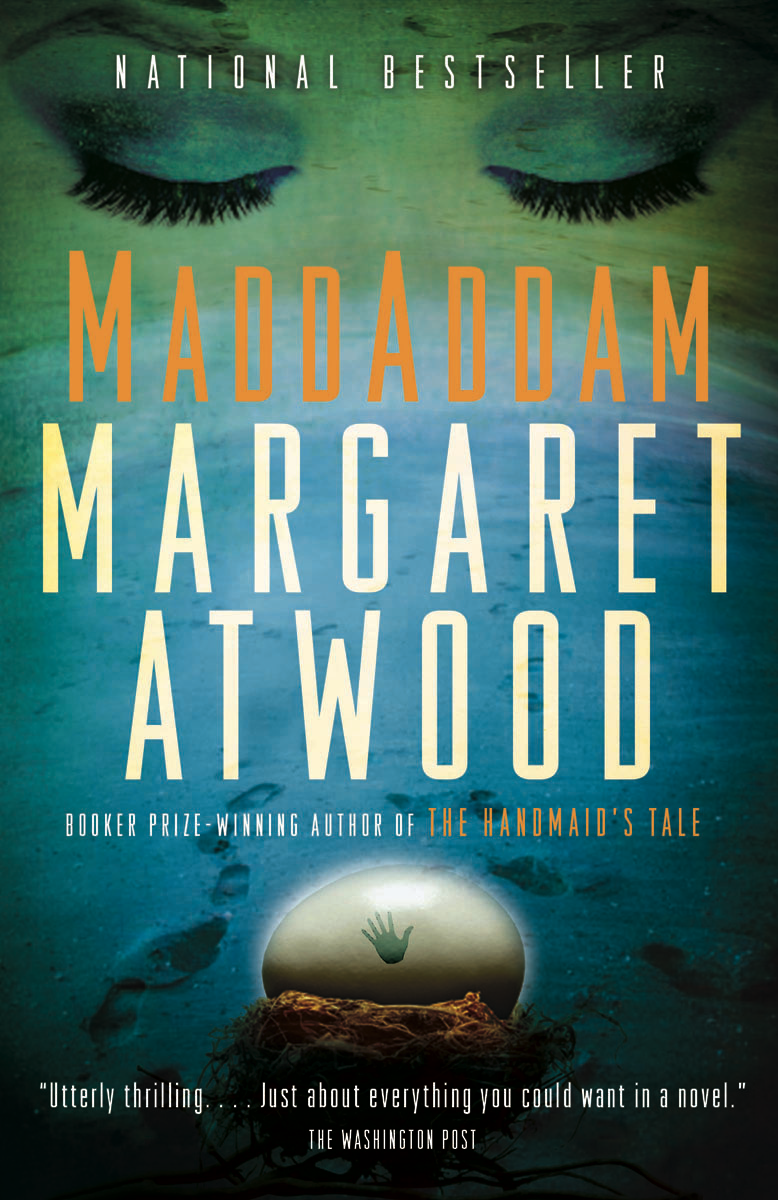
MaddAddamDystopias can be optimistic. I just finished reading Margaret Atwood’s MaddAddam, and came away from it strangely at peace. The third of its eponymous trilogy, the story takes place in a future that is simply a continuation of where we are at the moment. Things have gotten pretty bad—most of humanity has been wiped out, genetic engineering has taken dreadful liberties with creatures human and non, and corporations have fulfilled their dreams and have taken over at last. The few good people left are tormented by those society has made into sociopaths. Global warming has proven the naysayers false, and yet, despite all this, there is room for hope. Tying together the various strands from the previous two books, Oryx and Crake, and The Year of the Flood, MaddAddam is probably the most eco-conscious trilogy on the planet.

Apart from the many obvious biblical allusions (I often wonder what it must be like to miss so much, for want of familiarity with holy writ), the book also introduces a fully functional faux church. Atwood can be at her best when taking on the charlatans of piety. Cynical and calculating, “the Rev,” father of two of the ensemble cast, is everything a televangelist is, and more. Indulging in all that he denies his flock, even Elmer Gantry would have trouble keeping up. The Church of PetrOleum represents the most damaging of industries in a world already suffering the consequences of the greenhouse effect. Corporations make it rich while the Rev takes out his personal issues on his wives and children. Instead of being on the side of paradise, the church introduces chaos.

Through the gloomy scenario she’s foreseen, Atwood is able to see glimmers of a future that has possibilities. The protagonists are the members of a commune of a green religion, earth-centered and bearing a resemblance to both Wicca and monastic Christianity. That spiritual tradition, an offshoot of more established churches, is seen as dangerous by the corporations. And with good reason. Despite what televangelists tell us, spiritual truth is not on the side of big business. Jesus was no trickle-down economist. Reagan was no messiah. Corporate greed leads to blocking laws to clean up our world. We do not have control over what geneticists are doing, and, in fact, most of us have no idea what we’re eating or wearing any longer. Or what it is they’re packaging our food in. We are the consumers. Taught always to consume more. And the more that we are told to consume is the very planet that gave us life. My hat is off to Atwood, who still seems some possible cause for hope.


High and Dry

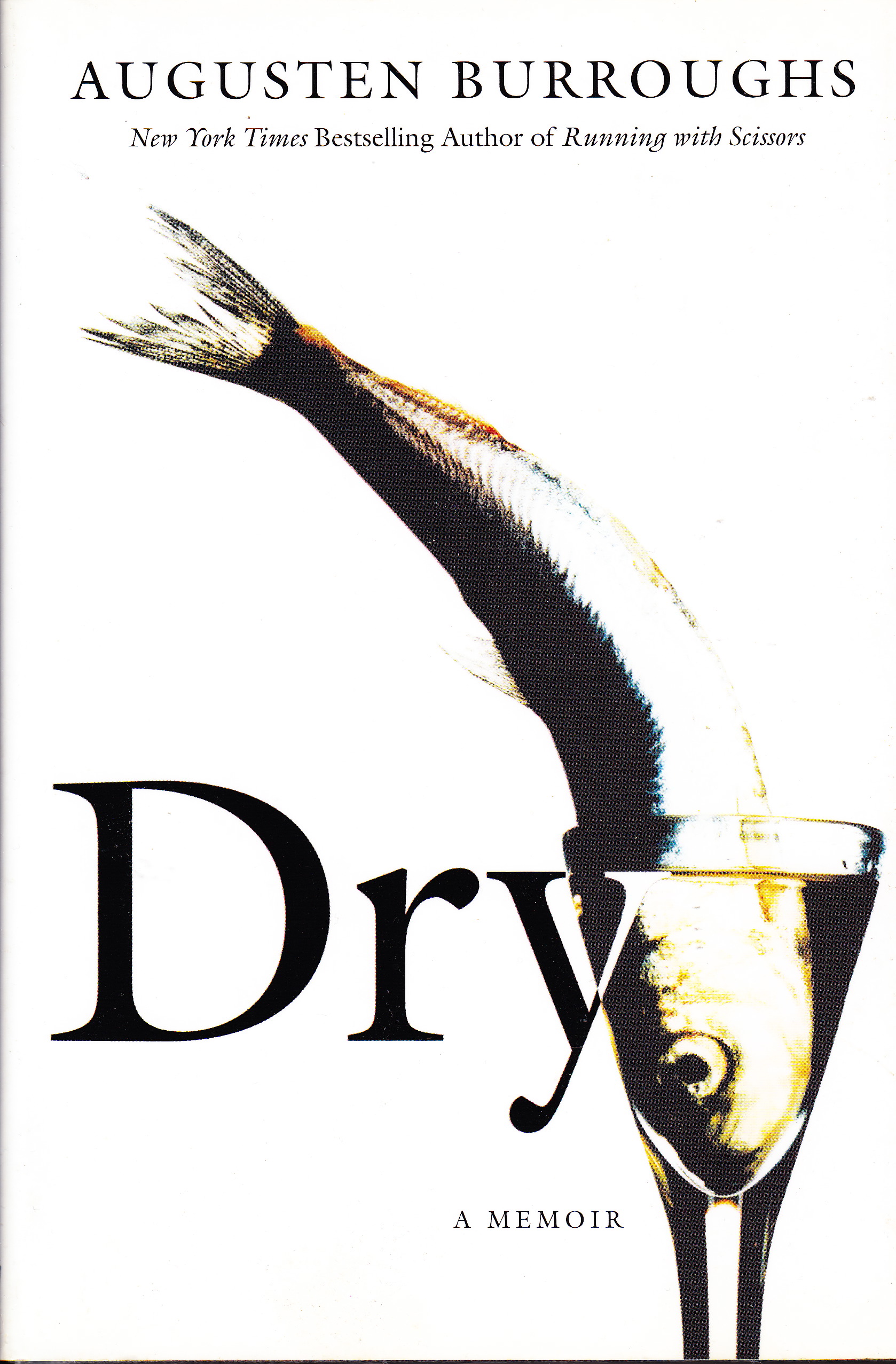
DryAlthough I frequently, and unapologetically, express my opinions on this blog, I try not to reveal too much about myself.  The books we read, however, are formative for who we are.  Anyone looking over the hundreds of books on which I’ve posted over the last few years will have a reasonable idea about my inner life.  One aspect I don’t often discuss is the fact that I grew up in an alcoholic household.  It is difficult for me to discuss and I tend not to read about such things because it is too much like therapy and I end up feeling pretty lousy afterwards.  Nevertheless, a friend who is a recovering alcoholic gave me a copy of Augusten Burroughs’s memoir Dry a few years back.  Guilt at not having ever read it caught up with me and so I decided to make an honest friend of myself.  Despite the very clever language and some laugh-out-loud moments, it was hard for me to read.  Time flew by as I had the book open, but too much turmoil attended it.
 
Once I attended an Al-Anon session.  This was a seminary assignment; we were to observe and take notes and write up a report for a sociology of religion class.  Instead, I found myself participating.  I know recovering alcoholics who dislike Al-Anon—it is an organization for families of alcoholics—because it can be judgmental.  The fact is, however, that those who are part of an alcoholic family do suffer.  I didn’t go back to Al-Anon, and I religiously avoid self-help books.  I do know, nevertheless, that my outlook was profoundly shaped by my youngest years and the insecurity that dogs me every day of my life has its origins then.  I also thought about how memoirs of alcoholics can become bestsellers.  The jacket blurbs say how funny they are. I don’t hear so much about memoirs of those who were collateral victims.  Don’t get me wrong—I’m not blaming alcoholics.  Alcoholism is a disease. It may be treatable, but it is tragic for those afflicted with it. That doesn’t diminish the impact of having to live with it when you’re too young to have a choice.
 
When I was in college an erstwhile friend took me to see Arthur.  Dudley Moore was rocking the critics with his performance.  I smiled through my horror.  There was nothing here to laugh at.  So a book like Dry makes me feel…? Conflicted.  What do I understand now that I haven’t before?  I read about how even prestigious colleges are increasingly renowned for their parties, lurching about under their laurels.  Some will experience it as a temporary fling and will move on. Some will never graduate.  What can be done?  We can listen.  I suppose that’s why my friend gave me the book in the first place.  I need to put aside my pain and fear. I need to listen.


Psalms of Lament

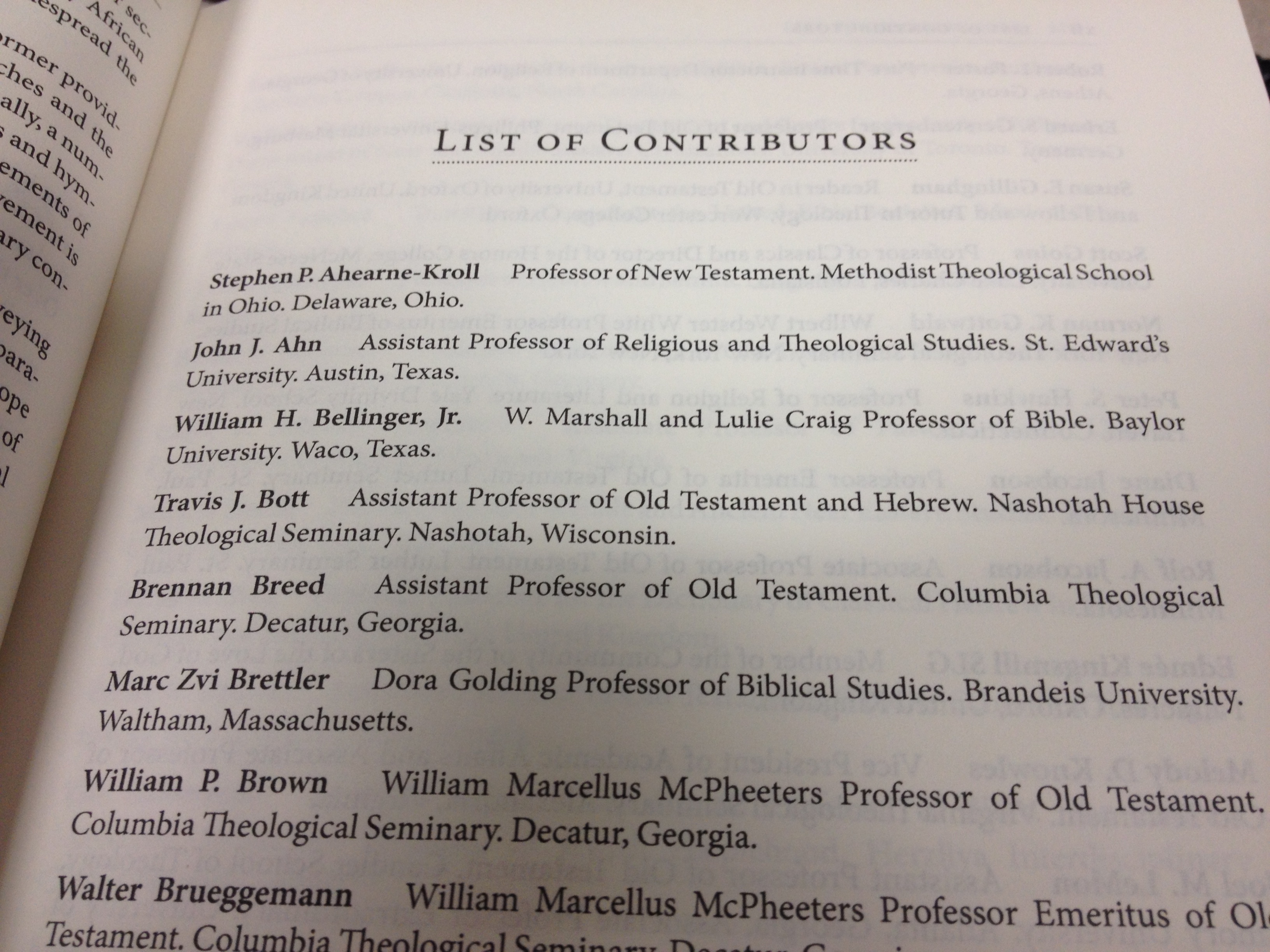
Fate can be decidedly cruel sometimes.  Accidental discoveries can be the most painful of all.  As my regular readers know, I wrote a book on the Psalms (Weathering the Psalms, Wipf & Stock—on sale now!) while teaching at Nashotah House seminary.  I sent the manuscript to Oxford University Press, and it was declined on the basis of one review.  Subsequently, I met the reviewer at a conference reception and he is now working on a book proposal for me.  Such are the ironies of life.  I can let that go with a chuckle of existentialist bonhomie.  The twist of fate comes in through helping a colleague with a question about the Psalms.  I grabbed the nearest book at work that would help, the newly published Oxford Handbook of the Psalms.  I’d glanced through it before, but this time it fell open to the contributor’s page and the words “Nashotah House” fell upon my eye.

IMG_1898
 
During my years at the seminary, I published at least one academic article a year, as well as a book, and I attended and delivered papers at the major professional conference every year.  No one ever approached me about contributing to a Handbook, apart from my advisor and friend Nick Wyatt.  I labored at building an academic career for 14 years in obscurity.  Now, the newly hired replacement (not the faculty member hired to replace me) gets invited to contribute to a major reference work.  I do not know the man.  He may be a perfectly personable chap.  Some of us, however, can work our hardest and never get noticed.  It seems as if the world of scholarship is really just a house of cards. 
 
Perhaps in times of schlock and flaw, such as these, I should turn to Ecclesiastes for comfort, rather than Psalms.  Yes, the Psalms say some pretty challenging things to God—not as challenging as Job or Jeremiah, but still.  Ecclesiastes, however, is the one to calm the intellectual’s soul.  There are those who claim that the Bible no longer has any utility in a post-Christian society.  Wise Qohelet, I’m sure, might just agree, even as he disagrees.  I tried, without benefit of sabbatical, and with additional administrative duties, to make an academic life for myself.  I was, in reality, just shuffling the deck with old Solomon.  We took turns building layer upon layer, he and I, both knowing that our house, like any built on sand, could never stand.  It must be some of that sand in my eyes; otherwise I can’t explain why they are watering so.


Duck Overboard!

Moby-DuckI remember the moment precisely.  I was in Santa Barbara, California on a campus visit for Routledge.  I stopped into the university bookstore to see which of our/their books were being used.  From the cover of one of popular books in the general reading shelf stared a friendly yellow duck.  My thoughts went, as they often do, to my daughter back home.  The cover copy explained that this was the true tale of a bunch of “rubber” ducks lost at sea and the captivating story of how they ended up in diverse places.  I bought it for my daughter since rubber duckies had been a kind of childhood theme, and when I saw it on her shelf recently I also grew curious again.  I’ve always been fascinated by the sea, even applying for jobs at the Maine Maritime Academy just to be near the water (and in Maine). 
 
Of course I’m referring to Moby-Duck by Donovan Hohn.  It wasn’t really as cute and cuddly a book as I thought it might be—that duck on the cover sure looks happy—but it was far more important.  As Hohn explains, he was a teacher captivated by the story of a cargo container holding plastic (not rubber) bath toys falling into the Pacific Ocean on a crossing from Asia.  The ducks (and frogs, turtles, and beavers) spread out as far as Alaska and points south on the west coast of the US, and some perhaps made it back east.  Some were even reported in Maine (but Hohn came to doubt they are the right ones).  So he set off on several ocean voyages to follow the trail of the toys.  He has left us a moving and thoughtful memoir of the journey, and also much more.
 
The oceans are incredibly polluted.  As Hohn points out at several points, entire cargo containers—sometimes several at a time—tumbling into the ocean and being left behind is not uncommon.  Add to that the trash, particularly the plastic, that otherwise makes its way into the ocean, in some places forming islands of garbage so large that they can be spotted by satellites, and I begin to grow truly alarmed.  Hohn learns about plastics and how toxic they might be, as well as how thoughtlessly they are hurled into the oceans.  Not written as an environmental manifesto, Moby-Duck—literate, witty, and very human—nevertheless narrates how a father came to see the world through the eyes of parenthood.  And some of what he finds is truly frightening.  My takeaway?  Little things matter.  Immensely.  That, and we need to clean up our act before it’s too late.  No bath will wash away the stains we’re still in the process of creating.


Good, Evil, and Normal

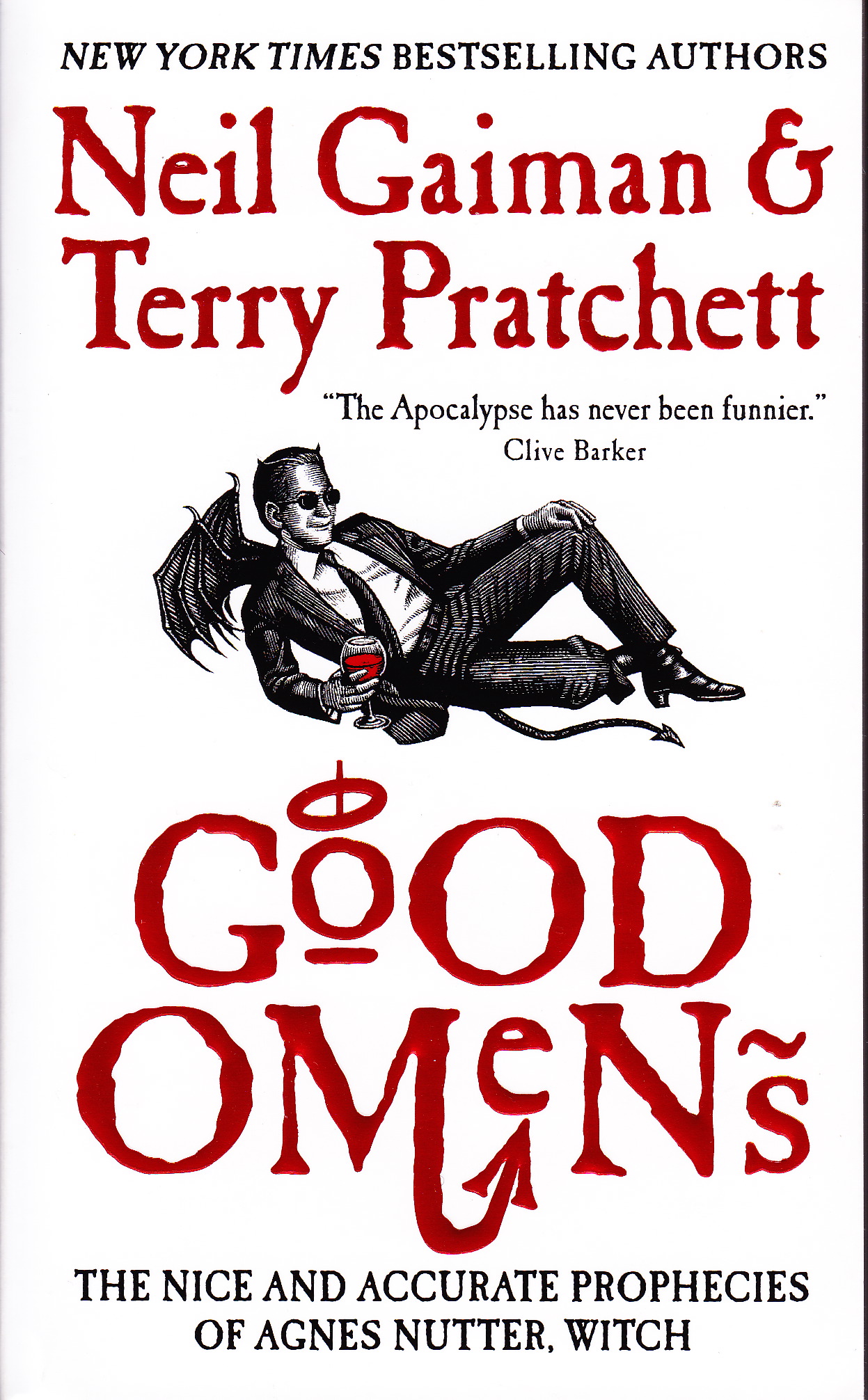
GoodOmensTo date I’ve read a fair number of Neil Gaiman novels. One of my students started me out on American Gods and I pursued his others on my own after that. I was a little unsure about Good Omens, however. I guess I’ve always been dubious about the quality of co-written books. Terry Pratchett, an accomplished novelist in his own right, paired up with Gaiman on this one, and it took the wisdom of another student, albeit recently graduated, to assure me that it was worth the effort. Given that it’s about the apocalypse, or perhaps an apocalypse that doesn’t quite take off, there seemed to be no reason not to give it a try. It is, at the end of the day, a charming book with colorful characters and an Antichrist who gets switched at birth and grows up in a normal household and herein lies the tale.

One of the most common religious themes in novels is the end of the world. The four horsemen of the apocalypse are one of the most striking literary tropes of the first century, if not of all time. The real question about the end of the world, it turns out, is—why can’t it be funny? For those who’ve pondered that, Good Omens is the book for you. It actually does help, however, if you’ve read the Bible. It adds to the cumulative effect. Subtitled The Nice and Accurate Prophecies of Agnes Nutter Witch, the book revolves around the certainty of the written word. Prophecy, however, just as in the book, only achieves verisimilitude in retrospect. The prophets didn’t always get it right, even in the Bible. Human choice often causes a breakdown in divine plans. In Good Omens, you’re pretty sure from the beginning that the world won’t end, but you’re not quite sure how it won’t end. The unfolding of the story eventually addresses how a prophecy can fail.

Free will, those who specialize in theology and philosophy will say, is among the more difficult of phenomena to pin down. Some predestinarians would say it’s all an illusion. We are programmed to do what we do. Ironically, some reductionistic materialists would say the same thing. Each of us, however, trudging through out days of toil and play, feels like we’re making our own decisions. True enough, sometimes circumstances decide for us, but if we were given the choice of good or evil, wouldn’t we approach it the way we approach just about everything else? Along the way, the demon Crowley asks a pointed, poignant question: why would God make people inquisitive and then forbid them some obvious, desirable fruit? Isn’t the conclusion foregone? Any writer today would know the outcome before the first sentence was finished. And so, free will is off and running. I hope that the fact that the world doesn’t end won’t be a spoiler for anyone, because I also hope that others will read Good Omens and learn a great deal about how demons can be good, angels can be naughty, and people will always just be people.


What If?

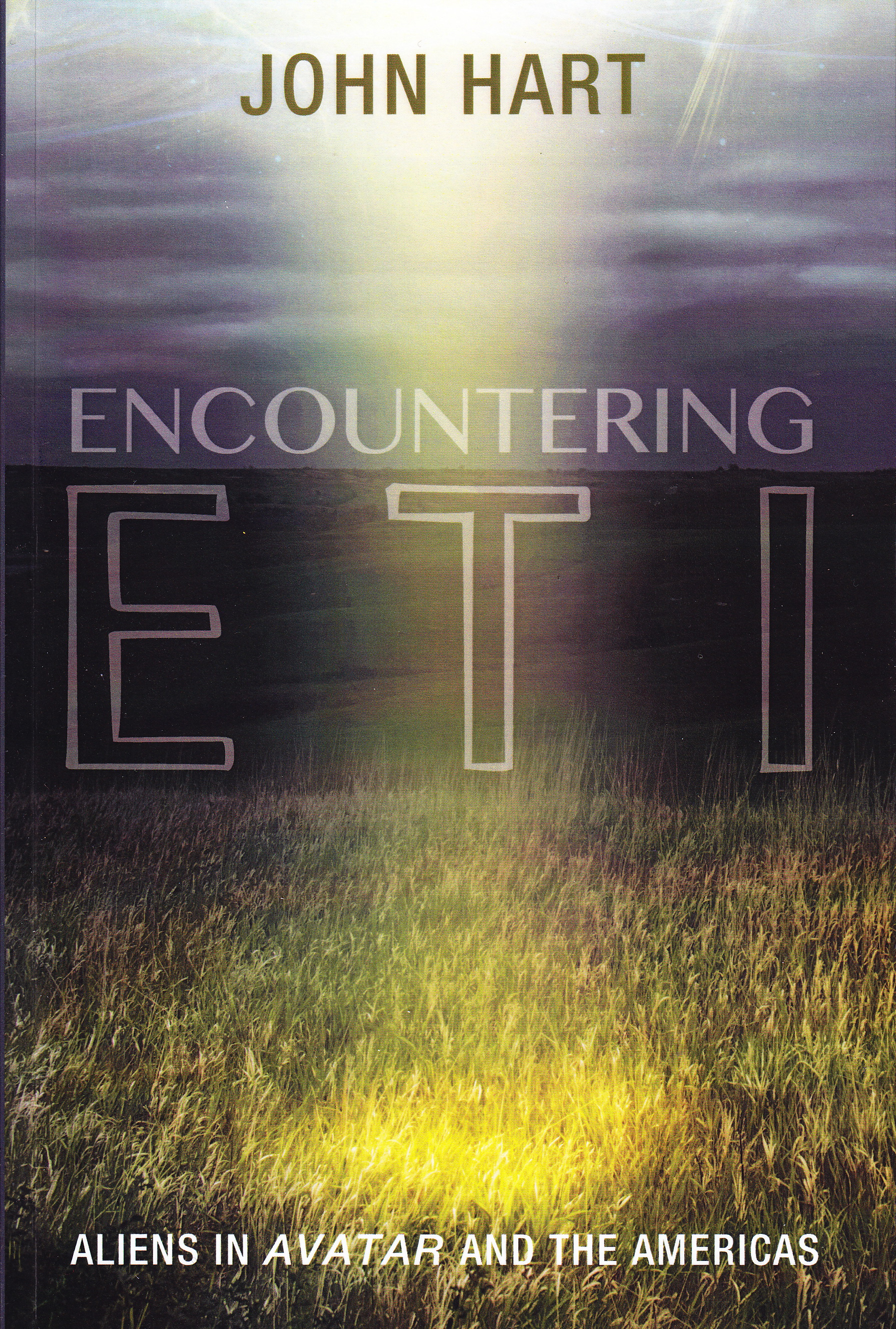
EncounteringETIA game that parenting books used to recommend was called “What if?”. It was an imagination game played by parents with their children to teach them about “stranger danger” in a way that wasn’t too scary. We naturally, it seems, fear the other. “What if?” kept coming to me as I read John Hart’s book Encountering ETI. ETI is a bit more precise than the more familiar ET, whom everyone knows, is an extra-terrestrial. The I stands for intelligence. What happens, in order words, when we meet extra-terrestrial intelligence? I very much admire academics such as Hart who are willing to ask what is such a necessary question. The point of the book is much more an ethical than a speculative one since human history has pretty much documented what happens when the Discovery Doctrine is applied. Natives (or TI, terrestrial intelligence, if you will) at the hands of newcomers with the Discovery Doctrine, are soon wiped out. History has repeated the story far too many times. Scientists such as Stephen Hawking even apply that to us, saying that if ETI arrives we will be exterminated. Hart takes a much more balanced look at the question.

Part of the problem is that we, as a society, have been taught to laugh at those who’ve seen UFOs. UFO stands for Unidentified Flying Object, and many people can’t identify what they see in the sky. But we all really know what I’m talking about. Those who’ve seen what may be non-terrestrial flying machines are automatically classed with the mentally unstable and ridiculed into silence. Thus it has been since the 1950s, despite foreign (!) governments and their militaries admitting that yes, we see things and we don’t know what they are. France, Argentina, and Russia, for example, have opened the files to some extent. The point that Hart makes is well taken—if we ridicule so automatically, will we be prepared when they arrive? Shouldn’t we be thinking about this now that scientists are discovering there are likely billions of planets in the Goldilocks Zone (capable of supporting life)? Ah, but it is so hard to let go of racial superiority! Homo sapiens sapiens are pretty impressed with themselves. As if nothing better could be conceived. Perhaps this is original sin.

Hart, whose book is subtitled Aliens in Avatar and the Americas, takes the possibility of visitation at face value. I’m sure it has impacted his career somewhat. The wise choice, it seems to me, is to take seriously what is almost a dead certainty—we are not the only life in the universe. Ironically, the idea that we are is largely based on the Bible. Genesis makes a pretty clear statement that we are God’s best idea. We’ve largely dropped God from the picture, so we, as humans, now occupy the top rung. And when we find humans different from ourselves we ask how we might exploit them to our advantage. (Here’s where Avatar comes in.) Hart’s book, as readable as it is affordable, is one that any thinker should take seriously. It is a book of ethics, writ large. Universal ethics, one might say. The aliens may not land in our lifetime, but chances are pretty good that they’re out there somewhere. It might be best to take some time to clean up the house before guests arrive.


Holy Trilogy

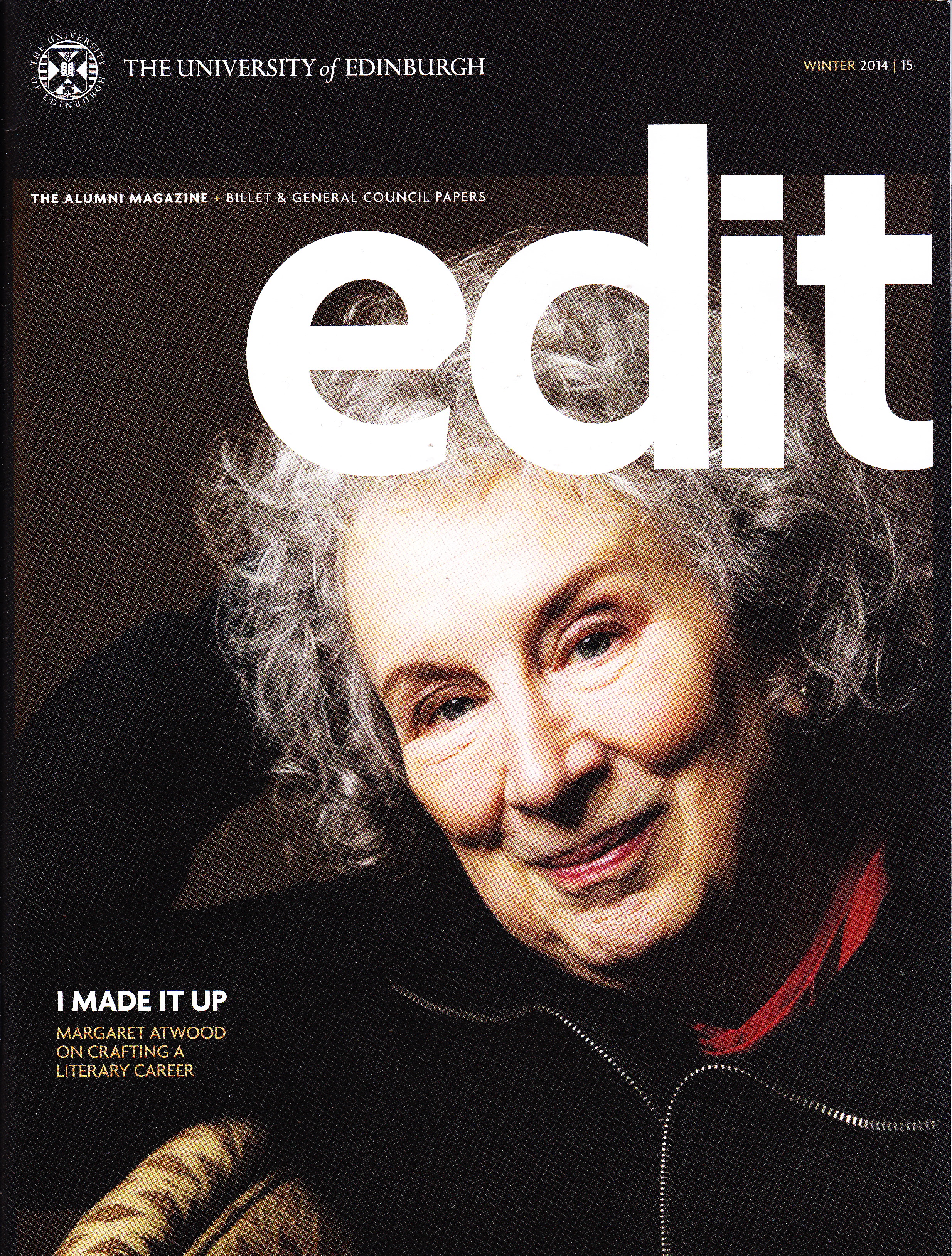
AtwoodAlumni magazines, thinly disguised appeals for money that they are, seldom merit much time. This doesn’t stop me, in any case, from sending notices of my new publications or blog, since I, like most fellow alumni, have never been cited as notable. One of the thousands who graduated and amounted to nothing. Once in a great while, however, I feel a slight twinge of pride when one of my three mothers does something of which I’m particularly proud. Most often this is Edinburgh University, although once in a while Boston University also catches my attention. A recent copy of Edit—an alumni mag that began some time after I graduated, American-style—has a familiar face on the cover. Well, not familiar in that I know her, but familiar in that I’ve read several of her books and feel like I know her. Margaret Atwood was given an honorary degree by my old school, and I am pleased to be a, albeit lesser, co-alum.

Over the holidays I picked up a copy of MaddAddam, the third and long-awaited conclusion of the trilogy of the same name. As my regular readers know, I have a soft spot for dystopias. In spite of attempts by many writers to paint a brighter future, it seems that given how far we’ve let things go, collapse before reform feels inevitable. The apathy I find when we read about the vastly disproportionate disparity between haves and have-nots, and the surging of deep, animalistic, primate, rage at injustice doesn’t seem to me a healthy mix. Atwood, although I can’t yet speak for MaddAddam, envisions collapse before florescence. The same may be declared about A Handmaid’s Tale. Complacency, it seems to me, is the real enemy.

And universities continue to send me alumni magazines that instead of inspiring me, rub my face in my own mediocrity. I spent thousands of dollars and thousands of hours on my education and I am paid less than most janitors at most colleges. Not that I was ever in it for the money. I did, however, envision a hopeful future where I’d be teaching, perhaps at a small college somewhere, writing my thoughts in books rather than blogs, and having a modest impact on the world for good. Instead, I have found myself living in a dystopia. As I roll over and see that 3 in first position on my bedside clock on a table with the legs broken off, I know it is time to face the cold of a drafty apartment so I can await the bus to pay for another day’s privilege. My comfort is that Margaret Atwood made an impression on Edinburgh University, and will soon be making another impression on me.


Poet Tree

Perspective often determines reality. Among those animals that can potentially live what seems to us a long time, humans measure centuries and millennia, looking for evidence of progress. An article reviewing Rachel Sussman’s The Oldest Living Things in the World, on a recent New York Times page, suggests reassessment might be helpful. When it comes to longevity, plants tend to have the advantage over animals. Although the Times article is only a sampling, here we find fungi and plants that have survived for thousands of years. Sometimes as collectives, sometimes as individuals, trees especially have proven themselves to be particularly vital. I was reminded of this as we recently went through the annual ritual of taking down the Christmas tree. We have, since returning to the United States after my doctoral program, visited tree farms where we select a still-living tree each December. Although they are grown to die, the Christmas tree becomes very poignant as it stands naked, ready to be dragged outside and dumped on the curb. The anticipation, the joy involved in welcoming it as a new member of the household, seems lost in the grayness of January. We have killed and now we abandon.

The Christmas tree is, of course, symbolic. Predating Christian solstice remembrances, the evergreen ironically reminds us that life has not ceased, despite the cold and snow. This particular tree has paid the ultimate price to bring another species joy for a few weeks. Can we so heartlessly throw it away? Of course, the community mulches the trees to give new growth to future generations, so there is a kind of sad resurrection here. Life dwells deeply with trees. Some of those highlighted by Sussman have survived since the Sumerians first learned to write on clay, to this very day. Some have survived even 8,000 years.

DSCN0869

Life is tenacious. Our tree by the curb still looks green and healthy to me. It has given life to a holiday season that always seems too brief, with its carefree days and sense of togetherness. We now have another year to survive until we might take a few days and ponder if there is indeed more to life than work. Without moving from its spot, simply being grounded in the earth that brought it forth, a tree can survive millennia as human civilization emerges with its frenetic madness and insistence that there is so much more to do and earn. I do wonder, however, if perhaps our long-lived forest dwelling companions might have some deeper wisdom for us. We can be born, grow old, and die in the shadow of a tree that was planted by generations past, or simply found its own way into the world. And after we’re gone there will be some who will look to trees and find an answer.


Ships Ahoy

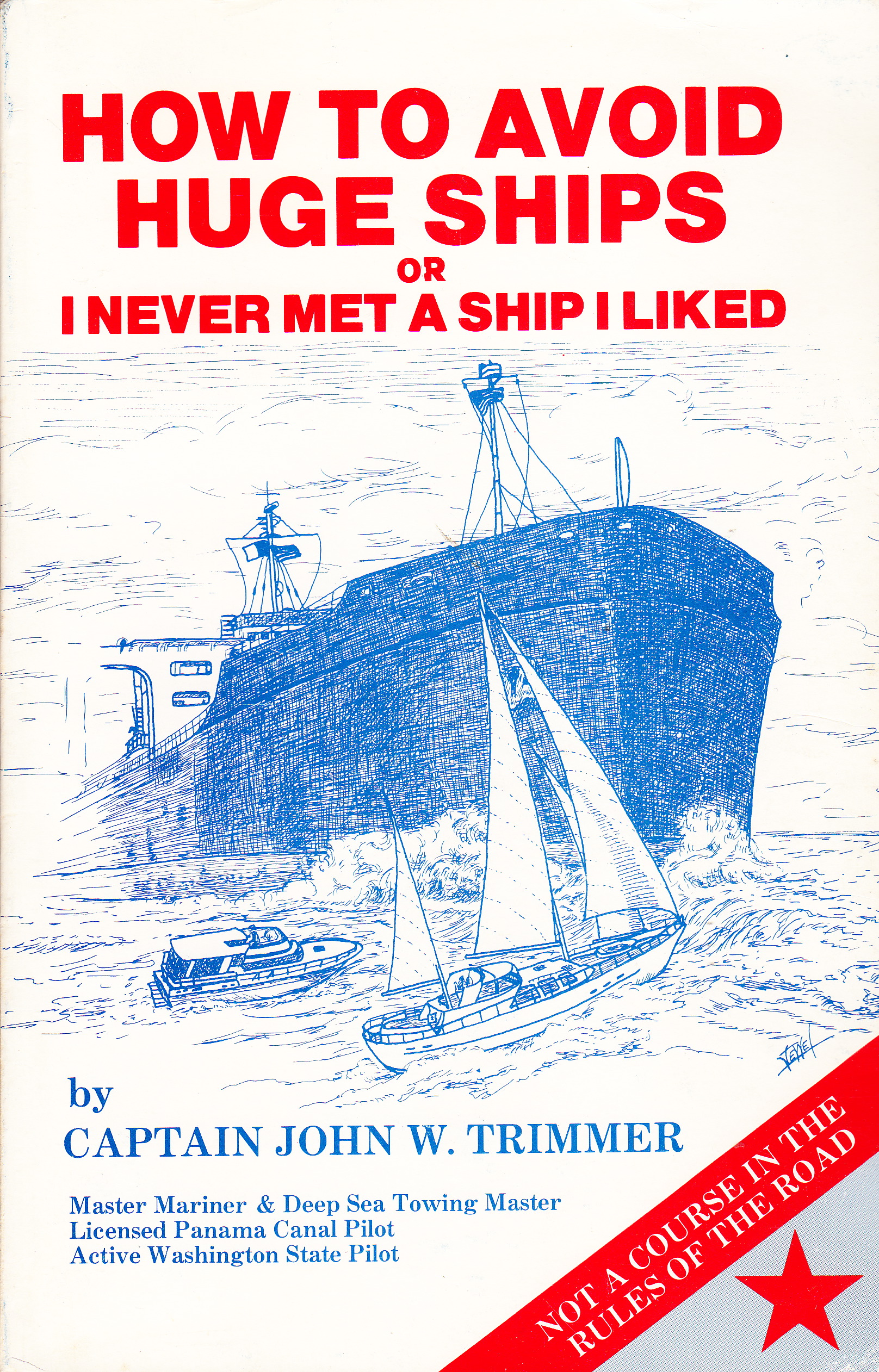
Huge ShipsI’m always on the lookout for a good metaphor. Some time ago a humorous list of improbable book titles was circulating the internet. One of those books was How to Avoid Huge Ships, by Captain John W. Trimmer. Privately published, it surely made its author little money, and it quickly became one of those books with hilarious, bogus reviews on Amazon. My family, knowing my predilection for seafaring (at least in imagination) and my love of irony, found an overpriced, used copy for my birthday. I was glad to have it, but wasn’t sure I’d ever read it. I don’t own a boat, and my efforts to live on the coast have always been thwarted. But then, I’m always on the lookout for a good metaphor.

How to Avoid Huge Ships, subtitled I Never Met a Ship I Liked, is one of the most parsimonious books I’ve ever read. Trimmer, a veteran of many years at sea, writes with paternal concern for those who have no apparent sense of reason. Large ships, as most of us with a modicum of physics realize, can’t stop or turn quickly. Yet, in this spellbinding little book, Trimmer reports, and even provides photographic evidence that smaller, private boats often deliberately cut across the bow of these fast-moving juggernauts. As he points out, no license is required to drive a boat, and most small boat pilots have no training. Accidents and fatalities occur. People destroy exorbitantly priced yachts by not moving out of the way of what can truly be called a monster. And like an impatient father, he’s somewhat weary of it. The style is so unpretentious that it might redeem self-publishing in an era when common sense doesn’t interest commercial book houses.

Aware of his own literary limitations, Trimmer bemoans not having an exalted final chapter of great wisdom. He’d already won me over, however, with the simplicity of his sermon. Get out of the way of massive ships. It is a gospel for those with ears to hear. He even points out that the non-seafaring Israelites had respect for ship pilots (citing Ezekiel on Tyre, with decided hints of Melville, intentional or not). I’m not likely to be on a ship soon, but I have survived a horrific hovercraft trip across the English Channel that forever taught me the true respect for the sea. And I know, if I ever find myself again upon the waves, I will consider myself fortunate for having read this wonderful little book.