Haunted Landscapes

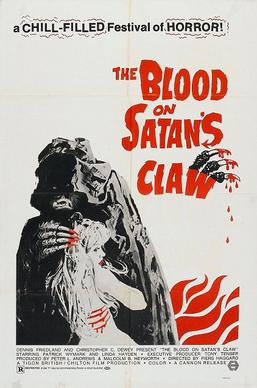
The Devil’s Advocates series consists of short books focused on a single horror film.  For horror fans they’re a great resource, as they will hopefully also be in teaching settings.  David Evans-Powell’s recent volume on The Blood on Satan’s Claw is a fine example of just how intelligent horror can be, and how it can be interpreted so.  This particular movie from the early seventies was never a major revenue earner, but that in itself is a lesson.  Influence, measured in smaller scales, can still create an impact on people’s lives.  Evans-Powell’s treatment takes several angles, each of which casts light on this unusual movie.  Reading this little book brought quite a few ideas to mind, both about social structures and religion.  The film is set in the early 18th century, with a city judge who is problematic actually saving the day.

Since The Blood on Satan’s Claw is folk horror, quite a bit of the discussion focuses on landscape.  Paying close attention to landscape reveals hidden information.  It becomes almost a character.  At the risk of too many spoilers, the film is about uncovering Satan—or a demon, it’s not terribly clear on the point—from a farm field.  As this evil character gains power the local children are drawn to him and the village authorities are unaware of what’s going on in the nearby woods.  Landscapes reveal and conceal as the creature gains power and the children engage in acts of violence.  The response of the judge is a violence of its own.  The movie doesn’t really deliver all that it promises in that regard, but Evans-Powell explains how the film was made and that, in turn, explains some of the rough edges.

Religion and horror go naturally together.  I suppose any film with “Satan” in the title will address religion somehow.  Not all horror is religious, of course, but many of our fears derive from religious subjects.  It’s almost as if as we ceased to fear the landscape—nature having been tamed to some degree—we began to find fear in religious thinking.  Put another way, religion has kept fear alive.  The Blood on Satan’s Claw was never a major, big-budget release.  Except for fans of British horror it has largely escaped notice.  Folk horror, because of its recent revival, brought interest back to some of these older efforts to explore such themes, many of them implying a religion hidden in the landscape.  This book provide a useful map in exploring that territory.


Religious Dinosaurs

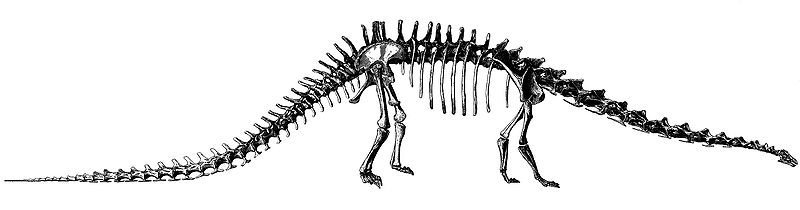
Dippy is, apparently, a common name for pet diplodocuses.  The statue of a diplodocus outside the Carnegie Museum in Pittsburgh is fondly known as “Dippy,” as is the fossilized remains of one such dinosaur from London’s Natural History Museum.  The London Dippy is on tour, or at least has been.  I learned about the fact that Dippy was in Norwich Cathedral just a day or so after the exhibit closed (I wouldn’t have been able to make it in any case; I mean I haven’t been able to get to the Pittsburgh Dippy and I live in the same state).  There are still plenty of photos on the cathedral’s website.  It’s a striking juxtaposition.  A massive stone building constructed to a medieval conception of God and one of the best examples of evolution, far older than the church on several orders of magnitude, peacefully coexisting.

John Bell Hatcher, public domain, via Wikimedia Commons

American evangelicalism has a much harder time accepting science.  I’ve been writing about change recently.  One of the changes in western thinking has been to move from the “I told you so” of clerics to the “I can show you evidence” of scientists.  Those who like others to tell them what to think have a difficult time letting go of medieval notions of the world—that it’s flat, and young, and about to end, as if God has a very limited imagination.  We now know that the world has been here far longer than one interpretation of the Bible posits, but that doesn’t make it any easier to have a conversation about it.  Many religions want to claim knowledge that can’t be questioned.  And yet, dinosaurs and cathedrals seem to mix well.

The assumption that those who think differently are evil, or are inspired by evil, is one of the most insidious children of monotheism.  With one God comes the idea of only one way to understand that deity and all other interpretations come from that divinity’s arch-enemy.  It’s a view of the world that struggles with change.  Historians, even those of us who focus on the history of religions, tend to take a long view. It’s possible to trace the development of ideas that have lead to the strange juxtapositions of our modern world.  Apologists so convinced of their interpretation of Genesis that they think the Bible wouldn’t have found dinosaurs worth remarking about, for example, and then cramming them on the ark.  Others, it seems, welcome dinosaurs into cathedrals.  Which is a better way to be humble before God?


Everything’s a Nail

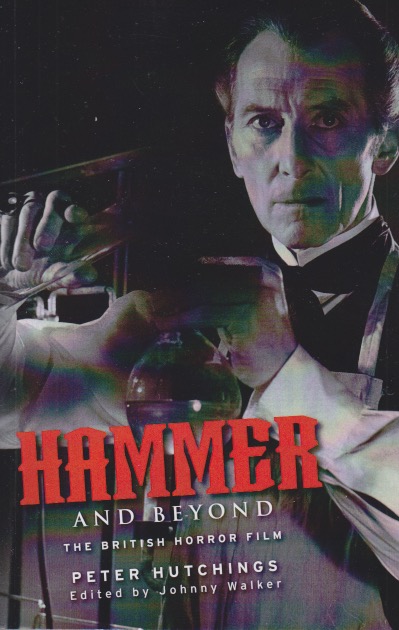
Taking my first, tentative steps into horror analysis, I had read a great many monographs on the subject.  I had watched many horror films over the years, but since my family has no love of the genre, and since habitually under-employed I can’t afford to pay for many, my quota is fairly modest.  I’ve missed out on many.  When I could afford it, I started out with either movies I’d heard of when younger but had never watched, or packs of ultra-cheap B (C or D maybe) movies that nobody has ever heard of.  As I lamented recently, British films were rare—Hammer, which held the English reputation for horror, was the undiscovered country.  Then I saw that Peter Hutchings’ Hammer and Beyond: The British Horror Film had come out in a second edition.  (The new edition contains three of Hutchings’ other articles as well as the original text.)  I had to read it.

Although I’ve not seen many of the movies discussed in the book (again, access issues) it was fascinating nonetheless.  Hutchings considers the elements of gender and Britishness in his readings of the films and there’s quite a lot there.  Horror is generally seen as a conservative genre (it tends to uphold typical social values) and for many Hammer and other films this meant that male prerogative was important.  Equally important, however, is that horror often disrupts this hierarchy.  There are strong, and even fatal, women here.  Horror embodies the acting out of the complex world of fear between women and men.  The study, as befitting a revised dissertation, is laid out chronologically for the most part.

Some readers of this blog have kindly pointed out ways to access Hammer films in the US.  Now all I need is the time.  I’ve been able to keep up with my reading, at least.  And this was a worthwhile book to read, even without having seen much Hammer.  It surprised me, however, that their list of classic horror wasn’t longer.  Having read about Hammer for many years,  I suspected their output was massive.  Instead it was mostly just impactful.  The essays following the main body of the book make the point that British horror was/is distinctive.  These days a lot of international cooperation takes place in the movie industry, and national cinema is becoming more global.  We could use a little less nationalism just about now.  So I’ll continue my quest for Hammer and try to make my way through the movies I really should add to my repertoire.  It’s a good book that can make you want to do that.


Quest for Quest

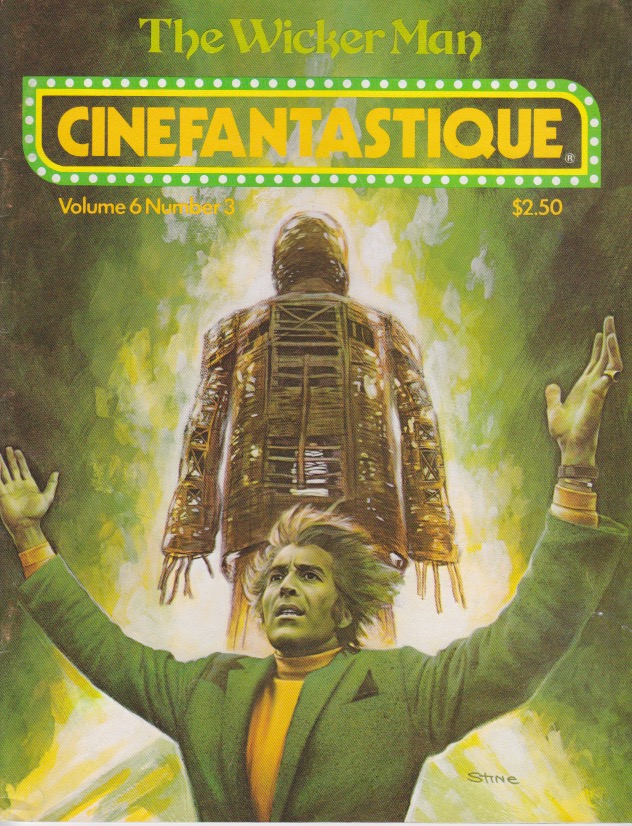
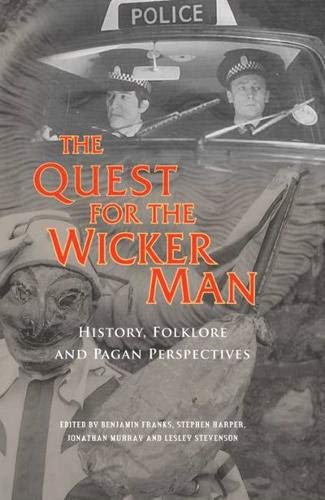
The Quest for the Wicker Man is a rarity.  Not only is it very difficult to locate and very expensive if you do find it, it’s also a collection of essays where each one is worth reading.  I’d read some of it before, but since I’m writing a book on the movie I thought I ought to sit down and go through it cover to virtual cover.  I had to settle for a Kindle version—please bring this back in print!—and was reminded yet again why a paper book is so much more satisfactory as a reading experience.  You see, I’m a flipper (not the dolphin kind).  I like to flip back and forth while I’m reading.  Clicking and swiping (both of which, coincidentally, dolphins do) isn’t satisfying.  And if you underline in a Kindle everybody else can see it.  I prefer the privacy of a print book.

In any case, if you’re interested in probing a bit into The Wicker Man you’ll find quite a lot of information here.  (Available on Kindle for a reasonable price, if not a comfy reading experience.)  Many aspects of the film are covered here.  One thing I won’t be discussing in my book is the music.  Firstly, I’m not qualified to do so, and secondly, it is done well here.  Essays also discuss religion (which I will discuss in my book), paganism (ditto), and many other aspects.  This is a book of conference proceedings—a boon for fans, but bust for most publishers.  It’s also a boon for those who like marking up used books to the tune of 64 cents per page (the lowest price on Amazon).  

Some of us believe a page is an ontological entity.  Once narrative writing began those responsible for clay tablets soon settled on a size that is, well, handy.  You can hold it easily.  That concept translated to the codex, or “book” as we know it.  Scrolls were cumbersome, but books offered many advantages.  For hundreds of years they were the standard-bearers of accessible knowledge.  I miss page numbers when reading an ebook.  I don’t want to know the percentage of screens I’ve swiped.  I want to know how many pages I’ve read, what page I’m on, and how many pages there are to go.  (The best of electronic books preserve that information.)  The book was not a form that required improvement.  Well, at least that digression kept me from giving up too much information about my book.  If you want to read it, when it comes out, I recommend the print form.


B Film

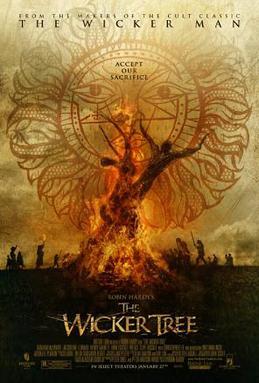
October brings horror films to mind.  As soon as the calendar clicks over, discussions of favorite scary movies begins.  As I’ve mentioned many times before, it is the one time of year when those of us who watch horror don’t feel so odd.  It is a little strange, however, to be watching movies related to The Wicker Man at this time of year.  As holiday horror that particular movie is set at the other end of the year, in May.  So I had to see The Wicker Tree, something I’ve avoided doing all these years.  Neither properly a sequel nor a remake, The Wicker Tree is Robin Hardy’s re-envisioning of the story with a larger budget.  There’s no way to prove it, but it seems likely that it was released in response to the unfortunate remake of The Wicker Man in 2006.

There are any number of things that could be said about The Wicker Tree, not least of which is that it’s clear Anthony Shaffer was a far better screenwriter than Robin Hardy.  (Shaffer had written a sequel, more properly conceived, which has not been filmed.)  Robin Hardy was, of course, the director of the original movie.  Plagued by low budget, rushed filming, and lack of production company support, The Wicker Man nevertheless soared.  The Wicker Tree is what is termed a “spiritual successor”—it doesn’t directly carry on the story of the original, but draws its inspiration from it.  It was based on a novel written by Hardy titled Cowboys for Christ.  Two evangelical missionaries are sent to Scotland to convert as many lapsed Christians as they can.  Of course, their invitation to Tressock is a trap so they can be sacrificed on May Day.

Despite the many unanswered questions the film leaves, to someone raised evangelical it seems that Robin Hardy really doesn’t understand what evangelicals are.  Beth and Steve, on their tour through the lowlands, do things evangelicals just wouldn’t do.  They drink, they dance, they swear, they play cards.  The only thing he seemed to get about evangelicals is they like to sing and talk about Jesus and hand out pamphlets.  This is something I often see is movies—those who try to portray evangelicals haven’t actually been evangelical themselves and don’t understand them.  I also find this in my interactions with British colleagues all the time—they don’t really comprehend what evangelicalism is.  That could be a topic for its own post.  In any case, The Wicker Tree has its moments, but it’s convoluted, cynical, and off-the-mark.  It may’ve been intended as a spiritual successor, but its prototype required no re-envisioning.


Druid Redux

I know I’ve talked about this book before.  I had cause to learn about the Druids again, and Peter Berresford Ellis’ book was handy.  I’m pretty sure I have Stuart Piggot’s book somewhere, but I haven’t seen it since the move, so I turned to Ellis again.  The first time I read him I was commuting and couldn’t take notes.  (My specialized form of research has its limitations.)  This time it took several days’ more reading, and doing so with more active engagement.  One thing that really stood out to me this time was the Indo-European connection.  Druids, according to Ellis, were essentially Brahmins—the intellectual class in a stratified society.  Having derived from a common ancestor, the two societies diverged with Brahmins surviving in India and Druids going extinct with the somewhat genocidal treatment of various other groups against the Celts.

Druids were egalitarian as far as the sexes went.  This is one of those examples where Christianity’s masculinist orientation furthered a trend that led to women being treated as inferior.  Evidence points to early female Druids, and even female political leadership among the Celts.  As the male godhead took over the remaining influence of women eventually evaporated.  The Druids, you see, were extremely focused on learning the truth.  Their pre-Christian judicial system was oriented toward fairness and finding out what really happened.  In other words, ethically they required no conversion.  That was a matter of theology, and theology often brings its own set of issues.  

The Romans, who’d had a long and protracted war against the Celts, drove them to the fringes of their empire.  Britain (and Brittany in France) were far enough removed from the base of power in Rome that the Celts survived in the edges of the islands: Cornwall, Wales, Scotland, the Isle of Man, and Ireland.  As a distinctive culture, Celts have been in fashion for some time now, but that’s a new development, historically speaking.  Ellis’ book explores this angle quite a bit since understanding the Celts is essential to comprehending who the Druids were.  The lack of native written accounts (Druids forbade writing their wisdom, passing it on by memorization over the centuries) hampers our ability to have a coherent history.  Ellis, however, seems to have reconstructed well.  Modern Druid revivals necessarily contain speculative elements, and historically the Druids wouldn’t have been perfect either—nobody is.  They do seem to have had a reasonable and just society for the most part, something we’ve managed to lose, along with much of their wisdom.


Belated Lughnasadh

We’re accustomed to think of summer as a “non-holiday” season beyond the bookends of Memorial and Labor Days, and the midsummer Independence Day.  Still, ancient people felt the turning of the year at the start of August with the festival of Lughnasadh.  I often forget it myself, although I’ve been feeling a tinge of autumn in the air this past week.  You can smell it at the very tip of your nose if you’re sensitive enough.  The cool of the pre-dawn air presages changes to come.  The wheel turns constantly.  Lughnasadh was actually Sunday (August 1).  Along with Samhain (Halloween), Imbolc, and Beltane (May Day), it divides the year into quarters (now called cross-quarter days since they fall roughly midway between the solstices and equinoxes).  It reminds us that summer is getting on; Lughnasadh was the festival of early harvest.

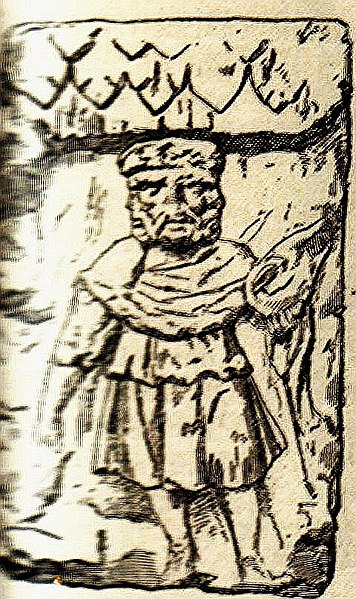
Lughnasadh was originally said to have been initiated by Lugh, one of the most prominent of Celtic deities.  Several European cities, such as Lyon, have names that likely derive from Lugh.  A warrior god renowned for his ability with crafts, he was also a savior god.  Although I’m no expert in Celtic mythology, it’s difficult to live in a Gaelic country for three years and not absorb some of the fascination for it.  Unlike Greek mythology, there aren’t large numbers of ancient literary pieces that tell the full story.  There are tales enough to know that Lugh was a major god of pre-Christian Europe and that as Christianity spread he was challenged by another savior god.

Although now rather obscure in much of the world, the Christian holiday of Lammas, or “Loaf Mass” was settled on August 1, likely to draw attention from Lughnasadh.  It too was a celebration of first fruits, for as reluctant as we are to let the light and warmth of summer go, plants are beginning to feel the onset of fall.  Lammas is a festival of communion—thus the loaf—and continues to be celebrated with local customs.  It includes the blessing of bakeries or of bringing bread to church to be blessed.  Lost in the modern rendition of summer, Lughnasadh or Lammas is barely recognized by most of us.  I’d never heard of it until I began researching holidays for a book I wrote that was never published.  Festivals that celebrate the changing seasons have an appeal to those of us isolated indoors behind screens all the time.  Perhaps it’s time to bring some summer holidays back. Lugh says yes.

Perhaps Lugh, via Wikimedia Commons

Reading Wicker

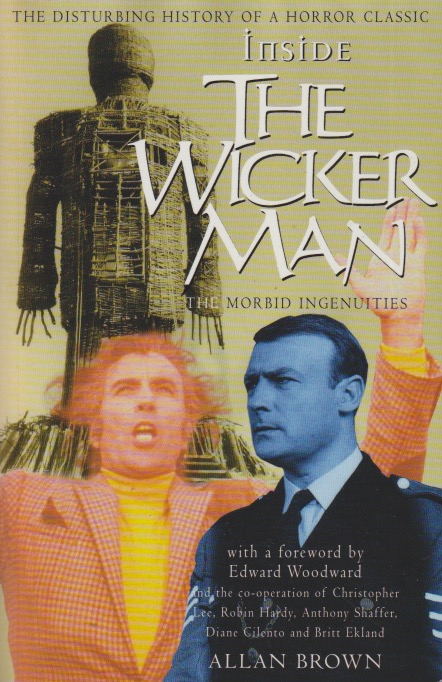
Have you ever read a book where factual errors make you question the larger picture?  I suppose being trained in research makes me more bothered by small inaccuracies.  Don’t get me wrong, I’ve made mistakes myself.  Even in publications.  But when they come near the beginning it’s rather unfortunate.  That’s not to say I didn’t enjoy Allan Brown’s Inside The Wicker Man.  I actually enjoyed it quite a lot.  There’s a real treasure trove here for fans of this cult classic.  I suspect it’s the definitive treatment of the misfortunes the film faced after it was shot, and even during the shooting process itself.  It’s somewhat surprising that so many of us have even heard of it.  When the film’s production company turns against the project it must present special difficulties. Errors are human. Most of the mistakes in the book were about religion.

For Wicker Man fans this book is a great resource.  Not only does it tell the story, but it serves as a useful reference. It includes information on locations, script excerpts, and behind-the-scenes stories.  You get to feel that you know the people involved beyond simply seeing them as characters in a play.  One of the points that Brown makes, while obvious in retrospect, is crucial:  The Wicker Man works as horror not in spite of religion, but because of religion.  I struggle to articulate what the two share in common, but it is useful to be reminded that a prime example comes in this unusual movie.  I wrote about it in Holy Horror, but there’s much even there that I left unsaid.

Brown had the distinct privilege of interviewing many of the people involved in the making of the film.  Most of the cast and crew have since died—the movie was, after all, nearly half-a-century ago.  Even so, when attempting to get at what a novel, movie, song, or piece of visual art means, the realization soon dawns that it’s often in the mind of the observer.  Some songs, for example, speak intensely to some people while being ignored by many others.  The Wicker Man never swam into the mainstream.  I discovered it during an intense period of watching as much quality horror as I could get my hands on.  Immediately I was struck by its intelligence and its strong message.  I’ve watched it several times since, making me, I suppose, a fan.  Enough of one to read this book and enjoy it, in any case.  And to recommend it to others who may be interested in the fascinating film it explores, along with its religion.


Scary Folk

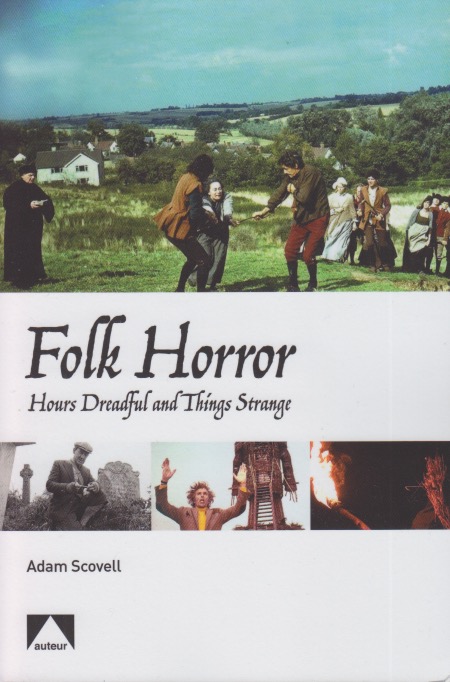
Genre is a useful category.  It can be misused, however.  Straightjacketing a piece of literature, music, or film can lead not only to confusion, but to constraining creativity itself.  Nevertheless, the category of Folk Horror is certainly expansive enough for a book-length treatment, such as Adam Scovell has given it.  Unless you’ve read quite a bit about the subject you might wonder what folk horror is.  A good part of Scovell’s work is definitional—providing the reader to an answer to that very question.   Although it has earlier roots, folk horror was initially a British genre that became particularly noticeable in the late sixties and early seventies.  It comprised movies and television programs that dwell on specific aspects of the landscape—particularly the rural—and isolation within it.

What I find particularly compelling about folk horror is that it is often based on religion.  In the countryside you encounter people who think differently about things.  Believe differently.  Their convictions are enforced upon the stranger who may be there by design or by accident.  Ironically the genre largely emerged in a nation that prides itself for its role in civilized behavior.  It speaks volumes about belief.  Civilization has produced more refined strains of religion, but on its own religion will tend to grow wild, even as the weeds in your yard are distantly related to the cereal grains we cultivate.  Examples of this are everywhere.  Fans of horror can name them off, but even those who don’t care for the genre know the kinds of belief this indicates.

Not all folk horror is about religion, of course.  It can be rural ways in general.  No matter how you classify it, most people can identify Deliverance and the danger it implies about being far from civilization where those who live in the woods can do as they please.  Scovell delves into the urban settings of folk horror as well—most of his examples are British—because it is possible to hide in the city also.  Although the genre reached a high point in the 1970s, it didn’t die out.  The book ends with consideration of some more modern examples, such as Robert Eggers’ The Witch.  The problem, as those of us who write about film know, is that just because you’ve written a book it doesn’t mean future examples won’t change the picture.  The Lighthouse and Midsommar were both released in 2019, after the book was published.  And they demonstrate that the scary folk haven’t gone away.


Highgate Cemetery Again

Vampires can distort your thinking.  For example, whenever I hear of Highgate Cemetery in London, my mind immediately goes to the Highgate Vampire.  (There was somewhat of a comment kerfuffle on that topic right here on this blog some years back that resulted in several comments being removed.)  Highgate is the amazing final resting place of a remarkable number of famous people.  Still, when I visited a few years back I couldn’t get the vampire out of my mind.  (A friend of mine lives a short walk from the cemetery and that made the visit possible.)  This all came rushing back when I saw a book on Highgate Cemetery up for review on Reading Religion.  (And hey, Nightmares with the Bible has been available there for free, for any interested takers!)

Given my current vocation, writing actual book reviews is considered conflict of interest.  More’s the pity, since that’s how I often managed to get ahold of expensive books back in the day.  I’m pretty sure the book advertised (edited by Marie-Therese Mader, Alberto Saviello, and Baldassare Scolari) has nothing to do with the vampire, but I can think of it no other way.  Highgate is an architectural marvel for a necropolis.  It is spooky, inspiring, and impressive.  When something happens in a place, even if the facts are in dispute, it takes on an atmosphere that reflects such happenings.  At least that’s the way it feels for Highgate.  I’d heard about the vampire incident before visiting, but didn’t have the details.  Besides, you’re only permitted in on guided tours and the docents don’t point out such things.

Nevertheless, having been there I still have an interest in the cemetery itself.  It’s odd in a way.  Nobody I know personally is buried there.  No ancestors, as far as I know.  It’s the sense of place.  I’ve written about this many times before—there are numinous spaces in the world.  Science may deny it, but even scientists feel it.  Some places transport you somewhere beyond just the physical dimensions of where your body happens to be at the moment.  Cemeteries are filled with the memories of lives past.  They remind us that our time is limited, and that we too will cross that numinous threshold some day.  We all contribute.  Well, I can’t review the Highgate book and I can’t afford to buy it.  I nevertheless suspect that there’s nothing about the vampire in it.  I’m sure it’s my thinking that has been distorted by vampires.


Caring for the Future

Some people have it really bad.  Living in war-torn countries, many former academics find themselves scrounging for a living.  In the United States academics tend to have it good—at least those who get jobs do.  In my line of work it’s not unusual to hear them complaining of overwork, or of various aspects of academic life that are a strain.  I know that can be true—I’ve been there.  However, a recent story about Adnan Al Mohamad on iNews, tells how the Syrian professor had to flee and become a waiter and farm helper in Turkey.  Until CARA found out.  CARA is a British charity—Council for At-Risk Academics.  They were able to secure Al Mohamad a university post so that he could achieve his potential.

Of course, academia isn’t perfect, as my many colleagues who’ve succeeded in it can tell you.  But it is good for the world.  Those of us taught to think deeply about a subject often feel what might be called a moral obligation to pass it on.  Interestingly, in the “developed world” academic positions are on the decline and education is seen as an expensive option instead of the way forward.  I may have been sidelined, but I’ve been watching this happen for decades now.  Instead of organizations like CARA (many academics are at risk) those encouraged to go on by their teachers and colleagues end up disappearing in obscurity with crippling bills to pay for many years down the road.  There are no safety nets and western society has decided education is a luxury rather than the path to a better future.

Somewhere along the line, as progress became equated with electronic gadgetry, we lost the desire to think deeply.  Books are “products” that can be thrown onto a plastic screen and soon forgotten after read.  We can gossip 24/7 through social media and never spend hours delving deep into a subject.  We can move the economy ahead without stopping to think about the consequences.  The world needs organizations like CARA.  Better yet, governments should take on that role.  Politics for some (most, of a particular party) is a means of enriching oneself rather than bettering the society that allows them to do so.  Wouldn’t it be better for everyone if education were the number one priority?  Isn’t that what a rational society would do?  Creating a world in which those who’ve personally invested in continuous learning could share it?  Instead, we live in a world where academics increasingly require rescue.


Unconventional Demon

In my book Holy Horror I limited my discussion to fairly widely available and well-known films.  Part of the reason for this is that nobody can watch all horror movies and for those of us who work, there’s just limited time.  All of the films are at least American co-produced, most of them American productions.  The one exception to that is The Wicker Man.  I couldn’t bear to leave that particular movie out.  I didn’t realize at the time that it was classified as the newly coined “folk horror.”  Another film, released two years earlier was the strangely titled The Blood on Satan’s Claw.  It’s a strange but competent British horror film that has an eighteenth-century village falling prey to a demon that is accidentally plowed up in a field.

It is a film that could’ve been included in Holy Horror.  Indeed, the Bible appears in it and one of the adult characters is the local curate.  As the children are succumbing to a Satanism that’s raising a demon, he tries to teach them their Bible lessons.  Like Village of the Damned, the horror here centers on the children.  Flaunting the reverend’s rules, they play in the woods, raising the Devil.  Almost literally.  The demon they summon is called Behemoth.  Perhaps surprisingly, the judge actually saves the day in this one.  At first he’s convinced that the age of superstition is over and insists that it not be brought back.  He learns, however, that the demon is real and deals with it by rather physical means.  Who is Behemoth?

The word translates rather literally to “beasts.”  In the book of Job Behemoth is the land-bound companion to Leviathan, the two monsters that God cites to demonstrate his superiority over mere mortals.  As time wore on into the middle ages Behemoth and Leviathan were recast as demons, although it’s pretty clear that the book of Job doesn’t present them that way.  One of the points I make in Nightmares with the Bible is that demons aren’t fully formed beings in the ancient imagination.  Since the Bible says so little about them, ideas were drawn from folklore and other sources to flesh out these somewhat amorphous entities.  Descriptions of The Blood on Satan’s Claw quite often state that the children of the village are possessed.  If so, it is quite a different form of possession than will become standard two years later with the release of The Exorcist.  It is fitting, I suppose, for folk horror to have a folk demon for its antagonist.


Contains Cookies

In the early days of this blog I used to get regular reactions from other bloggers.  This was back before I started the long commute to New York City and when I actually had a little spare time on my hands.  I always enjoyed the interactions, but followers eventually dropped away and I now often get no responses to my posts at all.  That’s why I was thrilled when two recent posts came together with a response one of my faithful readers sent.  I’d written about keeping books neat, along with a piece related to ancient food, when a friend pointed me to the story of a cookie found in a 1529 Cambridge copy of Augustine.  According to the piece on Delish, the cookie was left in the book about half a century ago and had only now just been discovered.

Photo by Mae Mu on Unsplash

Now, like most readers of religious studies, I have opinions about Augustine that aren’t pristine.  Still, I respect books.  I suspect all the bakery jokes necessary have been made about this particular bookmark, but what strikes me as odd is that nobody discovered a cookie placed in a book when I was less than ten years old, until now.  Let that say what you will—Augustine still sells wildly in translation, of course.  Not too many individuals go back to the source, however, at least not reading as far as the cookie.  I don’t know about Cambridge, but Edinburgh used to have books from the seventeenth century on the open stacks in the New College library.  I’m sure the older volumes weren’t frequently consulted.  And I’m not the one to point a finger; I have no catalogue of my own books so I have to remember what I already have.

Books aren’t a great investment, financially.  I remember back when Antiques Roadshow was all the rage.  Every episode I saw where someone brought a really old book led to certain disappointment.  No matter how rare, the value was measured in hundreds of dollars rather than thousands.  Those of us who invest in books do so for different reasons.  Our money is being exchanged for knowledge, learning, and thinking.  Back when Amazon used to give out bookmarks with each purchase one had a quote from Erasmus, “When I have a little money, I buy books; and if I have any left, I buy food and clothes.”  We are kindred spirits it seems.  Buy books and you’ll grow in wisdom, but you may go hungry.  That’s the way the cookie crumbles.


Conflict Management

Conflict has come to dominate the twenty-first century in an unhealthy way.  No longer do religions, political parties, or even scholars of different disciplines want to try to see it from somebody else’s point of view.  Such “I’m rightism” is distressing, given that the greatest minds in history always left some room for doubt.  Einstein tried not to say too much about God, but his occasional references left some space for admitting he just didn’t know.  He was following closely in the footsteps of Sir Isaac Newton, who, ironically and iconically stands as one of the founding fathers of empiricism.  I say “ironically” because his real driving interests, as became clear only after his death, were religious.  With the science and religion conflict paradigm, it took a long time for many to admit that Isaac Newton was fascinated by religion.

A story in The Guardian recently noted that Newton’s unpublished notes on pyramidology have gone on auction.  These papers are even further indications of just how much religion mattered in the mind of the man who gave us a clockmaker God who wound up the universe and left it to run according to scientific principles.  My wish isn’t to cast any aspersions on Newton.  No, quite the opposite.  I wonder if we mightn’t use his wide-ranging interests to raise a relevant question: why do we see religion unworthy of attention while science, because it can be “proven,” is all we really need?  Especially since scientifically-based hypotheses about the origins of religion tell us that human beings need it.

Admittedly Newton was just as human as the rest of us.  Perhaps far more intelligent than most, but still human.  The humanities are the part of the human curriculum that has been under duress for many years at “universities.”  As business interests and money have taken on larger and larger roles in how schools conceptualize themselves, the humanities—which don’t make money—are undervalued and cut.  Capitalism takes no prisoners.  Education that has bought into that paradigm is bound to overlook certain facts.  Newton’s “arcane” interests were well hidden for a couple of centuries because who wants to think of the great rationalist as beholden to such a paltry thing as religion?  We’d rather keep our eyes firmly closed.  A conflict paradigm seems the better way to eradicate this troubling, so very human, aspect of even geniuses.  As long as there’s money to be made conflict will be the reigning model. 


Preserving Culture

When I travel (remember travel?) I try to visit the places of famous writers.  It doesn’t matter much whether I’ve read a lot of their material; I know kindred spirits when I feel them.  Last summer—the one before the pandemic—I had to make a business trip to Oxford.  Now Oxford has a long, long list of literary illuminati, and I didn’t have much free time.  My hotel, however, turned out to be just a couple of blocks from the house of J. R. R. Tolkien.  One patch between meetings, I wandered over to the house.  It’s behind a high wall, so you can’t see much.  Like most European private homes, it isn’t ostentatious—over here we like to make it obvious when we’re wealthy.  In any case, I stood as long as a stranger can comfortably stand outside someone else’s house and tried to commune with the spirit of the former occupant.

Just the other day I noticed a New York Times headline that stated a movement is afoot in merry old England to purchase Tolkien’s house to make it a museum.  Although there’s no scientific way to prove it, people are somehow connected to the places they live.  There’s no other sensation like returning to your home town.  If, for some strange reason, anyone wishes to recall me after I’m gone (perhaps my pen name will take off someday), they’ll find precious little.  Not one of my pre-college homes still stands.  Not that that’s that unusual in the low rent district.  Still, when I visit my hometown, small as it is, almost nothing of me remains but it still feels like I belong.

I can’t say that I felt much other than my own awe at standing outside Tolkien’s house.  It’s on a residential street, and people were driving and walking by.  I was the only one who seemed to be hanging about.  Probably a bit suspicious-looking wearing a tweed jacket and in general appearing like a displaced academic.  Much of the tourism industry, however, is based on the draw of certain locations because someone famous lived there.  We want to be in touch with them.  Show our respects, perhaps.  If visiting Oxford weren’t always a work occasion for me, I could quite enjoy wandering its literary haunts and ending up for a leisurely afternoon spent in Blackwells.  We congregate in such places for a reason.  I’ve lost track of all the authors’ homes I’ve visited over the years.  Each time, I’m compelled to say, I’m glad someone thought to preserve them.