One Day or Another

Although normally a time for celebration, Mardi Gras, I’m told, was subdued this year.  Today is Ash Wednesday but many of us feel like we’ve been living a year of Lent already.  I once told a fellow office worker on Ash Wednesday, “I think about death every day, I don’t need a yearly reminder.”  Looking out at the old snow, melting, freezing, refreshed with occasional flurries, I’m reminded of the cycles of nature.  I’ve been watching the turn of the year’s wheel.  Over the solstice I looked into Yule, and just a few days ago considered Imbolc.  The wheel of the year is a symbol for modern earth-based religions seeking to be kept in sync with nature.  It is a cycle, slowly turning.  Death, in this way of thinking, is part of a larger system.  It seems appropriate to consider it this Ash Wednesday.

I say it’s Ash Wednesday but it would be more correct to say “for many Christians it’s Ash Wednesday.”  Cultural imperialism is difficult to shake.  With the pandemic still embracing us tight we haven’t had much reprieve from thoughts of death these many months.  Thinking of the wheel of the year, however, may bring hope.  A wheel in motion spins around to a new beginning that, in the nature of circles, is equally at every point.  New beginnings are offered every day.  While we’ve never been in a year of isolation before, there is nothing that hasn’t been before.  Self-aggrandizing dictators, world-wide pandemics, calls for social justice and fairness, have all come around before this.  They may come around again.  The main thing is to keep it moving.

It moves, in fact, without us.  One of our human foibles is being species-centric.  When we discuss, in a pique of teenage angst, of “destroying life on earth” we really mean destroying humankind and perhaps many other species as well.  Not all.  With a kind of collective insanity we go about warring against our own kind, exploiting all other species we deem valuable, and talk as if that’s all that matters.  Today, for some, it is Ash Wednesday.  For others it is World Human Spirit Day.  For many of us it’s just another workday among many very similar, cut from the fabric of a year that has no even spokes to keep it rolling.  Beneath our feet this orb spins on, regardless.  The cycles continue, with or without us.  How wonderful it would be if we could actively contribute to their progress.

Photo by Ameen Fahmy on Unsplash




Call It Therapy

For many years, about all I ever pursued, research-wise, was ancient Near Eastern studies.  It’s still the reason people visit my Academia.edu page.   From the stats it’s clear that not many people are interested in the horror aspect of my work.  Still, I know what motivates me (most of the time).  I recently read a piece that features a brief interview with Peter Counter, discussing the therapeutic value of horror.  Since my interest in the genre has been rekindled (starting, not coincidentally, around 2005), I think I’ve known all along that horror is therapeutic.  The people I know who watch horror aren’t the kind many people picture—creepy troglodytes who don’t come out of their houses where the shades are always drawn.  No, they are normal folks, at least for academics.  They find the genre profound, for the most part.

The interview with Counter (in the Nova Scotia Advocate) makes clear that Counter uses horror therapeutically.  The first reason that he gives is that it’s honest.  I agree.  You see, I grew up with more than my fair share of phobias.  I could go into the reasons here, but I don’t know you well enough to trust you with them just yet.  In any case, I worried a lot about things that could go wrong, often involving everyday circumstances.  I didn’t think watching monster movies was a coping technique—I didn’t even know what a coping technique was.  I just knew that somehow those kinds of movies made me feel better.  I began reading gothic novels in my teens, even as I was becoming very religious.  I never saw a conflict between the two.

Now, as an adult, I feel that I have to explain this “unusual” interest to people who know me.  Now I can more clearly see the therapeutic value in such movies.  I can even see elements of it in movies that are classified otherwise.  I recently watched Groundhog Day (back around, well, Groundhog Day).  It had been many years since I’d viewed it, and the elements of horror in the film struck me.  Being trapped in the endless return, Phil Connors contemplates, and indeed commits suicide many different ways only to reawaken in the same scenario the next morning.  The look on Bill Murray’s face when he snaps the pencil before getting a couple hours sleep when he begins to realize what is happening says it all.  A similar realization same came clear on a recent rewatching of Willy Wonka and the Chocolate Factory.  Watch it with an open mind.  The interview with Counter makes the point that a pandemic like this is an opportunity.  Isolated, we can watch horror and we can learn to cope.


No Go Subjects

The problem with being eclectic is that you never catch up with everything.  Although I was once a professor of Hebrew Bible—not technically the field in which I’d studied—I read (both past and present tenses) widely.  Anyone who’s brave enough to follow this blog for any length of time must know that.  I tend to think the element that ties them all together is religion, or a curiosity about religion.  I have read material on science, art, psychology, history, geology, astronomy, literary theory, mythology, the paranormal, religious traditions, monster theory, to name just a few.  Because of my interests across standard disciplinary lines, I often wonder about “no go” subjects.  No go subjects are interests that will likely ruin your prospects of getting either a job or basic human respect.  Although the government is taking serious interest in the topic, one of those subjects is UFOs.

For historians of religion such as myself, the study of UFO religions is sometimes acceptable.  Indeed, there is a correlation between some evangelical sects and the UFO phenomenon.  I experienced that firsthand as a child when my mother drove us to a church meeting where a guest preacher was discussing UFOs and God.  I have only the vaguest recollections of that event in my then young mind, but it did leave me with the question of why respectable people aren’t allowed to look at certain subjects.  Why does taboo even exist in an academic setting?  I recently ran across David Halperin’s website.  I’d known of him because his recent book, Intimate Alien, had gotten a lot of press.  What I didn’t know was that he was formerly a professor of religious studies.

It seems to me that many of the interesting, outré topics fall into the baskets of religion scholars.  We touch the taboo objects that nobody else will.  Why?  Because there should be no “no go” categories.  Sex?  Religion scholars study it.  Politics?  We’ve got it covered.  Paranormal?  We go there too.  Perhaps it’s because religion scholars have so little to lose.  We’re not high on the prestige list.  I tend to think, however, it is because people who go into religious studies are innately curious.  (Not all, of course, but many.)  We’re drawn to that which doesn’t fit into the everyday, the ordinary.  Transcendence, seeking that outside of which we daily operate, haunts us.  Why do people scoff at what they don’t understand?  Doesn’t it make more sense to look at it and try to increase our comprehension?  To me it seems to be basic human nature, even if the interest is literally out of this world.


Animal Spirituality

I had little scientific basis for my claims.  It wasn’t that I didn’t have evidence, but it was more one of those “if you see something say something” kinds of scenarios.  I have been claiming for many years that animals experience some kind of spirituality.  My evidence was drawn from disparate scientific materials I’d read, along with ancient religions.  Egyptians believed baboons worshiped the sun.  Chimpanzees make threatening gestures toward the sky during thunderstorms.  Penguins grieve.  Human spirituality, it seems to me, is part of our kinship with other living creatures.  Then I found an article by none other than Marc Bekoff titled “We’re Not the Only Animals Who Feel Grief and Spirituality,” in no less a prestigious place than Psychology Today.  Bekoff, some of whose books I’ve reported on here, has studied animal emotions professionally.

Our ideas of human exceptionality, it seems to me, often get us into trouble.  Arrogance is perhaps the most dangerous of psychological states.  When we see ourselves as part of a continuum, and realize that it can go on beyond us—yes, there are likely greater intelligences—humility should be an expected response.  Those who are arrogant frequently experience their comeuppance, even if they have to get elected to high office for it to happen.  We share emotions with our fellow creatures, and, now according to at least one expert, we share spirituality.  What is spirituality?  It seems to be an awareness that the body isn’t everything.  In my lexicon it’s listed there right with consciousness, mind, and soul.  We know it because we feel it.

The interconnectedness of the world, and beyond, is something many want to take exception from.  Looking around, such folks say, “Hey, we’re different than all of this.”  Yes and no.  We’re different, but that makes us no less a part of it.  Nature is our matrix.  We build fancy houses, but so do bower birds, and they do it without benefit of opposable thumbs, or even hands.  Of late we seem reluctant to admit that even human beings have spirituality.  That doesn’t stop us from feeling it, however.  I’m glad that others see it in the animal realm also.  Anyone who’s “owned” a dog knows what it’s like to receive worship.  We’ve selectively bred these wolves to adore us.  Is it so much of a stretch, then, to suppose that other animals also feel a sense of admiration for what’s beyond themselves?  Only the most arrogant wouldn’t pause to consider it.


How Clean Is Your Brain?

First it was in.  Then it was out.  Now nobody seems to be sure.  “Brainwashing” isn’t really a scientific term, but human suggestibility is very well in evidence.  Advertisers count on it.  Did I really need that phone case when I never go out?  And so on.  The real question is can people be compelled to do what they normally wouldn’t want to.  Think Jonestown.  Heaven’s Gate.  Waco.  Do people really want to die en masse?  Are we but higher lemmings?  I’ve seen hypnotists do their shows.  The human mind is manipulable.  We can be shut off from reason.  A recent article from The Middletown Press my wife shared with me raises the question whether conspiracy theories, such as those sported by QAnon, are something like brainwashing.  Clearly they are.  As are many Fundamentalist forms of religion.

You can recognize this when a conversation becomes such that the true believer simply won’t listen to evidence.  They’ll say they want to discuss an issue when all they really want to do is have someone state their side so they can tell them they’re wrong.  Reason has nothing to do with it.  When that part of their gray matter that handles things rationally feels backed against a wall they resort to ad hominem attacks.  I’ve been observing this since I was a child raised in such a paranoid religious tradition.  It works for politics, too.  For many QAnon sorts, Trump’s word was God’s word.  Once uttered it could not be refuted, not with all the evidence in the world.  It’s very much like Fundamentalist views of the Bible which can’t take context, translation, and reason into account.  When contradictions are blatantly pointed out they respond with “there are no contradictions.”  Is there brainwashing?

Conspiracy theories can seem real because there are actually some conspiracies.  There are government secrets.  Only the naive deny that.  Still, once you start throwing in the ridiculous—that a devil-worshipping cabal of pedophiles is running a secret government—you’re in water over your head.  Not only that, this sounds incredibly like the satanic panic that spread through much of the world in the late 1980s into the 1990s.  When the evidence was examined, it was found lacking.  Some of the key bestselling accounts were admitted to have been forgeries.  The believing mind, however, has trouble letting go.  We used to call fringe groups cults.  We used to suggest that people could be held against their will.  People leaving QAnon are reporting similar experiences, according to the article.  Brainwashing by any other name would be so real.


Growing in Intent

Balance has become a desideratum.  Ours is an age of extremism.  Black and white instead of shades of gray.  One of the unnecessary polarizations is that between science and religion.  Part of the problem, it seems to me, is the labels we insist on using.  Science is shorthand for evidence-based research—it is a way of understanding the physical world.  It doesn’t necessarily discount a spiritual world but its methods can’t engage that world, if it exists.  Religion is a poorly defined word, often one of those “you know it when you see it” kinds of phenomena.  Often it is characterized by blind adherence, but that isn’t necessarily what religion is either.  To me, balance between the two is an authentic way to engage the world and other human beings.

Take plants, for instance.  And take consciousness.  While consciousness isn’t always associated with religion, it is one of those things that falls out of the ability of science to measure or quantify.  We don’t really know what it is, but we know we have it.  We know some animals have it, but rather arrogantly assert it is only the “higher” animals, as if we comprehend the hierarchy of nature in its entirety.  We dismiss the idea of plant consciousness.  For many years I’ve been pondering intent.  Without it no life would be possible from sperm germinating egg to heliotropes following the sun.  There’s some kind of intent there.  Will.  Recently The Guardian ran an article about scientifically measured intent in bean plants.  Although many have been left scratching their heads, or pods,  over it, to me it makes perfect sense.

I planted an apple seed a few months back.  It finally sprouted in late December.  I carefully watered it, and put it by a south window to get sunlight.  It grew quickly for a few days and then began to wilt.  I watched helplessly as it gave up the will to live.  I’m no botanist, but I suspected it was the coldness of being set on a windowsill.  (Ours isn’t the best insulated house.)  December had been mild, and it sprouted.  January took a sudden shift to chill, and I realized that new plants outdoors wouldn’t sprout in winter.  The seed had germinated, but the plant had no will to survive in temperatures chillier than its genes told it that might be safe.  I’m not a scientist, but I observed this scenario carefully.  Is it possible that french bean plants show intent?  I think it would be more difficult to explain if they did not.


Learning Lingo

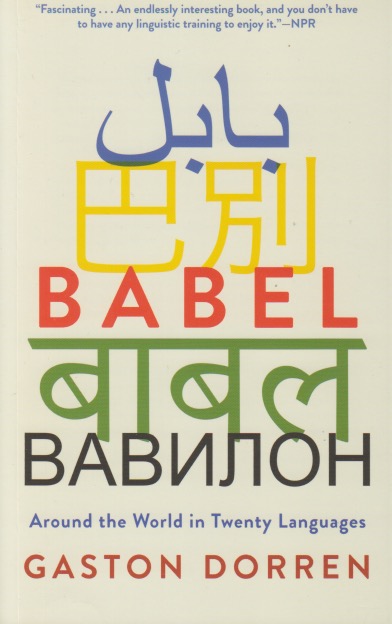
Languages are more than ways of communicating.  They are ways of thinking.  I figured that out with German, the first foreign language I studied.  It became even more evident with Greek and undeniable with Hebrew.  Beyond that, Ugaritic and other Semitic languages confirmed my suspicion.  To unlock a language is to open up a new way of thinking about things.  (This is one reason Trump’s isolationism was so dangerous.)  Babel: Around the World in Twenty Languages, by Gaston Dorren, is an overview of twenty different ways of thinking.  The book picks a prominent feature of the twenty most-spoken languages in the world.  Apart from the list of what they are (in order of appearance: Vietnamese, Korean, Tamil, Turkish, Javanese, Persian, Punjabi, Japanese, Swahili, German, French, Malay, Russian, Portuguese, Bengali, Arabic, Hindi-Urdu, Spanish, Mandarin, and English) there are many other surprises.

Many of these languages—perhaps all—are reflections of history.  The histories often include intentional divisions between people.  “They are not like us” thinking.  Usually on the part of elites and rulers.  The common person is quick to pick up the language of neighbors but those, like Trump, who hate differences, tend to rise to the top.  Quite apart from that, the features of these various languages show us the many ways people have learned to convey their thoughts.  Some tongues are super, even hyper-polite.  Some are reserved for women.  Some represent an entire continent, but notice the sheer number of Asian languages on this list.  Dorren notes at one point that having a unifying Scripture, such as the Bible, often codifies a language.  Religion is part of the human way of thinking.

Nowhere is this more obvious in the case of those languages that are considered divine.  Arabic, as many people know, is considered the only appropriate language in which to read the Qur’an.  Since languages are ways of thinking, that makes perfect sense.  What really struck me the most, however, was the case of Tamil.  A language of south India (many of these languages are spoken in India), Tamil is considered not only a divine language, but some adherents make it into an actual deity.  In a polytheistic culture there’s no problem with adding another god.  The idea that a language can be an actual divinity, however, shows once again how important it is that we try to understand one another rather than asserting one people is superior to another.  The book is appropriately titled Babel, and to properly understand that it is probably necessary to learn Hebrew.


Impatience

It’s only human nature, I suppose.  We see our own circumstances and fail to appreciate how others have equally (or perhaps more) complexity to juggle.  I’m thinking ahead to work on Monday.  The week before the holiday break the most popular question posed to me in my work emails was, “Why haven’t I received my copies of X yet?”  It’s a fair question.  What it betrays, however, is a lack of comprehension of just how complicated a business publishing is.  I should be flattered that we make it look so easy!  To begin with, publishing, and printing, are nonessential businesses.  Most of them may be up and running at, at least partial capacity, but the flow of materials to printers didn’t stop just because a pandemic hit.  It simply did what backlogs always do—it piled up.

Publishers have very intricate and, for the most part, efficient operations.  If a blockage occurs at any point—even the end point—other things back up.  Have you ever seen a toilet overflow?  I have, and it’s not a pretty sight.  Add to that the fact that many academics, unable to travel or do their other privileged activities, decided to finish up their books and send them in early.  Everybody should be happy, right?  Have you ever overeaten?  The happiness lasts only until your brain catches up with what your body has done.  I can’t speak for all publishers, but this combination of more input of material than expected and the inability to *ahem* process it has stressed the system.  Schedules exist for a reason.

Covid-19 has affected everything.  And continues to do so.  As we live through this pandemic we find our coping mechanisms.  Once we reach a level of uneasy symbiosis with our situation we stop thinking about how others might be dealing with it.  I think of those who’ve been out of work for months now and who’ve been evicted from homes because of what the wealthy can call force majeure and hire lawyers to argue.  Indeed, the coronavirus outbreak is the very definition of force majeure and the response we all ought to have is compassion and kindness to one another.  It’s not easy to think of other people before meeting our own needs—it’s not human nature.  Species that learn cooperative, altruistic behavior, however, are those that thrive.  As we say goodbye to a year of willful government inaction—the Trump administration knew of the danger well before it hit, but doesn’t believe in science—let’s vow to do what our leaders won’t.  Show compassion.  Recovery will occur and let’s hope we come out of it better than we went in.  This seems a good mantra for the beginning of a new year.


Stay Curious

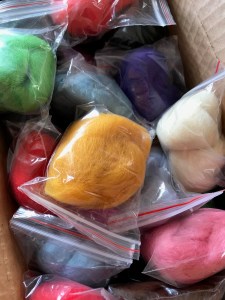
Needle felting.  I’d never heard of it.  I’d got along some five-plus decades without knowing a thing about it.  My daughter received a needle felting kit as a Christmas gift and, being the kind of person I am, I had to research the history of felt.  I always knew felt was different from other fabrics, but I couldn’t say precisely how.  I came to learn it is perhaps the oldest textile in the world, known by the Sumerians.  Felting is a process for making non-woven cloth.  The natural fibers of some wools are scaled, like human hair is, and when compressed and worked with moisture (wet felting), becomes cloth.  Finding out how things work is one of the great joys of life.  It also made me think again of how anyone could possibly be arrogant.

The longer I’m alive the more I’m learning what I don’t know.  Granted, felt has appeared in my life at numerous junctures—how many crafts do kids make of felt?  And I have a felt hat—but I had never thought much about it.  My wife likes to read about pioneer women who had to make pretty much everything by hand.  We call such people “rusticated” these days, but they know far more than most urbanites, simply by dint of having to do things for themselves.  Modern conveniences are great, but I often wonder how many of us might survive if we had to make it on our own.  Just the last couple of weeks we worried about losing power with the storms that blew through.  What do you do when the thermostat no longer works in winter?  Something as simple as that vexed me for days (I had to work rather than worry, so it couldn’t properly use my brain power).

I’ve known many people impressed with their own knowledge.  I can’t imagine how actually learning new things doesn’t make someone humble.  The universe is a vast and mostly uncharted space.  Down here on our somewhat small planet we have so much yet to learn.  I’ve studied the beginnings of agriculture, metallurgy, writing, and religion.  There’s still so much I don’t know.  I wouldn’t do well on Jeopardy—I second-guess myself too much.  Staying curious about the world is a good way, it seems, to keep humble.  I entered into this holiday season thinking I knew a fair bit about various crafting options.  As a family we cover the creative spectrum fairly well.  Then a small, soft thing such as felt made me realize just how little I really understand.  Any invitation to learn is one that should be accepted.


Pre-Soul

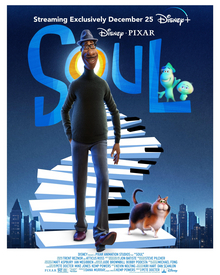
Streaming seems to be the way of the future.  I’m reluctant to trust corporations (does anyone remember Ultra Violet?) keeping content I’ve paid for, but the pandemic makes movie theaters scary places.  Some of the movies I’m eager to see aren’t even released on DVD or Blu-ray any longer, and your only choice, increasingly, is to subscribe to the death-by-a-thousand-cuts method of “buying” a subscription.  You’ve got to go where the content is.  All of this is a long way of saying I saw Disney/Pixar’s Soul very nearly on its release day.  It underscored a couple things for me.  One is that the idea of transmigration of souls is alive and well.  Second, and this is a point I make in Holy Horror, movies are often where people get their understanding of religious concepts.

In case, like me, you have to have movies pointed out to you by others more aware, Soul is about a jazz musician who dies the very day he gets his big break.  On his way into the great beyond, he tries to escape and ends up where souls are prepared for their embodiment on earth, “The Great Before.”  In order to make the leap, they must find their “spark”—the thing that makes them who they are.  Pixar may not be a theological seminary, but there are people who find meaning in many of their films, even to the point of  using them as coping mechanisms for real life.  When the internet didn’t exist and animated films required years of drawing or stop-motion animation to complete, people tended to go to religious/psychological professionals for such issues.  Now we have corporations.

The reason I find this of concern is that I have an idea of how content is created.  How those who come up with ideas have to pitch them to financial backers or publishers, and how those backers weight concepts in the scales of lucre.  In other words, money is frequently the deciding factor.  Those doing the pitching are seldom the same people with specialized training in the subject addressed, and yet they reach far larger viewerships than the classroom of such an expert does.  The financial implications are troublesome.  None of this is to suggest Soul is a flawed film.  I know many former seminary professors who’d quibble—or perhaps something stronger—with the way the afterlife/beforelife are presented here.  The movie itself is both fun and profound.  Don’t ask me, though.  I’m still trying to figure out this streaming thing.


Ghost Stories

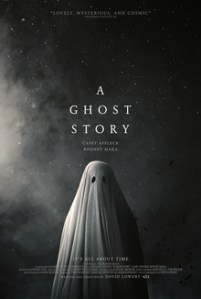
Those of us who confess to watching horror are fond of noting that the Christmas season has long been associated with ghost stories.  Charles Dickens wasn’t the first to make use of the trope and certainly won’t be the last.  After reading about elevated horror movies, I decided to watch A Ghost Story (David Lowery, 2017).  Many wouldn’t classify the film as horror at all.  It is quiet, slow paced, and has no gore.  It is nevertheless a haunting film.  I suspect its poignancy comes from a situation we can all imagine and which many people face in life—being left alone after the death of a loved one.  The idea that the dead never really leave us can be both comforting and unnerving at the same time.  The film plays to those strengths.

The premise of the film is simple: the ghost of one of a couple finds his way home and tries to reconnect with his widow.  He ends up staying there until, many owners later, the house is demolished and a high-rise is built in its place.  It’s essentially a story from the point-of-view of the ghost.  There isn’t too much dialogue included, but one significant monologue comes when a party is being held.  One of the party goers, or perhaps the current owner of the house, explains that because of what we know of physics everything on our planet will eventually be destroyed.  His beer-fueled lament is that whatever we do is therefore in vain.  He brings God into the discussion.  The ghost listens intently, but seems to disagree with his conclusions.  For someone like me the introduction of religion into the story is a Venus fly-trap, since religion and horror can’t seem to keep away from each other.

Death is a dilemma, a point that I made in a recent Horror Homeroom article on Pet Sematary.  Horror, like religion demands that we confront it.  Science can only offer cold comfort regarding the cessation of life.  Religion (and horror) open the dialog into the unknown, the realm into which mere human instruments cannot reach.  Sad and reflective, A Ghost Story hits on an essential question in the nexus of religion and science.  If a spiritual world exists, there may be some survival even of the earth’s eventual heat death.  As time passes, the titular ghost continues to learn.  Life is a learning experience, and although many modern forms of religion join in the cultural denial of death, horror is always ready to remind us that confronting it may be the wisest course of action.  Ask the ghost.  He knows.


Conflict Management

Conflict has come to dominate the twenty-first century in an unhealthy way.  No longer do religions, political parties, or even scholars of different disciplines want to try to see it from somebody else’s point of view.  Such “I’m rightism” is distressing, given that the greatest minds in history always left some room for doubt.  Einstein tried not to say too much about God, but his occasional references left some space for admitting he just didn’t know.  He was following closely in the footsteps of Sir Isaac Newton, who, ironically and iconically stands as one of the founding fathers of empiricism.  I say “ironically” because his real driving interests, as became clear only after his death, were religious.  With the science and religion conflict paradigm, it took a long time for many to admit that Isaac Newton was fascinated by religion.

A story in The Guardian recently noted that Newton’s unpublished notes on pyramidology have gone on auction.  These papers are even further indications of just how much religion mattered in the mind of the man who gave us a clockmaker God who wound up the universe and left it to run according to scientific principles.  My wish isn’t to cast any aspersions on Newton.  No, quite the opposite.  I wonder if we mightn’t use his wide-ranging interests to raise a relevant question: why do we see religion unworthy of attention while science, because it can be “proven,” is all we really need?  Especially since scientifically-based hypotheses about the origins of religion tell us that human beings need it.

Admittedly Newton was just as human as the rest of us.  Perhaps far more intelligent than most, but still human.  The humanities are the part of the human curriculum that has been under duress for many years at “universities.”  As business interests and money have taken on larger and larger roles in how schools conceptualize themselves, the humanities—which don’t make money—are undervalued and cut.  Capitalism takes no prisoners.  Education that has bought into that paradigm is bound to overlook certain facts.  Newton’s “arcane” interests were well hidden for a couple of centuries because who wants to think of the great rationalist as beholden to such a paltry thing as religion?  We’d rather keep our eyes firmly closed.  A conflict paradigm seems the better way to eradicate this troubling, so very human, aspect of even geniuses.  As long as there’s money to be made conflict will be the reigning model. 


Truly Exceptional?

Exceptionalism seems to be in the air these days.  Most recently it’s become a plank in the Republican platform—America is God’s own chosen nation (despite what the Bible actually says).  It’s also been a trait of nearly all human endeavors.  Human exceptionalism, that is.  The idea, whether admitted or not, is based on the Bible.  Even those bespectacled scientists who make no time for religion insist that humans are different from other animals.  Why?  The Bible tells them so.  Evolution certainly doesn’t.  And so we go about thinking how superior we are to other lifeforms.  And not only that, but to other humans in other geographical locations.  It seems Homo sapiens sapiens could use an ego check every now and again.

Not only does our sense of superiority go downward over the animals, it also reaches to the very boundaries of this infinite but expanding universe.  We are alone, scientists declare.  The only intelligent life in a universe far beyond the ability of the human brain to comprehend.  There can’t be any alien visitations with (laughably) superior beings crawling out of their flying saucers.  No, we were the best that evolution could do.  And we elected Donald Trump to be our president four years ago.  What’s that about an ego check?  Especially since we’ve learned that there is water on the moon.  Almost certainly there was once liquid water on Mars.  There may even be traces of life in the atmosphere of Venus (although the earthly jury is still out on that one).  Only humans can make that declaration.

Photo credit: NASA

I have to wonder at this arrogance that comes along with consciousness.  Do we believe we’re the best simply because we learned to apply the laws of rationality to our gray matter?  Back when I was a seminarian the word “pantheism” was rather like a swear.  To suggest a universal connectivity (literally) was an offense against the deity portrayed in the Bible.  (I would hope that a God that big would encourage us to understand the implications of a universe so large.)  We humans have our good points, of course.  I love people and their foibles.  Were we not so dangerous we might even look cute in the cosmic eyes above, as well as the inferior eyes of our pets.  Exceptionalism, it seems to me, ought to be the dirty word.  It seems far more human and humane to throw the gates open wide and consider the possibilities.  I love people, but if we’re the best there is, the universe is in serious trouble.


Anticipation

My work computer was recently upgraded.  I, for one, am quickly tiring of uppity software assuming it knows what I need it to do.  This is most evident in Microsoft products, such as Excel, which no longer shows the toolbar unless you click it every single time you want to use it (which is constantly), and Word, which hides tracked changes unless you tell it not to.  Hello?  Why do you track changes if you don’t want to see what’s been changed when you finish?  The one positive thing I’ve noticed is now that when you highlight a fine name in “File Explorer” and press the forward arrow key it actually goes the the end of the title rather than just one letter back from the start.  Another goodie is when you go to select an attachment and Outlook assumes you want to send a file you’ve just been working on—good for you!

The main concern I have, however, is that algorithms are now trying to anticipate what we want.  They already track our browsing interests (I once accidentally clicked on a well-timed pop-up ad for a device for artfully trimming certain private hairs—my aim isn’t so good any more and that would belie the usefulness of said instrument—only to find the internet supposing I preferred the shaved look.  I have an old-growth beard on my face and haven’t shaved in over three decades, and that’s not likely to change, no matter how many ads I get).  Now they’re trying to assume they know what we want.  Granted, “editor” is seldom a job listed on drop-down menus when you have to pick a title for some faceless source of money or services, but it is a job.  And lots of us do it.  Our software, however, is unaware of what editors need.  It’s not shaving.

In the grip of the pandemic, we’re relying on technology by orders of magnitude.  Even before that my current job, which used to be done with pen and paper and typewriter, was fully electronic.  One of the reasons that remote working made sense to me was that I didn’t need to go into the office to do what I do.  Other than looking up the odd physical contract I had no reason to spend three hours a day getting to and from New York.  I think of impatient authors and want to remind them that during my lifetime book publishing used to require physical manuscripts sent through civilian mail systems (as did my first book).  My first book also included some hand-drawn cuneiform because type didn’t exist for the letters at that particular publisher.  They had no way, it turns out, to anticipate what I wanted it to look like.  That, it seems, is a more honest way for work to be done.


Eerie Weird

We each approach the world from a unique angle.  It’s bewildering if you stop and think about it—billions of individuals (more by orders of magnitude if we add animals) looking at the world like no-one else.  Given the numbers it’s no mystery that some individuals will share fascinations, and I was glad to learn of Mark Fisher’s book The Weird and the Eerie, since it tries to capture the essence of these two terms that characterize so much of my reading.  The introduction explores what these words might mean in regard to Freud’s unheimlich, a term with which many writers are familiar.  What makes many stories interesting is their unusualness.  Fisher considers what it means to be inside or outside, and these categories often play into our perceptions of the weird and the eerie.

The study is divided into two sections (weird and eerie) and explores these concepts through a variety of media—literature, film, and popular music, especially.  Here’s where the unique angle comes in.  While I’ve read quite a bit of “weird fiction” and certainly eerie tales, Fisher has a different spectrum of materials than I do.  We share some resources, of course, such as H. P. Lovecraft, but The Weird and the Eerie gave me a new set of books to read and movies to watch.  Or read and watch in new ways.  Fisher’s reading of these various sources is sharp and perceptive, and he has a wealth of experience on which to draw.  The intertextuality here is rich.

When I think of reading for leisure or pleasure, it occurs to me that without something unusual happening in a tale, I have little with which to gain a grip.  The unheimlich makes for compelling reading.  Fisher sheds considerable light on this—what is it that we mean by saying something is weird or eerie?  It’s not that we should avoid them.  Humans are innately curious creatures, and we’re drawn to the strange in a way that we can seldom help.  Learning to avoid the weird and eerie means missing out on opportunities to learn.  And stories that we might tell to reflect our individual experience of the world.  This brief book contains more than first appears from a cursory glance.  There’s depth here, and for those of us individuals drawn to these aspects of both human and literary expression, much to mine.  The Weird and the Eerie is a flashlight for going into areas sometimes considered dark and learning much along the way.