Truly Exceptional?

Exceptionalism seems to be in the air these days.  Most recently it’s become a plank in the Republican platform—America is God’s own chosen nation (despite what the Bible actually says).  It’s also been a trait of nearly all human endeavors.  Human exceptionalism, that is.  The idea, whether admitted or not, is based on the Bible.  Even those bespectacled scientists who make no time for religion insist that humans are different from other animals.  Why?  The Bible tells them so.  Evolution certainly doesn’t.  And so we go about thinking how superior we are to other lifeforms.  And not only that, but to other humans in other geographical locations.  It seems Homo sapiens sapiens could use an ego check every now and again.

Not only does our sense of superiority go downward over the animals, it also reaches to the very boundaries of this infinite but expanding universe.  We are alone, scientists declare.  The only intelligent life in a universe far beyond the ability of the human brain to comprehend.  There can’t be any alien visitations with (laughably) superior beings crawling out of their flying saucers.  No, we were the best that evolution could do.  And we elected Donald Trump to be our president four years ago.  What’s that about an ego check?  Especially since we’ve learned that there is water on the moon.  Almost certainly there was once liquid water on Mars.  There may even be traces of life in the atmosphere of Venus (although the earthly jury is still out on that one).  Only humans can make that declaration.

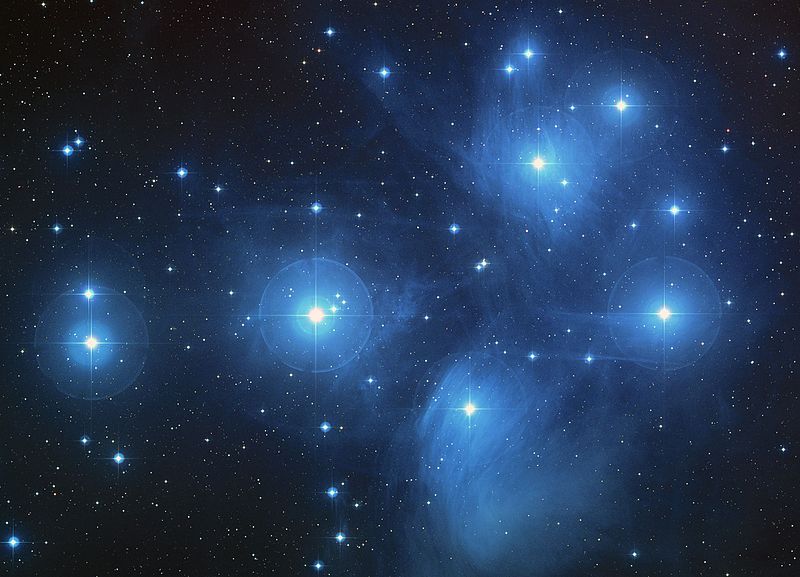
Photo credit: NASA

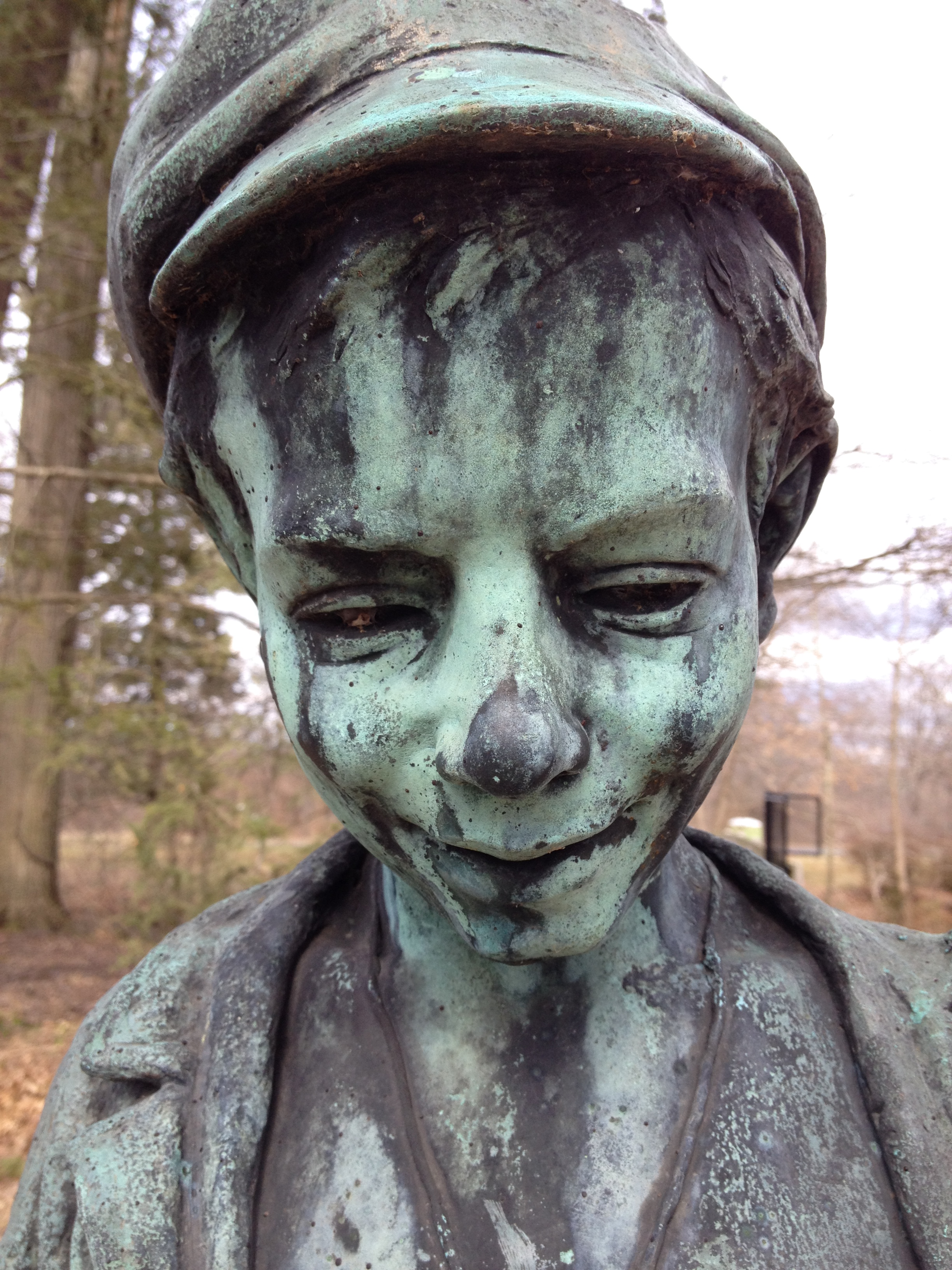
I have to wonder at this arrogance that comes along with consciousness.  Do we believe we’re the best simply because we learned to apply the laws of rationality to our gray matter?  Back when I was a seminarian the word “pantheism” was rather like a swear.  To suggest a universal connectivity (literally) was an offense against the deity portrayed in the Bible.  (I would hope that a God that big would encourage us to understand the implications of a universe so large.)  We humans have our good points, of course.  I love people and their foibles.  Were we not so dangerous we might even look cute in the cosmic eyes above, as well as the inferior eyes of our pets.  Exceptionalism, it seems to me, ought to be the dirty word.  It seems far more human and humane to throw the gates open wide and consider the possibilities.  I love people, but if we’re the best there is, the universe is in serious trouble.


Anticipation

My work computer was recently upgraded.  I, for one, am quickly tiring of uppity software assuming it knows what I need it to do.  This is most evident in Microsoft products, such as Excel, which no longer shows the toolbar unless you click it every single time you want to use it (which is constantly), and Word, which hides tracked changes unless you tell it not to.  Hello?  Why do you track changes if you don’t want to see what’s been changed when you finish?  The one positive thing I’ve noticed is now that when you highlight a fine name in “File Explorer” and press the forward arrow key it actually goes the the end of the title rather than just one letter back from the start.  Another goodie is when you go to select an attachment and Outlook assumes you want to send a file you’ve just been working on—good for you!

The main concern I have, however, is that algorithms are now trying to anticipate what we want.  They already track our browsing interests (I once accidentally clicked on a well-timed pop-up ad for a device for artfully trimming certain private hairs—my aim isn’t so good any more and that would belie the usefulness of said instrument—only to find the internet supposing I preferred the shaved look.  I have an old-growth beard on my face and haven’t shaved in over three decades, and that’s not likely to change, no matter how many ads I get).  Now they’re trying to assume they know what we want.  Granted, “editor” is seldom a job listed on drop-down menus when you have to pick a title for some faceless source of money or services, but it is a job.  And lots of us do it.  Our software, however, is unaware of what editors need.  It’s not shaving.

In the grip of the pandemic, we’re relying on technology by orders of magnitude.  Even before that my current job, which used to be done with pen and paper and typewriter, was fully electronic.  One of the reasons that remote working made sense to me was that I didn’t need to go into the office to do what I do.  Other than looking up the odd physical contract I had no reason to spend three hours a day getting to and from New York.  I think of impatient authors and want to remind them that during my lifetime book publishing used to require physical manuscripts sent through civilian mail systems (as did my first book).  My first book also included some hand-drawn cuneiform because type didn’t exist for the letters at that particular publisher.  They had no way, it turns out, to anticipate what I wanted it to look like.  That, it seems, is a more honest way for work to be done.


Eerie Weird

We each approach the world from a unique angle.  It’s bewildering if you stop and think about it—billions of individuals (more by orders of magnitude if we add animals) looking at the world like no-one else.  Given the numbers it’s no mystery that some individuals will share fascinations, and I was glad to learn of Mark Fisher’s book The Weird and the Eerie, since it tries to capture the essence of these two terms that characterize so much of my reading.  The introduction explores what these words might mean in regard to Freud’s unheimlich, a term with which many writers are familiar.  What makes many stories interesting is their unusualness.  Fisher considers what it means to be inside or outside, and these categories often play into our perceptions of the weird and the eerie.

The study is divided into two sections (weird and eerie) and explores these concepts through a variety of media—literature, film, and popular music, especially.  Here’s where the unique angle comes in.  While I’ve read quite a bit of “weird fiction” and certainly eerie tales, Fisher has a different spectrum of materials than I do.  We share some resources, of course, such as H. P. Lovecraft, but The Weird and the Eerie gave me a new set of books to read and movies to watch.  Or read and watch in new ways.  Fisher’s reading of these various sources is sharp and perceptive, and he has a wealth of experience on which to draw.  The intertextuality here is rich.

When I think of reading for leisure or pleasure, it occurs to me that without something unusual happening in a tale, I have little with which to gain a grip.  The unheimlich makes for compelling reading.  Fisher sheds considerable light on this—what is it that we mean by saying something is weird or eerie?  It’s not that we should avoid them.  Humans are innately curious creatures, and we’re drawn to the strange in a way that we can seldom help.  Learning to avoid the weird and eerie means missing out on opportunities to learn.  And stories that we might tell to reflect our individual experience of the world.  This brief book contains more than first appears from a cursory glance.  There’s depth here, and for those of us individuals drawn to these aspects of both human and literary expression, much to mine.  The Weird and the Eerie is a flashlight for going into areas sometimes considered dark and learning much along the way. 


Wild Oats

The day after Thanksgiving, although it’s too late for millions of industrially slaughtered animals, is a good time to think about plant-based diets.  I’ve been a vegan for three years now, and it has led me to some interesting places.  One of them is oat milk.  Like most Americans, I eat cereal for breakfast most days.  (When I volunteered for the dig at Tel Dor in 1987, however, olives, Nutella, and bagels made quite a passable morning meal.)  Apart from cereal breakfasts being a religiously motivated practice, they’re easy to prepare but difficult to do without milk.  You can (and many sometimes do) eat dry cereal, but we’ve been conditioned to pour milk on it to make a kind of soupy, grainy start to our day.  It feels familiar.

We started out, after much research, using soy milk.  It has to be a particular brand, though, because it can have an oily taste.  We eventually switched to oat milk.  Unlike soy, I can actually drink it like regular milk.  We’ve been buying Planet Oat, but recently we tried Oatly.  Now, I’m one for a working breakfast.  Time is precious and work begins uncompromisingly early.  That means I don’t read cereal boxes or milk cartons any more.  That changed with Oatly.  I found an entertaining and eloquently stated kind of creed on the back of the carton.  When’s the last time someone brought spirituality to the breakfast table (apart from introducing the eating breakfast cereal craze)?  It makes me feel more grounded.

The intricately interconnected web of life makes me think that we should be cognizant of our food.  What we eat should be approached reflectively.  If we had government subsidies for fields of oats rather than industrial farms for the inhumane treatment of “food animals” it seems to me the world would be in a better place, spiritually.  There’s been some comeback of wildlife since Covid-19 forced us all indoors.  I am glad to see it.  These creatures are our siblings.  Even if that seems to be going too far, it’s becoming increasingly difficult to deny that animals have emotions and minds, particularly those that humans eat.  Given the foodieness of contemporary society (everyone’s talking about food rather worshipfully these days) it would seem that pondering at least how we treat animals before we eat them should be a matter of common courtesy.  Being so far removed from our sources of sustenance has done something to us, I fear.  There are great alternatives out there, and some even make you smile while munching your cereal.


Aging Music

Poignant is the word that comes to mind.  Perhaps in stark contrast to my listening to My Chemical Romance, I’ve also been listening to the latest albums by artists such as Bruce Springsteen (Letter to You) and Meat Loaf (Braver Than We Are).  And Leonard Cohen (Thanks for the Dance).  In the last case the album was so late as to be posthumous.  Before that I spend quite a bit of time with David Bowie’s Blackstar.  These albums are, at least in part, about growing older and dying.  Now death is nothing new to rock-n-roll, but it seems as if as some of my favorites age they’re sending a message out from the autumn of their careers.  We may still be here, but we won’t be forever.


I’ve never really been afraid of dying.  In fact, as a kid I often imagined myself as an older man with some anticipation.  Now that I’m approaching that threshold of elderhood the view is just a touch different than it was to a small boy with a lifetime in front of him.  Leonard Cohen, at least, was dealing with aging as early as Various Positions, the album where he gave the world “Hallelujah.”  And Springsteen has toyed with it in various places, such as Devils & Dust.  What I’m hearing in these songs, however, is a kind of acceptance that isn’t really fearful at all.  It’s as if rock suddenly matured.  So many of the original pioneers died young and tragically, and those who survived have been calling to us like ghosts to let us spend our worn-out days in peace.

Perhaps it’s just that it’s November.  Light is becoming a rare commodity, and it will remain in short supply until around the middle of March or so.  Music helps us through the transitions.  There are albums that convince me I’m immortal.  If I weren’t so tired at the end of the day I might continue to believe that.  On a weekend when I had a few free moments I went to a local CD store.  Wearing mask and gloves, I could see that only people about my age were there to buy actual discs.  We’re not the streaming generation.  It gave me some comfort to see the names of bands I’d almost forgotten.  These artists, of course, will continue to live on after they’re gone.  They’ve left us a legacy.  We’d be wise to consider their advice from time to time.  And take a moment or two to reflect on the coming of December.


Looking to the Stars

American Indian culture fascinates me.  As my usual readers know, so does the unusual.  A few years back I read Ardy Sixkiller Clarke’s Encounters with Star People.  Clarke is an American Indian who holds a Ph.D. and had several years of university teaching and administration to her credit.  She has degrees in psychology and education.  In other words, she’s credible.  Being American Indian she’s also aware of the cultural belief in star people.  Those of European descent, often expressing their self-supposed superiority, deny such things exist.  Interestingly the mainstream media seems to have taken an interest in the subject of UFOs lately, and that is also the phenomenon that Clarke investigates in her books.  Her follow-up More Encounters with Star People: Urban American Indians Tell Their Stories is another compelling glimpse into a different way of looking at the world.

The book consists of contextualized interviews with people of American Indian ancestry, and, as Clarke points out, with nothing to gain by telling their stories.  They don’t want their names or locations to be revealed.  They don’t want money.  Many of them don’t even want to be mentioned in a book.  These stories will take you into very strange places.  Places without the filters most of Anglo culture puts before anything that might hint at the paranormal.  I’m intrigued by the nearly universal (outside a narrow European outlook) belief that the world is not as it seems.  Because European-based cultures developed the most sophisticated weaponry and an economic system that takes no prisoners, its view, by default is considered the accurate one.  Time may tell on that.

I read quite frequently about indigenous cultures.  Often widely separated and not in any direct contact, such groups often drew very similar conclusions about the world.  These views are actually shared by those of European stock, but only when carefully labeled as fiction: fantasy, science fiction, speculative stories of any sort.  All of these are widely consumed.  They are also safely considered “not real.”  I’ve been rewatching The X-Files over the past several months.  Its success and its continuing fan base show that as long as we can agree that we’re watching something not true, we enjoy monsters and aliens.  And besides, Halloween wasn’t that long ago.  Still, I wonder if we’re missing out on things we might learn if we’d be willing to consider what the original inhabitants of this continent have believed.  It would take us to some strange places, but we might just emerge wiser.


Dreamland

I don’t keep a dream journal, but with my odd sleeping habits I’m thinking maybe I should.  You see, waking in the middle of a dream is a good way to remember it.  Often I bolt awake in the middle of the action.  Well, I assume it’s the middle of the action, but how would I know?  Dreams are that way.  Whether in the middle or at the end, I wake up able to remember them in some detail for a few hours.  I have noticed a pattern over the past several months.  Not surprisingly, the characters in my dream worlds know about the pandemic.  It often plays a role in the story.  I have yet to remember a dream where the people are wearing masks, however.  They sometimes talk about it, but never do it.

The subconscious is a slippery place.  Although psychologists are often fascinated by dreams, nobody can say for sure what they mean.  One class of dream that I often have on an annual basis is the AAR/SBL anxiety dream.  The American Academy of Religion and Society of Biblical Literature annual meeting has been a fixture throughout my professional life.  Usually I have a dream where I’ve forgotten something important for the conference, such as forgetting to stop in the exhibit hall to see the new books.  I recently had my annual conference anxiety dream.  This year the conference is virtual so I’m not actually going anywhere.  In the dream I did.  And nobody was wearing masks.  The dream, however, was mainly about keeping my boss happy.  That’s simple enough to understand.

Most years I get several blog posts out of the conference (which takes place in November).  The virtual conference has been postponed until after Thanksgiving, and lengthened out by over a week.  Accommodating all those papers (thousands of them) via Zoom must be a logistical nightmare.  Since editors go to these for meeting people, there’s no reason for me to sign up.  Instead, I’ll be right here in eastern Pennsylvania, huddled down waiting for the pandemic to be over.  I’ll be wearing a mask whenever I venture off my own property.  It is my hope that others might do the same.  I read of covid-weary people burning their masks, putting themselves at risk as the number of infections continue to rise.  In my subconscious mind I’m somewhere else.  Perhaps I can convince them to wear masks in my imaginary world.  After all, anything is possible in dreams.


Is It Really Saving?

Daylight Saving Time has begun.  Or ended, I can never keep track of which.  All I know is that when I’m supposed to being enjoying another hour abed my mind wakes up at the usual time on a weekend only to find it’s even earlier than I’m accustomed to.  I ceased being able to sleep in when the commuting life began.  From where we lived in New Jersey I had to catch a bus well before 6 a.m. daily to get to New York.  Doing this for seven years set a pattern that I still find impossible to break and so I keep apologizing to my associates that no, I can’t attend evening meetings.  The morning after I can’t sleep in.  And then we change the clocks.

Many of us are creatures of habit.  Twice a year we needlessly disrupt our routines so we can “save daylight.”  What difference does it make when you’re staring at a screen all the time anyway?  Now it gets dark even earlier in the evening.  Well, that part I don’t mind so much.  I feel less abnormal when it’s dark as I get ready for bed.  An hour isn’t enough, however, to make it light when I awake.  The daylight will now last about as long as work does.  We’ve entered the darker half of the year.  Of course, yesterday was Halloween and we’re now facing All Saints and All Souls and el Día de los Muertos.  These are not all the same thing, for religion is very good at parsing things.  Still, who can help but suppress a yawn?

We’re supposed to be well rested but in reality we’re disoriented.  I’ve read that congress has been trying for years to make Daylight Saving Time permanent.  This has bipartisan support, but politicians, being what they are, keep on inserting riders that the other side doesn’t like so we continue the pointless ritual.  I know writers who stay up late to dedicate time to their craft.  Since I’m awake early I guess I’m simply picking up where they’re leaving off.  There are few interruptions at 2:00 a.m.  Soon, I know, I’ll get back into the swing of things and I’ll eventually be able to sleep in to three.  Then when March rolls around the gatekeeper will demand toll.  We’ll lose that hour we were so freely given last night.  But some of us will be tired all the time anyway.


Wild God

Living with a Wild God, by Barbara Ehrenreich, is one of those books I wanted to put down gently after reading it, for fear that it might explode.  Or maybe it was my head I feared might combust.  Describing it is difficult because it is so wide-ranging.  On the one hand it is an atheist’s view of religion.  On the other hand it is a spiritual biography.  On a third hand it is coming to terms with having had a profound mystical experience.  It is one of those books where, knowing my life has been so very different, yet I feel that Ehrenreich and I have had so much in common that we’d be friends if we ever met.  It is also the work of a woman who is scary smart and whose teenage thoughts were so intense that my own seem puerile by comparison.

But that mystical experience!  I’ve had many of them in my life, but I don’t know you well enough to share them here.  They’ve been recorded in an unfinished book that I may or may not try to publish some day.  (Ehrenreich was smart and took a job as a journalist, which means others assume you know how to write.  Even those of us in publishing have trouble convincing agents and others who hold the keys to non-academic pricing that we understand the craft.)  Mysticism quickly becomes a staid discipline, not at all like the life-directing experiences such encounters themselves actually are.  It’s difficult to explain without sitting down and talking to you.  It’s something academics tend to avoid like Covid-19.

The books that mean most to me are like conversations with an absent author.  Drawn in by an openness, or perhaps by the fact that we’ve lived in a few of the same places over the years, perhaps passed one another unknowingly on the street, you feel that they’ve invited you into their very head.  What you find there has a strange similarity to what is in your own head, while being completely different at the same time.  We should all strive for such honesty in our writing.  In the end Ehrenreich, with a doctorate in science, suggests we need to be open.  That kind of validation is important for those of us who’ve poured our lives into the study of religion.  She was drawn in from atheism, and I have been trying to escape from literalism all my adult life.  We have ended up in places not dissimilar from each other and I’m glad to have met her through this profound book.


October Reflections

The people are dressed in their finest.  The best food and drink available are spread on white tablecloths while rats scurry underfoot.  The feasters invite Lucy to join them.  “It’s the last supper,” they say, hoisting a glass, knowing that they will soon die of the plague.  This is one of the most powerful scenes in Werner Herzog’s Nosferatu the Vampyre.  It’s October and we’re in the midst of a plague.  The wealthy retain their fortunes while the poor die in the streets.  Do I really need to explain why someone so focused on religion and social justice finds horror films as able conversation partners?  My two books that relate to the topics don’t come outright and say it, but there are spiritual lessons to be learned here.

Genre is a convenient, perhaps even necessary, means of making sense of the vast creative output of humankind.  We write fiction, poems, and songs.  We film movies.  We produce these forms of entertainment at a stunning rate, especially when we consider the large number of pieces made that never find official publication.  Genre helps us sort through—this is like that, etc.  Still, some of my favorite pieces of literature, and movies, don’t really fit into neat genre divisions.  Take Herzog’s Nosferatu.  There are definitely horror elements here, but it is also an art film.  Some scenes, like that described above, are suffused with religious meaning.  When circumstances align correctly we can see it and say, “ah, now I understand.”  That was what came to me recently.  I haven’t seen the movie for years, but circumstances with Covid-19 brought it to mind.

October is a month of poetry and transitions.  We turned the furnace on only to find ourselves in the midst of a string of days reaching near 70.  The cerulean sky which looks so different this time of year suddenly disappeared with nearly a week of heavy cloud cover.  There’s beauty in the daytime and monsters in the night.  Outside lurks a plague.  Lacking the willpower to overcome it, people are growing weary of the restrictions.  We’re not used to being locked up.  The thing about the last supper is that life goes on even after it’s over.  Changed, yes, but October is all about change.  We’re anxious, wondering if it was indeed a vampire that bit us.  Meanwhile the leaves continue their journey from green to yellow, orange, and red, their litter becoming the food for next year’s growth.  Yes, there are spiritual lessons here.


Ode to Bookstores

The pandemic has changed everything.  You knew that, of course.  Like many people in fields of regular job uncertainty, we’ve curtailed spending as much as we can.  Never very securely established after Nashotah House, we’ve managed to get by by not thinking too far ahead.  I can’t imagine retirement (if there’s still a job left to report to).  Even more, I can’t imagine a life without books.  The only way I get through each day is by trying not to think about it.  Still, I miss bookstores.  Pre-pandemic, when jobs at least felt somewhat secure, we’d often nip into one of the many local independents of a weekend.  Missing browsing shelves sorely, we stopped into Book and Puppet over in Easton, when on a trip to buy produce at the outdoor farmer’s market.

It felt strange, the thought of going into a store that wasn’t dedicated to groceries or hardware.  Masked, of course, but would there be lots of people there, crowding the air with germs?  No.  There was maybe one other customer in the place.  I have to admit that I was a bit disoriented, trying to read over spines on a shelf, not wanting to touch anything.  I’ve tried hard to curb any spending during these highly uncertain times, but could I imagine a world with no bookstores?  Would I even want to?  Books, you see, give me hope.  My vision of heaven is October and a never-ending stack of books (and, of course, friends).  Books allow for escape and exploration.  Life will continue after the pandemic in books.

The fear has gripped many of us, I suspect.  I’m old enough to retire, but not well-off enough to do so.  Our house requires a two-person income at our level (highly educated, under-employed), and the pandemic rolls on.  I think of the Black Death—I’ve read about that too—and how history changed because of it.  In this pandemic we’re dying (all but the wealthiest) piece by piece.  The most vulnerable first, of course, but the middle class may well be in the sights.  The owner of the bookstore said he wasn’t sure how long he could hold out.  Just last year at this time I was participating in the Easton Book Festival that he’d organized.  I had a book-signing at the nearby Moravian Bookshop.  I can’t remember a time I felt so hopeful, knowing I had another book coming out, and if we survive long enough, another after that.  I really shouldn’t, but I’m in a bookstore.  I’ll buy one in hope that the future may just offer a place to keep it.


The End of Snow Days

It’s a chilling thought.  An article in the New York Times said it, but we were all thinking it.  Snow days may well have become another victim of Covid-19.  No, it’s not snowing yet (but give climate change a chance!), but New York City schools have figured out that if students can learn from home then one of the truly treasured memories of our youth may no longer be necessary.  In fact, snow days ended for me when I began working remotely.  My supervisor had suggested, even before that, that I take my company laptop home daily, in case of inclement weather.  The idea of awaking, wonder-eyed, at the world covered in white—that cozy feeling of knowing you had no obligations for the day but to enjoy the pristine world out your window—is a thing of the past.

Technology has changed our lives, and some of it is even for the better.  It hasn’t made work easier for some of us, but has made it longer.  We used to talk about kids and their continuous partial attention, but now work is always at home with you and that time signature on your email says something about your work habits.  As the days are now shorter than the nights, as they will be for six more months, finding the time to do what you must outdoors (it may be cooler, but lawns still insist on growing) is always a bit more of a challenge.  And when the snow does fall you’ll still have to shovel the walk.  All time has become company time for a truly linked-in world.

The real victim here, it seems to me, is childhood.  Snow days were a reminder that no matter how strict, how Calvinistic our administrators wanted to be, the weather could still give us a smile now and then.  A legitimate excuse not to have to go to school and, if parents couldn’t get you to daycare, a day off for everyone.  The strict number of limited holidays allotted by HR had limited power in those days.  Although we all know that well-rested, happy workers tend to do better jobs than those who are constantly stressed out and who have trouble sleeping, we’ve now got the means to make the sameness of pandemic life the ennui of everyday life, in saecula saeculorum.  Thanks, internet.  At least now we work where we have a window and can look out on nature and can see what we’re missing.


Electricity

After the oven incident (see last Monday’s post), I took some time to examine the burned out bake element from the range.  Clearly a break in the piece led to some arcing like you might get in Frankenstein’s laboratory.  By the time I’d arrived on the scene (I always seem to be behind my time), the fire was snaking along the element itself and now that the piece is cooled and removed I was fascinated by the damage it caused.  I suspect this is why I leave any electrical repairs to experts.  This is dangerous stuff.  Interestingly, in the realm of monsters electricity is most frequently associated (in my mind, anyway) with Frankenstein’s creature.  Mary Shelley’s novel isn’t explicit about how galvanism resurrected the patchwork human, but it was clearly part of the tale.

Electricity retains a certain element of mystery for some of us.  If we stop and reflect on how recent our understanding and harnessing of it is, that further adds to the drama.  People have been thinking about and trying to understand religion for thousands of years.  Like early electricity, religion involves invisible forces.  Of course, lightning and sparks and arcing oven elements can be seen, but seeing isn’t the same as comprehending.  We are a curious species and we want to understand.  Being inside the situation, however, our understanding will never be complete.  We can get a pretty good grasp, a functional one even, but our brains will always limit just how much we can understand.

It should come as no surprise that those of us who chose to study religion are intrigued by mysteries.  The divine, the transcendent—no matter what you want to call it—can never be fully understood.  Thus the impatience with evangelicals and others who pretend they’ve got all the answers.  No, we’re all still attempting to get to the bottom (or top) of this mystery.  Like electricity, religion can do an enormous amount of damage.  Motivating those who have only a cursory understanding how it works has historically led to debacle after debacle.  It has generated wars and perpetuated human misery.  Like electricity, when used properly religion has done a tremendous amount of good in the world as well.  The thing is, as my bake element shows, we have all come to learn that electricity should be handled by those who know what they’re doing.  Ironically, religion has never gathered the same level of respect for the specialists.


Watery

Having watched What the Bleep Do We Know? a few weeks ago, I became curious about Masaru Emoto’s The Hidden Messages in Water.  The book is highlighted in the film, and in a world where money decides truth, the fact that it was a New York Times bestseller must count for something, right?  I am of a skeptical bent, but I like to keep an open mind.  This itself is a delicate waltz at times since just about anybody can make truth claims and find a following.  Curiosity, as they say…  So instead of critiquing Emoto’s obviously slipshod methodology, I want to reflect on whether he really might have been onto something.  Many people around the world thought so, after all.

What it comes down to is water.  If you haven’t seen the movie or read the book, I owe you a brief explanation.  Emoto suggests that water crystals reflect the influences to which they’re subjected.  For example, water frozen as classical music plays forms beautiful crystals.  If heavy metal is played, it doesn’t.  Water frozen in beautiful surroundings forms beautiful crystals.  If that’s not controversial enough, Emoto suggested that emotionally freighted words typed on paper wrapped around the water bottle as it was frozen would reflect the emotions on the paper.  There are lots of problems here, but what I wonder is if water might not somehow be related to consciousness.  Emoto makes that claim, but since science can’t yet explain consciousness there’s no way to test it.  Could it be that water is a recording medium in some way?  Without raising the woo factor too far, some ghost hunters (it is October, after all) suggest moving water has something to do with “recording” spirits.

Like most critical readers, I left Emoto’s book not at all convinced.  I also left thinking that we shouldn’t throw the bath water out with the baby.  There are crazy ideas in the book, for sure.  But there may also be just a hint of insight as well.  That insight comes in the recognition of spirituality as an important aspect of human life.  The book was a bestseller.  Not all people are credulous.  We are, however, spiritual.  Many deny it.  Some violently rail against it but still have feelings along with their rationality.  Water can lift spirits.  The negative ions of breaking water tend to make people feel at ease.  We visit the coast where waves break against beach or rocks.  We visit waterfalls where cascades scatter water particles.  Even a fast-flowing stream will do.  Emoto clearly went too far with his ideas, but I think, deep down, he might’ve been onto something.


What Smells

One of the stories I recently read had a character commenting on the smell of a place.  Although humans can’t rival many other mammals and some birds for sense of scent, smell is a keen reminder of location.  It is also one of the more personal aspects of the senses.  We get nervous when people start talking about smells.  We all know, however, that places have their own fragrances.  Home smells a certain way.  You always notice it going home from college, where the dorms have their own smell.  When I was visiting campuses as part of my editorial expectations, I returned to Boston University School of Theology.  Apart from the main corridor of 745 Commonwealth avenue appearing smaller than I remembered, the smell was so familiar as to be overpowering.  I hadn’t been there for at least a couple of decades, but my brain remembered it well.

I trust science.  I also think science can’t explain everything, particularly in the life of emotions.  One of the natural limitations of science is the data with which we have to work.  We have limited input.  I remember in chemistry class in high school we worked with chemicals that replicated scents.  The particular ethyls used to reproduce fruit scents were similar only by suggestion.  I remember thinking the banana combination only smelled like bananas because it was suggested to me that it did.  Smell is a complex world, and we know many animals do it better than we do.  Dogs, bears, even mice, know more of the world through their noses.  I suspect Fido knows home primarily by its smellscape.  We, the “masters” tend to miss a lot.  And that makes me wonder what science might be missing by our limited sense of smell.

If there is a supernatural world, I wonder what it might smell like.  We’ve all known someone whose dog wouldn’t go into a certain room, or who reacted to something we couldn’t see.  Perhaps Fido couldn’t see anything that we couldn’t but could smell it.  I often think that when dogs are tested humans try to understand their visual acuity because that’s how we experience our world.  Dogs, however, experience their world through scent.  We could stand to learn quite a lot about this planet we inhabit if we could somehow access the smells that we simply lack the capacity to reach and analyze.  We are only beginning to scratch the surface.