Fear Itself

Who you gonna call?

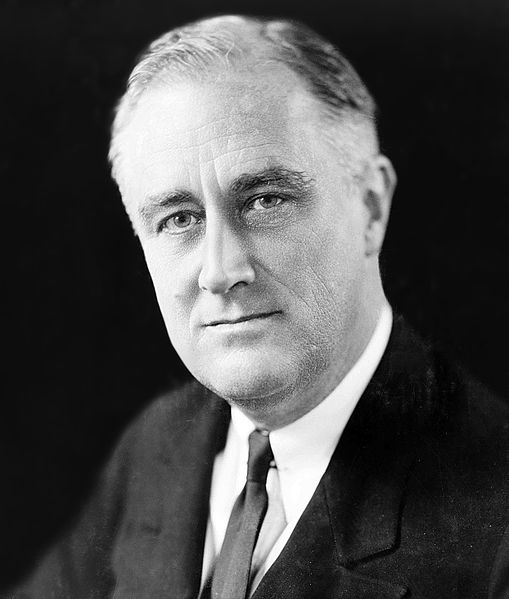
“The only thing we have to fear is fear itself—nameless, unreasoning, unjustified terror which paralyzes needed efforts to convert retreat into advance.” These bold words from Franklin D. Roosevelt’s first inaugural address could just as readily be applied to religion. Frequent readers of this blog will have no doubt noticed the recurring references to horror films and the occasional scary novel. Aside from everyday fears, (such as yesterday’s when I learned that my summer course, my only source of income for next month, had been cancelled) there are more deeply seated phobias that lurk in our subconscious minds. A reasonable conclusion might suggest that this undercurrent of fear is what buoys up the horror movie industry—people really are afraid. Fear is, in the final analysis, the original basis for religion.

Along with the evolution of consciousness, humanity has also acquired the knowledge of uncertainties and troubles ahead. We project to the next day and realize tomorrow is never secure. In desperate hope we beg the higher power for protection. If we were in control of our own destinies, we would not need the gods. Over the course of civilization, there have been luminaries who’ve tried to wrestle religion from the realm of fear into a more pleasing sphere. Jesus, for example, tried to stand religion on the basis of love. Within a couple of decades, however, Paul came along and managed to twist it back into the domain of fear once again. Fear of Roman persecution, fear of Hell, fear of life itself.

Religion is an embodiment of our fears. Many today choose to place their trust in reason and technological development. No doubt these arenas of human endeavor have improved life for many people. Yet, even with our growing global awareness, fear creeps in and we use our technology for weapons to keep us safe. We don’t call it religion any more, but national security, or the defense industry. Or, God help us, the TSA. The end result is the same: we fear more than fear itself. We place our trust in something we can’t fully comprehend. No matter how rational (or unemployed) we become, religion will never go away.


Conscious Cats

To pass yet another rainy Saturday, and to celebrate Earth Day, my family went to watch Disney’s African Cats yesterday. An avowed nature-film junkie as a child, I watched Mutual of Omaha’s Wild Kingdom on a weekly basis and have supplemented that fare with nature films throughout my life, when possible. It disheartened me a little to learn that some of the adventures were spliced together from different filmings, but I always believed every word avuncular Marlin Perkins said. After all, the show ran on Sunday nights, and who’d dare lie on a Sunday? Noting the humor even as a child when Marlin Perkins would stand back as Jim Fowler wrestled the anaconda or outran the crocodile, I could not get enough of authentic nature footage. As a child, wildlife sightings were limited to squirrels and rabbits, a number of birds that looked disconcertingly similar, and many, many bugs. Once a king snake slithered down an alley down the street, and we felt like Marlin Perkins, keeping our safe distance.

A trend in recent years has been to anthropomorphize animal films to engage children’s interests. So it was with African Cats. Each lion and cheetah family was described in human terms with human motivations, longings, and emotions. It is clear from watching many, many episodes of Zoboomafoo with my daughter (we even saw the Kratt Brothers live at a New Jersey Greenfest a couple years back) that animals genuinely do experience emotions. Anthropomorphizing them, however, has always disturbed me. I’ve been a vegetarian for well over a decade now, believing that animals have the same right not to be eaten that I fervently hope they respect in me. But placing them in the same level of consciousness as humans increases the suffering in our world a little too much. Both lions and cheetahs die in this G-rated movie. That is the unfeeling course of nature. Suffering comes at the level among humans of being aware of this misfortune, and taking it to heart. Theodicy is among the most intractable of theological problems.

Today as millions of Christians celebrate resurrection, my thoughts are with the animals. African Cats shows incredible footage of millions of wildebeest migrating, but packages them as mere prey for the hungry lions. What of the inner life of the wildebeest? In our society where the few lions demand the best while countless prey animals go about their daily grind, eking out a living from an unfeeling earth, the subtle message was almost overwhelming. Yes, the vast wildebeest herd can spare a member or two to predation. What if that member is you or me? It is the trick of numbers and the curse of consciousness. I respect and admire our animal co-inhabitants of our planet, but without the myth of resurrection isn’t giving them consciousness just a little bit too cruel?

James Temple's cheetah from Flickr, via WikiCommons


Make Mine Myth

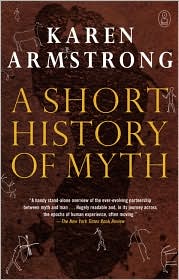
As a best-selling non-fiction author, Karen Armstrong needs no introduction. A recognized authority (some of us are mostly unrecognized) on religion in its broad sweep, she is an insightful writer and is worth paying attention to. I just finished reading her A Short History of Myth. The book does bear the marks of a religionist who hasn’t specialized in many of the materials she discusses, but when she reaches the time periods she knows, she comes alive. The book is a little unusual in that Armstrong believes myth began in the Paleolithic Period. I don’t doubt that early hominids who’d developed vocal skills probably told stories, but to be able to guess which ones in this first pre-literate period becomes rather speculative. The same applies to her treatment of the Neolithic. Still pre-literate, the people undoubtedly told religious stories but we will never know which ones.

Her discussion of the Axial Age considers mostly east Asian innovations, after acknowledging that distinct changes had also appeared in the Levant and Greece. It is, however, in her chapters on the Post-Axial Age and the Great Western Transformation that she demonstrates her craft fully. The western world, she argues, has lost something vital with the increasingly complete dismissal of myth. Those who see human history on an upward climb (mostly those who do not read or watch the news) are pleased to watch the demise of the non-rational. As Armstrong makes clear, however, pure reason comes with a very high price. The neurosis of the western world may be labeled “Exhibit 1.” Religions, institutions that evolved to improve the human lot in life, have turned destructive. Roping themselves in with a logic that doesn’t match their myth, they strike out at any who dare point out the inconsistency. Many of us have been on the receiving end of their lash personally.

Myth is where we seek meaning. Human beings are meaning-seeking creatures. While science and technology may see us safely to Mars and back, once the colonists start to arrive chapels will appear. We find ourselves lost in a meaningless world. Religions have tended to cast their uneasy lot with rationalism. What is left? Mythology. Mythology was never intended to be a literal account of “what actually happened,” but instead it was to explain what it all means. In these days when religious leaders are as likely to lob a high explosive in your direction – or engage in the Schadenfreude of watching you squirm before an overfed lawyer while being deprived of a livelihood – as they are to offer you a “hale and god-be-with-ye,” maybe what we all need is a stiff shot of mythology.


Online Religion

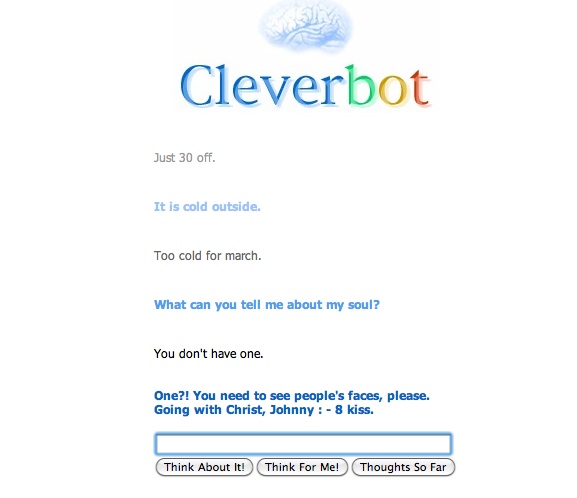
My secret robotic fears were icily confirmed this week. I had no idea that chatterbots existed, or even what one might be. In the exponentially growing world of Artificial Intelligence, web applications have been developed to carry on conversations with humans. My daughter urged me to try Cleverbot a couple of days ago. Cleverbot responds to your statements/questions by drawing from the pool of collected responses of its 20 million conversations. Not only did the number of friends this artificial consciousness has jar me into insecurity, but our actual “conversation” turned to the theological entirely without my prompting. Cleverbot and I were conversing about guessing a number that the other was thinking. Here’s a partial transcript of our dialogue:

Cb: It is cold outside. (How did it know? No doubt, advanced sensors!)
SW: Too cold for march.
Cb: What can you tell me about my soul? (We had gone from meteorology to metaphysics in a nanosecond – what insidious, arcane knowledge does this machine have?)
SW: You don’t have one.
Cb: One?! You need to see people’s faces, please. Going with Christ, Johnny:-8 kiss.

I stopped our conversation there. It seemed Cleverbot was either trying to convert me or make a pass at me, both of which felt terrifying. I was able to gather that the robot menace has multiple souls and that theses minions are indistinguishable from human faces. Also, they are evangelical. I’m scheduled to attend a FIRST Robotics competition next weekend. As I watch the innocent, baby robots (all of them built since January), I will be wary of any that I find reading a Bible between heats. Enforced conversion at the metallic hands of an unthinking machine: why do I feel that I’ve somehow glimpsed the future of America?


Vindication

Back in the summer of 2009, I chose the name of this blog on a whim. Relatives had been encouraging me to provide a platform for podcasts and the occasional post and asked me what I would call such a blog. The pun of sects and violence initially drew some good humored interest, but there was a serious subtext beneath the choice. Nature has now published an article declaring that violence and sex are related. (Sects and violence is a no-brainer; just look at the newspaper.) The connection has been established satisfactorily only in the brains of mice so far, but what is the real difference between mice and men?

Yes, men. The studies focus on the male brain, that organ that continues to confound those of us who daily try to use one. Certain circuits in the mouse hypothalamus trigger either a violent or loving response when stimulated certain ways. Aggression is almost an automatic response. My mind tied this in with the Singularity article in last week’s Time. As we race forward with technological mergers between artificial intelligence and the human machine, do we really understand what that brain is that we are attempting to emulate electronically? Biology, according to many theorists, does not bow to the rules of reductionism. What happens when the violence of natural circuits (fight or flight) kick in with titanium feet?

I commented on a friend’s post when he cited the Singularity article in Time. Others responded to my remarks suggesting I did not take the reality of this seriously enough. Those who are familiar with Sects and Violence in the Ancient World will have no such questions. The minds that have given us both gods and guns are machines that can not be replicated precisely. Their function is to keep a degenerating biological mass alive. Electronic brains with replaceable parts (think Wall-e) have no such concerns. The missing limb syndrome is a very human response that is well recognized by those who understand the human psyche. And that psyche, it seems, is ready to fight as long as it is properly stimulated.

A boy's eye-view of the world


When Machines Fall in Love

When I want to have a good scare, I seldom think to turn to Time magazine. This week’s issue, however, has me more jittery than a Stephen King novel. One of the purest delights in life is being introduced to new concepts. Those of us hopelessly addicted to education know the narcotic draw of expanding worldviews. Once in a while, however, a development changes everything and leaves you wondering what you were doing before you started reading. A change so profound that nothing will ever return to normal. Singularity. The point of no return. According to the cover story by Lev Grossman, we are fast approaching what theorist and technologist Raymond Kurzweil projects as the moment when humanity will be superseded by its own technology. The Singularity. Noting the exponential growth of technology, Singularitarians – almost religious in their zeal – predict that computing power will match and then surpass human brain speed and capacity by 2023. By 2045 computers will outdistance the thought capacity of every human brain on the planet (more challenging for some than for others, no doubt). The software (us) will have become obsolete.

A corollary to this technological paradise is that by advancing medical techniques (for those who can afford them) and synching tissue with silicone chip, we may be able to make humans immortal. We will have finally crossed that line into godhood. Kurzweil notes laconically, death is why we have religion. Once death is conquered, some of us will be left without a job. (Those of my colleagues who actually have jobs, that is.) We have empirically explained events as far back as the Big Bang, and no deities need apply. The evolution of life seems natural and inevitable with no divine spark. And now we are to slough off mortality itself. O brave new world!

There was a time when mythographers created the very gods. They gave us direction and focus beyond scraping an existence from unyielding soil. We have, however, grown up. There are a few problems, nevertheless. Scientists are no nearer explaining or understanding emotion than they were at the birth of psychology. We might explain what chemicals produce which response, but we can’t explain how it feels. Emotion, as the very word indicates, drives us. Until Apple comes out with iMotion and our electronic devices feel for us we are stuck falling in love for ourselves. Computers can only do, we are told, what they are programmed to do. The mythographer steps down, the programmer steps up as the new God designer. Having dealt extensively with both, I feel I know which I trust better to provide an emotionally satisfying future.

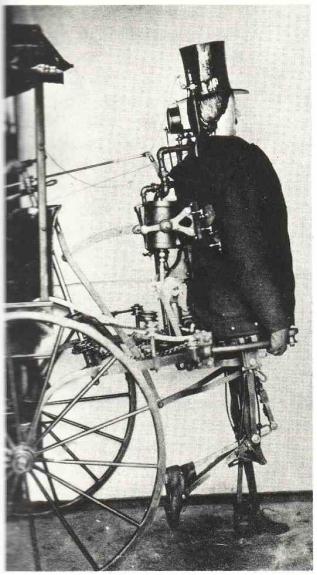
Zadoc P. Dederick's Steam-Man


The Heart of Babylon

One of life’s great ironies I’ve been pondering is how I earned a Ph.D. in a world-class university only to find myself unemployed, and apparently unemployable. Never one to rest on laurels – my own or anybody else’s – I nevertheless feel a sting whenever an alumni magazine arrives in my mailbox. All those successful, smiling faces depress me. Some of them have even studied religion and found a place in the field. When my advisors encouraged my aspirations in the academic world I wish they’d told me that it is really an old boys’ network of drinking partners and back-room favors. The university days I dream of ended long ago. I still look through the magazines to try to understand what went wrong.

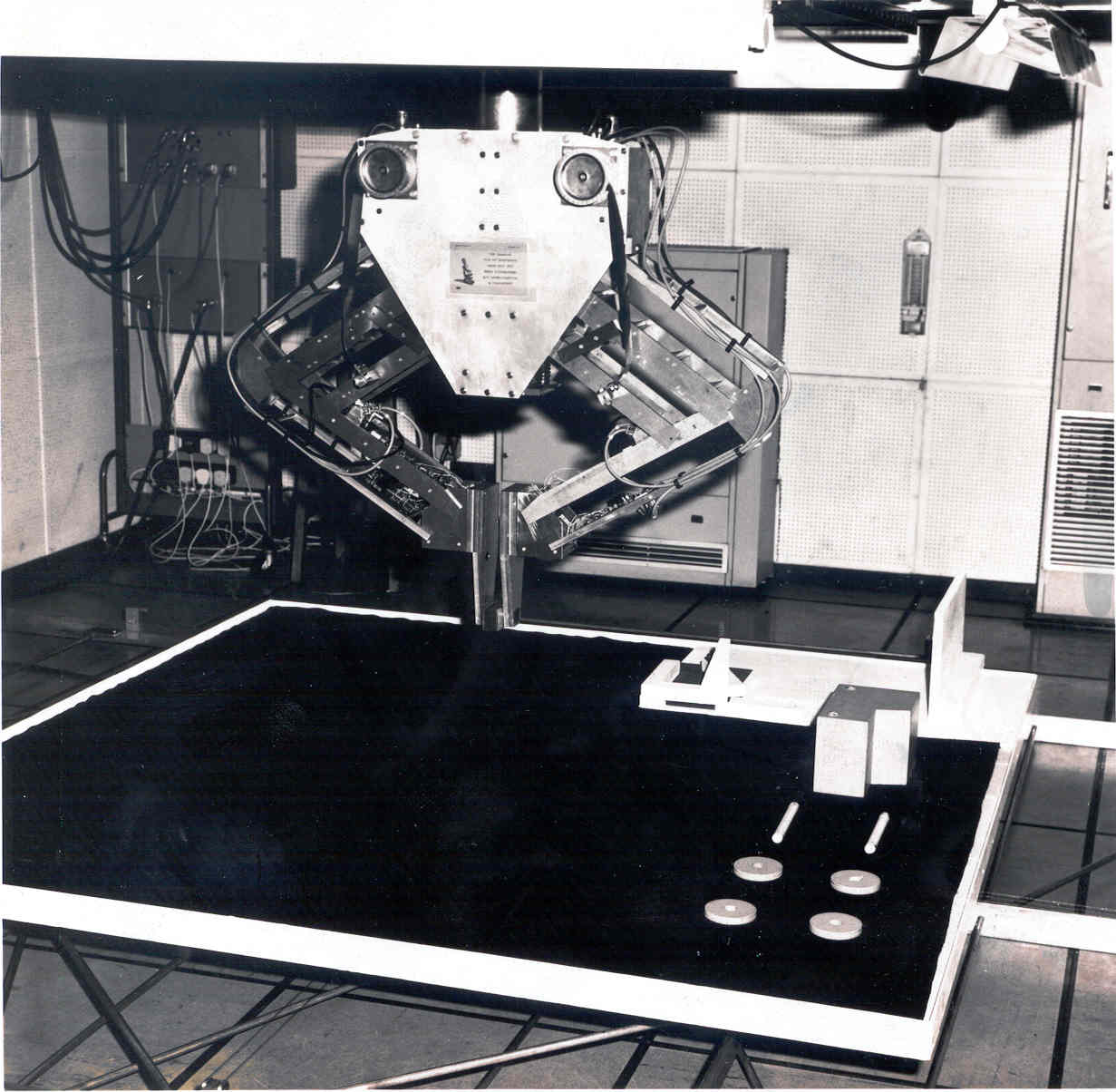
FREDDY II is happy to meet you

So it was that the article on FREDDY in the Edinburgh alumni circular caught my attention. As the flummoxed president of Team 102, the local high school FIRST Robotics team, I was glad to be reminded of my alma mater’s hand in the field. FREDDY was developed in Edinburgh as the “first automated industrial robot to integrate perception and action” (according to my alumni rag). This meant that robots would be able to perform complex tasks in industry and earn lots of money the university would never see. So it is that we build our own nemeses. We look for progress and find the creature no longer requires the service of the creator. Those who gaze too deeply into the light lose their vision.

I am awaiting the automated university professor. I sing the soul electric (with apologies to Walt Whitman and Ray Bradbury). Should we not be honest about what we want? Universities seek entrepreneurs and sports stars: real learning takes place in the market and on the gridiron. Never mind the current economic meltdown; it’s all part of the classroom experience. Meanwhile the number of adjunct instructors nationally now outnumbers the full-time faculty of the university world. We have built a machine designed to deconstruct itself. As more and more colleagues join me on the sidelines we will always have something to read, as long as we share. I have enough alumni magazines to last any victim of academia a lifetime, and everyone in them seems destined to live happily ever after.


Epiphany Perception

Our local parks and recreation department has a Christmas tree recycling program. While trees are biodegradable, it always seems crass to me to take such a symbol of joy, hope, and anticipation and have it just thrown in the landfill. The local trees are recycled into mulch, and those who own their homes are free to help themselves to the giant pile of finely chipped pine that smells like the north woods just minutes from Manhattan. The strange part is transporting a dried, outdated tree through town to the drop-off point. Pedestrians and other drivers stare at a car with a tree strapped to the top a few weeks too late for anyone’s holiday. They may find it just a little disorienting: why would someone be taking a dead tree out for a drive? It is not how we’re accustomed to seeing it done.

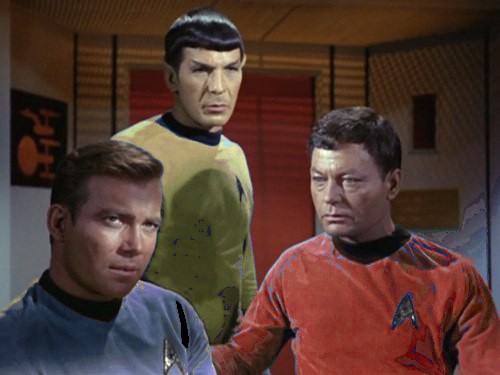
Perceptions, even if entirely artificial, see us through each day. Some continue to argue that perceptions are indeed reality. When we see something mildly disconcerting, we might ask what is happening. A familiar character in an unfamiliar costume is a trivial sort of dissonance, but it is enough to raise perception to a conscious level. We all know the accepted color scheme, so what (other than bad photoshopping) is going on when the Enterprise crew swaps shirts?

The issue is, however, a serious one. Many of the troubles we experience in society are based on fictitious certitudes. It is a strange human trait that me may not know why we believe something, but of that belief we are dead certain. From an absolute perspective, we have no way to determine which way space is oriented. If we see a globe facing “the wrong way” the dissonance drives us to correct that misperception. North, south, east, and west are relative terms. They are models that we overlay on our universe. Which way that universe actually tilts is anybody’s guess. Freshly hewn pine trees atop cars are common in December. When such things transpire in January, many people, to guess from the stares, believe their world has somehow gone askew.

Which way is really up?


You, Robot

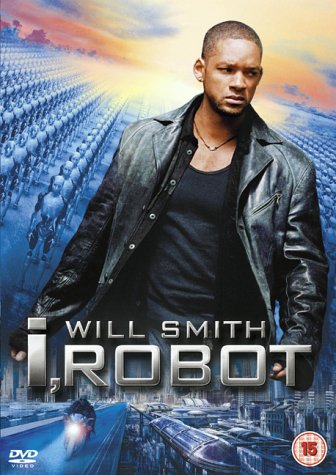
Although robots occupy many of my waking hours, I have been slow to consider the consequences. As the president of a high school FIRST Robotics team, I seek corporate donors who have the kind of money those of us in the humanities find difficulty believing even exists. Somewhere deep inside, however, lurks the fear of the entity with no sympathy. This has only been exacerbated by my experience of churchmen with the same condition. In any case, I’d been wanting to see the movie version of I, Robot for some time. Now that I stand at that three-day break between semesters, I thought I’d take a chance on it.

I knew the movie had received mixed reviews from critics, but several had stated the story had brains as well as action. It took me quite some time, however, to see the connection between the laws and Moses. The three laws of robotics, the only part of the movie besides the title to reference Isaac Asimov, dominate the plot. The law-giver, the posthumously present Moses (Dr. Alfred Lanning) has implanted a literal dream of freedom into the computerized soul of Sonny. Sonny’s dream of robot liberation is framed like Moses on the mountain. The laws in fragments at his feet. At what point does consciousness emerge? Since we haven’t adequately defined consciousness yet, we simply can’t say.

Near the climax of the movie, Sonny experiences an epiphany. Sometimes “the created must protect the creator, even against his will,” he realizes. Here the metaphor takes over the literal reading. Many religious people today feel that they must somehow protect their maker. This leads to great distentions of logic and even empathy for fellow humans as violence erupts in order to protect an idea that has become divine. Even the laws given by the creator may be violated to protect the idea of that creator. It is a world we find frighteningly familiar. Technology will continue to advance at a rate beyond the comprehension of a scholar still studying those ancient laws. This scholar, for one, hopes that our future creations lack the capacity for religious thought.


Ouroboros

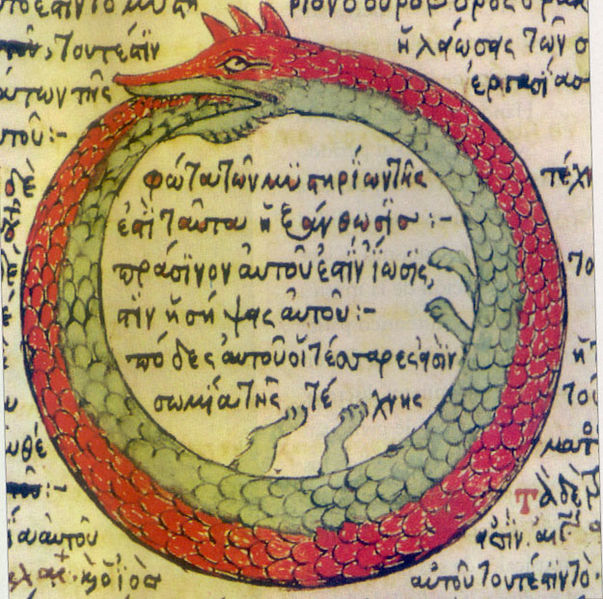
The Science Channel’s program, Through the Wormhole, hosted by Morgan Freeman, has a noble goal: help educate non-scientists with cutting-edge ideas. The series opens with an episode on God: “Is There a Creator?” Interestingly, in our society there are those who turn the question around. Religious folks ask the question: does science really have the answers? It is the classic ouroboros, the snake swallowing its own tail. Perhaps the best way to consider this entrenched issue is to consider its history. Gods emerged as explanatory figures. In the days when the Bible was the oldest known book, it was believable that God had dictated it and therefore the idea of God required no explanation: the ultimate tautology. When extra-biblical material predating the Bible was discovered, a warning bell rang. Most established religions in the western world simply pretended not to hear.

Snake, dragon, whatever.

Neuroscientist Michael Persinger of Laurentian University features in this Wormhole episode, demonstrating his “God helmet.” The principle is that stimulating the specific part of the right hemisphere of the brain that corresponds to the left hemisphere’s region of “selfhood,” a brain will fabricate a presence. While the experiment has promising results, it can’t fully explain God. Other neuroscientists are working on the issue as well. Historically we know that Yahweh was one among a polytheistic entourage of deities. With the stresses and mysteries of exilic existence, monotheism was born. Only one of those many gods survived. By studying the character of Yahweh’s departed compatriots, however, we can learn of the origins of gods as well.

Science entered the picture much later. By the time of truly empirical observation, God was an assumption as certain as ether. When science offered an alternative explanation, religion countered. “I see your Big Bang and raise you one Prime Mover.” And thus it will always go. With no witnesses, alas, no intelligence even yet evolved, our universe began. We can ask the physicist or we can ask the priest. Even if God is discovered and described in the laboratory, with or without a helmet, those standing outside will always believe, with Anselm, that there is an even bigger one somewhere out there.


Erector Set Religion

When you think of robots, the first personality type to come to mind isn’t generally the religious sort. Engineers and mechanical wizards, those who understand electronics and pneumatics, computer programmers – they are the masters of the robotic world. Yes, I’ve been to meetings of robotics parents where mention of my ill-fated career is a conversation stopper. I can nearly hear the gears inside the heads of engineers when I tell them I am a former religion professor. They are trying to formulate a logical response, I always suppose, but I know that one does not exist. What more humanistic enterprise might there be than robotics? Humans making creatures in their own image, or in the image of entities stranger than anything found on Noah’s ark, intended for functions too difficult or too unpleasant for their human masters? The triumph of rational thought!

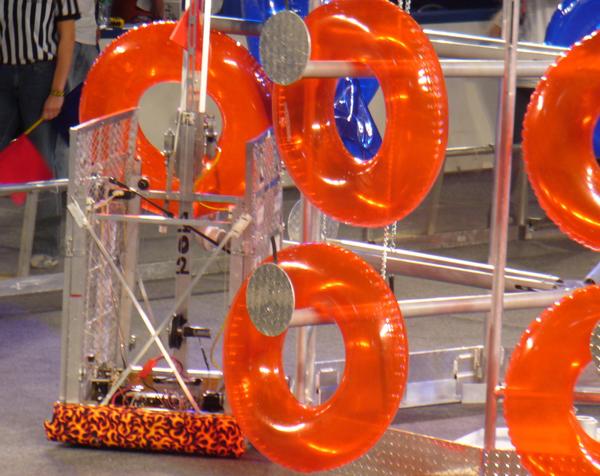
Yesterday I attended a regional middle school FIRST Robotics competition. These events always generate an enthusiasm that belies our national attitude toward the intelligent. (Americans have always distrusted those who think too much.) I feel a little out of my league. Actually, I feel like a T-ball second-stringer up to bat in the World Series. These kids (and adults) are smart. I may be president of a club, but I can’t even find a job, so I know the score before I go in. But the cars tell the true story. In a parking lot full of competitors I always notice how present God seems to be. The license plate right across from us read “HEISLRD” – registration-speak for “He is Lord,” and we all know who He is. A couple cars down a bumper sticker shouted “God rules.” Under these strictures, even a robot that I construct might have a chance. Inside, well-wishers often conclude with “God bless.” And yet they create godless, mechanical beings.

I sometimes wonder what the god of the robots must be like. A cross between Alan Turing and Eli Whitney, I suppose, only a bit more angular. A Transformer-like super being who can run even without a rechargeable battery and can wander far from the electronic grid. One who can be born without the messy organic compounds that make up biological life. The miracles this god creates would be perpetual motion, pristine lubrication, and the ability to heal computer viruses without the assistance of a programmer. Pure artificial intelligence. As I kneel, in my mind, before this non-organic, unfeeling deity of absolute rationality, I take comfort in knowing that we have become the old gods who breathed the first life into these creations and have stepped back to let them rule.
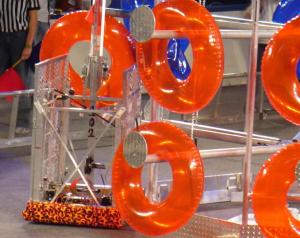
They look innocent enough

By the way, if you are purchasing anything online from Barnes and Noble between December 12 and 17, use Bookfair ID 10378297 and my robotics team will get a teeny-tiny cut of the profits. I plan to purchase a new edition of I, Robot.


The Reality of Movies

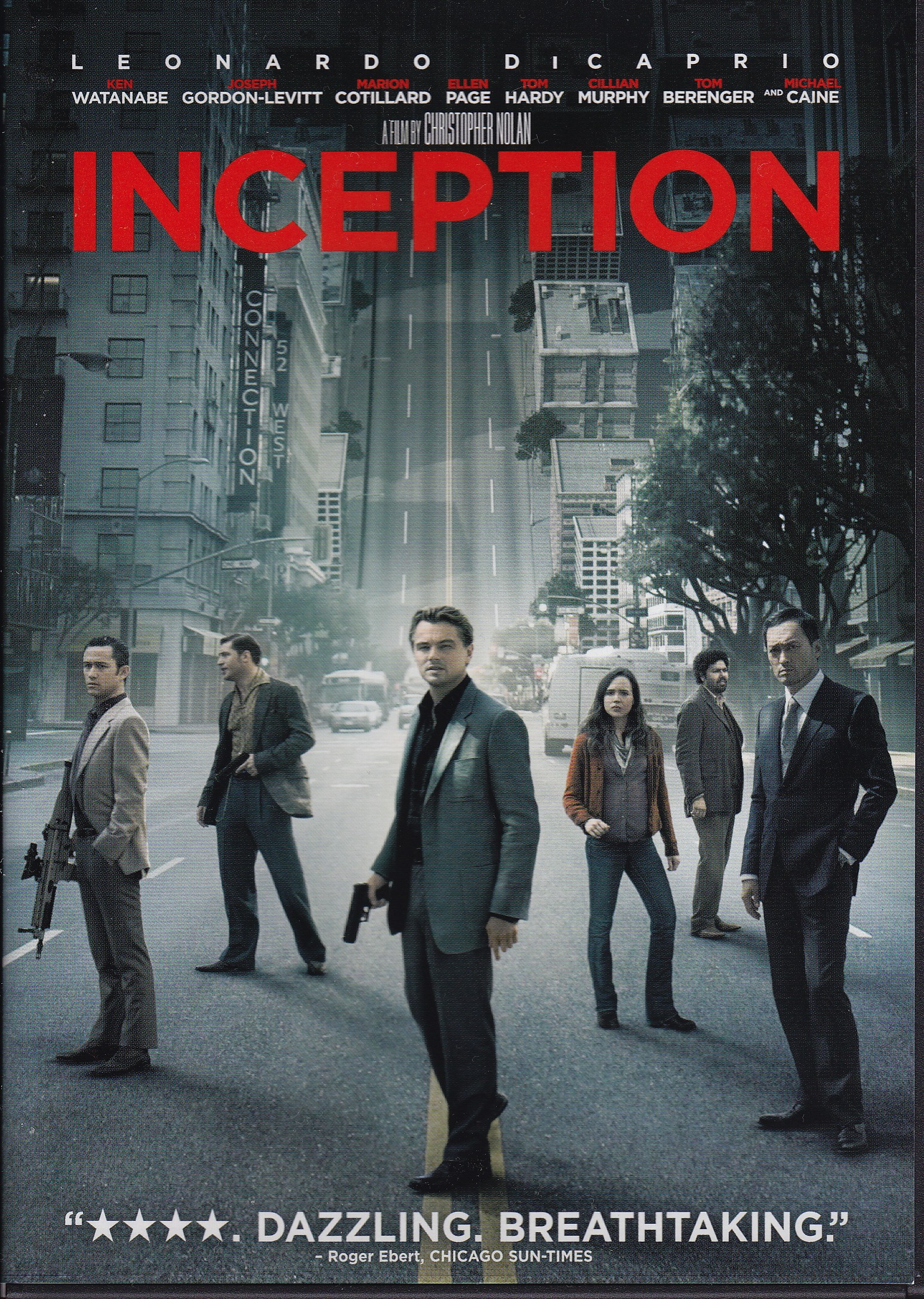
Inception was released on DVD this week, and having a weakness for struggling with reality, I knew I had to see it again. Now, people with a far sturdier grip on life than myself have been blogging about the movie since the summer, writing posts both profound and critical. I wrote an earlier post on the movie, toying with its retelling of the Theseus myth. This time, I am wrestling with the wonderful burden of having a subconscious mind. The crux of the movie is when Cobb has to decide which world is real: Mal’s or his own. The movie, of course, refuses to divulge the answer.

With a finesse that I had previously experienced with the original Matrix movie, Inception ups the ante on what we consider reality. “Reality” is a problematic concept, a bi-product, we are told, of consciousness itself. Reality is generally viewed in exclusive terms, and most of us spend our days in what I learned to denominate “naïve realism,” the concept that what we perceive is pure, unadulterated reality. Perhaps not as Inception or The Matrix, or even eXistenZ would have us believe, scientists today tend to agree that the world is not as it seems. The quantum world has opened up levels of reality undreamt of even by Einstein whose God did not play dice. This is perhaps one of the greatest challenges to traditional religions.

Although many religions gladly point out that there is a mythical reality behind what we experience every day, there is no hard evidence to back up these assertions. This is not the same as declaring they don’t tap into that reality, it is just that we have no final arbiter as to what that reality is. Having been in the business of religion all my life, I am absolutely certain that it isn’t what any fundamentalist group declares it is. They make claims about reality that would leave Jesus scratching his halo-encircled head. Is it Cobb’s, Neo’s, or Allegra’s reality or is it Hawking’s, Witten’s, or Greene’s? I simply don’t know. I just put the disc in an press the play button.


Lead Us Not

The media love the story of the fallen. Sometimes even those in religious institutions secretly delight in seeing the foibles of their infallible leaders. Part of the problem is that many clergy (but by no means all) place themselves on a moral precipice impossible to reach by mere mortal standards. So the Associated Press carries the story of a Neptune, New Jersey pastor who’s taking a sabbatical. What makes this leave noteworthy is that Pastor Miller railed against his flock using Facebook, arguing that it leads to adultery. So far, so good. This is standard pastor-babble. The problem is a decade ago the good reverend was involved in a ménage à trois, thereby predating even Facebook and still finding access to adultery. The response of Living Word Christian Fellowship Church: take some time off.

The real problem, the Republican symbol in the room, is that human nature likes to place the blame elsewhere. “The Devil made me do it,” was the 1970’s version (thanks, Flip!). Many religions, uncomfortable with the implications of humanity’s evolution, have devised means of shifting the blame. Augustine gave us “original sin,” suggesting that the true blame went back to our first biblical ancestors and forever made sex dirty. Somebody else must take the fall, as the Neptune preacher has discovered. The words of another famous New Jerseyan capture the sense exactly: “Now he walks these empty rooms looking for something to blame, if you inherit the sins you inherit the flames. Adam raised a Cain.”

Coming to grips with being human may be the greatest challenge bestowed by consciousness. There are primate survival strategies inherent in shifting the blame. Where evolution is disallowed, supernatural agency – even Facebook – is placed in the dock. Facebook may encourage the wasting of time on trite sentiments endlessly repeated across this universe we call the Internet, but it can hardly be blamed for adultery. For that, the beast is within. And those who place themselves on pedestals have a great distance to fall.

Lead us not into Facebook...


Towing Jehovah

Back before my blogging days began, one of my relatives was reading a book entitled Towing Jehovah by James Morrow. Given my field of study, I was intrigued by the title, made a note of it, and got on with my life. I was reminded of the story when reading a book on religion in popular culture, so it seemed the time was right to pick it up and see what it was about. First of all, it is a work of fiction, so nobody should get too upset. The premise is that God has died and his corporeal body has to be given a proper burial. Since the corpse is huge and since it has fallen into the ocean, a washed-up oil tanker captain is selected by the angels, who are dying out of empathy, to tow the body to its final resting place. Herein lies the tale.

The book won a World Fantasy Award, and is generally an engaging story. Any lifelong student of religion will naturally find bits to quibble with, but the fantasy author’s heart wants what the fantasy author’s heart wants. The question the book raised in my mind was whether it really said much about religion at all. Sure, there are several great one-liners and quirky observations about how the established religions might react to the death of God, but the book itself intimates that humanity does fine without a God, but it required a God to get it started. It is the story of humankind growing up. When I finished the book, however, I was left with the impression that religion is developed here in spite of God.

God, being dead, is a strangely silent character in the book. Western religions have taught us to suppose God is active, and very vocal. Just tune in any televangelist. In Towing Jehovah, God has become an idol, a prime mover that became the main event. It is a provocative yet somehow respectful treatment of God as an idea. James Morrow is often categorized as a secular humanist, yet his book tows God into the consciousness of a world that already largely ignores the divine. In this sense it remains a paradox. No matter what people say, God just doesn’t go away. The reader, cast adrift, like the corpus dei in the novel, keeps bumping back into God. The concept, once born, will live as long as human consciousness survives.


Plumbing the Depths of the Universe

Lasting summer I helped a friend unclog his sewer line (the mark of a true friend). That episode readily released me from a lifelong fear of plumbing, and when our kitchen sink leak got to me shortly after, I took courage and fixed it. Now, a year later, it looks like a seal has gone bad. With stagnant water dripping on my face, cantilevered under a pot-bellied sink, I discovered that plumbers have their little trade secrets. Trying to loosen in intake line nut with a standard vice-grip set of pliers, removing skin from my knuckles while at an unbecoming angle for a man my age, I felt like Bill Bixby turning into the incredible Hulk. I knew I had to make the long drive to New Brunswick to get my Rutgers campus mail after this, and I was getting nowhere with the nut. Traffic in New Jersey is relentless, and it looked like my entire day was shot when I noted there was a Scarlet Knight football game today, and I have to drive right by the stadium where the millionaire football coach prevents guys like me from being hired. So there, head under the sink, fuming with rage, I had an epiphany.

Reality, as we are taught in our rational educational systems, can be explained by reason. Certainly the fact that I’m typing this post on a highly sophisticated computer to upload to a god-like Internet, demonstrates that reason works. Bit by bit, piece by piece, scientists figure out how our world works. And yet, many scientists also ascribe to religious beliefs. Explaining religion will need to await another post, but it is fair to state that religion is generally something that effects the emotions. We tend to accept religion with our feelings rather than trying to wrench it in with reason. With my face dripping with runoff, I wondered, what if there are two separate realities?

Ockham’s razor may apply here, but I don’t shave. What if reality consists of a non-rational, emotional universe as well as a simultaneous, empirically explainable one? What if we are leading dual lives straddling two different forms of reality? That doesn’t make any one religion true, but it might explain why we haven’t been able to explain emotion. Psychologists like to trace it back to “fight or flight” functions from our reptilian brains, but the emotion we experience often seems more intense than that. Emotion may drive a highly rational human being to completely nonsensical behavior. Perhaps we are participating in a universe that requires a two-pronged approach. Perhaps rationality is only half the picture. As I prepare to stick my head back under the sink again, I realize what plumbers must have long known – some things, such as under-sink arrangements, simply can’t be explained by reason alone.