Aye, Robot

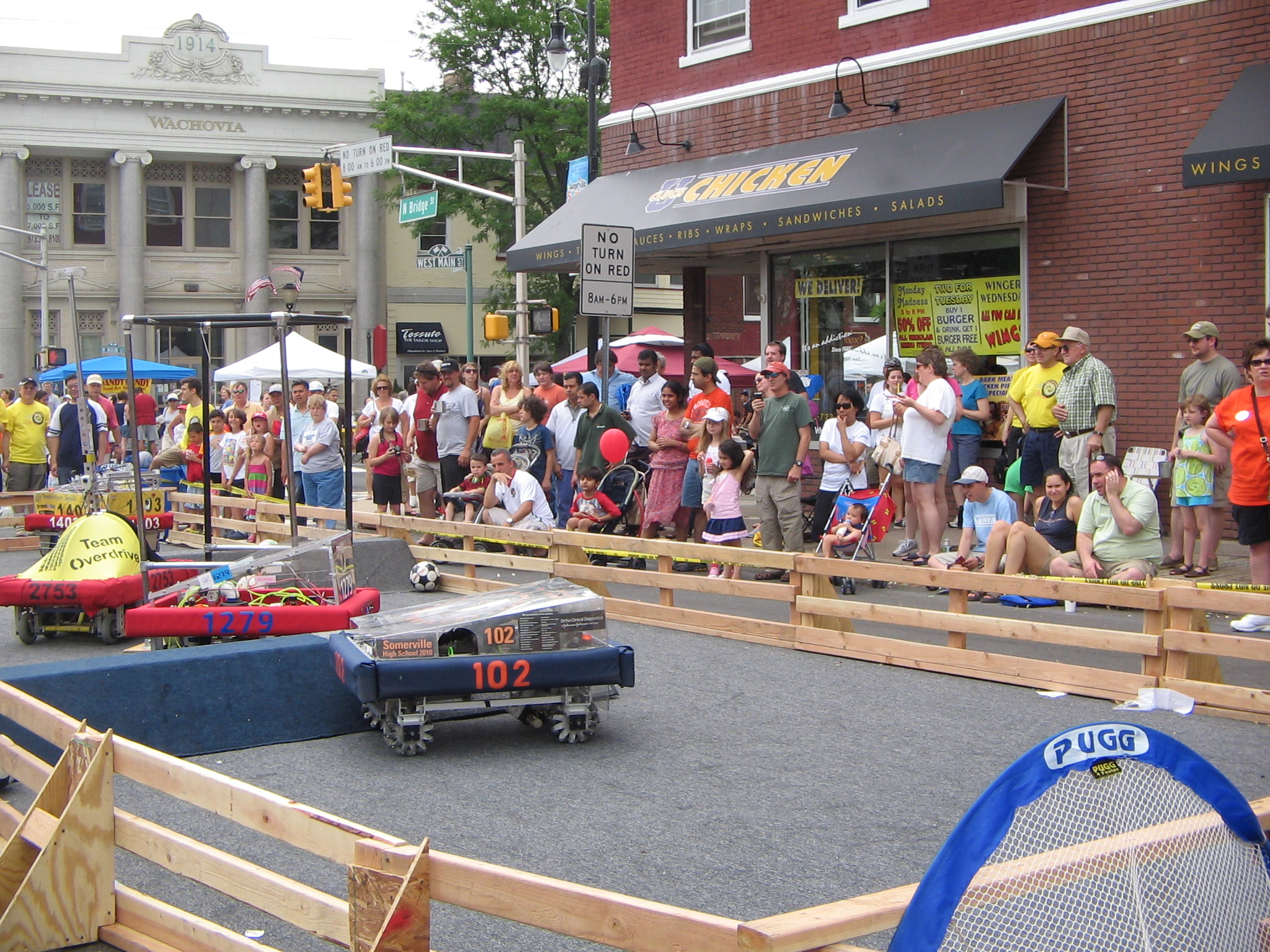
Being a “biblical scholar,” having an interest in robots might seem counter-intuitive. I was intrigued by the topic as a youngster, but convinced that if what the Bible said was true it deserved nothing less than full attention, I let my formal study of science lapse (although I kept an active reading life on it). Now, through the interest of my daughter, I have found myself mentoring budding young engineers, mostly by helping put things away and correcting grammar. Yesterday we took our robots outside for the local street fair. Almost always the response we get from local people is “Robots? Our school has robots?” Well, partly correct. The schools house the robots, but our robotics club is largely self-funded, so the robots might be said to belong to the team rather than the school. In any case, yesterday the robots played soccer in the street for the amusement of festive fair-goers.

People often fear “soulless machines.” They run by predetermined rules, set down explicitly in computer code, and do only what they are programmed to do. Some fear artificial intelligence for this very reason: what if robots or computers are programmed to think? Does this make them something more than physical machines? The standard, religiously biased, answer is that the soul, or even mind, is a uniquely human possession. Animals may act on instinct, some may qualify as having a limited mind, but definitely not souls. That would simply cross too many boundaries. When asked to produce a human soul for scientific scrutiny all religions come up blank. We don’t actually know what a soul might be – an everliving component that God might throw into Hell or spoil in Heaven seems to be the general gist. And it makes our moral choices for us.

In the Bible if any animal (say a bull) gores a person to death, and that bull had a prior reputation, not only beast but master could be put to death. It seems that the bull has a bad moral intention. If robots hurt people, in violation of Asimov’s first law of robotics, they are treated as acting with moral intention. We project souls onto them for the convenience of condemnation. If an animal, such as a zoo gorilla, saves a human child, that animal receives the treatment of a souled being for a while, until the act is forgotten. It seems that souls are immaterial components of a closed system used to reward or punish an individual. How much of themselves do humans have to put into their robots before they can have souls as well?

Robots among the people


Super Sensitive?

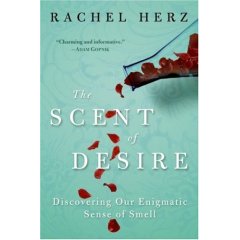
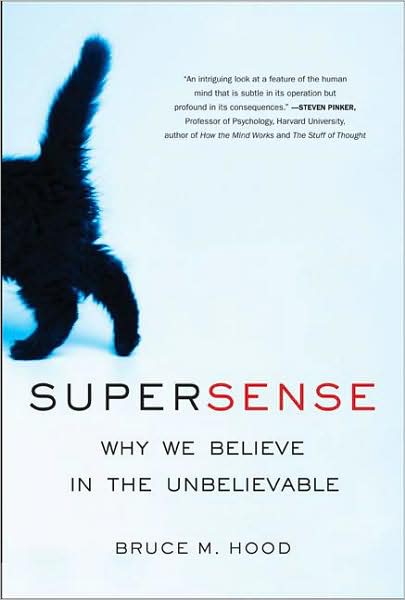
As not infrequently happens, I take my reading cues from others. In general I am reading half a dozen books at any one time, so when I finish one I cast around for something of a similar genre. One book that I just finished I learned about from my cyber-friend Sabio Lantz’ Triangulations blog – Bruce M. Hood’s Supersense: Why We Believe in the Unbelievable. Hood is a respected psychology professor, and his writing style is engaging. The book itself, while fascinating in its ability to offer an overarching theory to explain why people believe in the supernatural, is deeply disturbing. I grew up in a family where the supernatural was taken for granted. Many of Hood’s explanations are cogent and logical, but that was not what I found to be distressing.

The overall premise of the book is that if science cannot measure a phenomenon, it is “super”-natural. If it exists in nature, science can define it. To me this seems far too limiting. It assumes that science has already probed the infinite aspects of an infinite universe. Yes, we understand (to a degree) matter. We have discovered the sub-atomic world with its quarks and other tiny bits. We understand a great deal about energy as well. Could there not be, however, an entirely natural aspect of either matter or (more likely) energy that science has not yet learned to measure? And could not this aspect be a piece of the larger universe that we inhabit? In other words, when all that is not defined by science is “supernatural” then we have already decided on the limits of our world.

From a psychological viewpoint, I find Hood’s analysis quite agreeable. The human psyche does have a need to find the supersense in the world. We do look for irrational causes. Not all unexplained phenomena are supernatural, however. It is a semantic trap. If we define “supernatural” as anything outside of current understanding, then his thesis stands. If, however, we define “supernatural” as that which violates physical laws not as they are currently understood but as they actually are, then who is to say whether there is anything supernatural at all? “Unexplained” and “supernatural” are not the same thing. Such a distinction would not be troubling were it not for the fact that Hood defines “reality” (another problematic concept) only in terms of “scientifically known.” If it has not been measured by science, a phenomenon is not real since our physical brains (measured by science) are the filters through which we experience the world. There is no room for what has not yet been found.

Far more distressing than that is his assertion that freedom is an illusion. One of the most distasteful theological travesties ever is the concept of predestination. The idea that a loving God would create most people to suffer eternal torment simply to fulfill his own arbitrary assignment of justice is something for which Presbyterianism can never be forgiven. It is about the most immoral God that can be imagined. The same goes for the psychological premise that we must react according to our biology. I found myself wondering why Hood wrote the book at all, if life is all predetermined. What if he had chosen not to write it, or to write it differently? You could argue that this too was predetermined, but does this not simply justify the income and fame of those who are “important people”? It runs a true danger of being terribly bourgeois, if not downright supportive of eugenics. Not that Hood would advocate such an action, but any time predetermination is raised, it presents the grandest of excuses for the most heinous of behaviors. Even the psychological observations that support it may have been misunderstood. Of course, if you disagree with me, don’t blame me; it was predestined that I should write this.

That having been said, I found Supersense overall to be a wonderfully fascinating book. At points Hood’s argument seems to consist of the post hoc, ergo propter hoc fallacy he rejects as unscientific, but if this can be irrationally forgiven, there is much useful material to be gleaned from this book.


Soulless Robots?

Robots have taken over my life. At least in the short term. As my friend Burke commented on Easter: “Alleluia! The robots have risen… up against us?!” Actually, the robots I encounter are benign and all follow Asimov’s rules. I have mentioned before the phenomenal First Robotics program, a venue to encourage high school students to consider careers in engineering. Team 102, Somerville High School’s robotics team, recently won a regional competition in Hartford, Connecticut. My role has mostly been to watch other people design and construct the robot while occasionally correcting the grammar on written documents. The joke my friend made, however, has at its roots a deep-seated human concern: how do people deal with soulless machines?

Stephen Asma, in his book On Monsters, has a chapter concerning the human fear of a robotic future. Electronic gadgets with uncompromising metal bodies and no consciousness that we recognize present a frightening combination. The question that concerns me more, however, is the concept of the soul itself. The Hebrew Bible has no concept of the soul as it would later be adopted by the Judeo-Christian tradition. In the Hebrew Bible a body is a soul; when the soul dies the body dies – people are a monistic unit, not a dualistic entity with a part that hangs around the spirosphere after the biological part rots away. Of course, in Christianity the soul has become an essential aspect of church doctrine and we fear other creatures that lack them. Souls have never been observed in a laboratory and we have yet to prove their existence.

Reading the news and seeing how biological, soul-fueled humans treat each other is a sobering task. Each day I lay the newspaper down with a new kind of dread. Perhaps souls are only mythical beings concocted to shore up a theology that can’t survive without them. Or maybe all living beings have souls. Perhaps even mechanical ones. As Team 102 heads to the national competition in Atlanta in the days ahead, I know that I’ll be rooting for a soulless machine that may be a bold step towards humanity’s continuing evolution.

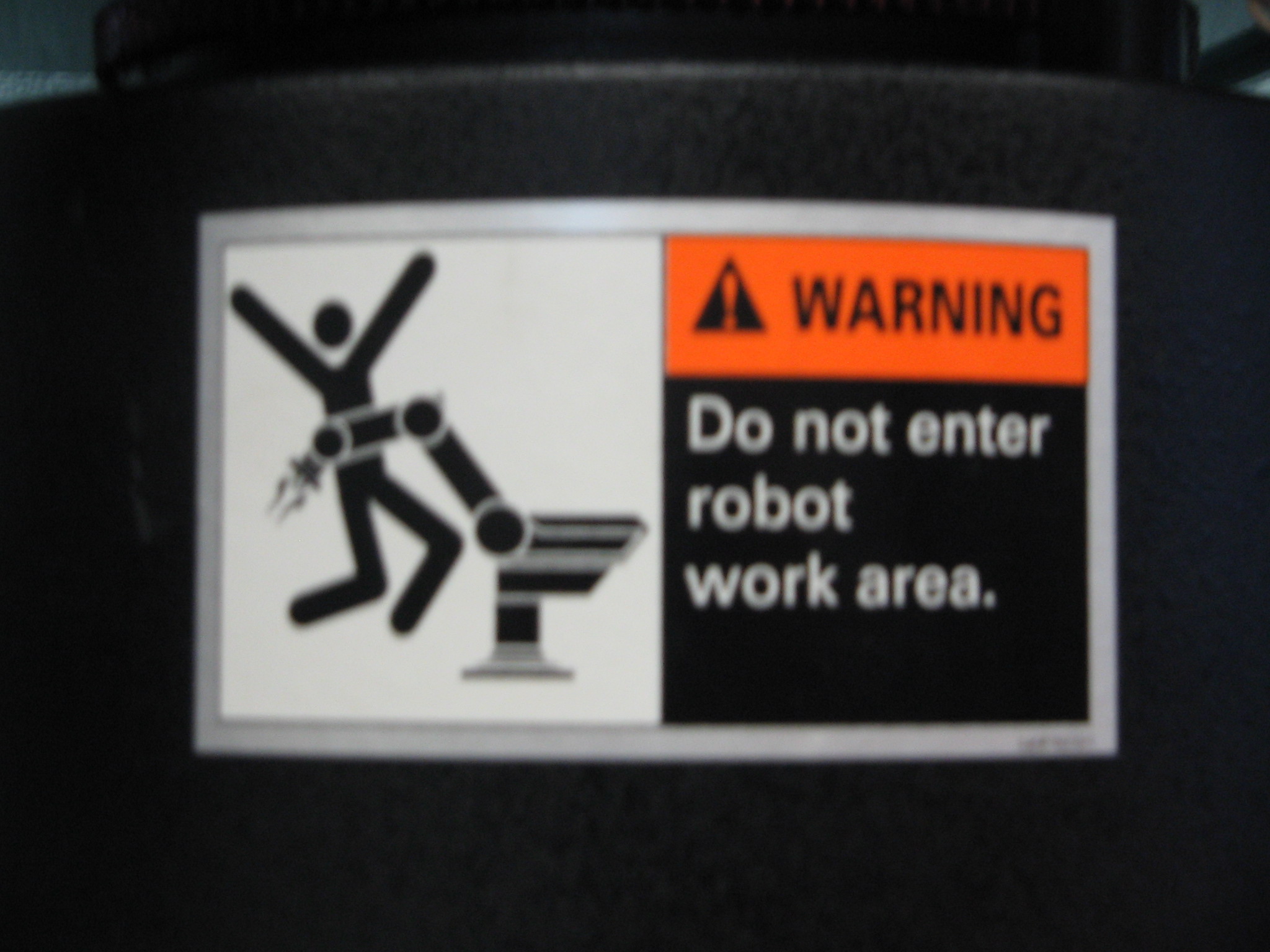
Sorry for the blur, the robot just wouldn't stop shaking me!


Holi Holidays

I am the first to admit that I know far too little about Indian religions. As I teach Ancient Near Eastern religions every year, it becomes clear that much of our own modern, western religious tradition owes a debt of gratitude to the ancient traditions of the Far East. Zoroastrianism, substantially connected to early Indic religions, had an immense impact on the major monotheistic faiths that grew out of the ancient Near East.

So it was that I was pleased to see a story in the local paper about the upcoming Hindu festival of Holi. I know little about this festival other than it includes a celebration of color. Having grown up a little too attached to television, a device that was black-and-white in those days, I have retained my fascination with color and the emotion and power it conveys. When color television came to our home, it was an epiphany. Reading about human cognitive development it is impossible to ignore the impact color has on Homo sapiens and their outlook on the world. A master film-maker may convey depth and feeling in the absence of color, but once color is added, the story becomes vibrant. I took my family to a New Shanghai Circus performance at the local community college last night. As stunning as the acrobatics were, the vivid colors definitely enhanced the experience.

While at Nashotah House I found myself being consulted on color. The classrooms were being painted, and as Academic Dean I was asked what the color scheme should be. I consulted a friend who works in architecture, and she gave me a book about the “feel” of colors. My advice was overruled, but a new sensitivity to color had been awakened. Strangely, later that year a local public school brought me in as a consultant on classroom color. My engagement with color is purely subjective, but I know if I see a certain shade of blue I can be literally transfixed by fascination. My minimal exposure to Holi has opened a new window on religion for me. Color. It is an aspect of life to be celebrated.

Courtesy Louisiana State University


Eine Kleine Neanderthal-Musik

I suffer a limited form of amusia. No, it’s not a fear of amusement, but rather lack of musical ability. I appreciate music very deeply, but I simply can’t make it. I’ve tried lessons and teachers end up turning away in exasperation. The embarrassing part about all this is that music is an integral part of religion – almost all forms of religion have their musical repertoire, and musicologists have demonstrated that the early human impulse to make music has a religious basis. I can only sit in the audience.

That's me on the left

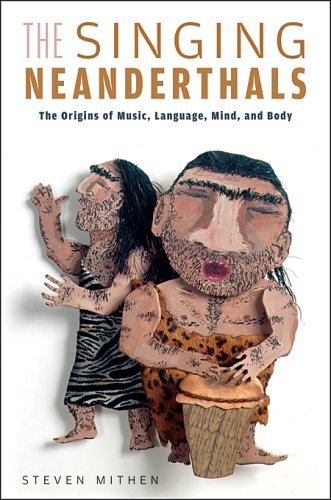
I’m finally getting around to reading Steven Mithen’s The Singing Neanderthals: The Origins of Music, Language, Mind, and Body. A few years back I gave an academic paper suggesting that musical development could be an analog to religious development on a neurological level in the Bronze Age. Since I’m not a neuroscientist I have to rely on others to do the experimental side of the equation. Mithen serves this function nicely. When I read about music and the brain, which I do frequently, I am surprised that more scholars of religion haven’t picked up on this connection. Since music is frequently “background noise” today, many people casually assume that it is insubstantial, a whim. I look at it (listen to it) from a different angle. I seldom listen to background music – if music is playing, I pay attention to it, and something in my unprofessional brain says Mithen is often right on target.

Of course, religion and music is not the main thrust of The Singing Neanderthals, but rather the idea that music was formative for human cognition. Perhaps music even developed before speech. For me this is an important piece of a much larger puzzle: whence did religion arise? Like all inquiries that delve too deeply into the past, the answer is lost among ambiguous artifacts and ancient dust. And yet, those who know more about this than I do seem to be pointing in the direction that both religion and music have their origins in the pre-Homo sapiens stage of our evolution. I’m not surprised. I only wish I could play along.


Klaatu Barada Nikto

I grew up with robots. Of course they were on the television screen and I was far away in rural-ish western Pennsylvania. They were exotic creatures built by guys much more intelligent than I could ever hope to be, and they were powerful, completely rational, and scary. Now I find myself involved with the FIRST Robotics team in my daughter’s high school where kids a third my age are building a robot. It is a humbling experience.

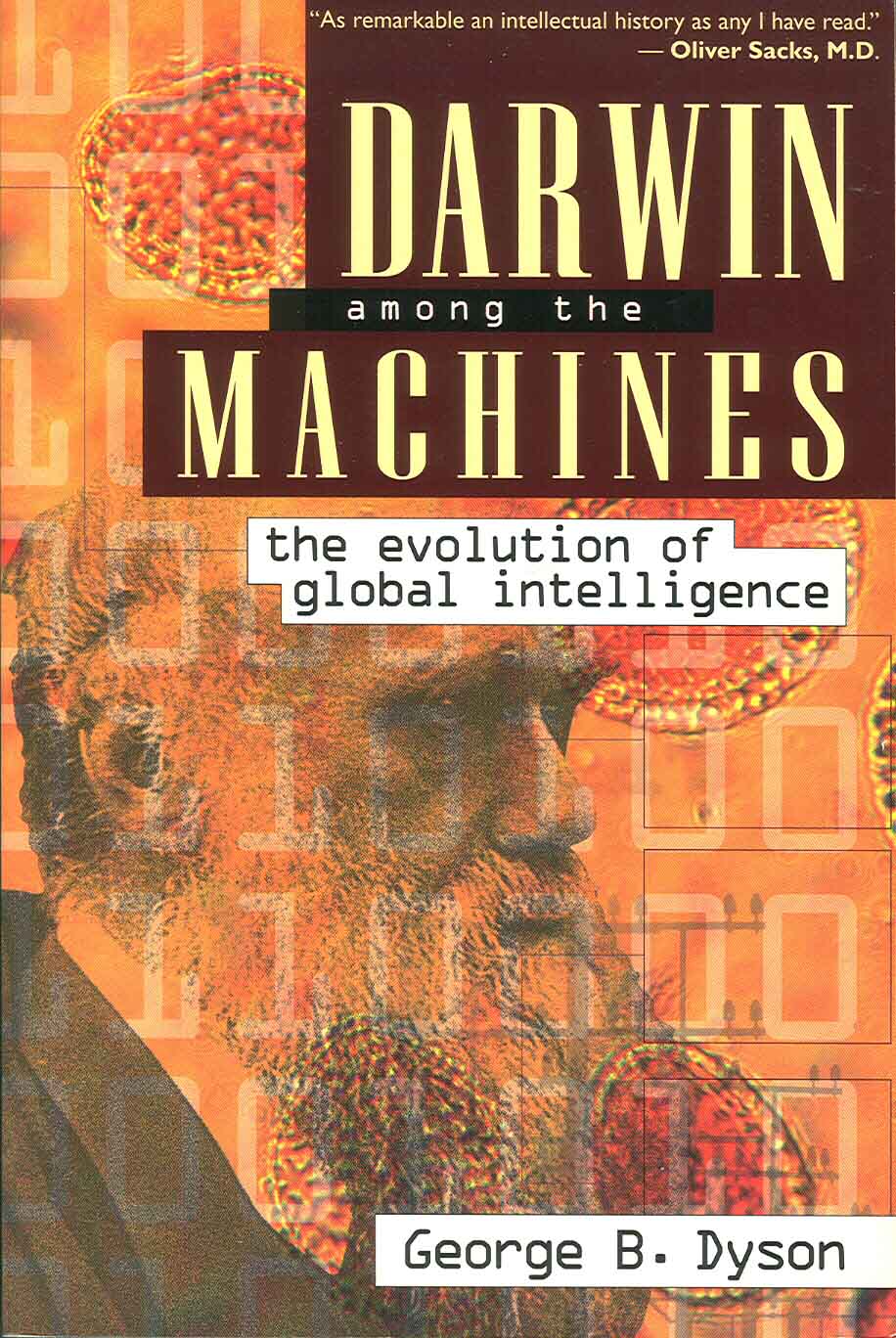
The more I ponder my small support role in the construction of a robotic creature, the more my thoughts turn to George Dyson’s masterful science writing in one of my favorite books — Darwin Among the Machines: the Evolution of Global Intelligence. I would not have known of this brilliant book had I not met George and a group of his friends several years back while they were discussing some of the ideas raised in his work. The main one that captured my attention was the premise that when we build machines we may be constructing an unrecognized form of consciousness. The greatest minds in neuroscience today cannot agree on what consciousness really is or how far it extends beyond this “three-pound universe” in our heads. Although most would decline to comment on the overtly religious term “soul,” we still know that any difference between consciousness, mind, psyche, and soul is very slim indeed.

Read this book!

Our lifestyle is made possible by robots. We drive cars largely constructed by them, use their chips to communicate over vast distances, and even take a stroll on the surface of Mars with them. My question from Monday’s post may have been whimsical, but it was serious. Where is it that the essence of a creature resides? Does it require carbon-based biology, or do we, unwittingly, create a race of slaves just like the gods of old?


In the Heart or in the Head?

I don’t have cable television. I don’t even have one of those digital conversion boxes. I’m afraid the costs and technology have gone beyond a guy who grew up with a black-and-white television with the screen the size of an old Mac Classic. I still try to keep a wary finger on the pulse of popular culture, and fortunately the internet provides just about everything in a condensed version. When I want to see a television show I generally do so through DVDs. Again, expense is prohibitive to the underemployed, but kindly family members often help out with occasional contributions. My brother surprised me this Christmas with the first season of the History Channel’s Monster Quest series (brothers sometimes see what you try to hide from the wider world). After a long weekend of class prep, I sat down to watch an episode last night that introduced me for the first time to the work of Dr. Robert J. White, a retired professor from Case Western Reserve University.

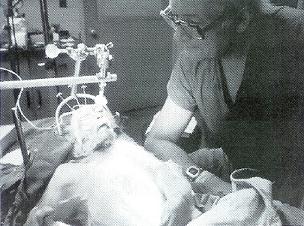
I have always been intrigued by the unlimited possibilities, no matter how remote, that science fiction can conjure. This episode, however, was factual and showed footage of Dr. White’s successful head transplant operations on monkeys in the 1970s. I had no idea that such work had ever really been conducted, let alone successfully. Visions from X-Files: I Want to Believe flashed across my cerebrum while I watched the footage. Not to mention the ubiquitous heads-in-jars of many a science-fiction movie! A plaguing religious question was also stirred back into life after having settled at the bottom of the tank for many years – where does the essence of a person reside? Organ transplants are everyday occurrences, and many lives are prolonged by the sharing of body parts no longer used by their original owners. And transplants do not stop below the neck – cornea transplants bring us very close to the brain, the presumed seat of our personality, consciousness, or, if you will, soul.

when a head meets a body

Dr. White’s monkeys that survived seemed to have retained the personality of the original monkey head on its new body, but I wonder if that was just an illusion. In our world where each individual is treated as a discreet unit, the essence of a person is thought to reside in the brain. Our brains, however, recognize our bodies and sometimes bodies reject the very organs intended to save them. Is there really any possibility of preserving the essence in one’s head alone? Or are we, like ants and bees and Portuguese Men o’ War, really all part of a collective organism? Maybe there is a good reason I don’t have cable or a digital conversion box.