At World’s End

“I am not a number, I am a free man” Number 6 plaintively cried on The Prisoner. Capitalism, however, has a way of making each of us quantifiable. A statistic. Not a guy with a kid in college. Not a human being with a sense of self worth and pride of achievement. From far above, in houses and penthouses owned by those who climb ladders made of other human beings’ hopes and dreams, those below are just means to an end. I’m sorry Number 6, you are wrong. Freedom is not free and the capital in capitalism is humanity, commodified.

It used to be that on the way to work I’d walk past the homeless in Midtown and wonder what could have brought them here. What could happen to a person to make them invisible—just a statistic waiting to die? What system could reduce a person to a number? Learning to count is, at times, a betrayal of our very humanity. It used to be that hard work was rewarded. It used to be when someone looked our way s/he saw a human being, and not a number. I’m terribly sorry, Number 6, I truly am. We don’t know your name. You are a number. So are we all.

In the aptly named Pirates of the Caribbean series, the second installment complicated the story by introducing the unmoved Englishman Lord Cutler Beckett. Satisfied with nothing less than the control of the world’s oceans—some two-thirds of the planet, he secures the means to reduce all enemies to fish-food with no show of emotion beyond a shallow smile. In At World’s End, as the Flying Dutchman and the Black Pearl bombard the Endeavour, blowing the ship of unbridled capitalism to bits, Lord Beckett, bewildered, significantly climbs down the steps muttering, “It’s just good business.” Aye, but not Aye, aye. (There is a serious difference.) As the Endeavour sinks I think I hear Number 6 from the depths, and I desperately hope he’s right.

Pirates_3_AWE_Poster_International


The Devil’s Dues

Belief, no matter how inscrutable, must be taken seriously. Although we frequently prefer to privilege that which we “know,” belief is one of our main motivators. Strangely, many who reach a certain level of education begin to denigrate belief as if it were an embarrassing indication of improper brain functioning. Belief is, however, all we really have. A case of this was recently shown in an interview with Justice Antonin Scalia. A piece in CNN Opinion by Rebecca Buckwalter-Poza discusses an interview of Justice Scalia by Jennifer Senior where the topic of the devil arose. Buckwalter-Poza, as she makes clear, is no fan of Scalia, but when Senior began to treat the Justice’s belief in the devil with a condescending kind of incredulity Buckwalter-Poza called time-out. We need to take his belief seriously. Could such a powerful man really believe in a mythological figure? Yes. Belief will do that to you. Just the same, Senior’s non-acceptance of the devil is equally a matter of belief.

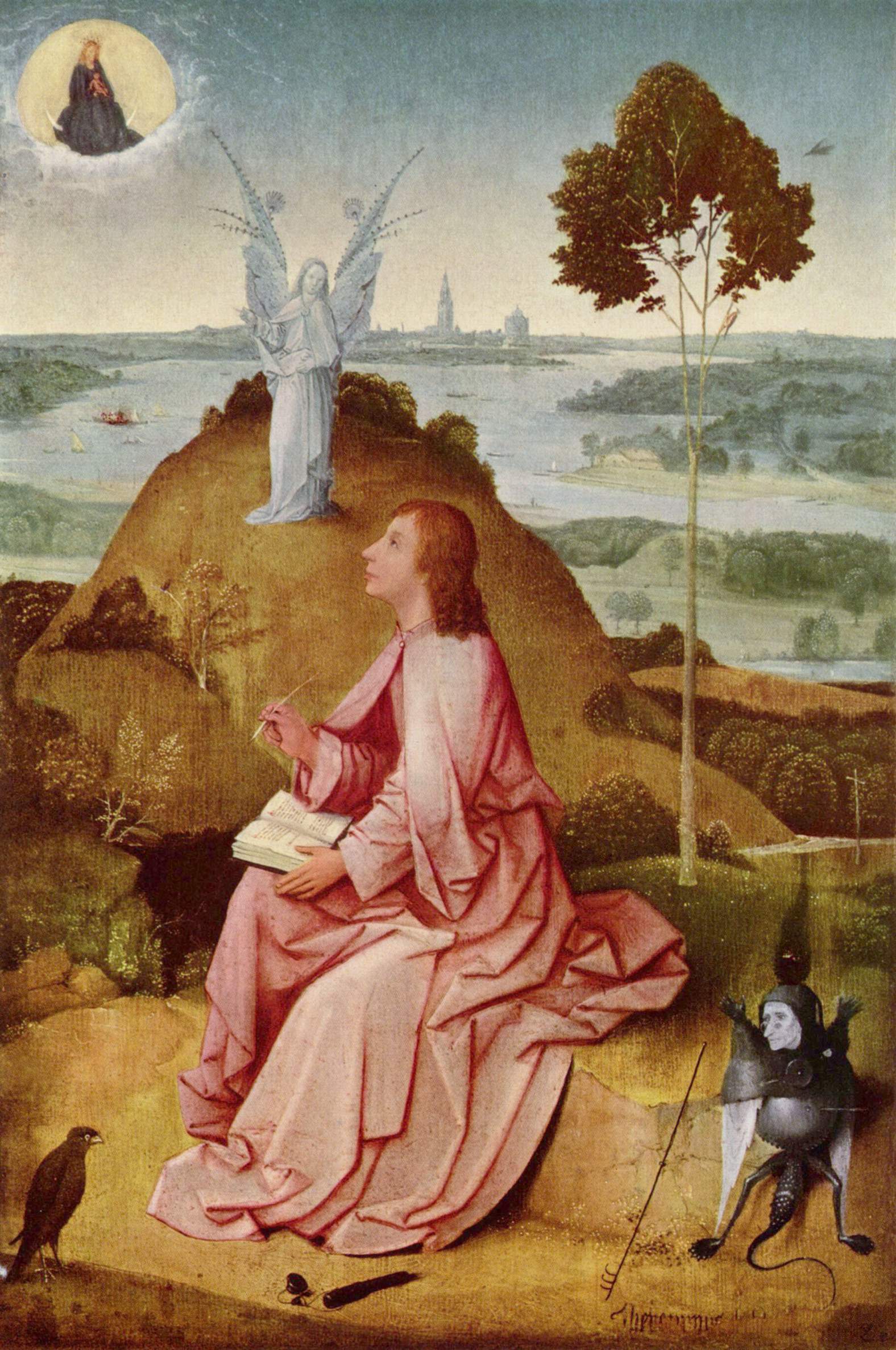
The devil is a problematic figure. Despite the certainty with which a recent demonology lecture treated the subject, the devil is scarcely present in the Bible. Indeed, he is somewhat a late addition, cobbled together from Zoroastrian beliefs and fragments of ancient mythology. The Hebrew Bible mentions the devil not once. By the time of the Gospels he has become a fixture representing an anti-God figure, clearly derived from the influence of the Magi (not necessarily the three riding on camel-back that first Christmas Eve). The devil was a convenient excuse for evil in a world where an omnipotent deity was believed to be entirely good. The devil is an escape-clause. Evil can exist in such a world and not be God’s fault. The idea stuck.

Today, sophisticated materialists (which is what some forms of science urge us all to be) have dismissed belief in anything not composed of atoms, electrons, quarks, or strings. Or, more recently, dark matter. The rest is all illusion. Sometimes the sophisticated don’t realize that other intelligent, sophisticated individuals don’t share their worldview. Materialism can’t be proven, and every true scientist knows that any theory is the best explanation given what we know at the moment. It is contingent. Science has a fantastic track record for explaining the physical world. Little in my experience has given me cause to doubt its efficacy. Still, I suspect that there is more to this universe than material. I have trouble supposing that some of that non-material universe is a horned, goat-footed, evil man with a tail and my worst interests at heart, but I can see how someone might believe that. Belief works that way. As much as we might want to eject it from the game, it will always be on the first string throughout the season.

IMG_1070


The Tell-Tale Telegraph

Steampunk CityThere’s a guy next to me with a robotic arm. Women with lace umbrellas and aviator googles walk by on the arms of Victorian gentlemen with walking sticks. A couple have an effervescing water-cooled device on their backpacks. I must be in Steampunk City. The forecast had predicted rain, but it is a beautiful October day in Speedwell, New Jersey. Steampunk City, an event dreamed up by Jeff Mach to make money for local museums, draws in a good crowd of the garishly bedecked, causing my wife and me to feel desperately underdressed. I’ve read my share of steampunk fiction, and I am really thrilled to see so many people taking an interest in such a literary event. I did wonder, however, what demonology had to do with it. Kevin Meares of Delaware Valley Demonology Research is giving a talk on demons, and it’s interesting to notice how the light laughter of customers from the booths outside wafts through the door where stories of possession are being told.

It is difficult to listen to Mr. Meares and believe that he hasn’t seen some pretty strange things. A practicing demonologist rather than the armchair variety, he has accompanied priests on exorcisms and is utterly convinced of the reality of the entities. When asked where demons come from, he relies on the Bible and Bible lore. Either they are fallen angels, remnants of a prior creation (thus the discrepancy between Genesis 1 and 2), or the offspring of the Nephilim of Genesis 6. Whatever they are, he has seen them in the dark, and people have died because of their activity. Being somewhat of a skeptic, I still find myself a little creeped out, kind of wishing I was outside with the laughing, costumed fiction readers.

Steampunk is often about alternate realities. A world where technology developed in the fog of steam rather than the neat circuitry of electricity. Speedwell, ironically, (and probably intentionally) is where the telegraph was invented and first demonstrated. It is a key site in the Industrial Revolution, the development that made the modern world what it is with smart phones, air-light laptops, and iCloud. I’m in the basement of an historic building having my rational worldview threatened by stories of demons. Although I’m wearing my nonplused face, I know that things will be different in the middle of the night. I’ve got brass gears in my pockets and supernatural entities in my head. I’ve met a watch maker outside who translates Aramaic manuscripts. What hath God wrought indeed, Mr. Morse? Yes, I’m in an alternate universe, and I may decide not to come back to the work-a-day one after all.


Whence Jesus?

Either he did, or he didn’t. Exist, that is. Jesus of Nazareth, I mean. When a friend sent me a link to a conference on proof of the non-existence of Jesus, I had to look. Such claims have been made before, but new documents are being found all the time and I supposed that I had been too busy commissioning books on religion to find out what was happening in religion. After all, the Gospel of Judas emerged, reversing, for a while, the idea of Judas’ good-guy/bad-guy polarity. A Coptic fragment suggested Jesus had been married. Maybe something new had come along. The story on PR Web announces that Joseph Atwill will unveil his new discovery later this month, proving that Jesus did not exist. While the article doesn’t give too many specifics (why would anybody come to the conference if it did?), the initial hype seems overblown. The gist of it is that the Romans invented a peaceful messiah to try to calm the foment to rebellion that constantly plagued the borders of the empire. Is he onto something?

Perhaps what Atwill has unwittingly stumbled onto is the truth that proof derived from ancient written documents is notoriously difficult to verify. Historians have criteria for determining whether ancient documents are “historical” or not. Their methods, while not foolproof, have rescued some great lights of human thought from the netherworld of fiction: Socrates, Solomon, and Gilgamesh, a shaky consensus holds, were historical characters. Of course, each of them has their detractors. No one is perhaps as contentious as Jesus of Nazareth, although, all things considered, his historical place is fairly secure. The Gospels are not eyewitness accounts. Paul seems to have been misinformed on some points. No authentic, contemporary documents describe Jesus. If, however, he was an obscure figure until some thirty years after his death, we would not wonder at such lack of attestation.

What does it mean to be a historical person? I used to pose this to my students. Each of us in the classroom knows we exist. There are records to prove it. How many of us, however, will make it into the history books? After the zombie apocalypse occurs, and civilization collapses, written records may be destroyed. Are we, Guy Montag-like, destroyed with our papers? Historical existence is something determined by others long after we are gone. Most of us don’t stand a chance of making it into the twenty-second-century’s history books. We simply will have been. But what of Mr. Atwill’s proof? Well, we don’t have it yet. Even if he has a letter from Caesar Augustus or Tiberius saying “let’s make up a story of a baby born in a manger,” it is pretty certain that the historical importance of Jesus will remain secure. If you can drive through any one-horse town in this country without finding a church of some kind or another, perhaps I may be wrong. In another century or so, I won’t be in the history books, but I will be history.

Come listen to a story 'bout a man named Josh... (photo credit Ricardo André Frantz, WikiCommons)

Come listen to a story ’bout a man named Josh… (photo credit Ricardo André Frantz, WikiCommons)


Grendel’s Gods

GrendelGardnerSometimes I think that if I had to do it all over again, I might’ve chosen Beowulf instead of the Bible. Let me define “it” here: if I had to pick a vocation that would lead to personal fulfillment and personal penury, that is. Beowulf is the earliest written story in English and, it’s a monster story. What’s not to like? In honor of Banned Book Week, I decided retroactively to read a banned title, John Gardner’s Grendel. An early parallel novel narrated from Grendel’s point of view, we are introduced to the introspective, existentialist monster who is really just wondering, like the rest of us, what the point of it all is. Not surprisingly, the protagonist often addresses the question of religion—indeed, it might even be at the heart of the story.

In chapter nine, Grendel sits in the darkness in the ring of wooden gods of the Danes when Ork, the great, blind priest stumbles in and believes the monster is the Destroyer god. As Grendel toys with his theology, the old priest understands this all as a revelation, and although Grendel gives him no answers, the words are taken as divine utterances. The other priests, finding their leader out on a winter’s night, insist that he has gone senile, that gods do not reveal themselves like that. The old man, however, is unshakeable in his faith. As in much of the novel, there is more going on here than meets the eye. The deluded priest believes a monster is his god.

The question of theodicy (literally, the judging, or justification of God) is never-ending for theists. The world is a problematic place (made so, I must note, by human consciousness) for the creation of an omnipotent deity who is good. Too much suffering, Grendel, too many failed expectations. Clergy and theologians have, for centuries, tried to frame a convincing answer to the dilemma. The tack they all studiously avoid is that God is a monster, although some posit that as a straw hypothesis quickly to be knocked down. Gardner, although not a theologian, was the son of a lay preacher and farmer. One suspects that elements of that childhood crawled out through the pond with Grendel. One of the truly tragic characters, a “son of Cain,” Grendel still has an immense power on the imagination. And that power, at times, might even appear godlike.


Shut Down? Shut Up?

So, what does it mean really?  Can you tell the difference?  Although it is undoubtedly a pain for many government workers, and a huge, colossal waste of tax-payers’ money, I guess the Tea Party showed us!  Over something as simple and humane as healthcare, the neo-cons have shut down the US government.  To be honest, I can barely recall the last time this happened.  Why do I suddenly feel the need to sit on a rocking chair on the front porch and kvetch? Perhaps we don’t pay them enough to care?  Maybe the poor just aren’t worth saving?  What can possibly be going through the minds of elected officials who are willing to punish the entire nation just because they can’t pack up their marbles and go home?  Of course, I am presuming that they have marbles to pack up.  As a tax-payer of over thirty years (pushing on forty), I think I have earned the right to say, “Children behave!”  The Tea Party shenanigans have been childish from the start, trying to co-opt the spirit of rebellion against tyranny in a country that plainly has too much.  Too much time on its hands, among other things.

I often ponder how a nation with the resources of the United States can proudly tote one of the most inhumane healthcare systems in the developed world (and I’m not talking about Obamacare!).  We live in a country, if best-selling author John Green is to be believed (and I’m a believer), we pay more for healthcare than countries with socialized medicine and get less out of it.  Why do we put up with it?  Tea, anyone?  Who has the actual gumption to climb aboard a ship and throw the cargo overboard?  Today we call it piracy—hey! Stop that download!  And we throw people into jail for it.  But shut down the government?  That’s okay.  The bus still runs and I’m still expected at work.  Oh, and I work for a UK company.  The irony of it all. When I lived in the United Kingdom, people complained about the healthcare, but I will say there was no child left behind, if you get my meaning.

Our military, I see, remains open for business.  We won’t cut off the life-support of the Tea Party’s favorite department.  We have our priorities.  Somebody has to defend the millions that can’t afford health insurance.  There was a time when Christianity was all about healing and taking care of people.  Of course, in those days it wasn’t yet called Christianity, or even the Tea Party. It was just a guy and his healing touch.  Today, some of the most abstract tenets of a fully corporate religious infrastructure determine who it is that deserves health care and who does not.  Call it morals or call it marbles, we have a right to decide who can be afforded and who cannot.  And anybody who tries to start legislating fair treatment better not try to stand in the way of our comfortable worldview where those who can afford to withhold compassion can do so under the rule of law, and the unborn smile until they become born when they will soon have to fend for themselves with a government that demands monetary exchange for bodily health.  Gee, my blood-pressure seems to be up.  Good thing the doctor’s office is open.  At least I hope it is.

Outside the United Nations

Outside the United Nations


Heat’s Up

800px-GISS_temperature_2000-09_lrg

I must admit being perplexed. Days ago, although many of us have long known it to be true, climate scientists announced unequivocal evidence that human activity is responsible for global warming. I have perhaps been naive in my supposition that the “full speed ahead and damn the torpedoes” approach of some fundamentalist groups that welcome anything that speeds along the apocalypse, has played a major role. Maybe it was because so many politicians openly sided with such groups that that I supposed the two concepts to be connected. I suspect, however, that it may be something much more insidious. How can any intelligent person refuse to admit the facts when the consequences are nothing shy of catastrophic? How can elected officials turn a blind eye to the desolation of their own planet? It must be more than simple ignorance. But what?

Those in my generation—however we are currently classed—have been declared to be those attempting to make up for the excesses of the “me generation.” I’m not sure who the “me generation” is, but I know when I see individuals who allow their personal gain to endanger everything that has come along since the Sumerians invented the wheel, I feel a little queasy. What could the Zeitgeist have been that infected so many minds with such a godlike sense of entitlement? We call the younger demographic the “entitlement generation,” but when I taught them in college, they were much more environmentally conscious than many elected officials. They at least could see beyond their own wallets. They take pride in recycling.

It would seem to me that even if (and it doesn’t) the Bible suggested that the world itself would end to bring about a better one, we assume too much divine prerogative when we proactively destroy the only ground upon which we stand. Has any religion ever been so truly shortsighted? And that’s asking quite a lot, if you think about it. Or is religious faith just an excuse to gather wealth at the expense of others? Does God want you to be rich? If so, it would seem, God would also want you to act responsibly. According to a report in The Guardian, there is no longer any question that the climate blame lies with us. Perhaps now that the smoking gun is on the table we will do the right thing. But then again, I admit to being perplexed. Maybe it’s just my generation. Or maybe I’m just hopelessly naive. I’m entitled.


Darwinian Dawkins

Richard Dawkins seems like he’s probably a nice guy in person. You can tell quite a bit about somebody from their writing, and even when Dawkins is being abrasive in script, you can almost see a gleam in his eye. When I read The God Delusion, for example, I found myself nodding in agreement quite a bit. Not that I agree with everything he wrote; as an academic I can’t, in principle, agree with everything anyone writes. Nevertheless, Dawkins expresses himself with passion and clarity, if with a bit over overstatement. I was interested to read the interview with him in the 10 Questions section of this week’s Time magazine. When one is building a case, it is easy to pile on rhetoric, and pretty soon the force of an argument takes on its own life and sometimes a few casualties are left bleeding in the wake. Still, it is a good exercise to sharpen the mind.

Wikipedia Commons, photo credit: Mike Cornwell

Wikipedia Commons, photo credit: Mike Cornwell

The last of Time’s 10 questions deals with how Dawkins can be certain there is no God. Dawkins, in a conciliatory move, declares that there is much of which we can never be certain. Noting that future science will discover realities that we simply don’t foresee, he suggests, “it’s extremely unlikely that it would happen to home in on an idea from a Bronze Age tribe in the desert.” I found this final sentiment a touch off-kilter. We have plenty of scientific developments that have come out of the “Bronze Age tribes,” but God is not one of them. “Desert tribes” gave us metal smelting, bovine and caprid domestication, and, perhaps most importantly of all, writing. God, however, comes from a much earlier evolutionary strata. In fact, by the time that the Sumerians appeared, multiple gods were already in their train.

In fact, evolutionary scientists seem to indicate that our brains have contrived some need for God/gods. That God isn’t a semitic desert mirage, however, is attested by people all over the world developing the idea independently. Not only did the Israelites and their forebears have deities, so did the Vedic cultures that we now call Hinduism. So did the Native Americans, indigenous African religions, and those who developed in isolation on Australia. Gods evolved everywhere. It doesn’t take a scientist to figure out that this means that we have some need of them. I like what Richard Dawkins writes. I enjoy his candor and passion. We do, however, have to credit the desert tribes with much of the thinking that leads to science, but the gods, they are far more ancient than that.


No Singing Matter

Canticle for LeibowitzA Canticle for Leibowitz, by Walter M. Miller, Jr., is one of those books that I read years ago, and when I picked it up again found that I remembered very little of it. I suppose this is one of the hazards of extensive reading—some important things get lost in the noise. I recall having read A Canticle for Leibowitz when I was a grad student at Boston University, and I remembered the detail of a grocery list being taken for holy writ in a post-apocalyptic world where, in a strange reincarnation, monks have once again become the guardians of knowledge. Little else remained. Perhaps part of the reason is that the book requires more experience with the church than I had in those days. One might suppose a seminarian would have about as much ecclesiastical experience as one might need. Not so. It did teach me, however, to read provocative books.

Like most dystopias, there is a deep bleakness to A Canticle for Leibowitz. In the light of recent developments in the papacy, the book is remarkably prescient. In the final pages of the final section, a radiation-sick woman and her young child, in constant pain, seek the government sponsored euthanasia camp. Abbot Zerchi, however, condemns this as a sin against God. Doctrine takes the place of compassion, and only moments later the final atomic strikes wipe the abbot and his monks off the earth forever. Yet there are monks on a spaceship, ensuring that any future planets will have the same uncompromising doctrine planted there as well. For a book published in 1959, it sounded incredibly contemporary. Miller’s anger still echoes throughout. The church builds societies that destroy themselves. A cycle of futility.

I wonder what the result would be if more people read such stories. It is, of course, easy enough to shut out any implications we don’t like and claim it is all a silly piece of fiction. The problem is that Miller is not too far off base. Our civilization does own much to its religious institutions. Those institutions sometimes have considerable trouble relinquishing control when society finds its grounding in science and technology. It is difficult to believe divine proclamations from above in the age of the space telescope. Yet, even so, we still elect to power politicians who look back millennia for the instructions on how to treat those of other genders or races. To do so, as Miller recognized, is to begin building bombs all over again. And even old Ecclesiastes declared that there is, in a Leibowitzian twist, nothing new under the sun.


Com-Passion

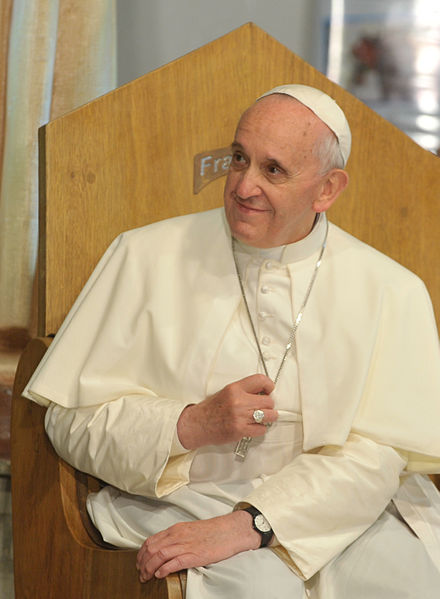
I suppose it is always premature to hope that ancient institutions are likely to improve. Like many other followers of developments in religion, I was pleasantly amazed to read reports of Pope Francis declaring that, in my vernacular, that the church should not be so stuck in the rut of doctrinal abstemiousness that it forget mercy and charity. How sad to see that hours later he was forced, Galileo-like, to recant somewhat. The forces at work are far more powerful than the vicar of Christ. In some minds religion is doctrine. I know whereof I speak. For several years of my professional life I worked for a doctrinaire institution where any hint of mercy was considered a kind of Protestant mewling before a God who would’ve made even Jonathan Edwards tremble. Although officially released “without cause,” I can’t help but think that my own pastoral sensitivities were at fault. I don’t believe that religions thriving on condemnation deserve the title.

Ironically, I was at Notre Dame University when headlines about the Pope’s declaration that the church should not obsess about homosexuality and abortion appeared in the papers. It was with a kind of wonder that I heard an academic say, “the Pope is sounding more Lutheran all the time.” I’m not naive enough to suppose that the pontiff is suggesting a change in doctrine—there are rocks so heavy that the Almighty himself can’t lift them—but that the leader of the world’s largest church was suggesting mercy and compassion outweigh legality felt as if Amos or Micah had just walked into the Vatican. The next day the Pope had to come out and strongly condemn abortion. Politics, it seems, will always trump human understanding.

IMG_0996

We live in an era of iron-willed religions. The human element often vanishes beneath a frowning providence that wishes for clocks to be turned back decades, if not centuries. These religions have no place for improving the human lot in this sinful world—it is much easier to condemn than to contemplate compassion. Religion is hard, for people find forgiveness a difficult doctrine to accept. Jonathan Edwards dangled his spider over the eternal fires of hell, but ecclesiastics today suggest that swift shears taken to that silken web would solve all the problems. Time for change? Not in this century. Religions, too, evolve. But evolution doesn’t equal improvement. Many an agnostic has become so because of the reality of “nature red in tooth and claw.”


High Tide

While the devastating rains in Colorado this month are a very serious concern, over the past several days I heard and read the adjective “biblical” associated with them several times. Even the National Weather Service made reference to “biblical rainfall amounts.” It’s true that the Bible does contain the most famous, if not exactly original, flood story in the modern world. The tale of Noah easily goes back to the Sumerians, and there are deluge stories from around the world that rival it in most details. Even in this secular age, though, we all still know that floods are the province of providence. It is of interest, however, how the word “biblical” has taken on a distinctly negative connotation. The most noteworthy of biblical materials are high literature of optimism and potential for good—and sweet heaven when we die. And yet, floods, droughts, plagues of insects, these are the “biblical” events in our lives.

Floods can indeed be devastating. They demonstrate the illusion of solidity under which we try to assure ourselves that the high ground is the safest place to be when the globe warms up, or God grows somewhat impatient with human antics. Biology has implanted deeply in our psyches the desire for a safe haven, a place where we can store our stuff securely. In fact, the “net worth” of an individual—so noteworthy when we die—is measured in terms of the material goods which we control, or “own.” The quality of a person’s inner life is not something of their “net worth” to society; it can’t be divvied up by lawyers and investors, and, in terms of legality, is unimportant. We are valued for our things.

That’s why floods are so pernicious. I don’t devalue the lives that have been lost, but the headlines declare the dollar amounts more loudly. Here is where the obvious clash between the days of Noah and our own come into play. The only goods the delugonaut took aboard the ark consisted of food and life itself (although the Sun Pictures version shows his family with anachronistic metal knives and even some furniture). When the whole world is flooded, the only property valued at all is that on the deck next to you. Our society values people by what they acquire rather than by who they are. Floods wipe out the former, leaving the latter harried but hopefully intact. If we were to build arks today, no doubt as the clear-cutting of rain forests with the subsequent extinction of countless species shows, we would use the choicest wood and would cram every last square inch with our stuff, while people and other animals outside beg for entrance onto the boats that we “earn.”

448px-Noah_mosaic


Where No One has Gone Before

766px-VoyagerI already miss Voyager. Not that I ever met her, but I followed her progress from her youngest days and to when she was a curious youngster flirting with Jupiter and Saturn, to her more circumspect considerations of the outer gas giants. An extension of human curiosity itself, Voyager 1, like the Energizer Bunny, just kept going and going and going, revealing a solar system more beautiful and complex than we earth-bound denizens knew. And she didn’t see God. Ancient people had always supposed, given the human disposition to climbing, that God was somewhere above us. Even the discovery that we live on a globe didn’t really change that—we are still down here, so God must still be up there. Voyager 1 has traveled 11 billion miles with nary a glance at the divine, and she is now the first human-made object, besides perhaps God, to exit the solar system.

Space has always been a personal fascination. I took astronomy both in a Cold War era high school that actually had a working planetarium (in a very moderate-income town, even!), and in college (where there was no planetarium). In unguarded moments I even considered astronomy as a career. I don’t have the “right stuff” to be an astronaut, but I can stare at the sky for hours and wonder. Voyager was out there doing things I’d never do, seeing what I could never see, experiencing the deathly frigidity of cold, cold space. And now she’s leaving home. No one is certain how long she’ll keep serving humanity with new images and information. It will take her a long, long time to reach anywhere else, unless she’s abducted by aliens. In the meantime, all of us down here will age and die, as will the next few generations. Voyager will simply keep going.

Space is beautiful in its solitude. The objects that we’ve glimpsed out there have been full of wonder and mystery. Still, we are told, it is mostly empty space. Or dark matter. Perhaps because of the active volcanos on our own planet we were once told that Hell lay under our feet. There is a fiery world below, to be sure, as science has demonstrated. We call it the mantel rather than Hell, and visits to it are decidedly short-lived rather than eternal, but ancient religious thinkers got the temperature about right. If the analogy holds, Voyager 1 may yet meet some kind of deity out there. She, after all, has escaped the solar system and has slipped into Heaven. In order to explore eternity, we need to boldly let her go where no device has gone before. Although I never really knew her, I already miss Voyager 1 badly.


Arduino Anything?

Before my daughter enrolled in college I’d never heard of an Arduino. Since her high school robotics team leadership has now passed into more able hands, I figured that I’d go back to my naive days of not thinking about automated mechanical devices, devoting my gray matter to grayer matters. Still, over the past several weeks robots keep seeking me out. A spread in Delta’s in-flight magazine for July featured robots, as did an alumni magazine for August. Now the issue of Time for September has a story about robots. When my daughter sent me the Arduino video, by TED, I knew I’d better try to pay attention. Technology will change us, whether we want it to or not. It seems that from the first knapping of flint our destiny was set to manipulating our world and making it into something we create. Robots make us gods.

Arduino_Uno_-_R3

The real issue, however, in the TED video is that Arduino is open-source. Open-source means that the designs, instructions, and application of the device are voluntarily not held under copyright. Academics throughout the world are increasingly favoring open-source material—not just software and hardware, but the knowledge behind them. In my work at a for-profit (i.e. “commercial”) publisher, I know that open-source is a huge concern. It used to be that open-source, that is, free—information, was considered inferior. Like the early stages of recycled grocery bags. Arduino puts the lie to that supposition. An international team has made a device that is extremely flexible in application, and is giving it away. Many academic journals, traditional cash cows for the publishing industry, are now going open-source. Those of us who research and write don’t often do it for money—we just want our ideas shared. Commercial interests, however, are heavily vested in turning a profit from information. It is a clash of worldviews.

Never one of the great capitalists, I find open-source an intriguing concept. The problem is that those who think need to find a way to make a living in a society over-awed by spending. Universities charge tuition because professors have to be paid. Publishers charge a week’s wages for textbooks because editors have to be paid. Knowledge—the most valuable commodity people possess—fits uneasily with entrepreneurial ideals. This blog is open-source. Maybe that is why it has never garnered much attention, like a first-generation recycled paper bag. These same ideas, however, when presented in the context of university classrooms were subject to fees of thousands of dollars. Registration filled up every semester. The source is the same, a guy with a Ph.D. from a major research university making observations about how religion impacts each and every one of us, often in unexpected ways. Some things you can’t even give away. Well, if trends continue I shouldn’t be surprised if someday even this is taken over by a robot. Right, Mr. Čapek?


No Cult

MakingAmericanReligiousFringeThe image of hundreds of lifeless bodies in the jungles of Guyana foregrounded by a metal tub of poisoned Flavor Aid is a difficult one to forget. If it were not for the media, however, most of us never would have heard of Jonestown. The term “cult” was applied to Jim Jones and the People’s Temple, just as the word was increasingly becoming a pejorative term for those with “other” beliefs. Sean McCloud’s Making the American Religious Fringe: Exotics, Subversives, and Journalists, 1955—1993, is a probing study into what makes a religion “mainstream,” versus a “cult.” (I know, too many “scare quotes.”) McCloud considers the role that journalists, as reporting in major news magazines, have had on determining American views of what is normative religion. If, that is, normative religion can be posited at all. It is quite clear, upon reflection, that any religion has some odd beliefs: you can’t wear this or eat that, you have to be at this place on this day, you must shave your head, etc., etc. The question McCloud explores is why some end up being called cults and others do not.

Scholars of religion have abandoned the term cult, for the most part, because of its arbitrariness. The defining markers of “cults” are unclear, and one religion influences another so that a continuum forms from Moses to Moonies. That’s not to say religions are all the same, but it is to say they are not so different either. The declaration of a religion as a cult, if based on belief systems, is tenuous. All religions make claims impossible to verify. Some, very traditional, are also very small in membership. Religions have been fabricated from antiquity to present, and even as I write this new religions are likely being conceived somewhere. McCloud points out that the popular media gave us the distinction between “mainstream” and “cult.” That distinction itself may be more telling than the differences between various groups of believers. It is the language of exclusion—true religions versus false religions. And any more than one religion, if considered seriously, is problematic.

Religions, old and new, large and small, make truth claims. These claims cannot be tested this side of eternity, so they must be taken by faith. The minds of many will be turned toward extreme actions motivated by idiosyncratic understandings of religion today. McCloud shows us that fringe is an integral part of the fabric—religion is woven from the experience of people through the millennia of our existence. And yet we still have no consensus. We have enough experience, however, to know that when one religion unravels another will be woven from the dangling threads. Some will be misguided, although all will claim to have the truth. Until that ultimate truth is definitively known, the best policy seems to be avoiding the temptation to call those of a different faith a “cult,” when “religion” does just as nicely.


Down the Garden Trail

According to NBC, a new “Christian” alternative to Boy Scouts USA is being launched in (over)reaction to the vote to allow gay teens to “join” the organization. Calling themselves “Trail Life USA,” this redeemed-only organization is supposed to be “safer” than other scouting options. This issue, of course, is all about perception. There have been gay Boy Scouts from the beginning and there will be gay Trail Life members. People are people, and just by saying that a sexual orientation is excluded does not mean that it will be, or ever can be (nor should be). “This is not another church program,” John Stemberger, one of the founders, is quoted as saying. “This is going to be a masculine outdoor program to raise young men.” The subtext is sluggish with irony. I am reminded of the scene in Disney’s Mulan where Yao, Ling, and Chien-Po are about to climb the pillars to the emperor’s palace in drag and the song “Be a man,” starts its reprise. Masculine outdoor program indeed.

Photo by Bruce Anderson, Wikipedia Commons

Photo by Bruce Anderson, Wikipedia Commons

The idea of separating youth from the realities of the world to keep them safe is like taking them into the woods without telling them there may be bears. Those of us who’ve spent nights in the woods know that hating bears is a ridiculous posture to take. Bears, even when gnawing on your arm, don’t hate you. They simply exist. It is the balance of nature. Studies of nature have time and again revealed that homosexuality is far from unnatural. Several species practice various homosexual behaviors and I am certain that the more we observe nature the more we will find ourselves mirrored in it. Nature can be quite encompassing in that way.

Christianity also has a long history of being at a kind of equilibrium with homosexuality. The all-male priesthood of the Middle Ages could hardly be classified as all self-denying heterosexuals. Even some televangelists of the most Protestant stripe have confessed to gay encounters and episodes. New uniforms and solemn promises will not change the way a person is born. Of course, if the child is Jewish or Hindu or Muslim, he will need to abide by a statement of Christian belief. What of Mormons or Seventh Day Adventists? Thankfully lines drawn in the sand are easily washed away. Exclusion may have been the trope of the Christian past, but as Boy Scouts boldly go where every man should’ve gone before, Trail Life, it seems, may have been appropriately named. It’s life John, but not as we know it.