Dirty Laundry

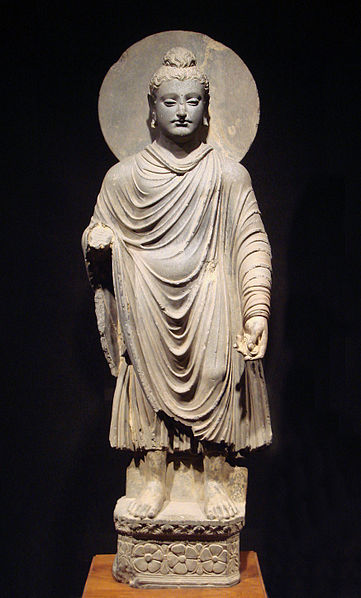
Wirathu may not be a household name, although Time magazine devoted an article to his teachings last week. The media has become fascinated with religiously motivated violence of late, although such violence is nothing new. Capitalizing on the fact that many of us in the western hemisphere see Buddhism as a religion of peace, Hannah Beech’s article, “The Face of Buddhist Terror,” reveals the growing conflict between some Buddhists and Muslims in Myanmar. The article took me back to my seminary days where, in a class in systematic theology, our professor was extolling the virtues of Buddhism as a religion of peace as opposed to Christianity with its history of warfare. Not denying that history, I raised my hand and asked how Christians then had come to know Jesus as the Prince of Peace. And Muslims, as any student of religion learns, also value peace. The ideals of most religions promote peace. The problem is that the practitioners of religions are humans.

Gandhara_Buddha_(tnm)

Like our chimpanzee cousins, we humans distrust those of other tribes. In one of the more disturbing aspects of chimpanzee research, encounters between especially a male isolated from his troop and another family group often end badly. Biology has programmed us to keep valued resources for ourselves. It’s as if nature knows there are limits to her bounty, and in order to survive and thrive, some will need to starve. Or be killed. Critics of religion—and there are many who are quite vocal—often overlook the aspect of religions that call for the reversal of our natural tendencies. Yes, I’m selfish. As a biological creature, I’m concerned that I get enough to eat, and have sufficient space. I want to stockpile money so that I may retire (unlikely to happen in reality), and spend my final years in peace and relative comfort. Yet, my religious upbringing has left the door open for others. What about those with even less than me? My empathy reaches out for them. Don’t they deserve what I deserve?

The problem is always at the friction point where belief systems rub passed each other like immense tectonic plates. The Buddhists of Myanmar say they just want to be left alone. The Muslims of Myanmar say they just want to survive. Their religions are pressure points building along fault lines. Still, I suspect that there are other sources of tension and violence in Myanmar, besides religion. I know there are in American society. In fact, most everyday violence, I suspect, has nothing to do with religion. Violence is part of human nature. Religion, at its best, urges us to fight this compelling biological message of self-preservation at any cost. Religious violence is a very real cause for concern, but to get to the root of the problem we must look past religion to biology. And sometimes—just sometimes—religion turns off the flame beneath the simmering pot.


Liberty and Justice for

Looks like America will be divorcing the self-proclaimed “Defense” of Marriage Act. It’s a small step, but a small step in the right direction. Religious dogma has too long held sway over politics in this land of religious freedom. It must seem astonishing to rational people the world over how a country founded for the very purposes of religious liberty has homed in on a very narrow sect of one religious tradition and used that as the basis for discriminatory laws. After all, even the Bible says very little about marriage—something about taking your main squeeze into the tent with you and voila, you’re married. The Bible never asks what they’re doing in the privacy of their own tabernacle. Now we have a political system that legislates what can legitimately turn you on. Finally we see some light beginning to dawn in the judiciary system.

I don’t take marriage lightly; those of us who are married seldom do. I also don’t take my status as being the only possible way of finding love in a world that sorely needs more of it. Every day I witness acts of uncaring and sometimes outright cruelty, often in the name of the progress of business. And until yesterday I had to live with the knowledge that it was perfectly legal to discriminate against committed couples just because their gender’s don’t fit a preconceived mold. The land of the free? Maybe, just a little bit yes, now.

Our legal system, which pours out its love on corporate culture, protecting business owners more readily than employees, shielding the wealthy whose lifestyles are beyond scrutiny, ends up telling citizens whom they may love and whom they may not. And we complain against countries with arranged marriages. Freedom for some is not freedom for all. Until we as a nation recommit ourselves to life, liberty, and the pursuit of happiness, we’ll have to take the small steps towards freedom when they come. Yesterday, for at least a little while, I was glad to see that the system can work for the good of all, when it puts its mind to it. America, you can be proud. Say it loud!

800px-Joseph_Anton_Koch_006


Just Plain Bible

BibleWithoutTheologyBack when I was teaching Hebrew Bible in a seminary for a living, I purchased a book entitled The Bible Without Theology by Robert A. Oden Jr. I had intended to read it as a sanity break from the over-compensatory theological glosses that even the slightest reading of the Bible had in that setting. As the years passed and the book remained unread, I came to think of it as a systematic deconstructing of theological readings of the Bible, which it is not. Instead, Oden has gathered in this useful little book several essays centered on the topic of how the theological reading of the Bible has all but drowned out any other interpretations and has secured the privileged position of the Bible not only in society, but also in academia. Naturally, many people see such privilege as a witness of undisputed truth, even though how that truth is interpreted remains an open question.

Scholars, however, have the obligation not to favor their worldview over the evidence. Oden begins by discussing how history itself is perceived differently among those of various mindsets. History is an important part of the Bible’s theological reading since many Judeo-Christian interpretations revolve around a sense of historical veracity. After illustrating how history and mythology both lay claim to the text, Oden points out that even obviously mythological episodes have been blockaded by a theological reading of the scriptures. With examples from socio-anthropological studies, he demonstrates that parts of Genesis are best understood by investigating how kinship structures work, as well as how clothing serves as a status marker rather than a hidden justification for sacrifice, or chilly nights outside Eden.

Although The Bible Without Theology wasn’t exactly what I’d come to suppose it was, it remains a proper prologue to the issue. When Oden’s book appeared in the 1980s, the Religious Right was just finding its feet, fueled by a hyper-theological reading of the Bible. Since that time, the Bible has been used as theological justification to repress everyone from women to those biologically inclined toward their own gender. Bible scholars have, in general, known this is wrong. However, theologically inclined institutions won’t pay instructors for honestly engaging the text. Bible scholars are expected to throw their expertise behind the theological outlook of their institution in a way that Oden rightly points out, no other academic discipline would accept. In reaction to the biblical abuses of the Neo-Con crowd, many Americans are wondering why this one holy book is so privileged. While it may not have all the answers, Oden’s riposte will help to explain why the Bible deserves better.


Guiding Girls

Girl Guides are the British equivalent to the Girl Scouts. I first learned about them during the three years that I lived in the UK, although, as far as I know, they don’t sell cookies. An article in the Huffington Post last week announced that the Girl Guides have decided to drop God from their pledge, as a move toward inclusiveness. I’ve often pondered the place god holds in various social societies. At my daughter’s Girl Scout bridging ceremony a couple weeks back, I noticed God in the pledge. In New Jersey, where diversity is synonymous with breathing, I wondered how this antiquated oath felt to those who maybe grew up without the concept. Stretching my mind back a few years, when my daughter was in Middle School, she was awarded a good student prize by the Elks. As I sat in the tastefully decorated meeting room, with only a very faint tinge of beer in the air, I wondered if I might ever join a fraternal order. One of the officers stood to welcome us, inviting applications for membership. Democratically, she was a woman in a “fraternal” organization. She reeled off the requirements. As an afterthought she said, “and you have to believe in god.”

How does one measure belief in divinity? It has been my experience that many beliefs fluctuate with time. I can decide to believe, but in many ways, belief decides me. As a mantra to modern society, on the old X-Files series Fox Mulder’s famous poster read, “I Want to Believe.” To join the Girl Scouts, the Boy Scouts, or the Elks, you have to say you believe. Nobody’s going to hook you up to a polygraph machine, but you need to make your public declaration. At least in the last case, beer come later.

Religious diversity is a reality of our lives. From the invention of the steam engine, it became inevitable. Our world was going to grow smaller as we met people who had previously been isolated from us by distance. In 1893 the World Columbian Exposition was held in Chicago. As part of it, the Parliament of the World’s Religions introduced many Americans to the religions of the world for the first time. Hinduism, once an exotic strain quaintly captured in the archaic spelling “Hindoo,” became a sudden fascination. Buddhism was a curiosity. How had it been that the United States seemed only to know about Christianity, Judaism, and Islam (in that order) when other belief systems existed? How could we have missed them? More importantly, what were we going to do now that we knew about them? We couldn’t unknow them, like you can unfriend someone on Facebook. We were going to have to learn to live together. After all, we all have just one planet to share. Social organizations are great places for introducing tolerance. You can be moral without being Judeo-Christian. And if our social organizations want to promote equality of membership, maybe the Girl Guides are truly living up to their name.

1918_girl_guides


Z War to End

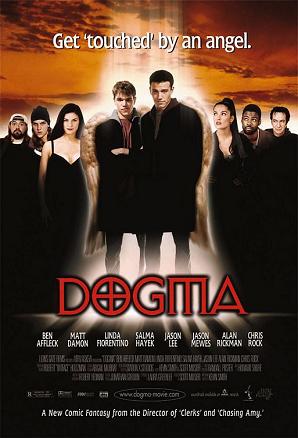
World_War_Z_posterWorld War Z is playing in theaters and I haven’t even had time to stock up on water and canned goods. Zombies are everywhere. And we can’t say that we didn’t see them coming. As movie critic Stephen Whitty points out, there are over 900 movies featuring zombies and the vast majority of them are recent productions. Major news corporations have been analyzing this undead interest for a few years now. No doubt the zombie is a populist monster, but why does it have such a potent effect on the modern imagination? Stepping back from the screen a minute, I think perhaps an answer is very obvious.

We live in an essentially programmed society. Philosophically we believe in free will, but economically much of our lives are predetermined. Among the happiest years—speaking strictly from the point of view of what I have been required to do for work—of my life were those of adjunct teaching. I had finally broken into the realm of the major university, and I had class after class of students who wanted to learn. Many disparage undergraduates. I never did. They come to college with what they have been taught, and that teaching comes at the behest of a society that informs them college is all about money. Who needs to really learn to not split infinitives? Or reason out that even if you know that Genesis 1-3 is a myth that evolution is not about religion at all? Who needs to learn to think when your boss will not want criticism? Do what you’re told. Be a good citizen. Be a zombie.

Our children are not stupid. I had many intelligent conversations with many bright young people at our state universities. I learned from them, and I hope they learned from me. The voice of the adjunct instructor, however, is nowhere near the decibel level of higher earnings. Is not the price of being a zombie worth having an adequate home, crippling debt, and access to wifi? The zombie, after all, is the antipode to the life of the mind. Zombies are, by definition, mindless. They carry around a carcass that does only what, in the classical sense, it is told to do. And so, if I loved that bohemian life so much, why did I hypocritically leave it? I have a family that requires healthcare. I have a child to support through college. I have a retirement fund that will not support a modest lifestyle for more than a single year. Yes, I too am a zombie. World War Z is indeed already here.


The Weather in Kansas

In a move that threatens intellectual whiplash, the Kansas State Board of Education has backed the Next Generation Science Standards. For a state historically at war with evolution, adopting a curriculum that (rightly) presents evolution and global warming as facts, there is cause for hope. As an average citizen sometimes just struggling to get by, I watch in stunned horror as our elected officials try to repeal Obamacare without touching their own health plans paid for by yours truly (and mine truly). I see them vote themselves pay raises while pension plans and salaries of ordinary citizens are frozen. I know where the buck actually does stop. So it is strangely encouraging to see a state that has declared war on science beginning to realize that yes, the truth does have consequences.

Science does not necessarily have all the answers, but it is the best that we know. The empirical method works, and our healthcare, transportation, and communication have all benefited enormously by it. Our way of life has grown easier because of our application of evolution and its ways to our understanding of microbes and the ways to hold off their attacks. Science has been warning us since I was a high schooler, over three decades ago, that our industrialization has been causing grave changes to our ecosystem. Unfortunately, those with money to make from it can simply afford to move to higher ground. Kansas is among the Great Plains states. It is wise to recognize that global warming threatens those who live close to the earth most of all.

The intolerance to science is not simply a religious reaction, as some would characterize it. Religion may be used in the interest of business. And any savvy entrepreneur knows, and exploits that fact. It matters not a jot or tittle if you evolved from a common ancestor with the apes, as long as you can climb, like King Kong, to the highest towers and look down on all the rest of humanity. The water from melting ice caps may be rising below, but the Great Ape need not worry. Until it becomes clear that without the little guys down below, even the top monkey is nobody.

NotInKansas


Supergod

ManofSteelThis weekend the most-seen UFO in the skies was the Man of Steel. I didn’t see the new Superman movie, partly because, I suppose, of my own inadequacy issues. Also partly because I’ve always had trouble warming up to Superman. He’s just got too much going for him. Don’t get me wrong—I love heroes. But heroes are vulnerable. In fact, their vulnerability is the key to their strength. Superman, truly threatened only by kryptonite, is maybe just a little too perfect. A little too… messianic? So it would seem, according to CNN’s Belief Blog. According to a post by Eric Marrapodi, Warner Brothers is pushing hard on the Christian imagery of Man of Steel, encouraging church discussion groups, and even providing a study packet of Jesusesque tropes to discuss with the faithful. All this for a hero dreamed up by a couple of Jewish kids in the 1930s.

A telling observation appears somewhere in the middle of the article, where Ted Baehr is quoted as saying “I think it’s a very good thing that Hollywood is paying attention to the Christian marketplace.” Did you catch it? Christian marketplace? No surprises here, really. Christianity has “been good” to many who advocate the prosperity gospel—god wants the good to be rich. And since I haven’t been able to walk through Times Square for two weeks without seeing the Man of Steel, larger than life, flying off of massive billboards into the crowds of tourists and locals, I have no doubt the movie did very well over the weekend. Some may have even had their faith restored. Others will have had their pockets lined.

A few years back I was asked to present a program for adult education for a church in Princeton. They wanted someone to talk about religion and movies, and this is something I’d often addressed in my classes. I selected movies to discuss that were not “religious”—no films premised on religious characters or situations—and had no difficulty filling an hour with example after example. Movie makers have long known the benefits of movies based on Christian concepts. Self-sacrifice, redemption, and resurrection permeate the movie industry. This is a Christian culture. The parallels between Superman and Jesus have long been noted by critics of religious imagery in both films and comic books. And those who make films have also realized that Christianity is more than just a belief system. Indeed, it is a marketplace. And with enough money, even a regular mortal can bend steel.


Lower Education

Many people have asked me, as a former professor, why universities are so expensive. Ironically, many of these people are in flourishing businesses where the story ought to be as tired as the excuse that’s usually trotted out: faculty are paid too much, mismanagement, etc., etc. The truth is much more insidious and it begins with governments and corporate executives who can’t handle the sharp sting of criticism. I have experienced this firsthand, and unlike many academics, I have an authentic blue-collar background so that my perspective is unclouded by generations of privilege. I recently found this post on The Homeless Adjunct, and I was glad that someone is actually willing to write the truth. The high cost of higher education is because a subtle series of changes—often deliberate—that have been instituted since the 1970s to change colleges and universities into engines to power capitalistic ventures rather than to educate potential critics. Those who have a hard time accepting conspiracy theories may be disturbed by how well documented this development is.

I realize that I am a mere proverbial voice crying out in an even more proverbial wilderness. The fact is, this change in higher education, implemented since the era of protest that was the 1960s, goes on without the knowledge of by far the majority of university faculty. They still tell their promising students to continue on to graduate school, that the bottleneck that has been holding up new, or even replacement, jobs is bound to burst. Things will get better. Not. As the Homeless Adjunct points out, corporate interests now run the universities, sucking up their prestige like bloated vampires, while endorsing their own manipulative interests. How can “educated” people believe global warming is a myth? Get corporations who “oppose” global warming to fund science programs and see what happens. The truth becomes quite malleable when lucre is involved.

Even more chilling, as our brave adjunct reveals, this model has begun to filter into high school, and down to Kindergarten. The way that educational decisions are made is based only, always, and ever on the bottom line. Not for our children, but for corporations that decide what our children can, and more importantly, can’t do. Their future is being undermined.

catalog

As a former adjunct who went blindly through the system, ending up with a doctorate from a major European research institution only to fall afoul of a thickly entrepreneurial administration, the clouds were wiped clean out of my eyes. I believe in higher education. And I believe that those of us with any moral sense are obligated to take it back. We will likely be destroyed in the process, since money is the only value our society recognizes, but if we want a world where our children can thrive, education must be true education.


California Weeping

Once again, we as a nation are left to mourn. Gun violence against the young seems, according to the posturing of the NRA, to be a legitimate diversion. I remember watching Gilligan’s Island growing up. The episode “The Hunter”—where if Gilligan survives being stalked by big game hunter Jonathan Kincaid, the castaways will be rescued—now seems strangely prescient. The location changes every few months, however. Yesterday it was in Santa Monica, California. College kids studying for finals being shot at by a man with a semi-automatic rifle. And even after Sandy Hook, and Columbine, and Virginia Tech, we still do not have the will, as a nation, to safeguard our young. Such a perversion of evolution the natural world has never seen.

The logic of allowing widespread ownership of firearms doesn’t make me feel any safer. Judging from the number of young victims of various gunmen—most of whom end up dead so no questions may be asked—we are willing to allow our children to be collateral damage in the war to keep personal weapons. As city after city after city is scarred by the anonymous guy who’s got anger issues taking it out on the helpless, we still insist that guns are our friends. I’d rather be friendless.

My fingers grow fatigued scrolling through the increasing list of multiple shootings. It takes one of sterner constitution than this writer even to make it through the Wikipedia page listing school shootings. Those who die give us ample cause for tears. Those who survive will spend lives dealing with horrible memories. Schools are where we place our hopes for the future. The lessons learned there should give our young the knowledge they require for a lifetime in this complex society we’ve created. Unfortunately that society also includes facile access to deadly weapons that kill with ease. Our hearts raced as Gilligan outsmarted Mr. Kincaid, although we knew he would have to survive. The star always does. But television is a poor guide to reality, unless it’s the NRA telling us why the only reasonable response is to increase the number of guns and let civilization do its work.

IMG_0149


Horseshoes and Hand-grenades

When possible, I like to follow up on events I mention on this blog. A few weeks back I mentioned the plight of the horseshoe crab and red knot, the bird species that feeds upon the crab eggs. Hurricane Sandy put the world’s largest nesting area for horseshoe crabs, compromised by human development, in serious danger. Ecological scientists, concerned for the fate of these intertwined species, frantically tried to rebuild eroded beaches so that the Christian crabs could sacrifice their children to the ravenous red knots. (Nature’s ebb and flow, it turns out, doesn’t always favor the unborn.) The good news is, that thanks-at least partially-to the efforts of the environmental engineers, crabs turned out en masse this year, and the red knots, on their transglobal migration, had plenty to eat. It is encouraging to hear that once in a while people impact their environment for good.

Perhaps unwittingly, a member of the American Littoral Society (which I am glad to learn does actually exist) was quoted in the New Jersey Star-Ledger as saying, “There was the potential for a catastrophe after Sandy.” I’m taking his words, intentionally, out of context because of their wisdom. Many people had, on the basis of human losses alone, already declared Hurricane Sandy a catastrophe. This simple quote is perhaps the most honest assessment of the universe it which we find ourselves. From the viewpoint of the not-human, Sandy was a catastrophe averted. The crabs, perhaps unconsciously, did what their biology programmed them to do. The birds feasted, and nature resumed its usual course. Humans weren’t in the center of this picture. We were supporting characters behind the scenes. There had been potential for catastrophe. Nature survived. Thrived, even.

Photo credit Carbon NYC, from WikiMedia

Photo credit Carbon NYC, from WikiMedia

I do not in any way demean the material losses that many people suffered, and continue to suffer, because of the hurricane. Unlike us, however, horseshoe crabs have very limited options. They can’t fly to Las Vegas to propagate, legally or not. They can’t fell timber and build cabins in the woods. They can’t put up an igloo and survive Arctic winters. We the people have endless choices about where to settle. Every environment on the planet, except under water, we have explored, exploited, and populated. We are bound by the very statistics that we are told run this universe, to be in harm’s way once in a while. Human loss of life due to Sandy was not massive. We can rebuild. We do rebuild. The loss of horseshoe crab habitat could have spelled the end of two species of fellow inhabitants on this globe. Catastrophe was avoided. At least from the multiple eyes of the humble horseshoe crab.


Going In, Coming Out

Being primates, perhaps it is no surprise that we are fascinated by who is doing whom. We, literally, by nature, find sexual alliances fascinating. Despite the fact that close observation of nature has indicated that homosexuality is indeed natural—it has been observed in many species, and isn’t even limited to mammals—we can’t help but make it a deciding factor in what an individual is. Two unrelated news stories over the past week have focused on homosexuality as the overwhelmingly defining trait of a person. In the first story, the Evangelical Lutheran Church of America (ELCA) has elected its first openly gay bishop. (Gay bishops, even in the pre-Reformation church, have not been exactly an endangered species.) The Rev. Dr. Guy Erwin, however, is so much more than a partnered gay man. He is a highly educated person who had held that most rare of positions—a bona fide academic position in higher education. He is also a member of the Osage Nation. His election as a Native American or as an academic would not be newsworthy. His orientation, well, that’s a whole different story.

Meanwhile, across the planet, the Southern Baptist Convention (SBC) is cutting its ties with the Boys Scouts of America because the BSA has decided to make honest men of its boys. BSA has recently voted to allow gay boys to remain in the Scouts, something that the Mormons had no problem accepting. Quite apart from the misguided SBC move, I was saddened to see CNN’s inaccurate headline, “Baptists plan exodus from Boy Scouts.” The story does not indicate that the Baptist brand of Christianity has withdrawn, so to speak, from BSA, but the Southern Baptist Convention. Baptists are much more broad-minded than the SBC brotherhood (I use the phallocentric collective intentionally) would indicate. All Baptists, it seems, are guilty by association.

SBC in the White House

SBC in the White House

People are complex. Putting them into neat categories is unfair to who a person really is. The category “gay” is notorious for subverting all other qualifiers for decent human beings. As the National Socialist Party recognized, the easiest way to build a case against a people is to put them together in a class that “deserves” our fear, mistrust, and hatred. Don’t look at the individual beneath the label. You might be forced to change your mind. Did that individual overcome the difficulties of being a “minority” in his or her own native land? Did that individual work hard to climb through the educational system to attain an advanced degree? Did that individual commit his or her life to another person, no matter what the social stigma? None of that matters, as long as we can talk about his or her “orientation.” It is society itself that requires reorientation.


Curing Fundamentally

Despite the many problems with Richard Dawkins’ religious reasoning, he correctly notes that children are religious because they are taught to be. (That’s actually further than Dawkins is willing to go, since in The God Delusion he states that children are not religious at all, but are only claimed to be so by parents.) Belief is something that we are only beginning to understand, but it is clear that children are taught their religion, generally, by those who raise them. By the time most of us finish high school or college, however, we have learned that religion is limited to a relatively brief segment of our otherwise busy, secular lives. Over the years I have met many people whose religion I have studied in more depth than they, mainly because it was of little interest to them. God made no sudden appearances in their lives, the miraculous never occurred, and so life is business as usual. Religion was for Sunday morning (or whenever).

481px-PhrenologyPix

I was raised as a Fundamentalist. Although my readers may clearly see that I am no longer one, I do know that this bundle of neurons in my head has been made what it is, at least in part, because of that early training. Now a neuroscientist is suggesting that such thinking might be a curable mental illness. In an article in the Huffington Post, Kathleen Taylor, a neuroscientist at Oxford University, suggests fundamentalism may be a treatable disease. Looking over the secular headlines, there is no doubt that much of the misery in the world is caused by religious literalists acting out their fantasies in deadly ways. The suggestion that they might be treated for mental illness, however, raises profound—exceptionally profound—questions. Since I work in a city of millionaires and billionaires, I ponder how it is that extreme selfishness is not counted a mental illness. The desire of an individual to acquire far more wealth than one person can ever use seems to be an illness. Aesop might call it being a dog in the manger. No one is suggesting their brains be reprogrammed.

The even larger issue is who has the right to decide “the new normal.” Richard Dawkins may be correct that children reflect the religion of their parents, but as soon as adults declare what religion is acceptable we find other adults colonizing new continents, with the attendant misery that such migration entails. Where do we draw the line? If Fundamentalism programmed out, will Baptist neurons be allowed to remain? Methodist? Presbyterian? Mormon? The issue raised by Dawkins must be placed in context; if parents decide on a child’s beliefs do other adults have the right to decide on what is the correct belief? (Orthodoxy means precisely that.) Is a strict rationalist mentality what we want? A life without Hayden, Picasso, or Charlotte Brontë? What would Mr. Spock do? Will the real Randle Patrick McMurphy please stand up? Our rich fantasy lives are what make us human. If we are going to program out religious freedom perhaps the brave, new world is already here.


To Obey the Scout Law

Society’s prurient interests have been on display again with the intense media blitz concerning Boy Scouts of America and the fraught issue of sexual orientation. As is to be expected, certain religious bodies have sounded the final trump once again as they frenetically posture against equality. The story is so old it is difficult to see how it counts as news. When I saw that the Church of Jesus Christ of Latter-Day Saints (the oldest sponsor of Boy Scouts and the denomination with the highest numbers) had made a statement about the issue, I almost didn’t even click on the link. We already know the official stance of such conservative groups, right? So I was genuinely surprised when I saw the note. This Mormon Church has no problem with the admission of homosexual boys since, and rightly so for a youth organization, the members are expected to behave according to the code of conduct. That code forbids sexual relationships, no matter a boy’s orientation, no matter with whom.

800px-CAB_with_Scouts

We all know that ideals are seldom observed. We should lead by example. I spent my high school years deeply involved in the feeder program for future clergy in a major Christian denomination (the one with the second highest number of Scouts). The youth programs frequently involved having hundreds of youths together for multi-day events. Chaperoned, of course. But kids with active hormones are about the most clever creatures on the planet. I frequently heard that opportunities to find some time alone with your favorite “spiritual advisor” were not difficult to arrange. And when I enrolled in a program to study for the ministry officially, I learned that the name seminary was somehow overly appropriate. Codes of conduct exist for a reason, and those who hold to them reward the trust of adults who institute them. Society can’t operate without such rules. What happens in reality, however, is a different matter. Anyone who reads the headlines can see that.

I applaud the Mormon Church’s stance on this issue. The Boy Scouts is a social organization with nary a merit badge for sexual knowledge or experience (at least not in the Handbooks I’ve seen). Those matters, as with adults, are private. Religious groups often act as if admitting admitted homosexuals somehow changes the Jamboree into a Woodstock. The problem is with the imagination of puritan adults. The solution to the anxiety is rather simple. For those concerned, volunteer to lead a troop. Attend a meeting. See what actually goes on. The fact is, kids will be kids, and making rules to satisfy uptight adults will not change that. Many groups could learn from the Mormons here: Scouting is not about sex. It takes the imagination of adults to make it so. Boys, as the saying goes, will be boys.


Girls Rising

While I was home watching Bruce Almighty, my wife was attending a local screening of the documentary Girl Rising. (There was a good reason for this discrepancy; you’ll need to trust me on this one.) Chances are that many readers haven’t heard of Girl Rising; I know that if I weren’t the husband and father of Girl Scouts, I’d likely have missed it myself. Isn’t that part of the problem? Why does our society make females invisible, unless sex objects? Tabby Biddle has a thoughtful observation about this in the Huffington Post. She notes the importance of the film, but laments that the only way to make it through to the masculine mind is to pose the argument that educating girls will increase the GDP of less fortunate nations. Girls should be educated for their very humanness, Biddle suggests, but our view of a masculine God often prevents this from happening. While Biddle may have fallen a little under the spell of Marija Gimbutas, she makes a very valid point: there is no human reason that girls should not receive equal opportunities with boys. The fact that I even have to write that in the twenty-first century saddens me. It is not just “Third World” girls that have to struggle to gain what is rightfully theirs.

In my career I have been passed over more than once so that a woman might take the advertised position. (I have even been informed of this fact by friends on search committees.) Somehow I can’t find any injustice in this situation, as much as it has personally disappointed my hopes and dreams. Men have been frustrating female hopes and dreams for millennia. Maybe the matriarchy that Gimbutas envisioned never really existed, but the concept is sound: women and men both contribute to this thing we call civilization. Our religions, as they developed in our societies, have held the mirror up to the might-makes-right paradigm from the very beginning. Wouldn’t a male god with a more muscular upper body shove a fair, and giving goddess out of the way every time? Just ask Zeus. Or Odin. Or El. Divine civilization is only human projection, and we just can’t relate to a genderless God. So he becomes the excuse for female repression.

The face of divinity?

The face of divinity?

We’ve firmly entered a new millennium, and, looking at our treatment of half of our species, we still have an incredibly long way to go. In much of the western world, traditional religion has lost its grip, but I’m a little frightened by what I see taking its place. There are a few pockets of female-friendly religions awaking, but there are many more backlashes from the traditional male preserves of conservatism, patriarchy, and free enterprise. It is time for all men to consider that none of us would be here without our real-life goddesses. Some may rail against unorthodoxy, but unfair structures must be imploded for a new, and true, orthodoxy to be established. Women and men—not women for men, not women for profit—that is the only right teaching. So we should promote Girl Rising, and we should seek to move beyond the mere financial benefits for a free market to find the divine spark that masculine interest seems to have lost.


Iconic Book

A recent Associated Press story celebrated the achievement of Phillip Patterson. In an age when we just can’t get enough technology, when we live with, sleep with, and dream of electronically generated reality, Mr. Patterson was feted for his arcane accomplishment. Decidedly low tech, at that. After four years Phillip Patterson has finished copying a book, word-for-word. I don’t even have to mention which book, because we already know it can only be the book that Americans recognize without reading. It is the iconic book. The holy book. Sometimes working up to 14 hours a day on the quest, according to AP, Patterson was not undertaking a spiritual journey here. He was simply wanting to learn about the book. If it had been any other book, it would hardly have been newsworthy.

An iconic book (photo by David Ball)

An iconic book (photo by David Ball)

I have recently been introduced to the concept of the iconic book. A colleague of mine kindly shared the idea during a campus visit. He and I happen to share advanced training in reading the same book, but, as he pointed out, it is the book and not its contents that our society recognizes. This is what makes it an iconic book. When we go to court we are asked to place our hands upon it and swear—something the book itself would doubtlessly consider some form of idolatry. We use it for inaugurating the highest officials in our land. We see it laid out in public places and private homes. We consider harming or disrespecting it to be an act of sacrilege. To us, it is more than paper, ink, leather and glue.

The dedication of Phillip Patterson ought to be celebrated. As he noted, to learn more about a book, you have to be willing to dig deeply. Look at every single word. Not that such treatment is fashionable. In a society enamored of power, we prefer the power of the iconic book over its often troubling content. It is certainly much easier trumpeting it than reading it. As I listen to the debates about public policy, the endless attempts to legislate morality, I ponder how little people actually read Mr. Patterson’s book. That’s what makes his accomplishment so remarkable. In producing an iconic book, a book that I don’t need to name because anyone might figure out what it is, our protagonist actually read it. In this age of technology, that is an accomplishment to be celebrated indeed.