Oklahoma

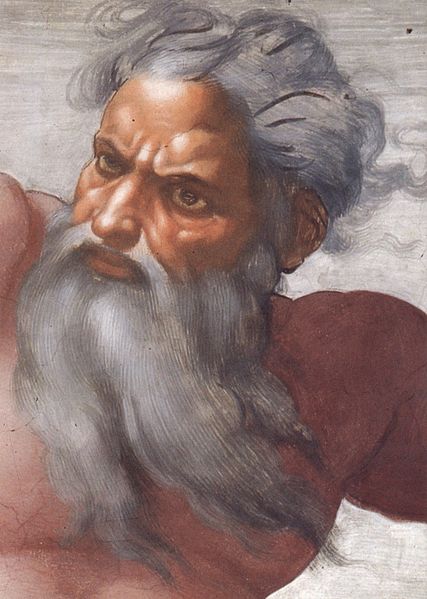
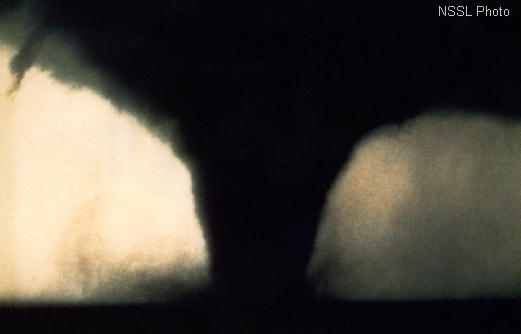
The tragedy outside Oklahoma City transcends petty human differences. Tornadoes, no matter how we dress them up, look like the wrath of God incarnate. The fifteen years I spent in the Midwest were filled with literal nightmares of tornadoes and even a few hours spent cowering in the basement. Such phenomena remind us that we are quite small in the face of nature, and the news reports are full of religious sentiment as people want assurance that God hasn’t abandoned them. Nature doesn’t favor humans over anything else that happens to be in the way of whirling 200 mile-per-hour winds. Even one’s belief might get blown away. Yet it doesn’t.

Although a tornado hit New York City last year, my terror of the storm evaporated when we moved back east. In the Midwest, although there were hills, I felt so exposed under the open expanse of the heavens. In the utterly flat part of central Illinois, I recall some truly awe-inspiring storms. The sky was so ubiquitous and overpowering, and you could see clouds towering thousands of feet over your head, throbbing with constant lightning. It was then I began having the idea for my book on weather terminology and the book of Psalms. Humans helpless in the face of nature. This is the raw material of religion. Like children we pray to God to make it go away. Storms do not obey prayers.

TornadoBlack

By their very nature tornadoes are capricious. We like to believe the good are spared and the evil punished, but as schools are destroyed and children killed we have to face the cruelty of nature. What happened in Oklahoma was a random act of nature, as much as hurricanes Andrew, Katrina, and Sandy were. We can’t help, however, any more than the people of the Bible, supposing that God must somehow be behind the weather. We may influence it, as global warming has repeatedly demonstrated, but seldom for good. And when we look for the divine in the fierce winds, we will end up facing tragedy.


Heaven Forbid

Cars can be a nuisance—they consume resources, pollute the environment, and have a habit of being very expensive to repair. We’ve been pretty good about taking our car in for its regularly scheduled Toyota check-up. Since the garage is several miles away and my wife and I both work, it is often a matter of the one who can most easily work from home the day of the car doctor appointment taking it in. Our Toyota dealer has in-store wifi for those who can’t live without the internet. For some of us, work is almost exclusively internet. So it was that I drew the short straw and dutifully drove out to the dealership. I was pleased that my VPN connected so easily; this was going to be a snap. I was working happily away when I had to find somebody on a university website. I googled the name and clicked. I received a forbidden website message (copied below) explaining tersely: “Block reason: Forbidden Category ‘Religion’.” I tried again on the Society of Biblical Literature website—same message.

ForbiddenReligion copy

Now I can understand workplaces blocking pornography sites, and even Facebook (I found the latter to be blocked at Toyota some time ago, but I’ve never tried the former), but religion? I am a religion editor. How am I to work when I can’t access websites that contain the word “religion”? The more I pondered this—I could still check my email, and do VPN-type work with files from the office—the more it bothered me. On the television in the background inane daytime talkshow hosts were interviewing someone who’d written a book about God. How many more businesses out there are biased against internet religion? That means my blog is blacklisted along with the scantily clad and overly chatty. I fully support the disestablishment clause, but I also subscribe to the freedom of religion. Smirks aside, there is a serious undertone to all of this.

I have no desire to be proselytized at work. I also agree that it is the right of others to expect the same. Sometimes, however, a little religion might help work go down like a poppinian spoonful of sugar. One time when I worked for Ritz Camera in Brookline, Massachusetts (I seem to have a knack for working for businesses that are on the way out), I had a tough day. Some of our customers could be quite abrasive, and since the customer is always right, we had to take personal insults with a smile. One lunch-hour I told my manager that I needed to recoup my moxy (I didn’t use those words). I ducked out the door and stomped to the first church I could find and asked if I could just sit in the pew for a few minutes. The church secretary, a complete stranger to me, said “of course.” Ten minutes later I returned to work collected and able to face more unreasonable customers for the rest of the afternoon. Maybe it wasn’t religion, maybe it was only the calm of sitting in what some believed to be a sacred space, but my capitalist company got better performance out of me that day because of it. Ironically, at Toyota, my religion editing is cast in with the tax collectors and prostitutes. Only the tax collectors, I’m pretty certain, are always permitted to work.


Godly Violence

Just a full-term human pregnancy ago, a disturbed young man murdered two grocery store employees in Old Bridge, New Jersey. He then shot himself dead. Of course, such events will never sway those who staunchly defend our right to bear arms. The ratio isn’t too severe after all. Just two to one. We’ve had worse. But that was nine months ago. Earlier this week a police report revealed that Terence Tyler, the perpetrator, had a tattoo on his chest that read, “If there is a God he loves violence. It is his gift to mankind. It is truly magnificent and for this I am thankful.” The newspaper used the understated adjective “disturbing” to describe it. As an erstwhile biblical scholar, my first inclination is to exegete this strange scripture a little bit.

411px-B_Facundus_145“If there is a God.” The mind of the shooter is one for hedging bets. God is an unscientific proposition, and, we are told even by theologians, unknowable. Long ago Pascal urged a wager: God may not be real, but the safer bet is on the divine—you can’t really lose by believing. “He loves violence.” I’m sure many believers disagree, but those who read the Bible will have to admit that Tyler had a point there. There is an ancient kind of bloodlust that hangs heavily over demands for genocide and animal sacrifices. Even, according to mainstream Christianity, the death of an only son will serve divine ends. “It is his gift to mankind.” This may seem counterintuitive, but again, the Bible would seem to back this up, at least in part. Without violence the 144,000 martyrs wouldn’t have much to sing about. “It is truly magnificent and for this I am thankful.” Were this a biblical passage we would probably have to posit a redactor here, or at least an interpolation. Such editorializing doesn’t fit the spirit of the previous three verses.

Religions, while generally abhorring violence, too often condone it. This mostly comes through literal readings of ancient texts whose contexts have changed so much that the originals are unrecognizable by today’s standards. Bibles and Qurans must be understood by those who’ve managed to outlive them. They become the basis for, the excuse for violence that, as a whole, they condemn. In the United States, however, we trust cordite over creed, and guns over gods. We have moved on from the Old Bridge shootings, already for those outside the families of the victims and the local community, the headlines took a minute to jangle the bells of distant recollection. Not much has changed; the NRA still claims, even more vehemently than ever, that guns are our best friends. And, one can almost hear as a subtext, in good eisegetical style, “if there is a god he loves violence.”


Divine Election

Jesus, it seems, has given up appearing on tortillas and hedgerows to start endorsing political candidates. Of course, this is not really new news. Rick Santorum, Herman Cain, Rick Perry, and now Anna Pierre, candidate for mayor of North Miami, all claimed their campaigns were endorsed by the Almighty. Seems that God isn’t that great at picking winners. Anna Pierre, according to a story on NBC, came in last in the polls. Is it any surprise? Jesus always did have a soft spot for the underdog.

pierrejesus

American culture is an odd mix of secular and religious. We seem to want it both ways. Citizens like to believe that they are autonomous in their daily lives, free to choose their non-religious professions and pass-times, and on Sunday God takes over for an hour or two. Charged up on religious conviction, we want society to become more sacred, less trashy. But we still want to watch Fox at night. This disconnect has long fascinated me. No matter how many times God loses the election, a new crop of candidates will spring up with divine endorsements. The electorate, at least a significant part of it, will mindlessly follow along. Perhaps we prefer to believe in a deity whose hand is too short to save. Perhaps omnipotence is best left to boasts rather than belief.

The divine approval of a candidate has become so hackneyed that it has become almost the starting point for political contests. Where do you go after you’ve invoked the highest trump in the deck? Whose word means more than the Lord’s? In the heat of the campaign when policies and platforms just don’t sway the masses, who else can you trust? Often those who play such tactics consider those of us on the liberal side of the spectrum to be cynical. Theirs is religion in the service of the higher good, apparently. We wouldn’t want to be thought of as cynical, now, would we? Otherwise we might note that although Jesus may save, it seems that he certainly can’t vote.


Crab Walking

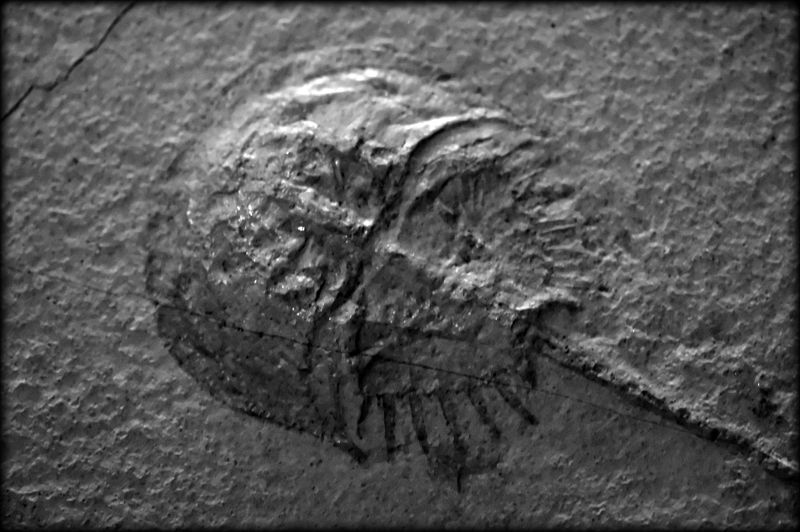
445 million years may seem like a long time. For the horseshoe crab, however, the eons have been spans of years with little change from a rather simple existence that involves lurking under the water and crawling out this time of year to breed. For many of us, Hurricane Sandy is already a somewhat distant memory of days (weeks for some) of no electricity, sitting in the dark, wondering when life would get back to normal. Some parts of the Jersey shore are still suffering from the after-effects, but many of us have had to “just get on with it,” and forget about the damage caused. For the horseshoe crab, however, it is not so easy. For creatures that have survived virtually unchanged for hundreds of millions of years, Sandy dealt a cruel blow. The largest concentration of hermit crabs in the world breeds in Delaware Bay, just down where New Jersey and Delaware nearly come together. Numbers had been declining in recent years as horseshoe crabs were used for bait by fishers, landing them on the “near threatened” scale of the countdown to extinction. Hurricane Sandy eroded the beaches where the crabs breed, and human detritus, left years earlier to protect expensive homes, now provided unsurpassable barriers for most of the crabs. Biologists are at work trying to rebuild the habitat in time.

Not only the time-honored horseshoe crab, but the American subspecies of the Red Knot, a migrating shorebird, has come under threat. The Red Knot, which stops in New Jersey to snack on horseshoe crab eggs on its way to the northern breeding grounds, has been declining in numbers. No crabs, no birds. While the troubles of two species may not seem like cause for concern, the fact that one of those species has been successful since millions of years before the first dinosaur even appeared should give us pause. Dinosaurs showed up some 200 million years after the horseshoe crab had been solidly established on the beaches of the pre-Triassic world. Nature would not be set to wipe out the crabs after a single hurricane, but human obstacles may do what nature would not—endanger a perfectly adapted species so that “valuable” real estate can be protected.

It is tragic when people lose what they’ve worked to attain. It is, however, shortsighted to think that we are the only important species on the planet. We have evolved in a system that includes all the other organisms on our world—our family tree goes beyond that cousin that always embarrasses us to the very crabs that crawl in the silty, brackish water of the Delaware Bay. We’ve all had an impact on each other. Even if you’ve never seen a horseshoe crab, just by reading this post they have come into your life in some way. When we start constructing our grand dreams for a fine life, it seems that we should take into account those who have been here long, long before us. Their requirements are modest, but their place in the cladistic tree of life is just as important as ours. Extinction is forever.

From Wikipedia, by Asturnut

From Wikipedia, by Asturnut


Down Will Come Baby

Princeton Theological Seminary is a school with a history. Unofficially allied with my alma mater, Edinburgh University, PTS is one of the powerhouses for supplying educated clergy to the Presbyterian tradition. And others as well, of course. And not a few PhDs into the ranks of the perpetually unemployed. Seminaries do offer all these services. Despite failing to be considered worthy of even an interview in what I count as five separate applications to the school, I still sympathize with its need to update its technology. I suspect that is what is behind its application for a half-million-plus-dollar New Jersey Higher Education Technology Infrastructure Fund grant. Education and technology surely go together as much as old-school loyalty and fairness, do they not? A front-page story in Tuesday’s New Jersey Star-Ledger proclaims the gnat that remains in the camel juice: state funds are being requested by a fully religious organization. The application for these state pork-bellies is also shared by Beth Medrash Govoha, a male-only Jewish seminary in Lakewood. Desperate times in higher education. What would Christie do?

PTS

Turning the clock back twenty-four hours, another front page newspaper story places religion squarely in the public face. “Three more step down in wake of priest scandal” hit my bleary eyes on a Monday morning. This is the saga of Fr. Fugee, banned from interactions with children after a molestation case some time back. As seems to be par for this unholy course, such clergy are shifted around rather than defrocked—being seminary fodder myself I can honestly ask, what else would they do? Society has little enough use for those of us who worked our way through seminary for honest means and toward what seemed at the time noble ends. How much more so for those who mask deeply rooted neuroses under the sanctity of ordination?

Fugee_0001

Seeing religious news on the front page of the paper is nearly always cause to shudder. We will occasionally see a new Pope or maybe a genuine act of Christian (or any other religious) charity, but mostly we are served the seedy and sad and downright tawdry. Religion, although in the ascendent, is seeking hard to justify its existence. Or is it just the vaunted liberal media bias showing through? As primates we all like to watch the haughty topple. It’s even in the Bible—Isaiah got a thrill out of tall ships tipping over. Perhaps it is because religion presents itself as the unadulterated good that we like to see it stumble. I always felt a tad uncomfortable reading Goofus and Gallant while waiting for a doctor’s shot or the dentist’s chair. Yes, Goofus screwed up big time once in a while, but that confident little eagle-scout-in-waiting Gallant could do no wrong. I knew who I was supposed to emulate, but life’s just not that simple. Maybe that’s why religion makes the front page. Maybe Gallant is a myth after all.


The Four “R”s

Last week the Chronicle of Higher Education feted Eboo Patel. As someone who has been on the receiving end of subtle religious violence, I appreciate what Patel is trying to do. He is a Muslim activist, the kind of which the world needs more. His last two books have been advocating for religious understanding to be considered a keystone of a college education. He’s right; religious understanding should stand right up there with the other three “r”s of education. The problem Patel faces is one I have personally faced, however; there is no money in religious studies.

Chronicle

That seems odd, even as I write it. We see lavish treasures owned by the Vatican. We see televangelists living in mansions that make Graceland seem tawdry. No huckster is more able than a skilled preacher at wheedling money out of people. Religious terrorist groups, our society conveniently ignores, are often well funded. We just don’t want to pay those professors of religion! We glory in our enlightened status and wonder why America consistently ranks among the most religious nations of the world. What department is first to receive the chop when the budget tightens? Well, it begins with an R.

What Eboo Patel is saying is what I’ve been preaching for all my adult life. We all think we know what religion is, but we actually have no idea. Universities, with rare exceptions, will do what they can to hide the study of religion like a zip on prom night. Patel is a Muslim and has good cause for wanting people to understand that his religion is not evil. He has written a couple of books advocating teaching our young about religious tolerance. It is a message America, especially, should be eager to embrace. Paradoxically, we don’t give a damn. We will cast caskets full of money into business and law departments. We will fund the research of medical and science students. Don’t ask for permission to hire a religion specialist of any description, however. Don’t you know that religion is dying out?

No doubt the electronic revolution has forever changed the way our young think about reading, writing, and yes, even arithmetic. If we had it the way our universities suggest, they would know as little as possible about the fourth, forgotten “r” that leads to much misery and meaning in our little world.


Duck and Cover

Although it is the twenty-first century, I’ve never had cable television. From my youngest days watching muddy black-and-white that sometimes revolved in a dizzying array up and down the screen, I’ve always considered television as a basic, constitutional right. You shouldn’t have to pay for it. Not far from New York City, even before digital boxes were required, analogue signals were so weak and unreliable that I just gave up on television all together. Except when I stay in a hotel. After a day out doing whatever a family does when not at home, we’ll stumble into a hotel room and flip on the TV. I am amazed at home many uncouth, self-made individual reality shows are on. Last hotel stay, I watched a show about heavily bearded guys in the Yukon trying to catch some lampreys so the dogs wouldn’t starve that winter. When they were about to shoot a moose, I switched channels to watch a family of over-fed, heavily bearded bayou store owners making turtle soup and sipping it from the very shell of the martyred terrapin. Manhattan felt like a slap in the face Monday morning.

200px-Duck_Dynasty_Promo

All of this is preamble to the fact that I’ve never watched Duck Dynasty, a show featured in this week’s Time magazine. Another heavily bearded family (I’ve had a beard since 1988 and it hasn’t landed me a reality show yet; how about Unemployed PhDs in the Land of Prayer?), now rich off of making duck calls and a reality show, are apparently one of the highest rated programs on the binary airwaves. The article, by Belinda Luscombe, makes the point that the Robertson family is a born-again clan whose religion is almost as important to them as shooting ducks. She notes that patriarch Phil grew up in extremely humble circumstances, and that his faith in the Lord doesn’t waver. People across the country are fascinated. The ducks, I presume, are nervous.

I am fascinated by this national obsession with hard-time, simple folk. From Ice Road Truckers to Dirty Jobs (not done dirt cheap), this country of sitting-behind-a-desk-staring-at-a-numbing-computer-screen culture is hungry for the authentic. The lived existence of those who face difficult times and get out of them with homespun ingenuity. The duck hunters whistle all the way to the bank. I grew up in humble circumstances, and to my recollection it was anything but glamorous. I’ve never seen Duck Dynasty, but Luscombe’s article reveals the hidden demon in the room as Phil Robertson laments his children building bigger houses and moving away from the Sears and Roebuck-toilet paper ways of his youth. The internet doesn’t help you much when you’re in the outhouse and the last catalogue arrived a decade ago. I wonder what would happen if more of us led meaningful lives. Would we still need the television to remind us that out there, far from the urban centers that define our civilization, godly duck hunters haunt the swamps of Louisiana? Would we even need television at all?


Fracking Insane

Do yourself a favor. Watch this video:

I have spent most of my lifetime living the fantasy of the helpless victim. Raised in a faith that insisted I really deserve Hell, and that if I manage to escape it will literally be a miracle, I guess I just internalized it. That kind of “Christian” thinking gets reflected and refracted through the lens of experience, and soon I was reading everything in its light. My parents’ divorce? Deserved. That move at the vulnerable early teen years? Inevitable. The verbal abuse of an overly stressed step-father? It should’ve been worse. Add to that the numerous rejections after professions of true love, and being fired from two jobs for no discernible cause—you start to get the picture. So when I learn that fracking is going on all around me, it seems like this is the fate of the perpetually sinful. Destroy the planet. Do you think you deserve better?

Life-denying religions walk a very thin line. When, like Siddhartha Gautama or Rishabha, the denial is a decision made after serious, personal reflection, this may be called enlightenment. When it is cast at you by a non-negotiable, self-despising cleric freely dispensing divine damnation to those incapable of much reflection, it is quite another beast. Children, although possessing freer minds, are easily impressed by authoritative adults. If that adult talks to God, you’d better sit up at the table and listen. So it is that generations are taught that “God” gave humans—let’s be literal here—man dominion over the earth. Pillage and plunder are part of the fracking package. If it’s down here below heaven, God wants you to use it up. After all, the sign on the door says “Back in Five Minutes.” (Dated 33 C.E.)

In a moment of weakness, I must confess (and I am told by religious experts that it is good for the soul), a few weekends ago I found Jesse Ventura’s Conspiracy Theory on YouTube. It was like eating Lays; you can’t stop at one. By the end of the afternoon, besides a nasty headache, I had a noggin full of improbable scenarios, courtesy of Jesse, “the Body,” Politic. Although a good night’s sleep at the rationality of another unapocalyptic dawn washed away his most outlandish claims, fracking is more frightening than a conspiracy. It is legal, it effects everyone who lives on earth where it is being done, and its record speaks for itself. I’m not proud of having wasted a few hours on humanzees and Bilderbergers reducing the world population to 500 million. But I am afraid that, if left to its own devices, however, “dominion over the earth” may be more than even the literalists bargained for.

Yes, that looks like a good idea...

Yes, that looks like a good idea…


More Witches

WitchHuntAronson It’s been some time since I’ve been to Salem. It’s been even longer since I’ve read Arthur Miller’s The Crucible. The events of 1692, however, continue to haunt me. I recently read Marc Aronson’s Witch-Hunt: Mysteries of the Salem Witch Trials. Intended for a young adult readership, Aronson’s book really isn’t proposing any new theories about why religious violence was perpetrated against the vulnerable, mostly female, pool of those living in a very superstitious society. It does, however, show some of the issues in sharp relief—more academic books sometimes cloud the issues with erudition. Historians will continue to debate what happened in Massachusetts at the end of the seventeenth century when the Enlightenment was getting underway and the explanatory value of science was overcoming the world of miracle and magic. Even with science on our side, however, adequate explanations of the sad social madness of Salem are still lacking.

As Aronson points out, there seems to have been a certain amount of greed involved as laws allowed the property of “witches” to be confiscated. Equally culpable are the learned clergy of the day, some of whom overrode their disinclination towards belief in witchcraft to hang a few women (and fewer men) for an imaginary crime. Lack of full historical documentation and the unrecorded lives of women often combine to raise many questions about Salem. It remains clear, however, that the outlook of the clergy influenced perceptions on the ground. Aronson suggests that Cotton Mather’s earlier accounts of Goodwife Glover of Boston—a woman executed as a witch without even her first name having been recorded—may have “inspired” similar violence among the population of Salem. When devils are suspected, the clergy are never far.

When the mania died down after a lethal year, the clergy, both Increase and Cotton Mather among them, recanted the easy execution of a few expendable women, and fewer, less expendable men, in Salem. Since we lack documentation, we will never know fully what was behind the witch-hunts, apart from misogyny and misperception.

Aronson ends his little book by asking us to consider modern terrorist hunts and the eerie similarities to the mindset of Salem. Listening to some media interviews, particularly on Fox, after the Boston Marathon bombings, we haven’t traveled so very far from Salem. In a world of high technology, where Satan is said to once again stroll the streets of Massachusetts, we have to wonder if the witch-hunts will ever truly end.


Paging Dr. Asimov

Who remembers Rock ’em Sock ’em Robots? Plastic “robots” in the boxing ring trying to knock each other’s block’s off was a form of entertainment for kids of the ‘60s before such things as humanoid robots actually existed. So when Boston University’s alumni magazine had an article about dancing robots, I had to see what was up. As regular readers will know, I’ve been exploring some of the problems with reductionism lately. This idea, that humans and animals are just fleshy machines, breaks down when we try to design robots that can do some of the most basic of human activities. Sometimes we dance and we don’t know why. Apart from Wall-e’s dance with Eve, robots have trouble getting the concept. Graduate student John Baillieul notes that this isn’t about “some high school guy who had trouble getting a date, so you get a robot. The ultimate goal is to understand human reaction to gestures and how machines may react to gestures.” Having actually been a high school guy who never even got to the prom, I’m wondering how depressed our robots get when the fem-bots all look the other way.

Rockem Sockem

The reductionistic outlook suggests that we can eventually program robots to respond as humans would, responding fluidly to situations, allowing them to over-ride their “instinct,” which, the article implies, equals programming. We have no idea what instinct is. It is something all biological creatures have, from the heliotrope following the sun to the human dancing her heart out. Do we want machines to replicate our most intimate emotions? Even our most reliable chip-driven devices sometimes freeze up or rebel. My car has recently got the idea in its mechanistic brain that the right-hand side rearview mirror should be rotated as far to the right as possible. We bicker about this all the time when I get in to drive. Well, machines know best. They, after all, are the shape of the future.

So programming robots so that they can react in real time to non-verbal cues, like all sentient beings do, is a desideratum of our mechanistic Weltanschauung. Notes Rich Barlow, the article’s author, “bats, for example, camouflage their motions so that they can sneak up on insect prey, a fake-out familiar to anyone who’s tried to swat a pesky fly.” My question is who is the pesky fly in this robot-human scenario? Who acts irrationally and unpredictably? Isn’t our instinct to smash the fly a result of our annoyance at it landing, yet again, on our sandwich with its dirty feet? And what is that stupid dance that it does when it’s all over our food? Reductionism must, by definition, reduce instinct to the level of a kind of genetic programming. Even this aging blogger, however, knows what it is to dance without knowing why. He also knows what it feels like when your date goes home with somebody else, something to which he’s not convinced that we want robots calculating an “instinctual” response.


Fear of Religion

Two online articles have, in my limited reading, linked the bombing of the Boston Marathon by Tamerlan and Dzhokhar Tsarnaev to religion. Although the boys are/were not part of any radical sect, it was their belief that their Muslim faith, apparently, motivated the bombings. While such revelations will no doubt prompt Islamophobia in some, the true terror belongs to all exclusive religions. People want to be part of exclusive groups. Whether it is the ritziest country club or the most erudite book circle, we all want to be part of that group that is superior. I recall very clearly in my New Testament classes at Boston University how our professor explained that Christianity never grows as fast as when it excludes people. He claimed the writers of the Christian Scriptures knew that. Conversion is fine and good—it gives you a gold star when you save souls—but not too many. If everyone’s invited to the party, it loses its appeal. Here is the dilemma of proselytizing religions. We want to grow, but not too much.

Throughout history people have rejoiced at the troubles of the exclusive few. It does not explain fully or in any way excuse antisemitism, but the fact that Judaism doesn’t seek converts may raise the jealousy factor of those outside. Those religions most anxious to convert others are also the ones with the longest track records of violence. Nothing promotes hateful behavior like insecurity. Insecurity is frequently masked with evangelistic bravado. The fact is, even if one religion won out—especially if one religion won out—the violence would increase dramatically. This sounds rather crass, I know, but it reflects the state of world religions pretty well. Religions, after all, are made up of people.

Plenty of Muslims participate in sporting events like the Boston Marathon. Islam has contributed tremendously to western culture, laying the groundwork for much of our science and philosophy. It corners no market on religious terror. Religions are often outgrowths of human frustrations with our limited possibilities. We know we have to die, and we dream of gods but we can’t emulate their strength or majesty or immortality. We want the best for those we love. The world, however, doesn’t conform to the deep desires of humankind and religion, whatever its origin, helps us cope. Evolutionary psychologists are increasingly of the opinion that religion has utilitarian purposes in human development. Religions, however, also take their premises rather too seriously at times.

In the name of love

In the name of love


Loneliness of Long-Distance Runners

1988. I was standing along Boylston Street, in Copley Square, watching the Boston Marathon. As the weary first place runner trudged by, I somehow neglected to take a photograph. I did snap one of the number two winner. I always have had an affinity for those who don’t win. Those who try, only to be beaten by others. His name didn’t stay with me, but I still have that photo, a moment in time, when everyone was excited about the culmination of a long tradition. When I heard that there was a bombing at the marathon yesterday, I experienced a different kind of culmination. I wondered what kind of people we had become. The Boston Marathon, a long-time symbol of endurance and pushing oneself to the limit, came to a crashing end. Along with another chapter in the innocence of a world gone mad. Just last October, I posted a photo on this blog that I had snapped near where one of the bombs went off. As I write this nobody has a clue as to who was responsible or what they were trying to prove.

BostonMarathon

The NRA gun barons were not on hand to stop the terrorists, I note. Funny how they always show up too late. Perhaps we should all start carrying hand-grenades. We all have a choice whether to do more good or evil in the world. To leave behind a better place or a worse one. The Boston Marathon is an international event, with long-distance runners from around the world competing. More against themselves than against anyone else. Just to finish the grueling course. Who would want to hurt just anyone, including several children—those who love to race and dream and hope for a better tomorrow?

The news saddens me, for we like to think we live in an enlightened nation. Maybe a little soft around the middle, but generally a congenial place. We hold events like the Boston Marathon to celebrate human achievement—those who push themselves to the limit but then keep going. Standing in the crowd in 1988, I remember how we clapped for those who seemed too exhausted to trudge those last few yards to the finish line. We wanted them to succeed. I couldn’t tell you one of their names, but we were all wishing the best for them. That is the human spirit. It takes a coward’s coward to plant bombs amid crowds and then not even claim your own evil victory. Terrorism, already heinous, without even trying to make a point. And yet the runners run on. Like the marathon itself, we must keep believing that we can reach that ribbon and that the vast majority are hoping for our success.


Sea Wonders

There’s a hole in the bottom of the sea, if we are to believe childhood songs. News reports this past week, however, have suggested that just the opposite applies to the Sea of Galilee. According to Science on NBC, a huge stone structure, larger than Stonehenge, rests at the bottom of the lake over which Jesus reputedly walked at the height of a storm. To the untrained eye, this stone pile looks like just that—a stone pile. The problem is that there is no natural source for the mound, and it seems highly unlikely that it was built under the water. This astonishing find is only one of the many underwater structures known that seem to defy conventional chronologies and logical behaviors. If this gigantic cairn was built on land, the means remain a problem. It is one thing to climb a conventional pyramid, complete with ramps and sledges, and quite another to mount a mound of apparently random stones to drop another on top. Perhaps it was built under water after all, like one of those tantalizing toys where you try to land your penny in the cup at the bottom of a tank of water.

Pacman's Sea of Galilee from Wikimedia

Pacman’s Sea of Galilee from Wikimedia

Ancient monuments are one of the great fascinations of antiquity. When no rational explanation is forthcoming, a religious one will be declared. Without written records, we know nothing of the real purpose of Stonehenge or Avebury, let alone Galilee-henge. With the pyramids of Egypt we have a better set of data, and we can feel justified calling them religious structures. But why were ancient people building massive rock mounds in what was to become the Sea of Galilee? The place has irrevocable religious associations to the modern mind. Did it possess such connections in the deep pre-Israelite period as well? The false mountain of Silbury Hill, not far from Stonehenge, comes to mind. People are mountain makers.

Cairns have been among the most persistent of human monuments, but what makes this new finding of interest is its location. Baptized in the very lake that holds the headwaters of River Jordan, the mysterious mound has already claimed its sanctity. Who built it, why and when, will take backseat to the fact of its holy location. Archaeologists will eventually dive and probe and will declare an anthropologically sound explanation for this newly found, artificial, miniature mountain. Mountains and gods go together, however, as readily as offering plates and churches. Whatever this newly discovered structure may turn out to be, it will always be a religious site for those who believe.


Adjunct Values

Well, the internet seems to have discovered adjunct Hell. Naturally, I’m too late to be part of the statistics, but I never rule that out as a future fate. This week I’ve seen several stories, some of them on major news network sites, shocked and indignant about the conditions under which adjunct instructors live. There’s quite a lot of hand-wringing and finger-pointing, but journalists and academics alike are tip-toeing around the blue whale in the room. Our society does not value education. Yes, we insist on educating children to the point of basic competency, but do we really, as a society, value that education? Ask just about any teacher. These people pour out their talent and efforts to give other people’s children the boost they need to get along in life. And many of them have to work second jobs just to make ends meet. Do we expect any less of higher education? We want it cheap and dirty with guaranteed jobs when it’s done. Universities want star faculty who publish all the time. You can’t do that when you’re busy teaching all the time. And we’ve got a glut.

The glut is PhDs. We’re cheap. More accurately, we’re broke. One of the things they don’t tell you when you apply for doctoral programs is that you are signing up to be ungainfully employed for your best earning years. Universities won’t tell you that because they need the money that graduate students bring with them, mostly in the form of student loans. News flash, America: education is not cheap! Another news flash: we are fast falling behind other cultures where teachers are respected, well paid, and even venerated. Gasp! Do such fantasy lands exist? Yes, they do.

Try a little experiment: think where you would be without your teachers. You certainly wouldn’t be reading this blog, and probably not reading at all. Your employment would likely be manual labor. Your math skills would be such that you’d be easily cheated of your wages. You would probably believe in a myth about the earth being created in six days and think that was science. When I read about the societies advancing the swiftest, America does not top the the list any more. When I learn more about those societies where the cutting edge is measured by Singapore or Beijing, I find out they highly value their teachers. They are paid well. They are respected. Here, in the US, chances are that the person teaching your kids in college makes a poverty-level salary and may be surviving by food stamps. Three quarters of our higher education teaching force consists of adjuncts. Three quarters. And these people are no slouches. They’re simply the victims of a society that doesn’t want to pay for education. Listening to administrators attempting to justify their decisions makes me squirm. How much did you say that Greg Schiano, Brady Hoke, or Bo Pelini “earn(ed)” in a year? Where your treasure is, there will your heart be also.

Any old school will do

Any old school will do