Under the Plague

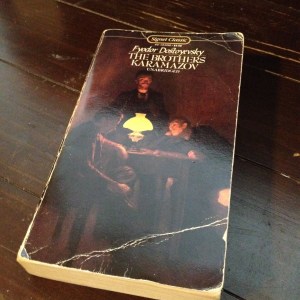
Some events transform a society.  While we keep waiting for things “to get back to normal,” many of us have already come to realize that there is no normal to which we can get back.  That’s my main impression after reading Albert Camus’ The Plague.  The story is set in 1940s Algeria where the Bubonic Plague breaks out in a single town that has to isolate itself from the rest of the world.  As the months and realizations of long duration develop, the emotions the characters go through are very much in line with what seems to be happening with Covid-19.  Indeed, that’s why the novel seems to be going through a surge of popularity right now.  I’ve always associated Camus with the great existentialist writers, but that slipped to the back of my mind while reading this poignant story.

Existentialism is all about making one’s own meaning in a meaningless universe.  This is precisely what Dr. Rieux does in Oran as his former life becomes one long ward call of service to the town.  He befriends characters who represent the best and the worst of human nature as they respond to the pressures of isolation and boredom.  Camus pointedly notes that despite the equalizing forces of death and hardship, the rich manage to make sure they have it better than the poor although they all end up in the same common grave.  There are morals to this story, and it’s clear that “leaders” in Washington have never read it.  Literature quite often teaches important lessons, but to get at them you have to read.

Rieux befriends Tarrou and it seems to me that Tarrou’s lengthy monologue on why he has volunteered to stay in Oran and help those who are suffering is the main message of the book.  Tarrou understands the lessening of suffering, the attempt to bring peace, as the main purpose of human beings.  He says at one point that it’s like becoming a saint.  Despite the ways saints are often worshipped these days, that is at the heart of their canonization.  Care for others.  Rieux points out that Tarrou doesn’t believe in God, and yet, as the story winds down it is clear that he has become a kind of savior figure.  The novel is disturbing in its simplicity and in its timeliness.  It would seem that if we’re to get anything at all out of being under the cloud of a modern plague that we need to take the view that others matter, despite what Washington says, perhaps even more than ourselves.


Temple Mysteries

Maybe you’ve noticed it too.  If you read the Bible, rather than just pose with it, you’ll wonder what went on in the temple when you’re done.  Yes, it’s obvious there would be the bleeting of sheep followed by an eerie silence, and that “that Burger King smell” would be pervasive, but what of the interior of the temple itself?  The Good Book says next to nothing about what happened inside.  We do know that going to temple wasn’t the same as going to synagogue or church.  The laity, for one thing, weren’t allowed inside.  Although the temple in Jerusalem can’t be excavated, many ancient temples have been found and archaeologists have the ability to analyze residues found on altars and that tells us something at least.  A story on Artnet News publicizes an archaeological report that rests behind a paywall, so I’ll use Artnet’s headline: “Did Ancient Hebrews Get High During Temple? A New Archaeological Discovery Suggests They Did.”

The story explains that chemical analysis of the famous Arad temple from ancient Judah shows that one of the altars was used to burn cannabis.  I guess that could help explain all the animal sacrifices.  Like most religions, that of ancient Israel kept much in the dark (literally).  Read the biblical account again.  The temple had no windows.  The holy place was illuminated by the menorah, so there was light.  The holy of holies was completely dark.  Other than the rituals of the Day of Atonement, we’re not given much information on what the priests and levites did for the rest of the year.  They may or may not have burnt cannabis.  It might be that what happened in Arad stayed in Arad.  What hath Arad to do with Jerusalem?  We simply don’t know.

Another altar in Arad, according to the story by Sarah Cascone, burned frankincense.  That sounds much more biblical.  I’ve never been a smoker and I’ve never smoked anything in my life.  I did, however, attend many services at Nashotah House where the small space of St. Mary’s Chapel was filled with so much incense that I wondered about its health affects.  I’m not sure if others felt they were getting lightheaded from all the fumes or not.  Incense, to be used effectively should be handled sparingly.  Its purpose was, theologically, to cloud the air in case God decided to show up.  You weren’t allowed to see him.  If he did show up, though, maybe it was party time.  And there’s bread and wine just out in the vestibule.  Some mysteries will never be fully explained.


Under Pressure

Cars don’t get driven as much these days.  Working from home does save quite a bit on the cost of filling up a couple times a week.  Cars that sit, however, sometimes get leaky tires.  So wearing a mask like a bandit, I found myself at a local gas station air pump, dumping quarters in for three minutes of air.  As I knelt on the asphalt, I was thinking of when air used to be free.  Gas stations made enough money on fuel that it was considered a courtesy to provide a public compressor.  As gas prices grew from a quarter a gallon (that makes me sound old) to, at one point over three dollars for the same quantity, the petroleum industry became very lucrative.  And they started charging for air.

The idea is what bothers me.  Shouldn’t air be free?  I didn’t grow up a very political kid (that had to come with maturing), but I used to hear adults complaining that soon you’d have to pay for air.  They meant the kind you have to breathe, of course, but that idea stuck.  Air should be free.  All land animals have free access to it, and our biology demands it.  The only difference with this black hose I’m holding is that it has a nozzle that forces said air into a tire valve.  I remember trying to inflate a bicycle tire by trying to blow into it.  No, for that you needed a hand pump, so air wasn’t really free even then.  If there’s a way to charge for a necessity, we’ll find it.  Of course cars pollute the actual air we breathe, so we’re paying double, really.

Gas prices tumbled just as the COVID-19 pandemic began.  I’m afraid I just can’t raise any sympathy for big oil, even if we are on the cusp of the second Great Depression.  I guess I still hope for a government that has some sympathy, and not profits in mind.  Millions and millions are unemployed and all we see is mean spiritedness toward those in need.  If their tires are flat they’ll have to pay for the very air they pump.  And I’m paying four times as much to do that as a gallon of gas cost when I was a kid.  Some things, it seems to me, should just be free.  A capitalist system can’t have that, however, since money must be kept flowing.  Perhaps they should dispense it through pumps.


Biblical Museum

The Museum of the Bible has never successfully steered itself away from controversy.  Just a couple weeks back a story on NPR reported that federal authorities have determined that one of the MOB’s tablets of the Epic of Gilgamesh is a stolen artifact and it must go back to Iraq.  While I don’t question the decision, I was a bit surprised that the Feds knew or cared anything about cuneiform documents.  My academic specialization was Ugaritic, which is a language that was written in cuneiform.  I quickly learned after my doctorate that no jobs exist for Ugaritologists, so you have to style yourself as a biblical scholar.  The Museum of the Bible seems quite aware of the connection, but don’t go there looking for tablets.  They belong elsewhere.

There is a public fascination with cuneiform, it seems.  That doesn’t translate into jobs for those who know how to read wedge-writing since universities have become places of business.  Their product—what they sell—is called “education” but in reality it is accreditation.  Anyone who’s really driven can get a fairly decent bit of knowledge from the internet, if it’s used wisely.  The most reputable sources are behind pay walls of course.  What kind of civilization would give away knowledge for free?  Anything can be commodified, even the knack for reading dead languages.  One of the perks you pick up by studying this stuff officially is that artifacts really belong where they were found.  Unprovenanced pieces are now routinely ignored by specialists because they’re so easily faked.  That doesn’t stop those who can afford to from buying them.  Right, Mr. Green?  You’ve got to beware of the seller, though.

A few years back many of us watched with horror as extremists destroyed ancient artifacts kept in Syria’s museums.  These were objects we’d spent years of our lives studying, and which cannot be replaced.  They were “at home” where they belonged, but where some, at least, clearly didn’t appreciate them.  Those of us who’ve studied ancient history recognized such behavior, I’m afraid.  We’d read about it in documents as ancient as the artifacts being sledgehammered right there on the internet.  Or you can buy such documents illegally sold and put them in a museum dedicated to a book that says somewhere that “thou shalt not bear false witness.”  Such are the ironies of history.  But then, as its provenance shows, that sentiment is apparently a museum piece as well.

Photo credit: Chaos, via Wikimedia Commons


Teutonic Ennui

I don’t remember its title or its author.  I do recall that there was a character, or perhaps there were characters, who kept saying “etwas muss getan werden”—“something must be done.”  You see, we read quite a few existentialist short stories in German IV in high school.  There were so few of us left from the freshman intro all the way back in ninth grade that our teacher could put us right in the middle of German literature and have us read.  I wish I still had that facility now.  Although I can work my way through many languages academically (German, French, Spanish, Italian, and, of course, the dead languages of koine Greek, classical Hebrew, Ugaritic, and assorted other semitic dialects), the fluency of sitting down and just reading atrophied long ago.  Still, etwas muss getan werden.  That sense of anxiety feels like it’s permanent now.

Every now and again, when tensions are running high—this past week is an example—I find myself nervously checking online news sources frequently to see if anything dramatically good has happened.  This gets to be almost a tic.  I need to have some assurance that we’ve not become a dictatorship, or that there are those in power with enough humanity left inside them have tried to do something to make things better.  Being a nation of throw-away people is ethically wrong no matter what scale you use.  Skin color and national heritage do not lessen the worth of any human being.  We can’t even get out to protest properly because a pandemic, which is still being mishandled, rages.  The days are full of such sameness.  Etwas muss getan werden.  Please.

I wish I could remember the stories I read in high school.  Some have stayed with me through the years.  German class was my introduction to existentialism, a philosophy with which I still mostly identify.  That was the reason I would pick up books by Kafka, Camus, and Dürrenmatt when I would find them in the once plentiful used book stores.  I remember the latter’s Der Besuch der alten Dame. I recall seeing the play performed and being reminded that we are all players in a drama whose only sense comes from our assignment of the same.  Now I sit inside on sunny days.  Afraid of economic insecurity—who knows how long the jobs will hold out?—I don’t go to stores and try to order as little as possible online.  I keep waiting for something to happen.  As I learned in high school etwas muss getan werden, no matter where I read it.


Weathering Frights

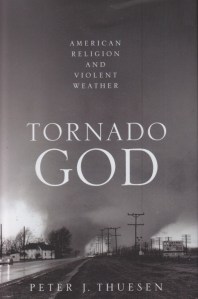
It reminded me of a nightmare.  The box, containing a book, was soaked through.  A sudden thunderstorm had come before we knew the box was even there on the porch and memories of several boxes of rain-ruined books came back uninvited.  Water and books just don’t mix.  This particular book, I knew, was Peter Thuesen’s Tornado God, which I had ordered back in December and which has just been released.  The irony wasn’t lost on me.  My own second book, Weathering the Psalms, was a rather inelegant treatment on a similar topic and I’ll discuss Thuesen’s book in further detail here once I’ve read it.  The point is that no matter how arrogant we become as a species the weather just remains beyond our control.  The rainbow at the end of this small storm was that although the packaging was soaked, I found the box before the book itself had time to get wet.

My research, ever since my first book, has largely been about making connections.  The weather is so quotidian, so common, that we discuss it without trepidation in casual conversation.  It is, however, one of the most dangerous things on our planet.  Severe storms kill both directly and indirectly.  Cyclones, typhoons, and hurricanes can do so on a massive scale.  So can their dramatic opposite, drought.  Snow and melting ice caps also threaten life, as do floating chunks of ice in chilly oceans.  It’s no wonder that the weather has been associated with gods from the earliest times.  Even today literalists will say God is in the sky although meteorologists and astronomers can find no pearly gates when they look up.  We just can’t shake the idea that weather is some kind of reflection of divine moodiness.

As weather becomes more and more extreme—it’s already a system that we’ve tipped seriously off balance—I suspect more and more people will start to assign it some kind of divine agency.  This June we’ve already gone from shivering mornings with frost on the roof to nights when sleep is impossible because it’s so warm and humid, all within a matter of a couple of days.  And this isn’t that unusual.  Wait’l the gods really get angry.  Weather is closely related to the water cycle, of course.  We can learn about such things from books.  We can’t take them out during a storm, however, and homeownership is all about keeping water out, or only in prescribed locations indoors.  When the delivery driver leaves a box on your porch, however, it remains within reach of the storm gods.


Ahab’s Garden

One of my motivations, I have to admit, for re-reading Moby Dick this year was my wife’s gift of Ahab’s Rolling Sea: A Natural History of Moby-Dick, by Richard J. King.  I wanted to read the latter, and I’d been toying with the idea of reading the former.  So I did both.  King’s book explores the oceanic world introduced by Herman Melville’s classic.  The various creatures and natural phenomena mentioned by Melville are examined in the light of what we now know today and a few key finding emerge.  We continue to know little about our oceans, even as we deplete them.  The book is about whales, but not only about whales.  Anyone who’s read Moby Dick knows the novel encompasses about a year at sea and describes the many sights experienced by a crew that sets out with few port calls and many long hours on the open ocean.

King does a fine job here.  It’s particularly refreshing that he doesn’t hide from what he calls Melville’s natural theology.  Many science writers fear to go to such places.  Clearly Melville looked at the world through such lenses, however.  The novel is one of the American philosophical masterpieces.  Not only philosophical, but also theological.  We can only guess what Melville’s true beliefs were, but he described the book to Nathaniel Hawthorne as wicked, and he knew that he was butting heads with orthodoxy throughout.  Natural theology was, of course, an early form of science.  Today scientists tend to be embarrassed by their heritage, but King shows that in the hands of a genius like Melville the results can be extraordinary.

This is also a disturbing book.  Any volume dealing with the natural world these days likely is.  The over-exploitation of the ocean, our use of it as a dumping ground, and global warming have combined to make the recovery of whales, as well as many other species, slow if not impossible.  While commercial hunting of whales has largely ceased, the leviathans haven’t made much of a comeback, and several species are well on their way toward extinction.  Sea birds are less common than they were when Melville was writing.  We’ve influenced our world in such a bad way that we’ve likely set the clock ticking on the extinction of our own species.  In a sense then, natural theology is facing its own apocalypse.  Ahab’s Rolling Sea is not a dour book—it is a celebration of the world as it was once known, even if that world was less than just two hundred years ago.


George Floyd

Perhaps for the first time in four years, 45 is beginning to see people are unhappy.  Very unhappy.  The pontiff—excuse me—president wanted a photo-op with the Good Book at a nearby Episcopal Church and had crowds of protesters tear-gassed so the he could make himself look righteous.  My wife pointed out that this was an example of the Bible as a Ding, and she was right.  (If you don’t get the reference, it’s explained in Holy Horror.)  Moreover, it is a clear abuse of power.  Not only have thousands of Americans been needlessly dying from COVID-19, the violence against African Americans is caught time and again on police body-cams.  People are rightfully protesting and the racist-in-chief doesn’t like it.

It doesn’t work unless you open it.

With echoes of Tiananmen Square he’s now threatening to send the military against protestors.  It’s far easier to strike out at people while holding a Bible in your hand than it is to learn empathy.  We’ve been isolating and masking ourselves for over two months now and not one word of sympathy has come from the White House incumbent.  Instead of trying to calm racial unrest, he tweets to conquer, not realizing that divide and conquer is meant to be used against enemies of your nation, not your own people.  Never had we had a president who has so openly played favorites and made not even a pretense of being a leader for the entire country.  He is a figurehead of his base only, which is, it seems to me, a violation of the oath he swore on that selfsame Bible not even four years ago.

Pandering to such a Ding is an abuse of Holy Writ.  After unrest over George Floyd’s murder had entered its third night the response from 1600 Pennsylvania Avenue was silence.  How far is it from here to Tiananmen Square?  Is it not possible to admit error and realize that the economy is going like the Titanic’s maiden voyage and just about everyone knows someone who’s died because of the virus or who’s been racially profiled by one of the “good people on both sides”?  No, grab the Bible and clear the rabble who won’t shout “Hosannah” when he rides his ass outside a church whose door he’s seldom darkened to show his base he really is a Bible-reading man.  Was this some bizarre parody of Jesus clearing the temple or just a mockery of the man who said “By their fruits you will know them”?  There’s only one answer to that.  How different the world would be if Bible-believers actually read the book they love to thump.  


Wondering about Fall

I’m not a professor, but I play one on—no, wait—wrong commercial.  I’m not a professor, but I used to be.  Now as the spring semester, which ended remotely, is winding down all over schools are asking what they should do in the autumn.  Should the fall semester—the great migratory event of the human species—be virtual or actual?  We know the coronavirus will still be lurking out there, and we know that colleges mix people from all over the world, which is one of the real essentials of education.  I try to picture myself teaching to a classroom of masked faces.  I try to envision frat parties with social distancing.  I try to imagine the dining halls where students are packed in closely together, handling knives, forks, and spoons that others have touched.  I think and shudder.

I know some younger folks.  They tend to trust certain internet personalities because they seem smart.  I’ve even occasionally asked what the qualifications of such personalities were only to receive an “I don’t know” answer.  This is among educated viewers.  Don’t get me wrong.  I don’t have my diplomas on the wall behind me.  I never even had them framed.  They’re still in the tubes.  I had to show my Ph.D. diploma to two recent employers even though I was hired by universities without ever having to unroll it.  That was back in the day when you could have face-to-face interviews.  Back when a bona fide degree from a world-class research university meant something.  Now economics are being weighed against wisdom.  It’s not a fair fight.

There’s a reason economics is called “the dismal science.”  With Malthusian overtones, we increase to the point of stressing our resources.  A disease breaks out and quickly spreads through our dense populations, but not our denser individuals.  We don’t want to be seen as uneducated, but there’s the great god Mammon to consider.  Funny thing is, back when I was still teaching schools like Rutgers had a difficult time getting tenured professors to train for online courses.  Why put yourself through the trouble when your job is already secure?  They trained adjuncts such as myself instead.  There was, to put it in economic terms, already a demand for online education.  But there are campuses to be maintained, and there’s only so much you can do at home with your own chemistry set.  And so we face the summer wondering how it will end.  It’s time for some critical thinking, but that’s above my pay scale.


Eternal Returns

Nightmares with the Bible has been submitted.  Those of you who read this blog regularly know that it is my fourth book and that it is a kind of sequel to Holy Horror.  Nightmares looks specifically at demons.  I was inspired—if that’s the right word to use for it—to write the book because the chapter on possession movies in Holy Horror was clearly overflowing.  Not only that, but at the time I started writing the book not many resources were out there on demons.  Almost nothing, certainly, that asked the big question of what they are.  To answer that we need to go to the movies.  People get their information from popular culture, especially when it comes to trying to understand the arcane and even esoteric field of theology.

Movies, studies have shown, often participate in the reality our brains conjure.  Back when Reagan was president—is it even possible to believe those seem like halcyon days compared to these?—he was caught occasionally citing events from movies as historical realities.  We all do it from time to time, but then, most of us, if pressed, can tease movies apart from facts.  Church attendance has been going down for some time (and on Zoom you can tune in and tune out without having to “stay in the room”), and so people have to get their information on demons somewhere else.  Reality television and the internet also play into this as well, of course, but Nightmares sticks with movies because I’ve only got so much time.  The message is pretty straightforward though, we must consider where people get their information.

After you submit a large project, if you’re anything like me, you’re mentally exhausted for a while.  I’ve been working on this book for nearly five years—I started it before Holy Horror was submitted to McFarland.  I had already begun work on my next book, but I yet have to decide which one it will be.  I have several going at any one time.  Hopefully this next one won’t be coming out with an academic publisher.  I’d like it to be priced in the realm where individual buyers might consider it worth the investment.  I know from experience that even books just over twenty dollars are a stretch for most people, especially if they’re on academic topics.  Nightmares will come back, I know.  There will be proofs and indexing and all kinds of further work to be done.  I’m hoping that by that point I will have the next book nearly done.  If only I could decide which one it will be.


Mail In

As the Republican war on democracy continues, I’m wondering about mail-in ballots.  The good news is that I live in a state where such a thing is possible—there are just enough Democrats left to ensure that people can vote—but when you read of close races, particularly in Republican districts, disregarding mailed in ballots you have to wonder.  A few weeks ago on national television Trump said that if everyone was allowed to vote Republicans would never be elected.  It seems the alternative—cheating, that is—should be the game plan for retaining power.  We tend to think of such things being employed by the many pseudo-democracies of the world.  And I wonder who steps in to intervene when officials cheat.

Many world governments are dictatorships.  The GOP would like that to be the case in the United States.  Perpetual power where you don’t have to worry about women or African-Americans getting elected.  It’s the rule not of law, but of complete and utter corruption.  It’s rule that permits 100,000 people to die rather than being bothered to try to put safeguards into place.  It’s rule that places the economy over the lives of those it’s supposed to benefit.  No wonder it can’t be legitimately elected!  Those of us who’ve been trained in morality, and who’ve even been schooled in it at work are told we should obey our leaders.  Even if they wish to kill us, I suppose.

So I’m sitting here wondering if I’m throwing away our one chance to ousting such dangerous ideas from Washington if I send in my ballot by mail.  The party in power has openly admitted that it cheats to win.  On the other hand, there are plenty of sick people out there, particularly in these parts.  Do I want to stand in line with them, hoping they’ll keep six feet away?  Are you allowed to vote wearing a mask and gloves?  Where is the Lone Ranger when you need him most?  My grandmother had a saying, “Where was Moses when the lights went out?”  I often wondered what it meant.  Said when someone walked into a room just too late to help, it seems to imply that even a miracle worker does no good if s/he arrives too late.  Even Moses wore a mask when he came down the mountain with his face all shiny.  But then, he didn’t have to worry about those in power cheating, and the orders came, so they believed, directly from above.


Serenity

A few weeks back I posted about a dove that had built a nest on an unused planter on our front porch.  I’d read that mourning doves choosing your house was a sign of peace and tranquility.  Each morning I went out for a jog, the dove’s little head would pop up and she would eyeball me.  There was no fear in that gaze, but rather serenity.  She was sitting on her eggs and knew I wouldn’t hurt her.  Several days ago she was gone from the nest.  We were out for a family walk when my daughter noticed.  We crept up to see two good-sized chicks sitting there instead.  Within days we had a couple of young birds flapping around the yard, trying to learn how to live on their own.

I missed the dove, though.  The nest was empty.  I felt less bad about stepping into somebody else’s bedroom every time I went out the door, but still, I’d grown accustomed to having her—them—on the porch.  This week when I again went out for a jog (the jogging never ends), she was back.  She looked at me with a knowing stare.  Ours was apparently a safe house.  Mourning doves, I read on the Cornell University ornithology site, can raise a brood of two in six to eight weeks.  From the laying of eggs to abandoning the nest is only a two-month proposition.  The website then went on to say that doves will sometimes return to their previous nest.  This one obviously had.

Peace is a rare commodity these days.  Stress seems to be our daily matrix.  How long will our jobs hold out?  Will opening up the economy lead to a second wave?  (Likely yes.)  Will we be able to make mortgage payments if our companies can’t weather the storm?  Who really owns this house anyway?  There is a serenity to relinquishing anxieties of ownership.  A kind of freedom to belonging to a world that will, at least in some nations, help you make it through a crisis intact.  There’s a wisdom to the animal world that we too often ignore.  We can find peace if we look for it.  One cold morning I found one of the chicks sheltering on the leeward side of our fence.  I took her some sunflower seeds since she looked so miserable.  I don’t know if she ate them or not, but I knew that we humans had benefited from having her under our roof.  Such gifts are worth more than might be imagined.


Too Close?

What with the US Navy admitting that UFOs are real and all, it seemed like a good idea to watch Close Encounters of the Third Kind over the holiday weekend.  Like many of my generation I saw it in a theater—itself kind of a distant memory—back in 1977.  I’m not sure why it’s been on my mind lately, but since it’s a long movie it takes a long weekend to accomodate it.  As we settled down to classic Spielberg scenes—lots of khaki and crowds and desert locations—it was a reminder of how silly we all looked in the seventies.  (What were we thinking?)  Other than that the film has aged pretty well.  The plot, although not action-packed, is probing and has several moments that seem to have inspired Poltergeist.  What made the film blog-worthy at this time, however, was the wearing of masks.

When Roy Neary and Jillian Guiler arrive at Devil’s Tower the governmental cover-up is in full play.  A nerve-gas leak—and who can check out whether such a thing really happened?—has a mask-wearing restriction in place.  I wondered where one could get a gas mask today when the crowd scenes of the pandemic won’t even leave a roll of toilet paper behind.  Checking for rubbing alcohol to make homemade hand sanitizer I found it selling for $300 per gallon on Amazon.  Where are we going to get a gas mask in circumstances such as these?  That particular scenario never really stood out to me before although I’ve seen the movie many times over the years.  Back when I was a student at Boston University the school tee-shirt worn by Barry Guiler was the interesting cultural context.

Films that survive the years take on different aspects over time.  Some suggest that a branch of the military admitting to the reality of UFOs during a pandemic was intended to underplay the event.  Others have argued that a similar release of information many months ago received similar lackluster interest.  If there are aliens out there, I have trouble imagining that they’d travel all this way for a synthesizer concert at a national monument that received a major uptick in visitors due to the movie’s release.  Maybe we love our fictional aliens more than the possibility of meeting those that seem to be vexing our navy?  The movie was the right choice for the circumstances, it seems to me.  Some things about the seventies are worth revisiting from time to time.  Strangely, in retrospect, life seemed simpler then.


Somebody Elsism

It’s 5:30 a.m. the day after Memorial Day and I’m out jogging.  I go out at this time because there’s not much likelihood of encountering many other people.  Oh, I know others are awake, but few are out on the trail at this time of morning.  I’m made a bit sad by the amount of trash I see along the path.  Yesterday turned into a pleasant afternoon and I suspect lots of people were out here then.  I even find the remains of some kind of homemade fireworks launcher, reminding me that it was supposed to be a patriotic holiday.  I’ve seen an uptick in Trump signs around here and I wonder if it has anything to do with the rampant somebody elsism that I see strewn along my jogging trail.

Somebody elsism is the attitude that I can make a mess of things and let somebody else deal with it.  (It’s my right as an American!)  Maybe you’ve seen it too.  The doggie doo-doo bags that are filled and left beside the trail for somebody else to pick up and dispose of.  It’s my right to own a dog, and although I may feel compelled to bag its leavings, somebody else will have to throw it away.  The idea’s pretty rampant.  I’ve even found such things on my front sidewalk.  I suspect this is a chapter in the myth of rugged individualism.  I have a right, but somebody else has the duty.

Life itself is like this, I guess.  We have to leave wills to help those left behind sort out the various messes we’ve made in our lifetimes.  Still, the Trump administration has all been about somebody elsism.  There is no such thing as controlled chaos.  The coronavirus should have taught us that, if we hadn’t figured it out long before.  Living together with other people requires a commitment to some basic things.  As much as I dislike yardwork, you can’t own a house and let the plants take over.  Your wild growth will seed somebody else’s weeds.  I’d rather be sitting inside reading.  It’s a holiday weekend and I have so little time to read during the week.  Won’t somebody else take care of the grass that has been loving the rain and warmer temperatures?  If only.  So I’m out jogging early, but I have to wait until it’s light.  There are so many things you can’t see before twilight kicks in, and unless somebody else picks them up I’m bound to step in them.


Remembering Cautiously

Memorial Day has a special poignancy when thousands of people are needlessly dying from a disease.  As the unofficial kick-off to summer, the holiday also marks the loosening of restrictions (most likely prematurely) and we can only wonder how many more will die when our usual carelessness resumes.  I’m not alone, I suspect, in hoping that this crisis will have brought some permanent changes, such as thinking about others.  It’s almost impossible to hope that such consciousness will rise to the level of government, of course, but if we the roots of the grass care for one another won’t that care naturally grow to a national level?  Americans have long loved the myth of rugged individualism.  There may have been a day when that was plausible, but we are now so interconnected that anyone considered successful has become so only because of considerable support of others.

This holiday is all about remembering.  Unfortunately remembering our war dead hasn’t done much to prevent wars.  If they’re not the acting out of our fears (as every belligerence since World War II seems to have been) then what are they?  Phobias of communists, terrorists, and assorted “others” lead us into mass killing, often for economic gain.  What if we were to put those vast military resources toward fighting a deadly disease?  What if we had a national will to take care of our people rather than to enrich ourselves?  Wouldn’t we be all the richer for it?  Instead we face more needless deaths, more people to remember on the next Memorial Day.  Maybe the sun will be shining then.

Those of us non-essential workers who’ve nevertheless been working remotely these past two-and-a-half months have a day off today.  Many will want to gather, but we know it’s not really a good idea.  We know the way infection works.  We have no battle plan against COVID-19.  We’re chomping at the bit for economic vitality, forgetting that those who are on the front lines are continuing to get sick.  It’s strange to have a holiday under such circumstances.  The warmer weather invites us outdoors while the plague drives us inside.  There’s a place for bravery, but when bravado masks itself with foolishness there will be a price to pay.  It’s Memorial Day and we can honor our dead by not rushing to join them with unreflective premature relaxing of safety measures.  Let’s stay safe this holiday by remembering what we’ve learned.