What I Meant to Say

So I try to illustrate each of my posts. I do this because in the days when the internet was young I often found blogs during image searches. I’ve grown more cautious over the years, regarding copyright. I try to stick to the “fair use doctrine”—and that’s what it’s called, a doctrine—or images I “own.” In the latter case it often means searching WordPress for a picture I’ve posted before. Since nobody has time to name all their photos, I use the assigned DSCN or IMG nomenclatures. There aren’t so many that a search won’t turn up an image in my library. Thing is, WordPress likes to anticipate what I’m looking for. What’s more, it “autocorrects” after I’ve begun scrolling through everything. DSCN becomes “disc” in its addled electronic brain, and IMG becomes “OMG.” Naturally, the image you’re seeking can’t be found until you manually correct autocorrect.

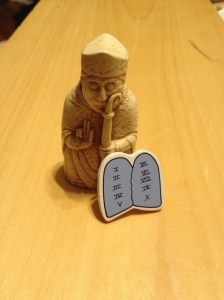
OMG has become very common shorthand these days. Growing up evangelical, there was a debate whether “o my God” was swearing or not. Those who like to hedge their eternal bets argued that this was taking the Lord’s name in vain, thereby breaking one of the big ten. This was to be avoided at all costs. Those with a little less fear (or perhaps a bit more courage) argued that “God” wasn’t “the Lord’s name.” God is a generic word and can refer to any deity, except, of course, for the fact that there is only one God. This led straight back to the conundrum. Exegetes tell us that technically this commandment isn’t about saying the deity’s name, but rather it’s a prohibition against using said name when you don’t intend to do what you say you’ll do. In other words, lying.

It’s truly one of the signs that evangelicalism has evolved that the world’s best known liar is unstintingly supported by this camp. When I was a kid, saying, well, OMG, could get your mouth washed out with soap. Lying could lead to other forms of corporal punishment, such as being, in the biblical parlance, smitten. Now it gets you elected to the highest office in the land and supported by all those very people who won’t spell out OMG, even when they’re busy cutting you off in traffic with their Jesus fishes flashing in the sun. When I was a kid presidents would step down rather than go through the humiliation of being shown a liar in the face of the world. Times have changed. And I have no idea how to illustrate such a post as this. What comes up when I search OMG?


Who Cares?

America’s all about money.  I read quite a bit about care-related exhaustion, and being in a situation where several family members are requiring care I’ve begun to notice that our government just doesn’t care.  Talking with a family member recently, his exhaustion was clearly evident.  Not affluent, he has to care for a spouse with Alzheimer’s and continue to work ten hour days because nobody pays you simply to help another human being in need.  Care can be monetized, of course.  Then Republicans sit up and take notice.  Until then, however, I try not to be overwhelmed by what is clearly a growing crisis.  Some call us the “sandwich generation”—we support our children longer as more and more jobs become obsolete, and we care for our parents longer as lifespans extend and extend.  For the working poor, the benefits do not keep pace with life expectancy.  And what child wants to see his or her parent suffer?  Why doesn’t our government care?

Instead of devising new ways to deal with a massive crisis (I know many people who are constantly running on empty from having both to caregive and to work), Washington tweets about how the wealthy are the objects of “witch hunts.”  Those with too much are so oppressed, but they just can’t see their way to share what they have.  Meanwhile even those of us with educations find ourselves not knowing what to do.  Politicians play their games forgetting that the pieces they move about the board are alive and sentient.  After all, there’s only one king on each side.  And who feels too bad if a pawn or two gets bumped off, as long as the monarch is kept safe?

There are solutions.  Not perfect, of course, but societies with a dash of socialism realize that if those on the bottom can’t do their jobs, those on the top will tumble too, when the foundation fails.  Any builder knows the importance of secure footings.  One guy, often cited by the GOP but never really listened to by them, said houses built on sand fall.  Giving care takes time, money, and energy.  Employers want those exact same things and should you fail to provide them, you will find yourself also requiring care.  Even if your reason was that you were caring for another.  Meanwhile policies will be made to favor those who line the pockets of the political.  Who cares?  Certainly not the officials we “elected” to “lead” us.


Frozen Streams

I was walking in Ithaca, with my feet not far from Sagan.  Winter had settled in prematurely, as it often does in upstate.  I was wearing a hoodie and old fleece combo and I suppose I looked a bit tatty.  My wife and daughter had gone to see Harriet, but movies about how badly people have mistreated others, strangely for a guy who watches horror, really depress me.  Ithaca, until recently, supported three independent bookstores, so I figured I could pass the time easily enough.  It was growing dark and breezy, and I visit bookstores only with a list, otherwise it’s too dangerous.  Autumn Leaves, a used vendor, I’ve visited many times.  Their religion section is disappointingly small, but I tend to find offerings in other areas when I blow in.

Buffalo Street Books is the last remaining indie that handles new books, but I stopped by The Bookery, now closing, on my way.  This was saddening.  Ithaca houses both the ivy league Cornell and the highly regarded Ithaca College.  I suspect many of the street sweepers hold doctorates.  Has book culture entirely bent the knee to Amazon?  At the end of the last millennium, Ithaca housed 25 independent bookstores.  Today it’s evident that Buffalo Street (formerly The Bookery II) struggles to keep its hold.  I feel ethically obligated to buy something there, to take one for the team.  I had a short list and the shelves in The Bookery had been nearly bare.  It was just too depressing to stay there.  I found an inside bench and sat to read until the movie was over.

Or so I thought.  I ventured back outside and now it was fully dark, being six p.m., and I wandered back to the familiar Ithaca Commons.  I went into a couple of shops, but they looked at me as if I were homeless.  (I suppose I was, in a sense.)  I haven’t had a haircut in a while, and my beard is scruffy and white.  My hoodie and fleece don’t speak to affluence.  I had unconcealed books—I routinely refuse bags—and I suppose I could come across as a touch eccentric.  (I don’t have enough money to be authentically eccentric.)  I wondered how street people do it.  Outside the east wind was decidedly sharp and windbreaks on the pedestrian zone are few.  I came to the monument to Martin Luther King Junior.  I was walking in Ithaca but I really felt that books could make that dream come true.


The Happy Science

Many seem to be wondering, if the media are to be believed, why America, like REM, is losing its religion.  (And yes, I know that the expression for the latter means to lose one’s temper, not literally to lose one’s faith.)  Derek Thompson at the Atlantic recently wrote about how the more literal loss took place around 1990.  He posits that the rise of the Christian Right, the Cold War coming to an end, and 9/11 are behind the loss.  As an historian of religion, even with a more ancient focus, I have to wonder if his gaze goes back far enough.  Being born early in the sixties was an opportunity to have a front-row seat.  My family was very religious.  To us, the rest of the world may have been going to Hell, but locally we were trying to please God, as most everyone we knew was.

Theologians and sociologists thought God had died.  Nietzsche, always ahead of his time, had declared as much nearly a century before the sixties got underway.  The public face of religion, however, is never the same as what’s going on below.  The religious right was built on a deep-seated hypocrisy from the beginning.  Now hypocrisy is so very human it’d be easily forgiven were it not for the constant insistence on self-righteousness followed by the revelation of some base human vice.  Time and time again televangelists didn’t cover the tracks of their peccadillos well enough, and Catholic priest couldn’t fight that feeling.  They were doing what humans have probably always done, but while wearing the vestments of public respectability.  Like Cthulhu, it seemed like God was dead but dreaming under the sea.

Religion, as all scholars of the phenomenon know, changes only very slowly.  Church attendance began dropping in the seventies, but back then there was such a thing as the rule of law and a real concern that your neighbors didn’t think you a Commie.  Fast forward to the era of Trump when the rule of law broke down completely and religions rank right up there with Republicans as being the most dishonest elements of humankind.  We look back at when the slow trickle seemed to breech the dyke in the 1990s.  The real game changer (since 9/11 was still in the future) was the birth of the internet.  People began to talk freely about the two subjects—religion and politics—that those of us from the sixties were taught assiduously to avoid in polite company.  Nietzsche published Die fröhliche Wissenschaft in 1882.  It would take about a century to sink in, and human religious leaders would be the ones to prove his point.  At least in this world of choosing our confessions.


Outdated Commandments

Recently, according to an ABC story a friend sent me, some self-righteous Catholics stole indigenous statues from the Amazon from a location in Rome.  The statues had been a gift to the Pope and placed outside the church of Santa Maria in Traspontina.  Like mass shooters these days, the Christians responsible filmed themselves doing this and shared it on social media.  I’ve experienced a lot of religious intolerance in my life.  I lost my job and my childhood to it, among other things.  Stories like this are beyond sad because religion really does have the capacity to bring people together rather than to tear them into warring factions.  Unfortunately it tends to draw in the hateful looking for excuses for their violence.

Not unrelatedly, I attended a church program on gun violence.  Before this gets immediately blown up into “anti-gun,” please note—the program was about violence, not guns.  During the Q&A after the presentation someone asked who the panelists were trying to reach, “preaching to the choir.”  After that he admitted to being a gun owner and felt that his position was unfairly represented.  Tension mounted.  One of the panelists, the one who’d witnessed his first murder at age 11, and who’d spent time in jail himself, broke in and said “This is about violence, let’s not make it about guns.”  I was struck by his focus and control.  He’d told us earlier that if a gang member could be convinced to wait 24 hours before getting his gun after an insult or injury a shooting almost never took place.  Violence is often a spur of the moment thing.

What’s so troubling about those who smirk as they film themselves doing violence, like stealing statues outside a church, is that this is not an impulse act.  This is planned, hateful violence.  It wears the mask of religion, often titled “orthodoxy” or “conservatism” but it is in reality simply a way of excusing your hatred.  Ironically, the Jesus they claim to be following said, “Let the one without sin throw the first stone.”  I guess we’ve got quite a few sinless conservatives out there, although I have to wonder if filming yourself might not count as pride.  It used to be called a deadly sin, but who’s counting?  Self-righteousness isn’t quite the same thing as vanity, although they sleep in the same bed.  But let’s not get lust involved, once that happens there’ll be no telling one sin from another.


Clean Thoughts

Brainwashing, it seems, does not exist.  Many of us who remember at least bits and snatches of the Vietnam War and the subsequent fear of cults, grew up hearing the term.  Someone’s personality had changed after some kind of trauma—slow or fast didn’t matter, but it had to be slightly prolonged—so that they were no longer recognizable as their former selves.  Scholars began to work on this idea and found it lacking.  Since the 1990s, at least, we’ve known there’s no such thing as “brainwashing.”  When you get right down to it, there’s no such thing as a mind to brainwash since it’s merely an actual brain making up a story to keep itself from being lonely in this cosmic wasteland.  Anyway, there’s no such thing as forcing someone to think something weird.

Then enter Trump.  I know many intelligent, educated people who cannot see the stark, naked contradictions.  Nothing, it seems, can convince them that simply saying “no I didn’t” doesn’t make it all right (alt right?).  The fact that well over a thousand pending lawsuits stood against him before he laid his hand on that Bible and swore—let’s call it swearing—to uphold the constitution, seems not to have registered.  I’m reminded of being a kid and crossing my fingers behind my back and believing that made a temporary lie okay.  Thing is, most of us outgrew that.  As the evidence of criminal activity while in office stacks up until it teeters, the supporters shout that the truth is just a lie and Jesus love me, this I know.  Too bad brainwashing doesn’t exist anymore.  It might help to explain a thing or two.

Following the news is something for which I simply don’t have time.  Or the fortitude.  Faced with blatant criminal activity, the Republican Party launches countersuits saying that investigating a crime is itself criminal.  There’s no such thing as brainwashing, though, so you can sigh in relief.  Still, as I go through the day and headlines pop up, as they will, I pause and wonder.  Not that things were better when we believed in brainwashing—for what good does it do you to believe something that’s not true?—but I’ve become strangely nostalgic for Watergate.  I see the lawsuits piling up behind the intrepid base, unfazed by any baptism in reality, and think about the explanatory value of brainwashing.  Maybe it doesn’t exist, but it sure could explain a lot.


Rivers and Books

“You can’t” Heraclitus said, “step into the same river twice.”  The same also applies to reviewing books on Goodreads.  I met my official pledge of 60 books “officially” a couple weeks back, but I had re-read two books already reviewed during the course of the previous month, so I’m actually up to 65 at the moment.  Not that this is a contest.  Well, it sorta is.  But the one thing that keeps coming back to me is that my reviews of the same book change after a couple of years.  In general I’m not a re-reader.  There are lots of books I want to read for the first time, and there are few, historically, that I’ve gone back and read again.  Right now, however, I’m working on a couple of books that require some going back and checking facts.  Whenever you write “X does not” you need to make sure X doesn’t.

Reading is a self-rewarding enterprise.  I’ve not stopped reading when I don’t post about books, but I’ve been reading bigger books.  Despite my academic background and current job as an editor, I’m a slow reader.  I always have been.  I set my Goodreads goal based on the fact that without commuting I hope to read five books a month.  I have to throw in some short ones to make such a goal, and I never count the children’s books (I read The Lorax several times this year) and I can’t count the books I read for work that haven’t yet been published.  Nevertheless I keep making my Goodreads pledge—it gives me a goal I can attain—and in a life where meeting goals is becoming more difficult all the time, I appreciate those I enjoy reaching.  Enjoy reading.

Goodreads is a community.  Some of my friends there comment on my blog posts, which is really neat because almost nobody comments on my blog itself.  It’s nice to have that little extra extension.  I skim through the reviews that come to my email inbox every day.  I like to know what others are reading and I get tips for future goals from the books my Goodreads’ buddies post.  And now that November looms—and over its shoulder I can see December—I think of the Modern Mrs. Darcy’s reading challenge.  I generally meet that goal by about September.  Reading books is like meeting new friends.  And some of them, unlike Heraclitus’ river, you can meet twice.


Read a Book

A huge shout-out to Andrew Laties for conceiving and organizing the Easton Book Festival!  Easton may not be the largest city in the state, but the Lehigh Valley is Pennsylvania’s fastest growing area.  As we discovered when we moved here almost a year-and-a-half ago, it is a region that supports bookstores.  Even before the Festival we’d explored some six or seven and after moving from central New Jersey—where keeping a small shop or two open was a struggle.  We’ve become spoiled for choice.  Writers may not be the easiest people to herd—many of us are quiet and tend to live in our own heads quite a bit—but the festival has brought some 200 of us together, and we write on all kinds of things.

Although the panel on which I participated had religion as one of its themes, my wife and I noticed that at each session we attended religion was mentioned.  Either it was in an author’s background, or it figured into their writing, or most embarrassingly, it objected to and tried to silence them through censorship.  Although my book’s subtitled The Bible and Fear in Movies, it was evident that I wasn’t the only person who found the Bible’s effect on people scary.  And the theme continued into the evening as I attended the author’s banquet solo.  Many of the people I met had religion in their background or in their present motivations for writing, and not one of them was judgmental toward a guy like myself who’s trying to find his way.

The Easton Book Festival is in its first year.  Although by late afternoon the weather had deteriorated into the rain we can’t seem to shake around here, it was wonderful to see people walking around with festival booklets (there are enough events to warrant one) and not bothering to conceal and carry.  Books, that is.  For a moment, they were cool.  My second session is this afternoon.  As I learned both last weekend at my book signing and at sessions yesterday, a sell-out crowd is unlikely.  This is a free event and even authors who had more fingers than attendees were gracious and glad for the opportunity to explain what they were trying to do with their writing.  And they unstintingly shared what they’d learned with one another.  This was community, centered around books.  It was a small slice of what Heaven could be like, if we’d all just take an interest in each other.  Even if we’re shy and secretly would rather be home writing.


Book Festival

So it’s here.  The Easton Book Festival begins today.  The weather?  Partly sunny, temps in the mid-60s.  There’s no excuse not to go!  (Well, actually, there are plenty of reasons, but if you’re in the area please consider it!)  I have to admit that my involvement with it was opportunistic.  I contacted the organizer because I was looking to promote my autumnally themed book, Holy Horror, in the season for which it was written.  I understand delayed gratification.  What author isn’t delighted when her or his book arrives?  Thing is, mine came around Christmas time, and, while a wonderful gift, nobody was thinking about scary movies during the joyful winter season.  My observation is this: books are lenses to focus thoughts.  I enjoy Halloween, but I also enjoy Christmas.  One follows the other.  The Easton Book Festival just happens to be during the former rather than the latter.

It’s heeerrreee…

My own involvement with the festival doesn’t start until tomorrow.  Today’s a work day, after all.  Employers don’t give days off for self-promotion (or even for writing books) so festivals are extra-curricular activities.  I’ll be on a panel discussion tomorrow at the Sigal Museum and on Sunday afternoon I’ll be doing a presentation on my book, same venue.  Maybe I’ve got this backwards (nobody tells you these things), but I’m not doing this primarily to sell books.  I’m doing it to promote dialogue.  During my less-than-stellar book signing last week at the Morvarian Book Shop I had only one brief conversation of substance.  It was with a scientist who pointed out that science and religion had nothing to do with one another.  I guess my hopes for the events of the next two days are that folks might want to discuss the ideas in the book.  Or at least think about them.

Sunday morning I’ll be giving a church presentation on the book as well.  Being in the publishing biz I’ve learned the importance of authors getting out there to talk about their books.  Hands up, who’s read a McFarland catalogue lately?  Case in point.  The only problem with all of this is that I still have to get my weekend errands done.  My daily schedule doesn’t allow for trips to the grocery store or even putting gas in the car.  And no matter how much time I put into work, there’s always more to do.  Festivals, of course, are intended to be time set apart from regular pursuits.  So I’m going to put on respectable clothes and I’m going to speak about what’s on my mind this time of year.  If the Lehigh Valley’s in your orbit, I’d be glad to see you there.


Thoughts on a Book Signing

I’m a small-town boy.  Having the opportunity to hold a book signing, even if nobody requested said signing at the event, in the oldest continuously operated bookstore in the country was an honor.  This is a prelude to the Easton Book Festival next weekend, in which I have two roles—part of a panel discussion and an individual presentation on Holy Horror.  Putting yourself out there when you’re a writer is important, even if nobody pays attention.  I thought quite a lot about it; horror movies are almost always successful, but do people like reading about them?  Well, some of us do, obviously, but the average viewer, probably not so much.  And then there’s the somewhat embarrassing juxtaposition of the Bible.  People know what it is, but don’t want to talk about it.

Two people stopped to chat at the signing desk.  One was an adjunct geology professor.  We discussed science and religion, which is something on which I used to teach classes.  He thought the book idea was interesting, but not enough to read it.  The Moravian Book Shop scheduled this on the evening of their sold out ghost tours.  Quite a few people came in for a Saturday night, mostly for the haunted Bethlehem walks.  The second conversation was with a ghost tourist who thought the book idea was unusual.  It is.  I admit it.  As I say in the book itself, “If you see something, say something.”  So it was with me, with Bibles in movies.  The bookstore did a nice display, but then, I have an awareness of the smallness of my impact.  No surprises here.

The thing that really struck me was just how many people avoid looking at you when you’re behind a table with your books.  I know I’ve done the same thing.  I’ve gone into bookstores when an event was going on, not knowing about it and having no interest whatsoever in the book being presented.  That’s the way these things go.  I wasn’t doing this to make sales.  McFarland isn’t the kind of publisher you use to make money.  For me it was all about the experience.  It was like seeing my name outside a church in Manhattan.  It doesn’t do anything for you materially, but at least you can say you had it happened to you once.  The signing was advertised in the local paper, and on its website.  Maybe someone out there took a glimpse and saw something that sparked their curiosity.  It doesn’t matter if they buy the book.  As a teacher at heart, it is simply the interest that I’m hoping to raise.


Fly Away

Humans can be quite likable, but we have some nasty traits.  One is that we tend to think of ourselves as the only intelligent beings on the planet.  The funny thing about evolution is that it gave us both big brains and opposable thumbs—a winning combination to destroy the planet.  (Just look at Washington, DC and try to disagree.)  Jennifer Ackerman’s The Genius of Birds is poignant in this context.  Page after page of nearly unbelievable displays of intelligence among birds demonstrates that we are hardly alone on the smarts scale.  Birds make and use tools, have better memories than most of us do, and can solve problems that I even have trouble following.  We tend to take birds for granted because they seem to flit everywhere, but the book ends soberly by noting how global warming is driving many species to extinction.

Homo sapiens (I’ll leave out the questionable and redundant second sapiens) like to think we’ve got it all figured out.  We tend to forget that we too evolved for our environment—we adapt well, which has allowed us to change our environment and adapt to it (again, opposable thumbs).  Many scientists therefore conclude that we are the most intelligent beings in existence.  Ironically they make such assertions when it’s clear that other species can perceive things we can’t.  Ackerman’s chapter on migration states what we well know—migrating birds can sense the earth’s magnetic field, something beyond the ability of humans.  We lack the correct organ or bulb or lobe to pick up that signal.  And yet we think we can rule out other forms of intelligence when we don’t even know all the forms of possible sensory input.  We could learn a lot from looking at birds, including a little humility.

The Genius of Birds explores several different kinds of intelligence.  What becomes clear is that birds, like people, have minds.  Like human beings they come on a scale of intellectual ability that doesn’t suggest only one kind is necessary.  For our large brains we can’t seem to get it through our thick skulls that we need biodiversity.  We need other species to fill other niches and our own remarkable ability to thrive has only been because we are part of a tremendous, interconnected net encompassing all of life.  Other species have contributed to our evolution as we clearly do to theirs.  When we end up thinking that we alone are smart and our own prosperity alone matters we are sawing away at the branch on which we sit.  Further up the birds look at us and wonder if we really know what we’re doing.


Shortchanging Halloween

In a local mall over the weekend where Christmas decorations were being uncrated, I felt cheated.  Now I’m not naive enough to suppose retailers can get by without the black season around Christmas, but as a writer of books Halloween themed I felt as if my thunder were stolen.  The normal person, I suspect, thinks of scary things only about this time of year.  Monsters and horror films are on people’s minds in fall, even though a good horror flick will make a few bucks even in spring or summer.  Halloween has a very small window of appeal, however, followed on closely, as it is, by Thanksgiving and Christmas.  Why can’t we give Halloween its due?

My wife pointed out that Halloween is a big retail event.  Indeed it is.  I started noticing Halloween paraphernalia on the shelves fairly early in August.  I know that even without capitalistic prompting I start to sense the season then.  It’s in the air.  Certain early August mornings you can smell a faint whiff of autumn on a breeze slightly cooler than expected.  The first leaves start to change and fall before September.  It will be another couple of months before the season makes itself felt in full force, but the early hints are there.  A believer in delayed gratification, I hold back.  I  don’t buy, but I absorb.  The melancholy grows through September until as the calendar tells me it is now officially October I can begin to exhale.  This is the time when those of us who are horror misfits can seem somewhat normal.  I walk into a store and “Ho, ho, ho!”  The joke’s on me.

Autumn already slips by too quickly.  Every year before I know it the ephemeral beauty of changing leaves is gone and the subtle chill in the air turns frigid.  Damp leaves are raked up to make room for snow.  The swiftness of this season is perhaps one reason so many people value it.  Summer can stretch long with its uncomfortably warm days and winter can linger for nearly half the year with its opposite feel.  Halloween is a holiday that intentionally falls in the midst of transition.  That transition has been commercialized, however, into buying seasons.  Only halfway through October the price of Halloween goods drops to sale rates.  Corporate offices are chomping for Christmas cash.  What I really need is a walk through the fallen leaves and a few untrammeled moments to consider where we are rather than what we might earn.


Dayglow

Yellow and orange leaves on a damp pavement.  A sky claustrophobically occluded with gray clouds.  A decided chill in the air.  All you have to do is add a few pumpkins and the feeling of October is complete.  I don’t know why this particular image of the change of seasons grips me the way it does.  As a homeowner I don’t want to turn the heat on too soon because the gas bills will jet up and will stay that way for seven or eight months.  I get depressed when skys are cloudy for days at a time.  Around here the leaves have only just begun to change.  In other words, there’s a decided difference between the way I imagine October and the way that it feels on the ground.  In my imagination there are Ray Bradbury titles, The October Country, The Autumn People, but here in the physical world I shiver and add another layer.

Over the past several weeks I’ve been struggling to figure out why horror appeals to me.  It seems to be the Poe-esque mood rather than any startles or gore.  The sense of mystery that hangs in the air when you simply don’t know what to expect.  Will it be a warm, summer-like day or will it be rainy and raw, a day when you wouldn’t venture outside without the necessity to do so?  October is like that.  It is changeable.  Beginning in late September it is dark longer than it is light and for much of the rest of the year I will go to bed when it’s dark outside.  It’s always still dark when I awake.  Is it any wonder that October has its hooks in me?

Short stories, of which I’ve had about twenty published, seem to be the best way to capture this mood.  You see, it isn’t a sustained feeling.  It’s piecemeal like that extra quilt you throw on your bed at night.  The urge to hibernate creeps in, but capitalism doesn’t allow for that.  October is an artist, and I’m just the guy wandering the galley, pausing before each painting.  This feeling only comes after summer, and it is fleeting.  In November the leaves will be down and the cold will settle in quite earnestly.  The candles we lit for Halloween will be our guide-lights to those we hold out to Christmas when the dayglow will begin to return at an hour that reminds us change is the only thing that’s permanent.  And in this there’s a profound hope.


Im Peaches and Whatnot

Like most thinking people I’m wondering what’s wrong with our government.  If such wrong-doing were so out in the open any of the rest of us would be in jail, but because 45 stacks the courts the way GOPers want them, they think he’s God.  Using the Constitution for toilet paper, the Republican party believes itself above the law so it can, well, make up the law.  These are some angry, messed up people we’ve got in elected office.  I’ve seen some interviews with the key players, and it’s clear they literally—and I mean literally in the literal sense—think of politics as a game.  They don’t care how many lives get ruined; they just want to win.  They give the male gender a bad name.

This whole shambles reminds me of something I learned a few administrations ago—nobody really has the answers.  A low-functioning president is one thing (we’ve survived them before), but one who refuses to obey the law is quite another thing.  Subpoenas ignored, catastrophic foreign policy decisions made, and rallying since day one, we are being led by lawmakers who stand in contempt of the law.  All of this makes me think of deals with the Devil.  While I await the results of the peer review of Nightmares with the Bible, I recall what the outcome of diabolical deals always is.  It’s not true that “cheaters never prosper,” but it is new that it is being codified into law.  Hammurabi is rolling in his grave.  Even Caligula would be giving his forehead a palm smack.

America’s desire to become inbred has made us the spectacle for the world.  Growing up in the sixties the message of inclusivity was in the air.  I had no idea that those a generation older were resenting it, holding grudges, waiting quietly until they could throw inequality back into the mix and use it to stay in power even as they flouted the very law that was used to put them into office.  It’s no wonder that three biographies of Adolf Hitler have been published this year.  I guess there’s a fairly easy way to tell the difference between an average person and a politician.  The average person is fed up with this charade and ready for some actual leadership.  A politician, on the other hand, revels in the game he is playing, not concerning himself in the least with the consequences.


Anthropocene

The word “Anthropocene” has been showing up quite a bit lately.  For a period of many years I was an avid, self-taught amateur geologist.  In my dreams I still am, I guess.  My interest in the ages of rocks began when I, like Charles Lyell, began to consider the implications of their extreme longevity.  The Bible, of course, famously intimates we live in a comparatively new neighborhood.  Having grown up believing that literally and firmly, and also having started a modest fossil collection, I failed to see the conflict.  I mean, there were fossils right down there by the river.  Tons of them.  Some Young Earth Creationists had already begun, by that point, to suggest they’d arisen because of Noah’s flood, but dinosaurs still seemed to be a problem.  In many ways rocks broke me out of my fundamentalist stupor.

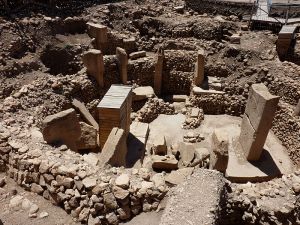
While at Nashotah House I taught electives on Genesis 1-11.  I read about the geologic ages of the planet and would fall into Devonian dreams of a world entirely different from ours—a world in which there was no Bible for there were no humans to make God in their image.  I knew that we lived in the Quaternary Period of the Holocene Era.  I don’t think the term Anthropocene was in wide use then.  Parsing it is simple enough—it is the “human age.”  The age in which the planet was, has been, and is being altered by human behavior.   There’s no agreed-up start date for the Anthropocene, but it will likely be set in the twentieth century; the twentieth century in our way of counting.  There have been millions of centuries before that.

A couple of weekends back I attended a church program on plastics.  These useful polymers are deeply, deeply integrated into our lives and are promoted by the far too powerful petroleum industry.  The problem with plastics is that they break down and invade the bodies of animals and humans.  And although they do decompose it takes many centuries for them to do so.  Naming the Anthropocene is an effort to get us to see that a human perspective is far too brief to deal with the many issues we raise.  Our practices on this planet will likely not destroy the earth, but they may very well make it uninhabitable by us, or by creatures we like to see.  Life is persistent, and rock lasts for eons.  Even stone’s not eternal, however, and the idea of the Anthropocene is to get us to look at ourselves and realize that our use of this planet, as toxic as it is, is shortsighted.  We will someday be the fossils under a bridge long crumbled to dust for those in the future who know of no such thing as Genesis.  Perhaps we should act like it.