Who’s God?

There shall be wars, and rumors of wars. The Bible says nothing about being able to declare what future people might have to say about God. According to a story on the Washington Post website, Larycia Hawkins, a political science professor, was suspended from Wheaton College for claiming that the God of Islam is the same as the Christian God. Administrators felt this was one of those cases where the famous statement of faith required of Wheaton faculty was violated. Seems to me the administration might want to sit in on a class in history of religions. Everyone knows that Wheaton takes great pride in its Evangelical heritage, bordering on a kind of extreme conservatism. Even so, this seems extreme.

There is much we don’t know about the early history of most religions. Probably one of the resons for this is that, apart from the founder, we’re never sure if a new religion will take off. Many religions have started and then quietly (or not so quietly) died away. At the earliest stages nobody really knows which way it might go. We do know that by about the time of the Exile, the early Jewish faith was fast becoming monotheistic. Christianity, although disputed by some, also followed in that mold, accepting the God of Jesus of Nazareth (himself a Jew) as the one God. Here many Evangelical histories grow a little weak when focus is shifted to Arabia. The cultural context that led to Islam involved a world of pantheistic worship, but Mohammad was well aware of, and appreciative of, Judaism and Christianity. Recognizing that his faith shared the same books as the other two, his understanding of Allah was clearly the same God as the one worshipped by the Jews and that Jesus had called “Father.” The three monotheistic religions of that region, historically, have always shared the same God.

IMG_2472

Disowning a deity, I suspect, comes with some anxiety. As Islam expanded and Christianity itself became an imperial religion, clashes were bound to happen. Invective included calling the enemies “pagan” or “infidel” (technically two separate things), and as so often happens, rhetoric became mistaken for fact. Since Islam and Christianity were different religions, so the thinking went, they must recognize different gods. Triumphalism is seldom subtle. Fact checking wasn’t so easy back in those days. Suspending a professor for stating the truth is, I fear, nothing new. Some schools require statements of faith so that they may ensure academic freedom is a myth. Ironically, they seldom have trouble with accreditation. The ideology of a war between religions offers a doleful prognosis for a world where religions really need to try to understand each other and where obvious historical facts should count for something.


Only Hummus

I remember the moment well. I was in Jerusalem on my own. Although in my early twenties, I really didn’t know much. The man at the vending cart didn’t speak English, but I was hungry. My first experience of falafel would certainly not be my last. After I married a few years later, I introduced my wife to the various Middle Eastern foods I’d tried. Hummus became a personal favorite, especially after I became a vegetarian. There are plenty of things for vegetarians to enjoy, and many cuisines of the world have less meat-heavy options than many restaurants I’ve experienced in the States. Hummus, to get to my point, can be rather bland. It is generally inoffensive, and people of many dietary and religious restrictions can eat it. The Christian Century ran a blurb recently about a hummus restaurant in Netanya, Israel. This eatery offers a fifty percent discount to Jewish and Arabic customers who sit together. Here is a workable idea for peace.

We all have to eat. Half the trick to world peace is getting people who dislike each other to sit down and do it together. Those of imperialist bent may not realize, or even be able to see, that we have more in common than most agitators think. Human needs are the same, and often, very easily provided. You like hummus? I like hummus! We must not be so different, after all. If instead of weaponizing themselves, radical believers armed themselves with food to share, not nearly so many warplanes would have to take to the air. I admit I’m an idealist. I don’t think peace is impossible. We can choose to focus on what divides us, or on what we have in common.

IMG_2641

Perhaps if I’d never traveled to Jerusalem I would never have tried hummus. I didn’t travel for the food, but travel led me to a kind of serenity. Both falafel and hummus are made primarily of chickpeas, a versatile vegetable that has a verisimilitude of peace. If we could learn to eat together we would find it harder to hate each other after that. Sharing our mutual needs sometimes, as the restaurant owner in Netanya understands, requires a financial incentive. Although it may be lucre that lures those who are different to the same table, it is the peace itself that, I believe, will keep them coming back.


O Come Let Us

During the height of the zombie craze a meme went around the internet proclaiming “zombie Jesus.”  It was funny because the salient feature of zombies is that they come back from the dead.  Noting the resurrection and the easily annoyed trigger finger of Fundamentalist Christians, some wag brought Jesus and the undead together.  We had a good laugh and forgot about it.  A guy in Ohio with a sense of humor, took the zombie Jesus meme and constructed it into a zombie nativity scene in his yard.  None of us knew about it, of course, until it caught the attention of the news.  A story in the Washington Post notes that the man was required to take the scene down for violating zoning laws.
 
People take their religion very seriously and have a hard time laughing about it.  Religion is under constant fire from angry atheists and it already suffers a complex from having so many liberals pointing out the historical and logical faux pas from within the tradition.  Some people take advantage of American gun laws to stock up against the day when they’ll step over the line and join those who shoot up offices where they think Mohammad is being mocked.  Then we’ll sit around and wonder if we should classify them as terrorists or just deranged.  And we’ll post a take-down order, just in case any zombies remain.

NightoftheLivingDead
 
As an academic (at least erstwhile) I noted how little religion scholars reveled in the humor of their traditions.  There’s funny stuff in the Bible, believe it or not, and many religious traditions allow for a Mona Lisa smile every now and again.  A far more common stance, however, is that of taking offense.  Something that most critics just don’t realize is how much religions mean to those who believe.  I chuckle once in a while, but I never belittle the beliefs of others.  I have been in this religion thing since I can remember, and I know what it can mean to people.  The best way to avoid offending, I think, is to keep our jokes among the crowd of those who have a sense of humor.  Of course, the undead obey no rules and the media (and its unruly accomplice, the internet) can’t resist spreading memes that might earn a buck or two of advertising revenue.


Factor Fiction

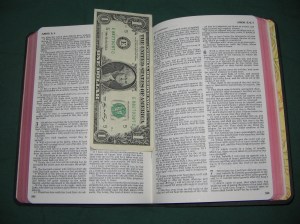
An article on CBS that my wife sent me tells how Costco mistakenly labelled a shipment of Bibles as fiction, setting off a tweet-storm. Some offended, some applauding, a 140-character barrage ensued as Costco apologized. What was the fuss about? As a person who has experience with both fact and fiction, it has become clear to me over the years that these categories are not nearly as sharply defined as they might appear. We make labels to help us categorize a confusing reality. Our brains, nevertheless, easily accept fiction as fact, at least for purposes of getting along in the world. The earth is spinning, right now, at over 1,000 miles per hour. We don’t perceive it, and in fact, it took not a few deaths and apologetic clerics before it was admitted that evidence we don’t feel proved the case. Each day we choose to believe the fiction that we are holding still and the sun goes overhead. Is anybody tweeting about that?

One of the angry bird calls pointed out that Costco (which apparently now has an imprimatur) doesn’t label their Qurans as fiction. How many Christians have read the Rig Veda and not wondered whether its proper label fell on that side of the pricing gun? The matter of fact or fiction is one of opinion. Even those books bearing the label of non-fiction are interpretations of evidence. When it comes down to ultimate truth, where it lies is always a matter of faith. Who buys a Bible at Costco anyway?

IMG_2634

When I was a child and Amazon did not exist, buying a Bible was itself a kind of sacred act. You wouldn’t think of going to Wal-Mart to do such a thing. You went to the Christian bookstore (or, I suppose, if you grew up in a city, a secular bookstore might do). You talked to clerks who knew the differences between versions. The place smelled of leather and velvet. It was a place dedicated to the truth. Costco is a big box store. Buying in bulk implies something. Ironically, those who angrily tweet about the Bible’s label don’t seem to realize that Bible selling is big business. You won’t find much in the way of small publishers’ literature in such a store. Next to your giant cartons of cereal and immense packages of diapers, why not tuck in a Bible as well? When you get home you can tweet about how much money you saved buying eternal salvation in bulk.


Things Being Equal

Gun violence is out of control. While experts dither and bicker about whether this or that act was done by “terrorists” they choose to ignore that gun violence is terror, no matter who’s pulling the trigger. The world in which bearing arms was declared an amended constitutional right was a world of muzzle-loaders. Like in those movies where someone took their shot, missed, and has to reload, feverishly pouring gunpowder down the barrel while the enemy closes in. Firearms were obviously deadly, but limited in their capabilities. All things being equal, it is easy to understand why such a right would be granted. Almost nothing is equal any more, however.

Consider this: weapons are now sold that can rapidly and repeatedly fire rounds that, in the wrong hands, can kill many people before anyone even has the time to react. These guns are useless for hunting, and their only purpose is to kill other human beings. We have been manufacturing them and selling them for many years and laws are such that most people could, if they choose to participate in the insanity, stockpile such weapons against a day when they will actually be used for their intended purposes. Consider also that the government, strapped for money to funnel to military causes, has shifted and narrowed the definition of mental illness so as to “normalize” people who would have, under other circumstances, been in institutional care. Add to this the increasing globalization that has effects that psychologists and sociologists are only now coming to see build stresses and strains in brains that evolved to be among their own “kind” and to distrust the “stranger.” And these stressed minds have easy access to powerful firearms. Who has the right?

I grew up in a different world. Yes, the Vietnam War was going on, but those who returned were exhausted by and despised the violence to which they’d been subjected. The pointless killing of others was culturally and personally just that: pointless. Fast forward half a century. Now we live in a world where seeing violent death represented is a daily occurrence. Even in simulation it is realistic. Mass murderers make videos presenting themselves as so heroic as to inspire followers. We no longer trust religion. We no longer trust the government. We no longer trust the American Dream. Wealth is bottled up where it can’t be reached and guns are distributed like candy. Are all things equal? Hardly. And yet those running for the highest office in the land worm for ways to keep the gun lobbies pleased. If we could only go back to muzzle-loaders and the time it took to reload—time in which even an unbalanced person had to think about what he, or now she, was about to do. Equality has, unfortunately, become as much a fairy tale as the right to bear arms.

400px-Manual_of_the_Musketeer,_17th_Century


From Solid to Gas

“Ignorance of the law is no excuse.” I couldn’t believe that the woman at the police station actually used that phrase on me. The only time I’d ever heard it uttered before was on Gilligan’s Island. After all, we were talking about a parking ticket. I’d arrived in Boston, after driving through four states, with a massive headache. I was moving into an apartment in Winthrop, and all the cars along the street were lined up with their left tires along the curb. I simply did what everyone else had done and went to bed to sleep off my debilitating pain. In the morning I had a ticket under my windshield wiper. I explained that I’d just moved to town from another state, I was a student, and that all the other cars were parked the same way. Then she said it.

IMG_2625Ignorance, it seems to me, is the only response in the face of laws far more complicated than they need to be. I always thought, for example, that it was against the law for churches to meet in public schools. I’m no lawyer and what with voucher programs and other legislation that has been approved by the Reagan-Bush empire, I’m just not sure any more. So when I drove past the local middle school I was surprised to see banners all over the place proclaiming Liquid Church was meeting there. Liquid Church? They have a slick website (advertised on the banners) and they had guys directing traffic in the local school lot, which was frighteningly full. When had this happened? When had the school which had refused to allow a robotics league, approved the meeting of an evangelical church in the building? I can’t guess about the legality.

One of New Jersey’s fastest growing churches, according to its website, Liquid Church is flashy and trendy. This is God for the twenty-teens. Like businesses these days, it has “core values” as well as beliefs. Those values? Grace wins. Truth is relevant. Church is fun. The beliefs are pretty basic evangelical standards. But what is it doing in my local school? Having attended churches where anything fun smacked of Satan, perhaps I’m just a little bit jealous. Maybe as a guy who tries always to obey the rules, who doesn’t speed, and who actually follows traffic conventions in parking lots, I’m just a little confused. I thought there used to be a wall here. Now there seems to be nothing but rules anyone is free to concoct. I miss Gilligan’s Island.


Star Lords

Things are done differently in the UK. I suppose that’s obvious, but I have always noticed on my trips between our respective countries that some things that go without saying here or there receive the opposite treatment overseas. We are, however, united by a common religious heritage that sometimes goes unrecognized. A recent opinion piece by Giles Fraser in the Guardian discusses the banning of a commercial featuring the Lord’s Prayer in cinemas. The first difference that came to mind is that advertisements for something like the Lord’s Prayer seem unlikely in the United States. We are a biblically-based, biblically illiterate society, and if someone is willing to put up the money, advertisements are a no-brainer. A second difference is, as Fraser points out, there is fear that the Lord’s Prayer might offend people. Surely there are those who will take offense, but Fraser points out that there is nothing offensive in this prayer. It isn’t an attempt to convert. It is reflective, irenic, peaceful.

The point of this opinion piece, apt when Christmas wars are in the air, is that freedom of religion requires a dose of common sense. Yes, many atheists are offended by religious practices, but the question is whether we can ever completely avoid offending one another over belief. Beliefs differ. Not even everyone agrees with “live and let live.” The problem is that some offensive ideas lead to violence. We’ve forgotten how to talk with one another. In this world of uber-security, we find difference terrifying. Religious difference especially. So the angry atheists suggest religion should be driven indoors and rendered mute. Which violates what some religions are all about.

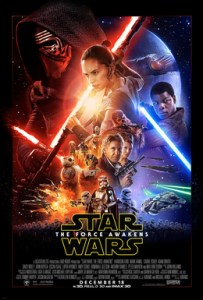
The British ad was to take place before the airing of the new Star Wars movie. One need not be a detective to discern the deep and inherent religious message in the original series of the franchise. Indeed, people were disappointed with the prequels because they had lost that sense of mythic grandeur that Joseph Campbell had been so helpful in instilling in the original trilogy. The films were made with religion in mind. Hidden behind a mask, perhaps, but clearly there. If Yoda had uttered something like the Lord’s Prayer, it would have been accepted as merely part of a movie. And as the reboot trilogy shows without doubt, movies have the power to offend.

Star_Wars_The_Force_Awakens_Theatrical_Poster


Let There Be

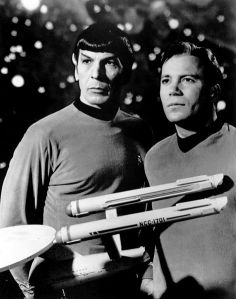
President Dwight D. Eisenhower was, as everyone knows, a military man. With the role of Commander in Chief, United States Presidents control a military that eats up an enormous amount of tax dollars. To keep us safe, we’re told. Even though he was a military man, in his farewell address Eisenhower warned the American people of the Industrial Military Complex, a group of companies that not only eat national budgets for breakfast, but also control the most dangerous technology in the world. Secrecy, we’re told, is key. We don’t want any other nation on earth knowing what we’re up to. In fact, most Americans have no idea of and no control over what we’re up to. When people like Edward Snowden come out, their tales are so extreme that it is fairly easy to dismiss them. Would a good government ever do that? Nah. We’re the good guys, right? These were the thoughts going through my head after I watched Star Trek Into Darkness. I always run a couple years behind, it seems, on major movies. This one disturbed me in a way uncharacteristic of the Enterprise and its crew.

StarTrekIntoDarkness_FinalUSPoster

Since it’s been out a couple of years I don’t need to give spoiler alerts unless some readers are even further behind than me. Okay: here’s a spoiler alert.

As James T. Kirk gets busted down in rank for violating the prime directive to save Spock, he takes over the Enterprise when Admiral Pike is gunned down in a top-level Star Fleet meeting. Vowing revenge, he encounters Khan, the eponymous villain of the old series Wrath of Khan. As Admiral Marcus had made an alliance with Khan the parallels with the Bush family and Sadam Hussein became clear. And when Scotty finds a super starship on a moon of Jupiter, secretly developed by Star Fleet to go to war with the Klingons, more than a touch of the Black Ops came to mind. Here was a government that couldn’t be trusted and that didn’t trust its people to know its intentions. When Khan pilots this Black Ops starship into San Francisco, the shot of it falling out of the air so resembled classified military craft that I actually shuddered. The destruction was a parable of 9/11.

Throughout the movie there is a dialog of ethics. Is it right to kill a known criminal without trial? Is it permissible to start an unprovoked war? Does might make right? Khan, despite being evil, tells the truth. The movie disturbed me because I can’t remember the last time I could truly trust the government. I vote Democrat because they are the party that seem to do the least damage to the planet and actually care for the poor. I was born, however, after the Eisenhower administration. John F. Kennedy was assassinated after my first birthday. My reading since leaving college has convinced me that we will never get the full story. Star Trek, although set in the future, has always been a projection of the present day. Those few groaners of episodes from the late ‘60s that delved into popular culture proved that. As I watched the crew of the Enterprise battling an enemy under its own flag I realized little has changed in the final frontier.


Trench Warfare

Once something becomes socially acceptable, it is nearly impossible to change. I’m no prude, but I remember when “swearing” in public was considered bad taste. When I was a tween (and there was no such thing as tweens then) I heard a guy talking to a friend in a department store. They were on the other side of those kinds of shelves where you can see through to the other side. One of them cussed and his friend said, “Man, you shouldn’t say that when there’s a little kid just there.” I wasn’t shocked by the word; I’m more worldly than most people grant me credit for being. Still, the sentiment was appreciated. These days I dodge f-bombs all the way to work. It’s effing acceptable.

Vickers_IWW

The tragic multiple shooting in San Bernardino to which I opened the paper yesterday morning was completely dispiriting. The statistics showing more multiple shootings than there have been days in the past year while Republican hopefuls chain their wallets to their pockets backing the NRA should give anyone pause to reflect, no matter their party. Our gun madness has led to a collective deathwish for our country. The only acceptable solution, according to the GOP, and Texas, is to get more guns out on the streets. The Old West is called “Old” for a reason. We should’ve become more civilized by now. Instead we accept fantasy for reality.

In a land where politics is making love to gun lobbies, the surest investment is the casket industry. It has become socially acceptable to shoot lots of people and then kill yourself or get yourself shot. Hardly a day goes by when we don’t read about such an incident in the news. Swift, decisive action is called for but we’re mired down by politicians who need ever so much more money to campaign. Bread and circuses. I know responsible gun owners. It has become clear that the only real solution now is to do what is socially unacceptable. Give up our guns. If those who are responsible gun owners were willing to lead by example we might stand a chance against a socially acceptable plague that we’re unwilling to name. Even US citizens can be terrorists in their own country.


Private Miracles

Despite rumors to the contrary, the Roman Catholic Church is skeptical of miracles. Quick to point out pareidolia where it occurs, looking like the Blessed Virgin in a tree stump or highway underpass, this is no credulous organization. Everyday miracles, doctrinal ones, of course are accepted. Transubstantiation is a quotidian miracle as the mass is no mere ritual. Flashier miracles—even some very impressive ones—are treated with suspicion and the rigor of Scotland Yard. When one of my regular readers pointed out the bleeding communion host in Kearns, Utah, I knew I had to check it out. As is to be expected in such cases, the Catholic Church does not disappoint. Some are calling it a miracle, but those who are do not speak for the Diocese.

Keeping in mind that my source for the story is Fox (Fox news seems more interested than most in this incident), apparently what happened is that a parishioner returned a host to the priest during communion. The priest put the host in a glass of water to dissolve it, but instead it began to “bleed.” Church officials were called in to investigate. There are several things odd here, although I’m no inquisitor, that make me wonder about the veracity of the story. First: Fox news. There are other outlets as well, so I’ll let that go at the moment. When a person was given a wafer at Nashotah House and for whatever reason turned it back in, the celebrant simply ate it. Priests, by definition believers in miracles, need not worry about germs. Protecting the host from desecration was the main thing. Putting it in a glass of water? I suppose that’s acceptable in some places, but even an Episcopalian would be shocked. And why was the host returned? Surely it wasn’t defective.

The Eucharist is the central rite of the liturgical churches, and it isn’t taken lightly. Although it is a miracle-laced event, it is expected that the transformation will follow the prescribed rite. I sometimes ponder what priests would do in the face of a genuine, unexplainable wonder. The side of the believer that yearns for validation would surely want to put it on Fox news for all the world to see. The private side would want to let it happen without any need to say anything about it. Keep it a private miracle. In a year when Starbucks red is a sign of an impending war, I wonder if a bleeding host is the most apt way to get the attention of the unfaithful when a simple cup of coffee will do.

800px-Última_Cena_-_Juan_de_Juanes


R’lyeh Reality

It’s always a sign that I’ve been too busy when I lose track of Cthulhu. Few created deities receive the attention of the web like the terror dreamed up by H. P. Lovecraft. The internet has created an environment, like the bottom of the sea, where the old gods may lie dead but dreaming, ready to reawaken. It was with great pleasure that I was pointed to Cthulhu for America. At last, a presidential candidate who is willing to admit that he is merely a myth. His agenda of destruction and domination is not at all hidden. If only real politicians would be so honest!

In a world with millions of diversions, it amazes me that Lovecraft’s nihilistic creation has taken on such popular interest. Perhaps it’s because those of us who grew up with monsters have now reached a dubious sort of adulthood where we are bossed around like children and given only those limited freedoms that capitalism will allow. We can’t go into public places without seeing heavily armed guards in fatigues. We can’t get into work without electronic chips in cards to keep us safe from those of our own nation. We can’t fly without being scanned like a week-old loaf of bread. We can’t even store our own files on our own personal computers any more since some software company would rather charge us for the privilege. At least Cthulhu says what he wants. Orwell may have had his Big Brother, but Cthulhu is an obvious overlord who wants nothing but his own satisfaction.

IMG_1551

Watching the circus of candidates vying for position, I can’t help but think of Rome before the fall. Historians are still debating the causes—lead poisoning may be too easy a way out. Perhaps it is, as Lord Acton declared, the result of power itself. Those who taste it can’t stop eating it until every microscopic crumb is devoured. It’s shameful to watch. I’m embarrassed when Dumb and Dumber sounds intelligent next to the utterances from political talking heads. Cthulhu would have none of it. Although the website is a parody, it, like all myths, is truer than what we often call reality.


Rumors of Wars

Now that Black Friday and Thanksgiving are behind us, the holiday season compels us to think of what comes next. Whether it is Hanukkah or Christmas or Kwanza, people are preparing to celebrate during the longest nights of the year, hoping to encourage light to return. It is a most primitive urge. Darkness is easy to come by; light takes a little more effort. In the western world the season was largely instituted by the celebration of Christmas, although this took many, many years to catch on. Now it is a begrudging nod in the direction of workers who spend more and more of their time on the job since the internet makes it difficult to claim that we are unavailable. Smart phones, smart watches, tablets, and computers are ubiquitous, so access to work email is only a click away. In any case, the holiday season invariably brings stories of offended people to the surface.

A recent piece in The Baxter Bulletin, sent to me by my wife, rehearses the story of Baxter County, Arkansas and the challenge against a nativity scene on a courthouse lawn. Such stories always seem to me to be cases with no winners. A courthouse should remain neutral territory, but the nativity scene hardly seems an offensive weapon. I can’t claim to know a great deal about the history of creche scenes, but it doesn’t appear likely that they were ever covert attempts to convert. They were celebrations, and nobody has a problem with them as long as they’re kept on private property or church garths. I do wonder, however, if driving them out of public sight really has any purpose. We all know that this time of year is gearing up to holidays when the ordinary takes the back seat for a few days and we can stop the rat race and reflect on a wonderful myth of biblical proportions.

Tree, bush, or asherah?

Tree, bush, or asherah?

Similar stories are unfolding in countless venues now that December is practically here. Even stopping into Starbucks for a cup of coffee can land you in the middle of a culture war. It would seem to me that in this troubled world we might instead try to focus on peace. Whether or not the story of the manger has any historicity at all, the fact is the first century was a period of extreme unrest. This was a moment to pause and imagine what a world without war might be like. Now the holidays have become an occasion for declaring a new kind of sniping war about who has the right to make reference to a legendary event. Or where they may do so. In some cases there may be legitimate cause for concern. Most of the time, however, only those fixated on belligerence manage to draw everyone in to a fractured fairy tale of a holiday season where money is at stake.


Seeing Red

Not being commercially minded, it took many years for me to understand why it is called Black Friday. To many people “black” indicates negativity, sort of the opposite of Good Friday which, when you think about it, doesn’t seem so good. After I was forced into jobs in the money-making business, I came to realize that budgets were written in black and deficits were written in red. Since my lifetime, with a few exceptions, has been a series of economic disasters following one another (the implications should be obvious) and businesses operate in the red while projecting budgets ever higher the next year. This model is, in a world of limited resources, the very definition of unsustainable, and yet we keep raising our sights and getting disappointed. Nobody knows for sure where the term Black Friday originated, but it is a modern term. A holiday for those who measure celebration in terms of dollars and cents. (Mostly dollars.)

As I was pondering this phenomenon, my thoughts turned to red letter days. Red here is a positive thing—special days on the calendar that let us step outside the usual routine of pushing ourselves to make this year’s budget and allow us to relax with family and friends. The black and the red have switched places here. In fact, red letters, apart from the dismal science, have historically been considered good. Think of the red letter editions of the Bible. These Bibles had the putative words of Jesus printed in red so that they would stand out. The concept dates back to the change of the twentieth century. Red letter Bibles caught on among Evangelical readers. Red letters, however, go back even further in history.

Who said what now?

The book that Catholic priests used to set on the altar was a missal. Missals contained the instructions for saying mass, and during certain parts of the ceremony priests were supposed to make specific gestures. The places at which these actions were to be made were printed in red to draw the priests’ attention. They were called “rubrics” since they were written in red. Missals date back to the Medieval Period and they give us perhaps the first positive use of red writing that we know. Even further back in history when inks were organic, red writing was found. Epigraphers of antiquity know of red inscriptions but the meaning at that time remains speculative. We call this Black Friday because the one percent hope to get a bit richer. Those of us further down are supposed to enjoy the trickle. For me, in principle I don’t go shopping on Black Friday. I see it as a red letter day.


Bucking Star

Entitlement comes in many forms. Culturally we’ve been sensitized to substituting “holidays” for “Christmas,” although the reason we spend money at this time of year is well known. Although technically not a Christian nation, the United States has a large number of Christian believers and always has. Charles Dickens certainly participated in the invention of Christmas, but the commercial aspect is very much an American thing. So much so that we can’t wait to get Thanksgiving out of the way to dip our fingers into Black Friday, a holiday in its own right. Starbucks has, for many years, shifted to a banal, neutral winter-themed cup design, to get customers into the spirit of spending. Who really needs to pay five dollars for a cup of joe? Wrap it like a present and the cash flows more freely. So the tempest in a coffee pot over the “war on Christmas” by choosing a simple red (and by default green) cup design became front-page headline news recently. Had we dissed the Almighty or the babe in a manger by going red?

Religious groups feel increasingly threatened. Not everyone thinks globalism is a good thing. We try to educate our children, but many religious groups insist on home schooling to avoid the contamination of an open mind. Any act, no matter how trite or banal, may be perceived as an attack. Nobody seems to think that stopping in to pay so much for a cup of coffee may be a sin in its own right. The economy has tanked and bumped along the bottom ever since I’ve entered the professional sector. And yet, Starbucks has flourished. No matter how down you are, a little arabica stimulus can’t hurt. It has, apparently, become the bellwether of how Christmas-friendly we really are.

IMG_2605

Ironically, the Christmas decorations begin appearing in stores before the spectre of Halloween. Stop in to pick up some last-minute scares and you’ll find them on the bargain rack as the red and green tide take over the valuable shelf-space. We gleefully move from one spending holiday to another. And in the midst of it all, we stop to complain about the design of our coffee cup? I try to avoid disposable items whenever I can. I don’t collect holiday cups from coffee vendors. I wonder what all the fuss is about when the world is full of so many serious problems. If I sound cranky to you, there’s a good reason. I haven’t had my morning coffee yet.


Book Deaf?

It’s Tuesday morning and I have been listening to authors pitching their books for three solid days now. Truth be told, I am a bit jealous. I’ve got a few more books in me yet, but research time simply does not exist in the world of capitalism and its discontents. Not that I envy being on the author’s side of the table—I remember how it felt to pitch Weathering the Psalms to several editors and to receive an icy “no” in response. I think now I begin to understand. Yesterday one of my appointments asked if I was “book deaf” yet. It was a term I’d never heard, but I immediately knew what he meant. Editors hear pitch after pitch. I pull out my phone and look at my calendar and see a new project every half-hour throughout the day, but no, I’m not book deaf. In fact, I have to constrain myself to keep my credit card firmly inside my wallet. Being surrounded by books is like being in a jungle teeming with deadly animals.

IMG_2614

From the exhibitor’s booth, Tuesday is a day of relief and worry. Most of the papers are over at AAR/SBL, and most of the participants have already left. As at any conference, fair, or exhibit, we are strictly forbidden from taking down the booth before closing time. We stand about, straining our ears to hear that first transgressive ripping of strapping tape from its roll, indicating that someone in another booth is being naughty. We’re tired, weary even, but not book deaf. Never book deaf.

IMG_2615

In my unguarded moments I sometimes think that maybe some day I’ll have a book here that others will clamber to find. Maybe someone like me will prowl to a pre-selected booth with a specific title firmly in mind, and that title will bear my name. I suppose it could happen, although it isn’t likely at this point. I hear each pitch and more. I hear the dreams and deep desires of every author. We want to be heard. We want others to think us respectable, honorable even. There are publishers out there who will publish anything. They will accept books to fill catalogues and websites and you’ll never hear from them again. Still, you’ll find some interesting things if you wander by their table. And if someone sees that you’re an editor while you’re browsing you’ll never turn a deaf ear. This is what religion scholars live for. Books are our reality.

IMG_2617