The State Demon

It’s the time of year for seeing things. I suppose that’s why there have been two supposed sightings of the Jersey Devil flying around the internet this past week. The credulous take these kinds of things for evidence, and the posters claim complete sincerity and who doesn’t want to believe? Still, the photos and videos fail to convince. It’s the time of year when we want to see monsters.

DSCN0128

While the origin story of the Jersey Devil is one of the main strikes against it for sheer impossibility: Mother Leeds, who had twelve children, finding herself pregnant with a thirteenth, wished that it would be born a devil. The cursed child, meeting motherly expectations, came out a devil, flew up the chimney, and has haunted southern New Jersey ever since. The folklore elements are thick in this tale: the thirteenth child, the exasperated mother, devils in the woods. This doesn’t, however, suggest much confidence in the literal truth of the story. This traditional tale circulated in the same region where legitimately strange things were seen, especially around the turn of the last century. Every now and again the devil reappears in a present-day venue. At one time the Jersey Devil was even the official state demon of New Jersey.

The ease of use of photo-altering software has taken us further and further from the truth. It is an impoverished world that has no mystery to it, but the easily hoaxed world of Photoshopped monsters will cast doubt on all contenders, I fear, forevermore. We can no longer trust the veracity of the lens. Our world has become an electronic illusion. The creature spotted in the Pine Barrens can be more readily believed without photographic proof. The sober, shaken witness who can’t explain what s/he saw one dark night is more believable than a goat with wings or a stuffed animal on a string. Our religious sensibilities urge us to believe in the impossible. Our cameras urge caution. After all, internet fame is often the only kind available to those whose videos and photos go viral. The devil, they say, is in the details.


Inventing Concepts

A neologism is an invented word. Of course, it is impossible to be certain about the origins of many words, and even the many neologisms attributed to William Shakespeare may have been overheard by the bard at the local pub. Still, one of the things I sometimes dream of is inventing a word that will come into wide circulation. I think it must be easier to do in fiction than in non-fiction writing. When I first wrote my book, Weathering the Psalms, I chose what was, at the time, a neologism for the subtitle. “Meteorotheology” was a word I’d never read or heard before and, quite frankly, I’m not sure how to pronounce. Although the world-wide web existed when the book was written, scholarly resources were still few, and tentative. Amazingly, that has changed very rapidly. Now I’d be at a loss to find most basic information if I were isolated from a wifi hotspot. In any case, the web has revealed that others beat me to it when it comes to meteorotheology.

I suppose that some day, when I have free time, I might go back and see if I can trace the web history of the word. It is used commonly now to refer to God taking out wrath on people through the weather. For example, when the Supreme Court decision on the legality of gay marriage was handed down this summer, there were various websites—more popular than mine!—asking a “meteorotheological” question: when was God going to send a hurricane to punish the United States for its sin? These were, as far as I can tell, all tongue-in-cheek, but there can be no question that some people treat meteorotheology that way. It is a sign of divine wrath. My own use of the word had a wider connotation. When I was invited to present at talk at Rutgers Presbyterian Church in Manhattan a few weekends ago, I was reminded of my line in the book: “To understand the weather is somehow to glimpse the divine.”

That’s an idea I still stand by, but it is difficult to move beyond. What exactly does the weather say about beliefs in the divine? There’s plenty of room for exploring that. I know that when I walk outside to fetch the paper on a clear fall morning when the moon and stars are still out, I know that I’m experiencing a kind of minor theophany. The brilliant blue of a cloudless October sky can transport me to places unlike any other. What exactly it is, I can’t lay a finger on. That’s why I came up with the word meteorotheology. I many not have been the first person to use it. I may even be using it incorrectly. But the weather, in my experience, has many more moods than just anger. Any autumn day is enough to convince me of that.

DSCN6011


Fundamental Fear

Something truly scary landed on my desk. Working for an organization that has many different departments, there’s no way to know everyone. So when something bible-ish arrives in the mail, it gets directed to me. Now, I don’t follow the afterlife of creepy religious people through prison, so it took a few minutes to remember who Warren Jeffs is. I knew I’d read about him but I couldn’t remember where. Then I remembered the Fundamentalist Church of Jesus Christ of Latter-Day Saints. Jeffs was once the head of this church before being put into prison for child sexual assault crimes. So why had he sent a copy of Jesus Christ Message to All Nations to my publishing house? It is already published, and it is rather modeled on the Bible, at least at a surface level. No letter, no instructions. Just a book that I felt I needed to wash my hands after touching.

IMG_2571

I’d not heard of this book before. The author is boldly listed as Jesus Christ. “President Warren S. Jeffs, Mouthpiece of God” it says, given credit for, I suppose, putting pen to paper. What’s to prevent me, I wondered, from claiming God wrote what I framed into words? It is far too easy a claim to make and the credulous follow where the bold lead. That’s the way human authority, unfortunately, often works. Someone with a surfeit of testosterone declares that he speaks with absolute authority—I think of angry atheists as well as televangelists here. Such sense of irrational conviction must feel god-like. I can only guess from the sidelines. And I wonder about those who wrote what are recognized as scriptures in other religions.

Did those who wrote the books of the Bible, for instance, ever feel that they were writing unquestioned truth? Might they not have been a bit more circumspect? Maybe they were writing in the heat of inspiration, but not with the confidence of claiming divinity. Somehow I doubt even that. Writing is a human activity. The creator of an entire universe shouldn’t need to use it. Still, religions are often built around written texts. Parts of the New Testament claim to come from Jesus of Nazareth, although he’s not the actual writer. I guess he must have been working on later works of which I’ve never heard. And I do wonder how the doctrine of the faulty vessel applies in cases like this. I know better than to ask a Fundamentalist of any stripe, because I already know the answer they would give.


Camping Out

Garsh-darn-it, I’ve missed the end of the world again! I’ve been so busy lately that I hadn’t bothered to pay attention to that which really matters. So here I find myself in the post-apocalyptic world and still waiting for a bus. Was that all there really was to life? I mean, I just found out that the world was ending on the day of. Couldn’t I get at least 24 hours’ notice? (I wish we’d all been ready?) A group called eBible Fellowship, followers of the late Harold Camping, figured out that his prediction of the end for May 21, 2011 was only the shutting of Heaven’s doors. I’d been wondering where that draft was coming from. According to the Radnor Patch, the actual end of the world, according to eBible’s calculations based on Camping’s spiritual algebra, was yesterday. That could explain a lot.

Apocalyptic groups have often had a problem getting the exact day right. No surprise there, however, since the Bible says even Jesus doesn’t know. Historically, there have been a number of options available to the budding apocalyptist. You can simply go very quiet and hope nobody notices. You can commit mass suicide (not recommended). And others would seem to suggest that you can claim it did happen, but that we just haven’t noticed yet. That was the response of some of Charles Taze Russell’s followers when 1914 saw the continuation of the world, despite a war that has scarred it ever since. Maybe the world has ended many times before. Still, the rest of us still find ourselves too busy to notice.

Here it comes.

Hyakutake, 1996. My first comet.

Apocalypticism is most prominent among those groups that hold to a biblical dating of the world. If it has only been here about 6000 years, then its imminent end seems entirely plausible. Those who take a longer view, more on the order of billions of years, seem a little less worried. That’s not to say that the world couldn’t end. A reasonably sized asteroid could finish it for our species. We wouldn’t need a supernova to do us in. Still, we can learn something from the chiliasts. We can learn that introspection is not a bad thing. We don’t need to hoard weapons, canned goods, and water, but we can stop once in a while and ask if all this insane running around we all do is really worth the effort. Since the world has ended, I’m thinking I might slow down a bit. I’ve got a lot that I still want to accomplish, but given that it’s all over, what’s the rush? I just wonder if they’ll buy this kind of reasoning at work.


Secular Family Values

Fear of social disruption runs deep. Things may not be perfect, but people would rather keep things the way they’re used to them being rather than to face radical change. This is natural enough. During the dark days of the Cold War, when nuclear annihilation constantly hung over our heads, atheism was a mark of the Soviet threat. “Godless communism.” Intellectually, however, a kind of atheism was already part of American society as well, although few people talked of it. With our national history of encouraging Bible reading and prayer in public schools, our self-presentation was of the faithful. Those who hold to “old time religion.” In fact, many had moved on, but those of us growing up in small towns or rural settings had no way of knowing that. Life before the internet was primitive in that way.

A recent Op-Ed in the Los Angeles Times asks “How secular family values stack up.” In this age of Nones many are worried that the social fabric has already begun to unweave and that our ethical clothes have become threadbare and see-through. The statistics, however, don’t really bear that up. Written by Phil Zuckerman, it is no surprise that the piece takes a positive view of a faith-free value system. The fact is, the social disruption that has been widely hyped, especially by Neo-Con pundits, has simply not occurred because of secularism. As Zuckerman points out, the largely secular European society has handled ethical situations admirably well. Even in the United States, non-believers in jail populations are an astonishingly small demographic, and divorce rates run lower than those who report being more religious. Those who don’t believe tend to be more empathetic and to have closer family ties than many religious families do.

Tolerance of those with different outlooks is important. In a nation that was at one time considered a melting pot, such difference of opinion is only to be expected. In practical terms, people in the United States knew nothing of Buddhism or Hinduism until late in the nineteenth century. Other religions were simply outside of the experience of most. And those who lived in different religious traditions were also moral. Biologists who study the development of moral sentiments find that apes, certainly not religious by any standard, are often inclined toward positive social values (although clearly not always so—there are dangers in extremism). It is time that we overcame our distrust of those who, for whatever reason, cannot believe. Being human is sufficiently religious to make us concerned about our fellow person. It is only the drive and insatiable hunger, ironically, of godly capitalism that leads to unfeeling disregard of human need.

FullSizeRender-2


Hurricane Joaquin

The name Herostratus is deservedly obscure. In fact, I shouldn’t even be mentioning him here. His use as an object lesson, however, seems apt in a country fascinated by firearms and fame. Herostratus was an arsonist of the fourth century B.C.E. who destroyed the Temple of Artemis in Ephesus, one of the Seven Wonders of the Ancient World. He perpetrated this crime so that he would become famous, and he is representative of those who want fame at any cost. So it was that on Thursday a gunman, who shall remain nameless here, shot and killed nine people at Umpqua Community College in Oregon before being killed by police. This individual, upon investigation, had been fascinated by how obscure people gain immediate fame by killing innocents. After a summer of what seemed like endless, pointless shootings, we now have nine more graves of students to mourn, and as a nation we still lovingly stroke our guns.

Society is a dangerous combination of a cult of celebrity and violence. Most of us live our lives in utter obscurity, not being noticed. For many that is the way they want it, but for some it is a pathology. Guns are so easy to find. Police discovered seven firearms in this man’s apartment, in addition to the six he took to campus. Doing the math confirms the madness of a nation that makes guns so very accessible. Even the insane may buy. All it takes is money. The Temple of Artemis was one of the most magnificent structures of all time. It even gets mentioned, in an indirect way, in the Bible. Although it had been rebuilt, the idea had already fermented, without firearms, that fame could be had for infamy. In antiquity the perpetrator’s name was outlawed. Now anyone can find out who he is.

No shooting is without tragedy. Those that take place on college campuses and high schools are especially tragic because education is the only way to move forward from barbarism. Those who went to class on Thursday were improving their minds. Education makes the world a better place. They were, however, eliminated by a nameless man with easy access to weapons and a wish for fame. Perhaps American Idol and American Gladiator should offer a venue for those who wish to slaughter each other in public. It could be sponsored by the NRA. It was the ancient world, after all, that also gave us bread and circuses. Although the hurricane may be veering away, we have already been hit by tragedy, only this one was of our own making.

joaquin.a2015274.1755.1km


Meet the Neighbors

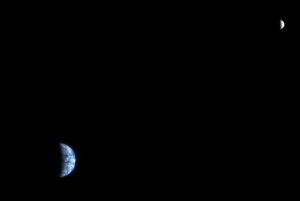
I was called “moon boy” and was otherwise taunted in ways I care not to share. As a child I openly spoke about my fascination of life in space and was ridiculed in the way children specialize in executing humility. So it was with great appreciation, but not much surprise, that I read that water had been discovered on Mars. Where there’s water, there’s likely life. I won’t say “I told you so.” Life, although I know I’m being premature—I’m a moon boy after all—has been one of the many tools in the God-of-the-gaps bag. God-of-the-gaps thinking is where a religion, in the light of scientific explanation, backs and fills by saying only God could do x, y, or z. The weather used to be a gap, but meteorology and fluid dynamics have started to explain many of the things that happen in the atmosphere. But life—life! Life was something only God could do, and it was only here on earth. Mind the gap.

Mars_23_aug_2003_hubble

No, we’ve not yet discovered life on Mars. Those who spend every hour of their waking days combing at incredible magnification the photographs coming from Mars have suggested life forms. Some of them, I must admit, have been very intriguing. The official stance, however, has been that Mars is too cold for life because, as any trekkie knows, life has to be as we know it. I would venture to say that life will be announced on Mars before too long. Astronomers and astro-biologists are a cautious lot, but I think that life is probably a lot more common than we’ve been led to believe. And I have to believe that we’re not the most intelligent species possible. How else can we explain what’s happening in the run up to the Republican Convention? E.T. may not live on Mars, but somebody else might.

Often I ponder how strange our geocentrism is. Copernicus and Galileo more or less proved that we’re not the center of the universe. Reluctantly the church let go of that fiction, but scientists, in some measure, have held onto it. We are the only planet with life. Life on our planet is the most advanced that it is anywhere. And because we know that nothing travels faster than light there’s no possibility that life elsewhere has ever found its way here. To claim otherwise is to face a scientific inquisition. Water on Mars? Yes! This is a new chapter not in the history of the universe, but in appropriate humility in the face of the unknown. Take it from the moon boy—there’s a lot more yet to be discovered.


Rutgers Presbyterian

It is indeed an honor to be invited to address a church group on topics that matter. While I didn’t directly address global warming in my book, it was in my mind as I wrote it. Early in my teaching career, I wasn’t sure how to cinch up the gap between the lexicography I was attempting and the real world issue that it should address. The seminar portion of yesterday’s program focused on topics associated with the weather, and I was gratified to hear that many of those present felt that a profound weather event had made an emotional impact upon them. Weather has a way of reminding us that we’re small and that forces beyond our control still exist. I’d forgotten how nice it is to while away a few hours with intelligent people who think about the world we all inhabit. I only wish I could have recorded all the wisdom I heard. We tend to think if someone’s not speaking to us from a major media outlet they’re not worth listening to. I am glad to be reminded that this is not so.

IMG_2515

During our discussion of global warming, the question arose as to what we could call “climate change” to make it appropriately terrifying. Various suggestions were made such as poisoning the sky, suffocating the earth, and old-fashioned, and to-the-point air pollution. We are a species that seems bent on its own destruction. The atmosphere is so incredibly large, but, as our host reminded us, so very thin. Life is supported only in what might be considered, in his words, a thousand-story tower. Beyond that, life runs out. We need to take the limited nature of this small envelope of gas surrounding us seriously.

I’ve come to realize that my fascination with the weather largely derives from looking at the sky. Such an activity is so basically human and so profound, that we simply overlook it most of the time. The sky is superior to us. It was, for most of human history, far out of reach. We have stretched our hands up to the realm of the gods and smeared it with our industrial filth. Many of those present, although not Catholic, applauded the Pope’s insistence that the world must be view holistically and that we must stop polluting our home. Pollution used to be an ugly word, but we have been taught to change our language to add ambiguity. “Climate change” is so neutral, with no one to blame. But it’s not at all accurate when it comes to the real costs. We’ve already impacted the weather for a millennium into the future at least. And I, for one, left our session optimistic that intelligent people cared enough to spend a beautiful Saturday afternoon discussing it.


Pontificating

I’ve been in a few New York crowds, but this one seemed on its best behavior. I was in the city later than usual since I’m giving a talk today at a friend’s church in the Upper West Side. My wife came to meet me and, knowing the Pope was going to be saying mass at Madison Square Garden shortly after her train arrived at Penn Station (for out-of-towners, Madison Square Garden sits atop Penn Station) we decided to meet at Herald Square and avoid the other kinds of masses. I walked to the square from work and realized my mistake—34th Street was barricaded and there were crowds already beginning to form. The Pope had a procession through Central Park, but I neglected to check on the remainder of his route. My wife arrived and, taken in by the rush of the moment, decided to stay and see what we could see. We were literally one person back from the road. The police kept saying that they couldn’t confirm he was going to come this way, but the helicopters hovering overhead seemed to tell a different story.

The crowd was so well behaved. No pushing or shoving, and even loud talking was mostly absent. It was, believe it or not, kind of reverent. Sure there were people with placards suggesting that one should get right with Jesus, and the occasional pedestrian saying, and I quote, “Why is there so much people here? The Pope? You’ve got to be kidding—can’t we cross the street?” By and large, however, there was good will. One of my coworkers had emailed during the day saying she’d gone by Saint Patrick’s the night before, but couldn’t see him. The crowd, she commented, was kind spirited. Perhaps that’s what having a kind-spirited Pope will do. After we’d stood for nearly an hour, I was beginning to wonder if the motorcade had taken another route—7th Avenue was closed as well. Then the cheering began.

Pope Francis rode by, the window down, waving at the crowd. My glimpse was only a fragment of a second, but it was clearly him. I’d met an Archbishop of Canterbury or two in my time, but here I was, no more than thirty feet from the Pontiff, if only for a second to two. And it was all pretty much by accident. Life surprises us that way sometimes. Reading his words about climate change to the leaders of the world, I can’t help but think we’ve needed a leader like this man for a long time. He’s as human as the rest of us, and he knows that we have only one world and in that one world are millions of people in need. And global warming will hit them first and hardest. And the God of the evangelicals who say the planet is ours to destroy is not the God he recognizes. He’s just one man, but he is able to bring the largest city in the country to a halt, even if just for a second or two. This could be saying something important for those who have ears.

IMG_2488


Pope-ulation

My brother, who art near Philadelphia, recently told me that the City of Brotherly Love began towing cars from the no park zone a week before the Pope’s anticipated arrival. There are those apocalyptic concerns for the commute into New York City this week as well. Papal visits are always big news, but Pope Francis has captured the hearts of many, Catholic, Protestant, and non-Christian alike, because of his obvious and sincere care for people. Mercy, kindness, sympathy, and empathy have long been overlooked in many organized religions, and to have the head of the largest Christian body in the world emphasizing just those things has been a breath of well, spirit. As our world has turned increasingly towards materialism fueled by a rationalism that says this physical world is all there is, a hunger has been growing. People need to be assured that there is some meaning in being people.

Photo credit: Tomaz Silva/ABr

Photo credit: Tomaz Silva/ABr

Theological purity is all fine and good, but it is only, literally academic. We send our clergy to seminaries to teach them to understand the rational part of faith. Many laity may not realize that a Master of Divinity is a three-year degree because it has to allow time for spiritual development. I was unlike most seminarians, having majored in religious studies. Coming into ministry from all areas of life—science, medicine, politics, business—many seminarians aren’t accustomed to taking school time to get in touch with their souls. It is a foreign concept in a world where we’re daily told we have no souls. Pope Francis is a pontiff with a soul. And the world has noticed.

We need those to whom we can look up. We need heroes not only of the action movie variety, but those of more human dimensions as well. Two of the most populous cities in the country are preparing for a kind of epiphany. America has long been a country of laissez faire ethics. Leave it alone and it will all take care of itself. We can all see through that. The northeast coast is bracing for a different kind of hurricane this season. It will mean traffic headaches, for sure, and no doubt many will be chagrined at all the fuss. Still, I have a difficult time seeing this as anything other than a hopeful sign. Perhaps we have a need for religious heroes still, after all.


The Climate of Belief

As I’ve noted before, in our culture where an individual voice is hard to hear, those without institutional affiliation are generally considered self-promoting hacks. That’s really too bad, given that so many highly educated people end up in menial positions—our society’s “greatest resources” squandered away behind a counter or sequestered in a cubicle. So it was my great honor to be asked to present Rutgers Presbyterian Church’s Autumn Guest Lecture this year in Manhattan. When I taught at Nashotah House invitations to speak came frequently, even though it was a small school. I even once received an invitation to talk when I was an adjunct at Rutgers University. Since “going corporate,” it seems, I have nothing to say. It really is wonderful to be asked to speak again. Practicing my talk brings back many fond memories. Lecturing is in my blood. The Pastor asked me to come after my book, Weathering the Psalms, was published. Never intended as a best-seller, it has quietly sat on the sidelines, like its author.

weather wiggins ii sml

I suppose a bit of shameless self-promotion might be in order, but of course, I will feel ashamed for pointing out, when it’s all over. If you happen to be in New York City this coming Saturday and Sunday, so will I. Rutgers Presbyterian is located on the upper west side, not far from Lincoln Center and the Museum of Natural History. I’m always glad for an audience. See? Now I feel bad for having said so. My theme over the weekend will be “The Climate of Belief.” In addition to the weather, we’ll be talking about religion and science. Two worldviews that seem to be in constant conflict are not really the bitter enemies they seem to be. I won’t give away any spoilers since then you’d have no reason to come to my New York debut.

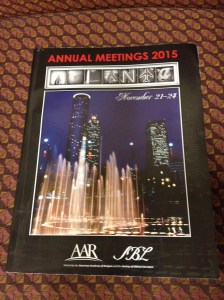
Further along, I am scheduled to give a paper at the Society of Biblical Literature annual meeting in the Society for Comparative Research on Iconic and Performative Texts (SCRIPT) session on sensing scripture. My talk on that occasion will be on how the Bible is presented as an iconic book in the first season of Sleepy Hollow. Be sure to mark your November calendars now! It’s not too often that a person with no institution willing to back him gets to speak twice in a year. Someone who’s in a position to hire professors once told me that with so many candidates out there, you have to wait until you fall in love with one. Being a Don Juan, whether in amore or academia, has never been my strong suit. Still, if Elijah is to be believed, even an unamplified voice may carry. I’ll utter my “yop” for those who wish to listen.


Anabaptist Higher Education

There’s strength in numbers. This is a biblical concept as well as a folk saying (although it is worded differently in the Good Book). The power of conviction grows in a group, and that’s a reason that governments fear mobs, particularly angry ones. As biblical fundamentalism began to develop at the turn of the last century, those who opposed modernity found like-minded believers and gathered themselves together to stand on the same side of multiple causes. Not only fundamentalists, but all different religious outlooks—evangelical groups especially. The more “mainstream” and liberal groups, lacking the conviction of feeling like they’ve been left behind as society moves ahead, have felt less need to organize together. This is something the Democratic Party has felt ever since the Religious Right wed the Republican Party. It is an interesting dynamic. Banding together makes you feel like you’re not alone. So it was that the Council for Christian Colleges and Universities was founded. Higher education, which began in the church, had gone directions that made evangelical groups uncomfortable, so their institutions formed a coalition.

A story in the current Christian Century two Anabaptist member schools have caused waves of protest because they have decided that it is permissible to hire same-sex married faculty. Eastern Mennonite University and Goshen College, sponsored by groups known for their primitivism, have surprised the CCCU with their surprisingly open stance. When is the last time the Mennonites made the news? In response, according to the Century, Union University, an evangelical school in Tennessee, has threatened to withdraw from the Council if this infringement is permitted. This is a perfect example of the dilemma faced by those who support higher education, but hold it to evangelical standards.

Homosexuality, over the past few decades, has become recognized as a basic form of human sexuality. As the stigma has begun to evaporate in the light of scientific, psychological, and sociological studies, the consensus has begun to shift in the wider world. With the Supreme Court decision in June (the first decision autosuggested as one Googles “supreme court”) rightfully following the evidence, any government barriers to same-sex marriages was pulled out from under the evangelical camp, and thus the CCCU. Eastern Mennonite University and Goshen College have decided this presents no problem to their educational mission. Some members of the CCCU, it seems, disagree. The Century blurb asks if this is the beginning of the end of the Council. Probably not. Prejudice finds any hidden corner or recess that it can in which to hide and grow, like any fungus. Groups that identify by what they hate are loath to change, no matter how bright the sunshine. Rain encourages the mushrooms into the open, but the sunlight afterwards creates rainbows.

IMG_2363


Galileo’s Tool

GalileoMiddleEarly in my academic career I got into trouble not because a Harvard professor hadn’t adequately checked his data, but because I had pointed out that a Harvard professor hadn’t adequately checked his data. You see, I was a naive realist. I believed academics were objective, factual sorts who looked for the truth no matter how uncomfortable it was. My honesty didn’t earn me many friends, and I still can’t mention this professor by name because I have seen grown men melt into tears at his name, due to their overwhelming loyalty. By contrast, a fellow Edinburgh student once told me that he disagreed with our mutual dissertation adviser, “on principle.” As the old saying goes, nullius in verba, take nobody’s word for it. Reading Alice Dreger’s Galileo’s Middle Finger: Heretics, Activists, and the Search for Justice in Science drove home a number of important points, one of the most memorable being that academics take real risks when they won’t fudge the facts to fit the establishment’s expectations.

Although this autobiographically revealing book is about as honest as a writer can be, it deals largely with issues of social justice in the context of those who “don’t fit.” Intersex individuals, especially, are treated before they can give consent and live their lives based on other people’s expectations of what their gender “should be.” Like most people I was raised thinking there were only two genders. Science has consistently demonstrated that “gender” is a construct that occurs along a continuum. Some species change gender in their lives. Some have such complicated reproductive techniques that far more than two genders are postulated to make sense of it all. And yet, when it comes to humans, we suppose that we’re either female or male. And religions consistently claim that any sex outside those parameters is evil. We are so naive.

Dreger focuses her attention much more widely in this important book. She shows how universities, constantly becoming more corporate, often don’t support research that challenges their investments, or “branding.” She demonstrates first-hand the character-assassination that academic snipers use so well on those who follow the evidence. She is living proof that education and activism should go together. Intricate and with bizarre loops and twists thrown in, her account of what some people will do to silence others, and get it peer reviewed, saddens me. I’ve always believed that education is the surest way to solve social ills. Education, however, is increasingly being purchased by special-interest groups that protect the establishment. The establishment may no longer be the church, but we need another Galileo, and soon.


Ezekiel’s Drones

Drones have become a fact of life. Our robotic future is already present as unmanned vehicles do the bidding of their remote commanders. They are our conscience-free assassins and our great UFO hoaxes. They offer a chance to view the world from an angle previously limited to those with access to airplanes and pilot’s licenses. And academics are now starting to take a serious interest in the ethics of such remote viewing and remote warfare. Human to human interaction has always involved emotion. That’s what we’ve evolved to be—emotional thinkers. Even animals react emotionally to each other and to us. The drone removes all feeling from the equation. Programmed to fulfill a function, like Hal, it simply does as it’s told.

EzekielSpaceship

All this thinking about drones reminded me of a book that someone pointed out to me decades ago. I have a copy that I’ve never read, but I suppose eventually I should. This post isn’t about the book per se, but about the cover image (yes, people do judge books by these). Some time ago, I watched a young person playing with a quad. That word is so ubiquitous that I need to specify that I mean quadcopter. Quadcopters are popular drones, available for children’s amusement as well as for military and industrial utility. Their arrangement of four horizontal propellers gives them stability and maneuverability, as well as their sometimes annoying mosquito hum. The quad I saw reminded me of this book gathering dust on my shelf. Josef Blumrich wrote The Spaceships of Ezekiel to suggest that the psychedelic prophet saw space aliens coming to earth. I wonder if, in the light of developments, this thesis calls for refinement.

On the cover of the book is something that looks very much like a quadcopter. Even as a teenager, I wondered what these propellers would do in space travel. If there’s no atmosphere to give them lift, then they are rather superfluous and potentially an impediment. I would think that aliens would be a bit more advanced. Now that quads are a reality—just a block from work I can see a toy store clerk regularly flying one over the streets of Midtown—maybe Ezekiel was seeing into the future. Is that something prophets ever did? The biblical scholar in me says “no,” of course. Prophets were forth-tellers, not fore-tellers. Even so, I have a book in front of me that calls my beliefs into question. In the end, I suspect, that’s what most books are intended to do.


Doubting Dawkins

A recent Guardian introspective on Richard Dawkins reminded me of the dangers of idolatry. Dawkins, an internationally known intellectual pugilist, the article by Carole Cadwalladr intimates, is as human as the next guy when you can catch him off the stage. Ironically, it is evolved primate behavior to adore the alpha male, but, at the same time, to prevent abuse of power and to get away with what you can behind said alpha male’s back. We are worshipping creatures, at least when it suits our best interests. Anyone who’s been intellectually slapped down (something yours truly has experienced multiple times) knows that it is an unpleasant experience that one doesn’t willfully seek out. We try to keep out of the way of those who assert themselves, preferring the safer route of just doing what we’re told and apologizing for something we know isn’t really our fault. It’s only human.

Evolution

The media have provided us with ever more expansive ways to build our “experts” into gods. Dawkins, a biologist, has become one of the go-to experts on religion. The media don’t seem to realize that hundreds of us have the same level of qualifications as Dr. Dawkins, but in the subject of religion. Many of us are not biased. And yet, when a “rational” response to religion is required, a biologist is our man of the hour. Granted, few academics enter the field in search of fame. Most of us are simply curious and have the necessary patience and drive to conduct careful research to try to get to the bottom of things. We may not like what we discover along the way, but that is the price one pays for becoming an expert. Those who are lucky end up in teaching positions where they can bend the minds of future generations. Those who are outspoken get to become academic idols.

I have no animosity toward Richard Dawkins or his work. I’ve read a few of his books and I find myself agreeing with much of what he says. Still, a trained academic should know better than to “follow the leader” all the time. (Some schools, note, are better at teaching independent thought than are others!) The academic life is one of doubt and constant testing. Once you’ve learned to think in this critical way, you can’t turn back the clock. One of the things that those of us who’ve studied religion know well is that all deities must be examined with suspicion. Especially those who are undoubtedly human and who only came to where they are by the accidents of evolution. I’m no biologist, but I inherently challenge any academic idol. I’m only human, after all.