Incitatus Redux

What more is there to say about God and politics? Far too much, I fear. In a Sunday Review in the New York Times, Frank Bruni lays out a catalogue of what, in a rational universe, would be considered violations of the United States constitution by politicians who insist their (conservative) Christianity is the faith of the nation. This is, however, one of the philosophical conundrums of religious freedom. Religious believers are free to use their faith to try to change the system from within. And the fact that the media is telling us that religion has become irrelevant doesn’t help. Who should be afraid of what’s irrelevant? Can irrelevant substances harm you? Can irrelevant bullets kill you? Why, yes, they can! And so being told repeatedly by the media that religion is something we can safely lock into a box marked “Medievalisms Outdated” we step out the door to see politicians using a religion poorly understood to gain power. A recipe for an apocalypse, it sounds like to me.

Academics too readily fall prey to the media hype. University presidents and deans suppose that religion really is dead and shouldn’t be studied. Who’s going to help us through the morass of the upcoming election if people who understand religion are made indigent and put out on the streets? Good luck to the rest of society! We must, if we are to survive, understand religion. Its death, following shortly on that of God, was proclaimed early last century. And yet it’s showing no signs of dying. In fact, it’s just waking up. Who are we going to ask? Scientists? Accountants? Economists? What will you really learn about our laws being God’s laws in the minds of the wealthy and powerful? Don’t ask me—I’ve only spent some thirty-five years studying religion. What do I know?

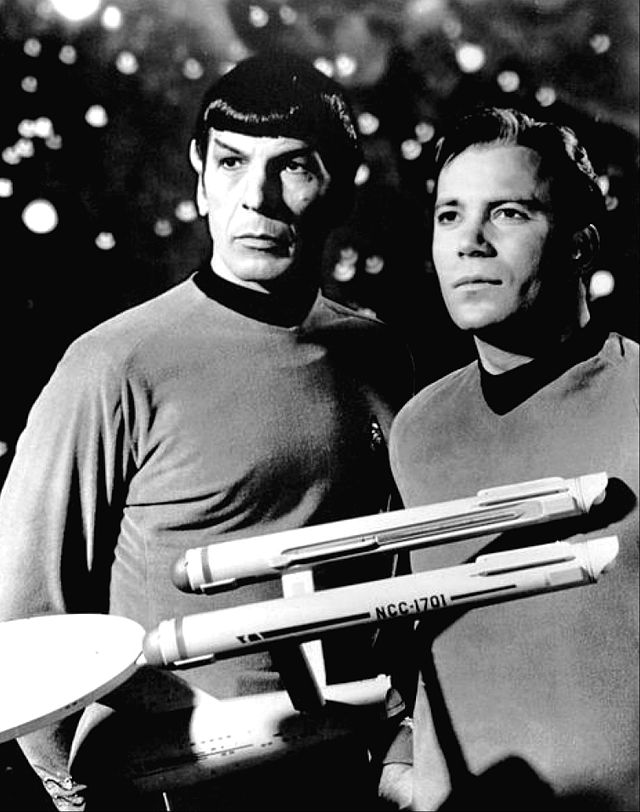
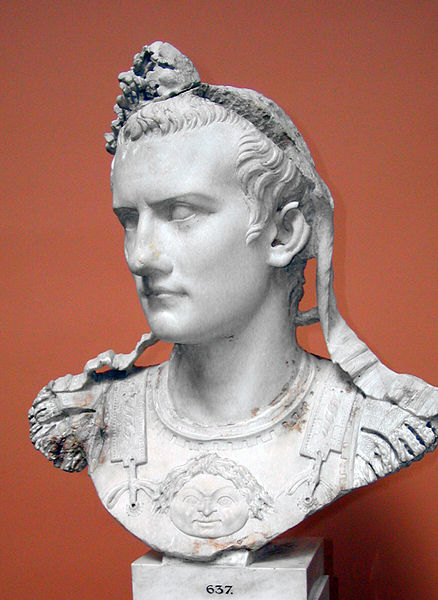
I sometimes wonder what it must’ve been like to live in Rome as Alaric was whetting his sword among his Visigothic horde. Insane—literally insane—emperors wielded unchallenged power and lived lives of opulence amid the slaves and poor. Religion was front and center on the agenda, of course, because emperors were gods. You don’t have to listen too deeply to hear the same message even today. Those who proclaim God as the justification for their political ambitions know that God is the ultimate malleable deity. In fact, God can even be in the Oval Office. Lead can line your aqueducts and your horse can be made a senator. Lord knows an ass can be. And all the while let’s shut down the voices of those who’ve looked at religion, beginning in the Stone Age and up to now. If we want to grab power it’s vital that we keep it from public view that self-deification is as old as kingship and in a post-religious world, we have only to pretend.

Photo credit: Louis le Grand, Wikimedia Commons

Photo credit: Louis le Grand, Wikimedia Commons


Biblical Script

The popular perception of the Bible generally does not match the actual contents very well. Like most books, the Bible has its highlights: Creation, Flood, David and Goliath, Jonah, Daniel and the lion’s den, Jesus, the Apocalypse. Between all the fascinating narrative, however, come the instructions. More instructions, in point of fact, than most people would care for. Nevertheless, over the centuries the Bible has acquired an aura in western civilization. It has become what some colleagues call an “iconic book.” It is this aspect of the Bible that stands out most clearly in the Fox series Sleepy Hollow. I wrote a post about Sleepy Hollow as I began to watch the first season on DVD. The headless horseman is an agent of the Apocalypse, and clergy and witches play a prominent role in the story. I wondered if the role of the Bible would diminish once the audience was drawn into the conceit of the four horsemen thundering out of Revelation into Sleepy Hollow. Just the opposite, in fact, occurred.

Sleepy_Hollow_-_Title_Card

As the series unfolds, the Bible is drawn more and more into the story. Demons and detectives both want to get their hands on it. Not to read the Ten Commandments or the Sermon on the Mount, but because the Bible contains esoteric information. Those “in the know” can unlock its secrets and thereby save society. Ironically, this is a subtextual version of the biblical metanarrative. It is all about (from the Christian perspective) salvation. The means, however, are quite different. Jesus is not really part of the Sleepy Hollow story. The Bible belongs to George Washington, cryptically bringing politics into the story. The text is not secure; there are extra verses in Washington’s Bible, just as there are many excised bits in Thomas Jefferson’s. Washington leaves instructions for saving his fledgling nation from the evils that roamed its shores during the Revolution. Or is that Revelation?

Right up to the cliff-hanger ending of season one, the Bible comes back time and again, focusing the viewer on its magical qualities. It is a book of secrets and mysteries. Meanwhile in the real world, biblical studies positions are being slashed from universities as if the horseman’s axe were anything but fictional. We don’t want to know about the real Bible. Politicians, real ones, use it as their own sword to force their personal faith agendas onto the electorate, but we generally do not even understand what the Bible really is. We’ll fund economics, that dismal science, and business, and maybe even actual science. The humanities, however, the stuff that makes us human, we will gladly call luxuries and deny them fiscal security. So the Bible grows in stature even as it diminishes in stature. Those who don’t know the factual Bible can easily be swayed by the fictional one. Are those hoofbeats I hear in the distance?


Biblical Weather

On President’s Day, my wife pointed out an article in the New Jersey Star-Ledger headlined, “‘Biblical’ snowstorms battering New England.” She asked, reasonably enough, “What makes a snowstorm biblical?” Since I have written a book on the weather in the book of Psalms, I might be able to speak to that. First off, yes, there is snow in the Bible. It’s not mentioned often and it is a rarity, but the Israelites knew what snow was. In fact, one of the most difficult Psalm weather references is to snow, in Psalm 68. The man interviewed in the newspaper, however, was not being literal. “Biblical” has come to mean disastrous. I can exegete that a bit more: disastrous because of quantity. Too much of a good thing. Or bad thing. In Boston this year the weather just won’t quit. The topic that really has people talking, however, is the temperature. It has been very chilly. My daughter complained when her university didn’t cancel classes with the air temperature at about 9 below. Her note prompted my thoughts of a day to remember.

When I taught at Nashotah House, the weather did not stop us. Ever. It was a residential facility with both faculty and students living on campus. Everything was within walking distance. My close exposure to the weather was one of the reasons I wrote the book. One Lent, and this must have been in February, we had a quiet day. Quiet days were taken very seriously. On this particular occasion the day was to be used for a meditation in the Milwaukee Cathedral, some 35 miles away. The problem was the air temperature was -42 Fahrenheit. That isn’t wind chill, that’s how cold the air actually was. (For those of you reading in Europe, Fahrenheit and Celsius are the same at -40, then they begin to diverge again.) It did not stop us. We piled into the van and prayed earnestly that we’d get there safely. On the way home we manically recited Evensong from memory. When the wind blew the chill dropped to -70 (my Minnesota friends will believe me here). If ever weather was biblical, that day was.

I do wonder if overusing “biblical,” however, will wear it out. Where do we go after biblical? What is conceptually bigger than God? Anselm would panic. What if next year it’s even worse—how will we describe it? We’ve already used up the apocalypse. We’ve entered into a crisis of superlatives. Nothing is big enough any more. As I look at the early fading light of this President’s Day, the snow is beginning to fall again. When I was a child we had, I seem to recall, a simple word to describe it. We didn’t invoke the Almighty. We didn’t hear the galloping of distant hooves. We didn’t act as if a day out of the office were the end of the world. Our simple word for it was this: winter.

DSCN0099


Life Everlasting

ThruTheWormholeThrough the Wormhole is one of those series that keeps me coming back. I’m currently working my way through the second season because it is a show that I take in small doses. The episodes require thought (and often, more importantly, time—something of which I have too little). Watching the installment “Can We Live Forever?” I was astonished by the optimism of the writers and interviewees. Among a cross-section of scientists, at least, there is the belief that we can, and will, dramatically expand human life. To biblical proportions. And that life won’t be a decrepit, declining feebleness. Instead, we can be, to quote one of the scientists, quoting Bob Dylan, “forever young.” Well, maybe not forever, but you get the picture. Of course, God came up quite a bit in this episode. Immortality is the stuff of divinity. The life-force, which much of science denies exists, is strong. No matter how weak or old, we don’t really want to give it up.

Of course, death is the price of life. We live on a finite planet with dwindling resources. If we don’t die, we run out of space for the next generation. Some have postulated that we need to colonize other worlds—just the thing that got Europeans in trouble in the first place—in order to make room. Room for us. The dominant species. No doubt, we are “programmed” to age and die. As far as we know, all animals are. Even plants. That is to say, life as we know it ends in death. If it doesn’t, can it truly be called life? I would be fascinated to live for a long while and see what we can make of this world. Not the greatest fan of technology, still, I’m impressed how far we’ve come in the brief time I’ve spent on this planet. And I do wonder where we’ll end up. In my mind, however, there always is an end. Even to this infinite universe, about the heat-death of which I’ve often read. What gives us the right to live longer than nature dictates?

It is, surely, a matter of degree. These glasses perched on my nose certainly have prolonged my life beyond what nature would dictate. The vitamin pills I swallow, the fabrics that keep me warm while wicking away perspiration, the things physicians can stop in their germy tracks. We already prolong life. Nevertheless, the century mark has always been symbolically our final goal and sign post that it’s time to hand things over. Thus it was in the beginning. The Bible makes clear that, although the antediluvians lived centuries rather than decades, this was never intended as the lot of the majority. No, we were born to die. We live through our children. The thought of eternity is scary. Especially when we think of how humans are. Those who can afford to live the longest are likely those who least deserve to do so. Do we want to live forever with the plutocrats in charge? Perhaps there’s a reason that we all take that final bow. Still, I can never listen to “Forever Young” without getting misty eyed and imagining the possibilities.


Public Knowledge

Sometimes the media gets it wrong. If one were to believe in the tales of industry prognosticators, our libraries would be closing, we’d all own Kindles, MOOCs would have replaced expensive college courses, and New York City should still be shoveling out from the worst blizzard since the Ice Age. We thrive on extremism. Although I don’t regularly read the newspaper (who has time?), the internet makes news memes available just as they happen and I feel somehow cheated if I have to wait more than an hour for trenchant analysis of an event I’ve just witnessed. Still, the publishers haven’t all shut their doors yet, colleges are managing to stay afloat, and libraries can be happening places. This became clear to me when I recently attended an event in the quaintly named Old Bridge Public Library. It was a Saturday, the time of the week when the gripping fingers of employers feel their weakest. Although I saw no evidence of an old bridge anywhere, I made my way through the traffic to the library where I met with a surprise—the place was crowded!

IMG_1901

For those of you not fortunate enough to live in New Jersey, Old Bridge is probably best considered a satellite of New Brunswick, home of Rutger’s University stadium. (I think there may be a university associated with it too.) That is to say, it is an urban area, and any antique structures to convey one across the water have long devolved to only nomenclature. Like anything in north-central New Jersey, it’s not far from New York City. When I arrived for my event, the parking lot was already full. It was not because of the event, either. Less than 20 showed up for that. When I went inside I found the library a veritable hive of activity. And it wasn’t just lonely, homeless people trying to get out of the cold. Families with kids, people with their grandparents, even other middle-aged adults like myself, all found their way to this island in the sea of a municipal complex not walkable from anywhere. I left encouraged.

Yes, the world of books and education is changing. Publishers feel stress, but that stress mostly has to do with predicting the best form to provide for content. Self-publishing has become a phenomenon, but many know that the self-published book has a difficult life in front of it. Libraries, however, are not the graveyards we’ve been told that they are. We need repositories of information that isn’t on the internet. And more importantly, we need places where, although the librarian shushing us may be iconic, we can get together with like-minded individuals and truly educate ourselves. I do sometimes tremble when I think of the future. The values I acquired as a young person seem, at times, on the verge of extinction. I learned that when this seems to weigh too heavily on my mind, I need to head to the nearest public library and support the old bridge to knowledge.


Addam’s Evve

MaddAddamDystopias can be optimistic. I just finished reading Margaret Atwood’s MaddAddam, and came away from it strangely at peace. The third of its eponymous trilogy, the story takes place in a future that is simply a continuation of where we are at the moment. Things have gotten pretty bad—most of humanity has been wiped out, genetic engineering has taken dreadful liberties with creatures human and non, and corporations have fulfilled their dreams and have taken over at last. The few good people left are tormented by those society has made into sociopaths. Global warming has proven the naysayers false, and yet, despite all this, there is room for hope. Tying together the various strands from the previous two books, Oryx and Crake, and The Year of the Flood, MaddAddam is probably the most eco-conscious trilogy on the planet.

Apart from the many obvious biblical allusions (I often wonder what it must be like to miss so much, for want of familiarity with holy writ), the book also introduces a fully functional faux church. Atwood can be at her best when taking on the charlatans of piety. Cynical and calculating, “the Rev,” father of two of the ensemble cast, is everything a televangelist is, and more. Indulging in all that he denies his flock, even Elmer Gantry would have trouble keeping up. The Church of PetrOleum represents the most damaging of industries in a world already suffering the consequences of the greenhouse effect. Corporations make it rich while the Rev takes out his personal issues on his wives and children. Instead of being on the side of paradise, the church introduces chaos.

Through the gloomy scenario she’s foreseen, Atwood is able to see glimmers of a future that has possibilities. The protagonists are the members of a commune of a green religion, earth-centered and bearing a resemblance to both Wicca and monastic Christianity. That spiritual tradition, an offshoot of more established churches, is seen as dangerous by the corporations. And with good reason. Despite what televangelists tell us, spiritual truth is not on the side of big business. Jesus was no trickle-down economist. Reagan was no messiah. Corporate greed leads to blocking laws to clean up our world. We do not have control over what geneticists are doing, and, in fact, most of us have no idea what we’re eating or wearing any longer. Or what it is they’re packaging our food in. We are the consumers. Taught always to consume more. And the more that we are told to consume is the very planet that gave us life. My hat is off to Atwood, who still seems some possible cause for hope.


Under Who?

Who is God anyway? The question occurred to me as I read about the current Superior Court decision in New Jersey that “under God” in the Pledge of Allegiance remains constitutional. The American Humanist Association had sued to have the offending prepositional phrase removed, based on first amendment rights to religious freedom. I’ve always found the whole indoctrination of swearing to a flag somewhat provincial and perhaps even damaging to the unity of humankind. Nations, after all, are about keeping things for ourselves, something that the God of the Bible seems to find naughty. During the Cold War, waged against the “godless Communists,” the questionable phrase was added in 1954, only after we’d secured nuclear weapons. Does any nation that has the bomb have the right to declare divine sanction? I guess so, on second thought.

IMG_0962In his decision Judge David Bauman said that God, in this context, is not about religion, but about the state’s history. Granted, one of the New Jersey delegates to sign the constitution was a clergyman, and president of Princeton College. The same Princeton that became the home of the man who would open physics enough to let us begin a nuclear reaction. But I’m getting ahead of my story. This concept of God being an arcane aspect of history as opposed to a present and active force motivating people’s lives is a curious one. In order to keep the deity, he (and the historical God is male) must be demoted to an historical relic. If that is true of divinity, what does it say about the concept of nationhood itself? Have we come to admit that it is all a fiction to keep status quo ante?

Humanist and atheist groups have argued for years that public school (which no government takes that seriously) should not be a forum for religious indoctrination. Some religious groups (such as Creationists) clearly see such schools as a mission field ripe for proselytizing young minds. Such was clearly the case in 1954. Today we see the Russian Orthodox Church becoming a supporter of the government in Russia, where godlessness might be more a factor on the ground than on paper. In the United States we have a culture that provides lip-service to the almighty while the true god is secreted away in the shrines of bank vaults and expense accounts. It is really about a way of life, after all. Should we keep or remove “under God” from a pledge to personal gain? It is all a matter of how you define “God.”


Sporting Chance

IMG_0997

I didn’t watch the SuperBowl last weekend. In fact, I haven’t had television service for over two decades now. I don’t really miss it too much since I don’t have time to watch TV (the commuting life leaves time only for sleeping and working, except on weekends). Still, for special events, I think, it might be nice to see things live. (My wife raises this point every time the Olympics roll around. I seem to recall them being every four years, but now it seems they’re seasonal, and about twice as frequent. Could it be that advertising revenues are really that important? Maybe I missed that, not having television…) Even when I have managed, over the last couple of decades, to pull the SuperBowl onto a fuzzy, snowy screen, it was for one major reason—the commercials. I wonder what that says about a society? I now spend precious weekend time watching commercials on YouTube, sometimes having to watch a commercial for the privilege of watching a commercial. The substance without the fluff of the actual entertainment.

So it was that I saw the Mophie commercial about the apocalypse (here’s the link, in case you’re as entertainment-challenged as I am). So as the world comes to an end, the weather goes even more wonky than we’ve already made it go, Fortean fish fall from the sky, dogs walk their owners and priests steal plasma television sets. Then the punchline, God’s cell phone dies and the end of the world ends. It isn’t the shock of seeing an African-American God—Morgan Freeman led the way there with Bruce Almighty—but rather the technique, the divine delivery, if you will, that is the shock. Not even God is anything without his cell. (I wonder when we’ll see a Latino woman as God? Dogma came close, but not quite.) Is the smartphone really not the deity here?

God, it seems, has become a null concept. I don’t mean because of different racial or gender presentations, but I do mean that the concept itself is completely up for grabs. God, according to Anselm of Canterbury, is that being greater than which nothing can be conceived. In fact, God seems to be that which people worship, more of a Tillichian ultimate concern. A wired world should, in theory, be a world headed toward peace and equality. If we know what’s going on everywhere, shouldn’t we be doing our best to ensure that it is fair and just? The truth of the matter gives the lie to such optimistic musings. I would hate to confess just how much my phone bill is every month. Even without the “triple play” (no television) it is the biggest expense after college tuition and rent. And it goes on, in saecula saeculorum. When I pull out my smartphone, I gaze upon the face of the Almighty. And perhaps that’s a good thing, because how else would I entertain myself without television?


Duck Overboard!

Moby-DuckI remember the moment precisely.  I was in Santa Barbara, California on a campus visit for Routledge.  I stopped into the university bookstore to see which of our/their books were being used.  From the cover of one of popular books in the general reading shelf stared a friendly yellow duck.  My thoughts went, as they often do, to my daughter back home.  The cover copy explained that this was the true tale of a bunch of “rubber” ducks lost at sea and the captivating story of how they ended up in diverse places.  I bought it for my daughter since rubber duckies had been a kind of childhood theme, and when I saw it on her shelf recently I also grew curious again.  I’ve always been fascinated by the sea, even applying for jobs at the Maine Maritime Academy just to be near the water (and in Maine). 
 
Of course I’m referring to Moby-Duck by Donovan Hohn.  It wasn’t really as cute and cuddly a book as I thought it might be—that duck on the cover sure looks happy—but it was far more important.  As Hohn explains, he was a teacher captivated by the story of a cargo container holding plastic (not rubber) bath toys falling into the Pacific Ocean on a crossing from Asia.  The ducks (and frogs, turtles, and beavers) spread out as far as Alaska and points south on the west coast of the US, and some perhaps made it back east.  Some were even reported in Maine (but Hohn came to doubt they are the right ones).  So he set off on several ocean voyages to follow the trail of the toys.  He has left us a moving and thoughtful memoir of the journey, and also much more.
 
The oceans are incredibly polluted.  As Hohn points out at several points, entire cargo containers—sometimes several at a time—tumbling into the ocean and being left behind is not uncommon.  Add to that the trash, particularly the plastic, that otherwise makes its way into the ocean, in some places forming islands of garbage so large that they can be spotted by satellites, and I begin to grow truly alarmed.  Hohn learns about plastics and how toxic they might be, as well as how thoughtlessly they are hurled into the oceans.  Not written as an environmental manifesto, Moby-Duck—literate, witty, and very human—nevertheless narrates how a father came to see the world through the eyes of parenthood.  And some of what he finds is truly frightening.  My takeaway?  Little things matter.  Immensely.  That, and we need to clean up our act before it’s too late.  No bath will wash away the stains we’re still in the process of creating.


Thor’s Return

Once as I sat in the office of an Ivy League professor of Greek religion, I asked about the myths of the Classical gods. The professor (who knew that I had taught religion as well, but at more like a Noxious Weed League school) appeared genuinely insulted and told me in no uncertain terms that scholars of religion didn’t take that nonsense seriously. The study of “myths” was left to Classicists, not actual scholars of religion. Is it any wonder, then, that we don’t really have a grasp on what the average person believes? Being a blue-collar scholar, I always took seriously what students told me about their beliefs. It wasn’t really a great surprise, then, when my wife pointed me to a story in The Guardian about a temple to the Nordic gods being built in Iceland. According to the story, the modern adherents of Ásatrúarfélagið (thank you unicode) don’t really believe in a literal Odin or Thor or Frigg, but see them as metaphors to help them face the way life is. A millennium after becoming Christian, some Icelanders are apparently getting back to their roots.

There has always been, to me, a fascination with the Nordic gods. These rough-and-tumble deities inhabited the harsh and snowy regions where daily life was often a struggle to survive against the elements. Frost giants were enemies and nobody really emerges as the winner after Ragnarok. In the Bible Yahweh does sometimes come out swinging, but for the most part he seems a deity content to sit on his throne and issue commands. The Scandinavian gods were characters of action. In some sense they seemed to struggle just like the rest of us do. They are, of course, more powerful and as the movie makes clear, Thor has a charisma that more self-righteous deities appear to lack. Lest anyone be ready to run to their priest at this point, please be aware that this too is a metaphor.

On the other side of the equation there are sure to be critics who argue that building a temple to fake gods in this day and age is obviously a waste of human talent and resources. Such are people with no imagination. Religious belief, metaphor or not, has been part of the human psyche from the very beginning. Elsewhere I have suggested that animals show the same behaviors as what we Homo sapiens would declare rudimentary religion. Rationalism has not provided a reasonable alternative to religious expression. Even a Stoic knows to appreciate art, although beauty provides no essential element to simple survival. Simply put, humans enjoy the finer things of life. Perhaps unappreciated since long sublimated, among those finer things are the old Nordic gods. And their return is a kind of resurrection.

The Battle of the Doomed Gods

The Battle of the Doomed Gods


Dr._Strangelove_poster

In honor of the fifty-year anniversary of the release of Dr. Strangelove this past week, my wife and I sat down to rewatch the movie this weekend. Psychologically, as Kubrick found out, dark humor was the only way to deal with the sense of doom that pervaded the world into which those of my generation were born. Nuclear weapons had been developed and the Cold War was in full swing. Somehow, even in small-town America, I didn’t find Communism to seem so awful. After all, I grew up reading the Bible and it sounded quite a bit—at least in theory—like the arrangement the apostles had made in the book of Acts. The idea of private property, the very spine and muscular system of capitalism, was considered a sure way to lead to God’s kingdom not being established on earth. Nevertheless, that is the way, as the phrase goes, that the money went. And Communism threatened the right of one percent to horde all the money, so we were ready to annihilate all human life for it. Talk about taking your marbles and going home! No child should grow up knowing the meaning of the phrase “mutually assured destruction.”

Dr. Strangelove has held up well for the half-century since its release. Despite the thawing of the Cold War, the big chill isn’t over yet. And humor still seems the only way to keep sanity and deal with the state of the world. There are still many General Turgidsons out there (some of whom have held very high government offices, and this is no joke). There are at least, as far as we know, fewer General Rippers. So we hope. As the bomber crew nears its target, Major Kong goes over the contents of the government issued survival kit, among which is a comically small Russian Phrase Book and Bible combined. Kubrick, a master of satire, has the godlessness of Communism thrown time and again across the lips of the hawks. It is better to kill everyone than to allow the godless to rule. Even the Bible, however, shares space with the Russian phrasebook, making us wonder whether it is a tool of conversion or an admission of inevitability. Still the bomber, piloted by a Texan, flies on.

Perhaps the biggest moral dilemma we face is our ability to destroy hope. Capitalism promises opportunity to all. Like many who grew up poor, however, I have found lies hidden in plain sight. It is not easy to move ahead if you choose to mire yourself in debt to get an education. In fact, if you lose a job in higher education you can easily find yourself adrift for a decade or more, not earning any retirement money and being frequenly sought out by your local universities as an adjunct instructor. In fact, at many points your career might look like the end of the world. So it is that I take great comfort in settling down to watch Dr. Strangelove again. At least it is an honest movie, and that hasn’t changed in the past half-century. And I think I may have been wrong about how few General Rippers there really are.


Good, Evil, and Normal

GoodOmensTo date I’ve read a fair number of Neil Gaiman novels. One of my students started me out on American Gods and I pursued his others on my own after that. I was a little unsure about Good Omens, however. I guess I’ve always been dubious about the quality of co-written books. Terry Pratchett, an accomplished novelist in his own right, paired up with Gaiman on this one, and it took the wisdom of another student, albeit recently graduated, to assure me that it was worth the effort. Given that it’s about the apocalypse, or perhaps an apocalypse that doesn’t quite take off, there seemed to be no reason not to give it a try. It is, at the end of the day, a charming book with colorful characters and an Antichrist who gets switched at birth and grows up in a normal household and herein lies the tale.

One of the most common religious themes in novels is the end of the world. The four horsemen of the apocalypse are one of the most striking literary tropes of the first century, if not of all time. The real question about the end of the world, it turns out, is—why can’t it be funny? For those who’ve pondered that, Good Omens is the book for you. It actually does help, however, if you’ve read the Bible. It adds to the cumulative effect. Subtitled The Nice and Accurate Prophecies of Agnes Nutter Witch, the book revolves around the certainty of the written word. Prophecy, however, just as in the book, only achieves verisimilitude in retrospect. The prophets didn’t always get it right, even in the Bible. Human choice often causes a breakdown in divine plans. In Good Omens, you’re pretty sure from the beginning that the world won’t end, but you’re not quite sure how it won’t end. The unfolding of the story eventually addresses how a prophecy can fail.

Free will, those who specialize in theology and philosophy will say, is among the more difficult of phenomena to pin down. Some predestinarians would say it’s all an illusion. We are programmed to do what we do. Ironically, some reductionistic materialists would say the same thing. Each of us, however, trudging through out days of toil and play, feels like we’re making our own decisions. True enough, sometimes circumstances decide for us, but if we were given the choice of good or evil, wouldn’t we approach it the way we approach just about everything else? Along the way, the demon Crowley asks a pointed, poignant question: why would God make people inquisitive and then forbid them some obvious, desirable fruit? Isn’t the conclusion foregone? Any writer today would know the outcome before the first sentence was finished. And so, free will is off and running. I hope that the fact that the world doesn’t end won’t be a spoiler for anyone, because I also hope that others will read Good Omens and learn a great deal about how demons can be good, angels can be naughty, and people will always just be people.


Star Struck

One of the coveted symbols of approval in my childhood was the star at the top of a paper. I watched in amazement (perhaps because they were so rare) when a teacher would inscribe a star without lifting her pencil from the paper. I thought I had never seen anything so perfectly formed. Of course, in my teenage years under the influence of Jack T. Chick and his ilk, I learned that the five-pointed star, especially in a circle, and more especially upside-down in a circle, was a satanic symbol. My childhood achievements had been, apparently, a demonic blunder. This fear of geometry still persists in America, as a story of a woman in Tennessee fighting to have “pentagrams” removed from school buses shows. The woman, who has received death threats and therefor remains anonymous, took a picture of the offending LEDs and has asked, out of religious fairness, to have the satanic symbols removed from the bus. The news reports are almost as tragi-comic as the complaint.

600px-Hugieia-pentagram

The pentagram, or pentacle, has a long history, some suggest going back to the Mesopotamians. (Uh-oh! We know how they loved their magic!) In fact, the symbol was benign in religious terms until it was adopted by Christians as symbolic of the “five wounds” (zounds!) of Christ. The symbol could also be used for virtue or other wholesome meanings. The development of Wicca began in earnest only last century, although it has earlier roots. Some late Medieval occultists saw the star as a magic symbol, and the inverted pentagram was first called a symbol of “evil” in the late 1800s. As a newish religion seeking symbols to represent its virtues, Wicca adopted the pentagram and some conservative Christian groups began to argue it was satanic, representing a goat head. (The capital A represents an ox head, so there may be something to this goat. I’m not sure why goats are evil, however.) Wicca, however, is not Satanism, and is certainly not wicked.

Symbols, it is sometimes difficult to remember, have no inherent meaning. Crosses may be seen in some telephone poles and in any architectural feature that requires right angles. The swastika was a sacred symbol among various Indian religions, long before being usurped by the Nazis. And the pentagram was claimed by various religions, including Christianity, long before it was declared dangerous by some Christian groups. There may be a coven in Tennessee seeking to covert children by designing and installing taillights of school buses, but I rather doubt it. School children feel about their buses as I feel about mine on a long commute to work each day. A kind of necessary evil. The truly satanic part, I suspect just about every day, is the commute itself. There must be easier ways to win converts.


Skynet

DSCN5012

Of cultural innovations, none rivals the internet. Engulfing the world in its wide web, the constant availability of signal has changed everything. In the past five years, civilization has become something that it was not. Take today’s northeast blizzard, for example. Apocalyptic meteorologists (are there any other kind?) are sincerely telling the camera that nothing like this has been seen in recorded history. Meanwhile, my wife’s company sends a Honeywell alert to our phone saying the offices will likely be closed, and please make arrangements to work from home. The snow day is dead. One of the simple joys of life, that delightful naughtiness of playing hooky, is now extinct. Work knows where you are at all times. You are being watched. Sound paranoid? I have known people who had firsthand knowledge of employers following them on Facebook to make sure they didn’t say anything that might make the company look bad. The world is not the same one into which I was born.

Screen Shot 2015-01-26 at 7.55.18 AM

I happened upon a web page the other day advertising for an Advanced Assistant Professor in Digital Shakespeare Studies. A poem by any other name we would tweet. So we have become part of this collective mind known as www dot. The internet is aware that it is still snowing, but only in an academic sense, since it’s not going anywhere. The internet has never had a three-and-a-half hour commute home because of an accident on a single highway in New Jersey. Oh, and don’t forget to check your work email when you get home. We may have sometime more for you to do once you’ve clocked out. Maybe I should see what my social network is up to.

Screen Shot 2015-01-25 at 7.20.01 AM

LinkedIn, Facebook, Twitter, Google +—they all suggest people that I might know. Someone I might rate, or like. The internet, after all, knows which of its myriad sites I’ve viewed, whom I’ve emailed, and what I’ve purchased. The ads from those companies show up on every website I visit from now on, world without end. ThinkGeek emails me every day. My new best friend. Google + is the more intellectual Facebook, I’m told. Whenever I log on, it tells me with whom I might want to connect. Just now Newt Gingrich showed up in my list. Should I add him to my circles? Or should I just venture out into this blizzard and hope I make it to New York City alive? To me, it seems, the odds are equally good in either case.


PTSD

In a recent post on BBC Health, James Gallagher discusses ancient Assyria. What can ancient Assyria have to say about modern health, beyond the occasional liver model used in haruspicy? Post-Traumatic Stress Disorder, of course. As Gallagher notes in his article, PTSD was diagnosed after the Vietnam War. That doesn’t mean it wasn’t in existence long before then. In fact, it stands to reason that if people experience it now, they likely experienced it during traumatic events then. War is among the most horrific and tragic activities in which humanity engages. Men, in the days of Assyria, sent to kill other men in the hundreds, and thousands, could not have walked away from the battlefield unchanged. There are those who seem not to suffer, but the majority of us know that, no matter how just the cause, it is simply wrong to kill others. On a massive scale it can only be worse.

Trauma

Trauma

Multiple stresses, I would contend, go undiagnosed. I have known those who’ve experienced significant loss—a job, for example, in an economy that makes future prospects dim—who begin showing the same kinds of symptoms. They are, of course, not diagnosed with PTSD, but are simply told to either buck up or go see a shrink. “Pull up your socks,” as they say in the UK. I wonder, though, if it is that simple. People throughout history have been capable of inflicting great stress on one another. Sometimes it becomes so normal that we don’t even recognize it. The forcing of loss and resultant terror of future deprivation is a daily affair. The civilization we’ve been is so complex almost to demand this kind of horror. We may not be sent to the battlefield to kill others, but we are daily faced with situations that cause us great pain, often for prolonged periods. And we wonder why people aren’t satisfied.

Please don’t misunderstand me. I have no doubt that the level of stress faced by those who survive war is severe. I don’t make light of it. Being a pacifist, I do believe there is a solution to war that involves education instead of fighting, but I don’t in any way suggest that those who suffer aren’t suffering in reality. They are. Sometimes they can no longer function in society. We institutionalize, cut funds, then send them out on the streets. This is nothing new. As Gallagher points out, soldiers in antiquity weren’t professionals. All healthy men, apart from the one-percenters of the day, served in armies on a rotating basis. One thing, however, has not changed over the millennia. War today remains as unnecessary as it was then. If we could turn our attention to improving the lot of the 99 lost sheep, the one already found might, to its surprise, be much better off if all were accorded ample care.