Behind the Exodus

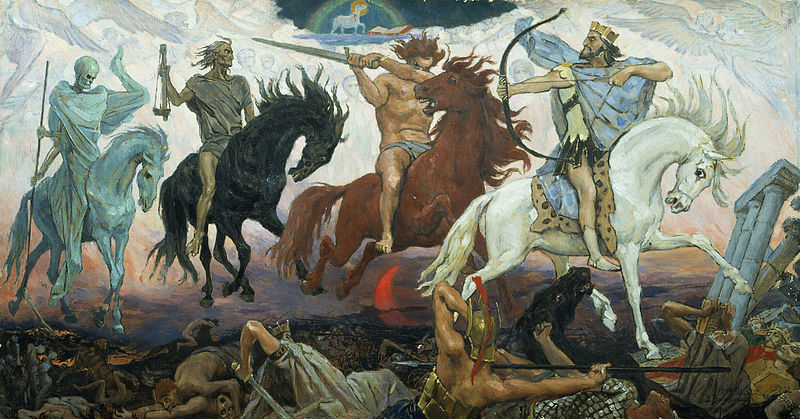
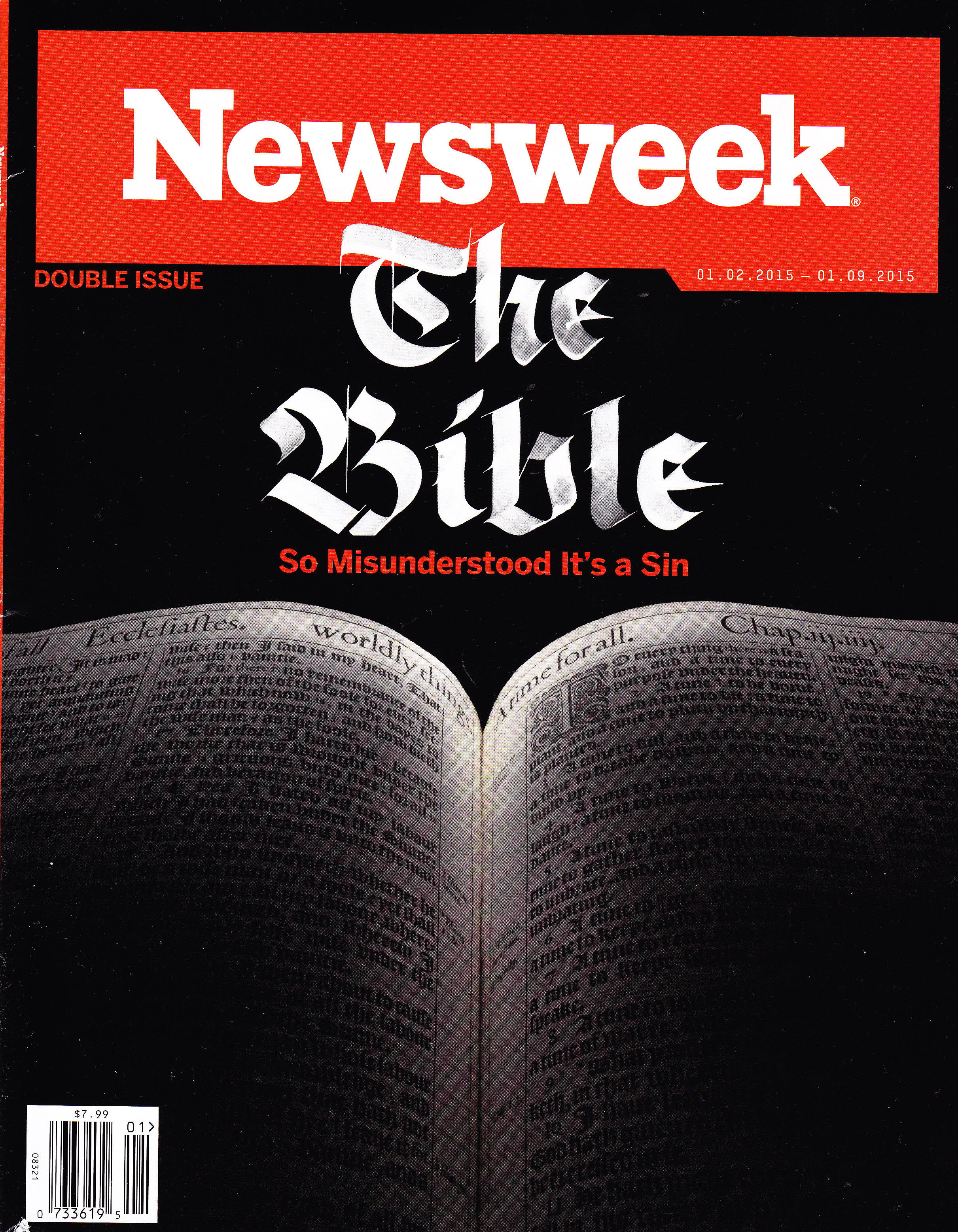
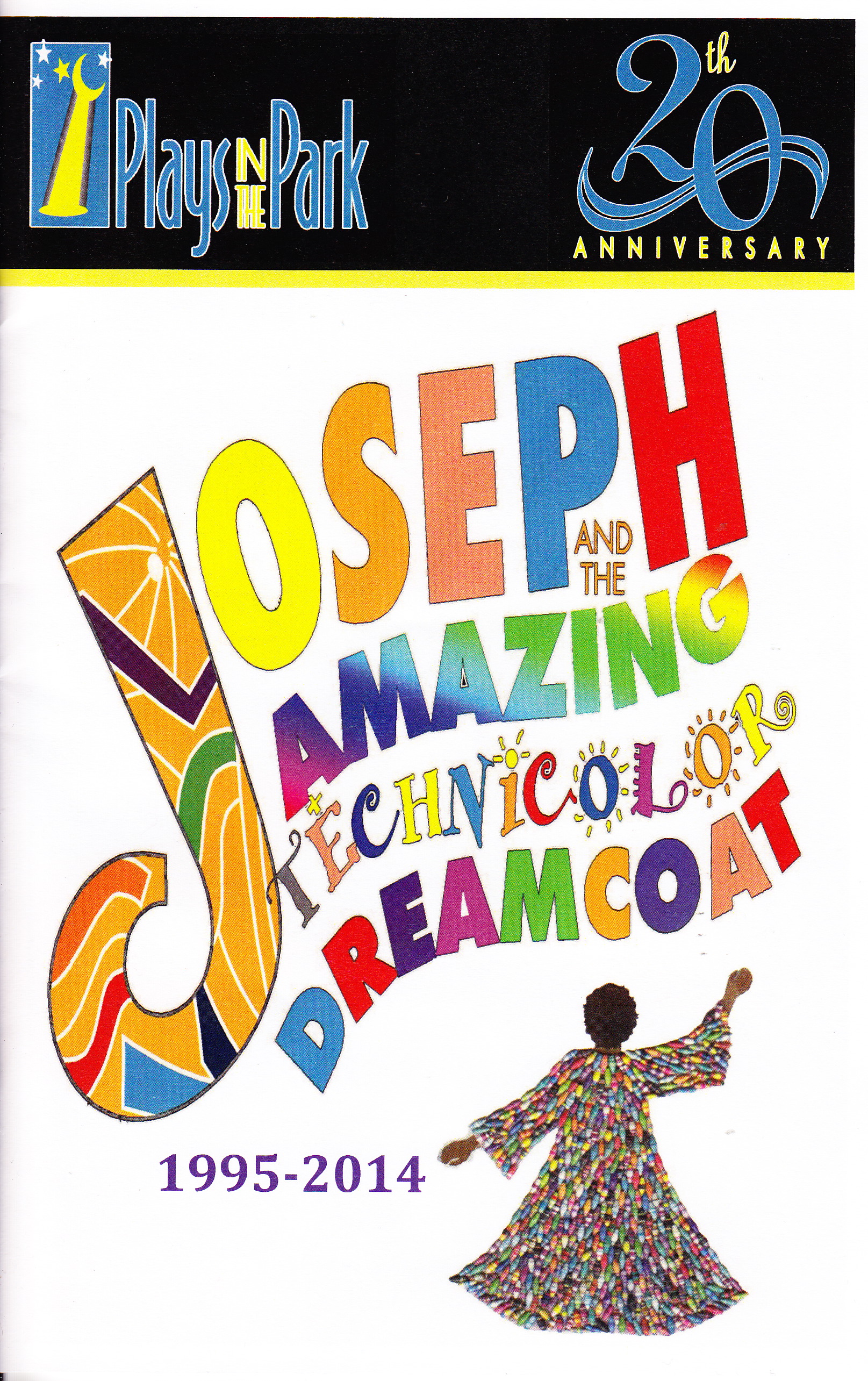
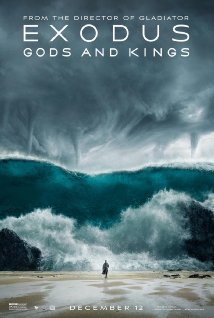
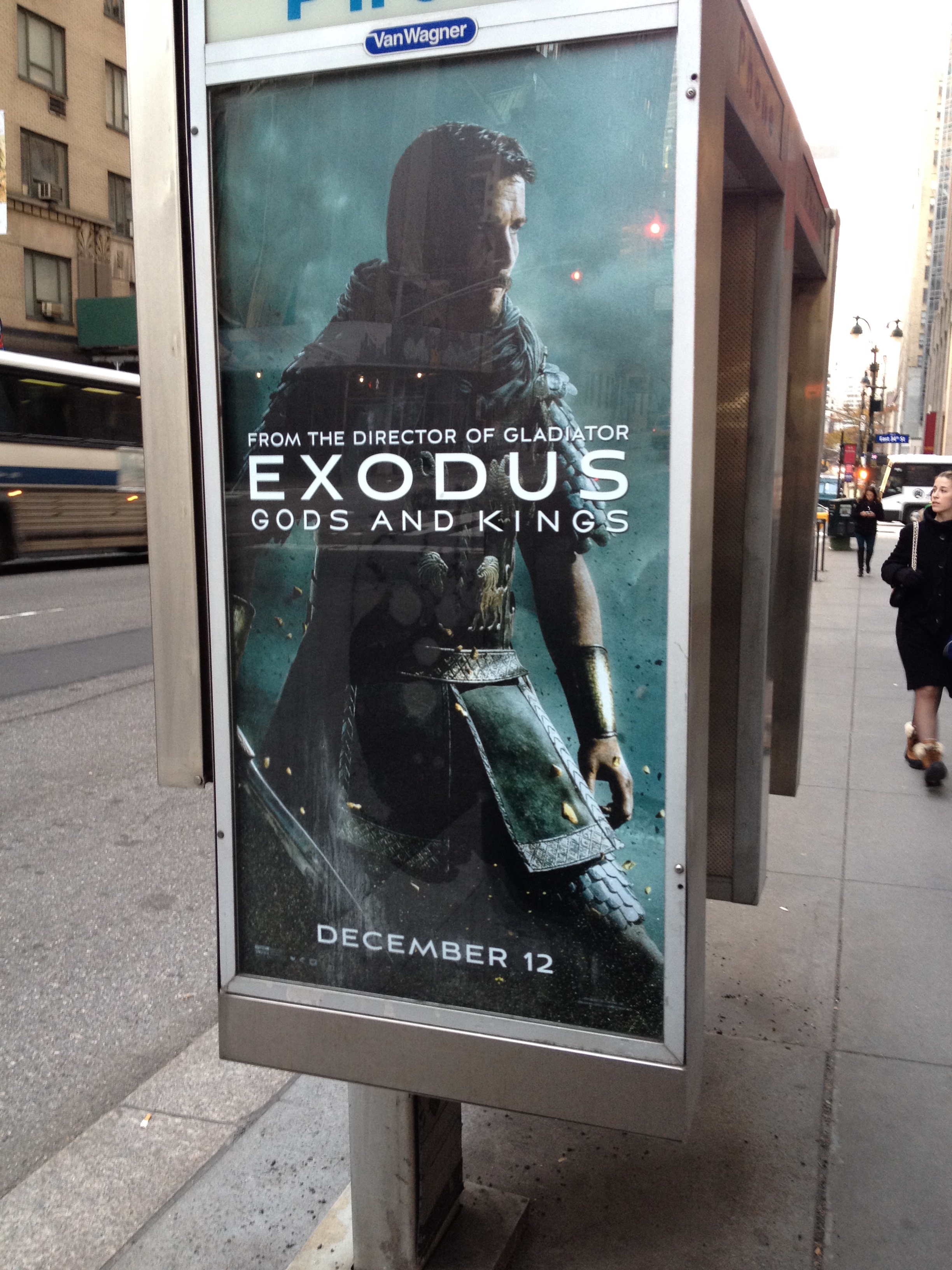
Over this past week two of my friends/colleagues were quoted in major media outlets about Exodus: Gods and Kings. Being merely a blogger with nearly two decades of teaching Hebrew Bible means, naturally, that I have nothing valuable to say. Nevertheless, I would meekly venture to make my own observations and cast them out there into the world-wide web and see what happens. I haven’t seen the movie since it only opens tomorrow. I already know it is only loosely based on the Bible. Still, I wonder at the talking heads who constantly declare the Bible to be irrelevant to a throughly modern world. Okay, so I realize that this is about money, but Manhattan is often seen to be one of the more sophisticated cultural landmarks in the country. This summer I couldn’t walk more than a book or two without being inundated with Noah posters. Now I am finding the same with Exodus paraphernalia. If we try to put the Bible away, it seems, it will come to find us.

IMG_1843

The Bible, relevant or not, is full of great baseline stories. Even in a secular society we can see the appeal of Noah and his menagerie to young children who are so fascinated with animals. We decorate youngsters’ sleepwear and toys with elephants and lions and giraffes (interestingly not mentioning that these are primarily African animals) aboard an ark with an unfailingly cheerful Noah. Now we have another classic—the great liberation story (also set in Africa) of a people held in bondage being released by divine command. We are a post-Christian society, according to the pundits, so who this divine one is remains an open question. The idea that one people is kept oppressed by another people, however, is presented as unequivocally wrong. Moses rides out on a horse, weapons in hand. Are we not focusing on the larger point yet?

IMG_1848

This latest love affair with the Bible as a source of great cinematography will not last forever. It will surely ebb away until only a few old blog posts might remain to remind us there was a time when Holy Writ inspired screen writers and directors. Nevertheless, the Bible bides its time. Back in the days when I used to teach Hebrew Bible Hollywood didn’t do too much to help out. Students had to slog through pages of picture-less Bibles to get the gist of the what God had in mind. The results may not be the same from those comfy seats in movie theaters, but a future generation will come to see Charlton Heston as a white man who loved guns being overcome by a newer generation of producers and directors who know there is a larger story here. Of course, I’m only a blogger with no credentials. Still I know what I see on the streets of the city.


Christmas Lights and Machine Guns

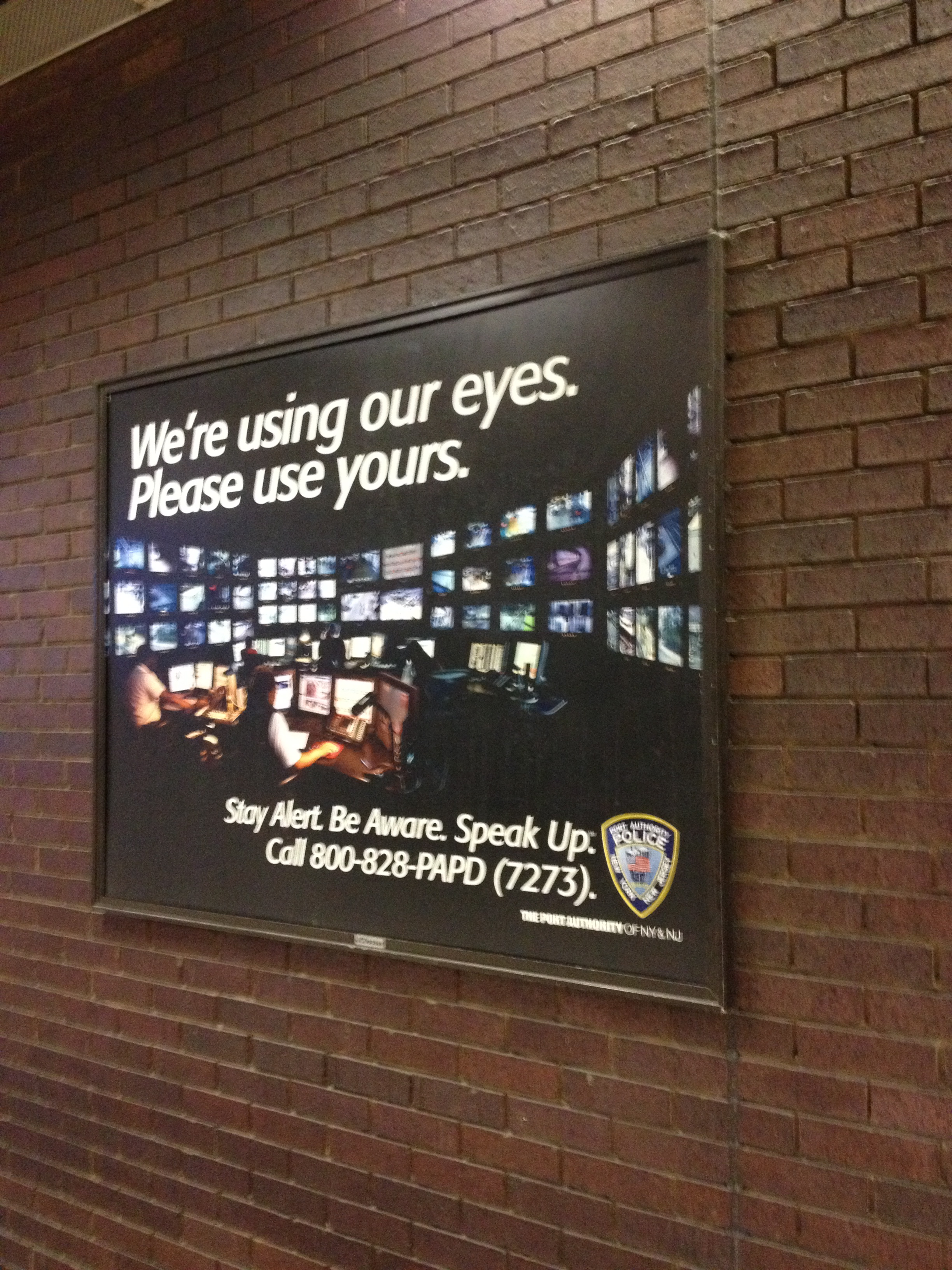
“Silent night,” the old hymn goes. “Holy night.” In a gray dawn after a weary, early-morning New Jersey Transit ride to Midtown, I climb off the bus to find the Port Authority Bus Terminal decorated for Christmas. I could say the holidays, since the dangling LED lights are white and non-suggestive of anything too Christian. There are, however, wreaths with red bows adorning the pillars. Beneath them walk men in fatigues with machine guns. I think I’m getting mixed messages here. Later today they’ll announce that there will be no indictment in the homicide of Eric Garner, just a few days after a similar decision concerning Michael Brown’s shooting. There will be protests here in New York, and there will be armed militia when I rush by this evening for an even longer ride home. It’s Christmas time in the City.

IMG_1841

Staten Island may be a long way from Ferguson, Missouri, but both are far, too far from liberty and justice for all. Fear of the other is deep in the human psyche, but for generations we’ve been trying to educate our young that prejudging a person by their race is wrong. We don’t live what we say. Although my hometown was largely white, I had African-American friends growing up. Nothing suggested to me that they were more likely to break the law than any of the other kids I knew. In fact, the bullies I encountered were all white. To our small town, in my young eyes, race didn’t seem to mean too much. We were generally working-class people trying to get by. Prejudice was a word I never heard. Of course, I don’t know the full life of my African-American friends. Perhaps they too received threats and taunts. I hope not, but it seems there’s been more rain than snow this Christmas season.

We live in a constant state of threat. If it’s not racial unrest at home, it’s distrust of the Arab abroad. Always our response is the same—attack and subdue. Show superior force. Some of my fellow commuters look pretty frazzled to me. That night a fight nearly broke out on the bus with a couple of passengers arguing about the territoriality of the narrow seats. I’m looking at the nice Christmas lights brightening the prematurely dark sky as we trundle through the various neighborhoods where the bus makes its stops. This is a racially mixed neighborhood if the people regularly getting off here are any indication of the demographics. It seems so peaceful. The machine guns enforcing civility are far behind. Sleep in heavenly peace. Sleep in heavenly peace.


Scientific Seminary

Old Testament. New Testament. Church History. Pastoral Theology. Systematic Theology. Homiletics/Liturgics. This was a typical kind of seminary curriculum about a quarter-century ago. Obviously there were variations, but the basic topics were Bible and its application. When I attended seminary science was already in the ascendent (seriously, it wasn’t that long ago!). Nobody much worried about how it might impact religion. People in the United States still attended church in large numbers but no one I knew really considered science a threat to belief. They were essentially different realms of inquiry and although some on each side asserted the superiority of their enterprise, the debate seemed to be good-spirited and without excessive rancor.

IMG_1656The situation has, of course, shifted radically since then. We’ve become a society guided by business principles and technology, and religion has all the appearances of being quaint at best, likely just useless, and, at worst, dangerous and deadly. Civilization, however, was built on the premises of a religion that permeated every aspect of life. That influence has been slowly replaced by that of a materialistic reductionism that suggests all things, this blog included, are but the random results of dry atoms bumping about a cold universe. Naturally there has been a reaction. The most vocal of believers, the Fundamentalists of all stripes, have directly challenged science in the arena of veracity. As we all know, however, Fundamentalists aren’t really equipped to convince the masses. The Bible, the underlying strength of the literalist, has come under scrutiny and has been demonstrated to be more inclined to myth than history. What more does a scientific worldview need to weld shut its superior outlook? And yet, reasoning, non-reactive religion still exists. Still has a place in this mechanistic universe where miracles are disallowed.

I recently read about a Templeton Foundation initiative that is funding programs on religion and science at seminaries. Some scientists excoriate the Templeton Foundation for trying to keep religion in the picture, but my humble opinion is that Templeton and its money have nothing to do with it. Religion is a very human response to a universe it can’t fully understand. Empirical method seems to work, and the results are so complex that few can even hope to comprehend. All but the most hopeless, on the other hand, can understand “love thy neighbor.” Religion continues to guide countless lives—most of them for the good, and not for the incendiary responses of a challenged literalism. The time has come for seminary curricula to adjust to the world as we know it. That world is run by inhuman forces that may help or harm humanity in equal measure. Religion, however, need not battle with science. It must, however, add it to the curriculum.


Texodus

I’m not sure what Patheos is, but it has been on my web-radar (or is it “ping”?) for some time now. They host bloggers with a more substantial platform than mine, and often have a number of comments that must require a full-time coterie of first responders. As a working class blogger, however, I siphon off their success to spin my own ideas a little further. All of this is preface to the fact that a recent article by Michael Stone on Patheos comments on Texas’s approval of textbooks where Moses inspired “the American system of democracy.” We are all used to Texas shenanigans by now, but making laws with the ultimate lawmaker just as a movie is being released that portrays Moses as a warrior is apt in a way that Rick Perry’s stomping grounds may not truly appreciate. The need to validate outdated laws with a largely mythical biblical figure is telling. Revisionist history depends on the version of history that is more compelling at the moment, and I find Moses charging the Egyptian army on horseback eerily appropriate.

Textbooks are insidious. They are society’s first crack at young, and naturally open, minds. As we socialize the rising generations to support that with which we’ve always felt comfortable—not wanting to jeopardize our ease in our advancing age—it becomes important to provide the appropriate propaganda. As I speak with fellow scholars (if I may be so bold) I frequently hear them decrying textbooks. By their nature they are a leveling off of what naturally comes in mounds—heaps, even. They are a tool used to keep everything even in a world of rough knowledge. They are insidious in that they are hard to override. Those of us who’ve taught in college know how difficult credibility is when “the book says” is the standard line of recourse. If it was published by Pearson corporation, it must be true.

Revisionist history.

Revisionist history.

Of course, we venerate the published word. Today the Bible, I suspect, were it newly composed, would have difficulty finding a publisher. Since it was written a couple thousand years ago, however, it retains all the trappings of hoary wisdom that is required to make the elders comfortable. Even scholars of the Bible have, as a matter of course, questioned Moses’ role in the story for centuries. As early as the Middle Ages some sages were asking how Moses knew to write his own death scene. Even so, the vast majority took the word literally, and now that we’ve defined ourselves as a “Christian nation,” or at least the southern half of a Christian nation, we can use the Bible as a textbook. What could be more natural? On the big screen I anticipate Christian Bale charging the Egyptians on horseback. In the Pentateuch I read of Moses hiding behind Aaron’s eloquence. One is biblical, but is it believable? If it comes to a contest of force between the two, I’ll go with Ridley Scott every time.


Get Out of Town

If the Bible were to be written today, it would be more graphic. Those who’ve read it know that it is a graphic book already, but with no literal illustrations. Somewhat surprisingly for a post-Christian society where the Bible generally gets bad press, this year has seen the release of at least two major movies based, loosely, on scripture. Noah came with a flood of hype this summer, and even then we were told to keep an eye out for a movie on the exodus later in the year. The New York Times heralds the imminent arrival of Exodus: Gods and Kings with a movie preview. Like Noah the new movie will take liberties with the biblical accounts of the exodus. (The Bible itself is not consistent on the story in any case. The “Song of the Sea” in Exodus 15 differs considerably from the prior prose account.) Ridley Scott, who gave us Alien, has cast the iconic Batman, Christian Bale, as Moses. When I first read about this during the summer, I wondered how Bale would take the meek role of the humblest man on earth. With considerable chutzpah seems to be the answer.

The review by Michael Cieply and Brooks Barnes, however, make the most not of Moses but of his mentor, Yahweh. Using an eleven-year old, Isaac Andrews, as the deity, the movie “preserves the awful severity of the Old Testament God.” In this it touches on one of the sore-spots among biblical scholars and theologians both—the characterization of a bifurcated deity. God in the New Testament is frequently said to be loving and kind (except for the iron-clad rule that makes him (as he is male) sacrifice his own child), while the deity of the Hebrew Bible is said to be angry, mean, and vindictive. Others say he’s simply just just. We like to see a divinity who is swayed by mercy and is deeply aware of the human condition. The Bible presents, it seems, a conflicted God who is sometimes just as confused as we are.

800px-Lamentations_over_the_Death_of_the_First-Born_of_Egypt_by_Charles_Sprague_Pearce

Casting a deity who is forever young, however, may be a stroke of genius. In the Bible, in as far as there is a coherent storyline, God does seem to evolve. Sure, there are those who claim God always remains the same, but any deity whose first recorded words to Adam and Eve, after laying down the rules, take the form of an interrogative certainly must be able to learn and grow. Of course, it is very much like a human to suppose that the world could not have existed before we got here to see it. We who are so fascinated by the idea that the world could have carried on without us for the generations before we were born. What was God doing in those eons, besides playing with dinosaurs, like a child? I don’t suppose Exodus will delve into those questions, busy as it will be with battle scenes and other adult situations. At least if it’s true to the Bible, which, despite popular opinion is so graphic that would have a hard time retaining an R rating, if taken literally.


The Force Re-Awakens

StarWarsMoviePoster1977In a galaxy long ago, in a galaxy far, far away… The year was 1977 and the Joseph Campbell-inspired Star Wars was like nothing we’d ever seen before. The film captured the essence of good versus evil in what, for the time, were realistic scenes in space. Many of us were in awe. Some worshipped. In fact, some six films later, an only quasi-ironic Star Wars religion does exist (Jediism) and its adherents must be buzzing after yesterday’s announcement that a new Star Wars movie will be released next year. What particularly caught my attention was the New York Times article on the event. Peppered with religious language, the trailer review (have we come to this?) by Dave Itzkoff plays on the fact that fans are nothing less than religious about the movies. I have to admit to falling a few movies behind. I’m a lapsed Jediist, I guess.

The new movie, The Force Awakens, will be directed by J. J. Abrams, and that seems to be a prophecy for a positive outcome. It also provides me with a goal; I need to see the episodes I, II, and III that I somehow missed early in the new millennium. Some see, to borrow Itzkoff’s language, the original trilogy as being canonical. The original novelizations—all of which I read as a teenager—were written by various guest writers with names like Glut and Kahn (the latter somewhat prescient for the upcoming Star Trek movies of the time), recording the sacred texts of the nascent religion. Rituals developed, light-sabers were purchased, and imagination became the vehicle for theology.

Behind it all, of course, is the force. This is a deity for a rationalist world. Even today we know that things don’t always turn out the way they should. Juries make the wrong decisions, computers still crash, even even two space shuttles—highly sophisticated though they were—failed and exploded during routine operations. Many find the white-bearded God untenable, but somewhere out there amid the comets and stars, there seems to be a moral force guiding us in the constant struggle of good versus evil. Heaven is still over our heads, although lost in the darkness of space. Less than 90 seconds of film footage have lit up the web with speculation, critique, and yes, reverence. We may have become the consummate secular society, but there is still always room for the force. Indeed, The Force Awakens may contain a not-so-subtle message for those who have ceased to believe that its personified form still exists.


Welcoming the Stranger

Profiling is alive and well. In our post-9/11 state, we are even more suspicious than those who are different than we were before. After the Ferguson decision, profiling once again led to unrest. If we didn’t do it so much, cases like this wouldn’t be necessary. If we didn’t shoot first and ask questions later, how much more would we understand? It happens, unfortunately, at all levels. I have no desire to trivialize the tragedy that continues to unfold over race relations, but divisions of those perceived potentially to cause trouble occur at even smaller, less significant levels. We tell ourselves that it is possible to gauge a person’s potential for violence based on a number of factors which happen to fall along lines of gender and race. Your typical airport screening is an example.

As my readers know, I object to the millimeter wave scanners in use in many airports. In general, I object to being treated as a criminal when I have been a pacifist since high school. (And likely before.) I am treated like a law-abiding citizen everywhere except the airport. Flying home from San Diego, I noticed that at check-in men traveling alone were separated out and sent through the scanner. The side on which I had to pull off my shoes and belt and coat, empty my laptop from my bag, and stand on the chilly floor awaiting an opt-out, was very masculine indeed. The woman in front of me, who looked far more frazzled than I did, was sent to the metal detector, along with her stroller. No threat there. Being male, however, is always a threat. Two priests stood before me in line. They didn’t go for the pat-down.

Potential terrorists, all.

Potential terrorists, all.

On the plane, many passengers began to talk about the American Academy of Religion and Society of Biblical Literature meeting. After all, about half the passengers had just come from the conference. For me, I was ready for some quiet. Some time to center myself after playing the extrovert and talking to people I don’t know for four long days. As debates about religion broke out on the Boeing 737, I began to understand why religious folk are often profiled as potential threats. Their convictions, public and firmly held, are more likely to remain constant in the face of contrary evidence than are most opinions. I wonder if airport security couldn’t save us all some time, money, and embarrassment. Couldn’t they just ask passengers to declare their faith? Of course, we’d need to find some other employment for government officials whose duties involving feeling strangers with latex gloves before wishing them a pleasant trip. While high above the planet riots are breaking out down below because we distrust those who are different.


Sola Scriptura

IMG_1641Would you buy a Bible from this man? “The trade is not a complicated one,” quoth Big Dan Teague. People are looking for answers. To making a living selling Bibles, however, requires some finesse in a world where scripture may be had for free. The trick is added value. Now, for those who approach this from a religious angle the obvious question is how you add value to what is claimed to be the word of God. It is, however, a matter of understanding it. Martin Luther, apart from starting the Protestant movement, also translated the Bible into German. The concept was simple: if the Bible contained the truth, the whole truth, and nothing but the truth, then if the laity read it, we wouldn’t need priests. Greek and Hebrew (and a smattering of Aramaic) are no longer the main elements of a well-rounded education so we need a version that anyone might read. Even the King James is a little rusty, what with words that don’t mean what they seem to—who wants to suffer? Especially in the biblical sense.

Contrary to Big Dan’s assertions, the Bible trade is a complicated one. The text of the Bible (if not specific translations) is in the public domain. The Bible is, however, more than words. It is ink, and paper, and binding. It is an object. By swearing with your hand on it, you can convince the court you’ll tell the truth. Or become president. Or raise a lot of money. Despite the Bible’s decline in academic prestige, it remains a source of popular trust. Not too many items that can be had for free can make such claims of power. It is the book that founded western civilization.

As I board a plane for San Diego, I know that I’m about to see lots of Bibles. Lots and lots of Bibles. Thousands of scholars who spend their lives studying it will gather to discuss its continuing significance and debate its finer meanings. Some will venture to purchase new Bibles. New versions of old words. See what others have to say about them. Somewhere distant I hear Big Dan breaking a branch from a shade tree. This, like most patterns, repeats itself endlessly. Some with tenure will argue that the whole thing ought to be abandoned. Others, forever denied tenure, will vociferously disagree. “One, find a wholesaler, the word of God in bulk, as it were.” And so the debate will continue long into the night. And over the weekend. In fact, ’til Tuesday.


The Past of Education

Meanwhile on earth, I have been checking up on my colleagues at General Seminary. While I’m limited in what I’m allowed to say, an article last week on Inside Higher Ed indicated that a provisional readmission of seven of eight of General’s faculty is now in place. There will be mediation. People are especially good at recognizing patterns. Some years ago, a naive and overly trusting individual, I also participated in mediation. The faculty at a certain seminary had been turned over to Conflict Management Incorporated to learn that you need to make the pie larger before slicing it up. Everyone can get enough to be satisfied. Of course, that doesn’t mean you’ll still have a job after the dessert course. Power structures being what they are, no one willingly lets go. And we’ll do just about anything to get the media off our backs.

Seminaries are probably more important to higher education than anyone would like to admit or acknowledge. The impetus to gather and educate individuals began as a religious enterprise. The earliest universities were often founded for that very purpose, and even the great intellectual powerhouses of Harvard, Yale, and Princeton were originally established to train clergy. Religion and education have been inextricably tied together since the Middle Ages and even before. Ironically, these days clergy are often cast as backward and superstitious. When’s the last time a seminary faculty landed a robot on a comet? If you ever venture to a church door, however, often the denizen of the pulpit is seminary bred. And there is power here. The collective collections can support such splendor as the Vatican. The faithful, we know, are willing to give. With a little pressure.

The Protestant traditions, despite their power structures, never officially developed a doctrine of ex cathedra truth. It is actually a difficult concept to pull off when there are over 40,000 different denominations of Christianity, and many other religions besides. But we can insist that our clergy attend special schooling. We can pay close attention to those we hire to teach them. Not everyone can read a dead language. Anyone, however, can quote scripture (or at least look it up on the internet). Seminary professors must have advanced degrees and faithful hearts. A combination that may be rarer than a comet. And we will put those individuals into a power structure that dates from the Middle Ages and wonder why it no longer works. Somewhere out past Jupiter a human device sits on a comet. Meanwhile in New York City we’re just not sure we can trust these people with our future priests. People are, however, especially good at recognizing patterns.

IMG_1275


Rosetta’s Stone

Among the earliest forms of writing, Egyptian hieroglyphs were known long before they were deciphered. Despite the famed insanity of Napoleon, his visit to Egypt led to the discovery of the Rosetta Stone and we’ve been able to read what was once pure mystery for over a century now. A week ago today, Rosetta, a robotic space probe, landed on a comet in flight. For a guy who finds a rendezvous with a bus that runs on a supposedly regular schedule a challenge, this is nothing but mind-blowing. If you know the math, you’ll go far. Comets, you see, have long been the provenance of both religion and science. The ancients, apart from being very religious, we also first rate astronomers. Limited by a universe that circled the earth, they nevertheless figured out how to predict things like solstices and eclipses and phases of the moon. Some suggest that megalithic structures as impressive as Stonehenge and the pyramids of Giza were aligned to significant celestial events. The eyes in the skies.

Great_Comet_of_1577

Comets were generally considered harbingers. Even in ancient times they were difficult to figure out; their orbits aren’t easily deciphered and some never survive their close encounter with Old Sol. Still, they can be impressive. Living in the cloudier climes, glimpsing comets is not a guarantee. Light pollution, especially on the horizon, interferes with all kinds of observations. Now, however, the European Space Agency has shown us that it can be done without seeing where you’re going. A decade of travel time, after at least as long of planning for the trip, and you can boldly go where no person has gone before. Recordings of the electromagnetic frequencies, translated into human audible range, confirm everything from Predator to Signs. 67P/Churyumov–Gerasimenko has its day in the sun and 2001 every day comes closer.

Just a year ago comet ISON disappointed many in its failure to live up to the hype. In our workaday world, we’re eager for a harbinger of some kind. A sign that something out there can still evoke wonder. Comets have long been stripped of their religious garb. They are merely rocks and ice lit up by the sun on their weary trek through the cold loneliness of space. Still, landing on a comet can’t help but change our perspective. It’s like looking at the earth from the moon. Or Mars. We name our planets after gods, but comets bear the names of human discoverers. And we have constructed our own Rosetta stone to read the mysteries of the universe. Meanwhile, the bus waits for no one. If you calculate the trajectory correctly, you’ll hopefully get to work on time. And that, after all, is what really matters.


Someplace Beyond Longing

November is a month pregnant with significance. It is the month of NaNoWriMo (National Novel Writing Month; when I tried it a few years back I finished a novel in three weeks). It is the start of the “Holiday Season” with Thanksgiving kicking off a slightly more relaxed schedule for businesses and students alike. Often the first day of Advent falls near the end of the month. In many places it has already provided the first snow of the season. For scholars of religion, however, November is the month of the American Academy of Religion and Society of Biblical Literature annual meeting. This year it will be held in San Diego, and will, no doubt, impact my blogging schedule somewhat. Being a creature of consistency, I try to upload my posts around 4:30 a.m. eastern time on weekdays, as I start pulling myself together for work. I’ll be three hours off for the latter part of this week, but if trips to California conform to any pattern, I may still find myself awaking at 1:30 wondering why the city is so quiet. California, here I come!

When I attended as a participant, I gave a paper nearly every year. Several of these papers were making their way toward a book that will never be published. Some produce content. Others only consume. Attending as a participant was kind of like a professional vacation—a few days off the usual teaching schedule, trying to find colleagues to catch up on, listening to papers. From the publishing perspective, it is a non-stop four-day weekend of work. As I see my colleagues on their way to late night receptions, I have to beg off. Tomorrow’s a working day for me. The exhibit halls open at eight, and I will have no idea what time it is in any case.

Ironically AAR/SBL is one of the things that has remained consistent in my professional life. It is almost a migratory feeling. I began attending in 1991, only missing the odd year here and there when something more important took its place. I was, however, never an insider. I chaired one of the sections for six years, but nobody ever contacted me suggesting we meet up. I could advance no one’s career. Now my calendar’s full. Now that I have something others want, suddenly I’m a commodity. Funny thing about a conference dedicated to disciplines associated with selflessness. As I pack my bags and make my plans to take care of details while I’m gone, my mind wanders to the purpose of it all. I used to dream that I would forget to visit the book stalls, and on the plane returning home I’d realize that I’d missed one of the most important parts of the show. That nightmare no longer plagues me. It is now the sole purpose for which I attend.

Am I that obvious?

Am I that obvious?


Revisiting Jericho

I don’t get out from the office much. As those who commute to New York City will readily tell you, there is a constant anxiety about getting to and from the city that keeps you in the office (cubicle) as long as possible. Just yesterday my bus broke down on halfway there. I seldom take lunch away from my desk, and even more rarely get out to see what’s actually in Manhattan. Besides work. Earlier this week I wrote a post about the Berlin Wall. Wanting a picture that wasn’t somebody else’s work, I decided to visit the famous slab of the wall in Paley Park. Like many parks in Midtown, this is a mere pocket in the shadow of a high-rise, but a large slab of the Berlin Wall had been there for years, drawing tour guides and history buffs alike. It is only 19 blocks from my office. I’m a fast walker, and I made it all the way catching only three red lights. Since the anniversary of the wall’s Jericho moment had been twenty-five years and a day before, I expected crowds. Instead, no Berlin Wall was to be found. Businessmen smoking away their lives and lunch hours, but no oppressive wall. I double-checked my location. Triple-checked, with GPS. Then I walked 19 blocks back.

Photo credit: Gaurav1146, WikiMedia Commons

Photo credit: Gaurav1146, WikiMedia Commons

Visiting the comments on one of the wall’s websites, I saw that it had been, perhaps unintentionally symbolically, removed. After standing in this pocket park for nearly a quarter of a century, the slab had been absconded mere weeks before the anniversary when I, and given the number of cameras I saw, not I alone, had gone to see and to reflect. Where does one put the Berlin Wall? There was another piece, I read, at the United Nations gardens. You only had to pay 18 dollars to get in. Although it is close to my old office at Routledge, it is a lengthy walk from where I now find myself. Once I arrived home I searched for answers. The wall had been removed for restoration. A wall that had been sufficient to divide a city, scrawled with graffiti, apparently, required restoration. On the long walk back, I considered my similarly ill-fated trip a couple years back to find the closed Gotham Book Mart. Like the wall, have I become useless history?

My Germanic ancestors came to America nearly two centuries ago, and although I never knew that side of the family well, I suspect it was for economic, not religious reasons. It is sometimes easy to think, given all the rhetoric, that Europeans came here to be part of a Christian free-for-all. No doubt, some did. Many others, however, had more mundane motivation. A strong Protestant work ethic that somehow seems genetic, and a belief that somewhere else is better, will help you get along. So I’m told. So the tale goes in the book of Joshua. Israelites, wanting to cross the water to a new home, blowing their trumpets and raising a shout. Yes, the Berlin Wall did come down. Like the fallen wall of Jericho, it’s nowhere to be seen.


Parable of Jericho

It had been there my entire life. I hadn’t really noticed it, but it was a powerful symbol—not in the way that it was intended to be. Given the Teutonic nature of many of my musings, it probably occasions little surprise that much of my ancestry is German. I first heard about the Berlin Wall in German class in junior high school. It was a wall to ensure inequality. Then, while studying in Edinburgh, my wife and I came across a friend from Germany. He was standing outside a window, staring in at a television showing the Berlin Wall coming down. Younger than me, he couldn’t believe that this obstacle that seemed so permanent was finally, and suddenly gone. The next summer when we visited him in Germany, he took us to the former border between east and west. Bridges eerily stopped half-way across rivers. Sudden changes in affluence and outlook once you drove across an invisible line that separated us from them. It was all so surreal.

Photo credit: George Louis, Wikimedia Commons

Photo credit: George Louis, Wikimedia Commons

This week heralds the quarter-century mark on the fall of one of the starkest symbols of the Cold War. People hating people. And as the wall in Berlin came down, walls were about to be erected in other states around the world. Not-so-Great walls intended to keep them from getting to us. We stubbornly refuse to learn from history. Those who have have little patience with those who have not. The borders are all only in our minds. Even as the wealthy elites within our system refuse to admit that crime largely comes from unequal distribution of resources, our own nation looks at others and makes the same tacit refusal to acknowledge the obvious. If wealth is so good, why not share it?

Of course, you can buy a piece of the Berlin Wall. Anything from a fist-sized chunk to several tons. The websites say that the wall is of limited quantity. Buy your piece before it’s all gone. I’m afraid their fears are misplaced. The wall pieces may not come from Berlin, but there will always be pieces available, some day, from the West Bank Barrier, or the Peace Walls of Belfast, or the Green Line in Cyprus, or Operation-Hold-the-Line in the Lone Star State. There are many walls that eventually must tumble. Ironically the prophets of the biblical world declare that every hill will be brought down and every valley lifted up to ease the way back home. Of course, once you arrive at home you naturally lock the door to keep the other out. And now, a quarter century after the embarrassment of Berlin faltered, we continue to erect new follies rather than trying to learn to get along.


Earthbound

Major news outlets have been raving over Interstellar, the new Christopher Nolan film. I’ve not seen it yet, and it hasn’t had the same kind of hype that Noah received earlier this year. It isn’t, after all, biblical. Still, the reviews for the movie borrow liberally from religious language. One of the obvious reasons is that the vastness, the incomprehensibility—I think I’m safe to say it here—the impossibility of space, almost demand such language. Ironically, it is considered unsophisticated to say similar things of religion, that fall-back for those of weak intellects who, well, believe the impossible. Whether science or religion, we are faced, when we look at interpretations of reality, with something we barely comprehend. Even by conservative measures, on the scale of the universe, we are somewhere around the level of a sub-atomic particle to an earth-sized universe. And yet, with great confidence, indeed, at times arrogance, we claim that we have it all figured out. God? Not possible. Science, less than a millennium old? We’ve got it all figured out. And we haven’t even stepped beyond our own satellite yet.

Having grown up in a rural setting, I was used to seeing stars at night. From a young age astronomy fascinated me. My high school, built during the era around Sputnik, had a working planetarium (and this was not an affluent community). I took astronomy as a junior elective and ran into my teacher at a weekend retreat for lay preachers. A man of science who looked at the universe and came away with wonder. On clear winter nights, away from the light pollution that has become my daily bread here in the orbit of New York City, I would shiver and look upward, knowing that I was reaching both the limits of what the earthbound could see, but also infinity at the same time. The vastness of space still weakens my knees. Even more than my age does naturally.

hs-2003-10-i-large_web

In at least one of the many interviews, Nolan admits to having been influenced by 2001: A Space Odyssey. It was the genesis of the believable space movies, giving Star Wars a jump start and we’ve been exploring deep space in our celluloid fantasies ever since. The constant in all of this is the humility of humanity. “Humility” derives from Latin humilis, literally, “on the ground.” It is no accident when the concept of divinity began to emerge that the human, or perhaps porto-human, gaze was cast upward. The gods, whatever else they might be, weren’t down here with us. They have access to up there. And even a scientist can get away with calling the sky “the heavens.” This journey of Interstellar began long before Kubrick, and we are flocking in numbers to see what the latest rendition might be. Wonder might just be what the doctor calls for on a dark night, when the hope of humanity could use a little humility.


Windmills of My Mind

Stonehenge may be the best known stone circle in the world, but it is by no means the only one. Not too many miles from its more famous cousin lies Avebury, a village that is built on the site of an ancient stone circle and henge. Far to the north, in the Orkney Islands the impressive Ring of Brodgar stands sentinel over Stromness on Mainland. My students were sometimes surprised to learn that the Middle East also has its ancient stone circles. Some speculate that the town of Gilgal in the Hebrew Bible derived its name from such a circle. In the 1920s a series of large stone circles were discovered in what is now the kingdom of Jordan, and these circles are back in the news as archaeologists try to decipher the purpose of these huge rings. Unlike their European relatives, the Jordanian circles are only a few feet high, but they are about 400 meters in diameter. Eleven are known. Clearly not high enough to pen animals, the circles remain a mystery even today.

Ring of Brodgar, Photo credit: Alex Cameron, WikiMedia Commons

Ring of Brodgar, Photo credit: Alex Cameron, WikiMedia Commons

Most ancient circles have uncertain functions. We don’t really know what they were for, but considering the tremendous amount of labor involved at such sites as Stonehenge and Avebury, clearly they were considered extremely important. Likely religious. Circles, of course, are an embodiment of mystery—they have no beginning or ending. Even pi, a necessary figure in circular calculations, seems to be an infinitely non-repeating decimal value. Adding to the questions of the Jordanian circles is the lack of a decisive date. They seem to be a couple of millennia old at least, perhaps significantly older.

Like the lines on the plains of Nazca in Peru, the significance of the circles can only be fully appreciated from the air. People have long left drawings for the gods, it seems. Circles, however, suggest a kind of utility as well as just a pleasing shape. One of the problems of archaeology, however, is that it can’t always tell us why people built unconventional structures. Archaeologists are sometimes left guessing just as much as the rest of us. The stone circles of antiquity are, in their way, humbling feats for us to ponder. If they were religious features of the landscape, their construction in an the neolithic period points to a significance beyond the level of the great medieval cathedrals of Europe. It seems no wonder, then, that religion has been with us ever since, despite its frequently announced demise. What are the Jordanian circles? Religion often steps in to explain what reason cannot. Given what we know, this guess may be the best solution.