Let It Be

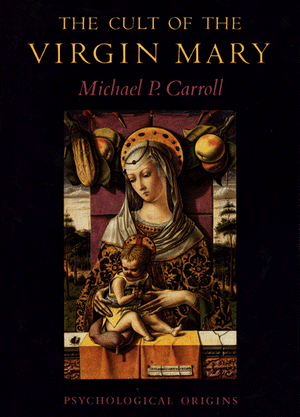
CultOfTheVirginMaryWhy do people pray to Mary? The question is a complex one and answers range from a desire to find some feminine compassion in an angry masculine god to the distinctly Freudian. Michael P. Carroll, in The Cult of the Virgin Mary: Psychological Origins, falls into the latter category. Yes, the book was written in the 1980s, but even then Oedipal complexes and penis envy were deeply suspect. Still, at various points along the way Carroll had me scratching my head and muttering “there may be something to this.” For a few pages, anyway. The problem begins much further back than Mary. To start with, we can’t all agree on what religion is. From there we move to the stage where ancient religions had as many goddesses as gods—even the divine don’t like to be lonely. The heads of most pantheons were male, which likely matched most earthly political systems. Powerful females still existed, at least in mythical realms. Monotheism effectively put an end to that, but before too terribly long, Mary emerged and eventually became almost a goddess.

Indeed, early on in his book Carroll discusses how Mary differs from the goddesses of antiquity, drawing parallels with only Cybele. Mary is the virgin mother completely dissociated from sexuality. Deeper study would reveal some mistakes in Carroll’s reasoning—there were virgin mother goddesses, such as Anat, who might in some ways fill in the gaps. Indeed, arguing for the uniqueness of Mary is kind of a goddesses-of-the-gaps theology. The more we learn the less unique any deity becomes. Still, looking to the psyche to explain Mary is a logical step. Tracing Marian devotion to the ineffective-father family, where a machoism hides a longing for the protective mother, Carroll offers us a Freudian feast of options here. Still, in the light of developments in psychology over the past quarter century, his premise is a bit dated.

We simply don’t know why Mary became such a strong devotional interest in a religion with a masculine Trinity. It would seem that women might be the motive force behind it. Given that half of Christendom was displaced, by default, from the male savior, why would Mary not emerge as the mother all people crave and whom, women know, often soften the harsh decrees of martial law? Delving into the apparitions of Mary from Our Lady of Guadalupe to Fatima and Medjugorje, Carroll finds illusions and hallucinations based on strong females behind each one. Rational inquiry into the deeply spiritual. This, however, remains the proximate cause only. What is really seen can’t be known, except to the seer. And it seems that seers tend to find, amid a religion with an omnipotent man at the top, that it is the mother who appears in times of need. Unless, of course, it is a matter of healthcare where, as government shows, father knows best.


Guy Fawkes

“Remember, remember the fifth of November,” so begins the poem that haunts my every autumn with V for Vendetta. As a colonial, I never really peered too deeply into the Gunpowder Plot. We were all told that Guy Fawkes was the bad guy and that he got his in the end. Recently I delved a bit deeper and learned that this was a religious conflict. Part of a conspiracy to restore a Catholic monarch to the throne of England, Fawkes was captured as he guarded the actual gunpowder of said plot, and the rest, as they say, evolved into V. The iconic Guy Fawkes mask, sometimes sported by members of Occupy Wall Street and other protest movements, has moved away from its Catholic roots and on into the realm of wider social justice. We know that blowing up our enemies is not a viable solution (we too remember, remember the eleventh of September), but the metaphorical destruction of oppressive systems may be the only way to vindicate the demands of social justice.

Dystopias have been heavily on my mind lately. Looking across the socio-political landscape I see many concerned people with no power to displace the impacted one-percenters. Politicians court money, and sociological studies show that young people don’t bother to vote and have no interest in entering politics because it is so widely known that it is a corrupt and inefficient system. While laws are easily enacted to protect extreme wealth, social security finds itself on the block as seniors are increasing in poverty almost as fast as they are increasing in numbers. In my own life I have experienced being cut off from retirement plans because I wasn’t “vested,” which I translate as “saving money for those at the top.” Still, we blithely press on, wondering if V really exists at all. We don’t need to seek out dystopias. They will discover us.

November is that graying period between the colorful burst of vindictive playfulness that is Halloween to the long night of the solstice. During this time we will vote in vain and await a better future that never seems to come. We, like V, have been an experiment of the state over the freedoms of the individual. The market, we’re told, has recovered. The average citizen has not. Every year as the evenings grow longer and the winds begin to howl, I come back to V for Vendetta and hope against hope that corruption will meet the fate of Guy Fawkes. Ironically, few turn to religious organizations any more in the never-ending search for social justice. The trenches in which many denominations have chosen to die are those of sexuality and male dominance. Meanwhile, women and men both are aging, and the very structures we put in place to ensure they could rest after lives of hard work are being eroded. Behind every mask, it seems, hides the face of a politician.

Photo credit: Vincent Diamante, Wikimedia Commons

Photo credit: Vincent Diamante, Wikimedia Commons


Horrorshow

Halloween may be over, and more’s the pity. Still, Halloween is simply the entry point to longer nights and opportunities to revisit what scares us in the dark. I have to admit to feeling a twinge of justification at reading Richard Corliss’s article “Never Watch Alone: Hollywood’s newest horror films remind us why fear loves company,” in this week’s Time magazine. One sentence in his piece on culture made me smile: “Horror movies are a rite of passage audiences never outgrow.” Okay, sure, the demographics may catapult me into the more geriatric of viewers, but I generally take my medicine neat. I do watch horror movies alone at night. And I never hit “pause.” To be honest, I have no idea why I do it. I do not like being scared, and I certainly don’t enjoy slashers. I am, however, seeking something profound.

the-shiningOver the weekend my wife volunteered to watch The Shining all the way through with me. I’ve seen the movie five or six times, and I can’t seem to tire of it. The use of blood is sparing, and the pacing is positively Kubrickian, but it never fails to leave me contemplative. Don’t we all fear the madman that lurks inside? There may be ghosts in The Shining, but it is one of the least supernatural of thrillers. The monster is the protector, and nothing quite equals that disconnect for night chills. Corliss highlights the prequel to The Conjuring in his article, a movie called Annabelle. It is now on my must-see list, although dolls need not be haunted or possessed to be scary. Like Jack Torrence, they inhabit the uncanny valley of that which is close enough to human to be frightening. According to the pundits on the web, there is a real Annabelle doll collected by Ed and Lorraine Warren as a possessed toy. Debriefing with my wife after The Shining demonstrated the point Corliss was making, however. It helps to talk it out.

We spend much of our lives, I contend, trying to avoid those things that frighten us. Horror films do us a psychological service by bringing them to the surface, like desensitizing a child to spiders or snakes (at least the harmless kind). As we watch we learn what it is to be human. Religion, like horror films, is often a response to fear. Despite all our science, the world does not operate according to logic. The inexplicable happens. The horror movie allows us to explore the “what if” that science disallows. Once upon a time we went to church and held onto a crucifix. Today’s vampire is unfazed by our religious baubles. Exorcisms don’t always work—at least not completely. And the longer nights may be because the northern hemisphere is tilting away from the sun. Or maybe, just maybe, it is something more.


Medusa on the Rocks

WreckOfTheMedusaShipwrecks possess a compelling resonance that is difficult to explain. I have seldom been on boats, but from my youngest days I’ve been drawn to the coast. While a student in Boston I made weekend trips to Gloucester to be near the place where ships go out to sea, sitting by the quote from Psalm 107 at the base of the famous fisherman statue. Moby Dick has passed under my eyes many times. While at Nashotah House I was frequently tormented with nightmares of sinking ships. Titanic was a huge movie late in those years, and even before watching it, I dreamed of going unceasingly down. In a used bookstore, Alexander McKee’s Wreck of the Medusa recently caught my attention. Although I’d never heard of the Medusa, the name suggested classic themes, and the shipwreck, I knew, would entail suffering and loss and human drama. I knew I had to take it home with me.

The true story of the wreck is tragic in just about every conceivable context. The year was 1816 and aristocracy was still openly practiced. The Medusa, bound for Africa from France, ran aground and, in echoes of what would happen (at least in some instances) a century in the future, the insufficient number of lifeboats were claimed by the wealthy and powerful. The most tragic aspect, however, was the matter of the raft. The masts were felled and a poorly designed raft was hastily constructed (the Medusa was grounded, not sinking). The greatest number of people were herded onto this raft where the water came up to nearly their waists, as the six boats towed the makeshift craft toward shore. At the instigation of the about-to-be-installed governor of Senegal, those towing the raft dropped the line and rowed themselves to safety. The raft, with no means of propulsion, was left adrift where 135 people of the 150 on board slowly died over the next two weeks. The governor and his party made it safely to their destination.

To me, this election week, it seems that I’ve just read a potent parable. We have public officials in place who, like those safely in the boats, cry out “we abandon them” before the masses of those who expect and deserve their protection. Power, it is said, corrupts, and as we witness the constant increase of political power over the sea of humanity taught that their religion favors the party able to quote the Bible the loudest, we sometimes forget that sinking ships may leave very long memories. In another week we will reach the commemoration of the sinking of the Edmund Fitzgerald. The Essex, the Medusa, and countless other tragically doomed ships may easily slip our minds now being propelled at full speed toward the spending frenzy of Christmas. Meanwhile, I urge us all to take a few November moments to consider where this ship is heading, and if there is yet time to change her course.


Keeping Time

Did you remember to set your clock back? Depending on where you are (and this presumes there are any people reading this at all) it might have been a mistake. When I worked with Routledge, we had weekly trans-Atlantic meetings via conference calls. I remember the general confusion of what time it was where, and how that effected meeting times. The UK sets its clocks back at a different time then many states do this side of the ocean. As much as it is nice to have an extra hour of sleep (next weekend for most Americans, this morning for the British Isles) it really never seems worth the disruption on the other end of “standard time.” In the spring it will take several weeks to adjust to disrupted sleep patterns after long winter naps—for those who are able to sleep in, in any case. I’ve long thought it is time to do away with this practice: if daylight savings time is a good idea, why don’t we just keep it that way all year around? Greenwich Mean Time, however, could never admit to being wrong.

IMG_0320

I was always told daylight savings time was because of concerns for children walking to school in the dark. An article in The Guardian, however, gives the real reason. It was war. During the First World War (which impacted so many aspects of life that we’re still sorting them all out), Germany implemented daylight savings time to conserve fuel to support the war effort. Squeezing a few more minutes of daylight from a slumbering public meant more resources for the engines of destruction. Other nations soon followed and when we turn our clocks ahead in the spring and yawn wicked yawns all day at work and stumble about for lack of sleep, we wonder if that extra hour’s snooze in the fall was really worth it. Because of my commute, I rise early. If everyone awoke around 4 a.m., daylight savings time would quickly become moot. It does nothing to help. I already catch the bus in the dark and arrive home after dark, as I will until well into spring. It is a holiday with no meaning.

Religions have been, historically, the clock keepers of humanity. Our hours were regulated for prayer, our weeks divided up for a day of worship or rest, our years punctured by holy days. All of this was done for the sake of religion. In our secular world, there would be no reason beyond the recognition that people are more productive when they can rest to give them one day off in a week. Seven days corresponds to no natural division of time, unless you consider a quarter of the moon’s phases for 28-day months to be significant. Religions have been our time-keepers. Daylight savings time, however, was the child of war. This week our UK colleagues will be well rested and content. Next weekend the US will join them. But the second horseman of the apocalypse has sanctioned this unholy day, and when the spring rolls around, he will exact his toll. We’d better rest up in the meanwhile, and I, for one, say let’s banish the horseman all together.


Viking Trail

History is a powerful elixir, capable of transforming sinners to saints with the mere passage of time. Well, calling Vikings saints may be a bit of a stretch, but still, they have become some of the sexy bad boys of the Middle Ages, and with the finding of a Viking horde in Scotland last month, they are in the news once again. Vikings and monks were kind of like medieval dogs and cats. Monasteries, located in lonely regions, often amassed wealth and Vikings, looking for loot and less scrupulous about bloodshed, were eager to take it. The give and take (literally) of this violent lifestyle involving seafaring, battles, and churches, makes for good ancient drama and much of it took place along the coasts of Scotland. Our Scandinavian scourge, however, didn’t stop there. It is well established that the Vikings made it to North America well before Columbus. Those who don’t dismiss the Kensington Rune Stone also claim that the Vikings reached Minnesota long before football ever did. Whatever the reason, we are fascinated with Vikings.

Wikinger

Perhaps they are the ultimate autonomous self-promoters. We all would secretly, at least, enjoy being able to set our own standards so that they favored us and our loved ones. The Vikings represent the flaunting of the rule of law, traveling far to take what they want by force. And, perchance, leaving a bit of treasure behind as well. The Vikings became Christianized and the slave trade (long before the New World caught hold of the idea) was effaced to the point of becoming uneconomical to them. Nobody is certain why, but the Vikings, probably for a variety of causes, ceased to be the terror of the seas. Now the Scandinavians are considered among some of the most literate peoples of the world.

Along with the decline of the Vikings, however, also came the fading of the monastic cultural hegemony. To be sure, there are monks and nuns still today, but the force with which they gripped the medieval imagination began to decline with the Protestant Reformation and the recognition that vast wealth, even if cloaked in poverty, is still vast wealth. Now the finds from both monasteries and Viking sites constitute historical treasure. Information about a world long gone. The underlying idea, however, is never very far from the surface. We may lay claim to post-colonialism, but powerful economies have a way of getting what they want in the way of trade treaties and tariffs in any case. When a Scot finds a Viking these days, it is a cause for celebration as we let bygones be bygones and cut the humanities curricula nevertheless. The Vikings never really disappeared.


North Tarrytown

Ichabod Crane has undergone many incarnations since Washington Irving conjured him. Not very sympathetically described in the original “Legend of Sleepy Hollow,” he was gangly and somewhat clumsy and full of self-importance. The story of which he is forever a part, however, has become iconic of American myth-making. A deep symbolism runs through the story of the headless horseman, and for those who’ve actually been to Tarrytown, the modern incarnation of Sleepy Hollow, there may be a disconnect between the urbanity of a town so near to New York City and a rustic school teacher in a rural setting. Still, there seems to be quite a bit of buzz about the current television series “Sleepy Hollow” that I decided to see for myself what was happening. The conceit of Ichabod Crane reawakening, in a kind of Rip Van Winkle twist, in the present day is engaging. He is now a professor at Oxford University turned patriot to the American cause, which brings him to the point of actually beheading the horseman in the first place. But this literate, witty, and moody retelling involves more than Irving. The Bible is pretty much central to the series, at least as far as I’ve seen.

The headless horseman is none other than Death, the final of the four horsemen of the apocalypse, according to holy writ. Although the characters all refer to the Apocalypse as “Revelations,” something that causes premature baldness in biblical scholars, the program places the town of Sleepy Hollow at the crux of the oncoming end of the world, with the other three horsemen to be summoned along the way (Pestilence or Conquest, War, and Famine, for those who are keeping score). Also, witches, hearkening back to Salem, have a prominent place in the narrative, and the forces of rational law seem to be at their collective wits’ end to make any sense of religion breaking into a secular world. Without the Bible’s final book, Sleepy Hollow would have no legs (as well as no head).

Ichabods_chase_crop

In Tim Burton’s Sleepy Hollow, Ichabod Crane came through as a detective plotting science against superstition. At the end, however, even the most rational had to admit there was more going on than the science of the day could explain. That is part of the appeal of the Sleepy Hollow legend. No matter how strong the light we shed on them may be, our psyches reach out for the immaterial, the ghostly, the supernatural. We like to believe in sacred books and spells to protect from evil. Even the Twilight Zone episode “The Jungle” plays on how in even the most advanced cultures we still build skyscrapers with no thirteenth floor, as if our towers represent an unknown hubris for which we may be held accountable. Irrational? Perhaps. But Sleepy Hollow is not so somnolent these days when the Bible once again takes center stage and hoofbeats are heard once again in the night.


Empire State

Hegemony is a funny word. In studies of antiquity it is commonly found since it denotes the “Leadership or dominance, especially by one country or social group over others,” according to the Oxford English Dictionary. Today it has a vaguely imperialist taint, although it doesn’t necessarily require that one nation actually pillage another’s wealth or resources. The idea that people are, and should be, free is pretty much assumed in developed nations. Or so at least our rhetoric dictates. The word hegemony came to mind, however, as I saw an interview with a corporate leader. He was discussing how his company had budgeted for technology development on an increasing scale, to catch up with current developments, and then leveled the tech expenses off after that so that the business could move into its prime objectives. The reality was vastly different, however. Each year’s budget saw increasing technology costs and it shows no signs of slowing down. Every industry, it seems, will have to keep devoting larger and larger shares of its budget to technology. Hegemony.

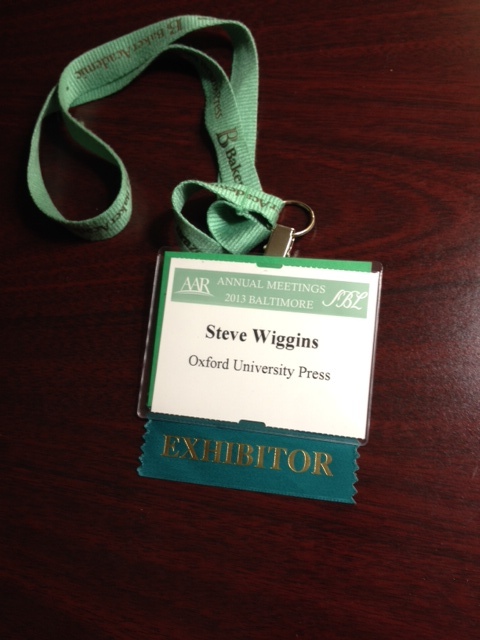
It’s not that any one company is solely responsible for our obeisance to technology, so this hegemony has no head. It is the idea of progress gone wild. Last year as I set out for the American Academy of Religion and Society of Biblical Literature annual meeting, a notice popped up on my laptop that a software upgrade was available. Since I file that I required was no longer accessible unless I updated, I clicked through all the agreements and provisos that I can’t understand and began the upgrade. Download and installation time measured in hours rather than minutes and I soon had to interrupt the process to get to the conference. This had consequences that nearly led me to becoming utterly lost in a part of Baltimore I’d been warned to avoid. The gods of technology demand their due. Now, less than a year later, I can’t access certain files unless I upgrade again.

Don’t get me wrong—I’m not a complete Luddite. I enjoy the instant gratification of finding information in seconds through a web search, but I’m not always sure that I can believe what I read. Technology means photos can be manipulated, sounds can be fabricated, facts can be created, all with no basis in reality. I used to have students ask me if such-and-such a fact they’d read online was true. Facts, it appears, are now negotiable. Nobody’s really in charge, it seems. Instead we are lead by the vague idea of progress, a new god with technology as its prophet. Even now I know people who think they never use computers but they drive without realizing their car is full of them, and turn on the television not realizing that the tech is no longer chip-free. Meanwhile those in the technology industry seem to have plenty of extra cash around, while those of us in the humanities ponder whether the ancient hegemonies have really changed at all. Let me look that up on the internet, once this upgrade is through.

600px-Astronaut-EVA


Campus Crusade

The Chronicle of Higher Education also chronicles the trials and travails of religion in academia. A recent edition of CHE reported on how California State University withdrew official recognition of InterVarsity Christian Fellowship because its leadership is, by definition and constitution, Christian. The organization contested the decision, and, in this thorny situation, I think, rightly. The disestablishment clause cuts both ways. Government can’t establish a religion, but it can’t prevent one either. InterVarsity, although not exactly to my taste, has been a fixture on campuses for decades. It offers alternatives to pong and related forms of diversion without being pushy about faith. Indeed, it does not insist that participants be Christian, and, in my experience, doesn’t try to convert them. It offers a service that is useful for undergrads and has every right to be on campus, as much as the young republicans do. Can an organization be banned for having Christian leadership? How much can we disestablish before we become oppressors?

I recently had a conversation with a college humanist chaplain. There aren’t many of these, but they are beginning to appear on campuses, offering the services traditionally given by religious organizations. Many people don’t know what to make of this. Not all rationalists, humanists, agnostics, and atheists are enemies of spirituality. We can be both spiritual and human. Some would argue that we have no choice in the matter but to be. Some express it as Christianity. Others as a non-doctrinal recognition that being human means wanting to affirm unions and weep at funerals. Maybe it is more than just chemico-electrical signals across gray matter after all. Colleges and universities should be places to explore. Like it or not, without the influence of the church, and before that the synagogue, the concept of higher education likely would never have developed at all.

How much of the baby do we throw out with the bathwater? Evangelicals cost me my first real job. I had, however, grown up among them. Although not in InterVarsity, I did participate in Christian groups in college. I don’t think it damaged my education. How can a person learn to compare when one of the options is displaced? Will Newman House be permitted to stay? Even government officials can’t agree on exactly what it means to have a religion-free government in a religious, if post-Christian, nation. Why antagonize an organization that is only trying to offer a service? Every time I pull up to a gas pump chances are pretty good that I disagree at a pretty visceral level with the ideology behind the company supplying me my fuel. And yet, here I am, running on empty. Ideologies and services, it seems to me, are very different things. Those that don’t cause harm should be the least of our concerns.

IMG_0066


The Joy of Tech

In the age of Steampunk, New Jersey is among the world capitals. Indeed, today is the second day that the International Steampunk City will be inhabited in Speedwell, home of the telegraph. For yours truly, Steampunk is an escape. Alternate realities often look better than the pedestrian one we’ve inherited, so we like to look at the world through steamy lenses and imagine how it might have turned out differently. New Jersey, in the spring, also hosts the Steampunk World’s Fair. Perhaps we have more pressures to escape here in the Garden State. Imagination is certainly in no short supply. I attended the International Steampunk City last year and decided that I’d like to be a part of it. Knowing a thing or two about ancient technology, I thought I might share a bit with the Steampunk crowd. What is Steampunk without tech? Some ancient technology, although not very well known, is perhaps of even greater influence than we might imagine.

One of the connections that is easily misplaced in this era of purely scientific advance, is that technology was devised in the service of religion. At least in the early days. The greatest architectural achievements came under the aegis of temple building. Domes, arches, and eventually flying buttresses that could hold tons of stone high over your head—these were to please the gods. We can’t imagine Stonehenge as anything other than a capitalist venture these days, a way of drawing in the money. Of course, ancient builders knew of the financial benefits as well; temples were often the equivalent of ancient banks. Still, beneath all the pride of accomplishment there was the belief that the gods were somehow pleased with our innovation. Perhaps we’ve just done away with the convenient myth. Steampunk often has a religious underpinning. Many of the stories I’ve read touch on our ancient mythologies. Only, in fantasy, there are different possible permutations.

We sometimes think that technology is a modern phenomenon. Actually, it is quite ancient, as far as human culture goes. The first “computer” was invented around about the first century. Since it didn’t have an obvious benefit to the control of the masses, however, no technological revolution took place. The steam engine was, in nascent stages, invented also in ancient times. Until we learned, however, that it could be enslaved to make certain industrialists rich, we had no need for it beyond a diverting toy. Technology does not take hold without a deeper purpose. Every now and again I get a little paranoid knowing that I carry a telephone that knows my exact location at all times. As if I were important enough for anyone to care. Then the feeling passes and I open my iBooks app and turn to my latest Steampunk novel. I am a slave. I wonder what innovations there will be at International Steampunk City this year that might change the world. Only the imagination will limit the possibilities.

DSCN4341


Lions Among Men

Facial follicle emasculation, i.e. shaving, has some interesting religious implications. A recent Associated Press story highlighted this when students at Brigham Young University began a protest against the ban on beards at the school. Shaving has a very long pedigree but, as one who doesn’t shave I feel obligated to point out, not as long a pedigree as not shaving. Nobody knows for certain where or when shaving began, but it has been suggested Egyptian priests began the tradition. Others suggest it was an attempt among some early societies to control lice. Homophobic religions, it used to be, promoted beards as signs of masculinity. Alexander the Great, however, noted that beards are easy to pull during battle, although, for those who don’t fight it isn’t such an issue. Of the major monotheistic religions, Christianity is the only one that generally promotes shaving as the norm, and here it is only the practice in the western branch of the religion. Eastern Orthodox churches still retain bearded clergy. It has been suggested that the Roman preoccupation with shaving led to early Christian preferences for this practice, and there may be something to that.

Having an old-growth beard (I last shaved over a quarter of a century ago) I have often found myself in the minority. While beards—mostly highly styled or glorified stubble—are making a bit of a comeback in New York City, they are still not as common as the alternative. In one of my many preprofessional jobs (that of a bag-boy at a Pittsburgh grocery store) I was told I had to shave. “Customers don’t trust a man with facial hair,” my manager told me. Delving into this a bit, I was told that beards mask the facial nuances that an honest man wants to show. What’s a beard trying to hide? Watching what clean-shaven presidents and Wall Street moguls get away with as “honesty,” I think I’ll stick with my beard, thank you.

I'd trust this man.

I’d trust this man.

Evangelical traditions, such as Mormonism, I long ago noticed, wish to control nature. Lawns must be manicured and trees, with their sloppy abundance of leaves, must be few and carefully spaced. Faces should be rid of the hair that Jesus and the disciples were said to wear, and clothes must be neat and tidy at all times. It’s an image thing. Among the evangelical crowd, those with beards keep them neatly trimmed, tamed, and penitent. For me, scraping my face with a cold bit of metal first thing in the morning is about the least civilized thing I can imagine. Spending too much time shaping and toying with DNA’s dictates seems to go against nature. Much of my beard may have gone white, but I have nothing to hide. Neither orthodox nor evangelical, my beard simply represents what it means to be human. Trust me.


De Profundis

IMG_1591In a grocery store last week a friend pointed out how many magazines had pictures of Robin Williams on the cover. Although his suicide two months ago was tragic, I wonder about the message we send to young people (and maybe some older ones as well) about this fixation. As we probe, attempting to understand the sad clown (and they generally all are), are we inadvertently telling our kids that suicide will make you an icon? We often hear accusations that extremist Muslims “brainwash” their youth into thinking that a righteous suicide will lead to glory. Perhaps the glory we perceive is somewhat different here in the post-Christian west than it is in the post-Christian east, yet I wonder what the essential difference really is. Why can’t we see that the cult of celebrity seldom ends well? The worship of the successful does not really grant them eternal life, as much as we may think otherwise.

Call me a curmudgeon—I probably deserve that—but when I overhear office mates in their cubicles or young people on campuses talking about stars I feel not a little like Rip van Winkle. Most of the names I do not recognize, and even showing me a picture doesn’t really help. Of course, I enjoy movies as much as the next dinosaur, but apart from the bargain bin and the occasional indulgence in Amazon Prime I really can’t much afford them anymore. I walk into a bookstore (where they can still be found) and the authors I want to read are not on the shelves. They are gone and all but forgotten. Many of them having left profound ideas in their wake. I guess I could pick up a magazine. Robin Williams looks happy on the cover.

I used to watch some late-night television before my job required waking between three and four a.m. One of the things I quickly noticed is that those stars our society worships had little of substance to say. That’s not to say all actors and media darlings are shallow, but I often wondered why their interviews always seemed to come down to the lowest common denominators. Have we lost our interest in probing beneath the surface? Isn’t there some profundity left to explore? Don’t get me wrong—I find Robin Williams’s death a tragedy. He may have been a deep and philosophical man. Who really knew him? Nevertheless, I wonder if perhaps, if we challenged ourselves a bit more, we might just consider the messages that our media broadcast. After all, they have to turn a profit. Do we really mean what our magazine covers seem to imply?


Small Town Heroes

When World War Three starts I hope someone will let me know. You see, I barely have time to satisfy the needs of employers and tax collectors to get everything done in a day, let alone read newspapers. Or Facebook. I check my page, very briefly, twice a day and get on with the business that I’m assigned in life. But yesterday I had a notice from a high school friend that one of my teachers had died. Since I don’t name people I know here without their permission, suffice it to say I took a current events course with this teacher in either my junior or senior year. Then, as now, I didn’t read newspapers. Given the small town rags available in rustic regions, there was often not much mentioned beyond deer season and local tragedy anyway. Originally enrolled in the regular curriculum, several friends told me, “You’ve got to take Current Events! The teacher is great!” Those who’ve influenced my life for the good were great teachers, and despite my reservations, I took the class. When it came time to sign up for projects, I was a bit flummoxed. What did I know of current events?

Our teacher kindly allowed me to offer evolution as a topic. It was occasionally in the news then. Six of us decided to debate the issue, three for, three against. My religion having held me in a headlock, I was the lead debater against evolution. The day for the debate came and we ran over the bell. Our teacher, with his usual calm wisdom, suggested we continue the next day. And the next. Three days of sometimes acrimonious debate and it looked, from my point of view, as if creationism had demolished evolution. How terribly naive I was. Ironically, I had just posted a piece on evolution yesterday when I saw the notice about my teacher’s demise. The position in my post was a sharp 180 from high school. It was a tribute to the love of education.

Source: Wellcome Images, Wikimedia Commons

Source: Wellcome Images, Wikimedia Commons

I was an outsider in high school. I literally lived outside of town and after school activities were not really feasible. We were poor and couldn’t afford extra-curriculars anyway. I wore a large cross on my chest and although I was shy, I felt that it said all I had to say. My teachers, to their eternal credit, let me explore. In college I learned about Fundamentalism. I had never heard the term although I grew up in it. Gently my teachers nudged me to think more deeply about things. Through three degrees delving more profoundly into the origins of religion, as well as humankind, I came to see the errors of my ways. Had I been forced in high school I would’ve fought back. Instead, a persistent, patient wisdom guided many of my teachers. I don’t know how they recognized that I might be worth salvaging, but they apparently did. They let me speak, they let me trip. Just as I was about to fall they caught me. And I hope, in my own small way, to repay this favor in kind.


Theological Cemetery

Implosion is a word frequently associated with demolition. Implosions are episodes where buildings collapse in upon themselves, in theory, harming no one on the outside. In 1992, as a starry-eyed, fresh Ph.D., I was hired by one of the then eleven Episcopal seminaries in the United States. Each had been around so long as to acquire a feel of almost biblical antiquity—something their governance models appear to reflect. Just over two decades later, the mythically wealthy Episcopal Church is watching its seminary structure implode. It’s not for want of funds, but from lack of will. With shrinking demand for clergy, some had to merge to maintain even their historic names. Others are effacing by degrees. The Nashotah House I was asked to leave was not the Nashotah House where I began my academic career.

General_Theological_Seminary_1890_crop

Within hours of hearing rumors of a mass firing of the faculty of the General Seminary—The General Seminary!—I received confirmations both personal and from the Huffington Post. Eight faculty who had concerns over the Dean committed the (in the Anglican world) unpardonable sin of requesting a meeting with the board of trustees. At Nashotah, I served two stints as a faculty representative to the board of trustees and my nightmares have taken on a different quality since. In the Episcopal system the Dean is also President. Not a whiff of democracy taints these hallowed halls. They claim the title Very Reverend, no matter how appropriate, and some, if they’ve ever read Acton, did it for instruction. There must be incredible power knowing that higher education is in crisis and that faculty with legitimate complaints are only setting themselves up for protracted purgatories of joblessness, should they question you. Trustees don’t want to be bothered with the “formation” that is happening within. O Captain! My Captain!

I am heartsick. This is how Christians treat their most highly educated and dedicated—no one takes a job at a seminary without knowing the risk it poses to a career. A more protracted dismissal of faculty, including yours truly, took place in Wisconsin almost a decade ago. I knew those who lost their jobs—fine scholars and decent human beings—as apocopated visions of a fictional future flashed before the credulous eyes of true believers. Where do discarded seminary faculty go? Back into the arms of Judas? I could not. I admire those wounded healers who returned to the cure of souls. We started, did we not?, with the best of intentions. The church, it seems, forgets that even faculty are human beings. “Enlighten,” the collect for education reads, “those who teach and those who learn, that, rejoicing in the knowledge of your truth, they may worship you and serve you from generation to generation.” Or, barring that, speak the truth, and lose their vocations.


Ironic Icons

The Annals of Improbable Research every year offer up the Ignobel Prize for research that is bound to raise a condescending smile from the perspicacious. Ever practical Americans are given a bemused nod by the European for taking on the stranger side of science. This year’s Ignobel went to a group studying why banana peels are slippery, but a BBC Science and Environment report also mentioned a study of the phenomenon of pareidolia. For many years I have found the tendency to see faces where they don’t exist—signal amid the noise—to be closely tied with religious evolution. (The book that started me down this path was Stewart Guthrie’s Faces in the Clouds.) Indeed, the BBC reports the group was investigating the brains of those who see Jesus and other specific figures on toast and other venues of visual “white noise.” Not surprisingly, they found that the figure seen often relates to the religion of the viewer. Buddha gets around as much as Jesus does.

Ironically, many religions, particularly in the monotheistic mold, tend to find images problematic. According to the Bible, the true believer would not make or seek images at all. The great iconoclasm clash in late antique Christianity was, at least in part, a dispute over the role of images. Anyone who keeps an eye on the religious news knows that images of Mohammad are a particularly touchy subject. The Ignobel awards may not be the best place to look for explanations, but the University of Toronto team found that the function of finding faces is pre-human and is hardwired into our brains. Seeing Jesus or Buddha before Jesus or Buddha were born? Creatures with faces evolved the knack to identify faces.

IMG_0040

But why religious faces? The report on the BBC doesn’t go into that level of detail, but it is the salient point. Finding faces makes sense. Why we find religious faces is far more interesting. Guthrie suggests this might be the origin of religion itself—first we see the faces and then we give them names. We see what we expect to see. And maybe the religious tend to expect an epiphany more readily than the non-religious. The non-religious less seldom report seeing such faces. Indeed, the word pareidolia is still generally eschewed since it admits of one of those things we find somewhat embarrassing about being human. And yet it happens to us all. The face staring back at you from your morning toast may not be Jesus, but chances are that face will be religious.