Buzzy Headed

If you’re like me, and I sincerely hope you’re not, you spent your childhood worrying about killer bees.  You see, I was stung a lot as a child, having stepped on a yellow-jacket nest hidden in an old tree stump.  That event was one of the most formative of my life.  Oh, I act brave, shooing wasps and carpenter bees away, but that’s all a front.  I was repairing a piece of furniture out in the garage over the weekend and a big old bee got in and started buzzing around.  It drove me to distraction.  I once had a bee land on my back and sting me for no apparent reason.  Alone in the garage I had no one to watch my back.  I decided to do some repairs back in the house instead.  Let it have the garage.

During this pandemic, then, the last thing I needed to hear was that “murder hornets” have made it to the United States.  And Republicans are bad enough!  The murder hornet is responsible for double-digit deaths in its native land, and now my childhood nightmares of killer bees have reemerged.  We had a warming trend over the weekend.  There were so many wasps and bees around outside that I could even hear their buzzing with the windows safely closed.  Insects are the future, of course.  They adapt better and more quickly than we do, and there are many, many more of them.  The Bible often uses insects as vehicles of divine wrath.  No wonder horror movies often make use of them!

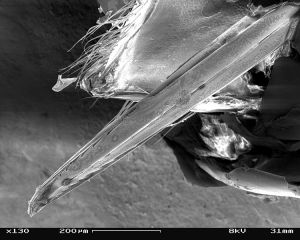
Image credit: SecretDisc, via Wikimedia Commons

More rational minds soothe us, saying that murder hornets seldom attack people or pets.  If provoked, however, they can do so fatally.  Perhaps it’s the anger of stinging insects that bothers me the most.  The yellow-jackets that attacked me certainly seemed angry.  My stepping on their home was an innocent accident.  It was also a learning experience.  I don’t step on old stumps any more.  I haven’t since the incident.  Such early traumas can stay with you all your life, and the buzzing co-inhabitants of the earth, I have to remind myself, have as much right to be here as we do.  In cases like killer bees, we invented them.  When we play Doctor Frankenstein nature responds in kind.  The monster was angry.  Bees, wasps, and hornets may be intelligent but they can’t reason out the motives of bumbling humans who accidentally disturb them.  And now a bigger variety has moved in.  It’s probably best to keep calm and not get anybody angry.


Koyaanisqatsi

I recently saw Koyaanisqatsi for the first time.  This was initially prompted from an excellent blog post over on Verbomania, suggesting words to describe our current crisis.  I had never heard of the movie before.  In case you’re in that same jolly boat, Koyaanisqatsi is a feature-length film from 1982 with no plot and no spoken lines.  A score by Philip Glass underlies, and sometimes dominates, images of an earth beautiful in desolation (the Badlands, Monument Valley, Grand Canyon) juxtaposed with technology.  The images are fascinating and disturbing.  The title translates to something like “life out of balance” and the images of sausages being mass produced cross-cut with humans being lifted by escalators speaks volumes.  The long, slow footage of 747s on the ground was enough to make me wonder if they really can fly.

Frenetic is perhaps the word that best captures images of life in the early 1980s.  The images of Grand Central during rush hour show just how like ants we are.  On the other hand, some of the scenes of people waiting for trains show a high percentage of them reading—we have perhaps lost ground in the last four decades.  The mechanized, technologized way of life has perhaps made us something less than we could be.  There are people in the movie, but not many of them look happy.   Back when I commuted into New York I can’t think of any reason I would’ve been smiling on my way too or from work.  Crowded streets, often smelling bad.  Harried and harassed even before I reached the revolving door to my building.  I watched the movie that was a slice of my life and wondered if so much of my time commuting couldn’t have been better spent.

Of course, I did read on the bus.  On average I was able to finish about forty books more per year than I do now.  Even home owning participates in koyaanisqatsi.  It’s spring during an epidemic.  Cold, yet rainy, the grass continues to grow and there’s no sunny time off work to mow it.  It’s now May and it feels like we haven’t moved since March.  Watching Koyaanisqatsi during the pandemic was itself a haunting experience.  All those crowds.  So many people bunched so closely together.  I don’t miss the crowds.  The cross-cut images of computer chips and city layouts made me wonder just what it’s all about.  The SARS-CoV-2 reality has plunged me into a philosophical mood.  I’m hoping when the crisis is over we might strive for a better sense of balance.


Thoroughly Earth Day

It’s difficult to say, since I don’t get outside much, but reports have come in that the earth is healing itself while we’ve been sequestered.  Rivers usually polluted have begun to run clean.  Smoke-smuggered skies have turned blue.  Animals have begun to explore human-made environments abandoned while we all shelter in place.  Could there be a more poignant statement about the reason for Earth Day?  If our worst behaviors are ceased even for a little while, the damage we do to our home planet begins to come undone.  To me that has been the most profound hope brought to light by this crisis.  Living more simply might be a virtue after all.

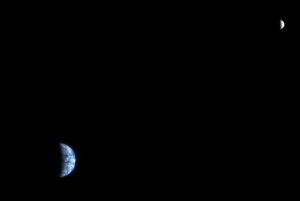
From NASA’s photo library

Going without can be difficult.  Every time the fleeting thought comes that I need to run to the store for this or that—and I’ve been taught that shopping is normal and natural and good for everyone—I have to stop and weigh the options.  Do I really need whatever it is?  Can I do without it?  Even bank accounts, for those fortunate enough to be able to keep working, have started to recover.  The frenzy we normally live under—earning money to keep buying things we don’t really need—is suddenly cast into perspective.  Times like this Earth Day I think of Henry David Thoreau.  Sometimes we like to laugh about our American saints, but his desire to live more simply does have appeal.  

Like many students who find themselves in Boston, I once made pilgrimage to Walden Pond.  The day I went there with some friends I believe we were the only car in the lot.  We lived simply in the way that grad students do, being under the sword of educational debts and loans, but we had come to see the place where nature had called one harried philosopher to solitude.  I knew, even as I stood by the marker of the cabin site that we couldn’t all live like this and still enjoy the benefits of medical science and technology (such as it was in the 1980s).  Perhaps it is possible, however, to reflect on better ways of living now that we’ve all been placed in a kind of enforced solitude.  I’ve begun reading more poetry.  I’ve started painting again.  Life has, in the midst of a pandemic, begun to feel more healthy.  It’s Earth Day.  Normally I’d be looking for an opportunity to join a community cleaning event, or even to go out and pick up trash on my own.  Since these are ill-advised, I stand before my bookshelf and reach for Walden instead.


Peaceful Lessons

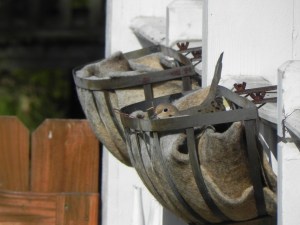
We are all, I think, looking for hope.  Probably due to the way I was raised, I often seek signs.  There’s no way to know if said signs are mere coincidences or the more intense variety known as synchronicities, yet we have a hopeful sign here at home.  On our front porch we have some plant hangers.  Spring crept up on us this year and we haven’t got around to putting any pansies in them yet.  The other day when I was stepping out to get the mail, I noticed feathers in one of them and feared there’d been a bird-related accident there.  As I took a step toward the planter, the head of a mourning dove popped up.  She blinked at me curiously, but didn’t fly away.  I knew then that she had built a nest in the as-yet unused planter and she was sitting on her eggs.

Monday was fiercely windy around here.  And rainy.  I wondered how any birds could fly in such weather.  A mourning dove flew up—perhaps one of the pair on our porch—and landed on the electric wire leading to our house.  The wire was swaying and bucking so furiously that the dove constantly had to shift and fluff and flutter just to stay in place.  The poor bird was in constant motion.  Then it showed a sign of animal intelligence.  There’s a much larger wire that runs down our street, from which other houses are supplied.  It’s more stable in the wind due to its girth.  The dove flew up to that wire instead.  There it was able to perch without having to constantly adjust itself to the gusts.  Peaceful and intelligent.  That’s what the world needs.  I have hope.

The dove has long been a sign of peace.  It’s understood that way in the Bible.  It was the dove that brought an olive twig to Noah, indicating that although all he could see was water there was, somewhere, dry land.  These days we need to be reminded that although it seems that the storm will last forever, even hurricanes eventually exhaust themselves.  The dove, clearly not happy about the horrendous wind buffeting it on that wire, nevertheless persisted in a kind of stoic optimism that things are as they should be.  There is great wisdom in the natural world.  If we can get to a window we can see it playing out before our very eyes.  Now when I step out the door, I glance at the dove, and she looks back at me.  We wink at each other.  She doesn’t fly away, for she understands.  She has a wisdom to which we all should aspire.


Green Dilemma

It’s a dilemma.  I face it every year.  I don’t have green to wear and it’s St. Patrick’s Day.  For your average run-of-the-mill citizen, this might not be an issue—but I do have an Irish heritage (in part), and so it’s a heartfelt concern.  The reason I don’t have green has less to do with fashion (consider the source!) than with my clothing purchasing practices.  First of all, I like to make my clothes last.  Fabrics can be quite durable.  They aren’t mechanical and therefore don’t break down often.  I don’t live a rough-and-tumble life, so tears aren’t really a problem.  The end result is that I keep my clothes as long as they’re functional.  When they begin to wear out I go to the store and examine the clearance racks until I find something in my size.  That means color selection is often a matter of very limited options.

Once in a great while I have landed something green.  I still remember a green shirt I had in college.  It served me well for more than four St. Patrick’s Days.  It long ago succumbed to overuse, however, because I wore it on other days as well.  And let’s face it, when I make one of those infrequent trips to the clothiers’ shops, this particular holiday’s not on my mind.  Unless, of course, I go shopping in March.  Back when I lived in Boston it was easy to get your Irish on.  I bought a bright green silky (I don’t know if it was real silk) tie with white shamrocks on it.  It was probably down at Faneuil Hall.  It had been a bit outlandish to wear to work in New York City, though.  Indeed, at work staid dress was by far the most common code.  Consequently it hung unused in my closet for years.

When we moved a couple summers back, I noticed my green tie had faded to bronze.  I thought it went the other way around.  In any case, my last truly green clothing article was no longer green.  Yes, it still has shamrocks, but I’d feel even more ridiculous trying to rock a bronze tie and pass myself off as Irish.  It won’t even pass for gold.  Of course, I work from home.  I’ve practiced social distancing long before it was a trend or a government mandate, whichever it is.  The only people to see my lack of green would be my wife and daughter, and perhaps a Jehovah’s Witnesses that might stop by.  But still, even minor celebrations are anticipated at times such as this.  Although I won’t be going out today I’ll probably be spending some time in my closet and reflecting on the true heritage of my Irish forebears.

Perhaps St. Pat shops like I do?


The Wind and Trees

Being invisible, the wind is easily forgotten.  Until it begins to really blow.  I don’t know about where you are, but this past week was a very windy one around here.  Thursday especially.  My office has a couple of windows and each view shows different kinds of trees.  The south window reveals only a stolid oak or maple in a neighboring back yard a few doors down.  I don’t know this neighbor and I’ve never been close enough to get a good look at his deciduous tree.  Its leaves are down, of course, and although its branches moved in Thursday’s gusts there was never really a question of it coming down.  Trunk stout and sturdy, it has stood through many windstorms and will likely see many more.

My west window opens to some lofty pines across the street.  At least sixty feet tall, their trunks, like many coniferous species, stand fairly straight.  The way these trees bent in the wind worried me as a home owner.  And as a human being.  You see, I have done some woodwork.  A guy with as many books as we have either runs himself broke on buying bookshelves or learns to make his own.  I’ve spent plenty of my money on one-inch pine boards—the standard shelving material.  The 1 x 10, which is really 3/4 of an inch by 9 and 3/4, is the usual bookshelf board.  Not even an inch thick, it isn’t easily bent.  Incorporated into the trunk of a tree, it’s absolutely immobile if I press against it.  I’ve tried to move a mature tree trunk.  Even a good-size branch.  Mere humans can’t.  And yet I see these very same trunks swaying like they’re waltzing with the wind.

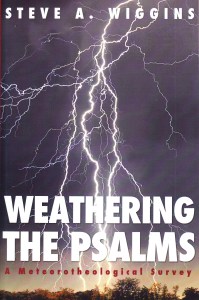
No wonder the weather has always been associated with the gods.  I mean, on Thursday last I saw these giants in the earth bending in arborescent obeisance.  The wind is easily forgotten.  As I worked on Weathering the Psalms, I easily sketched out the chapters on rain, lightning, and even snow.  But wind.  If you exegete a storm often the most damaging aspect is the wind.  Hurricanes and tornadoes damage due to their great wind velocity (the former also from impressive rain dumps).  What we call EF5 (or F5) tornadoes are so violent that any instrument directly in their path can’t survive its onslaught.  Winds swirling over 300 miles per hour are pretty much incomprehensible.  And yet when they dissipate, those violent winds are once again invisible.  Isn’t that just like the gods?


CBD

They found me.  I used to call them CBD, but because of the popularity of a certain hemp-based product, Christian Book Distributors changed its name.  Now I knew about them long before they had me on their mailing list when I taught at Nashotah House.  When I was a seminary student in Boston I made occasional trips to CBD’s Peabody warehouse for sales—this was quite a boon to students who never have enough money (little did I know!).  Books you’d heard about in class were there, for a fraction of the price.  At Nashotah I always looked over their bargain page, because, well, professors like books.  I recognized their catalogue in my mailbox instantly.  The name is now Christianbooks.com.  Grab some munchies and sit down.

Not only the name has changed.  Back in my student days I could find academic resources here.  As religion in America has become more and more polarized, what used to be CBD (if I use their current incarnation my computer insists on putting links in) has become radically conservative.  Page after page of study Bibles reveal no hint of the mainstream bestsellers in the genre.  It’s as if they don’t exist.  More than that, if you leave them out maybe people will come to believe they don’t exist.  Even the bargain books are nothing an erstwhile professor would buy.  Instead of academic titles there are all kinds of Barnes & Noble-type gimmicks to get shoppers to spend their money.  Like junk food for the soul.  I look at the books on my shelf.  Some of them were purchased, cash in hand on the ground in Peabody.  Not any more.

There will be those who claim (fake news is the only news now) that what has changed is me, not them.  The fact is places like CBD used to be more open minded.  They admitted the possibility of doubt.  Now your choices are Scofield or Ryrie.  That should be enough for any appetite.  Not only that, but many of the titles now sound militaristic.  Battlefields and all.  Thumbing through, I wonder where Jesus has gone.  The evangelicalism of my youth was clearly Prince of Peace centered.  Now it’s politicized to the point that I’m not sure what it represents beyond GOP values of greed, opportunism, and power.  Anyone who thinks differently need not apply.  How CBD found me after all these years, I do not know.  I wish they’d consider saving the environment rather than printing catalogues to send me.  The climate, despite what they would claim, has changed.


Future Warming

It’s a good thing global warming is a myth, but somebody forgot to tell the hyacinths and lilies in my backyard.  February in Pennsylvania is not when you expect to see spring flowers.  Now I’m fully aware that unseasonal warm snaps and cold spells aren’t an indication of the global climate; they’re far too localized.  One thing I’ve learned in my several decades of life is that heat takes time to transfer.  If you’ve ever had to wait for a pan of water to boil when you’re hungry, you know that to be true.  On cold morning’s my coffee’s ice coffee before I finish the mug, but it does take time for that transition to happen as the cup empties.  With something so inconceivably large as the atmosphere, it takes time.  As our hemispheres take turns pointing at the sun and warming up, the air tries to reach equilibrium and so the weather goes.

Scientists are now talking about, once we get the deniers out of the White House, what long-term remediation plans we have to make.  We’ve already set in motion extreme weather events.  We’ve had decades of warning, but those who control the money just can’t bear to let any of it go.  It’s a safer bet to wreck the planet.  You can just cash in your insurance money and buy a new one.  That’s the way it works, isn’t it?  So I’m standing outside in my shirtsleeves in February staring at April flowers who think winter’s over already.  I don’t know what to say to them.

You can’t drive a car without a license, nor can you practice law or medicine.  To be a world leader you don’t even have to be literate.  I often imagine what the future survivors will say.  They’ll likely be there, since people have a way of getting by.  They may wonder if we knew this was coming.  Of course, the internet won’t be up and running then, and who knows what’ll happen to electronic information when there’s no power left to keep the servers going.  In any case, my perhaps futile answer to their imagined question is yes.  We did see this coming.  Some of tried every legitimate tool in the box called “democracy” (you’ll need a dictionary for that one) to introduce sanity into the discussion, but bluster wins over hard thinking every time.  I cup my hands around the tender, if resilient leaves.  They’re only doing as nature directs.  If only our species could pay such attention to what the planet is saying.


For the Squirrels

Our garage came with a house.  That’s one of the reasons we bought it.  You see, the one thing we don’t have is time.  (Well, that and money.)  When we were contemplating moving, we had no time off.  Vacation days for the remainder of the year had been allocated, and employers don’t like to encourage personal improvement.  Not on company time, anyway.  Which, of course, is as it should be.  We had to find a house with space enough to sort through things after we moved.  Ha!  As if there would be more time!  Still, the sorting would have to wait.  Our house has a detached garage with a second story.  It’s a converted barn, but I doubt its conversion story.  It still seems pretty heathen to me.  The neighborhood squirrels love it.

We store our unsorted stuff upstairs.  Shortly after we moved in, the squirrels had chewed through the stop-gap remediation the previous owners had put in place to satisfy our post-inspection demands.  It was pretty clear their solution wouldn’t keep out rodents, but our lease was about to expire and the market favored sellers, so we closed anyway.  Shortly after moving in I noticed styrofoam poking through the ceiling boards of the garage.  Then I began to find styrofoam chips in the yard nearly every morning.  I soon figured it out.  Squirrels raid the trash receptacles behind restaurants in town, and bring their carryout here.  No, seriously!  They haul styrofoam between the roof and ceiling, presumably licking off the scraps before tossing out the remaining foam.  I figure it’s a form of insulation, if nothing else.

Squirrel remediation is on our list of projects.  I’ve seen the squirrels run up the side when they spy me stepping outdoors.  When I reach the garage, they’ll stick their little heads out the hole they chewed and scold me.  This is their place, the garage.  They’ve insulated it, and the inside is a mess where the birds also get in and there are little animal parties every night.  I don’t have time to clean up after the squirrels.  It occurs to me that if we didn’t have a throw-away culture we wouldn’t have styrofoam containers for the poor beasts to plunder.  The food’s probably not healthy—the squirrels I see look plump and sassy.  They like the convenience of living in a shelter someone else built and on which someone else pays the taxes.  Perhaps I should start a zoo.  But first I’ve got some stuff to sort through, when I find the time.  If only I could teach the squirrels some other tricks beyond dining out. 


Smelling Winter

We’re experiencing the January thaw around here.  This isn’t a scientific thing, of course, and it doesn’t happen every year.  We had snow before Christmas, but it didn’t linger too long.  We’ve had cold days since, but none so bad that I couldn’t jog a couple miles over lunch.  The ground has started to freeze but much of the grass is still green.  The changing seasons are largely olfactory to me.  You can smell fall and spring coming.  I’m not talking about burning leaves in autumn or the first hint of magnolia in spring.  No, I mean the aroma of the earth.  Stuck indoors as we often are, we’ve been conditioned to think our sense of smell is under-developed and therefore unimportant.  Overall, however, humans don’t rate too shabbily in the nasal range.  We don’t experience the aromatic realm as much as dogs, vultures, bears, or mice, but our sense of smell is vitally important.

Not only does smell tether us to memory, it also influences moods.  Studies done on those deprived of scent by disease or accident indicate higher levels of depression.  All of us know how vital scent is to taste.  We don’t appreciate, I suspect, how the aroma of our earth can inspire us.  Yesterday as temperatures crept into the 60s, I stood outside breathing deeply. It was only in my back yard, and the clouds were low and gray.  Spring clearly came in the gusty air.  I know that the bulk of winter lies ahead.  January’s only just tuning up, and February has us in its sights.  The aroma of spring will once again be frozen to await release in more timely fashion.  I’ve been feeling chilly since October, layering up and reluctantly bidding goodbye to the scents of autumn.  Winter’s sterility has begun, but we’re being teased just now by a nature that likes to remind us who’s really in charge.

As I grow older, I’m hoping I’ll learn to smell winter.  My nose spends too much of it feeling cold, and when I wrap my face in a scarf, I have only my own breath to breathe.  What is the odor of winter?  The faint hint of smoke from a neighbor’s chimney?  The briny tang of a freshly salted roadway?  The pine of a newly cut Christmas tree?  Outdoors there’s life throbbing, pulsing slowly beneath the chill.  Even after the great ice ages, it was ready and eager to reemerge.  Today I smell spring in the air.  It’s not yet here, and won’t be for some time.  Scent is ever only temporary but today there’s yearning in the air.


Seaing 2020

It’s funny what sticks in your head.  As a ten-year-old 2020 seemed impossibly far in the future.  And it was very wet.  Not because of global warming, but because of a Saturday-morning cartoon called Sealab 2020.  Suffering from thalassophobia, the idea of living under the ocean was both intriguing and terrifying to me.  I recall that these underwater scientists had “aqua-gum” that they could chew so they’d be able to breathe and talk when not in the giant domes of the lab itself.  While checking out the series online, I was surprised to learn it only had 13 episodes and lasted but three months.  I’ve been thinking about it for over 40 years now, silently waiting to see if we would have such places as the deadline drew near.

This image is protected under copyright by the owner. It is reproduced here under the fair use doctrine, in low resolution. From Wikimedia Commons.

Instead in 2020 we have a record low of scientific projects being supported by a science-denying government.  Ironically the sea levels are rising because of global warming.  We haven’t done our homework and we’re pouting that things aren’t turning out the way we wanted them to.  Ours is no longer an evidence-based reality, but one where a tweet of “fake news” is all we need to make the truth a lie.  And as the water laps our ankles my thalassophobia starts to kick in.  The thing about Sealab is that they had kids there too.  Kid scientists.  Even more ironically, Richard Nixon was president.  His downfall was Watergate—coincidental?—and now we have a president caught red-handed (very Red-handed, even) in crimes while in office and Nixon’s beginning to look like a saint.  When did the water get up to my knees?

They wore wetsuits and swim fins quite a lot in the show.  Moving under water looked so natural—unlike my flailing when I attempted to swim.  It was all about not being able to breathe, in my case.  They showed us all kinds of strange animals under the water in Sealab 2020.  Animals that we could drive to extinction, it seems, if they got in the way of unbridled greed.  I have to admit that I’m a bit disappointed that Sealab misled me.  We were heading for an optimistic future back then, even with Nixon justifying the Vietnam War and spying on his political opponents.  People were still able to look forward four decades ago, in hopes of a better future.  For all these years I’ve been awaiting 2020 only to find the world back behind where it was in 1972.


Veg Out

It came to me vividly when I heard a speaker self-deferentially say he was crazy.  This was, I suspect, a way of defusing the fact that when vegans speak others often think they’re being judgmental or preachy.  I’m pretty sure this speaker wasn’t, and I try my best not to be.  It can be difficult when you’re passionate about something.  At the event, which included several people in age brackets more advanced than even mine, the question of “why” was predictably raised.  Apart from the rampant cruelty of industrial farming—some states even have laws preventing people from knowing what actually goes on in such places—there are other considerations.  One of them involves Greta Thunberg, Time magazine’s person of the year.

Global warming is no joke, no matter how much the Republican Church laughs it off.  Greta Thunberg has become the face of a generation with a conscience, but one fact few wish to know is that industrial farming is by far the largest environmental threat to our planet.  The amount of pollution it causes is staggering.  The rain forests are being cleared for grazing land because people will buy beef.  The largest methane emissions come from farms, not factories.  Our lifestyle of eating animals on an industrial scale is one of the many hidden costs to the modern way of living.  Or of dying.   There are doubters, to be sure.  It’s pretty clear, however, that the agriculture business is massive and it is just as powerful as the other great offender—the petroleum industry.

Making facts known isn’t being judgmental.  People’s eating choices are up to them.  I’ve only been a vegan for about two years now and I sometimes can’t comply with my own ethical standards when I go out to eat.  Or when other people give food.  Many places have no concept of dining without animal products.  I’m not trying to make everyone else accept my standards; I have beliefs about animals that are based both on personal experience and lots of reading about faunal consciousness.  I fully accept that many others don’t agree.  What I do hope, however, is that people like the speaker I recently heard will not have to jokingly call themselves crazy because they’re vegan.  The narrative must change.  We must be willing to look at the way we live on this planet, and accept the fact that just because major polluting industries hide behind large, brown cow eyes doesn’t mean we shouldn’t question what they feed us.  We need to look at our plates and count the cost.


Why not try Veg Out, Bethlehem’s new vegan restaurant, if you’re in the Valley?


All in This Together

The rain falling from the dark sky is barely liquid.  The thermometer reads 33 as we step out into the early evening—this is not the kind of night I’d want to be outside, but this is important.  When we arrive in Bethlehem there are already maybe a couple hundred people lining Rose Garden Park with signs.  We park and join them.   Many of the signs are clever and to the point: “I shouldn’t have to miss Nixon,” and “Vichy Republicans—shame on you!”  This winter of discontent, crumbling democracy, we are here as warm bodies on a cold night to protest what has gone on far too long.  The impeachment vote is scheduled for today and across the country people have come out—supper hastily eaten or yet to be started when they get home—to say enough is enough.

Now Pennsylvania isn’t the bluest of states.  I wasn’t sure of what our reception would be on the busy corner of 8th Avenue and Union.  I was amazed.  Large numbers of cars, and even some commercial trucks, honked their horns in support as they drove by.  Thumbs up out windows in the cold air.  Long blasts on horns.  For sure, many drivers remained silent, but only three that I counted bothered to roll down their windows and shout support for Trump.  They were treated respectfully and cordially by the protesters, many of whom were considerably older than my wife and me.  I listened to snatches of conversations as my fingers and toes grew numb.  Vietnam vets, and even one from the Second World War.  Retirees who should be spending December nights in their warm homes.  We all had something important to do.  We had to stand and be counted.

Because of a childhood incident, I suffered mild frostbite on my fingers and toes.  It is excessively painful for me to be out in the cold to this day.  We could only stay for about an hour and a half.  It was a work night after all.  There were many stalwarts still holding signs and chanting as we headed back to our car.  Around a sign for the park where other, more temporary signs stood, a protester said, “Someday maybe we won’t have to do this anymore.”  A younger man corrected him.  This happened because we failed to be vigilant.  Vichy Republicans are a real thing and although the elections are about eleven months away, we need to get ready.  We need to get everyone out to vote.  If the signs of support we saw last night reflect the feelings of Americans, it’s time for us to become a democracy again.


Prophets and Precipitation

I have no idea how they name winter storms, or even if they should.  Weather-hype is yet another instance of click-bait, or watch-bait that requires constant upgrading to draw in increasingly jaded readers/watchers.  Winter storms are a fact of life, particularly in northern states.  If you name them, then you think you own them, as the saying goes.  In any case, beyond the fact that they go through the alphabet to draw their inspiration, I have no clue what criteria are used for giving names.  The storm that many of us were out in for much of the day yesterday was “Ezekiel.”  There are plenty of “E” names available, and I wondered at this biblical choice.  Ezekiel is often treated as a name for eccentrics, and I wondered if something about this storm was proto-apocalyptic or what.  Beyond the standard “snowpocalypse,” I mean.

The storm may have been considered of “biblical” proportions since it affected/is affecting much of the nation (as it is me, even as I write).  We tend to use the Bible for things that are of large scale, and, frequently, beyond our control.  Prophets often called for events on national level, and Ezekiel’s message had to do with a kind of ultimate redemption.  I suppose it’s the kind of message our nation could use right now, snow or not.  We could use good times sent from above, following the decidedly unbiblical evangelical administration we’ve put up with for three years now.  What would Ezekiel say?

Back in my teaching days, I had to cover Ezekiel in less time than the prophet deserved.  He pantomimed the coming destruction of Jerusalem, and, among the exiles, proclaimed their return to a better future.  Now I can’t say if winter storm Ezekiel will lead to a better future or not.  It will lead to some sidewalk shoveling, some travel headaches (as we experience firsthand yesterday), and the usual array of winter wonders.  I do know that claiming insanity to label a prophet is a cheap shot when it comes to explanations.  Ancient people recognized madness when they saw it, and prophecy, they knew deep down, was different.  None of this suggests this storm has been in any way predictable.  Yesterday with its accumulation of sleet and freezing rain, and today with its projected snow are all part of a typical December around these parts.  As people addicted to media stimulation, I guess we have to give it a name so that we can feel properly awed.


Wisdom of Trees

Stepping out of the airport the first thing I noticed was the palm trees.  I’ve traveled to this area enough times that I shouldn’t be surprised, but I always am.  And since we are creatures of the culture in which we’re raised, palm trees inevitably make me think of Gilligan’s Island.  We grasp for culture to help us make sense of this odd world of negotiating other people and, like many children born in the sixties, I was raised on television.  Gilligan’s Island (somehow appropriate training ground for attending AAR/SBL—it actually featured a professor) was as close to seeing a palm tree as I ever got, being raised in a very humble household.  To me, palm trees were as much creatures of fantasy as the monsters that populated the movies I watched on Saturday afternoon.

My first experience of a real palm tree was in Israel, 1987.  I’d signed on as a volunteer at Tel Dor, an archaeological dig near Haifa.  Then, as yesterday, I encountered palm trees—so alien and yet so natural—at the airport.  Welcome to Tel Aviv!  And so we think of palm trees as being part of paradise, a place where it’s always pleasantly warm and although well-watered it doesn’t rain too much.  Trees symbolize our culture.  Although back home in the northeast most of the leaves are down from the hardwoods, the region is also defined by its large plants.  Trees do that for us.  Spreading high over our heads, with dense cellular structure that makes them heavy, trees have always been attractive to our species.  And they can help us define, at a glance, where we are.  “Paradise” derives from a Persian word for “garden.”  Even in arid zones they value their trees.

Looking out my hotel window I see the bay.  In the bay stands a marina.  Back home most boats are shrink-wrapped by now and I’ve already seen smaller bodies of water start to freeze over.  Paradise has no ice.  For the castaways, being on the island was always a challenge, but never a terribly serious one.  Thurston Howell III used his money (useless where there’s nothing to buy) to try to assert his influence.  Everyone treated him with respect, always calling him “Mr. Howell.”  In that paradise, however, one of the two characters (who had names) referred to always by title, the professor—the skipper, of course, was the other one—was the person looked to for guidance.  If anyone would figure out a way to be rescued, it would be the academic.  I’ll be spending the next few days on an island with mostly professors.  And when it gets too intense I’ll look at the palm trees and remind myself that this is paradise.