Fossilized Ideas

In our current political climate, perspective helps quite a bit.  Indeed, one of the shortcomings of our conscious species is our inability to think much beyond the present.  In either direction.  Because of the biblical basis of western civilization, a significant portion of otherwise intelligent people believe that the world was created 6000 years ago.  I grew up believing that myself, before I learned more about the Bible and its context.  I also grew up collecting fossils.  Somehow I had no problem knowing that the fossils were from times far before human beings walked the earth, but also that the earth wasn’t nearly as old as it had to be for that to have happened.  Faith often involves contradictions and remains self-convinced nevertheless.

While out walking yesterday I came across a fossil leaf.  Unbeknownst to our movers last summer, I have boxes of fossils that I’ve picked up in various places that I’ve lived.  I find it hard to leave them in situ because of the fascinating sense of contradictions that still grabs me when I see one.  There was an impression of a leaf from millions of years ago right at my feet.  It was in a rock deeply embedded in the ground and that had to be left in place.  Never having found a floral fossil before this was somewhat of a disappointment.  Still it left an impression on me.  Perhaps when dinosaurs roamed Pennsylvania—or perhaps before—this leaf had fallen and been buried to last for eons.  How the world has changed since then!

After that encounter, I considered the brown leaves scattered from the recently departed fall.  Some lay on the muddy path, but few or none of them would meet the precise conditions required to form a fossil.  If one did, however, it would be here after humanity has either grown up and evolved into something nobler or has destroyed itself in a fit of pique or hatred.  We know we’re better than the political games played by those who use the system for their own gain.  The impressions we leave are far less benign than this ossified leaf at my feet.  The Fundamentalist of the dispensationalist species sees world history divided into very brief ages.  God, they opine, created the entire earth to last less than 10,000 years.  All this effort, suffering, and hope exists to be wiped out before an actual fossil has time to form.  It’s a perspective as fascinating as it is dangerous.


Reasonable Religion

Part of the pushback against religion, it seems to me, is based on the fear that there might be something rational to it after all.  Sorry to get all philosophical on you on a Saturday morning, but the idea has been bothering me all week.  You see, reductionist thinking has already concluded that religion is “emotion” and science is “reason,” and only the latter has any validity.  When’s the last time you met somebody and asked “How are you thinking?” instead of “How are you feeling?”  Neurologists are finding that reason and emotion can’t be divided with a scalpel; indeed, healthy thinking involves both, not reason alone.  Funnily, this is a natural conclusion of evolution—we evolved to survive in this environment—our brains developed rational faculties to enhance emotional response, not to replace it.

I know this is abstruse; go ahead and get a cup of coffee if you need it.  What if emotion participates in reality?  How can emotion be measured outside of individual experience?  We experience it all the time without thinking about it.  From the earliest of human times we’ve had religion in the mix, in some form.  Perhaps we are evolving out of it, but perhaps neurology is telling us that there’s something to it after all.  Something immeasurable.  Chaos theory can be quite uncomfortable in that regard—every coastline is infinite, if you get down to nano-divisions.  When you measure something do you use the top of the line on the ruler or the bottom?  Or do you try to eyeball the middle?  And how do you do it with Heisenberg standing behind you saying there’s always uncertainty in every measurement?

Absolute reality is beyond the grasp of creatures evolved to survive in a specific environment.  Religion, in some form, has always been there to help us cope.  Yes, many religions mistake their mythology for fact—a very human thing to do—but that doesn’t mean that emotion has nothing to do with rational thought.  It seems that instead of warring constantly maybe science and religion should sit down at the table and talk.  Both would have to agree on the basic ground rule that both are evolved ways of coping with an uncertain environment.  And both would have to, no matter how grudgingly, admit that the other has something to bring to that table.  Rationality and emotion are entangled in brains whose functions are simple survival.  Pitting one against the other is counterproductive, even on a Saturday morning.


Insecticide

Although Halloween is more about spiders than insects, a real fear seems to be swirling around the latter.  For the second time in a year, a study has been published indicating a precipitous drop in the numbers of six-legged creatures worldwide.  This is alarming because everything’s connected.  Loss of insects means loss of vertebrates that feed on them and that leads to loss of species upon which we depend.  The problem with “humans first,” simply “America first” writ large, is that all species are interconnected.  The loss of one will lead to the loss of others—that’s the way connections work—until the entire picture changes.  And it won’t be prettier.  Even for lack of bugs.

Scientists aren’t sure of why this is happening, but the likely culprit seems to be global warming.  Temperatures are changing so rapidly that evolution can’t keep up.  And since those in political power don’t believe in evolution—America first!—they have difficulty seeing how global warming—a myth!—could possibly pose any threat.  Just ask the wooly mammoth.  The fact is that the very small frequently offer the answers long before it’s too late.  The problem is you have to pay attention.  And that attention must be not on America, or Trump, or Kavanaugh.  The Supreme Court is jobless if there are no people left.  We are part of an ecosystem, and the silence of that ecosystem is very loud indeed.   Decades ago Rachel Carson wrote Silent Spring to warn of the dangers of pesticides.  In our short-sighted way, we responded by banning the most dangerous of them and turning up the heat.

We like to focus on the negative aspects of religion these days, but one of the overlooked benefits of it has been religions’ ability to shift focus.  Christianity, for example, has been an advocate of thinking of others before thinking of oneself.  Now certain elected officials seem constitutionally unable to think of anyone but themselves, but the fact is none of us would be here if it weren’t for the insects.  They work to keep our planet neat and tidy, even if we regard them as a sign of uncleanness in our houses.  Maybe not the lowest, they are one of the essential building blocks of the world we know and recognize.  And they are disappearing.  As Carson recognized decades ago, the loss of insects leads to a silent spring because the birds that feed on them will disappear.  And what about pollination—whose job will that become?  I suppose we could assign it to migrant workers, but we’re sending them away too.  America first will be America the silent and hungry.  Unless we listen to what the insects tell us.


Express

Full sentences.  They’re underrated.  If, like me, you receive many tersely-worded emails—an inevitable result of the txt generation—you make know that disoriented feeling of not knowing what’s being said.  Sure, in caveman grunt style, you get the gist, but what of the tone, the context, or the art of polite human conversation?  Some colleagues think me quaint for beginning each email with a greeting, followed by a body, and a closing.  I try to articulate the purpose of my communication using full sentences, often explaining why I’m asking.  Sometimes I ask questions.  Sometimes multiple questions.  When I get an answer answer stating just “Yes” am I to assume that’s to all of the questions?  What if one of them didn’t accept a “yes or no” answer?

Scientists often suggest that it’s our ability to communicate vocally that set us on a different evolutionary track from other animals.  Our large brains, we’re told, were to accommodate the complexities of speech and the abstract thought that followed it.  Seems a pity that now that we communicate constantly we seem to have lost the ability.  Well, not so much lost it as have allowed ourselves to be completely distracted.  I get busyness.  There are times when new emails arrive every few seconds and everyone wants an answer.  At those times I try to envision the half glasses and green eyeshades of a telegraph operator.  Dots and dashes and a good deal of waiting and still business got done.  And I wonder what this cryptic email before me, not even a full sentence, was meant to convey.

Cave-dwellers, I imagine, had some pretty vital information to communicate.  Things like, “I just saw a cave-bear go in there, I’d avoid that place if I were you,” or “Do you think that saber-tooth cat looks hungry?”  The more precision they could put on their grunts the better advantage they would have.  Syntax wasn’t invented for the fun of it.  And yet, here we are.  No time.  Full sentences might serve to avoid confusion and mistakes.  None of us would have these jobs had we not the ability to communicate.  Would you apply for a job using anything less than full sentences?  In our rush to be more efficient we create situations where more information will be required further down the line.  A pity.  If we’d only take the time.  You know.


Moving Plans

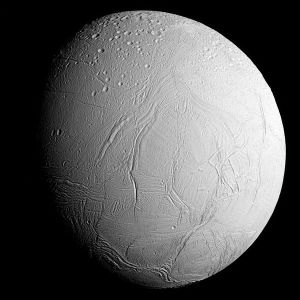
I’m moving. I’m seriously considering Enceladus. Oh, you haven’t been? One of Saturn’s icy moons, Enceladus was discovered to have the basic elements of life as Cassini plunged to its death in Saturn’s shroud. But why Enceladus? I want to make space great again. You see, in my native country all sense of fair play has fled one of the political parties, of which there are unfortunately only two. There haven’t within my lifetime and many decades before, been any contested wins by Democratic candidates. There have been two by Republicans, among the last two elected, and yet they keep changing the rules about who can appoint Supreme Court justices. When I was a kid stacking the deck got you kicked out of the game. What’s fair’s fair.

I hear that on Enceladus they are open to actual intelligent life. You see, they’re evolving and they know it. Unlike my native planet, they believe representative government should be, well, representative. There should be some account taken of the majority. There are no Fundamentalists on Enceladus. See, there they realize that an outgoing president has the legal authority to appoint a judge, bypassing the senate. They believe, I hear, that the senate is controlled by a being called “the adversary.” One of their recruiters told me that the phrase translates, in Hebrew, to “the Satan.” They believe the adversary should not be able to change the rules every time. They’re not Fundamentalists, but they believe in Hell. They say it’s three planets from the sun, make a left at Lisbon.

Of course, they don’t see the sun much on Enceladus. They orbit Saturn, which doesn’t emit any light of its own, although it has the coolest set of rings in the solar system. It’s icy there for a reason. But the employment situation favors the workers. They believe in rationality there. They don’t put children in cages. Their scientists have studied the primates on our planet and have found that all species of them, except one, will reject leadership by individuals who bully the group. They have documented studies—for they believe in science there—that show chimpanzees will drive out an abuser of power because even they have a sense of fair play. Of course, chimpanzees don’t have a senate, but on Enceladus, some joke that it’s hard to tell the difference some times. They have a sense of humor there which, I think, goes a long way toward balancing out the chill. I’m moving, and Enceladus is firmly in the running.


Homo Labelmaker

It’s okay to hate the white man. Mitch McConnell has become the icon of what “the white man” really is. Hatred can be just. Even the Good Book says, “I have hated them with a perfect hatred.” I am not a white man. A few months ago I took a community course on racism. The only male participant in the class, as it turned out. The teacher at one point, asked me my race. I answered that I don’t see myself as having a race, nor do I see other people as having races. We are people. I am not white. He is not black. Being “white” seems a choice to me, a mindset. To me, it is a marker of privilege. If you grew up in poverty, you’re only white if you choose to be. We must get beyond our simple labels.

Believe me, I know the counter-arguments. Our shameful history allows no one to forget. As someone “not of color”—who wants to be colorless?—I am automatically privileged. I’m treated differently by others simply because of the way I look. I don’t like that, because I believe in fairness. It’s part of evolution. The point is that since race is a human construct, we should be able to deconstruct it. Privilege thrives on feeling special, better than others. The white man is the GOP, even the female members of the party. The white man is one who gloats that checks and balances can be destroyed so that he always and forevermore will win. The white man is a slaveholder. I choose not to be a white man. I choose to join the entirety of humanity. Personhood over race.

Christianity, ironically, has been dragged into this distorted outlook. It is seen as the white man’s religion. Women, in this view, are explicitly subordinate. While the New Testament says little about race—one of the earliest converts was an Ethiopian eunuch—it was written and lived out in a Jewish milieu. White men like to select verses from the Good Book to take out of context to support their own wishes. It’s very convenient to have God on your side. If we decide to deconstruct this view we have to insist on refusing to be labeled. That’s not to condone the sins of racism past. The white man doesn’t believe in evolution because that makes race random rather than a deliberate act of God at the appropriately named tower of Babel. Besides, the thinking goes, any creature not human is here for exploitation. God, according to the Bible, is so colorless as to be spirit only. To be god-like is to reject labels, for spirit cannot be seen.


Driving Truth

One of the problems with driving is that you can’t get pictures of billboards. Well, given the way people drive around here, I suspect that may not always be true. Nevertheless, I always think of billboards as trying to sell something. There’s sometimes fairly easy to shut out, but in long stretches of otherwise uninteresting road you fall into their trap. Now having grown up in western Pennsylvania, we always thought the people out east—Philadelphia was the largest city in the state, after all—were more sophisticated. It is around here, however, that I often see billboards selling evangelical Christianity. If you put out your wares, you’ve got something to sell. Money to make.

As I was traveling that stretch of somewhat plain highway 33 between Stroudsburg and Easton I noticed a billboard reading “In the beginning God created the heavens and the earth.” To shore up its academic credentials the billboard footnoted Genesis 1:1. An inspirational sunrise, if I recall, shown over the Bible. Of to the left—of course to the left!—was a small “no circle” and inside the famous skeletal progression from ape to human. The message was “no evolution.” The more I pondered this, the more strange it became. Most Americans are well aware that billboards aren’t exactly the locus of truth. They are gimmicks to try to get you into the store. Like the one a few miles down that advertises the world’s largest humidor; even those with no interest in tobacco might feel just a touch curious what such a place might look like. Why would you take your most intimate personal beliefs and put them on a billboard? Does that make evolution any less likely?

A strange perception has lately taken over this country. The idea that an individual’s wants equate with the truth. Shout it loud enough and it has to be true. Billboards would never stretch the truth, would they? Is that image enlarged to show texture or what? And wouldn’t a better choice of anti-evolution rhetoric have been Genesis 2? That’s where God makes Adam from lowly dirt. Yes, Genesis 1 gives us the dramatic six-day creation, but Genesis 2 manages to say it all happened in one day—isn’t that more in keeping with capitalistic ideals? Greater efficiency leads to greater profits, after all. And profits, we all know, are the real purpose behind billboards for any product under the sun.


Lazing Around

I was a science nerd as a kid. Well, at least I had a real soft spot for charismatic megafauna, but who doesn’t? We had those cheap, plastic figurines of dinosaurs that we incongruously mixed with our mammoths and cavemen—wait, no. We weren’t allowed cavemen because people didn’t evolve. Nevertheless, we didn’t see any problem putting glyptotherium in combat with t-rex. Pleistocene or Triassic didn’t matter—they weren’t here now. Extinction is the great equalizer. One of the figurines that always intrigued me was the giant ground sloth. I mean, here was a creature bigger than it needed to be. Not hurting anybody, it just wanted to eat leaves and laze around. A lifestyle that sounds attractive to this day.

Photo credit: Postdlf, from Wikimedia Commons

Human beings, in a process that is still continuing, wiped out animals bigger than themselves. The story is poignantly told in footprints discovered in White Sands National Monument. A Washington Post piece by Ben Guarino tells how paleontologists discovered a human footprint embedded in that of a giant sloth. Reading the story I couldn’t help but wonder if this was the very last one in existence. What if we’d uncovered the story of extinction in real time? Sloths, apart from being named after a mortal sin, never harmed anybody unprovoked. Simple vegetarians—principally vegans, apart from the occasional accidental bug, actually—they were the ultimate victims of human greed. It is virtually certain that we drove them extinct just like we did the dodo and the fiscally conservative Republican. Not exactly fast food, sloths couldn’t really outrun us, and like good Trumpists, we took advantage of their weakness to our own gain.

Or loss. There are no giant sloths left. We’ll never thrill to the sight of a living eucladoceros, or wonder at chalicotheres roaming the savanna. We’ll never run for our lives from an African bear otter (the mind reels). Our world becomes poorer for our presence, it seems. We moved from huddling in fear in our caves out to take on the beasts with our technology. Once we cottoned onto the concept, we refined it until we could drop an elephant with the single pull of a trigger. Our destruction of megafauna continues at an alarming and accelerating rate. Evolution does have quite an imagination, after all. Like human beings, it can take sins and make them larger than life. And “thou shalt not kill,” we say, applies only to our species.


Woodland Creatures

Maybe I watch too many zombie movies, but the story of zombie raccoons was just too good to pass up. A story by Marwa Eltagouri in the Washington Post described a spate of recent “zombie raccoon” incidents in eastern Ohio, not far from where I grew up. While the likely explanation is distemper, one of the behaviors of these raccoons stands out—they walk on two feet. Since I also enjoy the occasional non-fiction book by Linda Godfrey—who’s made a name writing about anomalous animals in North America, particularly bipedal dogs, or wolves—I found this aspect of the raccoons particularly interesting. That’s the thing, you see. Bipedalism suggests other human-like traits. Think great apes. Or penguins. (Although birds are generally bipedal, they tend to be squat and more horizontally inclined than vertical. The penguin not only dresses for our most formal occasions, but waddles around like many of us do after having been a bit too generous at the dinner table.) But bipedal raccoons—now that’s scary.

As a species Homo sapiens seem to have a need to believe themselves unique. Over the centuries any number of traits have been claimed as unique to us. Bipedalism, the ability to speak, being relatively naked so that we have to wear clothing, being able text with our opposable thumbs—we’re not like other animals. We’re special. So when animals that normally go on all fours walk on two legs we instantly think they’re trying to be like us. They want to have all the rights and privileges of our species so they can elect alt-right leaders and destroy everything they’ve built. Uppity critters! We have trouble reconciling ourselves with our animal origins.

Other animals, it seems, are beginning to note the advantages of walking on their hind legs. I’ve watched enough zombie movies to know that it’s the intention that’s the real problem. They want to be like us. Notice the accounts of bipedal animals—witnesses say there’s something in their eyes. Global domination. Yes, they’ve been watching us and now they want the same things we want. They want to take over the world. I know enough about World War Z to know that you can’t save everyone. Hard choices will have to be made. And maybe I’ve watched too many movies, but I’ve noticed the bipeds are from red states: the dog-men of Michigan and Wisconsin, the raccoon-men of Ohio. If we can’t save everyone, we need to make wise choices. Why not let them have Washington, DC? They certainly can’t be any worse than what we’ve got there right now.


Urban Evolution

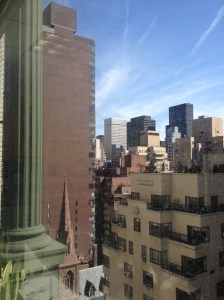
They say ten city blocks are a mile. They also say the internet is fast. Putting these two theorems to the text, I’ve logged several foot-miles in Manhattan to find things that aren’t there. I don’t mind the exercise, but apparently the web can’t keep up with Midtown. I’ve been working in Manhattan for going on seven years now. I very seldom leave the office during the day, eating at my desk and trying to give the man his due. Once in a great while there’s something I’m either compelled to see, or that I must find for various reasons. Almost without fail, such lunchtime expeditions lead to frustration. I recently had to visit a business that shall remain nameless (conflict of interests, you see). According to Google Maps it was a mere ten blocks—a mile—from my office. At a brisk pace I could make it there, transact my business, and return to my cube all well within an hour. As I grew close, I got that sinking feeling I recognize now as internet ghosting. Nothing remotely like my goal was at this location.

I walked in and smiled at the man at the security desk. He was even older than me. “Ah, they used to be here,” he said, “but they left a long time ago. Long time ago.” Apologizing in advance, I asked if he had any idea where they might’ve gone. “I heard they moved across from Bryant Park, on 6th Avenue. But I heard they moved from there, too. You might try it, though.” Since this was roughly in the direction of my office from where I was, I decided to swing by. When I worked for Routledge I went by here every day, and I didn’t recall ever seeing this particular business there. Their security guard was equally as friendly. “I’m afraid there’s nothing like that here.” I had to return to work. When I got back to my office and googled their store locator, the website froze. This was truly unobtainable via the internet.

Some times you’ve just got to let your feet do the walking. Things aren’t always where the internet says they will be. I’ve come to realize that New York City is constantly changing. Buildings now stand where mere holes in the ground used to be when I began working here. Commuting in daily all these years is like time-lapse photography of a plant growing. Buildings emerge behind the green plywood walls, and next thing you know what used to be a synagogue is a new retail opportunity. It may not, however, be the business you’re looking for. Before spending your lunch hour walking a mile to get there, you might try calling first.


Science of Unbelief

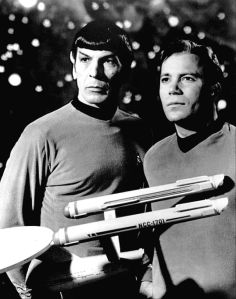
An article a friend sent me from Science Alert back in December recently came to mind. Titled “Thinking About God Might Make You Sweat, Even if You’re Not Religious,” the article by Brittany Cardwell and Jamin Halberstadt discusses how religious ideas are deeply engrained in human psychology. Like people who say they’re not afraid of spiders or snakes, people who don’t believe in the supernatural have made an effort to become this way. For reasons poorly understood, human beings are natural believers. As the article takes pains to state, that doesn’t mean a non-believer isn’t sincere. Thinking, however, doesn’t come only from rationality. Many people hold to the Mr. Spock fallacy—the belief that reasoning can solve anything. We all know from experience that it can’t. The big decisions in life—whom should I marry? What house should I buy? For whom shall I vote?—are often made with the emotions rather than rationally.

Which one’s the captain?

Reason has taught us to be expert deniers. We can learn to overcome our natural aversion to snakes and spiders and we can learn not to believe in God. Sometimes that belief can even be knocked out of us by the silly, unthinking behavior of “true believers.” But deep down it’s still there. Funnily, those who claim that reason alone answers all things are in denial about their own evolution. The human brain is a direct adaptation of the “reptilian brain” with its fight or flight impulses. That viper doesn’t plan to bite your ankle—it’s reacting to fear. Emotions are an integral part of thinking. Crimes of passion are committed by otherwise rational people sometimes. That thing you keep on bumping into in the room is, in fact an elephant. As irrational as that may seem.

The Science Alert article discusses the empirical proof that people fear to dis the Almighty. Were the brain a computer I’d say it was hardwired into us. We’re not wire and circuits, however. We’re messy, organic, evolving stuff that at one time lived beneath the waves. It took a certain amount of lungfish faith to believe we could survive on dry land. As mates approved of such irrational behavior, the trait multiplied and became more common. Today our smart phones and our cubicle window posters tell us there’s no such thing as a deity beyond our own scientific rules. The truth is, however, at some level we don’t really believe it. You can learn not to believe, but you’ll still sweat the big stuff, even in laboratory conditions.


Creating Science

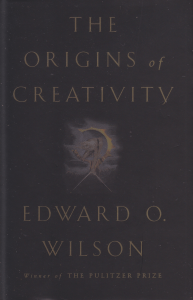
Religion and science. Cats and dogs. We’re used to hearing these two just can’t get along. High profile scientists sometimes denounce religion tout court, and some religionists doubt science’s claims implicitly. Human beings, truth be told, are both rational and spiritual. Often not both at the same time. Edward O. Wilson is a biologist who believes, as expressed in The Origins of Creativity, that the humanities and science are both essential and that the hope of humanity is that both will be embraced. It’s a fine vision—guided by science but aware of the values brought by art, we would live in a world utilizing the best our species has to offer. So, why don’t we?

Apart from the obvious fact that humans are also irrational and non-religious—what else could justify wars?—Wilson has a rather odd answer. The belief in creation myths, he avers, is what leads to much unrest in the world. Not religion per se, but creation myths. Muslims, Christians, and Jews share basically the same creation myth. Their divergences come in other forms. Many don’t much care about the creation myth of their tradition so much as about issues that are based on outdated understandings of humanity. Wilson doesn’t condemn religion per se, which is refreshing, but he does seem to circumscribe it far within its natural boundaries. I suspect his real target is creationism.

In this very insightful little book, another curiosity lurks. Wilson, although he supports the humanities and advocates for them, stresses that they are problematic by being limited to humans. I think I get this, partly. There is much to the world beyond human ability to perceive. Our senses of smell and taste are especially limited. We can’t see as well as an eagle or hear as well as a bat. Incorporating their experiences into the humanities would be way cool, but we would never experience them ourselves. This is terribly speciesist of me to say, I know, but humanities are all about what it means to be, well, human. We are limited. Rationality is limited. We don’t have all the facts, and if history is anything to go by, we never will. Accepting limitations is very human. So is attempting to exceed them. The humanities at their best embrace both. Wilson acknowledges that the study of religion is important, and that our universities let us down by not giving the humanities their due. Science can take us only so far. Creativity is about the most godlike trait we possess.


Nothing Better

While it may seem that the largest challenge on a blog like this is writing all these words every day, that’s often not the case. Early on in my blogging life, I learned that images draw readers in. That may no longer be the case, but I do try to ensure that my posts have apt illustrations. Due to the fact that I can’t keep up with technology, I no longer know where these images are even stored, so when I was seeking a picture—amid thousands—that I had saved on my backup drive, I came across a series of photos taken in central Pennsylvania. These showed some road-cuts with obvious and impressive folding of geological layers characteristic of orogenous zones. Geologists only discovered the earth was ancient in the nineteenth century, and evangelicals have been disputing it ever since.

Genesis, so the spotless thinking goes, says the world was created in six days. So, by God, in six days it was created! When Darwin simply put the pieces of the puzzle together, evangelicals objected loudly. They started electing US presidents in the next century—a blink of the eye in geologic terms. They don’t dispute non-biblical dinosaurs, however. Their kids would object. The impressive sedimentary layers (or for that matter, igneous or metamorphic) were, they claim, made by God to look old. To fool us. That’s the kind of deity he is. So I got to thinking of a “to do list” for a God with nothing better to do than to oversee intricate and complicated layers of rock that make sense in geological time, but which, apparently, are only planted here to test the faith of brand-spanking new Homo sapiens.

One thing such a deity might do is take care of social injustice. Since he is a father, I suspect we ought to listen to his son, my evangelical friends. Jesus of Nazareth seemed pretty set on helping other people and everyone loving one another. This was, of course, between stints of helping make the planet look older than it actually is so that sinful scientists could trick their compatriots into going to Hell by believing false evidence. There are so many things you could do if you had the time to make such intricate traps. Why not write another book, for example? The Bible could use a good sequel. But no, it is far better to spend divine time making a world look older than it is. And if I had been able to save the time looking for that image that took over half an hour to find, a post such as this would’ve never been created at all.


Why Horror?

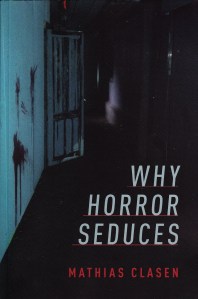
Some people wonder why I like horror. Well, “like” is hardly the proper verb here, I’d rather go the passive route—why I’m compelled by horror. That fits better. But isn’t compel a transitive verb? What’s the object? It really depends on the circumstance—compelled to read, watch, or look at. Quite apart from grammatical imponderables, I keep finding myself coming back to horror and I frequently wonder why. Mathias Clasen may have answered that question for me. Why Horror Seduces is a fascinating study that considers biological and psychological explanations for why we’re compelled to watch or read or play horror, even when we find it distasteful. And it’s not just excusing bad behavior!

As fairly weak creatures that are prey as well as predators, human beings have always placed a high value on security. We’ve driven most of our predators to extinction, but we still have other people to worry about. And microbes. And things that come from space. And, after all that, we still die. These are, realistic or not, things we must face. Horror allows us to confront them and assists us in considering “what would I do if…?” Clasen delves into an evolutionary theory of horror—we’ve evolved to need it. Negative emotions are some of the most ancient, leading us to self-preservation in a hostile environment (something our own government is teaching us anew even now). Watching or reading how people cope in such settings provides us with valuable information. In other words, horror is a learning opportunity.

From that perspective, it doesn’t feel so bad to have written a book about horror movies. I’m participating in the long struggle of humankind against forces that are out to get us. As with most things evolutionary, we need not know why we do them for the whole thing to make sense. Our brains reward us for behavior that is conducive to survival—we like to eat, sleep, and reproduce. Reward centers in our heads go crazy. Then we go to the theater to see the latest, greatest horror film. What may seem counterintuitive here is that we are engaging in a similar kind of activity to other atavistic survival techniques. Watching these movies, reading these books, (and for those who do so, playing these games,) has a basic biological utility. Who knew? And once I get brave enough to crawl back out from under the bed, I may feel better about myself for admitting I like horror.


Devolving Apes

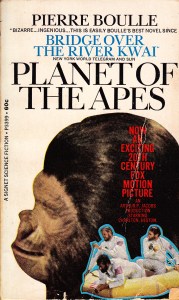
It would be difficult to overestimate the effect the movie Planet of the Apes had on me as a child. Raised a biblical literalist, evolution was, naturally enough, anathema to me. And yet here was a movie based on the idea that evolution had taken a different course. It was a transgressive film, but the screenplay had been written by Rod Serling, so well known for his trusted work on The Twilight Zone. I was utterly fascinated by it. Until the most recent iteration, I’d seen every sequel, spinoff, and reboot ever made. So important was this story line that as a child I found a copy of the book, in English, of course. Pierre Boulle told the story somewhat differently. Spying the book on my shelf after some four decades of my own evolution, I decided to read it again.

We all evolve. I noticed the improbabilities more this time through. The fact that, unlike the movie, humans wore no clothes at all must’ve scandalized my young eyes. I would’ve agreed, however, with Ulysse Mérou’s sentiments that humans were created in the image of God, not apes. In fact, there is an undercurrent of a somewhat conservative theological outlook here. Humans may experiment on animals, but when it’s reversed, it’s evil. In many ways, the cinematic version improves the story, but Boulle’s telling grows in intensity as the novel unfolds. Mérou develops a moral sense that includes the apes as well as human beings. The story, of course, is largely about prejudice and its evils. In that respect, it’s timeless.

As a child I realized that we lose something if we accept the fact of evolution. We lose that special feeling of having been intentionally created by a deity that made us God-shaped. Ironically, I also came to realize that those who rejected evolution often treated their fellow humans like animals. They held onto prejudices against other “races.” They castigated the poor for being lazy. They wish to remove healthcare from those made in the image of God. The contradictions and cruelties simply don’t comport with the Good Book they adore and ignore. Evolution, with the realities of nature impinging on our security, is far less dangerous than what biblical literalism has evolved to be. I can’t say why this book and its cinematic renditions became so deeply embedded in my young mind. But having read the book again, it’s pretty clear that the ideas have remained there, even as they have modified, with descent, over time.