Justice for All

One of the perks of working for a publisher is author talks. I’ve worked for three publishers now, and the last two have made great efforts to bring authors to their New York offices to present their work, in a kind of dry run, to those in the industry. When an author (whose book will eventually feature on this blog, so I don’t want to provide any spoilers just yet) was to speak on misogyny this week, I quickly signed up for a seat. Perhaps it’s a lack of imagination, but I could never understand how one human being could ever feel superior to another. As a child with no father around, my experience suggested that women were the strong ones. Yet when out in society I saw men always stepping in to take charge. What was wrong here?

I realize that I view life through male lenses. I’m also aware that gender isn’t nearly as definitive as we tend to think it is. Biology fits us with bits and pieces, and some of those constructed somewhat like me assume this gives them the right to dominate others. And they say we’re better than animals. Better at what, I ask? No, this isn’t about chauvinism—a man stepping in to support weaker women. This is about justice, plain and simple. We’re all born human. Humanity is nothing without those of both genders as well as those somewhere between. What should separate humankind from the vicissitudes of nature is the inherent commitment to fairness. Life is harsh and not all receive fair treatment. Do not listen to the narrative coming out of Washington, DC! The father of lies dwells there. And yes, I mean “father.”

We used to take pride in having climbed above the mere animals. We have constructed something that used to be known as democracy. Lawmakers, while fighting against women’s rights in word, nevertheless tacitly supported them at home. Now our government has declared open war on women. Men who have no idea what it is like to be viewed as and treated like an object every single day of their lives are making laws to punish those who do. I feel as though the sky is about to crack open and that blind principle we call justice is about to shout “Enough!” That’s not, however, the way that nature works. It is only when women are treated equally with men that we’ll ever be able to call ourselves civilized. Or even human. Until that day we’ll hunker down in our caves and await lawmakers who have any inkling at all of what fairness, what justice, even means.


Gendered Lupines

No doubt an excuse isn’t required for reading about werewolves this time of year. Something about October encourages that sort of thing. Hannah Priest edited a collection of essays from various scholars titled She-Wolf: A Cultural History of Female Werewolves. As is to be expected among academics, there are several interpretations wrapped together here and the book covers female werewolves from the Middle Ages—where they are sometimes associated with witches—up through modern cinema. A number of literary sources and a few television representations, and even an RPG, are also part of the mix. The problem with multi-contributor books is that it’s difficult to draw any overarching conclusions, but some observations do come up repeatedly here, and they are worth pondering.

The connection of the female with the animal nature of human beings is stressed for the female werewolf. As might be expected in a patriarchal culture that is becoming more so daily, this is considered an aspect of inferiority. The connection between lunar cycles and werewolves as an inherent feminization of the monster is also brought up more than once. The bodily transformations of puberty also play a role. What we can clearly see amid all of this is that although male werewolves outnumber females in literature and film, and, with a few exceptions, in folklore, the very nature of the werewolf is coded as feminine. This is something that isn’t obvious until a book like this points it out.

Given my own idiosyncratic interests, I was surprised how much religion came into the discussion. Among classic monsters, werewolves tend toward the secular end of the spectrum. There was, however, from the Medieval Period up through early modernity, an ecclesiastical fascination with werewolves. This fascination often came in the form of recriminations against women—attempts to subject them to the wills of men. The church often blamed werewolves on women out of the control of menfolk. And of course, you may kill a monster with no need to feel guilt. More modern views of female werewolves—particularly in movies—are more, well, humanizing. Recognizing that wildness is part of being an evolved animal means that we’re more sympathetic (or had been until November of last year) to the woman who is able to let go of convention and become truly liberated. Now that we experience the poignant lengthening of nights that stir our primal fears, werewolves come naturally to mind. If only we could learn what they have to teach, we might all howl at the harvest moon.


Zounds Like

Liberation from the confines of academia allows for the occasional indulgence in taboo subjects. I can’t remember when I first heard of stigmata. I didn’t grow up Catholic, and, like many Protestants, distrusted much of what came from Rome. Still, I was interested in the supernatural. When I learned that people in this modern day and age sometimes developed unexplained wounds corresponding to crucifixion, I was intrigued. Ted Harrison’s book, Stigmata: A Medieval Mystery in a Modern Age, is the first I’ve actually read on the subject. It has some fascinating observations to share. It was some time after seminary that I learned that Francis of Assisi (aka St. Francis) was the first stigmatic. I had admired Francis for turning down wealth to assist the poor and commune with nature—what’s not to like?—but I didn’t realize that he had initiated this rare, but real phenomenon.

Harrison considers the question of why it was only in the 13th century that the stigmata began to occur. They have occurred ever since, in very small numbers, primarily in Italy and primarily among women. But why then? He points out that the church, shortly before this time, began to emphasize the physical suffering of Jesus on the cross. We’re probably all familiar with some of the gruesome images that emerged from the church and its artists at that time. As such images proliferated, people were given a visual focus that directed their devotions. Every great once in a while, this led to stigmata. Why women? As Harrison points out, men with intense spiritual needs could become priests. Women could not. The church would not forbid personal devotion, and if such devotion led to stigmata, well, a person arguably had a direct line to the divine. That was something normally preserved for priests through the Eucharist.

Stigmata have to be understood in the context of mysticism. The more recent cases studied by Harrison include some non-Catholics and some other unexpected candidates for what is, after all, a very intense spiritual experience. What emerges is a thoughtful, one might dare say contemplative, approach to the issue. Some stigmata have been self-inflicted. Some have not. Medical personnel have witnessed and examined these improbable wounds and have not explained them away. Once, during a faculty meeting at the New College of Edinburgh University (I was post-graduate student representative) one faculty member groused after one of my advisors had presented a challenging idea: “you’ve dropped us in a mythological world. I want to get us out.” There it is in a nutshell. Some people can live in a world where stigmata occur. Others have to explain it away. The difference is all in the matter of perspective.


The Way

Part of the problem is that I’ve never been fortunate enough to learn Chinese. You see, scholars of religion are often insistent on reading scriptures in their original languages. It has been a long time since I’ve picked up the Daodejing, one of the formative scriptures of Daoism, and I was struck by a number of things. First (and I have the confirmation of Sinologists on this), the Daodejing is difficult to understand. This isn’t just a translation issue. Nor is it an issue of Chinese thinking. All world scriptures are difficult to understand. One of the major problems with the Bible is that it has been translated into English for so long that many assume the language concerns are negligible. They’re not. The Bible has many obscure parts. Also it’s worth noting that the Daodejing has been translated nearly as much as, if not more than, the Bible. It is a very influential text, in part, I’m sure, because it’s not easy to understand.

Paradox isn’t within the comfort zone of many western religions. We like our belief structure to be (mostly) rational and believable. In fact, to start an argument just point out the fact that the Bible has contradictions. (It does, for the record.) The point being that a westerner will want to believe it is consistent and coherent throughout. If they can’t have that in English then they’ll say it’s inerrant in the original languages (it’s not). Religions shouldn’t make your brain hurt. Paradoxes, however, require deep thought. They can’t be read quickly to be stored away as factual information. They do, however, constitute a large part of life. Look at Washington and meditate. Daoism, the religion that generally follows the teachings of Lao Tzu (the putative author of the Daodejing), finds truth in contemplating opposites which are both simultaneously true. And not true. Interestingly, many of the sayings in the Daodejing are similar to ideas attributed to Jesus in the New Testament.

Dao is often translated “way.” One of the striking things about Edmund Ryden’s translation is his choice to use the feminine pronoun for “the way.” This is motivated, as I read it, out of concern to do justice to the presentation of the dao in the Daodejing itself. While the dao is not god, nor personal, it is powerful. The recognition of feminine power is clear in many aspects of the Daodejing. That’s not to say that the culture wasn’t patriarchal, but merely that it recognized balance—the famous yin and yang—as being inherent in the way the universe works. If such an idea could truly take hold the world might be a better place even today.


Thy Fandom Come

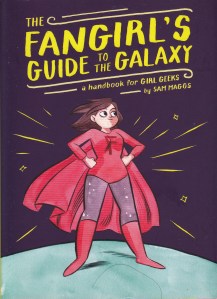
It’s not hard to feel that you’re from another planet. If you were born in the sixties and had kind of a rough transition to this whole internet thing, you know what I mean. Still, I want to be part of it—it’s kind of like New York City, only bigger. And faster. The commute doesn’t take nearly as long, now that dial-up’s a thing of the past. So I bought someone who was into fandom Sam Muggs’ The Fangirl’s Guide to the Galaxy: A Handbook for Geek Girls. This particular fandom, well, fan, gave me the book to read. I’m a feminist, so I don’t have any issues with reading a book intended for girls. What became clear to me, however, is that I don’t understand the internet nearly as well as I thought I did, and that girls find they’re oppressed there too. What is it with men and control?

It is an ethical issue. I don’t blame people in the past for not thinking like we do, but today there’s no excuse whatsoever for considering somebody a lesser person because of their gender. Women and girls have just as much right to “guy things” like geekdom as do males of the species. Fandom is all about fun. Enjoying the fantasy of living, for a little while, in other worlds. From the way many men treat women it’s no wonder that they feel that need just as much as my own self-identified gender. Religion, unfortunately, bears much of the blame for this. In the largest religious bodies in the world women are still excluded from leadership roles. Religion is kind of like fandom in that way, I suppose. It can be all about exclusion. We exclude others to make ourselves feel special. Why not celebrate difference and find a place for everyone?

It’s difficult to read The Fangirl’s Guide as a man simply because you’re constantly reminded (and not intentionally, because it’s written for girls) at how inhospitable men have made much of the world for their female earthling compatriots. I was reminded at several points in this book of how films like Wonder Woman and the recent Ghostbusters stand out in their sympathetic portrayal of women heroes. And equally how men find reasons to criticize them. Then I consider the White House and shudder. When a nation elects an open and avowed patriarchalist as president we all could use a fantasy world in which to hide. This little book didn’t make me into a fangirl, but I do hope it makes me a better man.


Wonders and Signs

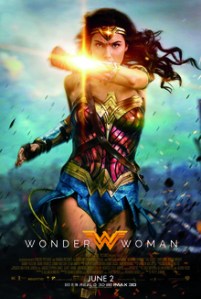
Raised by a woman who would be perhaps classified as a “single mother” these days—she was technically married except for a very brief time just before my step-father came along—I have always had great appreciation for the power of women. She didn’t have super-powers, but she raised three young boys largely single-handedly without the help a young woman has a right to expect. Wonder Woman, when I saw her on television, struck me as a very different kind of female. Strong, yes, but clearly there for men to look at. But then again, I didn’t have the benefit of Patty Jenkins’ Wonder Woman. I left the theater speechless. Apart from a few sniffles my wife didn’t have much to say until about an hour later. It’s that kind of movie.

I’ve seen many superhero movies. In fact, heroes are almost custom-made for the big screen. Comic books are basically storyboards already, and the colors and action are the very definition of spectacle. Wonder Woman, however, complicates the tale of the hero fighting for justice and truth. She fights instead for peace and love. Never supposing she’s anything but capable of defeating the evils of war, she doesn’t take orders from men. She actually shames an elderly, heavyset general for not being on the field of battle where, he acknowledges, others will die for the cause of the armistice. It’s a world inverted. Yes, the men are drawn to Diana, and can’t help but be awed by her. They don’t control her, however. She’s the first out of the trenches and she requires no man’s help when combatting the enemy.

Perhaps the most striking thing about the movie is the respect it to shows to women. Only one nude body appears in the film, and it’s male. I suspect I wasn’t the only man present made uncomfortable by the curious female gaze and the assessing questions of the goddess. Women are made to sit through countless movies as the subject of the male gaze. The embarrassment here is a reminder that making women sexual objects is the normal expectation. What if the roles were reversed? When Wonder Woman fights she is largely defensive. Men want to destroy her. She responds by declaring love will overcome war and owning her role as the “God-killer.” This is a movie with substantial subtext. It challenges the paradigm of men’s rule as wise and beneficial. A god may have to die, but the world is a better place for it. We could use some inversion about now.


Bull

Bulls have long been symbols. If I write “that’s bull” your mind will likely fill in the missing implied word. In ancient times the king of the gods, El, was known as “bull El”—probably for a very different reason than the veiled scatological reference above. Bulls were powerful and, to those in settled, agrarian societies, necessary for life. Of course, they can turn on you and kill you with little thought. Even in our high-tech, urbanite world, we keep our bulls at hand. “Charging Bull,” a golden calf if there ever was one, is a famous Wall Street statue erected to the glory of mammon and greed. On May 7, to celebrate International Women’s Day, a statue called “Fearless Girl” was placed in front of “Charging Bull.” Our symbols require some reevaluation. In a kind of Trump-up, another artist placed a statue of a dog lifting its leg on the girl, according to the Washington Post.

We creative types can be sensitive about our work. Apart from writing I’ve dabbled in drawing, painting, and sculpting, although few have seen the results. I know that the space around an artwork is part of the art. I’ve posted before about Grounds for Sculpture, one of my favorite places in New Jersey. The idea of a sculpture park is that the context of the image is important. Statues show up fairly frequently in New York City. The ever-changing art along the pedestrianized part of Broadway in Midtown keeps the walk to work interesting. Interacting with art is performance. At the same time, the respectful viewer knows, artists are making a statement. Placing a girl before a charging bull says so very much.

“Fearless Girl,” unlike the great lummox she faces, is temporary. Nevertheless, the statement she makes is loud and clear. Wall Street might more aptly be named Ball Street for the amount of testosterone that surges through the place. Men erected a system to keep women out of positions of power. And even when a small symbol of female resistance is placed, some man has to have a pug pee on her. I wonder what our society’s become. We’re hardly agrarian any more, yet we still feel “bullish” about things. When’s the last time anyone used “girlish” as a compliment in a business context? “Fearless Girl” will be allowed to stand until February. The pug is temporarily gone, but will be back. When the girl goes the pug will follow. All that will be left in Bowling Green Park will be bull.


Girls to Men

Seminary in the 1980s was a time of endless debate. Some of my classmates at Boston University School of Theology thought me too conservative—I’d made progress from my Fundamentalist days, but these things wear off slowly. Part of the issue, however, was that I look at things in terms of history. (That’s how I ended up teaching Hebrew Bible although my work is generally history of religions.) I remember an argument over changing a text from reading “man” to “human.” The latter, of course, still has the offensive root, but language is only so flexible. My thought at the time (which has changed since then) was that English “man” derives from German “Man.” In German the noun is masculine since all nouns have gender, but it can refer to either a female or a male. “Man,” in origin, is gender-neutral on the human side of the equation. Mark Twain once famously wrote an essay on the barbarities of the German language where he highlights this.

I’d studied German seriously in high school. After four years of the language I felt that I could understand it in a way that comes when you begin the think of certain expressions and wonder how you say that in English. I had come from strongly Teutonic stock on my mother’s side, and German felt quite natural to me. Of course, in college I had little opportunity to use it. Even less so at seminary, so the details had begun to slip considerably. If “Man” could mean “woman” what was the problem, I wondered. Then I started to think of it from a woman’s perspective. As English speakers, “man” is an exclusive term. It refers to males. Over time it has come to refer to males only. Retaining it in hymns or Bible translations makes them exclusive. We need language to meet new ways of thinking.

The other day I was consulting an Oxford dictionary for something. My eye fell on the word “girl.” To my surprise, I read that “girl” originally referred to a small child of either gender in its germanic roots. This is an archaic usage to be sure, but it helped to explain old photographs where toddler boys were dressed as girls and had long, flowing hair. The young were girls, the adults were men. Gender, I have come to see over the years, is a concept that doesn’t conform to simple binaries. Intersex individuals don’t fit into the either/or paradigm. Language struggles to keep up with reality. Traditionally we all started out as girls and ended up as men. And those would be fighting words these days, whether in seminary or out.


Sea Around Us

Re-reading books is something I do somewhat too infrequently. One of the obvious reasons is that I won’t possibly finish everything I want to read in my lifetime as it is, and once something’s in the vault I tend to move on. I keep books, however, because I frequently go back to them to refresh my memory. Wholesale re-reading takes commitment. I just finished re-reading Rachel Carson’s The Sea Around Us. It’s difficult to describe the impact this book had on me when I first read it, years ago. Even though modern editions state that it retains its authority (broadly it does) I couldn’t help but be struck by a number of things this time through. Carson thought of herself as a writer. In her day that meant adhering to the conventions of language, which was, I admit, embarrassingly masculine. The assumptions of the 1940s and ‘50s against which Carson struggled set the very frame for the discussion. I recall being told in school, by female English teachers, that the only proper pronoun to use when the subject was of indeterminate gender was the masculine. I raised my eyebrows, but being good at following rules, I didn’t raise my hand.

Not that this takes away from the poetry and mastery of The Sea Around Us. It is a wonderful book. It also made many people stop and think about the ocean for the first time. Really think. And that’s a second observation about my re-reading. Hearing the recitation of how, historically—or prehistorically—the oceans covered much of North America. Thinking about how my hometown, far, far inland would’ve been underwater for eons really made me ponder. We’ve built our coastal cities rapidly, and with typical human short-sightedness. Even without our generous input, global warming has been ongoing for centuries. Sea-levels have been rising. Our desire for wealth, settling as close as possible to the water to facilitate trade, didn’t take into account what would happen in the perhaps foreseeable future. Even now when the warning is loud and clear the businessmen of the White House are in full denial.

There’s a kind of strange justice to this. You see, one of the other features of The Sea Around Us, and one of the most compelling aspects of the book, is Carson’s narrative of how we came from the sea and our desire is to return to the sea. Our blood evolved from ocean water. We rely constantly and in significant ways on the oceans. They, for example, are the powerhouses and condensation points for almost all of our weather. They separate us and bring us together. The very origin of life itself basks in pelagic profundity. Indeed, the ocean supplies the very concept of “profound.” The deeps. Although it had a beginning, it seems the world ocean will outlive our tribal little race. Damaged and poisoned by our greed, in eons it will recover. And those beings that survive will find their own wisdom beneath the waves.


How to Type a Stereo

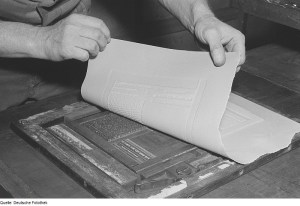
In the early days of publishing, type was set by hand. Individual letters, inserted backward onto plates, were used for printing the positive of a page. Printers could make as many pages as desired, but once the letters were released, it was time-consuming and costly to arrange them all again. If a book (principally) was expected to sell well enough for reprints, a plaster or papier-mâché mold was made of the page. This could be used to cast a solid metal plate of the pages to store for future print runs. This solid plate was known as a stereotype. Every copy from the plate would be exactly the same. When the plate was no longer needed it could be melted down and recast. The origin of stereotyping is a useful reminder of what happens when we preconceive a notion. For example, if I write “computer programmer” there is probably an image that comes to mind. No matter how many stereotypes confirm that mental picture, it isn’t true to the original.

Photo credit: Roger and Renate Rössing, Deutsche Fotothek, via Wikimedia Commons.

A piece by Josh O’Connor on Timeline, “Women pioneered computer programming. Then men took their industry over,” tells the story. Back in the early days of computing, when programming was seen as the menial labor of swapping out cables and plugs, it was “women’s work.” When it became clear how complex this was, and how many men didn’t understand it, the job was upgraded to “men’s work” and women in the industry were replaced. Stereotyping wasn’t just for boilerplate any more. The unequal assumptions here have led to a situation where computer engineering jobs still overwhelmingly go to men while women take on more “gender appropriate” employment. Any task that requires mental calculus benefits from input from both genders. One’s reproductive equipment is hardly a measure of what a mind is capable of doing.

Stereotyping is so easy that only with effort can we force ourselves to stop and reevaluate. The computer industry is only one among many that has been remade in the image of man. Our archaic view of the world in which everything is cast metal should be softening with the warming of intellectual fires. A large part of the electorate in our technically advanced nation admitted it just wasn’t ready for a woman in the role Trump is daily cocking up. It will take more hard lessons, perhaps, before even men can be made to admit that women can do it just as well, if not better. Stereotypes, after all, are eventually melted down to make way for new words. This may be one case where literalism might be a reliable guide.


Mothers’ Daze

Washington’s war on women has made this Mother’s Day especially poignant. As hard as it is to believe, Paul Ryan and Mitch McConnell had mothers. I can’t comprehend any male being anything but grateful and humble in a woman’s presence. Don’t accuse me of idolatry—I know women aren’t perfect. Neither are men. Especially not men. Mother’s Day isn’t an excuse to treat our moms as less-than-special other days of the year. We sometimes forget that life is a gift. And we should always say “thank you” to those who give. Pregnancy isn’t easy on a woman’s body. Indeed, until recent times childbirth was the number one killer of women. At some periods in history female life expectancy was only into the twenties. Giving birth is a self-sacrifice. We would do well to remember that daily.

Social organization outside the home was conveniently male early on, but not necessarily so. Without our mothers none of this would’ve been possible at all. Why do we fail to give back when we’ve been given so much? Yes, our moms are special to us, but women everywhere are mothers, daughters, and sisters to all of the men out there. To be human is to be both female and male. How could we ever forget that? How is it possible to use woman as political bargaining chips as if one person has any kind of right to tell another how to use her body? When we look at mom do we see only a physical body? Do we not see a mind? Emotions? Love? How can we look into the face of all that and claim that men are in any way superior or deserving of more than their share of power and prestige? Mother’s Day should be a revolution.

I don’t mean to be combative, but I’ve been pushed into a corner. From my earliest days I’ve felt women were stronger than men. Being raised by a mother on her own can be a revelatory experience. I emerged with nothing but gratitude for the sacrifices one woman had made to be called a mother. If any men have forgotten that lesson, use this Mother’s Day to repent. If you’re alive to read this, or to share it, you have a mother to thank. And tomorrow’s no excuse to forget that and act as if this one day were enough to show gratitude to those who have taught the human race to love. It’s Mother’s Day, but so should every day be.


See Around Us

There aren’t too many people that I consider personal heroes. Those that I do have earned the sobriquet in odd ways, I suppose. That makes them no less deserving. Rachel Carson became a hero because of The Sea Around Us. Published over a decade before I was born, it was a book that I treasured as a teen—or even as a tween, had the word existed then. I was no literary critic, but her style and lyrical writing drew me in and my own love of the ocean I’d never seen was kept alive through her words. Mark Hamilton Lytle, I think, shares my evaluation of Carson as a hero. The Gentle Subversive: Rachel Carson, Silent Spring, and the Rise of the Environmental Movement brought out much of what I admired, and still admire, about her. A woman in a “man’s world,” she became a scientist with a gift for literary finesse. She struggled, she believed, and she died far too young.

Lytle’s book builds up to the publication of Silent Spring, which appeared just two years before Carson’s untimely death. I picked up Silent Spring as a tween as well, but only read it within the last few years. I knew this book had nearly singlehandedly launched the environmental movement, but as the shame of modern life constantly reminds me, I’d been too busy to read it. Born the year it was published, and not terribly far from where Carson herself was born, I had an affinity with the book that strangely kept me from it. It isn’t easy to read, even today. Especially today. With a government ignorantly rolling away all the environmental safeguards that six decades of careful thought have put into place, we need Carson now as much as we did in the 1960s. Her modern critics, as might be expected, tend to be men.

Carson showed that a woman can change the world. Those who disparage her stunning work claim that her following is a religion, not science. Carson was a rare scientist who saw that everything is interconnected. There may be some mysticism to this, but for those willing to admit it, we feel it to be true. On the eve of environmental degradation that will, in a perverse kind of justice, possibly wipe us out, we need to return to the fine words and clear thinking of one woman who took on industrial giants to give a voice to the people. We do have a right to determine what happens to our planet. Lytle makes the point that Carson was like a prophet. For me the comparative preposition can be removed altogether.


Good Newsists

In the interest of avoiding conflict thereof, I cannot yet give a review of Randall Balmer’s Evangelicalism in America. Since I’m writing a review of it for Reading Religion, I’ll use it as a springboard into a topic that should concern all who believe in religious freedom. One of the resounding themes of Balmer’s treatment is that Evangelicalism, after it wedded to the Religious Right, lost its soul. Those are my words, not his, but the sentiment’s about right. For anyone who wasn’t politically aware in the 1980s, it may seem a surprise that religion didn’t enter into politics before that decade. With the exception of the fear of the Catholic in the case of John F. Kennedy, religion wasn’t used as a political wedge until the presidency of Jimmy Carter. The Religious Right, unhappy with the born again Southern Baptist in the White House, moved to solidify the Evangelical bloc.

Evangelicals had been an underground movement for half a century. Many had no idea what being “born again” meant when Carter first claimed the sobriquet. Balmer points out that it was the threat of the withdrawal of tax-exempt status to discriminating Christian schools that led to political action. Bob Jones University, fearful of racial intermarriage, didn’t admit African American students. Leaders of the Religious Right saw the loss of tax-exempt status as a move against their sacred segregated culture and a push that required a shove. Coopting the abortion issue (historically Evangelicals had supported women’s rights, including the right to abortion in many cases), they nailed together a platform for political activism which put women “back in their place,” kept racial “purity,” and romanced a total aberration in Christianity—the “prosperity gospel.” All of this is well documented. And well hidden.

Looking at Evangelical politics today, abortion—the control of women—has become THE issue. It’s hard to believe, as Balmer amply illustrates, that Evangelicalism used to be allied with the Social Gospel. It was a religious view with a conscience and it supported issues that are now polarized as “liberal” and leftist. This shift came about gradually, but not accidentally. There were political players—Balmer names names—who had one goal in mind, and that goal wasn’t Jesus or what he’d do. It was the sweet prize of political power. Evangelicals, you see, are born followers. A leader with a strong voice can lead them just about anywhere. Many Evangelicals today would deny their more liberal history, but it is right there for anyone who’s willing to learn something about who they once were.


Witching Well

Salem, Massachusetts, brings to mind images of intolerance and a culture ossified in superstition. That’s not really fair, of course. Even in the late seventeenth century the people of Salem were living during the Enlightenment and they understood enough of science to question the legitimacy of the spectral evidence of the kind that would stand in Washington DC today. With twenty direct deaths due to witchcraft accusations and many more lives disrupted or ruined, this tragic episode has perhaps unfairly cast New Englanders as credulous rubes willing to believe just about anything. If you’re like most of us, you may not be aware that other witch trials were going on around that same time period, but with differing results. Richard Godbeer’s Escaping Salem: The Other Witch Hunt of 1692 recounts the events in Fairfield County, Connecticut in Salem’s haunted year. As in Salem a young woman began experiencing fits. Medical explanations—rudimentary as they were—didn’t explain everything away, so supernatural causation was considered. Witchcraft was suspected. Accusations were made.

In the case of Kate Branch of Stamford, as Godbeer shows, Connecticut was learning the lessons of Salem in real time. The belief in witches and witchcraft was just as real, but realizing the bad press their northern neighbors were receiving, the Connecticut Yankees insisted on more stringent evidence. Indeed, judges dismissed the jury to reconsider their decision and even overturned it based on reason. These were people who knew that human lives were at stake. They also knew that Salem was doing nothing to vindicate the cause of either Puritans or justice. We don’t hear about it so much, I suspect, because those in power did the right thing. Given present circumstances, reading about Americans who actually learned from history is encouraging. We read daily of a president woefully unaware (and proudly so) of his own nation’s history. What could possibly go wrong?

Witch hunts are sad miscarriages of justice in the best of times. In days when minorities are being scapegoated for the problems capitalism itself causes, we have to wonder if, apart from those in contemporary Connecticut, we’ve learned anything from Salem at all. Wasn’t it clear that targeting women—many of them social outsiders, and pretty much all of them recently descended from immigrants—was in itself just plain wrong? We pride ourselves on having outgrown belief in magic, and yet we go into that voting booth without a rational reason to elect a self-evident bigot and abuser of women and do it anyway. Reading, knowing where we’ve come from, prevents all kinds of tragedies. And this isn’t alternative factual history. It happened in the very shadow of the calamity of Salem, Massachusetts.


Whither the Weather?

The weather which we’re having, showing the impact of imaginary global warming, has been quite dramatic of late. I recently had occasion to be out driving during one of the more intense weather events when the sun broke through only to reveal an impressive array of clouds heading in—all the way from the ground to the gray ceiling of the firmament itself. It was quite beautiful in a threatening way. Of course, I’ve been fascinated by the weather for years, going so far as to write a book about weather in the Bible. A friend recently sent me a story reminding me of an under-recognized aspect of witchery. Our standard cultural myth suggests witches are all about casting spells on your cow, or your family. In reality, many witchcraft accusations were about bad weather.

The story by Pollyanna Jones, “Storm Callers—The Art of Weather Magic,” describes beliefs in witches and weather magic. I couldn’t help but think of our current situation. We live in an age of empowered climate change deniers who also happen to be misogynists. Can this be mere coincidence? 45 and others of his caliber seems to think that women are the cause of all masculine problems, which are, after all, the only problems that really matter. The red states do seem to have a preference for the dark ages, overall. I don’t need to worry about them reading this because electricity is of the Devil and the internet doesn’t really exist. It’s amazing how liberating blinders can be. February was spring this year and April feels like January. Must be some woman to blame.

The truly tragic aspect of this tiresome repetition of misogyny parading as righteousness is that the myths behind it have been thoroughly debunked. The atmosphere’s so complex that even with all our understanding of fluid dynamics and chaotic systems we still can’t be sure what tomorrow’s weather will be like. The atmosphere, by definition, is larger than the surface of the earth and is constantly trying to adjust itself like a passenger on a long-distance commute. Yet we go from McCarthyism to Watergate to Reaganomics to 45 rpm, each one as tawdry as the previous attempts to blame the poor for the woes of the rich. “He maketh His sun to rise on the evil and on the good, and sendeth rain on the just and on the unjust,” Scripture saith. That doesn’t sit well with true believers, however. It’s much easier to hunt for witches than to deal with facts.