Bunny or No?

Since we’re in the midst of a smaller holiday season (capitalistic societies can only get away with one major holiday season because the workers must work) many people are wondering whether they should go to church for Easter tomorrow.  I’ll confess I woke up from a nightmare this morning where I accidentally forgot about COVID-19 and went to church.  I stepped inside and the building was full.  I tried to find an empty pew to socially distance myself from all but the Divine, and there was no room.  I felt infected as others started to cough around me.  In real life I’d just read from the World Health Organization’s situation report (number 80, located here, in case you want to see) that we’ve just reached day 100 since WHO received its first notification of this new disease.  The report has guidance for those who feel compelled to gather for religious services.  It makes for very interesting reading.

WHO, like certain political parties, knows that people will listen to their religious leaders rather than reason.  (And still our universities cut positions in their religion departments since, apparently, it is best not to know about such things.)  Recognizing that a secular, science-based organization simply can’t compete, WHO urges religious leaders to spread the word about evidence-based responses to the outbreak.  Don’t gather large Easter-day crowds (they also mention Passover and Ramadan), but, interestingly, do keep the services going.  WHO recognizes the psychological (you can’t say “spiritual”) value of religious belief.  It gives people hope and comfort.  It keeps them going in difficult times.  Call it mental health, but the World Health Organization has wellbeing right there in its title.
Photo credit: ItsLassieTime, via Wikimedia Commons

Ironically, the same day I saw an email from the other acronym in my life, SBL (the Society of Biblical Literature).  They were releasing their annual report showing the dismal job market figures for the discipline over the last year.  These jobs are fading and although WHO recognizes billions of people are motivated by religion our smartest institutions are shifting their money away from understanding it.  The COVID-19 outbreak puts us in this strange place where disjunctures become focal points.  If you look at a field of uniform gray long enough you’ll stop seeing anything at all.  You need contrast for vision to work.  WHO recognizes that religious observance constitutes a major challenge for the effort to keep people isolated.  Universities now in isolation, continue to see no reason to study this.  I’m waiting to awake from this nightmare.


Distance Education

As an exile from academia, I do feel for my employed colleagues who are having to learn distance education techniques on the fly.  I do also feel compelled *ahem* to note that I was trained in online teaching long ago at Rutgers University.  The school declined to hire me then, and I’ve had no offers since.  Now it’s become fashionable for academics with virtually no online experience to look to the hills—whence is their help to come?  It’s not very often that I can claim to have been ahead of the curve.  In fact, I’m usually so far back that I don’t even know there is a curve.  Mismatches like this (someone who’s always been good at teaching, and trained to do so online, who’s been deemed exile-worthy while the unprepared now brush off their virtual bona fides) occur all the time in history.  It’s one of the things that makes it interesting.

Higher education isn’t a luxury.  I disagree with President Obama that all people should go to college, though.  Not everyone needs to.  Everyone should be able to attend, however, if they feel compelled to do so.  There are a number of myths about it that politicians of all stripes should seek to dispel.  One is that the more education you get the higher salary you’ll be able to demand.  As a Ph.D. holder I know that is decidedly not the case.  There are plenty of manual labor jobs that pay better than the options open for a humanities Ph.D. earner.  I also know that universities don’t tell new doctoral candidates this fact.  The old ways are changing.  I’ve often wondered if the collapse of civilization would be slow or rapid.  Living through it I now can see it looks slow from the inside.  Future historians will need to assess for future readers how it looks from the social distance of chronological clarity.

Historically crises have helped people pull together.  This one seems only to have divided us further.  If our government knew how, it could now model kind and considerate behavior.  It doesn’t know how.  The selfish often don’t comprehend how the wellbeing of others can affect their own.  Some companies are beginning to realize that customer loyalty after the crisis may depend on reasonable treatment at at time like this.  For others it’s more difficult than house-training a new puppy.  Nobody wants to go into exile.  When you do, however, you can’t help but notice how it changes your view of things.  Ironically I was hired away from academia the very year I had completed my training in distance education.  I can image how it might’ve been.  But then, I’m living in a land not my own.


Merch

I recall the time I first heard the word “merch” used as a verb.  I was with some wonderful ladies on the second annual Women’s March, in New York City.  We had to leave fairly early to get there from Jersey and as we made our way to the march route, we saw the goods.  Vendors had all kinds of things on sale, from the ubiquitous tee-shirt to refrigerator magnets.  One of the women in the group said, “I guess you can merch anything.”  And so you can.  People will buy all kinds of identifying marks.  It’s a craze I personally don’t get into.  I buy plain clothes, having more of an Amish aesthetic.  Still, I was a little surprised to notice that the Society of Biblical Literature is now merching itself.

Now, who can blame a non-profit for trying to score a little on the side?  We all know what that’s like.  What I find myself most curious about is who would want to advertise that they’re working on a degree that will, in all likelihood, find them on the breadline when it’s all over?  I’ve known many who’re proud to be nerds—they’ve got employment to give them creds.  Those of us tormented by the meaning of it all, not so much.  My decision to go to grad school was accompanied by the blessed assurance that there’d be plenty of opportunities, but there was no merch.  Indeed, I was two years into my doctorate before  I even found out what the SBL was—the great connector whence came jobs.  At least in theory.  I found my post at Nashotah House because a friend told me about it.  I still have some of their merch.

Knowing what I do now, would I have done it any differently?  It’s difficult to say.  Who can recall the frame of mind of his younger self with such clarity as to know his choices?  Having studied Bible I was curious whence it came—to turn back even further the pages of history.  As I sit here in the early morning I have on my last two remaining pieces of Edinburgh merch.  My moth-eaten woolen divinity scarf and my blue alma mater sweatshirt.  I try hard not to think how close to three decades ago it was.  I was so sure I’d find a job with that rare Scottish degree, imprint of John Knox’s breeches still fresh upon my head.  Instead the merch of my current employer—a coffee mug—stands before me, reminding me that work alone awaits.


See Index Saw

Too much of my life is taken up with indexes.  If life with technology is a teeter-totter, then my generation stands just above the fulcrum.  There are guys with whom I attended college who maintain no internet presence at all.  I’ve repeatedly searched for college buddies and come up blank.  Those in the decade following mine, if they want to work, have pretty much resigned themselves to tech.  Those in the decade before, not so much.  What does this have to do with indices?  Plenty!  You see, in academic publishing, and its consequent research, you need to look stuff up.  If you read multiple books on the same topic you’re not likely to be able to pinpoint a page number without an index.  You remember you read it here (you think) and so you stick a finger in the back and begin checking out the pages referenced until you (hopefully) find it.  That’s the old school way.

I’ve typed my fingers down to the marrow trying to explain to guys my age and older that the average academic no longer uses a print index.  Just about everything has been digitized.  Although I’m no fan of ebooks (I very seldom read them) looking things up is sure much easier with a searchable PDF.  Type in your search term and voila—an easy list of references appears that can be quickly clicked through and checked.  And yes, my colleagues, that’s what people are doing these days.  I lament the decline in print books.  When I set out to write a book I have a physical object in mind.  It has pages and a cover.  A spine.  I am writing a book, not “content” to be “exploited” in “multiple formats.”  And yet, the index is really no longer necessary.

The typical academic author whose book is at the production stage fusses greatly over the index.  Calmly I explain that indexes are very rarely used.  They must have detailed indices, they insist.  The thing about teeter-totters is that they move.  I have an inner-ear problem.  As a child this prevented me from doing the usual playground things like swinging and seesawing and spinning, to different degrees.  I still can do none of those things well.  My wife and I bought a gliding rocker early in our marriage, that seats two.  We quickly learned that I couldn’t rock with her.  Indexes, you see, are on one side of that long board.  It’s the side on which the heavy weight of time rests.  So ponderous is it that the kids on the other side just can’t get it off the ground.  And I spend my days over the fulcrum trying to get the two sides to play nice together.  Without rocking the thing too much.

Photo credit: Chicago Daily News, via WikiMedia Commons


Classic Monsters

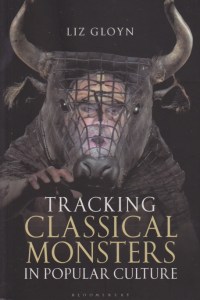
Convergent evolution is a term that’s used for when two unrelated species, separated by some gulf, develop a smilier trait independently.  I began studying monsters in biblical reception history before I really knew others were doing so.  After I’d written Holy Horror I discovered an article by another scholar who was doing similar things, even looking at some of the same movies.  Liz Gloyn, it turns out, was also doing something quite similar with classical monsters.  Her Tracking Classical Monsters in Popular Culture just came out a couple months ago.  Having taught classical mythology for a few semesters at Montclair State University, I have retained an interest in the subject and I was delighted to find a scholar who suggested that to get at the real substance you sometimes have to look beyond the heroes to the monsters they fight.  It’s the monsters who often prove more human.

Covering both cinema and television, Gloyn considers how classical monsters are represented in modern reception.  She looks at their appearance in literary forms as well.  Obviously not all of these reception avenues can be examined, but those she chooses are entertaining and informative.  In the case of biblical studies, I long ago came to the conclusion that biblical scholars pretty much just speak to each other.  The average person doesn’t read their books and the average pastor doesn’t either.  Laity, for the most part, get their interpretation of the Good Book from pop culture.  There’s a very good case to be made that, shy of sitting down and reading through a very big book, people would have little access to the Bible, or classics, if it weren’t for media representations.

Concurrent with my teaching classical mythology, the release of the reboot of Clash of the Titans transpired. (Gloyn covers both the original and the remake in her book.)  Students were really excited, anticipating the film.  It was one of the rare times (The Book of Eli was another) when I felt compelled to watch a movie as an adjunct professor, simply to share the experience with my pupils.  Clash of the Titans had made an impact on me in high school but the reboot failed to take me to the same place.  Still, here be monsters.  Those who’d never read Hesiod, Ovid, Pseudo-Apollodorus, or Homer, may have thought they were getting the straight dope from the silver screen.  That’s what reception history is all about.  Gloyn’s treatment kept me riveted, and I used to teach the subject.  Monsters have a way of doing that to you.


Without Peer

Peer review makes the world go round.  Well, at least the academic world.  It’s based on a simple enough premise: if your academic work is passable other scholars will be able to tell.  It’s a process fraught with peril, however.  Scholars, being human, are subject to fits of pique or of hypersensitivity, or just having gotten out of the wrong side of bed that morning.  Perfectly good projects can be shot down with a single, well-placed arrow.  Or even dart.  Problem is, there’s no better system for deciding if academic work is adequate, or even good.  There may be some objective measure out there in the universe, but if there is we don’t have access to it.  We have to rely on peer review.

During my teaching years, which numbered nearly twenty, I was never asked to peer review anything.  My first invitation came while I was working as an editor.  Of course I said “yes.”  A number of scholars, however, don’t share the basic reality that if nobody peer reviewed their work, they’d never get published.  Many scholars decline offers to review their colleagues’ work.  I even had a very senior scholar once blithely tell me that he had his own research to do, so why should he take time to review that of others.  Professional reserve prevented me from pointing out that if his colleagues felt the same way he’d be as unpublished as a fresh doctorate-holder.  Scholarship is a cooperative venture, no matter how many Lone Rangers ride the cuesta.  So why is it so difficult to find peer reviewers?

I’ll read your book if you’ll read mine!

Something I’ve noticed is that many scholars are coddled.  Constantly told that they’re brilliant and gifted, they come to believe it like miniature Trumps.  More to the point, perhaps, is the shrinking number of academic positions.  The few who hold actual jobs are bombarded with other tasks, including committee work, advisory duties, and sometimes even teaching (depending on the adjunct pool).  I know it’s tough.  Been there, done that.  Nevertheless, academia cannot survive without the basic peer reviewer.  Education is a cooperative venture.  We may imagine the academic alone in her or his study, but breakthroughs generally come through when people work together.  Of course, my job is one performed in isolation.  Increasingly, academics can be found not in their offices, but working remotely from home.  Is the sense of “peer” itself breaking down?  My own book, Nightmares with the Bible, was slowed down by peer review.  In a sense I’m glad it was.  Hi ho Silver, away!


CBD

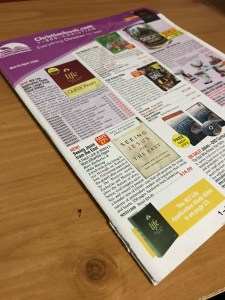
They found me.  I used to call them CBD, but because of the popularity of a certain hemp-based product, Christian Book Distributors changed its name.  Now I knew about them long before they had me on their mailing list when I taught at Nashotah House.  When I was a seminary student in Boston I made occasional trips to CBD’s Peabody warehouse for sales—this was quite a boon to students who never have enough money (little did I know!).  Books you’d heard about in class were there, for a fraction of the price.  At Nashotah I always looked over their bargain page, because, well, professors like books.  I recognized their catalogue in my mailbox instantly.  The name is now Christianbooks.com.  Grab some munchies and sit down.

Not only the name has changed.  Back in my student days I could find academic resources here.  As religion in America has become more and more polarized, what used to be CBD (if I use their current incarnation my computer insists on putting links in) has become radically conservative.  Page after page of study Bibles reveal no hint of the mainstream bestsellers in the genre.  It’s as if they don’t exist.  More than that, if you leave them out maybe people will come to believe they don’t exist.  Even the bargain books are nothing an erstwhile professor would buy.  Instead of academic titles there are all kinds of Barnes & Noble-type gimmicks to get shoppers to spend their money.  Like junk food for the soul.  I look at the books on my shelf.  Some of them were purchased, cash in hand on the ground in Peabody.  Not any more.

There will be those who claim (fake news is the only news now) that what has changed is me, not them.  The fact is places like CBD used to be more open minded.  They admitted the possibility of doubt.  Now your choices are Scofield or Ryrie.  That should be enough for any appetite.  Not only that, but many of the titles now sound militaristic.  Battlefields and all.  Thumbing through, I wonder where Jesus has gone.  The evangelicalism of my youth was clearly Prince of Peace centered.  Now it’s politicized to the point that I’m not sure what it represents beyond GOP values of greed, opportunism, and power.  Anyone who thinks differently need not apply.  How CBD found me after all these years, I do not know.  I wish they’d consider saving the environment rather than printing catalogues to send me.  The climate, despite what they would claim, has changed.


Speaking of X

The project that ultimately led to Holy Horror and Nightmares with the Bible was an article.  Intrigued that the quasi-horror Fox series Sleepy Hollow was so solidly based on the “iconic Bible” in its first season, I wrote an article on how the Bible functioned in it.  After that was published I realized that there was plenty of material for a book on how the Good Book appears in horror films.  That book, of course, appeared late in 2018.  Nightmares with the Bible was a kind of sequel, but moving in a different direction.  It looks specifically at how ideas about biblical monsters (demons) are mediated through horror films.  This post isn’t all an introspective about past projects; in fact, it’s about present watching.

At one point in my research I noted that the X-Files wasn’t as biblically based as Sleepy Hollow.  I stand by that assertion, but my wife and I’ve been rewatching the X-Files on weekends for several months now.  Nearing the end of season two I’ve noticed just how often the Bible appears in it.  Unlike Sleepy Hollow, where the entire story was premised on (largely) the book of Revelation, the X-Files has multiple episodes that focus on religion.  What we might call New Religious Movements feature in some of the vignettes while others posit older, hidden religions.  The Good Book appears visually many times, or, and it’s often quoted, even if not shown.  Although some of the episodes are lighthearted, many of them are played as straight horror and address the question of the reality of evil.  I hadn’t been alerted by Sleepy Hollow the first time we made our way through the X-Files, but if I had more time, and if anyone were still interested, there’s a book in this.

Ironically, even in the light of a political party that takes its energy from a religious base, universities are no longer interested in the study of the subject.  I have no reason to believe that these two television series are isolated instances that I’ve just stumbled across.  American culture is biblically based, no matter how secular it may be.  To my way of thinking, when something like the Good Book has such a strong influence, the response of the rational should be to try to understand it.  I know what biblical scholars do all day; I used to be one.  Only in recent years have some of them begun to turn toward the concept of the iconic Bible and to consider how it influences American thinking.  I can only do this on a small scale, in my free time.  What I see, however, like a good X-File, defies explanation.


Reading Education

Perhaps like me you’re afraid of the news.  Not because it’s fake, but because it’s real.  Then every once in a while curiosity gets the better of me and I uncover my eyes.  Sometimes you can’t help but see.  With the utter mess we’re in over here, it’s difficult to keep up with news from other countries we know.  I’ve lived in the United Kingdom and I’ve worked for British companies.  Needless to say, I wonder what’s going on over there from time to time.  Lately I’ve been getting auto-replies to my emails to British colleagues stating that they’re on strike.  I asked a friend in the UK about this.  It used to be the professorate was treated with some regard in Her Majesty’s domain.  Not being a financially minded person, I haven’t been aware of how deep or devastating our capitalism-induced recessions and depressions are.  Apparently they’ve been bad enough to derail even British higher education.

Compensation for the professorate has been eroded away.  Their pension plans have been depleted.  Knowing the problems we have over here with professors refusing to retire, I was surprised to learn the UK has the opposite problem—professors unable to afford to retire.  Now, lecturing isn’t physical labor, but class preparation (and committee work) take a considerable amount of effort.  I could see not retiring if it meant lecturing only, but with everything else required, not retiring would be, well, exhausting.  As over here the root of the problem is that higher education is the route into which many smart people are steered.  You’d think it’d be a wonderful problem to have too many highly educated people.  It’s not.  With advanced study comes advanced debt.  And limited employment prospects.

There are nations in the world where higher education is deeply valued.  Where educated people are respected.  Ironically, the nations enamored of capitalism aren’t those places.  The only learning that’s required is how to get money from someone else.  Beyond that, the rest is commentary.  British higher education has fallen on hard times since I read for my Edinburgh doctorate.  Schemes have been put in place to ensure faculty are being productive.  Yes, there are some lazy ones.  The majority, however, pull their weight and then some.  And now they’re being told they must do so until the grave.  No retired professor wants to spend her or his old age bagging groceries at Sainsbury’s.  And so they’re going on strike.  If only the world valued knowledge more than money there might be some news worth reading.


In the Cult

The word “cult” has fallen out of favor with religionists.  The reason for this is the problematic claim that any one religion makes to being the “only true” religion.  If that religion then sets about to study other religions there is a built-in bias that the study is being done from the perspective of those who know the truth looking somewhat bemusedly toward other religions.  A cult was defined as a relatively new religion with a fairly small number of adherents.  The more correct term is a “New Religious Movement.”  The idea of brainwashing is controversial, but it is clear that people can be made to follow the leader against their better judgment.  We’ve seen this time and time again and not just in places like Jonestown or Waco.  The word “cult” seems to fit.

Branch Davidian compound in Waco; photo credit: FBI, courtesy Wikimedia Commons

A friend recently pointed me to the work of the psychologist Jeremy E. Sherman.  Sherman has been studying the behavior of Trump followers and has illustrated quite well how it is a cult.  This is one place where the use of the term becomes essential.  I’ll lay aside my objections to the word to point out that a cult denotes a group that follows a leader without critical assessment of that leader.  You’ll have noticed that Democrats are quite critical of one another.  They think about and assess what each other say and do.  When someone like Trump, who is well known as a Pez-dispenser of lies, becomes a saintly paragon of his party, capable of no wrong, we’re in the land of cults.  What Sherman does that I can’t, is suggest how to deal with such thinking.

Most of us try to reason with our interlocutors.  If reason is turned off, as in blind following, it simply falls on deaf ears.  The public record of Trump’s doings speaks for itself.  Those who refuse to see it or engage it will never be reasoned out of it.  The parallels with Hitler’s Germany are extremely frightening.  Not even a decade after his death Hitler was understood to have been clearly unstable and driven by evil impulses.  Many of those alive today overlapped with the lifetime of this dictator.  There’s no doubt that Nazism behaved like a classic cult.  Presented with credible evidence of breaking the law while within office, Trump’s followers blithely acquitted him.  Those who study cults would expect no less.  We need to arm ourselves with knowledge of how religious thinking works.  To do otherwise is dangerous, despite what our economically driven bastions of higher education may say.  (See?  I’m critical of those on my side!)  Or we can lay down reason and simply follow.


Voice of Experience

Trust your publisher.  Well, if you have one, that is.  I’m not the only erstwhile academic to have ended up in publishing, but what constantly surprises me is that academics care little about those who give voice to their ideas.  Now this blog is self-publishing.  It contains my ideas, but they are free for the taking, and here’s a bit of useful advice: trust your publisher.  These days with easy online publication and formatting that makes your posts look like a pro (not here, mind you), it’s sometimes difficult to realize that publishers actually provide more than just an imprint.  They offer services to make your book look serious, scholarly, and also to be useful to others.  Those of us who write books are often far too emotionally involved to see this.

I regularly run across academics who tell publishers how the text should look on the page.  I’m not talking about those weird and wonderful sections of ancient texts with <lacunae>… ellipses… [brackets] and whatnot.  No, there are those who want to control kerning, leading, and all sorts of things.  There are those who want practically every single word indexed, although research shows that most researchers access searchable PDFs rather than wasting their time thumbing through pages to find a reference.  And that traditional chestnut, “written for general readers.”  Publishers have access to book sales figures (at least of their own books).  There’s no need to bluff; if your book is only for scholars (does it have words like “reify” or “heuristic” in it?  Be honest now!), publishers know how to handle that.

We’re all nervous when our book gets through the acceptance process.  Peer review always breaks me into a cold sweat.  Believe me, we understand!  Take a soothing sip of tea.  Go for a walk.  Better yet, jog.  Scholars tend to be precise thinkers.  We get that.  When, however, is the last time someone used a map from a Bible for navigation?  Most of those cities don’t even exist any more!  This strange mix of online savvy and adherence to the old ways of print (which I love and of which I shall never let go) clash in ways that cause publishers great stress.  You can find a YouTube video on how to make your own book.  Those of us in the biz can tell at a glance if a book’s self-published or not.  And believe me, we’re rooting for you.  We want your book to succeed.  Why not trust those who know what they’re doing?


How To Study

As much as I critique Calvinism, I participate in its hardness sometimes.  For instance, when I was employed in higher education I would’ve considered reception history—the kind of research I’m now doing—soft.  My doctorate consisted of learning to read dead languages and trying to make sense of ancient religions where tons of lacunae existed.  It was rigorous mental work.  More modern studies, however, often look at the human (softer) side of religion.  There are any number of approaches: gender studies, sexuality studies, disability studies, and plenty involving the social sciences.  I was taken aback, however, when I first encountered fat studies.  This is apparently a thing now.  As far as I know it hasn’t been applied to biblical studies, yet.  The title is intentionally somewhat derogatory, rather like queer studies adopted a term at first intended to disparage, but later taken as a token of pride.

Fat studies is a field that considers the acceptance of all body types, and the prejudices against those who might be called “overweight.”  We’ve begun to reach a period of acceptance of difference—well, we had been getting there, until about three years ago.  Academics are keen to explore implications of just about anything, and considering those who face acceptance issues due to weight, or body mass index (BMI), suggests itself.  The media likes to cast us into various crises: an obesity crisis, an anorexic crisis, substance abuse crises, and satanic panics.  Each of these crisis points eventually leads to some form of study.  We want to understand this inherent complexity of being human.  Some feminists expressed surprise when masculinity studies became a thing some years back.  Being male, I see that the only way to break down seeing my own gender as normative is to put it under the microscope with all the others.

Because of historical developments, a particular subset of the human race came to see itself as the measure of all things.  I doubt this was intentional, but over time the male of northern European persuasion, particularly the Protestant variety, came to be seen as the textbook human.  He stood about six feet tall and tended to fit a certain BMI.  He was straight.  Like a ruler.  All other humans were measured against him.  This system of privilege is breaking down.  Some, as we can see in Washington, are reluctant to let it go.  Difference, however, is endemic to any species.  And males are no more normative than females.  Or those attracted to their own gender.  Or who change gender.  Or who weigh more than others.  Until we learn to accept all humans, it’s only right that we study our assumptions.  There will always be those who look at dead languages and some day we may want to study even them.


Quiet Night

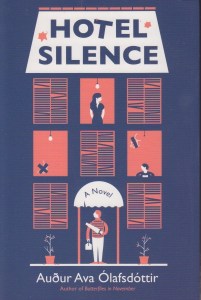
Reading challenges are a good way to expose yourself to books you might not otherwise find.  This is my fifth time through the Modern Mrs. Darcy’s annual challenge and she tends to favor books in translation.  That’s fine by me, because we could all use a bit more cross-cultural understanding.  My latest book in this challenge was my third novel by Auður Ava Ólafsdóttir, Hotel Silence.  Ólafsdóttir, although a professor of art history, is quite a gifted novelist and her stories probe what it is to be human, and also reflect life on a somewhat small island.  Icelanders are known for their love of reading as well as for their geothermal power.  This novel deals with darker subjects that some of Ólafsdóttir’s previous work, but one thing becomes clear—the Bible is an influence.

With a writing style that is poetic and descriptive, she acknowledges that the Good Book plays a role in forming her story here.  I don’t want to give too much away, but it swirls around the difficult topics of suicide and war, and, ultimately, a kind of redemption.  As I’ve come to expect from her writing, the characters are quirky and have foibles.  There’s a matter-of-factness to them.  They go about following singular ideas and all of her work that I’ve read is based on the concept of a journey.  Maybe that’s something of a given for those who live on an island.  Taking her characters to far lands is a way of reaching understanding, not xenophobia.  That’s one of the reasons for reading the literature of other people.

In academia I was taught that exoticizing other cultures was a kind of evil.  I can see the point in that, although, like most academic things it takes the fun out of imagining far-away places.  Human beings need sources of wonder, and I don’t know if I’ll ever be able to afford a trip to Iceland, so reading stories written by a native feels, well, exotic.  Academics have a point, though.  For people of an exotic locale, their life is pretty much a daily struggle just like our lives are.  The backdrop is different and the specific circumstances are unfamiliar, but at the end, people are people.  That’s why I like Ólafsdóttir’s novels.  At the end we find them facing the same kinds of problems the rest of us face.  And we come to realize that our world is an isolated place in space.  And if there are aliens out there watching us, they must think we’re fairly exotic.  Let’s hope they’ll read us in translation.  We can all use a good challenge.


Truth, Justice, and

Martin Luther King, Jr. attended Boston University School of Theology long before I did.  We remember him today as a great leader, a man willing to die for what he believed in.  And all these years later we’re still struggling to find some semblance of racial equality.  We can’t seem to admit that race is a social construct and not a scientific category.  Indeed, the only race is the human race.  King saw that, and staked his life on it.  Today we’re ruled by politicians who, when faced with the truth immediately shout “fake news!”  “Liberal!”  They may stop short of using some words not because they don’t want to, but because they could cost them at the polls come November.  America is watching.  I’m sitting here thinking how Martin Luther King died when I was just five.  He’d started something righteous and just.  And millions were out marching in the cold on Saturday to say we still believe in justice. 

I didn’t pick Boston University School of Theology just because King was its most famous alum.  The other day a guy noticed my BU stocking cap and asked if it was “Boston University.”  This wasn’t an educated person, but I’m guessing that most school paraphernalia has to do with sports and the game was on in the background, so the question was logical.  I told him it was Binghamton University, a school with which I also have an intimate connection, one step removed.  He said, “Binghamton!  I saw your cap and thought Baylor?  No.  Must be Boston.”  But ironically he ended up with the right school for me, but the wrong school for what I was wearing.  I did pick BU because I realized that strong academics are nothing without social justice.  Of course, academia wanted nothing to do with that.

Recently I read how Republican resentment towards liberals has very solid roots in racism.  Oh, they will deny it—their “fake news” trigger-finger is very itchy—but the whole package is tied up with anger that an African-American was elected president.  Follow that up with an old, white racist.  How will history look back on this insane era?  I think we already know.  While the privileged are trying to build their own legacies, I ponder an African-American preacher with clear vision as the one we remember today.  I went to Boston University naive and full of hope.  I heard a lot about King when I was there.  I knew something of dreams and how costly they could be.  Today I sit here and cuddle the epithet “liberal” and think how it’s become a swear word for some, while its real meaning of “justice” continues to go unheeded.


Poe’s Demons

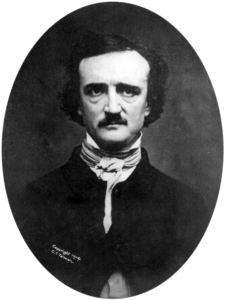
In Nightmares with the Bible I use an idea penned by Edgar Allan Poe as one of the threads holding the book together.  One early reader complained that Poe didn’t write about demons, so the use of the great man was inappropriate.  That reader misunderstood me.  Today is Poe’s birthday.  As I think about the influence a writer can have on a young mind, I come back to this reader’s comments.  I can’t think of my book without Poe.  No, Poe did not write about demons, but he set the stage for what I’m trying to do in my book.  I’ve read analysts who claim Poe wasn’t a horror writer.  Certainly in the modern sense that’s probably true.  Still, he, like many others, was brave enough to suggest the tenebrous side of life was worth exploring, even if you only had a candle.  

Poe’s monsters were often interior.  They were psychologically probing, and although Sigmund Freud had not yet been born, it’s not inappropriate to say that Poe explored psychology.  Writers, I suspect, often deal with things they can’t name.  This is the way knowledge moves forward, even with fiction.  Especially with fiction.  As I’m reading books by academics who’ve done well for themselves, I often reflect how their legacy will remain within their field only.  It’s the rare nonfiction writer who manages to reach a cultural status that will find readers from other disciplines.  Most of us, however, will admit to reading a novel or two now and again.  Fiction writers, such as Poe, can claim things without backing them up with footnotes and citations.  That doesn’t mean they were any less astute at observing the world than academic writers are.  Often they’re more so.

I didn’t put Poe into Nightmares to show off.  His work has long been in the public domain.  I don’t cite him to claim that he would have agreed with my use of his insights.  No, I cite him because even if he wasn’t a horror writer my early encounter with him started me on a path of exploration.  Poe had trouble getting along in a literary world where rejection was endemic (it still is, I know from personal experience) and making a living as a literary person was unheard of.  He nevertheless knew that fiction was more honest than the alternatives, at least for some of us.  If we wish to face the world with integrity, we should admit that our heroes may have been made so in our own minds.  That doesn’t make them any less authentic, just because we’ve appropriated them for our own purposes.  We borrow what we find meaningful.