Palms and Thorns

“Holy Week” affects only some. That thought may be disturbing to those who still think of religions as a one-size-fits-all phenomenon. So, although today is Palm Sunday for many, for others it’s just Sunday. Not even all Christians recognize the same Palm Sunday. The question that interests me, though, is the one regarding which religion is the right one. I personally suspect this is the behind the rise of the Nones, but I’m getting ahead of my story. How did we come to this impasse? How did we come to believe that only one winner takes it all, spiritually speaking? The answer may lie in evolution.

I don’t mean biological evolution. Borrowing a principal for how this factual occurrence works, however, may help to understand the diversity of religions. For species to differentiate, they must be isolated from each other somehow. Groups that are available for interbreeding will do precisely that. When populations are separated, subtle changes add up over the passage of time so that when they come together down the road mating’s simply an impossibility. Religions behave the same way. The difference, apart from biology, is that many religions allow multiple gods. They aren’t so different from each other. In fact, we’re not even sure if gods are sufficient to define “religion.” People from diverse cultures in ancient times, the evidence seems to indicate, tried to match up their gods. Your Zeus is our Odin kind of thing. Monotheism—the main form of religion that has a problem with evolution—is the ultimate exceptionalist belief system. Our one deity is the only deity and everybody else is wrong. When populations come together we can’t even agree that the God who’s historically the same is in reality the same. Ours is slightly better.

Amid all the chaos created by religions, academics have decided they’re a phenomenon not worth studying. Academics often lose sight of the larger picture. What happens outside the classroom or laboratory is real life too. And outside the walls of the ivory tower the faithful are gathering. Some today are doing it with palm branches in hand. Others are looking on, bemused. The important thing is we don’t talk about it because talking might lead to understanding. And understanding might make us concede that others have some good points to make with their religion as well. How can you feel special in the eyes of your own god when other people suggest other truths might also apply? No wonder someone will end up crucified by the end of the week.


Theoretical Monsters

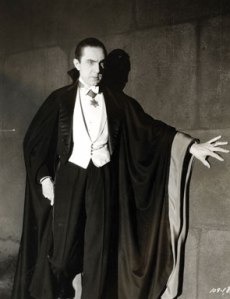
We’ve had a lot of rain lately. One rainy night over this past weekend I talked my wife into watching Dracula with me. It’s been a few years since I’ve seen this classic myself. Difficult to believe that it was ever scary. This is the film that launched the horror genre that has become such a major part of the entertainment industry. It has the right mood for a rainy night. Movies were paced much more slowly in the 1930s, and viewers are given ample time to drink in what’s happening. In some current day films the cross-cutting in action scenes is so rapid that I really have no idea what took place. Dracula is slow, stately even. Thinking back, I believe this was the first monster movie I ever saw, so it has a resonance with me. When Renfield balks at the huge spider web in Dracula’s castle, the vampire quotes from Leviticus—“the life is in the blood.” Monsters are religious creatures.

A year ago in January, with the help of two colleagues, I proposed a new unit for the American Academy of Religion annual meeting—Monsters and Monster Theory. After working on this proposal a couple of months (strictly off work time for me), the new unit was declined by the academy. We decided to try again. This year our exploratory session was approved. The idea had come to me when I noticed that papers on monsters and religion had been on the rise, but there was no central forum to discuss them. They were like zombies without a shepherd. Not being an academic, I couldn’t start the session by myself. Now the society agrees that we’re worth at least one meeting room and a couple of hours to see whether the topic might become a recurring one.

Some people, I’m well aware, find this combination odd. Religion, after all, is about sweetness and ethereal light. Being nice to one another. Things like that. Monsters, on the other hand, inhabit the dark. They’re creepy and unsettling. They’re also wonderful metaphors for so much of life. What some of my colleagues have come to realize, and the academy seems to be backing us up on this, is that if anyone can understand monsters, religion can. Psychology will continue to try. Literature will continue to create them. Scholars of religion, however, are those who would like to bring some order to a chaotic world. We study monsters to learn about what it means to be human. It has been raining quite a lot lately.


The Deal

Intellectual property is a concept that only arises where thought can be monetized. Think about that. (But don’t charge me, please!) It is a strange idea, when you ponder it. In any case, one of the problems with writing book reviews is that the reviews themselves become the intellectual property of the journal in which they appear. In a mental ménage à trois, everyone gets something out of it: the publisher gives away a book for free publicity, the journal gets copyright content of value to its readers, and the reviewer gets a free book. In the best of these encounters everyone goes home happy. I began doing book reviews when teaching at Nashotah House. Academic books are expensive and although professors make more than editors do, they are still hard-pressed to pay academic press prices. After my strictly platonic affair with higher education, I stopped doing reviews for a while, but now that I have hours on a bus to read, I’ve picked up the habit again.

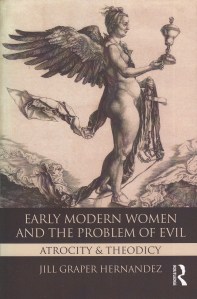
Most often I review books for the two societies of which I’m a member—the American Academy of Religion and the Society of Biblical Literature. There might, however, be a conflict of interest here. One of the main things I do on this blog is talk about books. Since I’m no longer a professor, but I still think like one, I figure it’s a compromise I can live with. The conflict arises because I post daily on my blog while publishers take weeks, or even months, to publish reviews. Despite technology, publishing is a slow business. That means that I read books I can’t really talk about until the review has appeared. That’s the case with Jill Graper Hernandez’s Early Modern Women and the Problem of Evil: Atrocity & Theodicy. I can’t say here what I say in my review since the review isn’t my intellectual property anymore. There’s another trade-off here: publishers get your name out there in return for owning your content—everything can come down to the level of business, it seems.

Still, I can use this post to reflect on theodicy—the justification of God in the face of evil. Since I don’t address this fact in my review I can say here that since Trump’s election it’s difficult to read a book about suffering without tying it to the current political situation. Many of the incumbent’s ardent supporters are coming to see that he doesn’t really care for them or their issues, and conservatives as well as liberals have four years of suffering to face. I was surprised how often in reading this philosophical treatise that our present national shame came to mind. Perhaps that’s inevitable in a book that discusses how women have been repressed in a world where they too have been relegated to the level of a commodity. Intellectual property seems less a concern when human beings are still trafficked as chattel. That’s not just bad business, it’s evil.


The Scofield Connection

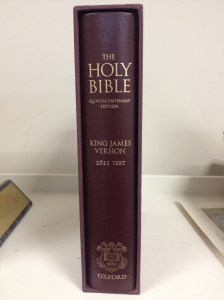
While reading about Cyrus Scofield recently—and that book has stayed on and played with my mind for some reason—I ran across the conferences that he held in preparing his famous reference Bible. Although he claimed the sobriquet “Doctor,” placing D.D. after his name, like many a self-puffer Scofield has no university that will support the claim. (It’s amazing how many high-level CEOs and “important” businessmen pad their résumés with false degrees. Even some government wannabes do it, and then they want to defund education after they get into office.) Perhaps because he had no seminary training, and likely didn’t even graduate from college, Scofield might’ve felt a sense of insecurity when it came to a very large book originally written in languages he couldn’t read. There’s a reason “King James Only” Christians exist. In any case, he set up meetings in a couple of conspicuous places to go over his work. One of those places was Grove City College.

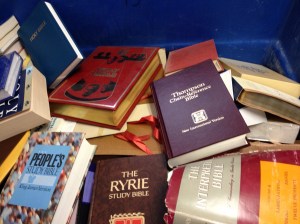
Now, like many small, Christian colleges, Grove City isn’t widely known. Most of the student population—at least when I was there—was fairly local. Pennsylvania, Ohio, and New York, for the most part. Still on the (admittedly rare) occasion when someone asks me where I went for my undergraduate work, they generally haven’t heard of Grove City at all. Even though I spent four years of my life there, I had no idea about the Scofield connection until I read Joseph Canfield’s book. That’s because not all Fundamentalists grow up with Scofield. I’m sure I heard about the Scofield Reference Bible but I didn’t own one and I wondered what the big fuss was all about. After all, the annotations were the work of a man, and I was interested in the words of God. Far more popular was the revision of Scofield known as the Ryrie Study Bible, but I never read that either.

The end result is that many people think that Scofield’s words are “the Bible.” As I used to tell my students, binding pages together within a book makes a statement. If you’re saying “this is the word of God” and part of “this” is Scofield’s annotations, most people can’t distinguish between text and commentary. I eventually acquired a Scofield Bible, not for valid information, but simply for information. I was amazed at how poorly executed it was. Nevertheless, a true believer reading through the first chapters of 1 Chronicles is ready to accept even minimal narrative as divine. So it is that many Americans have come to believe in a Bible that’s not biblical. Religion is full of paradoxes and in this case I’d shared sleeping quarters with one in my more formative years although the connection was unknown at the time.


The One Who Seeks

Academics and social media are, at times, an uneasy fit. In my work as an editor I come across many of the professorate who have virtually no web presence at all. If you’re wanting to write a book these days and you aren’t yet famous, you need what they call a “platform.” That is to say, you need to be easily found on internet searches, you have to have “followers” on various social media, and people have to know where to look to find information about you. A starter site that does fairly well is the for-profit venture called academia.edu. Because of that final “edu” extension, many suppose this is an educational site with no money in mind, but that’s not really the case. Still, it’s free to post your academic papers there and many intellectuals, public and otherwise, have vested some of their effort on getting academia followers.

J. C. L. Gibson, someone, and Nicolas Wyatt

My own profile on academia, which has copies of most of my papers available for free downloads, at one time was in the top 2%. I felt so special. Being kept out of academia for so many years, one does begin to wonder. In any case, one of the features of the site is that when someone lands on your page you receive a notice telling you how they found you. More detailed information is available for a fee (this is one of the not not-for-profit aspects I was mentioning). Sometimes they will provide you with the search terms used and the paper found. My site has quite a bit about Asherah. I wrote a book on the goddess, still largely overlooked, and several discrete papers. The other day I received a notice that someone found my page with this notice of how:

Someone from India found “A Reassessment of Asherah:…” on Google with the keyword “sex photos hd com R A N ilaku.”

I have the feeling someone left my site keenly disappointed. Although my book does discuss sexuality a little—you kind of have to with Asherah—I did wonder about the “photos” and “hd” and “ilaku” parts of the equation. You must be pretty desperate in your pornography quest to stumble across my academia page. Not that I’ve replicated the search, but I must be thousands of pages down in the results. Still, someone found my first book that way. And that’s the lesson—an internet platform may bring your work unexpected fame. Whether or not that fame is ill, will, however, remain an open question.


Ready, Ames,

Ames, Iowa is famous for many things. Not only is it where my wife grew up and where we were married, but it’s also the home city of Howard Bannister from What’s Up Doc? and it served as the staging ground for the crew of Twister, which includes some scenes shot in the area. Probably its greatest claim to fame, apart from the sadly defunct Do-Biz Cookies, is being the location of Iowa State University. Often I lingered near campus during family visits, wistfully hoping that someday someone in the religion department would welcome me among the faculty. My academic curse, however, is a powerful one. And that brings me (finally!) to the topic of this post—the haunted history of ISU.

Even the first president had a biblical name.

The website onlyinyourstate (we’re evolving out of the need for a spacebar) has a whimsical story about the hauntings on ISU’s main campus. The story isn’t scary at all, but it does raise that interesting specter of the ghosts of higher education. I’ve read a few of Elizabeth Tucker’s books about haunted campuses (Tucker teaches at another family school, Binghamton University) and, having spent a good deal of my life in academia, I’ve heard many tales first-hand. The very institutions that repeatedly bash our heads with facts can’t escape their own spooky pasts. Even conservative Christian Grove City College had its share of hauntings that we all knew about. You know, the Ketler ghost, and the spirit of the basketball player who broke through a glass door and bled to death right there on campus? Every campus I’ve known has had its baleful wraiths.

Sometimes I wonder if such stories aren’t a natural reaction to having the wonder excised from the world as we mature. Most of us can make it through high school somehow believing in the real possibilities that the world might offer, only to graduate from college to a 9-to-5 existence robbed of any supernatural splendor at all. Is it any wonder coeds see ghosts? Just the other day I read that a tree trimmer with a high school education in Iowa makes a much higher salary than I do with a Ph.D. working in New York City. Maybe that’s why I enjoy the movie Ghostbusters so much. When the reality of higher education and its politics and cruelty become clear escapism can be your best friend. And if you find yourself in Ames, you might want to avoid Friley, just in case.


Beating around the Bush

You know things are bad when another president who couldn’t win the popular vote criticizes you. Don’t get me wrong—criticism is good. In my academic existence (on life-support for over a decade now) I’ve received plenty. The point is you can’t improve if you’re not willing to take a few blows. Defensive academics don’t survive long. The problem seems to be, if I may speculate from my knowledge of biblical studies, the word “criticism.” Growing up, one of the last things I wanted to have was criticism. Already overly self-conscious of my sins, criticism only felt like making an already bad situation even worse. Then I was introduced to biblical criticism.

Biblical criticism sounds like the worst kind, but in reality it’s absolutely necessary. The idea is to study the Good Book rationally. I knew, and still know, many people who believe biblical criticism to be evil. If you trust any history—either secular or divine doesn’t matter—you quickly learn that nothing is simply one-sided. The Bible itself offers examples of this: did God or the Devil tempt David to take a census? Just how many angels were in that tomb on Easter morning and who arrived there first? Only one answer can be right. Criticism is, typical of academics too long out of the sun, a poor word choice. Nobody’s picking on the Bible. All the biblical critic is trying to do is to find out what it really says by asking questions of the text.

IMG_1163

That’s the heart of the matter. Autocrats don’t like questions. The assumption that the inherent authority of a position should be unquestioned undermines any attempt at democracy. As I was often told in church—Christianity isn’t a democracy. Our political system, we’re told, is. That why checks and balances were built into it. Either extreme and the applecart is upset. No matter what believers believe the same applies to biblical studies. Some rampant Harvard toadyism remains, but for the most part we recognize that a scholar with—shall we call them “critical skills”? may emerge from even a school shorn of ivy. We understand that’s how learning works. No one’s above criticism. Only those with something to hide can’t take their lumps like the populace that allow them to claim the name populist. Nobody likes it, but we all have to take criticism from time to time. Even the Good Book.


Admission Price

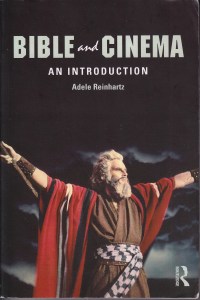
bibleandcinemaThe drama of acquiring Adele Reinhartz’s Bible and Cinema: An Introduction almost overshadows the joy of reading it at last. Back in my teaching days I realized that in very long class sessions (some went for four hours at Rutgers) students needed a break from me almost as much as I needed a break from myself. So I showed short clips of movies that had the Bible in them. The problem was, there was no easy way to find such movies. I’d seen many myself, but academics hadn’t written much on the subject and even a web search, in those days, wasn’t much help. Reinhartz is one of those scholars who understands we can learn about the Bible from movies, and her book would’ve been welcome in those days of fumbling my way through a darkened room, as it were.

Bible and Cinema is a Routledge book. In fact, it was underway during my brief tenure at the press. I very much wanted to read it but for questions best left to the empty ether, my welcome at Routledge wasn’t prolonged. The book came out before I left, yet I didn’t have a chance to get my hands on a copy. Being Routledge priced, I couldn’t afford it with my own funds. The book stayed with me, though, and last year I found a used copy, in passable shape, offered on Amazon for the price of a regular book (currently about $16). I immediately ordered it and anxiously awaited it. December came and went. The book didn’t arrive. Amazon informed me that it hadn’t been shipped and they would cancel the order unless they heard from the seller. In the new year, that’s what happened.

Once I’ve made to order a book, I have a hard time stopping. I had to cough out a bit more since reasonably priced used copies still couldn’t be found now that the one had gone AWOL. I’d been bitten, though. The new seller also delayed. The Trump administration began. I received a familiar message from Amazon. I wrote to the seller in anxious tones—if only I’d comped myself a copy before exiting Routledge! At last, late, and a bit beat up for the price, it arrived. It was worth the wait. This is a fine exploration of how the Bible has been made into movies and how movies have incorporated the Bible. Reading it was like watching movies on the bus. And for that, it’s hard to overestimate the price.


Bigger Bibles

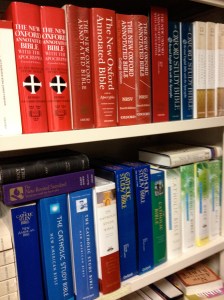
The Book of Jubilees. 1 Enoch. It’s been years since I’ve read these “apocryphal” books. I’m thinking about them today because of the concept of canon. If you’re like me—and I sincerely hope you’re not—you never heard the word “canon” until you reached college. If I’m honest with myself I’ll admit that I thought the professor was saying “cannon.” A single-n canon is a “rule,” or in this case a collection of texts. There were lots of texts in antiquity. Not many people could read, but that didn’t mean that those who could stopped writing (those who have ears to hear, pay heed). The image of the Bible with which I was raised—and mine said “Holy Bible” right on the front, so I knew it had to be right—was a collection of 66 books; 39 in the Old Testament and 27 in the New. Before I reached college I heard that Catholics had some extra books in their Bible. (Surely they must be about image worship and praying to Mary!) Then I discovered “the Apocrypha.”

The number of apocryphal books is not fixed. When I became an Episcopalian I learned to call them Deutero-canonical books instead of Apocrypha. I still couldn’t figure out the number because two of them (Daniel and Esther) are already in Protestant Bibles, but are expanded somewhat in Catholic Bibles. Do they count or not? Then there were others like Judith, Tobit, and 1 and 2 Maccabees. Interesting books, but it was hard to see what they added to the already pretty long Scripture I grew up with. I became accustomed to considering these “extra” books part of the canon. The Bible was bigger than I thought. Then I heard someone say that Jubilees was in the Ethiopic Orthodox canon. Indeed, eastern Orthodox Church canons differ from Roman Catholic Bibles. The Ethiopic Church (called Tewahedo by the locals) has millions of members. It is an ancient faith. It has a really, really big canon. You can’t learn much about it, however, at least not easily.

Because it is almost completely confined to Ethiopia, not much western scholarly attention has been lavished on Tewahedo. Sure, you can pay university press prices for a monograph or two to find technical reports, but few have bothered to ponder what all this means for the Bible. That’s why I’m thinking about Jubilees and 1 Enoch. These books are part of a Christian Bible but not the Christian Bible. There are many sacred texts in the world. Those of Hinduism and Buddhism put our somewhat tiny Judeo-Christian Bible in a different light as a small contender in a huge arena. There are scriptures from all over the world. And the response in our “globalized” university system is to cut religion departments. There’s still a lot to learn. I taught Bible classes for nearly twenty years and fell behind a bit in the larger world. It’s been far too long since I’ve read Jubilees and 1 Enoch.

img_1354


Alma Mater Matter

I was a teen-age religion major. Okay, that’s a bit dramatic, but I did start college at 19 and, being a first generation matriculant, had no idea about majors. No idea about colleges either. The school you choose stays with you for your life—especially if you decide to go into academia. A couple of recent events brought this home to me again. Grove City College is stridently conservative. Since I was raised Republican, it felt like a good fit at the time. It was cheap and close to home, and since my parental contribution was a total sum of zero, both of these factors counted heavily. Overlooked by many a hiring committee, it was also academically rigorous at the time. For better or worse, it’s now on my permanent record. Enough ancient history.

Recently a colleague asked me about an author, noting his undergraduate degree was from a school not unlike Grove City. I saw myself from the outside (yet again). Conservatism can be a lifestyle choice. My fellow religion-major grovers mostly went on to Gordon-Conwell Theological Seminary or other bastions of further conservative thought. Their minds were already made up. In their early twenties, no less. I headed to Boston University, at the time the most liberal of the United Methodist seminaries, by reputation. But still my record says “Grove City.” My academic writings should leave no doubt as to my scholarly outlook (most of these papers are available on Academia.edu), but there is always a shadow of suspicion over a former grover. You can’t change your alma mater, no matter what the next decision you make says about you.

Then I came across a recent writing sample from one of my Grove City professors who’s still on the faculty. This piece showed that as this faculty member was in the early eighties, so he is still today. Biblical literalism all the way down. With over three-and-a-half decades to read, that’s incredible to me. I guess I just don’t share the kind of arrogance that declares you got it right the first time and that everything you read confirms a literal Adam and Eve. And a snake and a tree. What am I to think when I see a conservative undergraduate school on someone’s academic record? I would hope that I would know to look at the next step to see what that reveals. I am a grover, but a bad grover, I guess. You have to know how to read a permanent record.

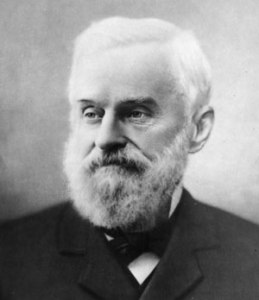
Photo credit: The enlightenment at English Wikipedia

Photo credit: The enlightenment at English Wikipedia


In Poor Taste

I remember seeing a television commercial once (not during the Super Bowl) where an older guy, a lawyer, complained at the camera, “It used to be that lawyers didn’t advertise.” He went on to say that he felt uncomfortable promoting himself since it was in poor taste, but since the legal profession had swung that way he was entering the game. I know how that guy felt. I grew up with the firm notion that self-promotion was in bad taste. If my career has taught me anything, it’s that unless you’re born well connected, if you don’t promote yourself nobody else will. Still, it rankles. With that hearty introduction, I would, in poor taste, point out that my latest article has been published. Those of you who keep an eye on this blog will know that I gave a paper about the Bible in Sleepy Hollow to a learned society a couple years back. That paper is now available in the Journal of Religion and Popular Culture.

ichabods_chase_crop

Doing research is difficult when you don’t have institutional support to carry it out, but doing such things as an independent scholar can be kind of liberating. I used to research, write, and get published an article a year, back in my teaching days. Nashotah House didn’t have the greatest library, but they did have interlibrary loan and, towards the end of my time there, internet access. More than that, life wasn’t measured in increments of nine-to-five. Living on campus, commuting could be measured in seconds rather than hours. Although publication didn’t bear the weight there that often pressures academics elsewhere, like that lawyer whose name I can’t remember, I wanted to be in the game. I guess I still do.

In these days of uneducated government, if you don’t do it yourself nobody’s going to do it for you. It’s what I once called “the educational imperative.” We are duty-bound, as conscious beings, to move knowledge forward. How many apocalyptic scenarios are there where, when the powers that be devolve into inanity, the monks in their cloisters have to keep knowledge alive? (The question’s rhetorical.) I’m reminded of Station Eleven by Emily St. John Mandel since there women do a good bit of keeping the culture alive when society collapses. Or, to put it another way, like Sleepy Hollow. When the forces of evil break into the world, it’s an African American woman who saves it. If your school has access to JSTOR, you’ll be able to find out more in my paper.


I’m Saying Nothing

It used to be called argumentum e silentio, the argument from silence.  It didn’t take very long into my post-graduate reading to learn that arguments from silence were very rarely admitted in the academy as any kind of evidence at all.  In fact, argumenta e silentio are generally considered a logical fallacy.  The idea is fairly simple: an argument from silence is when a source (often an ancient one) doesn’t mention something.  That lack of mention is sometimes used to argue for the absence of the thing not mentioned.  For example, some first century writers in the region of Roman Palestine did not mention Jesus of Nazareth.  This has led some to suggest that Jesus never existed.  The evidence is an absence of evidence on the part of certain important historical figures.  There are obviously lots of problems with this.  I’m a modern person and there are plenty of people I never write about.  It doesn’t mean that I don’t know who they are (although in my case, it might!).
 
Why am I concerned about arguments from silence?  Lately I’ve noticed quite a few scholarly tomes coming out on the topic of silence.  I’m not referring to Susan Cain’s excellent Quiet, but to scholarly monographs that explore the silence in ancient texts about certain subjects.  In my more curmudgeonly moments, I feel that perhaps when we have nothing left to explore but what a text doesn’t say maybe we’ve explored that text enough.  Younger scholars, casting about for something new to say about the Bible, look to what ancient sources don’t say to give them a research topic.  Back in my own academic days you’d receive a stout scholarly rap upon the pate for even including an argument from silence in your thesis.  Now you can write entire books about what someone didn’t say.  What’s more, you’ll likely find a publisher.
 
I’m at times a bit fearful for the future.  Although my academic work approached the Bible critically it wasn’t because I didn’t like or didn’t respect the Bible.  Hey, it’s far more famous than I’ll ever be, and in fact, more people have heard of it than have even heard of Trump with his endless tweets. No, the Bible is an endlessly fascinating book.  It’s just that if you can’t find something to say about it, why write about what ancients didn’t say?  Maybe it’s time to move on to a sacred text that hasn’t been probed for a couple of millennia.  I have no vested personal interest in this, having been excluded from the academy by biblical literalists and having had the rest assent to that decision by silence.  Ah, but there’s the rub.  That phrase, by the way, doesn’t occur in the Bible.  I wonder if that’s significant.

dscn4370


Publish or Perish

Working in publishing, I’m well aware of the stresses of the information industry. Jobs frequently evaporate as new, less formal ways of spreading ideas develop. To the typical academic what a university press offers is the secret knowledge of where to send their monograph to get it printed and bound. As if a printer and spiral binder weren’t available at the local Kinko’s. Oh, wait. Kinko’s doesn’t exist any more. You can do most of this at your own university anyway. With 3-D printers you might even be able to print a reader. No, what academic presses have to offer is credibility. If we’re honest we’ll admit that some presses are known for publishing just about anything sent to them while others are selective. The selective presses are often considered the more reliable since they set up the highest hurdles and accept only materials that come as close to being true facts as information can. Self publishing, as might be expected, has muddied the waters.

The same is true in book publishing’s cousin, the newspaper industry. As analysts point out, you can get whatever “news” you want from social media. With varying levels of truth. Stop and think about the people you knew in high school. Those who tend to friend you on Facebook. Would you trust them for accurate news? This has become all the more important because our government is now in the business of fabricating facts. Fact checking is too much work and besides, who has time? It’s easier just to believe lies than it is to buy a copy of the New York Times. Newspapers, you see, used to offer the same thing as the academic press—credibility. The New York Times and the National Enquirer are two different things—you could tell at a glance. Now it’s hard to tell where the news originates.

img_3186-copy

This point was made by Deborah Lev in a recent editorial in the New Jersey Star-Ledger. The real problem is our nation’s founders presumed that democracy would work for informed voters. Yes, there were difficulties with the way the system was set up. It was based on privilege and convention. We’ve finally, in theory, gotten to the point that any citizen of a certain age can vote, but we have no requirements for ability to discern the issues. That would be elitist. And we have eroded the traditional sources of attaining quality information—publishers of all sorts are struggling. For some topics self-published books outstrip traditionally published tomes by a fair margin. You can’t believe everything you read. Don’t take my word for it. I’m open to fact-checking. Just be careful where you reap your facts, because not all facts are created equal.


Alas, Binghamton

“Store Closing” the signs veritably shout. “Everything Must Go.” It’s something I hate to see in an economically depressed town. The tragedy is redoubled when it’s an independent bookstore. While undergoing the ritual of returning our daughter to college after the holiday break, we were driving through Binghamton, appropriately enough, at twilight. In that first, lonely freshman year we’d discovered River Read books in downtown. Like many indies, it was small. Intimate even. I never walked out, however, without some treasure that I wouldn’t have found in a larger store. River Read eventually became an irregular habit based on parents’ weekends and academic breaks, and I’ve come to depend on it after a long drive across three state lines. Once again, however, the lack of concern regarding reading takes another victim.

img_2947

In the ancient world there was a poetic genre scholars now call the lament for a fallen city. I’m that way about bookstores. Amazon has proven wonderfully capable of getting things to me quickly. Obscure tomes, sometimes. Since our nearest independent is a 25-minute drive, this is often a necessity—I can spare 25 minutes only on a weekend, and then, only select ones. Ironically, just on the way to Binghamton we stopped at the Bookworm in Bernardsville, New Jersey. We try to help them survive. My mind goes back to fond occasions outside the home and how often they involve bookstores. Finding a new one. Returning to one already well loved. Even, back in the day, Borders. In a pique of nostalgia I starting searching the web pages of past favorites. Books & Company in Oconomowoc, Wisconsin. Farley’s in New Hope, Pennsylvania. Pages for All Ages in Savoy, Illinois. Ah, alas, the latter has also closed its doors forever. The store I’d visit after a long commute to Nashotah House and back, looking for something I really want to read.

The neon after dark is like an alien invader in my car. River Read is closing. The liquor stores and “gentlemen’s clubs” seem to be fine. The cars up here sure weave around on the road a lot after 9 p.m. on a Saturday. It’s not just here, I’m sure. I’m seldom out this late any more. Perhaps, even likely, this has been a long time coming. Civilization unable to support its foundation. Literacy, after all, spread the common ideals we used to share. Presidents united us and we were eager to read and every town wore its own bookstore like a badge of honor. I’ve seen the signs and I lament the fall of yet another fondly recalled city.


Hopeful Horror

joneshorrorI don’t make New Year’s resolutions. To my way of thinking, if I’m aware I’m doing something wrong, I try to change it at that point, rather than waiting. Needless to say, then, I’m up to my old habits of reading about horror movies. Actually, Darryl Jones’ Horror: A Thematic History in Fiction and Film goes a bit broader than just the cinema. As the subtitle indicates, this charming book also addresses narrative fiction as well and the result is quite engaging. Divided thematically, Jones considers the various types of horror without delving into pretentious theorists to give him academic credibility. Here is a true fan who’s capable to sharing the excitement of the genre. Along the way, accompanying the usual observation that horror and religion share considerable conceptual space, he makes the point that in movies horror is one genre that makes use of academics as characters of authority. Sure, there are others, but in this realm to be educated is a benefit, whether the plan is to take over the world or to stop some evil force from doing the same.

I’ve been watching movies that can be broadly classified as horror since I was young. And I had admired—emulated to some extent—the professors and scientists I saw in those presentations. When a monster was on the loose, you went to find an expert to learn what to do. At the risk of contradicting myself, theorists have been suggesting that one of the problems with post-truth is the death of expertise. Anyone can be an expert these days. The question, “Why should I listen to you?” is on every self-appointed smarty’s lips. Earning a doctorate, the horror world tells us, gives you access to some kinds of knowledge that others don’t have. Problem is, zombies don’t respect such learning. They only want brains to consume.

It never seemed to me that watching horror was a means of learning. As a kid escapism is part of everyday life—taking things seriously is for adults. Growing up, however, I kept my love of scary movies in reserve. Little did I realize that it was a form of training. Now university-affiliated academics are finally able to begin admitting that they find monsters compelling. More than that, they actually learn something from them. Although not a resolution, I see myself reading further books about horror movies this year. It may be a naive hope, but it would be wonderful if they were all as insightful as this one has been.