Nicholas of Myra

It may be a little early to start thinking about Christmas, but archaeologists don’t often worry about timing. A piece in the Washington Post announced something of potential interests to hagiographers everywhere—Saint Nicholas may still actually be in his tomb. According to the article by Cleve R. Wootson Jr., bandits broke in and stole the relics of the saint centuries ago. In fact, they took them to Bari where a thriving cult grew up around the giving bishop. It seems, however, that they got the wrong tomb. If the analysis is correct, Nicholas of Myra is right where they put him sixteen centuries ago.

Photo credit: Bjoertvedt, via Wikimedia Commons

None of this, however, impacts Christmas as we know it. The relationship between the historical Saint Nicholas and Santa Claus is a wide-ranging and fascinating one. Stories of generosity surrounded Nicholas during and after his earthly life. It took centuries of evolution to get from that to what we now accept as standard Christmas mythology. In the early—pre-rampant capitalist—United States Christmas wasn’t much observed. It was even illegal in some places. Too Popish to appeal to the dissenter sensibilities that made up the colonial majority, the holiday season simply did not exist. It was, in the words of C. S. Lewis, “winter without Christmas.” For those of us who grew up with warm memories of presents, special foods, and days off the obligations of school, such an existence is difficult to imagine.

The feast of Saint Nicholas falls on December 6. Because of its proximity to the revisionist birthday of Jesus on December 25, the gifts of the Magi and the storied presents of Nicholas to families in need eventually merged. The holy days eventually became spending days and the whole jumble of Yule and other solstice celebrations got mixed into a wonderfully tolerant holiday. And all this time we thought Saint Nicholas was missing. He was missing in his own grave.

Miracles are attributed to the relics of saints. I suspect they work even if the wrong bones are plundered. Belief is like that. Historically, little is actually known of Nicholas of Myra. Little is known of Jesus of Nazareth, for that matter. The holiday that grew up in the wake of those willing to give, and to give to those who were undeserving, is a lesson that seems to have been interred with their bones. “So let it be with Santa,” you can almost hear Mark Antony say, standing before Congress, itching to slash any safety nets so one-percenters can have the happiest holiday season ever. Yes, Saint Nicholas is well and truly dead.


Ocean Blue

I suspect with Trump in office Columbus Day will get a boost. After all, it’s the narrative of the white man coming to America and improving on what anybody else had done. Making America great, one might say. That wobbly narrative has been justifiably under fire for some time. Not least for historical reasons. We know beyond reasonable doubt that the Vikings were here before Columbus. Ironically, the savage Vikings appear the more benign of the two. A friend recently sent me a story from Realm of History that asks “Did The Irish Reach The New World Before The Vikings And Columbus?” The story by Alok Bannerjee tells of St. Brendan, a sixth-century Irish monk who may have made the voyage even before the Vikings. And don’t get me started on the Bat Creek inscription or the Kensington Runestone.

The problem with early history is that it’s early. Evidence, when it exists, is rare and often perishable. We know that the technology to cross the Atlantic existed at least as early as the Phoenicians. And we know that no matter how crazy others tell us we are, people are insanely curious. And those who go down to the sea in ships might even make it into the Bible. Objections to anyone making it to the “New World” prior to the Vikings tells us something of the nature of orthodoxy. Yes, historians and scientists have it too. Orthodoxy is where evidence crosses the line into belief. And belief, as I’ve often said, is difficult to dislodge.

So, am I throwing open the doors for any who wish to claim they were here first? Hardly. Well maybe. My own opinions aside, when unorthodox evidence arises, what should we do? The traditional response of “when in doubt, throw it out” may not serve us well. Perhaps we should have a shelf, or locker somewhere. A receptacle in which we might store the stories. When I was a kid learning about Columbus, teachers doubted Vikings had made it this far. Orthodoxy has had to back off on the Norsemen, of course, since archaeology now backs them up. Vineland was a reality, it seems. Even before the purported Irish or Phoenicians, the first nations were here. Where is their federal holiday? We don’t like to think about that. Far too much investing in “superiority” has gone into it. It’s Columbus Day and most of us are at work anyway. Some of us dreaming of new worlds all the same.


Diverse Colors

After a warm snap, we’re not at peak color here in New Jersey. Some trees have changed, yes, and leaves have begun to fall, but green prevails. While on a walk with my wife—a luxury only available on weekends with my commuting schedule—I spotted a bit of red amid the leaves on a local stream. Litter, and not just the leaf kind, is a bit of a problem in Jersey, but this splotch of red seemed intentional. It was taller than it was wide. It was standing in the middle of a shallow brook. Its placement looked intentional. What couldn’t be discerned from the bank is just what this was. It might be a Buddha. It might be Ganesh. It does seem, no matter how it’s reasoned out, to be religious.

Archaeologists often find objects with no known utility. If an artifact has no practical function such an object is generally deemed religious. For much of human history, before the madness of capitalism, people owned only the necessities. Life was hard and lifespans were short. Accumulating stuff as an end in itself was a luxury only for kings and priests and the relatively few merchants in urban settings. An object found from that time, then, with no known function, must somehow be religious. An object of cultic devotion. Those of us trained in the history of religions would sometimes laugh at this predisposition. Religion is the basket for anything that can’t be otherwise explained. So it seemed with this red statue—it was clearly human-made—standing in the stream. We were walking by a ritual site, perhaps. Maybe it was just a joke.

Then I recalled Ganesh Chaturthi, the ritual submersion of Lord Ganesh that transpired in late August this year. It is a numinously charged season, this descent into autumn. My Jewish friends have just celebrated a new year. Pagans made proper observation of the equinox. Preparations, at least of the commercial kind, are well underway for Halloween. They are all colors. Although spring’s first buds are welcome after a monochromatic winter, soon we transition into the green of summer. We miss the benefits of many colors. At moments like this on the banks of a brook with yellow and brown highlighting the green that remains on the trees, I’m again reminded how wonderful diversity truly is. I am in the presence of a god. It may not be my deity, but I’m not threatened by the difference. Nature is a patient master for those willing to attend to the lessons.


Sense or Ship

I can tell I’ve been too busy when I haven’t planned for Banned Book Week. A kind of unofficial holiday since, well, it’s about banned things, the point of this observation is that we should be free to read. A fairly large portion of the fiction I read anyway, at one point or another, ends up on the banned list. Not surprisingly, most banned books have diversity content—racial or sexual minorities portrayed in sympathetic ways. Trump has shown us clearly how dangerous such thinking can be. It’s well known that such perspectives are allied with some evangelical Christian interests, or, perhaps I should say, lack of tolerance. There are lots of ways of looking at the world out there, and many of them aren’t evil. I should’ve planned ahead.

Censorship implies a certain arrogance. One way of looking at things is right and all others are wrong. Although we all know that any logical system runs up against its limits (we call them paradoxes) we’re reluctant to let go of that which we suppose, with or without justification, to be right. Banning is an effort to control minds. It’s no coincidence that many of the titles on banned and challenged lists are intended for younger readers. Those who favor censorship want to close the eyes of the young and pretend the real world will just go away. Yes, many of the banned books are fiction, but fiction tells us truths. Those who ban books are uncomfortable with such truths. That’s not to say all literature is created equal, or that all banned books are great literature. As someone who writes fiction, though, I can attest how difficult it is to get it published. That in itself tells us something.

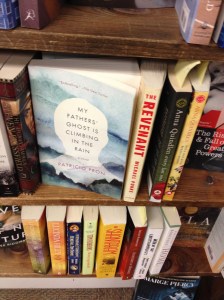
It’s banned book week and here I am without a banned book to read. I’ve got some ideas, of course. My wife and I both take on book reading challenges each year. One of this year’s books (at least) was a banned title, but one that I read too far in advance. Besides, although we have too many books in our apartment already, I used Banned Book Week as an allowance to go to the bookstore. What better way to fight literary fascism than to buy a book? The problem is deciding which one. The lists are long and grow longer each year. Intolerance, it seems, knows no limits. I’m about to do my civic duty for this time of year. I’m about to go to a bookstore and buy a banned book.


Ned Ludd and Company

I’m sure you’ve seen them too. Maybe in the movies, or on a newsreel, or maybe on a filmstrip in school. I’m referring to those scenes, usually in some foreign location, where bicycles, ox-carts, cars, buses, and pedestrians all crowd the same streets in a holy confusion of conflicting human intentions. Some can afford no transportation at all beyond their own feet. Others can own, and use, automobiles. On a scale like this I’d put myself around either the bicycle or ox-cart-driver level. I’m referring to technology, of course, and not actual transportation. At a recent family discussion I was left completely in the dust and exhaust fumes of new technology, trying hard to comprehend the words that other family members were speaking so fluently. Software names, devices that do things I can’t divine, and what is a dongle anyway? I’ve fallen behind not only on my movies and books, but on technology as well.

Tech develops quickly despite how slowly the rest of the world moves. Some members of my family don’t have computers or use the internet. Others have devices so advanced that they might’ve been salvaged from Roswell, and I wonder how all this happened when I thought I was paying attention. I’m a late joiner when it comes to tech. Although I’d been warned, I made it through my Master’s degree having barely touched a computer. When I took a decidedly low-tech job teaching at a medievalizing seminary, we couldn’t afford television service and we haven’t really watched TV since. Now I hear that you don’t need to pay for the privilege. If you have the time, black boxes, sticks, and even software downloadable on your phone can be your television. I look at our flatscreen at home and wonder where the on/off switch might be. How have I fallen so far behind the times?

The real problem, from the view on my bicycle seat, is that in order to maintain some level of expertise in my field of study, I have to dedicate quite a bit of time to it. While others tickle their devices on the bus, I’m reading my books made of genuine paper. I’m thinking such activities will make me better informed. Most of these books address the past. If I want to upgrade from to an ox-cart, however, I have to learn a whole new language and the nouns that accompany pieces of hardware that look an awful lot alike to these antique eyes. Perhaps we have become cyborgs after all, and I just missed the introductory session. I wouldn’t know; I’m too busy trying to keep this bicycle out of the path of that speeding lorry.


Miracle on 34th Street

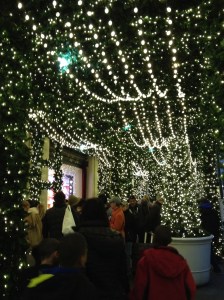
It smelled like Christmas. I was out of the office for a rare lunchtime errand, and I had just turned the corner from Madison Avenue onto 34th Street. It hit me like childhood—the scent of pine. I couldn’t believe it as I looked ahead. Wreaths lay piled up on the sidewalk. At least a dozen newly harvested trees were leaning on a makeshift frame along the street. Long disused store windows from B. Altman’s were fully decorated with Christmas scenes. Five minutes later, after my errand, I walked through the scene again. Tourists were snapping photos to paste on Instagram, Snapchat, or Facebook. Clearly the people responsible were getting ready for the holidays extremely early even for money-grubbing New York. Of course, it was all a set for a television shooting. Working in Manhattan is like being on a movie set most of the time.

It isn’t at all unusual to walk through the line of trucks and trailers parked along one of New York’s lesser used cross streets on my way to work. I see set artists working to make a store front look as if a fire had recently broken out there. Famous people lurk inside their trailers until handlers can get them out and away from hoi polloi. We’re all actors here. This isn’t an authentic existence. As I walk through today’s Christmas set, I step past the homeless with their grocery carts full of their worldly possessions. They’re the only ones on this street who aren’t actors.

I’ve been working in Manhattan for six years now. The dizzying extremes of wealth and poverty juxtaposed hard up against one another is disorienting. We would rather live in a fantasy world than help those who are suffering in real time. Yes, there are people who dwell in hells of their own making. I’m not naive. I also know that we create hells for those we don’t like. Those who “underperform” or who don’t value mammon as much as a red-blooded American should. We cast out those who have mental problems and politely ignore them as they rage on the street corner. We do, after all, have to get to work. New York is an experiment in which the virtues and vices of humanity are concentrated and magnified. We then project it onto the silver screen for all to see and covet. But just off the set there are hurting people. They won’t appear on the camera, but they’ll be there after the crew is gone. If we wanted to, amid all these trees and wreaths, we could find a way to help them. We could make this world a better, more authentic place. It’s my Christmas wish that we will.


Of Fancy

Later today—at this time of morning the use of the word “day” feels ironic—I’ll be on a plane heading out of civilization. Well, to be more precise I’ll be flying to a place from which I can drive out of civilization. Airports only serve cities, after all. Until we get individual drone service to remote locations I guess we’re stuck with jets and their inconveniences. I have to admit I’m more nervous than usual about this. I’ve been reading the stories about airline thugs who, like terrorists, beat and drag passengers off the plane. I try to take extra care to choose an undesirable location on the jet—next to the restroom, for example, or really near an engine—so that an airline employee would rather wait for the next flight than to sit here. I remember when flying used to be fun.

One year I’d lingered a little too long with my girlfriend and I had to rush to Logan Airport to catch my flight to Pittsburgh for the holidays. Arriving maybe half an hour before my scheduled flight, like a pre-murderous O. J. Simpson I ran through the concourse with nary a TSA agent in sight. To the what I am now sure was annoyance of the other passengers, I arrived at the gate just as the door was closing. With a sigh they let me board. I tried to ignore the angry stares of those already seated and belted. We all made it to Pittsburgh, however, in time to celebrate with our families. Now flying means adding at least two hours to your travel time so that you can get through security that makes you feel no more secure. I’m frisked and prodded and made to feel guilty for doing nothing more than wanting to get away from civilization for a while. We call it civilization anyway.

The wait in the airport is the hard thing. They’ll offer wifi, but you’ll have to pay for it. I’ve trained myself to read on the bus, but when you’re awaiting the announcement of your flight when you’ll have to line up just like at the Port Authority, it’s difficult to concentrate on your book. You don’t want to be lost in another world when they call your zone. There are, after all, airline employees hovering, seeking empty seats. I remind myself at the end of this ordeal a lack of civilization awaits. This is why we do it, and there’s a reason we call it getting away. Time to end this flight of fancy and head toward an actual flight that will be anything but fancy.


Any Means Necessary

As one of his first acts as governor of New Jersey, Chris Christie cut the Access to the Region’s Core tunnel project. This was before he closed the state-run beaches so that he and his family to have one for themselves without Independence Day crowds bothering him. Liberty means something new these days, I guess. The ARC tunnel project was meant to ease some of the burden on those hapless zombies known as commuters. As a member of this undead class myself, I often think of the relief that never was as we sit, unmoving, just meters away from the Lincoln Tunnel, looking nervously at our watches wondering just how late we’ll be to work this time. Our elected “representative” leaders have no idea about the life of the average person. Having lived sequestered away among the rich and axle-greasers for so long they have forgotten that real wheels need to roll. Their bottom line is at risk.

Trump, apparently aware that torture and public transit go together, has nominated Steven Bradbury, the Bush-era policy architect, as his general counsel of the Department of Transportation. Known for his “torture memos” Bradbury has none of the charm of the sometimes macabre other Bradbury who had the courtesy of keeping his frights restricted to fiction. The most disturbing part of all of this is just how little our elected officials care about the people who keep this country going. Populism, still poorly understood, is what happens when people get fed up with business as usual. Easily duped, the average citizen can’t tell an “entertainer” from a genuine leader. The era of “I’m not a doctor but I play one on TV” has grown up and become truth. Doogie Howser where are you when we need you? It might be helpful to have Rex Morgan on hand after a session in the torture chamber.

Government has become a joke. Comic strip presidents gather the assorted nuts and dolts required build up a representative democracy, it seems. I used to tell my wife, back in January when things were bleaker than Poe’s December, that we could expect no less than outrage after outrage from a man whose sole motivation is to get people to look at him. We all knew jerks motivated by that in high school. The difference is that now they’re easily voted into office. Selfish men who will close down public parks so they can take the whole thing for themselves. They have no idea what governing is because they can’t understand that other people have wants and needs as well. Other people are for torturing when you’re bored. Sounds like a visit to October Country may be in order yet.


Liberty and Justice

I confess to being a bit vexed. How are we supposed to celebrate Independence Day under the Trump administration? Since January our government has demonstrated over and over and over again that it’s dearest desire is to pick democracy apart, to its own advantage. Making voting more difficult for those who oppose the Republican Party, gerrymandering to ensure local election victories, cutting their healthcare so that they might, well, just die off. Repeated and loud public protests do not impact them at all. When their own party moderates protest, they claim they’re collaborating with the enemy. The American people have become the enemy of the wealthy and privileged who want this country to resemble a country club, not a nation of liberty and justice for all.

How do we celebrate a country like that? Back in high school, my senior year, I won a state-wide essay contest. I got my picture in the paper and everything. I don’t have a copy of the essay, but I do remember that the topic was Americanism. Yes, the “ism” was part of it. Although I didn’t know Shostakovich at the time, it was my attempt at what he did in his fifth symphony. Looking back, it seems strange that a Pennsylvania statewide committee would select an essay so full of irony from a working class boy who was only too well aware of his own inferiority. Yes, there was irony in that essay, and anger. Carefully hidden. It sounded patriotic. The hundred dollar prize didn’t make a dent in my fall tuition bill.

Nearly four decades have come and gone since then. I’ve watch my nation teeter-totter between humane treatment of those left out by the system and offering kick-backs to those who by no definition need or deserve them. Until November of last year I’d never seen a nation stoop to the absolute abyss of cynicism in the election of Trump. Although President Obama had the grace to say that many people were obviously happy with the results, it was as if my essay—now lost and forgotten by all but one—had come true. Make no mistake about it—I’m a poor boy who grew up among the working class. As a teenager I could see, hear, and taste the hypocrisy. I hoped and dreamed that as I grew up so would my nation. It’s the fourth of July. Normally I would be celebrating Independence Day. This year, however, I’m only wondering what went wrong along the road to liberty and justice for all.


Mothers’ Daze

Washington’s war on women has made this Mother’s Day especially poignant. As hard as it is to believe, Paul Ryan and Mitch McConnell had mothers. I can’t comprehend any male being anything but grateful and humble in a woman’s presence. Don’t accuse me of idolatry—I know women aren’t perfect. Neither are men. Especially not men. Mother’s Day isn’t an excuse to treat our moms as less-than-special other days of the year. We sometimes forget that life is a gift. And we should always say “thank you” to those who give. Pregnancy isn’t easy on a woman’s body. Indeed, until recent times childbirth was the number one killer of women. At some periods in history female life expectancy was only into the twenties. Giving birth is a self-sacrifice. We would do well to remember that daily.

Social organization outside the home was conveniently male early on, but not necessarily so. Without our mothers none of this would’ve been possible at all. Why do we fail to give back when we’ve been given so much? Yes, our moms are special to us, but women everywhere are mothers, daughters, and sisters to all of the men out there. To be human is to be both female and male. How could we ever forget that? How is it possible to use woman as political bargaining chips as if one person has any kind of right to tell another how to use her body? When we look at mom do we see only a physical body? Do we not see a mind? Emotions? Love? How can we look into the face of all that and claim that men are in any way superior or deserving of more than their share of power and prestige? Mother’s Day should be a revolution.

I don’t mean to be combative, but I’ve been pushed into a corner. From my earliest days I’ve felt women were stronger than men. Being raised by a mother on her own can be a revelatory experience. I emerged with nothing but gratitude for the sacrifices one woman had made to be called a mother. If any men have forgotten that lesson, use this Mother’s Day to repent. If you’re alive to read this, or to share it, you have a mother to thank. And tomorrow’s no excuse to forget that and act as if this one day were enough to show gratitude to those who have taught the human race to love. It’s Mother’s Day, but so should every day be.


Independent Bookstore Day

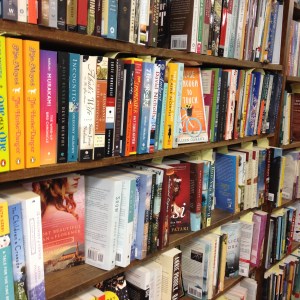
Many modern mini-holidays are centered around things you might buy. I don’t mind that so much in the case of Independent Bookstore Day—of which I wish you a happy one. Quite by accident I found myself in an independent bookstore just last night, not aware I was prematurely celebrating. If anything might save us from the muddle we’re in, it’s books. We live in a society with plentiful distractions, many of them shallow. Books take some effort. They demand your time. They make you take some quiet space to think. Books came along with, and perhaps were the source of, civilization. Today we’re harried and hurried and frantic with an electric source of information and entertainment that never turns off. And we’re seeing the results of that playing out on an international scale. How different it would be if we’d grab a book instead!

The strange thing is that those inclined to action often suppose reading to be an utterly passive activity. The basis for human progress, however, has often been what someone has read. Surprisingly, books can be the source of progress. When we see reactionary elections taking place around the world, leaders who don’t read emerge as the hailed champions of regress. We’re living through that right now. Books can be dangerous. Think about it—you’re being given access, however briefly, to someone else’s mind. The combined power of minds is an impressive thing. If what I’m reading is anything to go by, the hive mind is a source of incredible strength. You want action? Put multiple minds together. There’s a reason that civilization has gone hand-in-hand with literacy.

In the wake of Borders going under, independent bookstores have started to make a comeback. Those of us who work in the publishing industry have to keep an eye on those numbers. A visit to a bookstore is all about discovery. Quite often I’ve walked in with a list in hand. When I exit my list has grown rather than shrunk, and the purchase I’ve made was likely not on the list to begin with. Independent Bookstore Day gives us a chance to think about how very much we do not know. Unlike those who claim power and brag that they don’t read, admitting that we have more to learn is the way toward progress. I may not be the most active man in the world, but I do recommend action in the form of getting to a bookstore. If we each do our part, we can’t help but to make the world a better place.


Happy World Book Day

In times of distress, as well as of joy, I turn to books. Since about November there have been more of the former than the latter, so I’m cheered that today is World Book Day. The United Nations Educational, Scientific and Cultural Organization has designates World Book Day to promote literacy internationally. If only the White House would pay a little more attention to the UN maybe the world situation would improve. In any case, books are always worth celebrating. At any given time I’ve got three or four book-reading projects going on simultaneously. Well, not literally simultaneously; I have books I read in the morning, different books for the bus ride, and books I read before bed. Often there are others scattered in there as well, such as books that I take with me in case I get unexpectedly delayed somewhere and want something to read. It’s a life full of books. It’s a wonderful life.

I can’t imagine enduring the mental vacuity that must come from not reading. It sounds like torture to me. Yes, I’ve occasionally been caught up in the action-packed episode of travel and adventure (or what passes for adventure for a guy like me). Hours spent with other people in locations not at home when there’s something to do every minute of the day. But then, when the fun’s over, I open a book. I read before bed even when I’m traveling, and since I’m an early riser I read before anyone else is awake. It’s a form of communion. Having access to the intelligent minds of others is a rare privilege that shouldn’t be scorned. World Book Day should be an international holiday.

Books, strictly speaking, didn’t necessarily originate as sacred texts. Very early in the process of writing, however, such holy documents began to appear. Civilization itself grew through the cultivation of writing. Bibles, Qur’ans, Books of Mormon—for all the troubles sacred texts may cause, they’re reminders of the importance of reading. And once reading starts, it’s impossible to stop. Reading is resistance to the Zeitgeist that’s haunting the politics of the day. Had voters been informed, it is absolutely certain, neither Brexit nor Trump would have happened. We need to read, and be seen reading. Ignorance is the final enemy to be defeated. Celebrate World Book Day. Wish people happy World Book Day. And for the sake of civilization itself, get caught reading.


Earth vs. the GOP

They used to call her “Mother Earth.” Now she’s simply a commodity to be liquidated into cash at the country club where rich white men play. That’s why I’m spending Earth Day on my third protest march of the year. Of all the things the Republican Party has done to show its true colors the clearest has been to participate in the destruction of the world we all share. There’s only one word that answers the question “why,” and it used to be considered one of the seven deadly sins. Greed. These acts of planetary terrorism are carried out by men who believe lining their own pockets is the highest possible good. Even moderate Republicans have locked in their goose step to keep in the good graces of madmen who want to cram as much lucre into their coffers as they can before they die. When the planet’s a smoldering ruin their grandchildren will surely thank them.

Son, behold thy mother.

Don’t knock tree-hugging unless you’ve tried it. Trees tend to be much better company than Republicans anyway. Never have I had the feeling that I’ve had to celebrate Earth Day with such a blend of angst and anger. That one that your teacher always warned you about—the one who ruins it for everyone—now has control of the country. Immediately he insisted we start dumping coal waste into our streams and rivers. Burn more coal so he can play a few more holes with what passes for a clean conscience in a filthy soul. I march because I must. We can’t sit silently and let the darkness fall. If you can see through the coal dust you’ll understand that the planet weeps. It’s her that we celebrate today.

Matricide used to be considered a heinous crime. Now it’s just good business. If we were an honest species we’d admit it’s been bad business from the beginning. We’d never elect a businessman with inherently conflicting interests to the White House. The goods of the few outweighs the good of the many. The commodification of nature is the worst kind of unnatural selection. Here science and common sense agree—in order to survive we must preserve our planet. I confess that I’m unapologetic in this regard. So, although I’ll be spending this Earth Day in the artificial environment of Manhattan, marching in the cause of science, and if push comes to shove I’ll be the one hugging a tree.


Come Together

Although today is Easter for some, for many it generally isn’t. And I don’t mean just those who follow faiths outside Christianity. One of the hallmarks of religions is their tendency to fragment like a sugar egg under Thor’s hammer. Christians have long disagreed on the date of Easter depending on which time reckoning scheme they follow. That which makes it onto most work calendars is the first Sunday after the first full moon after the Vernal Equinox after the Gregorian calendar. After all those afters it’s easy to get confused, but the fact is this kind of precision makes it possible to date Easter until the Earth slows on its axis or Mitch McConnell learns to look at things from someone else’s point-of-view, although we all know which is more likely. This year, in a rare coincidence of the Gregorian and Julian calendars, however, Orthodox Easter is the same as Catholic Easter. Could it be sign of hope?

You see, calendars aren’t just markers of time. They’ve always been religious devices. In fact, our current calendar, the Gregorian, was introduced by Pope Gregory XIII. The world still marches to the beat of Rome’s drum. Nature, it seems, is indifferent to our calendrical needs. The point of all this time keeping was to help those who lived by the soil to know when to plant and when to harvest. That might seem simplistic, but if you follow how it feels outside there would’ve been some sowing going on in February around here. Global warming, for those who’ve advanced to the Gregorian calendar (that’s okay Mr. McConnell, you may leave the room) will throw that off, and maybe we’ll be needing a new calendar. Will we retain the one with it’s pagan month names or shall we adopt one with months of evangelical heroes? But wait, not all evangelical groups celebrate Easter!

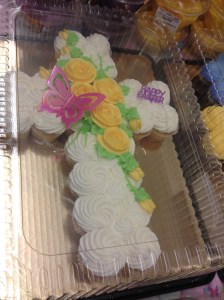
I had a college roommate who believed all holidays were of the Devil. His sect of Christianity didn’t celebrate Christmas or Easter. So even as Orthodox and Heterodox join together in recognizing today as Easter, not everyone’s together on that point. Some mythologize bunnies and eggs while others dismiss them as hopelessly pagan. So it is that we have to agree to disagree. Teach the controversy, right Mitch? While some celebrate resurrection today others put their Peeps in the microwave just for the fun of having that kind of power over the weak.

Having your cake, and having it too.


Death Challenged

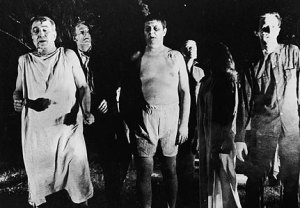
Long before the Walking Dead, and even before Twilight or Buffy the Vampire Slayer, people took the undead seriously. Now, I know ratings are important (they attract advertisers and their money, after all), but when the fear is reality the stakes are upped a bit. Two readers sent me a Guardian story this past week of Yorkshire villagers mutilating the dead. In the Middle Ages, that is—it’s perfectly safe to die in Yorkshire now. The story by Maev Kennedy describes how archaeologists have been studying deliberately defiled corpses, well, actually the bones from those corpses to be precise, to solve a centuries-old mystery. Their conclusion? Medieval folk really did fear the dead coming back from the grave.

Now, Easter’s just around the corner and resurrection’s on a lot of minds. Outside the context of the Bible, however, resurrection of the dead is one of the most ancient and persistent of human fears. Nobody’s quite sure why. Dreams and visions of the recently departed are extremely common. Belief in ghosts is ancient and fairly universal. The destruction of the bodies of people already dead is not. We treat our gathered ones with respect. To me it seems to come down to the puzzle of consciousness. Call it a soul if you like, but I have a feeling things would be getting rather crowded in here if too many distinct entities claimed this body as home. Mind, soul, spirit, psyche, consciousness. We don’t know what it is because it can’t be studied empirically. We know that something like it exists and opinions of what happens to it after death vary. The body, we can all agree, has a more prosaic end.

That’s what makes fear of the undead so fascinating. They are only bodies. Bodies without souls. Rather like leaders of the Republican Party. We fear them because when we look into their unblinking eyes we see no vestige of human warmth or sympathy. Those who walk among us and who don’t care about those of us not yet undead remain a perennial fear. In the case of the Yorkshire corpses these were people already buried. Putting them back in their graves seemed kind of pointless when they would only climb out again. We don’t know what it was like on the ground in the Middle Ages. History, however, has an ironic way of repeating itself. We’re entering a new age when I suspect we’ll want to make sure the remains of some remain well and truly gone once they’ve finally given up the ghost.