Water Flowing Underground

One of the most compelling characters of the Bible is John the Baptist. Unconventional and non-conformist, he speaks with unquestioned authority based on pure conviction. Baptism comes in many forms. When we moved our daughter into her dorm room, we found water from the HVAC vent dripping on her bed. I’ve been similarly baptized on NJ Transit buses in the summer when the condensation gathers just above my head. (Of course, being on the bus, I’m always hoping that it’s only water.) Considering how well HVAC contractors seem to be paid, it is always a wonder to me that little things like leaks can’t be sought and settled. Water always seeks the lowest point. In baptism a person is plunged even lower, beneath the water. It’s kind of like drowning.
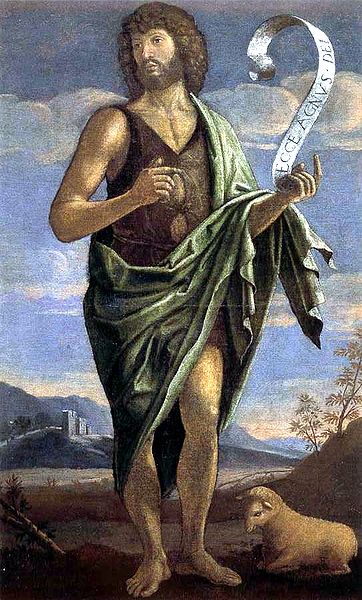
John the Baptist with the number of the HVAC guy

John the Baptist with the number of the HVAC guy

I was baptized in a river (or a creek that passed for a river in my part of Pennsylvania). Our church didn’t believe in infant baptism, so I was old enough to know that I was to be held under the surface for a second or two—a frightening prospect for a non-swimmer like me. It turned out alright, as these things generally do, and my ten-year-old sins were washed away to be somebody else’s problem further down stream.

The origins of baptism are somewhat of a mystery. Many religions include purification rituals, including Judaism. Judaism, however, never seems to have taken ritual washing to the level demanded of John the Baptist. Even he had a rather tepid view compared to that of later Christians who made salvation without it impossible. It is perhaps the implicit admission of shame, or possibly the public spectacle of it all that makes it such a rite. Being rained on in the presence of a priest doesn’t count. Nor does, in some traditions, a mere trickle on the head. The victim must be cut off from the air above. Religion does insist on a fair bit of threat for believers as well as non. And so the water drips. Of course it’s a holiday weekend so they can’t get the maintenance guy to fix it until at least Tuesday. As we wait we know that the water will always continue to seek the lowest point.


Diminishing Returns

You know that phenomenon where in movies or on television spinning wheels reach a point where they suddenly shift to spin the opposite direction? Of course it’s an illusion, since physics is not kind to fast-moving bodies that suddenly reverse direction. A friend of mine had an uncle, now sadly deceased, who studied this phenomenon (he was an academic of course). He figured out in terms I’ll never comprehend why this actually happens. To my mind, however, it seems like the maximum efficiency has been overreached. It’s like when you screw a fastener in too far, stripping the screw. So far is all you need. Anything more is too much. It seems that we’ve lost that fair concept of excess. An article in The Guardian that my wife sent me illustrates this as well as endlessly spinning wheels. “Out of office, out of mind – free yourself from inbox tyranny on holiday” by Steven Poole makes a lot of sense. Of course, in the “Old World” they take time off much more seriously than Americans do.

I didn’t get a vacation this year, but I remember what breaks from work feel like. Since I get up at 3:30 a.m., that’s saying something. I don’t have any sadistic intent that drives me to rise so early—just a killer commute and a job where no matter how much you give you could always be giving more. I could snooze and catch the next bus, but that puts me home at the time when all things being equal, nothing is equal. As it is evening is spent eating supper, doing dishes, getting ready for work again the next day, and checking my personal email. Reboot at 3:30. What my fellow Steve is writing about is the out of office message on your email that assures your clients you will check your email once in a while, even on vacation. Is it really vacation? Does your company give you a massive bonus for squandering that pittance of ten days off they graciously allow you? Have you improved from indentured servitude? With the abysmal job market any threat of employment lost is exploitation. Make no mistake—you are owned.

Spinning_Wheel_Drawing

What quality work do the exhausted produce? Those whose eyes are red and for whom a cup of coffee in hand is as close to a transfusion as you can humanly get? Yet the company will gladly give you a Blackberry to stay in touch after hours. Blackberry or raspberry? Don’t check your personal email on it—that’s against company policy. What do you think, you’re on your own time at home or on vacation? Germany, known for its legendary efficiency, has a company called Daimler that, Poole tells us, has the out of office email instruct you to contact someone else because your email to a vacationing employee will be deleted and not delivered. Daimler is a car manufacturer. And cars have wheels that seem to spin in the opposite direction when they start moving too fast. Maybe I just need sleep, but it looks to me like such wheels have reached the point of maximum efficiency.


On Vocation

“There ain’t no use in complaining,” Bryan Adams once wrote, “when you got a job to do.” If I may be pardoned from removing rock and roll from its love song context. As a guy who’s suffered unemployment several times, I have to agree that having a job is good. Of course, such goodness has its natural limitations. Switching jobs too often means starting out over and over again. In today’s world, that means that at half-a-century-old you might well find yourself having to earn vacation days from nothing all over again. So when family vacation plans were made this year, one of us—the one with a new job—could not be included. My family is out near the west coast while I remain here on the east. Once upon a time we were somewhere in the middle. I’m glad they have the opportunity. This post isn’t about sour grapes, or vacation; rather, it’s about vocation.

I often think about how life has become only earning for the sake of earning. People say you should get a job you like, which is fine if such jobs exist. The jobs I like are now considered beneath me. Not by me, but by those doing the hiring. Where has the sense of vocation gone? Back in the Middle Ages (and I’m not one to suggest that things were necessarily better then) the learned had opportunities. Those who had a skill could be inducted into a guild that would help to ensure job security. We’ve moved to a free agent model where someone can be removed from their natural vocation with nary a thought what they might do next. Detritus of a throw-away culture. For those with highly specialized skills—Ugaritic, anyone?—such severance is like setting one on an ice floe, only crueler. Ironically, the guild offers no help.

Reading about the Transcendentalists reminds me of how restorative the woods are. Emerson and Thoreau, heading off to the forest to commune with the divine. Since this road is blocked for me, I take the one better traveled, into Manhattan where, I’m sure, there is life. Elevators, ubiquitous pavement, quotas and tallies. Prove your worth. Among the students I knew I was accomplishing something. Since then it’s all just numbers. In the woods I don’t count the trees. I don’t demand to know what they’re producing for the good of the company. I don’t question their motives. Outside my window, if I had a window, I would see only stone, concrete, and steel. And inside all I feel are numbers. Can a soul be quantified? I think I would have to side with the Transcendentalists on this one. But that’s not what I’m paid to do.


Fish Fridays

There’s an old myth among Protestants that on Fridays Catholics eat fish because fish are sinless animals. As far as I’ve been able to determine, this is pure fabrication on the part of curious outsiders. Still, it has grown a mythology of its own. Some say that the non-pecuniary piscines are that way because they, naturally, survived the flood. I’ve often wondered how that impacted the fresh-water varieties of fish, or if they evolved after the fact. In any case, the story, it seems, has grown with the telling. Fish on Fridays has nothing to do with the fish and everything to do with the people. And so does standing in line.

DSCN4792The New England Aquarium is, ironically, one of the big draws on a rainy day in Boston. I’ve stood in longer lines before, but after a late night of truncated fireworks and waiting an hour for a T train home after being thoroughly soaked, it is a test of endurance to stand for over an hour-and-a-half in rain encouraged by Hurricane Arthur. To see fish. To find sinlessness. The ocean, it always seems to me, is one of the places where human greed has not yet been fully realized (not that we haven’t tried) but in which we’ve dipped our polluting fingers time and again. Still, fish are fascinating. Watching them make lazy circles around the 200,000-gallon giant ocean tank, the many ways that creatures have evolved to swim enchants me like a kid. Of course, the real draw, for many, is the penguins. Psychologists have explored the human fascination with anthropomorphized animals. Penguins in their “formal attire,” clumsily totter about on two legs and occasionally display very human behavior. At feeding time some are polite, waiting their turn, while others are aggressive and pushy. If someone is too greedy, the bird next in line will push him or her off the rock into the water, where the offender has to come back to the group, having lost his or her place. Where does sin enter this picture?

Seeing fish on Friday has me wondering why we declare some animal behavior sinful and other animal behavior saintly. Wandering the four stories of this aquarium crowded with others seeking to avoid the rain is often like looking into a mirror. Do these animals realize they are trapped? Although the sea lions and seals seem happy and enthusiastic, and the penguins just bored, it is difficult to read the face of a fish. So after a long day standing, my family heads back into the rain, hoping to make it to some restaurant before this rain beats our weary umbrellas into utter submission. There’s almost no traffic today, but one driver speeds through the puddles down the great coastal highway 1, completely soaking those waiting to cross to drier climes. The wall of water coming at us would’ve made Cecil B. DeMille envious. It’s a holiday and I can’t figure what the hurry is as my second and last pair of shoes grows waterlogged from this selfish gesture only to get through the light. I’m pretty certain I’ve discovered where sin is, however, and it is definitely just outside the aquarium.


Freedom Trail

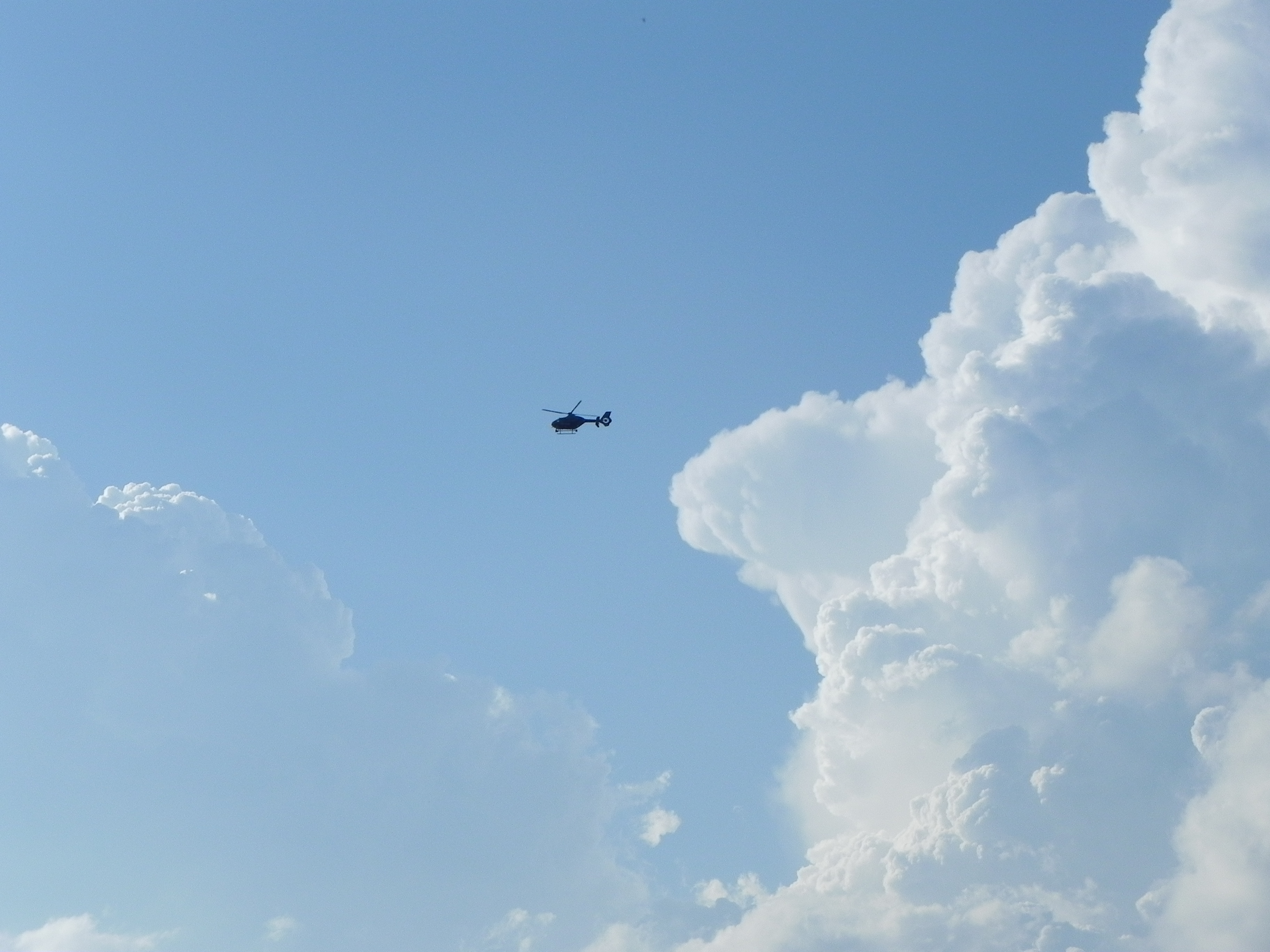
The machine gun on the bow of the National Guard boat would’ve impressed me as a boy. Now it kind of scares me. The helicopters overhead pass frequently. Police on jet skis chase girls in a canoe away from the shore of the Charles as if they were piloting a landing craft on D-Day. A whole blessed platoon of chartreuse-garbed police on bicycles pedal by, some clearly out of shape, creating a presence. It has been a quarter century since I’ve been in Boston to celebrate our freedom. I wonder where it’s gone. To get onto the Esplanade you have to be brushed with a metal detector. Although the web site said backpacks would be searched, the guy at the gate claims it said they were not allowed at all. “You can empty it out”, he said, “and put the contents in a plastic bag,” but the empty cloth must stay here under a tree like a naughty dog. “Happy Independence Day,” he says. I wonder if he’s aware of the irony.

Big Brother

Big Brother

We have become the most skittish home of the brave I know. We are being watched, we are told, for our own good. The watcher is not some enemy nation, but our own “leaders.” Lead us not, I pray, into temptation. I wonder when we considered chasing girls in a canoe away from the shore a matter of national security. In 1985 I called Boston home. When my wife and I came to the Fireworks Concert as a young engaged couple, we lazily wandered down to the Esplanade, plopped on a free bit of grass and saw maybe an officer or two the entire day. Now everyone on this grassy strip is treated as if they’re on a grassy knoll. Armed police on boats cruise the shore to make sure we’re minding our manners. After dark that helicopter spotlight can’t help but to make you feel guilty of something. There’s a hurricane coming, and three tons of fireworks are sitting anxiously on the barges in the river. The concert begins, but soon so does lightning. They skip right to the fireworks, forget the 1812 Overture. I wonder about my evil backpack under the tree.

The woman behind me is talking to her companion about how illogical the backpack rule is. “If the bag is empty, why can’t you take it in?” she asks. I’m not one to talk to strangers, but I have to turn around to agree. We exchange horror stories about being screened at the airport. Doesn’t anybody see how offended our revolutionary forebears would’ve been by such a military presence in peacetime? What if some crazed national decided to do something insane? Would that wicked machine gun hit me and my family, right on the waterfront, while trying to get the perpetrator? Are we collateral damage on the trail to freedom? Or is freedom even in the picture any more? We can’t let the terrorists win. Every time we face a backpack full of homemade explosives with hundreds and hundreds of chunky guys on bicycles and hovering our heads with deadly force, I can’t help but think it’s no contest. There’s a hurricane coming. They rush through the fireworks and I join the other owners of dispossessed backpacks looking for my luggage. Then the fattest raindrops I have even felt begin to fall.


The Call of Madness

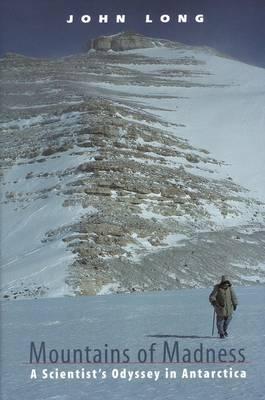
mountainsofmadnessPicture this: the wind is howling outside your tent, violently snapping the fabric. The temperature outside is well below freezing, and you are camping at the base of a mountain nobody has ever explored. You are hundreds of miles from any possible help, in the midst of Antarctica. What do you do? Read H. P. Lovecraft’s “At the Mountains of Madness.” At least that was the decision John Long made on his journey to collect fossil fish in the most inhospitable continent on the planet. Mountains of Madness: A Scientist’s Odyssey in Antarctica is one of those rare books where a rational, educated man of empirical approaches allows the creative, emotional aspect of life speak. I picked the book up at a library sale, based solely on the title. I recognized the Lovecraft in it, and wondered whether it was accidental or not. Besides, reading about polar regions has always fascinated me. Indeed, according to the records of those who’ve trespassed into those regions, madness is not a rare consequence.

Long’s book is not religious, but it is filled with wonder. The mechanistic science that’s often fed to the public is frequently technical and lacks those mysteries we’ve evolved to love. Nowhere in this book is the compelling aspect more relevant than in Long’s accounts of Christmas. The population of Antarctica—a select group by anyone’s standards—is mostly scientists and technicians. Deep field expeditions, it stands to reason, take place in December, which is the summer of Antarctica. In the case of those in the field, they are far removed from their home base, and even the earliest explorers noted in their diaries that Christmas was celebrated, in however minuscule a manner rations and perilous conditions allow. Nobody bulking here that it’s all just a myth.

Lovecraft’s story places explorers far from help in the mountains of Antarctica where they discover they’re not alone. The story inspired such movies as The Thing from Another World, and therefore John Carpenter’s The Thing. Lovecraft, like Long, was a disciple of science and yet, even in his atheistic world deities break in. It’s like Lewis’s Narnia where endless winter with no Christmas is unbearable. Long makes it clear in his account that Antarctica changes a person. Transcendence, those of us who linger over religions know, can express itself in many different ways. For some it is the grandeur of barrenness and inhospitable weather of an unfeeling environment where both macro and micro-predators have trouble surviving and penguins gather to struggle through weather humans can barely tolerate. For others it is camping below the very mountains of madness. Without some wonder, we just don’t survive.


International Panic Day

Holidays have diverse origins. Some appear to have been made up in a fit of madness, bearing no particular relevance to anything. When I saw a publisher offering an “International Panic Day” sale, however, I supposed it was a joke. A quick web search indicated otherwise. June 18, for reasons nobody can really identify, is International Panic Day. I’m reminded of the Simpsons episode where Marge, liberated from her phobia of being mugged, runs past grandpa calling, “I’m not afraid!” to which he replies, “Then you’re not paying attention.” Fear and panic, while not the same thing, live in the same neighborhood. Many analysts point to fear as the primal emotion behind religion. We may never be able to prove that with any certainty, but I can’t think that panic has a religious origin. Many panics have emerged from religious fervor, but the panic itself seems not to have conceived religion.

Run_on_the_Seamen's_Savings'_Bank_during_the_Panic_of_1857

According to Holiday Insights (dot com, of course) no information can be found on the origins of the holiday, which makes it sound like a perfect internet invention. It is a day to feel unsettled. For some of us, that seems like most days. Again citing the wisdom of cartoons, Charlie Brown notes in the 1965 Christmas special, “I know nobody likes me. Why do we have to have a holiday season to emphasize it?” Holidays can be like that sometimes. But a panic day? I have an amateur theory that International Panic Day derives from Panic Day (about which Holiday Insights also has no information), which falls on March 9.

Some online sources have noted that the choice of June 18 is a strange one for International Panic Day because the next day is already (and has been since 1979) World Sauntering Day. This holiday is believed to have begun at the Grand Hotel on Mackinac Island in Michigan. Apparently W.T. Rabe, the holiday’s creator, was reacting to how popular jogging had become and wanted people to slow down for a day. International Panic Day would seem to suggest that running is the best option. Without a goal, of course, other than just to get away. Maybe there is a connection with religion after all. Having long been a fan of Douglas Adams, however, I am a devotee of his contra-mantra: don’t panic.

DSCN1993


Clockwork Universe

longitudeIn a clockwork universe, time is an essential interpretive factor. Those of us constantly crushed for time hardly realize just how recent of an invention it is. Time has, of course, been around forever. Human interaction with it, in the daily sense of what defines work and what defines leisure, dates only to modernity. Train schedules, in the Victorian Era, led to the need for standardized time across large land masses such as North America. Prior to that, with an uncanny precision to those of us who infrequently take the time even to look at the sky, clocks across the nation were set at noon by observing the sun at its zenith. Even though the concept of longitude existed, its measurement at sea was maddeningly difficult. The Phoenicians, the ancient mariners who circumnavigated Africa, did so by staying in sight of land as much as possible. The open ocean gives few clues as to those imaginary lines we assign to keep our location certain.

Dava Sobel’s Longitude: The True Story of a Lone Genius Who Solved the Greatest Scientific Problem of His Time, is, despite the lengthy title, a brief book laying out the story of John Harrison. Harrison, a clock-maker whose precision clocks made the calculation of longitude a much more precise science, was in a race for a royal grant to reward the discoverer of a method for giving precision to ships at sea. Harrison represented those who believed accurate clocks could solve the problem, while others argued that mapping the heavens would give sailors the best chance. Often we forget that loss of life greater than that on the Titanic could occur when ships ran aground, due to lack of knowledge concerning their longitude. Navigating the seas before GPS and before accurate watches, was often a matter of informed guessing with very high stakes. Harrison never did get to claim fully what he’d earned and we’ve all but forgotten how difficult finding the correct time was when our computers remind us, to the second, of precisely when we are.

Prior to science, the keeping of time was a religious function. Sacred calendars marked holidays—often with the ulterior motive of keeping farmers on track for when planting time for various crops, and their harvests, should commence. Telling the change of seasons by when to add or discard a layer of clothing seems eminently practical, but it doesn’t help an agricultural society to plan ahead adequately. The gods would give the time, and all they would require was a cut of the profits. It was, all things considered, a reasonable trade-off. And now holidays have mostly slipped their religious moorings to become times when we simply don’t have to go to work. Speaking of which—look at the time…


Uisge Beatha

Water is essential for life. Life as we know it, in any case. It is no surprise, then, that many religions incorporate water into their rituals. Last week I posted about the biblical stories of Jonah and Noah, both of which involve acts that were later interpreted by Christians as baptism. Muslims use ritual ablutions as part of their worship tradition. Water is life, after all.

IMG_1392

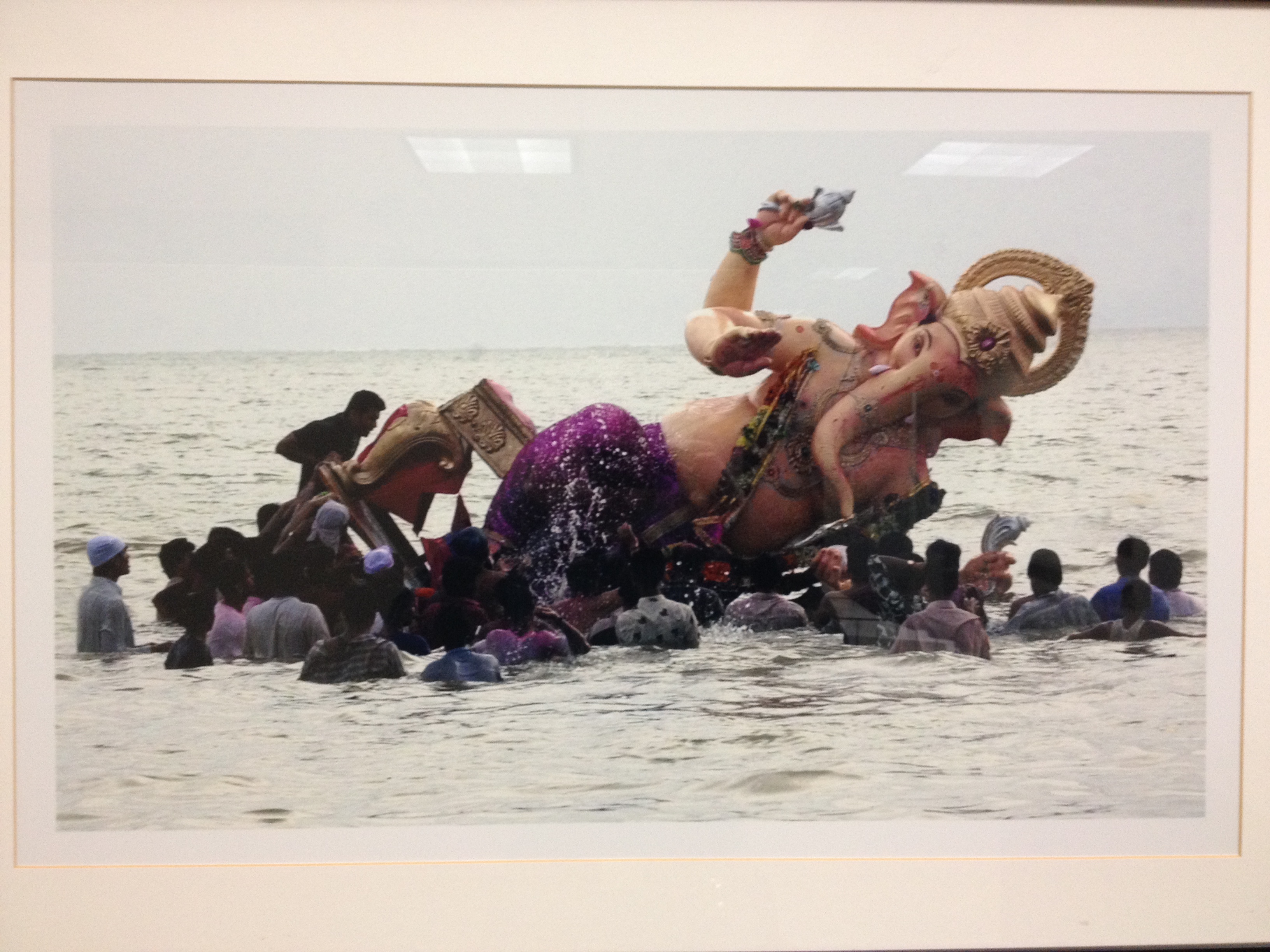
While wandering the halls at work, I notice the various artwork on the walls. One large, framed image has frequently caught my attention: several men are shown carrying a statue of Genesha, the Hindu elephant-headed god, through the water. Coming at this from a Christian background, I wondered what was going on since it looks like baptism. Hinduism, I know, is not a unified religion, but rather a conglomeration of many folk traditions from ancient India—one of the two seats of ancient religiosity. The stories of ancient India are colorful and diverse, and a bit of research suggests that this particular photo is likely the festival Ganesha Chaturthi, commemorating the story of how Ganesha came to have an elephant’s head. Crafted from inert matter by his mother Parvati, Ganesha was posted to watch the door while his mother bathed. Parvati’s consort Shiva returned and not knowing who the boy was, the lad’s refusal to allow anyone to enter led to a war. Eventually the Ganesha was beheaded and to appease his consort, Shiva supplied him with the head of a dead elephant and the boy resurrected. The immersion of Ganesha statues, or Visarjan, takes place as part of the Ganesha Chaturthi, during August or September.

I admit I’m not an expert on Hinduism, so some of the details may be a little off here. What strikes me, however, is the similarity between this story and that of Jesus. Like Ganesha, Jesus was associated with a modest mother, slain, and resurrected. He, too, is associated with ritual baptism. Growing up, we were taught of the many unique aspects of Christianity. We had, we were led to believe, the only resurrecting deity in the world. Our God alone could bring back from the dead, and the way in was through immersion in water. While learning about Ugaritic religion I read of Baal’s death and resurrection. Although stories of baptism haven’t survived, he also battled the sea and came out victorious. Some ideas, it seems, are particularly fit for religious reflection. The details may be unique, but the archetypes are very similar. Religions may be many things, but in the end, unique is a word that must be applied with the greatest of care. In the meanwhile, the next time I read of walking on the water, I will recall that even Asherah was know as “she who treads upon the sea.”


The Price of Flags

As a child, Memorial Day signaled the start of summer. Most of the time it announced that the obligations of school were nearly over and that was sufficient cause to celebrate. It was not until well into adulthood that I realized the holiday commemorated those who’d died in the armed services. I’d noticed the flags in cemeteries, of course, and we often visited the graves of civilian ancestors buried close enough to reach. The message did not penetrate my head, however, that all of those little flags should be telling me something. I grew up not knowing my father, but I did know he was a veteran. When all his children gathered for a (mostly) impromptu picnic yesterday, for the first time in well over thirty years, I realized how much of a mystery he was to me. At his funeral the flag on his coffin was presented to my older brother as part of military tradition, although he had died in peacetime, and pretty much isolated from all his progeny. It is a somber thought even now, although it was eleven years ago.

I have been a pacifist since my youngest days. Sure, I played with toy guns and G. I. Joe, but that was the culture of kids growing up during the Vietnam War. Only vaguely did we realize the actual horrors that were happening daily thousands of miles away. In my mind there was no reason to go to war. In Sunday School we were taught to settle our differences nicely, even if it meant that you had to be cheated or take less for yourself. This always seemed the central tenet of Christianity to me, and I wondered why the most conservative of Christian presidents seemed the most hawkish, the most ready to sacrifice the fathers, sons, brothers, and now mothers, sisters, and daughters of others for so little. The number of flags even in that little country graveyard where my grandparents were buried haunt me.

We still have members of the armed forces over seas. The military budget of one of the most prosperous nations on the planet is astronomical. We can now kill with drones so that we don’t even have to see the carnage we create. When did the lives of young adults become small change? I know it’s idealistic of me, and probably terribly naive, but I still can’t make sense of our cultural perception of how cheap human life can be. Maybe I’m just a little overly sentimental about a father I never really knew. But looking over my siblings, I see that he produced some nice, generous, and peace-loving children over half a century ago. And while we have our picnics and enjoy a rare day off of work or school, thousands of silent flags will be flapping in cemeteries all across this country reminding us that better ways exist to resolve our differences. If only we could take a holiday from war and violence we might see fewer flags and even more holidays.

Photo credit: Remember.

Photo credit: Remember.


Rosemary by Any Other Name

Rosemary

With NBC’s remake of Rosemary’s Baby into a mini-series in the news, I sat down to watch the original again. I’ve blogged about it before, but with most available funds being diverted to college, watching new movies will be a rare treat for some years to come. Besides, the original is a mishmash of religious ideas that despite their lack of coherence still leave the viewer somewhat disturbed. Since the last time I watched the movie, I’ve read several books on witches and have come to recognize the strange brew that Roman Polanski concocted for public consumption. Reaching back to the myth of diabolic witches, the original movie presents such witches initiating a new world by literally spawning Satan on a woman whose name is based on the mother of Jesus and who will ultimately care for the helpless little devil. The viewer, despite the knowledge that Rosemary is carrying evil incarnate, still sides with the vulnerable, pregnant protagonist. It’s the end of the world as we know it.

I’m not sure how you make a miniseries out of this thin plot. I suppose a nine-month pregnancy would lend itself to slow development, but haven’t we grown a little too old for witches and devils? In fact, Wicca is now a recognized religion in much of the industrial world, and the devil’s been on the run for decades. Religious movies, or at least movies based on religious themes and characters, are perennially popular, however, no matter what the secularists tell us. And why not open a series about pregnancy on the weekend of Mother’s Day? Nothing stirs the emotions like putting a young mother at risk. That’s perhaps the insidious side of the original movie—we silently side with the devil.

Rosemary is, of course, manipulated by her husband with the everyman name of Guy. This isn’t in any sense his child and, like any businessman, he stands to gain enormously from someone else’s labor. Exploitation is the cost of the continuation of the human race. It doesn’t take much to figure out that we’re watching a parable here. After all, the Time magazine cover asking if God is dead makes a cameo in Dr. Saperstein’s office. And the setting in Manhattan clues us in from the beginning that this is the place were many millions are asked to make a few very rich. There is a witchery in New York, and for those who know how to look, the devil may be found in the details.


Take a PAAS

Like so much of life, PAAS Easter Egg coloring kits were the result of an accident. To be more specific, a chemical accident in New Jersey, something which is far from rare. This particular accident, however, had a fortuitous side-effect: the brightly colored (but not radioactive) Easter Egg dye that many of us associate with childhood. Around 1880 Newark druggist William Townley spilled colored dye onto his suit, leading him to individually package holiday colors, according to a story in the New Jersey Star-Ledger. That individual packaging allowed for a full set of egg colors to be sold together and the PAAS brand was soon launched.

The idea of coloring Easter Eggs, like so many Christian traditions, likely has pagan roots. Eggs were a sign of new life with the coming of spring in many cultures (although boiling the poor things rather defeats the purpose). Christians adopted the egg as a resurrection symbol—the chick pecking out of its shell was like the resurrected Jesus bursting from the tomb, albeit somewhat less dramatically. Watching a newborn chick hatch is an emotional experience. At the 4-H Fair, standing around the incubator in the chicken tent, you can see wobbly, uncertain, tiny birds tentatively trying to assess this strange new world that is colder and somehow more compelling than life in the shell had ever been. The mighty son of God they’re not, but they are much more like us, looking for answers and taking small steps until they’re more certain of what they face.

DSCN4483

The coloring of eggs has origins lost in antiquity. Nobody’s quite sure why it was done beyond the fact that they look nice. Romans ate eggs as part of their spring celebrations, and Christians came up with a story to explain colored eggs. The legend claims that Mary Magdalene, in trying to convince the emperor of the truth of the resurrection, turned eggs from white (or brown, as they likely were in those days) to red in her open hands. This proof, however, failed to convince the Caesar. What seems certain is that pagans liked coloring eggs so this provided a new source of evangelism to the Christians who assimilated the practice. Like Christmas, the Easter Egg has become a thoroughly cultural symbol—since Easter comes on a Sunday employers aren’t obligated to give the day off, so everyone can celebrate. Children hunt eggs on the White House lawn and we can still expect everyone to be in the office on Monday morning. Resurrection, after all, can only reach so far.


The Plague

Plagues&Peoples Sitting on the bus next to some guy with a consumptive cough may not be the best place to read Plagues and Peoples. But William H. McNeill’s book is considered a kind of modern classic, and since the Middle Ages have been on my mind, I persisted anyway. I did wrap my scarf around my face, though. Plagues and Peoples isn’t just the story of the Black Death, however. It is a sweeping account of pandemic and endemic outbreaks and how they form recognizable patterns with human populations. Perhaps the most striking aspect of McNeill’s study is how determinative plagues have been for many decisive aspects of human history, including religious ones. Indeed, religion keeps cropping up in the book. One reason is because of the roles religions play in human suffering—to be more precise, I should say in trying to alleviate human suffering. (Yes, some religions definitely cause it as well, but that’s a story for another time.) McNeill even suggests that fear of disease might have led to the parting of the ways between Swiss and German Reformers, playing a role in the divergence of what would become the Presbyterian and Lutheran flavors of Protestantism. The spread of some religions was facilitated by the ravages of disease.

During the period of the spread of the Plague, however, McNeill notes that those cultures attended by Christian and Buddhist institutions managed to fare better than irreligious, or, perhaps more accurately, folk-religion ones. Once people figured out Plague was contagious, they sensibly kept away from the sick, but the moral teachings of Christianity and Buddhism compelled the religious to tend to the ill, with the result that more people in those religious traditions survived. That’s not a universal declaration on McNeill’s part, but it is a fact worth bearing in mind. The risk to self paid off when more individuals cared for each other rather than just heading for the hills when the Black Death came along. On the other hand, religions frequently insist on behavior that spreads disease as well. The great pilgrimages to Mecca or the Ganges often brought great crowds together where disease could quickly spread. The passing of the peace in some churches is more like the passing of the plague.

In ancient, pagan times, disease had its own deities. In ancient Ugarit, Resheph, the archer, was also the god of pestilence. Pestilence frequently accompanied the horrors of warfare, and even Apollo opens the Trojan War by firing his arrows at the Greek troops. Gods are the source of disease. One of the ancient truisms, which may not be taken as true today, is that the force that wounds is also the force that heals. Instead of ignoring Resheph, you pray to him, make offerings to him. He can slay, but he can also heal. In the monotheistic and even non-theistic traditions McNeill mentions, the focus shifted to the care of those suffering rather than the offering of sacrifice to unhearing gods. Even the Romans were impressed by Christian care for one another. Of course, that was well before Obamacare offered the hope of medical treatment for those cut off from lucrative employment. The Christian response now, it seems, is to complain about others taking advantage of my surplus cash made over to a program to prevent illness in one’s fellow citizens. Take the bus to work, you’ll see what I mean.


Wee People

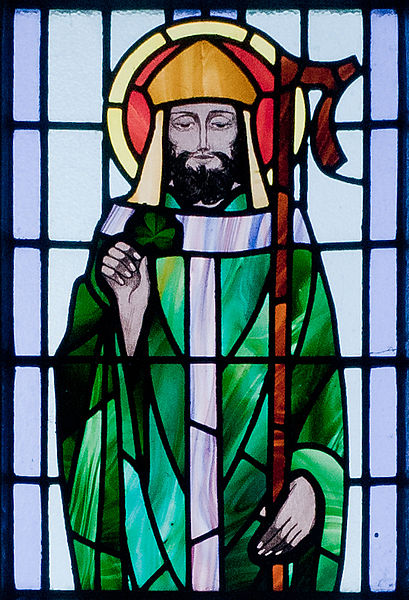
Whence we come influences our outlook. Sometimes invisibly, at other time quite consciously. I remember as a child, wanting to be honest about the wearing of the green on St Patrick’s Day, asking whether we were Irish or not. Of course, for many Americans being Irish, German, or Swedish really means having ancestors long ago from a different country. Most of my ancestors had been in America for some time—a couple hundred years at least. In New Jersey, where many people are literally from elsewhere, that can seem exotic. Great-great-grandparents in one of my lines can be traced to another country, but most of my ancestry is already settled in the United States long before that. Unknown to my mother at the time of that question, one of my ancestors was indeed from Ireland, a stowaway, as I understand it, and thus I could wear green without being dishonest. (Children can be so parsimonious.) When I saw the locals walking away from yesterday’s St. Patrick’s Day parade in my local town it was obvious that not all of them were Irish (or American with an Irish ancestor), but they nevertheless came out on a cheerless, chilly day to join in the Celtic spirit of celebration. St Patrick’s Day is all about belonging.

Photo credit: Andreas F. Borchert, Wikicommons

Photo credit: Andreas F. Borchert, Wikicommons

The rich mythology of Ireland was never supplanted completely by the Catholic influence that became synonymous with many parts of the country. Leprechauns, the little people with their pots of gold, have been fused into a mythology of St Patrick and his magical clover that somehow explained the Trinity, while it is the four-leaved variety that brings good luck. And Ireland’s snake-free evolution was attributed to sacred innovation rather than the Ice Age, the true culprit. It is our myths who make us who we are, however. Where would Ireland be with a massive chunk of ice preventing snakes from evolving in a land where a genetic variation sometimes leads to a fourth leaf on a common grass of the field? And where is that pot of gold anyway?

And yet, within the last year construction on a highway was halted in Iceland (I know I’ve island-hopped here, despite the difference of a single consonant) because locals protested that it would disturb the habitat of the little people. While a post-graduate representative to the Faculty of Divinity in Edinburgh (switching islands yet again), one of the faculty admitted to a fascination with Celtic folklore. A more rational theologian challenged him saying, “what about the farmer who loses valuable space in his field because he leaves a ‘magical’ tree standing—isn’t that tragic?” The renegade faculty member allowed that this too was especially wonderful. A world enchanted is swiftly disappearing beneath the unrelenting tires and blades of scraper and cold planer, or the axe-bearing lord of ultimate efficiency. The soul is just another casualty on the road to enlightenment. And yet yesterday, those with ancestry from Africa, India, China, Italy, and even England, gathered to watch the parade where the mythology of an island that never had an empire nevertheless draws together people of all ancestries to wear a bit of green and to celebrate whence we came. St Patrick’s is a day to celebrate whoever we are. And to leave the door ajar for the wee folk that might still be around.


Porcine Prognostication

Punxsutawney Phil phled his shadow this morning, leaving many despairing another six weeks of winter, which meteorology seems to dictate anyway. I used to tell my students that Phil is a most peculiar prophet, in that he is, presumably, neither Christian nor Jew, but rather of the rodent religion (whatever that may be). People pretend the little guy has powers beyond those of the average mammal when it comes to predicting vast, chaotic systems. If a groundhog flaps his eyelids in Pennsylvania, prepare for plows and shovels and more thermal underwear. Playing into this annual phenomenon is the provocative persistence of the idea that prophecy is prediction. As much as scholars attempt to expunge the idea that foretelling wasn’t what prophets were ever really about, the populace likely wouldn’t have paid them any attention, had the possibility not presented itself that these preachers knew something the rest of people didn’t.

Prophecy is a strange phenomenon. We claim that we would like to know the future, but I’m not sure that we really would. Knowing that we’ve set ourselves on many tracks that inevitably lead to tears, do we really want to know? After taking my daughter back to college, we sat in a fast-food place to grab a bite on the way home. It had been snowing again, as it will do in the winter, and the television in the corner was blaring on about another apocalyptic band of snow. A bearded and burly Pennsylvanian at the next table turned to me, attracted, I supposed by my own facial hair, and said, “What about this global warming?” I nodded politely, not being very burly myself, but I thought of the fact that global warming does mean more severe winters in some places and warmer conditions in others. It is marked, scientists predict, by erratic weather, not a constant sauna in those regions accustomed to snow.

Although a Pennsylvanian by birth, I have noticed that my ancestral New Jersey does not receive much snow. Until this year. We’ve had the white stuff on the ground for over two weeks in a row. Yes, it snows in winter, but not usually here. I shiver and think of global warming. It is a chilling thought. Punxsutawney Phil may live far enough inland not to have to worry about learning to swim, but the same can’t be said of the inhabitants of most of the major cities of this country. We know it is coming, but we turn a blind eye. Progress in the name of unbridled big business interests brighten a future otherwise a bit more gloomy than we might prefer. Phil ducks back into his burrow and the rest of us clutch our coats a little tighter around us. Prophecy is a mixed blessing indeed. We already know the outcome before the groundhog awakes.

An agnostic groundhog ponders the inevitable (photo credit: I. EIC)

An agnostic groundhog ponders the inevitable (photo credit: I. EIC)