Unusual Thanksgiving

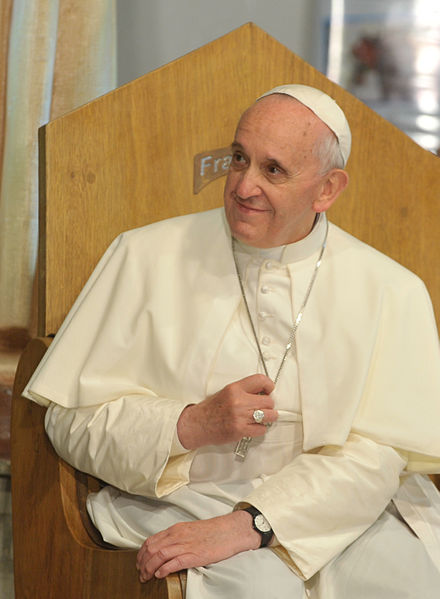
Believe it or not, preaching was once part of my job description. At Nashotah House all faculty were called to the pulpit, ordained or not. Falling into the latter camp, my obligations were generally held down to once a semester. My first homily, focused on the lectionary readings for the day, was about the problems of social inequality. Afterward the senior faculty member came to me in the vestry and said, “It has been a long time since I’ve heard the social gospel preached from that pulpit.” This little incident came to mind as I was reading a CNN Belief Blog story my wife pointed out to me. The article highlights some of the provocative comments by Pope Francis in his recent document Evangelii Gaudium. Francis, in a startlingly refreshing vein, suggests that the church must get back to basics. Human basics. I agree with those who say the church has not gone far enough on gender equality, but the idea that the cut of your surplice demands more divine attention than the homeless and starving has got to go.

At Nashotah House many students who wanted to be Catholic priests but also wanted to be married (the flesh is willing, but the spirit is weak) had Pope cards, rather like baseball cards, in their chapel stalls. This was in the era of the great conservative John Paul II, affectionally known as J2P2 in the theological ‘hood, when men ruled and a congregation might split over the use of a maniple. The gnat-strainers were clogged in those years. Camels fled for their lives. I wonder what these priests now make of the very head of their favorite chauvinistic church stating that even the papacy itself must change. I keep wondering when Pope Francis will have his accident, or unexpected heart attack or stroke. As the Belief Blog makes clear, not all appreciate the challenge to the status quo. There is too much power at stake.

This Thanksgiving, this old Protestant finds himself unaccountably thankful for a Pope that is willing to start turning things in the right direction. It will take decades, if not centuries, before the church can possibly catch up with the realities faced by the vast majority of the powerless, disenfranchised, and the needy. These are uncomfortable realities. When I saw a picture of Pope Francis laying his hands on a badly deformed man during a service in Rome a few weeks back, I could almost believe that someone was taking the message of Jesus to heart. That message was, and is, a radical one. We only have all-male disciples because we can only count to twelve. And we tend to forget that just about all of those guys were working-class slobs. Maybe if we could really be thankful for the gift of people all of this might just come to mean something significant after all.

Photo credit: Tomaz Silva/ABr

Photo credit: Tomaz Silva/ABr


Honorable Theft

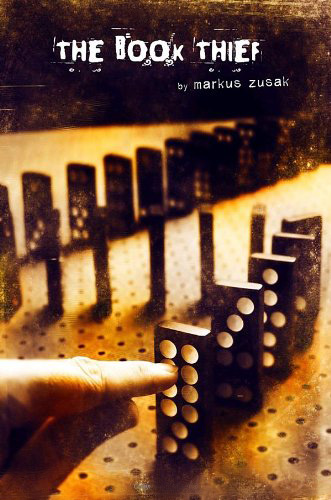
The_Book_ThiefYoung adult literature can be amazingly profound. My curiosity about Markus Zusak’s The Book Thief bubbled to the surface after the movie was released last weekend. I didn’t see it, along with thousands of others, because of its very limited theatrical release. I’m sure you know that distressing feeling when you type your zip code into Fandango and come up with zero results. Short of going all the way into New York City just to see a movie, I was pretty much out of luck. The silver lining is that it made me read the book. I’m not sure what I was expecting (I can also be the victim of hype), but what I found was deeply engrossing while also being deeply disturbing. Spoiler alert!

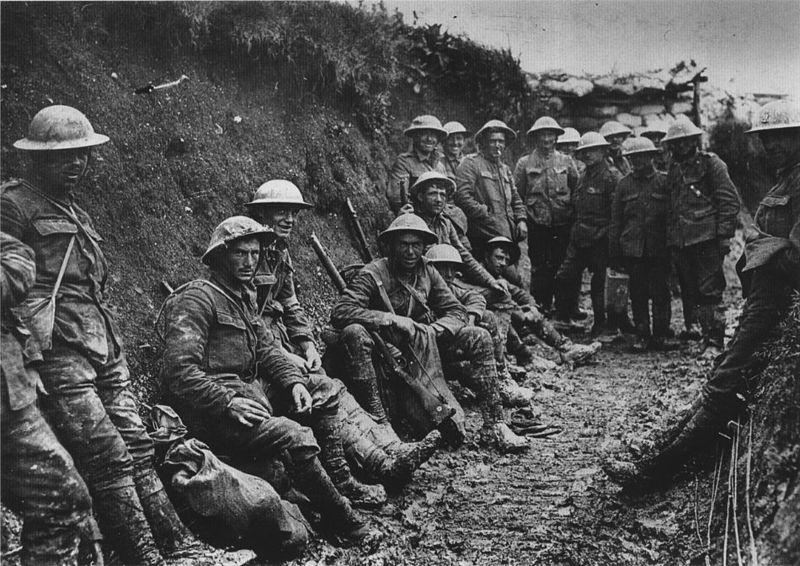
The Book Thief is set in Nazi Germany. It is narrated by Death. The protagonist, Liesel Meminger, represents the plight of all people; we have no control over when, where, or to whom we’re born. With parents considered enemies of the state, the Book Thief is raised by foster parents who are German, but who are also poor. They are good people, and much of the tension in the book revolves around their hiding a Jewish friend in their small house. The convention of Death as a narrator predates George Pendle’s Death: A Life, by three years. Although in the end Death is the only survivor, he is remarkably sympathetic to the human condition. Death also supplies the main religious observations in a book otherwise devoid of God. When Death attempts to pray during the horrors of war, a devastating conclusion is drawn: “God never says anything.” Is that why Veteran’s Day celebrations tend to be so silent? There may not be any atheists in foxholes, but there’s no God there either.

As Death stalks all those who are dear to her, Liesel finds her comfort in books. Although she begins the story illiterate, and although books are difficult to find in a poor family in a nation at war, Liesel discovers that words have a power that even dictators can’t steal. Her love of reading saves her life as her street is obliterated in an air raid. Even Death has to question the futility of war. In my most idealistic of moments, I hold the conviction that many of the world’s evils would be eliminated if people just read more. We would discover, for example, that even the devastation of war can be overcome by words. The only book Death is portrayed as reading is the Book Thief’s life story. And this gives Death pause, because even young adult literature can be amazingly profound.


Voting Vicissitudes

“Remember, remember, the fifth of November, the Gunpowder Treason and plot. I know of no reason, why the Gunpowder Treason, should ever be forgot.” Election day fell on November fifth, and as I watched V for Vendetta again, I was reminded how true it rings. Religious leadership takes over government, the common person becomes an enemy of the state, and criticism is treason. Tea, anyone? I’ve always had a soft spot for dystopias, but the world of V is entirely too plausible at times. I have watched rational people transformed by fear and the certainty of religious dogma into those who will do what they are told without question. The movie always gives me a profound hope that the human spirit is larger than the powers that be. V can also stand for Vote.

I cast my ballot knowing that a vote against a governor who enjoys the bully image was indeed close to a lost cause. People are enamored of power. In my deepest Jedi dreams, however, I know that the most powerful moment in Star Wars is when Obi Wan turns off his light saber to allow himself to be struck down. There is a power, one upon which entire religions are premised, in the self-sacrificial act. It’s not that I have anything against Parliament; I saw it just this past year and enjoyed the experience in a way that Guy Fawkes could perhaps not have appreciated. As Evey says, “this country needs more than a building right now. It needs hope.” I guess we can hold on another four years. V can also stand for five.

“He’s a deeply religious man and a member of the conservative party. He has completely single-minded convictions and has no regard for the political process. Eventually, his party launches a special project in the name of ‘national security’.” So V tells Finch concerning a dictator who could be wearing any number of political masks in our world. We hand power over to those who encourage our fears rather than those who inspire our imagination. Camelot died in 1963. It is not so difficult to imagine a world so much better than the one we’ve constructed, but plutocracy does prevail when people do not take the implications of their religion seriously. When we only glance at the surface, the deeper message gets lost in the mythology of it all. November fifth is a myth that still has the potential to change the world. If we would allow it.

VoteV


Sacred Fear

Last week’s Time magazine ran a story about fear. I’m no stranger to this emotion, so long ago I decided to engage it creatively rather than run away. The article, “Monsters Inc., Inside the weird word of professional haunting,” by Lily Rothman, contains the laments of those who operate seasonal haunted houses. People are just getting too hard to scare. Some blame violence in the media and computer games, a large-scale desensitization to the suffering people might cause to others. CGI has made the most hellish nightmare realistic in the theater or on the small screen. If you can imagine it, it can be brought to life. Yesterday was Halloween, the day we’re allowed to be afraid. Of course, those who fear the influence of negative emotions on children have cute-ified the frights: bulbous air-filled creatures lit up from within billow harmlessly in front lawns, monsters of various sorts sport silly grins, and humor is liberally sprinkled in with the horror. One haunted house owner wanted patrons to walk through naked, so they could feel vulnerable. Today most people will wake up to just another day of work, while others will roll out of bed ready for All Saints’ Day and a rousing chorus of Vaughn Williams. Some of us will still be scared.

DSCN0216

Thrice I’ve had to face the highly secretive severance agreement offered by employers who know that people over forty have a difficult time rebuilding a career. I know that in this I’m not alone. If it hasn’t happened to you, here’s how it goes: you show up to work one day and begin doing whatever it is someone pays you to do. Depending on the size of the organization, either Human Resources or some level of supervisor will innocently invite you to the office. They will have solemn smiles on their faces. The door will be closed. You will be told that, for whatever reason they wish to give, your services are no longer required. In return for your silence you’ll be offered some kind of adult care package. You’ll leave shattered and stunned and willing to sign anything slipped under your nose.

The secrecy’s the thing. I’ve never revealed to anyone, under pain of prosecution, what any of those agreements said. What I have noticed, however, is the fear. The lawyer-instilled fear of bad press. Organizations want to be thought of as caring and concerned. They do not want any clandestine information released. Truth seems to be the greatest engine of fear in the corporate world. A few years back, before the Bush-whacking of the economy, I read about optimistic companies practicing “naked business.” Revealing vulnerability. I immediately admired the idea. Like walking through a haunted house in the nude, businesses could demonstrate that they have nothing to hide. But there’s real fear here. Like a ghost, truth can pass through walls. Like Godzilla, truth is indestructible. Like the invisible man, naked truth just can’t be seen.


Conscientious Ghosts

It’s finally Halloween. In keeping with the spirit of the season, NPR recently ran a story on ghosts. I’ve posted on the topic of ghosts several times since they are inherently a religious phenomenon, whether they actually exist or not. Empirical method only takes us as far as that terminal border, but not beyond. Since we all face death, the question of ghosts is intriguing to many people. In some parts of the world, according to the NPR story, up to about 90 percent of the population believes in ghosts. They have been part of the religious thought of humanity since writing began. Ghosts have haunted us from earliest memory.

What makes the NPR story so interesting is that there is a kind of moral consciousness that runs through the story. An interview with Tok Thompson, an anthropologist at the University of Southern California, makes up part of the story. Thompson notes that ghost stories often concern unresolved justice issues. He cites the overused “Indian burial ground” motif as an example—where there is a collective guilt, ghosts tend to gather. Slavery is another such social injustice, and again, ghosts and slaves are no strangers. Christianity tended to push justice off into the afterlife. The fact is many people do not receive fair treatment in their lives. Some of them are very good folk who just never get a fair chance. That troubled early Christian thinkers into making Heaven into a place where the reward came. It also, unsuccessfully, tried to suppress the idea of ghosts. Ghosts problematize such easy theology. What are they still doing here when Heaven, Hell, or Purgatory should suffice?

Hammersmith_Ghost

The NPR story even addresses the idea of possessed dolls. Tok Thompson notes that the word “doll” derives from the word “idol.” This sheds a whole new light on Barbie, I suppose. An idol is an image representing a deity. In the Judeo-Christian tradition religious statuary was problematic at first. Again, Christianity bucked the trend by allowing images because people naturally want to see what it is they believe. Stories of haunted dolls and statues and other inanimate devices are difficult to accept. They are, however, deeply religious. That’s because ghosts represent what we really believe. Death is the most parsimonious of thresholds. We can’t look over at the other side, but, if ghosts exist, they may give us a glimpse beyond human sight. And that seems like an awful decent thing to do.


Thanksgivukkah

A moveable feast is hard to hit. Or something like that. Religious festivals are frequently tied to celestial events—the ancient Jewish holidays are based on a lunar calendar which, we all know, is out of synch with the solar one. This is the reason that for Christians Easter migrates around the spring calendar, even if different branches of Christianity peg the resurrection on various dates. Curiously, no one has suggested going back to c. 33 C.E., fixing the date of Passover that year, and giving a calendrical date for Easter. It sure would make planning a lot easier. In any case, a week or so ago there was a flurry of lighthearted commentary on “Thanksgivukkah,” the fact that Hanukkah and Thanksgiving occur at the same time this year. Both are moving feasts, and they just happened to bump into each other this year.

Thanksgiving is a modern holiday, emerging with the Protestant penchant for giving thanks for surviving in a harsh, new world. The United States government (which was not shut down at the time) finally regularized the date of the holiday to the fourth Thursday in November, giving the commercial world it’s only regular 4-day weekend. Christmas, not a moveable feast, cycles around the days of the week, giving employers a great sense of glee when it falls on a weekend so that employees may be given only a token Friday or Monday off. The day after Thanksgiving, however, is thankspending, as American a holiday as one can conceive. Hanukkah is also a roving feast. Celebrating the cleansing of the temple in Jerusalem after being defiled by the Seleucids, it has taken on many of the trappings of Christmas over the years, but it can come as early as late November, as Thanksgivukkah demonstrates.

800px-Thanksgiving-Brownscombe

Holidays, in this secular world, have come to represent something for which the Sabbath originally stood. The idea was that people needed a break from work. Despite all the studies that show more breaks make people more productive, our culture glorifies the over-worker. The reason, clearly, is not productivity, but control. I recall a lawyer once drawing a large circle on a newsprint pad and telling me, “this represents what your employer can do to you.” He drew a tiny circle in the middle of the large one and said, “and this is what your employer can do to you that is considered illegal.” Yes, we are a society that has never really gotten over the idea of indentured servitude. Little things like holidays overlapping keep us amused, while still at our desks. Hanukkah lasts for eight days. Christmas for twelve. But don’t try to take all that off—you might like coming back to work refreshed a little too much. Instead, why don’t you try making those bricks by finding your own straw? Everyone will benefit from this pyramid scheme.


Lost Supper

Culture, for better or worse, involves a deep connection to religion. No matter how secular we suppose the world to be, profound connections to belief surface in the most unlikely places. Time magazine’s culture section this past week has a brief blurb on “Burger Blunders.” Having been a vegetarian for a decade-and-a-half, this short story might not have caught my interest had my wife not pointed out “the Ghost,” a burger offered by Kuma’s Corner, a heavy-metal band-themed bar in Chicago. “The Ghost” comes with an unconsecrated communion wafer on top, and this has raised some spirits, according to Time’s culture team. Even Protestants recognize the power of the symbol of the wafer, even if they can’t accept transubstantiation. In Catholic belief, however, prior to consecration the sliver of bread is just that—a bit of pressed wheat product. The wafer came to be preferred because it was more easily contained than the crumbs of a regular piece of consecrated bread.

Communion, or the Eucharist, is a ritual meal based on the Jewish Passover. According to the Gospels, it was during the “last supper,” a Passover seder, that Jesus instituted the ritual. Early Christians ate together, and, recalling the symbolism, gave special prominence to the bread and wine. Bread, however, produces crumbs. When theology got ahold of bread it became a sacred object, after it was properly consecrated. It was believed (is still believed by some) to be very powerful in that state since it had become the actual body of Christ during the ritual. Wafers, technically unleavened bread, had many advantages to the emerging theological sensitivities. Portion control, symmetry, and virtually no crumbs. I’ve attended many masses, and the extreme care for particle control is everywhere from ciborium to patten to sacred linens that cover the altar like a liturgical table cloth. They are all accessories to the containment of broken bread.

Última_Cena_-_Da_Vinci_5

Communion wafers, however, when unconsecrated are just bread (if even that). They are not made palatable as snacks, but are more easily available online than basic gears or recordings of your favorite musical. Heavy metal has always enjoyed its blasphemous image as one of the most in-your-face counter-cultures possible. It is also profoundly religious. (Note, I am not saying that heavy metal is Christian or even Judeo-Christian, but it does participate deeply in religious symbolism.) If robbed of its shock-value, it is just loud noise. By association, however, many people mistake the wafer itself for what it represents. Without the added ingredient of consecrations, however, the liturgical churches tend to say it’s just bread. If you’ve ever eaten it, you’ll know that that assertion requires faith sufficient to move a Big Mac.


What’s a Sukkot?

It’s not every day you see a lulav and etrog, even in Manhattan. You can tell life’s too busy when you miss that it’s sukkot. Not that I’m Jewish, but I have been invited to sukkot a time or two by a friend, and it was always a fun, relaxed occasion. A festive little booth in the back yard, sweet wine and cookies. Running the rat race in New York City it is sometimes easy to forget. On my hurried footrace to some place or another, I noticed a group of Orthodox Jews standing along East 42nd Street with lulav and etrogs in hand. So distracted was I that I only vaguely wondered, “why are they holding those at this time of year?” Several blocks later, entering the Port Authority Bus Terminal I saw a man just standing as the crowds parted around him like the Red Sea. In his hands lulav and etrog. Finally it dawned on me: sukkot. It is fall, the time of year when I used to be able to enjoy the bounty of nature and the good-natured holidays. A time before when.

800px-EtrogC

The Hebrew Bible prescribes a set of three pilgrimage holidays: sukkot, shavuot (pentecost to the Greek, or Christian), and passover. Of the three, all associated with the exodus from Egypt in some traditional way, sukkot is the most lighthearted. The command to live in booths is said to be a reminder of the dwelling in tents during the wilderness wandering. Anthropologically speaking, it probably goes back to an ancient tradition of living in huts during the harvest when you don’t always have time to go home and tuck yourself comfortably in every night. Combines hadn’t been invented, and harvesters had to work long hours to ensure that the crop was gathered in. Eventually it became a celebratory occasion. Nice of Moses to allow a bit of festivity here.

Back while at a certain seminary in Wisconsin, a local Jewish friend used to invite my Hebrew Bible class to sukkot. Numbers were small, and invariably wary—were they going to be proselytized by the other? No, but they were invited to shake the lulav and etrog, sip a little wine, and chat about Leonard Cohen. A bit of a cultural exchange in the midst of prolonged indoctrination. I often wonder if my friend continued the tradition after I was asked to leave. The Christian school never made any reciprocal invitations, of course. Ecumenism is often a one-way street. So I stopped a moment at smiled at the stranger in the bus station, solemnly holding lulav and etrog aloft. Life is a bit too busy when we can’t even take a moment to consider all the things we take for granted every day.


From Darkness

All things being equal, most religions side with light. Let there be light. Enlightenment. Dewali, the festival of lights. The light of heaven is as much the appeal just as the darkness of hell is its antipode. Today, as the autumnal equinox turns us toward the darker half of the year, many religions mark the occasion with some kind of notice of the fading of the light. In the Celtic calendar, so indicative of the old religions of Europe, the recognition of the triumph of the dark comes at Samhain, or Halloween. It is the realization that darkness always follows light, and even the relative carelessness of summer has its limits. We are, half the year, no matter our location on the globe, in darkness.

Despite the habits of some college-age folk, people are not, by nature, nocturnal. Biology has evolved our sense of daylight, color-rich sight as a main means of our survival. Our religions have taken our fear of the dark and valorized our experience of light. Even as the winter solstice rolls around, festivals of many religions add more and more lights to ward off the encroaching night. The equinox is a moment of stability. It is a tenuous moment, occurring only twice a year, when darkness and light hold an uneasy truce. We are poised to move into shorter days, cooler weather, and the apparent loss of life. There is a melancholy to it, beautiful and compelling, if somewhat sad.

As I reflect on the fading of the light, I realize that the southern hemisphere, whence light seems to be rising, is facing the vernal equinox. Their summer is about to begin. Days will lengthen and light will be abundant. Our religious calendars tend to be keyed to the experience of those in the northern hemisphere. Those in the south, following the dictates of Rome, celebrate Christmas in summer and Easter in the fall. After my rainy visit to Indiana, where, on a rainy Thursday evening I saw a rainbow in the east, I awoke to a rainy Friday and saw a rainbow to the west. Fractured light. The light of a fading day broken into its myriad shades and hues. Light is that way. It is always daylight somewhere in the world, but religions focus on the light where we find ourselves at the moment.

IMG_0744


To the Flag

In the great witch hunt that began (or perhaps simply continued) with the Neo-con upsurge in which big business climbed into bed with theological conservatives, the pledge of allegiance became the acid test of true Americans. The Communists were now fading as a threat, and to be patriotic requires a clear and present enemy, so the un-Americans could be found among those who refused to pledge allegiance to a flag. In a recent CNN story, a case is going to court in Massachusetts to remove the words “under God” from the pledge. The dilemma is as simple as it is complex—children who do not believe in God may either recite what they don’t believe, or be ostracized for opting out. (Those of us who make a habit of opting out of things know the feeling well.) The argument goes that children are pledging loyalty to their country, not to a religion. Why should they be forced to say what they don’t believe?

The pledge has an interesting history. The original oath, a celebration of the now much-suspect Columbus Day, was intended as a quick credo of loyalty. No deity of any sort was invoked. Over time, additions started to creep into the pledge (the original version read “I pledge allegiance to my Flag and the Republic for which it stands, one nation indivisible, with liberty and justice for all”). It was not until after the tremendous horrors of World War II, when society was over-reacting to all kinds of threats, real and imaginary, that the words “under God” were added, in 1954. Godless Communists beware! Like the original pledge, this emended pledge celebrated a civil holiday—Flag Day.

IMG_0962

Nationalism could well be considered a form of religion. Customs differ in various parts of the world, and highlighting the differences allows for the conferring of unique advantages among the members. True capitalism cannot work in a culture of complete fair play or equality. Nations must be able to declare ownership and control of resources, including those known to every “human resources” officer in the universe as the most troublesome kind. To be useful to a nation, loyalty must be pledged. And children, who don’t have the experience or psychological development to make an informed choice about the Almighty, must say that they believe in “one nation, under God,” where “one nation indivisible” has itself been divided by God. Don’t get me wrong, I am glad to be an American—I can’t imagine being anything else. But I especially like the part about “liberty and justice for all.”


Happy Mother’s Day

Women’s voices raised in prayer. What could be the objection to that? Religion, of course. A story from the Los Angeles Times reports that chaos broke out in Judaism’s most sacred site, the Wailing Wall in Jerusalem, as women prayed in a newly won, court-authorized action. The ultra-orthodox flooded in to block the sacrilege. No doubt religions have come a long way in trying to redress the wrongs perpetrated against women in their holy names, but true equality remains a distant dream. I’m not picking on Judaism here—nearly all religions contain knots, sometimes Gordian in stature, of males who hold their mythology close to their genitals. God made men first, gave them a few extra inches of flesh in a precisely designated region, showing that they are superior. Penis frenzy. Yes, manliness is more than next to godliness, it is divine. So we are taught.

Religions like to make universal claims. How is it that they cannot see that, at least on this planet, universal is half female? It certainly doesn’t make me feel secure knowing there’s an omnipotent guy with an almighty packet hovering in the sky above me. For five thousand years of human religions we’ve yet to see any solid evidence that such is the case. There are even places in the Hebrew Bible where God is referred to as female. Hosea has God say, “I led them with cords of human kindness, with ties of love. To them I was like one who lifts a little child to the cheek, and I bent down to feed them,” (11.4) a translation nearly obliterated by the good old King James. Those who bent down to feed children, in the days before Playtex, were mothers.

480px-Firmin_Baes_-_Doux_rêves

Women have, informally, been the keepers of religious teaching, in the home. Father might be the authority figure, but mother knew the facts of the faith. Even today, especially in the western world, active members of most religions are female. Men, however, reserve the right to make the rules. They say it is God. Our projections on the divine are reflections of our own wills, much of the time. Even patriarchal Paul would claim that in Christianity there is no male and female. But in fact there are. Since Paul’s day, and even before, there always have been. The three major monotheistic traditions agree that Adam was the first created, and Eve came tumbling after. Let the women pray at the Wailing Wall. They are the ones who have, in the name of religion, most cause to wail. Until men can learn the meaning of true equality, it is the least we can ask of common decency.


Good, Friday

Riding public transit sometimes turns into a religious experience. Various bus drivers will wish passengers a “blessed day” as they pull into the Port Authority Bus Terminal—not that I can blame them, after the traffic they face daily, for taking a spiritual breather. Lately, though, I have been wished a happy Easter by the driver. Ironically, I must note, because people of many faith traditions ride the bus. Not all are Easter riders. Just yesterday a Rastafari stood before me in line. I’m regularly joined by Hindus, Jews, and maybe even a Mormon or two (who can tell?). Holy Week in New York is a surreal experience. I chatted with some co-workers where the topic changed effortlessly from their experiences of Passover to others’ experiences of Easter. Religion is alive and well in the Big Apple, but it is mostly an afterthought to the real business of making money. That’s what we’re all here for, after all.

Money, according to the good book, is inimical to the lifestyle of faith. I must have a little too much faith, I guess, since I have so precious little money. Nothing throws that into such sharp relief as looming tuition bills. You see, I tried “to fight the good fight” only to learn that there’s no way to win it without playing by the entrepreneur’s rules. Filling out the FAFSA over the smoldering ruins of my “earning years” was a distinctly sobering experience. I went into higher education because I believed in it—there’s that pesky faith again. The things you believe in, however, have a way of turning on you. I suppose that’s an appropriate reflection for Good Friday.

It’s hard to be an idealist in a world where people say, “you just need someone to give you a chance,” and then turn their backs on you. So as I’m walking across town, thinking about my blessed day, I notice that we’re all in this together. Except some of us. In the idealist world, those who want it the most sometimes win it. Those who play by the rules. I had no Harvard aspirations, just a reasonable job in a little college would suit me fine. A place to think that doesn’t have wheels and aluminum sides and seat forty-nine other lost souls. But for those who have less, even the little they have will be taken from them. That’s biblical too. Higher education is one of the greatest gifts we can give our children, but it easily joins hands with Judas Iscariot. It is Good Friday, according to some. Others just call it a blessed day.

Mathis_Gothart_Grünewald_007


Palming the Truth

For some today is Palm Sunday. For others it is not. And I’m not referring to those outside the Christian camp. For many Eastern Orthodox Christians, Lent is just beginning as others prepare to celebrate Easter. Such divisions in the priesthood of all believers. The message was brought home to me when a friend emailed me an article from Archon News headlined “For the first time since the Great Schism, Ecumenical Patriarch to attend Pope’s inaugural mass.” For those of you outside the thrill-a-millennium Catholic-Orthodox drama, it might help to know that about the middle of the eleventh century, Christianity experienced its first major schism. The issues were insignificant to all but those who had far too much time on their hands, but the list of grievances grew and festered for centuries until a clean-shaven Pope and heavily bearded Patriarch stopped inviting each other to one another’s parties. It seems that Pope Francis may be seeing the beginning of the end of that particular tiff.

Christianity is one of the most fragmented faiths in the world. Tens of thousands, yea, myriads of denominations exist. And if some of them got together and compared notes, I suspect they’d be shocked to learn that they are just the same as some of the others. Religious belief is deeply personal and highly individualistic. Belonging to a religious body is more a matter of commitment than it is a full agreement on every point—rather like a marriage, I suppose. The funny thing is people join religions that they like, suspecting that these copacetic beliefs will somehow save them from Hell. You can literally write your own ticket to Heaven, based on this system. No religion is right because all religions are right. And we wonder why people are eager to kill one another over matters of belief.

So, is it Palm Sunday or not? It depends entirely on your point of view. Roman Catholicism, followed by many Protestant groups, considers the first Sunday after the first full moon after the Vernal Equinox to be Easter. Never mind that all this equinox stuff smacks of its Pagan forebears—even Easter is named after the Germanic goddess Ostara. I can’t pretend to know how various Orthodox groups calculate their Easter, but the fact is that both dates can’t be right. Unless, of course, one of them is really a celebration of Ostara. Or maybe both are. And if it comes to a matter of debate, it will mean the birth of even more denominations.

Ostara laughs to see such sport

Ostara laughs to see such sport


A Goy in the City

Getting across Midtown Manhattan quickly during rush hour involves a kind of algorithm. That means my route to and from work each day changes depending on whether I catch that light at Eighth Avenue or Third Avenue. This past week my algorithm took me down 42nd Street on the way home. As I walked past a group of Orthodox Jews handing out leaflets, they singled me out and stopped me to ask if I was Jewish. I said “No,” but took their literature anyway. At first blush, it may seem odd to be mistaken as Jewish by some local experts (New York City has its fair share), but then again, maybe not. My brother tells me he gets asked the same question. Our great-great-grandparents left Germany in the 1820s and bore the ambiguous surname Tauberschmidt. By my great-grandparent’s generation they seemed to have been Lutheran, but before that? Hey, maybe this could explain a lot. Not to stereotype, but I do have the incessant angst that many Jewish characters exhibit in Woody Allen movies. Probably it’s my imagination. I thought it was cool to be mistaken for a “minority.” I felt, for a moment, like I belonged.

Reflecting on this incident (which made my day, by the way), I ask myself what it means to be part of a religion that has become a culture. The academic lingo for this is “cultural Jews” (in this case), but there are definitely “cultural Christians” as well. I suspect most religions have their cultural commandos. Part of the dynamic at work here is that although the world is very religious, it’s not really that religious. Most religious folks have an emotional connection to their tradition that may be, in fact, cultural rather than, for lack of a better word, spiritual. A person who is deeply religious often runs afoul of life in the everyday world. There is a sinful plethora of distractions. Those truly concerned about their religions often find themselves employed by them.

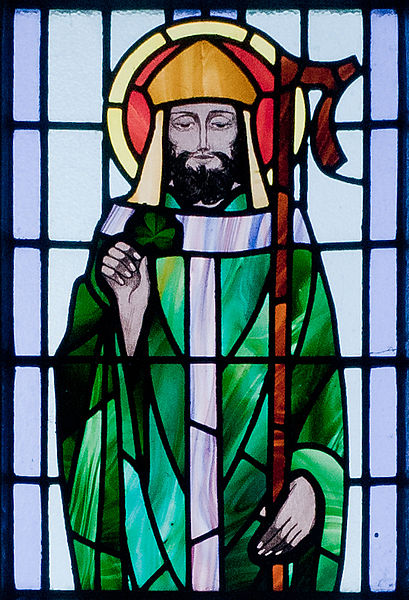
Cultural religions give the world a great deal of color. People flock to St Patrick’s Day parades when rivers are dyed green and everyone wants to be part Irish (and there is a genetic bit of this in my personal mix as well). Where would December be without Christmas and its attendant holidays? Even bunnies like colorful eggs in the springtime, so I’m told. Do any of these things make people religious Christians? I suspect few would argue that they do. I’m stretching Rousseau‘s concept of civil religion a bit tight here, but degrees of religiousness fall along a continuous spectrum rather than appearing in sharply distinguished colors. Cultural faiths are generally accidents of birth. It’s up to the individual how seriously to take it. And sometimes even the faithful misidentify one of their own.

Happy Passover to my Jewish siblings!

Happy Passover to my Jewish siblings!


International Women’s Day

So it’s International Women’s Day, and I’m thinking about what various religions might do to celebrate it. How about equality? True equality. With rare exceptions religions have been spawned and gestated in masculine wombs. Increasing the asperity, monotheism had to, by definition, introduce a single-gendered god to match at least half of the human race’s expectations. No surprise he is a deity with a Y chromosome. For whatever reason, religions nearly always promote male experience as normative and female experience as supportive. If you disagree, well, talk to the man upstairs.

In those few precious moments when I’m allowed the luxury of a daydream, I wonder how differently the world would’ve developed without the mythology of the alpha male god. If god had been conceived as feminine in the beginning, would it have made a difference? Would the rules be more or less stringent? More humane?

Lange-MigrantMother02

Polarities are a funny way to view the world. As evolved, gender-differentiated animals, we easily slip woman and man into that category of natural polarities. Over time, however, it has become clear that reality is more complex than X or O (or I and O, or X and Y—where the male is missing something the female secretly possesses). What if the overall category were simply “human?” As we’ve evolved, we’ve learned to keep many animalistic tendencies in check. Our vast and complex societies, unique only in degree, have demonstrated that it is possible. To judge half of the human race as less able to provide spiritual leadership is an exploitation well past due for extinction. With all eyes on the Vatican over the past couple of weeks, the largest Christian denomination in the world doesn’t seem ready to shift even a nanometer on this one. Mother Mary, pray for us.

In a world where conception was a mystery (which it still is, to a point), women were the sole life givers. Men had the role of sustainers, the help-meets who brought home the meats. Somewhere along the sociological lines the order somehow switched. Might it have been religion itself that led to the subordination of the god-like ability to give life that only women possessed? By attributing the origin of life to a being, generally male, outside the realm of normal reality, religion bestowed a foreign primacy upon the human race. We became the victims of our own longing for transcendence. So celebrate International Women’s Day. If it weren’t for a woman, a goddess in her own right, you wouldn’t be reading this right now.