The Persistence of Forgetfulness

It has happened twice this past week.  Maybe you’ve noticed, but probably I’m presuming too much.  Last Sunday and Thursday past, there were no posts on this blog.  Both days a post was cued up and ready for me to hit the “publish” button, but other things interfered.  To get a sense of this you need to realize that my blog posts are always ready to go by 6:00 a.m.  By that point I’ve been awake for a minimum of two hours and have already lined up my initial thoughts for the day.  I also realize that many other people are not awake yet.  Since my blog posts feed out to Twitter I worry (rightly) that a tweet so early will be dismissed along with other early morning bird calls.  I load up my post and wait.

In an abundance of caution, I begin my job at 6:30.  The reason is clear enough—I was let go from two jobs after being told I was doing great.  I don’t want that to happen again.  I’m one of those people whose best time is the morning.  I’m aware this is unusual, bordering on the freakish.  I have come to a compromise—I push the publish button just before I start work.  When I began working remotely (I was ahead of the curve, for once), I knew we’d need a house with a dedicated office.  That office is upstairs and is reserved for work.  My creative writing is done downstairs.  Since I go upstairs before actually starting work to settle in, I need to remember to click “publish” before I read the first work email of the day.  If I don’t, Thursday happens.  (It very nearly happened again yesterday!)

What about Sunday, did I hear you ask (in my imagination)?  Fair question.  Weekends I try to hold out until after 7:00 (so late!) or later to post.  But on Sunday I’m in charge of the adult education program in my faith tradition.  I schedule and run the Zoom meeting.  Since that program is early, I need to be ready early.  By 6:00 a.m. on Sunday my post was loaded.  Many Sundays, however, are about as busy as a workday although it’s all volunteer work.  I awoke Monday morning and found Sunday’s post still in the dock.  The world has been spared my musings for a day.  Ironically, WordPress had been sending daily streak messages “You’re on a streak!”  My streak struck out on Sunday, and again on Thursday.  Maybe it’s time for a new routine.

It’s like there are two minds at work here.

The Unholy Trio

Culture has a powerful prophylactic component.  People don’t want to be seen questioning authority and accepted “truths.”  This is especially the case as they grow out of their teenage years and learn to fit in as part of the herd.  Some subjects make this particularly clear because cultural biases deride them, never giving them a fair chance at consideration.  I’ve run into a number of these over the years, but an example will bring these abstractions to clarity.  Recently a commentor sent me to the video “Kaneh Bosm: The Hidden Story of Cannabis in the Old Testament.”  The idea is one I’ve addressed before—that cannabis was used in incense combinations in the biblical world.  Now, I haven’t done research on this, but what becomes clear is that many scholars over the years have dismissed the idea out of hand because, well, it invokes pot.

The reason marijuana—something I’ve never used and have no desire to try personally—has been demonized is one of considerable interest.  This is especially the case since it appears to have been widely used in antiquity.  No respectable biblical scholar, however, would be caught suggesting that it might have been incorporated in the rites of ancient Israel.  The modern stigma of cannabis, in other words, discounts the possibilities that in ancient times it was used in sacred contexts.  The “war on drugs” in the United States was largely led by religious conviction.  The heirs of Christian prohibition.  Sure, some drugs can lead to real problems.  The deeper issue, however, is that society’s structure leads people to the place where drugs seem to be the only answer.  The civilized response?  Make them illegal.

That mark against controlled substances colors our view of history.  If such things are illegal now then they must never have been used.  Chemical analysis of various utensils (what might be called “paraphernalia” today, indicates that ancients knew of and used cannabis.  Our ordered view of ancient Israel as receiving the one true and utterly sacred faith preclude the possibility that our demonized substance could’ve been used in ancient times.  I’ve noticed this with the other topic of the documentary—Asherah.  Conservative scholarship still denies that ancients might’ve thought Yahweh had a spouse.  (My own work does not deny this, but simply questions the nature of the evidence; I think it is likely people believed Yahweh had a consort.)  So we once again collide with a “no go” topic.  So, after we admit the possibility of drugs and sex, so the thinking goes, what we we find next—ancient rock-n-roll? 


Considering the Time

Does anybody else find the name “Office 365” ominous?  Perhaps I’ve been reading too much about Orwell, but the idea that work is waiting for you every single day of the year is worrisome.  The way people unthinkingly buy into technology is a way of being used.  Like Cassandra, however, I get the feeling I’m just talking to myself.  365 could simply mean it’s always available.  For me, however, the PC is symbolic of corporate America.  And corporate America wants everything thing you have, at least if it can be liquidated.  That includes your time.  Now that the weather’s improving I spend beautiful days sitting at a desk behind a screen.  Before I know it that beautiful day’s gone for good and I’ve not stepped outside once.  I’ve been 365ing.

An organization I know has a dysfunction.  It keeps trying to plaster on technological bandages to solve its problems.  Such bandages only pull the wounds open again when they’re yanked off.  It’s the latest thing, the new communication technology that “everyone will use.”  Only it never is.  It’s just one more app that I’ll have to learn and yet another way to invade my private time.  Time I might otherwise spend outdoors.  Look!  The sun is shining!  All day long the birds and bees fly by my windows, celebrating.  I’m sitting here scratching my head.  Yammer or Slack?  And who comes up with these stupid names?  And are they available 24/7?  Do they even take into account that human beings have to sleep?

Studies now show that people my age who routinely get less than six hours sleep a night have a greater risk of developing dementia in their seventies.  Yet Office 365 will be waiting even for them.  Those whose retirement funds were never as secure as they hoped or thought they were face a future at the Office.  It will be there, always waiting.  Like Winston my time comes at a cost.  It’s the chill, early hours of the day.  Even as I work on my personal writing (which is not even done in Word, thank you very much), I know that the Office—which now includes Teams and even holds my calendar in its icy electronic fingers—is waiting.  Perhaps, if it’s a weekend, I’ll be able to stave it off a bit.  Even if I can, however, it will be waiting 24/7, 365.  Only time outside those parameters can be called one’s own.


Leap Night

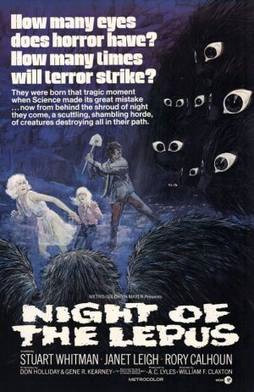
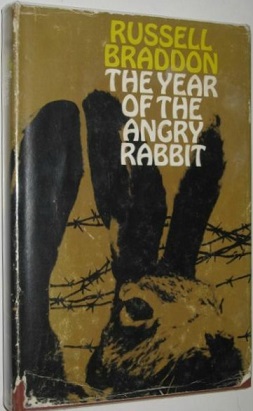
I was quite young when I saw Night of the Lepus for the first time.  Well, I had to have been at least ten, but when I recently sat down to watch it only one or two scenes looked familiar.  Like most poorly done horror films, Night of the Lepus has gained a cult following.  The story is loosely based on Russell Braddon’s comedic novel Year of the Angry Rabbit.  Without the comedy.  Or at least without intentionally being funny.  In an effort to control rabbit overpopulation in Arizona, a new virus is released into the population.  Instead of killing off the bunnies, it makes them grow as large as wolves and become carnivorous.  They go around attacking people with big, nasty, pointy teeth (to be fair, Monty Python and the Holy Grail wouldn’t be out for three more years).

Night of the Lepus was criticized for not being scary at all—a cardinal sin for a horror film.  I was kind of embarrassed when my wife walked in and found me watching it.  Nostalgia can do funny things to a person.  It is almost painful to watch the public officials make such obvious missteps each time they start to get an idea of what’s happening.  They’re almost as imbecilic as the Trump administration was.  Meanwhile rabbits are hard to make scary.  Perhaps William Claxton should’ve read Watership Down.  Ah, but Richard Adams’ classic was only published in 1972, the year the movie was released.  What was it about the mid-seventies and rabbits?  

Part of the problem is that Night of the Lepus takes itself seriously without the gravitas required to do so.  Who can believe actual rabbits are vicious when, to make them monstrous, the movie simply shows rabbits against miniature scenery?  Their human handlers occasionally smear their mouths with red, but a rabbit doesn’t appear cunning and vicious.  And to get them to attack people they had to use human actors in rabbit suits.  I’m a fan of nature going rampant as a vehicle for horror.  Hitchcock’s The Birds did it effectively.  So, I’m told, did Willard (which is remarkably difficult to access with HBO never having released it onto DVD).  The seventies were when ecology began to be recognized as perhaps the most important of global issues.  Half a century later we’re still struggling to reconcile ourselves with it.  Meanwhile the rabbits have begun to appear in our back yard.  They may nibble our perennials, but I’m not afraid.  At least as long as they don’t watch Night of the Lepus and start to get some ideas.


Lines and Silver

If you’re thinking about silver linings, here’s one to ponder: waiting in lines has, with certain exceptions, disappeared during the pandemic.  Yes, some people waiting in line to be tested, others to be inoculated.  Early on lines were long to buy toilet paper.  By and large, however, waiting in lines has ceased for many of us.  For me that’s a silver lining.  Even from my youngest days I’ve found waiting in line problematic.  Not that I think I’m more important than other people—not at all—my mind keeps itself pretty active and standing in line has been one of the more difficult times to keep it engaged.  I generally keep a book with me.  The lack of mass-market paperbacks in the categories I tend to read, however, makes having a book in your jacket pocket difficult.

People standing in line are often surly.  It’s not always a great place to strike up a conversation, to improve your mind.  It is the epitome of wasted time.  Not just for me, but for everyone involved.  Learning to live mostly at home has greatly reduced that wasted time.  Interestingly, many people have reported being bored with their extra time.  Others of us find this small windfall just enough to keep in place as we continue sprinting along.  Regardless, the line waiting absence has been one silver lining.  When I was a student I used to call waiting in line a theological problem.  What I believe I meant was that time should not be wasted and your options were severely limited by standing in a queue.

For many people, I suspect, the smartphone has addressed the issue even before the pandemic came.  My smartphone has never been that much of a comfort to me, when it comes to time.  Although I’m on social media I don’t spend a whole lot of time on it.  It can easily become yet another way of spending time I don’t have to squander.  Reading ebooks on a small screen doesn’t really lead to any sense of accomplishment for me.  Perhaps I think about it too much, but it seems that real goals are met in the real world.  Ah, but this is meant to be a silver lining post, the lack of lines.  As the pandemic slowly dies down, queues will return.  Books won’t have grown any smaller in the meantime.  Perhaps I could use the time wisely by learning to explore the wonders of the universe in my pocket.  Just after, however, I finish this book in my hands.


Not Out Loud

I’ve been thinking of funny things lately.  Literally.  You see, while many of us are waiting for vaccines or any sign of hope, it’s natural to try to cheer oneself up.  I try reading books with the reputation of being funny.  I try looking for movies that IMDb tells me will make me laugh.  One thing I’ve discovered is that what’s truly funny is a matter of taste.  Some comedians make me laugh.  Others, well, don’t.  Books that I’m told are LOL (“laugh out loud”) funny often turn out to give me a snicker or two as I wend my way through the pages.  The “out loud” part remains elusive.  But it’s the movies that get to me most.  I can’t remember the last time I saw a movie that made me laugh from beginning to end.  “Sophomoric” is the word my wife used to describe most of the movies on online comedy recommendation lists.

I suppose funny is a matter of buying into lowest common denominator culture.  Education, if we’re honest, can knock the sense of humor out of you.  Besides, most movies have a story to tell and few stories are funny every step along the way.  During a pandemic you might well need something like that.  Of course you couldn’t go to the theater to see it if it came out.  There’s some fun stuff on the internet.  People I know will sometimes send me things that make me chuckle, but I’m guessing I need to step away from horror movies for a while to reacquaint myself with what’s funny.  I got so desperate the other day that I sat down and tried to make a list of the funniest movies I ever saw.  Then I looked at the lists I found online and saw little overlap.  Where to go for a good laugh?

Our sense of humor must have roots in our youth.  I really got into religion then, and I became a very serious teen—we’re talking eternal consequences here.  So much so that I had a conscious epiphany one day that I no longer laughed.  I needed to rebuild my sense of humor.  I tried buying funny books (which wasn’t easy in a town with no bookstores).  I tried to catch up with the others in school who were always talking about this or that funny movie they’d seen.  Of course, anything crude scandalized me then, so it had to be clean fun.  Now it’s a matter of trying to see if anyone gets my sense of humor.  After a year in lockdown we could all use a good laugh.


Rabbit Years

A childhood horror movie that I only recall in the most wispy of fringe memories is Night of the Lepus.  It’s one of those monster movies that involves mutated animals, in this case the unexpected rabbit.  I’m not sure why it’s been on my mind lately, but a little research indicated that it was based on the Russell Braddon novel, The Year of the Angry Rabbit.  This book is out of print and still under copyright, so finding a copy wasn’t easy.  Apart from vague images of giant rabbits, I had no idea what to expect.  The book turned out to be a comedy horror, in that order.  Remembering that the movie wasn’t funny (although it is consistently considered one of the worst cinematic efforts of the time), I wasn’t prepared for this.

You see, I don’t like to read about books before I read them.  I don’t read cover copy.  (I tend not to watch movie trailers either, unless it can’t be helped, like when you’re in a theater.)  I suppose knowing a genre of a book helps, but I just wanted the experience of reading the story behind a movie that won’t completely vacate my memory cells.  The Year of the Angry Rabbit is a satire on government, war, and capitalism.  If you’re not expecting a serious horror story it’s quite funny.  Russell Braddon never became a household name—he was from Australia and a person’s cultural impact tends to be greatest on their own continent—but if you knew this was a satire from the start you’d probably enjoy it as such.  Although written in the sixties, it’s climax takes place at the millennium, now two decades past.  It’s always interesting to see what people thought we might be up to by now.

Although there are elements of humor to our politics, Orwell seems to have been more on the money than Braddon.  Nevertheless it’s important to keep the old stories alive.  There are still people like me who will seek out rather obscure novels from many decades ago.  They might have to have sat on library shelves for years without having been checked out—this used to be the glory of the library, before “evidence-based usage” studies ruined them.  I search for things I want to read in my local small town library and find that my tastes are too obscure.  Besides, old stuff has to be cleared out to make room for the more recent books hoi polloi wish to consume.  I’m glad they’re still reading.  For me, however, I’ll need to stretch back to a time before I was old enough to read to satisfy an unrelenting memory. It was rabbit years ago.


Found and Lost

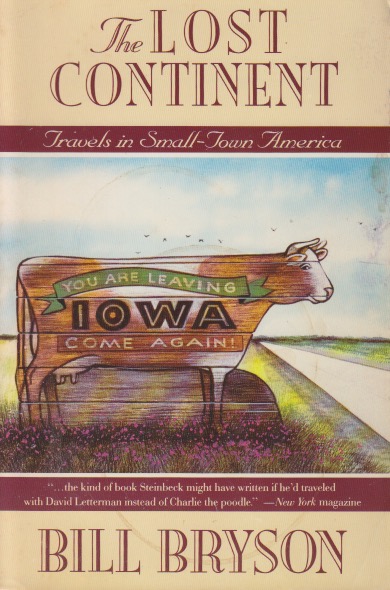
After the year that was 2020, I decided that I needed to read some books that might make me laugh.  That can sometimes be pretty difficult, just as finding books that scare me (unless they’re nonfiction) can be.  Turning to the internet (where else can we turn in these days of rare vaccinations?) Bill Bryson’s The Lost Continent came up more than once.  I think I may have read some of his other work, but this is one of his earliest books.  Perhaps it’s a sign of the times, but much of the humor seemed a bit cruel.  No doubt in America there are lots of things at which fun would be easy to poke, but we’ve become sensitive to others—perhaps overly so—perhaps to the point that even using the word “others” can leave you open to criticism. But still.

Bryson’s book is a classic travelog.  It’s the kind my family kept when we were able to travel.  We’ve still got a printed out copy of our journeys to significant places, stuck in an ersatz binder, awaiting notice perhaps.  We tried to keep it funny.  There’s something about travel that’s great for your sense of humor.  Bryson set out on two wings of a country-wide trip while back from England.  Starting at his home in Des Moines, Iowa, he drove south and east then up north and back to his starting point.  The second half of the trip, obviously, went west, to the south west before angling up through the high plains and back home.  

The book is hard to classify.  The cover on my copy says he was looking for the perfect small town, but mostly it just seemed to be driving around.  And hitting some big cities as well.  There were a few laugh-out-loud moments even for this dour reader, but mostly there were some smiles and a bit of sadness.  I had to keep reminding myself that this was the late 1980s.  In fact, I was living in the United Kingdom when the book came out, which is probably why I never really heard of it before.  I do, regardless of how well the humor works, enjoy a travelog.  You can learn a lot that way.  Many of the places Bryson visited I’d also been, but my impressions were somewhat kindlier.  As a kid I didn’t get to travel much (kinda like now) and seeing new places I was always awash in wonder.  Not everywhere is pristine, of course, but keeping notes always seems like a good idea.  And if you can get them published, you might even be able to make a living out of it. We all remember the freedom of the open road.


Werewolves Not Forgotten

Copyright is a strange thing.  Without it there would be no making a living as a writer or artist or even music composer (or so I’m told).  The idea is straightforward enough—someone comes up with a “marketable” idea (how marketable varies widely), and therefore owns the exclusive rights to the expressed form of that idea.  If, for instance, the idea becomes a published book the publisher (generally) owns the rights and pays the writer royalties for the use/ownership of those rights.  Copyright, however, like fresh food, expires.  Written work or music or art becomes part of the public domain and can be reproduced by any with the gumption to do so.  There are publishers, such as Gorgias Press, that got their earlier starts by doing just that—finding public domain material, scanning it, and republishing it for a price.  All above board.

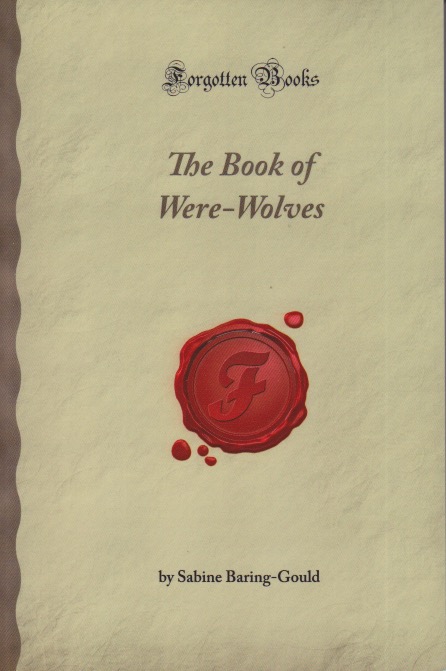
Back before I worked long in publishing I was going through a werewolf phase.  No, I am not a lycanthrope, but I was reading about werewolves.  I knew one of the main sources of folklore was Sabine Baring-Gould’s The Book of Were-Wolves.  Being strapped for cash (some things never change), I bought a copy published by Forgotten Books.  They’re rather prevalent on Amazon.  Although the content is free online, some of us prefer to have a book in our hands and leave the devices aside.  I soon discovered why my Forgotten Books version was so inexpensive.  It is simply a printout of the scanned book, apparently with optical letter recognition software utilized.  No serious formatting or proofreading required, a book is produced, covered, and sold.  It is a disorienting experience reading such a book.

Readers look for landmarks just as surely as a hiker or traveler of any sort.  Old books have layout and typesetting to help the reader navigate.  My copy has “Error! Bookmark Not Defined” instead of notes.  First editions of Baring-Gould, it turns out, sell for upwards of $6000.  So I continued reading.  A lack of italics and the occasional optically misread word make me wonder just how much of Baring-Gould I’m really ingesting.  Any book that begins with a disclaimer regarding possible errors should’ve been assigned a copyeditor.  SBG likes to use lots of foreign words.  They may be spelled correctly or not.  I have no notes to check.  Caveat emptor, n’est-ce pas?  The technology that allows scanned, unread by human eyes products to be sold as books makes me wonder.  No, I haven’t forgotten books.


Slacking Off

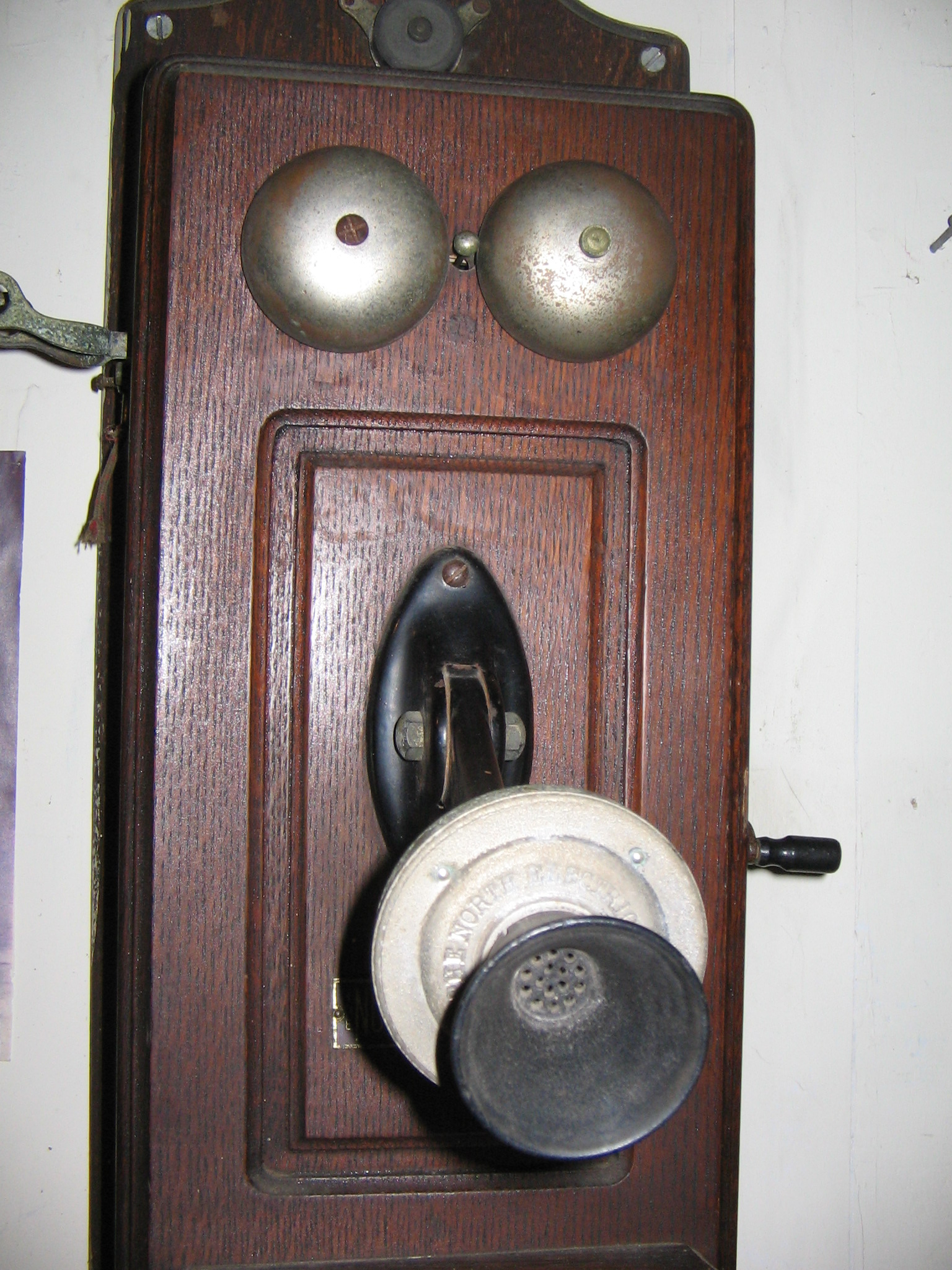
The other day someone on a committee on which I serve suggested we might eliminate the problem of buried emails by using Slack to communicate.  The problem, it seems to me, is that we have too many ways to communicate and yet lack the means to do so well.  For me email is indicative of the problem.  Email was devised—and I remember its beginnings well—as a means of swift communication.  The only real options before that were writing an actual letter (which I miss) or telephoning.  At that time you might have a cordless phone that you could carry from one room to another but you probably did not.  The phone was relegated to a place on a wall or table and, although I appreciate knowing things quickly, the fact is we got along in those days.  Junk mail was evident at a glance.  You sorted it and life went on.

Now email has taken over life.  I simply can’t keep up with it.  Some time ago Google offered a trifurcated email experience: primary, social, and promotional.  Their algorithms aren’t perfect (numbers seldom are) but I can often ignore large swaths of the promotional page.  That saves time.  Most of the social is dominated by people I don’t know wanting to connect on LinkedIn, or someone mentioning something I should pay attention to on Facebook.  Or perhaps something going on in the neighborhood on Nextdoor.  Primary deserves its name, but I can’t keep up with even that.  You see, I have a full-time job.  It largely consists of reading emails.  If I get a personal email in the morning, chances are it will be buried on the second page by the time the day’s out.  It may never been seen again.  I don’t need another new way to communicate.

The pandemic has introduced the new malady of Zoom exhaustion.  It isn’t unusual for my entire weekend to be taken up with Zoom.  If I don’t have a good part of a Saturday to sort my emails into files things I promised I’d do begin to slip.  I don’t see that email—the one that serves as a reminder to this addled brain of mine.  If I order something on Amazon I have to follow up on an email asking me to rate the service.  And then, if it’s not sold directly by Amazon, a vendor fishing for a compliment.  That after getting an email to confirm my order and another to tell me it’s been shipped.  No, please don’t subject me to Slack.  Or better yet, send me an email about it.  I’ll get to it eventually, as long as it stays on the first page.


That Time Again

Where’d it go?  I could swear I left an hour sitting right here on the table, and now it’s gone.  That’s the feeling of waking up the day of Daylight Saving Time.  Sure, it’ll stay light later now, but the mornings, when hope is most necessary, are once again dark.  It’s funny how we play with time.  I’ve known many people who love the end of Daylight Saving Time because of the illusion that they’ve gained another hour of sleep.  In fact, it’s just a deferred payment.  The great time-keeper in the sky won’t be cheated.  So—pardon my yawn—we’re adjusting again.  One of the great mysteries of this is that keeping Daylight Saving Time permanent has strong bi-partisan support in the US government.  It never becomes law, however, because riders are constantly attached to it, making one side or the other back out.  And so we all spend a couple weeks trying to get our circadian rhythms to adjust.  Again.

I’ve often wondered about the timing for this change.  Why Sunday morning?  In this nation that likes to pretend to be Christian, it’s a regular joke that folks in pre-pandemic times would miss church, having forgot to set their clocks ahead.  One incredibly busy Sunday in Edinburgh, my wife and I had missed church altogether.  I’m thinking it must’ve been in the final throes of getting my dissertation finished.  When supper-time rolled around we found we were out of some ingredients and we went to the local grocery to find, of all things, it was closed early.  It was only then that we had to stop and laugh at ourselves.  We’d just spent an entire day out of joint with time and didn’t even know it.  In pre-internet days it was possible for that to happen.

Most of our clocks now set themselves automatically.  I still wear an old-fashioned analogue watch.  I need to set it manually, which keeps me on my toes when Daylight Saving Time approaches.  O yes, and the clocks in the cars are off—they’re not wired in that way, being older models.  And the one on the microwave.  I can always use my phone for the accurately predetermined time on which we all agree to operate.  Even if the morning skies, which were starting to be light at six now stay dark until seven.  In another month we’ll catch up again.  And Daylight Saving Time, instead of being a strange intrusion, like most unwanted guests, will begin to feel like normal.


Uncial Nuncio?

I recently wanted to make a donation online.  As usual in these litigious times, there was a disclaimer that I had to read.  Since this was a respectable organization I decided I’d better do it if I was claiming I had.  Of course it was long and boring—lawyers talk to each other like academics do—but what struck me along about clause 6 is how these agreements suddenly go into ALL CAPS.  That seems to imply—but I’m no lawyer—that the rest of the agreement is less important.  Were it ever to come to court, would the judge say “Well, this part is clearly shouting, so you should’ve paid attention to it.”  Do lawyers need to resort to using all caps to make their point?  When do emojis start entering contracts?

When I was little I considered being a lawyer.  I’ve got a good head for rules and a fair reasoning ability.  My mother told me I was too honest to be a lawyer, and that dream died on the cutting-room floor.  Well, not exactly died.  I still think about it.  Never seriously enough to consider law school, but I am still legally minded.  Those sections of the Bible that have rules and regulations made sense to me.  You may not like them, but it’s best to have it in black-and-white.  These are the laws by which you live.  The rest is interpretation.  You might expect the ten commandments to be in all caps, but they’re not.  Perhaps they’ve been a bit crowded by the other stuff I’ve been cramming into my head over the years, but rules are rules, are they not?

Isn’t it somewhat disturbing that legal process resorts to shouting for the part they really want to apply?  We all know, at some level, that even contracts are negotiable.  Even after being signed.  It comes down to whether the party of the first part really believes a violation is worth suing the party of the second part.  In other words, it comes down to a cost-benefit analysis.  Contracts, after all, are promises on paper.  Not everyone keeps their promises.  And what does it say about us that we expect the party of the second part to do a, b, and c.  OH YES, AND X, Y, AND Z?  Something secret is being said here, and it’s something only a lawyer would understand.  Or maybe those who regularly issue contracts.

Photo credit: US Army, via Wikimedia Commons


Your Viewing Pleasure

I watch a lot of movies.  Well, I used to before the pandemic stole much of my free time.  We have a closet full of DVDs.  At least they’re not VHS tapes.  The problem with VHS tapes was that they wore out with continued playing.  I’ve read that magnetic tape is still the most stable storage medium, but the DVD, with no moving parts, seemed like an improvement.  Lately we’ve had several DVDs go bad.  I’m not sure that I wanted to know there were such things as disc rot and laser rot, but there are.  And some of these were discs that weren’t cheap.  The alternative these days is streaming.  The problem is streaming services go out of business and you’re left without money and without the movie.  There’s a reason vinyl’s coming back, I guess.

Remember when you had to wait to see a movie?  When you had to either see it in a theater or wait years until it was broadcast on television on a certain channel at a specific time?  You lived your life normally, and the movie was a rare treat for those who had specific fare in mind.  Now we get movies “on demand.”  It’s death by a thousand cuts, though, since if you’re really in the mood for a film that’s not on Netflix you’ll pay to see it on Amazon Prime.  Used to be you can buy a disc—a one time expense—or was it?  Chances are in the early days you were replacing a VHS tape you’d already bought.  You may’ve sighed in relief when UltraViolet came along.  But you’d have sighed too soon.

These things bring eastern and southern Asian religions to mind.  (Consider the source.)  While I’m not an expert on the religions of east and south Asia, I’m familiar enough to know that their basic concept is that the only thing permanent is change.  Western societies are built on the demonstrably false concept that a steady state is permanent and that change comes once in a while.  In fact, our entire worldview is based on things remaining the same.  Perhaps that’s why conservatism is such a strong force in western thinking.  It is, however, an illusion.  The pandemic has given the lie to our steady-state thinking.  And if you cope, as many do, by watching movies you’ve probably signed up for a subscription service or two.  It will serve you well, for the moment.  You certainly can’t run to Blockbuster to pick up your favorite flick any more.  If only I had more time, a movie might have the answer.


Not the Band

One of my favorite weekend treats involves black-eyed peas.  With a father from South Carolina, some of my earliest memories involve soul food.  As a present-day vegan, I eat a lot of beans.  That’s why I was disappointed to learn that Goya’s CEO, Robert Unanue, continues to be a big Trump supporter.  Shame on you, Goya!  Lest you get the wrong idea, we generally buy the store brand beans.  Of all the legumes, however, it seems the humble black-eyed pea is difficult to get right.  The generic brands always end up with the bottom part of the can being a kind of beige sludge where the beans have broken down and lost, as it were, their individuality.  The dish I make (one of my own invention, also featuring grits and hot sauce) requires that the beans maintain their integrity—take note, Goya!  Said brand seems to be the one that understands this aspect of canning beans.

For many years I avoided Bush beans for fear that they might be enriching the other *ahem* Bushes.  Right now, however, I’d rather have W run for a third term than the specter of Goya-supported Trump.  When did legumes become politicized?  Why can’t I sit down to a peaceful Saturday morning breakfast without a hideous four-year nightmare coming to mind?  The perils of being vegan!  In any case, I recently tried Bush black-eyed peas.  They weren’t as good as Goya, but I think I need to make the switch.  I’ve never had my somewhat simple culinary tastes disrupted by a president before.  Generic would be fine, but why, o why can’t they get the black-eyed pea right?

Image credit: Jud McCranie, via Wikimedia Commons

Perhaps somewhat oddly, I really like beans.  There are about 400 varieties and each has its own personality from sassy edamame to staid kidney beans.  I’ve even reconciled myself to the childhood nightmare of the lima bean (alien, without a hint of lime).  Now, I’m no foodie.  I eat to live rather than the other way around.  Whatever I do, however, I search my conscience.  Raised evangelical I know no way around it.  My conscience is the main reason for becoming vegan—I can’t support animal cruelty, especially for an industry that is the largest environmental polluter in the world.  So when I’m standing in front of the bean shelf, thinking ahead to Saturday’s breakfast, I’m struck with qualms.  I stare at the black-eyed peas and they stare back at me.  It’s a kind of test of the wills.  I see the Goya and decide to try something better for the world.  


Too Fast

In the Easy Reader book Hooray for Henry (available on Amazon for $768.57; that’s $12.60 per page), our eponymous protagonist Henry can’t win any of the events at the picnic games.  One of the refrains as he participates in the races is “faster, faster—too fast” (I may have got the punctuation wrong, but then I haven’t read the book for at least a couple of decades and I can’t afford a new one).  That story seems to have become a symbol for those of us mired in technology.  The rate of change is, as in Henry’s experience, too fast.  The other day I noticed an annoying warning on my laptop that claims I’m low on memory and that I have to close some applications.  What with all that tech requires of us these days I probably do have too many things open at once.  It pops up, however, when I have even just one application open.

A web search revealed this is probably a virus (something that used to be rare on Macs, but that was back in the day when things moved a little slower).  The steps for removing it were technical and appeared to be extremely time-consuming.  What I don’t have is time.  And it’s not just my rare time off work that’s too full.  On the job we’re constantly having to learn new software.  It doesn’t really matter what your line of work is, if it involves sitting behind a computer we’re constantly being told to learn new applications while trying to find time to do the jobs we’re paid to do.  There’s no question of which is the tail and which is the dog here.  With an economy driven largely by tech, because that’s where all the jobs are, you risk everything if you don’t upgrade (about every two weeks at present).

I’ve been writing a long time.  Decades.  Some of my earlier pieces are no longer openable because the software with which I wrote them has been upgraded to the point that it can’t read its own earlier writing.  To the prolific this presents a real problem.  I have, literally, thousands of pieces of writing.  I can’t upgrade every single one each time a new release comes out.  The older ones, it seems, are lost forever.  I used to print out every post on this blog.  Given that there are now even thousands of them, I eventually gave up.  I know that they will inevitably disappear into the fog some day.  For writers who’ve been discovered after their deaths this would be a Bradburian fate.  Or perhaps a Serlingesque twist.  The world realizes a writer had something important to say, but her or his writing can no longer be read because the tech is outdated.  Faster, faster—too fast.