Logan Again

A couple of friends, both younger (ahem), liked my recent post on Logan’s Run.  As did someone my post on Goodreads.  I was pleased to see that.  I was alive, but not yet literate, when the book was originally published.  So, predictably, I sat down to watch the movie again.  My wife had to work that weekend and I had last seen it in 2011.  This time, the book fresh in my mind, I was able to notice just how much the movie diverges.  For practical reasons, the movie has people live to 30 instead of 21.  The issue was finding enough young actors (this was the seventies, after all) who could carry off the story.  Michael York was over thirty, but he could pass.  The book is a romp across the country, and it would be unbelievable in the film if Peter Ustinov were able to walk from Washington DC to Los Angeles.  

The movie has Logan dedicated to Jessica, but in the novel they have to grow to love each other.  In the film, Logan is sent on a secret mission to find Sanctuary, which, it turns out, doesn’t exist.  The novel has Ballard (transformed into “the old man” in cinematic form) disguised as Francis, Logan’s fellow Sandman, from pretty much the beginning.  On the screen, Francis remains a dedicated Sandman to the end.  Gone are the zoo animals in Washington, the hovercraft chases, and the little children who save Jessica’s life.  Granted, a lot in the novel would be very difficult to transfer to celluloid, and changes had to be made.  The whole episode of the religion of “Carrousel” isn’t in the book, but was added to give the movie coherence.  I did find it odd that they included the scene with Box, which really doesn’t fit the film.  

In any case, it warms my heart that some of my younger friends have fond memories of this movie.  It’s definitely a period piece.  Fitting for the seventies, there’s kind of an atheistic undertone to it.  Sanctuary only exists in people’s minds.  Nobody is “renewed” (born again).  But not all is doom and gloom.  The old man quotes from Old Possum’s Book of Practical Cats, by T. S. Eliot.  (That fact is the only way that I could get my daughter to watch the film.)  And it does have an optimistic ending.  Logan and Jessica decide they want to stay together—marriage was ancient history in their world.  And the young people, my greatest hope for the future, came to see the old man was fascinating.  Something that gives this particular writer a true sense of hope.


Vengeance Is Hers

A Lesson in Vengeance, by Victoria Lee,  is a novel with some twists that I’ll try to conceal.  It is a kind of young adult horror-themed dark academia novel.  I really enjoyed it although there are a few improbable events.  That’s the way of fiction with an unreliable narrator.  Felicity Morrow, a girl from a wealthy Boston family, is enrolled at Dalloway School.  Dalloway is a girl’s prep school in upstate New York.  Felicity had to take some time off, during which she was institutionalized, after the death of her best friend, and lover, Alex.  Now that she’s back at school she feels the ghost of her friend coming back for vengeance.  She lives in Godwin House, which only has space for five.  It’s also part of the story of the Dalloway five, girls accused as witches when the school was founded, who all died there.

A new girl is starting at Dalloway this year.  Ellis Haley has already written a published novel and is working on a second.  She lives in Alex’s old room.  In spite of their rocky start, Ellis and Felicity become friends.  Then more than friends.  Meanwhile, they’re both working on their senior projects but Ellis wants to form a fictional coven and replay the way the Dalloway five died, for her novel.  Things grow tense as Felicity begins to remember more and more about what happened to Alex.  Then a murder takes place.  I won’t say more about the plot.  The last several chapters are ones where putting down the book is a real struggle.  You want to know who did it.  And since Felicity is the narrator, you gather that she must survive.  But this isn’t without danger.

The horror elements involve ghosts and witches.  Since Felicity is revealed to be an unreliable narrator it’s unclear whether the ghosts are real or not.  Most of the events are revealed to have had naturalistic answers, but one remains as either a real ghostly visitation or a delusion on the part of Felicity.  I read this book as part of my ongoing fascination with dark academia, and I’m glad I did.  It’s quite a well-told story.  Enough information is held back and revealed in moments of insight as the story unfolds that I was kept guessing until very near the end.  And the final realization only hits at the very end.  This is a good entry into dark academia for anyone wondering where to start, at least in my opinion.


Talking Tolkien

I read The Hobbit and The Lord of the Rings back in college.  Although I enjoyed them a great deal, they weren’t enough to swing me into high fantasy.  I do sometimes think I should go back and re-read them, but with so many books on my to read list, it’s a matter of time.  In any case, I’d read that the movie Tolkien was a good example of dark academia, cinema-style, so I finally got around to seeing it.  Although I learned quite a bit about Tolkien’s life from it, as a movie it really never soars.  The academia part is pretty straightforward as King Edward’s School and Oxford University play a large role in Tolkien’s life, and in the movie.  As does World War I, which is where the darkness comes from.  That, and being an orphan.  And also a guardian priest who prevents you from being with the girl you love.  The movie stays with Tolkien until he begins writing The Hobbit.

The difficulty with biopics of writers is that trying to portray where they get their ideas is a fraught business.  Those of us who write fiction know that inspiration comes in many forms, from dreams, to real life events, to the visit of an unusual shop.  Travel, intriguing people, and ideas out of the blue can all trigger a story or novel.  How do you capture inspiration on film?  A love story is, believe it or not, somewhat easier.  The film portrays Tolkien’s early fascination with Edith Bratt, whom he would eventually marry.  One thing that I’ve learned from psychology and those who teach storytelling is that certain narratives more or less play automatically in people’s minds.  Now, this cannot be asserted universally, but if you introduce a young woman and a young man in a story, many people’s minds naturally begin to bring them together romantically.  Showing how a writer goes about their craft is different.

Many biopics of writers are considered examples of dark academia.  Probably one of the reasons is that no lives are lived without loss and trauma.  People handled traumatic events differently.  Many writers use their art as a coping mechanism.  I can’t know, but I suspect that such things often lead people to become writers.  Poe, for example, keenly felt the loss of his mother at a young age, a trauma that would lead to a lifetime of writing.  I hadn’t known, until watching this movie, that Tolkien had become an orphan.  I knew little of his life; I’d read his books, and even walked by his house in Oxford, but this movie did provide a bit of context.  I’m glad, for that reason, to have seen it.


AI Takeover

It’s already beginning.  As if the world under Trump isn’t bad enough, AI (you can call me Al) is beginning to play its tricks.  You see, I know my place.  I am a writer who gets a few hits on my blog now and again and whose books cost more to write than they ever earn.  (I do hope to reverse that trend, but this is the truth of the matter.)  I call myself, on my introductory website page, an “unfluencer.”  Again, I strive for accuracy.  That means that when I receive an unexpected email from someone much higher up the ladder than I am, I’m suspicious.  So the other day I had an email purporting to be from Rose Tremain, the author of The Road Home and other novels.  Dame Rose Tremain, just so we’re clear.  “She” was writing to me to ask which of my books she should read first.  Suspicious?

Any writer likes to feel flattered.  A moment’s reflection, however, made me realize a few things.  My email address is not on my website, which “she” claims to have explored.  The actual Rose Tremain is 82 and is unlikely to suddenly be developing a taste to read nonfiction books about horror movies written by someone whom most horror fans wouldn’t even recognize.  I honestly have no idea why Al is yanking my chain like this.  I have received emails before that, I suspect in retrospect, were AI generated.  They ask innocuous questions, sort of like you think a young extraterrestrial interested in academic earthly arcana might ask.  Nothing threatening.  Nothing asking you to reveal too much.  Almost as if Al is lonely.  I begin to wonder if I have ever received any legitimate emails at all from people I didn’t reach out to first.

The future of Al impersonating people is already here.  We have our information out there on the web.  Those really, really curious can find my email, I’m pretty sure.  Security questions, although I try not to reveal too much personal information here, are getting harder to pick.  Did I ever mention my first pet’s name?  The town in which I was born?  The address of any of the many places I’ve lived?  Anything shared on social media (and perhaps off social media) is available for Al to use and exploit.  And yes, Al will attempt to take advantage of your all-too-human curiosity and sense of accomplishment.  Take it from an unfluencer, individuals formally recognized by the British royal family don’t send chatty emails about your favorite book.  The AI takeover has begun.

Photo by Markus Spiske on Unsplash

The Black Monk

Back at Nashotah House the local ghost was called “the Black Monk.”  A plausible origin story circulated with the name; a student broke through the ice on the lake one winter night and met his demise.  Some even claimed to know which was his gravestone in the cemetery on campus.  I really didn’t give much thought to any of this until I learned that Anton Chekhov wrote a short story titled “The Black Monk.”  Now, I don’t know if some literate Nashotah student was referencing Chekhov or if the color was just fitting for a cassocked community of quasi-monks.  In either case, I decided to read the story.  The Russian tale involves a man named Kovrin.  He holds a Master of Arts degree, in the way that degrees in Russian stories bring the holder a great deal of respect.  He was raised by a wealthy farmer who owns extensive orchards, and, needing some time to relax from his city schedule, goes to stay with his former guardian and his daughter.  While there he relates the tale of the Black Monk, who was seen all around the world, and maybe even in space, from where he walked in Arabia or Syria, a thousand years ago.  It was rumored that he would return a millennium later, and, as it turns out, Kovrin sees him.

G.K. Savitsky’s illustration “The Black Monk,” public domain via Wikimedia

Kovrin is a successful, bright, and cheerful scholar.  He begins to see the phantom and have conversations with him.  The monk assures him that he (Kovrin) is extraordinary, a genius even.  That other people, satisfied with mediocrity, melt into the herd.  True genius, however, is often perceived by others as madness.  They have long conversations.  Kovrin marries the farmer’s daughter but their relationship is troubled.  One night she awakes to find him speaking to an empty chair—nobody else sees the Black Monk.  Convinced that he is mentally ill, she and her father put him in a doctor’s care and his new regime of lifestyle changes prevents further visits of the Monk.  Kovrin, however, grows sullen and dull.  He realizes that his genius is gone and that he has become ordinary.  His marriage falls apart and when he goes on a vacation to the Crimea, he once again sees the Black Monk.  His feelings of being extraordinary begin to return, but he dies that night.  His corpse wears a smile.

This tale had me thinking.  It’s not clear that Kovrin was really mad but no doubt he’d been quite intelligent.  He was given a university chair and received the praise of others.  It was the cure that destroyed him.  It robbed him of his enjoyment of life and also led to the downfall of the farm since his father-in-law died and his daughter, now separated from Kovrin, writes to curse him for his insanity.  The farmer and his daughter aren’t always sympathetic characters, but until his dying day (literally) Kovrin had lost all that made his life meaningful.  The Black Monk admits he’s an apparition, but Kovrin was clearly brilliant while he met and conversed with him.  I’m not sure of any parallels with Nashotah House, but it has a character in common with Chekhov’s story.


On the Run

I come down on the side of book.  Usually.  In the book or movie first debate.  I have to confess, however, that I learned about Logan’s Run because of the movie.  It was quite impressionable on a teenage me, thinking that in such a world I’d have less than ten years left.  I bought the movie tie-in book and read it.  It was very different from the film.  I only remembered one scene from the book and so, nostalgia smothering me, I had to read it again.  The book was actually published in 1967, when I was quite young.  The movie came out in 1976, as did the tie-in novel.  The story has been replicated since then but the basic idea is that in the future overpopulation leads to the radical decision that everyone dies after turning twenty-one.  This is a world of the young.  Politics are handled by computer, and Sandmen, like Logan, hunt down and kill runners—those who try to escape their mandatory death.

There are a number of things to say about this.  One is that the two authors, William F. Nolan and George Clayton Johnson, had distinguished writing credits.  Another is that this is good sixties sci-fi, but belles lettres less so.  I still enjoyed reading it again.  It had been literally fifty years.  When this was written a population of six billion was considered unsustainable.  We’re now at over eight billion and it does seem as if we’ve tipped some kind of balance.  Another thing that stood out, one of the dangers of future-projecting sci-fi, is that newspapers are still a thing in the future.  They’re hardly a thing now.  They do make predictions for 2000, so maybe they should’ve pushed things out a bit further before committing.

In real life, the “developed” world actually has a problem of too many of us seniors and falling birth rates.  Nobody to take care of us when we no longer can.  This seems to be true in the United States, Japan, and China, at least.  Hopefully we won’t go to Logan’s solution.  So, as the book title suggests, Logan decides to run.  There’s a fair bit of religion in here.  He runs to find Sanctuary but, until very close to the end, intends to kill Ballard, the guy who helps runners escape.  There’s lots of adventure, several changing scenes, and a fair bit of testosterone.  Still, the story isn’t a bad one.  It’s old enough (ironically) to be a classic.  And yes, it’s still in print.  Part of my childhood has been restored.


Gothic Dreams

I love this book.  Roger Luckhurst understands that the gateway to horror is the gothic.  In Gothic: An Illustrated History he offers a world-wide, luxuriantly illustrated tour of both classic and contemporary gothic.  As a category, it’s difficult to diagram precisely.  Luckhurst does it through a series of themes: architecture and also form, various landscape settings, how the four cardinal directions appear in the gothic imagination, and, of course, monsters.  Each of these themes is divided into four or five chapters.  Not wanting to rush, I limited myself to a chapter a day, but I’m sure I’ll be dipping back in again.  This is the kind of book that both gives you ideas of new books to read and movies to watch, and affirms the choices that you’ve already made in those regards.  In other words, this is a place horror fans would naturally feel at home.

The gothic entered my life at a young age, partially because I was living it (unwittingly) but mostly because it appealed to me.  It made me feel good watching monster movies and Dark Shadows with my brothers, and later, reading gothic novels.  There’s definitely a nostalgia to it.  I loved gothic architecture from the moment I first saw it.  Not that Franklin had soaring cathedrals, but there were some very nice Victorian houses in town.  And when I saw cathedrals I felt a strange stab of joy.  Although I sublimated my love of gothic while working on my academic credentials, I couldn’t stay away from ruined castles and abbeys  in Scotland.  Although I was trying to be a scholar, I knew what secretly inspired me was made of coal-blackened stone.  Even if I didn’t say it aloud, the monsters of my imagination lurked there.

The narrative accompanying the wealth of images in this book probes what makes gothic tick.  It would be impossible to cover it all in one tome, of course.  My current fascination is with dark academia (an aspect perhaps too new to be in Luckhurst).  Dark academia’s draw is that it revels in the gothic, placing it in educational settings.  But it can occur anywhere, as Luckhurst clearly shows.  Anywhere that there might be shadows or reflections.  Anywhere that experiences nightfall and autumn.  Anywhere people must face their fears.  While my usual avocations always please me, when I see the gothic addressed directly it takes my breath away.  No doubt, mine has been a strange life.  One in which, even before I reached my first decade, I found the gothic vital and necessary to an odd kind of happiness. This book brings it clearly into focus.


Dark Dreams

I’ve been pondering the role of religion in dark academia.  While not a major element, it’s certainly present in Ashley Winstead’s In My Dreams I Hold a Knife.  There are plenty of plot twists, and I’ll try to avoid giving away whodunit, at least ultimately.  The basic idea is that a group of seven students, the “East House Seven,” band together at Duquette University, a near-Ivy League school in North Carolina.  They get into some college hijinks, but things turn dark when one of them (Heather) is murdered their senior year.  Jessica Miller, one of the seven, has become a corporate climber, despite her family background, and ten years later she goes to Homecoming to show off her accomplishments.  But things don’t work out as planned.  Heather’s younger brother, who works at Duquette, has been doing some detective work and uses Homecoming to confront those who remain about the murder.

The seven (which actually involves an eighth student) pretty much date among themselves.  Some of them, including Heather, are quite wealthy, but not all.  Jessica isn’t among the affluent, and another of the seven, Coop, ends up dealing drugs to make money on the side.  Heather’s boyfriend was suspected in the murder, but had to be released for lack of evidence, and he decides not to attend Homecoming.  Those present for the event are confronted by Heather’s brother and the story is told as flashbacks from the Homecoming to events that took place during the college years of the seven.  As I say, I won’t reveal who did it, but each of the remaining seven is suspected until the reveal comes near the end.

For me, these kinds of stories are a little difficult to follow because of the number of active players.  Jessica reveals herself to be an unreliable narrator, and although the story felt long to me, it takes quite a bit of space to get to know all the characters well enough to understand their motivations.  Two of them were raised religious, which is what ties this theme into the novel.  The wealthy students aren’t exactly the kinds of people to emulate, and those raised religious end up being the good ones at the end, although they do participate in Greek life with its parties and other activities that college encourages.  (Sorry about the long sentence.)  Overall, this is a good story, but it’s hard to give too much sympathy to the group as they do have shifting alliances and are mostly power-hungry.  Yet, isn’t that like life itself?  It is dark academia. 


Virtues of Fiction

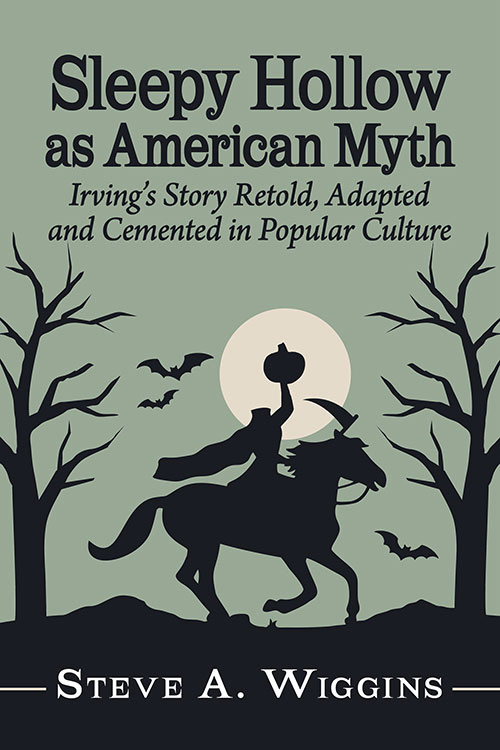
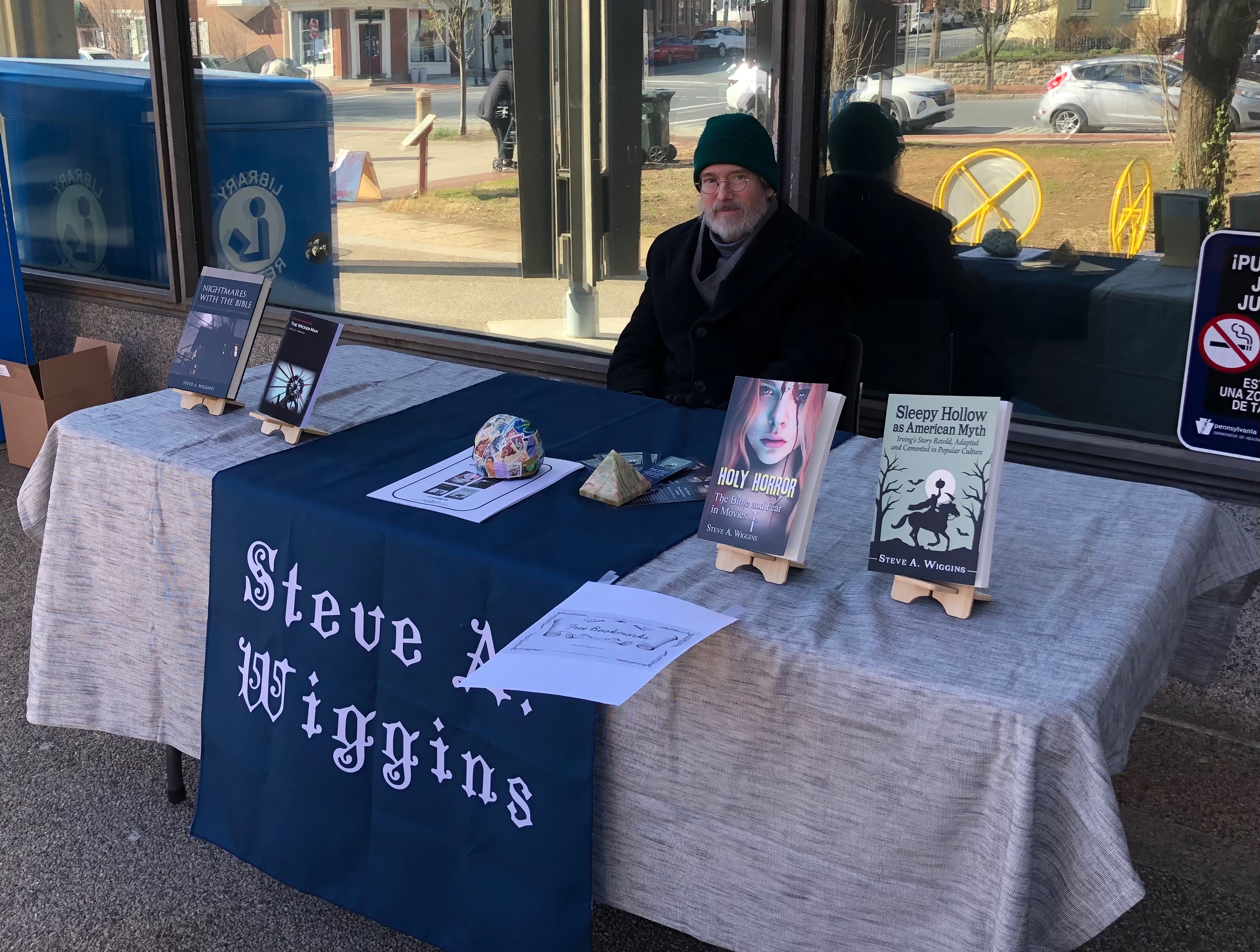
So, my first royalty statement for Sleepy Hollow as American Myth arrived.  It is my poorest selling book ever, not even notching up to Nightmares with the Bible, and that one was twice as expensive.  A couple things: I know that nonfiction books had a hard year last year.  Also, “academic” books tend to do better in the subsequent years after their initial release, for those of us with no name recognition.  In any case I’ve decided to try focusing on fiction.  The compulsion to write is deep-seated in me.  My nonfiction books are creative explorations of ideas neglected or never before brought together.  They’re also priced too high for the trade market.  I was pleased to see, recently, that The Wicker Man is now in over 400 libraries, according to WorldCat.  That makes it my second best-selling book, after Weathering the PsalmsA Reassessment of Asherah has been viewed over 9000 times on Academia.edu.

So, fiction.  I write my fiction under a pseudonym.  I currently have one novel out for consideration and another very close to being ready.  I have several in the wings.  What strikes me as crazy about all of this is that I’m told (as I have been since high school) that my writing is quite good.  I’m not the one to assess this claim, since I’m far too close to it.  It does make me wonder, however, what it takes to earn a little cash at it.  My last royalty check for a new book was half of what they usually are.  Good thing inflation is under control and the economy booming.  So I hear.  I do believe that the most impactful books tend to be fiction.  People like a good story.  And they can last for many decades.  The nonfiction that stands the test of time is a very narrow shelf indeed.  At least compared to our fictional siblings.

For fiction you need to keep at it to improve.  I think of all the years I’ve poured into my last four nonfiction books.  The only real critique I’ve seen of Holy Horror was that it was “too well written.”  When’s the last time someone said such things about fiction?  Oh, I’ve got three nonfiction books underway as well.  One of them I’m quite excited about.  But then I take a look at this royalty slip sitting in front of me and wonder if I’ll ever learn.  I have to write.  I’ve done that since fifth grade as a means of coping.  Here I am at over half a century at it.  There’s no danger of giving it up now. But the form it may take, well, that’s up for grabs.


With Thorns

I’ve seen T. Kingfisher’s books on the tables of various bookstores and I’ve noted them.  I wasn’t sure if they were horror since the tables have always had ambiguous labels, such as Books to Read at Night, or some such.  I was in a new independent bookstore a couple weeks back and A House with Good Bones was decisively shelved with horror and so I decided to give this new (to me) author a try.  I’m glad I did.  Kingfisher writes in the vein of humor and horror, like Grady Hendrix.  This is a fetching kind of horror writing, if it’s done well.  A House with Good Bones keeps the pages turning with winsome writing as things start to get more disturbing and dark.  Samantha Montgomery, an archaeoentymologist (an archaeologist who studies insects, or an insect scientist who’s into archaeology) waiting for a dig to resume, visits her mother in North Carolina.  She learns that her mother has been acting strange.  There could be some spoilers below.

Overall, the plot is a bit complex, so some aspects will be left out.  Even if there are spoilers, you’ll need to read the book to reconstruct it all.  Fair warning.  The house seems to be haunted, but Sam doesn’t believe in ghosts.  And the haunting is unconventional—it focuses on roses.  The roses were planted by Sam’s grandmother, a woman she and her mother lived with, but who was anything but nice.  She was, however, dedicated to her roses.  While staying with there as an adult, Sam tries to do some research.  She learns that her great-grandfather was a kind of local wizard, or warlock.  Her grandmother wasn’t well liked in the small community where she lived.  As things begin to get creepier, Sam is forced to realize that despite her scientific training, houses can be haunted.  Her dead grandmother shows up, made of roses.  With the aid of a local witch, they banish the grandmother.  Then more trouble comes.

The grandmother had warned Sam of “the children underground”—her version of the bogeyman—and when the house suddenly becomes half buried, Sam and her mother learn that the children underground are real.  The novel also has a vulture theme.  I’m not doing a good job summarizing, since the story is, as I said, complex.  But it’s very enjoyable to read.  Kingfisher is funny and then scary, and passes easily between the two.  I enjoyed this book quite a lot, and I’ll be coming back for more.  And I think I know, after reading her, why Kingfisher is sometimes placed on ambiguously labeled tables at bookstores.  I always appreciate writers who make up their own genres while telling a compelling story.


Luddism

There are books you really want to read, and books you feel you should read.  There are authors who delight in telling you what’s going on, and there are authors whose writing obfuscates.  I’ve always preferred the former in both scenarios, but I felt I should read William Gibson’s Neuromancer.  I guess I’ve grown apart from science fiction.  (It’s not you, it’s me.)  Or at least some of it.  And I encounter too much jargony writing among academics.  I’m a simple guy with simple tastes.  Also, noir has never been my favorite.  Case, the protagonist, is difficult to like.  As a literary achievement there’s no doubt that Neuromancer is amazing.  And highly influential.  It’s the story of a thief/conman (Case) who’s hired for a mission that he doesn’t understand.  Along the way he falls in love (sort of), but, well, noir.  Dames.  The imaginative elements are pretty stunning, and some of them have come true.  AI being one of them.  And maybe that didn’t help sway me to liking it too much.  I’m no fan of AI.

I didn’t read the novel to critique it.  Admittedly, I’m a Neo-Luddite.  I use tech, and even enjoy it sometimes, but I prefer print books, movies (on celluloid) in theaters, and music, if recorded, on vinyl.  Old fashioned.  I do like some of the convenience, however.  Who isn’t addicted to getting tedious things done quickly?  Well, some of them.  In any case, I found the Molly character intriguing.  I couldn’t help but think of Blade Runner the whole way through.  William Gibson claimed that his novel didn’t copy the gritty texture of the movie, and  I believe him.  I’ve written books after thoroughly researching a topic only to discover, too late, that someone else had largely done the same thing already.  It happens.

The plot itself is quite good. Still, there’s an ethical element involved.  I wonder how much AI optimism comes from guys who read such novels as teens.  I have trouble thinking of any way that generative “artificial intelligence” can end well.  It seems a misguided and oversold idea.  Now commercials tell us how much we need Al, and he appears in new devices, wanted or not.  He’s not welcome in my home.  I’m slowly getting used to the idea of having a phone near me most of the time.  I use it seldom, but when I do I’m glad for it.  I don’t watch movies or read books on it.  My favorite times are when it’s sitting there, being quiet.  Some of us are dinosaurs in a cyberpunk world that’s become reality.  And dinosaurs, well, we prefer the world before the electronic revolution.  Maybe even before the rise of the primates.


Trying to Write

Realizations dawn slowly sometimes.  From childhood on I wanted to be a writer.  Teachers encouraged me because I seemed to have some talent, but in a small town they didn’t really know how to break through.  Besides, terrified of Hell, I was very Bible and church focused—not really conducive to the worldliness needed to be a writer.  The realization that recently dawned is that I’m competing with people who can put full-time into writing.  I’m trying to squeeze it into a couple hours before dawn every day because 9-2-5.  9-2-5.  9-2-5.  It’s exhausting.  I often read about writers, wondering how they get noticed.  Even the people I try to get to publish my fiction read stuff others likely have more time to write than I do.  Why do I keep at it?  Sometimes it’s just impossible to keep ideas inside.

I’ve got ideas.  Some of them would make fascinating movies.  I even had an editor of an online journal that published one of my stories say that.  I’ve got a cinematic imagination trapped in the aging body of a day-worker.  Oh, I’ve got a professional job, of course.  What I really want to do is “produce content.”  I know others in publishing with the same dream.  One of my colleagues has managed to break out and she’s now publishing novels that are getting noticed.  I’m still writing for academic presses because I know how to get published by them.  My fiction has been suffering from neglect.  To stay sharp you have to keep at it.  I’m a self-taught writer.  I’ve not taken a course in it my entire life, and it probably shows.  Not even Comp 101.

Fairness is a human construct and ideal.  Reality lies with Fortuna (cue Carl Orff).  I’m better off than most people in the long human struggle with equity, I realize.  For that I’m grateful.  I do have to wonder, however, if struggle isn’t essential to making us what we need to be.  The writers whose work endures often had to struggle to get noticed.  Many died in obscurity.  I wonder if they ever realized that they were leaving a legacy.  You see, writing is a strange blend of arrogance and self-doubt.  Many of us go through intensely self-critical times when even our published books seem to mock us from their shelves.  The realization, now fully day, that I will always have to struggle to do what I know I’m meant to do sheds light.  Even in the world of privilege, the struggle inside is real.


Seeing Seagulls

It was a seventies thing.  Even though I lived in a small town, even I had heard about Jonathan Livingston Seagull.  At first I didn’t know it was a book.  (A similar thing happened to me in the nineties with a character named Harry Potter.)  It was probably in college that I learned this was a book I should read.  I did, and I followed it up with Illusions, also by Richard Bach.  Now, this was unorthodox stuff.  These novels consider what some would call superhumanities and others self-deification.  The two are related.  In any case, Jonathan Livingston Seagull is a story about a seagull that overcomes limitations.  An inspirational book.  The publisher had no great expectations for it but it ended up becoming a number-one bestseller without any real marketing support, largely through word of mouth.  You’d have had to have been living in a cave in the seventies not to have heard people mentioning Jonathan Livingston Seagull, whether bird or book.

I got a hankering to read it again but alas, it was one of the books destroyed in the flood.  I went to a local bookstore and was disappointed to see that it was out in a new edition—larger, and, of course, more expensive.  Longing eventually overcame reluctance and I bit the bullet.  I’m glad I did.  The story is still as empowering as I remembered it, but the fourth part, the new one, strikes me as very necessary.  In it, rumors of the disappeared Jonathan Livingston Seagull have turned him into a god.  A god, moreover, whose followers are more interested in the orthodoxy of ritual than what he taught.  This was published before Trump’s first election, but it accurately describes what “Christianity” has become under his two-pronged reign of terror.

The idea of Christianity itself has become deified to the point that Jesus—what he did and taught—have become completely irrelevant.  Now, you don’t have to walk all the way with Richard Bach (I read the two books after Illusions as well, The Bridge Across Forever and One), but this book has a message that still rings true after all these years.  The book is over half-a-century old now and I am glad that it’s having a small resurgence.  The message, when the book ended at part three, was perhaps a little lighter.  We still, however, have to learn to overcome limitations.  And there’s a fair amount of wisdom in this little book.  Even though it was a seventies thing, it remains a good thing.


Dark Library

Although it’s booming, I’m not a romance reader.  Not in the modern sense, anyway.  I’m a big fan of the Romantic Movement, which gave us the gothic novel, but the distant descendant of the latter is dark academia.  And dark academia is what brought me to Rachel Moore’s The Library of Shadows.  That, and ghosts.  I’d read somewhere that this novel (probably classified as young adult as well) brought dark academia and ghosts together and indeed it does.  I’m finding dark academia to be quite liberating.  I may no longer be a card-carrying member of Club Academe, but that setting is never far from my mind.  Enough about me.  Here’s the story: Este is a student at Radcliffe Prep, reputed to be the third most haunted school in the country.  She doesn’t come from money, however, since her father, a former Radcliffe Prep student, died prematurely and her mother has gone in search of anything that might remind her of him.

Este, unlike her wealthy cohort, isn’t sure how she fits in.  She doesn’t believe in ghosts.  Until she falls in love with one.  (This isn’t really a spoiler since it’s on the back cover copy and you can infer as much from the cover art.)  The story revolves around how to resolve that tension.  I’m sorry to admit that I’m not sure if “fades” are a traditional kind of ghost or if they were invented for this story, but they are behind the somewhat-horror elements to the tale.  Moore lays out the rules for her ghosts: they can’t walk through walls (so they can be locked out of a room), they tend to be not seen in natural light, but artificial light brings them into view, if they want to be seen.  And those that inhabit the library at Radcliffe, have bodies that can affect the physical world, but they can’t connect with anything living.  The fades are much worse: they kill mortals.

Moore’s story is a romance and a fantasy, but it is fun to read.  As a first book it has the freshness that somehow fades when writers become too jaded with the system.  (As someone who has tried repeatedly to get fiction published, believe me, I know.)  I suspect those looking for serious adult fiction might find it on the light side, but romance does have its attractions.  Since this is for younger readers there’s nothing too explicit here.  Just a story that keeps you interested as the pages turn.  And if romance has ghosts, and fits dark academia, I wouldn’t rule out reading more.


Interiors

I first started reading Stephen Graham Jones after hearing him do a reading on YouTube.  I’ve always had a great deal of respect for Native Americans and his style was so sincere and down to earth that I was immediately drawn in.  Jones is now a well-established horror writer.  I’ve read a couple of his books and I have a couple more on my shelf, waiting.  Mapping the Interior is an early novella that has recently been repackaged and re-released.  You get the sense that even established authors have to prove themselves and then people will go back and read what they wrote before becoming somewhat famous.  In any case, it’s a haunting story about loss, growing up, and belonging.  At least that’s the way I read it.

Junior, the narrator, lives with his mother and younger brother in a modular house, off the reservation.  They are just barely getting by, Junior’s father having died and leaving them to live on one modest income.  But then Junior, who sleepwalks, sees his dead father in their house.  He becomes convinced that his father is victimizing his younger brother, Dino, who has a disability, in order to gain a body again.  Meanwhile, the kids at school all pick on Dino and the next door neighbor doesn’t like having Indians living so close.  He has mean dogs and an attitude.  Tension grows throughout the story as Junior has second thoughts about his father, whose death was never really explained to him.  There are some frightening scenes in this short book.  And a kind of matter-of-fact sadness.

Jones is a compelling writer.  He reminds us that American Indians know very well that they were wronged, but also have little or no recourse to justice.  The characters here keep on keeping on because that’s all you can do.  The end of the story does have a twist that is wrenching, especially after reading all that Junior has done to help his brother.  I read a fair amount about and by indigenous writers—the kinds of things many of those in power would like to ban and deny.  The experience of those whose heritage includes being colonized or/and enslaved is very important to know and to hear.  These are people who’ve been victimized and their stories need to be told.  I’m glad to have discovered this particular book, even as I’m awaiting the time to take on his longer, more recent work.  His is a voice worth listening to.