Nine Secrets

By their very nature they make us wonder what they’re up to.  Secret societies, I mean.  That’s part of their appeal.  Those on the outside speculate and usually the ideas swirl around mysterious rights and probably sex and money.  Leigh Bardugo takes it in a different direction in Ninth House.  Since I try not to read reviews before getting into a book, I wasn’t aware of the premise that the secret societies of Yale University were the nine houses referred to in the title.  Bardugo’s imagination takes the route of suggesting that they all specialize in different kinds of magic.  That makes this kind of a fantasy horror novel because the protagonist, Galaxy Stern (“stern” is, of course, German for “star”), can see ghosts.  And some of the professors aren’t who you think they are.

Somewhat gritty, Alex (Galaxy) isn’t exactly college material, let alone Yale.  She’s a recovering drug runner who has a past that would keep her out of most universities, particularly those of the Ivy League.  Still, she’s invited to Yale and she has some personal motivations, not necessarily academic, to accept.  She’s brought there by the ninth house, Lethe, because of her ability to see ghosts.  As portrayed in the novel Lethe is the secret society that makes sure the others don’t go beyond their bounds, the police, if you will.  Each society specializes in a specific kind of magic and it uses it to help its members benefit in school and career.  That’s why the university is so well funded.  It paints a compelling image of New Haven and it manages to capture the mystery many of us felt about attending college in the first place.

Yale is one of the two Ivy League campuses I’ve never been on (the other is Dartmouth).  Even so, Bardugo writes in a way that makes you feel as if you’ve been there.  The story is a page-turner that goes quickly for its size.  Alex, who is a novice in Lethe, spends the novel trying to find her mentor, Darlington, who’s been missing since some bad magic got him.  There are many unexpected twists along the way.  Although I don’t know much about Bardugo’s past, it seems likely that she knows some people in the drug culture.  Maybe she’s even seen some ghosts.  All of this combines to make a magical read that should appeal to Neil Gaiman fans as well as those of Stephen King.  And, of course, those who like to speculate about secret societies.


Getting Used

Unknowing is a blessing in disguise sometimes.  There is so much to learn and, regrettably, little time outside work to do it.  Books are my life.  I work in publishing, so I know a passable amount about the book business.  I have much still to learn.  To support my research, which doesn’t include a university library, I often have to purchase academic books.  I know quite a bit about academic book pricing (hint: what the market will bear), and I know that it’s assumed academics have university professor-level salaries.  The “independent scholar” is as much a ghost as the next revenant.  So I buy books used.  The best clearinghouse I know of is Bookfinder.com.  They list other sellers who have the book and facilitate your buying of it.  I strongly suspect they take a small cut.

While looking for an obscure book (it pains me to say, for I met the author), I wondered if Amazon’s used copy had the lowest price.  So I went to Bookfinder.  The Amazon copy was there, along with seven comparably, slightly lower, priced other copies.  Reading the descriptions, I realized these were different vendors hawking the exact same copy of the book.  Some of the description wording was oddly specific and that led to this epiphany.  Down at the bottom was a lone seller some $4 to $5 dollars cheaper, selling the book directly.  Navigating to this page I discovered it was the self-same book—the same physical book being marked up by the other vendors.  Each reseller along the way, with wider reach, stopping at Amazon with the widest reach, was charging a finder’s fee for this same object.  It was available directly from the seller.

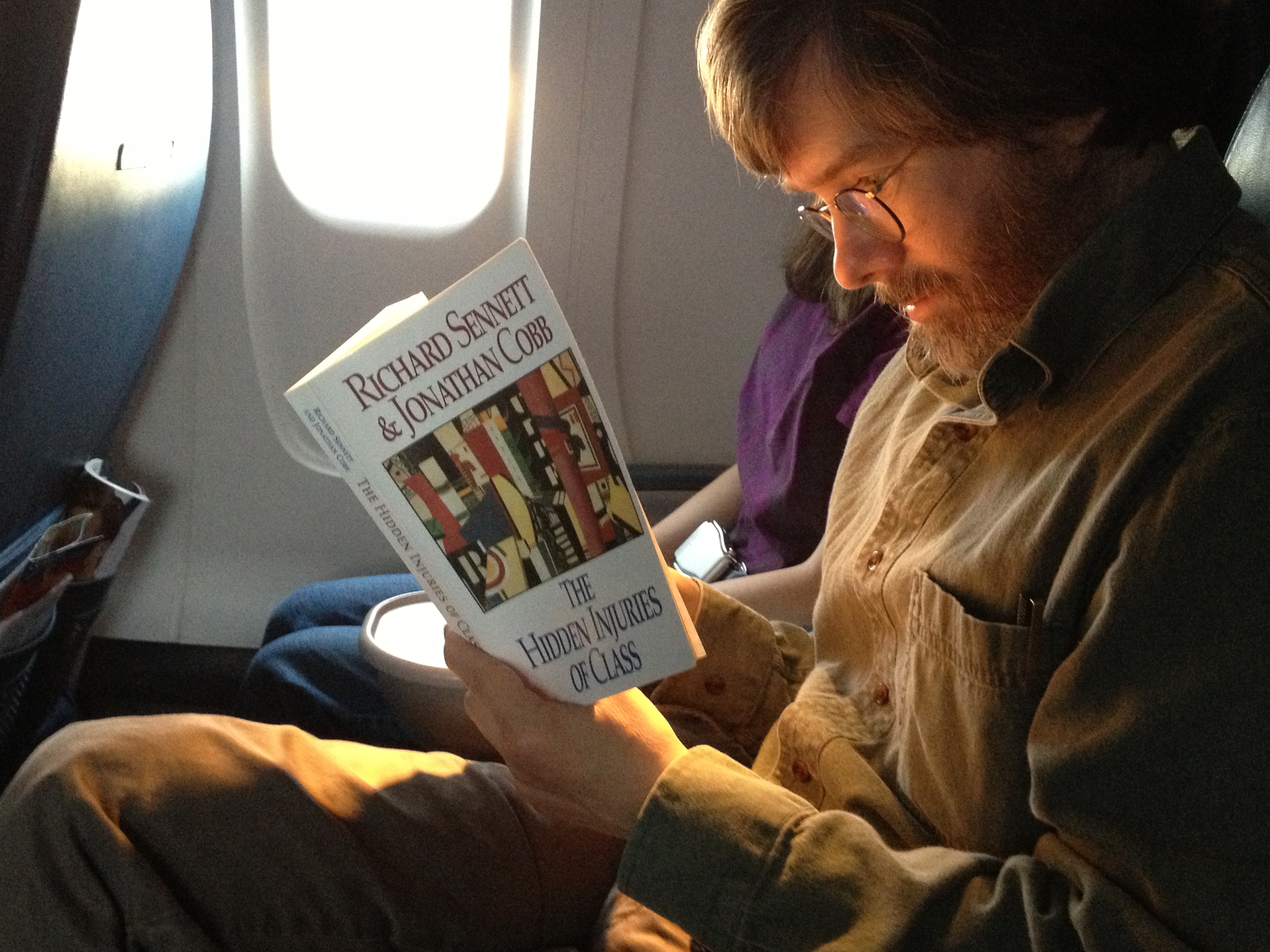
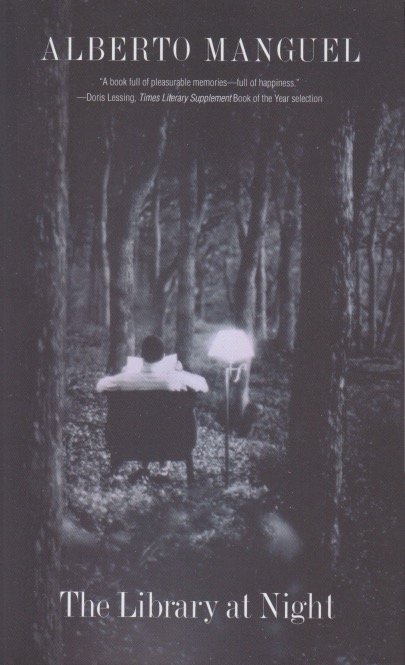
Used books are a thriving business.  Many publishers these days are focusing on “the electronic future,” scratching their heads that people are still reading paper.  What will happen to walking into that impressive library?  Have you ever walked into someone’s impressive iPad or Kindle?  It looks the same no matter how many electrons you add.  The internet has been taken with the photo of the late Johns Hopkins humanities professor Richard Macksey’s library.  Would it be possible to have walked in there and not been impressed with the obvious love of books?  As a Hopkins professor I doubt he had to resort to used books much, but I kind of think he probably did anyway.  Bibliophiles are like that.  A first edition is a thing of beauty forever.  And so I find myself on Bookfinder and I’m willing to give them a cut just for the privilege of holding a coveted book.

Richard Macksey’s home library. Credit: Will Kirk/Johns Hopkins University

Nightmares with Poe

A review of Nightmares with the Bible recently appeared in which the reviewer said he didn’t get the Poe references.  Indeed, the anonymous reviewer said the same thing.  What neither of them understood is that Edgar Allan Poe has been formative for my life and that book was a tribute to him.  Did Poe write about demons?  Not really.  Did he once claim that the death of a beautiful woman was the most poetic theme?  Yes.  I saw the opportunity, in discussing possession movies, to draw Poe’s observation into the conversation.  Could the book have been written without it?  Yes and no.  Yes, I could’ve written a book on demons without mentioning Poe.  No, I would likely not be writing books at all were it not for Poe.

Today is Poe’s birthday.  What is this strange attraction I have for him?  It began, as most things do for me, with growing up poor.  We couldn’t afford bookstore prices, and that’s even assuming there was a bookstore nearby (there wasn’t).  I found the majority of my reading material at Goodwill in Seneca, Pennsylvania.  The shop had a book bin or two with prices I could afford (books were a quarter, if I recall).  I found a copy of Poe’s Tales of Mystery and Terror there.  I probably heard about Poe from my big brother—he’s a good source for scary information.  Reading Poe, I wanted to read more.  We couldn’t afford Scholastic school fare rates, but I did find a four-or-five volume collection of Poe’s writings at Goodwill.  Foolishly, I bought only two—those with his stories.

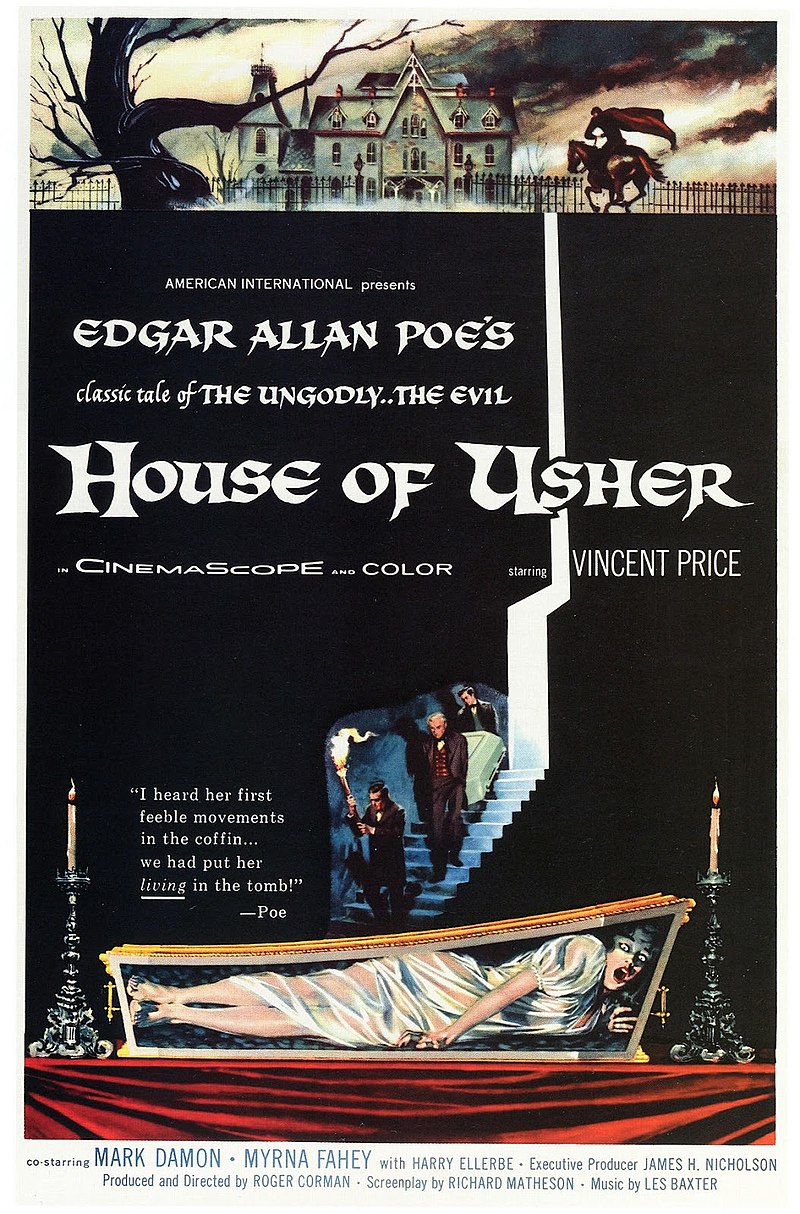
By high school I was checking out biographies of Poe from the library.  Perhaps as the child of an alcoholic I identified with a man who seemed so tormented.  I count his stories still among my favorites.  My favorite short story is, I believe, “The Fall of the House of Usher.”  It has come back to me at several points in my life and I find myself thinking about that gloomy house.  Particularly the narrator’s arrival there.  So full of possibilities.  So much potential fear.  Those of us who consume horror have a gateway to it—some event, or influence, or person who introduced the aesthetic of fear to us.  For me it was Edgar A. Poe.  Nightmares with the Bible is of a piece with Holy Horror.  To leave Poe out of it would’ve been the worst kind of sacrilege.


Wicker Redux

The Wicker Man (1973) is a cult classic.  If it had had proper distribution and promotion it might’ve become a more mainstream hit when it was released.  Instead it was a slow burn.  Once it reached cult status controversy grew.  The movie doesn’t acknowledge, but was clearly influenced by, the novel Ritual by David Pinner.  I reviewed the novel earlier, and it isn’t particularly great.  The movie changes so much that it maybe was “inspired by” rather than “based on” the novel.  Several years later the director, Robin Hardy, decided to novelize the film.  His The Wicker Man also credits Anthony Shaffer because a good deal of the dialogue is lifted straight from the screenplay Shaffer wrote.  But the novelization also changes things.  That means there really is no novel that gives the full story of the film.

The creative process is never-ending.  Anyone who’s had a story published knows the tinkering that goes on, even after it appears in print.  The last word’s never truly that.  It takes restraint to leave something alone.  So Hardy wrote one of the more important characters out of his novel and wrote in another who seems to have very little connection to the story itself.  I’m still not sure what the point of adding him might have been.  Incidents that seem to be bracing for a sequel are present, and indeed Hardy wrote a spiritual successor that became a less impressive movie some years later.  Sometimes you do get it right the first time around.

Not that the movie is perfect—none are—but it has held up considerably well, growing in stature over the years.  A novelist, however, tends to have a deft touch that seems to be lacking here.  There’s a great deal of telling instead of showing.  Hardy’s Howie almost becomes a Mary Sue.  Tying his love of birds into the plot of the novel would’ve been one such deft touch.  Instead we have here a serviceable novel with much that’s familiar and even some that is strange and provocative.  It does restore some of the famously edited footage from the first cut of the film.  It tries to make Howie’s religious conviction clearer.  Changing parts of a story comes with the territory of those who spin yarns.  Hardy never really rose again to the heights he achieved in directing The Wicker Man.  It’s no wonder, then, that he felt compelled to return to it in literary form.


A Haunting Story

The last book I finished in 2021 didn’t quite make it under the wire for my year-end blog post.  It was the second Stephen Graham Jones novel I read in the year.  I guess I’ve been reading a lot of American Indian books lately.  The Only Good Indians is a horror story and more.  There’s reconciliation.  There’s tradition.  There’s hope.  As part of the privileged “white” class, I’m always a little afraid that writers from oppressed cultures will take it out on me.  It may’ve happened here, but if so it was done in a way that I didn’t feel the sting.  This is a story of friendship, mistakes made, and a monster who has a righteous cause.  There’s a lot going on here.

One of the persistent cultural fears of the unwoke, I suspect, is that there’ll be payback if all things were to become equal.  Perhaps on the scale of karma that’s true, but in reality the people that’ve been oppressed simply want the oppression to stop.  To be recognized and acknowledged as being human.  As if that decision is up to white folk to make.  This novel simply deals with American Indian life as it’s lived.  The characters all pretty much live in poverty but they lack the greed so many white protagonists have.  They’re happy if they have a few hundred dollars, or even a few twenties.  Life is more than playing the capitalist game.  It really all comes down to relationships.  And family.

Stephen Graham Jones writes with a deft hand.  He offers some humor amid scenes of violence and loss.  He speaks plainly and without pretense.  And there are parts of this novel that are genuinely scary.  Since I had no idea how it might end, I wasn’t even sure even while I was on the last page.  

The best monsters are those that teach us to be better human beings.  Quite often they teach us that the truly monstrous ones are those who look and act like people usually look and act.  We take the natural world, assuming it’s ours.  We think our small problems are those of the entire world.  Monsters help to fix our perceptions.  Without them we carry on as if it’s business as usual.  This is a good novel to read in the midst of a pandemic.  There’s hope here that we’ll come out of the crisis better than we went in.  Perhaps scarred and changed for good.  In every sense of the word.


2021 in Books

It’s become my habit, on the last post of the year, to think back over the year in reading.  This gives me a chance to give a separate boost to the books I found particularly valuable, for a variety of reasons.  My Goodreads total for 2021 will end up being 70 (two haven’t yet shown up on my page).  It’s easiest to do this by category, so I’ll begin with fiction.  My favorite novels of this past year were Haruki Murakami’s Kafka on the Shore, Stephen Graham Jones’ Night of the Mannequins, Lisa Tuttle’s Familiar Spirit, Hank Green’s A Beautifully Foolish Endeavor, and Christina Henry’s The Girl in Red.  I really enjoyed Joseph Bruchac’s Bearwalk as well, but it’s for younger readers.

For what might be called spiritual memoirs I found Ernestine Hayes’ Blonde Indian remarkable and Heather and Gary Botting’s The Orwellian World of Jehovah’s Witnesses revealing.  Vine Deloria’s God Is Red was stunning.  (It should be clear by now that I read quite a lot from indigenous writers.)  If you count love of books as spiritual I would include Andy Laties’ Rebel Bookseller as well.  As long as we’re on spiritual, books by religion professors might count, so I would add Intimate Alien by David Halperin.  If you count just memoirs, I would also add Follow the Rabbit-Proof Fence by Doris Pilkington.  And if reflective essays count, John Green’s The Anthropocene Reviewed.  And Thich Nhat Hanh’s Love Letter to the Earth.  I learn so much from reading about how others deal with their lives.

Books in the nonfiction category tended toward horror movie analyses (ahem), but some stood out even among the weirdness.  Daniel Ogden’s The Werewolf in the Ancient World inspired me.  Kendall R. Phillips’ A Place of Darkness was a well-written account of early horror movies.  Tanya Krzywinska’s A Skin for Dancing in was insightful and helpful to my research, if difficult to locate.  Likewise Hammer and Beyond by the late Peter Hutchings.  Mathias Clasen’s A Very Nervous Person’s Guide to Horror Movies was fun and informative.  For importance I’d rate Dag Øistein Endsjø’s Sex and Religion at the top.  So much of the world’s conflict is based on these two factors.  It’s difficult to believe that we don’t talk about them and end up fighting and killing over them.  If we can’t talk about it, at least we can read about it.  There are many other books I enjoyed over the year.  Enough that even a brief mention of each would put me over my usual word limit.  (They’re easily found, in any case, by using the “Books” category to the right.) 2021 may have been a challenging year, but books helped me make it through it.


Next Year’s Reading

One of my year-end rituals, apart from looking back at the past year’s books, is to look ahead for the next year’s reading.  This is such a pleasant exercise because Christmas often comes with gift cards from Bookshop.org or Amazon.  Until this year I’ve used the Modern Mrs. Darcy’s reading challenge to push me into some areas I might not read, but that challenge has now been discontinued.  I participated (this is strictly self-monitored, of course) in six of the seven years that challenge ran, starting in 2016.  Part of each late December was spent in visiting book stores, planning new reading projects, and thinking about the year ahead.  Of course, you can’t predict anything with too much accuracy, but I start the year with a stack of books and a head full of literary dreams.

Also in 2016 I began doing the Goodreads book challenge.  This is merely numerical—you pledge a certain number of books to read in the year.  According to my Goodreads stats (there are some books I don’t publicly admit reading, of course), I’ve read 517 books in the past six years.  Numbers were higher in the commuting days, of course, but I try to read more than a book a week and that practice gets me through some difficult times.  It always looks sunny when planning ahead for a year’s reading, but you never know where the other parts of life will actually take you.  Anyway, this year I’m planning my reading without Mrs. Darcy, mostly culled from my Amazon wishlist, which is unwieldy and constantly growing.  I try to buy the books from Bookshop, however, as it benefits independent bookstores.

This year I may set a slightly lower Goodreads goal.  The main reason for this is that books seem to keep on getting longer.  Novels grow to multiple hundreds of pages but time doesn’t increase in proportion to that number, unless it’s an inverse proportion.  Even with a lower goal I won’t plan on slowing my reading down.  In my commuting days it was fairly easy to read a hundred books per year.  I still tend to get over sixty without those hours on the bus, and hopefully all that reading is doing something useful to the world as a whole.  I write to give back for all the good I’ve been given.  If this in any small measure offsets the headlines that meet us daily, it will have been time well spent.


Salvation by the Book

I’ve never been to Iceland.  Part of me says that if I ever get to go I’d want it to be on Christmas Eve.  Ah, the light would be in short supply, no doubt, and it would be cold.  But the draw of Jolabokaflod is strong.  Jolabokaflod isn’t a difficult word to figure out, if you’re familiar with Indo-European languages. “Jol” (maybe the “a” is included) looks a lot like Yule.  “Bok” is English book missing an “o” (again, maybe the “a” is part of it).  And “flod,” likewise with another “o” becomes “flood.”  The Yule Book Flood.  The tradition is to give books on Christmas Eve and spend the long hours of darkness reading.  Iceland has the reputation for being a very literate culture.  I’ve read a number of books (in translation) by Icelandic authors.  If there’s ever to be peace on earth and goodwill to all, it will be through books.

If you observe Christmas, today is that great time of anticipation, Christmas Eve.  Churches, whether virtual or in person, will be humming places this day.  Last-minute shoppers will be out and frantic.  Some will be insisting we keep Christ in Christmas while others will be dreaming of sugarplums and fairies.  Some will be tracking Santa on NORAD.  In Iceland they’ll be exchanging books.  Politicians will continue their calculated plotting but I dearly wish they’d spend the day reading instead.  Perhaps there would be fewer tanks at the Ukraine border if those in Moscow would curl up with a good book.  Check the progress of their Goodreads challenge.  Open up the flood-gates and let the books pour in.

There are those who believe this world should be consumed by God’s awful fire, and that right soon.  But God, as I understand it, is a writer of books.  Perhaps the divine plan is different than so many suppose.  Even the angels sang about peace on earth in one of those books.  You never know what’s going to be under the tree, but in our house books are always a certainty.  The words that describe this season—joy, peace, goodwill—can come in a few ounces of paper, ink, and glue.  And if God’s own book tells us to love one another, who are we to argue on Christmas Eve?  And if it’s true today won’t it be true also tomorrow and every other day beyond that?  Iceland has grown out of its warlike past.  And today they’re exchanging books.  Perhaps there’s a lesson there for all of us.


Literary Thoughts

A book is a physical object.  It is printed on paper and has a cover.  It has a publisher who undertakes to have it printed and bound (and with any luck, marketed and publicized).  This, I would contend, it what most authors have in mind when they sit down to write a book.  It isn’t just “content,” of which you can find far too much on the internet.  It is an object of pride that you can slot onto your shelf with a great sense of personal achievement.  It has taken a lot of work, and headaches, to get to this point.  Several months or even years of your life.  An idea that can’t be addressed in a couple dozen pages.  A book is born!

Publishers are more and more pushing the ebook, however.  The ebook is not a book in the same sense as a printed object is.  In some sense it may be more durable.  It’s certainly easier to get quickly.  But how do you get excited over writing an ebook?  Whenever I’m writing a book, there’s clearly an object in mind, not a cloud of electrons.  Ebooks have their place, but as people start talking about a post-literate future I start seeing visions of my own tombstone.  It gives me a strange kind of comfort to know that all of my books so far reside in the Library of Congress.  Some university libraries even buy copies.  Would a carpenter take pride in an electronic table she built?  Can you set your book on it?  If you don’t carve your “Kilroy was here” in stone, how will you ever prove it?

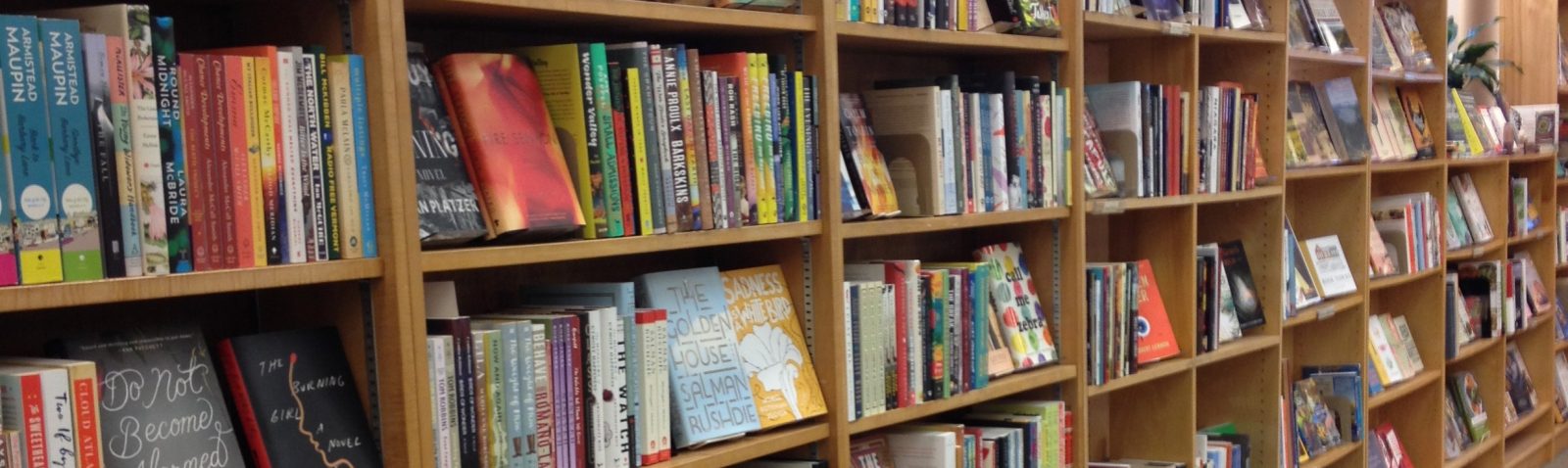
As handy as ebooks are, nothing matches the sensation of walking into a room full of books.  The sense of rapture is palpable.  Such rooms are monuments to our culture.  A screen with metaphorical tons of content may be a tribute to technology, but is any of it real without ink connecting with paper?  There’s nothing wrong with “content;” I produce some every day.  The thought process is different from book writing, however; just like the process of writing poetry differs yet again.  The publisher always looks at the bottom line.  (And I don’t mean the last line of a poem.)  And to keep “books” profitable the conversion to “content” seems attractive.  It breaks down, however, if writers no longer think in terms of books.  The book has a storied history and a long future, if we keep in mind that it’s something far more refined than mere content.


Christmas Classic

While it’s a story I know well, I’d never read the book.  I suppose I tend to think of Christmas when it’s already hard upon me, or perhaps I’m just making excuses.  After all these decades I’ve finally read Charles Dickens’ A Christmas Carol.  The story is so well known there’s no point in laying out the action here.  A filmic version of this has been part of our family tradition for many years now and sometimes it’s difficult not to think the cinematic version has somehow got it right while the book might’ve somehow missed something.  I’m generally disposed to read the book before watching the movie, but I believe I saw this as a young person and we had no Dickens in the house.  Besides, who could miss the endless parodies?

It’s a ghost story, yes, but it’s primarily about redemption.  It’s difficult for me to watch (or read) without getting a bit misty about the eyes.  Our world, especially during the Trump years, seemed a hard and heartless place.  Winter all the time while somehow being Hell also.  It will take many years—perhaps I won’t live to see it—before people unlearn the bad habits they saw being modeled each and every day of those four long, long years.  Every year as I watched the movie I thought, “I wonder if 45 has ever seen this?”  Always the answer came back in a resounding “Humbug.”  A miser who cares only for himself doesn’t change as easily as Scrooge.  So the world had to suffer, and so it will suffer yet a good long time.

The thing about redemption is that it can’t be privatized.  It’s on free offer to anyone who desires it.  While A Christmas Carol may not be Dickens’ best work, it nevertheless bears a message well worth the repetition.  Perhaps there aren’t ghosts enough in the world.  We need to learn to listen.  Were it not for the haunting Scrooge never would have changed.  The sad part is that there are people actually of his ilk.  I hold out hope for redemption to all of them.  I’ve known too many people who seem to care only for themselves.  I need to remind myself that they may not have the reinforcement of this tale every year.  The world could perhaps be better if that were the case.  Dickens clearly had fun as a writer.  Sometimes it seems to get in the way.  But if it makes one’s heart light in December, what can the harm be in that?


Read Red

Fairy tales can be pretty gnarly.  I recently picked up a new translation of Grimm but I haven’t read it yet.  For some time I’d been aware of Christina Henry’s The Girl in Red.  As soon as I discovered it I wanted to read it.  The BISAC code says it’s science fiction but I’d call it horror.  More than that, I’d say it is the most tense book I’ve read in years.  Henry knows how to keep readers on edge.  Yes, it’s a take off from Little Red Riding Hood, but in a way that I wasn’t anticipating.  Red is a strong, believable protagonist who finds herself in a pandemic-ravaged world (imagined before Covid-19) where she has to get to her isolated grandmother’s house.  Everything between will surprise, scare, and stun.

The writing carries you along.  A government with secrets, the ever-present threat of roving groups of bandits and militias who are always on the lookout for girls, and the uncertainty of how this will all end make for a powerful tale of what people are capable of.  And not necessarily for good.  Making Red “disabled,” and black, Henry has given us a protagonist we need.  And it’s always a delight when a character finds that watching horror movies has been good training for a world where order has broken down into a Trumpian anarchy.  Scary and witty, the story has so much to like it’s difficult to know where to start beyond the recommendation to read it.

Those who analyze literature sometimes say that the great story-lines have already been taken and that the best modern writers can do is to adapt them.  There may be an element of truth to that, but even if there isn’t the clever retelling of old tales can be quite enjoyable.  This isn’t so much a retelling as a reimagining.  It’s also a poignant reminder that when things start to break down—or even in the status quo—women are put at risk.  Men too quickly resort to guns and violence.  As the story unfolds it becomes clear that Red is capable of surviving in this world, even when at a disadvantage.  There’s also no overcoming of the military.  It’s too well established and too heavily armed.  Red’s run-ins with them allow her to impress those who assume white male superiority.  In that way this is a parable within a fairy tale in a modern guise.  I’ll be reading more of Christina Henry’s books.


Remarkable and Beautiful

Last year I read and commented on Hank Green’s An Absolutely Remarkable Thing.  I knew there’d be a sequel, but it took some time for it to come out in paperback, and it took a day of flying to give me dedicated time to finishing it.  A Beautifully Foolish Endeavor picks up where the first novel left off, bringing April May back to life.  It’s a story about good and evil and how humans, as flawed as we are, are nevertheless worth saving.  This story takes a further sci-fi and dystopian turn than the first part, moving it more into the regular novel than the “new adult” that seems to better fit the initial book.  Really only six months have passed since the first story, but the still young protagonists have aged in the way experience doles out to people who think they understand the world better than they do.

The world of A Beautifully Foolish Endeavor is dystopian in the sense that corporations have too much power and can (and do) drive the direction of human development.  It’s clearly a novel written after a couple years of repressive Trump rule where autocrats will do anything to keep in the public eye, even destroy their own world.  It becomes Manichaean, or maybe even Zoroastrian in that the extraterrestrial entity Carl, who was the subject of the first novel, reveals that he has an evil “brother” that encourages the corporations in their efforts to rule the world.  The goal of this evil intelligence is to get humanity to destroy itself as a failed experiment.  There’s plenty of metaphor here since the way to get people to destroy themselves is through virtual reality.

As someone who finds quotidian reality difficult enough, I have no desire to see how well some technocrats can imitate what nature already does so well.  Stepping outside with a cold November wind blowing down my collar, threatening snow and driving me back indoors I know I’m in a world not custom built for our comfort.  I am one of billions of scurrying, resistant, persistent creatures doing my best to survive.  I’m sure that virtual reality is an amazing experience, but so is stepping out into that November wind.  Hank Green is gifted at writing compelling, conflicted characters.  From his own internet platform he’s become a significant influencer, gathering the interest of even the White House.  His two novels form a thoughtful set that, like the books of his brother John, make us stop and think what it is to be human.


Degrees of Separation

For some reason lost in the fog of weblandia, I get The New York Times, “The Morning” delivered to my email.  By carefully not clicking the links I can get my day’s worth of fear and paranoia for free.  Not all the news is bad, of course, and I’d be glad to pay if circumstances had been different.  After giving all the sorrow that’s fit to print, “The Morning” ends with an Arts and Ideas section.  By then I’m usually cradling my head in my hands but I look up to see the positive side of humanity.  The other day the article on the Metaverse included this line: “In its simplest form, the term — coined by Neal Stephenson in his 1992 novel ‘Snow Crash’ — describes an online universe that people can share together…” and I realized probably the closest I’ll ever get to the Gray Lady.

I am, as many of my regular readers know, Neal’s brother-in-law.  He mentions me in the acknowledgements to Snow Crash, something that was discovered by someone at work fairly recently, and which probably did more for my stature than my many long hours daily.  When it comes to degrees of separation, fate, I suppose, plays a role worthy of the Joker.  Neal hadn’t written Snow Crash yet when I met his sister.  Her somewhat unlikely friendship with me eventually led to our marriage and it was in the context of a family gathering that the conversation Neal mentions in Snow Crash took place.  Outside publishing, and in particular academic publishing, acknowledgements are seldom read.  I always read them, though, looking for unusual connections.  I’m often rewarded for doing so.

Asherah was, unbeknownst to me at the time, undergoing a resurgence of interest.  My Edinburgh dissertation was published the same year as a more prominent one by Cambridge University Press.  Just a year later, another came out.  Then another.  The internet was really an infant in those days and we learned of such things through printed resources and printed resources are always in arrears by months, if not years.  Of the many Asherah books mine had the distinction of being the most expensive.  Some things never change, I guess.  Suffice it to say, Asherah was on my mind as Neal and I drove to the store to pick up some baby supplies.  I had nothing to do with his coining the word or idea “Metaverse”—he’d already worked that out.  It was Asherah that ended up in the novel.  I was on my way to a short-lived romance with academia at the time.  Family, however, is so much more than degrees of separation.


Walking Bear

Indigenous peoples have been on my mind over the past several months.  Indeed, I read books by American Indian authors with awe.  In this darkening time of the year the Indian monsters join those of European descent in my imagination.  The wendigo has become somewhat popular in recent years but the bearwalk, or bearwalker, remains obscure.  Although a novel for young readers, Joseph Bruchac’s Bearwalker is a genuine horror story and the author is of American Indian descent.  It took someone giving it to me as a present (mainly because it was for young readers) to get me to pick it up.  I’m glad I did.

As might be expected for young readers there’s some blood but not gratuitous violence.  There are skillful twists in the novel and Bruchac knows how to put his protagonist on a cliff, as the old adage goes, then throw stones at him.  In this case, Baron, a thirteen-year-old Mohawk boy, is tormented by the bullies at his school.  Befriended by a respected teacher, he attends a three-day camping trip to the Adirondacks where a family dispute has led to a plan to terrorize the camp and force its sale.  The plan is to make it the scene of a mass murder with the school children present.  It’s here that Baron is able to demonstrate his worth to his classmates by escaping from the would-be killers and bringing help.

Throughout the story bears feature.  There’s some question as to whether there is a real bearwalker present, but the idea is there.  As with literature for young readers there’s some protective layering—no sex or strong language, for instance—but violence, at least in intent, is clearly there.  It is a very good story with suspense and excitement enough to keep even an adult horror fan going.  The main reason I’d had my eye on the book was to learn how the bearwalker might appear in it.  And also to see the story told from a First Nations’ point of view.  Like Baron in the story, American Indians I read aren’t aggressively angry about the way their people have been treated (which they certainly have a right to be).  There’s nevertheless a sadness and inevitability there.  Still, there’s also a pride in being part of an ancient and surviving culture.  There’s also quite a bit of symbolism in the story; Baron’s parents both proudly serve in the military, despite what the nation has done to their people.  And more subtle indications occur here and there that mainly adults would notice.  Although for young readers this is a real horror story, but one with a conscience.


Story Time

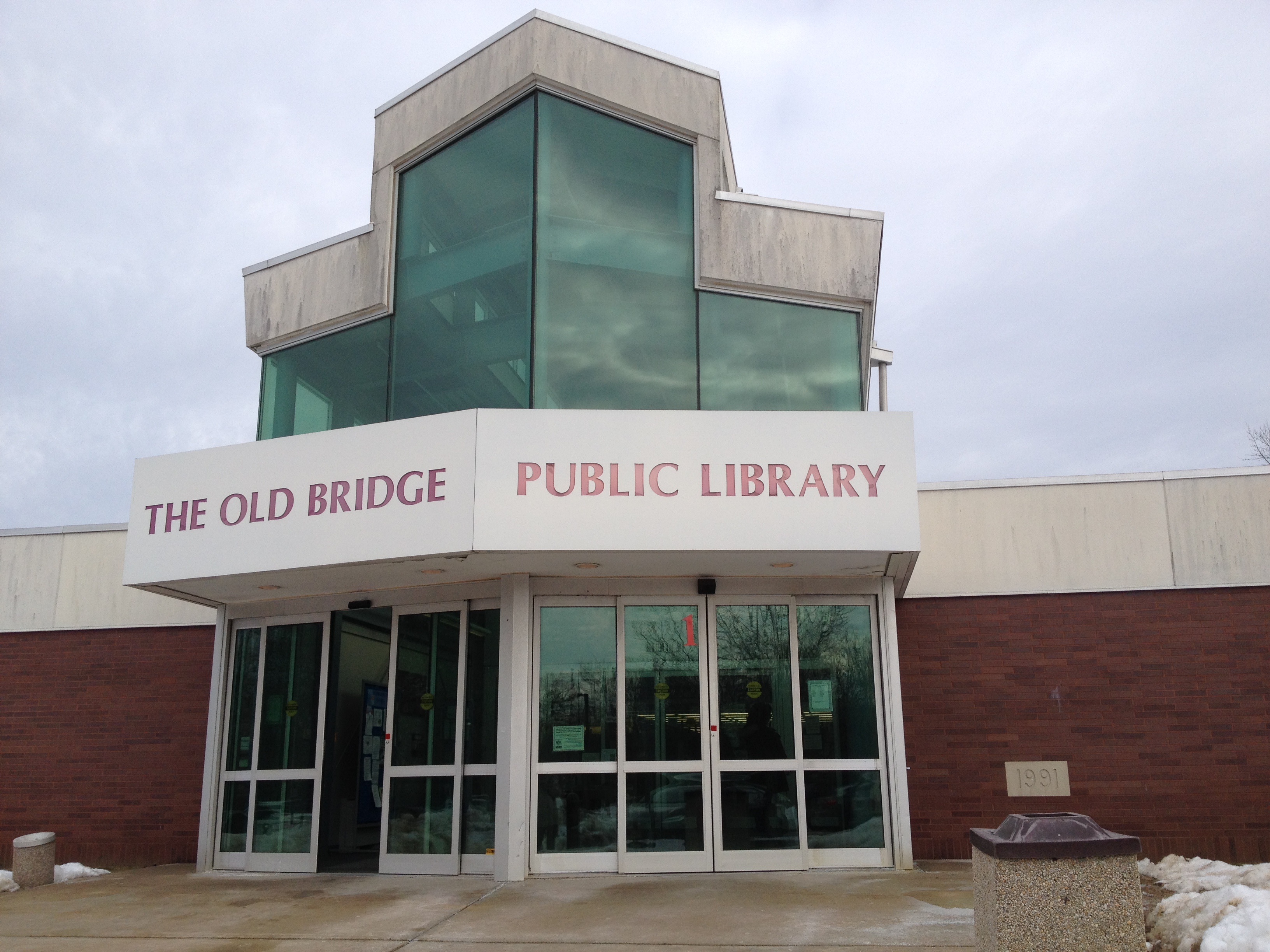
Why am I so nervous about this?  I’ve done it hundreds of times.  Perhaps it’s because it’s a public place in a pandemic.  Maybe it’s because I’ve never used this particular branch before.  Or the thought of all the people having touched this book ahead of me, leaving God knows what germs on it.  I would’ve never made it through my years of higher education, let alone fatherhood, without having gone to the library.  This is the first time I’ve used this one and I’m not sure what I’m looking for.  My Modern Mrs. Darcy reading challenge is complete but for one last category—a book checked out of the library.  So here I am, mask on face, standing fretfully outside the public library.  Nervously I note that it’s story hour.  My wife assured me libraries are never crowded.  Taking a deep breath, I go in.

The library is a fine institution.  A marker of civilization.  Perhaps I’m afraid of having to take care of somebody else’s book for three weeks.  Maybe it’s because I’m an embarrassingly slow reader and these books all look so big to me.  I’ve fallen into the habit of buying (generally used) the books I need.  We’ve donated quite a few to the little free library across the way, passing it forward, as they say.  Still, it is good to be in here with all of these books.  Even though pangs of guilt come, knowing that the yard requires attention.  And I’ve gotta get that squirrel out of the garage.  But there’s now a book in my hand.  I can go someplace else.

I can’t image a world without books.  A world like Star Wars where nobody reads and everyone lives in a Campbellian fantasy where good overcomes evil.  Our world is more Republican than that.  It would be a better place if people read more.  Maybe let the grass go just a little bit longer.  It’s not going to be the end of the world.  Reading may give crucial insights.  It may even help you to be a better person.  Stepping out into the autumn air I have a book in my hand.  It’s one I’ve never heard of, but one that I’m excited to read.  The library wasn’t crowded.  The children were in a separate room.  The leaves are changing and the breeze is fresh.  There’s a lot to do, I know.  But it is always worth the time to read a book.