Fragility

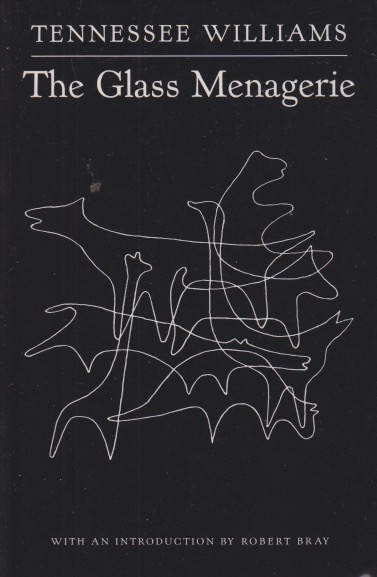
Who doesn’t like a play?  Since I’ve been reading many lengthy novels this year I like to intersperse them with some shorter pieces of literature.  Many of us are assigned plays in high school English class.  For those of us from non-literary families, these may be the only plays we’ll encounter in our youth.  Shakespeare and Arthur Miller ran the entire gambit for my high school career, but I’ve done some exploring on my own since then.  I’d heard quite a bit about Tennessee Williams’ The Glass Menagerie over the years, but I’d never read it.  I found a used copy at a book sale and so my excuse for not reading it was at an end.  Unlike when I read A Streetcar Named Desire, I really had no idea what to expect.  Dysfunction, it seems, spurs creativity.

I suspect the play is well enough known that my musings about its symbolism and impact wouldn’t add much to the discussion.  (Besides, I suspect few English teachers read this blog.)  My particular edition, however, comes with the essay “The Catastrophe of Success,” written by Williams after he found fame.  It reminded me a bit of a speech Ursula K. Le Guin gave late in her career, after receiving an award.  Both writers note that money drives far too much of what we consider creativity.  Williams notes in his essay that success leads to pampering and pampering is good for no one.  His description of staying in a hotel is a familiar one—poorly paid employees treat paying guests as if they were wealthy, cleaning up after them and tidying other people’s messes.

As many critics have noted, Williams grew up in a dysfunctional family and drew heavily on that for his fiction.  Another aspect, perhaps related to that, was the sense of pressure on his writing.  In his essay he mentions that writing grew more difficult when life was easy.  I often think about this myself.  My fiction suffered a bit when the pressure of the daily commute to New York ceased.  I had to catch an early bus and I was determined to get some writing done every day.  That was the origin of what now seems to be my permanent early wakefulness.  That pressure of knowing I had a very limited amount of time before I had to be showered, dressed, and at the bus stop, led to a tremendously creative output.  I see from my limited experience of reading Williams that I still have much to learn from those whose experience has become a lesson.
Kafkaesque

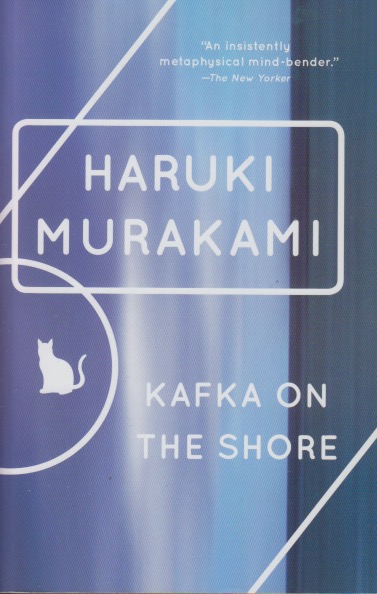
Although it’s a bit early—it’s never really too early—I just finished a banned book.  One of the main reasons I do annual book challenges is to help keep myself well rounded.  The categories often include books I might not otherwise read, although banned books are among those toward which I gravitate.  Lists of banned books are quite long, and so the choices are many.  I read Haruki Murakami’s Kafka on the Shore for this particular category this time around.  As the name Kafka in the title implies, there will be some surrealism here.  It was banned, as many books are, because of the sexual elements.  Anyone who made it through their teenage years without having struggled with that, however, is truly fiction.

Kafka is, in this instance, a fifteen-year-old Japanese boy running away from home.  On his journey, interlaced with that of an older, disabled man, he begins to discover what it is to grow up.  A number of unexpected things happen along the way, and pretty soon you’re not able to tell which world you’re really in.  The story refuses to be tied down to the ordinary.  The writing draws you in, however, and reminds the reader that being a teenager is indeed a liminal state.  Almost larval, to use a Kafka metaphor.  And yes, the metaphor is extremely heavy here.  There’s no denying two worlds bleed into each other as the story progresses.  Becoming an adult, it seems, involves having to make difficult choices.

Woven in with the base story is the Oedipus myth.  American cultural figures also appear.  Questions are raised but never really answered.  I’m not sure that I was fully ready for the mind-bending nature of the narrative.  Especially in these days when it’s considered okay, with a badly distorted moral compass, to hate those who are different, it’s important to read books like this.  There are characters you simply can’t figure out.  There are situations that seem unlikely, but that match some of the inherent strangeness of life itself.  I’m trying hard not to give away spoilers here, but this is a profound book.  I can’t tell if it was written for teenage readers or not—there’s clearly a lot of life experience behind it, and we were all teens at one time.  It was banned for being honest about sexuality, but perhaps, as is the case with most, if not all banned books, the real problem is that it’s simply too honest about being human.


Feeling Bookish

It does my soul good to attend a used book sale.  I recently attended one while on a visit to Ithaca.  Everyone was wearing a mask.  Even though it was May, it was quite cold and rainy, and due to the limited number of people permitted in the space, there was a line that took about half an hour to endure.  This did not deter people and it was this that most lifted my spirits—these people were devoted to books.  At times when the media gets me down, informing me that book culture is dying and that all people want are their devices and their distractions, seeing proof of the love of books is restorative.  The used book sale is a place of discovery.

Although it’s easy to nip over to Amazon (or better, Bookshop.org) and order your book, especially during a pandemic, there are things you only find by being where the books are.  I keep an extensive reading list with me.  Before I go into a sale venue I promise myself I’ll stick to my list.  But what a facile promise it turns out to be—how can you make such a vow without knowing what you might find?  Books you’ve never seen or imagined before?  That’s the discovery aspect that sweetens the in-person experience.  And although I still find crowds scary, I tend to trust people who like books.  Besides, the books I tend to read aren’t always in the most popular sections.

The Friends of the Tompkins County Public Library book sale has a dedicated building with permanent shelving.  While wandering is fine, maps are also available.  I’m occasionally ribbed for having too many books.  One of the reasons I dread any move is knowing the movers’ inevitable comments about the fact.  People who love books are made to feel somehow inferior for it.  Fans of Kindle or other such readers extol the virtues of having lots of books that take up no space.  Such books, however, are limited to those converted to electronic form.  The many thousands of books published before the invention of the ebook, many of them out of print and mostly forgotten, can only be found in libraries, used bookstores, and sales like this.  (Google books hasn’t found everything yet.)  It was cold and rainy outside.  In here there were silent companions that speak loudly.  Books, as my daughter said, are like snacks for the mind.  And sometimes you just don’t know what you’re in the mood for until you go to the kitchen and browse.  It can warm your soul.


Dark and Light

I perhaps have nothing new to say about Ursula K. Le Guin’s The Left Hand of Darkness.  It was published before I was ten, and although I grew up reading science fiction I really didn’t read any of Le Guin’s work until this year.  It wasn’t intentional—in a small town you read what you can get your hands on, and cover art designed to attract young boys often worked on me.  Now having read it, I’m left in a reflective mood.  Everyone, of course, comments on the gender aspect of the novel.  I guess I’ll be forgiven for doing so as well.  After all, it is the most striking feature of the story.  As we know from our lives on earth, gender affects pretty much everything about our lives.  The biological imperative is strong.  It’s no less strong in Left Hand of Darkness, but it is different.

In case you’re like me and haven’t read it (until now), it’s not a spoiler to indicate that it is the story of a male envoy to a planet where the people (and only large mammals) are genderless until once a month they enter “kemmering” when one becomes temporarily male and another temporarily female.  The genders aren’t fixed, but fluid.  Since the kemmering stage comes only once a month, during that time it become an urgent need among those experiencing it.  The novel isn’t about only that, of course, but it is the noteworthy feature that relates to the religion and daily life of the inhabitants of the planet Winter.

It might seem that this idea of shifting genders is itself science fiction, but it is not.  There are species on earth that change change gender, bringing into question the statement taken for universal that “male and female he made them.”  While gender seems to be evolution’s solution of choice for reproduction, that’s not universal either.  In other words, nature provides us with multiple ways in which plants, animals, and things in-between, can continue their existence on this planet.  The writers of the Bible weren’t great observers of nature, nor were they scientifically minded.  At a glance it looks like animals all conform to the model presented by Genesis.  In reality, the world is much more complex than that.  Religions aren’t always as comfortable with complexity as writers of science fiction tend to be.  Left Hand of Darkness is fine world-building and provocative at that.  This may be nothing new, but it is worth pondering again.


Literary Life

Trying to live a literary life is, I suppose, irresponsible.  Especially if your efforts and writing bring basically no money.  It takes considerable effort to make daily time to read and write, and so much else remains to be done.  At times I feel guilty for trying.  My books have all been published, for various reasons, with academic publishers.  Academic publishers don’t try to sell many copies of an individual book, relying as they do on the long tail philosophy.  Most academics have good paying jobs that expect research and writing in return.  For the outsider, however, there are other pressing matters.  The nine-to-five being the largest among them.  And any social organizations you join to keep you sane and connected.  Then there’s social media to take your time.  And the lawn’s ready for mowing.

I’ve always believed lack of time was (is) a theological problem.  I came up with that when I was an academic and had time to ponder such things.  Unlike many of my colleagues, I did research and write.  Now I want to move into that world where you might earn a little from all the effort.  And yet, that old Protestant guilt has a way of getting its talons around you.  You’re reading?  Shouldn’t you be doing those minor repairs you can handle without a contractor?  (Or at least think you can handle?)  Or maybe shouldn’t you be looking for a job that pays enough to hire someone to do such things?  And don’t you dare let that word “retirement” anywhere near your head.  What are you, irresponsible?

Reading takes commitment.  I try to read, on average, at least a book a week.  It requires a lot of time.  And a literary life includes giving back.  You want to share your writing with the world.  Hoping that either your fiction or nonfiction might eventually bring you some notice.  That’s the plan anyway.  The starving artist paradigm doesn’t feel so comfortable when you’ve got a mortgage.  Still, the imagination refuses to be tamed.  I’ve often said I could be content on a desert island as long as I had a huge stack of paper and never-ending supply of pens.  But that’s not the reality I inhabit.  That mortgage pays for a roof over my books and writing computer, always complaining it’s full.  It may not be glamorous.  In fact, it’s about the exact opposite of that.  But it is, after all, a literary life.


Creepy Houses

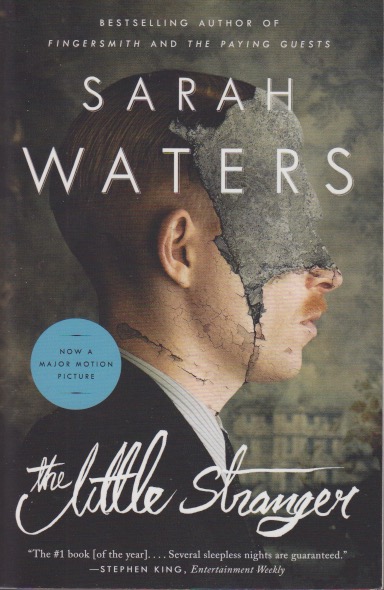
Definitions, I’m learning, are often a matter of one’s experience and taste.  I’ve read a lot of gothic novels and have tried to pinpoint what it is that creates a gothic feel for me.  I say “for me” because other people sometimes suggest works that I would put into a different category.  In any case, it’s clear that The Little Stranger, by Sarah Waters, is a gothic novel by any measure.  A large, isolated house.  A tainted family slowly fading away.  A remorseless, 400-page winter.  Inevitable decay.  The story is ambiguous and moody as Dr. Faraday, the narrator, falls in love with Caroline Ayres, the only daughter of an aristocratic family in decline.  The house may be haunted.  Or the family may be breaking down mentally.  Like The Turn of the Screw, it’s up to the reader to decide.

My preferred gothic has elements of the supernatural in it.  Melancholy without existential threat isn’t really enough to tip the scale for me.  The Little Stranger has enough of both to keep the reader guessing right up to the end.  Reader-response theory—the underlying basis for what’s being called “reception history”—posits that the reader assigns meaning.  The author has her idea of what happened in mind, but the reader contributes their own understanding.  This idea has influenced my own writing.  Once a piece is published the readers will make of it what they will.  In this way I can read Little Stranger as a haunted house story.  Although it was made into a movie I have to confess that I only heard of the novel recently while searching for gothic novels I might’ve missed.

The ambiguity fits the ambiguity of life.  The same circumstances can be interpreted by one person as entirely natural while another will add a super prefix.  No one person has all the answers and reality can be a matter of interpretation.  In that way Sarah Waters’ art follows life.  Interestingly, religion plays very little role in the story.  Church, when it appears, is perfunctory.  The source of tension here is on a rational, medical interpretation of events versus the gloomy lived experience of the Ayres family.  They believe themselves haunted and the scientific answers have difficulty convincing readers that there’s nothing more going on.  This is a gothic novel with a capital G.  Nevertheless, the debased cleric would have been welcome, but you can’t have everything.


Rabbit Years

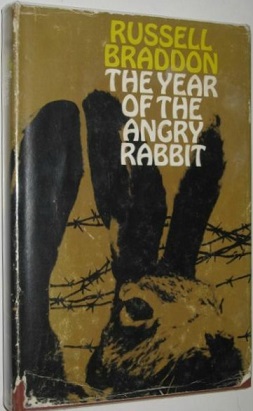
A childhood horror movie that I only recall in the most wispy of fringe memories is Night of the Lepus.  It’s one of those monster movies that involves mutated animals, in this case the unexpected rabbit.  I’m not sure why it’s been on my mind lately, but a little research indicated that it was based on the Russell Braddon novel, The Year of the Angry Rabbit.  This book is out of print and still under copyright, so finding a copy wasn’t easy.  Apart from vague images of giant rabbits, I had no idea what to expect.  The book turned out to be a comedy horror, in that order.  Remembering that the movie wasn’t funny (although it is consistently considered one of the worst cinematic efforts of the time), I wasn’t prepared for this.

You see, I don’t like to read about books before I read them.  I don’t read cover copy.  (I tend not to watch movie trailers either, unless it can’t be helped, like when you’re in a theater.)  I suppose knowing a genre of a book helps, but I just wanted the experience of reading the story behind a movie that won’t completely vacate my memory cells.  The Year of the Angry Rabbit is a satire on government, war, and capitalism.  If you’re not expecting a serious horror story it’s quite funny.  Russell Braddon never became a household name—he was from Australia and a person’s cultural impact tends to be greatest on their own continent—but if you knew this was a satire from the start you’d probably enjoy it as such.  Although written in the sixties, it’s climax takes place at the millennium, now two decades past.  It’s always interesting to see what people thought we might be up to by now.

Although there are elements of humor to our politics, Orwell seems to have been more on the money than Braddon.  Nevertheless it’s important to keep the old stories alive.  There are still people like me who will seek out rather obscure novels from many decades ago.  They might have to have sat on library shelves for years without having been checked out—this used to be the glory of the library, before “evidence-based usage” studies ruined them.  I search for things I want to read in my local small town library and find that my tastes are too obscure.  Besides, old stuff has to be cleared out to make room for the more recent books hoi polloi wish to consume.  I’m glad they’re still reading.  For me, however, I’ll need to stretch back to a time before I was old enough to read to satisfy an unrelenting memory. It was rabbit years ago.


Visualizing Twilight

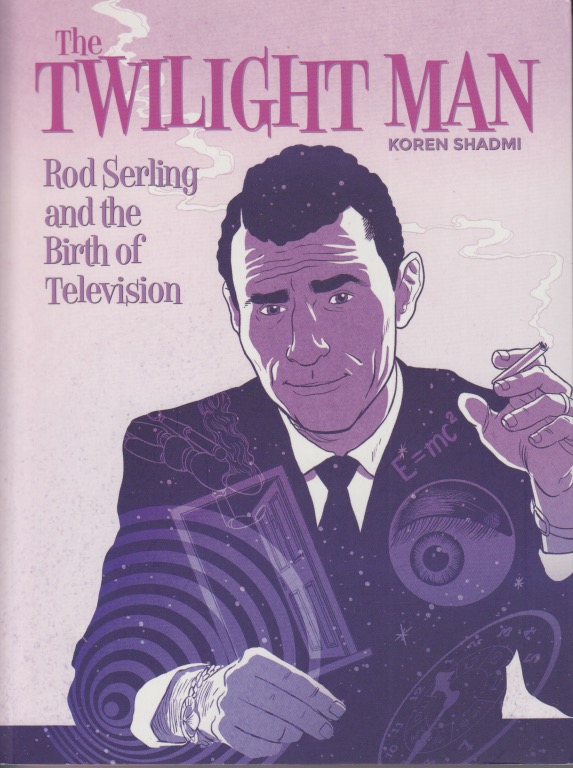
Graphic novels still feel like cheating.  That childhood message that comic books “aren’t really reading” has proven difficult to dislodge.  That, and the fear that we are entering a post-literary world, keep me from reading many of them.  Koren Shadmi’s The Twilight Man: Rod Serling and the Birth of Television, however, caught my attention right away.  Like many other people my age, my thinking was heavily influenced by The Twilight Zone.  As a kid, television had a kind of authority to it.  This is what adults were feeding us.  Although I was hardly intellectual then, I thought deeply about things and one of those things was The Twilight Zone.  The episodes were profound.  The twist endings certainly were among the best on the tube.  Shadmi’s graphic novel of Rod Serling’s life is a tribute to the influence the man had.

For a graphic treatment, The Twilight Man is strangely affective (yes, that’s spelled correctly).  I tend to shy away from hagiographies, and Shadmi’s treatment isn’t one.  It does illustrate, however, how Serling fought against a commercialism that would eventually win out.  Those who control the money control what we see.  Granted, the democratizing influence of the internet has let competition arise from unseen quarters—there are young people who watch YouTube to the exclusion of television altogether—but few shows manage the impact that The Twilight Zone had when there were only essentially three large networks.  Now we have so many choices that cultural reference points are rare.  Those who’ve never seen it, at least for the time being, know what The Twilight Zone is.

This book is biographical, based on published biographies.  There’s something about knowing, however, that the episodes actually happened.  Being in combat (as Serling was) puts some people into their own kind of limbo.  At least one person in my own family was irrevocably changed by fighting in a war.  The remarkable thing is that Serling came out of it wanting justice for all people. The book even points out that he became a Unitarian, although it doesn’t dwell on that point.  Some things, such as spiritual insights, are difficult to illustrate I suppose.  I can  see why Shadmi’s tribute receives good press.  Graphic novels are a means of telling a story that moves people.  I re-learn this each time I read one, which is something I rarely do.  Now that I’m starting to explore this genre I’m perhaps learning to address my own prejudices.  As long as there are still words to read.


Story Over

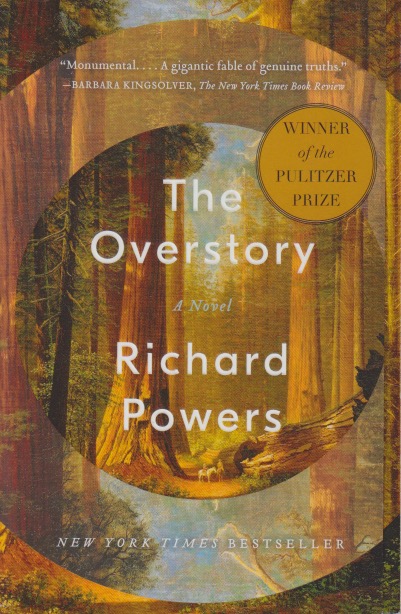
Despite my penchant for speculative fiction I tend to read a lot of what’s usually categorized as literary fiction.  These tales don’t fit into any genre and are often colored with realism.  More than one person had recommend Richard Powers’ The Overstory, not least the Pulitzer Prize committee.  In the style of novels these days it’s pretty long and that meant I had to build up the courage (and time) to get to it.  I support the environment.  I have a great respect for trees and try to support conservation any way I can.  The Overstory is, however, a bleak vision of what we’re doing to the planet and to other living beings.  It certainly helps to have read Peter Wohlleben’s The Hidden Life of Trees first.  It helps to know the main premise of the novel is based on non-fiction.  There may be spoilers below.

The first part of the book, Roots, introduces us to the various characters—most of whom will interact in the remaining pages.  Most of them are marked by tragedy in their lives and come to realize the longevity of trees has a perspective that can make sense of what, to our lifespans, seems inexplicable.  Several, but not all, of them end up in a conservation group trying to defend old growth redwoods from the insatiable greed of lumber companies and politicians.  The novel ends happily for none of them.  Trees, however, have the ability to outlive us.  While we cause real damage, they have the ability to regenerate, but in ways that none of us will live to see.  Trees see beyond the short, tragic lives we lead, into what may be a more hopeful future.

The other sections of the book, Trunk, Crown, and Seeds, follow events chronologically as the people age.  Some notable deaths among the group have a great impact on the small coterie of those protecting trees.  An unfeeling state and the corporate nature of laws are clearly on display.  They serve the will of those who can’t, or won’t, think differently about the world and our place in it.  Although the novel doesn’t ever cite the source, one of the eco-heroes finds a verse from Job to be of tremendous consolation: “For there is hope of a tree, if it be cut down, that it will sprout again, and that the tender branch thereof will not cease.”  I was glad to see the connection made, but the book left me emotionally exhausted.  With speculative fiction at least you can escape the real problems of this world for awhile.


Old Wolves

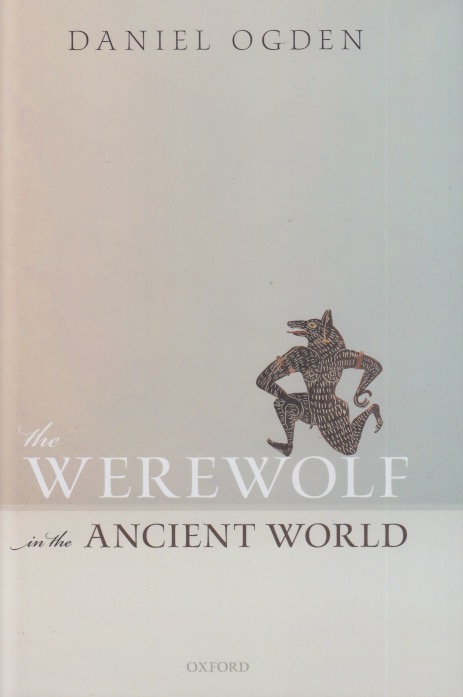
Among the classic monsters, the werewolf seems to suffer from lack of a foundational novel.  Yes, vampires are older than Bram Stoker’s Dracula, and antecedents can be suggested for Mary Shelley’s Frankenstein, but there isn’t a werewolf novel of similar stature.  Daniel Ogden, however, does us a service by providing an extended discussion of, as his title states, The Werewolf in the Ancient World.  His survey is intriguing and informative, and also insightful.  The werewolf is not always what it might seem.  Ogden is an able guide through sources from antiquity through some medieval tales, focusing mainly on the ancient ones.  He extensively explores their associations—witches, sorcerers, ghosts, and the like.  And related tales of human transformation.  He even suggests what some of those transformations may have been seeking.

The werewolf is perhaps the most obvious monster that expresses repressed desire for transformation—a kind of salvation.  Civilization comes with a cost and the werewolf is symbolic of the individual driven by animal desire, unrestrained by human convention.  It’s also an idea of great antiquity.  Although Ogden doesn’t go into it, stories of humans turned into wolves goes back at least to the Epic of Gilgamesh, one of the earliest pieces of literature we have in fairly complete form.  The idea is attested in writers such as Plato and Augustine, if only to refute it.  In other words, it is clearly something people have thought possible from very early times.  Our long association with the wolf, and its domesticated version—the dog—certainly plays a psychological role in such tales.

As Ogden points out, Guy Endore’s novel The Werewolf of Paris, published in 1933, is perhaps as close as we come to a foundational novel.  In the Universal monsters series that developed a canon for monster boomers, The Wolf Man was a somewhat late entry, appearing in 1941—a decade later than Dracula and Frankenstein.  Despite these tardy cultural appearances, the werewolf has been part of our collective psyche far longer.  Ogden shows that clearly.  When you stop to rethink stories like Little Red Riding Hood, the talking, humanized wolf appears so naturally that we don’t often stop to consider the implications.  I certainly hadn’t made the connection explicitly until reading it here.  Ogden’s work is readable but academic, so be prepared for citations and some technical talk.  Nevertheless, this is the clearest guide to lycanthropy and the magical ideas behind it from ancient times to have appeared in recent years.  


Women’s History

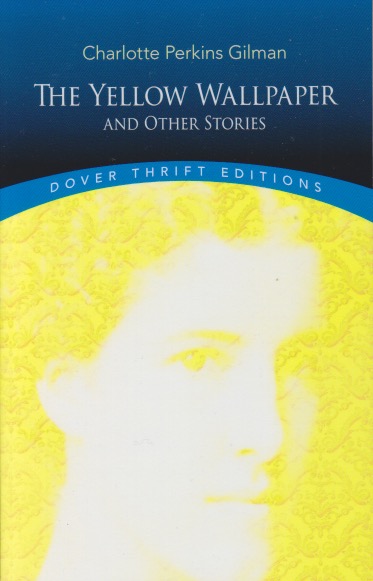
March is Women’s History Month.  My reading of actual history as of late has focused on the ancient Celts, so I confess to falling behind on modern women’s history.  Nevertheless, I came across an often forgotten piece in an unexpected way.  For quite some time I’ve wanted to read some work of Charlotte Perkins Gilman.  Her story “The Yellow Wallpaper” is known as a gothic classic.  Since a short story isn’t enough to make up an entire book, publishers have arranged different combinations of her tales into thin books that can be sold as a unit.  I purchased the Dover Thrift Editions’ version of The Yellow Wallpaper and Other Stories.  It was there that I learned Gilman was an early feminist who seems to have become unsung in more recent times.  Her fiction, at least as reflected in this particular edition, demonstrates the truth of the assertion.

Most of the tales in this little book require only a few minutes to read.  Although written around the turn of the nineteenth century, her stories anticipated many modern developments for women.  Her protagonists see the inequalities between the genders and work to overcome them.  They prove themselves successful at business and setting up their own houses.  There’s a gentleness to these stories that suggests quiet confidence may eventually wear down the often inflated male ego.  I found myself captivated even after finishing “The Yellow Wallpaper” itself.  Gilman isn’t judgmental, but she does note how unfairly the system operates.  She also offers solutions.

In this month of women’s history, it seems appropriate to rediscover one of the female writers who personally worked for women’s rights and expressed herself so fluently in fiction.  Her “If I Were a Man,” although clearly a period piece, takes a woman into her husband’s body.  She walks in his shoes, literally, and sees what “the world of men” is like.  This leads to both understanding and, above all, learning.  This would seem to be the very heart of history.  We read to learn both from what we did correctly to what we did wrong.  We have done so terribly much wrong.  The historical oppression of women is one of the greatest examples of our inability to catch up with our own ideals of justice and fairness.  There were historical reasons for this, yes, but we have moved beyond those times.  If only we’d act like it.  Although my reading doesn’t always keep in sync with the seasons, discovering Charlotte Perkins Gilman at this point in time was somehow more appropriate than anticipated.


Still Standing

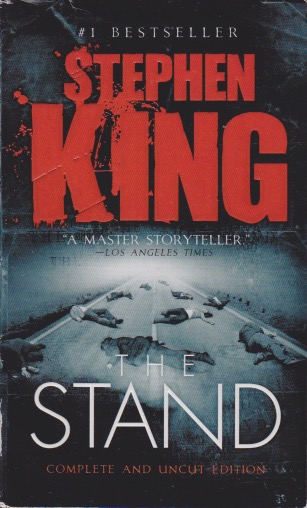
Investment.  Time is an investment, and I recently invested in Stephen King’s The Stand.  You have to realize that I made this decision sight-unseen.  More than one person whose opinions I value told me I should read it.  I had no idea it would be 1,400 pages and would dominate my life for a solid month.  Still, I’m glad I read it.  In case you haven’t, and intend to, there may be some spoilers below.  This is one of the King books I read without knowing the plot or the ending, so if you’re in that boat, skip a paragraph or two.

I hadn’t intended The Stand to be plague reading.  It just turned out that way.  The book is about a variety of flu that kills nearly the entire population of the world.  It’s only at the very end that you learn it’s a parable.  The ending also explains some of the apparently unrelated filler that makes the book so terribly long.  In any case, after wiping out much of the world, the story narrows down to several of the survivors and how they end up dividing into two camps: those who want to cause misery (think Republicans), and those who want to reestablish civilization.  Of course there are several unpleasant instances along the way.  The camp of violent ne’er-do-wells settles in Las Vegas under the demonic leadership of Randall Flagg—his identity only becomes clear at the end—while the good guys, under Mother Abagail, choose Boulder.  A confrontation is inevitable and when the smoke clears we learn that Randall Flagg is, essentially, civilization itself.  Perhaps Christianity.

Of all of the Stephen King novels I’ve read, this one has the most overt Christian imagery.  In fact, in his introduction to the expanded edition he refers to it as a “long tale of dark Christianity.”  There’s quite a lot of theological dialogue along with gruesome deaths.  The pacing often makes the story seem quite long.  Well, it actually is.  I suspect it was this Christian imagery that had friends recommending it to me.  The idea that evil is essentially our culture that comes around and kills us is both profound and paradoxical.  As well as “Christian.”  All along the good guys want to reestablish the cooperation and comforts of civilized life.  It was “civilization” that unleashed the killer virus, however, and herein hangs the tale.  I’m glad to have read it, and I have to confess that I miss the bleak world King created, after living with it for so long.  And it turns out to have been plague reading both literally and symbolically.


Gothic Dreams

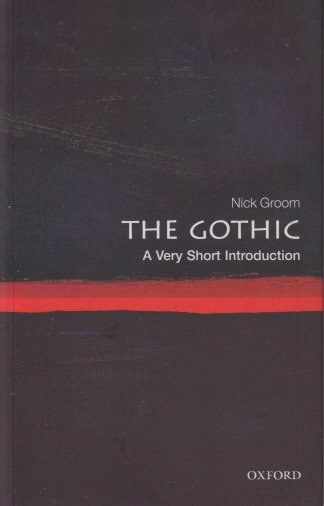
There’s something that compels a large number of people to consume material in the horror genre.  Whether it takes the form of movies, books, or music, it is a genre widely spread.  The gateway to adult likes seems to be in childhood.  As a young person I read about how many adults wanted to “re-live their childhood” and at the time I wondered why.  Now, as an adult of long standing, I think I can begin to see the answer.  In any case, my gateway into appreciating horror was the Gothic.  But what is gothic?  Like many abstract concepts I know it when I see it, but what exactly is it?  I’m not sure Nick Groom has fully answered that in The Gothic: A Very Short Introduction, but then the reason may well be in the “very short” part.  Nevertheless, this is a remarkably broad treatment of the subject in not so many pages.  It also helped me to understand my own fascination a bit better.

Groom begins with the historical Goths.  Like the Celts, they are a people without a prodigious written record, so the imagination takes over.  They valued freedom above all else, and that, it seems to me, is the beating heart of the Gothic.  Recognized through its architecture, especially in notable cathedrals, the incipient Romanticism in the style made its way into works of fiction.  In that realm it is remarkably widespread.  Shakespeare participates in it.  It becomes more fixed in later generations, but it still returns in popular format even today.  At several points in this brief treatment I found myself wondering at the connections.  Gothic is so huge and sprawling that it informs quite a lot of literature that isn’t even categorized with that title.

The story Groom sketches takes the Goths from their Germanic roots to their Anglo-Saxon influence in England.  For English readers, the genre really takes shape in Britain before spreading out into the many forms in which it exists today, including several species of American Gothic.  While the modern mind tends to turn toward the dark and melancholy aspects—and they are clearly there—the underlying theme of freedom comes through.  Thus the separation of ways between “Classical” culture with its rules and strictures and symmetry and the Gothic with its mystery, wonder, and romance.  By the end we’ve passed through Poe and on to modern horror.  And through it all I catch glimpses of what drew me to all this in a childhood of longing for freedom.


Taste of Gilgamesh

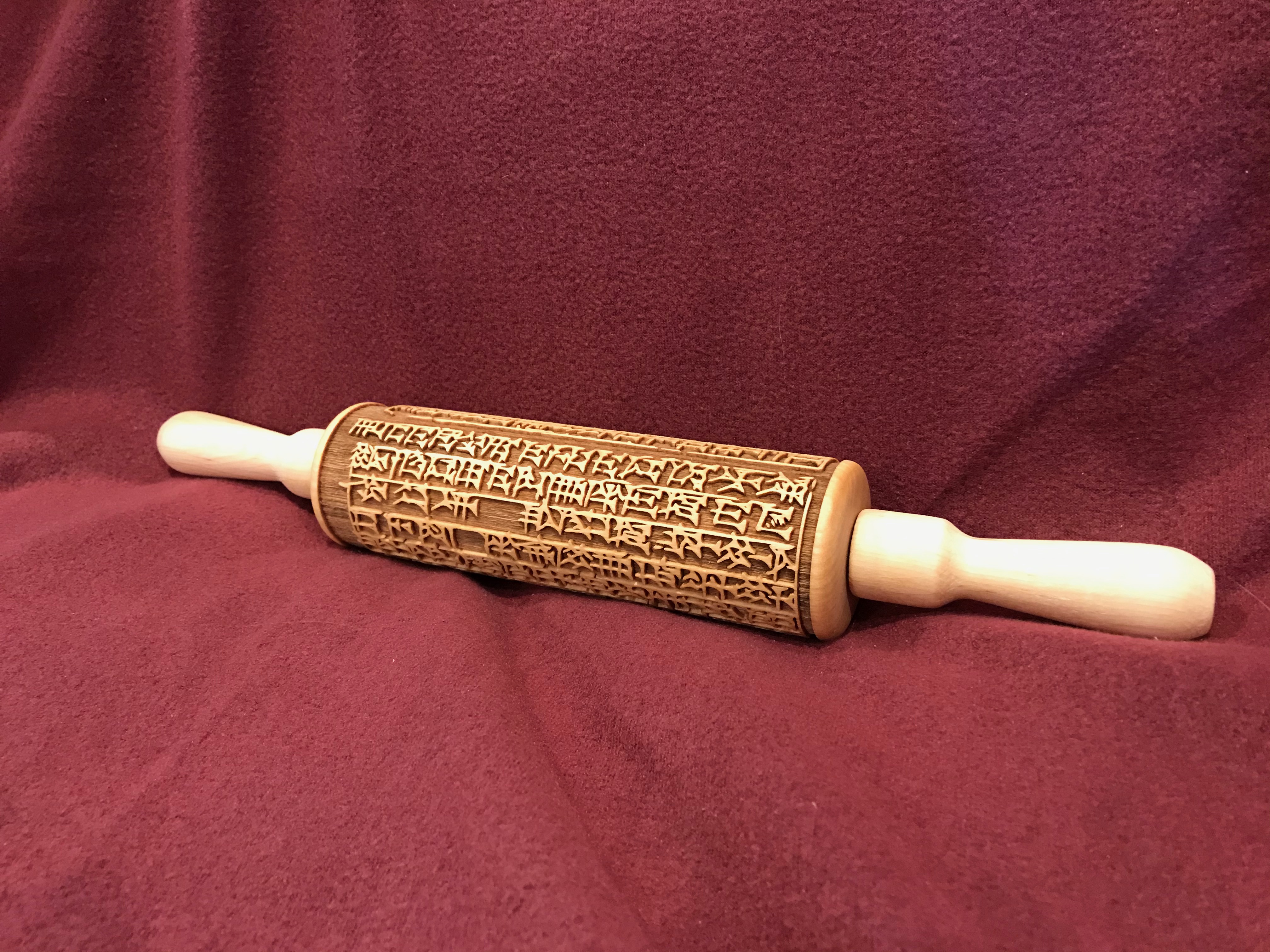
The Epic of Gilgamesh is considered a world classic.  Some would designate it the first novel written and others an example of how basic human concerns haven’t changed for thousands of years.  The ancient scribes and story-tellers, I suspect, anticipated none of this for their tale.  It was a religious story, perhaps taken as literally as some now take the Bible.  However you understand it, the Epic is part of the foundation of civilization itself.  I have to admit my Akkadian is rusty—I never had the opportunity to teach anywhere that I could regularly exercise it.  Still, I’m pretty certain that no one involved in one of the many versions of the tale that have survived would’ve expected it might end up on a rolling pin.

Back in December I wrote about Farrell Monaco’s Gilgamesh Epic column 5 rolling pin.  Her blog, Tavola Mediterranea features culinary archaeology—a good fit for these foodie times.  Having somehow found my blog, she kindly sent me a Gilgamesh rolling pin.  It was, in fact, one of the packages I wrote about a few days ago that was tracked as delivered but never arrived.  There’s no telling how long it will take to sort the Post Office out after Trump tried to destroy it so he could start the steal.  I was told it had been delivered in early January—not in time for Christmas itself, but still in the gingerbread season.  I called our local PO with the tracking number and was told it had been delivered.  If sent to the wrong house I’d have to rely on the kindness of strangers.

Last week, after I’d completely given up hope, it arrived.  Since, like many overfed Americans, I’m trying to wean myself off holiday excess back to my usual austere diet, it may be the next Christmas season before I get a chance to use it.  Still, the thoughtfulness of the gesture is deeply appreciated.  Anything that connects us so palpably to our ancient forebears is truly a gift.  If my career (if that’s what you call it) had gone a slightly different way, I might’ve ended up spending it with Gilgamesh.  As it is, I still turn to the Epic for inspiration now and again.  I wrote a couple of articles in the last couple of years where Gilgamesh makes part of the argument.  Now I’ve got something tangible to prove it!  Take a trip over to Tavola Mediterranea and see what wonders edible history holds.


Sea Romance

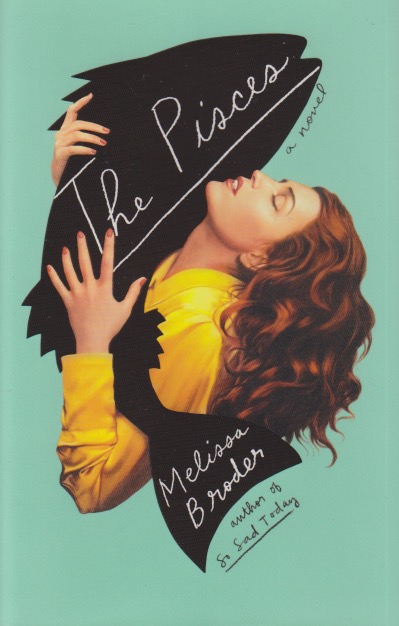
Sea shanties seem to be one of the early rages of 2021.  I’ll likely address this as a separate topic soon, but today I would note their appropriateness for discussing Melissa Broder’s The Pieces.  Despite my earlier concern about the Modern Mrs. Darcy’s reading challenge for this year, my family helped me put one together.  You see, January has become a bookish month for us.  Not only are books frequent holiday gifts, they are also a great way to anticipate a year of reading.  One of my categories was a book that makes you laugh out loud.  For help in selecting such a book I consulted some websites and found The Pieces so listed a few times.  The tie-in for sea shanties?  It’s the story of a woman’s love affair with a merman.

What defines a book as laugh-out-loud funny is largely the reader.  Yes, this is an amusing story with several parts that make the reader smile (or blush), but it seems to this reader a much more serious story than many reviewers suggest.  Yes, the idea of a merman makes it less reality based that much straightforward literary fiction, but the protagonist is portrayed as dealing with very real human relationship issues.  These made my reading of the book a pretty serious one.  When a person feels inadequately loved, it’s no laughing matter.  Sometimes such people (as the protagonist is portrayed as being) are driven to desperate measures, as the book suggests.  Perhaps some people find this funny, but others of us see a serious message dressed up in fiction.

Part of the draw here is clearly the romance of the sea.  Lucy (the narrator/protagonist) begins her relationship with Theo (the merman) because of the abusive kinds of relationships men have presented her with.  It’s a sign of Broder’s writing ability that she can make this kind of story lighthearted enough that some would call it hilarious or laugh-out-loud funny.  For me, however, when the issues raised are serious, even when couched in humor, there are underlying issues of sober import.  Relationships are complex.  Since the speculative element of a merman is thrown into the mix, it seems, many readers think the story is funny.  This despite the suicide attempts of one of Lucy’s friends and the death of the dog she’s watching for her sister.  For me laugh-out-loud books either have no serious consequences or dismiss such consequences as laughable in themselves.  The Pieces, however, made me think and, ironically, take a renewed interest in sea shanties.