Early Literature

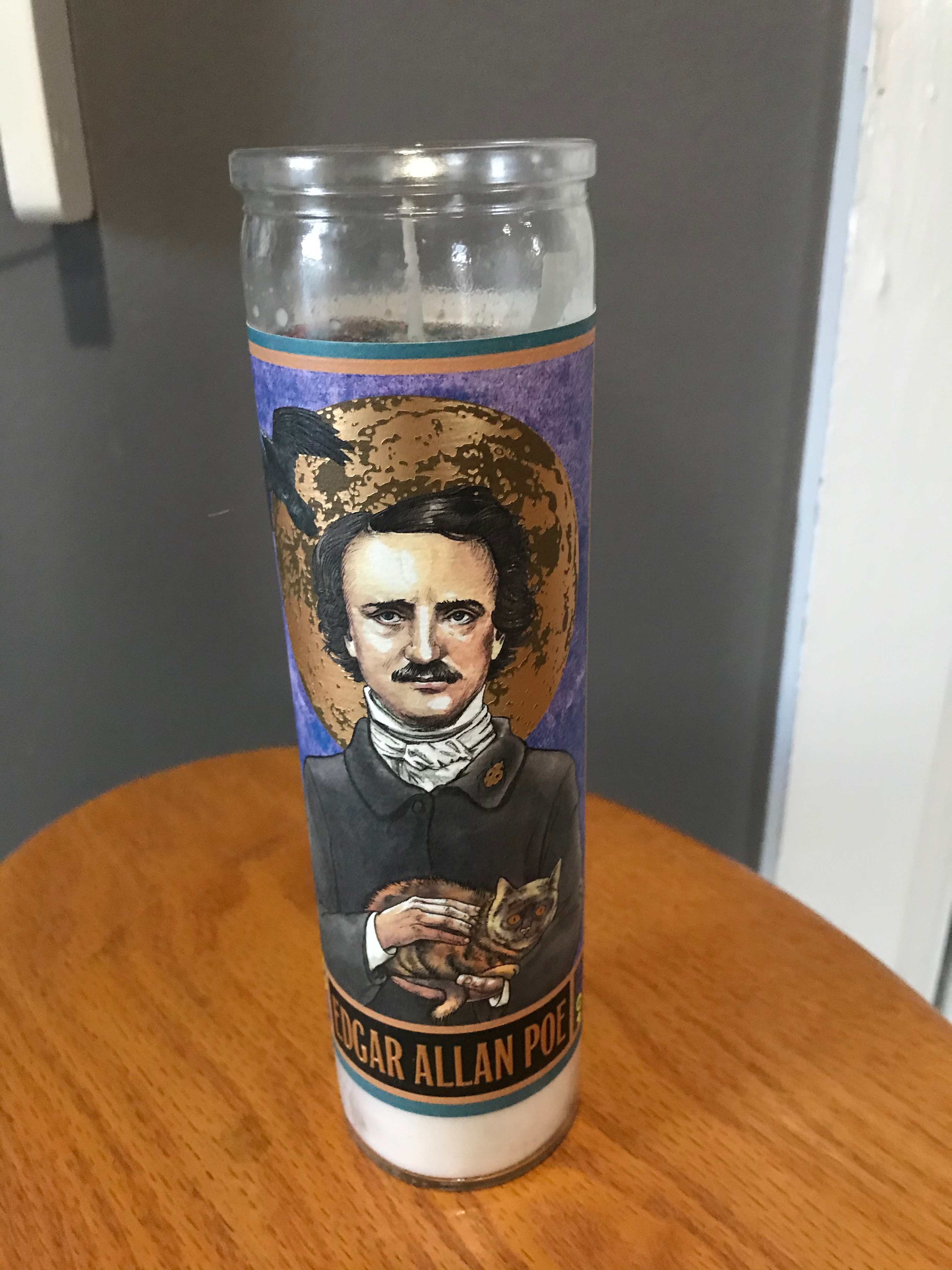
In a recent discussion I was asked what piece of literature that I first recollected as being superior.  A couple of provisos here: I’ve got a few decades to reach back and memory may not be as sharp as it once was, and as a child I didn’t have a ton of reading choices.  (There were no local bookstores, for which we didn’t have money anyway, and I had to be driven to get to a library.)  The first piece of writing that, apart from the Bible, I came up with was Edgar Allan Poe’s “The Fall of the House of Usher.”  It’s still my favorite short story.  Today is Poe’s birthday.  While not a national holiday, it is a literary one.  Poe was one of the early experimenters in trying to make a living from his pen alone.  His fame was primarily posthumous.

I don’t recall how I learned about Poe.  I know that I picked up a book of his stories at Woolworth’s in Oil City (you see what I mean by no bookstores) for something like a quarter.  It was a cheap, large-print edition with a strange selection of stories, but the first one was Usher.  Such an impact was rare in my young literary experience.  Many years later, riding a horse as a counselor at horse camp, the initial scene of Usher was the one that kept coming to my mind although I hadn’t read the story for a very long time.  I ended up writing one of my first high school English papers on Poe.  By this time I had a good library I could access, even if I couldn’t drive myself there.  While sometimes submerged for years at a time, my appreciation for Poe always eventually resurfaces.

For anyone who’s read Nightmares with the Bible the appreciation of Poe should be obvious.  One of the peer reviewers suggested I should remove the Poe references since he didn’t write about demons.  Struggling against demons, to my way of thinking, counts.  In fact, Poe is largely the thread that holds the book together.  I’m aware that at its price point the book will be little read.  Still, having a literary tribute must be a form of consolation.  Mine is but one of many, I know.  As we stand on the cusp of an unknown future, hoping the maelstrom is truly behind us, I gladly acknowledge that Poe has helped me get this far.  And like the Raven, let us hope it is truly nevermore.


In Praise of Brevity

I recently read an article in praise of short books.  Marina van Zuylen, whose response led to the article by Steven Weiland, praises not only brevity, but also print.  There is a difference between reading an actual book and reading something on a screen, even if an actual book of it exists somewhere.  I don’t buy the argument that books are clutter.  Books are my life, and if you start tossing them out you might as well start chopping bits off my body.  But it’s her thoughts on short books that really caught my attention.  Not that there’s anything wrong with long books.  Good ones are like getting lost in a pleasant mind-forest.  But I miss short books and the sense of accomplishment they engender.

Maybe like me you see a book online and get excited.  You really want to read it and then you click on its landing page and learn it’s over 300 pages long.  Or 400.  Or more.  You stop to think; do I really want to invest that much time on a single book?  As van Zuylen explains, some tenure committees don’t take short books seriously.  They want heft.  This blog should stand as proof that anyone can multiply words.  There are well over a million words on this blog alone.  As a book this blog would be about 3,650 pages.  Without footnotes.  But it’s not a book, and that’s the point.  Your time is valuable.  You’re choosing to spend a little of it with me (Thank you!).  I keep my posts around 400 words.  A five-minute read.  And I like books that I can finish in a week or two, along with my full-time job and other life responsibilities.

The electronic revolution—as good as it’s been—distorts things.  Even the very definition of “book” is up for grabs.  My mind always goes back to the scriptoria with weak-eyed monks rubbing aching backs as they laboriously copied books out by hand.  Today we don’t even wait for the paperback, but download it instantly.  How is this the same?  And yet we have less time than ever.  That’s why I enjoy short books.  Some of the most impactful (oh, that word!) books I’ve read have been brief.  As Pascal long ago noted, it’s more difficult to write a short piece than a long one.  So I join Dr. van Zuylen in her praise of the short book.  Long may they live!

At least it’s real…


Slow Jinn

You can sort of tell when an author has a background in religion.  Early on in my blog writing, I made note when novels had religious elements.  It’s so common that I seldom do that anymore.  Matt Ruff’s father was a minister.  His understanding of the religious landscape comes through in The Mirage.  It wasn’t on my reading list, but someone gave me a copy and the story drew me in.  In case, like me, you only know Ruff from Lovecraft Country, this tale’s quite different.  There may be some spoilers here, so if you’re thinking of reading it fresh, you’ve been warned!

Set in an alternate reality in which the superpower in the world is the United Arab States, the story follows three police agents of Homeland Security as they uncover a perhaps unwelcome truth: the world they know is a mirage.  It is, in fact, the work of a jinn.  Before commenting on that, I would say that you don’t learn about the jinn until a good way into the story.  Up to that point I’d call this simply literary fiction.  The jinn adds a speculative element to it, and also explains, mostly, how things ended up the way they did.  Jinns, by the way, are often considered demons in Arabic culture.  They are quite different from Christian demons, and that point makes itself clear as the story unfolds.  Our three protagonists begin to uncover hints that the twin towers didn’t actually stand in Baghdad, and that Christian terrorists didn’t fly planes into them on November 9 (11/9).  They have run-ins with Saddam Hussein and Osama bin Laden as warring factions vie for power in the UAS.

This is a great story for trying to understand the world from the point of view of a different religion (unless you’re Muslim).  This is a world where Christians are terrorists (you get to meet David Koresh as well) and the United States is a backward country divided over religion.  Reading this as events unfolded in Washington, DC last week was a little bit disconcerting.  Alternative realities are often just a heartbeat away.  The plot is a bit complex at points, but it’s a fairly quick, if profound read.  Religion is the heart and soul of this book.  That religion could be either Islam or Christianity.  Perhaps even something different.  The way it plays out is very much like real life, dividing people against each other until reality becomes difficult to bear.  For anyone interested in what a Muslim-run world might have looked like, this is a good starting place.


2020 in Books

As has become traditional on this blog, I like to revisit my reading for the year before the next one begins.  No matter what else goes wrong, we have books.  As I noted yesterday, I’ll be devising my own reading challenge for the coming year and if nothing else, it’ll be diverse.  For 2020, according to Goodreads, I finished 78 books.  Since I was in the final stages of getting Nightmares with the Bible to the publisher, several books early on were about demons, and many of them were quite good.  The nonfiction that really stick out in my mind, however, includes D. W. Pasulka’s American Cosmic, Richard King’s Ahab’s Rolling Sea, Gary D. Rhodes’ The Birth of the American Horror Film, Jeffrey J. Kripal’s Secret Body, Barbara Ehrenreich’s Living with a Wild God, and Ernestine Hayes’ The Tao of Raven.  If anything ties these books together it is likely their honesty when it comes to the spiritual quest.  It can legitimately take many directions.

Fiction has, at least for much of the year, been driven by a few factors: books I have on hand during a pandemic, The Modern Mrs. Darcy’s reading challenge, and books on my reading wishlist.  That list is constantly growing and the books that stand out particularly are again diverse.  Especially memorable were Ralph Ellison’s Invisible Man, Hank Green’s An Absolutely Remarkable Thing, Han Kang’s The Vegetarian, Scott Shibuya Brown’s The Traders, Andrew Michael Hurley’s The Loney, and Silvia Moreno-Garcia’s Mexican Gothic.  Apart from their diversity these books have little in common.  I suppose that’s a testament to the importance of reading widely.  On that list there are only two “white” men but a lot of great books.

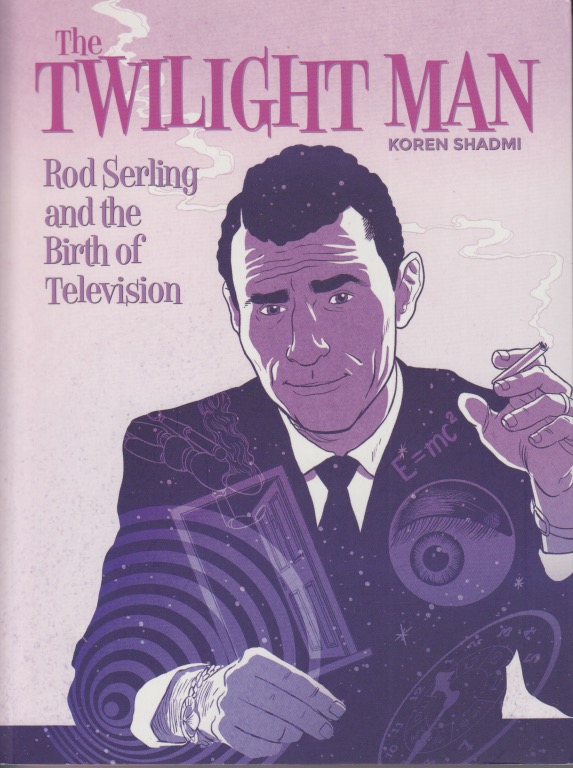
Another couple of categories might apply: big books and short story collections.  Big books intimidate me, but I read five of over 500 pages: Ellison’s Invisible Man again, Herman Melville’s Moby-Dick, Mark Twain’s The Innocents Abroad, George Eliot’s Middlemarch (my longest book for the year), and Ann Radcliffe’s The Mysteries of Udolpho.  These books are all in the “classics” category, I see.  Short story collections are more edible, and I read nine of them, including four “by” Rod Serling.  The first was an edited collection of his works, and the other three were his own Twilight Zone adaptations.  I read a few plague books because of the pandemic, but they weren’t really among my favorites.  Perhaps they were a little too close to reality.  Nevertheless 2020 was a good year of reading, overall.  I’m looking ahead to what gems 2021 might hold.


Reading Ahead

One of the highlights of the changing year, for the past five years of my life, has been the Modern Mrs. Darcy’s reading challenge.  My wife pointed this out to me at the start of 2016 and I’ve used it to guide some of my reading for each year since then.  The idea is fairly simple: many of us get set in our reading habits.  The reading challenge listed categories of books, with a total of twelve volumes, that often forced you to read things you normally wouldn’t.  In pre-pandemic Januaries we’d go to a local independent bookstore and pick out some of our chosen books to fit the various categories.  It became kind of an extended holiday ritual.

It must be tricky to come up with new categories all the time.  Therefore it’s understandable that the Modern Mrs. Darcy has decided to shake things up a bit for 2021 with a somewhat more complex scheme of determining what to read.  Unfortunately for me, I have about enough complexity in my life right now.  For a reading challenge what I crave is simple-minded direction: read a book in (blank) category.  So now I’ll be left to my own imagination for 2021.  Not that that’s ever a problem.  My reading wishlist is enormous and, like the universe, expanding rapidly.  Every year new books of great interest appear.  Every year I learn of books I should’ve read long before now.  I also do research, in my own way, and these books can be rather insistent regarding one’s time.

Goodreads also has a reading challenge (which I also started taking in 2016), but it’s based purely on the number of books you pledge.  There’s a sense of accomplishment when you can tick off that final pledged book (hopefully in September or October), and still have a few months of bonus reading left.  Each year becomes a year in books.  Like many people, I’ve survived the pandemic so far by spending lots of time with books.  For my last post of the year tomorrow I’ll do my traditional summary of the year’s reading.  I began the year thinking of Sea Lab 2020, a formative, optimistic Saturday morning cartoon from my childhood.  We were then hearing rumors of a new disease in China, not anticipating that 45 would decide to sacrifice over 300,000 Americans on the altar of his personal disinterest and pride.  Through it all, however, there have been books.  Reading improves intelligence.  Let’s all hope, then, for a much more intelligent 2021 ahead.


Yankee Doodle

Some books stay with you in a way that hits very close to the nerve.  Since I read Mark Twain’s A Connecticut Yankee in King Arthur’s Court many years ago, memories of how it left me feeling prevented me from re-reading it.  That’s pretty unusual for Twain, in my experience.  I’ve read some of his other novels and there’s not a similar feeling toward them.  The racist elements are disturbing, but overall the stories manage to overcome some of the darkness with either levity or sarcasm.  The scenes that scared me off from re-reading Connecticut Yankee were the two episodes in which young women were murdered.  I realize Twain was simply being honest here regarding the cheapness of life in medieval times, but I found both these instances so saddening that I had a difficult time coming back to it.

Now, some two or three decades later the book speaks to me in a new way.  Something else I recently read reminded me of it, and I was struck at just how much Twain’s Arthurian peasants resemble the unthinking crowds of Americans who simply accept what people like Trump say.  One of Hank Morgan’s banes is how the uneducated refuse to question what they’re told.  In many ways this is humorously narrated but a dark undercurrent remains behind.  Twain had clearly supposed that nineteenth-century America had overcome this brainless gullibility.  A century and a half after Twain’s Connecticut Yankee we’ve clearly been involved in retrograde motion.  Twain levels much of the blame on the church.  His choice comments in this regard also still apply.

“I was afraid of a united Church; it makes a mighty power, the mightiest conceivable, and then when it by and by gets into selfish hands, as it is always bound to do, it means death to human liberty and paralysis to human thought.”  So Morgan states in chapter 10, and indeed, in the novel it is the church that largely leads to the downfall of the civilization Morgan had built.  Or again, in chapter 17: “I will say this much for the nobility:  that, tyrannical, murderous, rapacious, and morally rotten as they were, they were deeply and enthusiastically religious.  Nothing could divert them from the regular and faithful performance of the pieties enjoined by the Church.”  Twain couldn’t admit in public,  even in his own nineteenth-century life, what he really thought about organized religion.  It’s pretty plain in his fiction, but disguising fact as fantasy is a tried and true method of getting at the truth.  If I weren’t so sensitive to the human plight, I might read it more often.


Udolpho’s Mysteries

The carousels on Google can provide a great deal of information.  Looking at them, along with trusted lists of gothic novels, it became clear that one of the few classics I’d not read was Ann Radcliffe’s The Mysteries of Udolpho.  It’s been on my shelf for many years, it’s shear bulk staring me down each time I turned in its direction.  Long books are, of course, fine if they keep you going.  Knowing this was published in 1794 (in four volumes) cast some doubt on the narrative earning the sobriquet of “page turner,” and thus it proved not to be.  I’m afraid my disposition meant that the gothicness of the novel (and it’s certainly there) didn’t speak to me as I hoped it might.  There are creepy castles and rumors of hauntings.  Lots of stormy nights and damsels in distress.  Still, it comes across as the problems of the wealthy and that has to be handled well in order to not turn off this poor reader.

Still, a novel of such fame being written by a woman in the eighteenth century is worthy of note.  More than that, Radcliffe was the most successful (in financial terms) professional writer in the decade that produced The Mysteries of Udolpho.  Her literary influence is undisputed.  The novel is, however, excessively long.  Descriptive prose style was common at the time and may seem excessive to modern readers.  This is, however, impressive for an author who never traveled to the regions about which she wrote.

About 600 pages in, in the edition I read, something caught my eye.  Much of the novel consists of descriptions of mountain ranges in France and Italy.  As one party is on its way up one of the inclines, one of the gentlemen mansplains some of the geological features.  Noting that sea shells are found at such elevations, and so far from any body of water, it is noted that this is evidence of the deluge.  What’s so astonishing about this is that even in the twenty-first century that explanation still has currency among biblical literalists.  The novel appeared before Charles Lyell, who would explain the ancient ages of rocks, was even born.  We have centuries of knowledge at our disposal that we still have a tendency to dismiss.  Interestingly, Radcliffe was famous for reviving gothic literature partially by explaining away any supernatural elements.  Of course, accepting standard religious teaching of the day would pretty much have been expected.  And yet the mysteries continue even over two centuries later.


Wooden Translation?

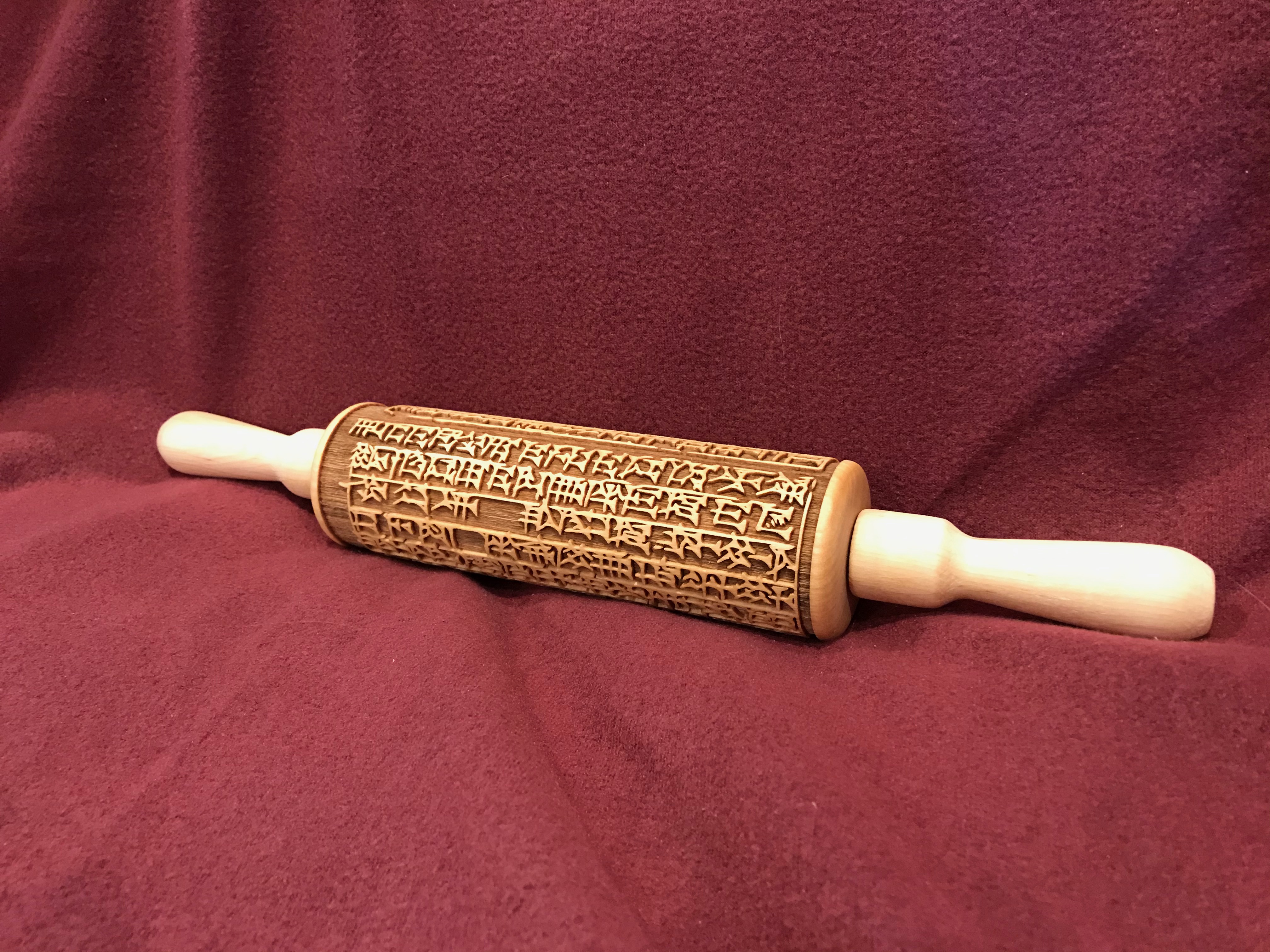
The summer got away from me, as it always seems to, leaving several boxes of things yet to be sorted.  Since these boxes are in the garage where there’s no heat, doing it during winter isn’t really feasible.  Still, I found myself in the garage storage area the other day and quickly tipped open a box or two to remind myself of what might be inside.  One of the treasures I found is actually from my wife’s family memorabilia.  Not exactly a family Bible, it’s a New Testament one of her grandfathers gave one of her grandmothers as a gift.  It’s a red-letter edition, but what makes it unusual is the binding.  It has olive wood covers from Jerusalem.  The front cover is embossed with a Jerusalem cross.

Bookbinding has long been an area of personal fascination.  Growing up when and how I did, most of my books are paperbacks.  The paperback was initially one of the responses to shortages introduced by wars.  Since they were cheaper to produce they could be priced down.  I have a few academic paperbacks from the twenties (I can’t make myself acknowledge that 1920 was a century ago) whose paper bindings are literally paper.  I fear to take them off the shelf, given the fragile nature of their bindings.  Prior to that books tended to be “hardbacks.”  A piece of cloth-covered cardboard was the preferred means of protecting the vulnerable leaves inside.  Before that leather was routinely used.  Those were the days when books were properly thought of as an investment.

I often think of how little I will leave behind, at least in terms of items of monetary value.  Books seldom maintain their cover price for long.  As someone who lurks on used book websites, however, I do know that the choice tome of either quirky fiction or nonfiction under-appreciated at the time can easily jump market values with predatory sellers.  Even for a paperback.  I am loath to confess how much I’ve paid for a book I really needed for research that mere public libraries simply can’t access.  (The university library is a place of wonder, and one of the resources I most often miss in having become secular.)  Just this past week I saw a sci-fi book from the sixties I wanted to read priced at over $500 on Amazon (used).  When I went to check on it this morning all copies were gone.  And to think the world considers books a poor investment.  The real key is to be obscure, no matter your binding material.


Believing Beyond

The closing line “I’ll come back to you—in the sunlight” is all I remembered from this little book.  Perhaps I hadn’t read it all the way through, but likely I did.  An unapologetic fan of science fiction as a kid, I must’ve picked up Beyond Belief at a fairly young age.  Although it’s a Scholastic book, it is appropriate for older readers as well.  I picked it up again because I start to get anxious when I can’t post about a book for a while.  My current reading projects are either very long or somewhat technical, meaning they take time to finish.  I’m running out of my ready stock of shorter books (mostly collections of stories from the time before book prices were hiked up and publishers felt the need to make them thicker so consumers wouldn’t feel so cheated.

I had put off reading this collection edited by Richard J. Hurley because of that one story I remembered.  As a kid I recognized the name of Isaac Asimov, but probably not that of Theodore Sturgeon, Richard Willey, or Richard Matheson.  These stories were masterpieces of sci-fi in its golden era.  Although they seem antiquated—perhaps even quaint—now, they are the kinds of stories that inspired young pioneers of space travel and may have contributed in some measure to this strange world in which we live.”Phoenix” by Clark Ashton Smith, has stayed with me for decades.  This tiny tome is old enough that I’m not going to worry about spoilers.  I’m only grasping for an emotional thread with childhood.

The sun has gone out.  Two young lovers talk on the eve of the earth mission to reignite the sun by a series of thermonuclear reactions.  The male, of course, is on the mission, but he assures his love that he will return to her in the sunshine.  Something goes wrong, of course.  The ship crashes into the sun, reigniting it, but annihilating the ship and crew.  As the future lady looks out on the newly illuminated world, she knows her love cannot have survived, yet he has returned to her in the sunlight.  That powerful story of self-sacrifice and love left unfulfilled stung my young psyche.  So much so that reading the other seven stories in this book was like reading tales I’d never heard before.  Beyond Belief was a quick read interjected in much more  complicated literary endeavors.  Like childhood, it didn’t fail to bring a warm glow after far too many years.


Preserving Culture

When I travel (remember travel?) I try to visit the places of famous writers.  It doesn’t matter much whether I’ve read a lot of their material; I know kindred spirits when I feel them.  Last summer—the one before the pandemic—I had to make a business trip to Oxford.  Now Oxford has a long, long list of literary illuminati, and I didn’t have much free time.  My hotel, however, turned out to be just a couple of blocks from the house of J. R. R. Tolkien.  One patch between meetings, I wandered over to the house.  It’s behind a high wall, so you can’t see much.  Like most European private homes, it isn’t ostentatious—over here we like to make it obvious when we’re wealthy.  In any case, I stood as long as a stranger can comfortably stand outside someone else’s house and tried to commune with the spirit of the former occupant.

Just the other day I noticed a New York Times headline that stated a movement is afoot in merry old England to purchase Tolkien’s house to make it a museum.  Although there’s no scientific way to prove it, people are somehow connected to the places they live.  There’s no other sensation like returning to your home town.  If, for some strange reason, anyone wishes to recall me after I’m gone (perhaps my pen name will take off someday), they’ll find precious little.  Not one of my pre-college homes still stands.  Not that that’s that unusual in the low rent district.  Still, when I visit my hometown, small as it is, almost nothing of me remains but it still feels like I belong.

I can’t say that I felt much other than my own awe at standing outside Tolkien’s house.  It’s on a residential street, and people were driving and walking by.  I was the only one who seemed to be hanging about.  Probably a bit suspicious-looking wearing a tweed jacket and in general appearing like a displaced academic.  Much of the tourism industry, however, is based on the draw of certain locations because someone famous lived there.  We want to be in touch with them.  Show our respects, perhaps.  If visiting Oxford weren’t always a work occasion for me, I could quite enjoy wandering its literary haunts and ending up for a leisurely afternoon spent in Blackwells.  We congregate in such places for a reason.  I’ve lost track of all the authors’ homes I’ve visited over the years.  Each time, I’m compelled to say, I’m glad someone thought to preserve them.


New Twilight

The strange thing about The Twilight Zone is its ability to endure in the minds of those exposed to it at an early age.  Often it’s more the image of it, that feeling of awe and wonder, that remains with me.  Rod Serling cut a sophisticated figure with what, for the time, was an unbounded imagination.  New Stories from the Twilight Zone was the last of the three standard collections of his tales.  Another book of stories published the same year, From the Twilight Zone, is a little difficult to pin down from online descriptions.  It’ll probably be the subject of a future nostalgia-laden post.  Reading the current collection is like déjà vu; some of the stories I remember from seeing on television, and others I’d probably read before.

In some ways these stories are time machines.  A slice of the early sixties.  The cover of my edition emphasizes that dramatically with Serling’s head hinged open and colorful ideas (“weirdies” in the copy) flying out.  Over half a century later the Zone continues to fascinate, despite the obvious context in which Serling originally wrote.  The enduring nature of his contribution somehow validates me, and probably many other kids of the sixties too.  The stories all suggest that the world isn’t quite what it seems.  It relates to what I posted on a couple days back, the weird, the eerie.  In other words, these are good stories.  Timeless in their own way.  Reaching back toward childhood, they help with the aging process.  

Weird tales have become a popular genre, and I suspect the popularity is due largely to the internet.  Those of us who liked stories such as these were an earlier generation of nerds (of the non-technical variety), those who didn’t find sports or girls or controlled substances—the more mainstream forms of diversion—to our liking.  We were perhaps misfits, but we knew we could well find a place in The Twilight Zone.  This may have been its great, subliminal draw; anyone could find her or himself in the Zone.  Some of the narratives were scary, some were funny.  Others were just odd (“weirdies”).  But they could sell books and Serling was able to make himself a household name through his imagination.  The internet has, in turn, made it more difficult to get noticed in its democracy of expression.  Indeed, it has become a twilight zone of its own.  At least it’s one where it’s a simple matter to still find the books that made us who we are.


Eerie Weird

We each approach the world from a unique angle.  It’s bewildering if you stop and think about it—billions of individuals (more by orders of magnitude if we add animals) looking at the world like no-one else.  Given the numbers it’s no mystery that some individuals will share fascinations, and I was glad to learn of Mark Fisher’s book The Weird and the Eerie, since it tries to capture the essence of these two terms that characterize so much of my reading.  The introduction explores what these words might mean in regard to Freud’s unheimlich, a term with which many writers are familiar.  What makes many stories interesting is their unusualness.  Fisher considers what it means to be inside or outside, and these categories often play into our perceptions of the weird and the eerie.

The study is divided into two sections (weird and eerie) and explores these concepts through a variety of media—literature, film, and popular music, especially.  Here’s where the unique angle comes in.  While I’ve read quite a bit of “weird fiction” and certainly eerie tales, Fisher has a different spectrum of materials than I do.  We share some resources, of course, such as H. P. Lovecraft, but The Weird and the Eerie gave me a new set of books to read and movies to watch.  Or read and watch in new ways.  Fisher’s reading of these various sources is sharp and perceptive, and he has a wealth of experience on which to draw.  The intertextuality here is rich.

When I think of reading for leisure or pleasure, it occurs to me that without something unusual happening in a tale, I have little with which to gain a grip.  The unheimlich makes for compelling reading.  Fisher sheds considerable light on this—what is it that we mean by saying something is weird or eerie?  It’s not that we should avoid them.  Humans are innately curious creatures, and we’re drawn to the strange in a way that we can seldom help.  Learning to avoid the weird and eerie means missing out on opportunities to learn.  And stories that we might tell to reflect our individual experience of the world.  This brief book contains more than first appears from a cursory glance.  There’s depth here, and for those of us individuals drawn to these aspects of both human and literary expression, much to mine.  The Weird and the Eerie is a flashlight for going into areas sometimes considered dark and learning much along the way. 


Timely Terror

Fear comes in many colors.  Silvia Moreno-Garcia’s Mexican Gothic was getting such positive press that I didn’t wait for the paperback.  At first the title threw me a bit, but creepy old houses can be found in many places around the world, and the gothic often lurks in such structures.  The story builds slowly until the supernatural begins to seep in steadily and the reader realizes they’ve been hooked along the way.  In some ways it reminded me of Jeff VanderMeer’s Annihilation, but the setting in Mexico gives Moreno-Garcia’s tale its own kind of zest.  Having a strong hispanic, female protagonist is a nice corrective to the political rhetoric we’ve been fed for the past four years.  As I said, fear comes in many colors.

Perhaps I’m not as afraid as I used to be when I read fiction.  Gothic, however, is all about setting the right mood.  It’s a creepy sensation that boundaries are being crossed and such things often take place in isolated locations.  The house owned by the Doyles—not exactly colonialists, but symbols are seldom exact matches—is marked by greed and power.  A kind of rot is everywhere evident, but the family must keep power within its own circle.  The parallels to a Trumpian outlook were perhaps not intentional, but national trauma can make you see things in a different way.  As Noemí attempts to rescue her cousin from the house, High Place itself participates in thwarting their escape.

Reflection after reading draws out some further insights.  Not only is the white Doyle family the  oppressive element here, they do so by religion.  Secret rituals and practices have made the patriarch a god—and here let the reader ponder—who builds his power on the oppression of others.  I have no idea if Moreno-Garcia was influenced by the nepotistic White House we’ve just experienced—eager to use political office for overt personal gain, and yes, worship—but she’s laid bare the ugly truths of white power.  I dislike racializing people, but race was invented by Europeans as a mean of oppression and keeping wealth within the grasp of a few individuals who would be surrounded by an empowered “white” race.  It worked in Nazi Germany and it came close to working officially in the United States that fought to vanquish it just seventy years ago.  Mexican Gothic is a moody book indeed.  It’s also a book, whether intentionally or not, that is an object lesson for our times.


Raven Wisdom

Just twenty pages in and I was reflecting on how Christianities and the cultures they cultivated have caused so much suffering in the world.  Assuming there is only one way to be, and that way is pink, European, and monotheistic, has led to so many displaced people thrown aside as collateral damage.  Ernestine Hayes’ The Tao of Raven is a remarkable book.  A native Alaskan, Hayes participated in the colonialist venture of higher education to try to also participate in the “American dream.” If this book doesn’t make you feel uncomfortable in your own skin, I don’t know that you’re human.  As I mentioned in a recent post, I have a deep interest and lasting guilt to learn about indigenous peoples of the country where I was born.  About the culture that is so Bible-driven it can’t see the human beneath.  The capitalism that takes no prisoners.

The Tao of Raven is one of the most honest books I’ve ever read.  Hayes refuses to sugar-coat the alcoholism, the broken promises, the poverty offered to native Alaskans.  Even as Trump’s final rages go on, he has opened the Alaskan Wildlife Refuge for drilling, to the highest bidder.  Apart from those whose wealth will increase as a result, we will all suffer.  Those who lived in Alaska before the colonists arrived the most.  The idea of colonizing, without which capitalism just can’t work, reveals its evil here.  When a voice like that of Hayes is able to make itself heard we cannot but feel the condemnation.  When over seventy-million people vote for a hater, we all tremble.

The book ends much as it begins.  A sincere regret for those who’d been fed the contradictory messages of missionaries.  Those told to accept suffering on earth so that they could go to the white person’s Heaven, while those inflicting the suffering lead comfortable lives with modern conveniences.  The double-standards that allow people to die on the street like dogs.  The double-standards that can’t see that you need not be Christian to upend the tables of money-changers.  Indeed, the last time someone dared to such a thing was two millennia ago.  When Christianity slipped its fingers between those of capitalism a monster would surely be born.  The cost would come in human lives, even as a quarter-million lay dead in this country from a virus a rich man can’t be bothered to address.  Do yourself, do the world a favor.  Read this book.  Read it with your eyes open and learn from Raven.


Another Turn

I have read The Turn of the Screw before.  Henry James’ most famous ghost story is a classic of ambiguity.  My previous reading, maybe a decade ago, was in an edition of James that insisted on stuffing other stories into the same binding, most of which I’ll probably never read.  I located a reasonably priced edition containing only the novella I wanted and it is published by Heathen Editions.  Obviously priding themselves on the unorthodox, Heathen Editions provides books with some little commentary, particularly pointing out unfamiliar words or explaining circumstances that many modern readers lack the training to spot.  The edition ends with James’ own afterword to the story, something my larger James volume lacks.  The story I remembered in part, but the notes also engaged me.

These notes aren’t numerous and they don’t distract.  In my case I understood the words defined, but I appreciated some of the historical or literary context supplied.  With so much literature available these days modern readers have to be drawn back into the classics.  James’ style tends toward the choice of more words than would be strictly necessary to tell the tale.  The fact that it was serialized helps to explain that.  Like Middlemarch and The Woman in White, both of which I’ve posted on in the past, being serialized encourages a kind of verbosity that modern publishers of fiction eschew.  At least in my limited experience.  For The Turn of the Screw the slow building to the climax requires spreading out.  The story itself could be summarized in a paragraph (which I won’t do, because you should read it yourself), but the feeling of dread has to grow as bits are slowly revealed.

One of the notes particularly caught my attention.  In an oblique reference to David and Saul, the editor expanded the footnote a bit.  The scene is when Saul is being tormented by an evil spirit sent by God and David is called in to help him with a kind of music therapy.  David plays his lyre and Saul’s demons temporarily leave him.  This is subtly referenced in chapter 18 of the Heathen Edition.  The note briefly explains Saul and David and then, for the only time in the book, goes on to provide a reception history of the reference by informing the reader that Leonard Cohen also refers to this episode in his song “Hallelujah.”  I’m sure the opening lines are familiar enough that I don’t need to risk violating copyright to quote them.  So it was that while reading a ghost story the Bible was introduced, which, of course has been my research agenda for a few years now.  A turn of the screw indeed.