Any Means Necessary

As one of his first acts as governor of New Jersey, Chris Christie cut the Access to the Region’s Core tunnel project. This was before he closed the state-run beaches so that he and his family to have one for themselves without Independence Day crowds bothering him. Liberty means something new these days, I guess. The ARC tunnel project was meant to ease some of the burden on those hapless zombies known as commuters. As a member of this undead class myself, I often think of the relief that never was as we sit, unmoving, just meters away from the Lincoln Tunnel, looking nervously at our watches wondering just how late we’ll be to work this time. Our elected “representative” leaders have no idea about the life of the average person. Having lived sequestered away among the rich and axle-greasers for so long they have forgotten that real wheels need to roll. Their bottom line is at risk.

Trump, apparently aware that torture and public transit go together, has nominated Steven Bradbury, the Bush-era policy architect, as his general counsel of the Department of Transportation. Known for his “torture memos” Bradbury has none of the charm of the sometimes macabre other Bradbury who had the courtesy of keeping his frights restricted to fiction. The most disturbing part of all of this is just how little our elected officials care about the people who keep this country going. Populism, still poorly understood, is what happens when people get fed up with business as usual. Easily duped, the average citizen can’t tell an “entertainer” from a genuine leader. The era of “I’m not a doctor but I play one on TV” has grown up and become truth. Doogie Howser where are you when we need you? It might be helpful to have Rex Morgan on hand after a session in the torture chamber.

Government has become a joke. Comic strip presidents gather the assorted nuts and dolts required build up a representative democracy, it seems. I used to tell my wife, back in January when things were bleaker than Poe’s December, that we could expect no less than outrage after outrage from a man whose sole motivation is to get people to look at him. We all knew jerks motivated by that in high school. The difference is that now they’re easily voted into office. Selfish men who will close down public parks so they can take the whole thing for themselves. They have no idea what governing is because they can’t understand that other people have wants and needs as well. Other people are for torturing when you’re bored. Sounds like a visit to October Country may be in order yet.


Literary License

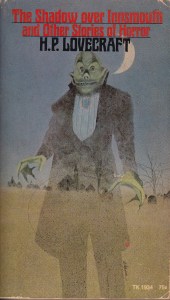
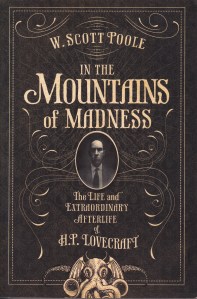
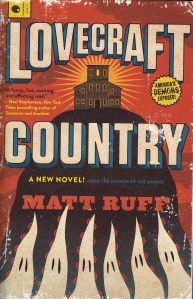
Whenever I orient myself to a new place, I tend to do so by the writers who’ve lived there. As a family we used to take “literary trips” to visit locations associated with famous writers. While in the Midwest it was often Laura Ingalls Wilder, and once, Mark Twain. Here in the east there has been considerable diversity. Several locations associated with Edgar Allan Poe have informed our travel plans. H. P. Lovecraft (although, to be honest, we always had other reasons to be in Providence) naturally followed on from Poe. We visited the property of Edna St Vincent Millay in Austerlitz, New York, and later in the same trip Sleepy Hollow, to find the haunts of Washington Irving. Famous writers can be found in just about any major city and many small towns. Now that Ithaca is in our regular orbit, I’ve begun to consider the implications.

Carl Sagan is probably the most well-known of the city’s past celebrities. His premature death added an almost Gothic element to his fame. Certainly among the sphere of his fellow academics known for fiction is Vladimir Nabokov. An entomologist by trade, Nabokov turned to writing and teaching. His lasting renown in this field was for the novel he tried to burn before it was published, Lolita. Before I knew Ithaca would be in my future, and indeed, before I knew that Nabokov was either a former resident or an entomologist, I read the novel. It’s a challenging book. Humbert Humbert is as flawed a protagonist as one might find, and any character guilty of child molestation is difficult to read even in the protection of fiction. Perhaps that’s why the novel won such acclaim. The experience of men and women who read it, I suspect, is very different. It’s a novel of moral urgency.

In perhaps a more innocent time, E. B. White attended Cornell. Apart from The Elements of Style, his book-length oeuvre was mostly in the realm of literature for children. This brings the the focus back to youth. Our childhoods—whether we acquiesce to what fate seems to demand or challenge our lot hoping to improve it—make us who we are. As the years increase in number the memories become more fiction and less fact, they nevertheless remain the touchstone for anchoring our understanding of self. Some of us constantly measure ourselves against the future we clawed for as a child, like those pencil marks on the doorpost showing our physical progress. Having been unable to afford the luxuries of travel when I was young, I add a notch to my literary belt every time I travel to Ithaca, knowing full well that only the slimmest of minorities could find my very obscure hometown on a map. If I remember correctly.


Epics of Humanity

The Epic of Gilgamesh survived only by being buried. Its survival is perhaps less surprising than its discovery after having been lost for many centuries. Reading Andrew George’s translation of the tale reminded me of reading Beowulf. Not only are the two of them hero tales, they are both “sole survivors” in the sense that they define the literature of their respective eras in a way no other text does. Yes, there are other Mesopotamian epics, but Gilgamesh, it was immediately recognized, deals with existential issues in a way that’s thoroughly modern. It is set apart from other ancient literature for that singular achievement. Fear of death leads Gilgamesh to amazing feats even if it only ends in a yad wa-shem. We can feel for Gilgamesh. Although he’s a king, he has to face the demise common to all people, and the language used to express his emotions is touching even today.

Beowulf, while singular in a way Gilgamesh isn’t, also leaves the reader wondering what is left of life if not some kind of fame. Beowulf may defeat Grendel, but the dragon mortally wounds him. If his tale had not survived in the back of an old book we wouldn’t be discussing him still today. How narrow that gap between fame and obscurity turns out to be. For the vast majority of us obscurity awaits since few can be recognized by the many. Like Gilgamesh or Beowulf, we know the consciousness inside this head and we feel that somehow we have a purpose. It takes daily life to drive that out of a normal person. The hero, however, refuses to let the odds win. There’s a profound hope here, in these narratives of denying the final fear the final say. In George’s edition the inclusion of other Gilgamesh tales outside the epic texts reinforces that point repeatedly.

Humans are meaning seekers by nature. Some simply accept the illusion of apparent reality and ask for little besides. Others cannot rest knowing that there is more to be understood, or, in the parlance of outmoded means of expression, to be conquered. When life says “Enough,” Gilgamesh refuses to acquiesce until his options run out. For many centuries his story was set to be lost forever. Latter-day restless minds, however, dug in the dirt until something truly extraordinary was discovered there, free for the interpreting. So it is that heroes come from nothingness. Many return to obscurity. Those that are found and venerated experience a resurrection the envy of many a god. Speaking to strangers across millennia is indeed immortality, even for those whose lives must end like all others.


1985

My edition of 1984 contains an afterword by Erich Fromm. I’m afraid I’ve been in publishing long enough to be somewhat cynical about “value-added content” that’s used to sell subsequent printings. Those who buy a book off the shelf want the text of George Orwell’s classic, not the comments of some academic, right? The intended market, however, is for classroom use—the sweet spot for academic publishers. A few adoptions at major university and what is otherwise any old tome from the used book market becomes a profitable venture. My edition of 1984 is a 62nd impression with a copyright of 1961. The class I took where it had to be read was two decades later than that. In any case, Erich Fromm. I first learned about him in college, and given the underlining in his essay I know I read it back when I took the class. In rereading it decades later, an un-remembered point came clearly to me—Fromm’s brief essay is on prophecy.

In the popular mindset, prophecy is predicting the future. While there’s some element of that in the Bible, by far the majority of prophetic texts serve as a warning to change how things are done before it’s too late. There’s a contingency about it. “Or else.” If there’s no possibility of change, why castigate people you’re only going to destroy anyway? Prophecy, despite its often dire outlook, is ultimately hopeful. Wrote Fromm “it was quite obviously [Orwell’s] intention to sound a warning by showing where we are headed.” But more important are the next words: “for unless we succeed in a renaissance of the spirit of humanism and dignity” all will be lost. The spirit of humanism.

Fromm was writing during the nuclear fear that I recall very well from childhood. As soon as I was old enough to comprehend what we had created, I feared we would eventually loose it upon ourselves. I was hardly a humanist at the time, but I was, even in my young days, an unwitting advocate of its spirit. I believed all people had a chance, or should have a chance. Foreign evil, as it was being presented by Ronald Reagan, seemed more fictional than Orwell. The average person didn’t want war. It was the Party that needed our fear. I graduated from college, seminary, and my doctoral program, eventually forgetting Fromm’s words. The Whitehouse had finally found its way out of the Bushes and into moderate humanism. Then Fromm came back.


Making Prophets

I first read 1984 around its eponymous date. The context is informative. I was a student at Grove City College, a conservative, Reagan-esque school of strong free-market inclinations. Being a first-generation college student I knew nothing of choosing a school, and since my upbringing was Fundamentalist, and since Grove City was a place I’d been many times, it seemed the natural choice. As my four years there wore one, my conservatism became effaced before what should be the effect of higher education. I was reading and learning new things—ideas that in the pre-internet days were simply inaccessible to someone from a small town which had no library, no bookstore, and, to be honest, no charm. How was someone supposed to learn in those circumstances? Largely it came down to high school (for those who finished) in a nearby town, and television. George Orwell saw the potential of the latter far too clearly.

It was in this great conservative bastion that I read 1984—I don’t even remember what course it was for. I do remember vividly the discussion of the Appendix on Newspeak—that it was a danger, a very real danger, to engineer language to prevent free thought. That was conservatism in the literal era of 1984. When that year passed we breathed a collective sigh of relief that Orwell’s prophecy hadn’t happened. Maybe Orwell wasn’t a prophet after all. The thing about prophecy, however, is that it unfolds slowly. Trump may have caught the world by surprise, but the evidence is there that the Orwellian groundwork was being consciously laid from the time of the Clinton Administration onward. Those who seemed to think Ingsoc was onto something good began working in local politics—the level of school boards and state elections, to build a strong conservative bloc. How many states have Republican governors? Go ahead and look it up, I’ll wait.

Progressives blithely moved ahead, making real ethical strides. One problem that they’ve always had, however, is believing that Evil is real. It’s an outmoded idea, fit for Medievalist thinking only. There are, however, very real racial supremacists out there. And avowed, unrepentant sexists. They feel that the great white way has been slighted and they are itching for revenge. Don’t believe me? Turn on the news. This is not your father’s Republican Party. In 1984 the Republicans were warning us about 1984. By the next decade they were actively emulating it. Orwell died paranoid and the world was relieved as his prophecy was harmlessly classified as fiction.


Flat Devils

Fiction is a framework to approach reality. People are drawn to stories because they help us to make sense of a bewildering world which wasn’t, in reality, custom made for us. Marta Figlerowicz’s Flat Protagonists: A Theory of Novel Character explores the types of characters that modern novelists are taught to avoid. She points out, however, that they occur in great novels beginning from the early stages of the category up through fairly contemporary classics. The flat protagonist, in short, isn’t believable. I’m not enough of a literary critic to judge her examples, but I have been thinking of one such character that occurs in popular culture all the time—the personification of evil. In my reading on writing I’ve learned this is to be avoided. Nobody is pure evil. Popular media begs to differ.

Being of working class sensibilities I can’t separate myself from the lowbrow crowd, I’m afraid. My fascination with Sleepy Hollow is pretty obvious on this blog. One of the recurring themes in the series is the antagonist that is indeed pure evil. Whether it’s Moloch, Death, Pandora, or the Hidden One, those who are evil represent the dark side of humanity, or the universe. They glory in destruction. Of course, in late Judaism and early Christianity this was a role taken by the Devil. As a child I was taught that it was wrong to feel sorry for Satan. This clashed in my head with the idea of forgiveness and with the love of all. Could God not love his (and he was masculine) own enemy? How could we hope to do the same, then?

In the most ancient of religions, as far as we know, evil wasn’t personified. Yes, evil happened, but it was simply part of the matrix of being. Some gods tended toward good while others tended the other direction, but a being of pure evil doesn’t seem to have existed. Even Tiamat loved her children, at least until they killed her consort. The stark black-and-white world of monotheism can’t explain evil without an divine enemy. A flat protagonist, to be sure, but one you can always count on to do the wrong thing. The closest we come to that in real life is the Republican Party. Insidious, sneaky, using every possible loophole to shove their agenda through, they are the perfect flat protagonists. No, I’m not inclined to believe in the Devil. Or at least I wasn’t until November of 2016.


The Nature of Evidence

Home alone on a Friday night, I turned to Werner Herzog’s Nosferatu. Not a typical horror film, this art house production is an updating and remaking of F. W. Murnau’s technically illegal 1922 adaptation of Bram Stoker’s Dracula. It has been a few years since I’ve watched it, but the beauty of the cinematography kept coming back to me at unexpected times. Klaus Kinski is an unforgettable Count Dracula, hideous and compelling simultaneously. He draws pity and revulsion. When he’s not on camera you can’t wait for him to appear. There’s not much new in the story, of course, as it follows Murnau pretty closely, with some shots being nearly identical. One exception to this is the plague. Wherever Dracula appears the Black Death accompanies him. This leads to one of the most unusual twists of this retelling—the role of Dr. Van Helsing.

Instead of being the authority on vampires and leader of the attack, Van Helsing is here a reluctant rationalist who doesn’t accept superstition. He encourages the town elders to respond calmly to an outbreak of the plague. When Lucy Harker insists that Jonathan has been the victim of a vampire (which he has) the professor again urges caution. He insists that this must be approached scientifically, empirically. You don’t pull up wheat to see if it’s growing, he notes philosophically. Take time, trust science, and all will be well. Meanwhile the audience knows the reality of the vampire. There is a supernatural threat and it is moving fast. Lucy knows they must strike against Dracula before the vampire destroys the whole town. Despite the mounting number of deaths by plague, Van Helsing still clings to slow and steady evidence, only realizing after Lucy’s death that she had been right all along.

There’s quite a bit to unpack in this retelling after all. A female takes the lead. Lucy is the one determined to stop the vampire. She does so out of belief. Van Helsing rightly points out that this is a dangerous way to approach a problem. One ponders what might’ve happened had science been allowed to run its course. Van Helsing, if science be science, would’ve had to at last come to the same conclusion that Lucy had experientially. She’d read Jonathan’s diary and she had a late night conversation with Dracula where he did not appear in her mirror and did shy away from her crucifix. She too is evaluating evidence, only she has to allow for the reality of the supernatural. Since the story is old and the production artistic, this is no bloodbath horror spectacle. It is a thoughtful, almost quiet reflection on how we perceive reality. Even among the many vampire films it remains a thing of beauty.


Sea Around Us

Re-reading books is something I do somewhat too infrequently. One of the obvious reasons is that I won’t possibly finish everything I want to read in my lifetime as it is, and once something’s in the vault I tend to move on. I keep books, however, because I frequently go back to them to refresh my memory. Wholesale re-reading takes commitment. I just finished re-reading Rachel Carson’s The Sea Around Us. It’s difficult to describe the impact this book had on me when I first read it, years ago. Even though modern editions state that it retains its authority (broadly it does) I couldn’t help but be struck by a number of things this time through. Carson thought of herself as a writer. In her day that meant adhering to the conventions of language, which was, I admit, embarrassingly masculine. The assumptions of the 1940s and ‘50s against which Carson struggled set the very frame for the discussion. I recall being told in school, by female English teachers, that the only proper pronoun to use when the subject was of indeterminate gender was the masculine. I raised my eyebrows, but being good at following rules, I didn’t raise my hand.

Not that this takes away from the poetry and mastery of The Sea Around Us. It is a wonderful book. It also made many people stop and think about the ocean for the first time. Really think. And that’s a second observation about my re-reading. Hearing the recitation of how, historically—or prehistorically—the oceans covered much of North America. Thinking about how my hometown, far, far inland would’ve been underwater for eons really made me ponder. We’ve built our coastal cities rapidly, and with typical human short-sightedness. Even without our generous input, global warming has been ongoing for centuries. Sea-levels have been rising. Our desire for wealth, settling as close as possible to the water to facilitate trade, didn’t take into account what would happen in the perhaps foreseeable future. Even now when the warning is loud and clear the businessmen of the White House are in full denial.

There’s a kind of strange justice to this. You see, one of the other features of The Sea Around Us, and one of the most compelling aspects of the book, is Carson’s narrative of how we came from the sea and our desire is to return to the sea. Our blood evolved from ocean water. We rely constantly and in significant ways on the oceans. They, for example, are the powerhouses and condensation points for almost all of our weather. They separate us and bring us together. The very origin of life itself basks in pelagic profundity. Indeed, the ocean supplies the very concept of “profound.” The deeps. Although it had a beginning, it seems the world ocean will outlive our tribal little race. Damaged and poisoned by our greed, in eons it will recover. And those beings that survive will find their own wisdom beneath the waves.


Light and Dark

Prophets, mothers, messiahs. A new religion for a new world. While these may not be main themes of Robert Repino’s new novel D’Arc, they’re clearly there in the background offering verisimilitude to a world turned upside down. Continuing the diegesis created in his previous two novels Mort(e) and Culdesac, Repino again shows an uncommon awareness that when survival becomes difficult people (and animals) turn to religion. Many fiction writers create worlds under stress and pretend that characters simply forget the religious option. That may be realistic on an individual level, but as history shows, not on a societal one. People—and mutated animals—are meaning-seeking beings. D’Arc doesn’t shy away from this fact. In a wildly integrated world of different species coping with consciousness and opposable thumbs in various ways, religion naturally arises.

If you haven’t been initiated into Repino’s universe, it begins with a virus and/or a plot—themselves religious—which allow animals to become bipedal and to grow human hands. They can talk and reason and they show us a true reflection of who we are. D’Arc, the female companion of Mort(e), finds her way in a world under threat. Planning to speed up global warming in a dramatic way, the aquatic antagonists conspire to melt the ice caps to flood the entire world. Repino knows the value of the flood story and uses it to full advantage. Along the way we meet beavers who’ve developed a religion that functions between water and dry land. Indeed, as a species their religion defines them as much as their engineering skills. This is a world that’s just been through war and instead of reconciling all species, there remain those (most notably humans) who can only live with their own superiority. This is a complex universe.

The hero of this tale, D’Arc, is sympathetic to the religious sensibilities that have sprung up around her. She herself is a character prophesied in this world where Mort(e) is messianic. There’s a scripture in the background somewhere and theirs is a world without embarrassment about it. There’s also plenty of action and adventure—the war with no name is really not over—but there’s a subtlety to the narrative as well. When things go awry many people do assume they’re alone in the universe and try to find their own way. It’s equally true that many look for meaning in a structured form of belief where all of this has been foretold. Such worlds, to me, seem to be more honest to the human condition, even when the characters are cast as talking animals.


Revisiting Frankenstein

There’s nothing like going back to the classics. Many people don’t realize that one of the best-selling books of the nineteenth century was Mary Shelley’s Frankenstein. It has never been out of print. As a novel it has its issues, but the tale strikes something deeply responsive in readers. And the story may not be what you think. You see, the movies have made Frankenstein’s monster into something Shelley never intended. Indeed, today’s Frankenstein monster is pieced together from various monster images, just like the mad doctor’s original creation.

After a lapse of many decades, I decided to read Frankenstein again. It must’ve been in my tweenage years that I’d last done so. I recall putting the book down thinking how sad it was. Something happens, however, when you return to a book after a span of many years. This time I was looking for the mad doctor and hoping to determine if the monster deserved that title at all. The story won’t let any easy answers come. Victor Frankenstein is a young, impulsive man carried away by an idea. He doesn’t contemplate the consequences of what he’s doing. It’s like buying a dog without considering that you’ve just realigned your priorities for several years. Not noticing that his growing creation is hideous to the eyes until it’s too late, he simply abandons the creature without a word. (The parallels with an absentee father should be obvious.)

The creature—monster is a bit harsh—wants acceptance. He isn’t a mute brute with bolts in his neck. He’s not a robot. He is Adam kicked out of the garden with no Eve. He doesn’t start out evil. The rejection of his creator forces him to murder in a desire for revenge. Shelley’s world was deeply influenced by the Bible as well as Milton. Religious concepts are constantly under evaluation. The child of radical parents—her mother was one of the first feminists on record—Shelley questions everything here. No doubt in Victor’s mind he’s created a demon. Or has the monster created Frankenstein? Until the very final pages nobody else actually sees his monster, or at least hasn’t seen him and lived to tell about it. What fuels the creature’s fury is rejection. Evil doesn’t just happen in the world of the mad doctor.

Sympathies are divided in Frankenstein. We feel for the monster. His creator never apologizes. Never reflects that he somehow shares (or completely owns) the blame for the sad fate of that which he’s created. Living under a Frankenstein presidency, these unanswered questions hang thickly in the air. Lack of foresight seldom ends well. The monster isn’t always who you assume it to be.


Write or Wrong

Lots of people write for lots of reasons. Some love it. Some hate it. Some can’t help themselves. For those who know me primarily through this blog, it may not be obvious which of these sorts I am. After having read Dani Shapiro’s Still Writing: The Perils and Pleasures of a Creative Life I finally feel confident putting myself in category three. It’s not that I don’t like writing—I live for it. The kind of person Shapiro describes, however, is the one who defines their entire being through writing. Each day I post between 300 and 500 words on this blog. I’ve been doing it since 2009, which means I’m somewhere over the million-word mark. But those compelled to write will never be satisfied with just that. One does not live by blog alone, after all.

Once in a great while I get asked how many books I’ve written. Well, that’s not a question with a straightforward answer. Two of my books have been published. I’ve written at least ten. Some of them never made it from my desk to a publisher’s wastebasket. A few of them have. Like others who are addicted to writing, I can’t stop. Ironically, with a decade of experience working in publishing I’m not so good at getting my own work placed. Some of it is fiction. Some of it is non. Some of it is even poetry. If you’re a graphomaniac, I don’t need to explain any further. If you’re not, think of chocolate, or sports, or anything else you just can’t get enough of. That’s what it’s like.

Shapiro’s book, although not point-for-point, but more than not, is like wandering through my own gray matter. I had no idea that other writers—including a successful one like Shapiro—felt the same constant, nagging doubts and insecurities. I didn’t know that others considered staring off into the middle distance (there’s not always a window nearby) as work. Or that sometimes you write something and when you’ve finished it seems like it wasn’t you at all. Writers can be a trying lot. We tend to be introverts. We have odd habits (in my case, waking up at 3 a.m. to write on a daily basis). We tend to be able to spot one another in a crowd, but more likely as not we won’t say anything to each other. And strangely, we write even if we don’t get paid. With lifelong royalties somewhere in the low triple digits, economically it makes no sense to do what I do. Generally the world feels creative sorts aren’t terribly productive. It’s because we measure value differently, I expect. I’m glad to have met another traveler on this path although, as is often the case, our meeting will only be through writing.


Dog Daze

I read quite a bit about animals. One reason is that when you’re counting all the species on the planet we’re pretty clearly among the animal part. Having grown up with many pets, the dogs particularly stand out. We tended to have only one dog at a time and they were so full of personality that it obviously wasn’t a matter of projecting to understand that one was more or less optimistic or joyful than another. Some could be mean while others were loving. There was quite a bit of buzz about W. Bruce Cameron’s A Dog’s Purpose back in January. For Modern Mrs. Darcy’s 2017 Reading Challenge the book fit one of the categories for me, and so I found myself reading about animals again. The thing about buzz is that I listen with only half an ear. I didn’t know much about the book except that it was a novel narrated from a dog’s point of view.

A couple of things struck me as I got into the story. One was that the protagonist ended up still believing that humans were more important than dogs. I suppose there’s some kind of evidence for that, from a dog’s viewpoint, but it doesn’t seem very strong to me. After all, we’ve bred wolves into pugs and cockapoos with an intentionality that even Mr. Darwin would’ve recognized as unnatural selection. Left to their own wolves would’ve adapted, but they’re pack animals and while dogs may think us the alphas, they’re each an important part of the group. They are giving, but that’s the nature of being in a pack. It’s also something that elected officials in Washington could stand to learn. When there aren’t rifles and traps, pack animals prosper.

The second thing that stood out about A Dog’s Purpose was reincarnation. The idea scares me. Life’s been a long challenge this time around and, unlike Nietzsche I’m not sure I could face it this exact way again. In any case, reincarnation only works if there are souls to pull it off. Cameron posits that for Toby to become a fully developed Buddy four cycles of reincarnation are needed. Like a good Platonist, our protagonist recalls the important lessons from each previous life and is able to develop into a more fulfilled dog each time around. The karma here is good. Cameron does seem to “get it” from a human-projected dog’s point of view. It can be fun, and it can be sad. The important lesson, for me, is that animals are who we are and to be a successful pack we need to look out for the good of each other.


The Labyrinth of Copyright

Here’s another post originating from my daily work as an editor. (As an editor you tend to assume nobody’s really interested in what you do all day, but I’ve been told this isn’t so.) What is copyright? And do I have it? First of all, a caveat: I’m not a lawyer. Copyright is complex and, to answer my second question first, yes, you do have it! So what is copyright? Essentially it’s the protection of intellectual property. As long as that property remains in your head, it’s yours alone. Once it’s expressed in writing, art of any kind, music, or even as a chart, it is automatically covered by copyright. If you want to use something someone else wrote, or produced, in your book, you need permission. Small quotes are generally considered fair use, but don’t push that doctrine too far! Fair use is listed as just that, a doctrine.

What many authors don’t realize is that your book contract is an exchange—you’re selling your copyright to the publisher for their services (they publish your book, promote it, register the copyright (it already has copyright, but registering helps to protect it legally), and handle the financial aspects of selling your book). You can’t publish your own work again without permission of the publisher. Sometimes I’ve had people ask me to use my artwork (from my own published articles) in their work. I don’t mind, of course, but I don’t own the copyright! If I published my work, the publisher has taken that copyright and I remain simply the author. If I want to publish my own published work somewhere else, I have to ask permission. Copyright, however, doesn’t last forever.

The only safe date before which material can be used without fear of infringement is 1922. Works published before then are in the public domain. Right now new works (such as this blog) are covered by copyright for the life of the author plus 70 more years. After that, unless the law changes, you don’t need permission to reuse these idiosyncratic musings. Not that that’s ever been an issue. I’m not a litigious person, but I do like to be cited. (Who doesn’t?) In any case, if you’re working on an academic piece, and you want to reuse somebody’s drawing, or an extended piece of writing, or even a tiny bit of a poem, you must have permission to do so. That’s what copyright does for you. The “fair use doctrine,” like most doctrines, doesn’t hold up well in court. If in doubt, just ask. Before you do, though, you might want to consult a copyright lawyer, just in case.

All opinions my own.


Frankly Frankenstein

As a novel, like its monster, Frankenstein trespasses all kinds of boundaries. Is it science fiction or horror? Is it Gothic or presciently modern? Is it feminist or conventional? One thing about it is certain: it has been immensely influential. Lester D. Friedman and Allison B. Kavey have created for the world a truly wondrous treatment of this meme. Monstrous Progeny: A History of the Frankenstein Narratives is perhaps the most engaging monster book I’ve ever read (and there have been many). One of the main reasons for this is that Friedman and Kavey are keenly aware that binaries don’t necessarily exclude their opposites. Frankenstein is about both science and religion, and it treats both profoundly. Considering that Mary Shelley was only 21 when the novel was published bespeaks a rare genius in blurring boundaries and making those on each side think.

Monstrous Progeny considers multiple issues associated with Frankenstein. Should science be approached alone, or should peer review be involved at every stage? Is religion eschewed by this woman so strongly influenced by atheism, or is it the very crux of the matter? And what about the incredible and continuing afterlife of Shelley’s story? Friedman and Kavey survey not only the novel but several movies associated with, or based on ideas from, the book. Modern science, if we’re to be honest, also owes much to the fictional musings of a 19-year-old girl on a dark and stormy night. The tale of the tale is nearly as fantastic as its progeny. Challenged to write a ghost story, Shelley produced an undying Zeitgeist feature instead. Monstrous Progeny delves deeply into this unexpectedly profound idea, showing how it grips the heart of many contemporary nightmares.

Genres can be deceiving. Shelley wrote her tale as a “ghost story.” It received literary acclaim, becoming one of the best selling books in England in the nineteenth century. Only when Universal found success with Dracula in 1931 and followed it up with Frankenstein the same year did film critics want something to call movies like this. The term “horror film” was invented. There is certainly horror in Frankenstein, but there’s much more to it than that. The relationship between religion and science, and the very real ethical issue of making something because we can, are never far from the reader’s mind. Giving life to the creature only underscores the conflicts and contradictions of life in a world where to be gods risks destroying any possibility of heaven. Monstrous Progeny is a thought-provoking book that will, in its own way, brings our present fears to life.


Happy World Book Day

In times of distress, as well as of joy, I turn to books. Since about November there have been more of the former than the latter, so I’m cheered that today is World Book Day. The United Nations Educational, Scientific and Cultural Organization has designates World Book Day to promote literacy internationally. If only the White House would pay a little more attention to the UN maybe the world situation would improve. In any case, books are always worth celebrating. At any given time I’ve got three or four book-reading projects going on simultaneously. Well, not literally simultaneously; I have books I read in the morning, different books for the bus ride, and books I read before bed. Often there are others scattered in there as well, such as books that I take with me in case I get unexpectedly delayed somewhere and want something to read. It’s a life full of books. It’s a wonderful life.

I can’t imagine enduring the mental vacuity that must come from not reading. It sounds like torture to me. Yes, I’ve occasionally been caught up in the action-packed episode of travel and adventure (or what passes for adventure for a guy like me). Hours spent with other people in locations not at home when there’s something to do every minute of the day. But then, when the fun’s over, I open a book. I read before bed even when I’m traveling, and since I’m an early riser I read before anyone else is awake. It’s a form of communion. Having access to the intelligent minds of others is a rare privilege that shouldn’t be scorned. World Book Day should be an international holiday.

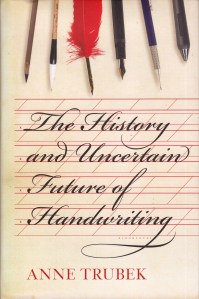
Books, strictly speaking, didn’t necessarily originate as sacred texts. Very early in the process of writing, however, such holy documents began to appear. Civilization itself grew through the cultivation of writing. Bibles, Qur’ans, Books of Mormon—for all the troubles sacred texts may cause, they’re reminders of the importance of reading. And once reading starts, it’s impossible to stop. Reading is resistance to the Zeitgeist that’s haunting the politics of the day. Had voters been informed, it is absolutely certain, neither Brexit nor Trump would have happened. We need to read, and be seen reading. Ignorance is the final enemy to be defeated. Celebrate World Book Day. Wish people happy World Book Day. And for the sake of civilization itself, get caught reading.