World War 1.2

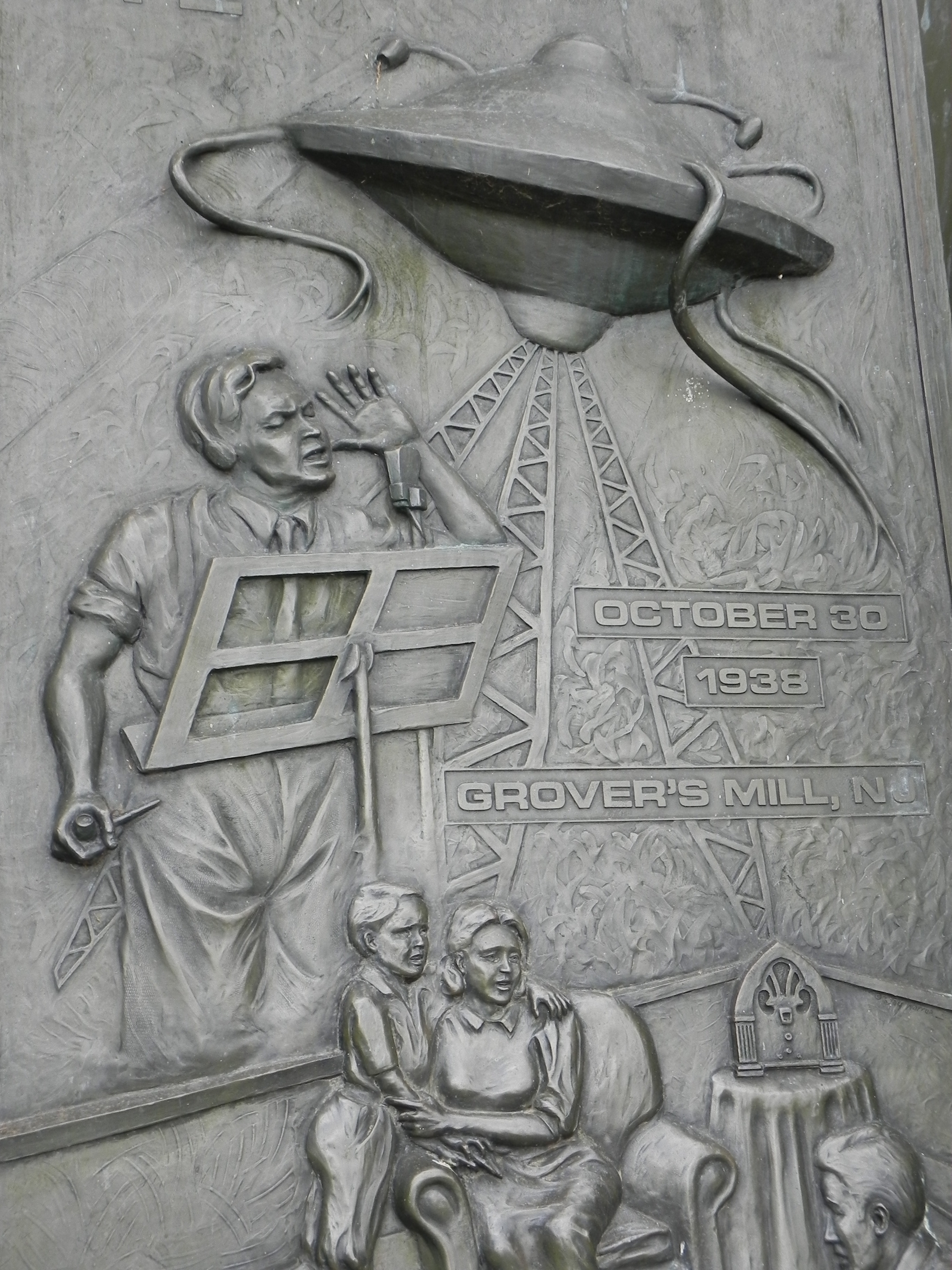
75 years ago today Orson Welles presented a radio drama version of The War of the Worlds. Perhaps it was the looming fear of the Second World War in a society that hadn’t yet overcome the trauma of the First, or perhaps too few people had read H. G. Wells’ novel, but the result was surprisingly catastrophic. Panic arose as listeners supposed that the invasion was real—the broadcast, although announced as a radio drama, followed a news bulletin format that overrode the rational faculties of many. This episode would influence government decisions about what to reveal to the public for years. And, naturally, it all began in New Jersey. Unlike the novel, the radio broadcast set the invasion, initially, in Grover’s Mill, New Jersey. This tiny town is difficult to locate even today, falling as it does between the busy north-south roadways that run through the central part of the state.

DSCN4241

The Hindenburg disaster had taken place the previous year in Lakehurst, New Jersey. Welles, impressed by the radio coverage of that celestial fear, used those broadcasts as models for his play. A few weeks ago I ventured to Grover’s Mill to let my imagination roam free for a while. A great deal of history may have been determined by that broadcast and the public reaction. We are ready to believe that danger lurks above. The First World War began to make early use of the airplane as a weapon. The sky, previously, had been obtainable only with the slowly moving balloon. Only eleven years earlier Charles Lindbergh had crossed the Atlantic by plane for the first time. The Second World War would see air combat as a major component of victory, also for the first time. My mother grew up in New Jersey, watching planes searching for German U-boats off the shore. The skies were not so friendly then.
DSCN4239

As I stood in Grover’s Mill, I recollected an unpublished book I once wrote about the weather in the book of Psalms. The thesis, somewhat loosely, suggested that for the average person the sky reflects the mood of the divine. Dramatic clouds still look angry, even when God is removed from the equation. The Reagan era gave us all new things to fear raining down on us from the skies. September 11, 2001, brought the skies crashing to the earth again. Invasion from above is an apt way to add a chill to Halloween, for it takes the prerogative of the deity and makes it either human or alien. At least most people who believe in God think he’s on their side. When the Wright brothers took their heavier-than-air craft briefly to the skies in 1903, The War of the Worlds had only been on the market for five years. The coming decades would drive God from the skies and we would come to learn that what falls from above would no longer have our best interests at heart.
Omega Alpha

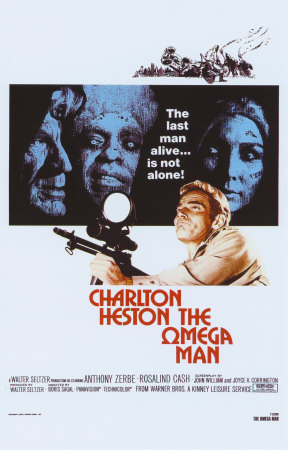
The-Omega-Man-Poster Perhaps out of a warped—perverse even—sense of self-punishment, I watched The Omega Man. Being unemployed will make you react that way. I have a pretty high tolerance for theatrical assault, as my regular readers will know. For those of you with less self-destructive penchants, The Omega Man was the second cinematic adaptation of Richard Matheson’s novel, I Am Legend. The first movie version, The Last Man on Earth, was released in 1964, starring Vincent Price. The most recent version, borrowing the novel’s name and starring Will Smith, is the third and best attempt so far. In any case, The Omega Man opens with Charlton Heston thinking he’s the last man alive, and even that doesn’t stop him from taking his shirt off at every opportunity. That I could tolerate, however, had the movie not strayed from what I thought was its central premise—that Robert Neville was alone with a city full of vampires. Although Vincent Price did not, uncharacteristically, make a convincing last man alive, the earliest version at least retained the vampires. The Omega Man, perhaps in the spirit of 1971, substituted them for religious fanatics.

The substitution didn’t bother me so much, but the religious fanatics were pathetically acted. Leibowitzian, anti-progress monks, hating the science that led to the nuclear holocaust that made them photophobic night dwellers, they snack on sardines and graham crackers, but only come out at night to kill scientists. Well, only one, since Neville seems to be, uh, the last man on earth. They accuse him of making the wheel and using technology as they run around in off-the-rack children’s Halloween costumes acting otherwise infantile while Heston strikes dramatic poses, grimacing with a variety of machine guns in hand, as he simply shoots them. That’s not the way the world’s supposed to end. The vampires have become a religious society doing everything short of handing out tracts on the corner. Well, maybe it is the end of the world after all.

It is difficult to portray loneliness effectively. Those of us who’ve been there know it intimately, and somehow Charlton Heston has too much fun with it. Even Vincent Price had trouble making it look convincing (I mean, who still uses a saucer when having their coffee and wears a tie after the apocalypse?). Will Smith at least showed a man occasionally breaking down in tears. Charlton Heston doesn’t cry. And he doesn’t shy away from god-like delusions. When he finds the other survivors (or they find him), we learn that Neville has been attempting to cure the religion virus. Dutch says, “Christ, you could save the world.” Neville doesn’t deny the obvious messianization of his mission. In fact, pseudo-crucified on a piece of modern art, Neville receives a spear-thrust to the chest, and dies in cruciform posture in a pool of his own blood. His blood that has the antibodies to save the world. Sound familiar? For all the blood, the vampires are gone. And when I feel that the world is against me, I want to see vampires.


Sleepy Hallow

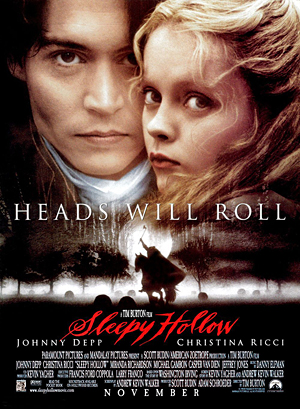
Sleepy_hollow_ver2Upon occasion I found movie clips to be of great help in explaining ideas in religion classes. A movie whose clips I used sparingly, due to concerns for squeamishness, was Sleepy Hollow (the Tim Burton movie, not the modern television series). Upon viewing it again recently, I was impressed by just how much religion is intertwined in the narrative. This is especially interesting since Washington Irving’s story does not contain much in the way of religious symbolism or motifs. From the beginning of the film, Rev. Steenwyck is one of the conspirators, making the church complicit in the attempt to subvert the van Garrett will. When Ichabod Crane arrives in Sleepy Hollow the cleric drops a Bible—a recurring motif in the movie—on the table beside him, telling Ichabod it is the only book he will need. Christianity and Paganism clash throughout the film as a number of the women are revealed to be witches, either “innocents” or practitioners of a darker kind of magic.

In flashbacks Ichabod Crane recalls his mother’s white magic that draws the ire of his ordained father. Indeed, Ichabod’s father is a stylized amalgamation of Roman Catholicism and Protestantism blended into one. His harsh white chapel houses an inquisitorial torture chamber in which he murders his wife. Seeing her pagan symbols in the fireplace ash, he too drops a heavy Bible to point out his wife’s sins. When he stalks off from his medieval chamber of horrors, the camera angle shows him to be headless—he is the true terror, rather than the Horseman who was raised by magic and appeased by the simple return of stolen property—his head. Even in the present Rev. Steenwyck is both an adulterer and a murderer. The melee in the church leaves the final three conspirators dead.

The white witches, however, are marked by their purity. Mother Crane is so light that she can float up into the air. Katrina van Tassel draws chalk icons to protect Ichabod, indeed, the whole town, from evil. While Ichabod refers to his father with the evocative phrase “Bible-black tyrant,” his mother was an innocent child of nature. In the film Ichabod moves from the rational view of life to one that allows for the supernatural, in the form of magic. True, the Horseman cannot cross onto the consecrated ground of the church (another Catholic concept mixed in with the Protestant milieu), but the faith that saves Ichabod’s life is the book of spells given to him by Katrina. Yes, the physical book stopped a material bullet, but it was faith the put the book in the pocket in the first place. All very appropriate to bring students’ minds to religion in the autumn of the year.


The Tell-Tale Telegraph

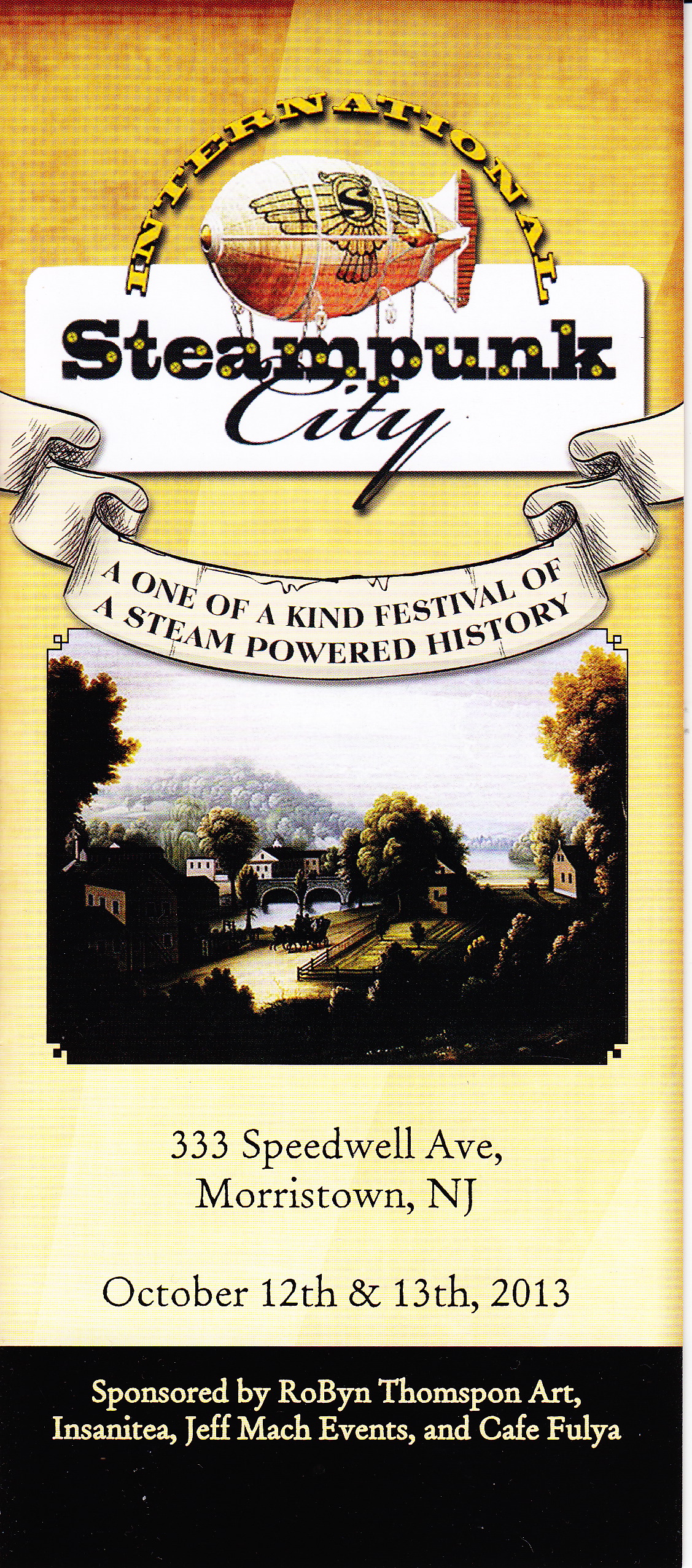
Steampunk CityThere’s a guy next to me with a robotic arm. Women with lace umbrellas and aviator googles walk by on the arms of Victorian gentlemen with walking sticks. A couple have an effervescing water-cooled device on their backpacks. I must be in Steampunk City. The forecast had predicted rain, but it is a beautiful October day in Speedwell, New Jersey. Steampunk City, an event dreamed up by Jeff Mach to make money for local museums, draws in a good crowd of the garishly bedecked, causing my wife and me to feel desperately underdressed. I’ve read my share of steampunk fiction, and I am really thrilled to see so many people taking an interest in such a literary event. I did wonder, however, what demonology had to do with it. Kevin Meares of Delaware Valley Demonology Research is giving a talk on demons, and it’s interesting to notice how the light laughter of customers from the booths outside wafts through the door where stories of possession are being told.

It is difficult to listen to Mr. Meares and believe that he hasn’t seen some pretty strange things. A practicing demonologist rather than the armchair variety, he has accompanied priests on exorcisms and is utterly convinced of the reality of the entities. When asked where demons come from, he relies on the Bible and Bible lore. Either they are fallen angels, remnants of a prior creation (thus the discrepancy between Genesis 1 and 2), or the offspring of the Nephilim of Genesis 6. Whatever they are, he has seen them in the dark, and people have died because of their activity. Being somewhat of a skeptic, I still find myself a little creeped out, kind of wishing I was outside with the laughing, costumed fiction readers.

Steampunk is often about alternate realities. A world where technology developed in the fog of steam rather than the neat circuitry of electricity. Speedwell, ironically, (and probably intentionally) is where the telegraph was invented and first demonstrated. It is a key site in the Industrial Revolution, the development that made the modern world what it is with smart phones, air-light laptops, and iCloud. I’m in the basement of an historic building having my rational worldview threatened by stories of demons. Although I’m wearing my nonplused face, I know that things will be different in the middle of the night. I’ve got brass gears in my pockets and supernatural entities in my head. I’ve met a watch maker outside who translates Aramaic manuscripts. What hath God wrought indeed, Mr. Morse? Yes, I’m in an alternate universe, and I may decide not to come back to the work-a-day one after all.


Twilight Zones

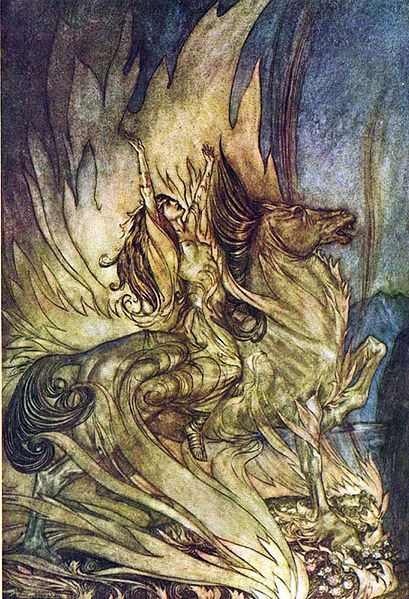
It was twilight last night when I drove into Binghamton. My thoughts naturally turned to The Twilight Zone since one of my childhood heroes, Rod Serling, had grown up here. Binghamton University was also the professional home of novelist John Gardner, of Grendel fame. Seeing the colorful leaves fading to the gray of a falling evening, I thought of how evocative a word “twilight” is. We are creatures with an in-born fear of the dark and twilight is our last hope of light before the night settles in. Maybe it was having just so recently read Grendel, but twilight and gods together brought “the twilight of the gods” to mind (it might have helped that a sudden thunderstorm broke out at the moment). When I first saw the word Götterdämmerung, in junior high school, I thought it must be a potent swear word, what with all those doubled letters and umlauts. My German teacher calmly explained that it was the fourth and final cycle of Richard Wagner’s opera, Der Ring des Nibelungen and it translated to Twilight of the Gods. It is itself a translation of the Norse word Ragnarök, with its single umlaut. Even though it wasn’t swearing, the concept sent a shiver through me anyhow.

I’ve never sat through a performance of The Ring, but I have heard the music with its famous Ride of the Valkyries. Based on Norse and Germanic mythologies, The Ring has deep roots in a pagan mythology where night plays a prominent role. Although J. R. R. Tolkien denied having been inspired by Wagner’s work (there was a certain political incorrectness to it, along about the early-to-mid-1940s), both four-part cycles draw on the Norse mythology that continues to fascinate us with movies like Thor and The Avengers. What impacted my young mind the most, however, was the very concept that the gods could be defeated. How was such a thing even possible? We were raised to believe good conquers evil. How can the gods—even pagan ones—lose? It was a world-distorting concept for someone yet to face high school.

Last night I was literally in the twilight zone. Having driven through the Endless Mountains region where autumn’s reds and yellows inspired me with just how colorful death can be (a European friend once confessed to me that driving along a wooded road in Pennsylvania his first autumn here he had to pull over and weep for the beauty), twilight was already on my mind. October fades into the twilight of the year. The mythologies of the northern races, the Norse and the Celts, seem almost obsessed with the ominous, growing darkness. There is a beauty to it, but also an abiding fear. Are the gods powerful enough? It was a question first raised when my eye fell on that striking word Götterdämmerung that somehow became a part of me.

409px-Ring63


Grendel’s Gods

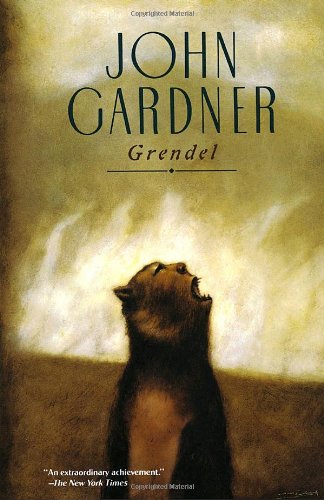
GrendelGardnerSometimes I think that if I had to do it all over again, I might’ve chosen Beowulf instead of the Bible. Let me define “it” here: if I had to pick a vocation that would lead to personal fulfillment and personal penury, that is. Beowulf is the earliest written story in English and, it’s a monster story. What’s not to like? In honor of Banned Book Week, I decided retroactively to read a banned title, John Gardner’s Grendel. An early parallel novel narrated from Grendel’s point of view, we are introduced to the introspective, existentialist monster who is really just wondering, like the rest of us, what the point of it all is. Not surprisingly, the protagonist often addresses the question of religion—indeed, it might even be at the heart of the story.

In chapter nine, Grendel sits in the darkness in the ring of wooden gods of the Danes when Ork, the great, blind priest stumbles in and believes the monster is the Destroyer god. As Grendel toys with his theology, the old priest understands this all as a revelation, and although Grendel gives him no answers, the words are taken as divine utterances. The other priests, finding their leader out on a winter’s night, insist that he has gone senile, that gods do not reveal themselves like that. The old man, however, is unshakeable in his faith. As in much of the novel, there is more going on here than meets the eye. The deluded priest believes a monster is his god.

The question of theodicy (literally, the judging, or justification of God) is never-ending for theists. The world is a problematic place (made so, I must note, by human consciousness) for the creation of an omnipotent deity who is good. Too much suffering, Grendel, too many failed expectations. Clergy and theologians have, for centuries, tried to frame a convincing answer to the dilemma. The tack they all studiously avoid is that God is a monster, although some posit that as a straw hypothesis quickly to be knocked down. Gardner, although not a theologian, was the son of a lay preacher and farmer. One suspects that elements of that childhood crawled out through the pond with Grendel. One of the truly tragic characters, a “son of Cain,” Grendel still has an immense power on the imagination. And that power, at times, might even appear godlike.


Ban Ban Go Away

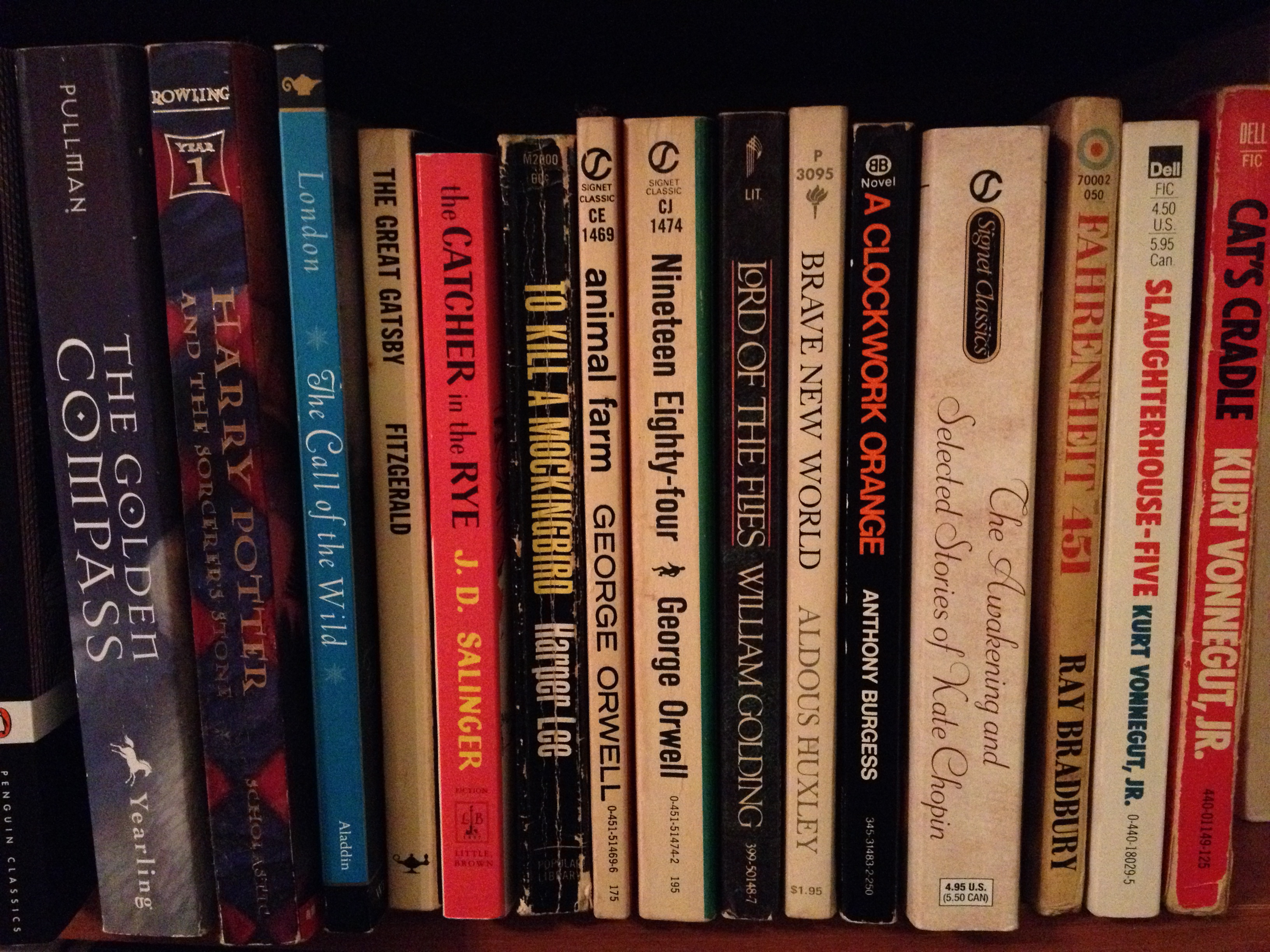
I always seem to discover banned book week in retrospect. With the insane amount of time put into getting to and from work, and actually working, my daily bus ride is my main vehicle (literally) for reading. For eating forbidden fruit. Historically speaking, the first literature was religious literature. Much of it, if anybody bothered to read it, would end up on banned book lists, I’m sure. The Bible is granted a special amnesty, given its reputation as a divinely penned parchment, but it too has its share of unseemly topics. Sex is there almost from the beginning. Violence too. We could go further, but sex and violence are usually sufficient to land a book on the list. And the choices are always so period specific. Catcher in the Rye seems downright tame in the new millennium (or, indeed, Kate Chopin’s The Awakening), and yet we still find new books to condemn. I wonder if such books aren’t forming a new kind of scripture.

There was a time when religion challenged social convention rather than championed it. Religions have been co-opted and domesticated by political interests. Can you imagine the man who overturned money-changers’ tables in the temple on the floor of the stock exchange? We have quantified everything, even—especially—human beings. That which can be quantified can be measured and that which can be measured can be sold. Religions, but only those upholding the status quo, grease those wheels nicely. If we had a chance to know religious founders personally, I suspect we would have found banned books in their libraries. Ideas can be dangerous things.

Despite my generally kind words on this blog, I do read books that I don’t like from time to time. I would never challenge the right of the author to express his or her ideas, nor the publishers (no matter how misguided I think them) for promoting them. I am not the one to quantify. Looking over the American Library Association’s list of banned and frequently challenged books, however, I realize that my fiction-reading hours would be slim indeed. We tend not to ban non-fiction, challenging though it may be. It is the imagination that offends. Such is the power of fiction. Last week was banned book week. Time to look over the list of latest condemned editions to find what to read this week. I am always looking for future scriptures.

The usual suspects...

The usual suspects…


No Singing Matter

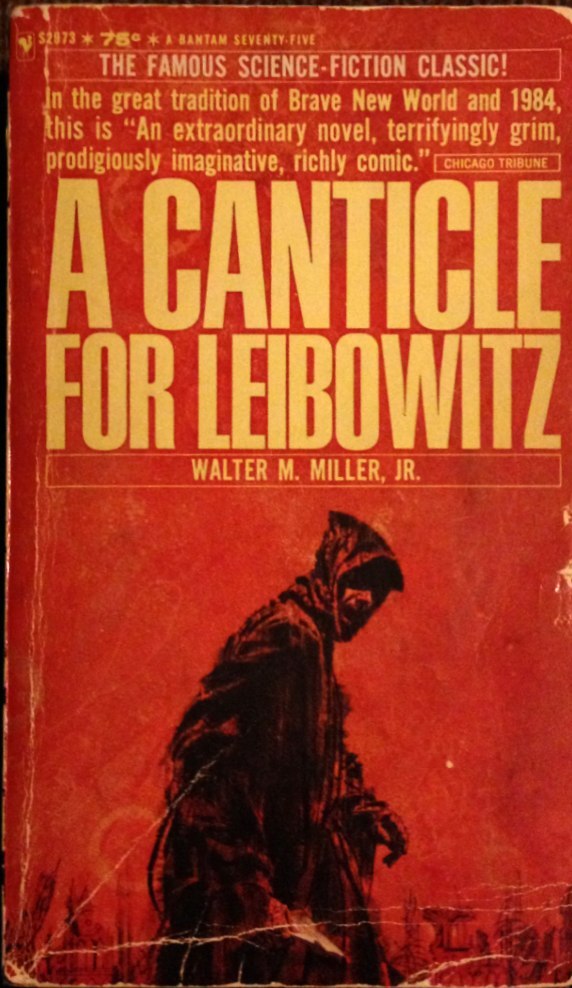
Canticle for LeibowitzA Canticle for Leibowitz, by Walter M. Miller, Jr., is one of those books that I read years ago, and when I picked it up again found that I remembered very little of it. I suppose this is one of the hazards of extensive reading—some important things get lost in the noise. I recall having read A Canticle for Leibowitz when I was a grad student at Boston University, and I remembered the detail of a grocery list being taken for holy writ in a post-apocalyptic world where, in a strange reincarnation, monks have once again become the guardians of knowledge. Little else remained. Perhaps part of the reason is that the book requires more experience with the church than I had in those days. One might suppose a seminarian would have about as much ecclesiastical experience as one might need. Not so. It did teach me, however, to read provocative books.

Like most dystopias, there is a deep bleakness to A Canticle for Leibowitz. In the light of recent developments in the papacy, the book is remarkably prescient. In the final pages of the final section, a radiation-sick woman and her young child, in constant pain, seek the government sponsored euthanasia camp. Abbot Zerchi, however, condemns this as a sin against God. Doctrine takes the place of compassion, and only moments later the final atomic strikes wipe the abbot and his monks off the earth forever. Yet there are monks on a spaceship, ensuring that any future planets will have the same uncompromising doctrine planted there as well. For a book published in 1959, it sounded incredibly contemporary. Miller’s anger still echoes throughout. The church builds societies that destroy themselves. A cycle of futility.

I wonder what the result would be if more people read such stories. It is, of course, easy enough to shut out any implications we don’t like and claim it is all a silly piece of fiction. The problem is that Miller is not too far off base. Our civilization does own much to its religious institutions. Those institutions sometimes have considerable trouble relinquishing control when society finds its grounding in science and technology. It is difficult to believe divine proclamations from above in the age of the space telescope. Yet, even so, we still elect to power politicians who look back millennia for the instructions on how to treat those of other genders or races. To do so, as Miller recognized, is to begin building bombs all over again. And even old Ecclesiastes declared that there is, in a Leibowitzian twist, nothing new under the sun.


A Certain Man Went Down

Among the progeny claimed by Wabash College is Dan Simmons. I’ve read a couple of Simmons’ ghost novels, although in reverse order. I read A Winter Haunting, which I quite liked, and followed it up with Summer of Night. Having lived in the Midwest many years, it was easy to visualize the scenes. Then came the time for my trip to Crawfordsville, Indiana. I started the day in South Bend, finishing up my meetings at Notre Dame. I’d noted on the map that, as is often the case, the places I need to get to just aren’t connected by anything resembling a direct route. Although the forecast said “30 percent chance of rain,” I’d awoken at 4 a.m. to a thunderstorm and it had been pouring all morning long. I could swear they were making plans to convert the great Notre Dame stadium into an ark. Perhaps I’d forgotten just how persistent Midwestern storms can be. Soaked, I crawled into my rental car to tool down to Crawfordsville. At least the rain had finally stopped.

On one of those highways in the middle of corn fields as far as the driver’s eye dares look, the low tire pressure light came on. I dutifully pulled over and called Hertz. The suggestion was to find a gas station and put some air in the offending tire. Someone could be there in three hours. Looking about me at the amber waves, I thought of the spirits of Dan Simmons’ stories. A car breaking down in the heartland. No one around to offer assistance. The illusion allusion was shattered when a stranger pulled over and asked me if I needed help. I recall a priest friend once tearfully confessing to me that he had, on a rainy night, refused to stop to help someone with a flat because of fear for his safety. I understood completely—it can be a scary world out there. “And likewise a Levite, when he was at the place, came and looked on him, and passed by on the other side.”

With multiple stops to put air into my slowly leaking tire, I limped my way from town to town, reaching my destination after dark. Along the way a fierce rainbow appeared to the east as the sun began to set. Once you’ve abandoned the interstate in Indiana, there’s no going back. I began to notice just how many churches dotted each little village through which I drove. Samaritans, I thought. As I write this in Crawfordsville, I think of the corn, sorghum, and soybean fields that inspired Dan Simmon’s ghosts. I think of a stranger, a woman of minority demographics, stopping to see if I needed help along a lonely highway. She was among those our society would deem vulnerable, and yet she was the only one who stopped. And I think of parables. “But he, willing to justify himself, said unto Jesus, And who is my neighbour?”

IMG_0988


Dystopian Dreams

Hunger_gamesOne of the most terrible stories in the Bible is the slaying of the firstborn of Egypt. Of course, depending on your point of view, this was either a necessary evil or an act of wanton cruelty by a deity with anger issues. Still, it ends with a bunch of dead children. Then, as if that weren’t enough, a horrible reprisal comes at the birth of the child of the main character, with Herod slaughtering the innocents in Israel. And let’s not forget the very source of Kierkegaardian angst, the knife poised above a bound Isaac by his completely believing father. More recent, less literary examples could add poignancy and reduce the distance: Columbine, Newtown, Virginia Tech—the murder of children is beyond the farthest reaches of perversion into a realm that no longer classifies as human. I think the Bible might agree with me there. So it was with some trepidation that I read Suzanne Collins’ The Hunger Games, at the urging of my daughter.

Although written for a young adult readership, The Hunger Games is a classic dystopia with a dark future and repressive government mandating the killing of twenty-three children every year, just to make a point. Deftly combining teenage angst with the bleakness that just about any future-based novel seems to hold, Collins spins a sad but engrossing tail. Dystopias have grown in popularity since some of the earlier, Cold War exemplars such as 1984 and Fahrenheit 451. The number of dystopian novels grows every year. I suppose if I were an elected official I might cast a worried eye towards the increasing number of exposés of a society where consumers read so many books of the future gone awry. I know many intelligent, sober people who seriously wonder if we’ve already shifted onto that track. Tomorrow is only an extension of today.

Dystopias are among the most biblical of literary genres. The Bible itself is a bit of a dystopia. Consider the framing of a perfect world ending up with the original apocalyptic tale, the Apocalypse, or Revelation. It only ends well for 144,000. In-between there are pages and pages, chapters and chapters of oppression, violence, and suffering. Paradise gone bad. That’s the essence of the dystopia. Although Collins doesn’t make any overt biblical or religious references in The Hunger Games, the very genre she chose can’t escape the biblical bounds laid out for it. And besides, long before the year both Collins and I were born, the Bible had already set its vision for our society. And that vision, to our everlasting trembling, includes the massacre of innocents.


Hemlock and Crucifixion

Rhetoric is dying a slow, painful death. In this world where literalism reigns, the use of words to elicit an illicit truth deeper than the factual is no longer recognized. We see it both in the humorless antics of the New Atheists and in the ravings of the Fundamentalists. Writers have always known—serious writers at least—that truth is so much more than an objective ticking off of what really happened. The post-modernists may seem insufferable at times, but they have taught us that true objectivity is false, a mythic holdover from imperialistic thought processes that believed here, in this single mind, bias does not exist. We all have biases. Except me, of course. Rhetoric again.

I do not get many comments on this blog. Usually it takes someone to disagree with my ramblings to gussy up the energy to dispute what I write. I try not to distort facts, but facts are rare commodities these days. George Orwell is not really dead, I mused as I stood by his gravestone in Sutton Courtenay. Should someone deny that I was there how should I prove it in this day of Photoshop and pixelated truth? And that wasn’t even his real name.

When I regularly taught, students would ask me what I believed. What I believe, I would respond, is not important. I am teaching a subject, a field of study. When is the last time you asked your chemistry professor what she believed? Would it matter? Of course, thoughts, I’m told, are only chemical reactions that lead to electrical charges. Miniature storms inside our skulls. Literally. Rhetoric folds its hands across its metaphorical chest and lays quietly, awaiting the pall.

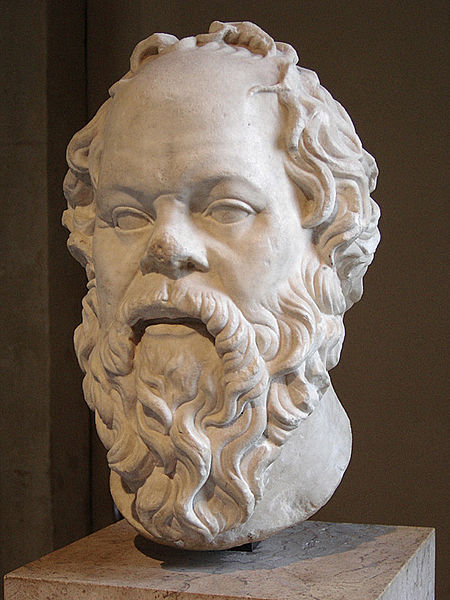
Socrates had his method. He ended up an enemy of the state. Jesus told parables. He also ended up an enemy of the state. Rhetoric, make no mistake, is a dangerous game to play. The hearer, or the reader, hears or reads what s/he wants to hear or read. And in a literal world, people would rather not have to read too deeply, for truth, it is believed, lies plainly upon the surface. There used to be a word for such a surface reading, but should I write it here I would be guilty of using rhetoric. And rhetoric awaits the delivery of the flowers but few are the black-garbed mourners. It is best not to disturb the dead.

Photo credit: Eric Gaba, Wikicommons

Photo credit: Eric Gaba, Wikicommons


Corn is King

For those who no longer believe in Hell, the DMV can serve a very useful function. Actually, the Department of Motor Vehicles is truly the great leveler of society—just about everyone has to cross its threshold, it is just that they all try to do it at the same time. Waiting in lines has always been a problem for me. It’s not that I think my time is more important than anybody else’s, it’s just that I have so much to do without standing in endless lines. Especially since work keeps me away from useful pursuits for over eleven hours out of every twenty-four, weekends seem somehow too sacred to be spent at the DMV. But the Devil must be paid his due. When paying the Devil, I take along Stephen King to pass the time. So it was over the weekend that I found myself reading “Children of the Corn.”

Of course, like most horror movie fans, I have seen the movie a time or two. I’d never read the story before. This is one of the King tales based most directly on religion gone wrong; the children, as any reader/watcher knows, have distorted Christianity into a midwestern corn-god religion. It may seem unlikely to urban folk, but I have stood next to corn stalks that have towered high above my head, ominously silent like triffids on a sunny Wisconsin afternoon. It can be unnerving. Almost a religious experience. But turning back to King, the story differs from the movie, of course, and what the written version makes clear is that the children distort the New Testament, but leave the Old Testament intact. King, like many horror writers, is biblically literate. Yet, this picture of Old Testament god versus New Testament god is stereotypical and a little misguided. The god of Christianity is a deity of many moods. The wrath in Revelation, or even some of Jesus’ sermons, however, stems directly from Yahweh’s darker moments.

Diablefaucheur

How do we know what is demanded by this mercurial deity? The theological ethicists argue over this daily, but nowhere in the Bible does God have a problem with people treating each other as they would want to be treated. Some of the punishments for minor infractions seem a bit severe—or very severe—but the basic principle, given the Weltanschuung in which it operates, need not cause undue fear. Women, homosexuals, gentiles, Jews, anybody reading parts of the Bible will no doubt be offended by the details. As the saying goes, the Devil is in the details. And that’s why I’m spending my entire Saturday morning at the DMV.


Firelands

BayardFirelandsPiper Bayard has been a long-time blogging buddy of mine. She’s kind enough to comment on many of my posts and even kinder to like even more. Piper recently published her novel Firelands, and she sent me a copy that I began reading right away. My schedule this entire month has been unfriendly to literacy, but I was always glad to have a few minutes to read a few more chapters of an intriguing post-apocalyptic future. What’s more, Piper is keenly aware that religion is behind much of politics—a point she boldly makes by constructing a dictatorship based around a miracle-claiming prophet-king who oppresses those who don’t believe—the Seculars, or “Secs.” Interestingly, Piper decided on the name Josephites for the religious rulers, and there are dark undertones here for those who know their religious history. As an unabashed fan of allegorical writing, I saw quite a lot here that was, well, apocalyptic, in the literal sense of the word.

In a misogynic future, the Josephites, who dwell in cities, burn many women for various heretical crimes in autos-da-fé entitled Atonements. These human sacrifices ensure fertility and also help to explain the trials of life in a post-cataclysmic world. The protagonist, Archer, has to not only survive, but to try to save her cousin, a grandchild of the eponymous Joseph, from the flames. The Josephites live in a society of thinly rooted but strongly mandated religion. There is an underground of true Christians, and Archer, although a Sec, acts with more compassion than any of the Josephites, except perhaps her cousin. In a world that has lost its bearings, religion both undergirds and undermines a dystopian society where differences of faith have come to define everyone’s role in a harsh world. (Those who have ears to hear, let them hear.)

In this world where heaven is a fiery hell, I realized that Archer was more familiar than she first seemed. A female warrior, she opens the book by tracking a large stag to feed her starving people. Nevertheless, it took me many chapters to realize that she was a hypostatic Artemis, the goddess of the hunt. No wonder she couldn’t convert to the standard religion! Her example leads the way toward a renewable and sustainable future, in touch with nature, while the “religious” in their urban environment are dying on the vine as they appear to thrive. This is a world where old gods are more authentic than an enforced religion that few believe and that only rules through fear. There is much more I could say about Piper’s fascinating book, but I want you to read it for yourself. Visit Piper’s website for more information, and support the work of an author who really has something to say!


Human, All Too

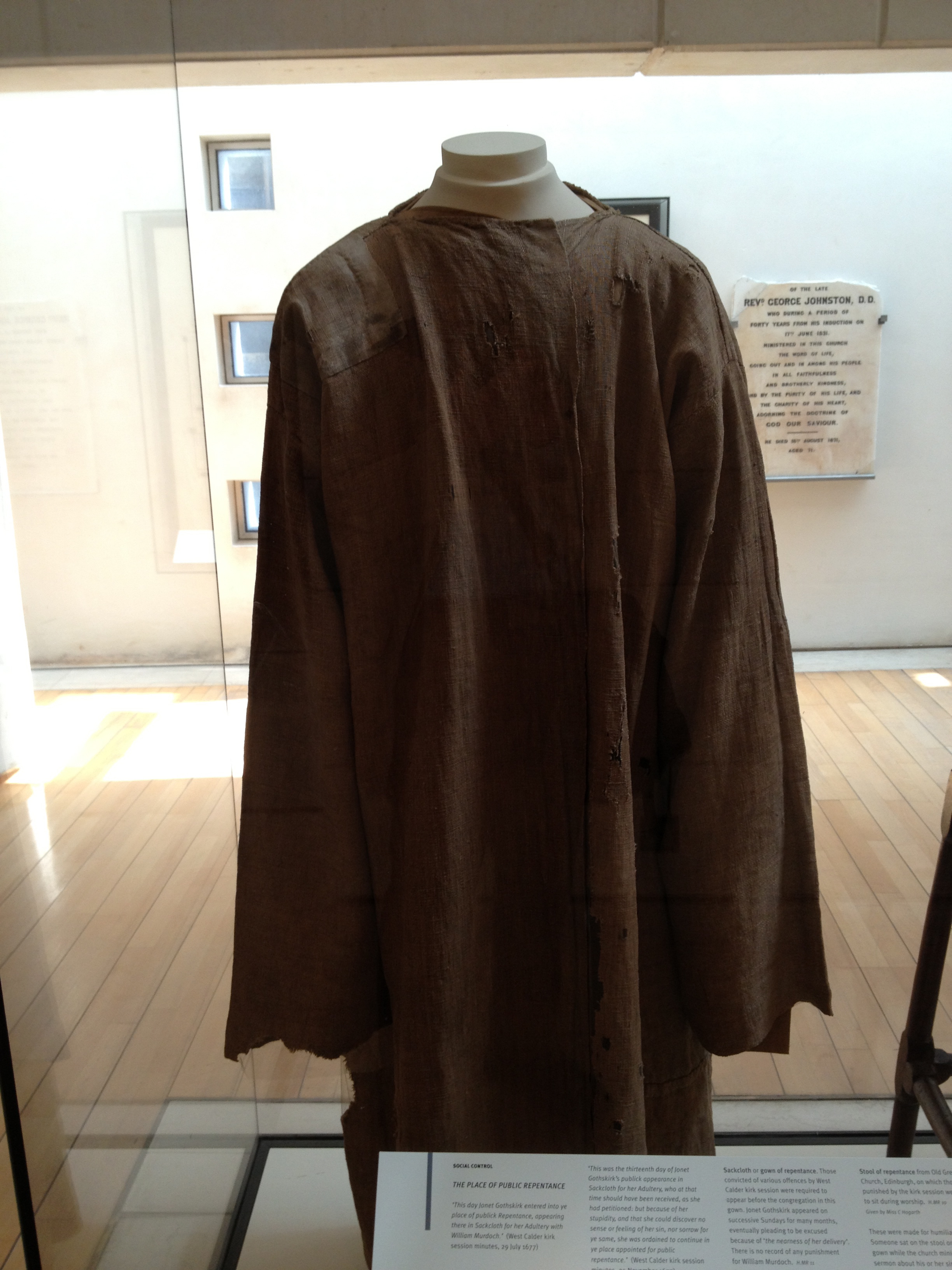
Back in the days of The Scarlet Letter, and before, an even more egregious double standard afflicted the sexual practices of women and men. Our primate nature promotes two conflicting principles: disgust at cheating and the desire to get away with what we can. Unfortunately, biology has often showcased female infidelity with the “illegitimate” child, and religions have stood in line to condemn the behavior that led to such circumstances. I was reminded of this while looking at a “gown of repentance” at the National Museum of Scotland. The Scottish Reformation led to an unusually severe kind of Schadenfreude when it came to pointing out the faults of others. Janet Gothskirk, spiritual kin to Hester Prynne, was convicted of adultery and had to wear a “gown of repentance,” literal sackcloth, to humiliate herpublicly. Her partner in crime, William Murdoch, is not recorded as having received any punishment for the affair, according to the placard.

IMG_0845

Thus it has always been: boys will be boys, but girls will be good. And when it comes time to dole out the blame, well, boys sometimes just can’t help themselves. This double standard is still in widespread practice throughout the religious world today. It shares roots with the same thinking that leads to many major religions denying sacerdotal leadership to women, and to the unfair punishment doled upon women in cultures where their behavior “dishonors” that of the men-folk. And we have all seen where male leadership has steered this ship.

What struck me hardest, staring at the dirty, ratty garment of shame, was that forgiveness seems so far removed from the religion of the Reformation. Christianity has always claimed a basis in the concepts of love and forgiveness, but when it comes to the very real circumstances of human failings, the animal tendency to attack the weak is often the driving force. We deflect because deep down we know that we all have failings. Clergy and braggarts may sometimes claim otherwise, but we share this very common liability of humanness. We should try to help each other through it. We should remember the golden rule. We should remember that sackcloth was meant to be self-inflicted and that the role of the church was to absolve the guilt, not to showcase it. Janet Gothskirk is forgotten to history, save for the garment she once wore to display her weakness for all to see.


Weird Tales

WeirdTaleSince I first discovered H. P. Lovecraft, I believe that I have read all his published fiction. Most recently a multi-year marathon took me through the S. T. Joshi editions published by Penguin Classics. Reading those editions led to a natural curiosity about S. T. Joshi; H. P. Lovecraft is still an author struggling for respectability, although the internet has brought him great fame. The literary elite consider many genre writers as gauche, and those who read them decidedly low-brow. When I saw that Joshi had written a book entitled The Weird Tale (the genre designation preferred by Lovecraft), I decided to learn more. Joshi, I had known from his webpage, is an ardent atheist, but also a true admirer of Lovecraft’s craft. Since I’ve tried my faltering hand at fiction a time or two, generally having even less success than Providence, I wanted to see what Joshi had to say.

Few things are as inspirational as reading about writing. Those of us compelled to do it find it an endless source of fascination. What drives us to it? We don’t know. Where do the ideas come from? We can only guess. Why do we do it? We must. And so, it is clear, also felt the authors surveyed in Joshi’s fine little book. Although the names of Arthur Machen, Lord Dunsany, Algernon Blackwood, M. R. James, and Ambrose Bierce mostly just tickled some remote tendrils of synapses in my skull, this study was the first real knowledge I had of any of them. While some patterns emerge, there is a notable diversity of background to the writers of the weird. One element that Joshi doesn’t fail to notice is their religious conviction, or lack thereof. In many ways this is odd, but in others it feels perfectly natural. Many materialists count creativity as the predetermined motion of particles and energy that evolution makes inevitable. The writers, however, refuse strictly to conform.

Lovecraft was an atheist and mostly a materialist. Joshi is puzzled, however, when Lovecraft seems to call this certainty into question. I’m not. Lovecraft did not believe in God, but he invented gods. How difficult it must be for a creative mind to dabble in the divine and simply walk away at the end of the day. Lovecraft was no stranger to peculiar residues that clung to the unwary and the bizarre transformations that could occur under the aegis of misplaced belief. But like the narrator of many of his tales, at the end he too knew he’d been affected. I don’t mean anything as crass as deathbed conversion. Rather, like all those who are truly intelligent, we must admit that there are some things we just don’t know. Cthulhu may not be slumbering beneath the sea but many will not sleep easily at night with their closet doors open. To expect anything less of Lovecraft, to me, seems just too weird.