Caledonia Dreamin’

“Edinburgh is a mad god’s dream.” So penned poet Hugh MacDiarmid with sentiments that could’ve been composed by H. P. Lovecraft. My association with Edinburgh seems accidental, but there is little in my life that compares to this mad god’s dream. The Gnostics used to believe that there was nothing in divinity that precluded a kind of divine madness. Philosophers, back when they still considered god a postulate, argued about whether the deity was good or evil. If they’d come to Edinburgh, I suspect, the debate would’ve taken on a whole new cast. In his poem “Edinburgh,” MacDiarmid captures the untamed nature of a city that has never been given the accolades of Paris, London, or New York, but is just as edgy and twice as beautiful.

Dreaming gods, of course, are nothing new. Vishnu, according to some strains of Hinduism, is the god whose dream is the universe. In the Ugaritic Baal Cycle, it is a dream that reveals to the ancient god El that Baal has returned from the land of death. And, of course, Cthulhu lies dead but dreaming in the city of R’lyeh. To me, Edinburgh is a wonderful alchemy of divine dreams. I was a young man, still so very naive when I moved here. Looking back at those old photos, I see a much younger face from the past, telling the camera that yes, he’d found paradise, the very place of God’s dreaming. Our human politics, however, trump divine dreams every time. Although I never wanted to leave, I was not permitted to remain. Yes, the camera does, at times, capture the soul.

DSCN3490

I am on the train that will take me from Edinburgh, having seen it anew through my daughter’s eyes. I came here penniless some twenty-four years ago, but with a head full of dreams. Life has taught me the cost of dreams since that time, and I have had to pay with wrecked careers and uncertain futures, trusting that the god who is dreaming all this is mad indeed. Nevertheless, like the gods, I refuse to stop dreaming. As much as Hugh MacDiarmid captures the spirit of Edinburgh, as I sit here, with a wee bit of mist in my eyes, my mind is on the words of another poet, Baroness Nairne. To her I will have to leave the last words, from this south-bound train. “Fareweel, Edinburgh, where happy we hae been.”


The Importance of Being Honest

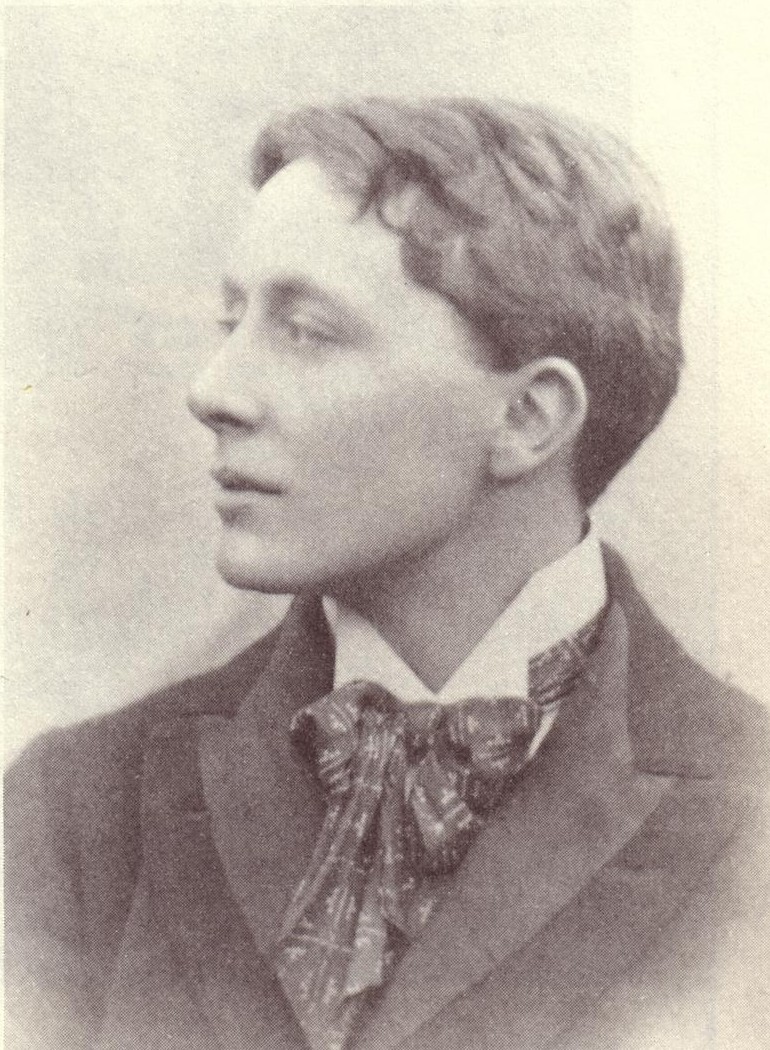
JohnGrayContinuing our quest to be a family out of sync with the modern world, we used part of our free day in Edinburgh to take the Book Lover’s Tour. Edinburgh has a long literary history that includes such writers as Sir Walter Scott, Robert Louis Stevenson, J. M. Barrie, and Sir Arthur Conan Doyle. A more recent star in that constellation is J. K. Rowling. The tour we took was led by the redoubtable Allan Foster, a geology student turned literary psychopomp. Although not associated personally with Edinburgh, Oscar Wilde had an unusual connection that made for an interesting tale. One of his male lovers, John Gray (a model for the eponymous Dorian) eventually became a Catholic priest, and lover of a wealthy Russian poet, Marc-André Raffalovich. When the Gray was assigned to St. Patrick’s in Edinburgh, Raffalovich was appalled at the state of the building and offered to finance a new church with the provision that his friend be appointed priest in charge. Thus the new building came to be and still stands on Cowgate.

Of course, nowhere is the priest or his lover, benefactor of the parish, mentioned in the church literature. Morality often parades as self-righteousness. Secret lives are not restricted to the clergy, of course. The fact is that people everywhere are human, and people are complex. So complex that we will sometimes carry on a charade to ensure religious respectability, to the point of having political candidates endorsed by clergy for issues that run counter to the very sources of their funding. Righteousness can be very costly, but self-righteousness comes cheap. Religious systems that demand standards that they can’t uphold either collapse or excel in duplicity.

When the tour was over, we walked by St. Patrick’s church. I wondered how many of the patrons knew the history of the lovely building they use for worship. Should they take a literary tour and learn the background of the church, would it make any difference? Ethics can be a matter of convenience, particularly when it is a matter of sexual propriety. Somebody else’s sexual propriety, that is. The real business of religion should be helping to improve authentic lives. Today it has often become the business of supporting the political system that bankrolls the special interests nearest to one’s heart. And reading, especially of unapproved materials, only gets in the way.


Sweet Morality

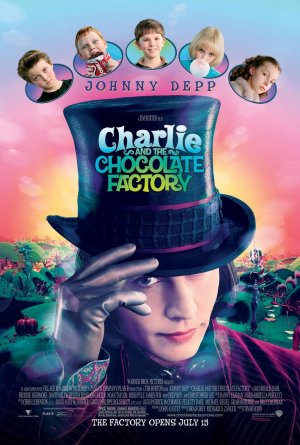
CharlieandtheChocolateFactory When I saw Willy Wonka and the Chocolate Factory as a child, I had never heard of Roald Dahl. Although I enjoyed the movie, it was never a favorite. Like any kid I liked candy, but I’ve seldom been motivated by sweets. I discovered Roald Dahl when my daughter was young, and read for the first time his somewhat more disturbing original version of the story. Tim Burton has a reputation for going back to the roots of beloved childhood characters and revealing their darker sides. When his Charlie and the Chocolate Factory came out in 2005, the appeal went beyond sweets, for this was a modern, if sinister, morality play. While rewatching the movie recently a number of what should’ve been obvious religious motifs suggested themselves. The first came when Charlie Bucket is shown in the main chocolate processing room reaching for a candy apple. Violet Beauregarde steps in and snatches the apple from the tree in a defiantly Evesque move. She later receives her punishment by being transformed into a fruit.

Augustus Gloop receives a strange, chocolatey baptism is what might otherwise be the waters of life. After all, the Oompa-Loompas are shown bowing down in worship to a cocoa bean in a flashback. When Veruca Salt attempts to catch one of Willy Wonka’s nut-sorting squirrels, in a rather disturbing scene reminiscent of Ben, the squirrels pin her down and carry her to the garbage chute. She is carried in classic cruciform style, emphasizing the martyrdom she receives at the hands of her indulgent father. Even Mike Teavee undergoes a kind of resurrection after being atomized and projected into a television.

A friend once told me that the characters in the film represent various deadly sins. Augustus Gloop easily falls into gluttony, and Violet Beauregarde is an emblem of pride. Veruca Salt clearly represents greed, and Mike Teavee is full of wrath. Willy Wonka is part devil and part god in the film, doling out just punishment in a seemingly unfeeling way, while rewarding the few instances of virtue. Deprivation forges virtue in Charlie Bucket demonstrating how clearly the movie is in the realm of a morality play. With its horror film tropes and forays into the truly strange, Charlie and the Chocolate Factory is an example of how morality persists even in the vision of those often considered completely secular. Without it the movie becomes just another excuse to overindulge in sweets.


First World Religion

H. P. Lovecraft’s contemporary, and sometimes inspiration, Algernon Blackwood has recently come to my attention. Like Lovecraft, Blackwood was an early twentieth-century writer of supernatural tales. Raised with a father of “appallingly narrow religious ideas” Blackwood came to write stories involving strange religious characters and occult themes. I recently read his famous story, “The Willows,” for the first time. The entire premise is built around a sacrifice required by strange gods on an isolated island in the Danube River. Much of Lovecraft’s literature, as is readily apparent, builds on the Old Gods. Lovecraft was an unflinching atheist, but he knew that the divine had the ability to frighten in a way that the purely material often does not.

The early twentieth century exerted an enormous influence on the religious landscape of the modern world. Although my historical specialization is much earlier, it is clear that the events of the First World War forever changed the way that religion was viewed. Historically, those not involved in the fighting of wars had often been insulated from them. With the advent of technology that allowed military devastations to be photographed and swiftly disseminated, people around the world realized what an atrocity war actually is. Not glorious. Not triumphant. And despite the abundance of piety in foxholes, no deities evident anywhere. It is well known that horror of war at least partly led William Jennings Bryan to advocate a more fundamental brand of Christianity to counterbalance the “evils” of evolution that led to such nasty ideas as eugenics and social Darwinism. It is no accident that the Fundamentalist movement began to take hold with the revelations of the First World War.

GermanInfantry1914

Ironically, today many use creationism as the excuse to challenge all religion as a misguided set of antiquated principles that have no place in an enlightened world. The sad truth is that those who immediately dismiss religion out of hand don’t realize that the creationist concern arose precisely for the same reason: the horrors that science was unleashing upon regular, simple religious believers. The two viewpoints, however, can live together. Although many of the writers of the early twentieth century had no room for faith in their accounting of reality, they did believe in its effectiveness in creating fiction that had to be taken seriously. Atheists, perhaps, but not angry ones. Perhaps the angry ought to spend some time amid the willows to evaluate more fairly the ambiguous role that religion play has played and continues to play in an uncertain world.


Curing Fundamentally

Despite the many problems with Richard Dawkins’ religious reasoning, he correctly notes that children are religious because they are taught to be. (That’s actually further than Dawkins is willing to go, since in The God Delusion he states that children are not religious at all, but are only claimed to be so by parents.) Belief is something that we are only beginning to understand, but it is clear that children are taught their religion, generally, by those who raise them. By the time most of us finish high school or college, however, we have learned that religion is limited to a relatively brief segment of our otherwise busy, secular lives. Over the years I have met many people whose religion I have studied in more depth than they, mainly because it was of little interest to them. God made no sudden appearances in their lives, the miraculous never occurred, and so life is business as usual. Religion was for Sunday morning (or whenever).

481px-PhrenologyPix

I was raised as a Fundamentalist. Although my readers may clearly see that I am no longer one, I do know that this bundle of neurons in my head has been made what it is, at least in part, because of that early training. Now a neuroscientist is suggesting that such thinking might be a curable mental illness. In an article in the Huffington Post, Kathleen Taylor, a neuroscientist at Oxford University, suggests fundamentalism may be a treatable disease. Looking over the secular headlines, there is no doubt that much of the misery in the world is caused by religious literalists acting out their fantasies in deadly ways. The suggestion that they might be treated for mental illness, however, raises profound—exceptionally profound—questions. Since I work in a city of millionaires and billionaires, I ponder how it is that extreme selfishness is not counted a mental illness. The desire of an individual to acquire far more wealth than one person can ever use seems to be an illness. Aesop might call it being a dog in the manger. No one is suggesting their brains be reprogrammed.

The even larger issue is who has the right to decide “the new normal.” Richard Dawkins may be correct that children reflect the religion of their parents, but as soon as adults declare what religion is acceptable we find other adults colonizing new continents, with the attendant misery that such migration entails. Where do we draw the line? If Fundamentalism programmed out, will Baptist neurons be allowed to remain? Methodist? Presbyterian? Mormon? The issue raised by Dawkins must be placed in context; if parents decide on a child’s beliefs do other adults have the right to decide on what is the correct belief? (Orthodoxy means precisely that.) Is a strict rationalist mentality what we want? A life without Hayden, Picasso, or Charlotte Brontë? What would Mr. Spock do? Will the real Randle Patrick McMurphy please stand up? Our rich fantasy lives are what make us human. If we are going to program out religious freedom perhaps the brave, new world is already here.


Witching Fiction

WitchesRoadLiterary fiction is a rich trove of religious thinking. Consuming fiction sustains the soul as well as the mind. Sheri Holman’s Witches on the Road Tonight was an impulse buy. The title, the cover, the intricate implications, the price were all right. It turned out to be a rewarding story that involved, possibly, witches and certainly religion. Not that it is a story about religion—definitely not. Yet, the protagonist is a weatherman who dresses as a vampire to present old monster movies on late night television. His relationships define him and, as his daughter learns, he may be the son of a witch. Deeply textured with the earthy reality of the rural poverty-stricken, at several points in the novel a thoroughly naturalized biblical vocabulary effortlessly flows. At crucial moments the story is poised on the crux of heathenism and religiosity. It is a book difficult to forget.

The fascination with witches has deep explanatory roots. When hopes are not realized as they are carefully planned, people naturally seek a scapegoat, someone to blame. Too often in history the blame has fallen on the powerless, the marginalized. Too often on women. In the somewhat enlightened twenty-first century it has become passably safe to declare oneself a witch. Our scientific worldview allows it as a harmless delusion, but the issue is more than it might seem. For some, witchcraft is the only channel available for a power that should belong to all. For others it retains a taint of evil, primarily because of a biblical point-of-view.

Israel in antiquity was a patriarchal culture. It was a man’s world that kept most women from any seat of power. “Witches” in this world are simply those who continue the trajectory of a kind of animistic faith in the vibrant life of nature. Prior to “revelation” it was self-evident that nature itself was full of vitality—spirits—if you will. When God was added to the equation, the life-force of nature fell on the “less than” side of the comparison. Even today children recognize the shaman under the name “witch-doctor,” euphemistically applied to those closer to nature than to the Bible. Reading Witches on the Road Tonight brought all of this back to me. Although largely set in New York City, it spoke to me as a rural urbanite who left something valuable in the woods of my childhood.


Tell-Tale Hearts

StorytellingAnimal As a sometime dabbler in the fictional arts, I was intrigued by Jonathan Gottschall’s The Storytelling Animal: How Stories Make us Human. I read the book because of my own fascination with fiction—it is a transcendent activity to read it, but more so to write it. I‘ve always wondered why. Gottschall, a fellow academic making a living as an adjunct instructor, is a lucid writer and a great storyteller. His book opens with the unusual fact that even the most logical and rational of humans are addicted to stories. Our brains work to spin unrelated events into narratives. Even while we sleep, our minds continue to tell fictitious accounts of weird adventures. To be human, Gottschall clearly demonstrates, is to be in love with stories.

In chapter 6, “The Moral of the Story,” Gottschall turns his attention to religions. That far into his book it is no surprise that we find religions are largely based on story. Those who’ve studied mythology plainly see the story-ridden origins of religions. Religions, after all, have nothing if not great explanatory value. They tell the tales of why we’re here—the technical name is “etiology,” stories of origins, but also tales of what the gods, the tao, or the force demand of us. Believers often take such fanciful narratives literally, missing the point of it all, the proverbial moral of the story. The story is the moral. We find the deepest truths in fiction.

Many of my friends are fiction writers. Most have never been published or struggle to find representation. None simply give up. The draw of narrative is as palpable as the need to eat or sleep, as strong as the urge for sex or recognition. It is far stronger than the desire for money since nothing material can substitute for our desire for stories. After a busy day we send our children off to bed with a nighttime tale. Many of us climb into bed with a book—the more fictional the better—to end our conscious hours each day. We dream our way through the night and spend our long days fabricating a narrative we call “my life.” Those of us who indulge in fiction are sometimes solitary individuals, but we crave the awareness that we are not alone. Others too, as Gottschall clearly proves, are alone with us. In fact, all humans are gathered around this campfire of the storyteller. Thank you, fiction, for coming to the rescue.


Sterling Serling

“There is a fifth dimension beyond that which is known to man. It is a dimension as vast as space and as timeless as infinity. It is the middle ground between light and shadow, between science and superstition, and it lies between the pit of man’s fears and the summit of his knowledge. This is the dimension of imagination. It is an area which we call the Twilight Zone.” The words are those of Rod Serling, native of Syracuse and Binghamton, and creator of The Twilight Zone. When I travel to a new place, I like to honor the writers and creators of the region. Yes, there always have been many creators. By my age, Rod Serling was dead, but he had, before that time, created a cultural phenomenon that would stay with the world forever after. It would be difficult to quantify the effect The Twilight Zone had upon me as a child. That opening took ahold of my young mind and convinced me that there was more to life than what appeared on the surface. It is the power of creation.

Rod_Serling_dictating_script_1959

Serling was a fighter. “The angry young man of Hollywood” who used his fiction to protest war and racism, Serling took on many issues in The Twilight Zone that would have been censored had they been presented as fact. Fiction is the vehicle in which truth rides. The bizarre world Serling envisioned captured the imagination to such a point that if I write, “do-do-DO-do, do-do-DO-do” many of you will be able to conjure the theme of The Twilight Zone in your heads. We all know that this is a sign that something strange is about to happen.

There is something about place. I’ve written about sacred geography before, and it is one of the more fascinating aspects of human subconscious life. Something about Syracuse-Binghamton still says “Rod Serling.” Maybe it’s in the low, glowering clouds or the ancient Native American names and traditions that can still be found in this region. Although I’ve never lived in New York, my ancestors did, in the region just east of here. A lifelong wanderer, I sometimes wonder what it is to belong to a place. I have often felt the persistent call of upstate New York, the salmon wisdom whispering me home, perhaps. I’ve never lived here, but maybe I belong here. New York is now proud to claim Rod Serling, and I drive from Syracuse to Binghamton delving deeply into the sacred geography of the region and ponder how such a mind came to be. Even creators, it turns out, have to be created.


The Triumph of Lovecraft

The deeper you peer into the mouth of nature, the more Lovecraftian the world becomes. Just days after I had posted a little meditation on Cthulhu, the great old god of H. P. Lovecraft’s unholy pantheon broke into the mainstream news. No less a source than NBC ran the headline “Tiny Cthulhu ‘monsters’ discovered in termite guts” only a few days ago. The microbe with the scientific name Cthulhu macrofasciculumque lives in the digestive system of termites, helping them in their destructive work. True, Lovecraft described Cthulhu as a bit bigger than that, but the first appearance of the microbes, according to Megan Gannon, reminded the discoverers of the eponymous terror of the Cthulhu mythos.

From microbes to the major football leagues such as the Baltimore Ravens, writers of the macabre have left their mark on our culture. The darkness they describe so richly is something we all feel at some level, but that we sublimate most of the time so that we can get on with our lives. Cthulhu macrofasciculumque may be very, very small, but the super-viruses and bacteria that we are encountering have the ability to destroy us just as surely as the chimerical colossus of Lovecraft’s nightmares. When we look for a way to describe these terrors, we have brave literary heroes from whom we might draw. We would be lost without them. They make it safe for us to venture into that darkened room, for they have been there before us. Lovecraft gave the world its first scientific description of Cthulhu, and although that description defies adequate reconstruction, we recognize it when we see it.

As Lovecraft saw him.

As Lovecraft saw him.

Science has brought us so very far. We can now see to almost the brink of an infinite universe and delve into the guts of termites. We have the ability to prolong life and increase physical comfort for those who can afford it, and we can annihilate entire nations at the press of a button. Drones can fly overhead and do the dirty work, and we don’t even have to step outdoors. Yet when we meet something that shivers our scientific spines, we turn back to the old gods to name it. Yes, religion may be the bête noire of science, but the dark night of the soul is not illuminated by LED’s or lasers. To see in this dark you need to have the night vision of literary perception. And those lenses, according to Lovecraft, reveal that the old gods are dead but still dreaming.


A Weird Resurrection

Driving through an unfamiliar city doesn’t allow for much time to appreciate what you’re seeing. Back in February when I was visiting Austin, Texas for the first time, it was 65 degrees outside. Given the irascible temperatures in New Jersey this year, that felt like summer. Of course, the locals were bundled up since it was, for Texans, unseasonably cool. The weather has been off this year. Of course, we know who to blame. Cthulhu. As I was trying to find the University of Texas with an impatient GPS as my co-pilot, I spied someone walking down the street wearing a Cthulhu ski mask. I can’t express how badly I wanted to pull aside and snap a photo, but pulling aside in a strange city can lead to unwanted adventures. Especially when your co-pilot is an opinionated GPS. I’ve been to north Philly and the south side of Chicago. I didn’t want to take any chances that Austin might hide such districts.

Cthulhu mask

H. P. Lovecraft, like most original thinkers before the computer age, was ignored in his lifetime. I wonder what he would have felt if he had divined that the internet would one day bring him world-wide fame. His writings, of course, had been appreciated before the computer was invented, but the web has nearly as much Cthulhu as it does LOL Cats. Even those who’ve never spent a dark night curled up with the Necronomicon recognize Cthulhu’s octopoid visage when they see it. Davy Jones of the Pirates of the Caribbean fame borrowed his unforgettable face from the Old Gods discovered by Lovecraft. Cthulhu has become a cultural icon of the chaotic, the cosmic, and the somewhat comic.

In a strange way Cthulhu stands for resurrection. In Lovecraft’s mythological world Cthulhu lies under the sea, dead but dreaming. A dying and rising god of utter terror. Lovecraft, an atheist, built his fiction nevertheless around a series of gods. Today his stories are noted for their moody portrayal of improbable worlds, and his storytelling has had an incredible influence on many of those who attempt to generate worlds that are fantastic but somehow still believable. Cthulhu’s resurrection, however, is not to be desired. Even if these he represents life anew, it is a life humans could not bear. In a deeper sense yet it is Lovecraft himself who has experienced a kind of resurrection. A writer forgotten in his lifetime, but rediscovered when it was too late for him to realize just what he’d created, the true master of Cthulhu, I like to believe, lies dead but dreaming, and he has already revealed that he will rise and the masses will tremble.


Gods in Spandex

OurGodsWearSpandexOne thing leads to another. Reading Jeffrey Kripal’s Mutants and Mystics stirred an interest in comic books that I hadn’t felt since before my college days. Often excoriated as puerile, escapist doggerel for pre-pubescent boys, comics have grown to be respected members of adult society. I often wonder what the draw might be. Hollywood has certainly cashed in on it with any number of blockbuster flicks each year coming from the brains of the comic book writers and artists. So I picked up the quirky book by Christopher Knowles and Joseph Michael Linsner entitled Our Gods Wear Spandex: The Secret History of Comic Book Heroes. Reading it was kind of like looking in a mirror that has been buried in dust for a few decades. I hadn’t realized that my tastes in childhood comics was a reflection of a longing for the divine world with healthy doses of science fiction, and even H. P. Lovecraft, thrown in along the way. Knowles ties in a remarkable breadth of material to demonstrate that our superheroes are, in the final analysis, gods. That point may be taken in any number of ways.

The academic world suffers from a fear of respectability. That may seem a strange assertion, but I’ve spent a great deal of my life among academics and I know that many of them are insecure and tentative. Does all this reading, writing, and analysis ever get read by anybody? Does anybody take me seriously? Academics are haunted types. So when a subject as vulgar as comic books arises, scholars are reluctant to touch it. It might look like we actually enjoy reading the funnies. Still, popular culture has demonstrated an unexpected depth to much that we read in the strip world. As Knowles points out, a deep undercurrent of the occult and esotericism runs through many hero story lines. Several heroes began their lives as classical gods, only to assume the spandex and become incarnate humans with special powers we long to have ourselves. We would fly, if we were given the chance.

Our Gods Wear Spandex may never be viewed as an academic book by most. It has too much visual interest and not enough recondite footnotes. All the same, it is a profound look at what people really desire. We worship gods because of their special powers. If God were one of us with our humiliating weaknesses and limitations, would we ever worship him or her? Of course not. We only seek to appease those who are stronger than we are. Entire governments and ecclesiastical bodies are built on that very principle. Heroes are like us. Mortal, and yet, with something more. They die. But like the gods, they can come back. Reading Knowles it becomes clear just how much religious thought pulses through the veins of the comic book world. We may be grown up and sophisticated. We may have left behind childish things. But when our backs are to the wall, who doesn’t secretly wish they were Wonder Woman or Superman? And maybe that wish is a prayer.


Real Life Zombies

In recent months Binghamton University has been on my mind. Binghamton has a number of videos available on YouTube which I find to be entertaining and even, sometimes, very funny. I like Bing’s style. Even though I catch myself laughing once in a while, I know that Binghamton takes higher education seriously. I watched a recent, 17 minute talk on a vital topic. It is located here, and I would recommend that you watch it too. Don’t worry, I’ll wait.

Back? Okay. The situation raised here is one that makes me shudder. Few things are as debilitating and vulnerable as an uneducated populace. Both religious and political forces have made great efforts to prevent certain orthodoxies from being challenged by what they term, as an obvious swear-word, “higher education.” The fact is, folks, higher education is nothing more than an attempt to get people—often young people—to learn how to think critically. That last word is a stumbling block sometimes. Any number of people will suppose that critical thinking is the same as criticism. It isn’t. Critical thought is the ability to approach a problem—any problem—rationally. To respond with the best that our minds have taught us to do, rather than with knee-jerk reactions. Yes, emotion and jerking knees have important places in the world, but they only work well if they are accompanied by the ability to think critically.

The video makes it pretty clear that the ability to think is rapidly eroding in our culture. Perhaps not quite zombie apocalypse, but not comfortably far from it. The death of Borders was blamed on its inability to get into the electronics markets by various pundits. I disagree. Borders fell victim to a culture that has lost the joy of challenging reading. We like spoon-feeding (otherwise much of the internet is difficult to explain). In order to exercise our brains, we have to use them to read hard things. Like my high school coach used to say, if you don’t use your muscles they’ll atrophy. Looking at my mid-section, I can see that his words were true. What Coach didn’t warn us about, though, is that the same holds true for the mind. The unchallenged intellect is a dull one. This is a threat far more insidious than any Communism, or liberalism ever was. It is the dummification of America. We are a nation that loves zombies. We are also a nation in danger of becoming them as well. Fight the zombie apocalypse—read a book. And like that baseball bat you use to swing at the undead, the harder it is, the better.

They don't write them like that anymore

They don’t write them like that anymore


Wrongful Resurrection

Re-Animator

H. P. Lovecraft was a tortured man. An atheist, he saw the inevitable dilemma of human life. We want to live forever, but even the short time we have is full of suffering. Almost Buddhist in his sensibilities, Lovecraft also knew the hubris of trying to reach too far. I was reminded of that when I recently watched Stuart Gordon’s Re-Animator. Like most of Lovecraft’s stories, the translation to film is difficult. The angst and haunting lie far too deeply embedded in the original stories to show, even with the finest acting, with any degree of verisimilitude. And the tales have to be padded out to get to that magic 85-minute mark. Nevertheless, there is something of their master still in them.

Re-Animator is based on Lovecraft’s short story, “Herbert West—Reanimator.” West discovers the secret to bringing the dead back to life. In the movie version, the result is unremitting chaos. The dead are somewhat zombie-like until Dr. Carl Hill, very freshly dead, retains his consciousness and begins his insidious plan to create a cohort of more proper zombies to do his will. Like Gordon’s other interpretation of Lovecraft, the eerily moody Dagon, there is a little too much blood-lust for my liking, but a point is being made, so I watch on. The point is very much at the heart of Lovecraft’s personal dilemma. We want to live forever, despite the pain and disappointments of the life we know. Life is optimistically resilient that way.

Lovecraft died a painful, natural death at the age of 46. His writings never demanded much attention during his life—thus seems to be the fate of many of the truly original. In the 76 years since his death he’s gained an enviable following. He might almost be said to have achieved a kind of immortality. A safe immortality. As he knew in life, resurrection is a double-edged sword. We may be reluctant to give up the only life that we (most of us, anyway) have consciously known, but have we really considered the implications of going beyond the line that nature has drawn for every living thing ever animated? Our technology keeps us alive in bodies that only continue their inexorable march toward the grave.

Am I sounding a bit bleak? Blame it on the rain. Immortality, in any belief system, only comes at a great cost. H. P. Lovecraft knew that and took the risk in spite of it.


Gods and Goliath

EyreAffairNot only gods are proficient at creating worlds. Writers, as readers know, are the creators of worlds too. I first discovered Jasper Fforde via a friend’s recommendation. With the depressing demise of bookstores, however, I end up picking up whichever one happens to be on the shelf. Not that this is a bad thing, but I find myself in a melancholy cast when I think of all the joy that is not being had by avoiding reading. It’s all rather hollow, wouldn’t you agree, Mr. Eliot? All of which is to say Jasper Fforde’s The Eyre Affair was great fun. As usual when I read fiction, I kept an eye out for how religion appeared in this alternate world—most fiction that ignores religion completely somehow seems to be less realistic than Fforde’s fantastic tale. In the world of Thursday Next, the churches are dedicated to GSD, the Global Standard Deity. As one of the characters explains, the GSD is a combination of all religions intended to stop religious wars. It’s a great idea on paper, but religions are prone to wars as sparks fly upward.

Somewhat later in the novel Thursday encounters a crucifix-wearing vampire. Fooled by the sigil, she almost becomes a victim to the blood-sucker. When Thursday points out the supposed impossibility of a vampire wearing a crucifix, he replies, “Do you really suppose Christianity has a monopoly on people like me?” Although Fforde can be a great comic writer, some of his quips are quite profound. Indeed—does Christianity have the only vampires? All religions have their monsters, whether that’s what the author meant (score one for reader-response theory). The truth is the truth, no matter whether intentional or not.

The idealized world of The Eyre Affair is one in which religion has become universal. The great military conglomerate in the book is called Goliath not because of the Bible but because of its size and apparent strength. It is brought to its knees, however, by Thursday—a female David, if you will. In practical terms, throughout the book the military is much more powerful that the church of GSD. Perhaps that’s because people are afraid. Religion, which once upon a time allayed fears, has now become one of their main generators. “Nothing frightens me more than religion at my door,” John Cale once sang. In this rich complexity the reader is invited to bask as Jasper Fforde works his magic. Do yourself a favor and pick up one of his books. Before it is too late. You might find yourself learning a thing or two about religion. I did.


True Heroes

supergirls As a guy with a healthy sense of the weird,it strikes me as odd that rational people can suppose that we’ve solved all of life’s great mysteries. As a student of biology, chemistry, and physics in high school—and a reader of non-technical aspects of the same throughout my adulthood—it always seemed that there was an undefinable “something more.” Reading Jeffrey Kripal’s Mutants and Mystics led me to an interest in comic books. As a child I did not have many of them since we didn’t have much money to spend on luxuries. The few I had, however, were read and reread and reread, assaulting my imagination with endless possibilities, many of which defied everything I was to learn of biology, chemistry, and physics. My interest in feminism and new-found appreciation of the proto-graphic novel, led me to read Mike Madrid’s The Supergirls: Fashion, Feminism, Fantasy, and the History of Comic Book Heroines. As a boy surrounded with brothers, I clearly knew which comic books were for males. Madrid’s book delves into this super-hero world with the question of why females have always struggled to be taken seriously in this fantasy land.

Many of the characters explored in Supergirls were heroines I’d never encountered before. Madrid’s analysis often appears spot-on as he traces their histories through the decades as they mirror, and occasionally lead, society’s expectations of what women should be. The one that I had no trouble recognizing was Wonder Woman. And the reason for that was she used to have a TV show. Not mentioned by Madrid was the mighty Isis, also a heroine from television. She began as a character opposite Captain Marvel, and did not have her origin in a comic book. Isis was, of course, an ancient goddess, and as I learned from Supergirls, Wonder Woman was not far behind. The way that women could be as strong as men was to be divine. For human females, life was much rougher.

Wonder Woman, Madrid notes, was one of the Trinity of early, lasting comic book heroes. Superman, Batman, and Wonder Woman are cast as the Father, Son, and Holy Ghost, respectively. Like her theological counterpart, Wonder Woman is the most amorphous, least understood of the three. Her career and persona change over time, almost losing any kind of supernatural ability. Her origin story, however, began as a helper of oppressed women everywhere. Today we see Superman and Batman on the big screen, but Wonder Woman has fallen behind. Despite great strides, our society still isn’t ready to accept rescue of men at the hands of a woman. More’s the pity, because we clearly see the mess that masculine leadership has spawned. Mike Madrid has discovered a secret identity for our old foe, sexism. And it might take the world of comic books to help us see clearly that which mainstream analysis still denies.