Peculiar Mythology

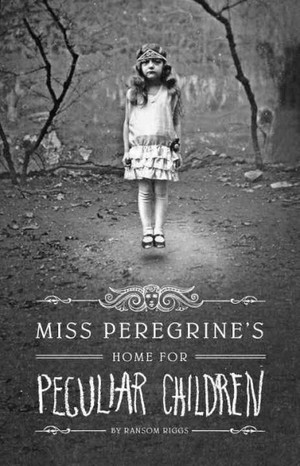
Peregrine Confession: I love books like Ransom Riggs’ Miss Peregrine’s Home for Peculiar Children. Ambiguity in fiction is under-appreciated at times. Of course, I’m not formally trained in fictional literature outside the confines of ancient mythology, but I do know what I like. This wondrous story of paranormal children in an alternate universe could almost have been drawn from Celtic mythology, and indeed Riggs provides a mythology to explain how things got this way. And every mythology is a kind of religion. In this world there are peculiars—not far removed from real life, for those willing to accept it—who have unusual powers. Miss Peregrine’s home, one where the children are under the guardianship of ymbrynes, houses those with special gifts. Some ymbrynes, however, wanted their godlike powers to make them into actual gods and in addition to causing the Siberian explosion, gave birth to hollowgasts, a kind of living damnation monster. “Rather than becoming gods, they had transformed themselves into devils.” Sounds a touch like Lucifer’s fall, n’est-ce pas?

It might be supposed by cynical readers of this blog that I select my reading based on the potential for finding religion in fiction. If that is true it is so only on a subconscious level, I assure you. I read about religion for many hours every day and I taught the subject for nearly two decades. When I turn to fiction it is generally for escape. I have found, however, that there is hardly any escape from religion. When I find it in fiction, therefore, I ponder some of its implications. Religion is so much a part of our lives that it can’t help working its way into popular culture. Maybe I just see it everywhere. That doesn’t mean that it’s not really there. But back to our story…

Hollowgasts, like Ugaritic devourers (sorry, couldn’t help myself), are powerful hungry. They must constantly feed their voracious appetites. Their favorite food, which actually transforms them a slight step back toward humanity, is the blood of peculiars. Blood is their salvation. The depth of this idea trickles down to the very roots of religion itself. Transformation is not possible without somebody paying the cost. Religion is bloody business. I won’t throw any plot spoilers in because I want to encourage you to read this strangely moving book. I will say that it is a strikingly well executed mythology for a world where God is not present, but where monsters and peculiars both partake in their own kind of divinity. And the strange photographs are real.


Poe

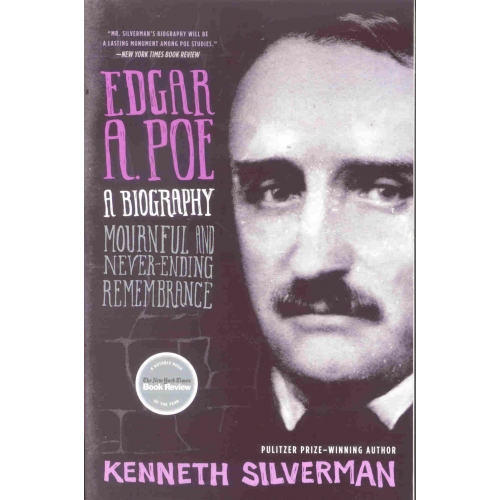
PoeSilvermanOn his birthday I began reading a biography of Edgar Allan Poe. The last biography of Poe I read, I’m embarrassed to admit, was in high school. To me Poe is like music: deeply appreciated and therefore taken in rare doses. The biography this time was Kenneth Silverman’s Edgar A. Poe, A Biography: Mournful and Never-Ending Remembrance. I picked this book up last time I was on the University of Virginia campus, just after I stopped by to gaze wonderingly into Poe’s room. Like most biographies these days, Silverman’s account is hardly a hagiography. Poe was a perfect man only in his embodiment as a man of sorrows. In the days when “writer” was not really a profession, Poe nevertheless recognized what his strengths were and persisted to try to make a living following those assets. A poverty-stricken living much of the time, but an honest one. It is not pleasant to have a hero’s foibles exposed, but Poe was all the more admirable for having been fully human. We have all experienced arrogance and humility in turns. Poe was a man who knew sorrow from his youngest years, and that cloud stayed with him until his death just forty years later. A personal tempest.

Poe, not a conventionally religious man, nevertheless recognized and drew upon religious imagery. In his poem “Ulalume—A Ballad” Astarte’s ghost appears. Astarte remains a goddess poorly understood, but Poe was likely drawing on her association with Venus. She fails, however, to lead to Heaven. Silverman points out how “Ulalume” was followed closely by Eureka, Poe’s only sustained attempt at metaphysics. Poe came to the conclusion that upon death we become part of the all-encompassing God. This daring deduction cost him friends and supporters, but it also led to a rebuttal by a seminary student. Poe’s reply to his criticisms remains apt, as Silverman quotes him, “‘God knows what’—he cared very little what he was called ‘so it be not a “Student of Theology.”’” Amen, Mr. Poe.

Some lives, like those of Job, seem fated to loss and suffering. Yes, there have been those who lost more than Poe, or even Job, but this is no contest to see who might bear the most weight before being driven to his or her knees. Poe felt it deeply and expressed it eloquently. He recognized, as most writers do today, that business models resent an honest voice. Those who sell are often those who pretend. I’m sure that Poe would nevertheless give a wry smile of irony if he knew how multiple editions of his works, long in the public domain, flow from the presses of publishers hoping to make a dollar or two on his now stellar reputation as a writer and, in full recognition of the paradox, a prophet. Like his raven, Poe could see beyond the confines of this world and paid the price for his vision. Obviously he was no student of theology.


Know Thyself

Perhaps it is a perverted sign of the times, but sometimes I seek myself online. Not surprisingly, most of what I find there is stuff I’ve posted myself. Then my daughter suggested that I search “wiggins” in the Urban Dictionary. For people my age, the Urban Dictionary is often handier than Merriam-Webster for reading online lingo. I’d never tried to find myself there before, however. It turns out that “wiggins” is defined as “The state of being uncomfortable or freaked out… an uneasy feeling; a sense of foreboding badness.” Speaking strictly for me, this is a spot-on definition. Other Wigginses would likely take exception, but this connotation fits me like a thumbscrew. Perhaps our names make us who we are. The Dictionary also cites the source of this slang; Joss Whedon (who also gave us The Avengers) apparently coined this term on Buffy the Vampire Slayer. (His name, by the way, is defined as, “To kill off the most lovable b-list characters in your movies.”)

Naming, in ancient times, held a distinctly religious significance. Ever notice how many biblical characters were renamed by God? Even today the Catholic Church recognizes renaming after a saint as part of a person’s identity at certain crucial junctures in life. Indeed, in western culture “Christian name” equates to the more secular “given name.” Names define us.

I’ve done a fair amount of genealogical research. The actual etymological origins of the name Wiggins are obscure, but likely have to do with living in a valley. More exciting prospects trace the name back to early English forms that look like the word for “Viking,” and the name does seem to originate from the vicinity of York, where Vikings were not unknown. Still, the more prosaic, the more likely.

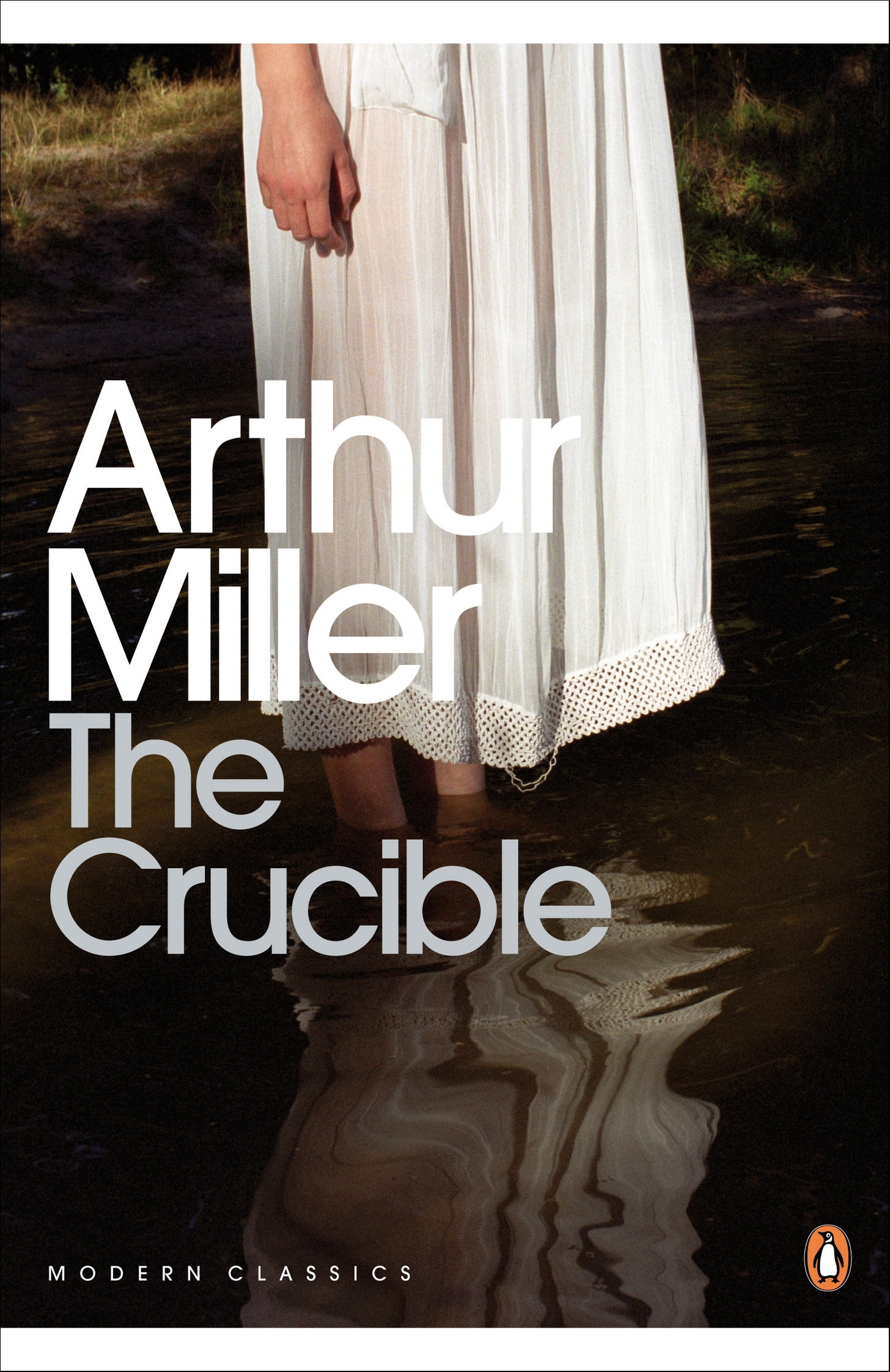
crucibleWhen my mother remarried, I took on my step-father’s surname. It didn’t sit well. When I read Arthur Miller’s The Crucible in seminary, John Proctor’s words leapt out at me: “Because it is my name! Because I cannot have another in my life! Because I lie and sign myself to lies! Because I am not worth the dust on the feet of them that hang! How may I live without my name? I have given you my soul; leave me my name!” When I later went to court in Massachusetts to reclaim, legally, my birth-name of Wiggins, I had that quote written on a paper in my pocket. We are our names. Slang has, in my case anyway, provided the most reasonable definition of my surname. And only courts, as I know from experience, have the authority to change this pre-decided declaration of who we are.


Stonefaced

Railsea Imagine, if you will, life on the open sea. Back in the whaling days. Days before enlightenment really took hold. Transpose that thought onto railroads. In a day of huge moles and other underground creatures. Days when no one can imagine where the rails end. That might give you the slightest glimpse of China Miéville’s Railsea. I haven’t read too much of Miéville’s fiction, but I have read enough to know to expect a reality distorting romp through very interesting places. In this take on Herman Melville’s Moby Dick, Miéville takes some noteworthy risks in providing his characters with a native religion. Fiction authors sometimes find religion a constraining topic. Consider Salman Rushdie. More often the restraint appears to be a lack of imagination on the writer’s part—although we can’t define religion very well, we all know what it is and what it’s supposed to look like. Miéville, although in backstory, provides a new religious world where the gods are called Stonefaces and everybody believes in angels, and the explanation of where the railways came from is “theology.” Even our erstwhile Captain Ahab is chasing after her “philosophy” in the form of a giant mole that seems to have taken her arm.

With a sensitivity I’ve rarely found (the fault could well be entirely mine), Miéville utilizes religion, particularly Christianity, to construct an alternate universe. The gospel therefore appears as godsquabble, and to suggest there is anything beyond the sea of rails is literally heresy. Our protagonist Shamus ap Soorap on his voyage of discovery ends up riding to heaven on the rails only to find that there is yet even more beyond. Although religion itself is not central to the story its adjuncts are, creating an entire mythos of life on the railroad. It this world it is clear that wood and trees are related, but no one quite knows how; some suppose an evil god planted false evidence to deceive them. There’s even a healthy dose of the Odyssey thrown in, with the Medes having to pass through a mountain dwelling monster, the siller, and the Kribbis Hole.

But aren’t we really on the ark once more? For surely the bedeviled Pequod was a shadow of the same. In Miéville’s fantasy world, the open ground unpopulated by islands is dangerous. All kinds of innocuous creatures burrow out and will eat the traveler who is not safely ensconced on a train. As if to underscore the Noahic connection, Sham ends up on an actual boat on an actual endless sea. I’m pretty sure Homer never read Genesis, but the parallels between Greek mythology and the Hebrew Bible were long ago recognized by Cyrus Gordon and his colleagues. Miéville continues the tradition. Stranded on an island, Sham tries walking on the rails (read walking on the water and you’ll get the picture) until his faith fades. There are many who declare that religion has outlived its usefulness, but if an author can bring Melville, Homer, and the Bible into an intensely creative story, I think I’ll have to beg to differ.


2014

IMG_0542

New York City, in a public place—I dare not say where—I see this sign. A certain Orwellian chill shivers my mind as I think back to 1984. Posters everywhere; you are being watched. If you see something, say something. NYPD Security Camera in Area. We have let our fear drive us into the arms of Big Brother. The problem with principle is that it requires a fair amount of spine. Who can stand in the face of possible, if remote, terrorist attack? Is it not the large, amorphous, faceless government that we, along with millions of strangers, have elected? I’ve read about their behavior; I’m not sure I want them watching me.

We have let fear define us. How far we have come from FDR’s admonition that the only thing we have to fear is freedom itself. Don’t get me wrong—I don’t approve of terrorists or any other cowards. If our response, however, is to cower in the many corners of our crowded cities while our own military patrols the parameter, well, the last place I recall like that was my visit to Jerusalem just months before the First Intifada. Even the bus drivers wore pistols. The heat from that burning car beside the road was worse than anything the Judaean Wilderness could throw at you. And still they long for peace.

Differing political and social outlooks need not come to blows. I’ll admit to being a shameless idealist if you’ll lay down your guns. Even if you won’t. It seems to me that we’ve forged ourselves a chain that reinforces outmoded associations. We can create the most intelligent weapons imaginable, but we can’t figure out how to cut a simple chain. Yes, I eye each jet flying a little too low with suspicion, and sometimes I walk a little too swiftly through the crowds at Times Square. I’d like to pretend I’m free, but ever since I read 1984—and it was close to that time—I’ve noticed that Big Brother looms taller than any tower in a world where inequality persists.


Fun Fiction

While I tend to limit my ramblings to once a day, every now and again something prompts another little post once the bus finally gets in and before sleep completely takes over. One such thing was an email from my friend Marvin announcing the publication of his latest story in Jersey Devil Press. It’s a fun piece about a malevolent goose. So, if you’re in the mood for a fictional escape, and you’d like to read something that’s free, check out “Good for the Gander.” Be sure to tell Marvin I said “hi.”


Graveyard Culture

TheGraveyardBook During an Ancient Near Eastern Religions course a few years back, one of my students commented that something was like “in American Gods.” I suppose my quizzical look betrayed that I wasn’t familiar with the book, and, aghast, he said, “you’ve never heard of Neil Gaiman?” The funny thing about being a professional academic is, if you want to be good at it, there is little time to read. Popular culture is vast; I’ve never even heard of “Gangnam Style.” But I did subsequently read American Gods, and from then on I’ve been picking up Neil Gaiman books as a special treat in my literary diet. A couple years back another friend recommended The Graveyard Book, so I read it over my brief holiday break. It is the time of year for treats. Gaiman’s fantasy worlds, although seldom explicitly deity-populated, tangle the real world with the supernatural—just the juncture where religion emerges. Although defining religion is not as straightforward as looking it up in a dictionary, you can nevertheless feel when you’re in its realm.

Nobody Owens was raised in a graveyard among ghosts. Since science tells us there are no such things, religion steps up to the challenge with suggestions of an afterlife. Whether or not there’s a Heaven or Hell, ghosts partake in that uncanny milieu we call religion. And since this is fantasy, there are other mystical creatures as well. In Bod’s world werewolves are called “Hounds of God” and they are on the good side. Ironically, the only clergy mentioned (along with various political figures) are actually ghouls. The world of the dead involves a religion of its own where an altar and chalice lie deep beneath a special grave and a human sacrifice makes up the climax of the story.

Religion, of course, occurs where the supernatural meets regular people. We dismiss it at our own peril. When Bod attends school his teachers guess he must be from a religious family because he doesn’t have a computer or any electronic devices. Religion eschews such progress. And yet it touches on the real world. I recognized Highgate Cemetery almost from page one. It could be that my own visit there just last year was fresh enough in my mind that Gaiman’s descriptions naturally took over. Or it could be that since I walk that imaginary line that we recognize as religion every day I recognize its more familiar features. Neil Gaiman’s popularity is a testimonial to how we still need the hidden world unexplained by science. We may call it fiction but it is just as real in the human mind as anything in the quantum universe.


Alien Religion

Alien3

Despite my interest in aliens, my viewing of the Alien movies has been tenuous at best. The image of what looked like an egg hatching a green sun over a particularly badly formed waffle always brought the tagline “In space no one can hear you scream,” to my juvenile mind. When the original movie came out in 1979, it seemed too scary for a kid in high school. I first saw Aliens (part 2) when living with a friend after seminary. He explained to me the missing gaps left from never having seen the original, and I was impressed by how Sigourney Weaver pretty much took on the alien queen single-handedly. I was still too young, however, to realize that there’s always room for an alien or its egg to attach itself inside any spaceship or escape pod. You can never really get rid of the things. I finally saw the first installment some ten years later, and it was clear that, as in nearly all series, the first was the best. Ridley Scott’s films take considerable energy to watch. No one seems capable of matching his dark moods and sense of a hopeless future. I left it at this state for another decade, until recently reading that Alien 3 marked the culmination of the “theology” of the series. Over the holiday break I decided to find out if this was true.

Ripley, who can never get a break, finds herself the sole survivor (again) on a prison-colony at what used to be a lead ore refinery deep in space. While the company had abandoned the facility, a group of inmates who had formed a religious order decided to remain. Having grown up in a refinery town, so far I’m on board with the story. Separated from society, from women, and from temptation, the prisoners are a fundamentalist sect that would seem to fit well into the woods of Wisconsin. Ripley threatens their delicate balance of celibacy, and although not a virgin she ends up conceiving an alien in a Madonna-esque way, not even knowing how she became pregnant. When she decides to incinerate herself rather than allow the alien to be born, she falls into the fire in a cruciform dive just to drive the point home. Before her dive into hell, however, Ripley tries to motivate this band of incarcerated monks to fight the alien. When they say the company will save them, she responds, “What makes you think they’re gonna care about a bunch of lifers who found God at the ass-end of space?” Again, echoes of Wisconsin.

Doubtless, my experience of the movies has been skewed by my own experience. Still, Alien 3 holds to a pattern that emerges fairly often in movies with a strong horror theme—religion is the progenitor of terror. The prisoners’ religion is described as “apocalyptic,” and it frequently appears that in movies where a civilization is on the brink of collapse, religion awaits to greet the survivors with open arms on the other side. In the horror genre, this is often a cold, clammy comfort. Although religious elements were largely lacking in the Ridley Scott and James Cameron episodes, I do hear distant echoes of Moby Dick here from the very beginning. The dark alien, like the white whale, is elusive and destructive and does not relinquish its hunt until Captain Ahab, or Lieutenant Ripley, is dead in its grip. And since Alien Resurrection awaits in yet another sequel, like the white whale, the alien never truly goes away.


The Best Gift

Standing outside the footprint of a circular chapel next to the ancient ruins of a drinking hall in Ophir, the Orkney Islands, with friends. We’re quoting from the memorable scene in the Orkneyinga Saga where Svein Asleifarson leapt out and killed Svein “Breast-Rope” as drunken vikings staggered back and forth from the Earl’s Bu to the chapel one Christmas season some nine centuries ago. The Orkneys used to belong to Norway and had a close connection with Iceland, which, all things considered, is not that far off. While working on my doctorate in ancient Syrian mythology, I experienced a fascination with Icelandic viking sagas and read several of them (in translation, of course). Traveling to the Orkney Islands was about as close to Iceland as we’d hope to get on a student’s budget, and the atmosphere of these historic islands does not disappoint. We were standing on the actual site of this historical incident one violent Christmas long ago.

VikingsImagining, however, is not the same as condoning. Nearing a millennium later, Iceland celebrates Christmas with “Jolabokaflod,” the Christmas book flood. Armed with books rather than broadswords, the folks of Iceland have built a considerable literary reputation. According to an NPR story my wife and traveling partner sent me, Iceland publishes more books per capita than any other country, and giving books at Christmas is a national tradition. Reykjavík is a UNESCO-designated City of Literature. Unlike the United States, a large proportion of the population of Iceland buys books, according to the story, and I can’t help but wonder if this isn’t related to two other Icelandic phenomena as well. Iceland has very little gun violence and it is one of the most ecofriendly countries on the planet. While it is only a feeling, I believe that widespread reading makes a better society.

I remember the experience of growing up and hearing other kids complaining bitterly about assigned reading. Here in this wild west corner of the world, we’re too full of dreams of action to spend quiet hours improving our minds. Guns are easy to acquire and too easy to use against the innocent. We could sure use a Jolabokaflod, it sounds like to me. Towards the end of each year I like to tally up an approximation of how many books I read in the previous twelve months. Although some are definitely better than others, each one is its own gift, a glimpse into someone else’s worldview. And such glimpsing aids in understanding. I may not agree with you, but I know where you’re coming from. And as we enter that long, cold stretch of January and February I feel ill-prepared if I don’t have a stockpile of books to get me through the darkness of this time of year. And one of my fantasies will be a world that can see from the blood-stained ground of Ophir all the way to Reykjavik.


Southern Comfort

CajunNightOnce upon a time, long before Hurricane Katrina, the American Academy of Religion and Society of Biblical Literature held their annual meeting in New Orleans. It must’ve been an incongruous sight: the Big Easy filled with right proper professional religionists discoursing eruditely. While there, my family purchased the Cajun Night Before Christmas, by Trosclair. A cute knock-off of Clement Moore’s “A Visit from Santa Claus” (‘Twas the Night Before Christmas), the story unfolds of a fur-bedecked Santa visiting a destitute, but grateful family on the bayou. Each year I try to reach deep in my southern roots to find an accent that accommodates the poem, and read the story the week before the holiday comes. A number of factors have suggested that perhaps this year Christmas might catch many people on a more subdued level. Crushing poverty is a reality, guns are too readily available, and the one percent don’t get close enough to humanity to contract the common cold. Even the effects of Katrina have refused to dissipate completely. Her sister Sandy visited the Big Apple, and things still aren’t quite right.

Big Apples and Big Easies may seem to have little in common, apart from how much money is available to assist in hurricane recovery. They both also participate in Christmas, being havens of Catholicity. Yet after the hurricanes some in New York and New Jersey were without power several days, but parts of Louisiana were simply abandoned. The will to help the disadvantaged seems to have improved since 2005. Considering changes at the top, this isn’t necessarily a surprise. Nevertheless, tragedy throws into sharp relief what we consider human decency. Too bad it takes a disaster to make us more human.

What sticks with me about the Cajun Night Before Christmas, apart from the flying alligators, is the profound hopefulness that the poem conveys. Those with so little take so little to improve their lot. Yet those with too much insist it is their right not to be taxed at all. Those who live in a shack don’t expect much from Santa. They have learned through the disappointment of experience that double standards are endemic in life and while some are unbelievably rich, the poor are happy with just the smiles of children. Ironically, Santa is the great equalizer here. While the children of the wealthy may expect and receive more, the children of the humble are also allowed a portion of hope. As I remember New Orleans, in the palmy days before Katrina, it was a city that knew Mardi Gras was far more humane than Lent, and that even a city marked my radical inequities (let those with eyes to see read) could come to a joyous accord when sins are about to be atoned. And even if he has to commandeer alligators, Santa will visit the poorest children the night before the holy days.


Fanpire Club

FanpireIt has become an odd world indeed when thousands of people look to vampires for family values. Although I’ve not read any of Stephanie Meyer’s Twilight books, I have been curious at the reception they have received. A literary agent said, a few years back at an event I attended, that publishers want vampires. There is no end in sight. Perhaps it is my inherent trust of scholars that led me to read Tanya Erzen’s Fanpire: The Twilight Saga and the Women Who Love It. Why would a religious studies scholar write about Twilight? Because Erzen realizes, as many scholars are beginning to that: 1. vampires are very religious monsters, and 2. many more people care about books like Meyer’s than they ever will about scholarly minutiae. I, for one, learned that I’ve missed out on a huge part of pop culture by insisting that my fictional reading must have at least an attempt at depth. Erzen ably points out that there may be truths beneath the surface even here.

When I first became aware of the Twilight books, I was surprised that no one seemed to be making the connection with Dark Shadows. I grew up with the subtle, sensitive vampire who was deeply conflicted. The books that serialized the television series were not profound either, but they evoked an angst that bespeaks a religious need deeply buried. Erzen is able to dig some of this out of Twilight as well. By interviewing fans for whom Twilight has become an ersatz religion, Erzen can show that even squeaky clean Mormon men can’t possibly live up to the vampire standard. The fantasy that has engrossed so many is an image of selfless love. As if Edward Cullen were a less chaste, and more undead Jesus. After all, he gives Bella eternal life and his love never grows cold. The values fit rather well with Latter-Day Saint theology, and provide a model for mortal family values.

More striking is Erzen’s revelation that fandom does not equate to feminism. The women who are empowered to love in unorthodox ways are very much controlled by their men-folk in Meyer’s universe. As Erzen points out repeatedly the ideal lover here is an obsessive stalker with a penchant for abuse (although mostly unintentional). Freedom for women comes at a cost. They may be offered the best in some fields, but even today women do not find equal representations in positions of power in our society. CEOs? Evening news anchors on major networks? Senators? Presidents? Our society is one that talks the talk of equality, but stumbles when it attempts the walk. Vampires cannot exist without victims. Even in the most “advanced” societies in our world, women must struggle in a hierarchy for which the architects, contractors, and supervisors are mostly men. Perhaps women find vampires so fascinating because it matches their experience of a society that takes far more from them than it is ever willing to give back.


Read Ban

Someone in the Greenville County Library doesn’t get out much. The LA Times reported this week that a surprised parent got a look at Alan Moore’s Neonomicon, a graphic novel that her child was reading, and went to the library to get it banned. There is a perverse kind of logic to this. The 14-year-old minor checked the book out from the adult section. The story doesn’t say why, but anyone familiar with H. P. Lovecraft would immediately see the familiarity of the title to his fictional Necronomicon. And anyone wanting to read that is surely above the age of innocence. As a result of this imbroglio another book has been banned. As the parent of a teenager I understand concerns about reading material, but then I know that graphic novels can be, well, quite graphic. I know because I read.

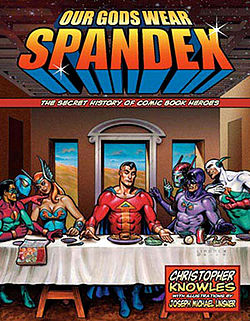
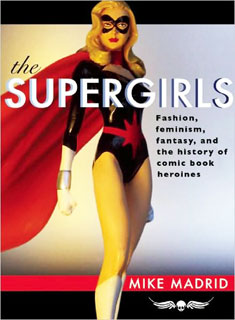
I’m currently reading a fascinating book about religious aspects of comic books. Many of us grew up with comics, and anyone who’s read some psychology knows that people are very much image-oriented. Even our Bibles for children are heavily illustrated—often with drawings nearly as far from reality as those of an Alan Moore story. Adults raised on comic books have been enticed back with such novels as The Watchmen— something that looks like maybe kids are the intended readership, but they’re not. The only way for adults to know is to read. (That, and to consider that the movie version of The Watchmen scored a solid R rating. That little itch should be telling you something.) But reading literature has fallen out of fashion.

While waiting for my bus home one day I decided to take the more local route because the bus was still at the gate when I arrived at the Port Authority. This is a longer ride, but with any luck it might get me home ten minutes earlier. When I asked a woman if I might sit next to her, and I began pulling out my book, she said, “you’re that guy that reads.” Guilty as charged. As I wait for the express bus, I spend the time with a book. Until she said that I never considered that almost nobody else does. Forget the days of earnest looking men, faces hidden behind newspapers, passing the commute by reading. Now it’s all ages and genders, holding electronic devices. Not that I’m surprised. People are visually oriented, after all. But I immediately recognized Moore’s nod to H. P. Lovecraft in naming his novel Neonomicon. I think I might have an idea of what to expect if I were ever to read it. It is, however, far easier to ban books than to take the time to read.

Watchmen


Old Lies

WilfredOwenMuch of my exposure to literature has come through my daughter. I didn’t really grow up in a literary family. We had a prominent television and not much money for books, so I was headed for a typical American predilection for TV as some form of intelligence. When I began reading, it was what I could discover on my own and the required reading of English classes. Needless to say, I missed a lot. My daughter recently had to analyze a poem of Wilfred Owen. Although my wife had a book of Owen’s poetry, I never really had reason to read it. Like Joyce Kilmer, Wilfred Owen was a poet that was killed in World War One, only one in a long list of poets and dreamers that have been slaughtered in pointless conflicts. The poem that she studied was “Dulce et Decorum Est.” The poem describes a gas attack during which one soldier is unable to get his mask on in time and the gruesome death that follows.

The poem led to a family discussion about the cruelty of chemical weapons, and larger still, the pointlessness of war. Throughout history wars have been waged by the rich and powerful for reasons that may ultimately benefit some of their subjects but which, if not for the pride and prejudice of the powerful, would perhaps have been resolved without recourse to more efficient ways of killing. I always remember the Star Trek episode “A Taste of Armageddon,” where the Enterprise encounters a planet at war waged by computers and those who are calculated as victims report willingly to death chambers. This, they claim, is a more humane way to fight. In a Kirkesque maneuver, the man who gets me cut-rate flights and hotel rooms destroys the machine telling the people of Eminiar VII that if they have to face the grim cruelties of war they will find a way to stop fighting. Futuristic thinking indeed.

Today we have robots that can fly and attack, killing our enemies without putting us at risk. These are the grandchildren of mustard gas and a myriad of creative and horrid ways that people have devised for killing others. Wilfred Owen was killed just days before the war ended. His poem exposes the lie of Horace’s line, “dulce et decorum est pro patria mori”—sweet and decorous it is to die for one’s country. If I hear Owen clearly, it is the “dulce et decorum” to which he objects. Until we find humane ways to solve our differences, even in the Kirk Model, there will be wars. Death fought over effortless solutions of those in power will never be sweet or decorous. Although poets often die young, their lives remain as symbols pointing the direction ahead for the rest of us mortals left to reflect on their words.


True Myth

A friend of mine, I am glad to see, has started a blog. I’ve mentioned K. Marvin Bruce (“Marvin”) before on my blog, but his situation is such that job and blog don’t mix too readily and so he writes under a pseudonym. While Marvin knows a fair bit about religion, his blog focuses more on writing—he started his blog to announce his forthcoming novel. For those who are feeling adventurous, please stop by. His site is called Reinsurrection, and is located on Blogger.

I don’t envy Marvin his task of trying to make a writing voice heard in this overly noisy world. The decibel level of the internet is deafening for those with any artistic sensitivity. Marvin’s an academic in a poet’s skin, a dangerous combination in these days driven by cash and commodity. His novel, which he permitted me read before sending it off, is called The Passion of the Titans. It’s a fun send-up of Greek mythology told through the eyes of Medusa. For those of you who like off-color parody and classical mythology, I’m pretty sure you’ll enjoy it. It’s due out this summer.

Classical mythology is boxed, academically, in a compartment hermetically sealed away from religion. In fact, mythology is religion. (I wouldn’t look for too many religious ideas in Marvin’s book, though!) What it comes down to is that universities in the “Age of Reason” determined that mythology was fictional and religion—or at least one religion—was factual. Western society has tended to romance fact while jilting fiction as a way of understanding reality. Our obsession with the factual may be our eventual undoing. As for me, I can’t wait for Marvin’s book to appear. Hopefully it won’t be his last.


New Prometheus

Nothing portends the wrath of the Almighty like an unseasonal storm. The late season Hurricane Sandy, now dubbed the Frankenstorm because of its potential hookup with two wintery systems making their way east and south, is poised to make an apocalyptic scenario on the east coast, we’re told. Well, it is 2012, the year of apocalypses, after all. In an interesting shift, however, this storm is named after not a divine character, but Frankenstein’s monster, the human-made nightmare. I first read Mary Wollstonecraft’s Frankenstein back in high school, and I was immediately subdued. The story, undoubtedly frightening when first heard, is unremittingly sad. The “monster,” like all of us, finds himself in a cold and lonely world where he is rejected because he is different. It is cruel and Republican kind of world. All the monster seeks is companionship, acceptance. I found the story so sad that I’ve had trouble reading it ever since.

The naming of a storm after a terror created by humanity may be prescient, in a regrettable way. Only the most gullible (read “greedy”) believe that industrialization had nothing to do with it. We toasted our own planet for a buck or two. In biblical terms we have sowed the wind, for which there is only one kind of produce. Hurricanes are quite natural, and although the irregular weather of 2012 may prove simply a meteorological anomaly, it may be the result of our tinkering with the baubles of divinity. They certainly seem to be getting bigger than they used to be.

I have to admit to having a persistent fear of those doing the cobbling. Too often their motivation appears to be flat and green and indigestible. And nothing like stockpiling it makes a person somehow less human. Mary Wollstonecraft wrote Frankenstein not for money, but for love of words. The modern chimeras we construct are mere carnival side-shows by comparison. And like Victor Frankenstein we have engineered beyond our capability to understand. Our best option may be to stand silently and wonder at the forces that hold us enthralled. For in the novel, at least, the real monster is not the cadaver stitched together underneath the sheet.