Year of Poe

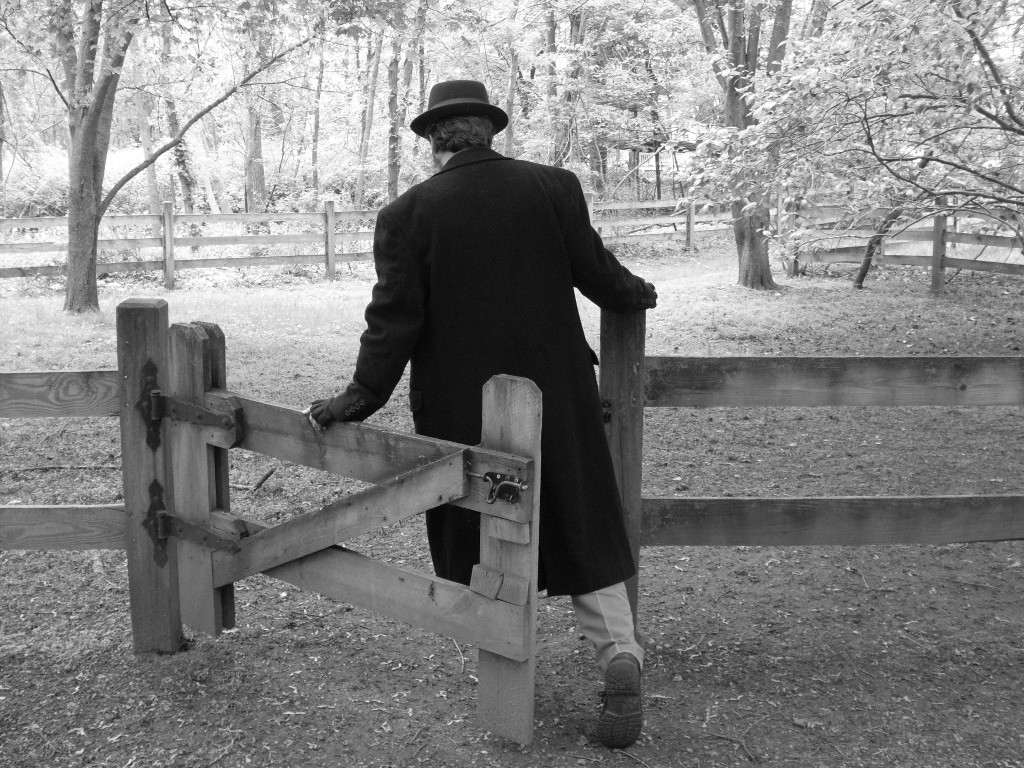
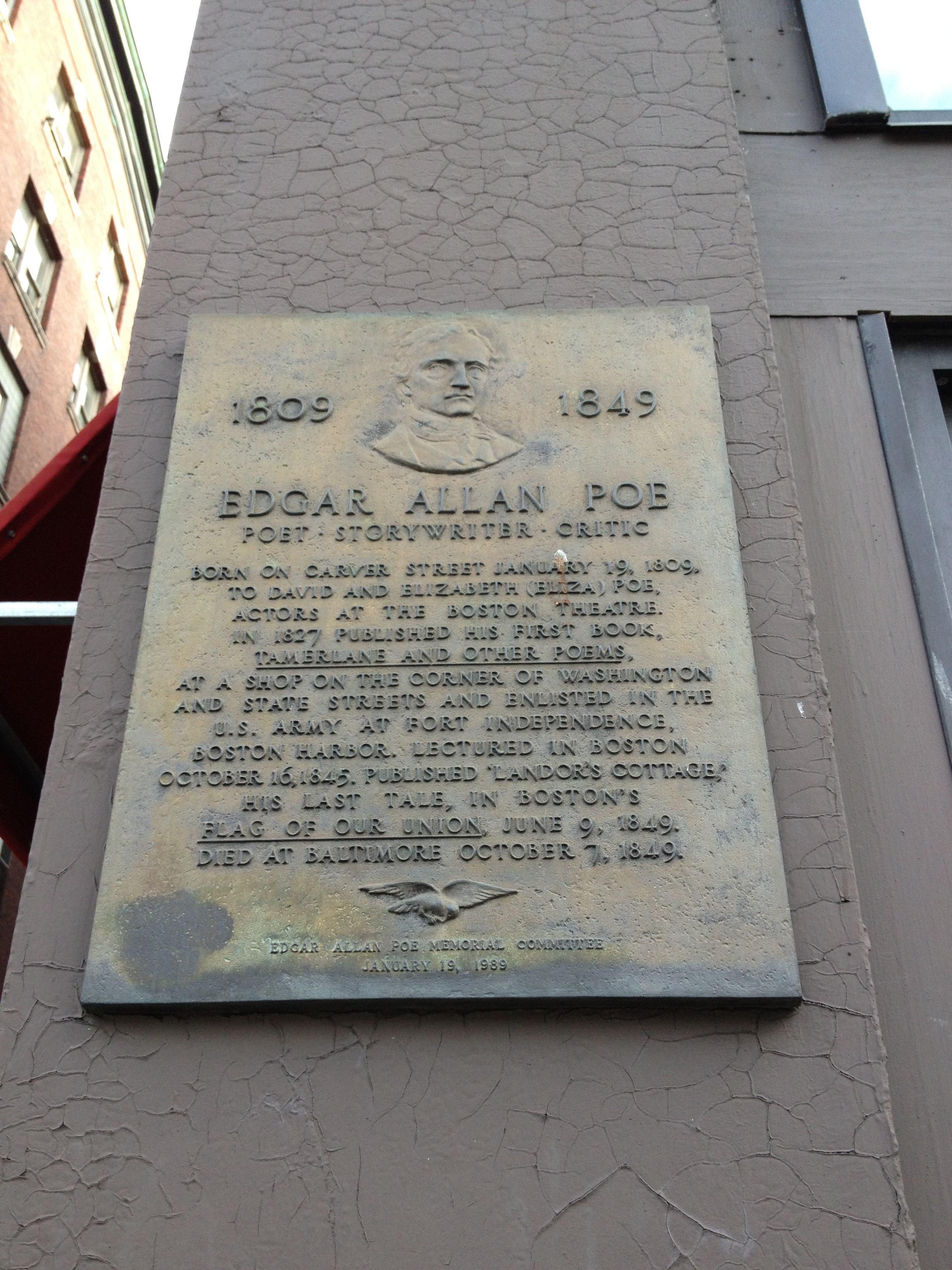
Apart from sharing a “middle” name, I would never dare compare myself to Edgar Allan Poe. Yes, I dabble in the literary arts, but every acolyte recognizes a true priest when he sees one. So as my train pulled into Boston, a city that has deep emotional resonances for me, I decided to stop and see where Edgar Allan Poe was born. The actual site is now a parking structure, an unexpected parallel between our emerging universes. All of my childhood homes, with one exception, are now parking lots. Standing at the foot of the memorial plaque near Emerson College, I reflected on my Poe year. I visited his college room at the University of Virginia in February, his one-time apartment in Philadelphia in March, his burial site in Baltimore in August, and now his birthplace. Not in any chronological order, but a voyage of discovery nevertheless.

This is the essence of pilgrimage. It is not rational and not really practical, but it is something people do. With religious intensity. I am in Boston as part of my secular job, but the city has sacred associations for me. I met my wife here, and that single event has changed my entire life. Boston will always be the place where something extraordinary happened to me. Poe did not like Boston, but for me it is the eternal city. Even the places with negative associations stake claims upon us. Over the weekend a friend posted a picture online taken before combat forced his evacuation from Vietnam many years ago. I kept coming back to that picture throughout the day. Lingering. Staring. Even though I’d never been there, it was like place had the ability to haunt those who’d even dared to look.

Poe and my friend are both writers who’ve drawn me into their worlds. What better way is there to learn that the universe is indeed infinite? Looking out my window at a Kenmore Square I recognize only by the giant Citgo sign that shed its garish light on many an evocative student night, I realize even eternal cities change. The last time I was in South Station I was saying goodbye to the woman I hoped, but did not know, would become my wife. Almost as if on cue, ” Lola” by the Kinks spills out of a local store as the Citgo sign flickers to life over the scene of my coming of age. In Boston I will always be twenty-three, wars will be long over, and Poe will remain alive forever.


Ban This

It should be a scarlet letter week. In honor of Banned Book Week, I’ve started to re-read Kurt Vonnegut’s Slaughterhouse-Five. Somehow I made it through high school and college without having been exposed to Vonnegut. A friend started me reading his works when I was about ready to start my Master’s degree, and I’ve always enjoyed coming back to him. When my daughter asked me why Slaughterhouse-Five had been placed on The List, I honestly couldn’t guess. Banning books, of course, is a scheme chiefly intended to keep children unexposed to ideas that adults find uncomfortable. We can’t go around telling other adults what not to think (although that hasn’t stopped many a religious tradition from trying), so some individuals figure that we can protect our unthinking young by putting in the corner literature that asks awkward questions. More radical conservative elements suggest destroying them. These are the true grapes of wrath.

Ideas can be wonderfully dangerous things. We now face a brave new world of internet access where ideas float lightly on the web and unless we watch our children constantly, we can’t control what they might see. Ideas as traditionally expressed in literature go through a tremendously long and convoluted birth process. We even use the language of conception to describe how they begin in one’s mind. Ideas implant, gestate, and grow. For the writer this might represent weeks, months, or years of writing, erasing, re-writing, and yes, parenting the idea. The written book has to meet the approval of publishers and only after yet another editing process are they pronounced fit to see the light of day as books. Having passed through many hands, many heads, such ideas become part of their culture. If we find them objectionable, well, isn’t that just part of life? Perhaps that is the largest message to be gleaned from the world of books: no one will be pleased with them all. Even the diary of a young girl will raise alarm.

Some of the finest literature to escape human minds has been challenged or banned. Ironically, in the land of the free and the home of the brave fear of books runs at a fever pitch seldom encountered elsewhere. Afraid of mice and men. What has made this country such a wonderful experiment—the embracing of diversity—has somehow morphed into a neighborhood where nobody feels safe if there are objectionable words on the bookshelf. Ironically Ray Bradbury’s critique of banning books, Fahrenheit 451, is itself a banned book. What most proponents of stopping literature probably don’t realize is that according to OCLC, the source for library data, the most banned book of all time is the Bible. To be honest, those who’ve read it know that it has sex and violence and many other adult situations. In the original languages there are even “swears.” Maybe it’s time people just grew up. The best way to accomplish that is to read a book. Hey, it’s a jungle out there.


Deadly Morass

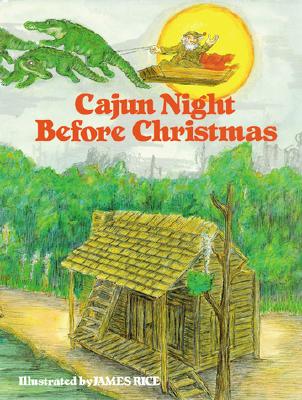
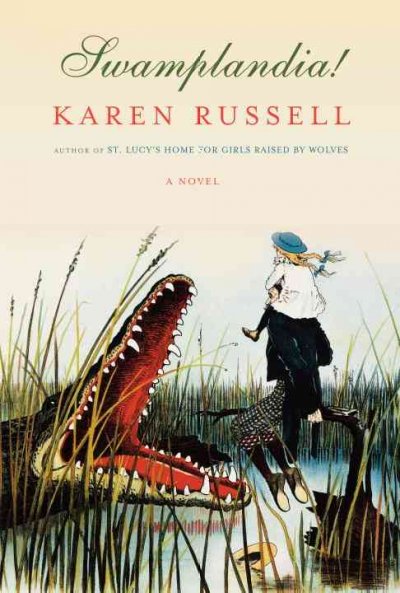
Swamplandia! is a novel ensconced in the reality of death. It is one of those books that I knew I would need to read as soon as I heard about it.  Alligator wrestlers, ghosts, and even a biblical-sounding Leviathan theme park based on hellish imagery create an eerie, almost supernatural feel to the narrative.  At the same time, it is a very human story of loss, assimilation, growing up, and more loss that might be gain.  I’ve read many novels where the characters and events faded relatively rapidly after I closed the back cover.  The cast of Karen Russell’s Swamplandia! has stayed with me, wraith-like, for several days.  As I’ve tried to work out why the story sticks so close at hand, and I think it may be because so many of the characters—the entire protagonistic family—are outsiders.  The loss of the mother spirals a carefree, largely off-the-grid family in a Floridian swamp into a forced confrontation with the mainland.  In these times of economic hardship, the loss of a dream is something too many people can understand.  I certainly can.
 
Death, in whatever form it may appear, is a religious issue because it deals with ultimates.  Paul Tillich, a theologian of the last century, famously declared that God was that on which a person staked their ultimate concern.  For many people today, by this rough definition, death has become a kind of god.  In the ancient world s/he was literally so. Of course, death is entirely natural.  Consciousness is the factor that makes it seem foreboding and dreary.  Swamplandia! deftly ties death and love, hope, and a kind of diminished redemption together in a tale where a young girl travels through an unlikely underworld to rescue a sister who saved her own life by her doubt.  It may not be the most profound novel, but it is certainly a moody one.
 
On my campus visits I’m increasingly hearing that novels are favored by some instructors to get at deep truths that textbooks miss.  Indeed, the analytical urge is strong, but not omnipotent.  Sometimes the truth can best be experienced by letting yourself go and just feeling what is happening rather than thinking it through.  Swamplandia! does a bit of that. Thinking back over my own long, academic tenure, I realize that the teachers I enjoyed most were those who had me read what were, at the time, unexpected things. In a world where education has become nothing but job training to produce satisfied cogs in the corporate machine, death as a character in our own stories can’t be far from the truth. Sometimes even alligators and ghosts aren’t the scariest features of our non-fictional landscape.


Kermit’s Secret

When I was a post-graduate student in that Gothic city of Edinburgh, I decided to spend some time reading Umberto Eco’s Foucault’s Pendulum. It was intended as harmless entertainment, but as anyone who has read it knows, the story soon unravels into an unbelievable world of dark religions that haunt a naive protagonist. While I was reading it, a packet, hand-addressed to me, with no return address, came to my student mailbox. The contents consisted of several tracts, in German, warming of the dangers of Satanism. No letter, no explanation. Foucault’ s Pendulum had me paranoid already, and this strange package completely unnerved me. Well, I’m still here to tell the tale. While reading Victoria Nelson’s brilliant The Secret Life of Puppets, I learned that she had a strange episode while reading the same novel. It was an apt synchronicity.

Nelson is a scholar who should be more widely known. I found her because her recent Gothicka was prominently displayed in the Brown University bookstore in May. I saw it after taking a personal walking tour of H. P. Lovecraft sites. Synchronicity. I had read, in a completely unrelated selection just a couple of months ago, Jeffrey Kripal’s Authors of the Impossible. Synchronicity. For many years I have honed my Aristotelean sensibilities, following devotedly in the footsteps of science. Problem is, I have an open mind. It seems to me that to discount that which defies conventional explanation is dirty pool in the lounge of reality seekers. I have always been haunted by reality.

I’m not ready to give up on science. Not by a long shot. Like Nelson, however, I believe that there may be more than material in this vast universe we inhabit. Indeed, if the universe is infinite it is the ultimate unquantifiable. The Secret Life of Puppets is alive with possibility and anyone who has ever wondered how we’ve come to be such monolithic thinkers should indulge a little. For me it was a journey of discovery as aspects of my academic and personal interest, strictly compartmentalized, were brought together by an adept, literary mind. Religion and its development play key roles in the uncanny world of puppets. Those who wish to traverse the realms they inhabit would do well to take along a guide like Nelson who has spent some time getting into the puppets’ heads.


Queens and Playmates

Once upon a time, theology was queen. I’m no theologian, but then, I didn’t make up the phrase. A recent article in the Chronicle of Higher Education discusses how some scientists say there is no longer a need for philosophy. In passing the piece mentions that theology had, long ago, been considered the queen of the sciences. According to medieval thinkers, philosophy was her handmaid. Antiquated archaisms apart, I sometimes think back on this whole venture of education. Few today acknowledge, and most probably don’t know, that education began as a religious exercise. Writing, and reading, were overseen by the gods. Even in the modern world the earliest universities were founded to teach theology and law. Many of the ivy league schools, including Harvard, Yale, and Princeton, began as training grounds for the clergy. How quickly our forebears are forgotten.

It’s not that I think religion deserves a privileged place in the academy, but I do believe it deserves a place. Science has a long track record of spectacular successes. Not only that, but the advances in science often capture the imagination—and here we are back in the realm of the humanities, that place where feeling and possibility are unlimited. Many of those of us in religious studies—apart from creationists and their kin—gladly award science its deserved paean to successfully unpacking the intricacies of the material universe(s). As the Chronicle article demonstrates, some on the science side of the circle want to claim all the marbles and go home. Some of us want to keep the game going well after dark.

Maybe that’s a very wide metaphorical shift—from queen to playmate—it may be presumptuous. After all, what has religion, or philosophy for that matter, got to claim? What shiny Nobel Prizes to display gracefully, or great advances of which to boast? The benefits religion can claim are somewhat less tangible, but important nevertheless. While some people declare that meaning is a chimera, deep down, as a species, we know that it is important. Even more than that, the fact that you’re reading this right now owes its ultimate origin to religious thinking. Writing was the brainchild of the gods, an activity we learned in imitation of the divine. I will always find science fascinating, but I will always do so with a book held in my hands. “Now, here, you see, it takes all the running you can do, to keep in the same place,” in the words of another famous queen.


Puppet Master

Usually I resist mentioning books I’m reading on this blog until I have finished them. It is probably because of some misplaced Protestant guilt at taking a small measure of undeserved satisfaction at claiming an achievement that I haven’t legitimately earned. Or maybe it is my innate fear that the author will say, on page 200, “by the way, everything before this is wrong.” In any case, sometimes I forget the important initial stages of a grand argument by the time I reach the final chapters, neglecting any ideas that may have arisen along the way. I just started Victoria Nelson’s The Secret Life of Puppets. I read her Gothicka earlier this summer, and couldn’t wait to get started on Puppets. Besides, when was the last time I saw an academic book with a back-cover sound-byte by Neil Gaiman?

The idea that is so compelling in The Secret Life of Puppets is that in the modern era religion and art have reversed roles. That is to say, people tend to turn to literature (and movies or other media) to discover a sense of transcendence—previously the bailiwick of religion. Religion has transformed into the receptacle of literary imagination instead of remaining the inspiration for it. New Religious Movements grow out of fictional sources—consider Scientology or Jediism or the religions growing from Avatar. But the connection runs to even more profound depths. Quoting a screenwriter she met, Nelson points out that horror movies are often the only genre of film in which God comes naturally into the conversation. Elsewhere God-talk feels high-handed.

Religion has become a kind of fiction while fiction writers preserve the prerogatives of the divine. We suffer from repressing our intuitive way of knowing. Perhaps it is only logical that I select an example from science fiction here. Since the late ’60’s the figure of Mr. Spock has stood sentinel over the neurosis of the flawlessly logical. Just one glimpse and we know this is not homo sapiens sapiens’ behavior. We think with both halves of our divided brains. Scientists sometimes commit the oh so human fallacy of supposing evolution is robbing us of passion. Falling in love would be a lot less enjoyable if it made sense. No, we have not outlived our need for the gods. I think Neil Gaiman would back me up on that.


Nine Lives

A warm and wet holiday weekend is a good time to watch movies. Since my daily work schedule leave scant time to view anything from most Monday-to-Fridays (and it would claim even more if I’d let it), relaxing often involves watching. I first saw Cats as an ambitious stage production for a local outdoor theater some years ago. Andrew Lloyd Webber has acute talent when it comes to mixing show tunes and popular music; so much so that even a vague storyline will do to carry a show. Cats, of course, is based on a set of children’s poems by T. S. Eliot—Old Possum’s Book of Practical Cats. There is no narrative, and they show’s emotionally charged hit “Memory” had to be culled from among Eliot’s other poems. Nevertheless, the musical, now long off-Broadway, exists in a film version that is heavily endowed with religious themes. This weekend I watched it for the n-th time, and each viewing brings out new nuances.

The “story,” such as it is, has two very basic events: Jellicle Cats choose who can be reborn on the night of the Jellicle Ball, and Old Deuteronomy, the patriarch of Jellicles, is kidnapped (cat-napped?) and must be recovered before the choice can be made. The vignettes feature cats dealing with loss, love, and crime. The character who resonates with many viewers is Grizabella, the glamour cat. She is the has-been who sings “Memory,” the cat who was somebody before her fame and fortune faded to a tawdry existence among questionable society. The musical is about transformation, however. Transformation is a religious theme, the desire we have to be something more than we are, to transcend the hand life has dealt us. Now, I’m no theater or film critic, but I have to wonder whether the obvious fades and duets of “Memory” point to Grizabella as the older but sadder version of the young and lively Jemima.

Certainly as the finale builds, Grizabella is chosen to be reborn and is sent to the Heaviside Layer, but the camera keeps coming back to Jemima. She is often framed in the center and the suggestion is made that the new life has already begun. Religion thrives on transformation. I suppose that is the reason I find it so ironic that in politics religion, Christianity in particular, is championed as the pillar of the status quo. Whether they are new or old, religions serve no purpose if they do not challenge the “business as usual” model of the secular world. Perhaps that’s why successful artists such as Andrew Lloyd Webber thrive—they can pack theaters of seekers weekend after weekend, even for decades sometimes. Even those of us watching on the television at home click the eject button with a sense of hope that seems possible only on a holiday weekend.

A stray Jellicle cat?


Longer Nights

Those who write put part of themselves into every piece. Sometimes that tiny fragment of the author is nearly invisible, while at other times fiction becomes difficult to separate from biography. One of my daughter’s assigned summer readings is Eugene O’Neill’s Long Day’s Journey into Night. Since I use the opportunity of her assigned readings to catch up on what I should’ve read long ago, I recently sat down to see what the play was about. A dysfunctional family. Alcoholism, tuberculosis, and self-loathing are the unholy trinity of much writing from the nineteenth and turn of the twentieth centuries. But God also comes into the mix. Perhaps the divine was nearer to the surface back in the days when you might assume every other American had been raised in a Christian household. O’Neill’s dark and disturbing Tyrone family might be considered good candidates for irreligion were it not for the fact that being Catholic was so much a part of Irish identity in those days. Perhaps in some quarters it still is.

In Act Two, Scene Two James Tyrone is discussing his wife’s as yet unrevealed addiction with his two sons. Edmund, the scholar (and in reality bearing the family position of O’Neill himself), has rejected belief in God. He asks his father if he prayed for Mary in the days when her difficulties began. “I did. I’ve prayed to God these many years for her,” James Tyrone declares. Edmund responds, “Then Nietzsche must be right.” The debate is the classic issue of theodicy—where is God when things go wrong? Mary, the wife/mother believes she was bound for a convent, having been raised in Catholic school. When her life spirals in unexpected directions, she chooses morphine over faith in God, and the men, soused in whiskey, wonder who’s to blame. James, the father, declares atheism to be the culprit.

I found this an interesting study. Characters either unthinkingly accept the religion with which they were raised, or reject religion altogether. Edmund follows up his declaration by quoting Thus Spake Zarathustra: “God is dead: of His pity for man hath God died.” Nietzsche is never simple to comprehend, but even in the declaration of the divine death is an implicit indication of the existence of deity. The subtle nuances here are often lost in family debates where God’s abstract existence is far less important than the human suffering that raises the question in the first place. O’Neill was writing not only in the shadow of Nietzsche, but also of Karl Marx and other theorists whose nails had been pounded into the heavenly coffin over the past two centuries. So Mary, in her morphine vision, returns at the end of the play to state, “I went to the shrine and prayed to the Blessed Virgin and found peace again because I knew she heard my prayer and would always love me and see no harm ever came to me so long as I never lost my faith in her.” The reader, however, along with Karl Marx, knows that this is really the opiate of the people finding voice through one of the faithful.


Traces in Between

I first discovered Edgar Allan Poe as an adolescent who believed monster movies actually represented physical malefactors. By the time I was writing high school term papers, Poe had become my favorite author, and I delved a bit into his sad life story. It has taken a few decades for me to realize that no lives really fit into the prepackaged paradigms that we’re sold. We think of Poe as a writer, but he was also a man who wandered from place to place, dying in Baltimore and nobody really knows why he was even there at the time. Sure, he had lived in Baltimore fourteen years earlier, but his fractured career had taken him many places in between. Having nothing but his published writings and gut feelings to go on, it seems to me that Poe was a man who felt unconnected to any single place. His view of the world made others uncomfortable, as even a cursory reading of his obituary demonstrates. He may have been attempting to find a place to belong. Maybe that’s why I’m standing here in Baltimore next to his burial place.

In a world characterized by xenophobia, having a sense of place can be a matter of life and death. I often wondered, as a child, at the fact that I was born in a different state than either of my parents, and that my mother was born in a different state than either of hers. Where was my place? I really didn’t start to travel until attending seminary, and since then I’ve lived in many places. At times I think of Poe and his peregrinations—not that I would dare compare myself to him; Poe was a genius in a world that couldn’t understand him. I am merely a disciple.

On a recent college-visiting trip, I found myself in Charlottesville, Virginia, where Poe spent a few weeks as a student before being forced out by his debts. Later that day I was in Baltimore, and I could not neglect a stop to pay my profound respects. Throughout my life I have felt a connection with writers whose work I admire. Perhaps as an erstwhile dabbler in the literary arts I feel as though I might somehow connect to the guild. The sense of knowing, I realize rationally, is entirely one-sided. Standing here in Westminster Cemetery, however, feels like being in the presence of a friend. Even had I lived in the nineteenth century I would unlikely have ever met Poe, just as I am unlikely to meet most of the authors I read who still walk among us. Maybe I just feel no fear of rejection—call it a sense of place—among the deceased, unquiet spirit who is Edgar Allan Poe.


Like Clockwork

It is probably safe now to reveal something that occurred at Grove City College over a quarter of a century ago. I often feel I must justify my choice of college, but I was a first-generation college student who knew nothing about higher education. I was raised with a Fundamentalist orientation, Grove City was a “Christian college,” and it was only about 30 miles from home. I do give Grove City credit for shaking me out of my Fundie way of thinking; as a religion major I met some genuine honest thinkers in the department who let me question the inconsistencies of Fundamentalist beliefs. I broke free in my own time. One of the literature professors, however, insisted that we both read and watch the movie version of A Clockwork Orange. It was my senior year and I felt ready to handle it. As I watched the movie again over the weekend, the first time since college, I was shocked that the institution Grove City College has become would have ever allowed such a movie to be shown. Although there is Kubrickian nudity, the movie was initially given its rating because of the violence, which, by today’s standards, is somewhat tame.

Anthony Burgess’ book is so well known that I don’t need to summarize the story here. What struck me in a new way was the religious element in the plot. While Alex is in prison, and wanting to be reformed, it is the prison chaplain who advises him against it. Undergoing the famous movie treatment, Alex indeed proves docile after testing, leading the priest to declare, “He has no real choice, has he? Self-interest, fear of physical pain, drove him to that grotesque act of self-abasement. Its insincerity was clearly to be seen. He ceases to be a wrongdoer. He ceases also to be a creature capable of moral choice.” Of course, the government is satisfied with this kind of morality, the sort that upholds appearances at any price to humanity.

What I find particularly disturbing is Burgess’ prescience. A Clockwork Orange was published fifty years ago, and since that time we have seen politics shift from care of the citizen to the ultimate window dressing of courting the Moral Majority to make it look as if all governmental decisions are moral. The Tea Party seeks to underscore that charade, claiming that all who would argue for Alex’s humanity deserve the fate that he so wrongfully dispensed before his “reform.” This view of the world suffers for its lack of complexity. Humans do not come in black and white. Ironically, Burgess chose to make the clergyman the only the objector to the inhuman treatment imposed on Alex. This is the kind of dilemma on which Stanley Kubrick thrived, but it has become even more poignant in the decades since his movie was released. True, Kubrick’s film is based on the apocopated American version of the novel, perhaps obscuring the intended meaning of Burgess. But isn’t that exactly what he was attempting to do?


Tree Goddess

If you’re missing a virgin, I suggest you might try West New York. According to the local section of Friday’s New Jersey Star-Ledger an alleged image of the Blessed Virgin Mary has appeared in “an unusual tree” in West New York. The local diocese, no doubt correctly, suggests that the “image” is probably “just some discoloration that resembles Our Lady of Guadalupe.” Those inclined to accept pareidolia as fact, however, have already made up their minds. The tree has been barricaded off and flowers have been laid at its base and cell phone shutters are making their electronically fabricated snapping noises. A Google image search of “Virgin Mary West New York” brought up more than a million hits. People are desperate for a miracle.

Back when I was working on my dissertation, the tree goddess was inevitably Asherah. One of my unspoken speculations from those days was that trees are evocative plants, easily playing to the human imagination. In the right conditions a young tree can be mistaken for a person at a distance. The branches, particularly in late autumn and winter, resemble gnarled fingers reaching for the sky or any unwary passer by. And the natural knots and scars on tree trunks (such as in the current example) readily fire unlikely associations. They can be eyes, mouths, faces, or other anatomical bits—as people we project ourselves onto any likely (sometimes unlikely) avatars in the natural world. If images are to be believed, hundreds of people are devoutly weeping and praying at an entirely natural formation in the wood less than two miles from the most sophisticated city in the country.

Even with the Roman Catholic Church urging caution, blind belief is not dissuaded. What does it say about us that we so deeply desire a sign from above? This is the kind of question those who claim that a reasoned materialism will inevitably trump superstition must ask themselves in profound reflection. The fact is that people always have (and always will) assigned meaning to what they see. It is the gift and curse of evolution. “I think I shall never see / A poem as lovely as a tree,” Joyce Kilmer famously wrote before being killed in World War One. This New Brunswick, New Jersey native, who died at 31 in the killing fields of France, might wonder that so many stop at that first famous stanza. To those thronging in West New York, I would recommend a little Kilmer with their miracle. Let’s leave the last word to the poet: “A tree that looks at God all day, And lifts her leafy arms to pray…”


Gothic Religion

Every great once in a while, you run across a book that seems to have been written just for you. I’m cheap enough to wait for most books to be issued in paperback (and storage is getting to be an issue in our cozy apartment), but sometimes the urgency is too great and I can’t resist. In Providence a few weeks ago, I visited the university bookstore—one of my favorite places in town. On the new arrival table was Victoria Nelson’s Gothicka. For what seemed inexplicable reasons, I always found Gothic tales among my favorite growing up. Poe was a standard, but he was accompanied by other stories that elicited the same cocktail of sensations, accompanying a dark and mysterious atmosphere with a suggestion of menace. Transfixed by even the mere presence of this book, I knew I was in the power of a force to which I would eventually succumb. And, unexpectedly, the book helped to explain part of my childhood.

Not every book I read has to do with religion. Far from it. I expected Nelson to discuss literature and movies and culture—all of which she does—but not necessarily religion. The first three chapters proved a revelation in that regard. Nelson deftly explains how Gothic largely overlaps with the characteristics of religion, bringing the supernatural into human lives and insisting that we tremble before it. Perhaps best explained by pastor Rudolf Otto in The Idea of the Holy; the transcendent is something that terrifies as well as compels. In a culture where organized religion appears to be losing ground, Gothic offer the opportunity to tremble before the supernatural, and many people find it almost a religious experience. As becomes clear, the “almost” may appropriately be dropped.

Tracing the trajectory of my own reading interests, Nelson next provides an insightful chapter on H. P. Lovecraft. In many ways the initiator of worship of the dark divine, Lovecraft’s Cthulhu and kith and kin represent an undisguised secularization of deity. At the same time, the trembling is still very much present—indeed, it is a native part of the experience. Lovecraft, who was an atheist, understood the literary utility of gods. They frightened and haunted him with their very non-existence. That is power. Gothic acknowledges and embraces that power while never relinquishing its darkness. Nelson’s Gothicka holds the potential of a journey of self-discovery. As she ranges deeper and deeper into that world, the reader discovers just how much it is part of being human in a world tormented by fallen gods.


Shelley, Byron, Trelawny, and Ahab

“I took up the word [atheist], as a knight took up a gauntlet, in defiance of injustice. The delusions of Christianity are fatal to genius and originality: they limit thought.” The words come from Percy Bysshe Shelley, according to Edward Trelawny. After visiting the display Shelley’s Ghost at the New York Public Library last week, I was struck by how little I knew of Shelley. I’d read some of his poetry, and had watched the fictional movie Gothic (maybe more times than is really healthy) to get a sense of this candle in the wind, the Romantic poet who died in a shipwreck before reaching 30. Edward Trelawny’s reputation as an historian is somewhat suspect, but he did form friendships with Shelley and Lord Byron and arranged the disposal of their earthly remains. His book, Recollections of the Last Days of Shelley and Byron, while somewhat self-serving, weaves an intriguing account. Among the mementos in the library display are some fragments of Shelley’s skull, taken after his cremation by Trelawny. This erstwhile biographer did prove his mettle by reaching into the pyre and pulling out Shelley’s heart, according to his own account, that eventually returned to Mary Wollstonecraft Shelley, his widow.

Trelawny admired Shelley’s atheism, and even applauded Darwin’s Origin of Species when it appeared. The nineteenth century was setting the stage for a strange Frankenstein’s monster of political and religious backlash against the freedom of the Romantics. Not all of the Romantics, obviously, were atheists, but their works extolled the wonders of nature and a sense of liberty from tyranny that would define them as dreamers and idealists. Lord Byron comes across much less favorably in Trelawny’s account, although their friendship lasted through some difficult times. After the poet’s death, Trelawny claims to have examined his feet, discovering the cause of a lifelong limp. His psychologically astute conclusion is that Byron’s disagreeable personality traits arose from his lifelong anger and anxiety about his birth defect.

Being an ardent admirer of Herman Melville’s Moby-Dick, I have to admit that the elements of anger at the divine for a limp (Captain Ahab forcefully stomps into mind), and the emphasis on ships and shipwrecks (as in Shelley’s death) tie these three literary geniuses together into a knot of suffering and seeking. Religion had consoled many in the nineteenth century, just as it continues to do now in the twenty-first. Among many of those who have endured through their literary works, however, God had slowly disappeared. Not quite as dramatic of a demise as Shelley’s, nor as unforgettable as Captain Ahab’s, but one for which there will be few biographers.


Varieties of Non-Religious Experience

The New York Public Library is an icon of rationality. Daily tourists throng by—some inspired by Ghostbusters, others by Between the Lions. Nestled in among some of the tallest buildings in New York City, it is a symbol of culture amid its antithesis, business. Nearing its last days is a small display in the library entitled “Shelley’s Ghost.” Containing handwritten manuscripts and a few artifacts from Percy Bysshe Shelley’s cradle to his grave (literally, his baby-rattle and fragments of his skull), the display celebrates one of England’s most famous and short-lived poets. Shelley, although his life was scandalous at points, was no doubt an idealist. A vegetarian, advocate of “free love,” and protestor, he would have fit well into life a century-and-a-half after he died. He was also an early atheist.

“If ignorance of nature gave birth to gods, knowledge of nature is made for their destruction,” he wrote in The Necessity of Atheism. Not quite the angry atheism often found today, but then, despite his obvious spirituality, Shelley was a rationalist. Born during the English Enlightenment, be was a strange mix of the alchemical and the reasonable. To his young mind the truth was self-evident: the belief in gods grew from nature and therefore the study of nature would reveal those origins. Today the origin of gods is still up for debate, as is the nature of the human animal. It is routine for scientists to claim that our brains are simply processing electro-chemical signals that have no reality beyond this physical world in which they occur. To be a human, however, sure feels like more than that. Shelley was a writer at this nexus. No one writes poetry like that who believes their brain to be full of only electrons.

Reductionism often gets us into trouble. The problem has always been that humans are myopic; we can only see so far and yet assume we have all the data. This myth persists despite the fact that we know some animals pick up on environmental factors that we as humans miss. It need not be supernatural to claim that there is more to the world than we can perceive. This is a double-edged sword. Many of the absolute pronouncements of religions simply don’t match our experience of the world. We find ourselves bombarded by authoritative statements by experts who know as little as we do. I have yet to hear a televangelist who can claim on any intellectual basis any reason that anyone else should pay attention to his raving. Perhaps what the world needs is a few more like Shelley’s ghost—rationalists who still recognize the necessity of poetry.